
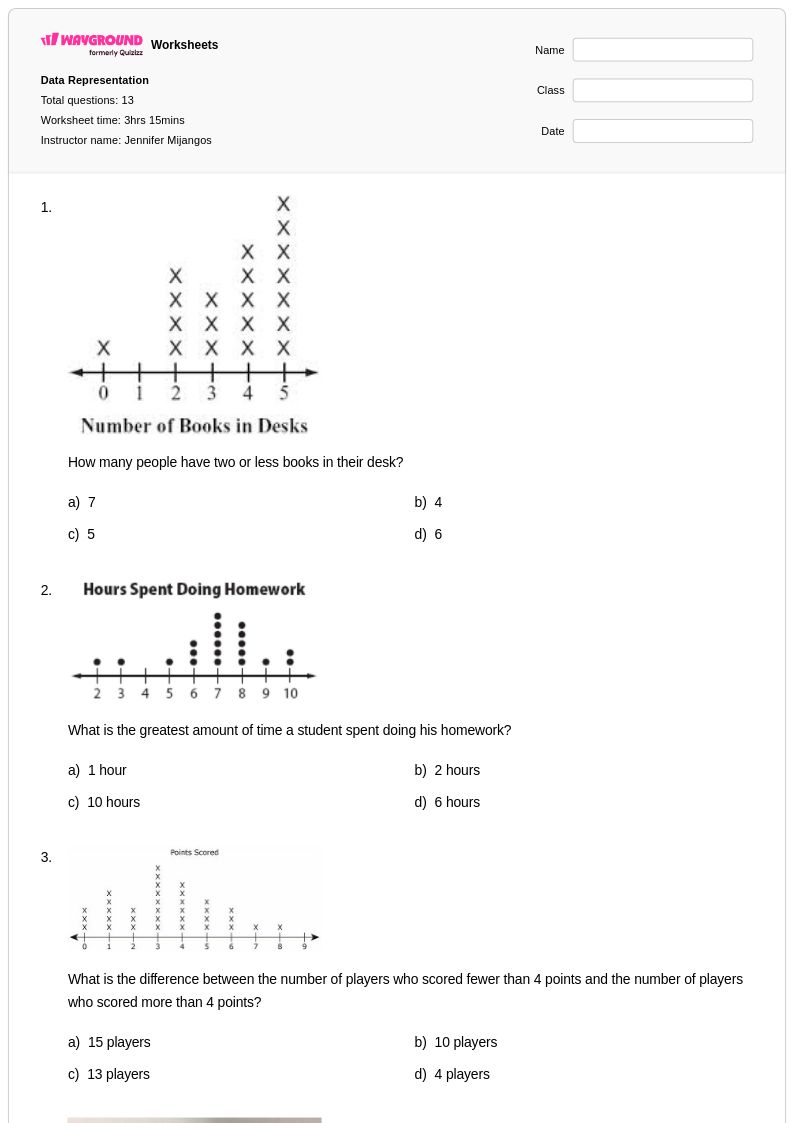
13 Q
1st - 5th
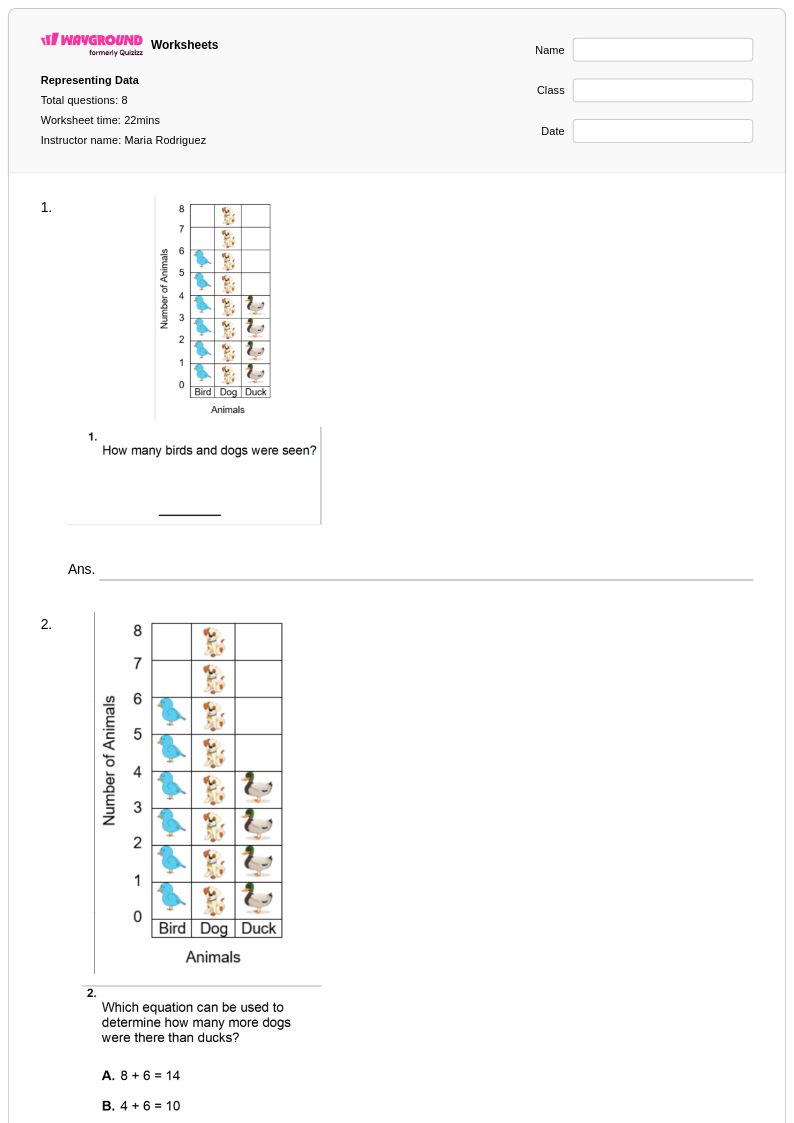
8 Q
1st
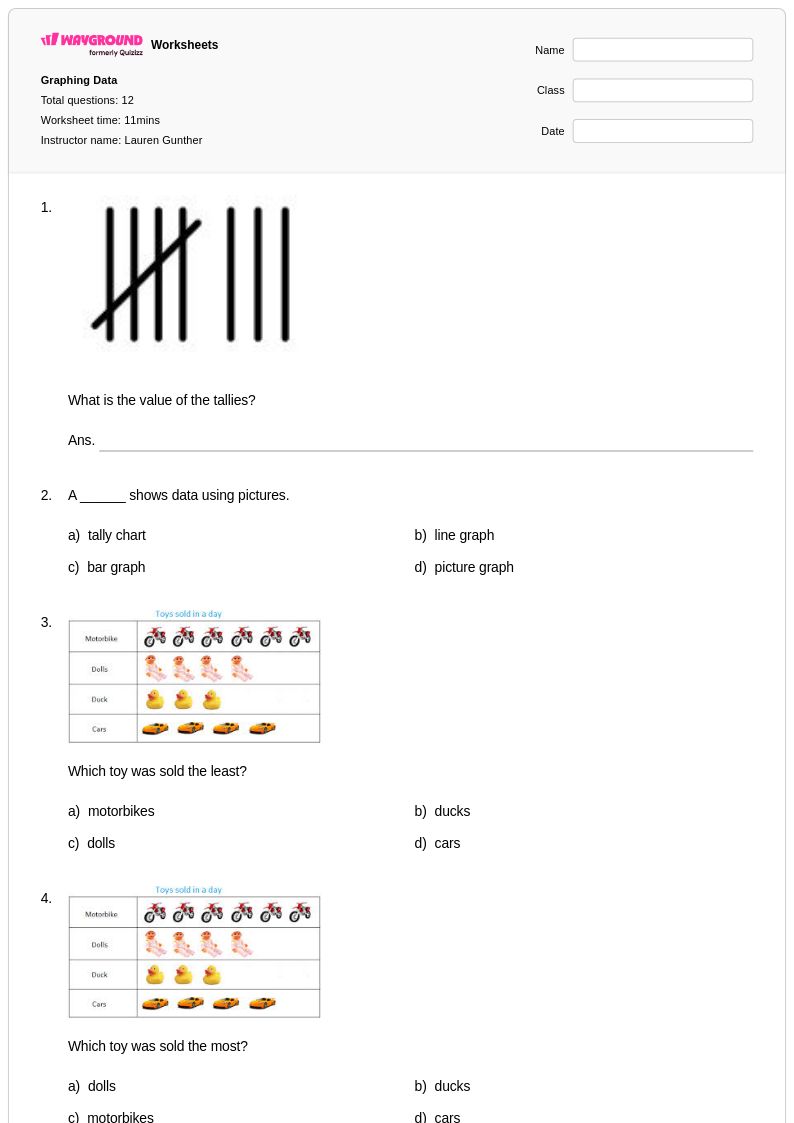
12 Q
KG - 2nd
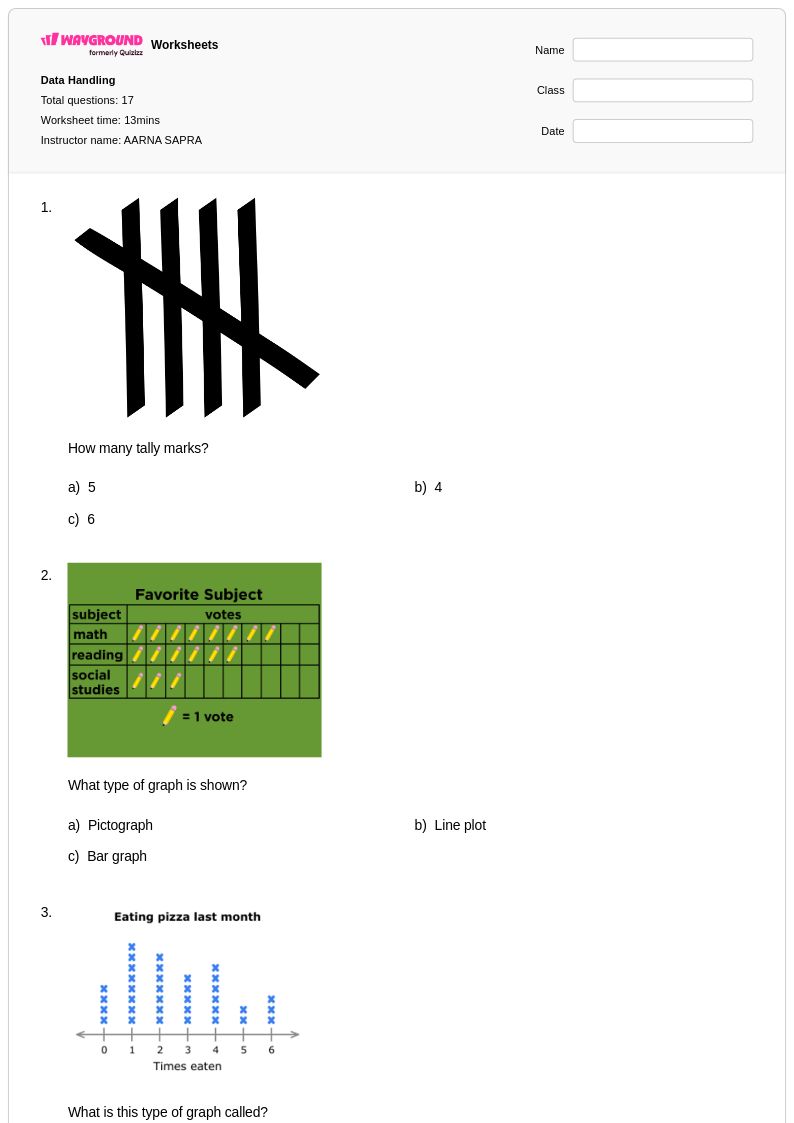
17 Q
1st - 5th
15 Q
1st - 12th
20 Q
1st
20 Q
1st
15 Q
1st
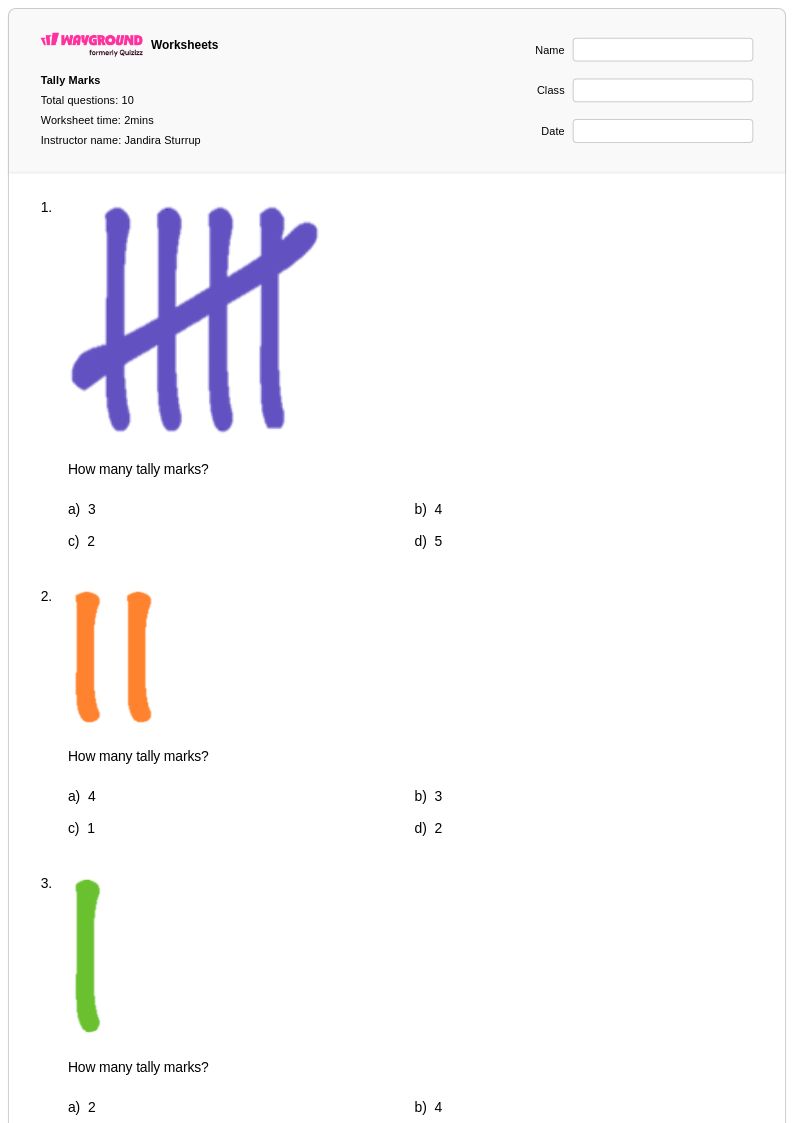
10 Q
1st - 2nd
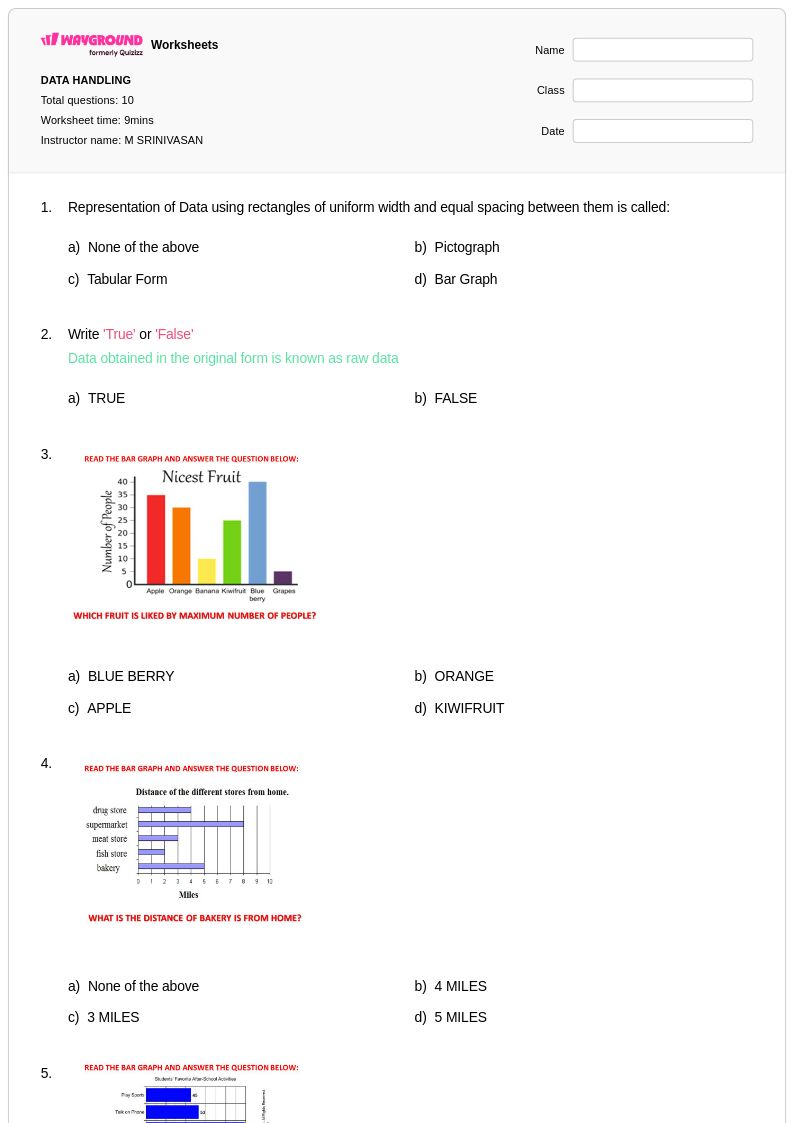
10 Q
KG - Uni
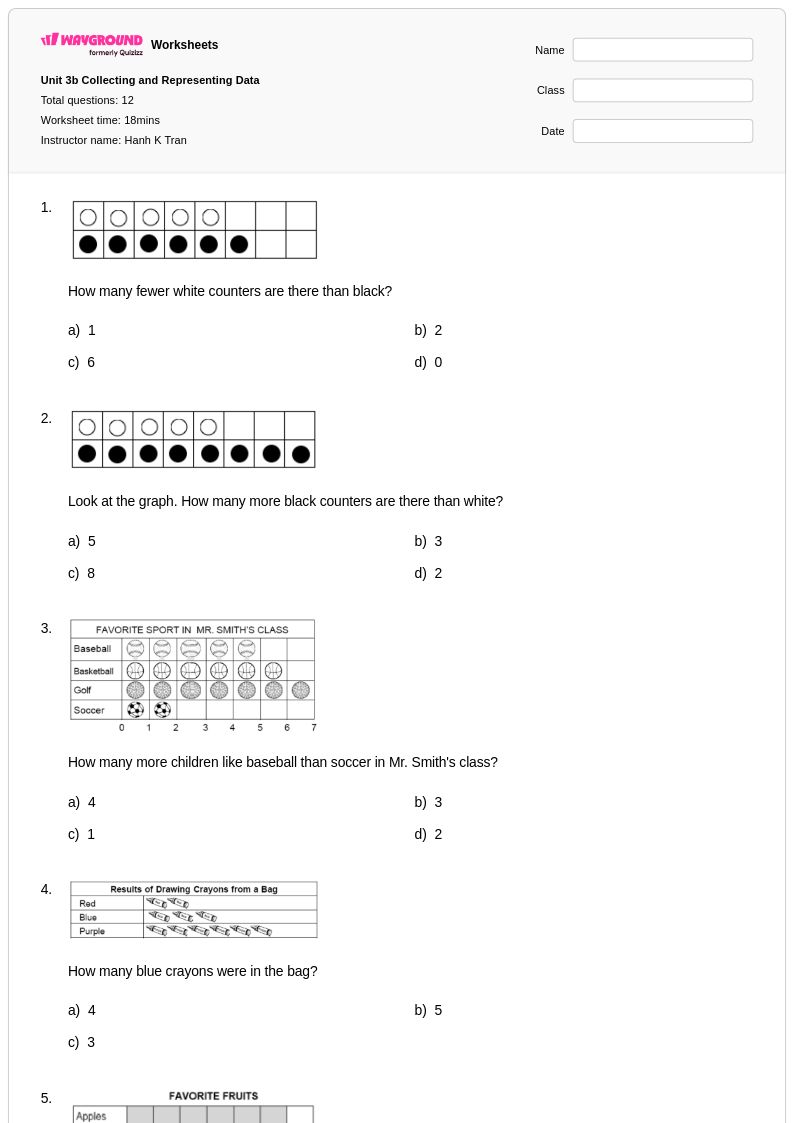
12 Q
1st
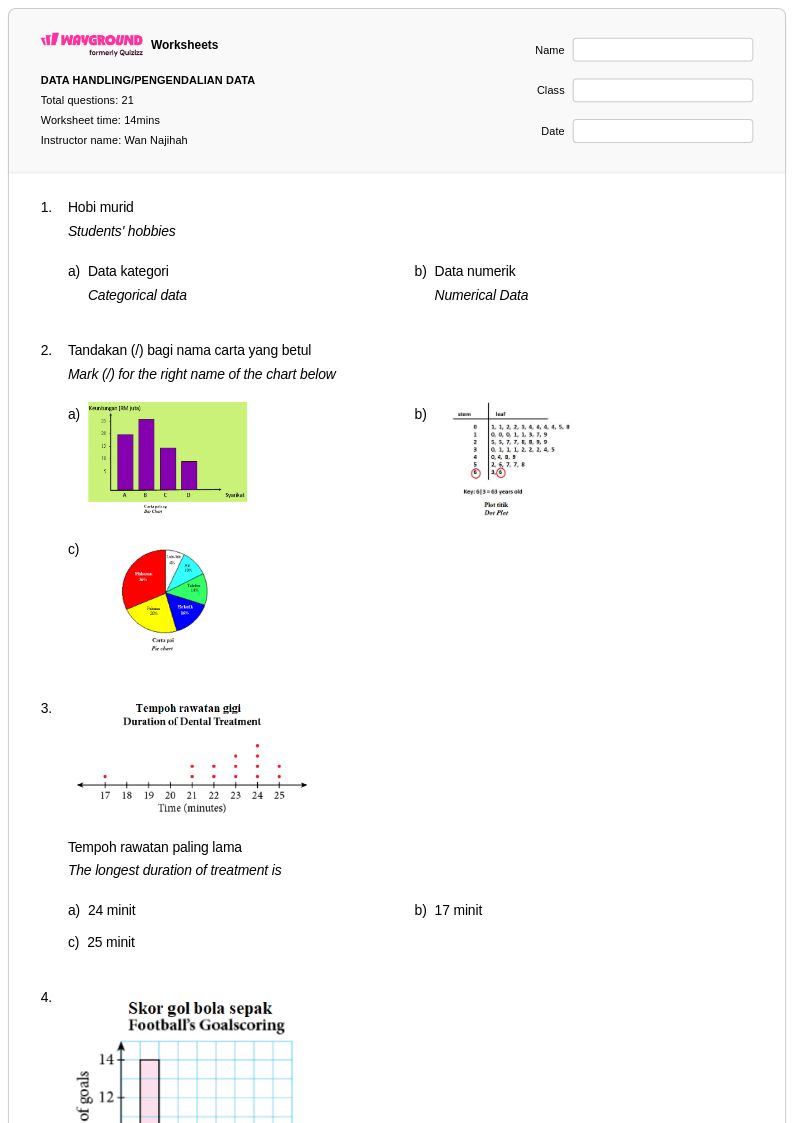
21 Q
1st - 3rd
17 Q
KG - 12th
20 Q
1st - 12th
15 Q
1st
14 Q
1st
12 Q
1st
13 Q
KG - 2nd
20 Q
1st
9 Q
1st
12 Q
1st - 2nd
15 Q
1st - 3rd
30 Q
1st

15 Q
1st - 5th
Explore Data Representation Worksheets by Grades
Explore Other Subject Worksheets for class 1
Explore printable Data Representation worksheets for Class 1
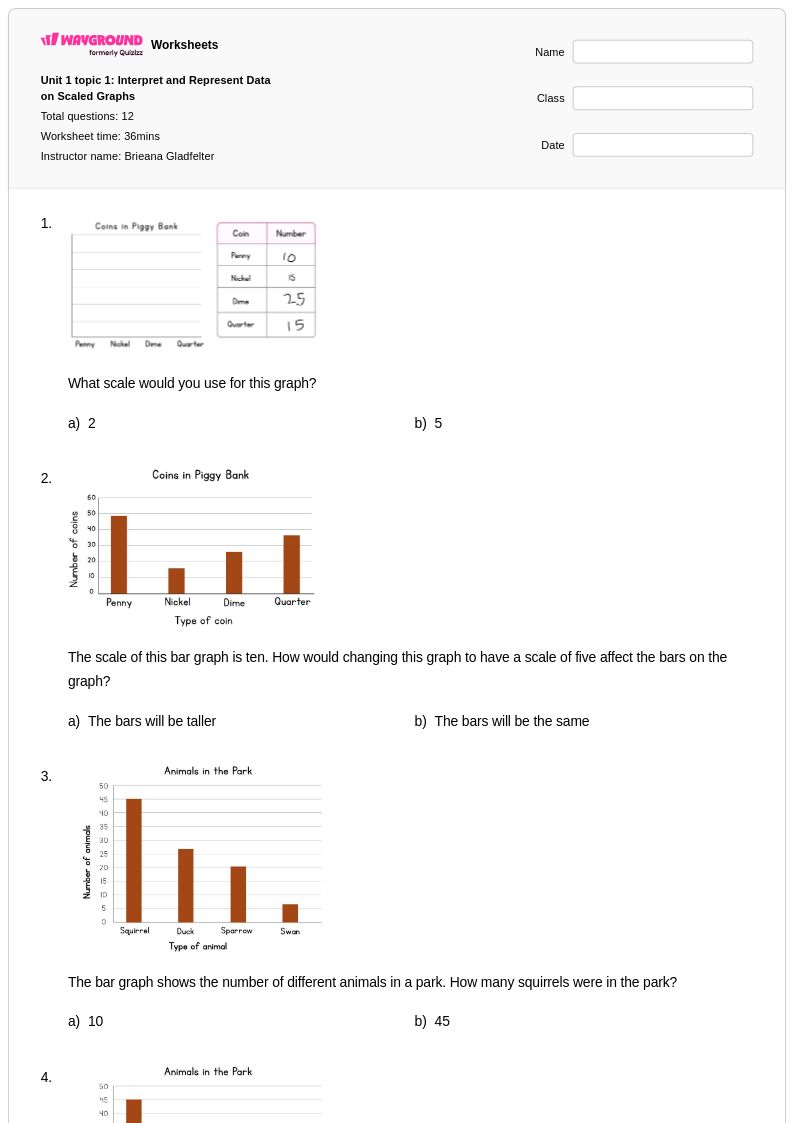
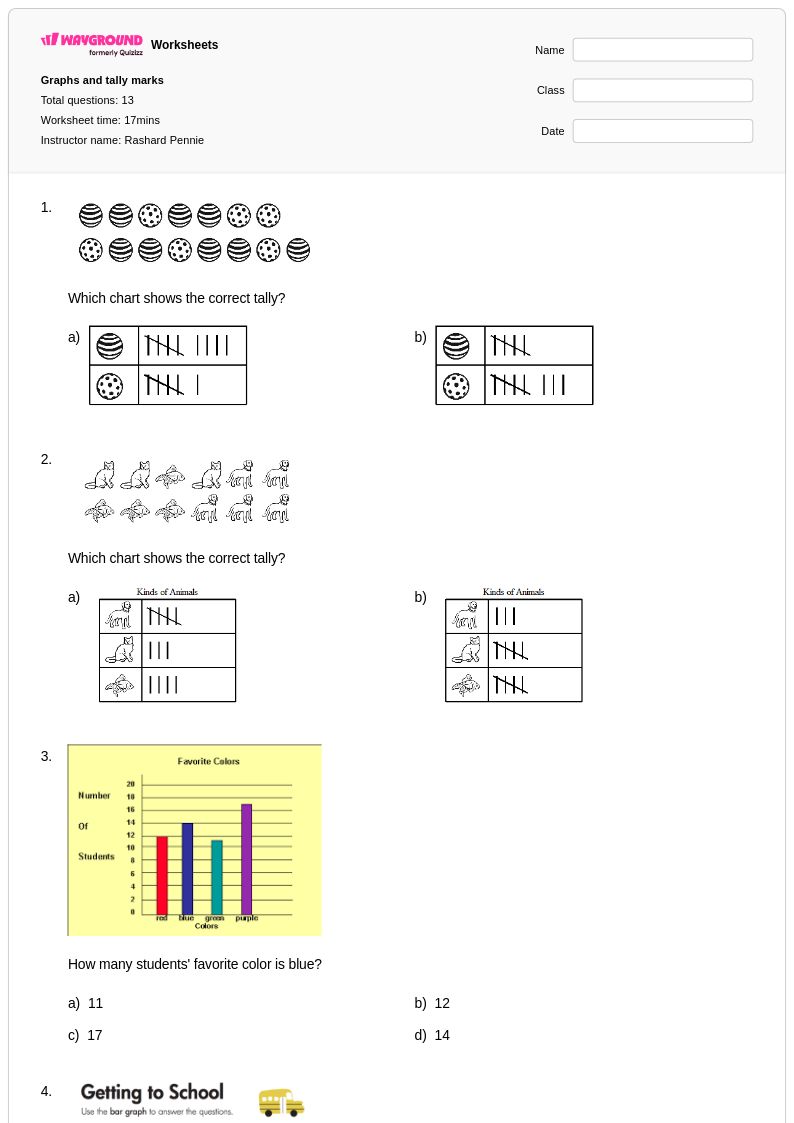
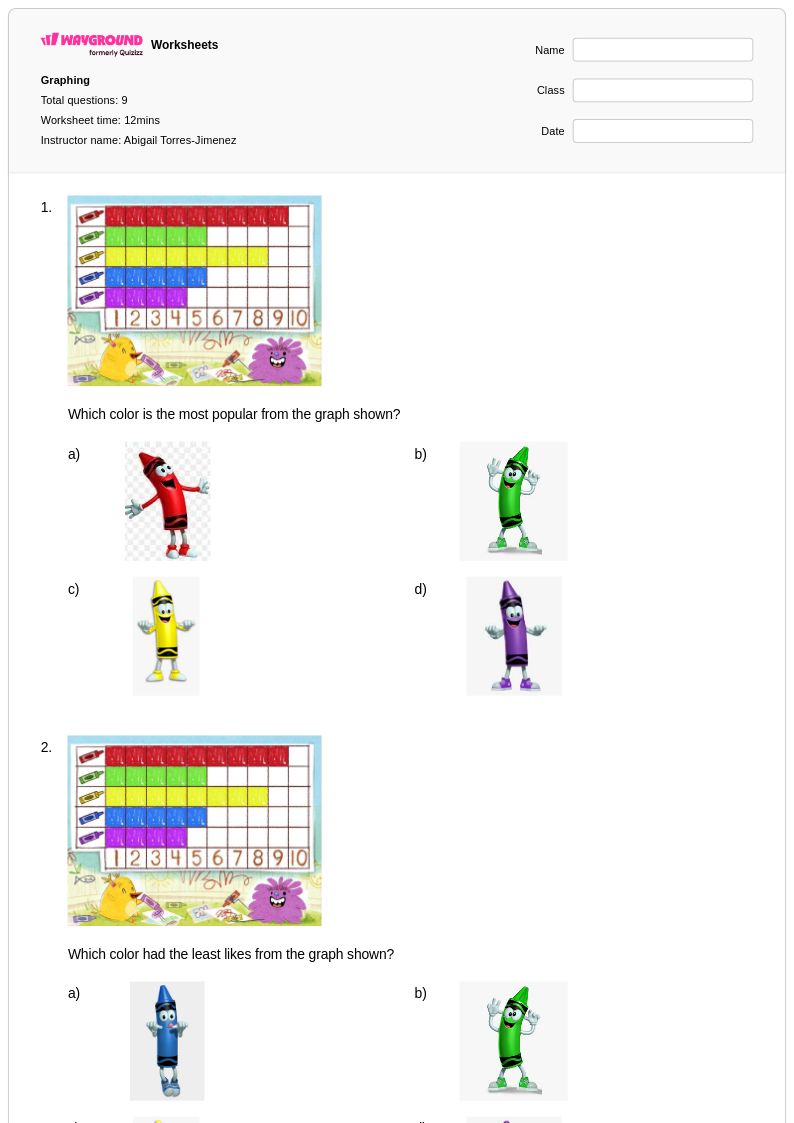
Data representation worksheets for Class 1 available through Wayground (formerly Quizizz) provide young learners with essential foundational skills in organizing, displaying, and interpreting simple data sets. These carefully designed printables focus on building students' ability to create and read basic graphs, charts, and pictographs using familiar objects and concepts from their daily lives. Each worksheet strengthens critical mathematical thinking skills by guiding first graders through hands-on activities that involve sorting data, counting objects, and representing information visually through tally marks, bar graphs, and simple pictorial displays. The comprehensive collection includes answer keys and practice problems that help students develop confidence in collecting data from their environment and translating concrete observations into meaningful visual representations, establishing crucial groundwork for more advanced statistical concepts in later grades.
Wayground (formerly Quizizz) empowers educators with millions of teacher-created data representation resources specifically aligned to Class 1 mathematics standards and developmental needs. The platform's robust search and filtering capabilities allow teachers to quickly locate worksheets that match their specific curriculum requirements and student ability levels, while built-in differentiation tools enable seamless customization for diverse learning needs within the classroom. These comprehensive worksheet collections are available in both printable pdf formats for traditional paper-based instruction and digital formats for interactive learning experiences, providing maximum flexibility for various teaching environments. Teachers can effectively utilize these resources for targeted skill practice, remediation support for struggling learners, enrichment opportunities for advanced students, and comprehensive lesson planning that ensures systematic progression through data representation concepts essential for first-grade mathematical literacy.
FAQs
How do I teach data representation to first graders?
What exercises help first graders practice data representation?
What mistakes do first graders make with graphs and pictographs?
How can I use Wayground Grade 1 data representation worksheets?
How does Grade 1 data representation align with Common Core math?
How can I differentiate Grade 1 data representation practice?
What data representation skills should Grade 1 students learn?