
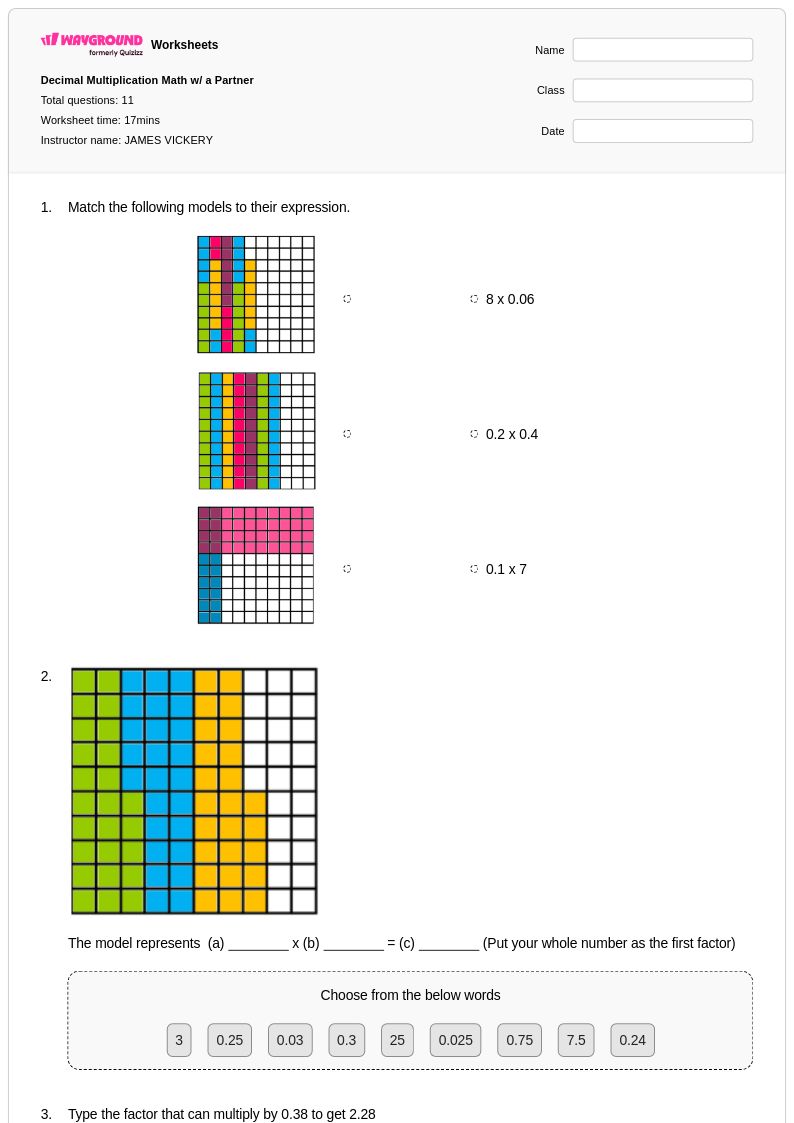
11 Q
5th
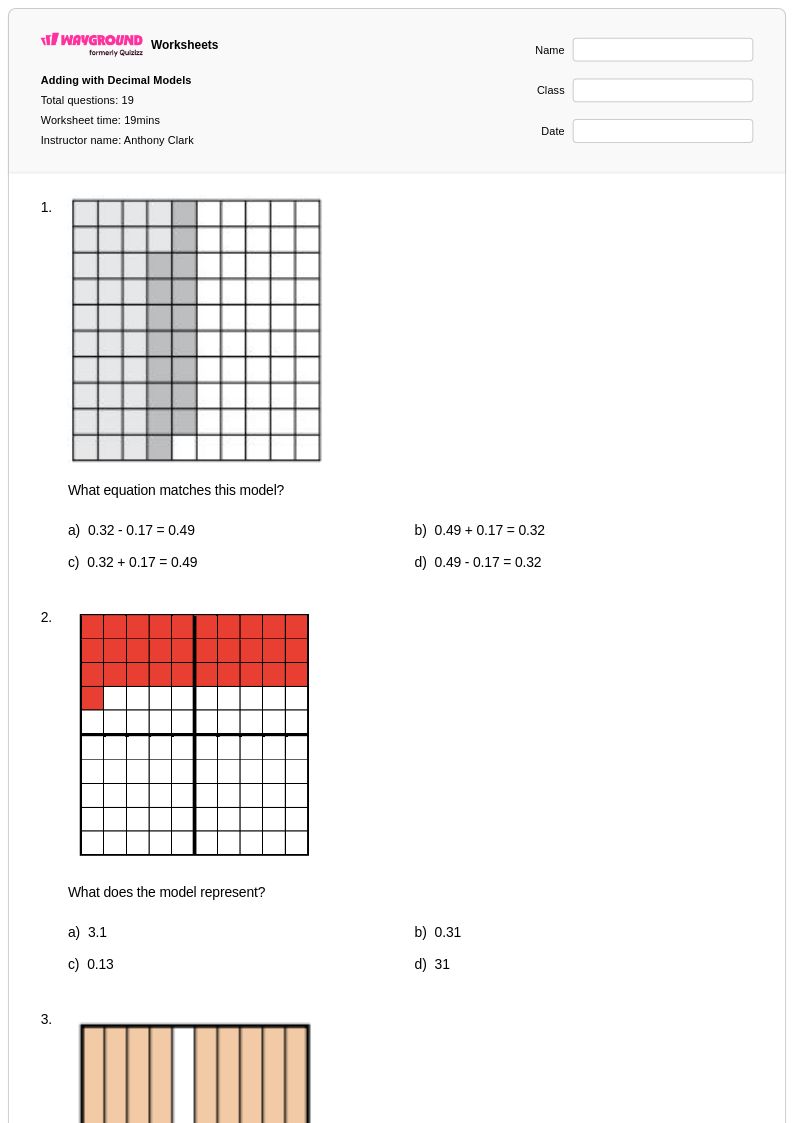
19 Q
5th - Uni
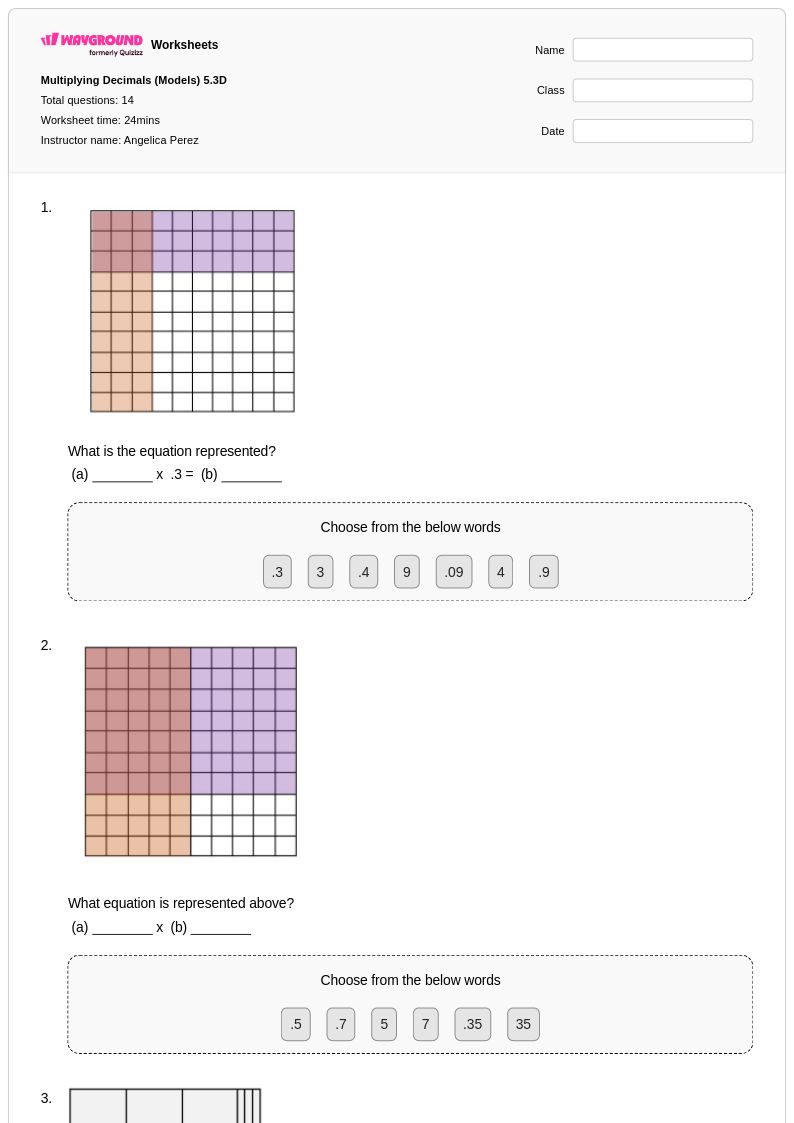
14 Q
5th
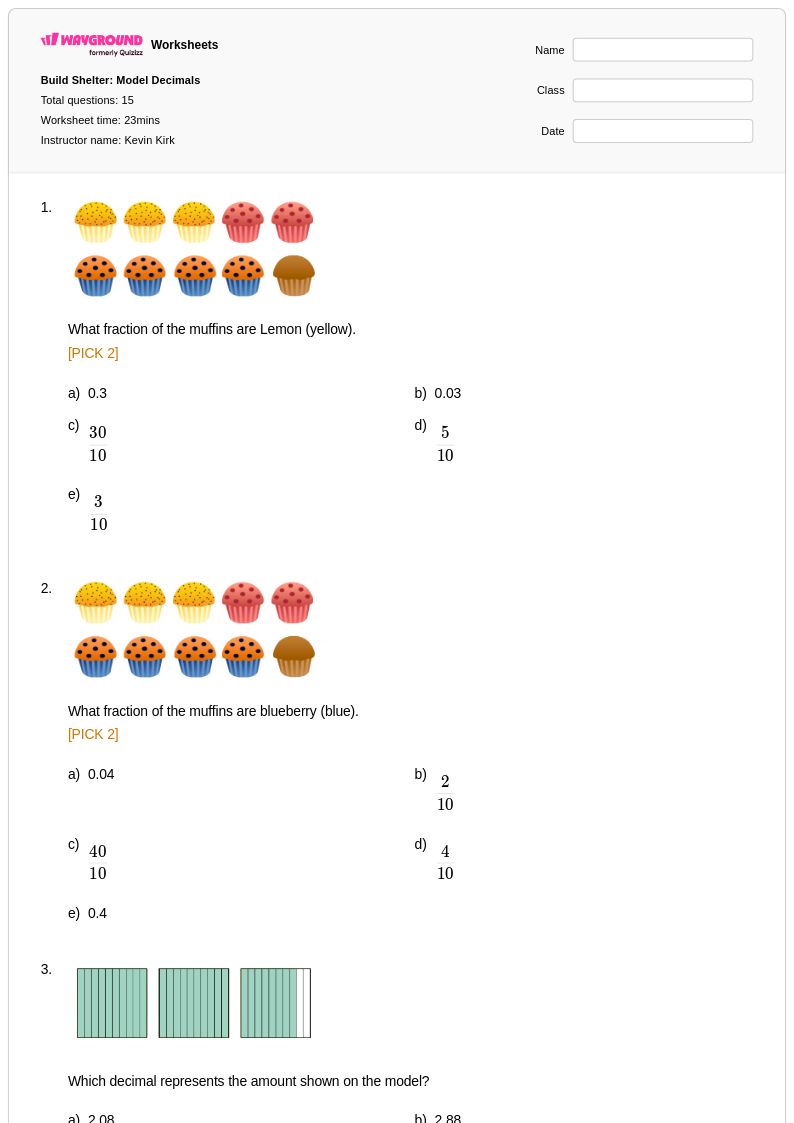
15 Q
5th
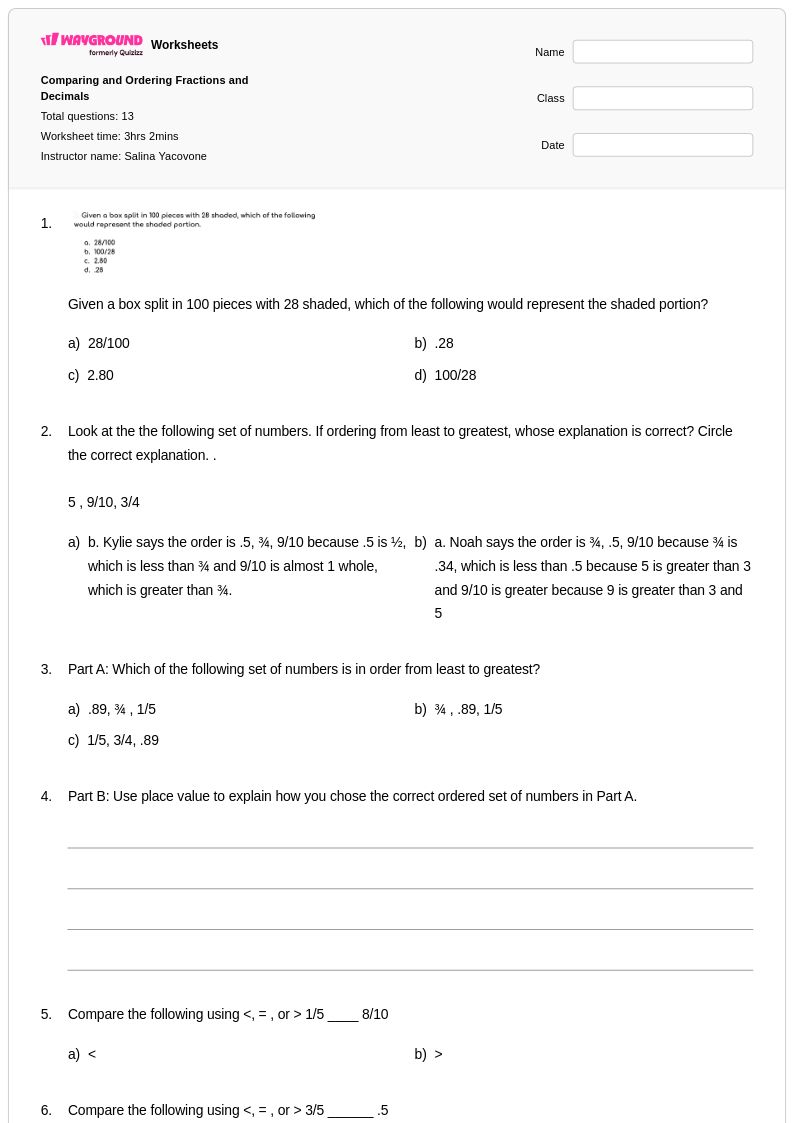
13 Q
5th
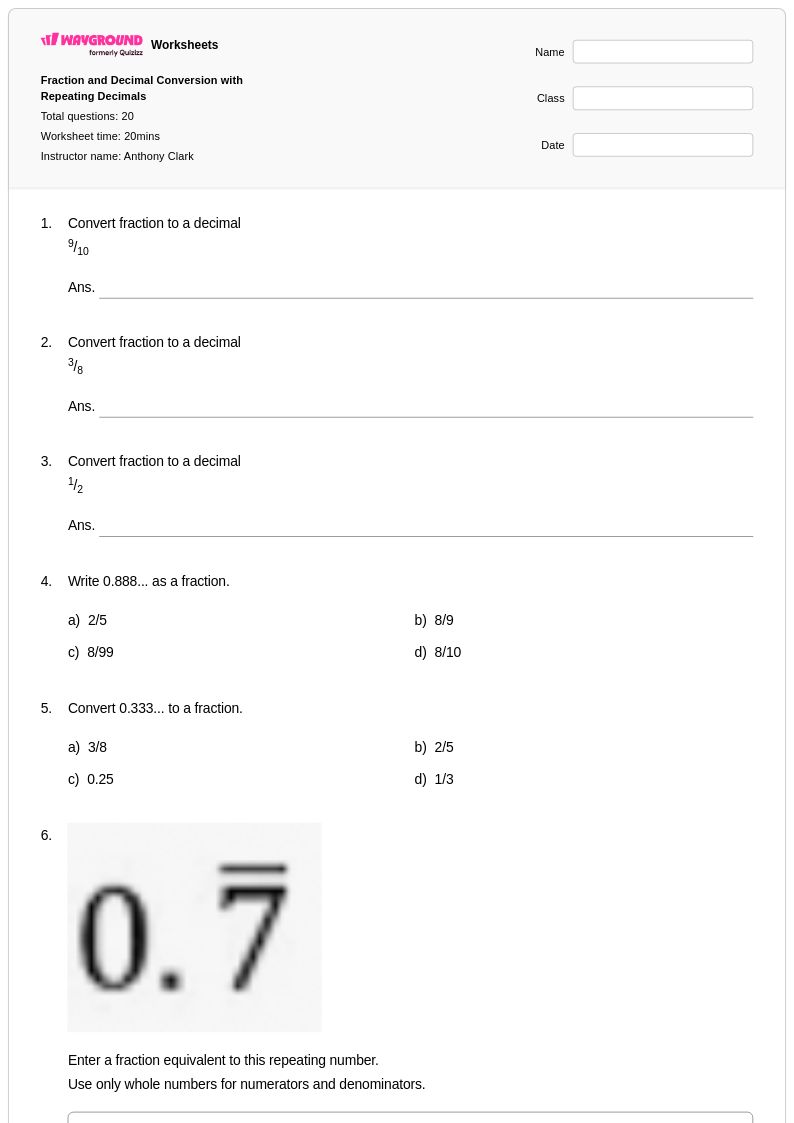
20 Q
6th - Uni
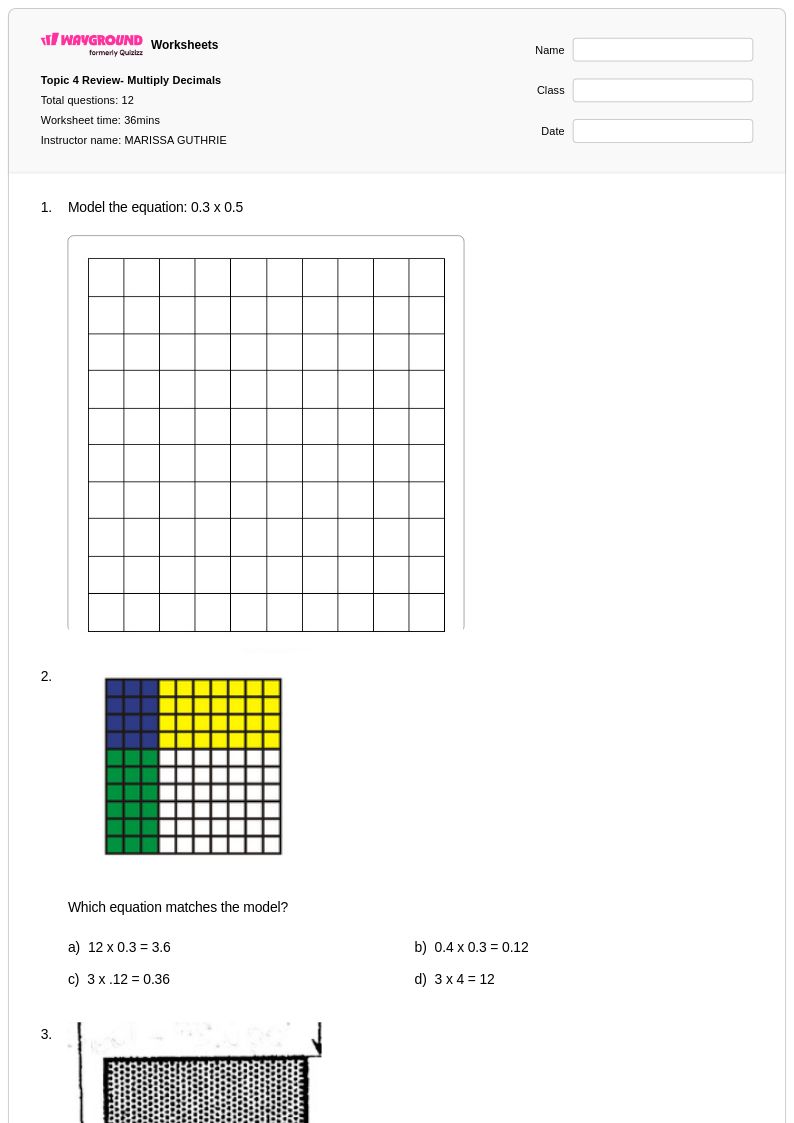
12 Q
5th
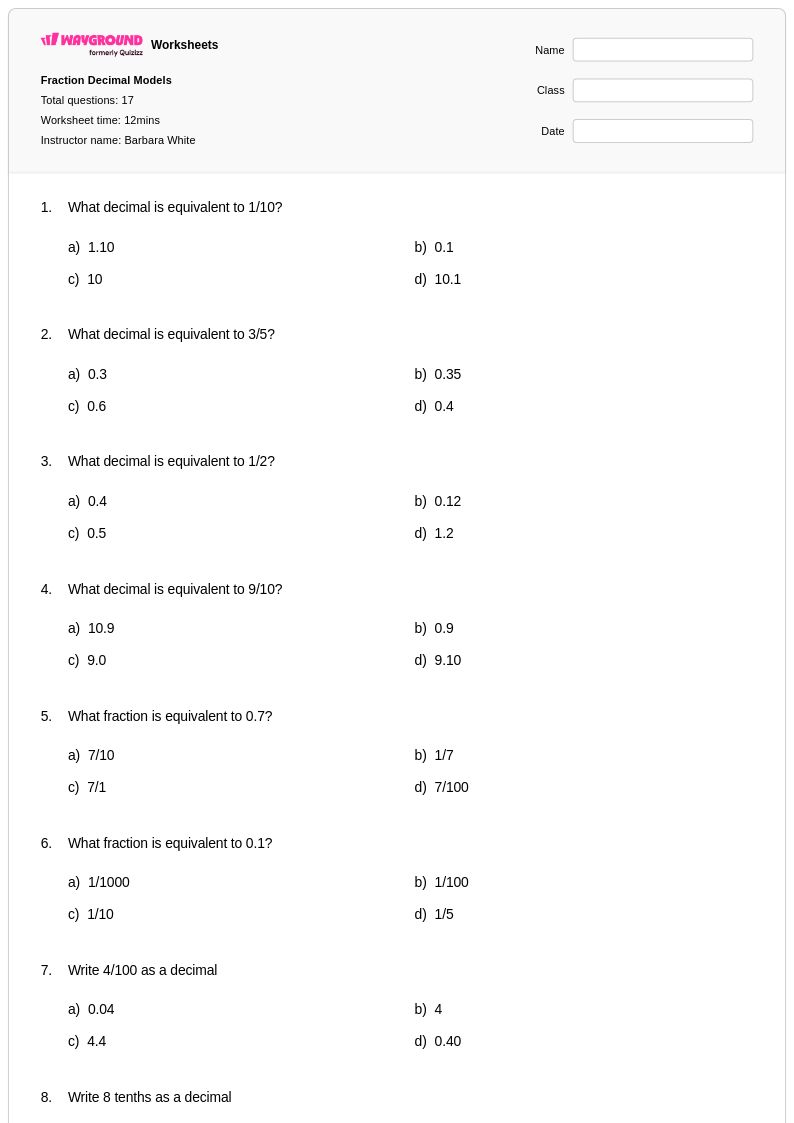
17 Q
4th

10 Q
5th
14 Q
6th - Uni
15 Q
4th
15 Q
8th
18 Q
7th
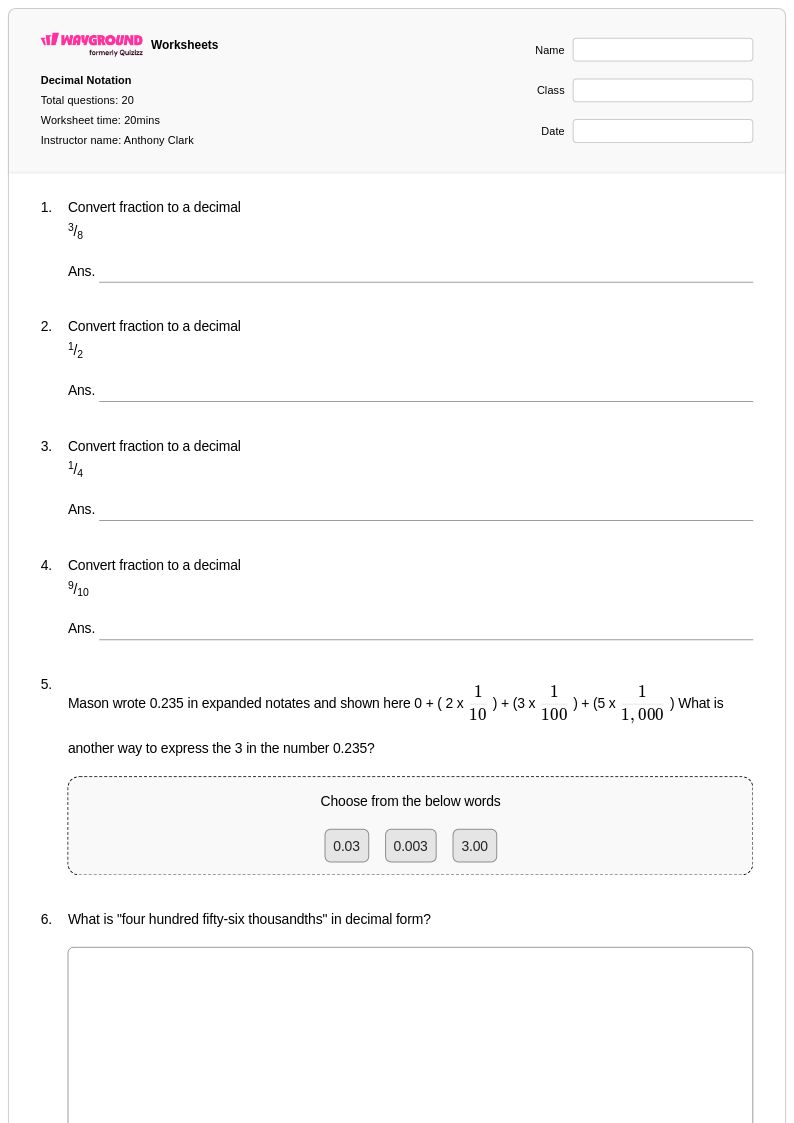
20 Q
4th - Uni
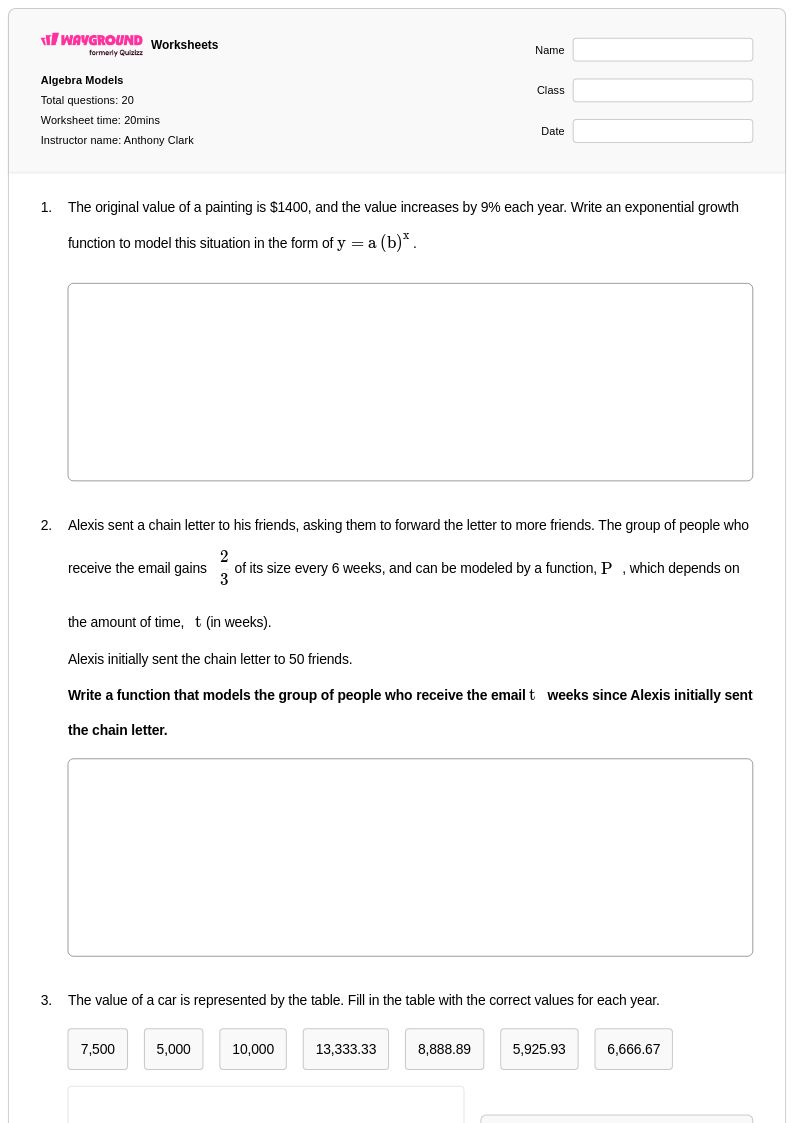
20 Q
10th - Uni
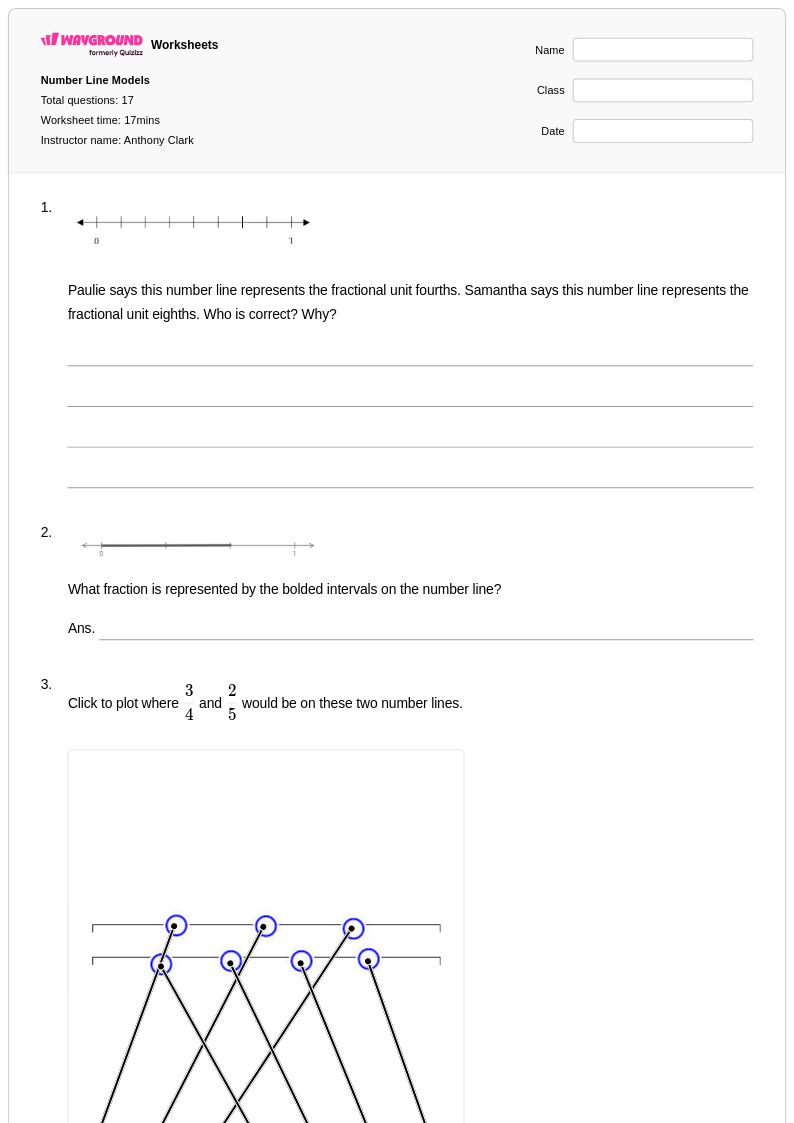
17 Q
3rd - Uni
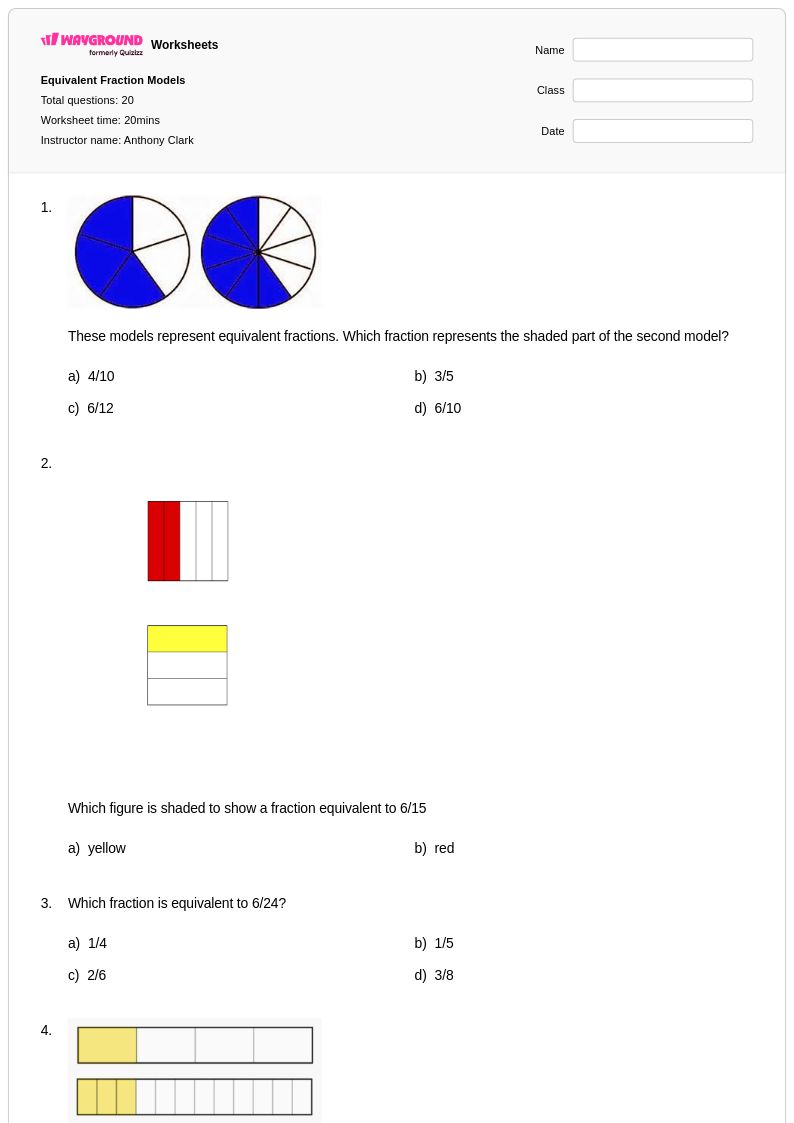
20 Q
4th - Uni
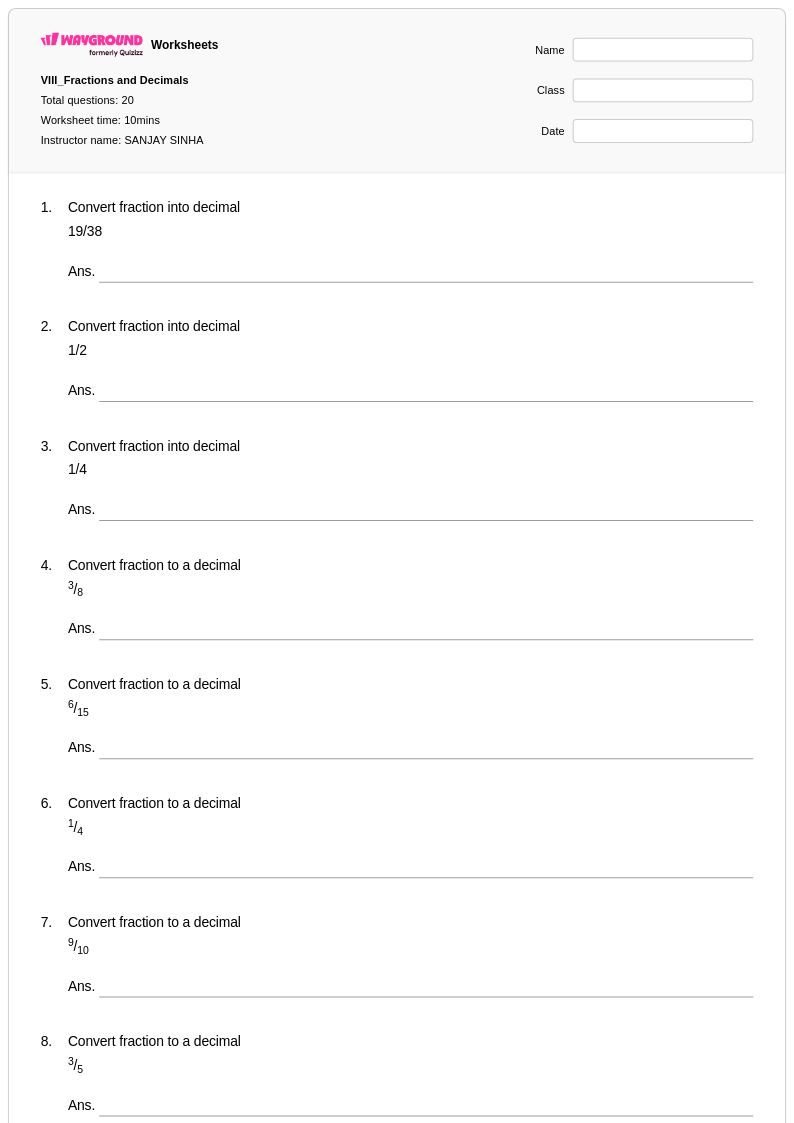
20 Q
7th
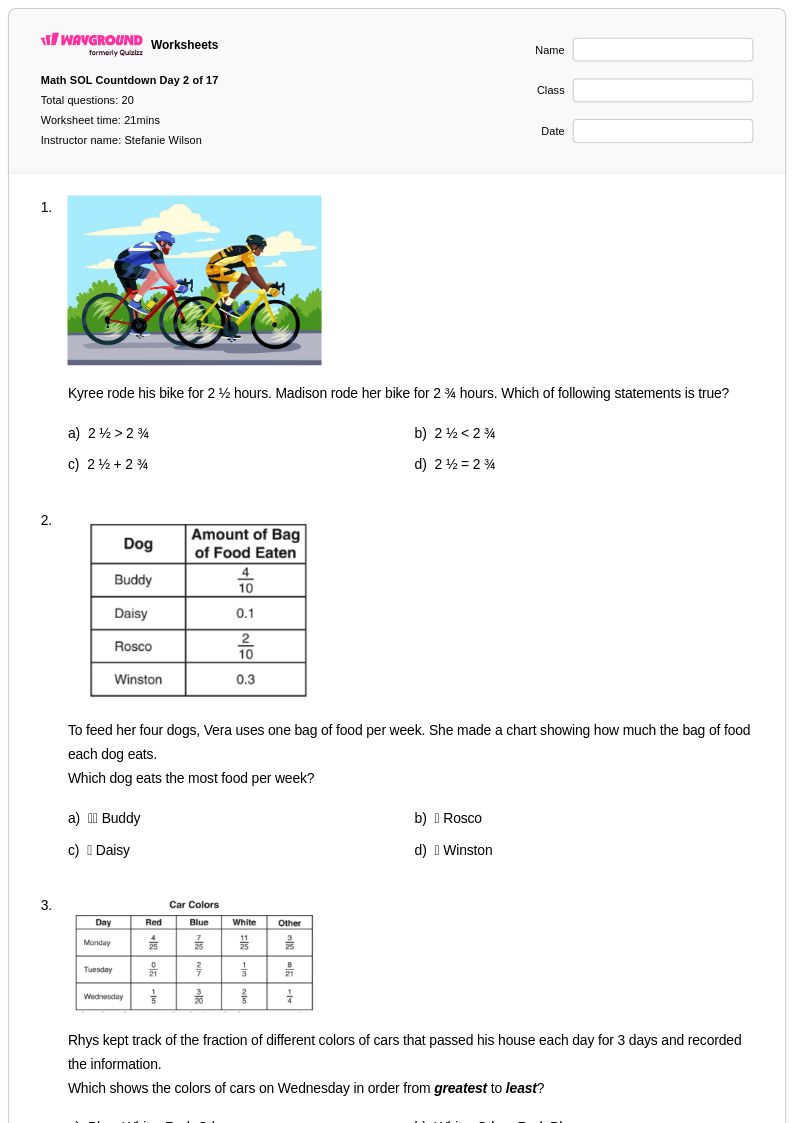
20 Q
5th
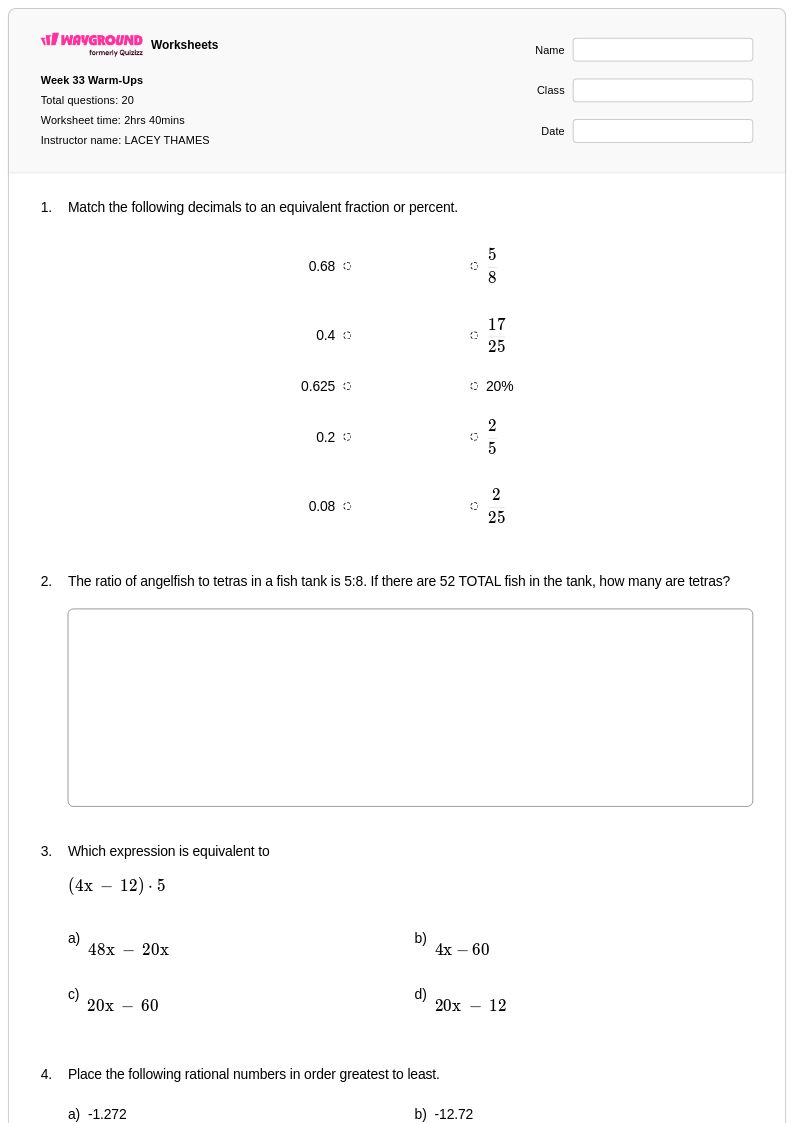
20 Q
6th
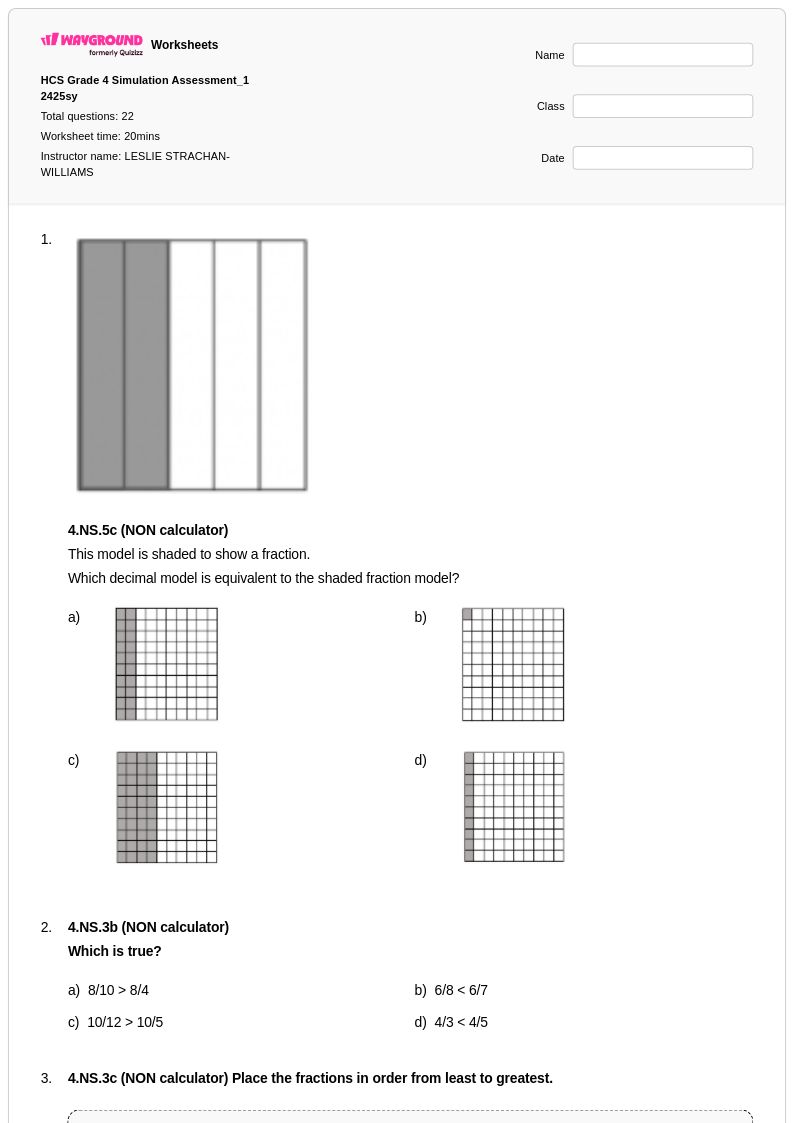
22 Q
4th
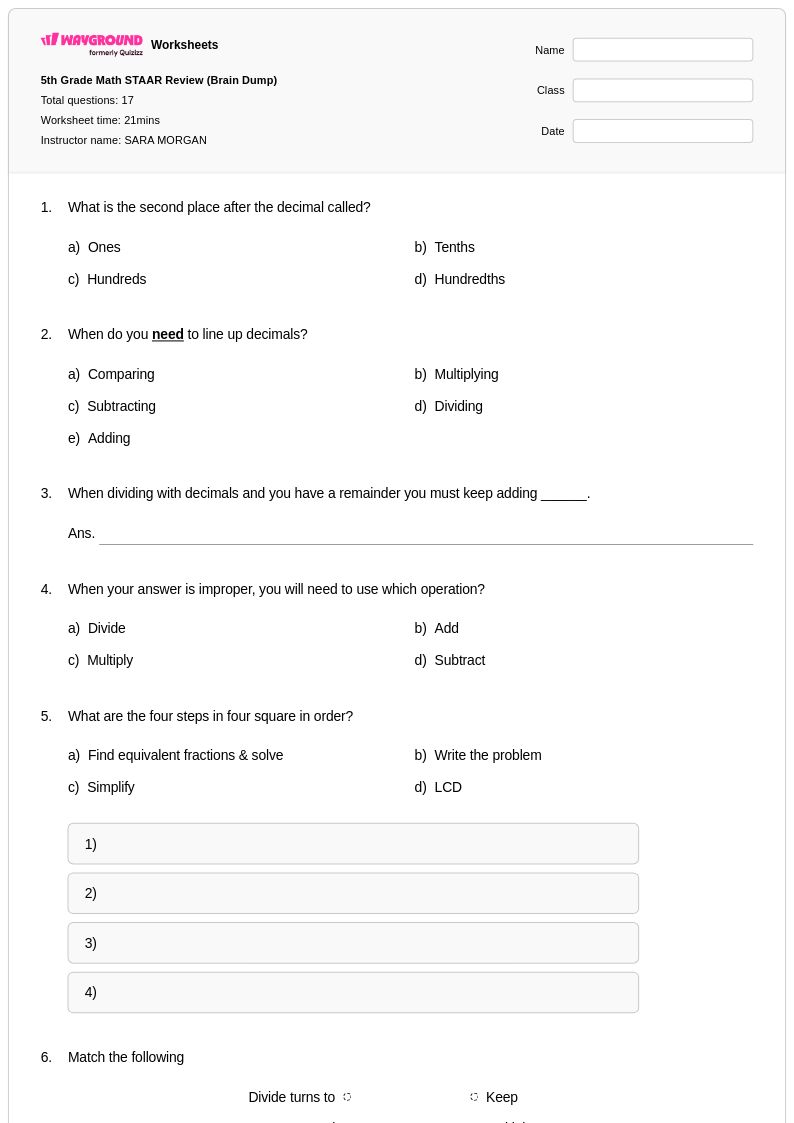
17 Q
5th
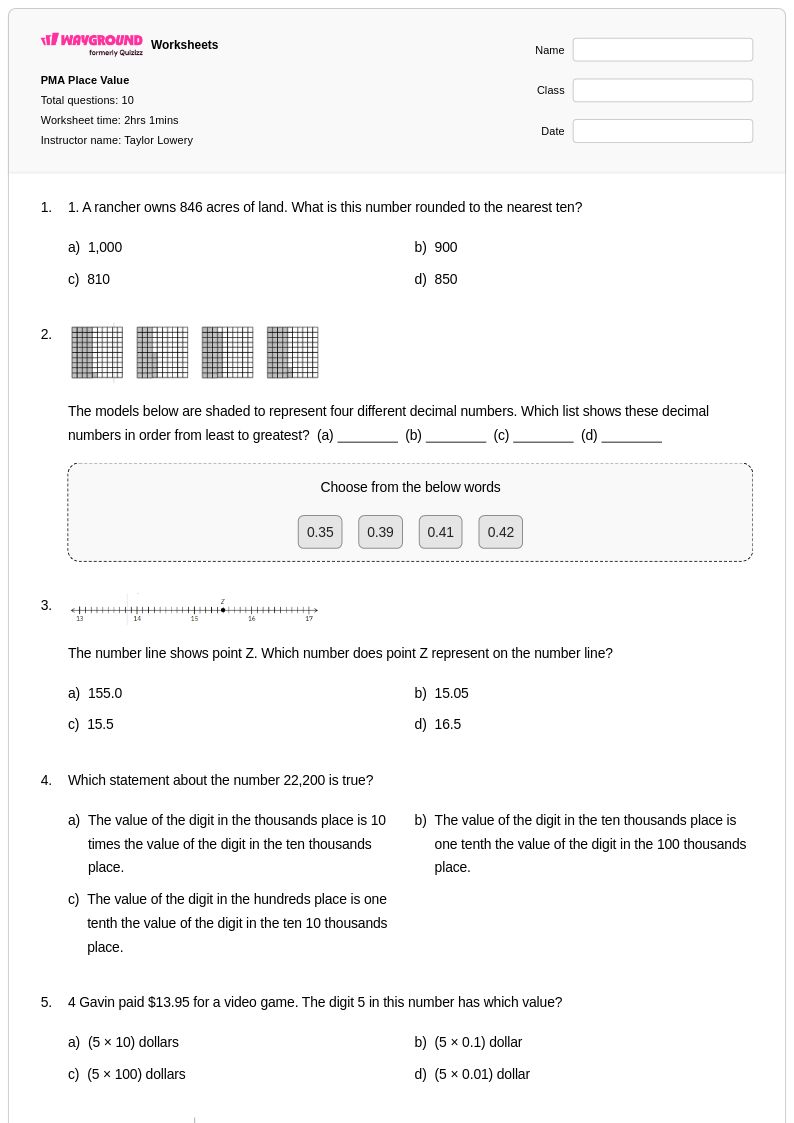
10 Q
4th
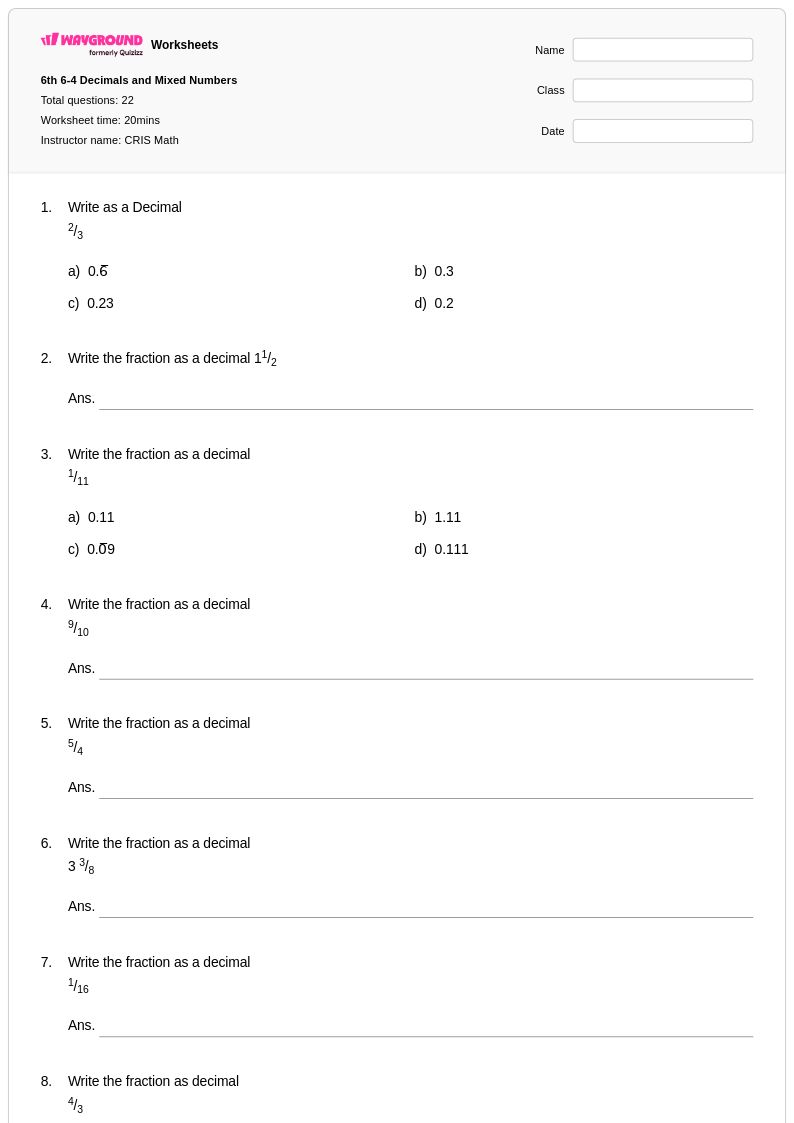
22 Q
6th
Explore Worksheets by Subjects
Explore printable Decimal Models worksheets
Decimal models worksheets available through Wayground (formerly Quizizz) provide students with essential visual and conceptual foundations for understanding decimal notation and place value relationships. These comprehensive practice problems utilize grids, number lines, base-ten blocks, and area models to help learners connect abstract decimal concepts with concrete representations, strengthening their ability to interpret, compare, and manipulate decimal numbers across various mathematical contexts. The collection includes detailed answer keys and free printable resources that systematically progress from basic decimal identification using visual models to more complex applications involving decimal equivalencies and fractional relationships, ensuring students develop both procedural fluency and conceptual understanding of how decimals represent parts of wholes.
Wayground (formerly Quizizz) supports mathematics educators with millions of teacher-created decimal models resources that feature robust search and filtering capabilities, standards alignment, and comprehensive differentiation tools to meet diverse learning needs. Teachers can easily customize worksheets to target specific skill gaps or provide enrichment opportunities, with materials available in both printable pdf formats for traditional classroom use and digital formats for interactive learning experiences. These flexible resources streamline lesson planning by offering ready-to-use materials for skill practice, targeted remediation for struggling learners, and advanced problem sets for enrichment, while the extensive collection ensures educators can find age-appropriate decimal modeling activities that align with their curriculum objectives and pacing requirements.
FAQs
How do I teach decimal models so students understand place value?
What exercises help students practice decimal models?
What mistakes do students commonly make with decimal models?
How can I use a decimal models worksheet on Wayground?
How do decimal models fit into the Common Core math progression?
How can I differentiate decimal model practice for mixed-ability classes?