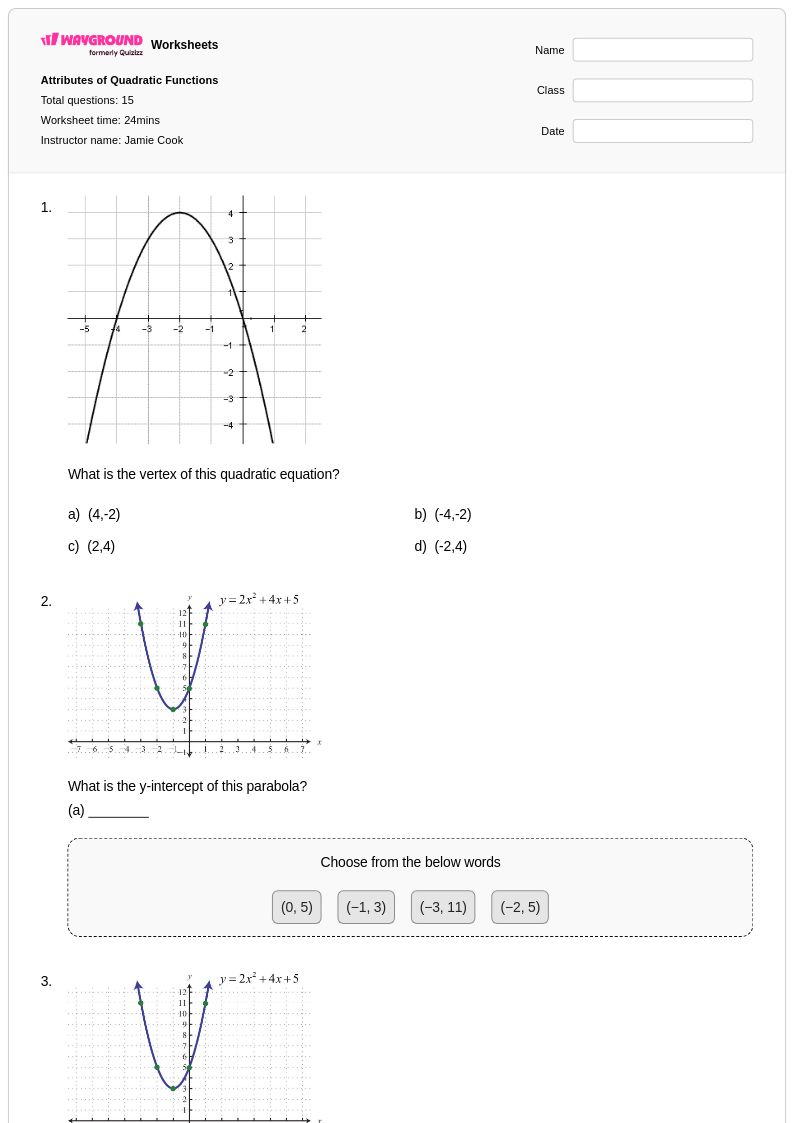
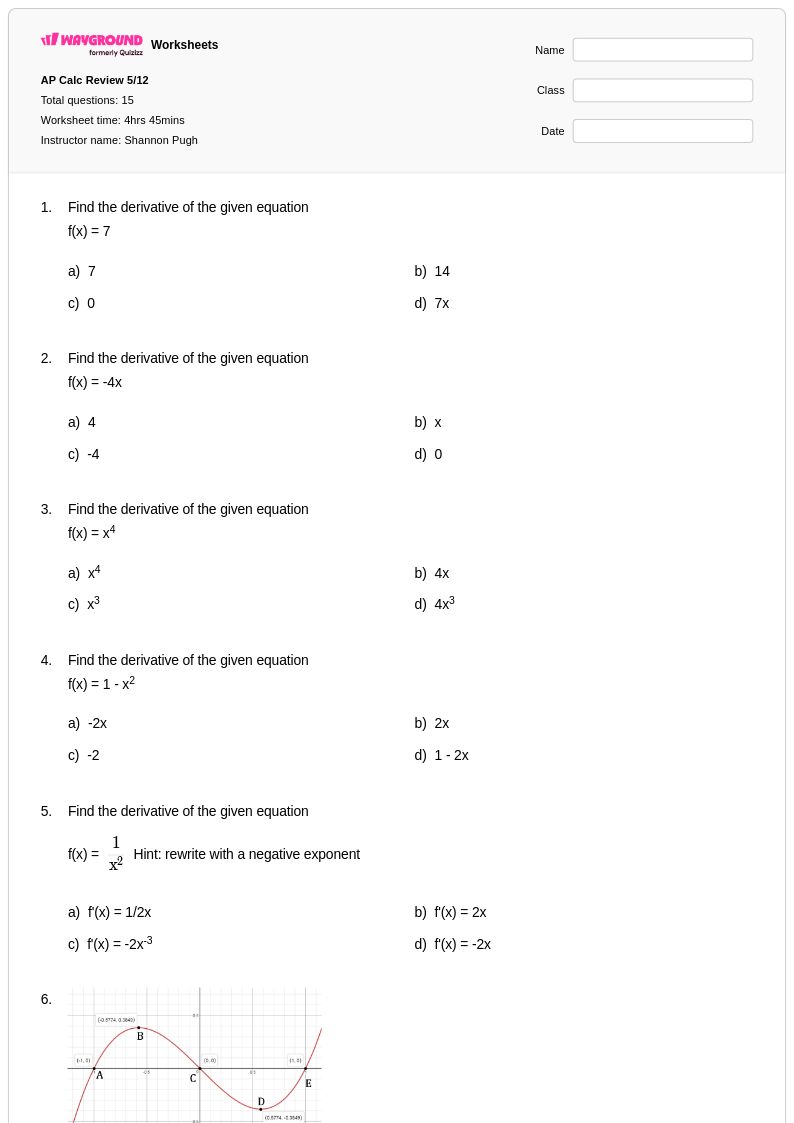
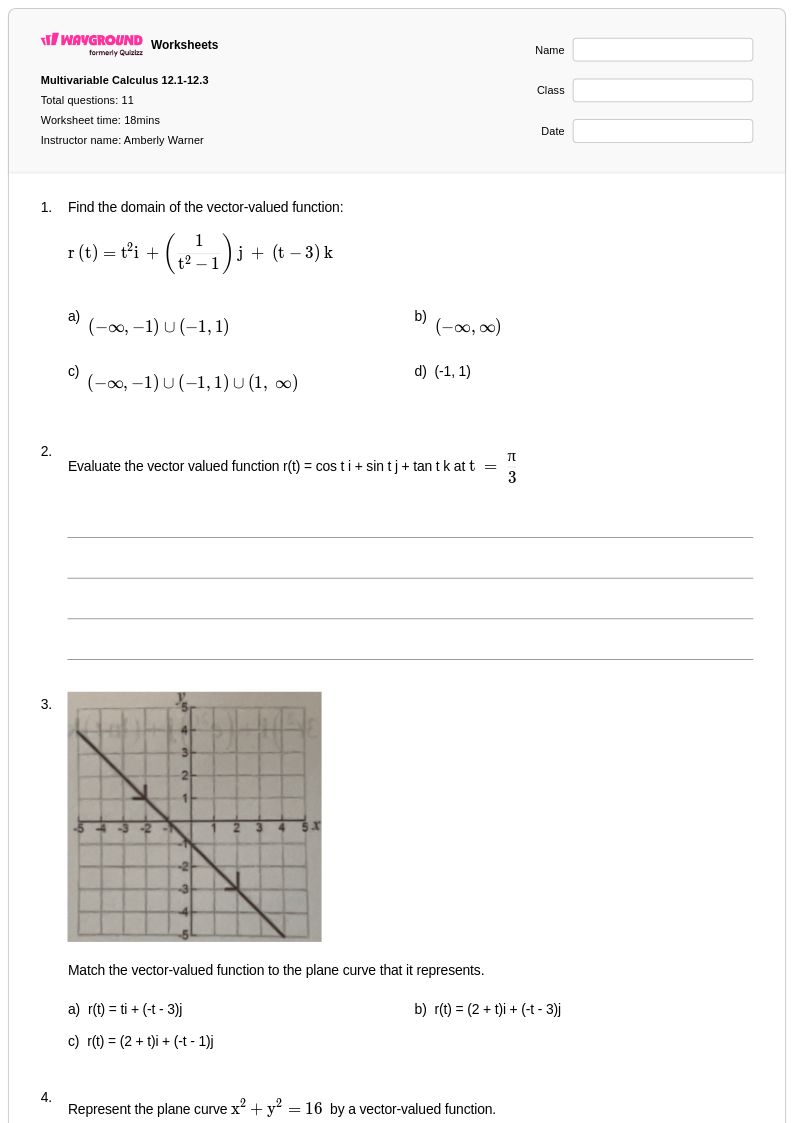
Free Printable Derivatives of Integral Functions worksheets
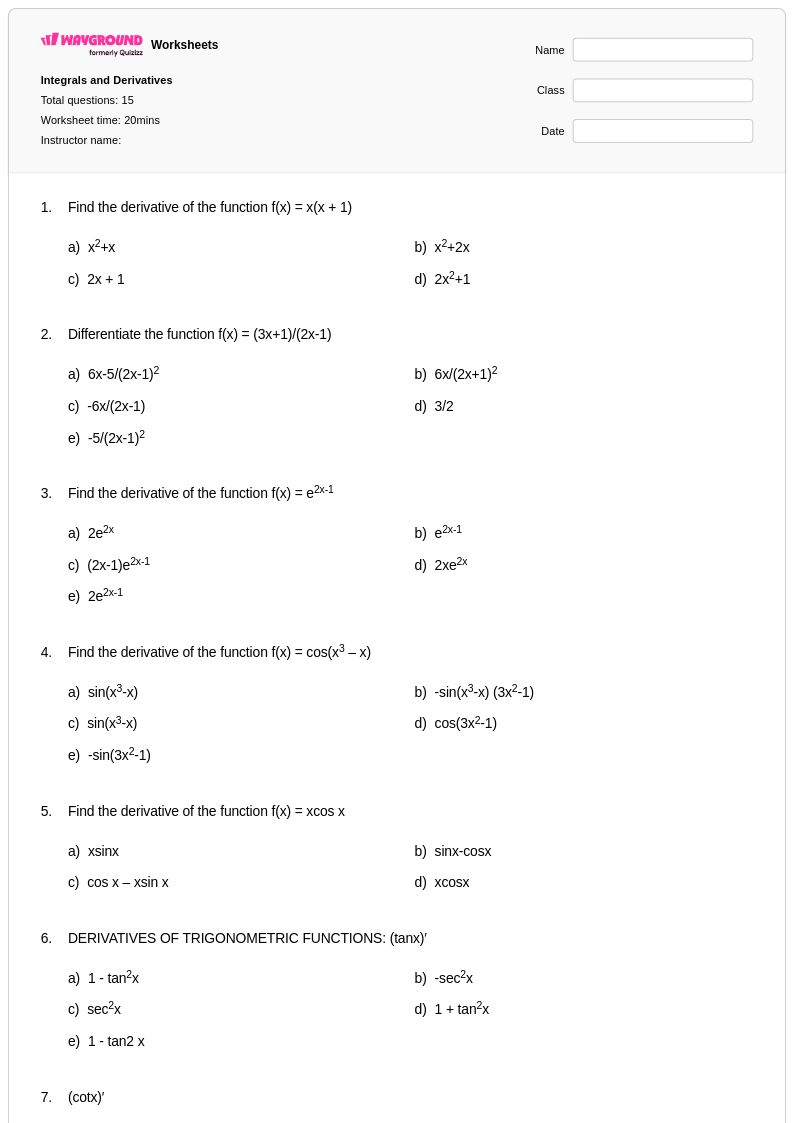
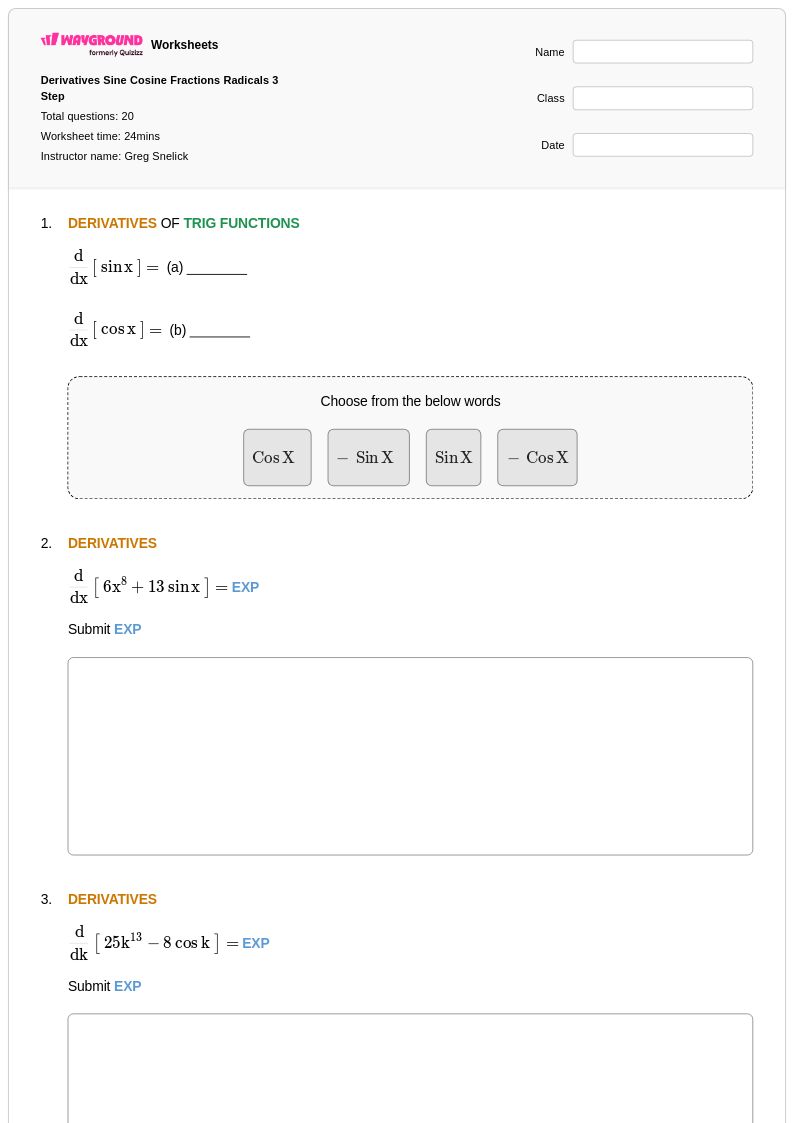
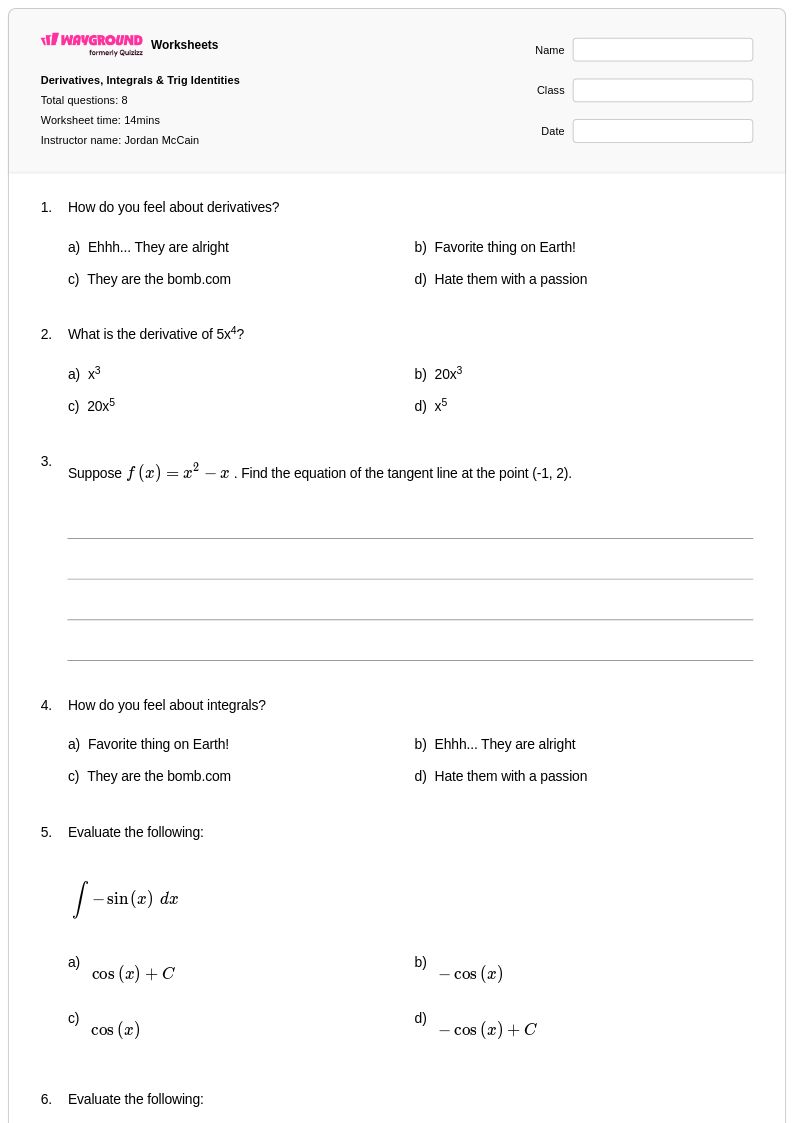
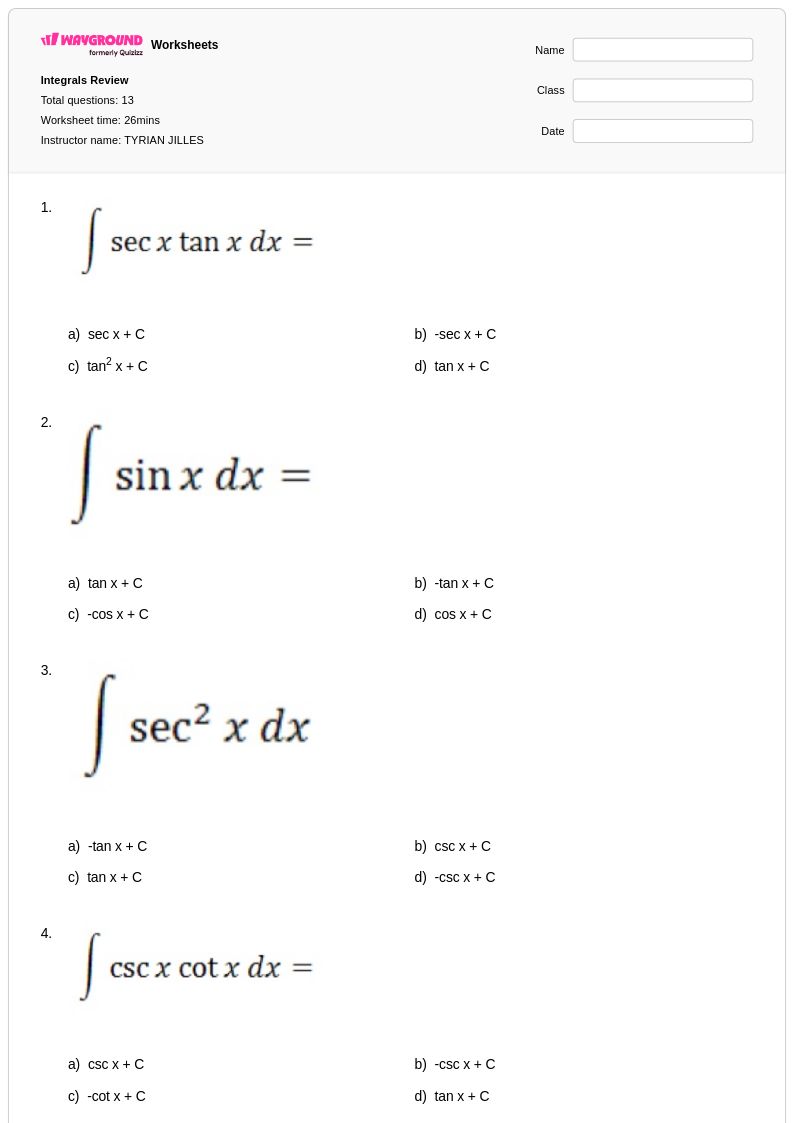
Master derivatives of integral functions with Wayground's comprehensive collection of free calculus worksheets, featuring step-by-step practice problems, detailed answer keys, and printable PDF resources to strengthen your understanding of this advanced mathematical concept.
Explore printable Derivatives of Integral Functions worksheets
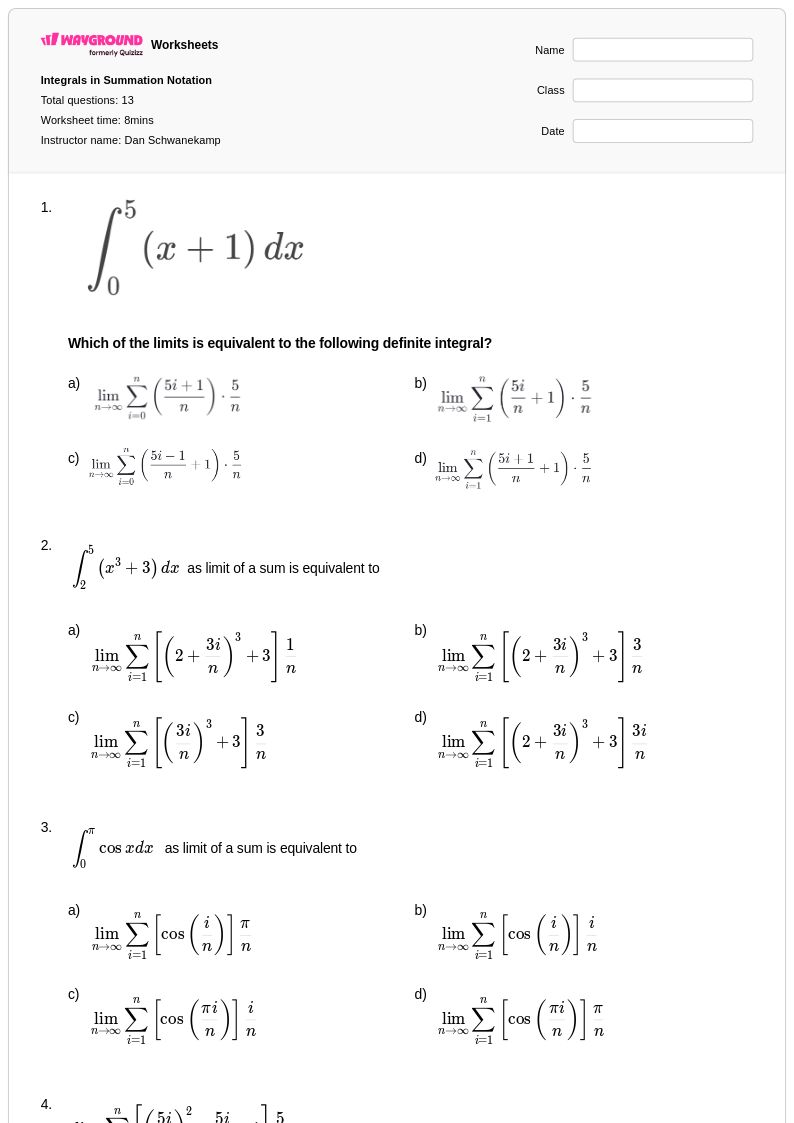
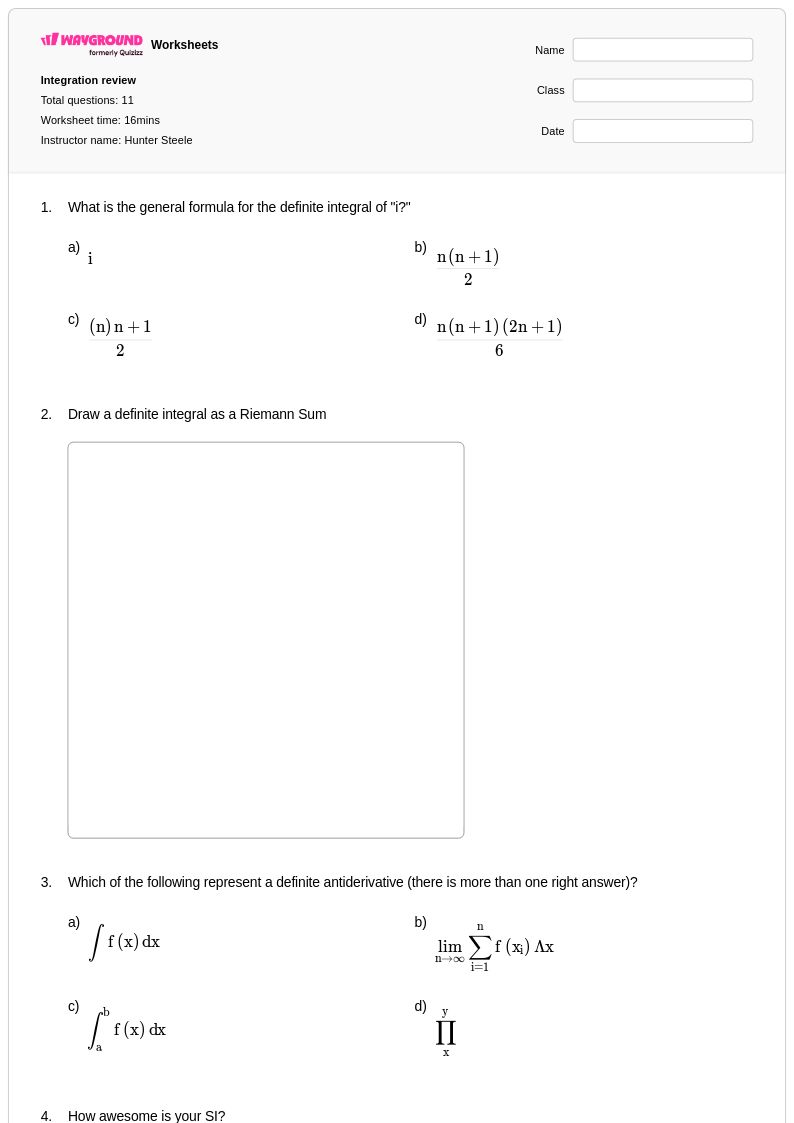
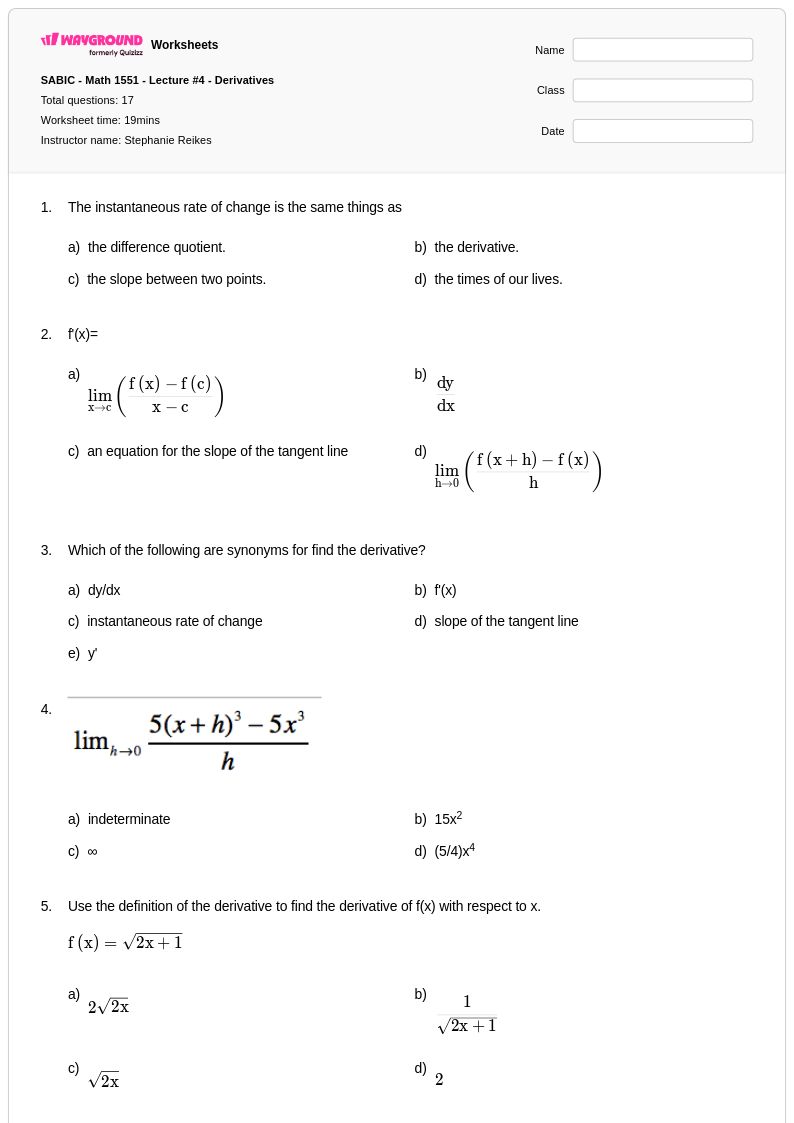
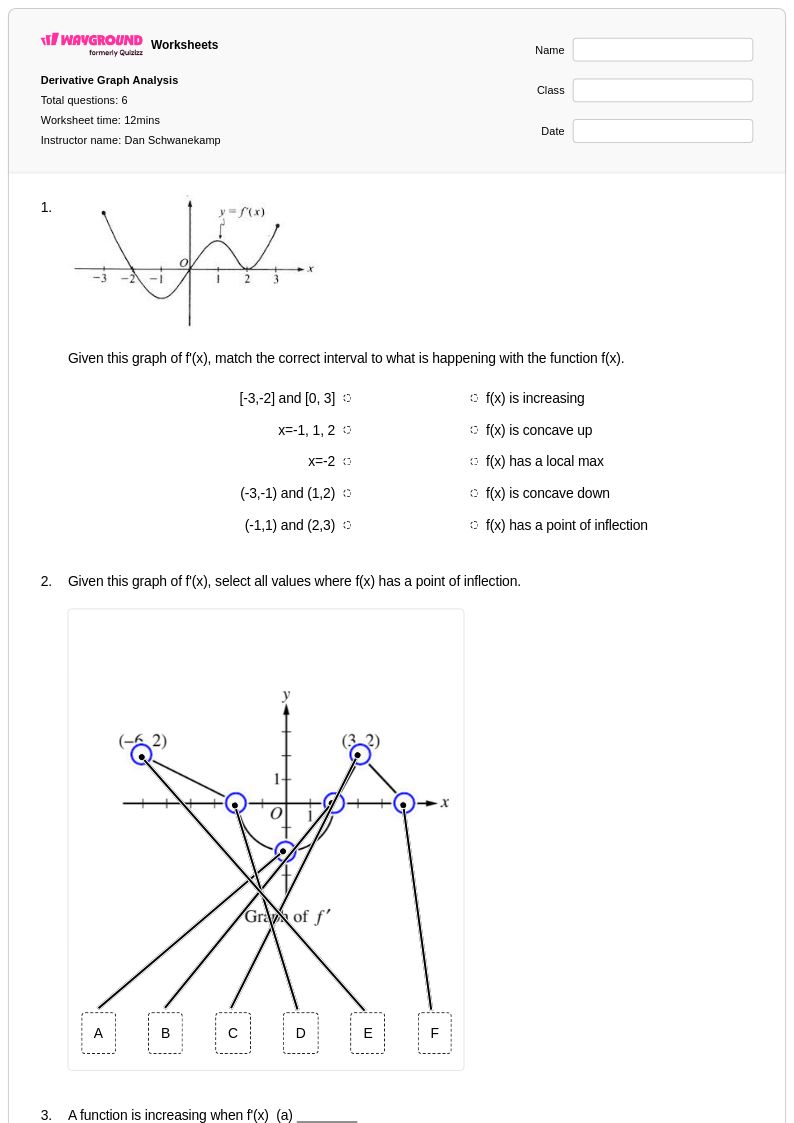
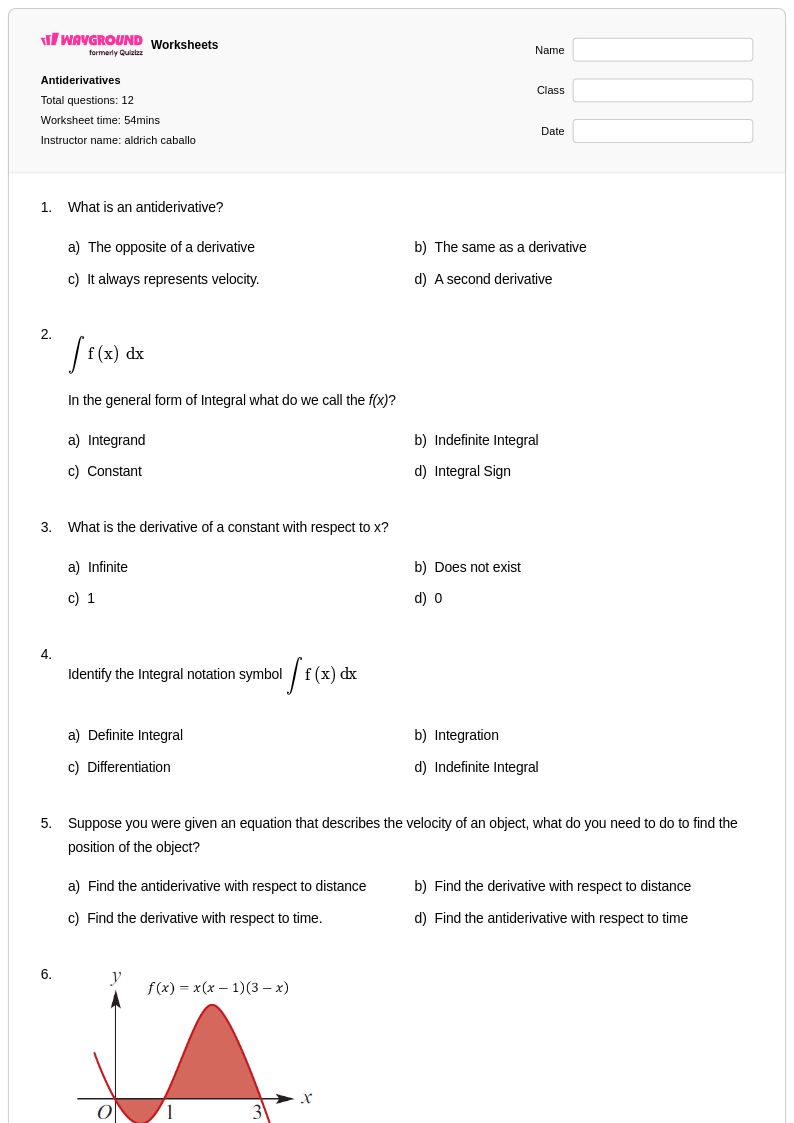
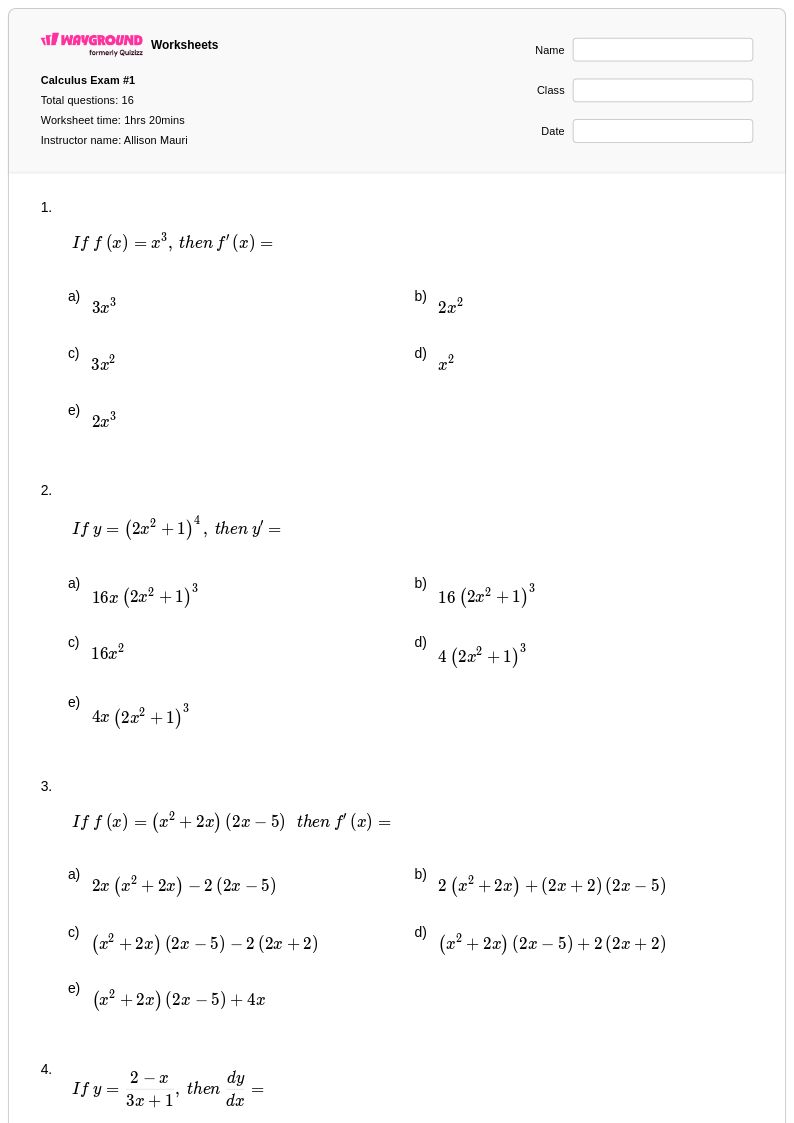
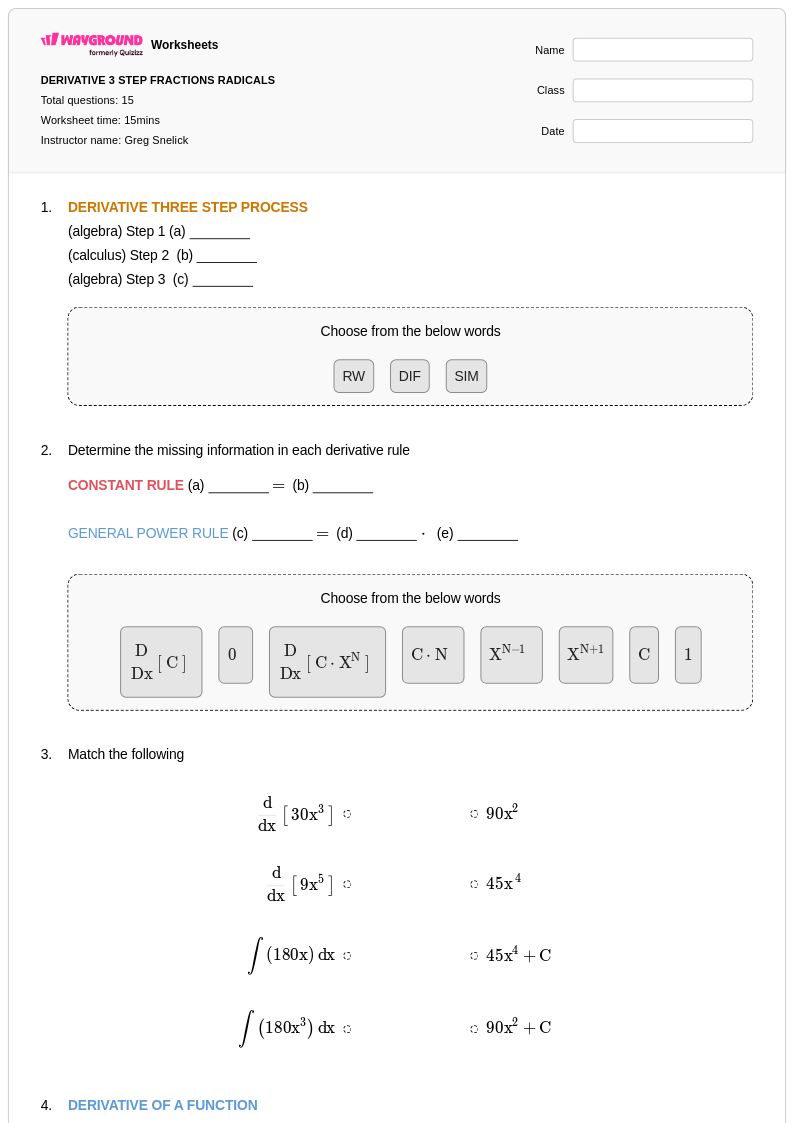
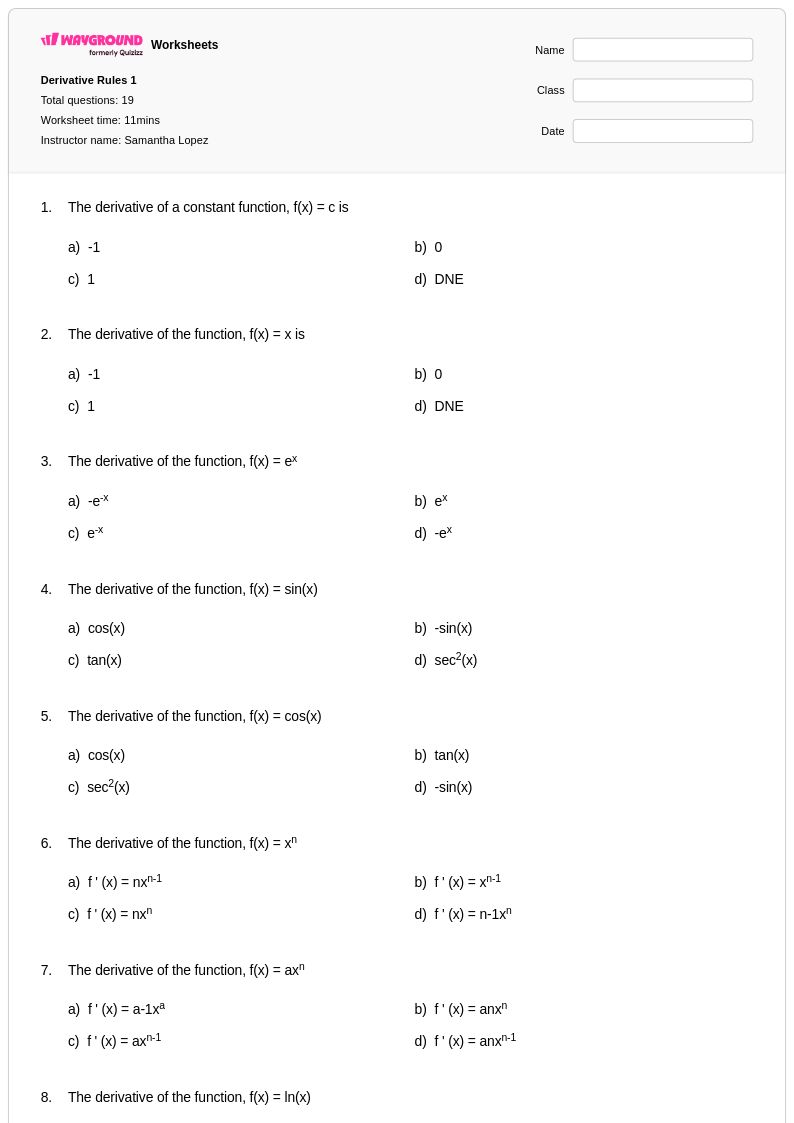
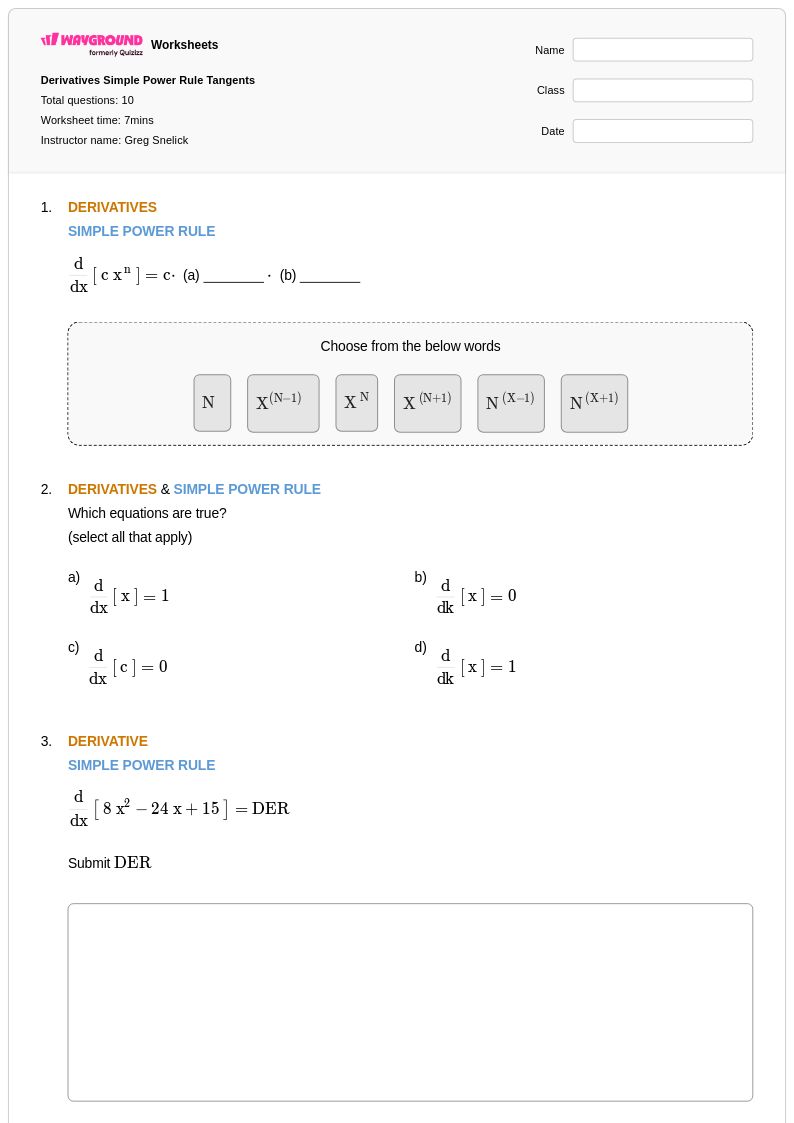
Derivatives of integral functions represent a sophisticated area of calculus that bridges the fundamental theorem of calculus with advanced differentiation techniques. Wayground's comprehensive worksheet collection focuses specifically on this challenging subtopic, providing students with essential practice in differentiating functions defined by integrals, applying Leibniz integral rules, and mastering the relationship between integration and differentiation. These carefully crafted worksheets strengthen critical analytical skills including recognizing when to apply the fundamental theorem of calculus, evaluating derivatives of functions with variable limits of integration, and solving complex problems involving parametric integrals. Each worksheet comes complete with detailed answer keys and step-by-step solutions, available as free printable pdf resources that support both classroom instruction and independent study through systematically structured practice problems.
Wayground's robust platform empowers educators with millions of teacher-created resources specifically designed for derivatives of integral functions, featuring advanced search and filtering capabilities that help instructors quickly locate materials aligned with their curriculum standards and student needs. The platform's sophisticated differentiation tools enable teachers to customize worksheets for various skill levels, from introductory applications of the fundamental theorem to advanced techniques involving multivariable calculus and complex analysis. These resources are available in both printable and interactive digital formats, including professionally formatted pdf downloads that maintain mathematical notation integrity across devices. Teachers can seamlessly integrate these materials into lesson planning, targeted remediation sessions, and enrichment activities, while the flexible customization options support diverse learning styles and help students build confidence in this mathematically intensive area of calculus.
FAQs
How do I teach derivatives of integral functions?
Start with the First Fundamental Theorem of Calculus before introducing variable limits of integration — students need to see differentiation and integration as inverse operations before they can work with integral-defined functions fluently. From there, build toward the chain rule extension: when the upper limit is a composite expression rather than just x, students apply the chain rule to the result of the FTC. A common sequencing that works well is: constant limits → single variable limit → chain rule cases → Leibniz's rule for limits that are both variable. Concrete examples at each stage matter more than rushing to the general rule.
What exercises help students practice derivatives of integral functions?
The most productive practice moves from recognition to execution: first, problems where students identify which form of the FTC applies, then problems requiring the chain rule on the upper limit, then Leibniz's rule problems with variable lower and upper limits. Mixed sets that don't signal which technique to use are especially valuable once students know the individual cases — that's where the real skill of choosing the right approach gets built.
What mistakes do students commonly make with derivatives of integral functions?
Three errors come up repeatedly. First, students forget to apply the chain rule when the limit of integration is a function of x rather than x itself — they differentiate correctly but drop the derivative of the limit. Second, they confuse the direction of the FTC when the variable is in the lower limit, not the upper, and miss the sign change. Third, when both limits are variable, students try to apply the basic FTC directly instead of splitting the integral and using Leibniz's rule. Targeted practice on each of these cases separately, before mixing them, reduces all three.
How do I use Wayground's derivatives of integral functions worksheets in my class?
Each worksheet includes a complete answer key with step-by-step solutions, so it works equally well for guided practice or independent work. You can assign it as a digital quiz hosted on Wayground, useful when you want instant scoring, or download the printable PDF and hand it out on paper. If you go the paper route, the Wayground for Teachers app lets you scan or capture student submissions for grading without re-entering everything manually.
How does derivatives of integral functions fit into the calculus curriculum sequence?
In the standard US calculus progression aligned with College Board's AP Calculus framework, this topic sits after students have learned basic integration and the two parts of the Fundamental Theorem of Calculus. It builds directly on the FTC Part 1, the idea that differentiation undoes integration, and extends it by introducing variable limits and composite expressions. It leads into more advanced integration techniques and, for students continuing to multivariable calculus, toward differentiation under the integral sign. Students who haven't yet internalized the FTC as a two-way relationship between derivatives and integrals will struggle here, which is why that conceptual foundation needs to be solid first.
How can I differentiate derivatives of integral functions practice for students at different levels?
For students who are still shaky on the FTC itself, Wayground's worksheet-level tools let you create a modified version with wider font spacing and a larger font size, which reduces visual clutter on notation-heavy problems. For students who need more support during a digital session, the Read Aloud accommodation reads question text aloud, and reduced answer choices can lower the cognitive load on multiple-choice items while students build confidence. Advanced students can move directly to Leibniz's rule problems and mixed sets without scaffolding — the same worksheet collection covers that range.