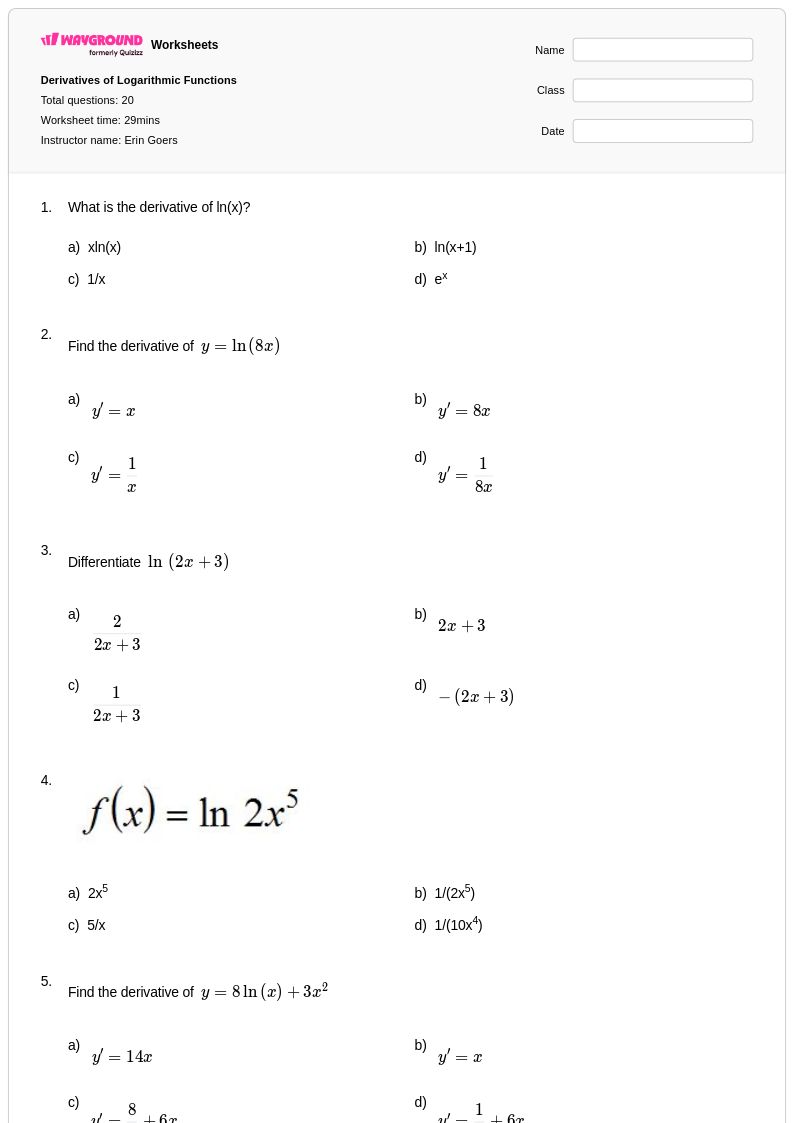
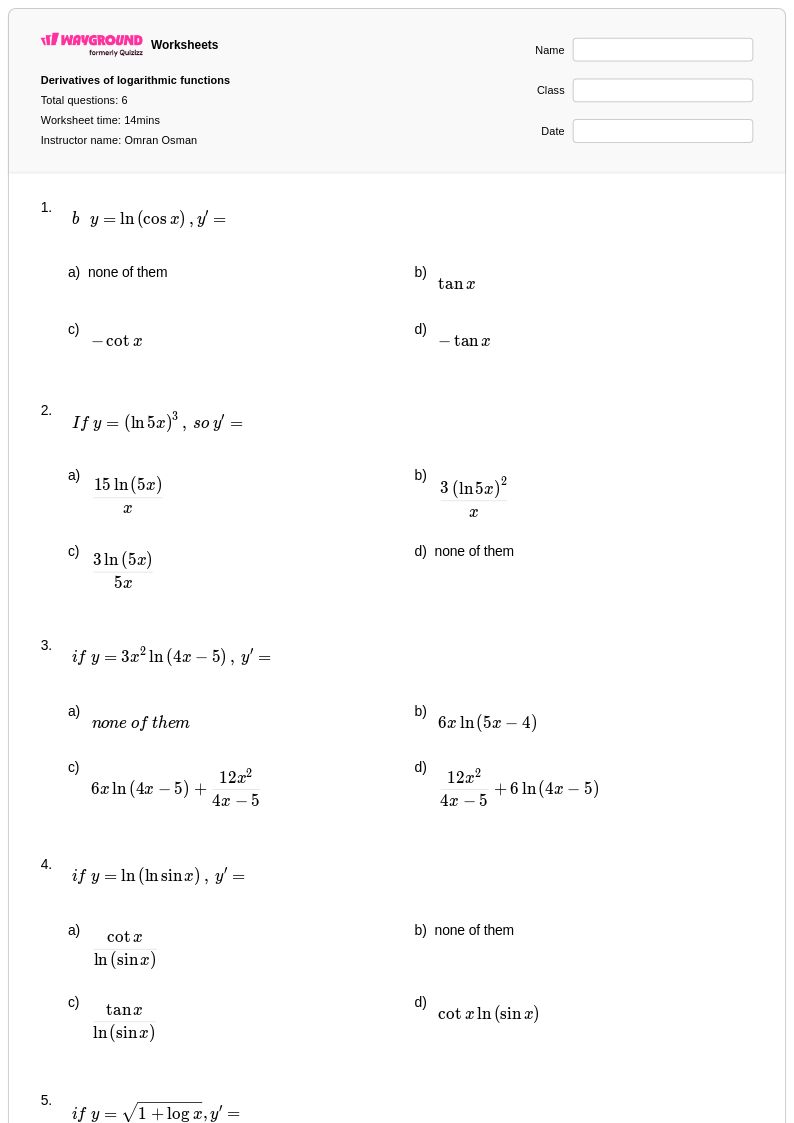
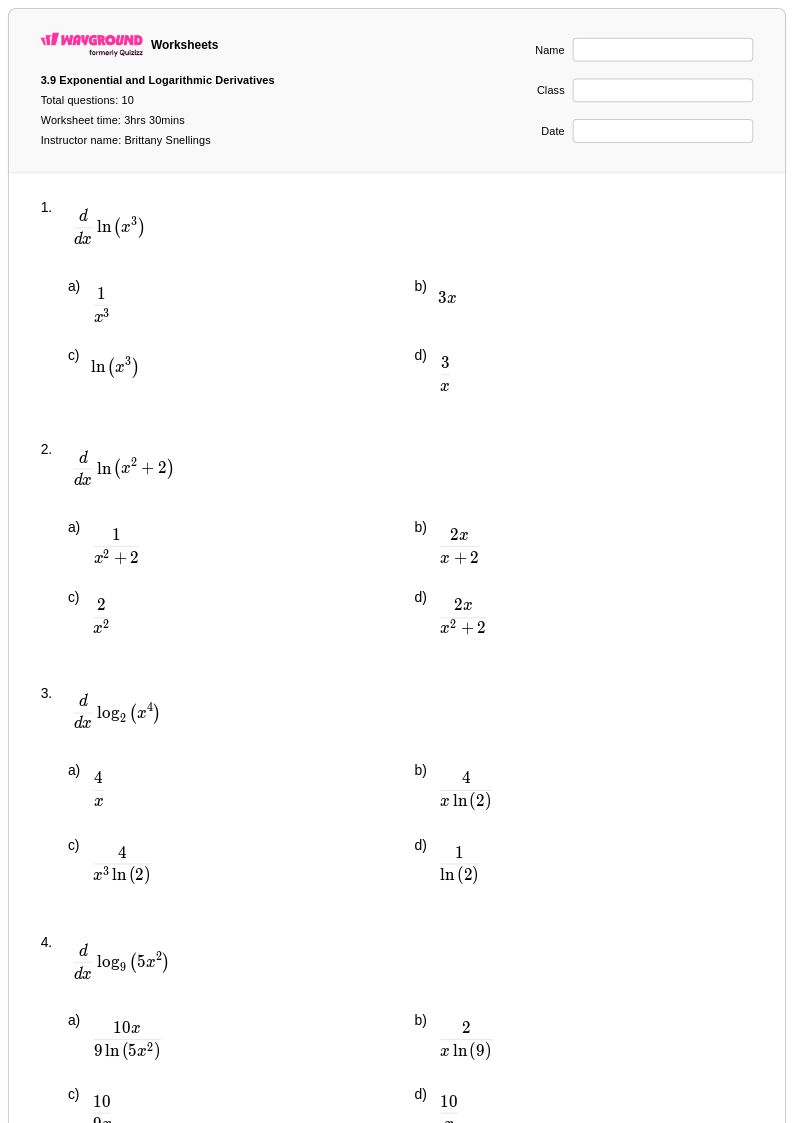
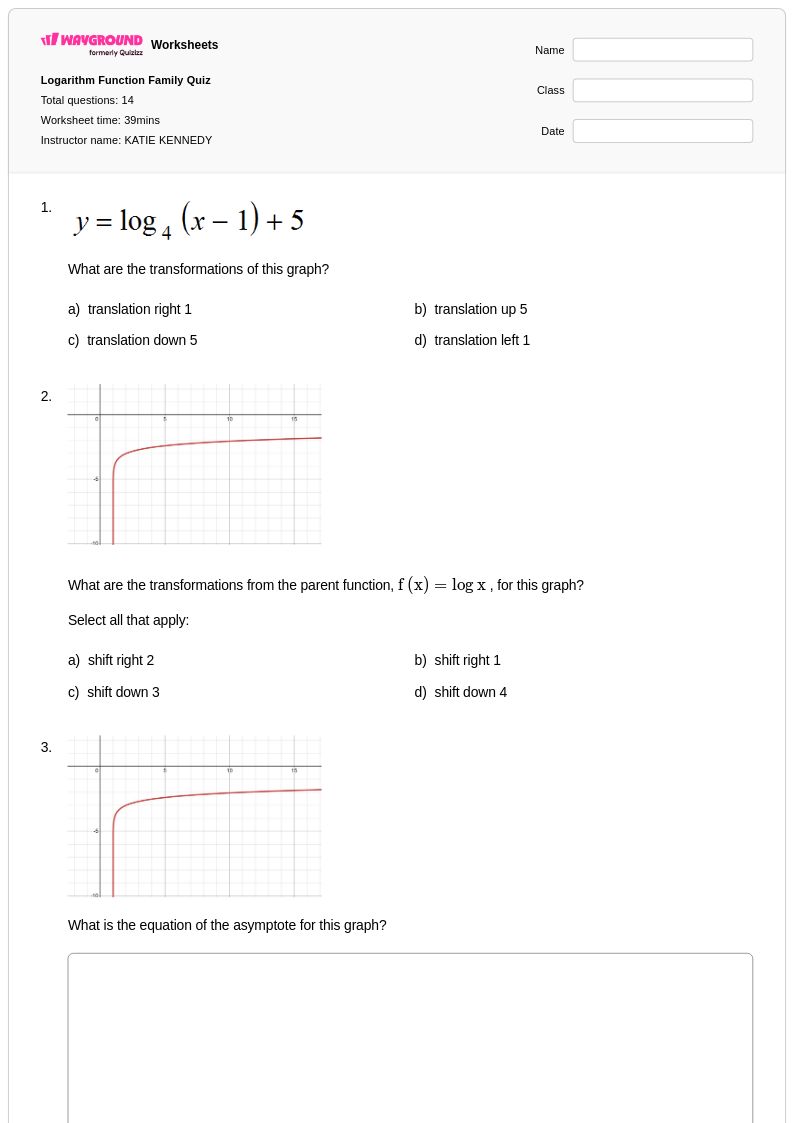
Free Printable Derivatives of Logarithmic Functions Worksheets for Class 12
Class 12 mathematics students can master derivatives of logarithmic functions with Wayground's comprehensive collection of free worksheets, printables, and practice problems featuring detailed answer keys and step-by-step PDF solutions.
Explore printable Derivatives of Logarithmic Functions worksheets for Class 12
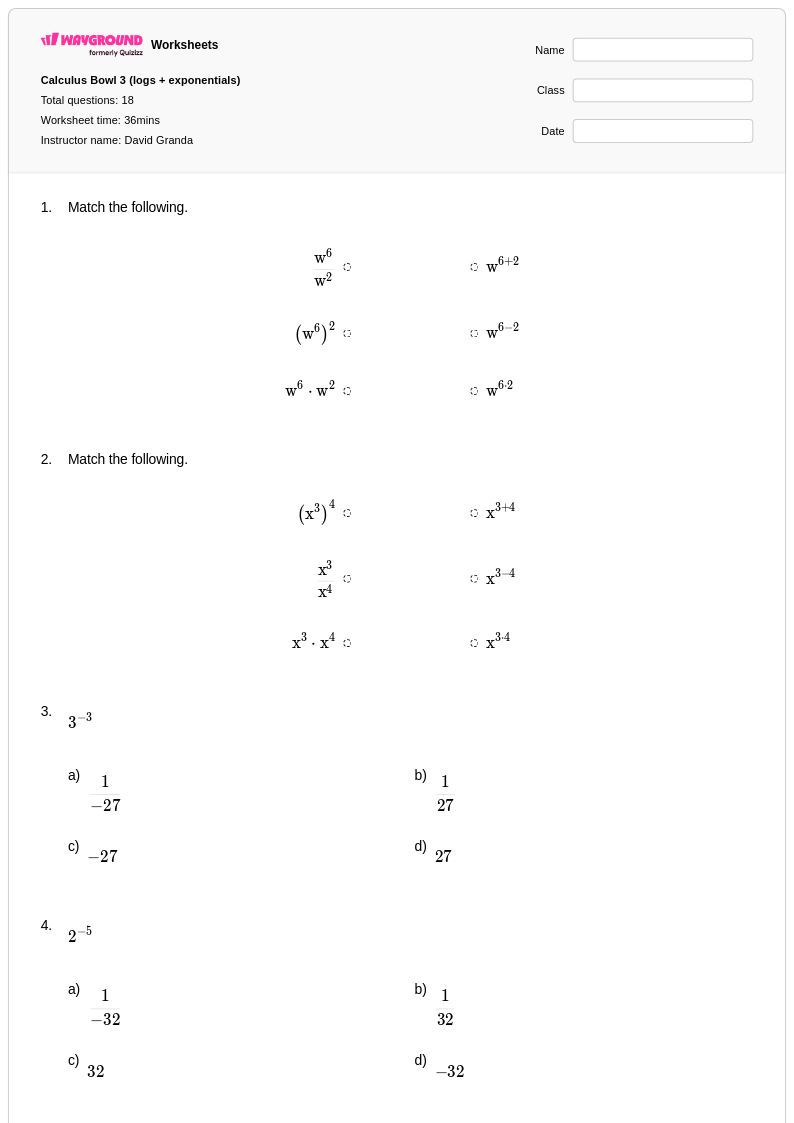
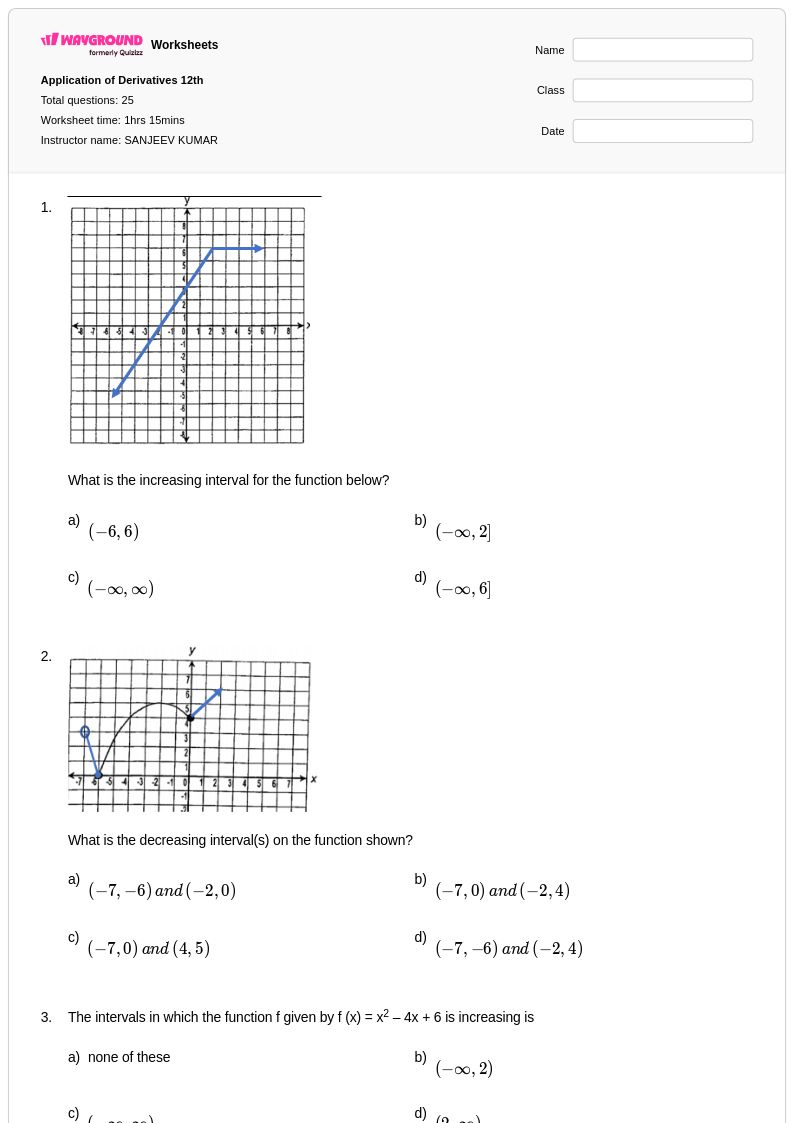
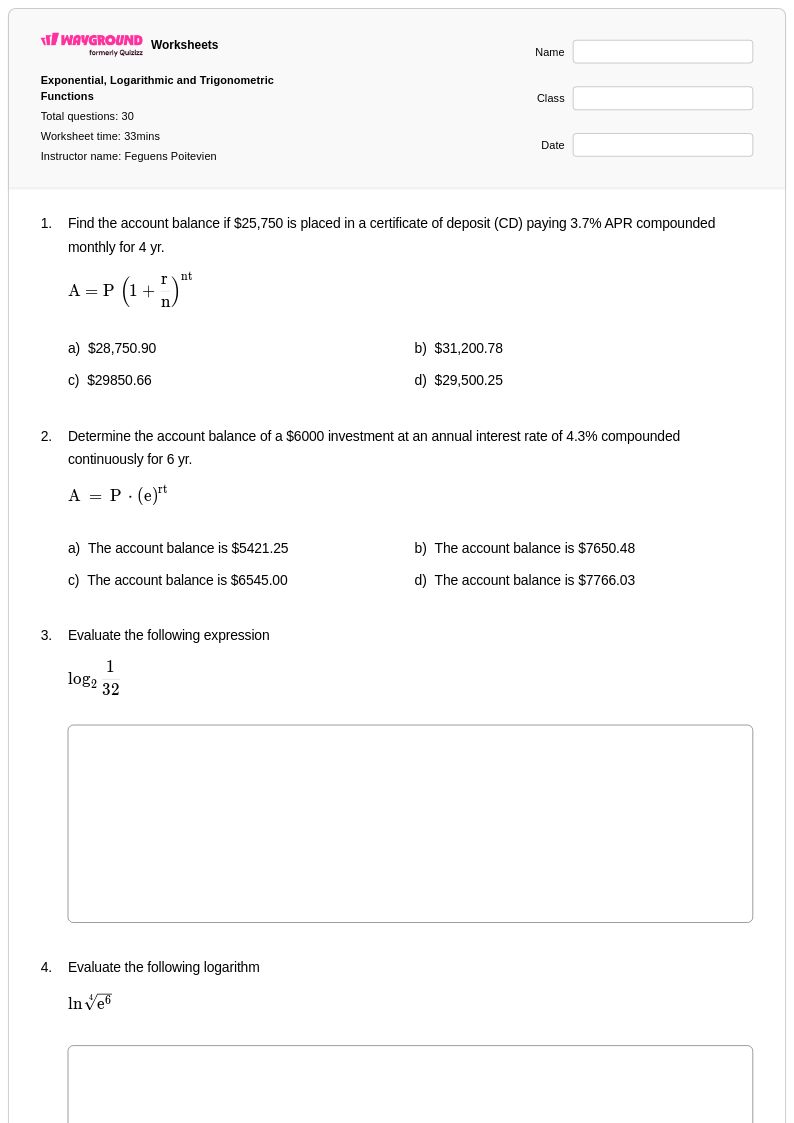
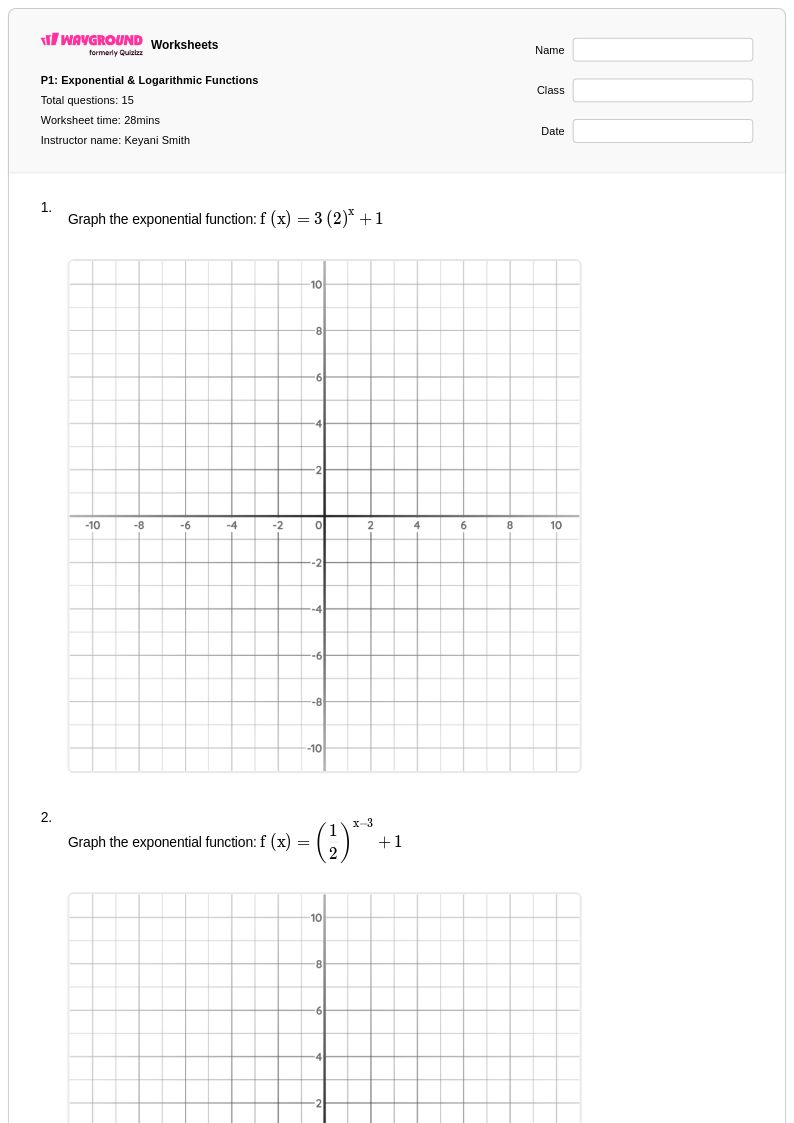
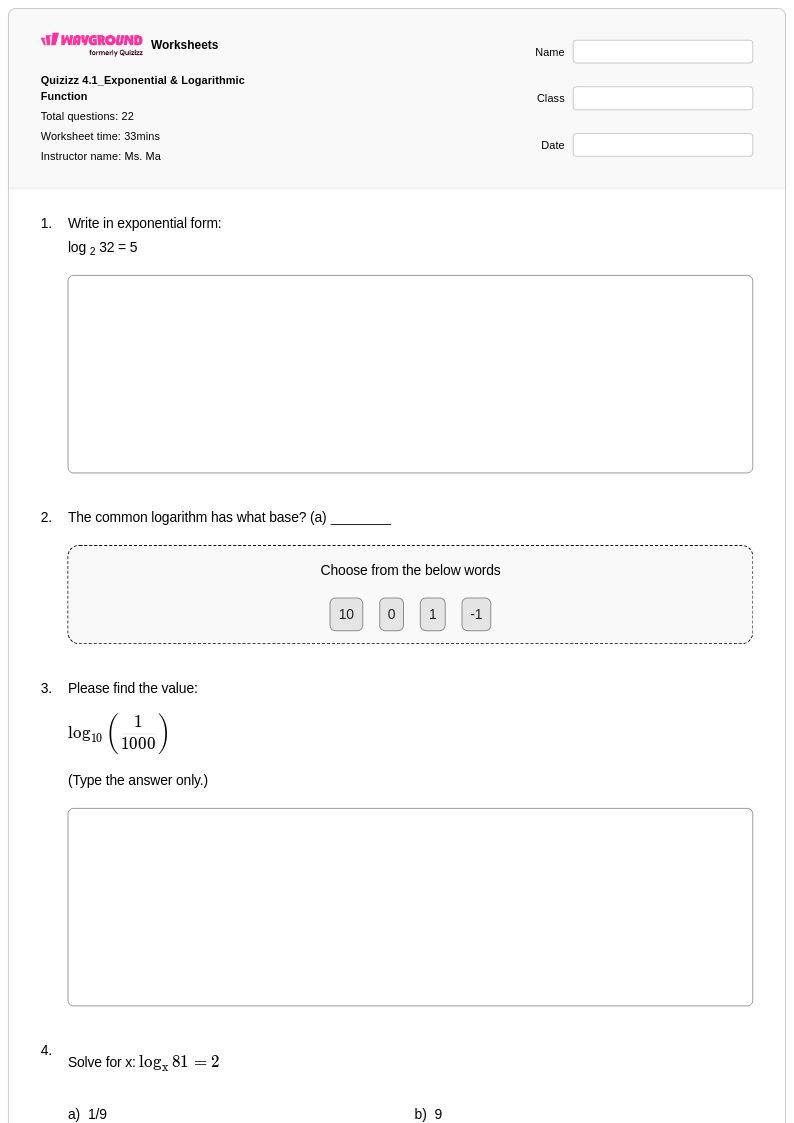
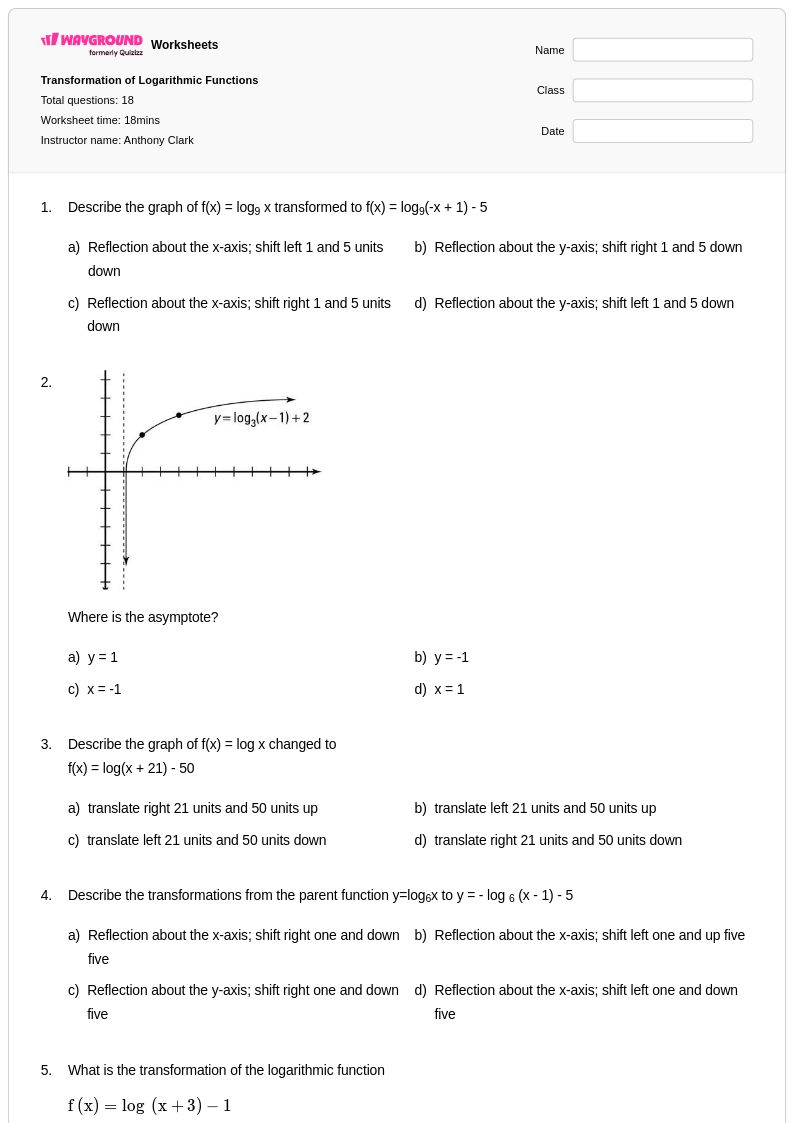
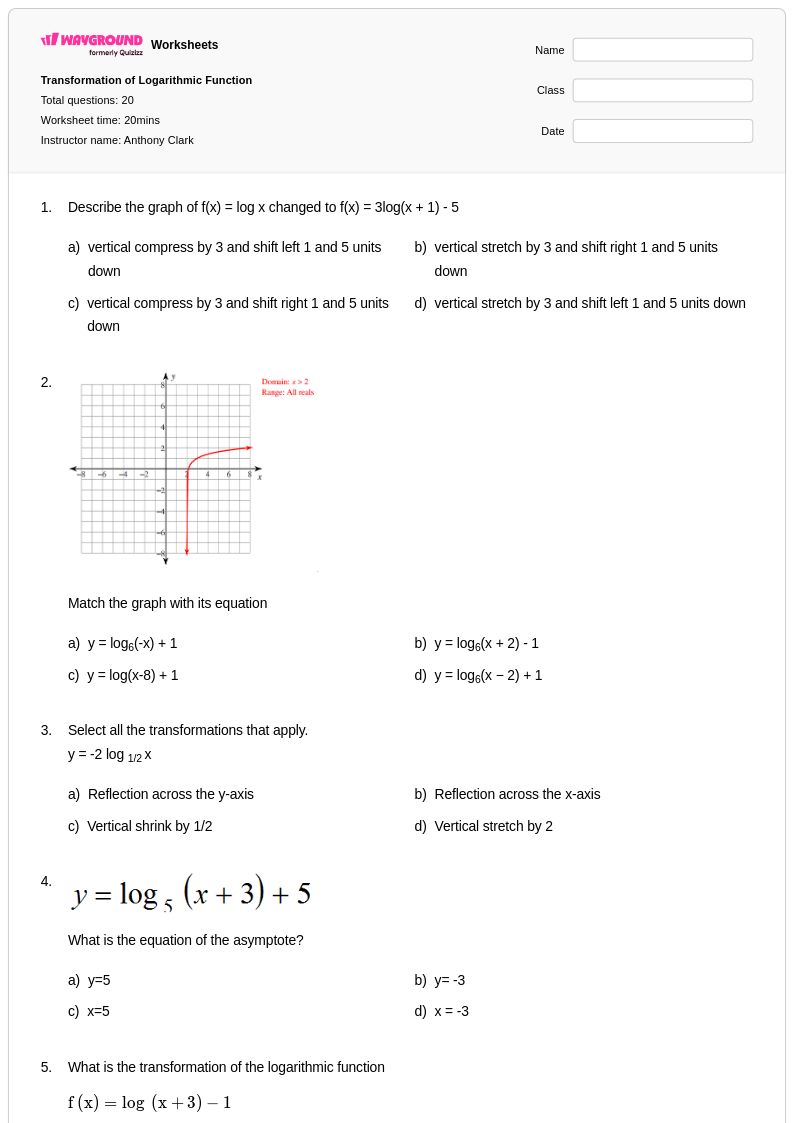
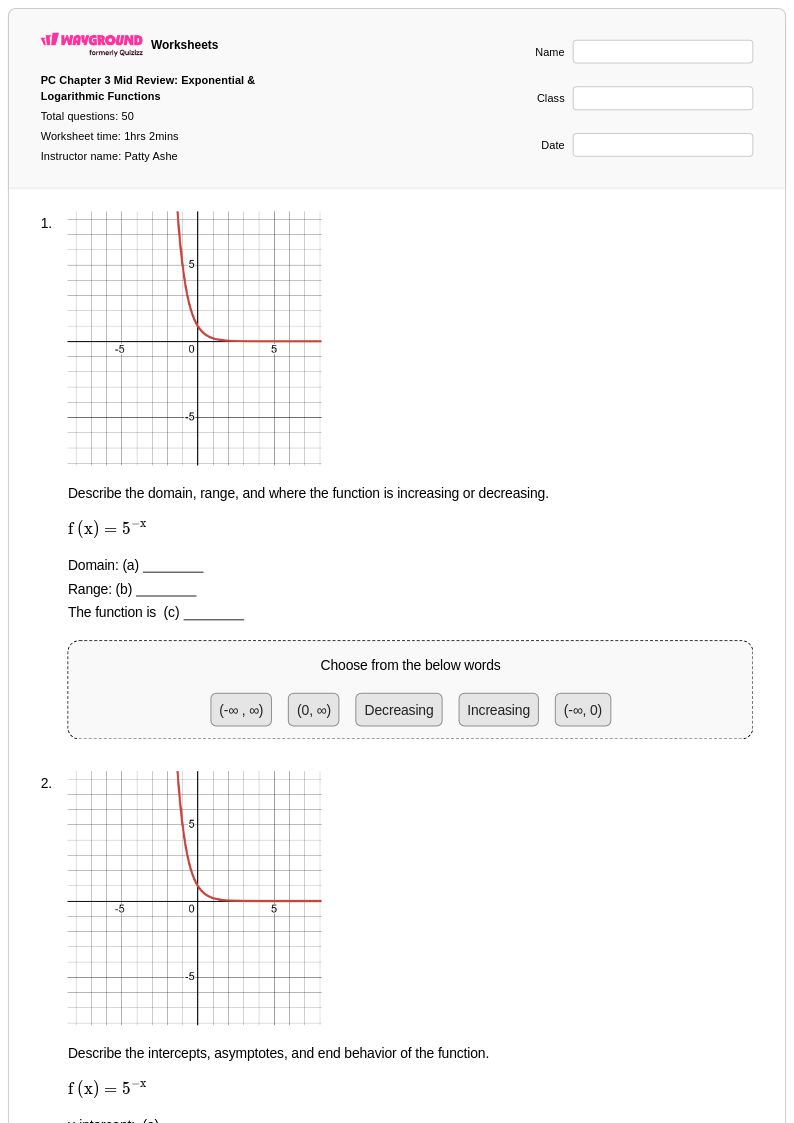
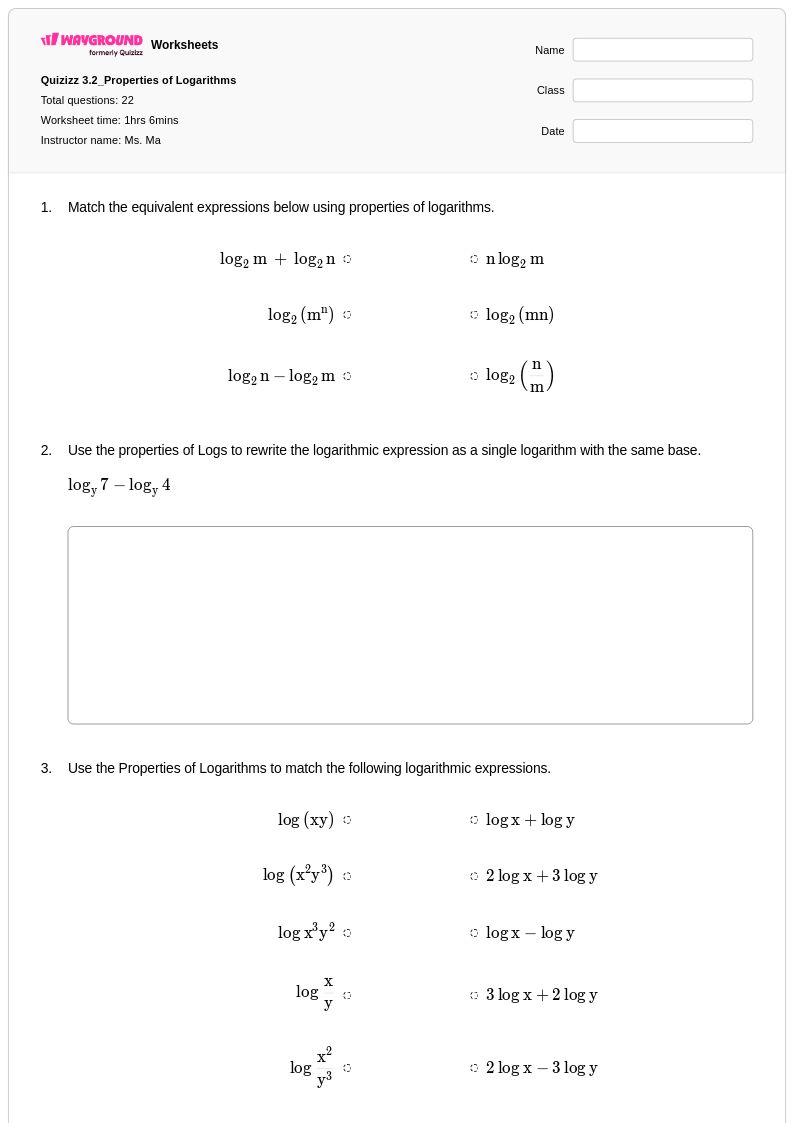
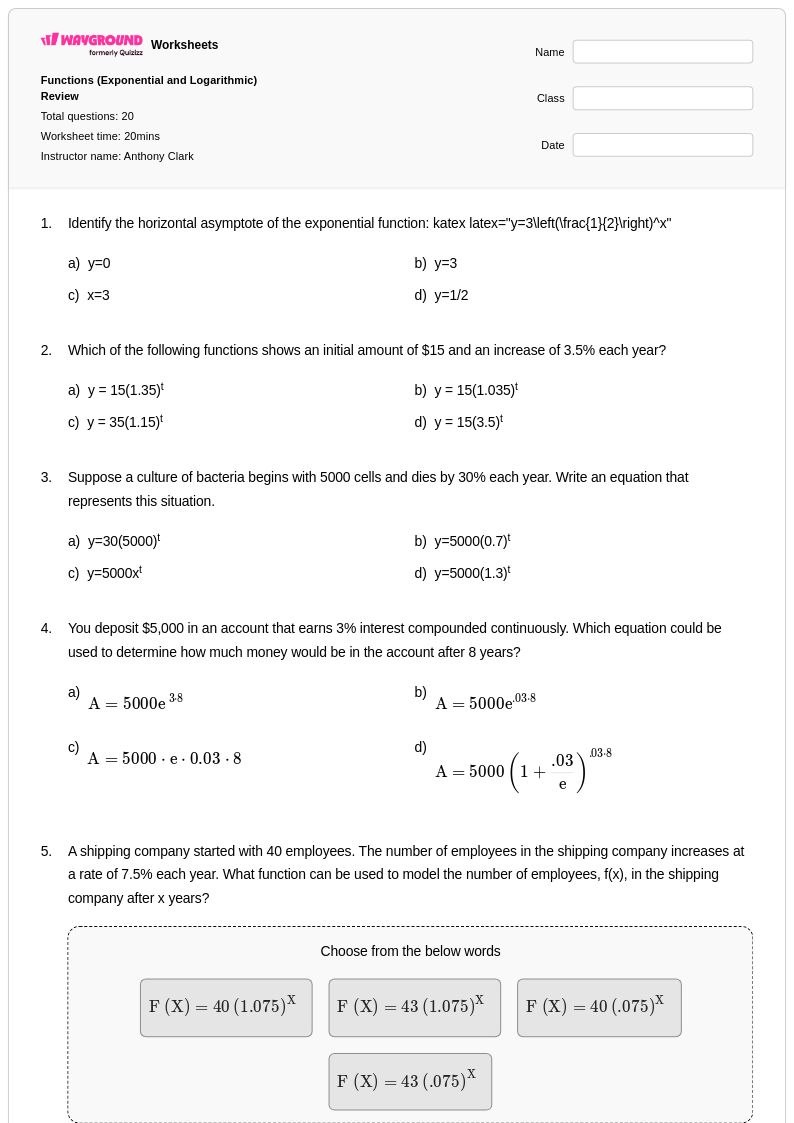
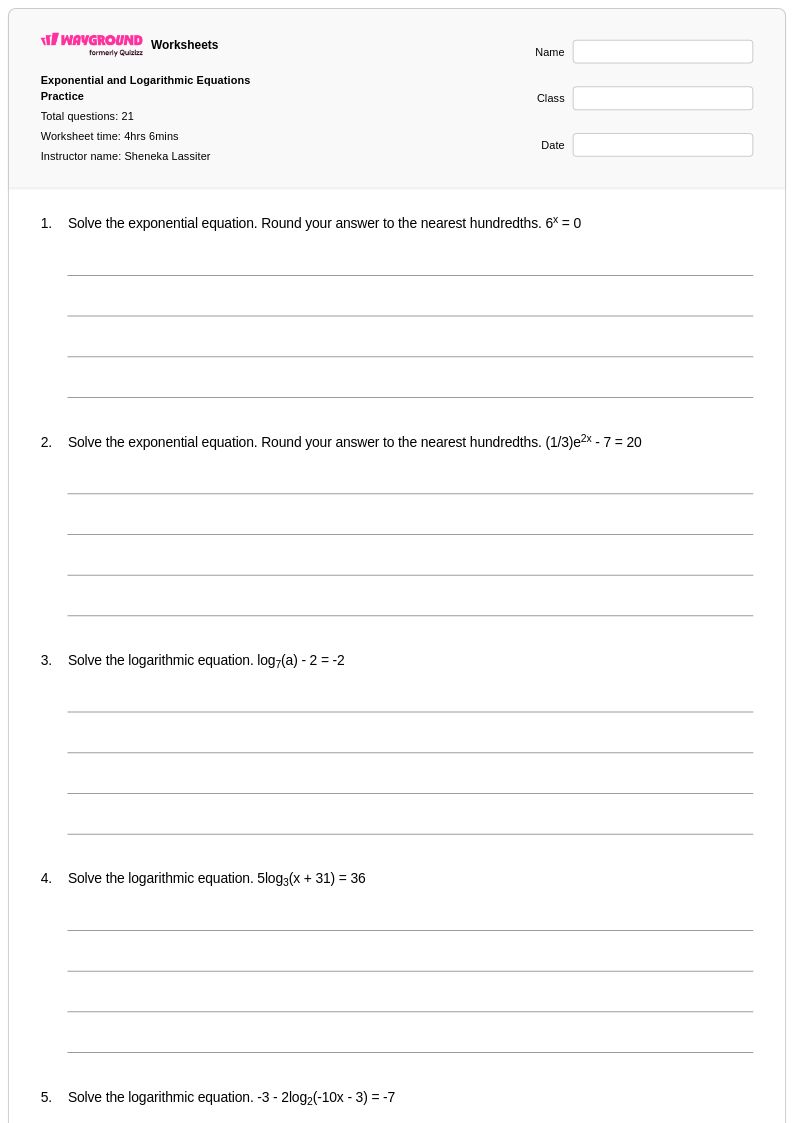
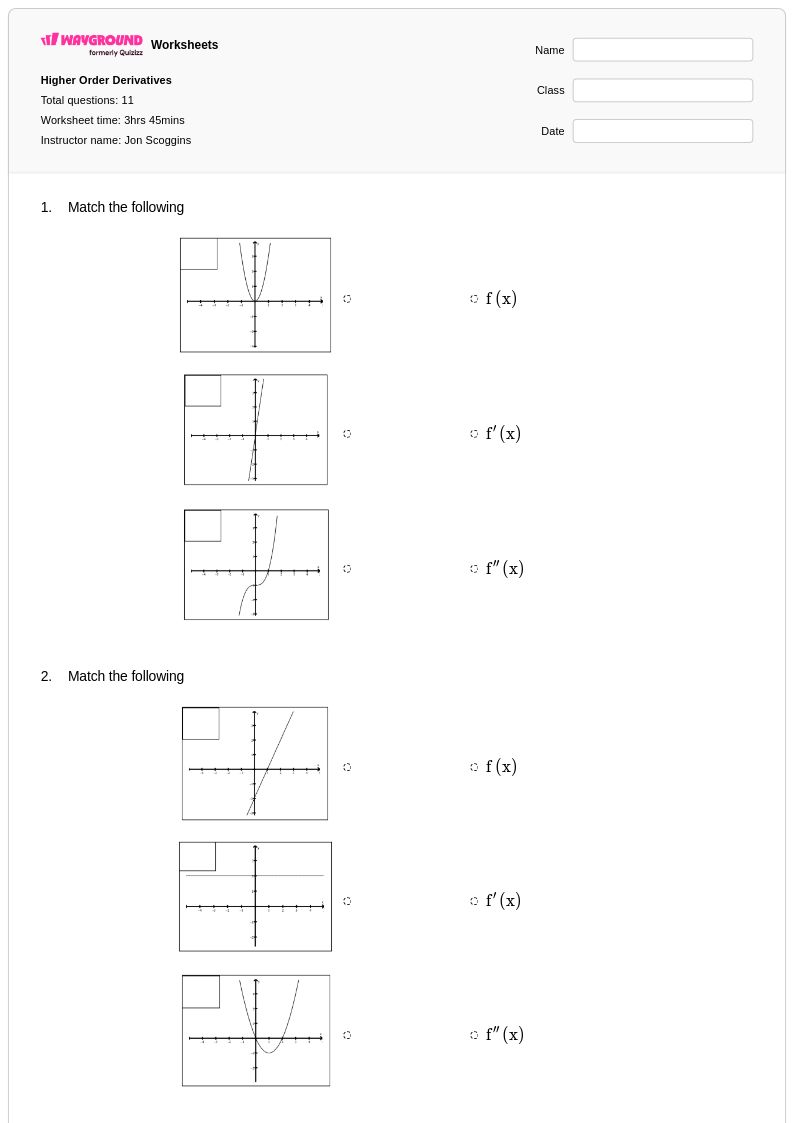
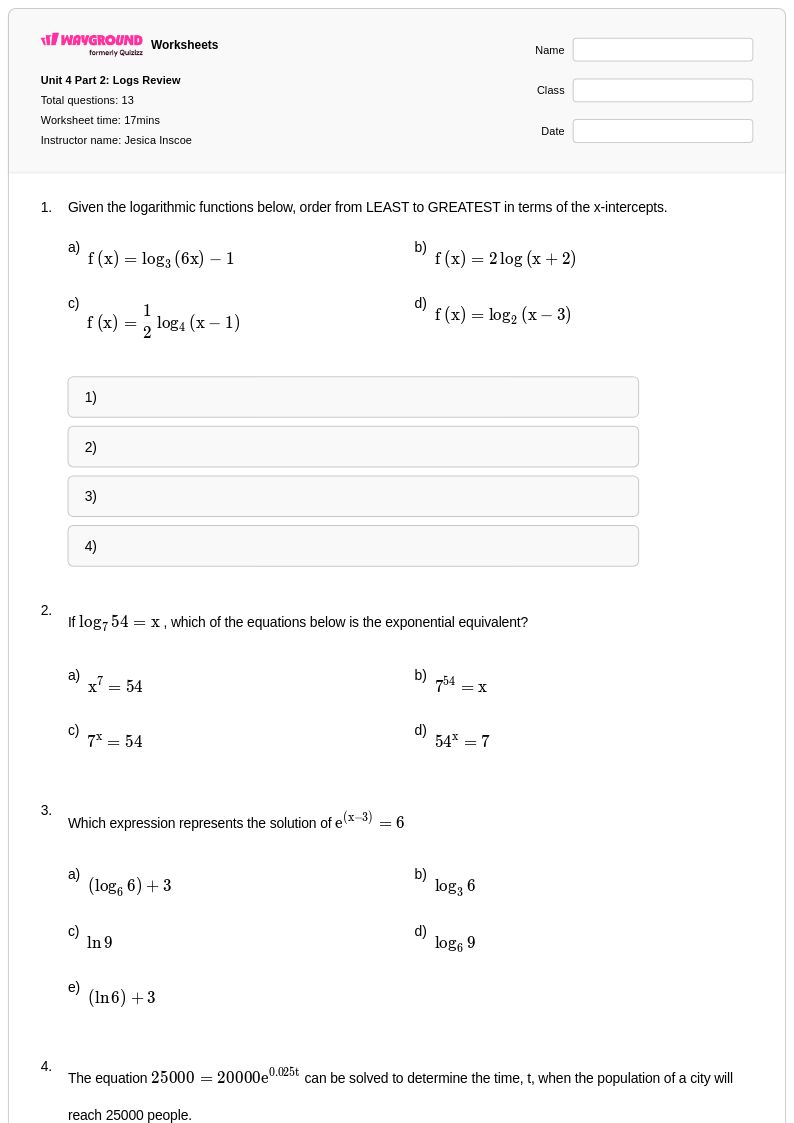
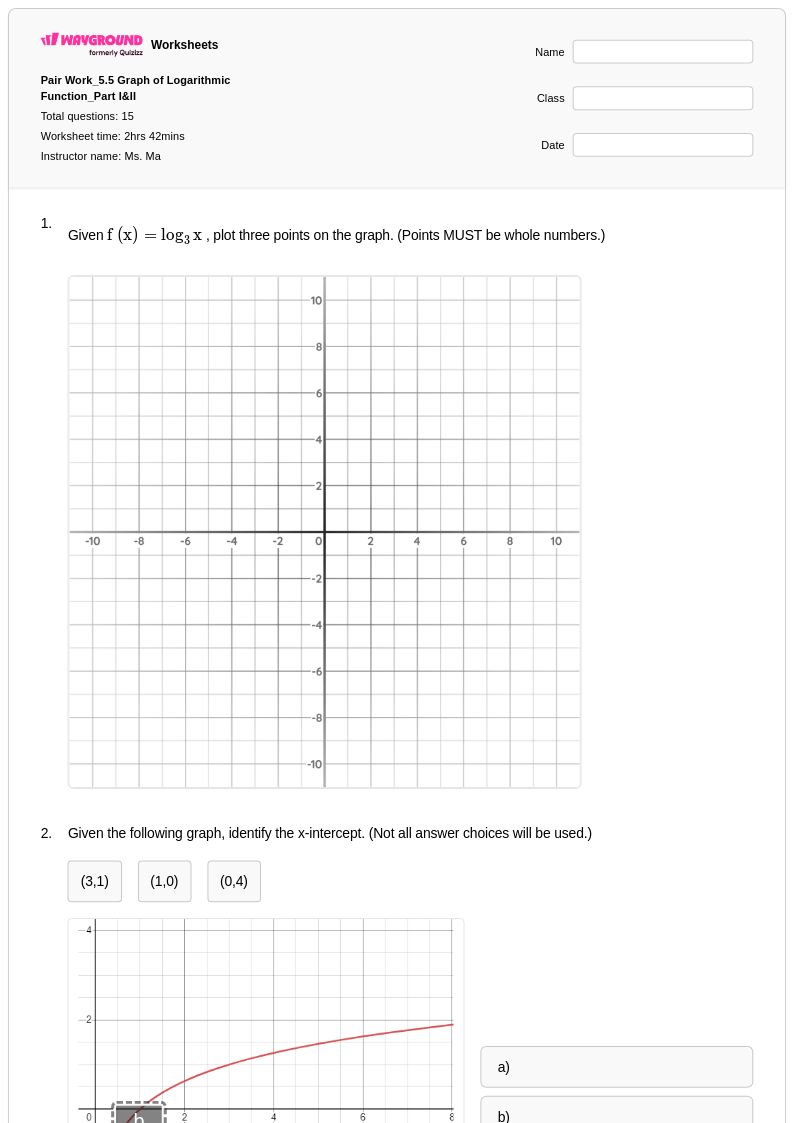
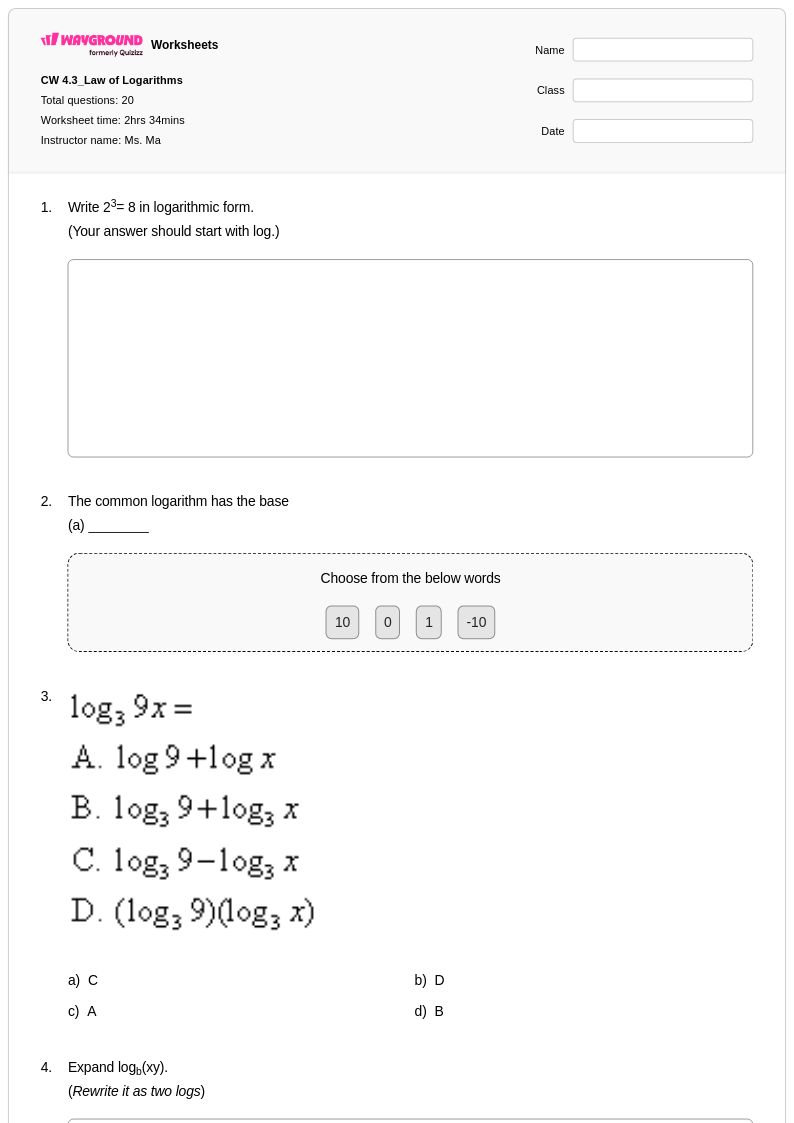
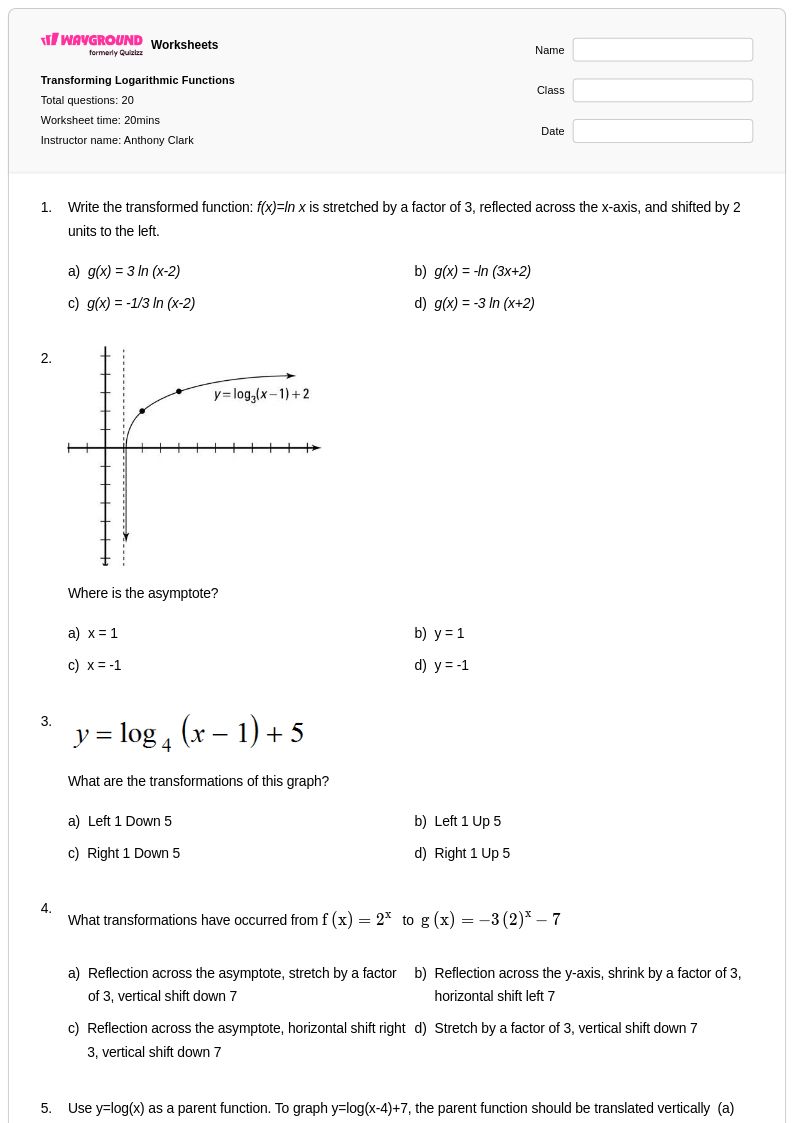
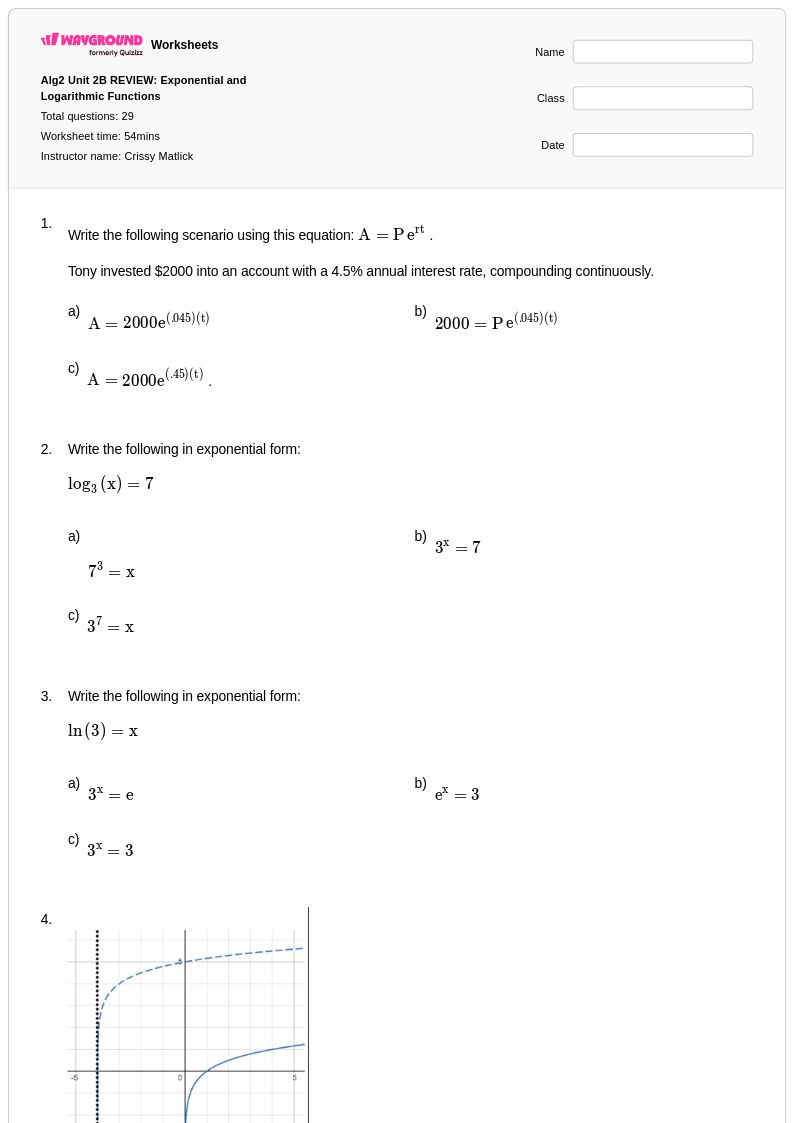
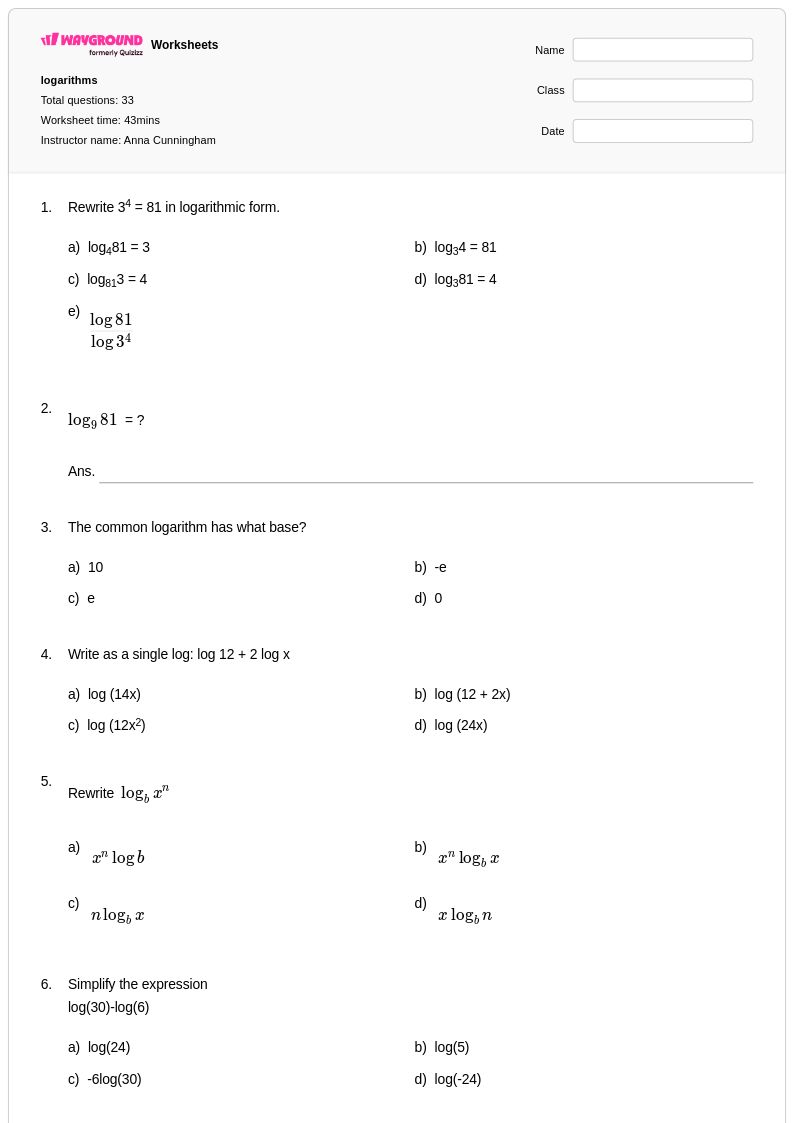
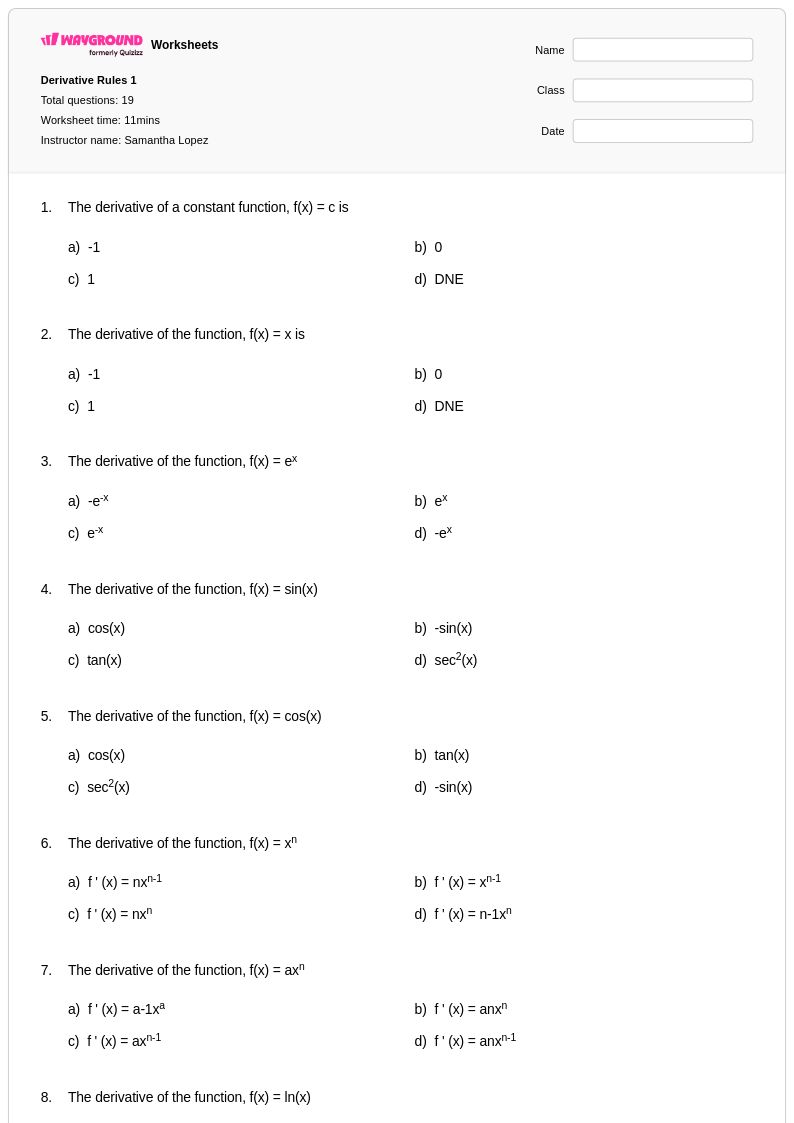
Derivatives of logarithmic functions represent a cornerstone concept in Class 12 calculus, requiring students to master the intricate relationships between exponential and logarithmic expressions while applying sophisticated differentiation techniques. Wayground's comprehensive collection of derivatives of logarithmic functions worksheets provides targeted practice problems that systematically build student proficiency in differentiating natural logarithms, common logarithms, and logarithmic functions with various bases. These carefully crafted printables strengthen essential skills including the application of the chain rule to composite logarithmic functions, implicit differentiation involving logarithmic expressions, and the strategic use of logarithmic differentiation to simplify complex functions. Each worksheet comes with a detailed answer key that enables students to verify their work and identify areas needing additional focus, while the free pdf format ensures accessibility for both classroom instruction and independent study sessions.
Wayground's extensive library draws from millions of teacher-created resources specifically designed to support calculus instruction, offering robust search and filtering capabilities that allow educators to locate precisely the right derivatives of logarithmic functions materials for their students' needs. The platform's alignment with mathematical standards ensures that worksheets address crucial learning objectives while providing differentiation tools that accommodate varying skill levels within the same Class 12 classroom. Teachers can seamlessly customize these resources to match their instructional pacing and emphasis areas, whether focusing on fundamental logarithmic differentiation rules or advancing to more complex applications involving parametric and implicit functions. Available in both printable and digital formats including downloadable pdfs, these worksheets serve multiple instructional purposes from initial skill introduction and guided practice to targeted remediation and enrichment activities, enabling educators to create comprehensive lesson plans that build student confidence and mathematical reasoning abilities.
FAQs
How do I teach derivatives of logarithmic functions in Grade 12?
At Grade 12, students usually know the basic derivative of ln(x) but haven't fully internalized when to reach for logarithmic differentiation versus the chain rule. Focus teaching time on the decision layer: when does taking the natural log of both sides actually simplify the problem? Functions with variable exponents (like x^x or (sin x)^(cos x)) are the clearest cases. Implicit differentiation involving logarithmic expressions is the other area that needs explicit attention — students often handle the right side correctly but mismanage the implicit dy/dx on the left.
What exercises help Grade 12 students practice logarithmic differentiation?
Grade 12 practice should include: chain rule with composite logarithmic arguments, logarithmic differentiation on functions with variable bases and exponents, and implicit differentiation problems where logarithms appear on both sides of the equation. Problems that require students to first simplify using log properties before differentiating are particularly valuable — that algebraic step is where errors accumulate on exams.
What mistakes do Grade 12 students make with logarithmic derivatives on exams?
Three errors show up consistently. First, in implicit differentiation, students differentiate ln(y) as 1/y without multiplying by dy/dx. Second, when using logarithmic differentiation, they solve for dy/dx correctly but leave the answer in terms of ln(y) rather than substituting back. Third, on problems involving log base b, they apply the ln(x) derivative formula and omit the 1/ln(b) factor — a mistake that's easy to make under time pressure.
How do I use Wayground's Grade 12 logarithmic differentiation worksheets?
Each worksheet includes a complete answer key with step-by-step solutions — at Grade 12, where logarithmic differentiation involves multiple stages, seeing exactly where a solution diverges from the correct path is more useful than just knowing the final answer is wrong. You can host the worksheet as a digital quiz on Wayground for automatic scoring, or download the printable PDF for paper-based practice, which works well for timed exam prep where students need to practice writing out full solutions by hand.
How do derivatives of logarithmic functions fit into the Grade 12 AP Calculus sequence?
In AP Calculus AB and BC, logarithmic derivatives are introduced after the chain rule and serve as a prerequisite for several later topics. Logarithmic differentiation specifically unlocks problems involving variable exponents that can't be handled by the power rule alone. The technique also feeds directly into related rates problems involving exponential growth models and into integration, where recognizing a derivative of ln|u| form is essential for evaluating integrals of the type 1/u.
How can I differentiate logarithmic differentiation practice for a mixed-ability Grade 12 class?
For students who struggle with the notation density of multi-step logarithmic differentiation, applying a larger font size or wider spacing through Wayground's worksheet tools reduces visual overload without changing the mathematical content. For students who need more scaffolding, the reduced answer choices accommodation narrows the options on multiple-choice items while they build confidence with the technique. Students ready for AP-level challenge, including implicit differentiation and parametric applications, can work through those problems with standard settings; accommodations are per-student and don't affect the rest of the class.