Free Printable Diamond Problems Worksheets for Class 10
Class 10 diamond problems worksheets from Wayground help students master factoring techniques through engaging printables and practice problems, complete with answer keys and free PDF downloads for comprehensive algebra skill development.
Explore printable Diamond Problems worksheets for Class 10
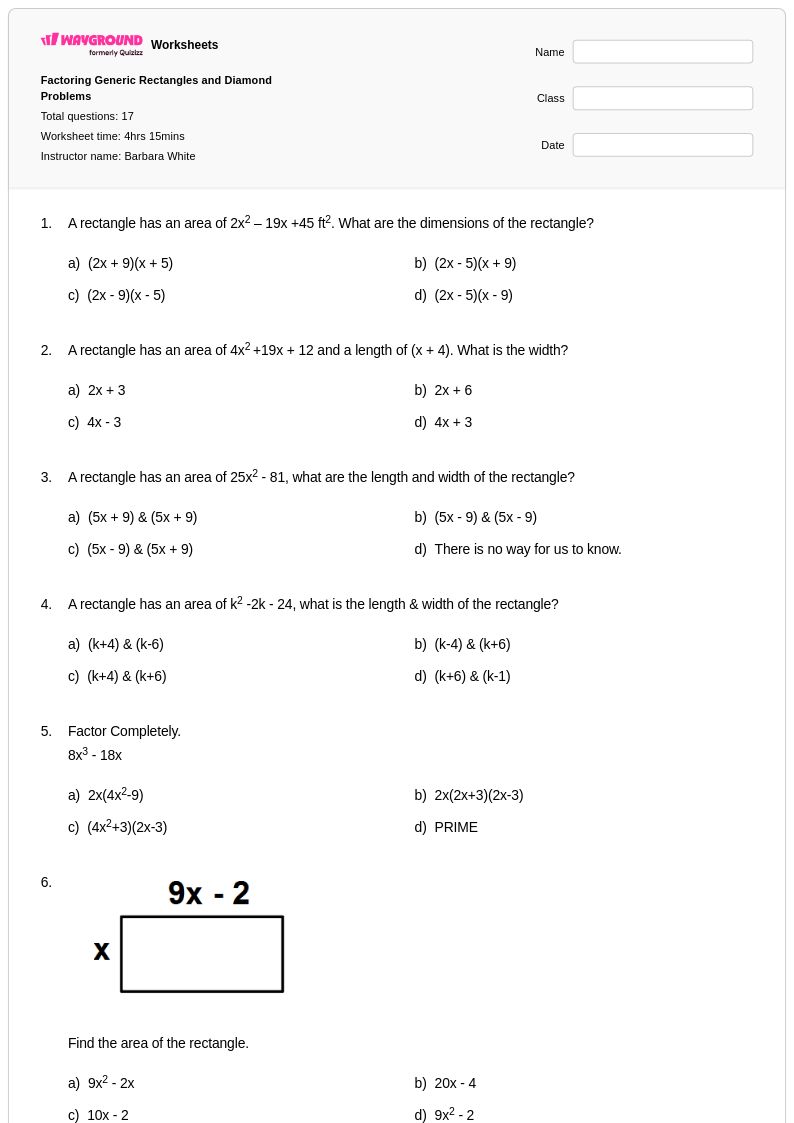
Diamond problems worksheets available through Wayground (formerly Quizizz) provide Class 10 students with focused practice on this essential algebraic problem-solving technique that builds foundational skills for factoring quadratic expressions. These comprehensive worksheets guide students through the systematic approach of finding two numbers that multiply to give one value while adding to give another, strengthening their number sense, mental math abilities, and pattern recognition skills crucial for advanced algebra concepts. The collection includes varied difficulty levels with detailed answer keys, ensuring students can work independently while teachers have access to complete solutions for efficient grading and feedback. These free printables offer extensive practice problems that progress from basic integer relationships to more complex scenarios involving fractions and algebraic expressions, helping students master this fundamental skill through repetitive, structured practice.
Wayground (formerly Quizizz) empowers educators with millions of teacher-created diamond problems resources that streamline lesson planning and provide robust differentiation options for diverse Class 10 mathematics classrooms. The platform's advanced search and filtering capabilities allow teachers to quickly locate worksheets aligned with specific curriculum standards and student ability levels, while comprehensive customization tools enable educators to modify problems, adjust difficulty, and personalize content for individual learning needs. Available in both printable pdf formats and interactive digital versions, these resources support flexible implementation across various teaching environments, whether for whole-class instruction, small group remediation, independent practice, or enrichment activities. The extensive collection facilitates targeted skill development, allows for systematic progress monitoring, and provides teachers with the versatility needed to address different learning styles while ensuring all students develop confidence in solving diamond problems as preparation for factoring quadratic expressions.
FAQs
How do I teach diamond problems to 10th graders?
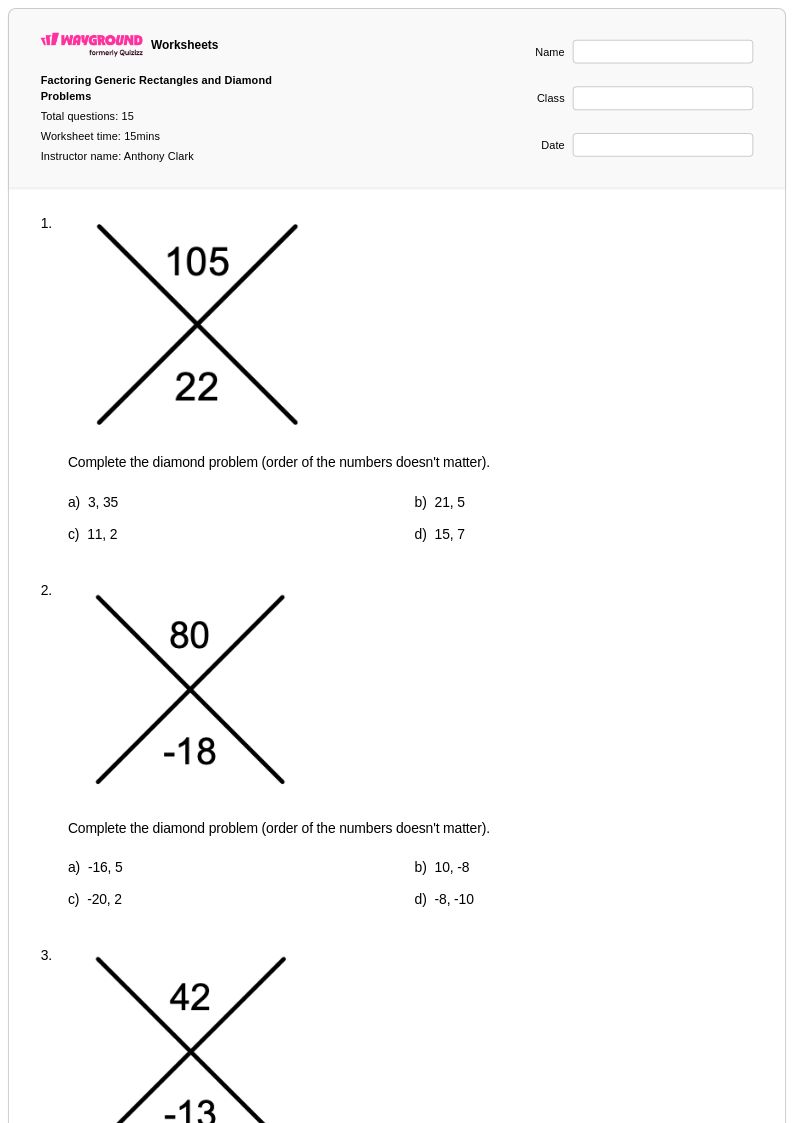
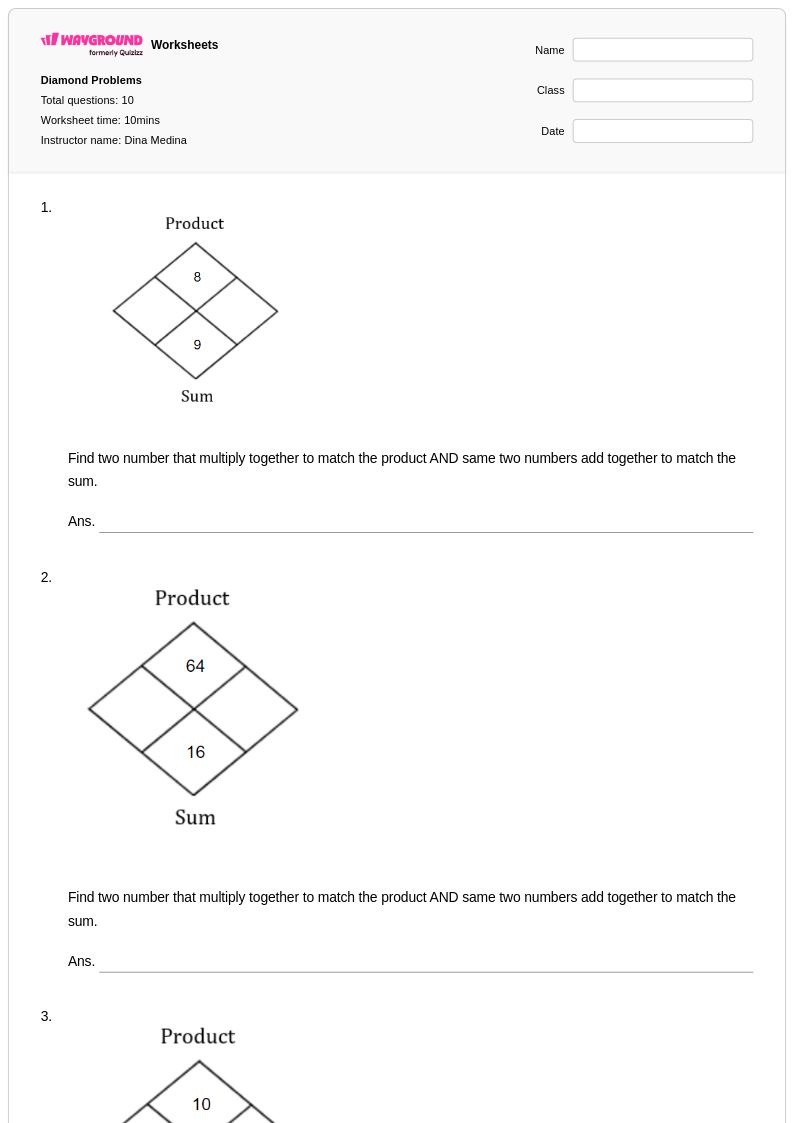
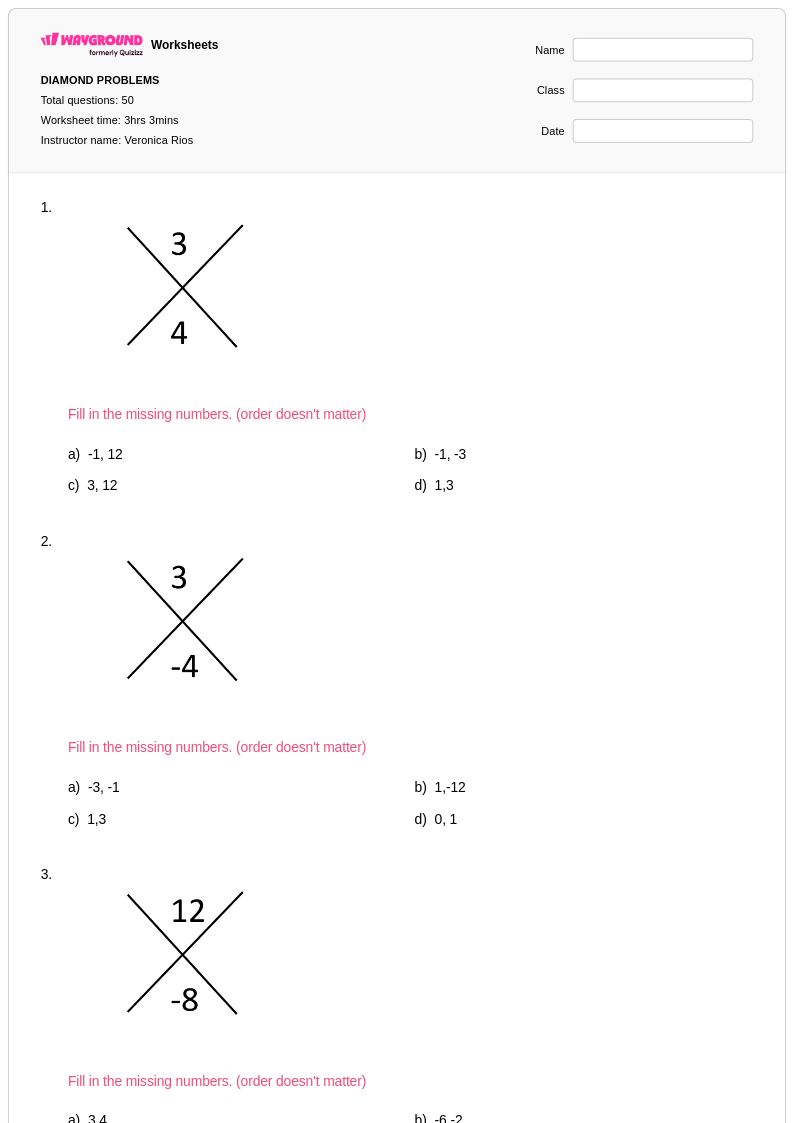
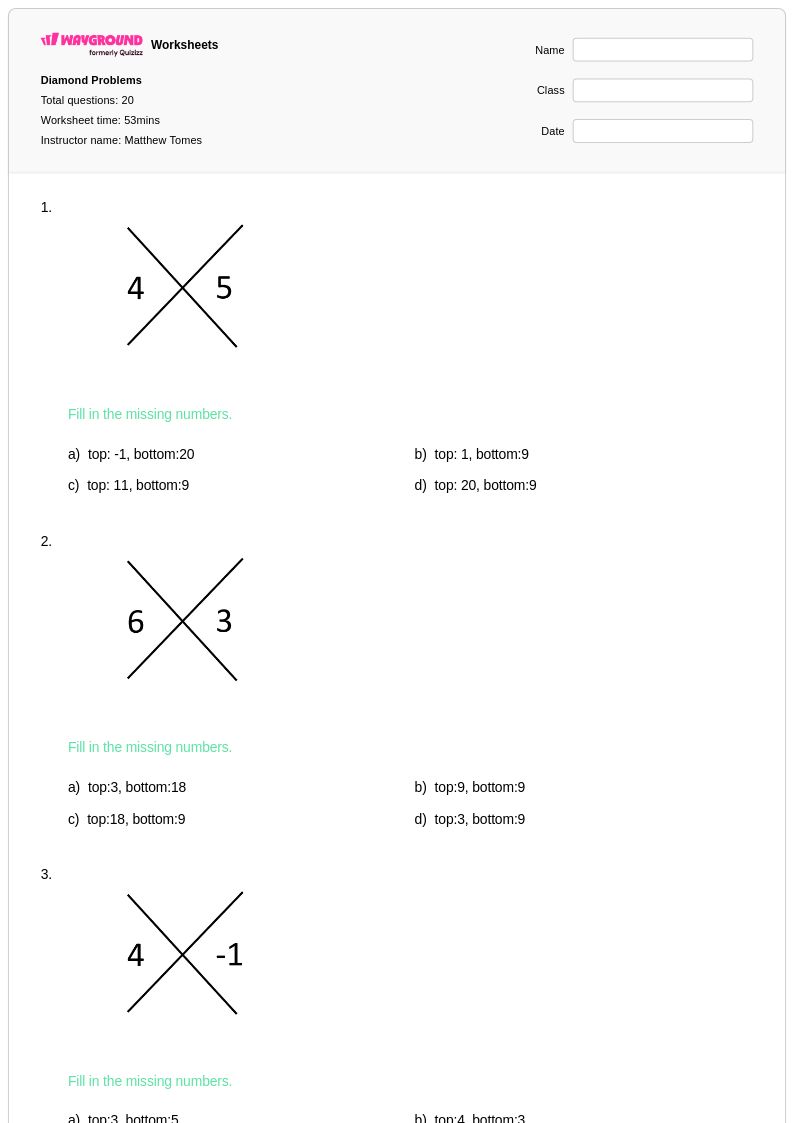
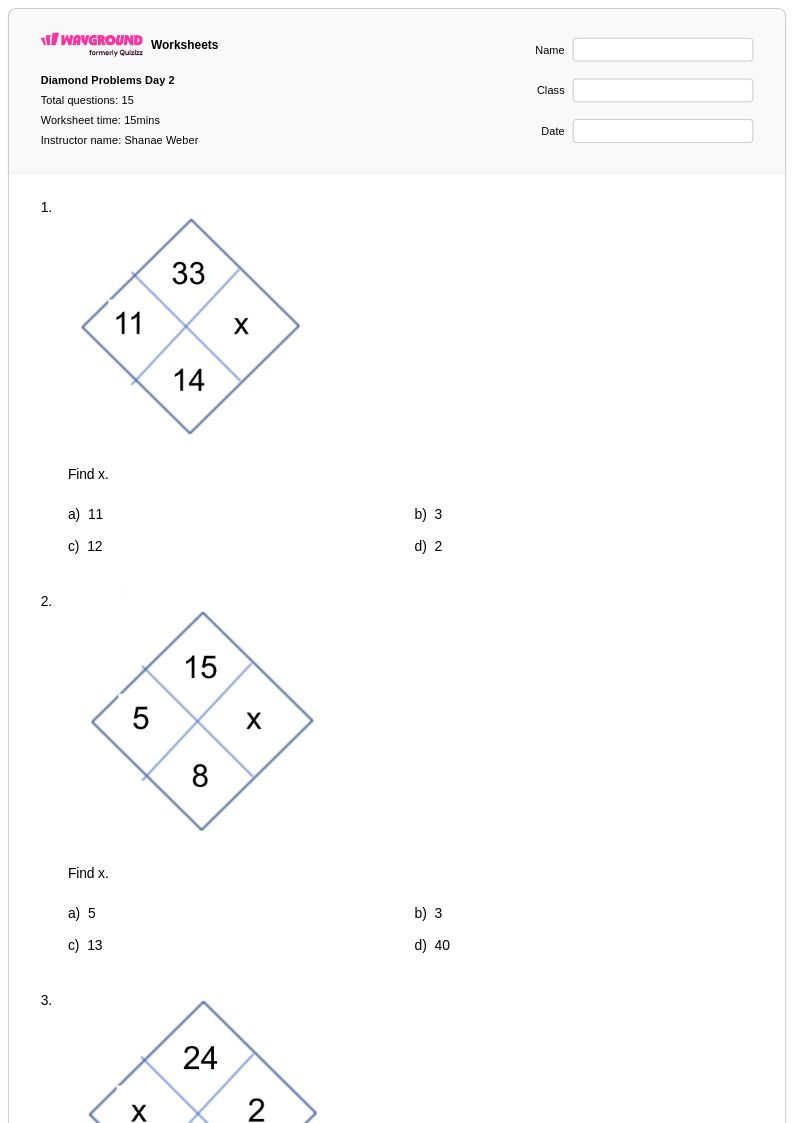
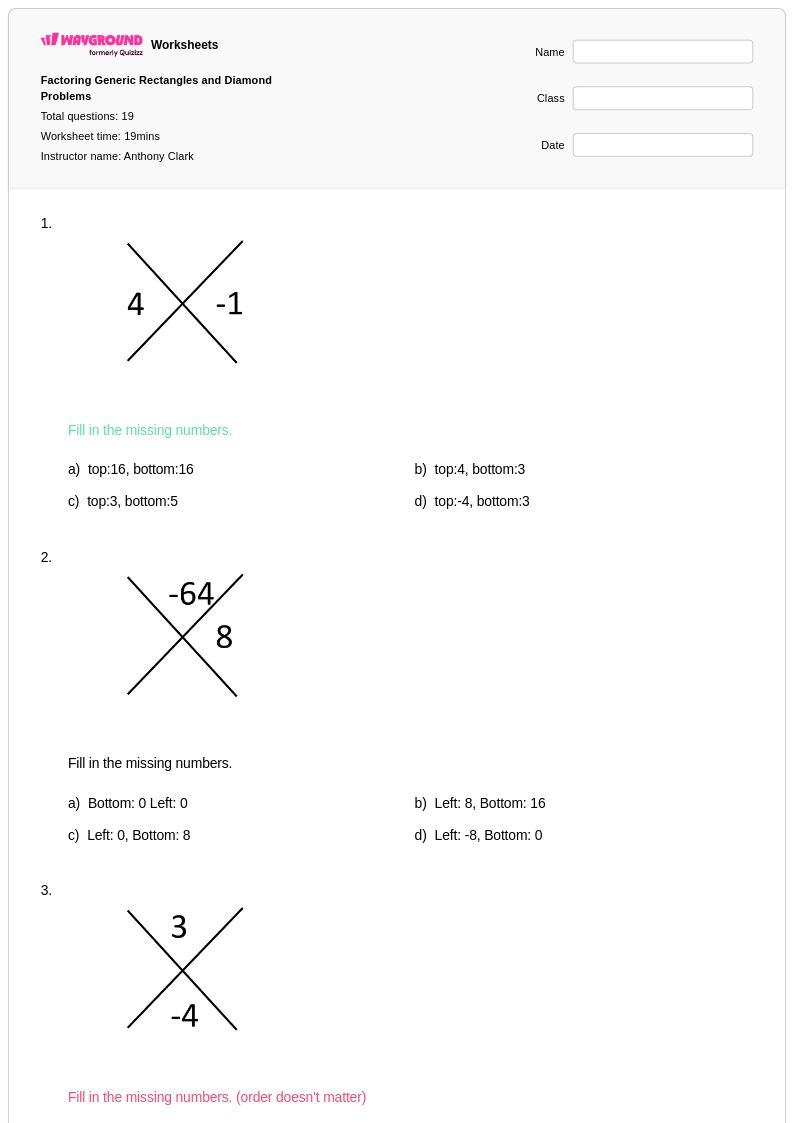
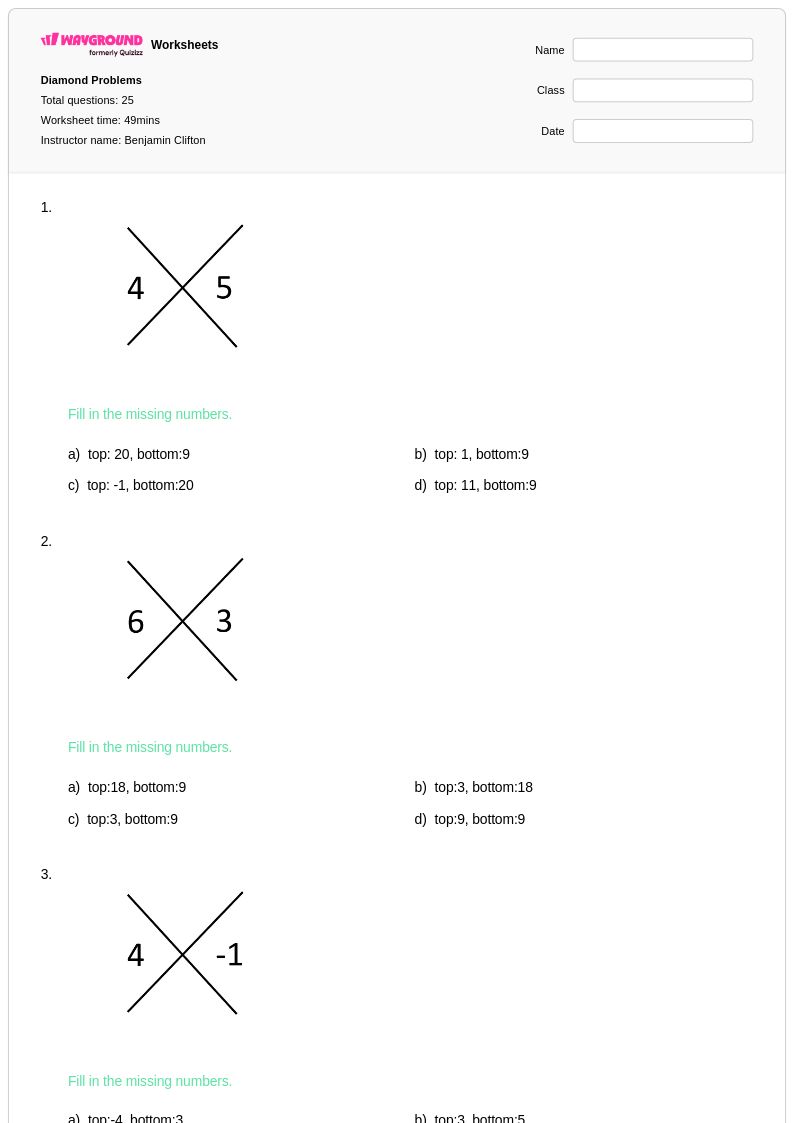
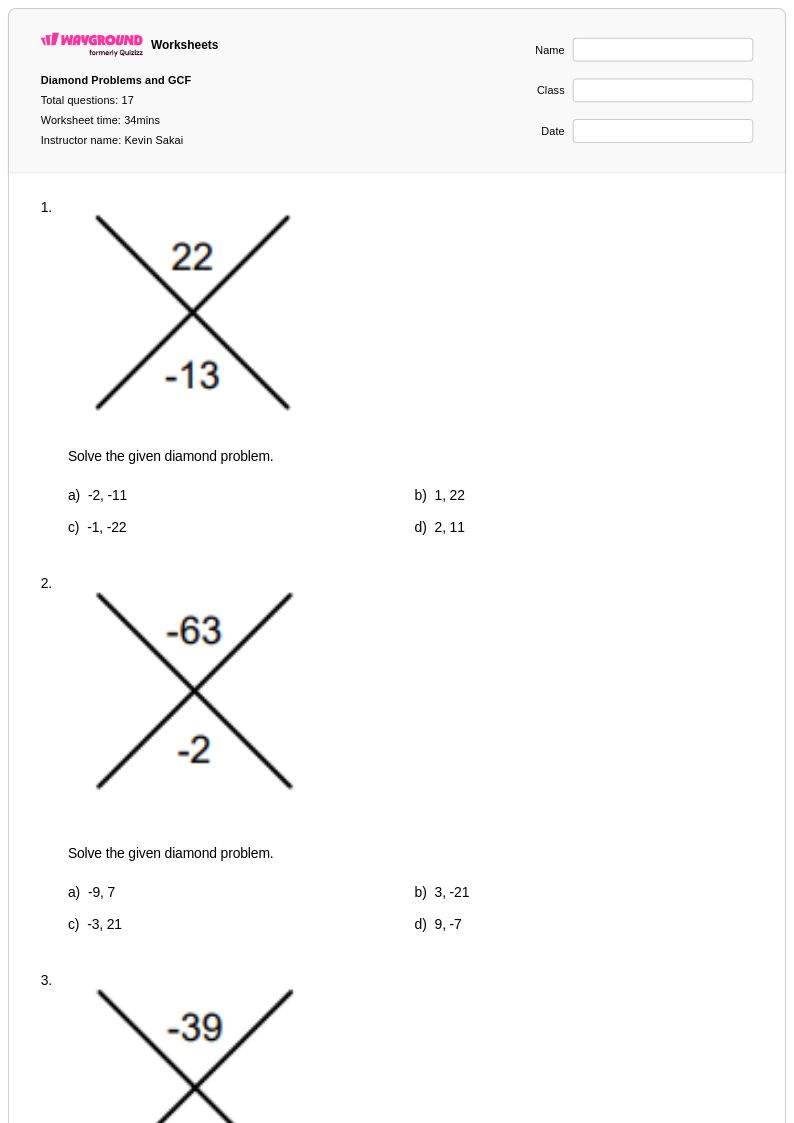
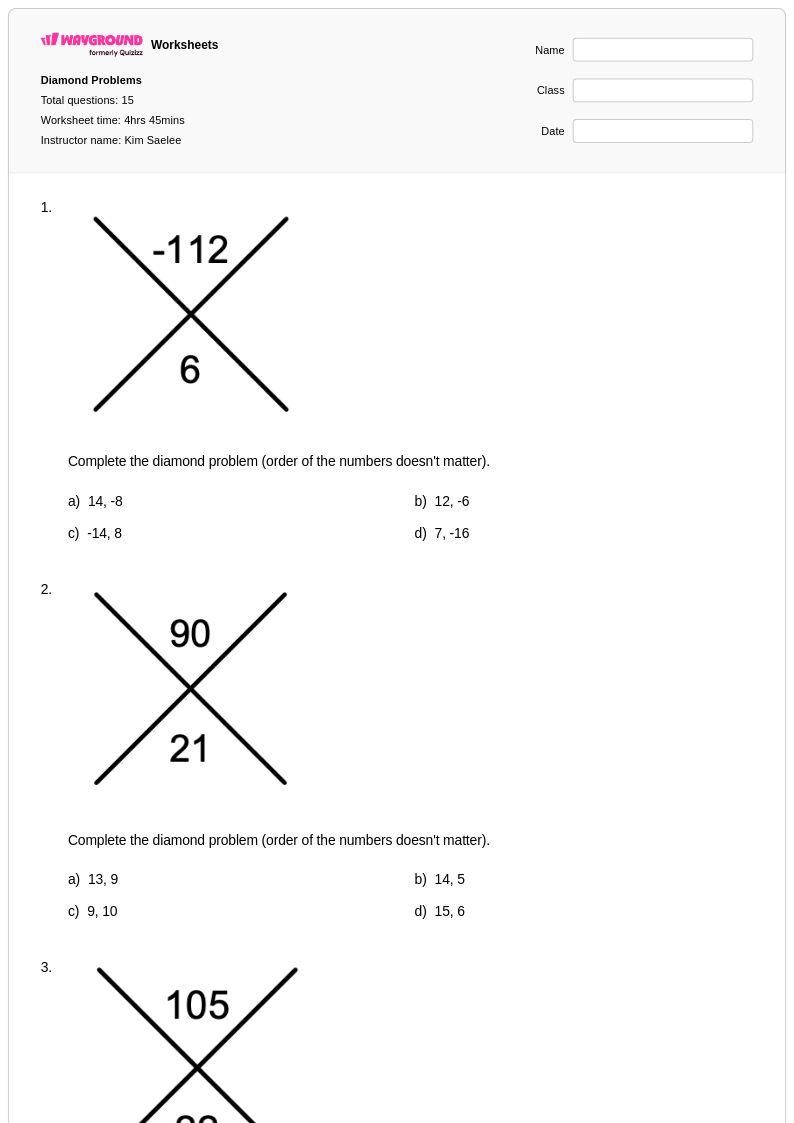
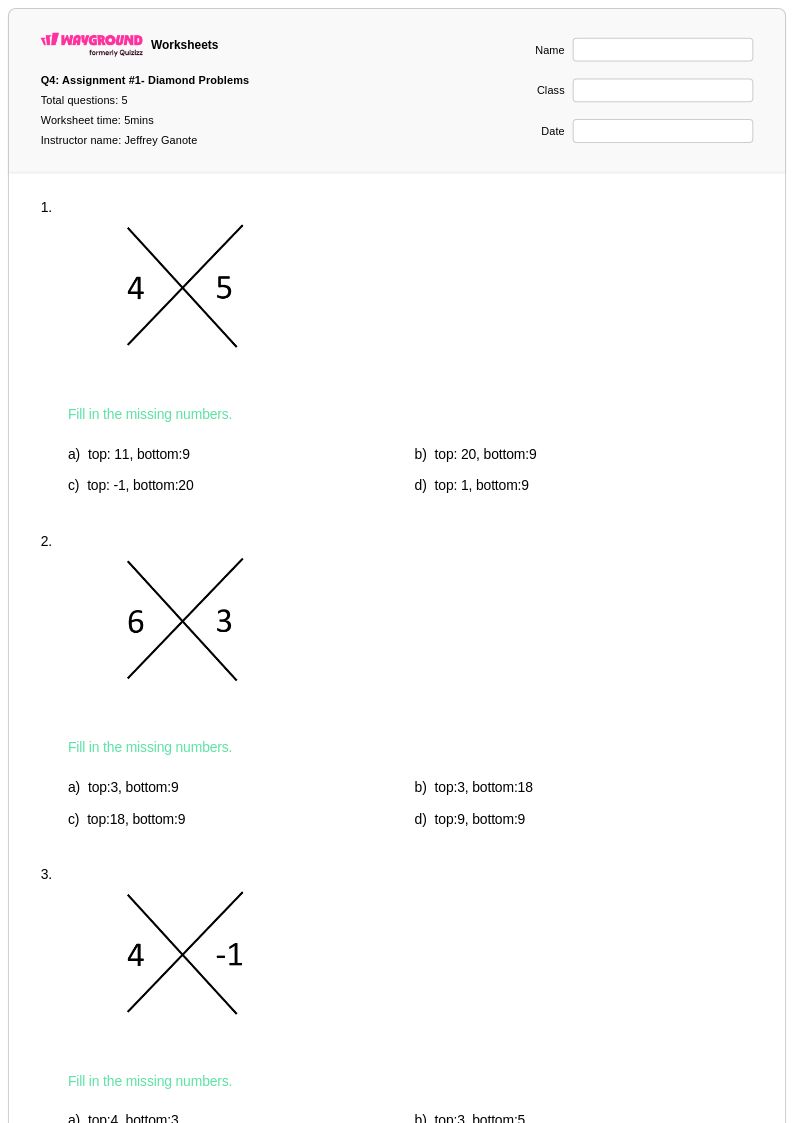
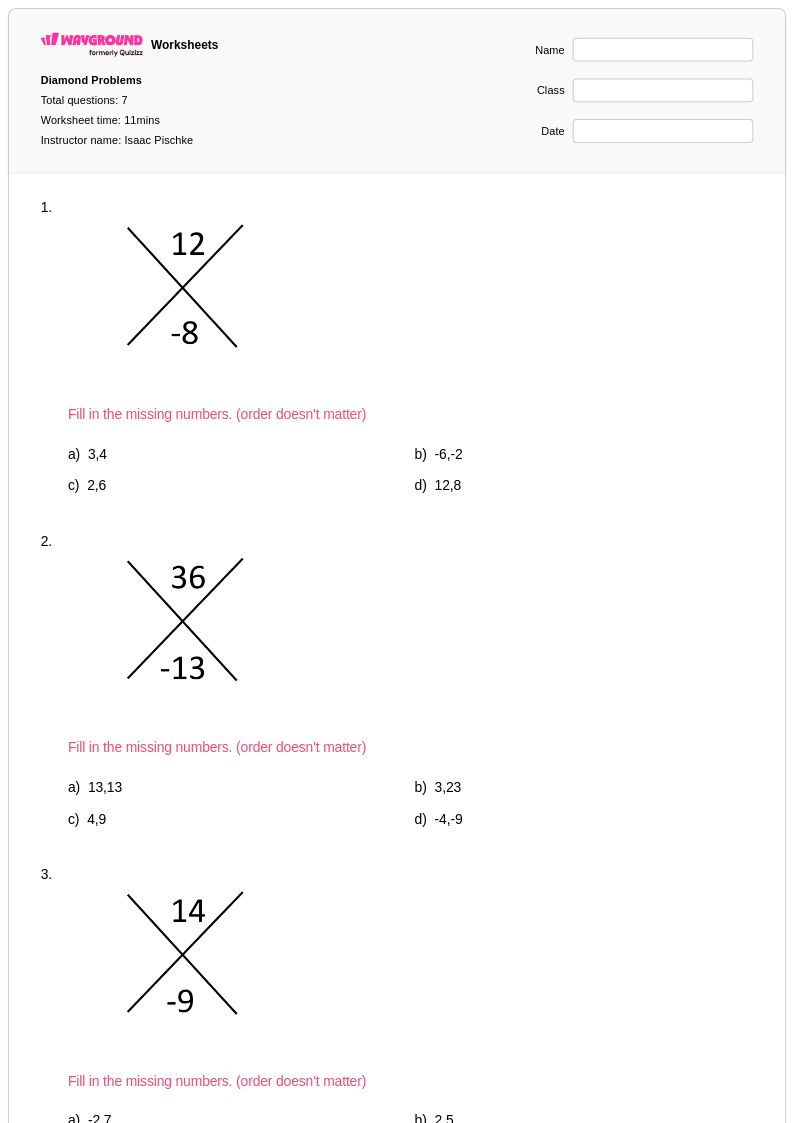
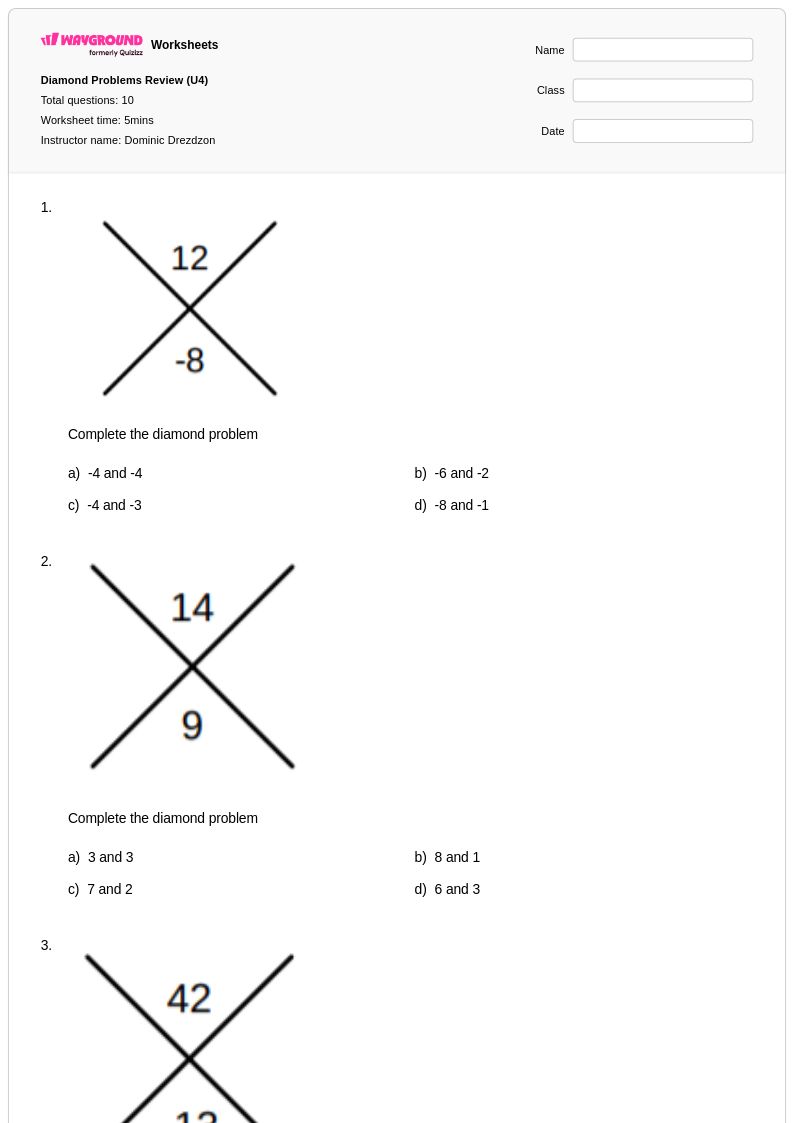
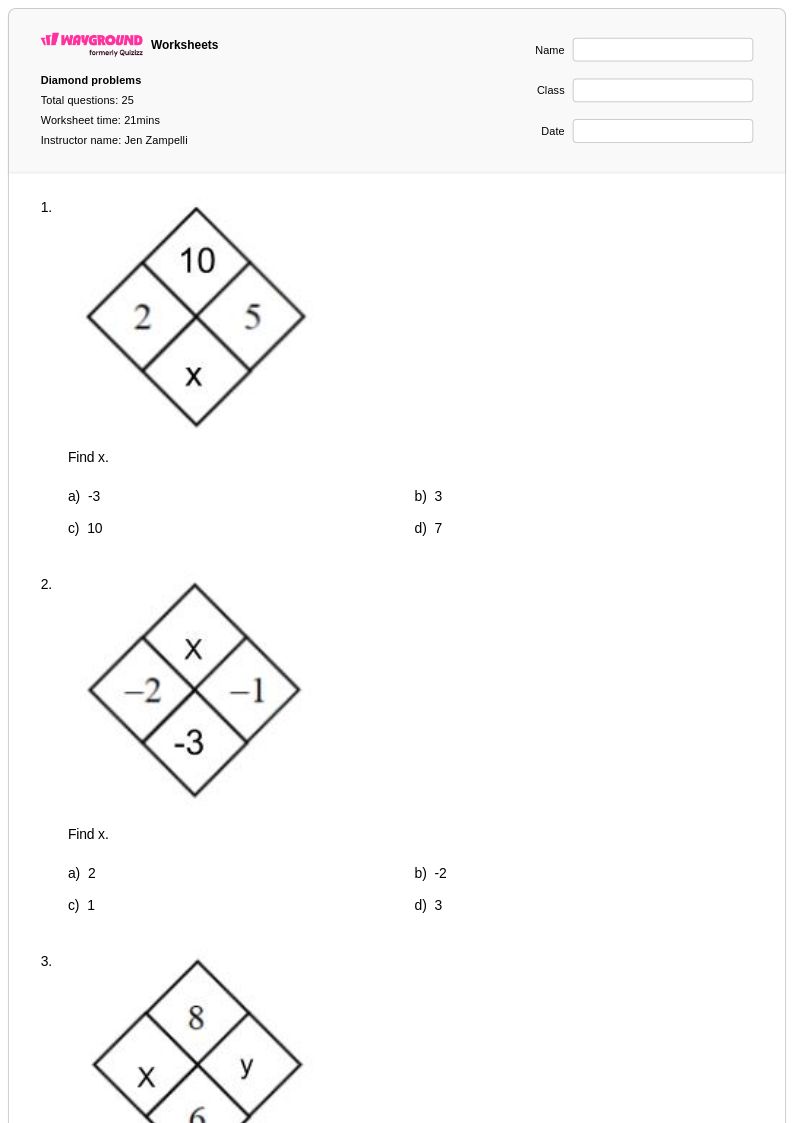
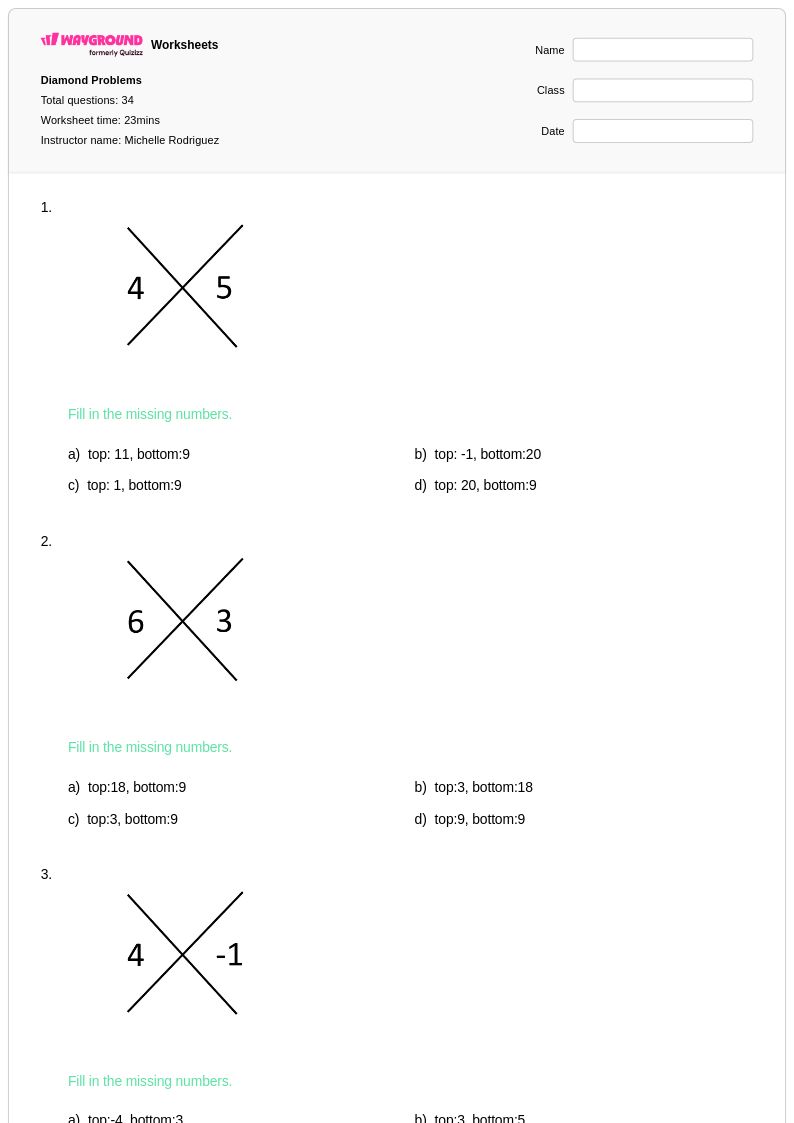
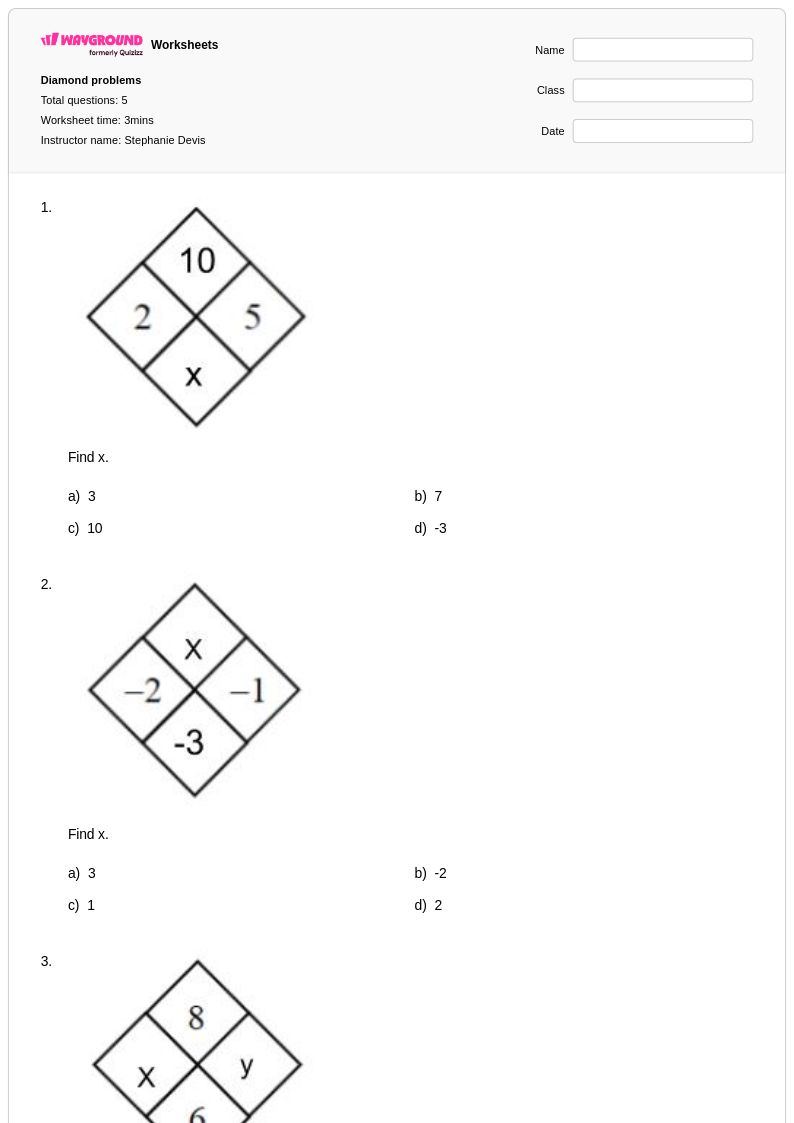
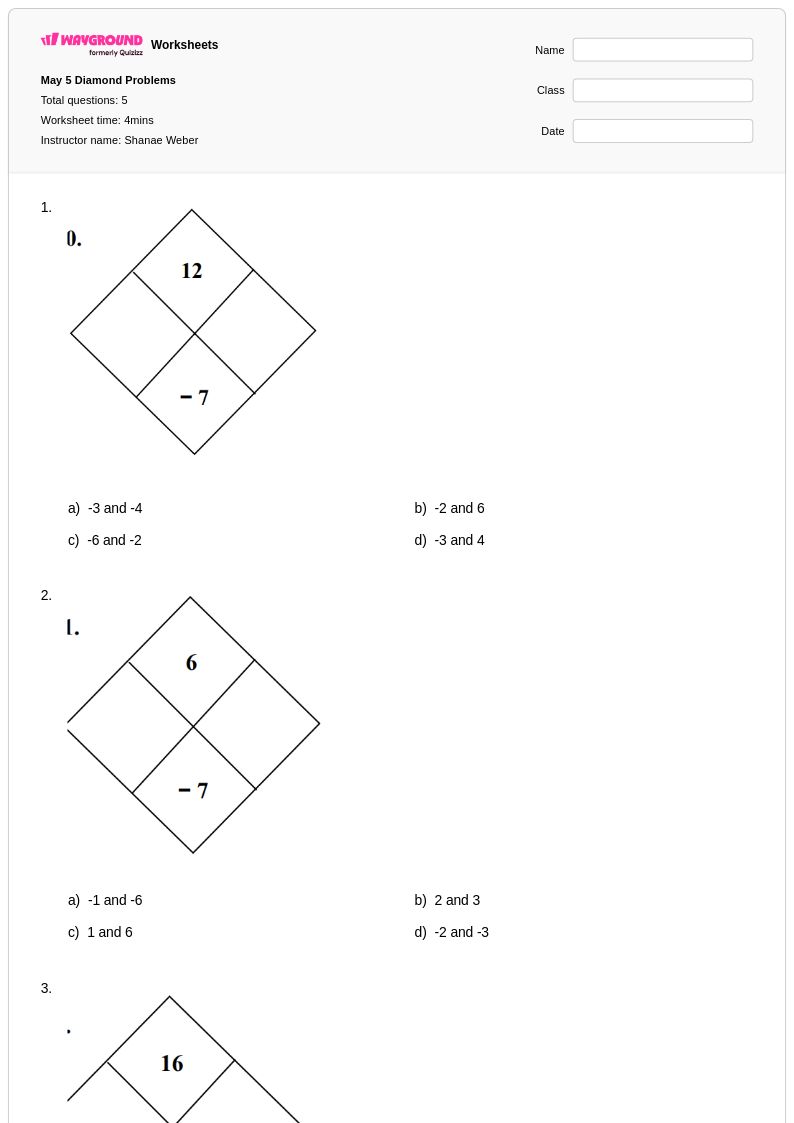
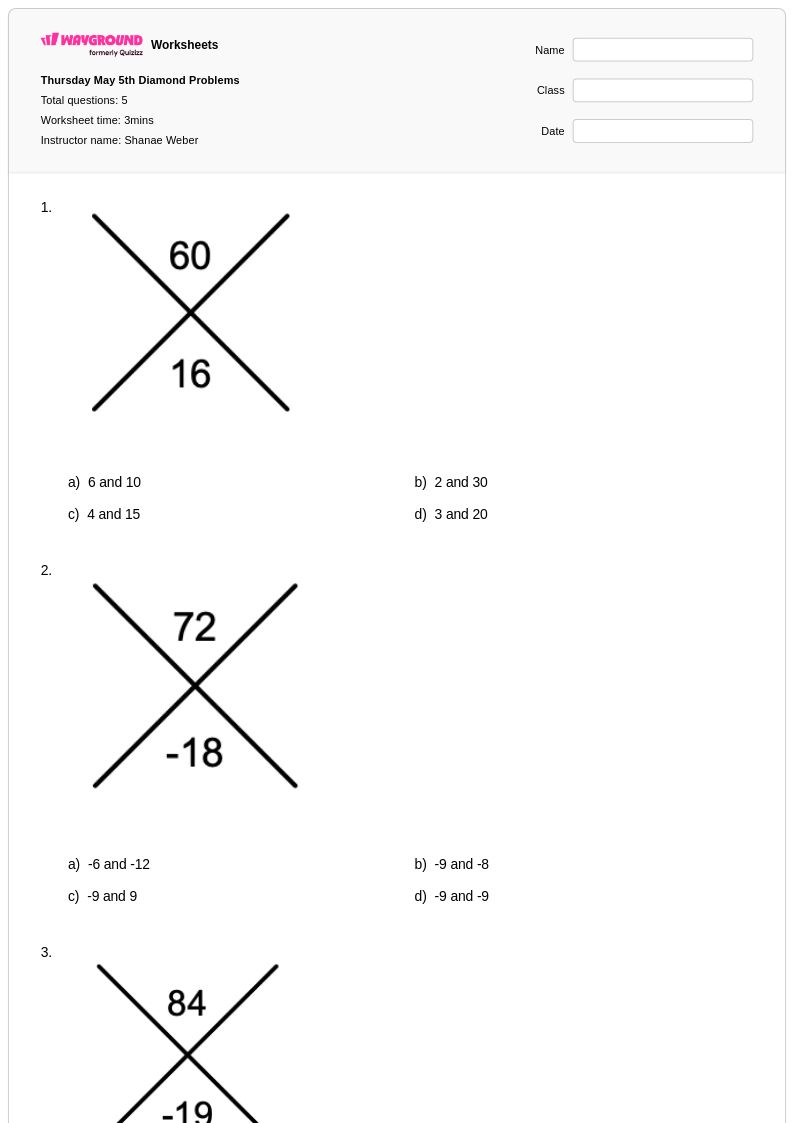
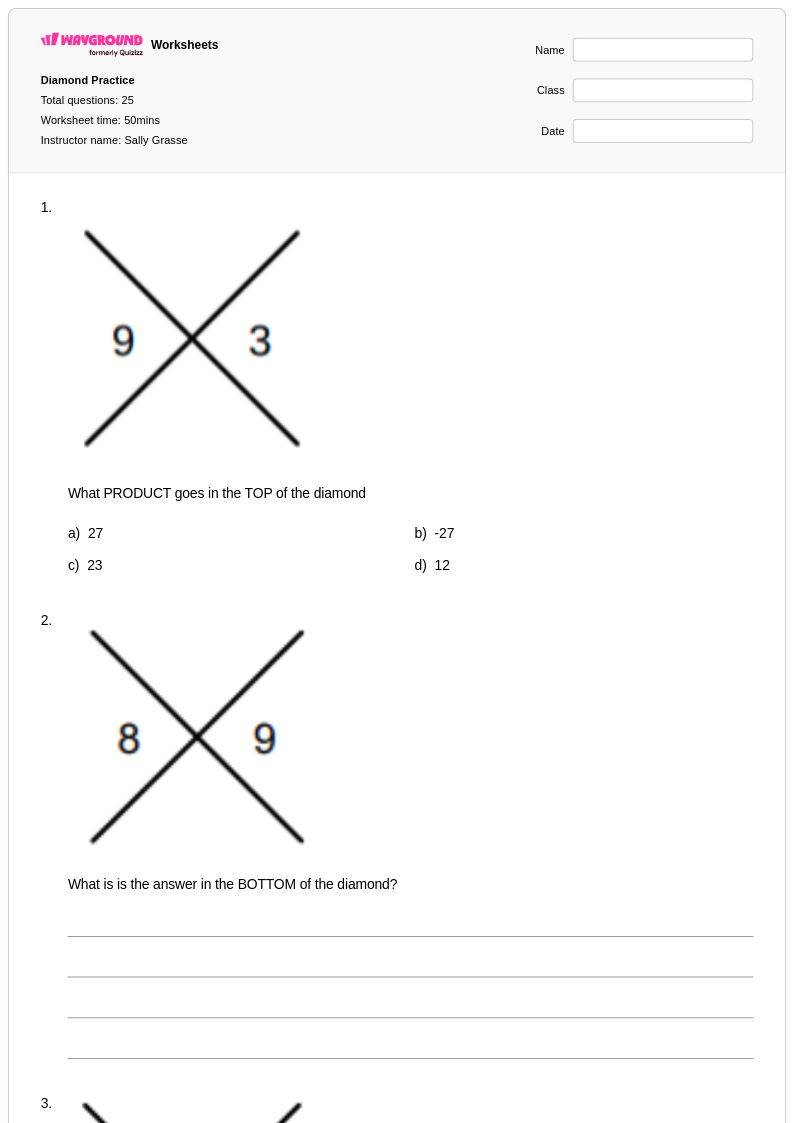
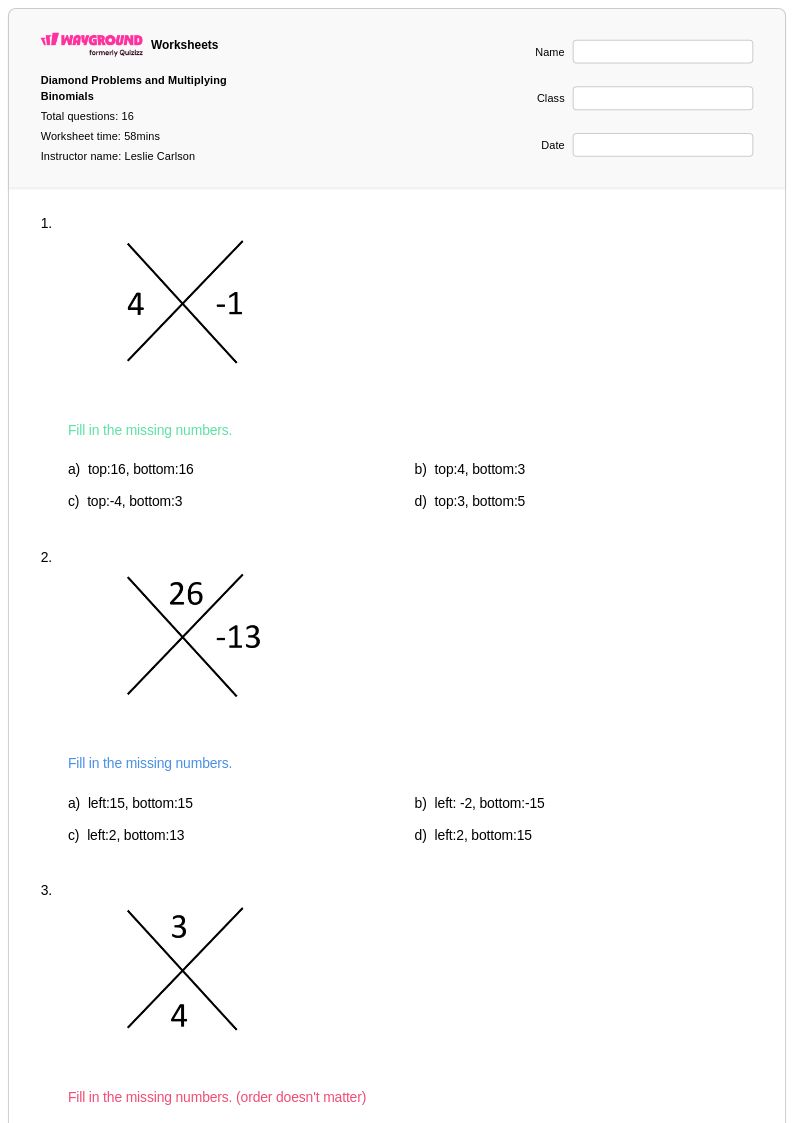
Start by making the structure explicit: the top cell holds the product, the bottom holds the sum, and students must find the two side values. Most 10th graders grasp this quickly with integers, so spend the first lesson building that fluency before introducing negatives and fractions. Once students see that diamond problems are really just a structured search for factor pairs, the connection to factoring trinomials becomes obvious — and that's the payoff you're building toward.
What exercises help students practice diamond problems?
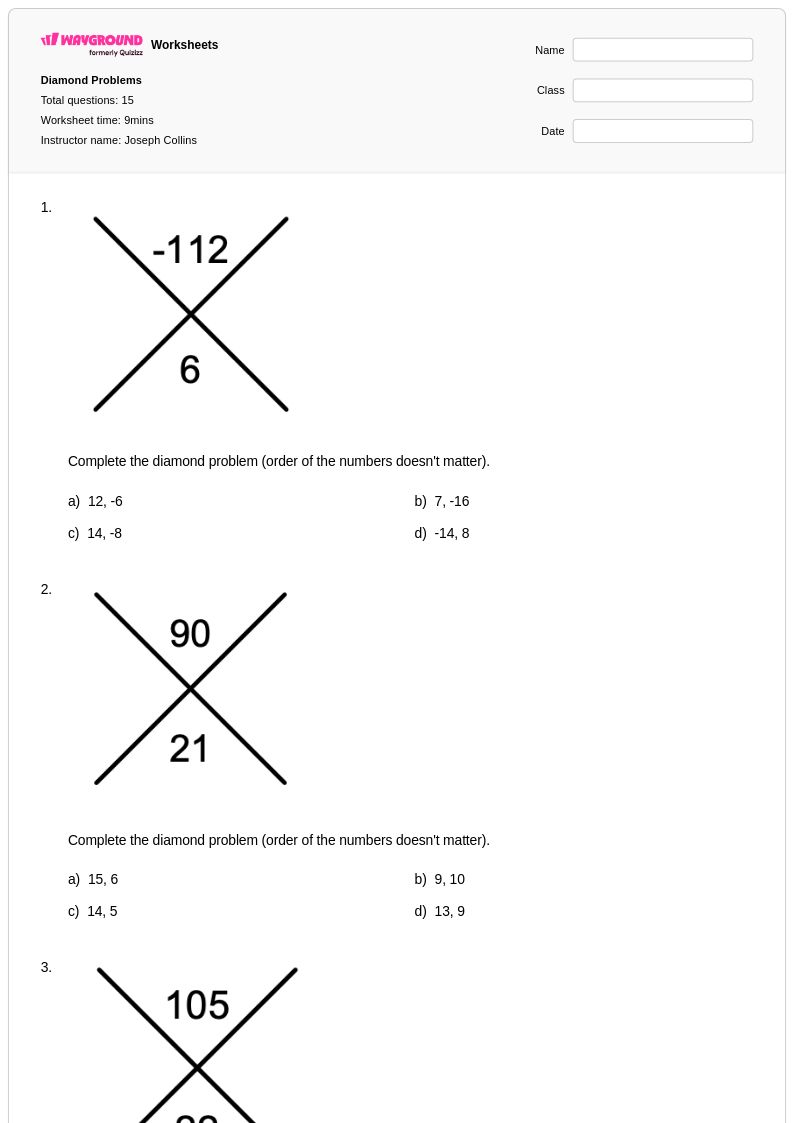
The most effective practice moves in three stages: integer pairs first, then problems involving negatives, then problems where the product or sum is a fraction or involves variables. Timed drills on integer factor pairs build the mental math speed students need before the problems get harder. Mixing in a few reverse problems, giving students the side values and asking them to fill in the top and bottom, also sharpens their understanding of the relationship rather than just the procedure.
What mistakes do students commonly make with diamond problems?
The most common error is confusing which cell holds the product and which holds the sum — students mix up the operations and find two numbers that add correctly but multiply to the wrong value. A close second is sign errors: when the product is positive and the sum is negative, students often default to positive factor pairs and miss that both numbers must be negative. Catching these early matters because both errors carry directly into factoring trinomials.
How do I use Wayground's diamond problems worksheets in my class?
You can run these as a digital quiz hosted on Wayground, students work through the problems on their devices and get immediate feedback, or download the PDF and print it for paper practice. Every worksheet includes a complete answer key, so students can self-check during independent work. If you go the print route, the Wayground for Teachers app lets you scan or capture student submissions for grading without manually entering scores.
How do diamond problems fit into the Grade 10 algebra curriculum?
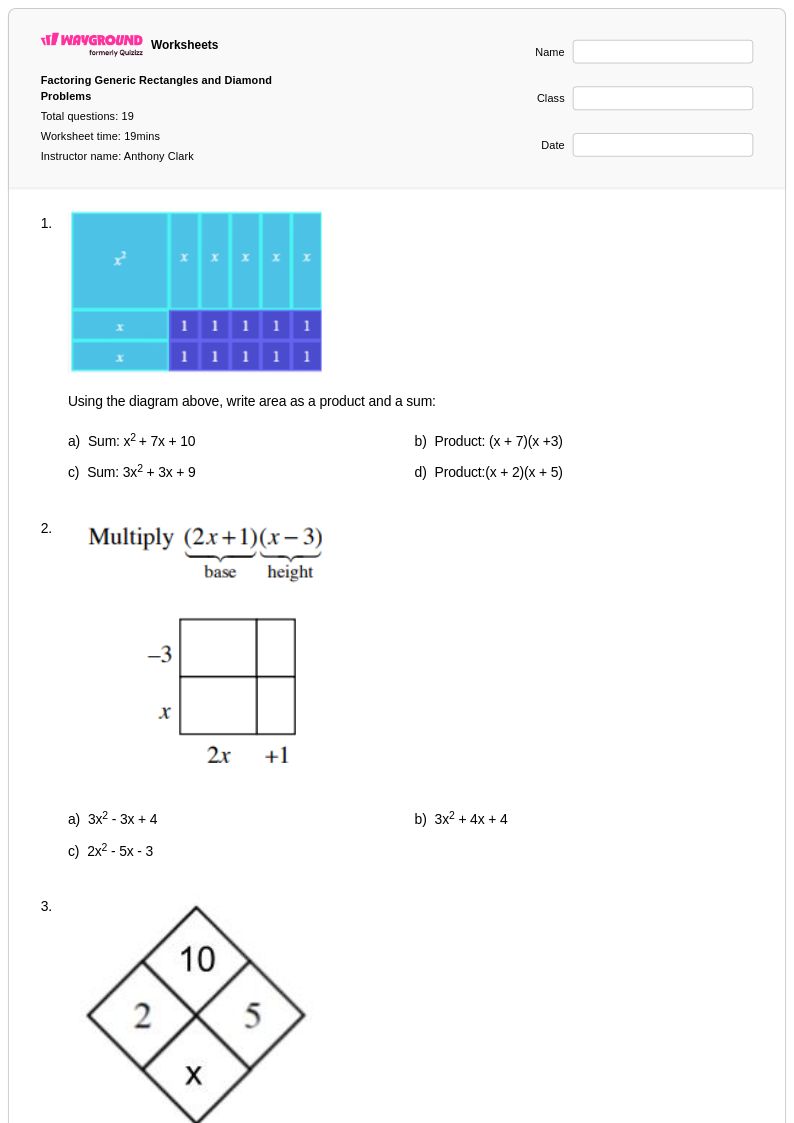
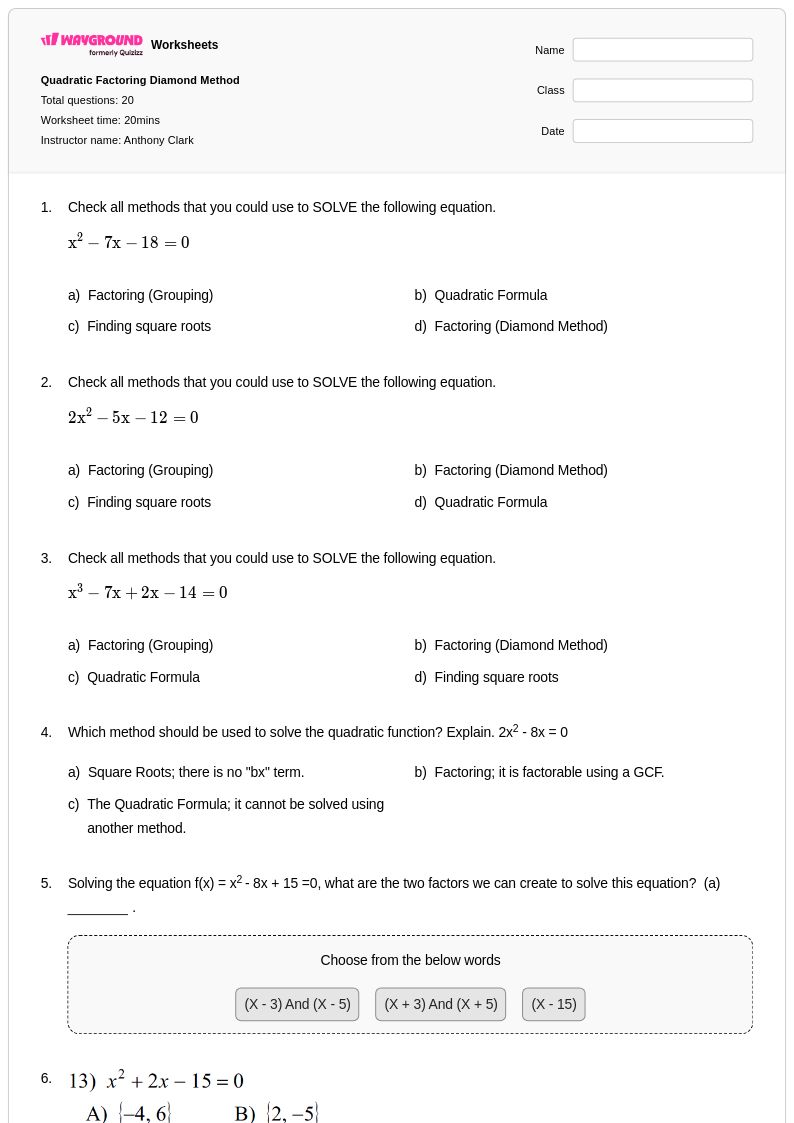
Under Common Core, students in Grade 10 are expected to factor quadratic expressions fluently, and diamond problems are the direct scaffold for that skill. The diamond structure trains students to decompose the middle-term coefficient of a trinomial ax² + bx + c into two numbers with a known product and sum — exactly the step that makes factoring by grouping work. Mastering this at Grade 10 sets students up to handle more complex factoring and quadratic solving without getting stuck on the number-relationship step.
How can I differentiate diamond problems practice for mixed-ability students?
For students who struggle with negative numbers or fraction arithmetic, Wayground's reduced answer choices accommodation narrows the options they see, letting them focus on the diamond logic rather than getting derailed by computation. For students with reading or visual processing needs, adjustable font size and a dyslexia-friendly font are available at the worksheet level. Advanced students can be pushed to problems where the product or sum involves algebraic expressions rather than integers — the same diamond structure, meaningfully harder.