
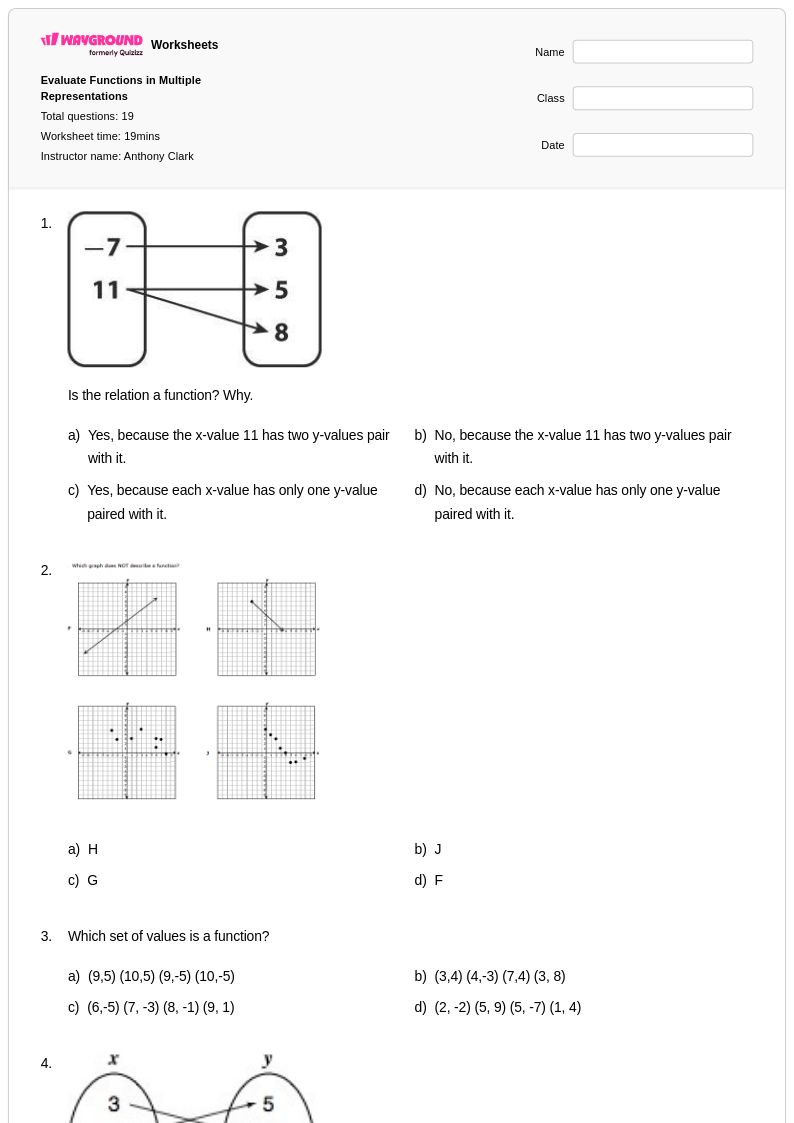
19 Q
8th - Uni
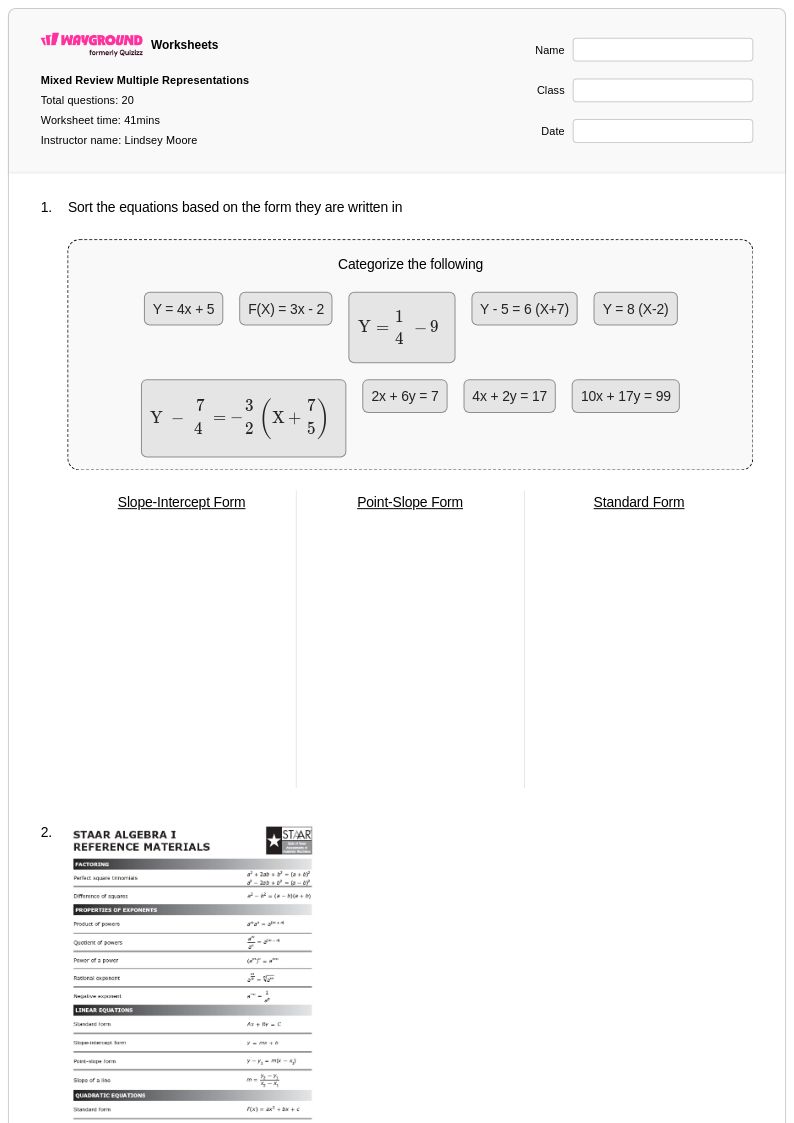
20 Q
9th - 12th
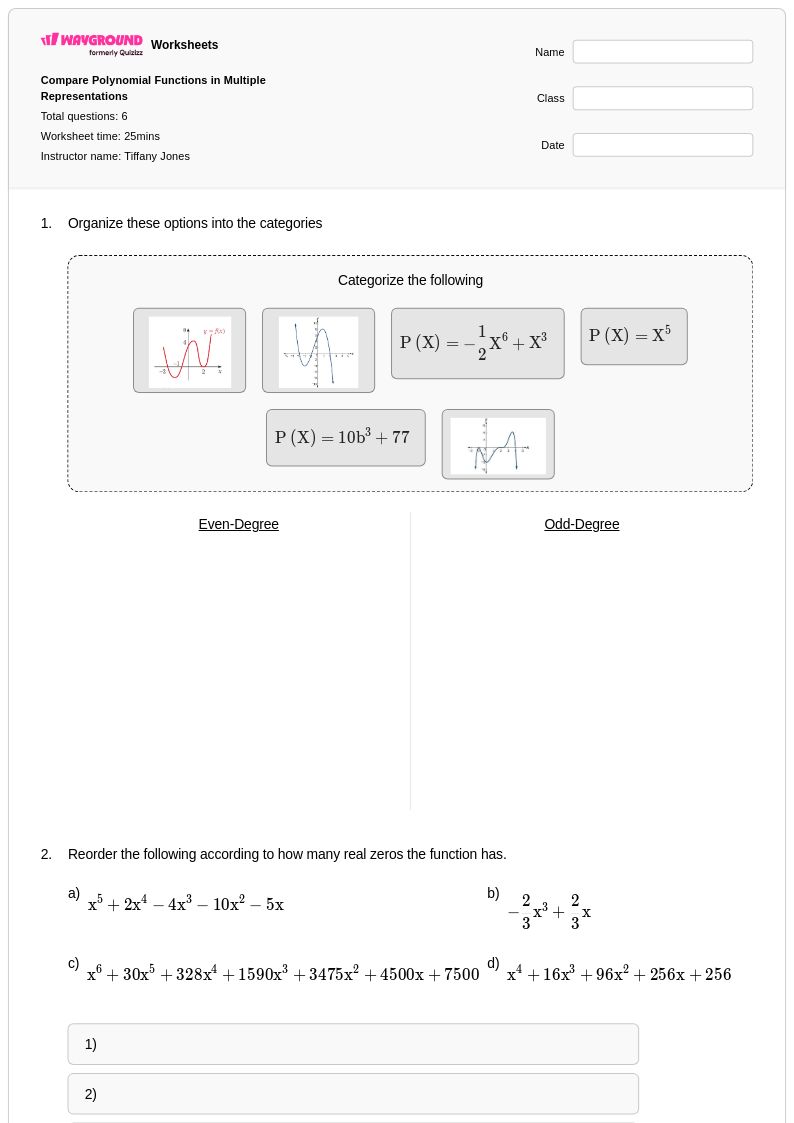
6 Q
9th - 12th
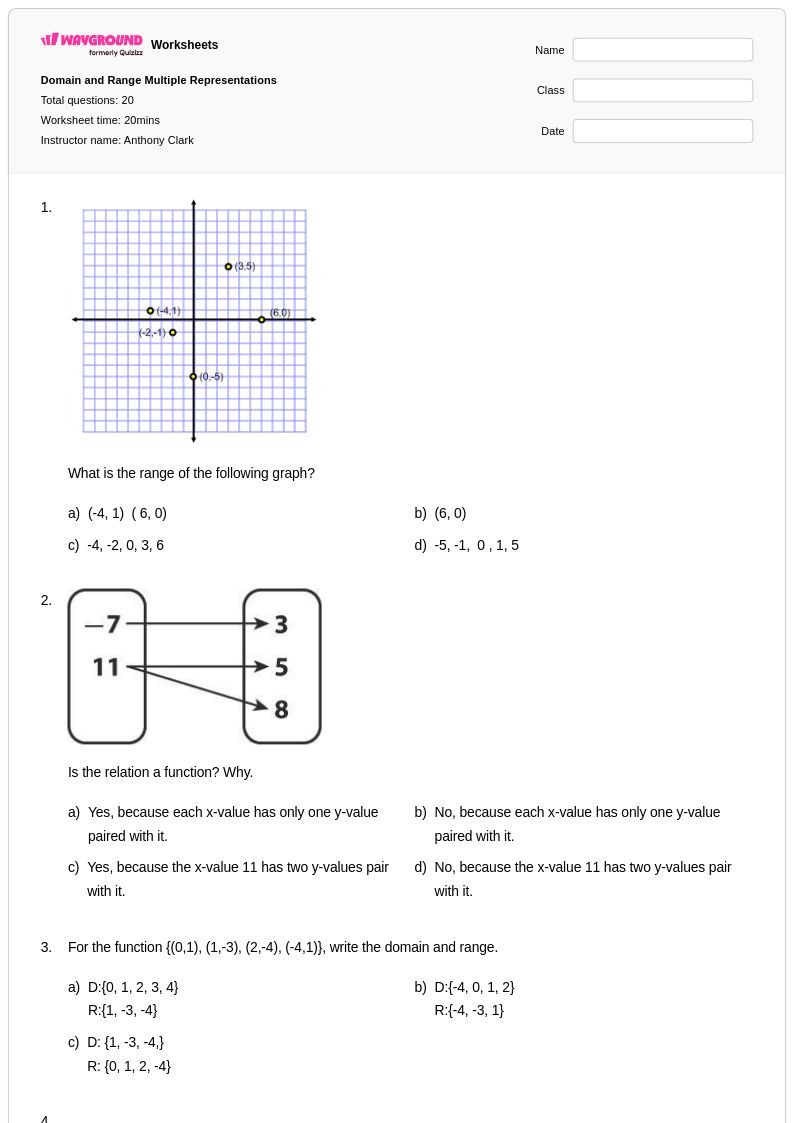
20 Q
9th - Uni
20 Q
8th - Uni
15 Q
8th - Uni
14 Q
9th - 12th
9 Q
9th - Uni
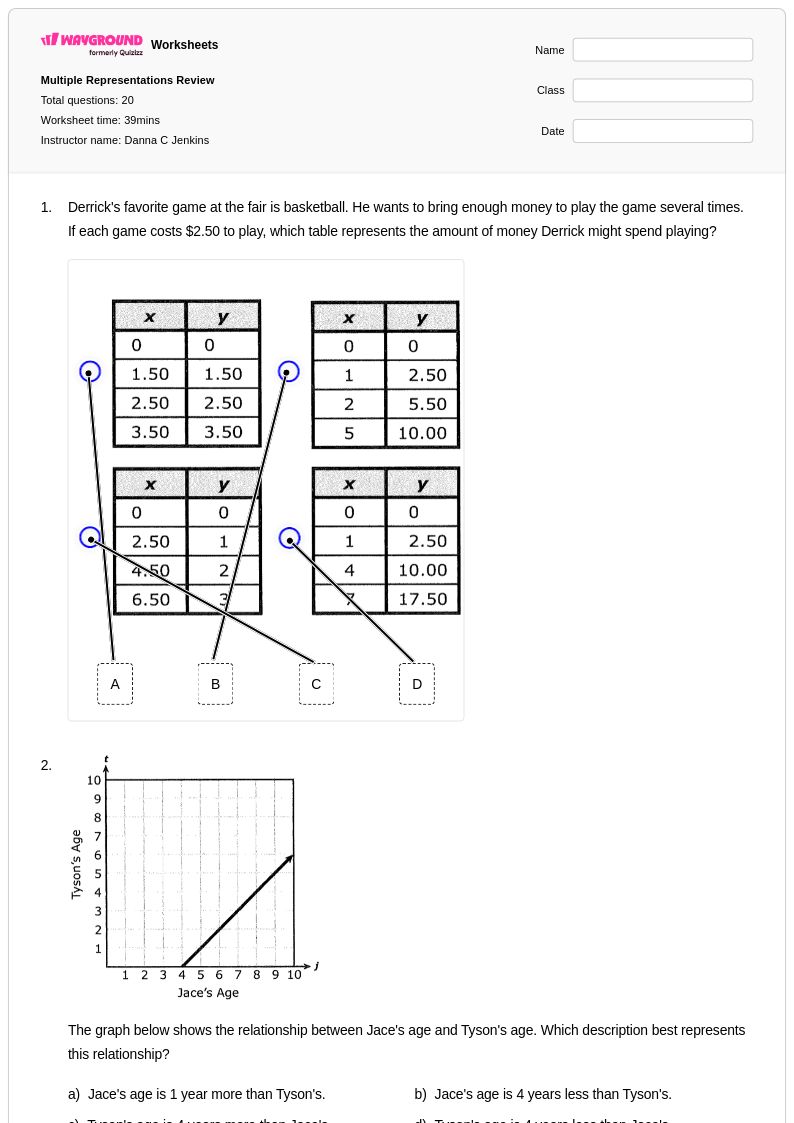
20 Q
6th - Uni
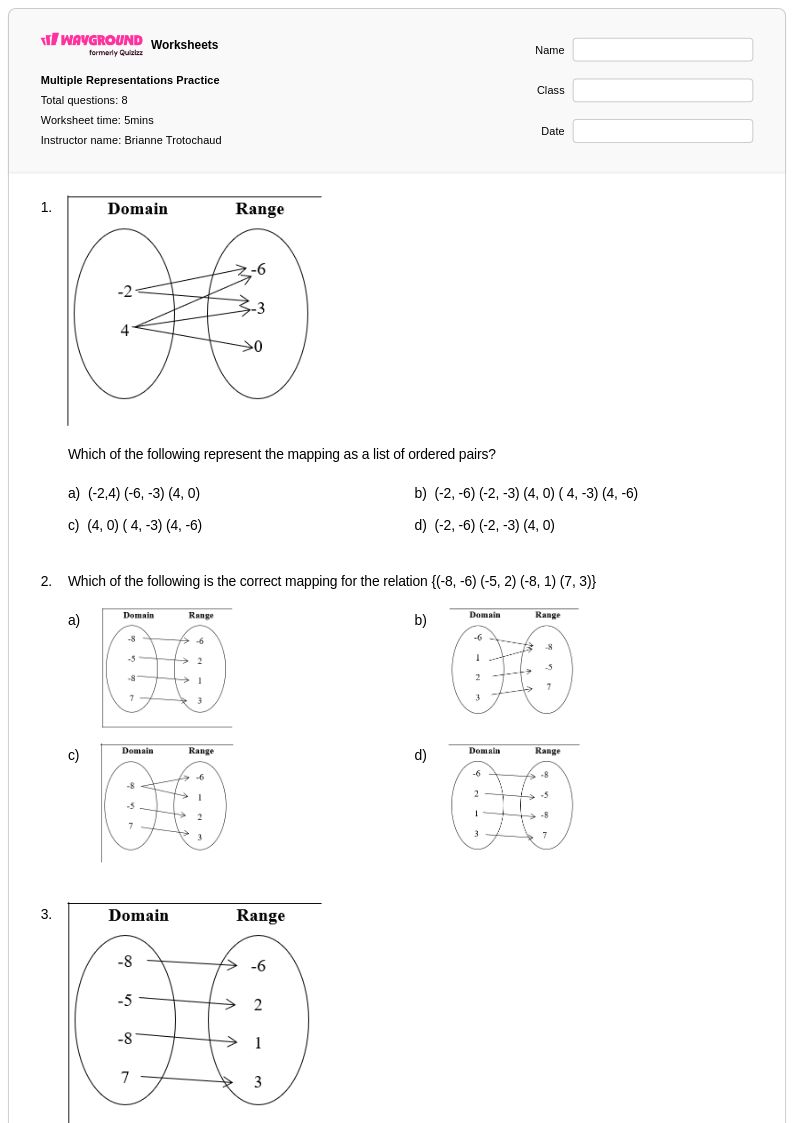
8 Q
8th - 10th
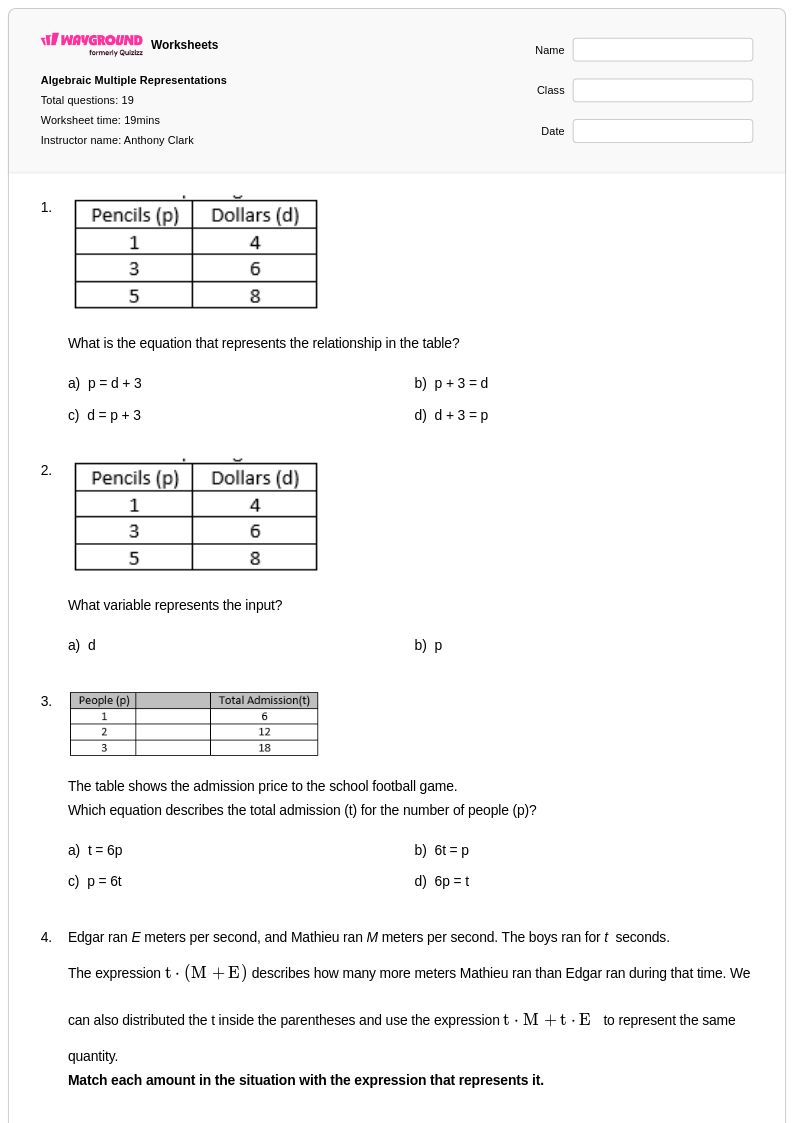
19 Q
6th - Uni
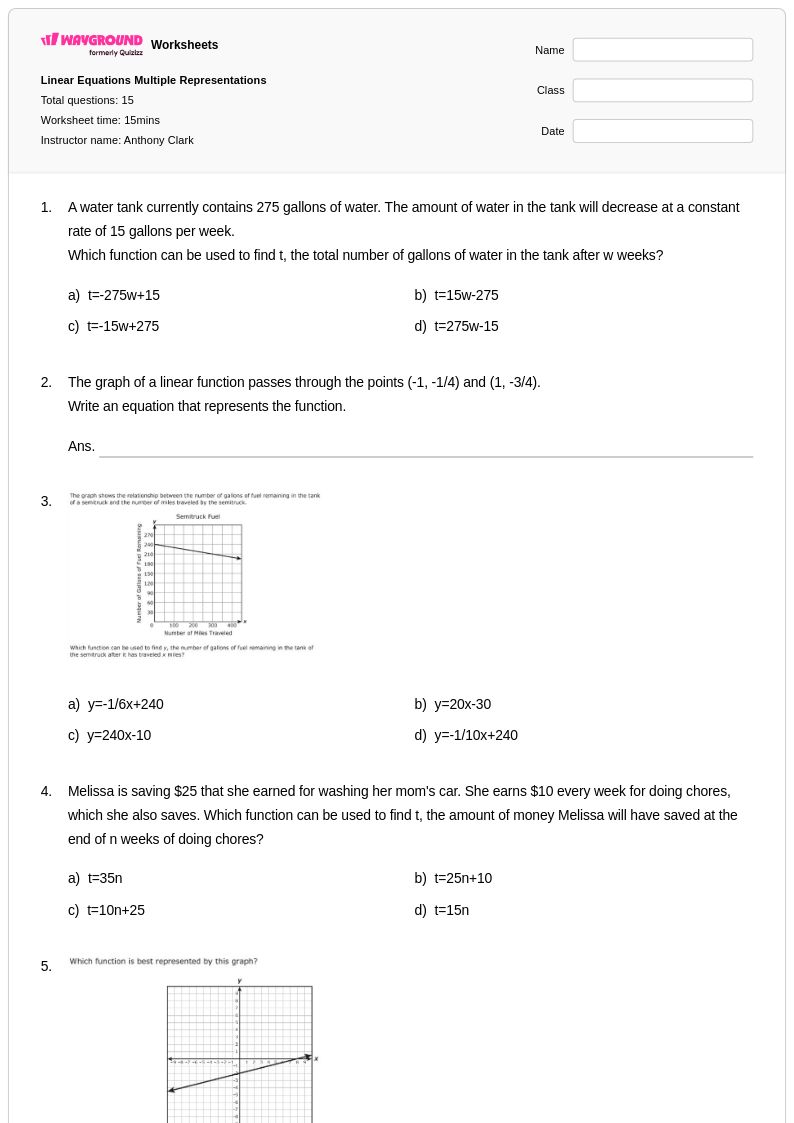
15 Q
9th - Uni
10 Q
6th - Uni
20 Q
8th - Uni
10 Q
8th - Uni
10 Q
8th - Uni
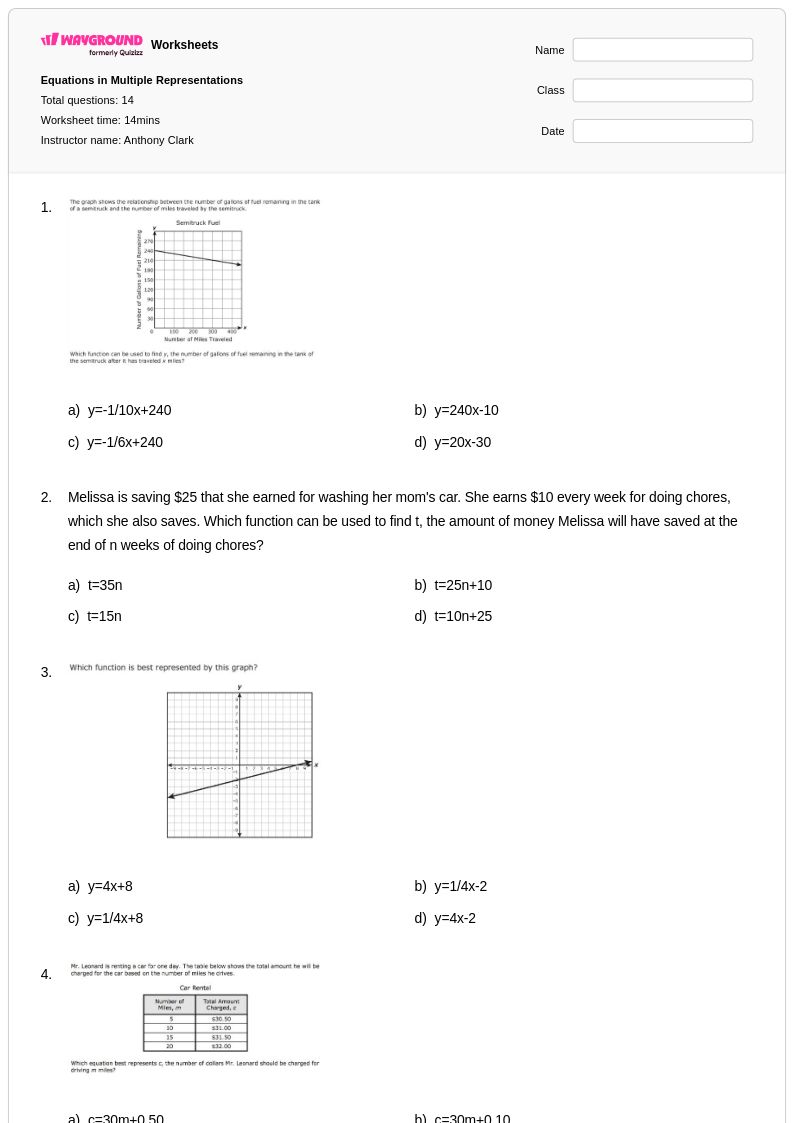
14 Q
6th - Uni
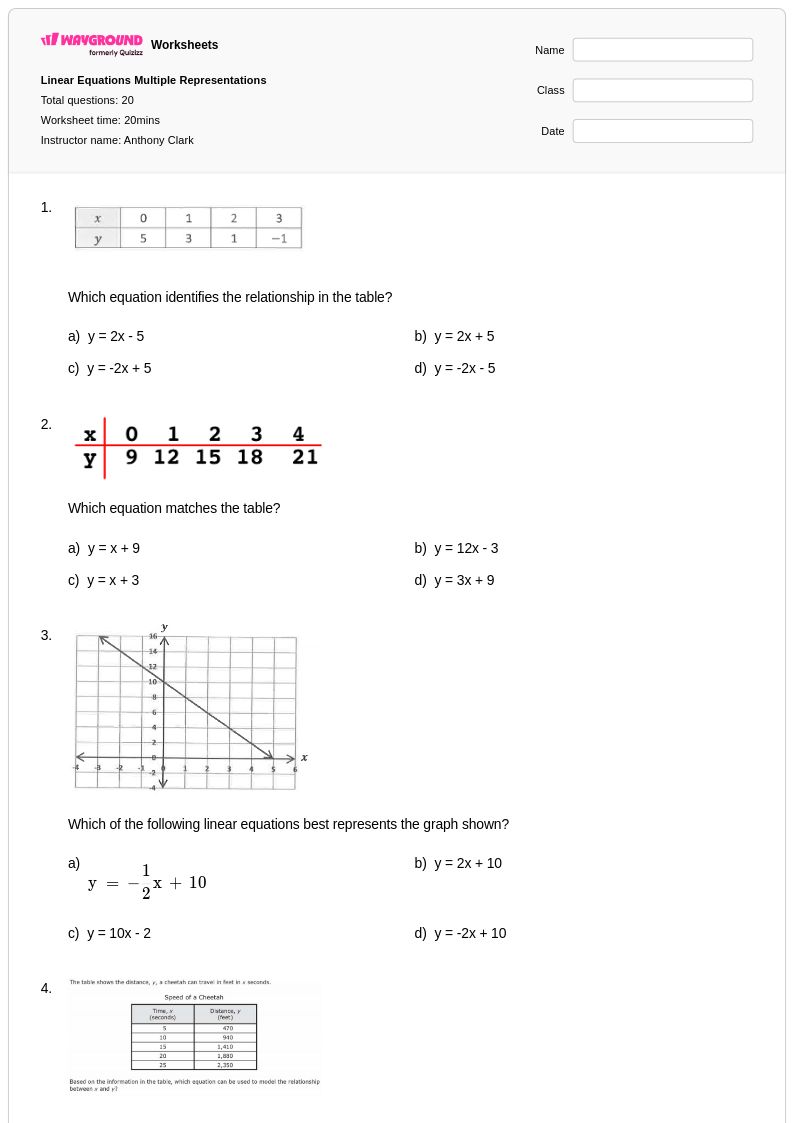
20 Q
9th - Uni
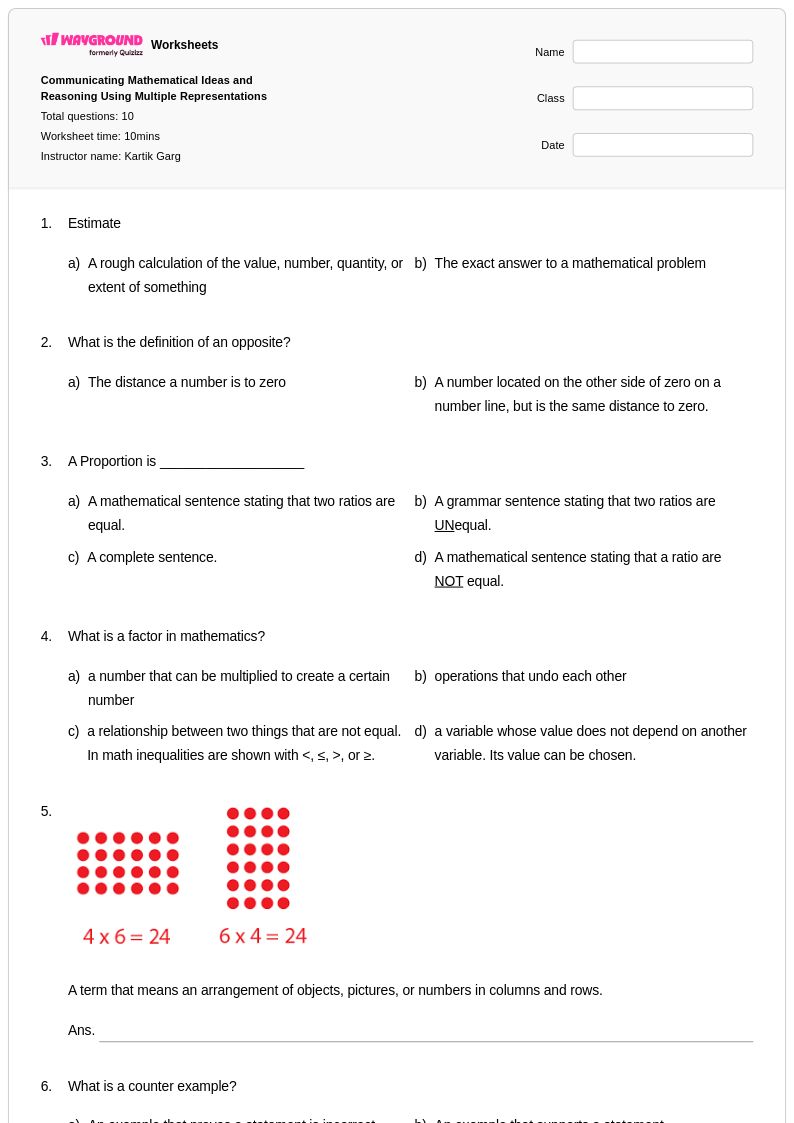
10 Q
7th - Uni
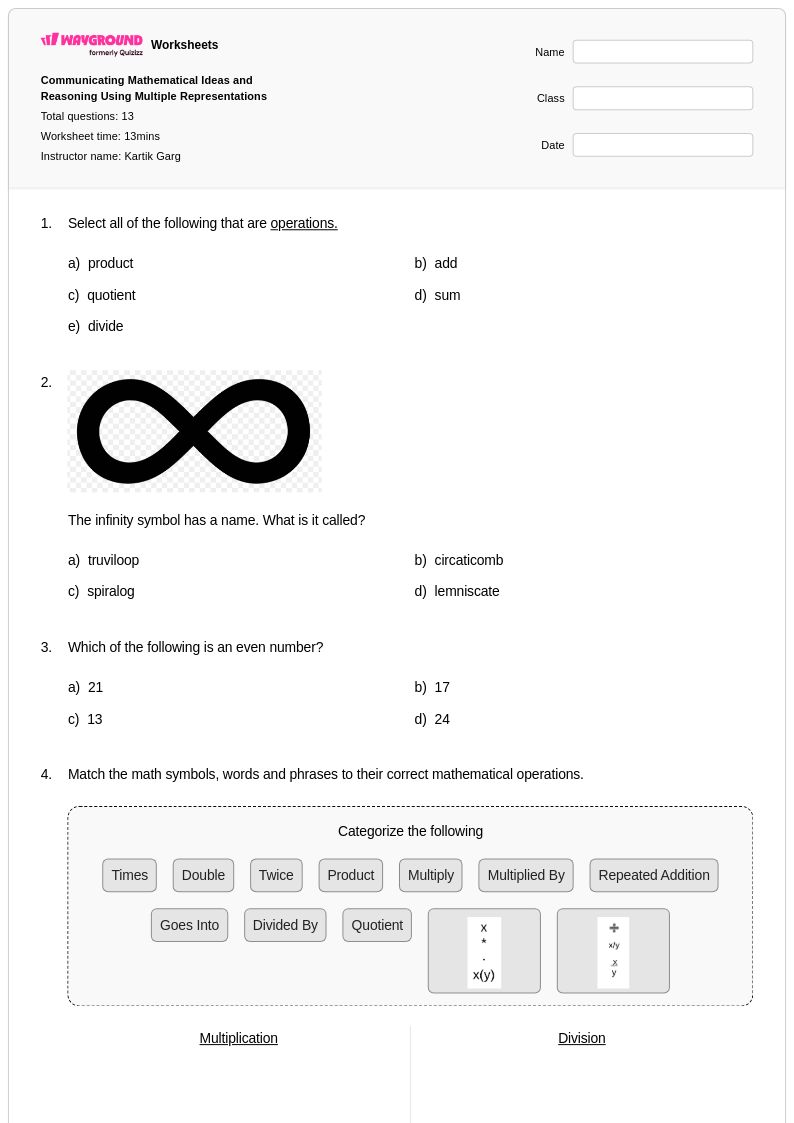
13 Q
6th - Uni
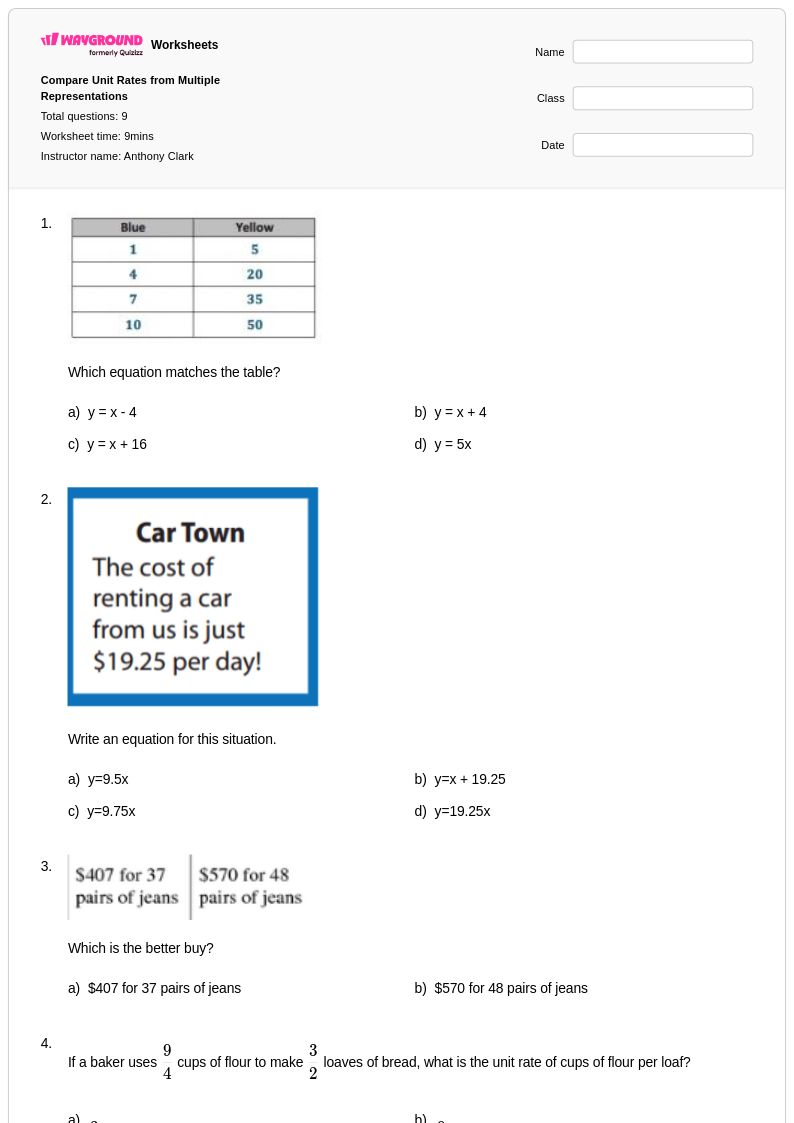
9 Q
8th - Uni
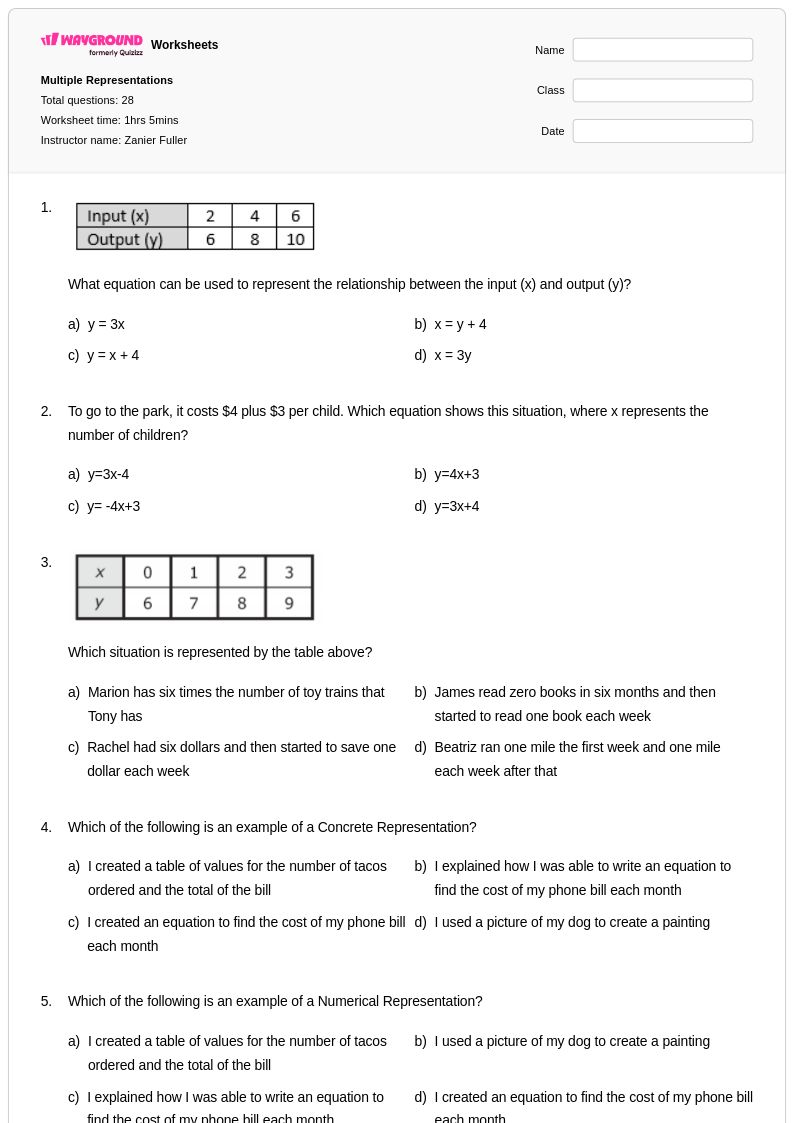
28 Q
8th - 10th
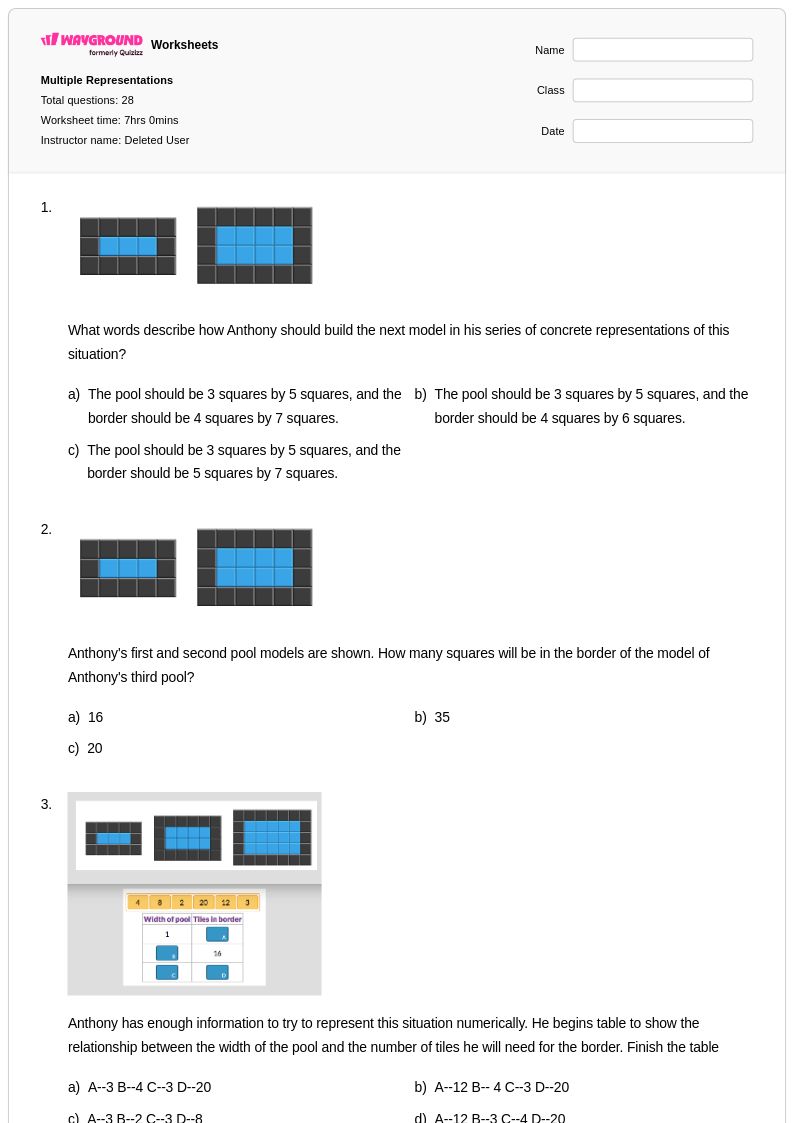
28 Q
8th - 10th
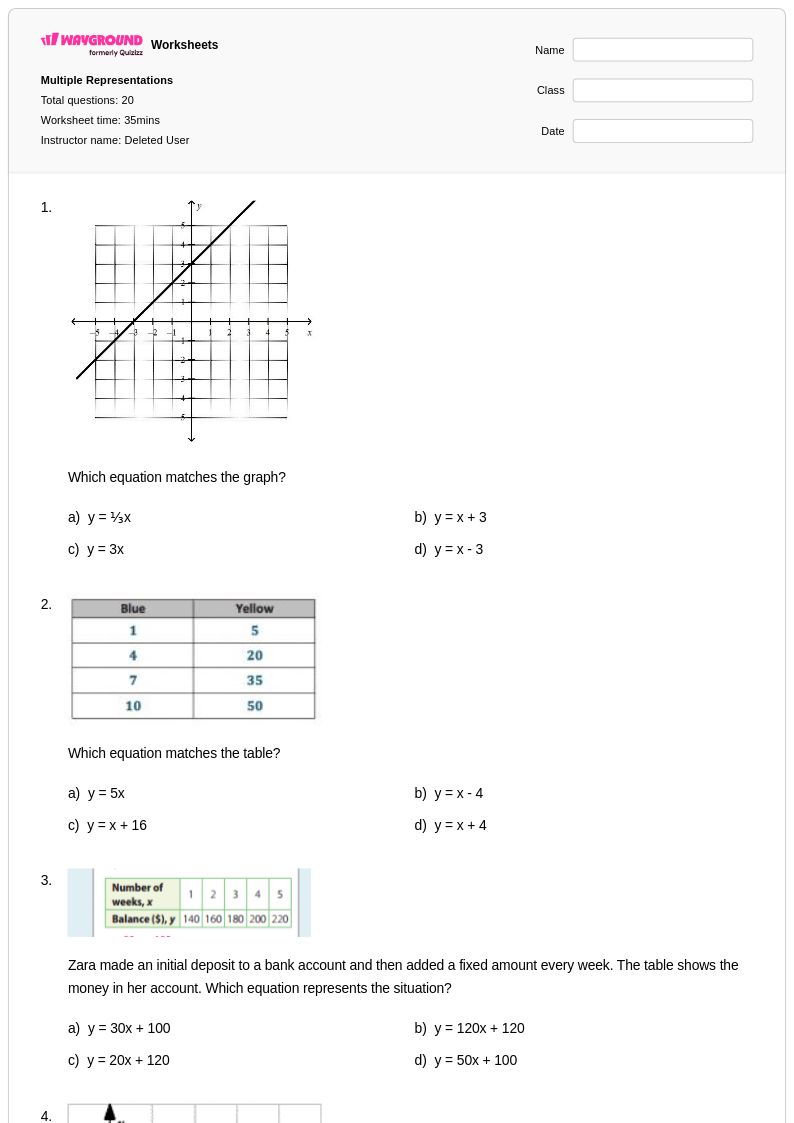
20 Q
8th - 11th
Explore Multiple Representations Worksheets by Grades
Explore Other Subject Worksheets for class 10
Explore printable Multiple Representations worksheets for Class 10
Multiple representations in Class 10 algebra form a cornerstone of mathematical understanding, allowing students to connect abstract algebraic concepts through various visual, numerical, and symbolic formats. Wayground's comprehensive collection of multiple representations worksheets provides students with extensive practice problems that strengthen their ability to translate between tables, graphs, equations, and verbal descriptions of algebraic relationships. These free printable resources systematically develop critical thinking skills as students learn to recognize patterns across different representational formats, whether working with linear functions, quadratic relationships, or exponential models. Each worksheet includes a detailed answer key that supports independent learning and helps students verify their understanding of how mathematical concepts appear across multiple formats, making these pdf resources invaluable for both classroom instruction and home practice.
Wayground's platform, formerly known as Quizizz, empowers teachers with millions of educator-created worksheets specifically designed for multiple representations instruction in Class 10 algebra. The robust search and filtering system allows educators to quickly locate resources aligned with specific standards and learning objectives, while differentiation tools enable customization for students with varying skill levels and learning needs. Teachers can seamlessly access both printable pdf versions for traditional paper-based assignments and digital formats for interactive classroom activities, providing flexibility for diverse instructional approaches. These comprehensive worksheet collections support effective lesson planning by offering structured practice opportunities for skill development, targeted remediation for struggling learners, and enrichment activities for advanced students, ensuring that all Class 10 algebra students can master the essential skill of working fluently across multiple mathematical representations.
FAQs
How do I teach multiple representations in Grade 10 algebra?
What exercises help Grade 10 students practice multiple representations?
What mistakes do students make when translating between tables, graphs, and equations?
How can I use these Grade 10 multiple representations worksheets?
How do multiple representations fit into the Common Core math progression?
How can I differentiate multiple representations practice for mixed-ability classes?
What grade do students learn to connect multiple representations of functions?