Free Printable Multiple Representations Worksheets for Class 6
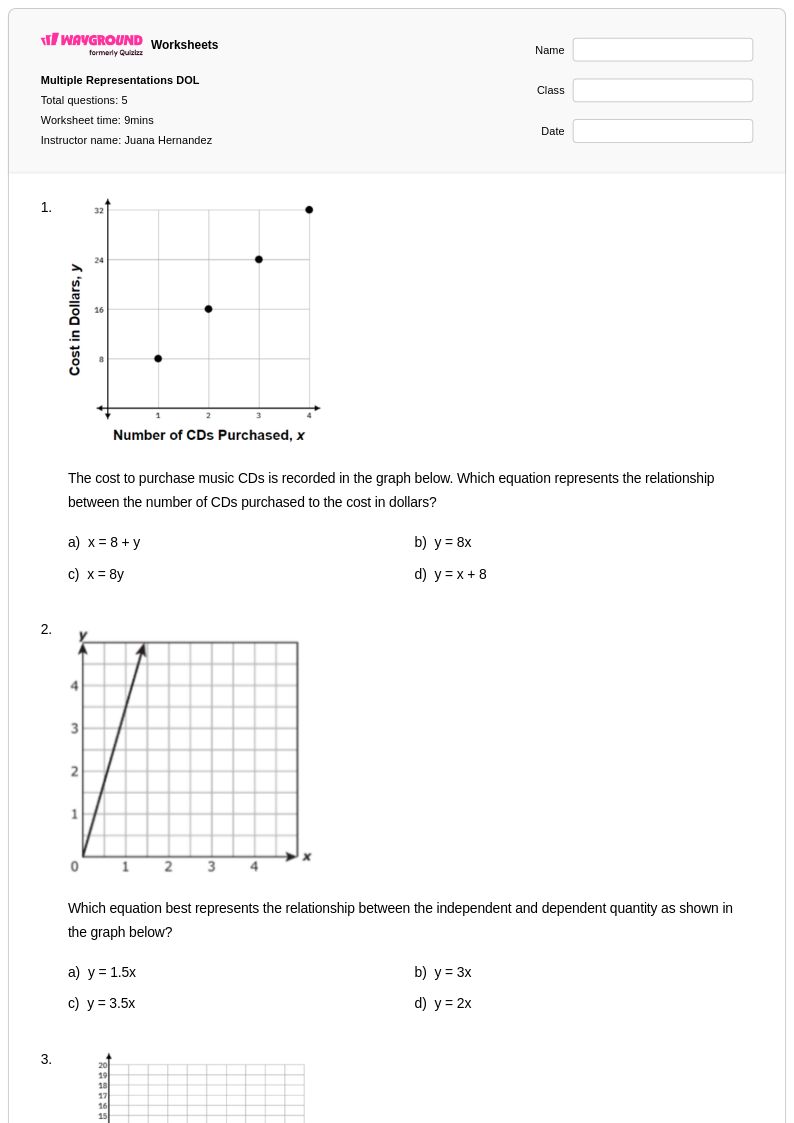
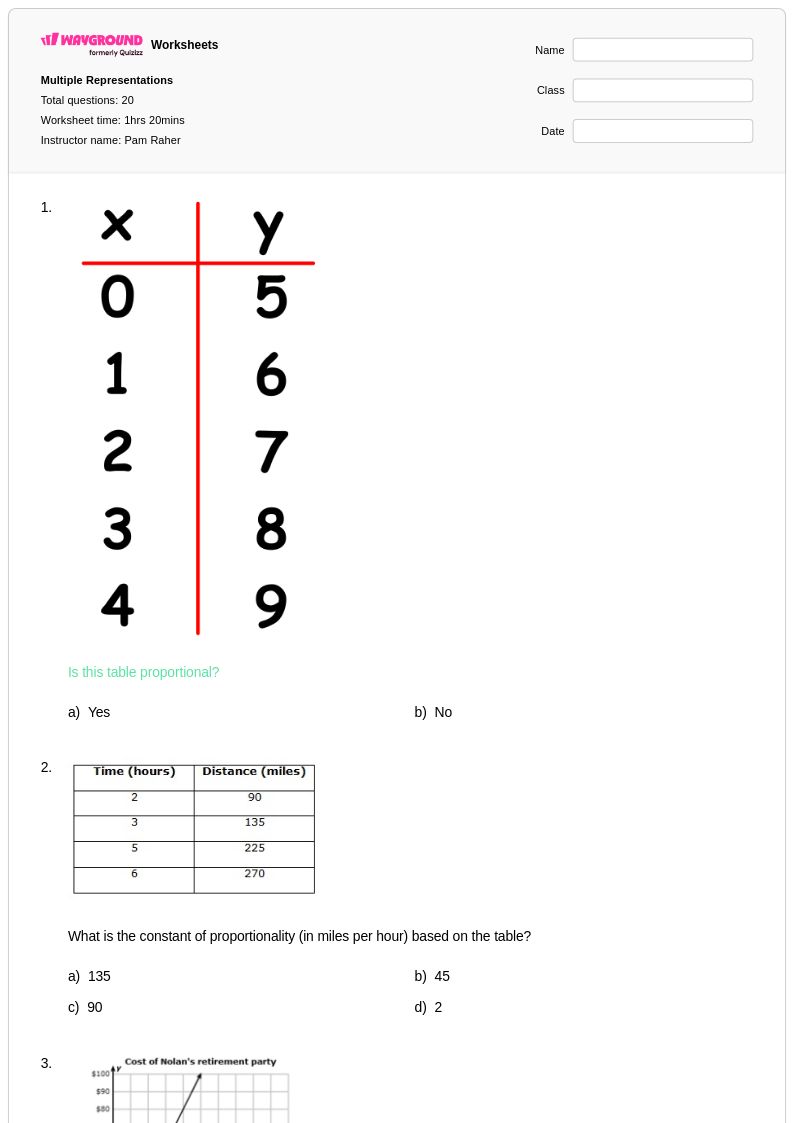
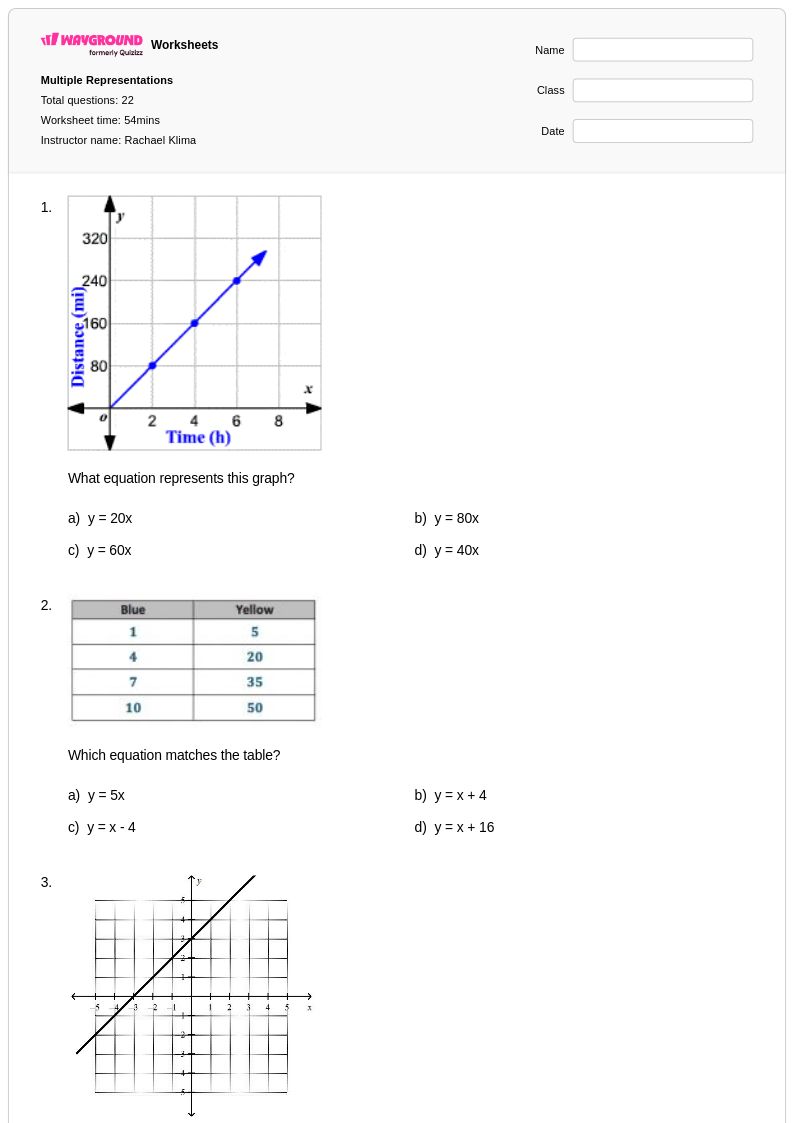
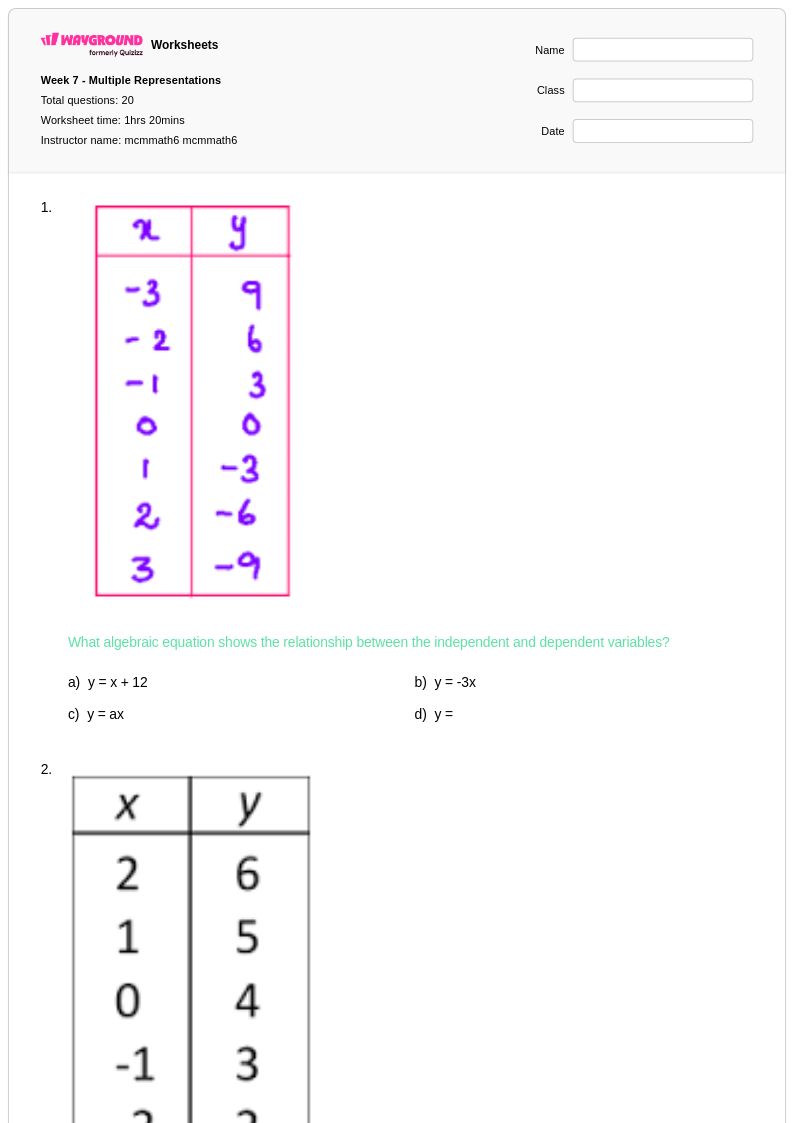
Class 6 multiple representations algebra worksheets help students explore mathematical concepts through various formats including graphs, tables, and equations with free printable PDFs, practice problems, and answer keys.
Explore printable Multiple Representations worksheets for Class 6
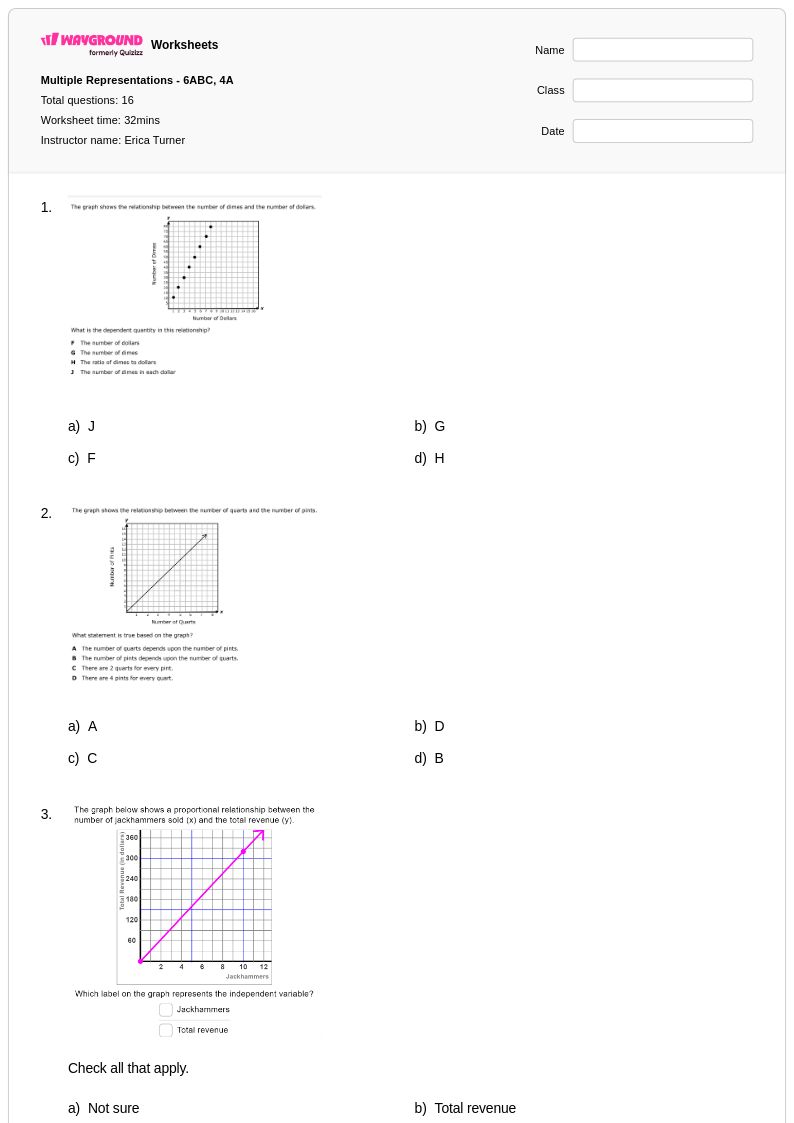
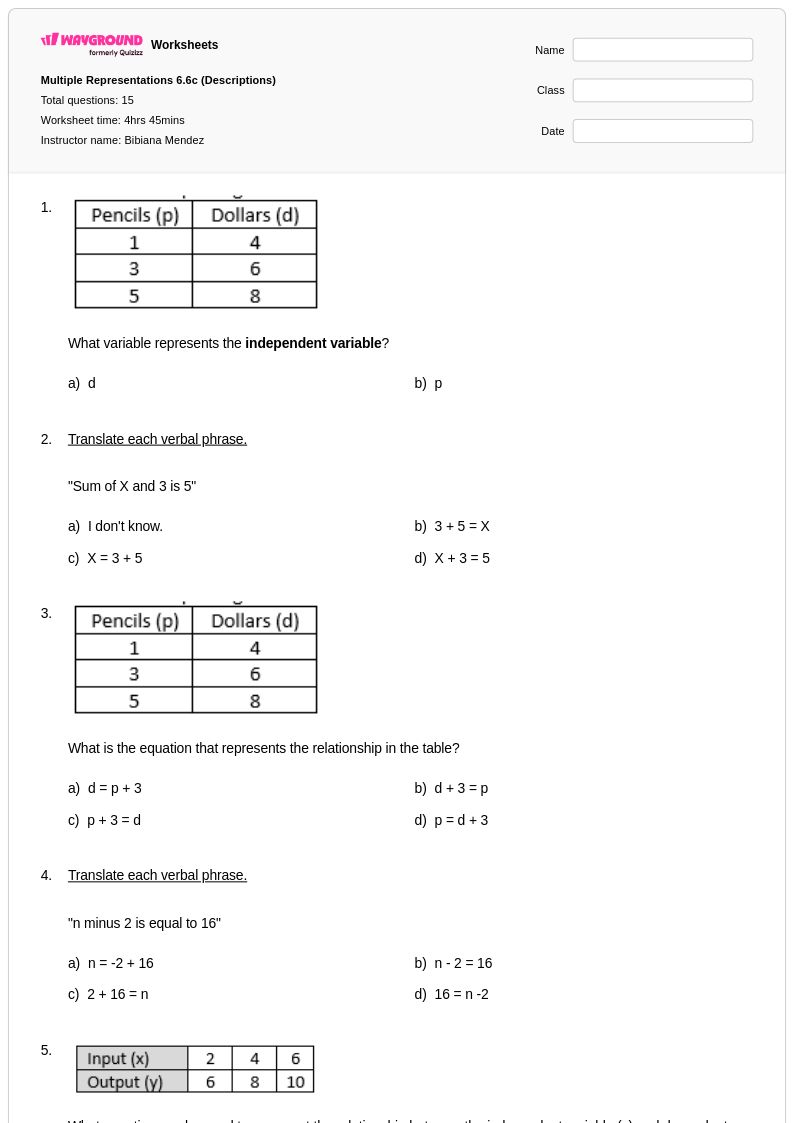
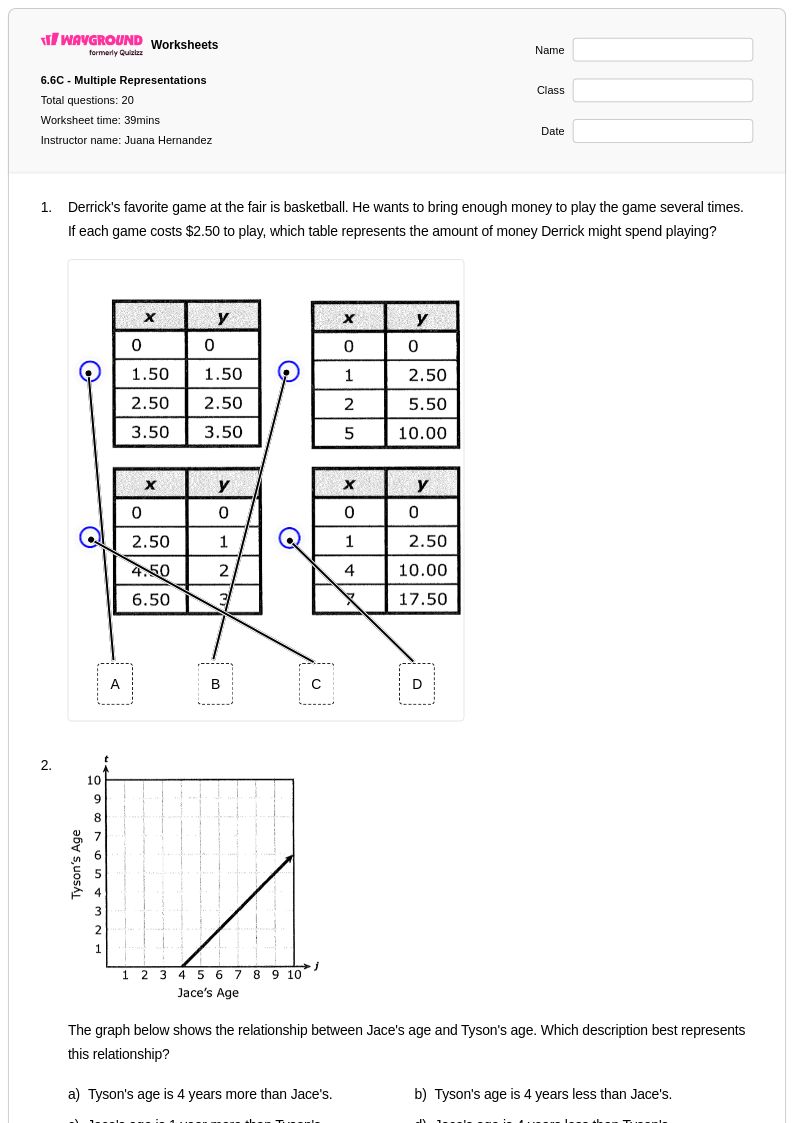
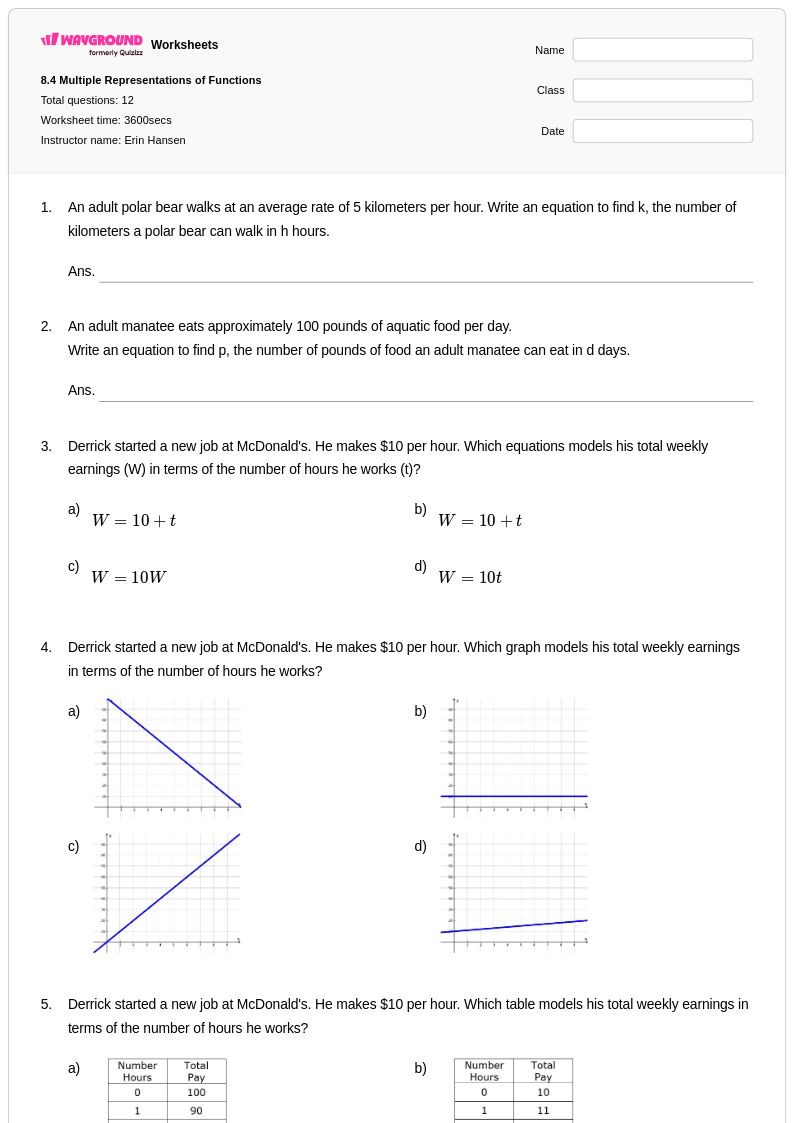
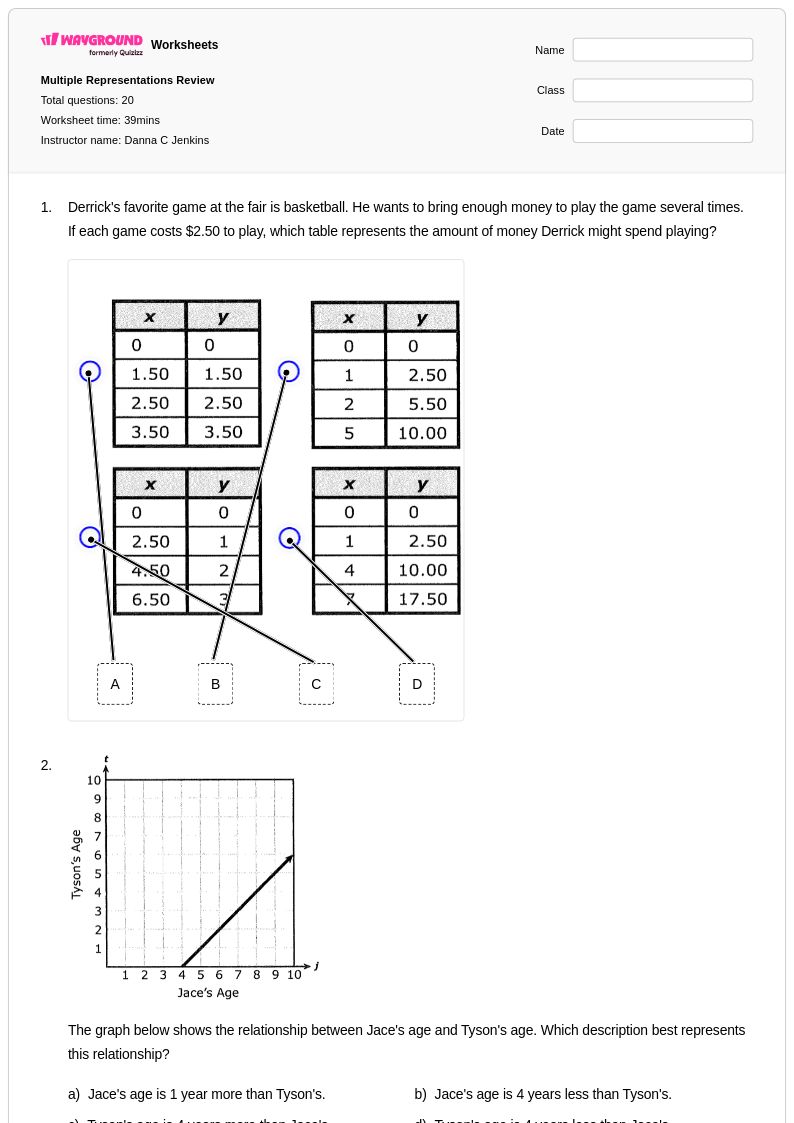
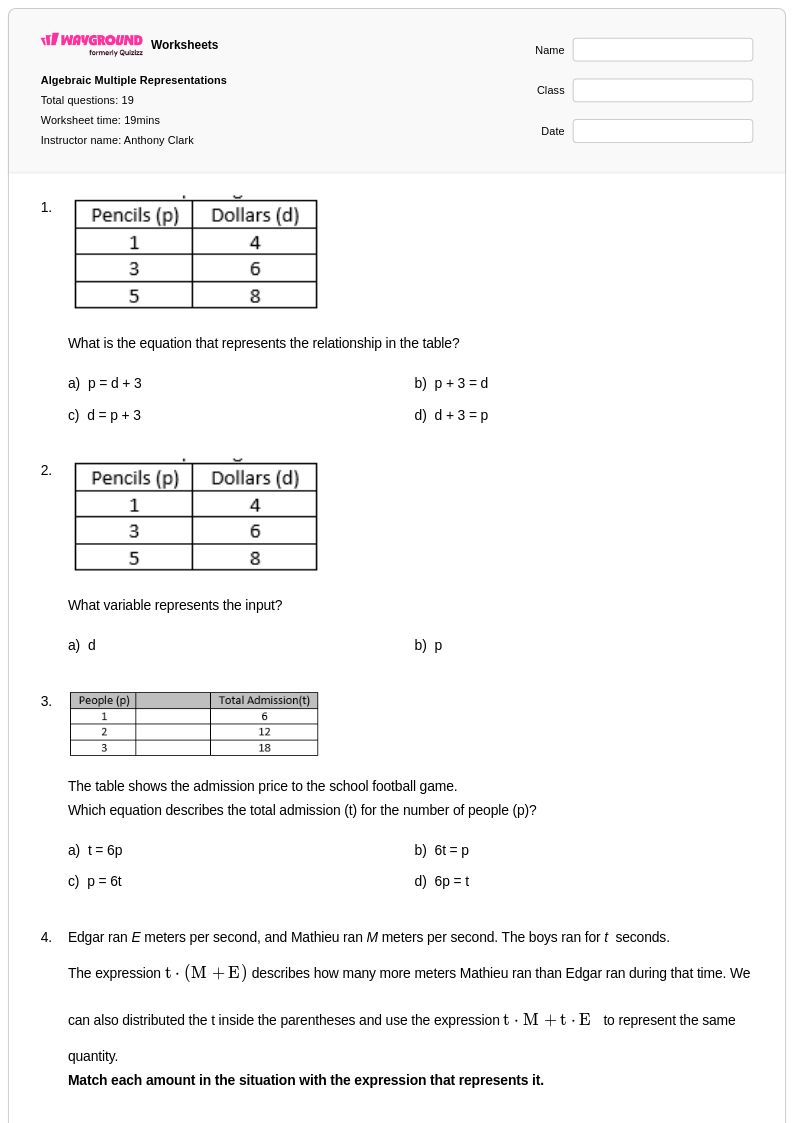
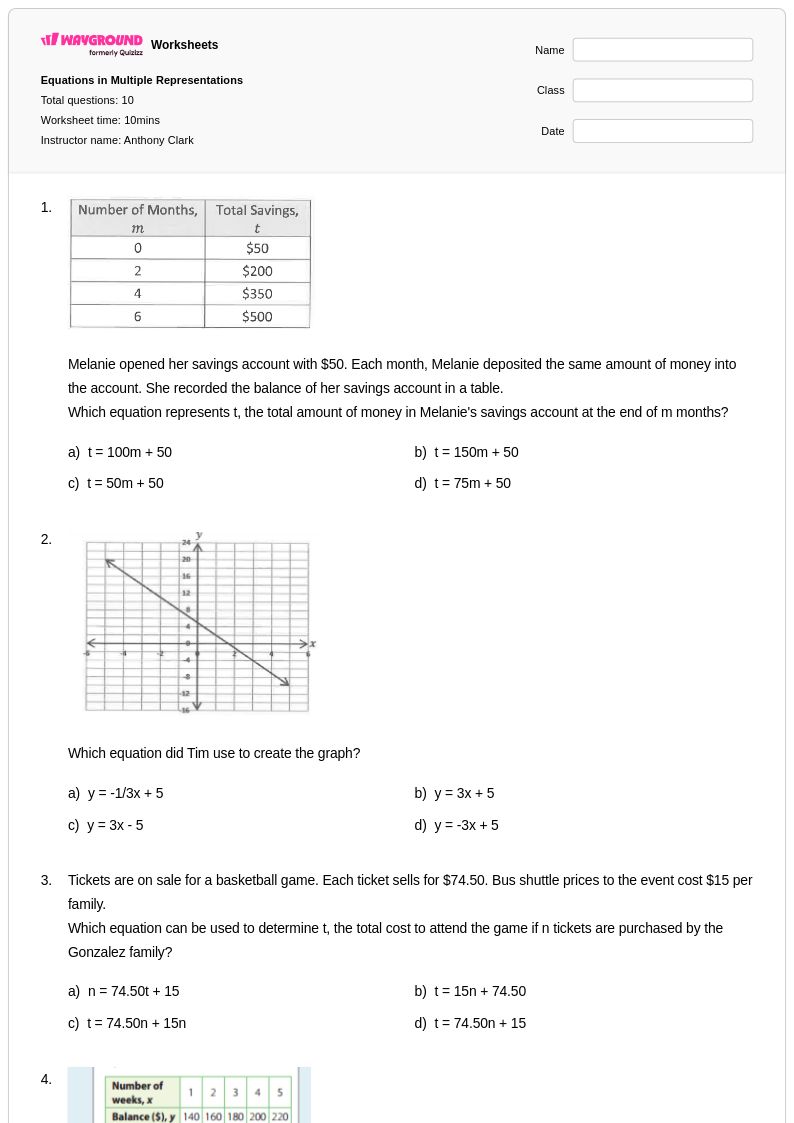
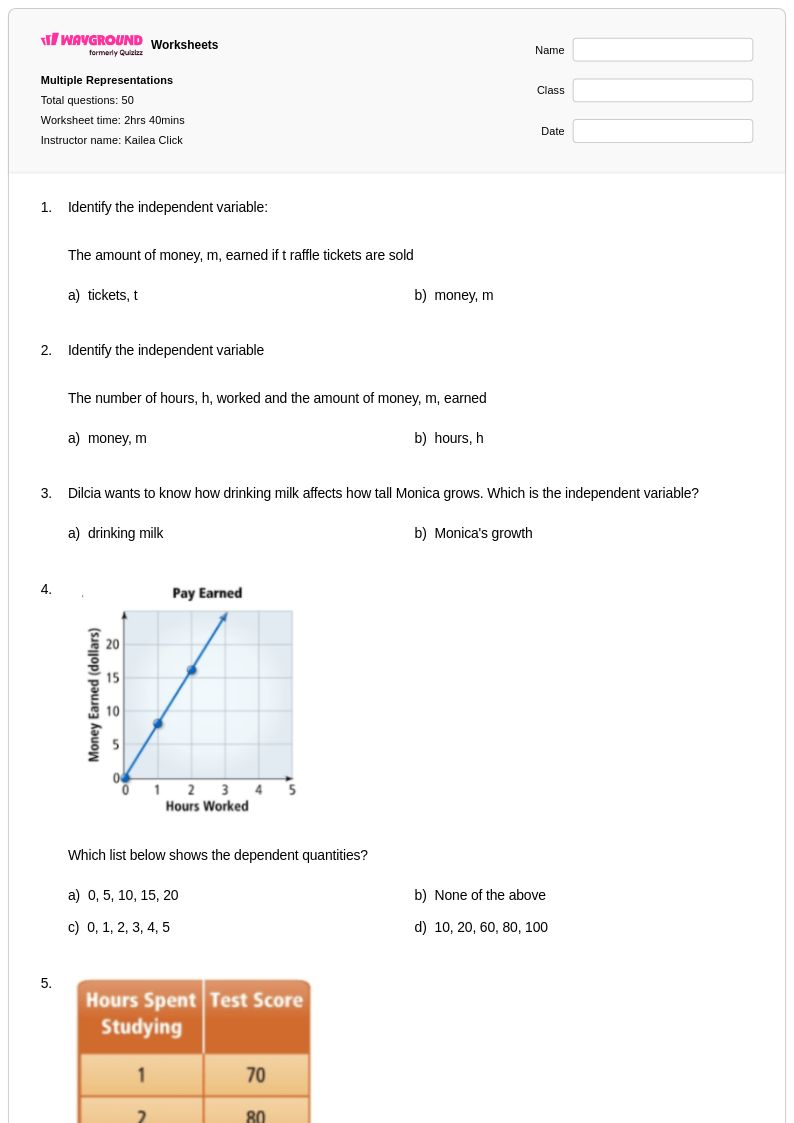
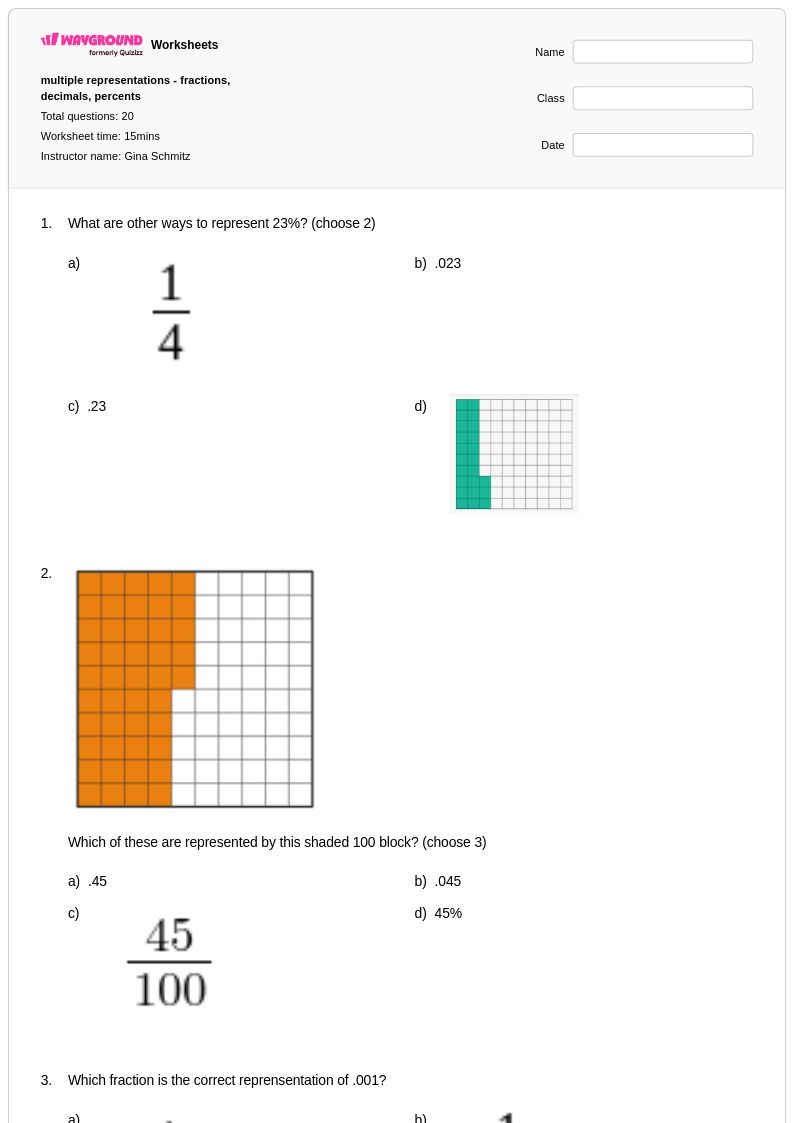
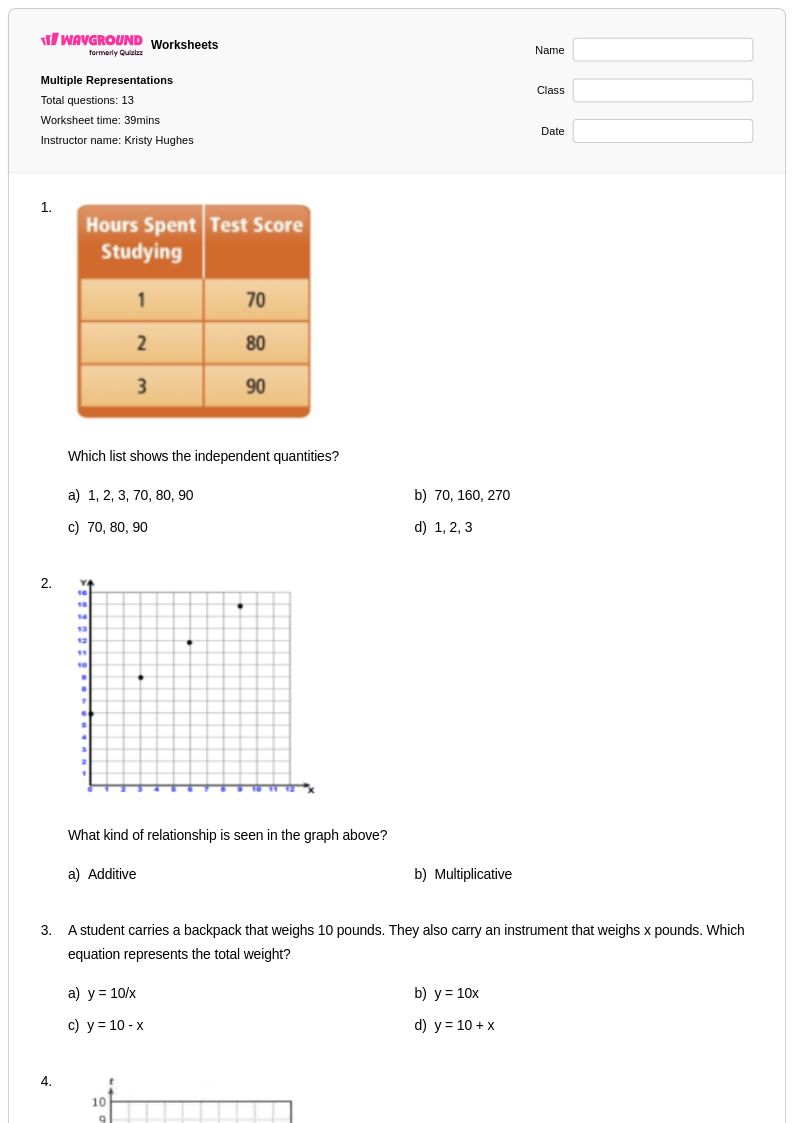
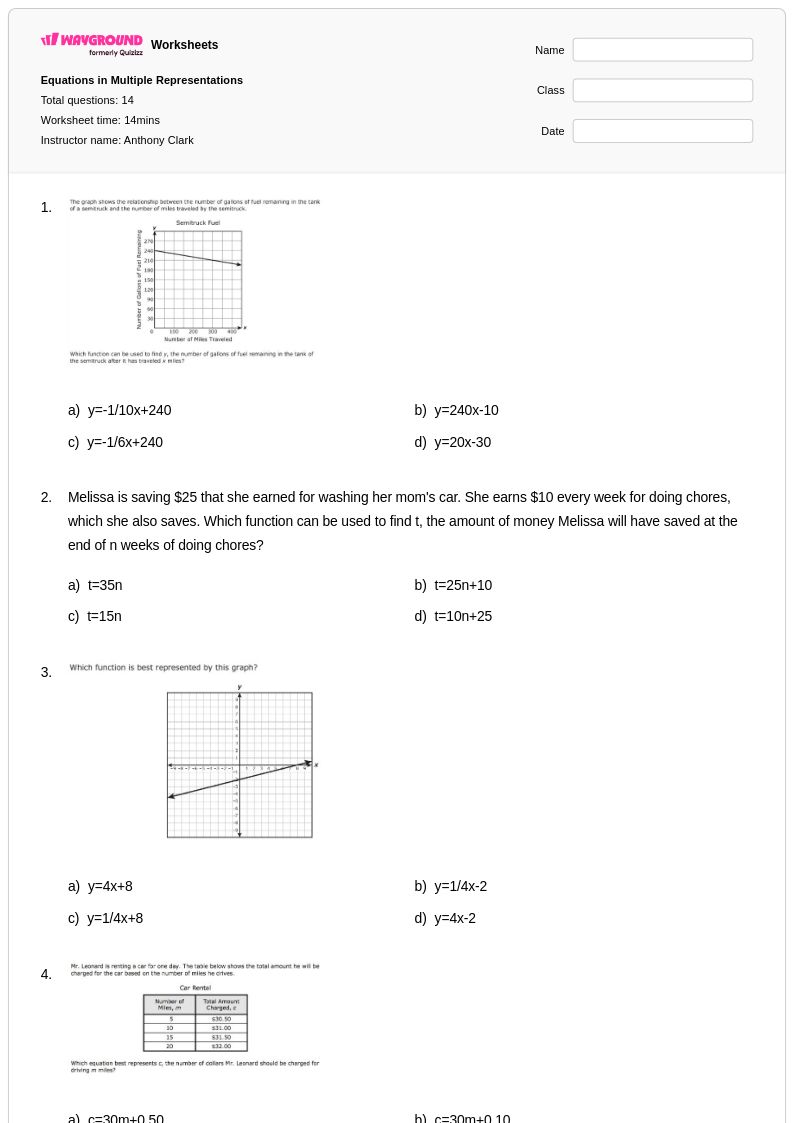
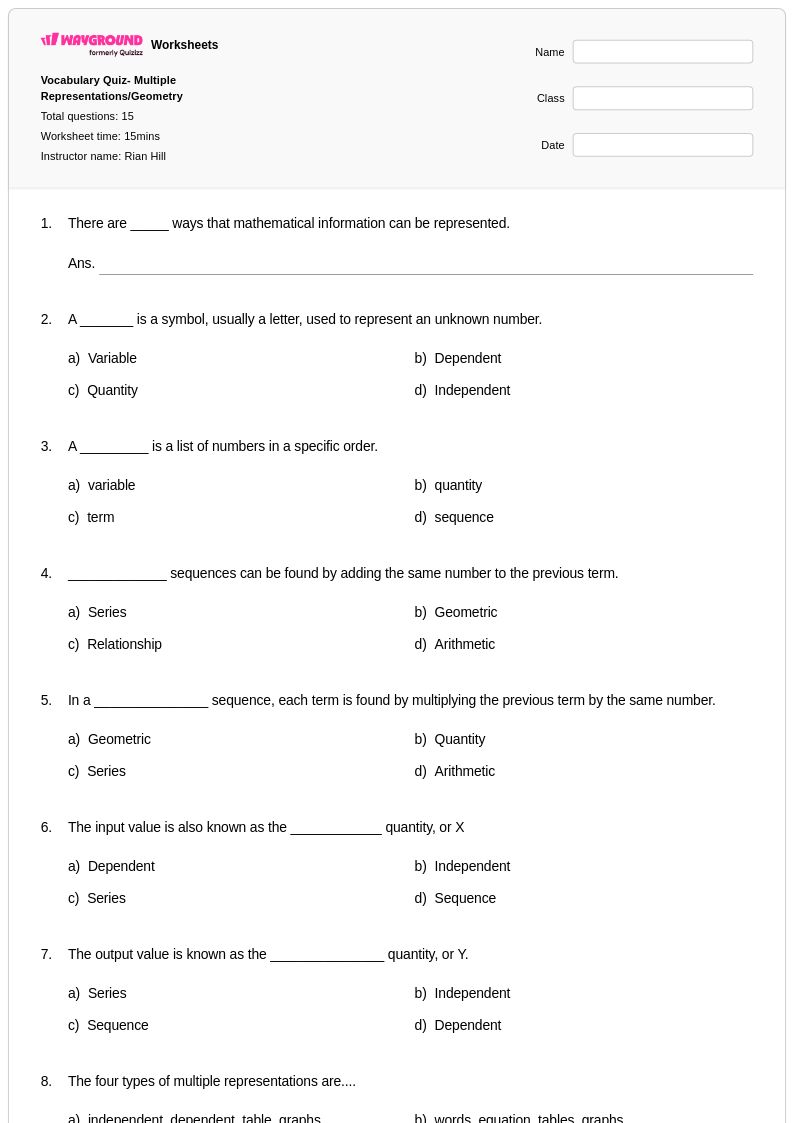
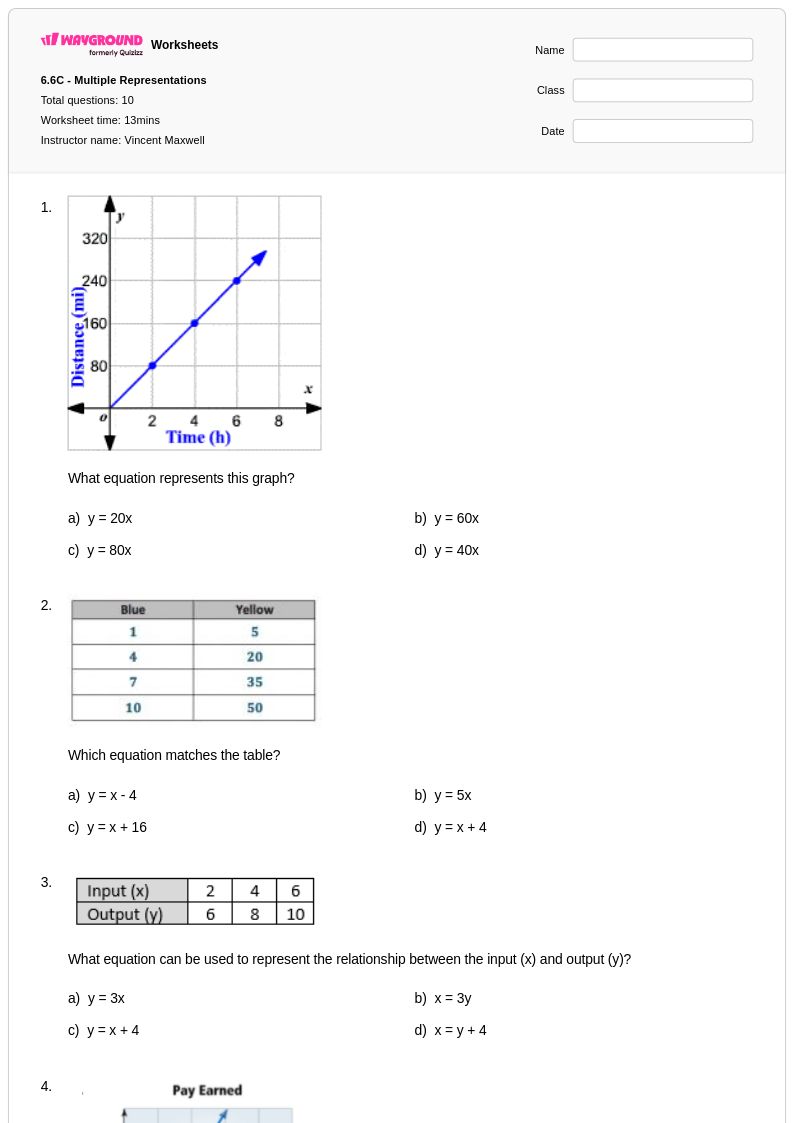
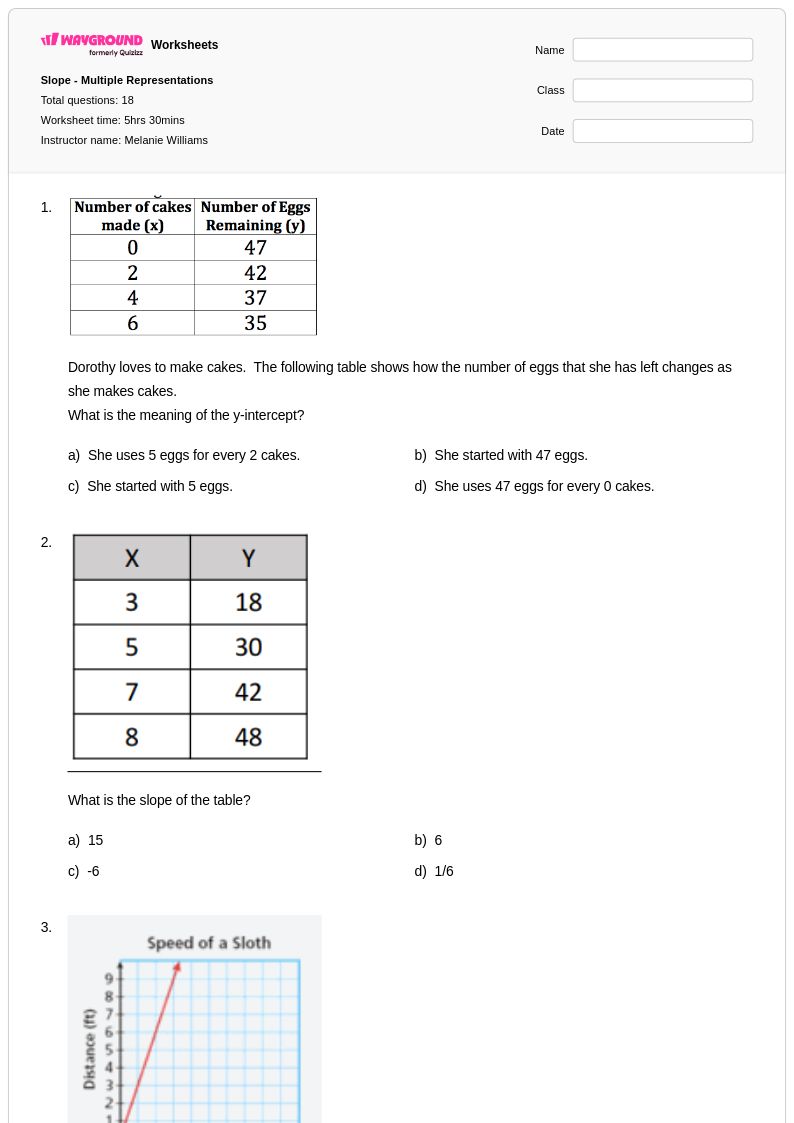
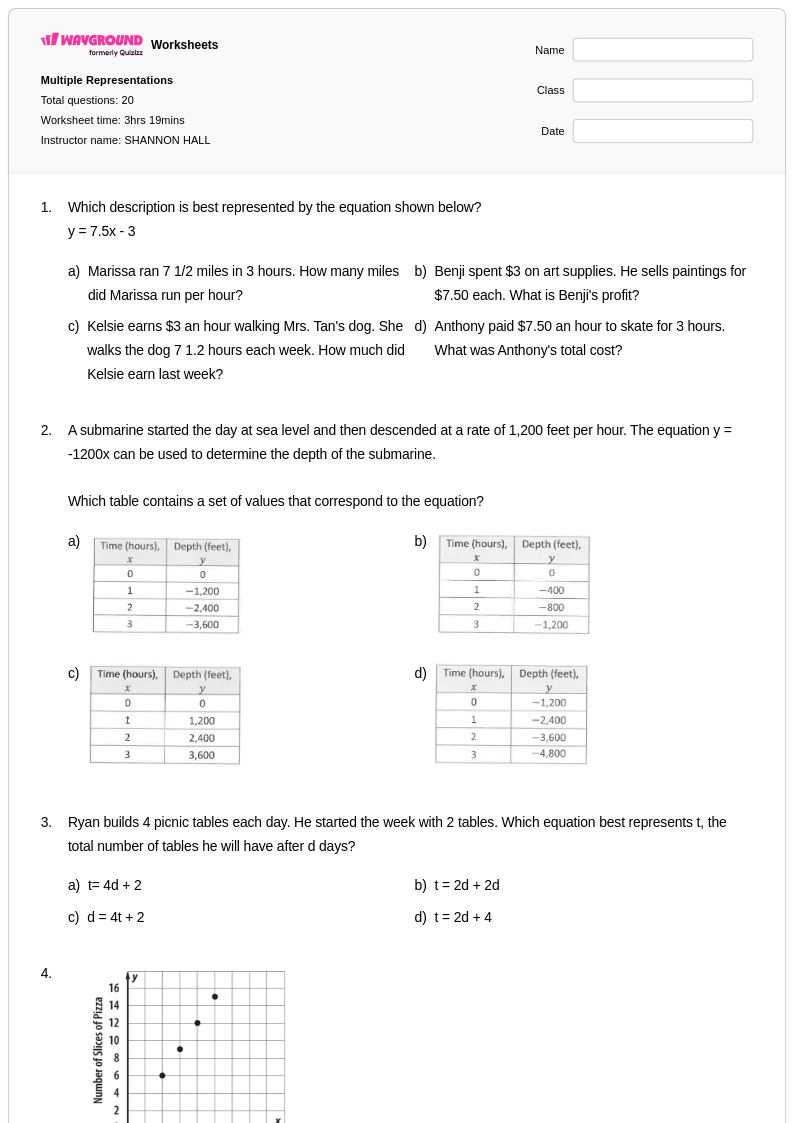
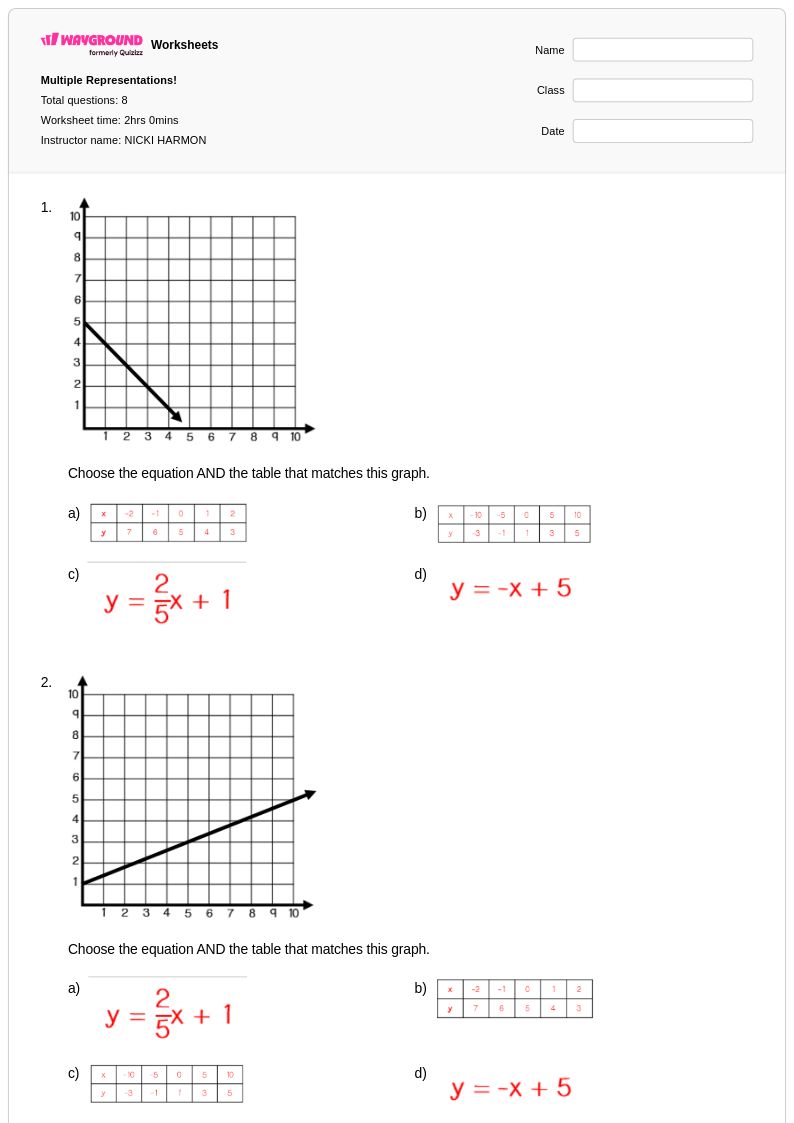
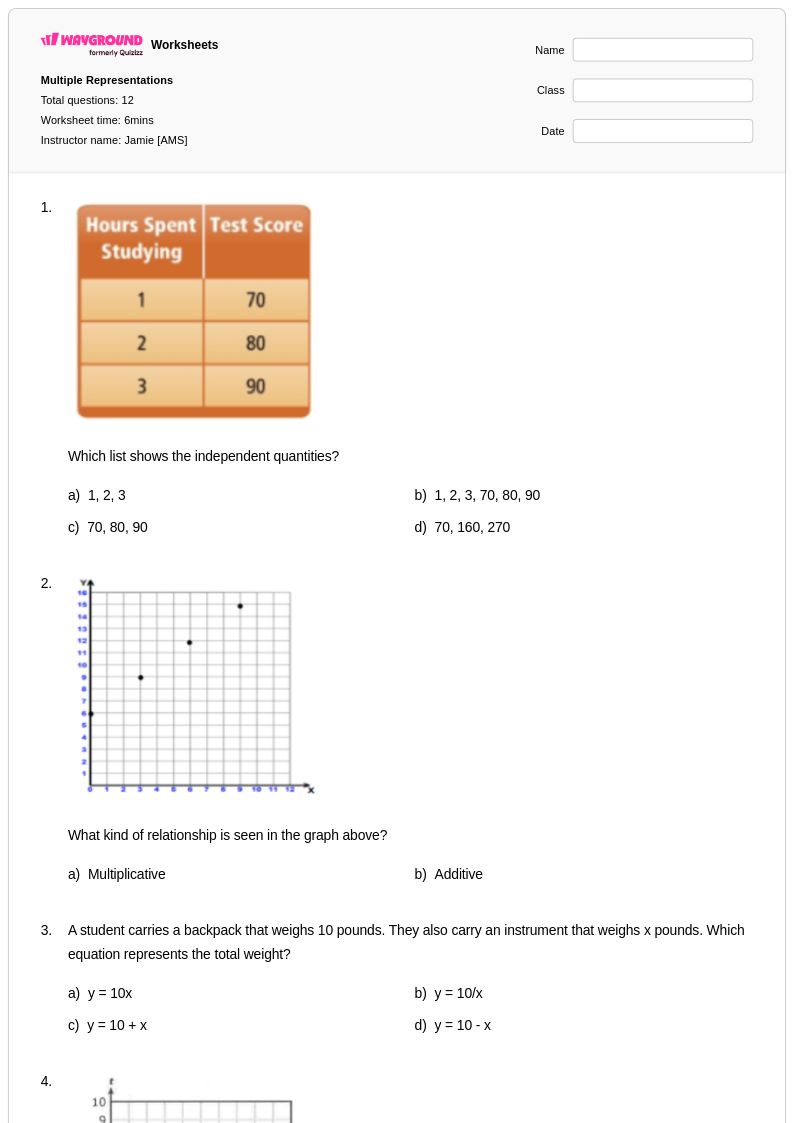
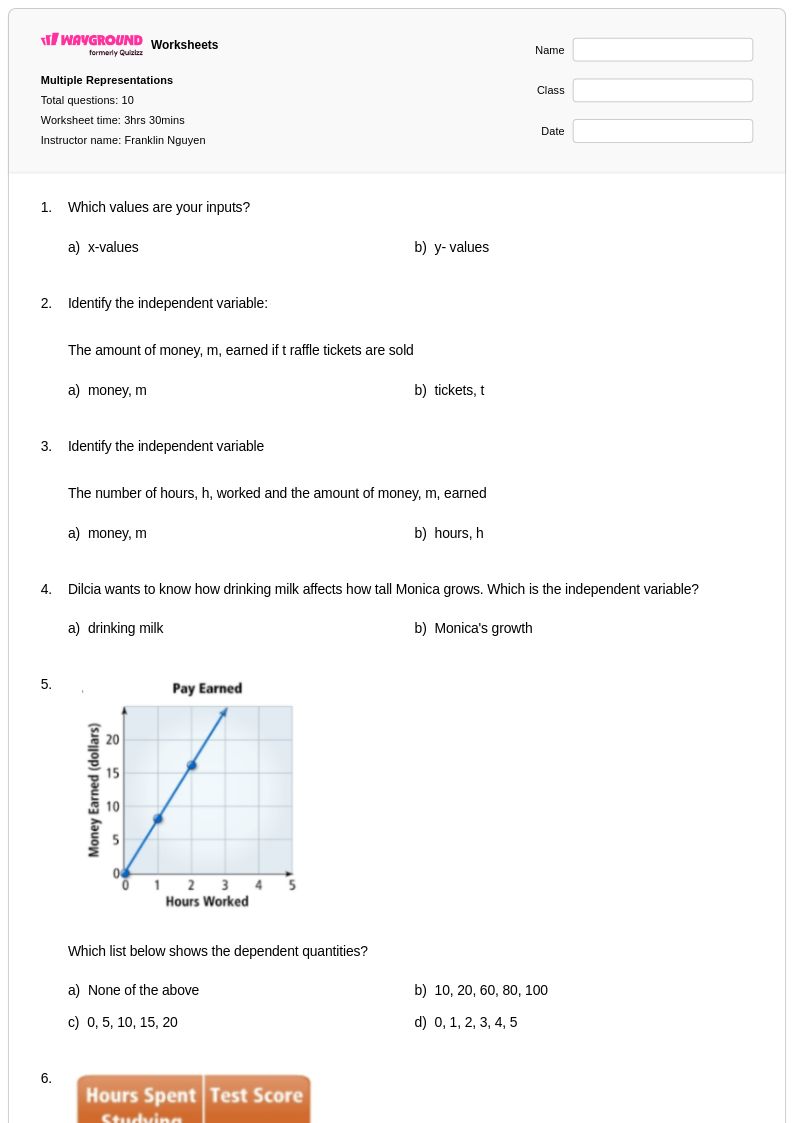
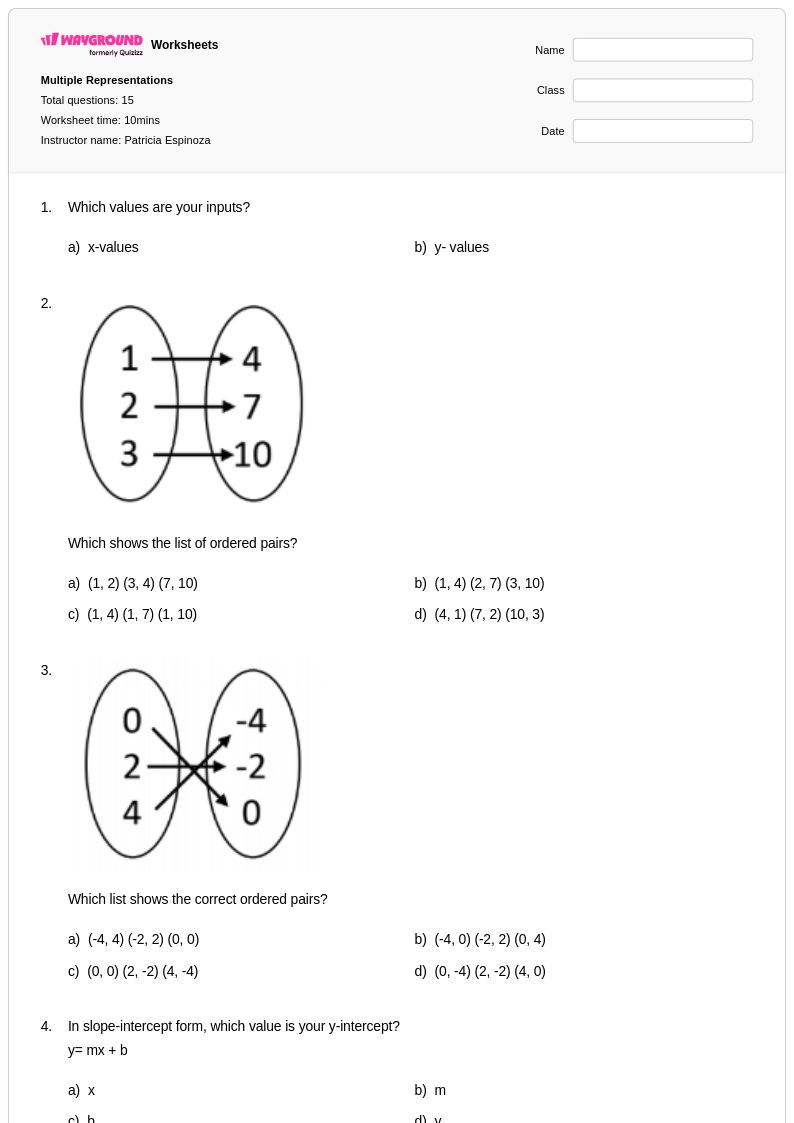
Multiple representations worksheets for Class 6 algebra through Wayground (formerly Quizizz) provide students with essential practice in translating mathematical concepts across different formats including tables, graphs, equations, and verbal descriptions. These comprehensive worksheets strengthen critical thinking skills by challenging students to recognize equivalent mathematical relationships whether presented as coordinate pairs, linear equations, or real-world scenarios. Each worksheet collection includes detailed answer keys and is available as free printable pdf resources, allowing students to work through practice problems that build fluency in converting between algebraic expressions, visual models, and contextual situations that form the foundation of algebraic reasoning.
Wayground (formerly Quizizz) supports educators with millions of teacher-created multiple representations worksheets that can be easily searched and filtered by specific Class 6 algebra standards and learning objectives. The platform's robust differentiation tools enable teachers to customize worksheets for varying skill levels, while the dual availability in both printable pdf format and interactive digital versions provides maximum flexibility for classroom implementation. These features streamline lesson planning by offering ready-to-use resources for skill practice, targeted remediation for students struggling with concept translation, and enrichment opportunities for advanced learners ready to explore more complex algebraic representations across multiple mathematical domains.
FAQs
How do I teach students to move between multiple representations in algebra?
Start by anchoring each new representation to one students already understand — for example, building a table from a verbal description before graphing the relationship. Once students can move in one direction, introduce reverse translations, such as writing an equation from a graph. The key is explicit modeling of each conversion pathway, followed by guided practice where students articulate why the representations are equivalent, not just how to produce them.
What exercises help students practice converting between tables, graphs, equations, and verbal descriptions?
Conversion practice works best when students work with the same relationship across all four forms in a single problem set, reinforcing that each representation carries identical mathematical information. Effective exercises include completing a partially filled table from a given equation, sketching a graph from a verbal description, and writing an equation from a set of ordered pairs. Multiple representations worksheets that bundle all four forms together — as Wayground's worksheets do — give students structured practice identifying key features like slope and intercepts across formats.
What mistakes do students commonly make when working with multiple representations?
The most frequent error is treating each representation as a separate, unrelated skill rather than recognizing that a table, graph, equation, and verbal description can all express the same relationship. Students often misread graph scale when extracting values for a table, or incorrectly identify slope by confusing rise and run. Another common misconception is assuming that a nonlinear relationship cannot be represented as an equation, particularly when students are first introduced to quadratic or exponential functions alongside linear ones.
How do I use multiple representations worksheets to support students who are struggling?
For struggling students, reduce the number of representations required in a single problem before building back to full four-way conversions. Starting with table-to-graph or verbal-to-table translations limits cognitive load while still targeting the core skill. On Wayground, teachers can apply accommodations such as Read Aloud for students who benefit from hearing problem prompts, reduced answer choices to lower decision-making demand, and extended time — all configurable per student without alerting the rest of the class.
How do I use Wayground's multiple representations worksheets in my classroom?
Wayground's multiple representations worksheets are available as printable PDFs for traditional classroom use and in digital formats for technology-integrated environments, making them suitable for in-class instruction, homework, or independent practice stations. Teachers can also host worksheets as a live quiz on Wayground, enabling real-time student response tracking. Both formats include a complete answer key, so teachers and students can check work immediately without additional prep.
Are multiple representations worksheets appropriate for both linear and nonlinear functions?
Yes — multiple representations practice applies to both linear and nonlinear functions, though instruction typically sequences linear functions first. With linear functions, students focus on slope, intercepts, and constant rates of change across representations. Nonlinear functions, such as quadratics or exponentials, require students to recognize that rate of change is not constant, which makes cross-representation comparison especially valuable for deepening conceptual understanding.