Free Printable Diamond Problems Worksheets for Class 6
Class 6 diamond problems worksheets provide free printables and practice problems to help students master this essential algebra skill, complete with answer keys and PDF downloads.
Explore printable Diamond Problems worksheets for Class 6
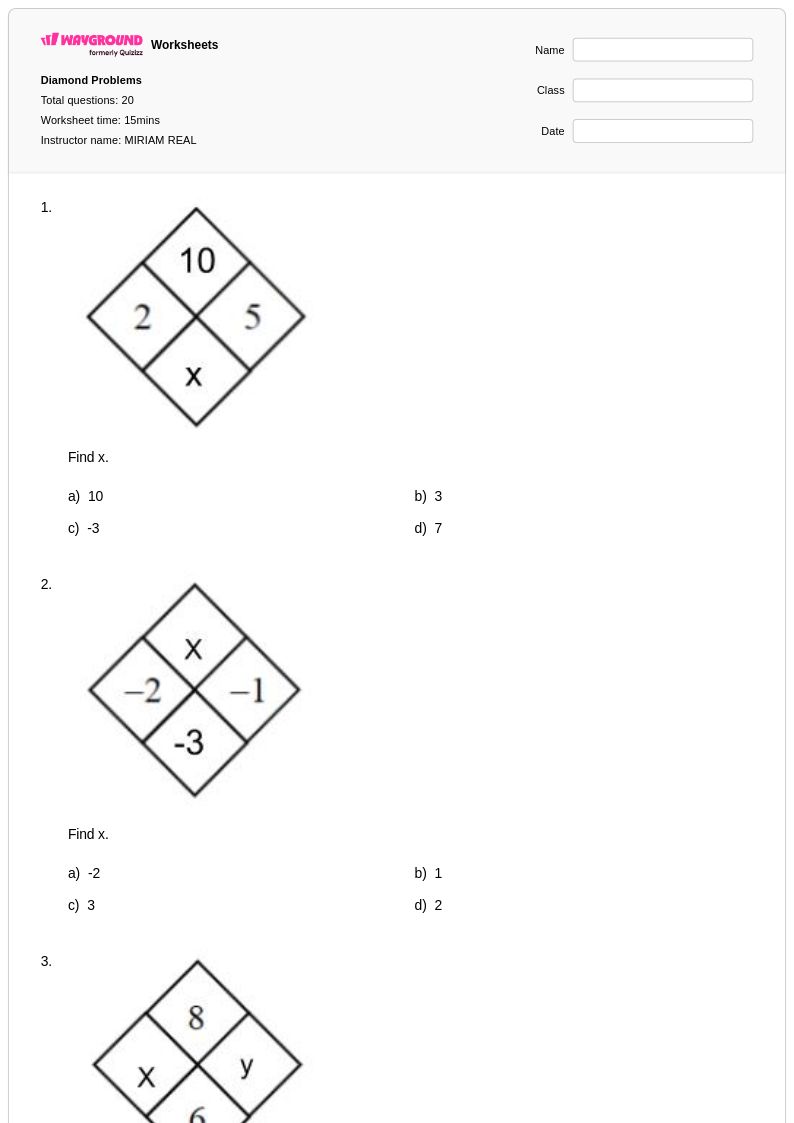
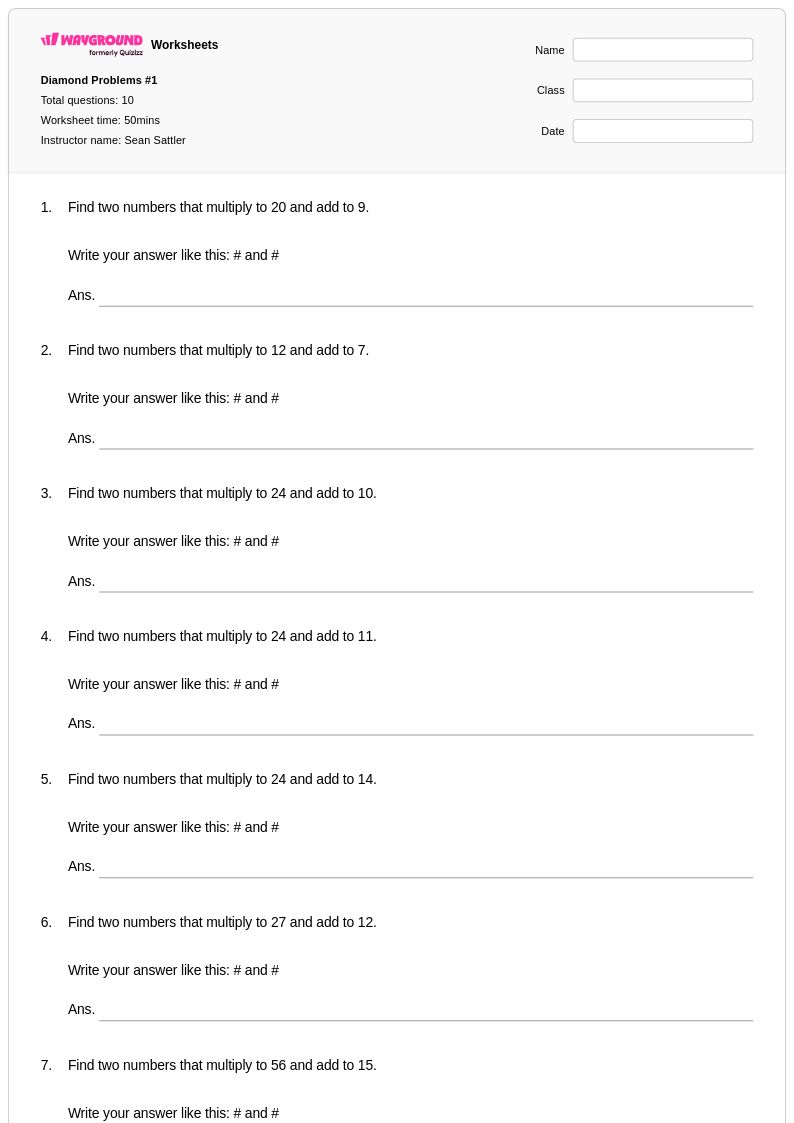
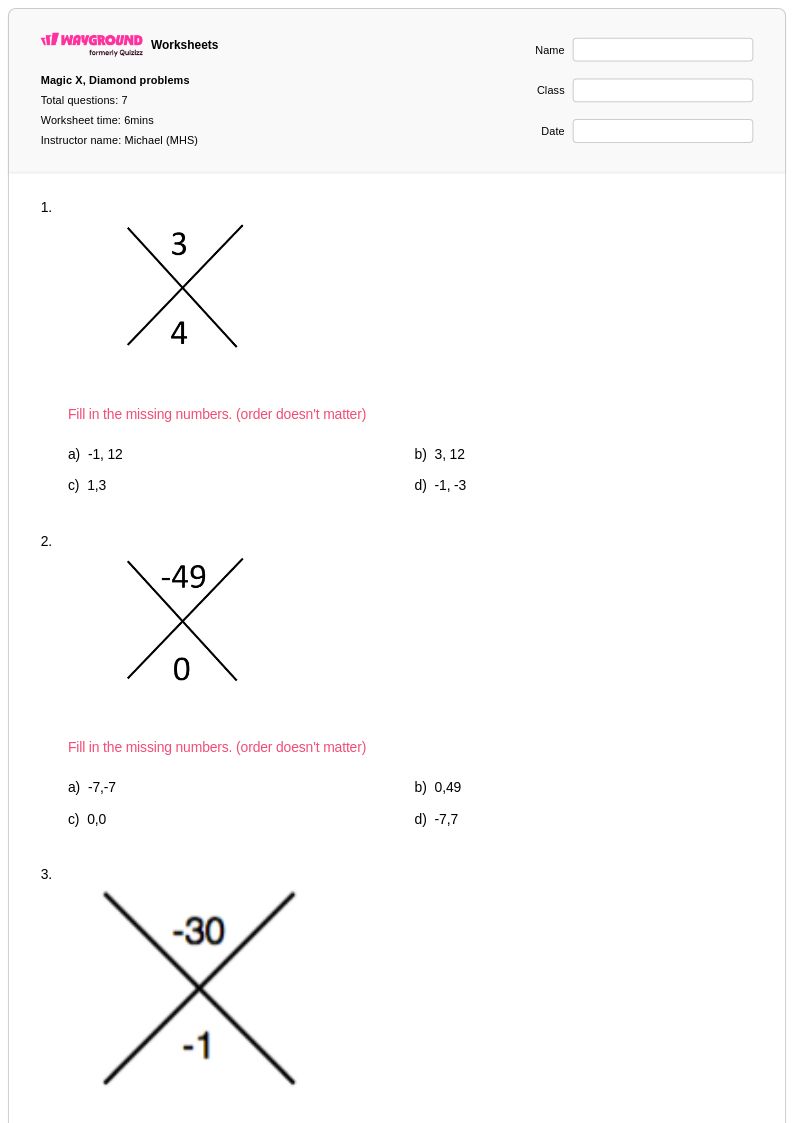
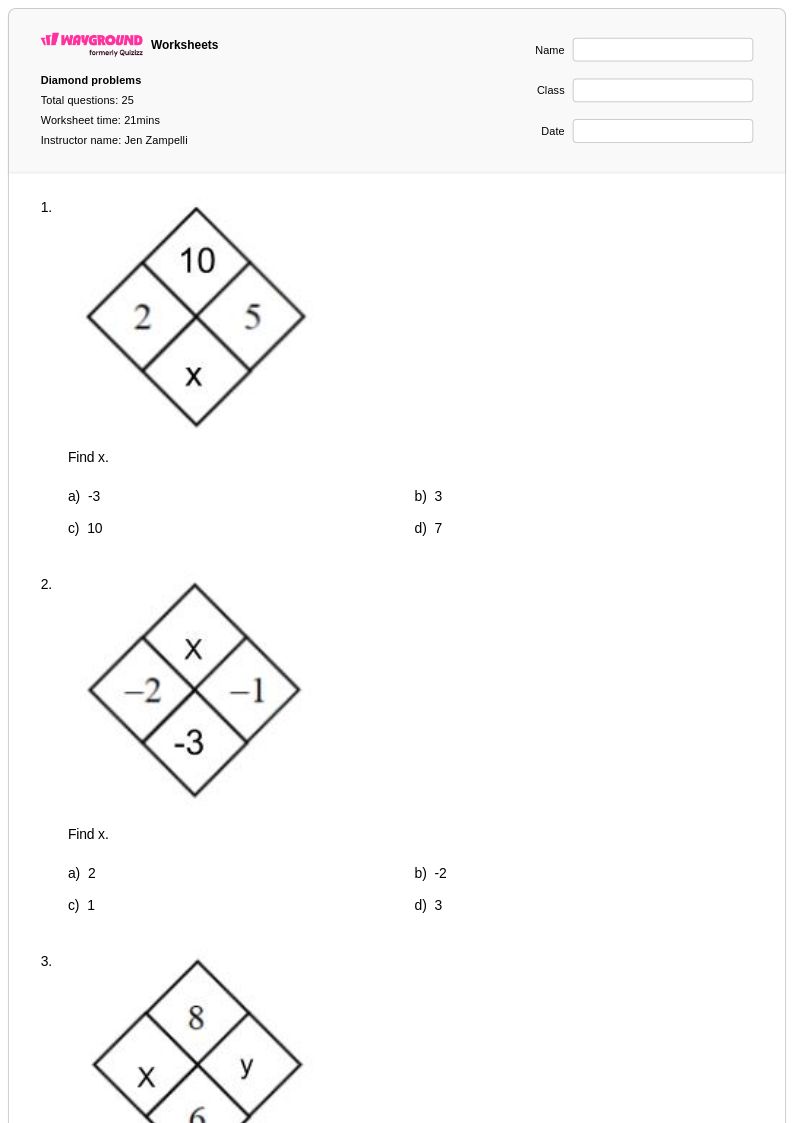
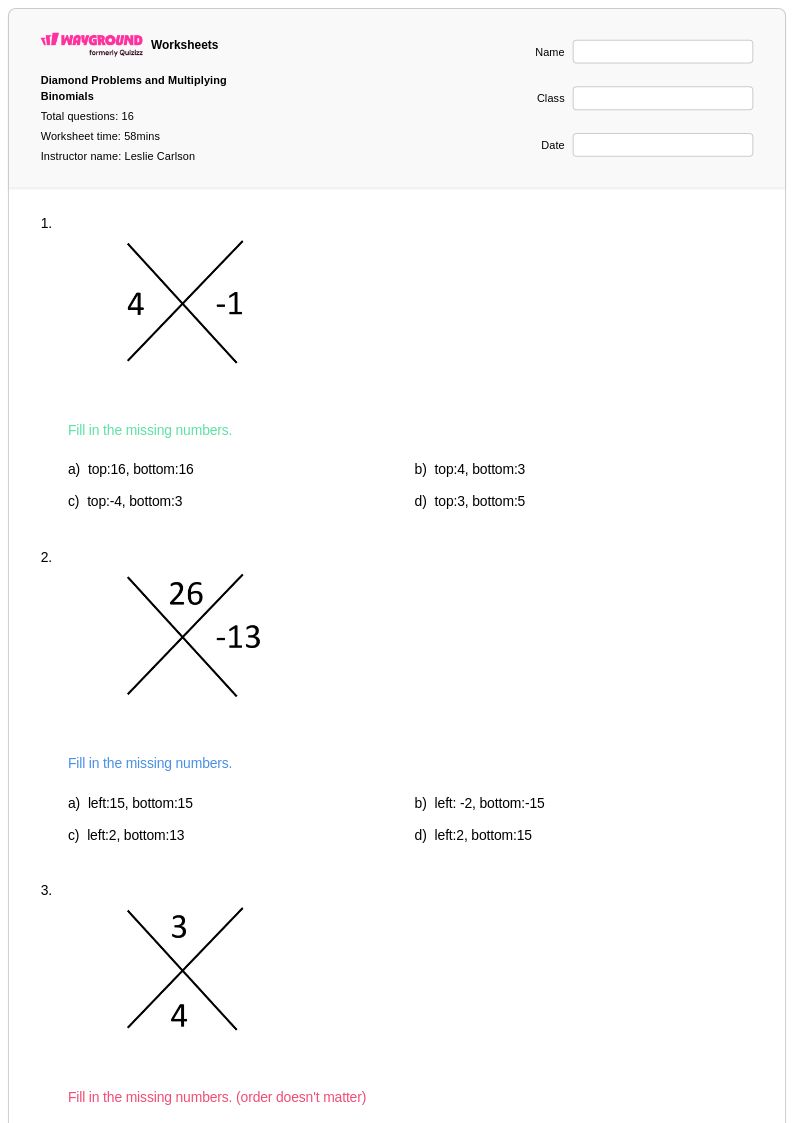
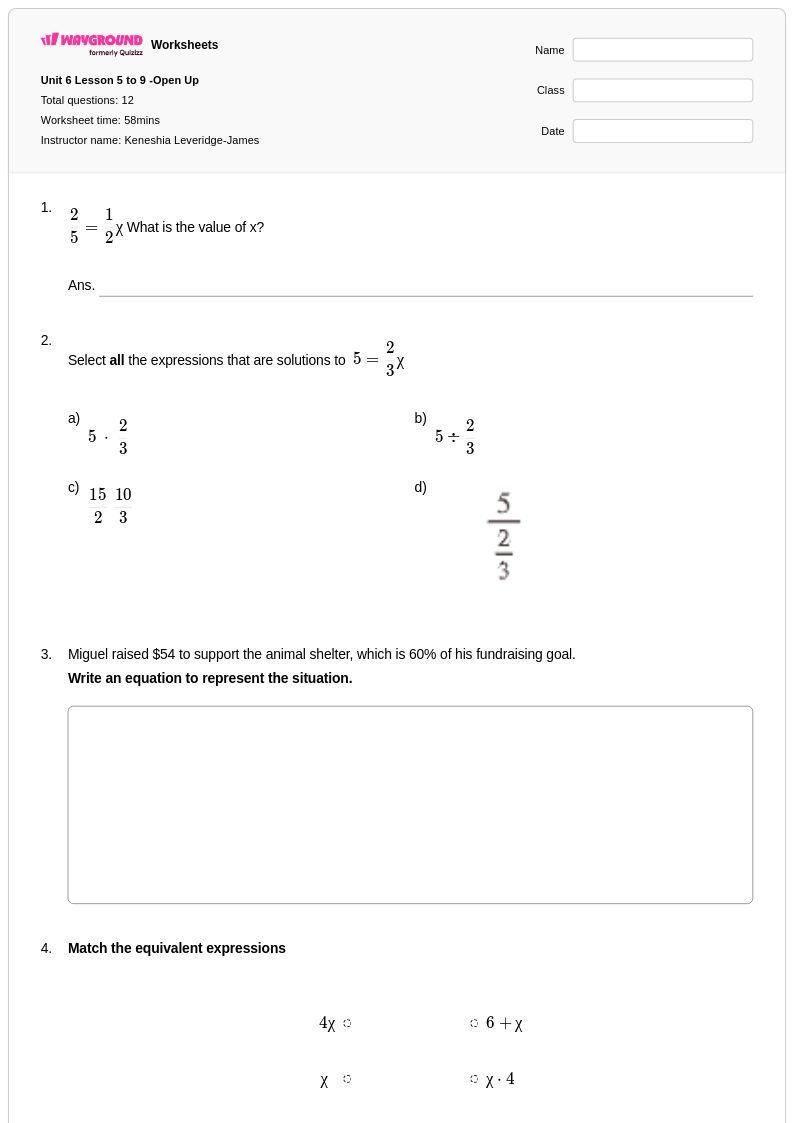
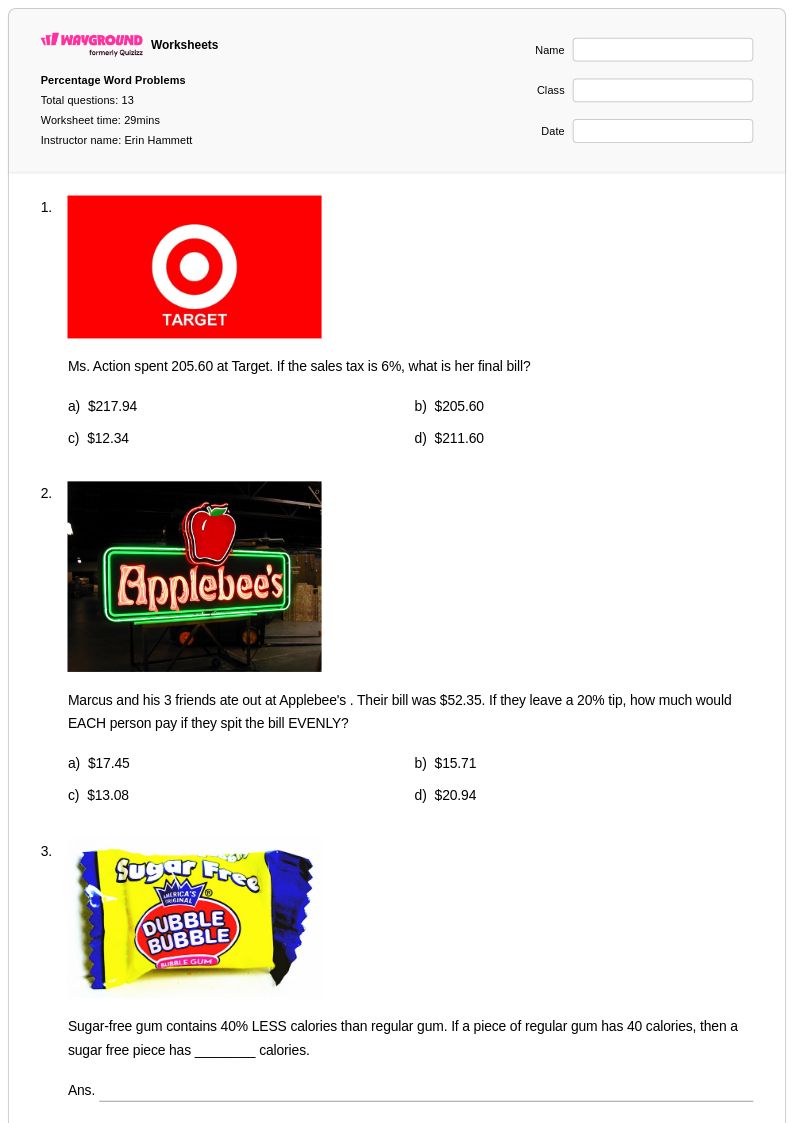
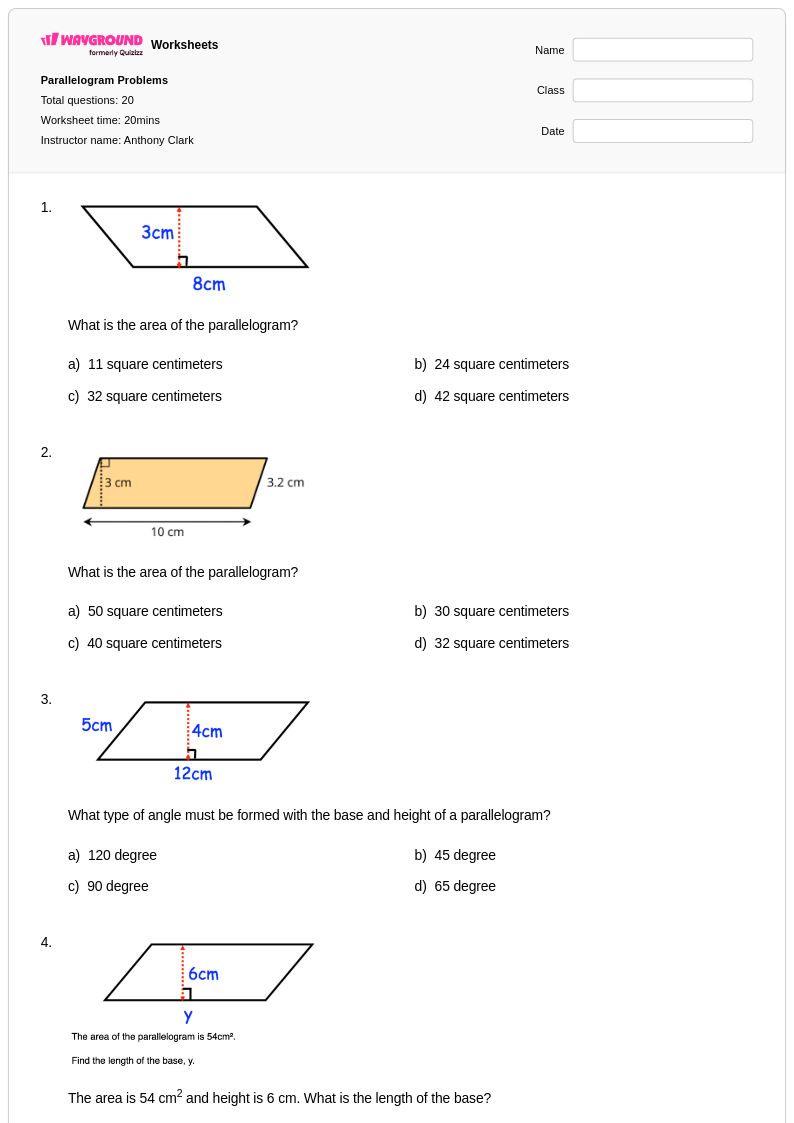
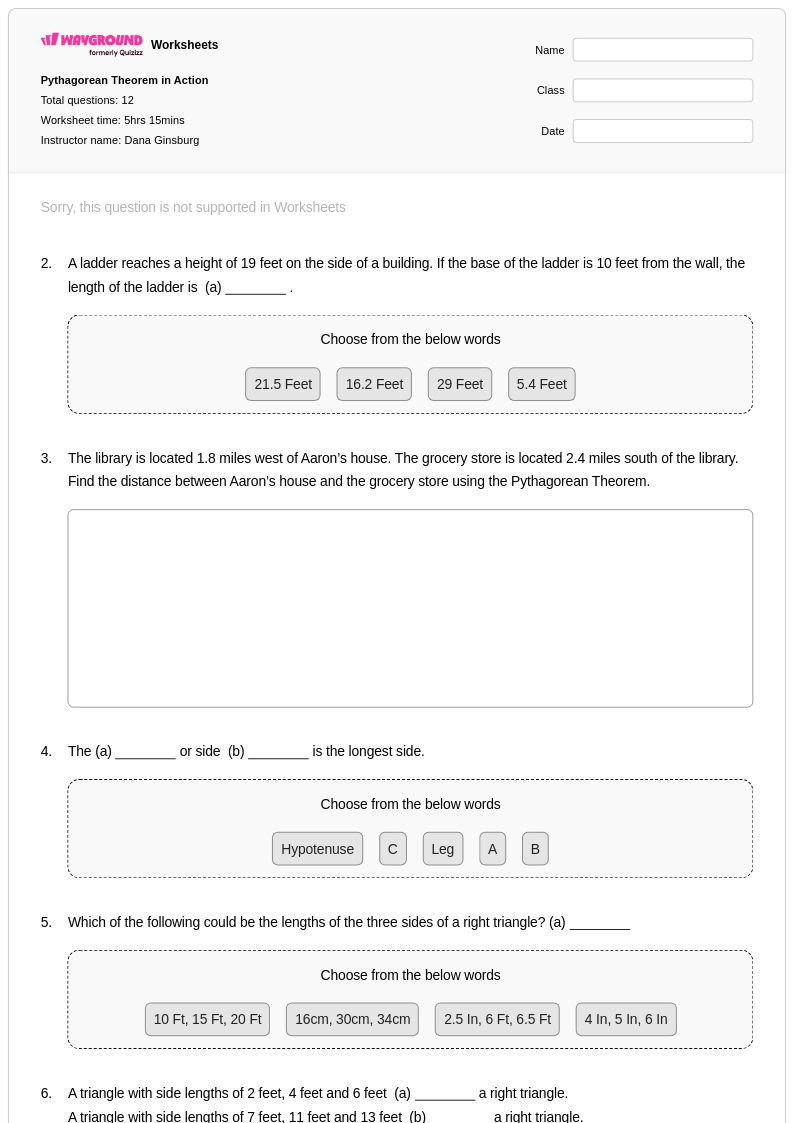
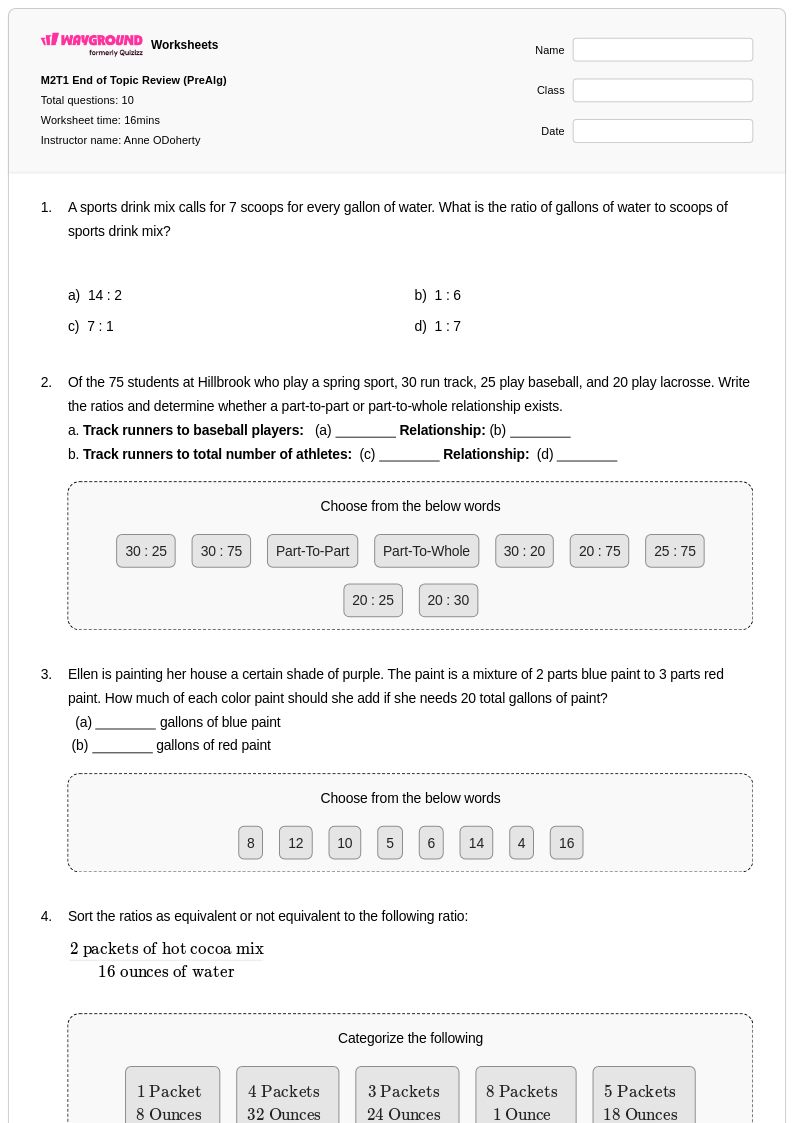
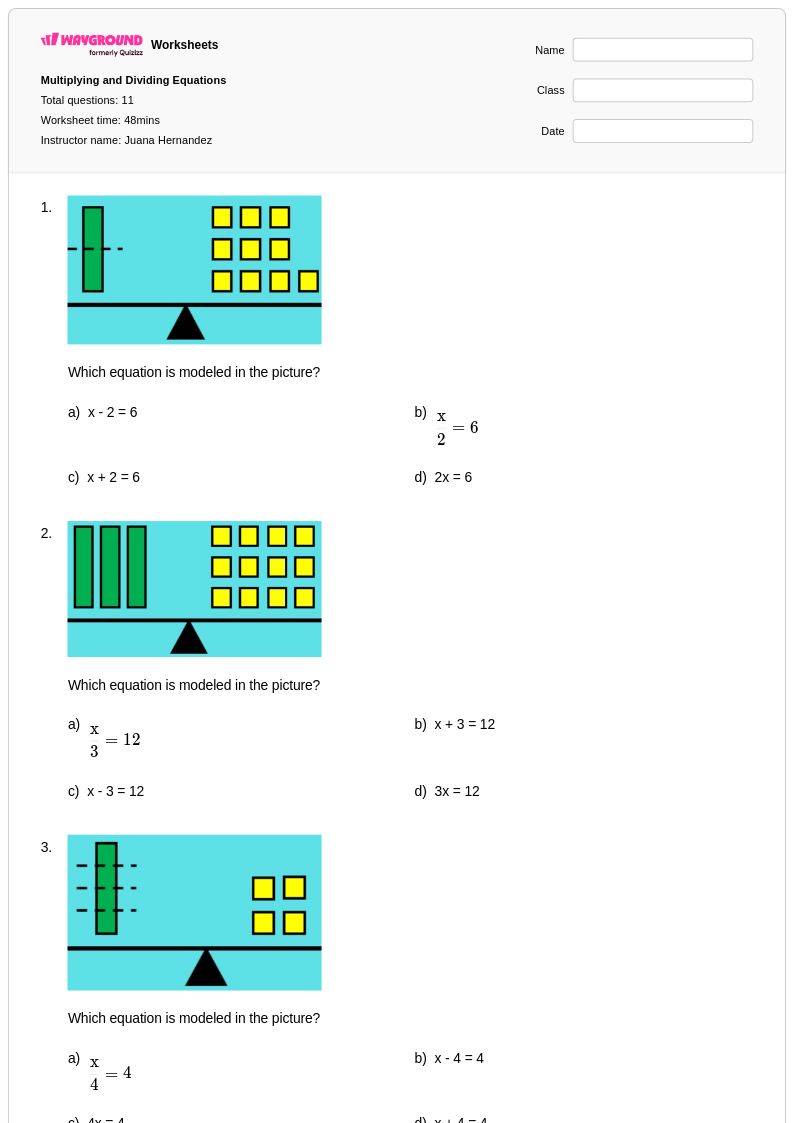
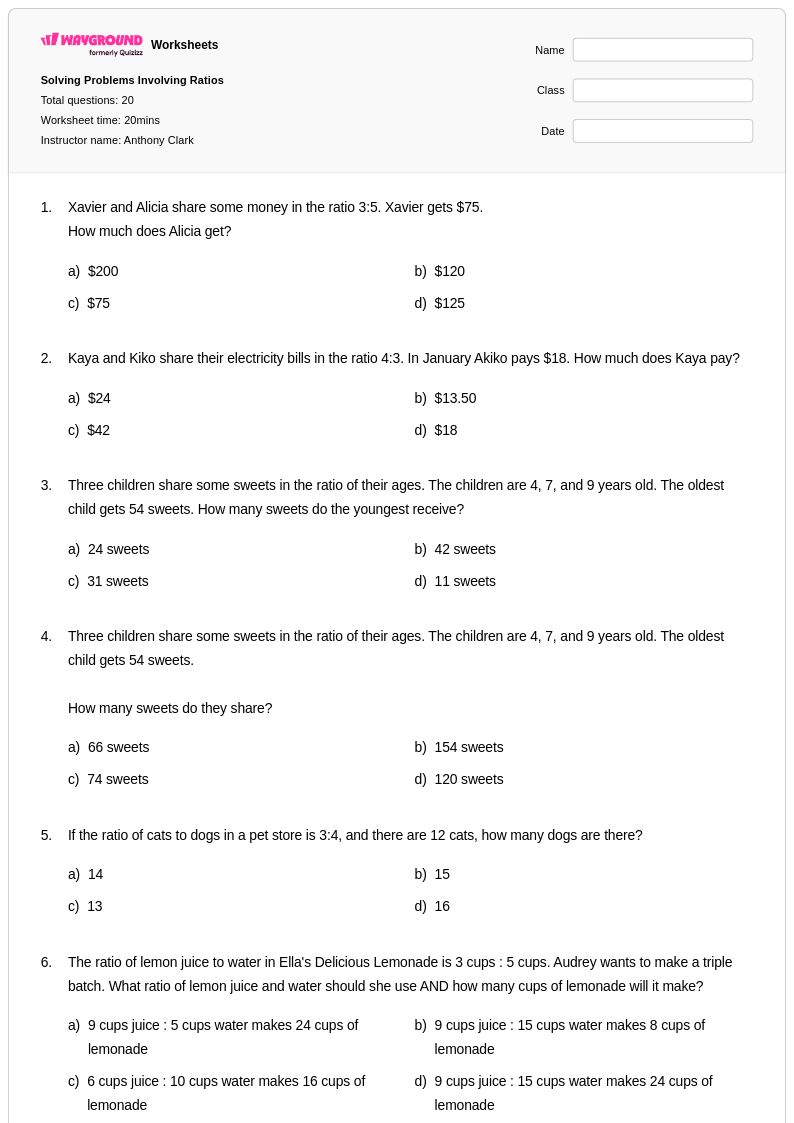
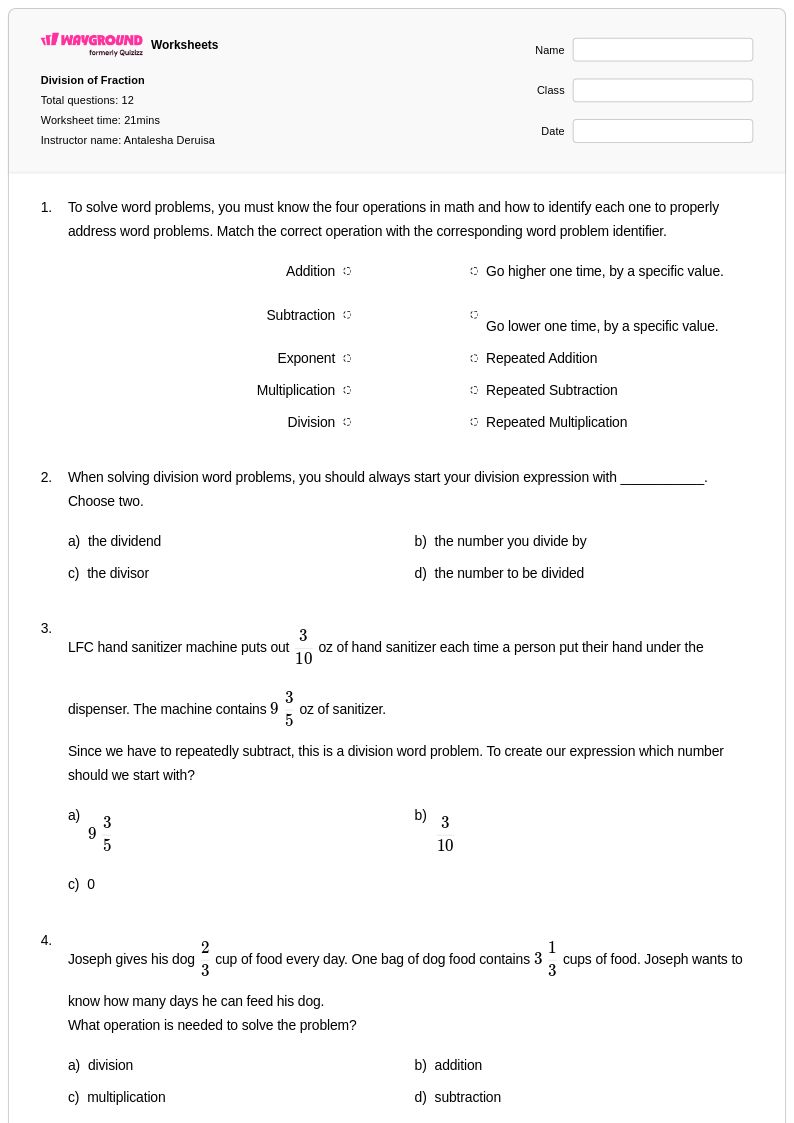
Diamond problems worksheets available through Wayground (formerly Quizizz) provide Class 6 students with essential practice in algebraic thinking and number relationship skills. These carefully designed printables challenge students to work with two-by-two diamond-shaped diagrams where they must find missing numbers based on given sum and product relationships, strengthening their understanding of factorization, mental math strategies, and inverse operations. Each worksheet collection includes comprehensive answer keys and offers free access to varied practice problems that progressively build students' ability to recognize number patterns, develop algebraic reasoning, and master fundamental multiplication and addition concepts that serve as building blocks for more advanced mathematical thinking.
Wayground (formerly Quizizz) empowers teachers with millions of educator-created diamond problems resources that feature robust search and filtering capabilities, making it simple to locate materials perfectly suited to Class 6 algebraic skill development. The platform's standards alignment ensures worksheets meet curriculum requirements, while built-in differentiation tools allow teachers to customize difficulty levels and problem types to address diverse learning needs within their classrooms. Available in both printable pdf format and interactive digital versions, these flexible resources support effective lesson planning, targeted remediation for struggling learners, and enrichment opportunities for advanced students, enabling teachers to provide focused skill practice that builds confidence and mathematical fluency in algebraic problem-solving techniques.
FAQs
How do I teach diamond problems to 6th graders?
Sixth graders are still building comfort with multiplication relationships, so anchor the diamond structure to what they already know: factor pairs. Show them that the bottom number is a product and their job is to find which factor pair also adds to the top number. Use small, friendly numbers first, products like 12 or 18 where the factor pairs are easy to list, before moving to larger values or negatives. Connecting the diamond to a multiplication table or factor rainbow gives students a visual scaffold they can rely on independently.
What makes diamond problems good practice for 6th grade math?
At grade 6, students are expected to reason about factor pairs, understand the relationship between multiplication and addition, and begin thinking algebraically. Diamond problems hit all three at once in a low-stakes format. Because the structure is consistent across every problem, students can focus on the mathematical reasoning rather than decoding new instructions each time — which builds both speed and confidence.
What mistakes do 6th graders commonly make with diamond problems?
The most common error is mixing up the sum and product positions — students add when they should multiply, or vice versa. A close second is incomplete factor listing: a student finds one factor pair that works for the product, checks the sum, gets the wrong answer, and gives up instead of trying the next pair. Teach students to write out all factor pairs before checking sums, and the second error largely disappears.
How do I use Wayground's Grade 6 diamond problems worksheets?
Download the printable PDF for a no-prep paper assignment — every worksheet includes a complete answer key, so students can check their own work or you can grade quickly. For a more interactive session, host the same worksheet as a digital quiz on Wayground and see at a glance which students are consistently missing the product relationship versus the sum. Paper works especially well for independent practice or homework; digital works well when you want real-time data on where the class is struggling.
What grade level are diamond problems typically taught?
Diamond problems are most commonly introduced in grades 6 and 7, when students are solidifying their understanding of factor pairs and integer operations. At grade 6 specifically, they reinforce multiplication and addition fluency in a problem-solving context. The same skill reappears in grades 8 and 9 as a direct strategy for factoring quadratic trinomials.
How do diamond problems align with Common Core math for Grade 6?
Common Core expects sixth graders to apply and extend their understanding of multiplication and division, including working with factors and multiples. Diamond problems sit squarely in that space: students must identify factor pairs of a given product and then evaluate which pair satisfies an addition constraint. This builds the number sense that Common Core treats as a prerequisite before students move into ratio reasoning and early expressions and equations in the same grade.