
10 Q
1st
10 Q
1st
9 Q
KG - 2nd
16 Q
1st
14 Q
1st
20 Q
1st - Uni
9 Q
1st - Uni
10 Q
KG - 2nd
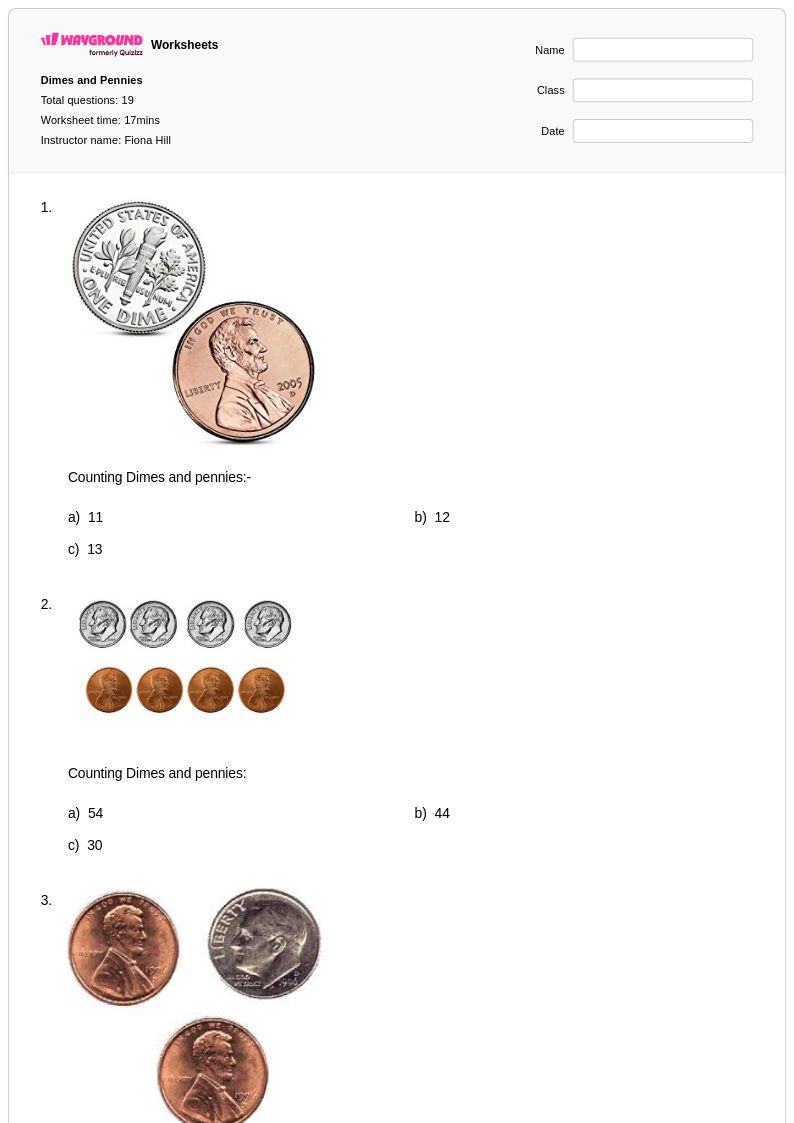
19 Q
1st
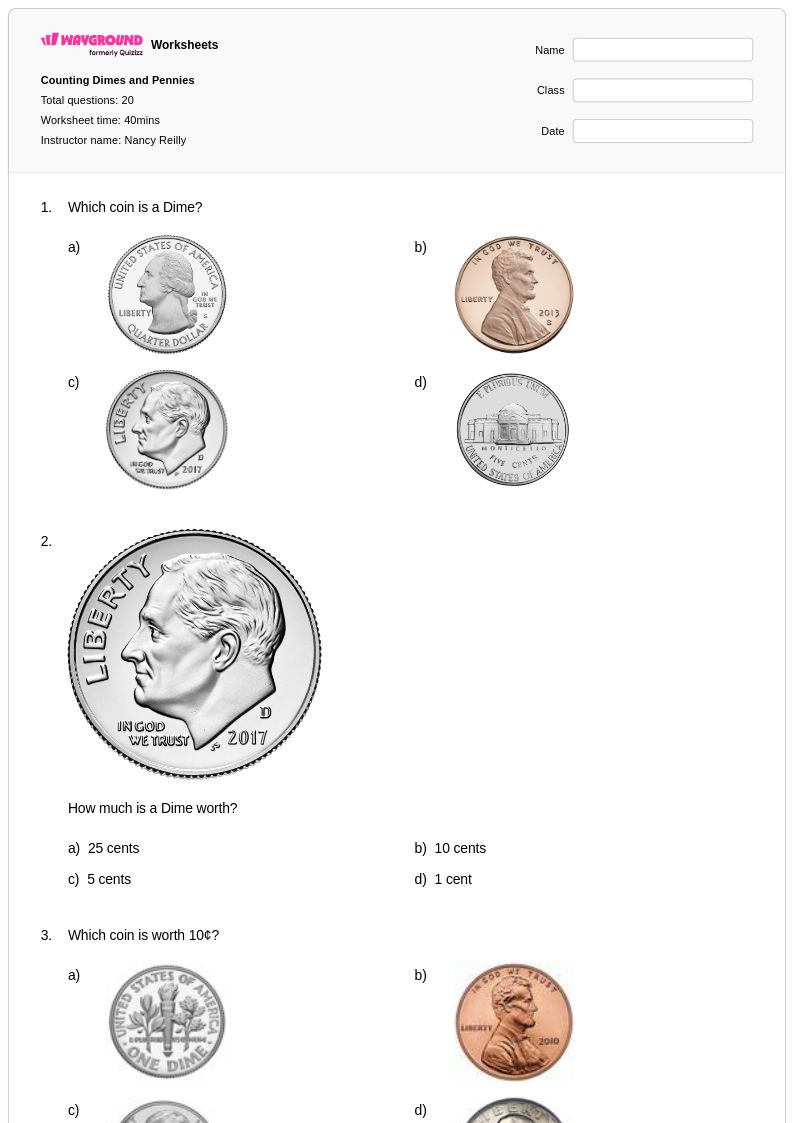
20 Q
1st - 2nd
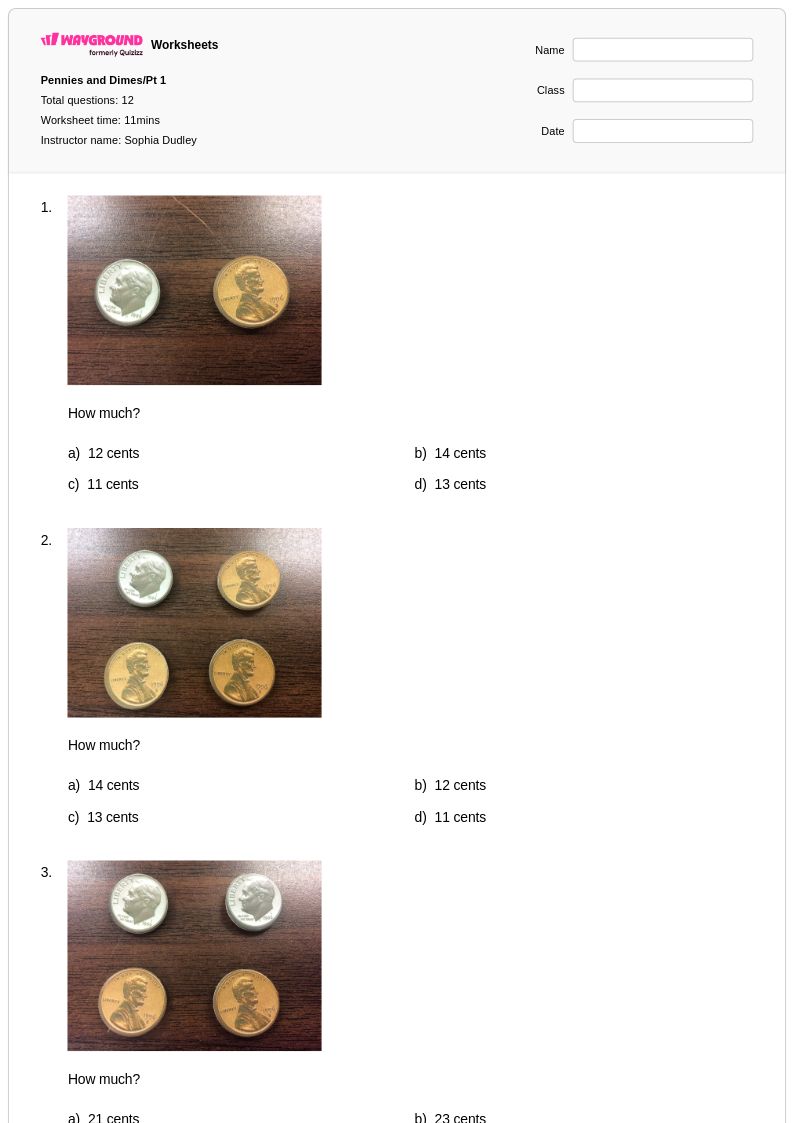
12 Q
1st
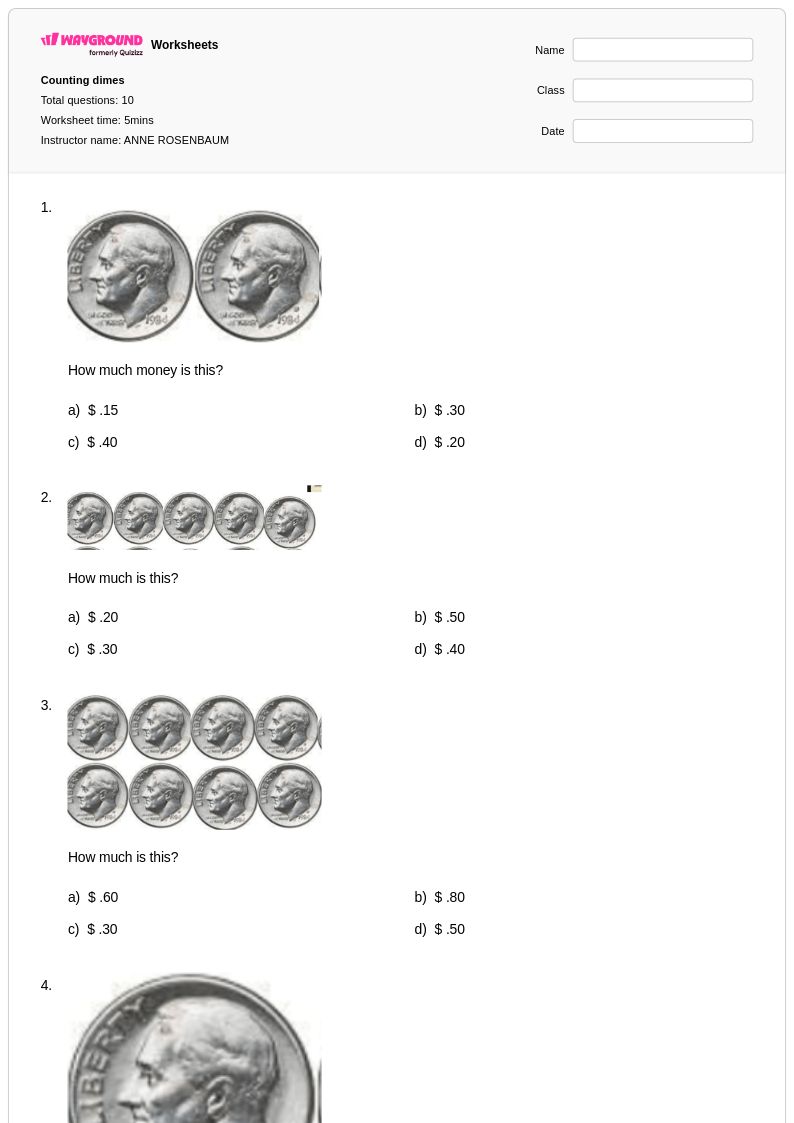
10 Q
1st
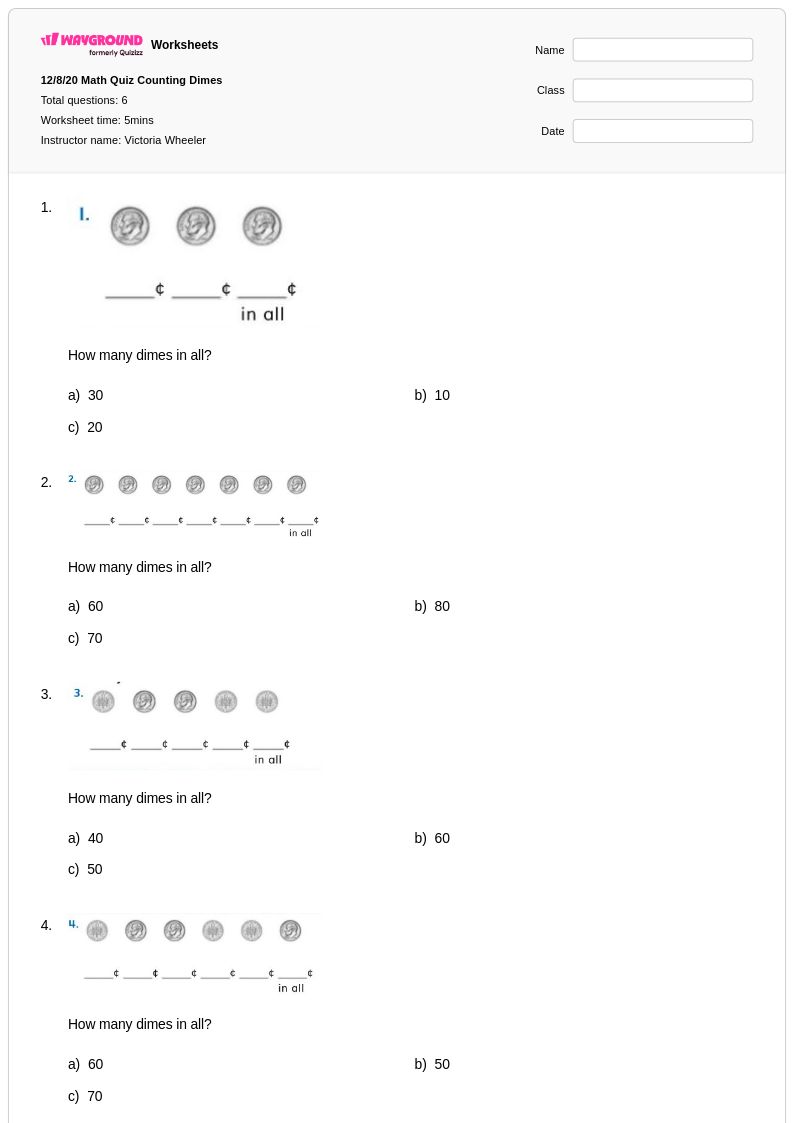
6 Q
1st
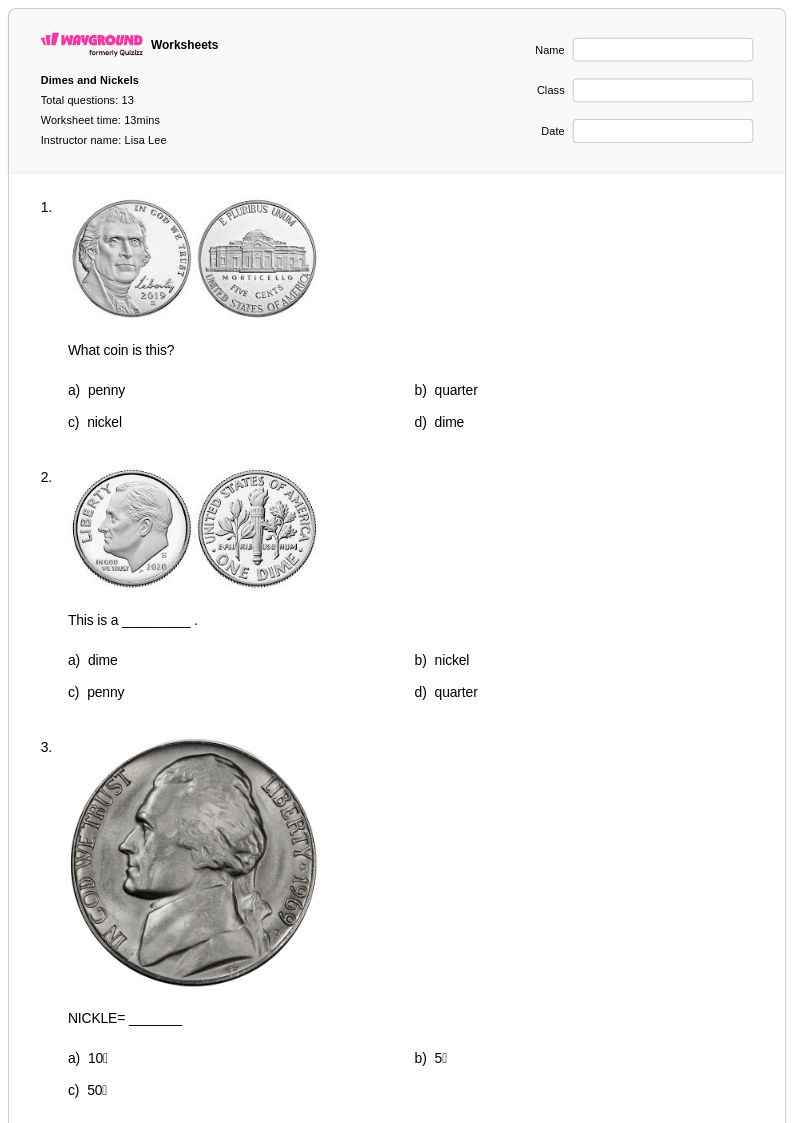
13 Q
1st - 3rd
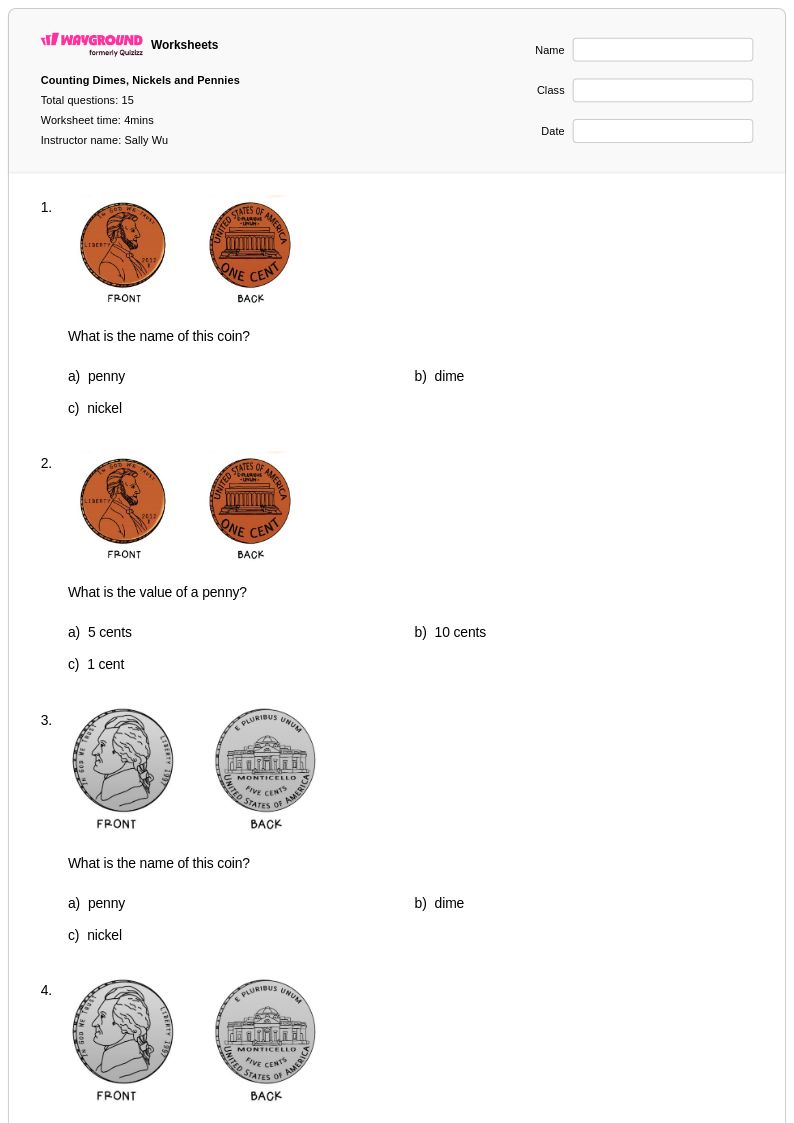
15 Q
1st
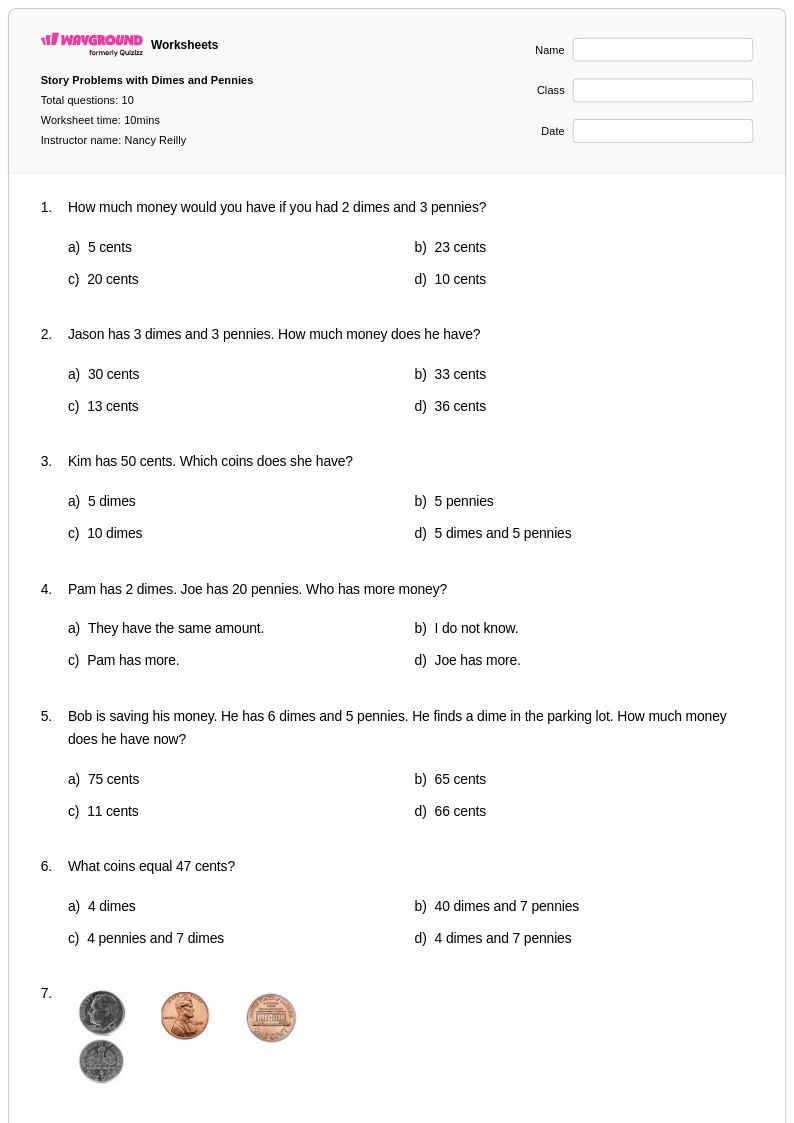
10 Q
1st - 2nd
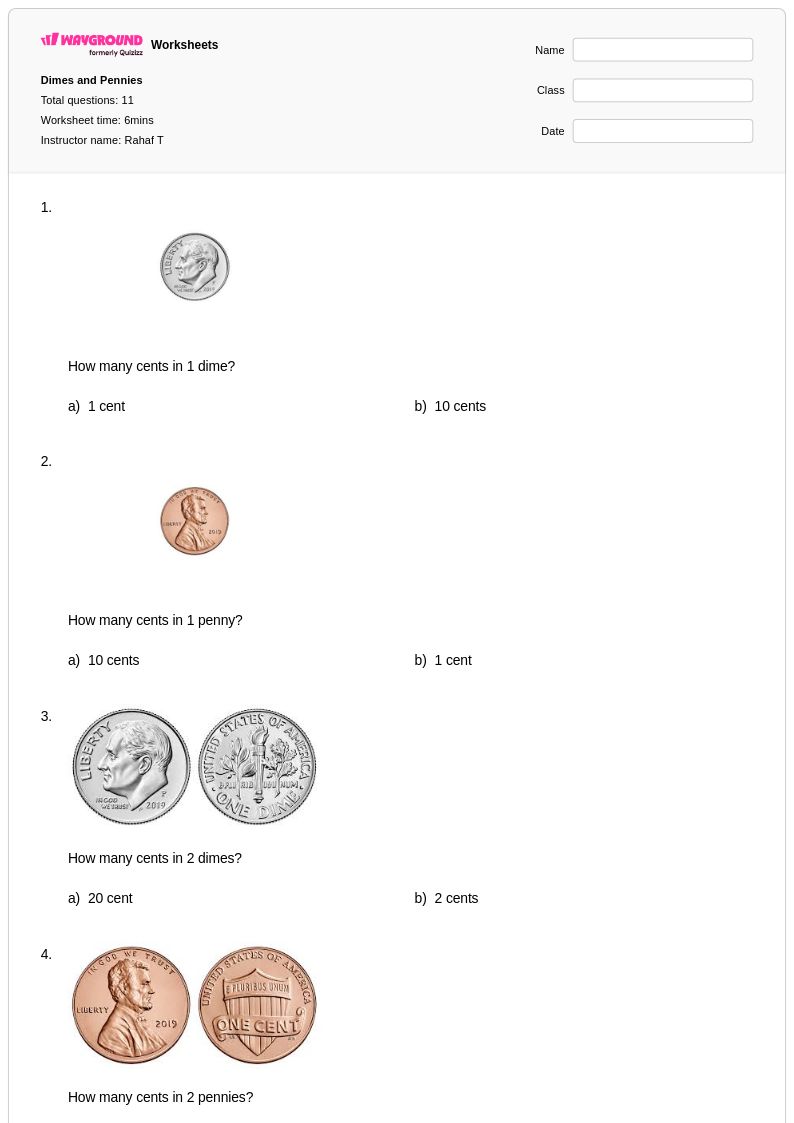
11 Q
1st - 2nd
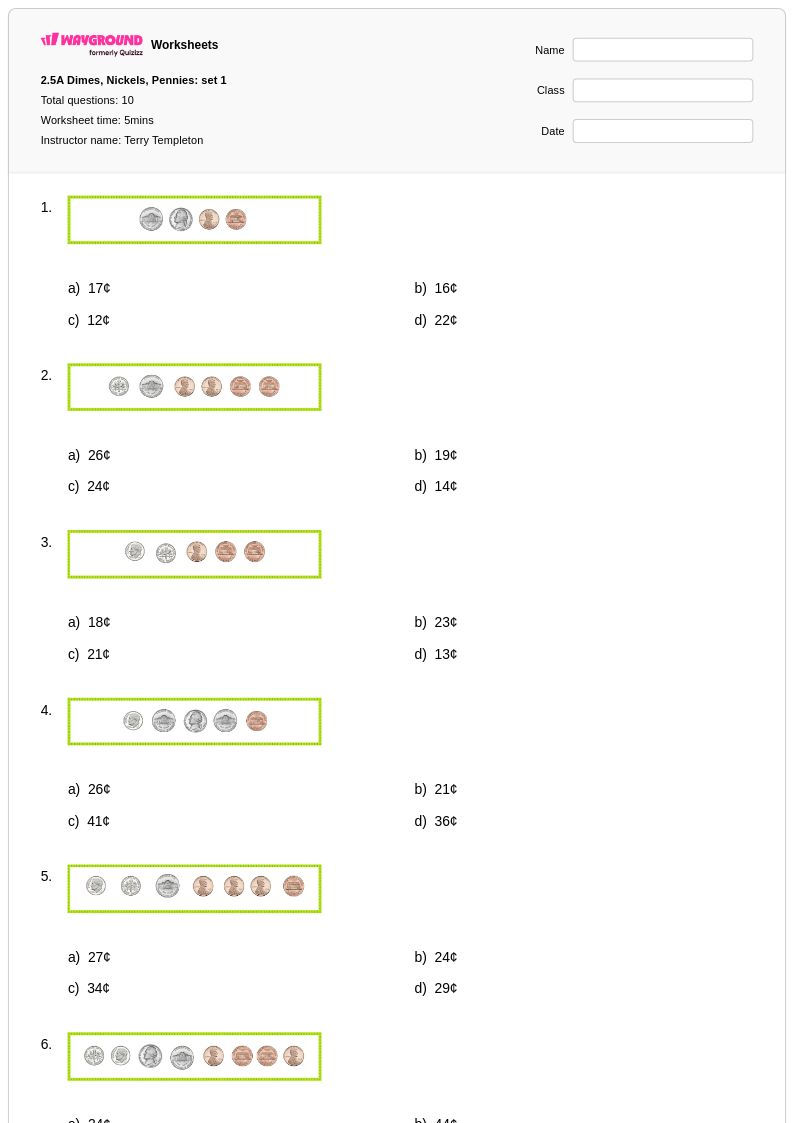
10 Q
1st - 3rd
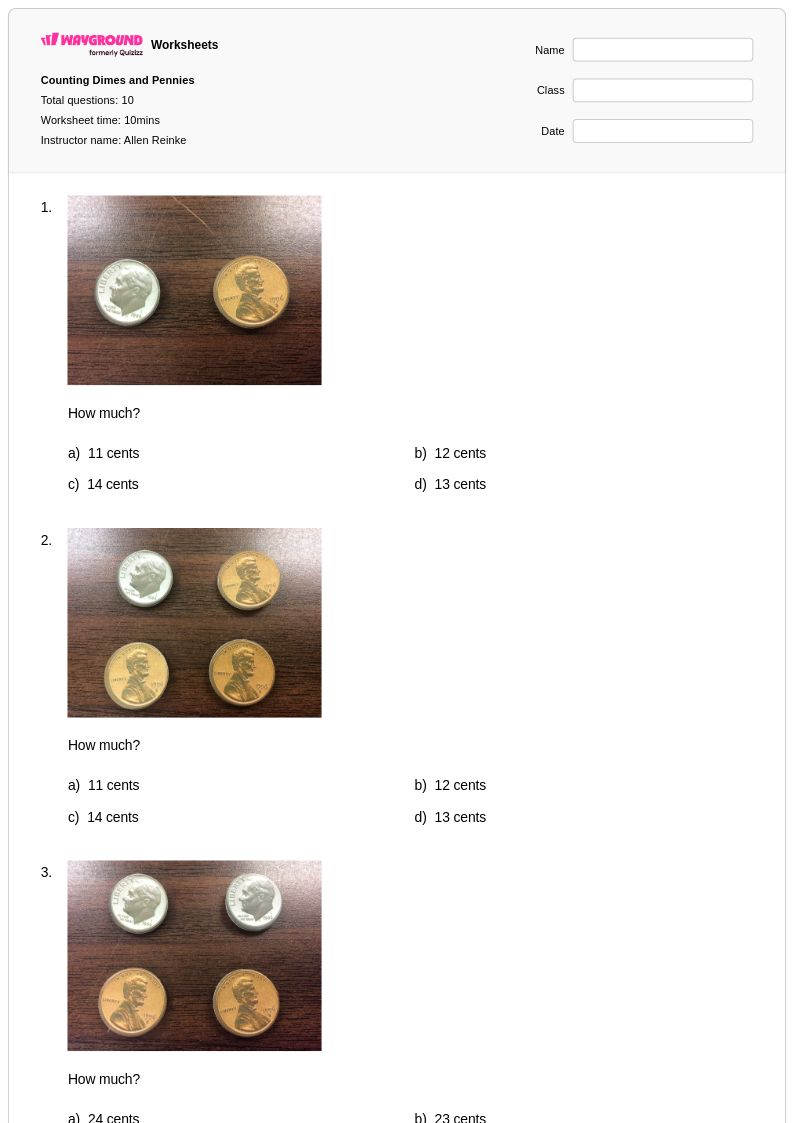
10 Q
KG - 2nd
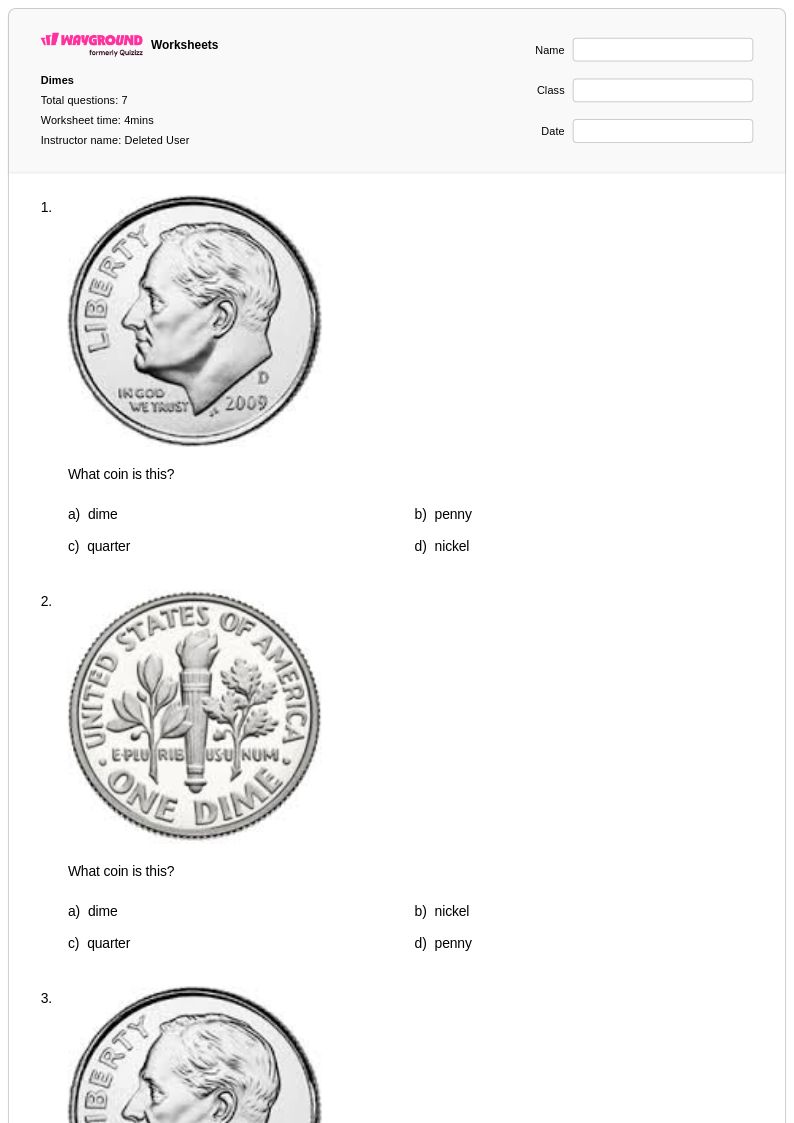
7 Q
KG - 2nd
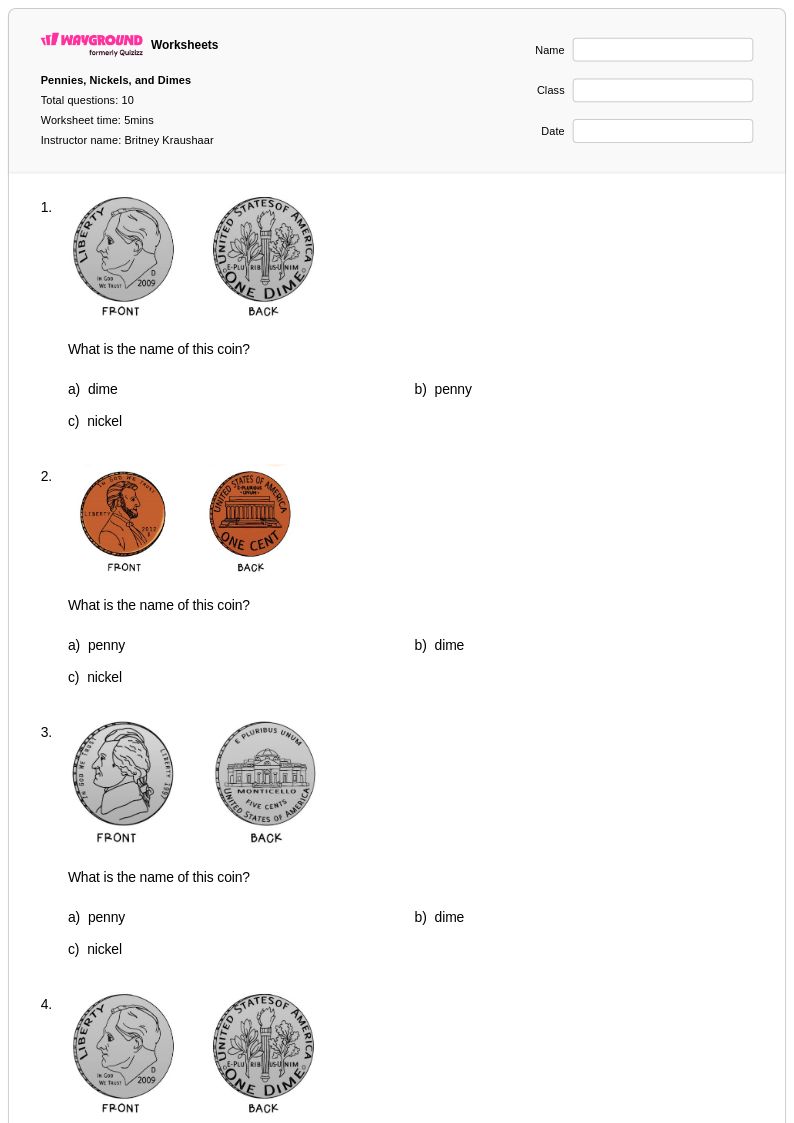
10 Q
1st
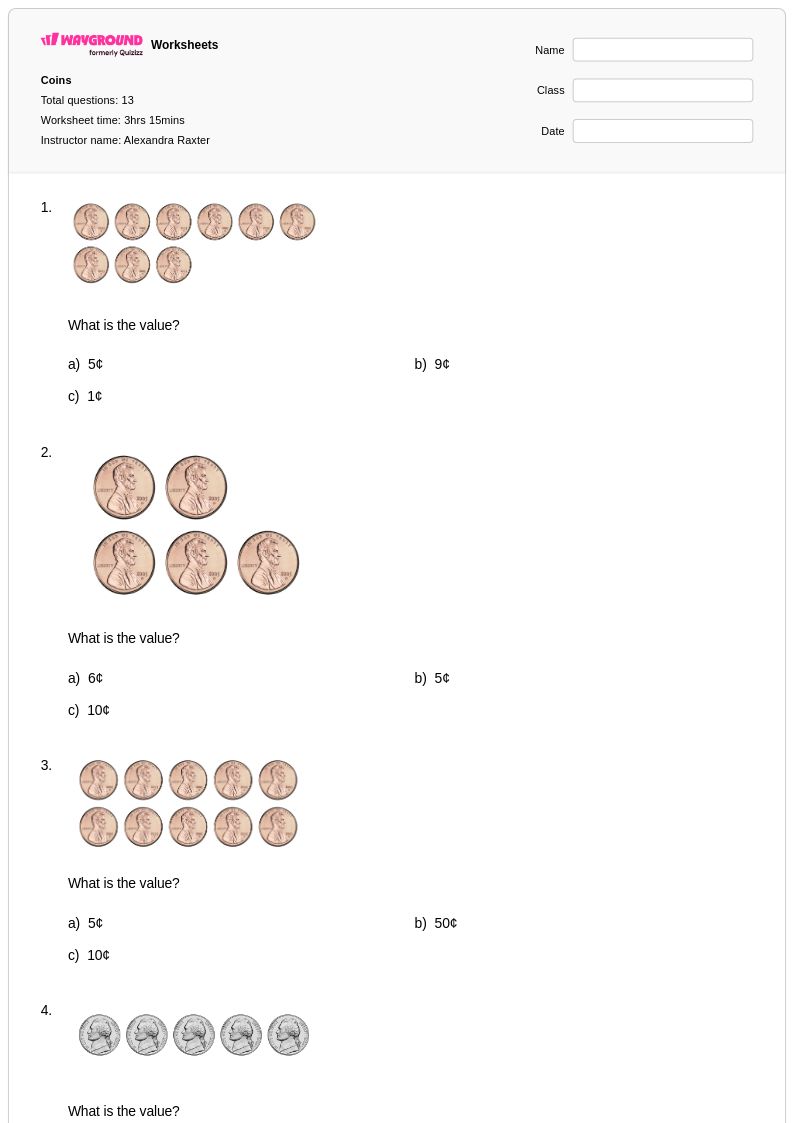
13 Q
1st
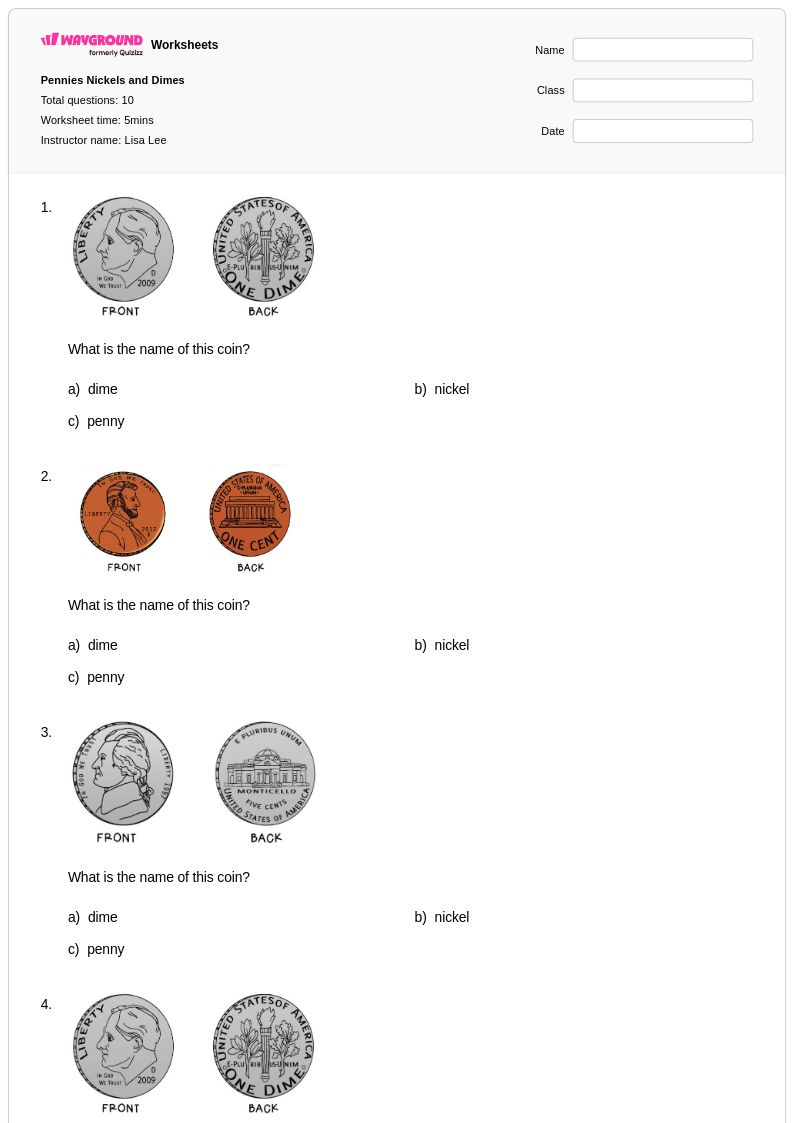
10 Q
1st
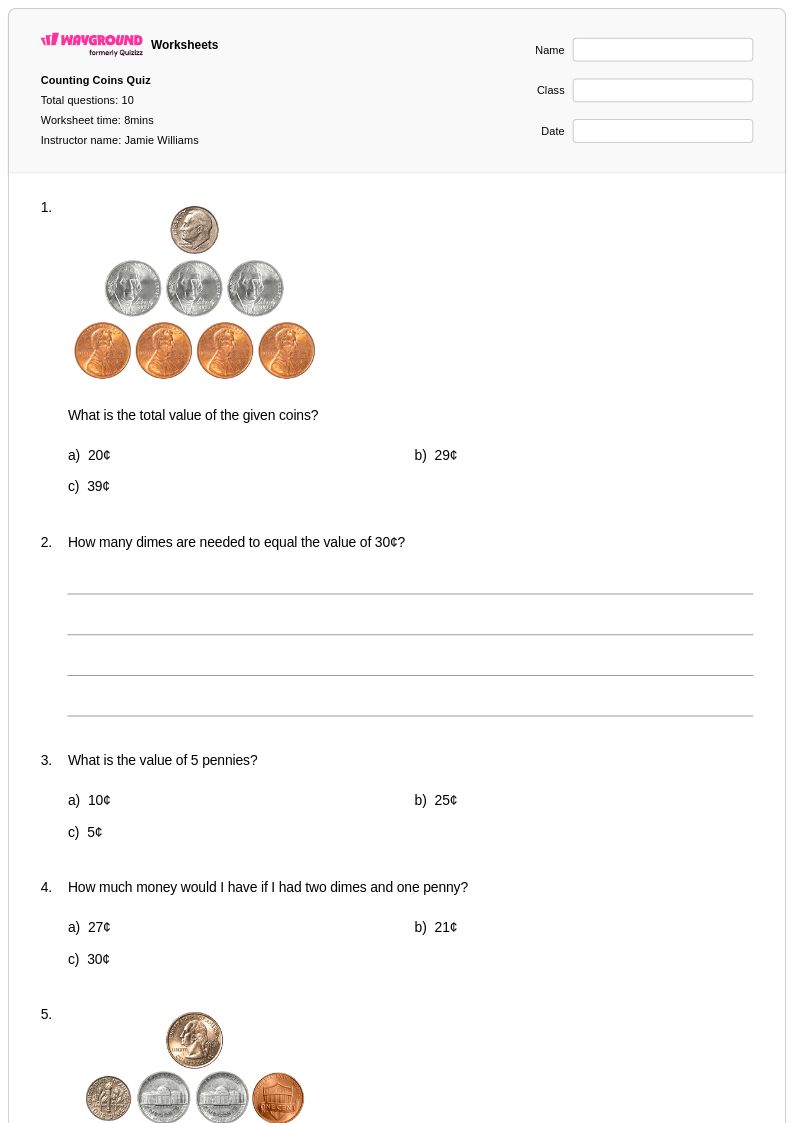
10 Q
1st
Explore Dimes Worksheets by Grades
Explore Other Subject Worksheets for class 1
Explore printable Dimes worksheets for Class 1
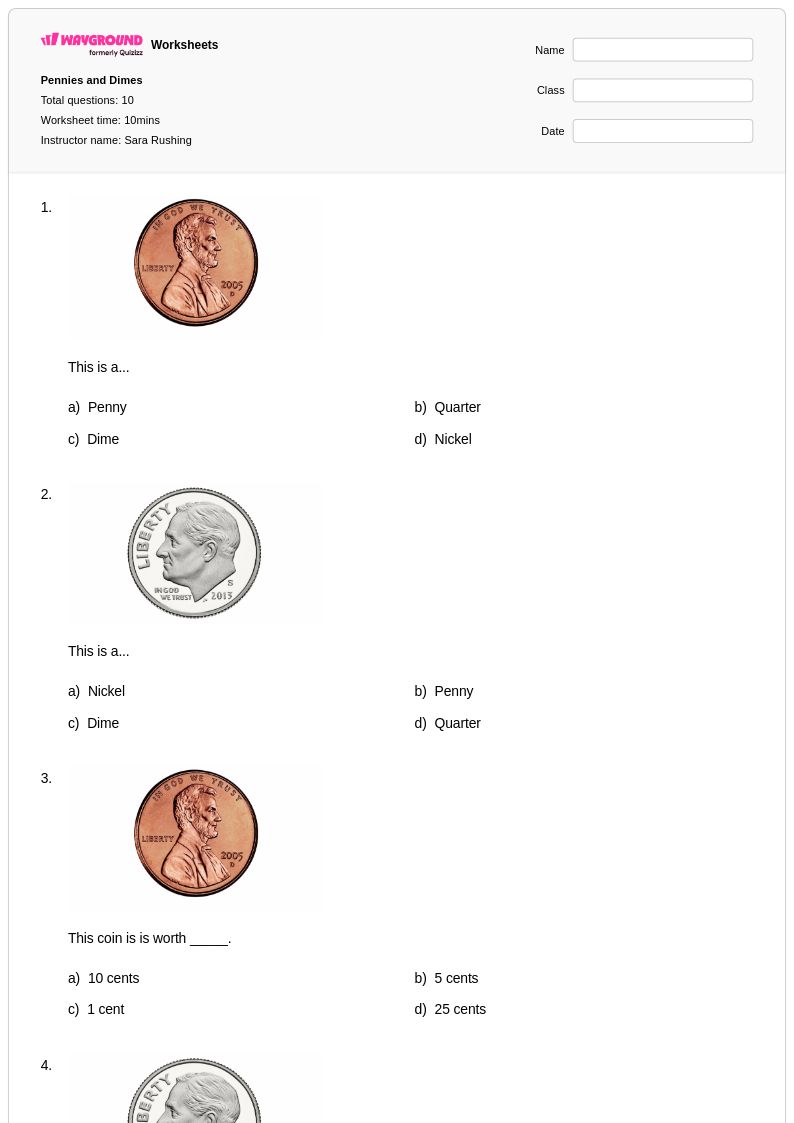
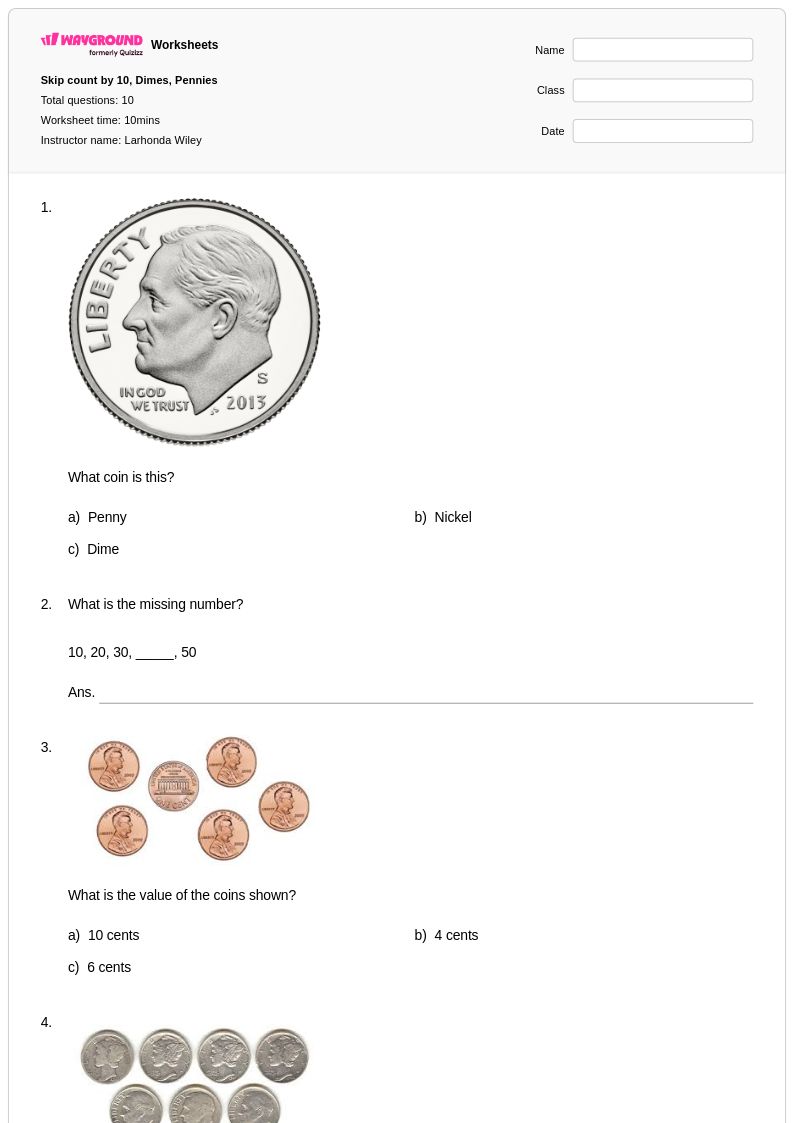
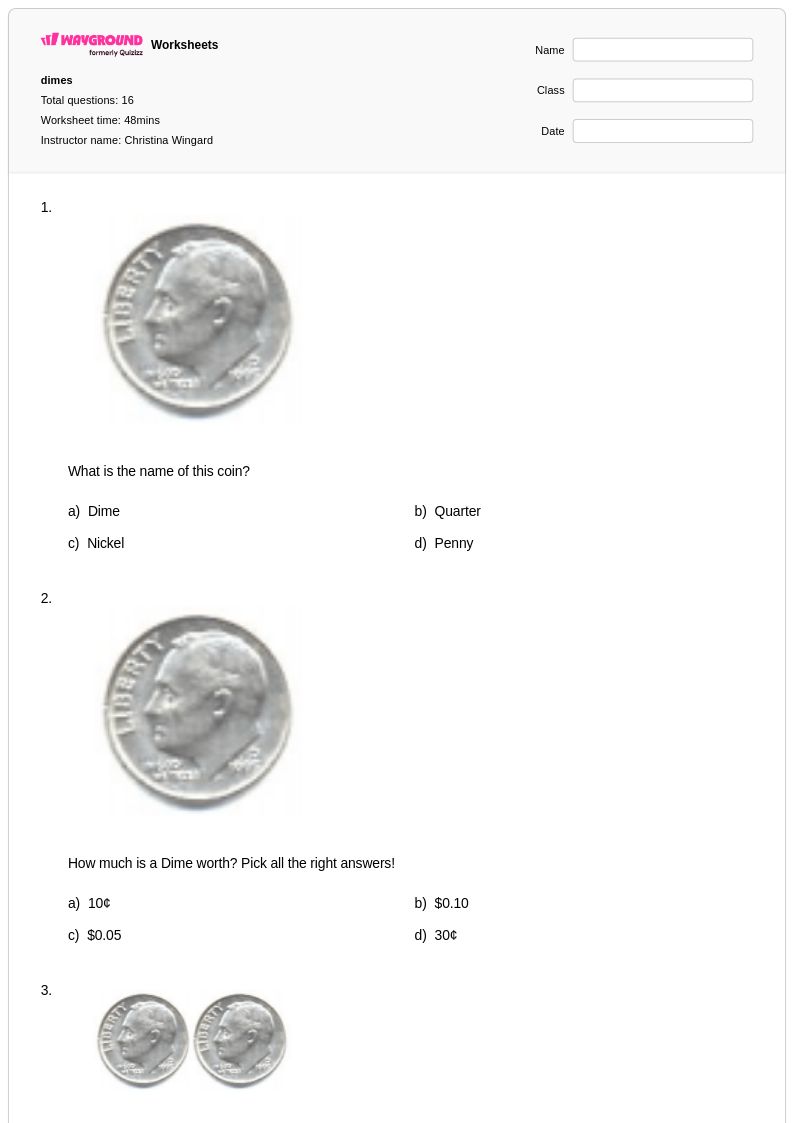
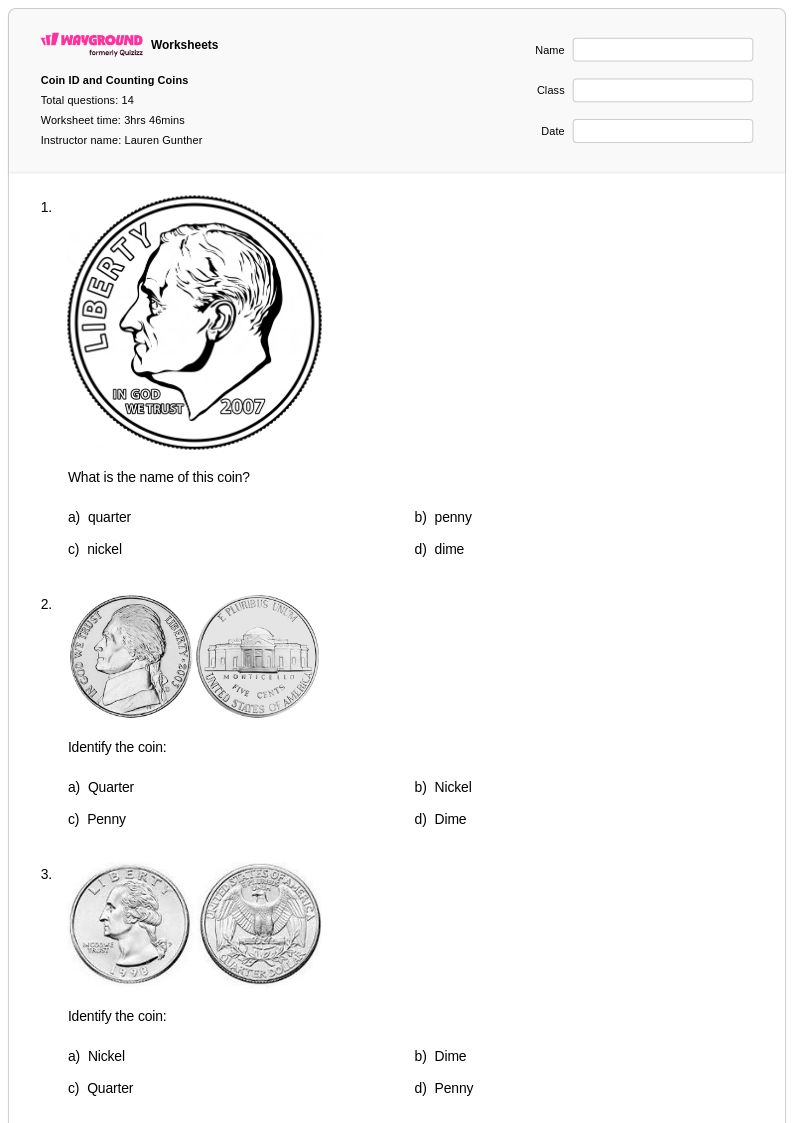
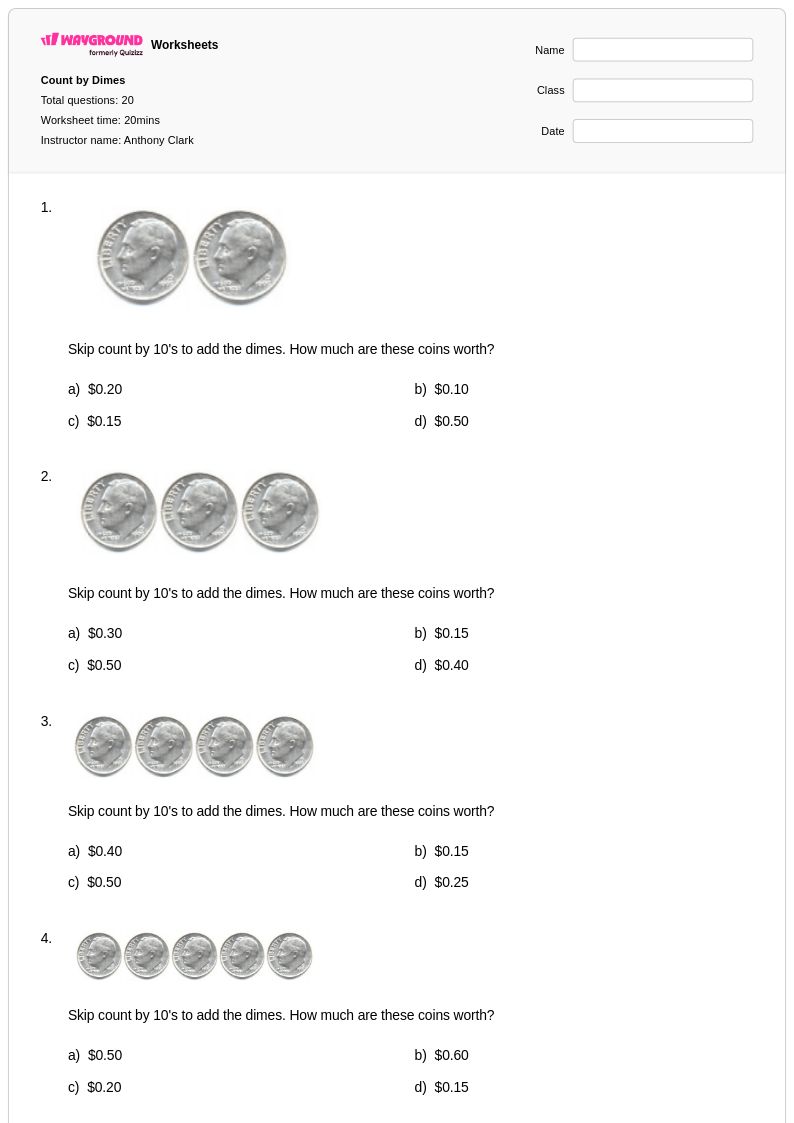
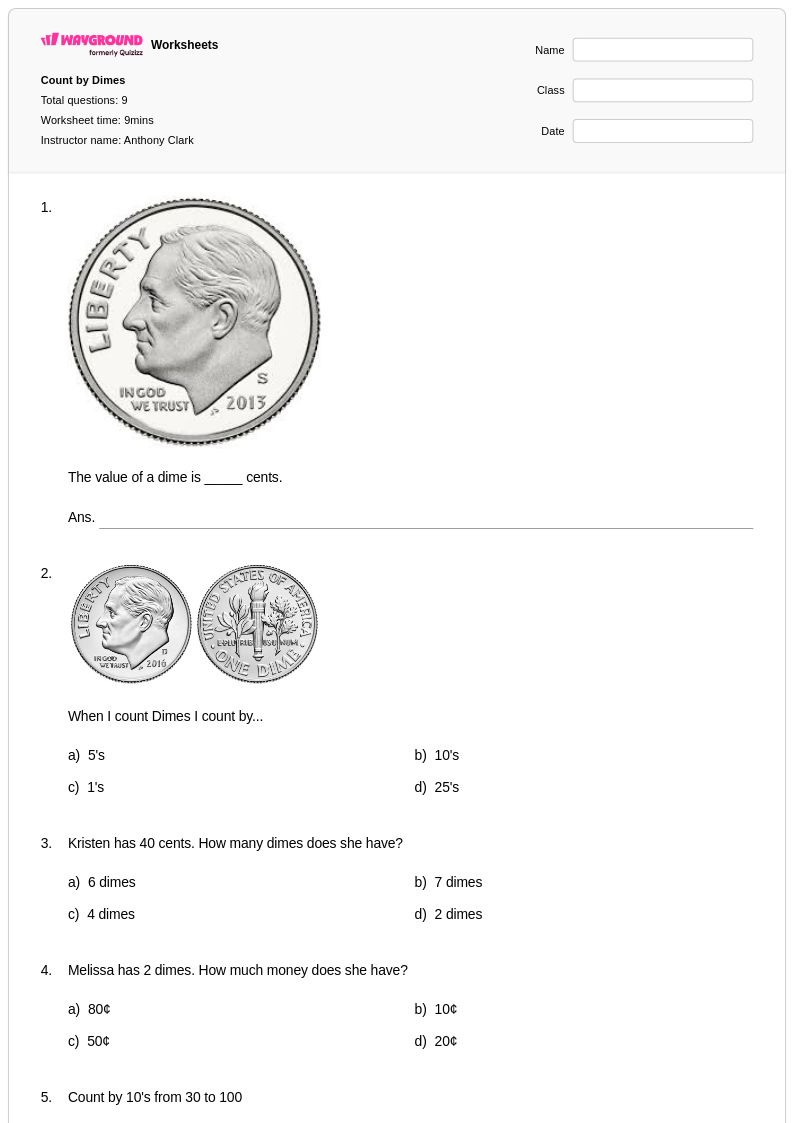
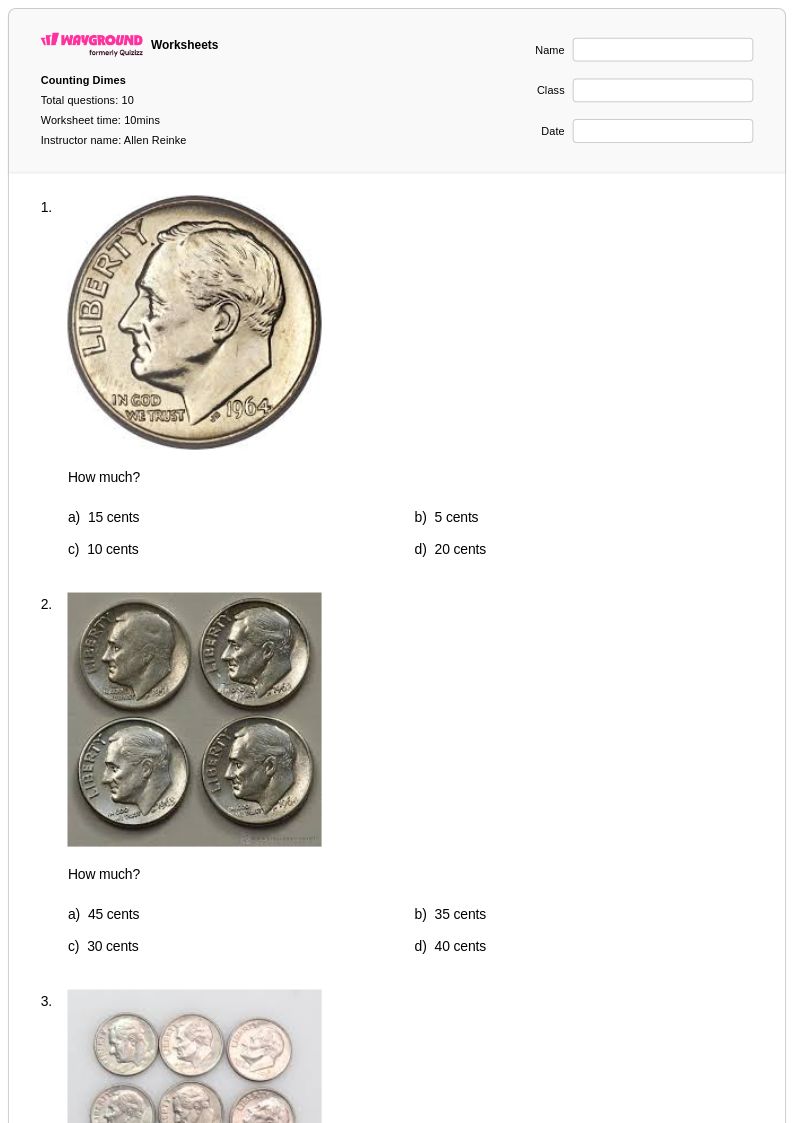
Dimes worksheets for Class 1 students through Wayground (formerly Quizizz) provide comprehensive practice in recognizing and understanding this essential ten-cent coin. These carefully designed educational materials help young learners develop fundamental money recognition skills by focusing specifically on the dime's distinctive features, including its size, color, and the images of Franklin D. Roosevelt and the torch on its faces. Students work through engaging practice problems that strengthen their ability to identify dimes among other coins, count dimes by tens, and understand the dime's value in relation to other denominations. Each worksheet includes a complete answer key and is available as a free printable pdf, making it easy for educators to incorporate systematic coin identification practice into their mathematics curriculum while building the foundation for more advanced money concepts.
Wayground (formerly Quizizz) empowers teachers with access to millions of teacher-created dimes worksheets and coin identification resources that support diverse learning needs in Class 1 mathematics instruction. The platform's robust search and filtering capabilities allow educators to quickly locate materials that align with specific learning standards and differentiate instruction based on individual student abilities. Teachers can customize existing worksheets or combine multiple resources to create comprehensive practice sets that address various skill levels, from basic dime recognition to more complex counting and comparison activities. Available in both printable and digital pdf formats, these resources facilitate flexible lesson planning and provide targeted support for remediation, enrichment, and ongoing skill practice, ensuring that all students master this crucial component of early financial literacy and mathematical understanding.
FAQs
How do I teach dimes to first graders?
What exercises help first graders practice counting dimes?
What errors do first graders make when counting dimes?
How do I use Wayground's Grade 1 dimes worksheets?
Is learning about dimes aligned to Common Core math standards for Grade 1?
How can I differentiate dimes practice for mixed-ability first graders?