Free Printable Direct and Inverse Variation Worksheets for Class 8
Class 8 direct and inverse variation free worksheets and printables help students master proportional relationships through engaging practice problems with comprehensive answer keys and downloadable PDFs from Wayground.
Explore printable Direct and Inverse Variation worksheets for Class 8
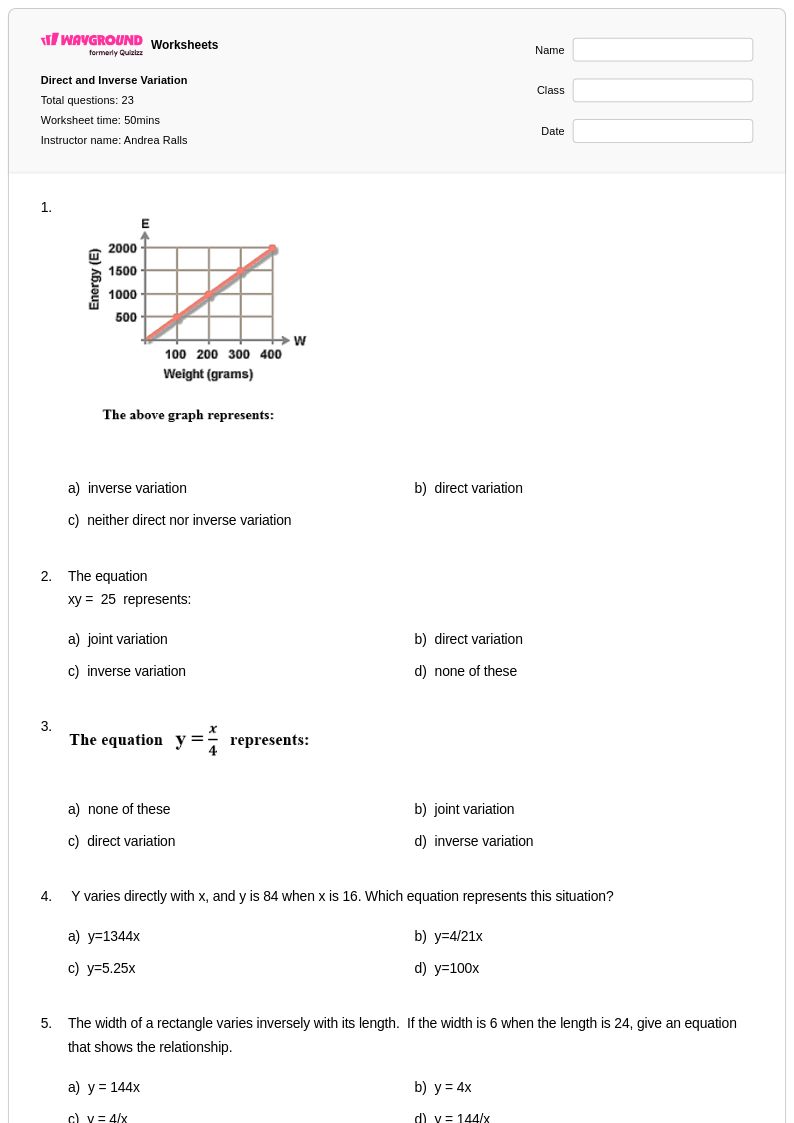
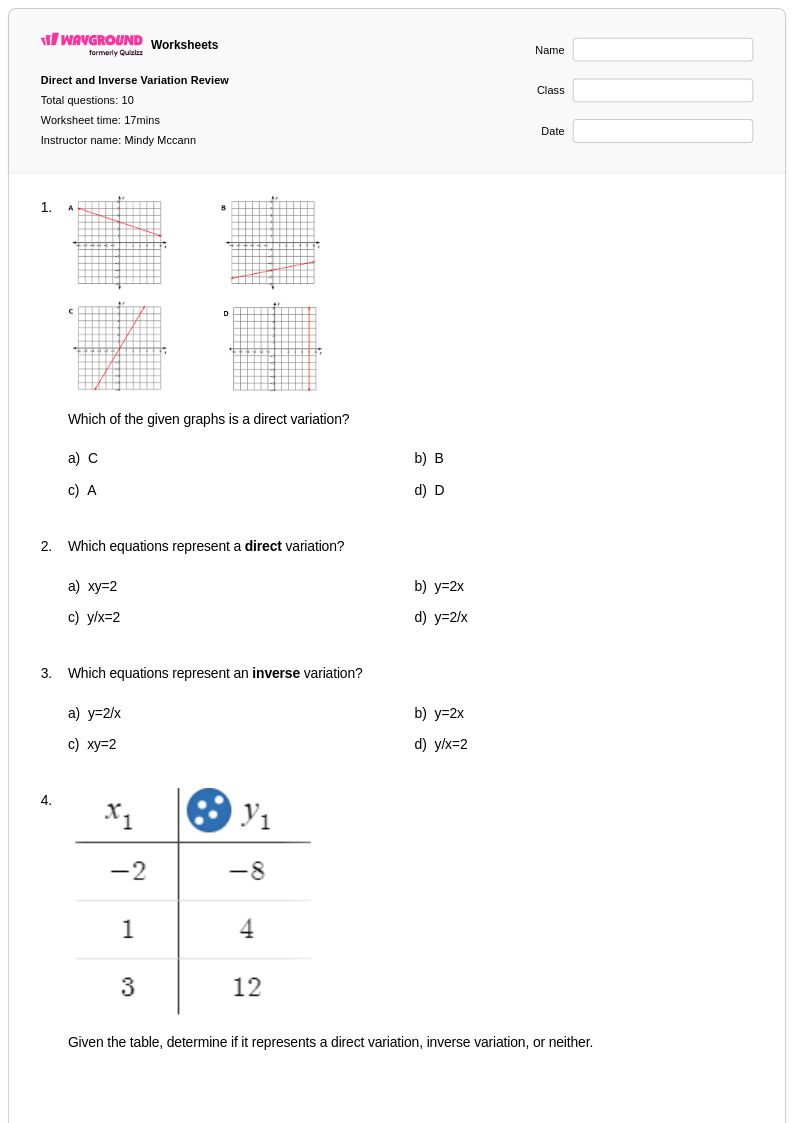
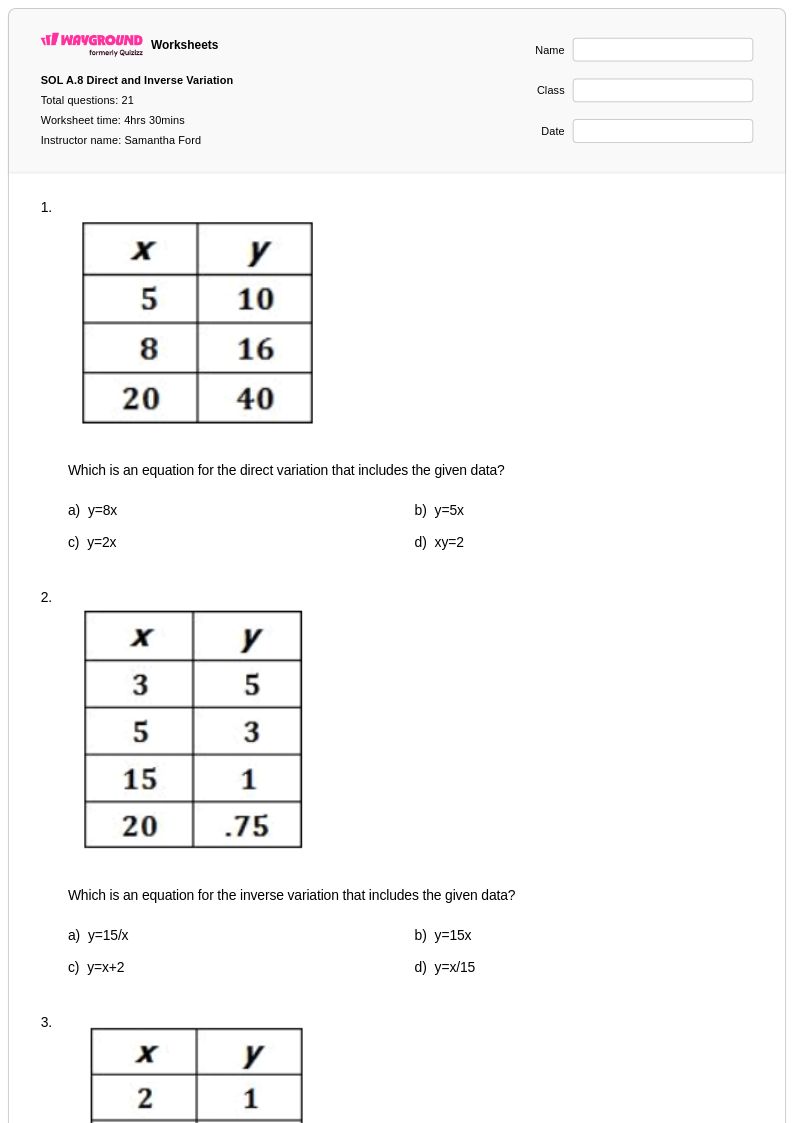
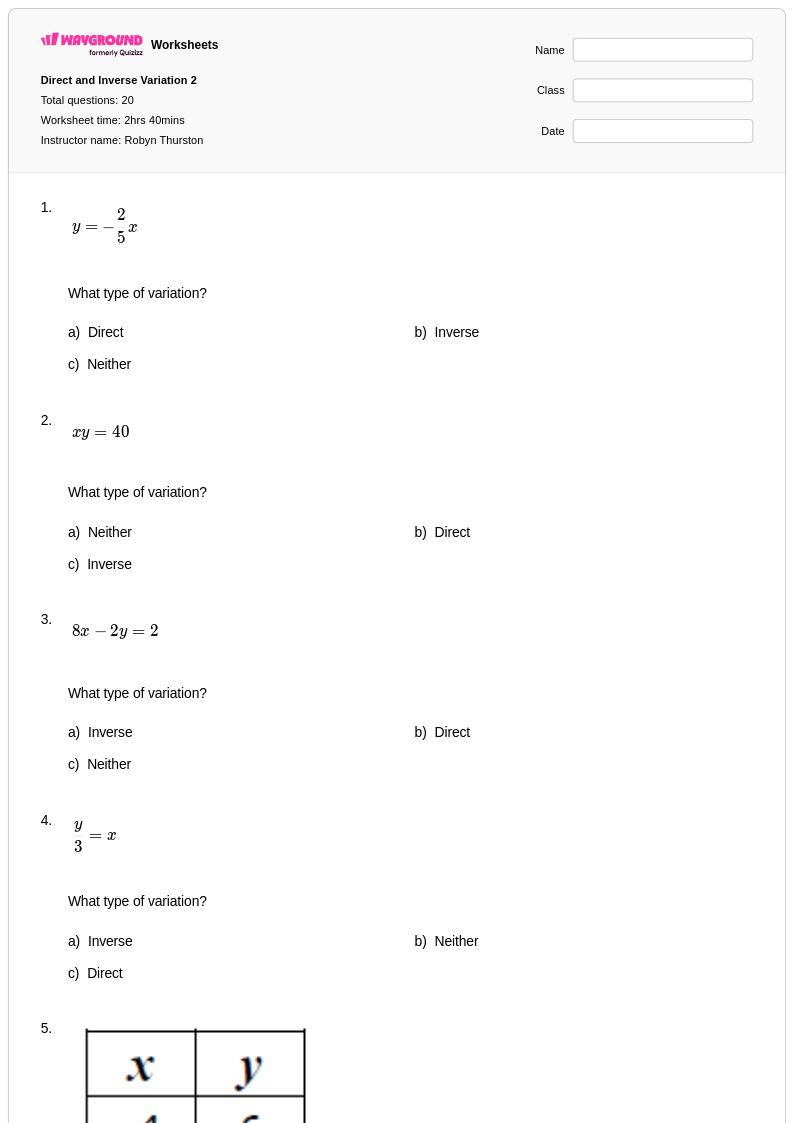
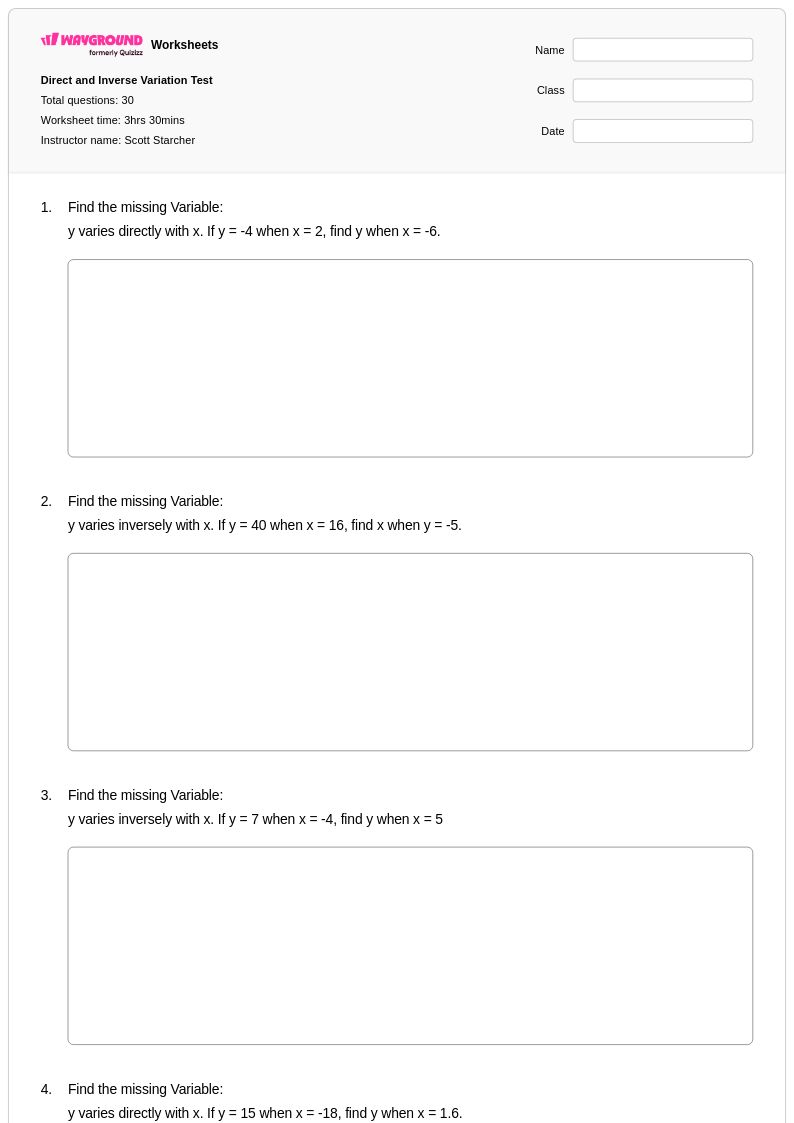
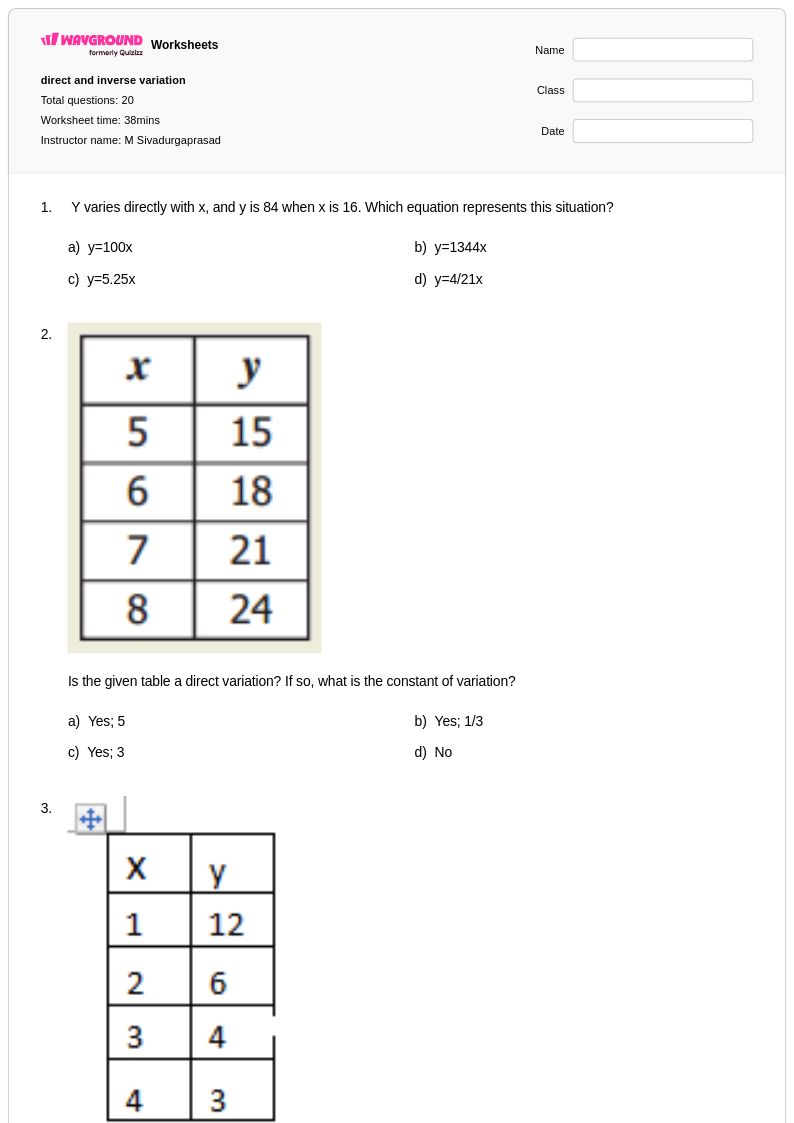
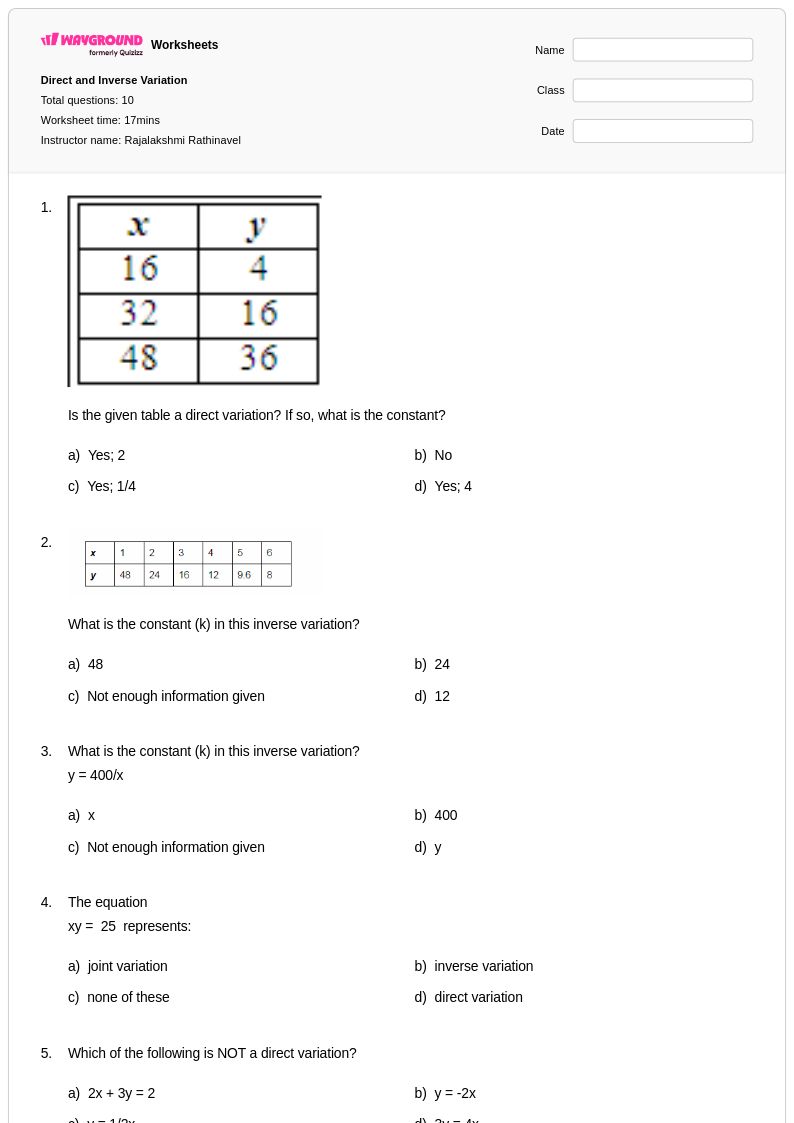
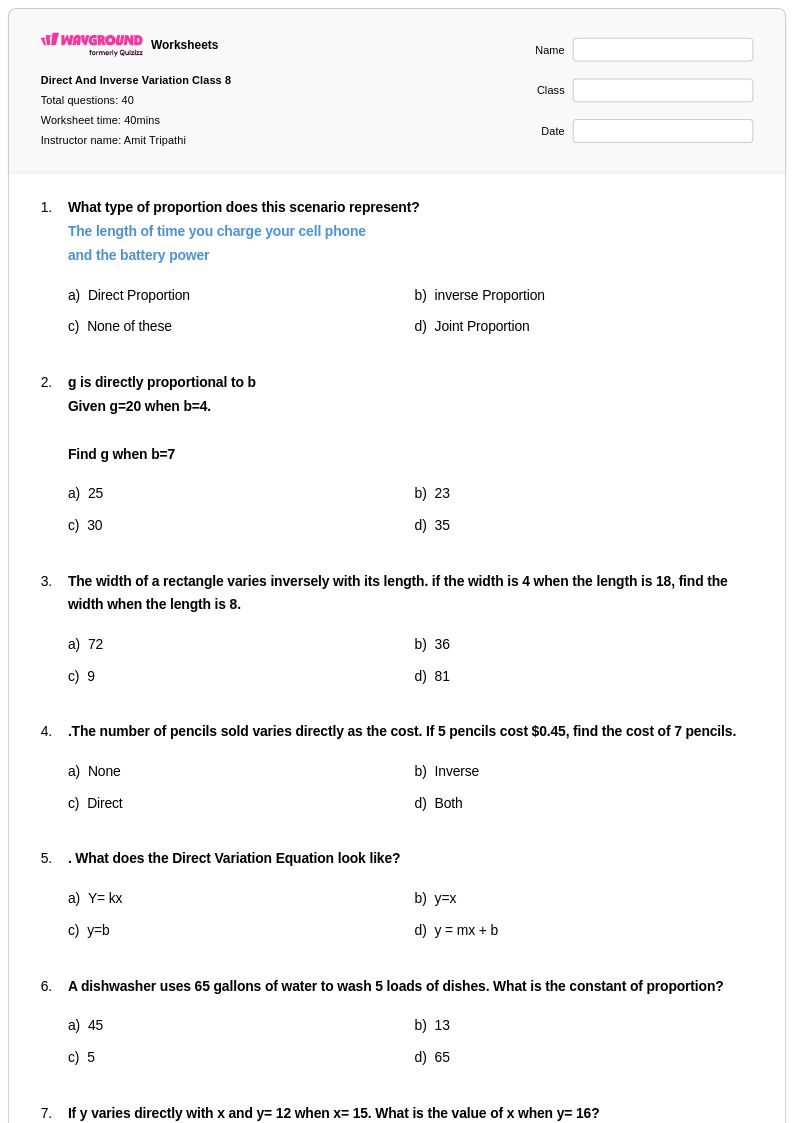
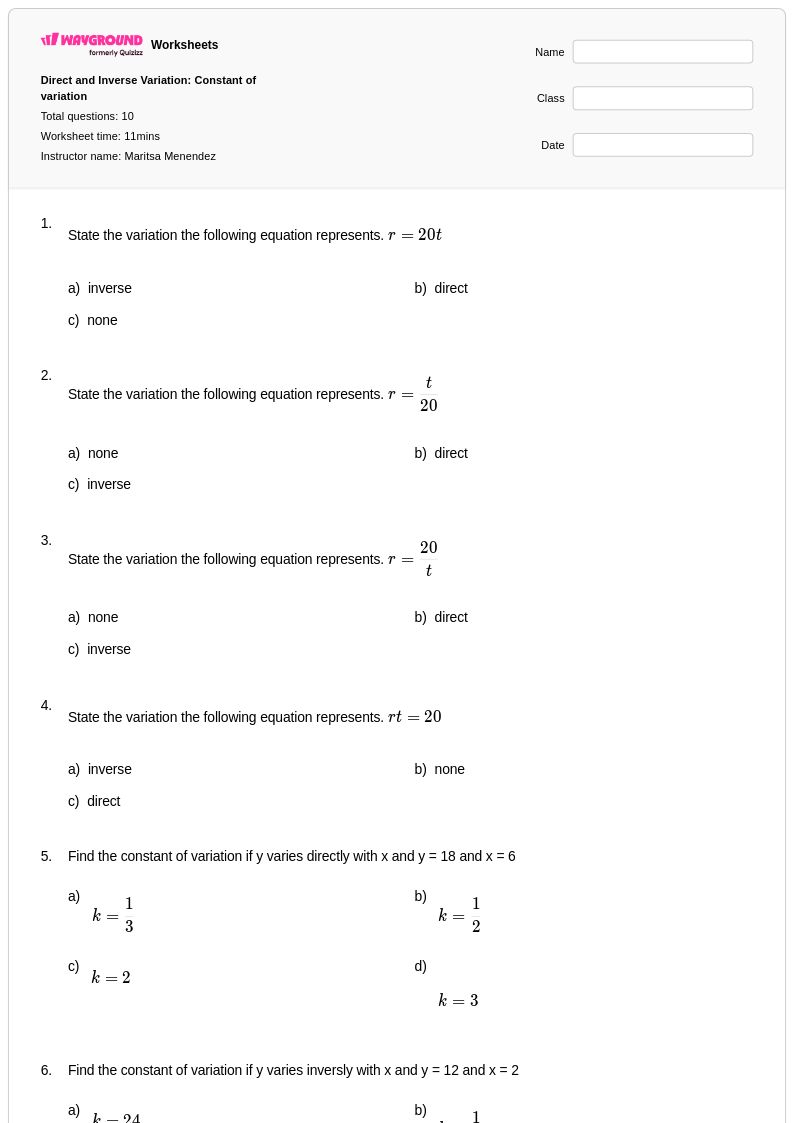
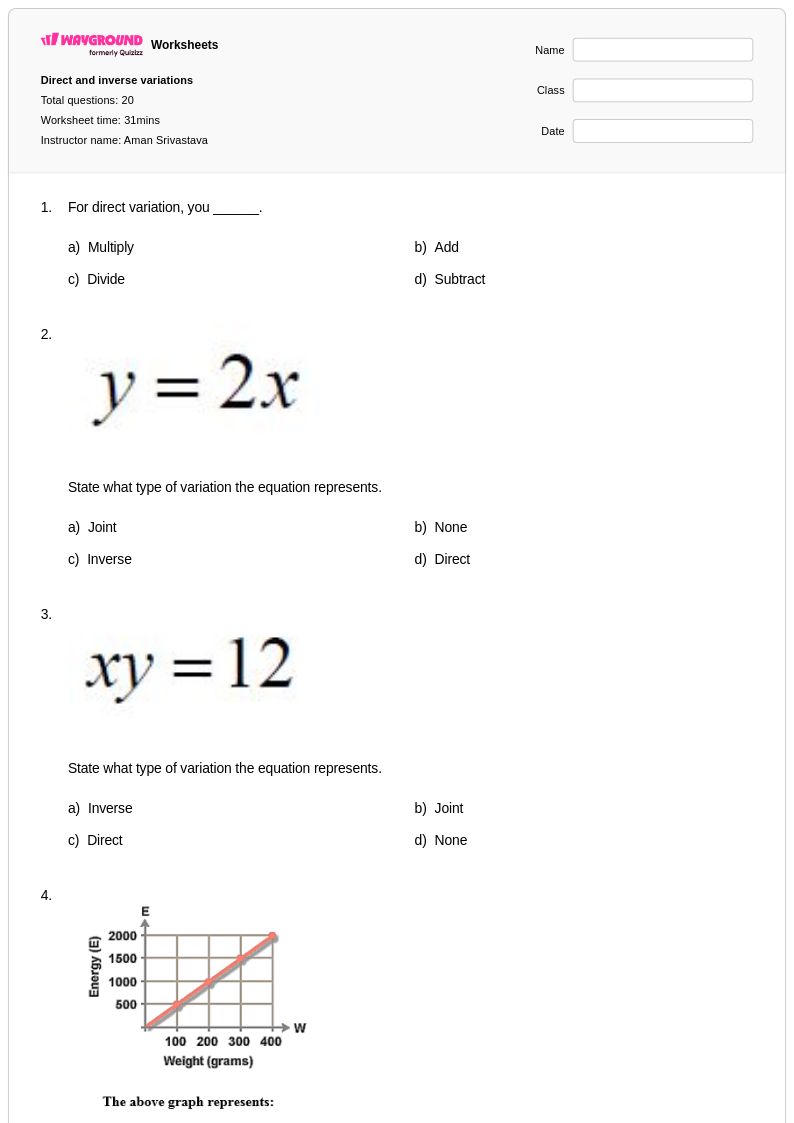
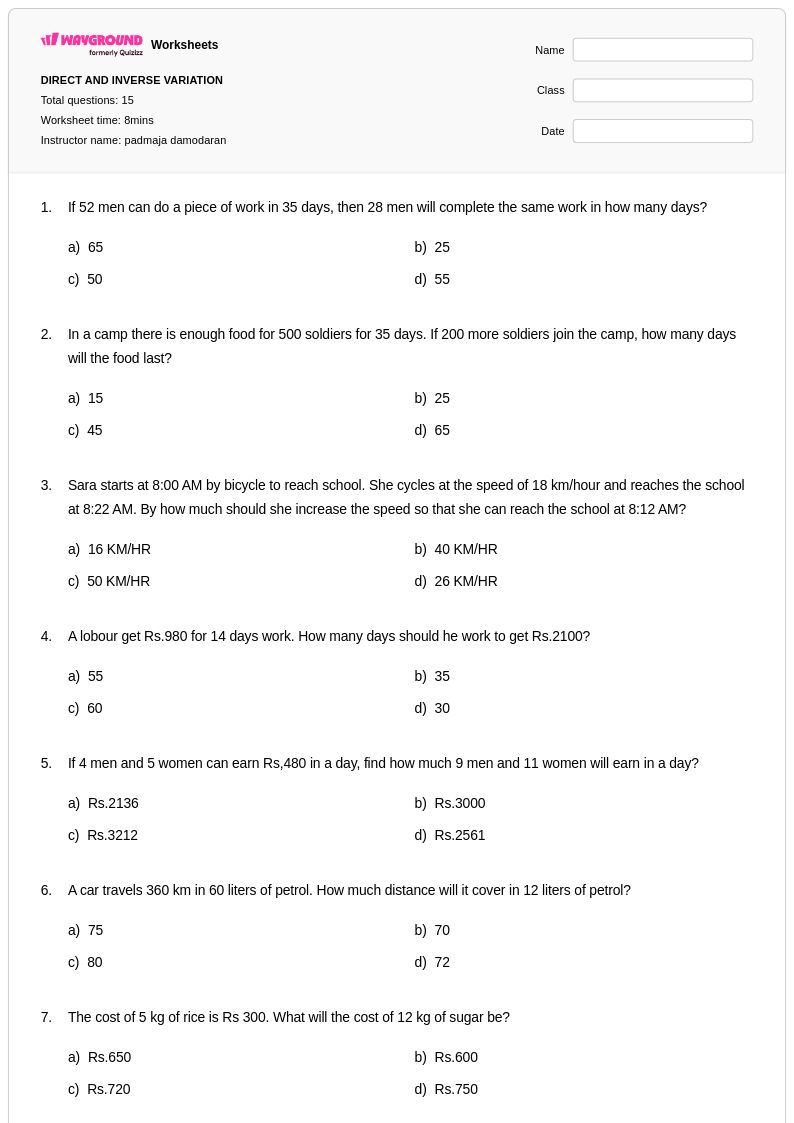
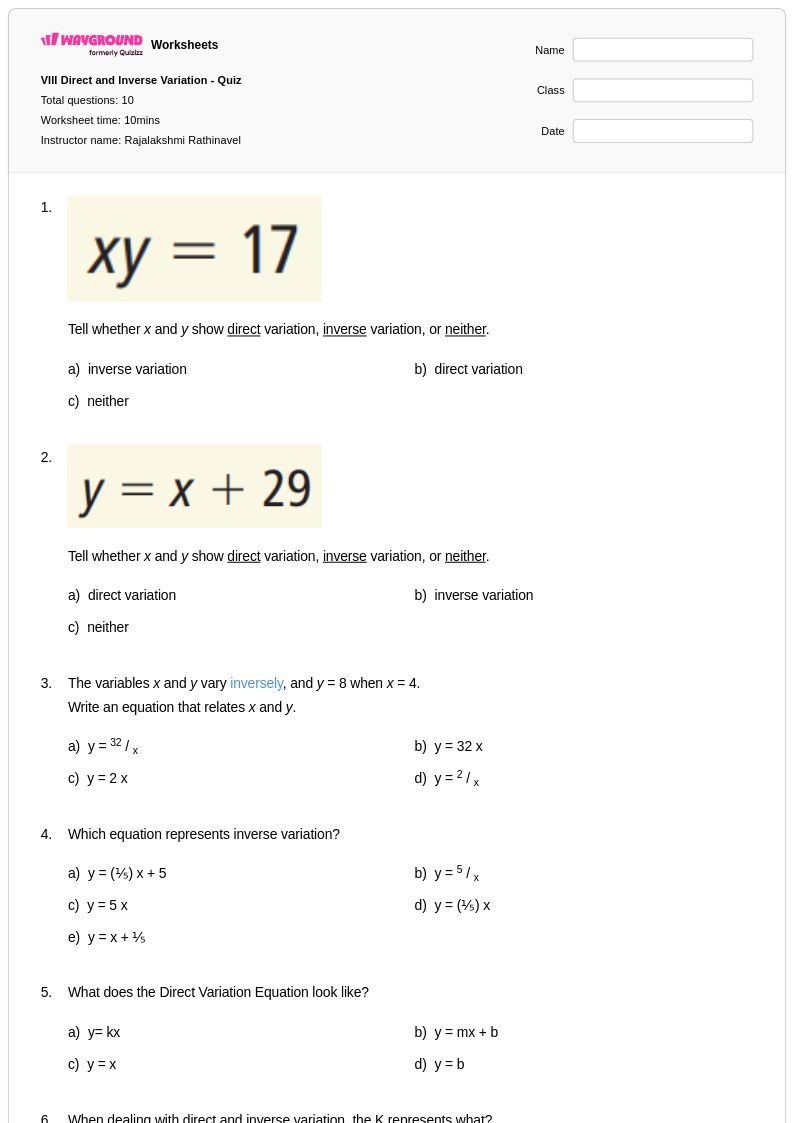
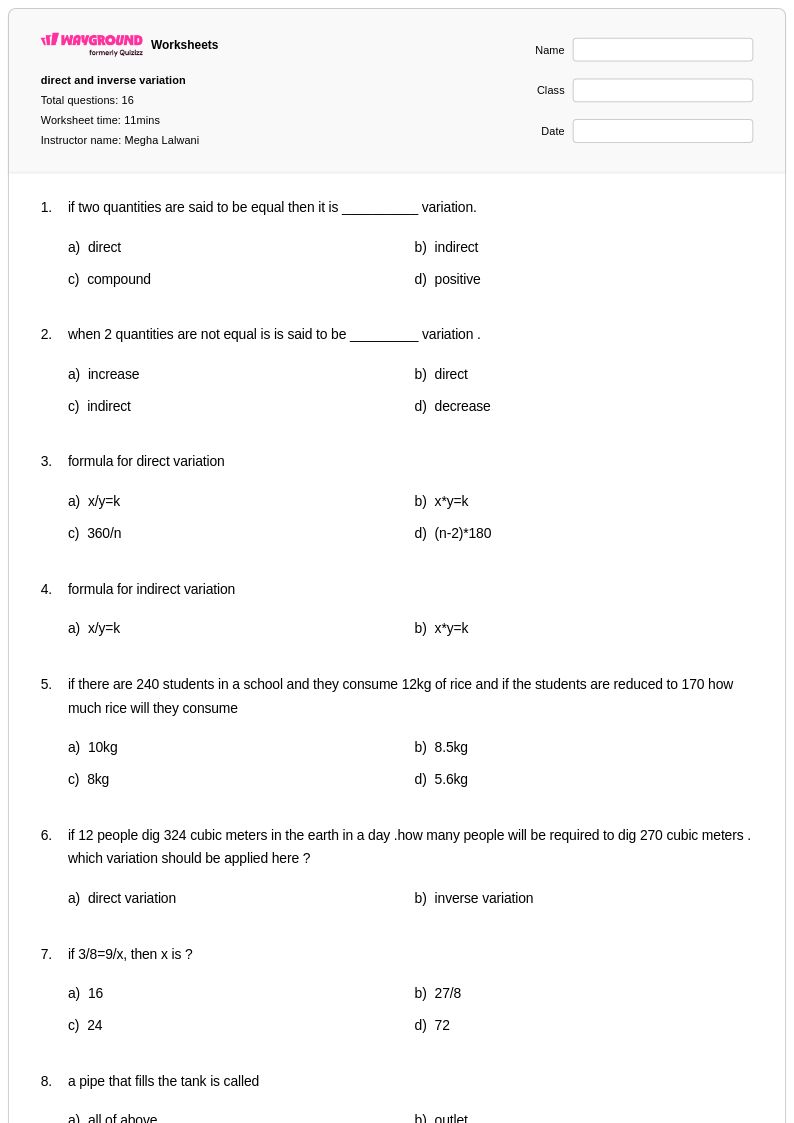
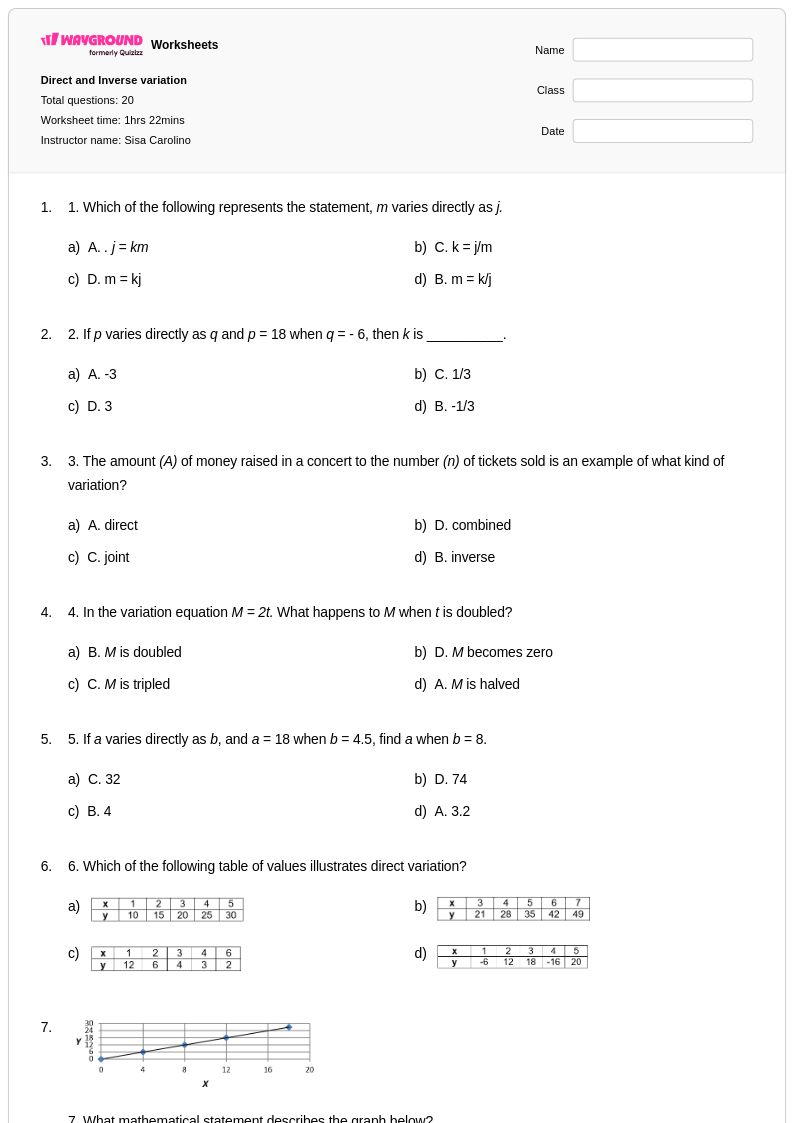
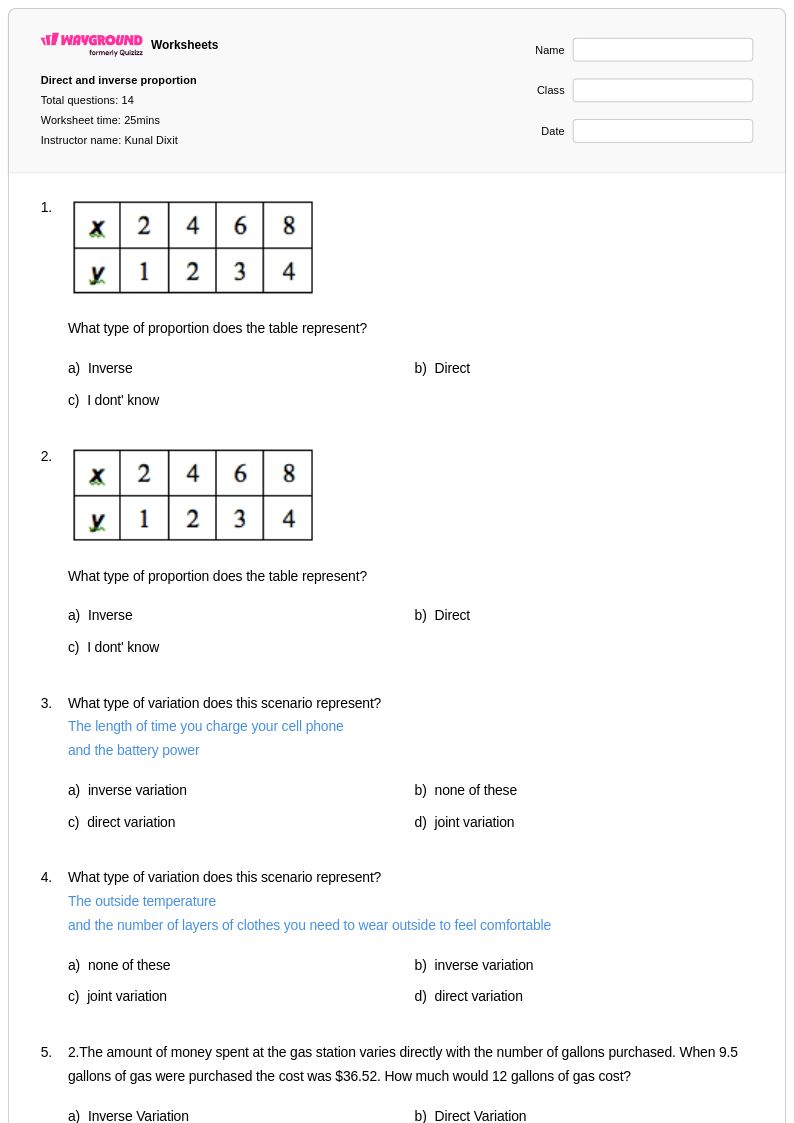
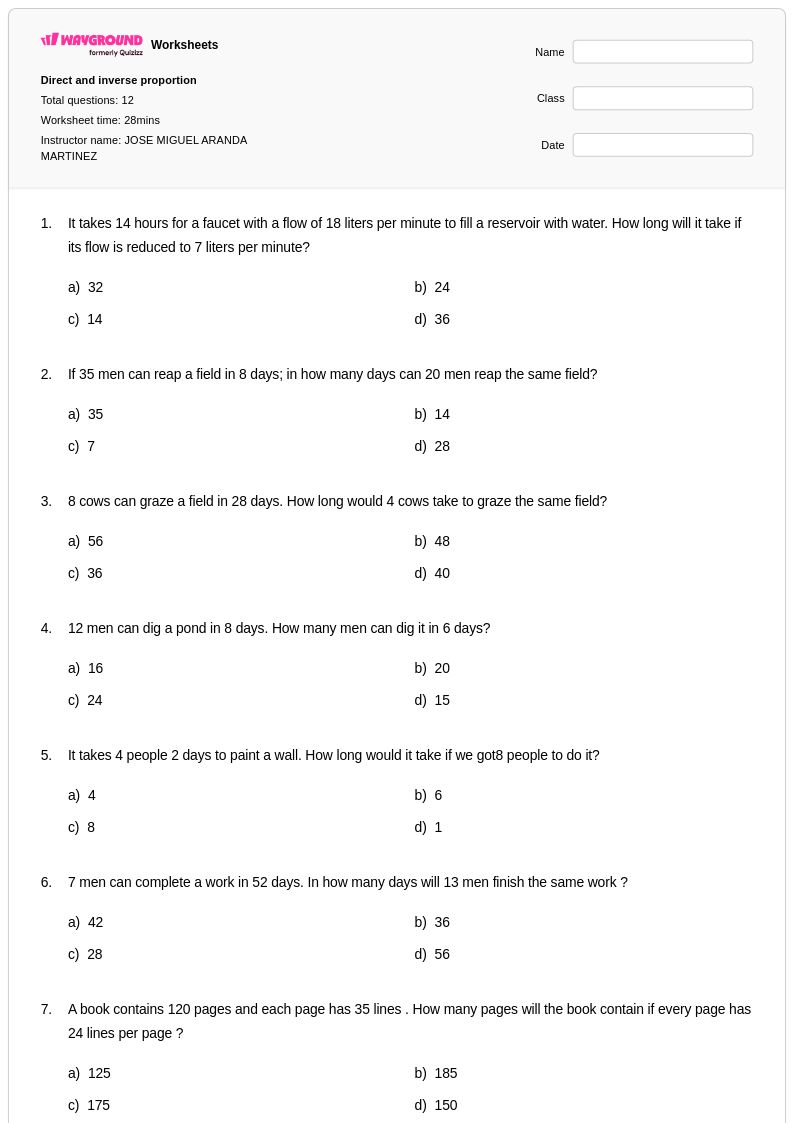
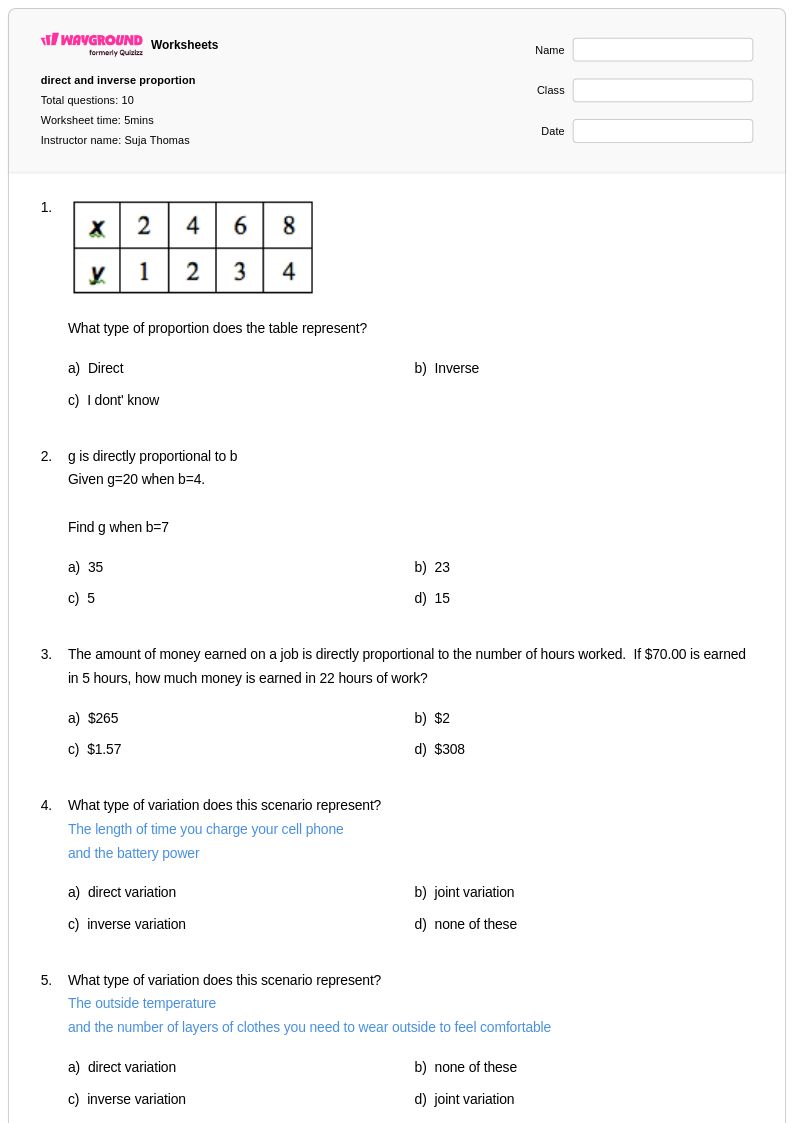
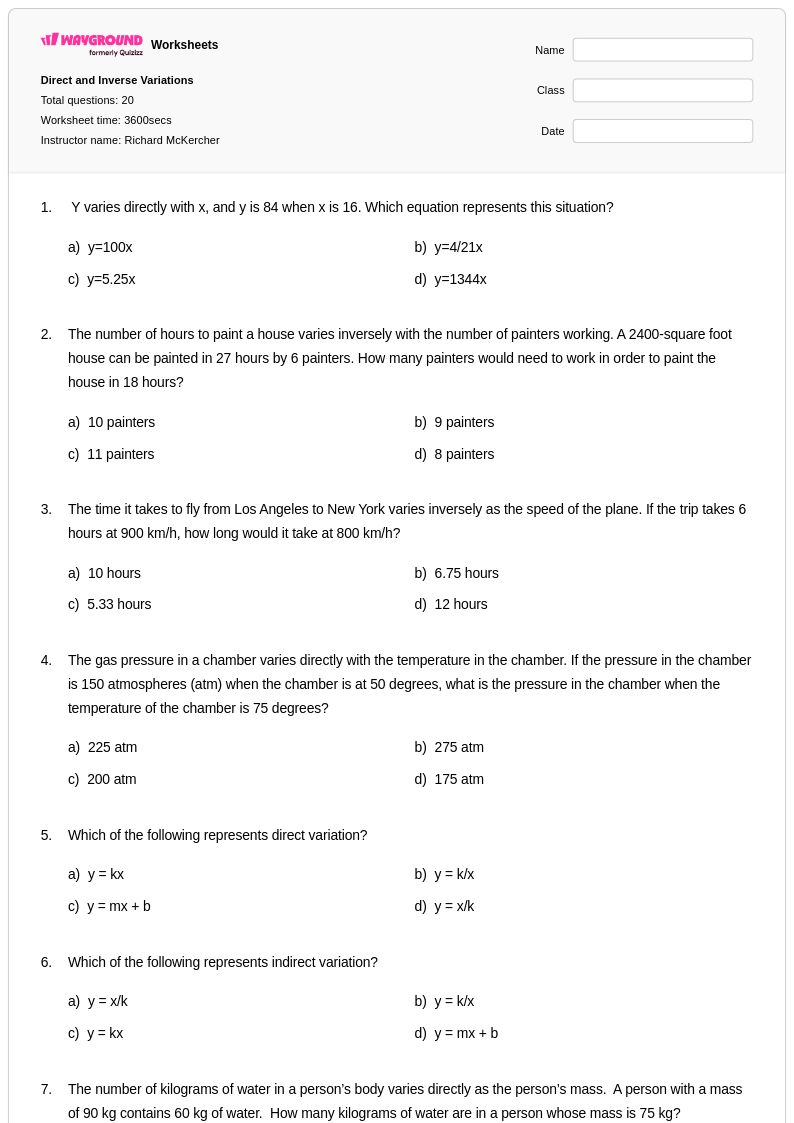
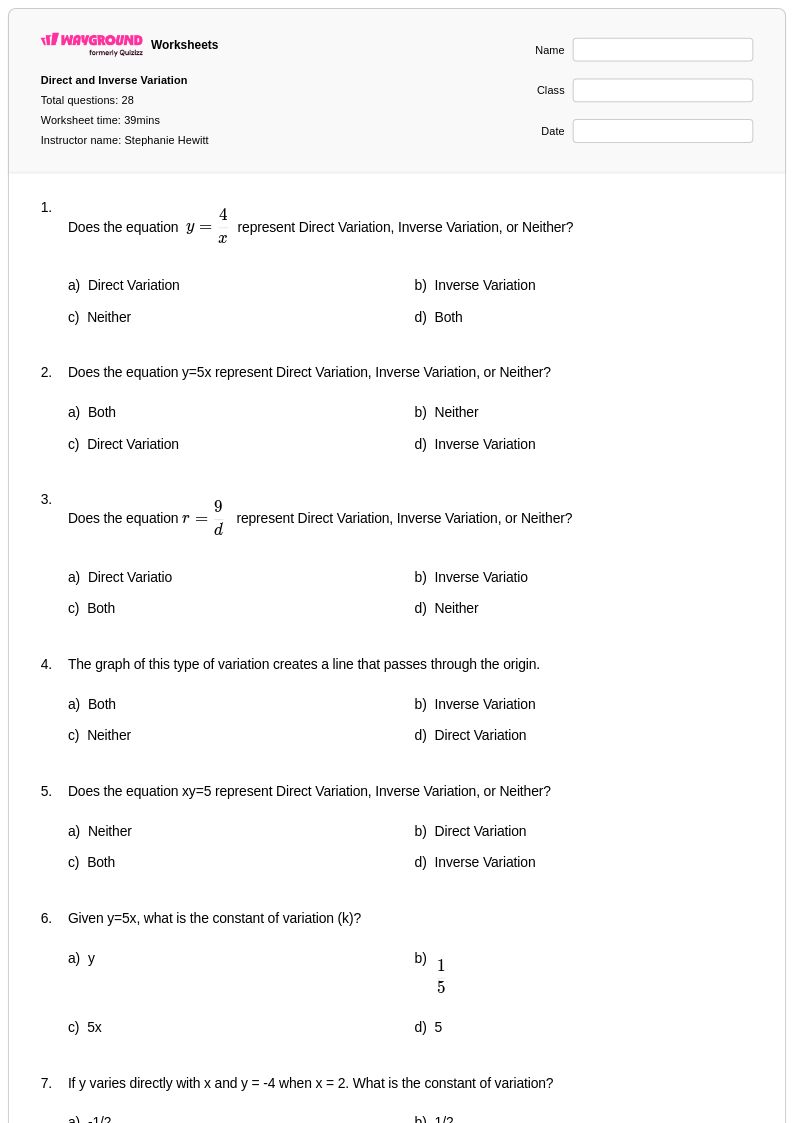
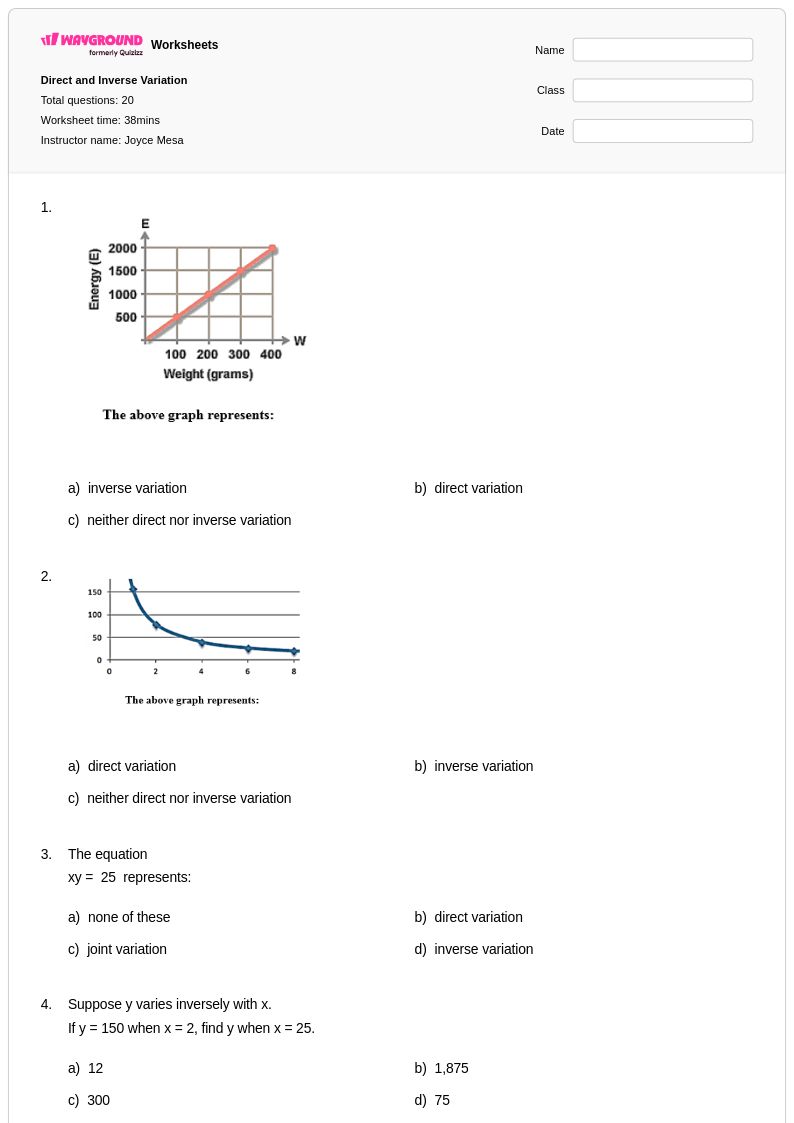
Direct and inverse variation worksheets for Class 8 students through Wayground (formerly Quizizz) provide comprehensive practice with these fundamental algebraic relationships that form the foundation for advanced mathematical concepts. These carefully designed worksheets strengthen students' ability to identify, analyze, and solve problems involving direct variation (where y = kx) and inverse variation (where xy = k or y = k/x), helping them master the critical skill of recognizing how variables change in relation to one another. The collection includes practice problems that progress from basic identification of variation types to complex real-world applications, with each worksheet featuring detailed answer keys and available in convenient pdf format for easy classroom distribution and homework assignments.
Wayground (formerly Quizizz) empowers teachers with millions of educator-created resources specifically focused on direct and inverse variation concepts, offering robust search and filtering capabilities that allow instructors to quickly locate worksheets aligned with their curriculum standards and student needs. The platform's differentiation tools enable teachers to customize worksheets for various skill levels within their Class 8 classrooms, while flexible formatting options provide both printable pdf versions for traditional paper-based learning and digital formats for technology-integrated instruction. These comprehensive features streamline lesson planning and support targeted remediation for struggling students, enrichment opportunities for advanced learners, and systematic skill practice that helps all students develop confidence in recognizing and working with proportional relationships essential for success in higher-level mathematics.
FAQs
How do I teach direct and inverse variation to 8th graders?
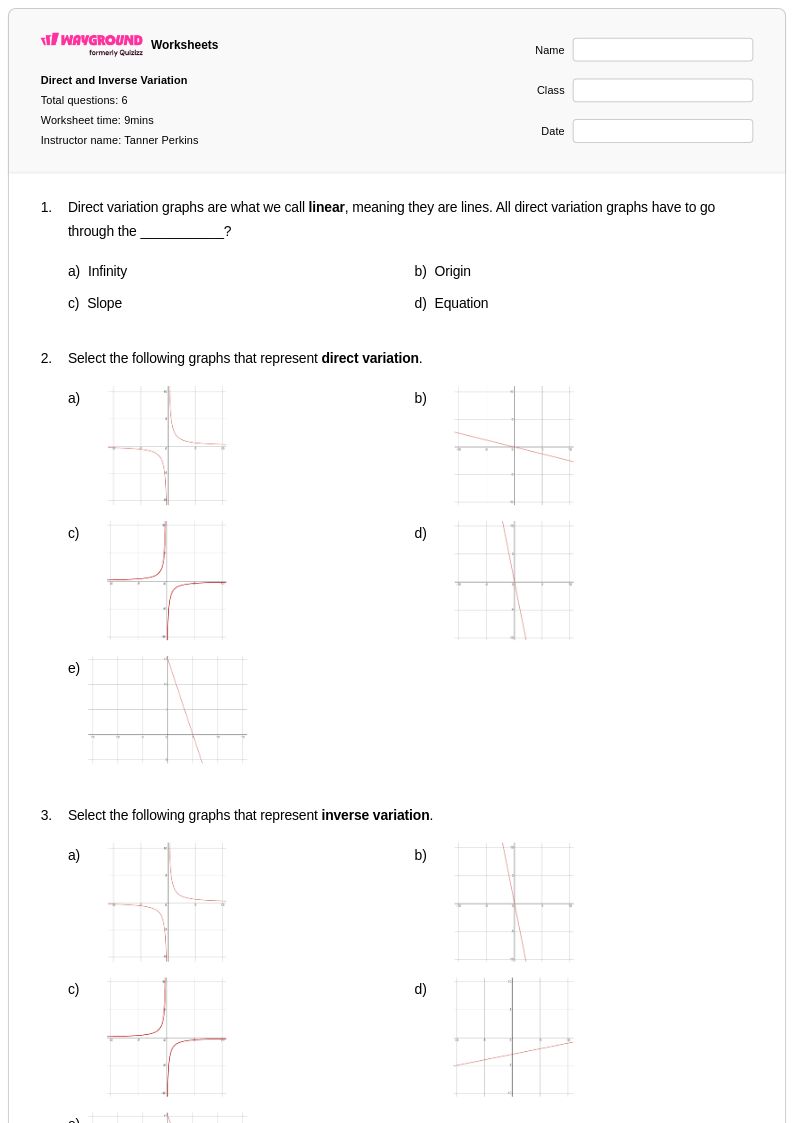
Eighth graders are coming off a strong foundation in proportional relationships, so direct variation (y = kx) is a natural extension — emphasize that it's a proportional relationship whose graph passes through the origin. Inverse variation is the bigger conceptual leap: students need to see that the product xy stays constant, not the ratio. Use tables of values side by side for both types so students can see the pattern before they see the equation. Real-world anchors like speed and travel time for inverse variation make the abstraction land faster.
What exercises help 8th graders practice direct and inverse variation?
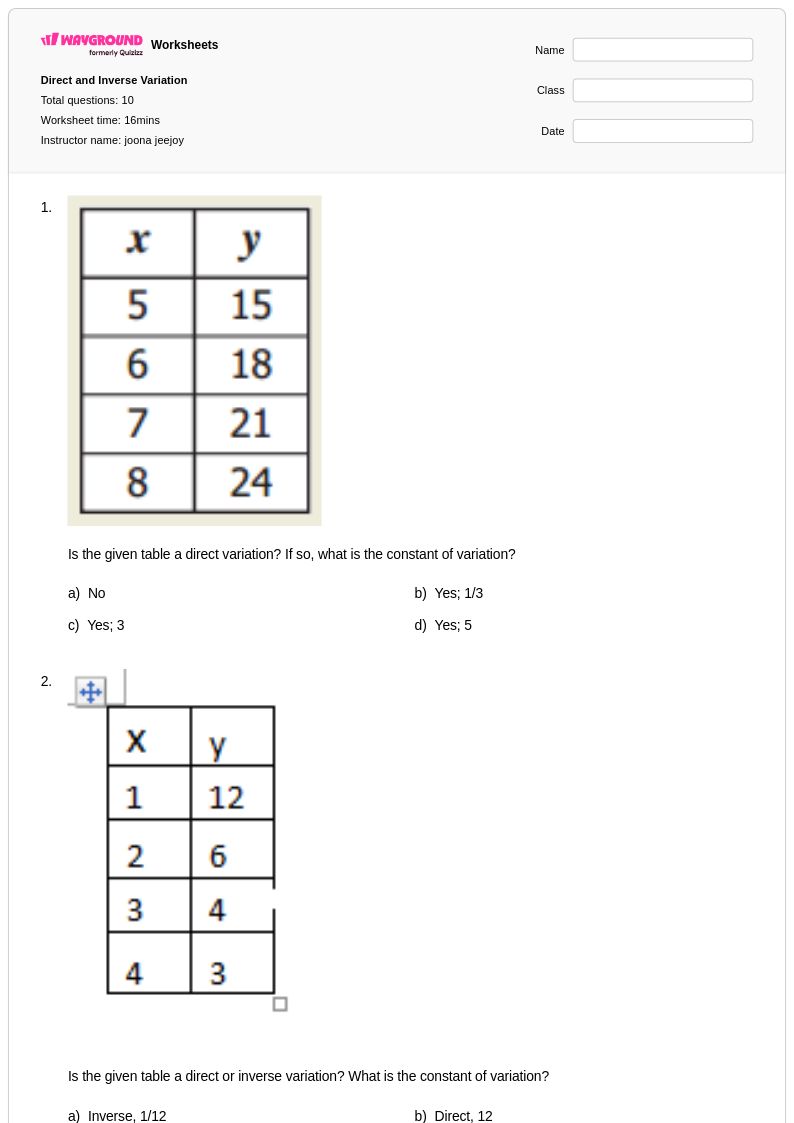
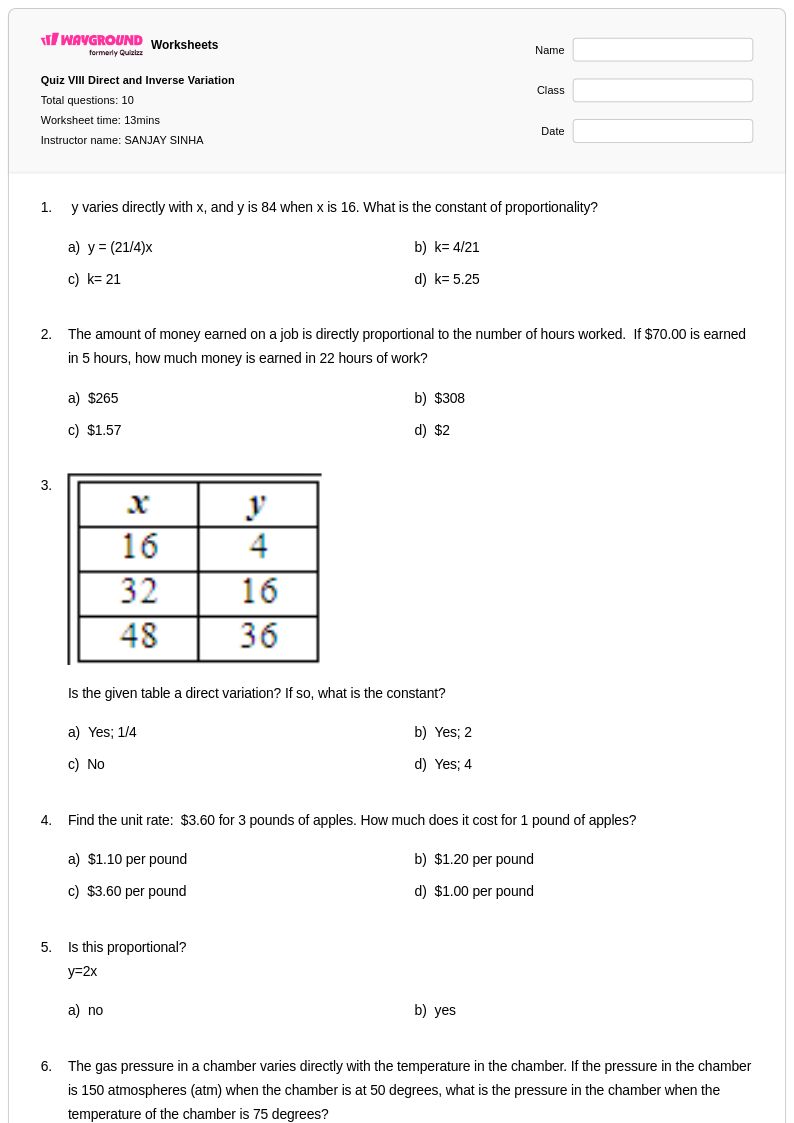
Practice should move from recognition to application: first, identifying variation type from a table or equation; then, calculating the constant k; finally, solving for an unknown given one pair of values. Word problems that require students to set up the equation themselves — rather than starting from a pre-labeled formula — are the most valuable, because that's where the real understanding shows. Wayground's Grade 8 worksheets progress through this sequence, with answer keys included for each problem set.
What mistakes do 8th graders commonly make with direct and inverse variation?
The most common error is treating inverse variation as if it were direct — students see two variables and assume y/x = k without checking whether xy = k fits better. A related mistake: when finding k, students sometimes use the wrong operation entirely, especially under time pressure. It's also worth watching for students who can identify variation type from an equation but miss it when the same relationship is presented as a graph or a table of values.
How do I use these Grade 8 variation worksheets in my classroom?
The worksheets are available as printable PDFs — straightforward for homework or in-class practice, and a good option for schools managing screen time. Every worksheet includes a complete answer key, so students can self-check or you can use it for quick grading. You can also host any worksheet as a digital quiz on Wayground if you want to assign it online and see results without collecting paper.
How does direct and inverse variation fit into the 8th grade Common Core math progression?
Common Core builds proportional reasoning steadily from Grades 6 and 7, and by Grade 8 students are expected to work with linear relationships and functions. Direct variation is the proportional linear function — y = kx through the origin — and Grade 8 is the natural point to formalize it. Inverse variation extends students beyond linear relationships for the first time, setting up the non-linear function work they'll encounter in high school algebra. Getting both types solid in Grade 8 means students enter algebra already comfortable with the idea that relationships between variables can take fundamentally different forms.
How can I support struggling 8th graders with variation concepts?
For students who mix up the two variation types, the most effective scaffold is a side-by-side comparison table — direct variation holds y/x constant, inverse variation holds xy constant — before any equation work. On Wayground, you can reduce answer choices for students who understand the concept but get tripped up by similar-looking options, and you can generate a version of the worksheet with larger font or a dyslexia-friendly font for students with reading-related needs. These adjustments apply per student, so the rest of the class works from the standard version without any disruption.