Free Printable Disability Awareness Worksheets for Class 9
Enhance Class 9 students' understanding of disability awareness through our comprehensive collection of free social studies worksheets, featuring engaging printables, practice problems, and complete answer keys in PDF format.
Explore printable Disability Awareness worksheets for Class 9
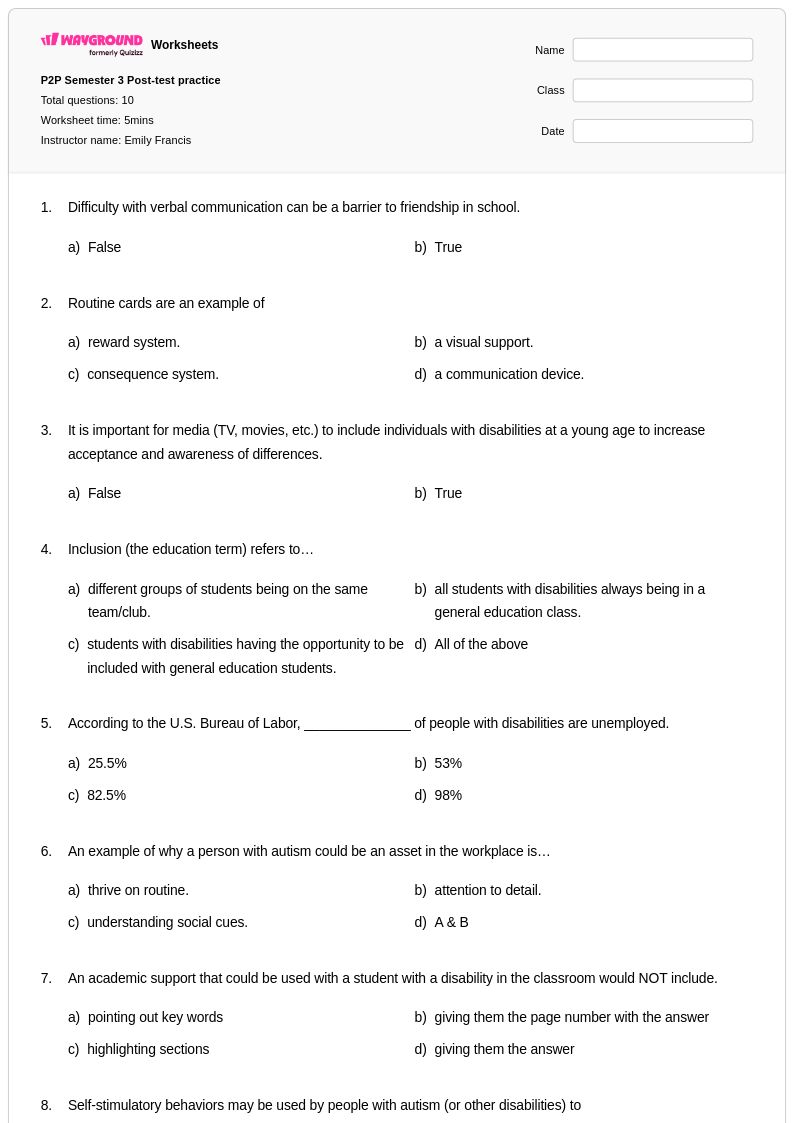
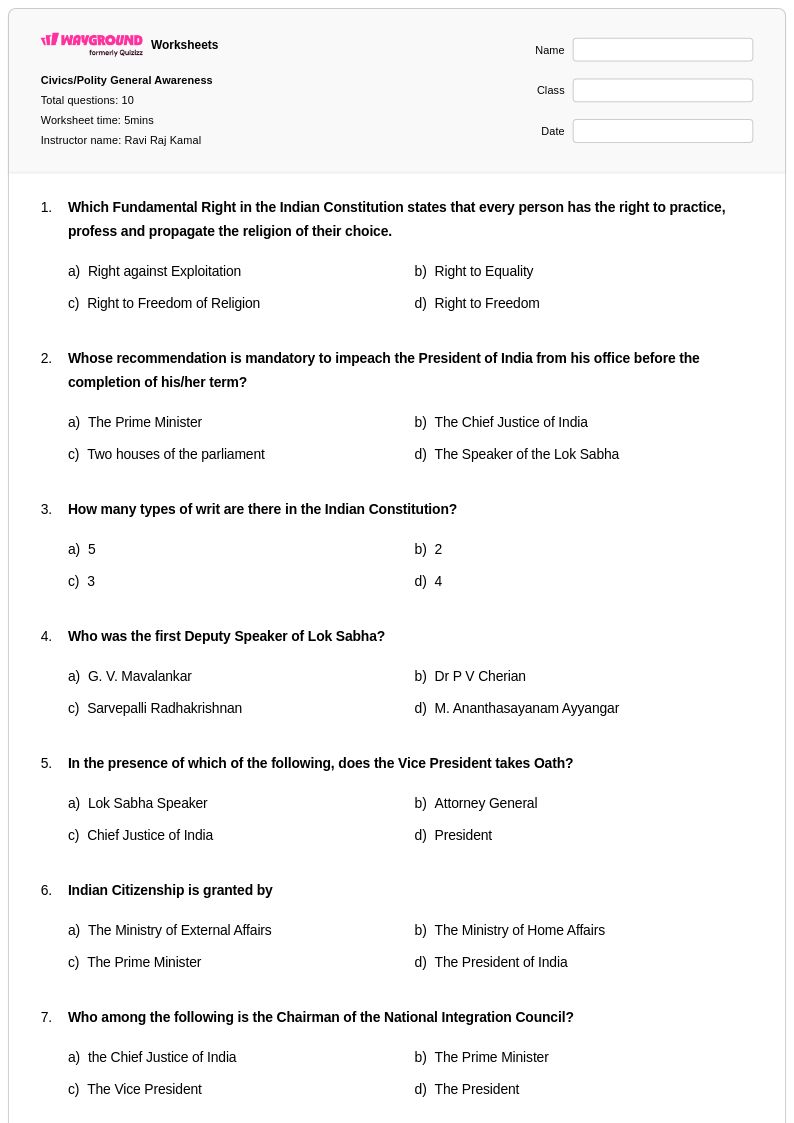
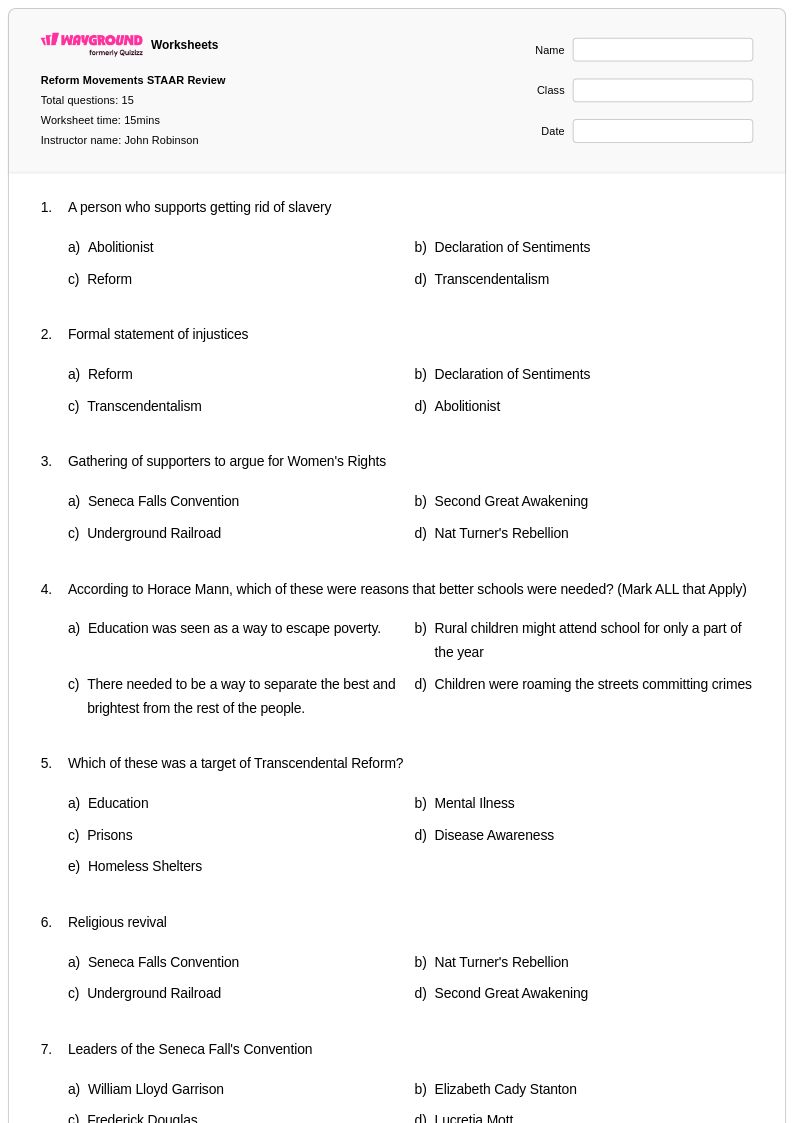
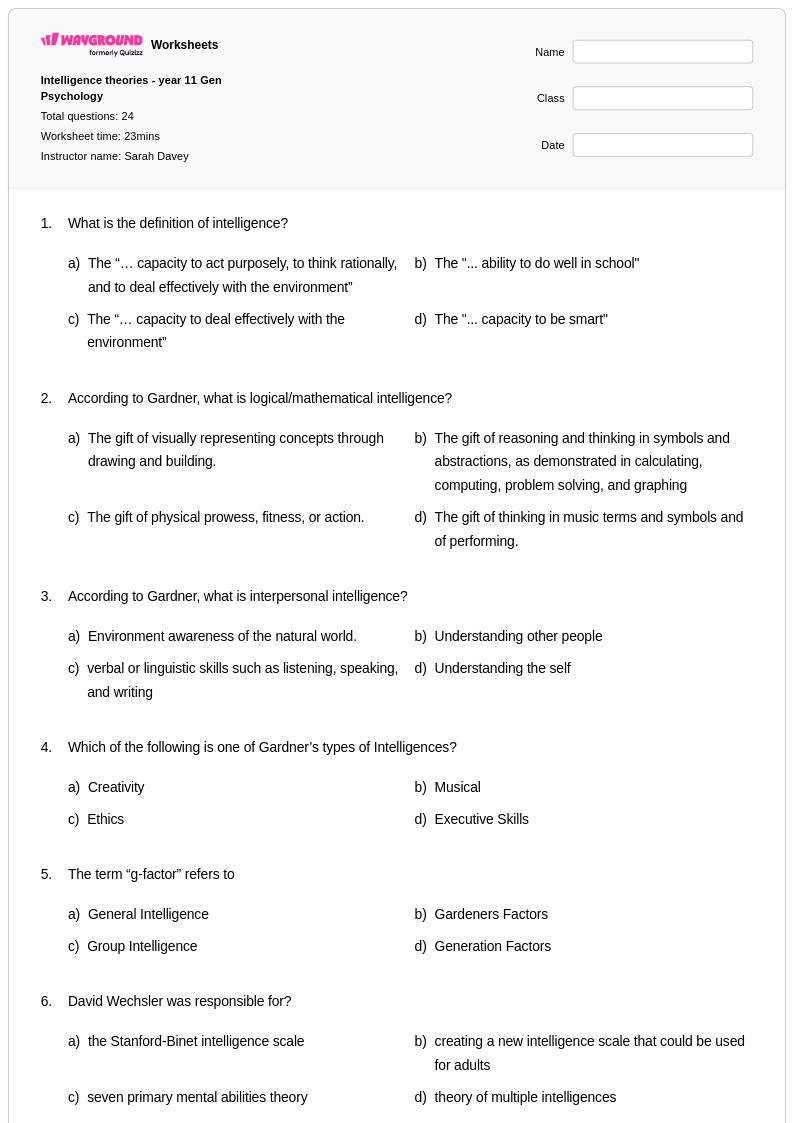
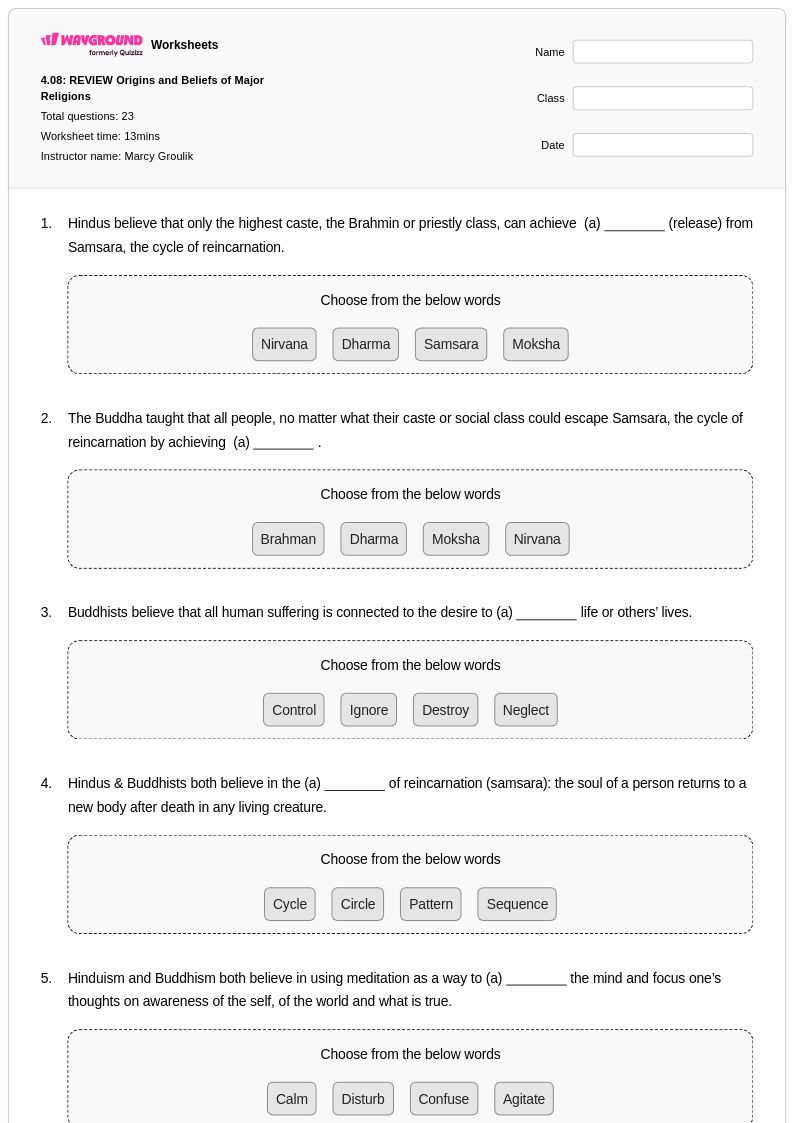
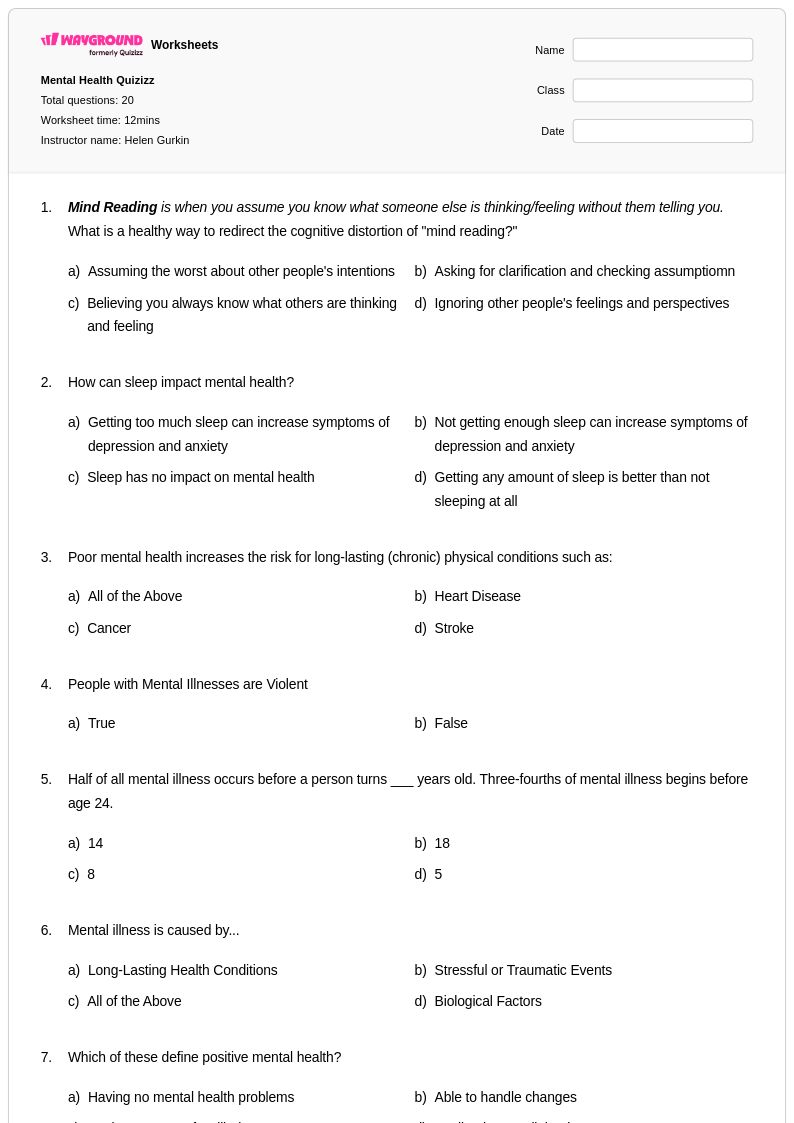
Disability awareness worksheets for Class 9 students available through Wayground (formerly Quizizz) provide comprehensive resources that develop empathy, understanding, and inclusive thinking skills essential for creating respectful learning environments. These carefully designed practice problems guide students through exploring different types of disabilities, examining accessibility challenges, and learning appropriate language and interaction strategies. Each worksheet incorporates real-world scenarios that help ninth graders recognize barriers faced by individuals with disabilities while building critical social awareness competencies. The collection includes free printables with detailed answer keys that support both independent study and classroom discussions, allowing students to engage with disability rights topics, assistive technology concepts, and inclusive community practices through structured pdf materials that reinforce positive attitudes and respectful behaviors.
Wayground (formerly Quizizz) empowers educators with millions of teacher-created disability awareness resources specifically curated for Class 9 social studies curricula, featuring robust search and filtering capabilities that align with social emotional learning standards and inclusive education objectives. Teachers can easily differentiate instruction by customizing worksheets to match diverse learning needs while accessing both printable and digital formats that accommodate various classroom settings and teaching preferences. The platform's extensive collection supports comprehensive lesson planning by providing materials for initial skill introduction, ongoing practice sessions, targeted remediation for students requiring additional support, and enrichment opportunities for advanced learners ready to explore complex disability advocacy topics. These versatile resources enable educators to seamlessly integrate disability awareness education into their social studies instruction while fostering classroom environments that celebrate diversity and promote understanding across all ability levels.
FAQs
How do I teach disability awareness in the classroom?
Teaching disability awareness effectively starts with building a foundation of empathy before introducing facts or vocabulary. Use first-person narratives, case studies, and structured reflection activities to help students connect with the lived experiences of individuals with disabilities. Follow up with class discussions that normalize diverse abilities and establish respectful communication as a classroom expectation. Framing disability awareness within a broader social-emotional learning context helps students internalize inclusive values rather than treating the topic as a one-time lesson.
What are good worksheets or activities for practicing disability awareness?
Effective disability awareness practice activities ask students to examine personal biases, explore accessibility challenges, and brainstorm ways to create more inclusive environments. Worksheets that combine reading scenarios with reflective writing prompts are especially valuable because they move students from passive awareness to active thinking. Activities that simulate different disability experiences or analyze real-world accessibility barriers can deepen understanding and make the learning more concrete and transferable.
What misconceptions do students commonly have about disability?
One of the most common misconceptions is that disability is always visible, which leads students to overlook or question invisible disabilities such as chronic pain, learning differences, or mental health conditions. Students also frequently conflate disability with inability, assuming that individuals with disabilities require constant assistance or have limited capacity for independence and achievement. Directly addressing these misconceptions through structured reflection and exposure to diverse disability narratives is essential for building genuine understanding.
How can I use disability awareness worksheets to support students with different learning needs?
Disability awareness worksheets can be differentiated to ensure all students meaningfully engage with the material. On Wayground, teachers can apply individual student accommodations such as read aloud, extended time, reduced answer choices, and adjustable reading modes, which means students who themselves have learning differences can participate fully in lessons about disability awareness without experiencing barriers. These settings can be applied to individual students or the whole class and are saved for reuse across future sessions.
How do I use Wayground's disability awareness worksheets in my classroom?
Wayground's disability awareness worksheets are available as printable PDFs for traditional classroom distribution and in digital formats for technology-integrated or remote learning environments. Teachers can also host the worksheets as an interactive quiz directly on Wayground, which supports both individual reflection and whole-class discussion. Each worksheet includes a complete answer key, making it straightforward to facilitate meaningful follow-up conversations after students complete the activity.
How do disability awareness lessons connect to social-emotional learning standards?
Disability awareness directly supports core social-emotional learning competencies, including empathy, perspective-taking, responsible decision-making, and relationship skills. Lessons that ask students to consider the experiences of individuals with disabilities build the same emotional literacy skills that SEL frameworks prioritize, which makes disability awareness a natural fit within character education and social studies curricula. Connecting disability awareness to SEL standards also helps teachers justify the instructional time and integrate these lessons into existing unit plans.

![Term 3-4 review: again :-] - Nadający się do druku Disability-awareness Worksheets Class 9 - Quizizz](https://quizizz-static.s3.amazonaws.com/_media/worksheets-new/6098660c901239001d6cd4a9-term-3-4-review-again)