
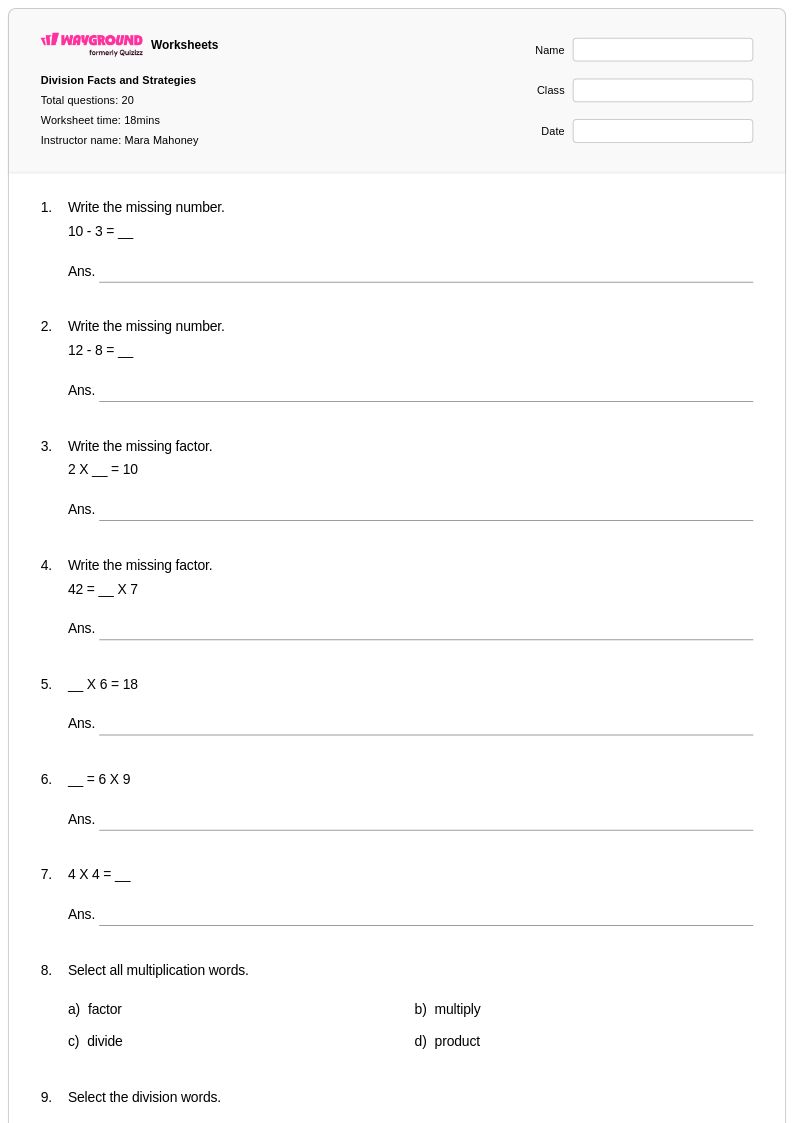
20 Q
3rd
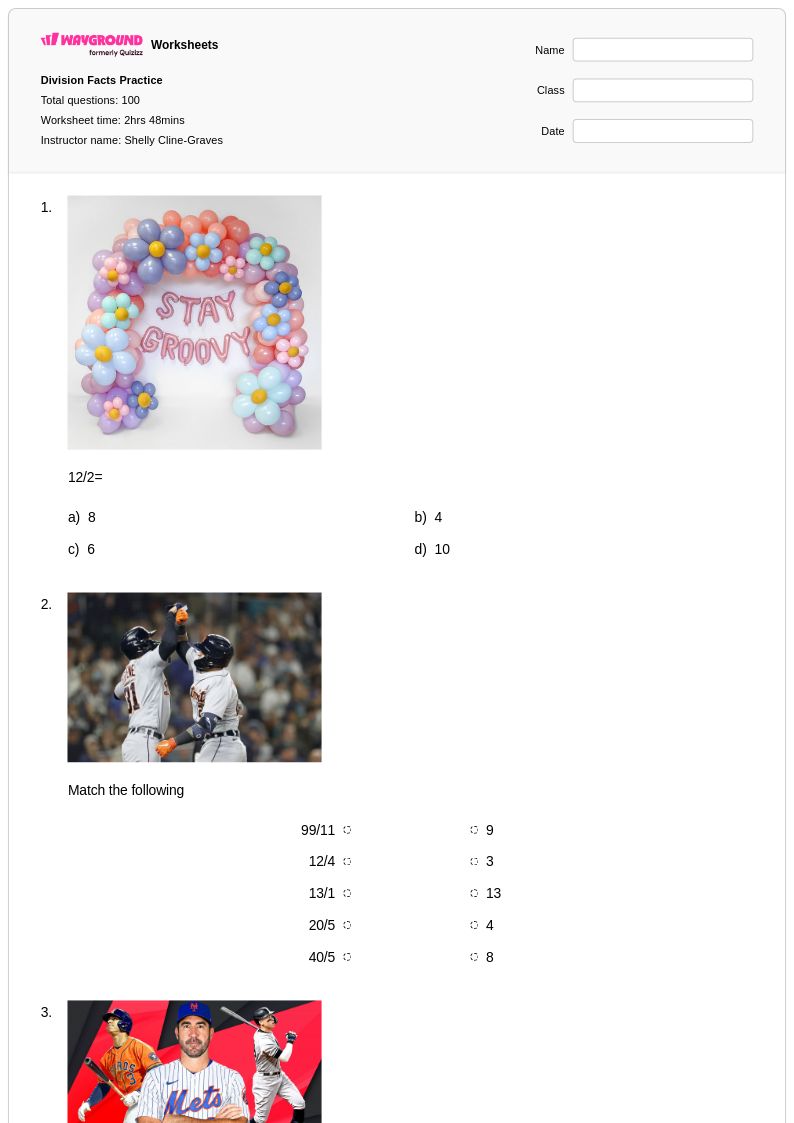
100 Q
3rd
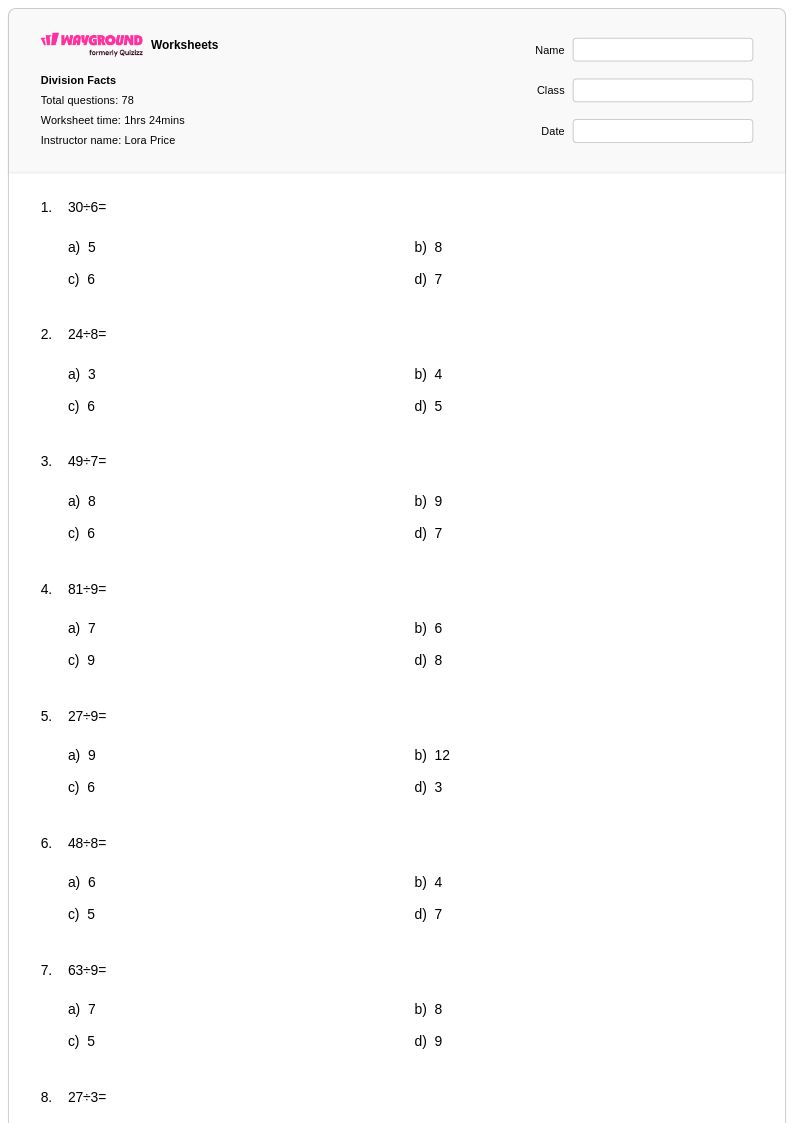
78 Q
3rd
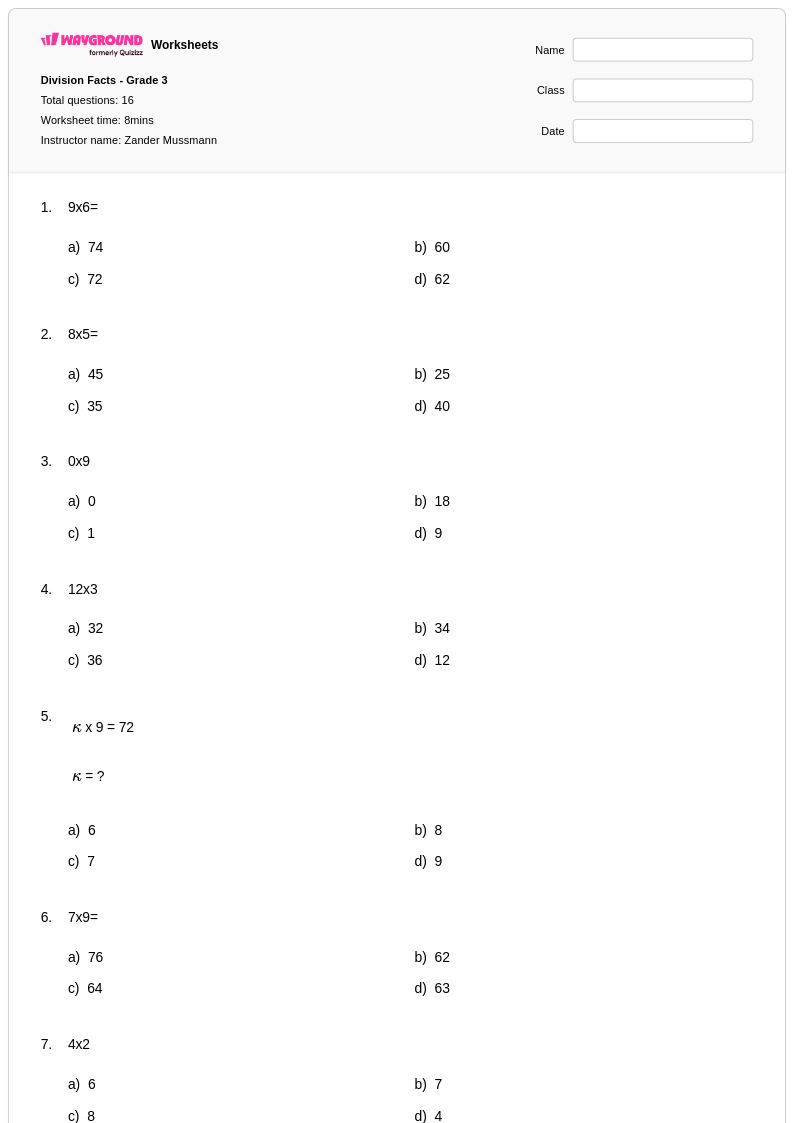
16 Q
3rd
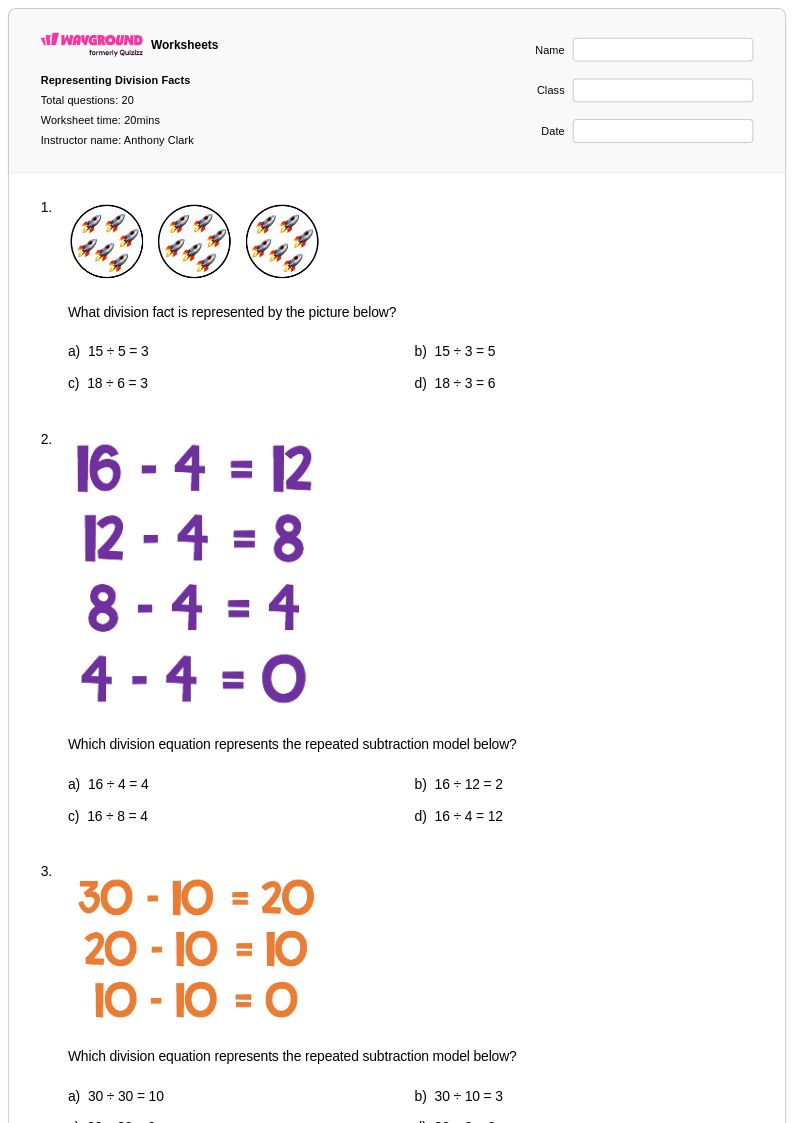
20 Q
3rd - Uni
15 Q
3rd
20 Q
3rd - Uni
20 Q
3rd - Uni
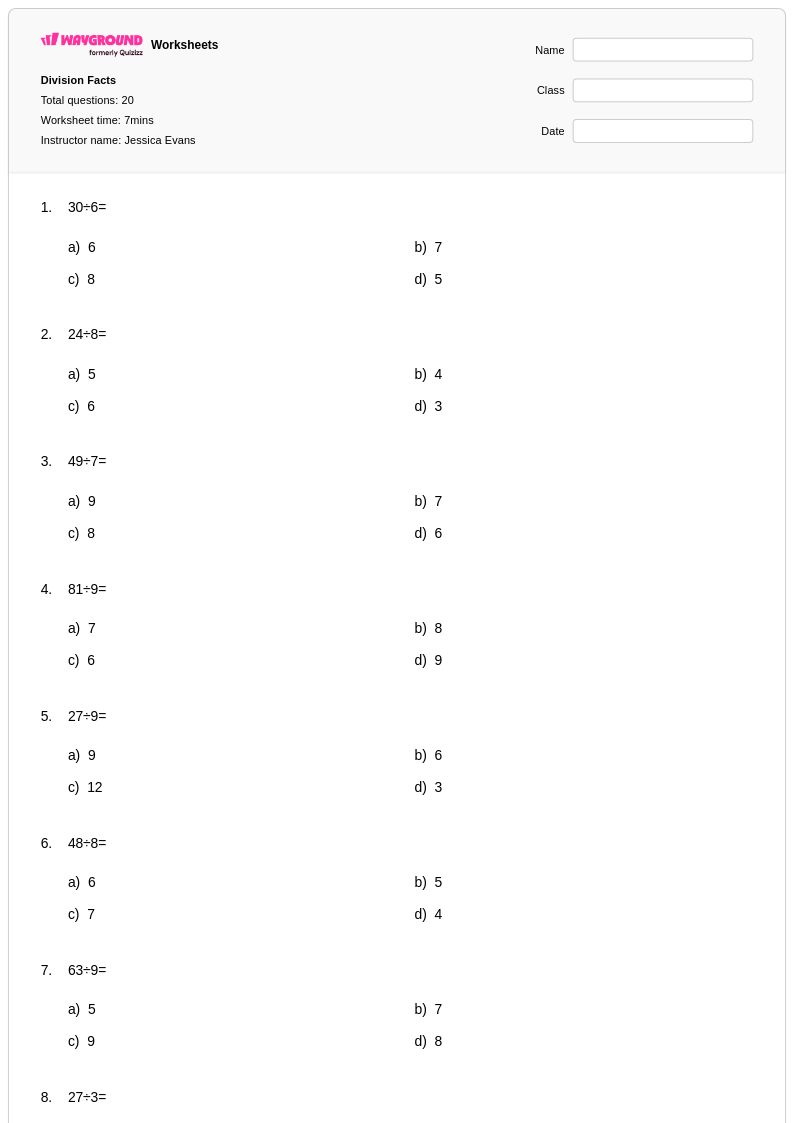
20 Q
3rd
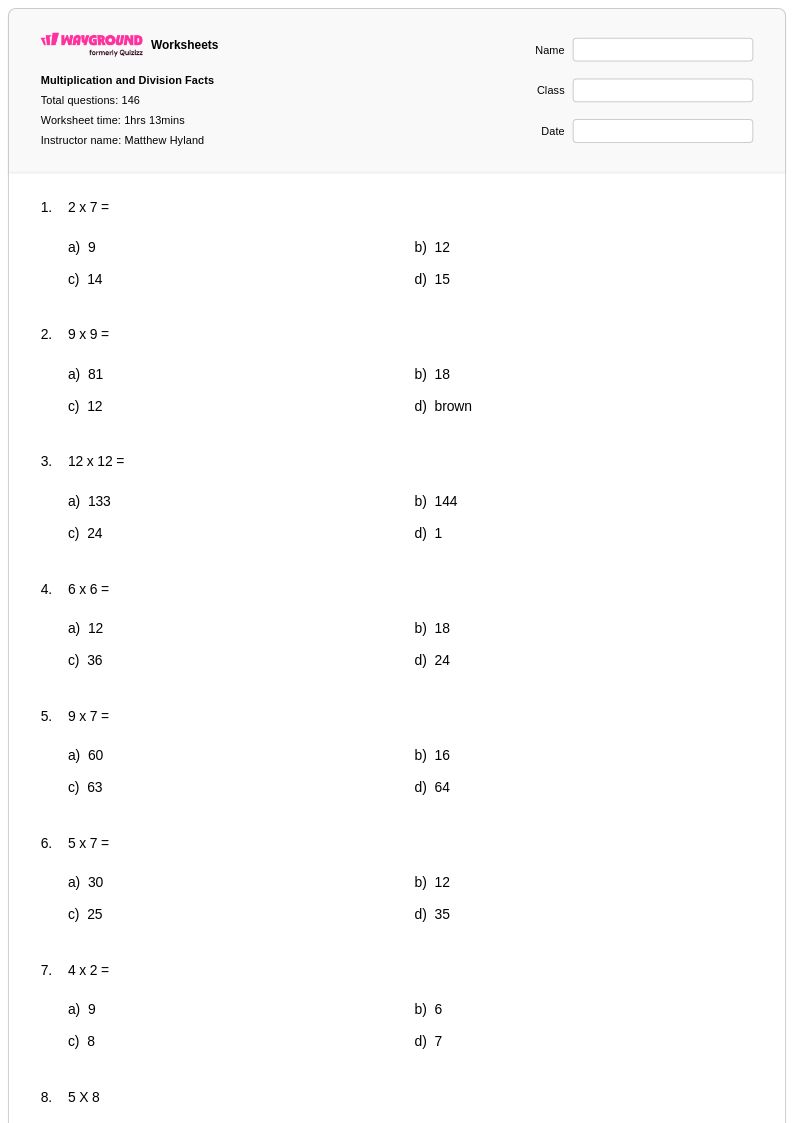
146 Q
3rd - 6th
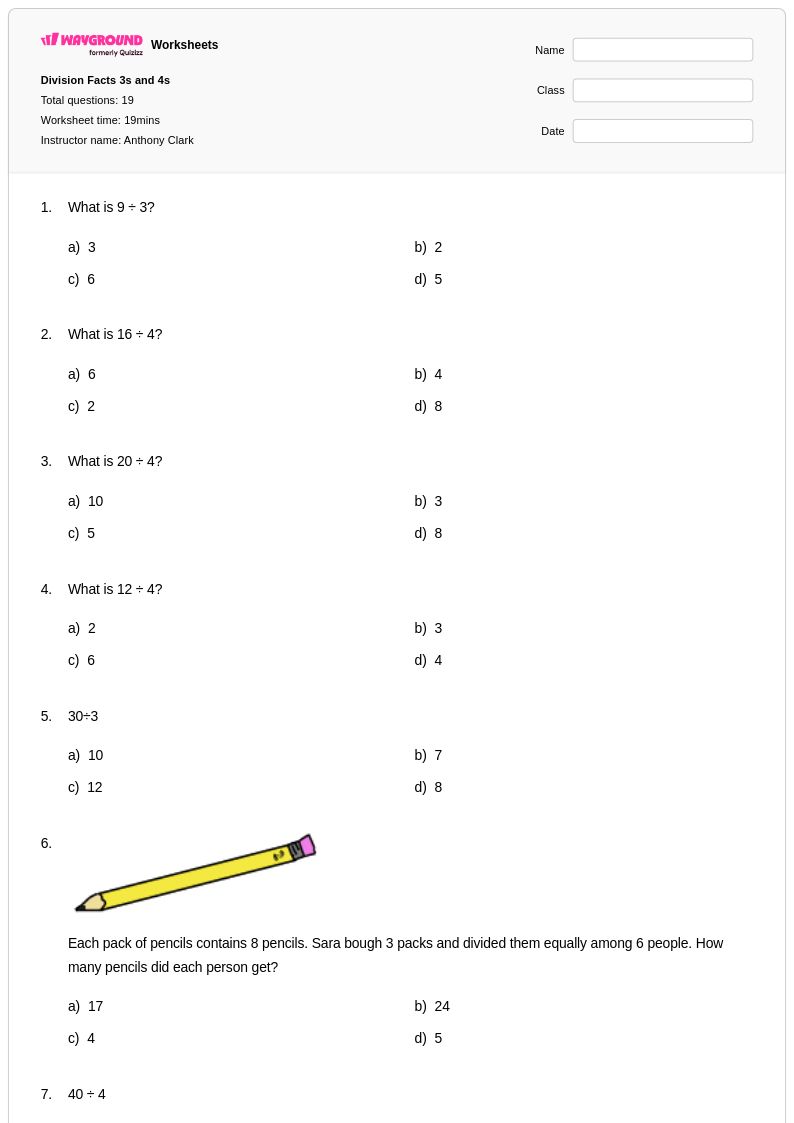
19 Q
3rd - Uni
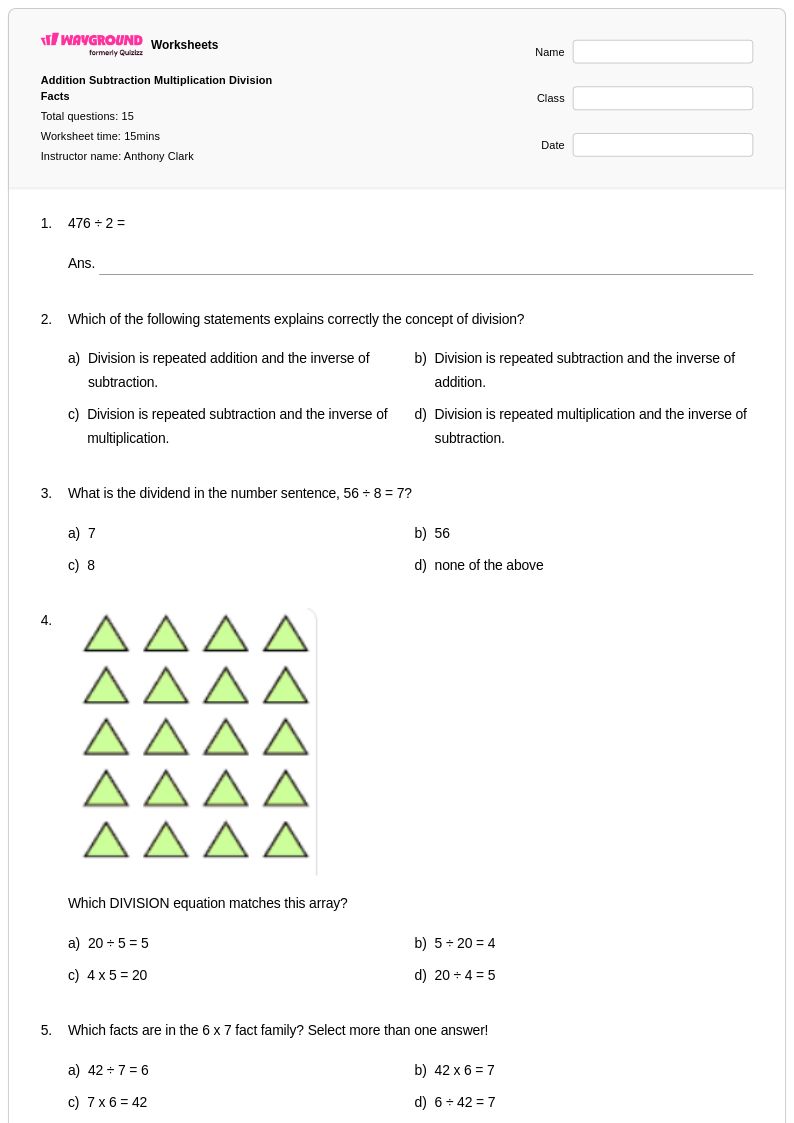
15 Q
3rd - Uni
8 Q
3rd - 4th
25 Q
1st - 5th
10 Q
2nd - 3rd
20 Q
3rd - Uni
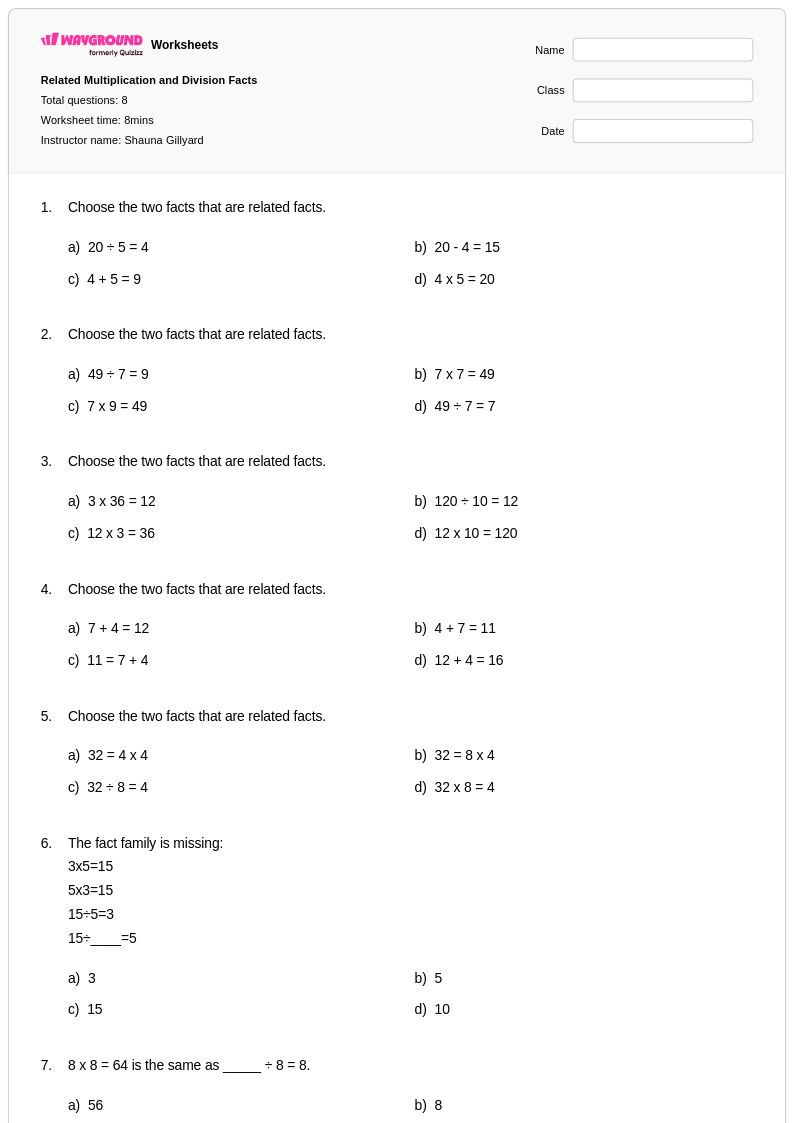
8 Q
3rd - 4th
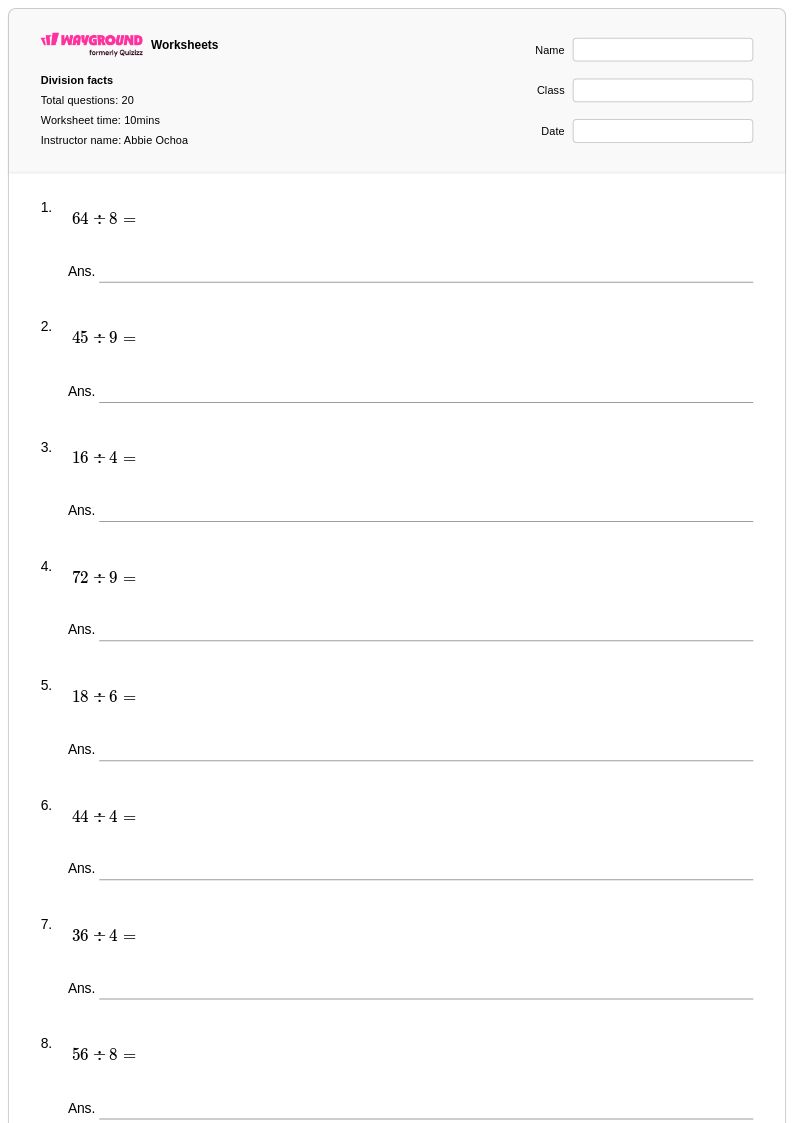
20 Q
2nd - 4th
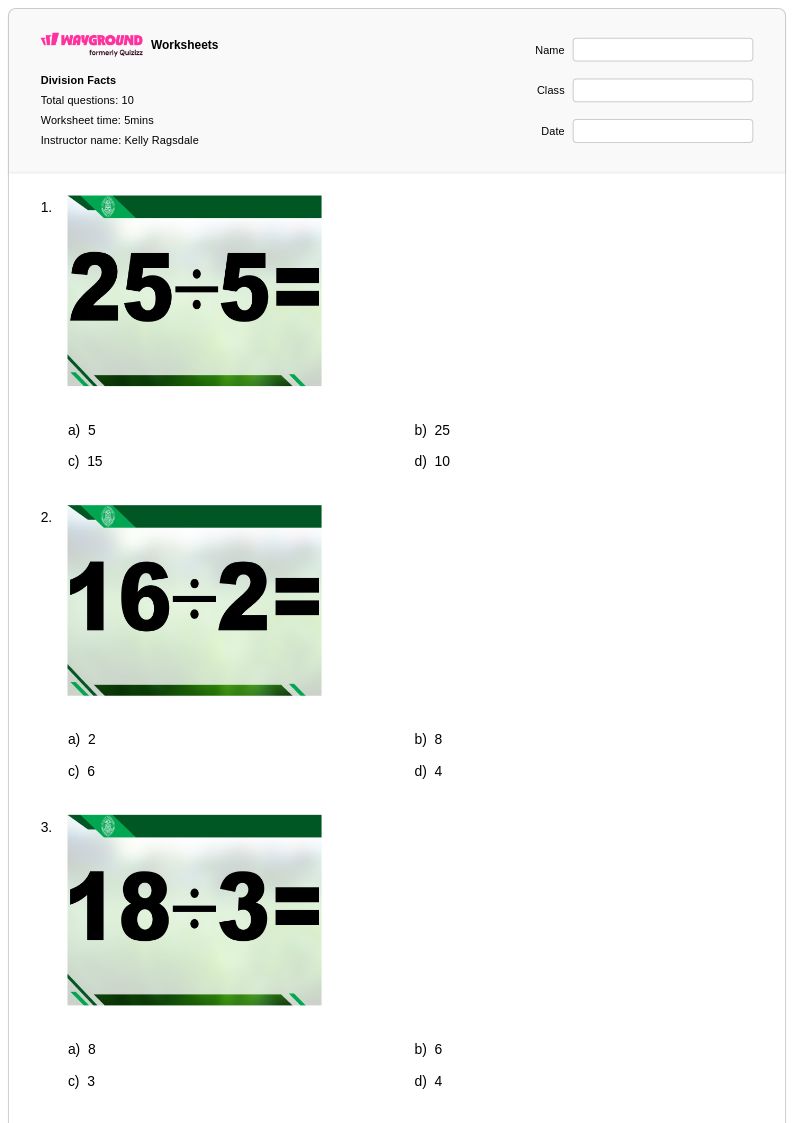
10 Q
3rd - 4th
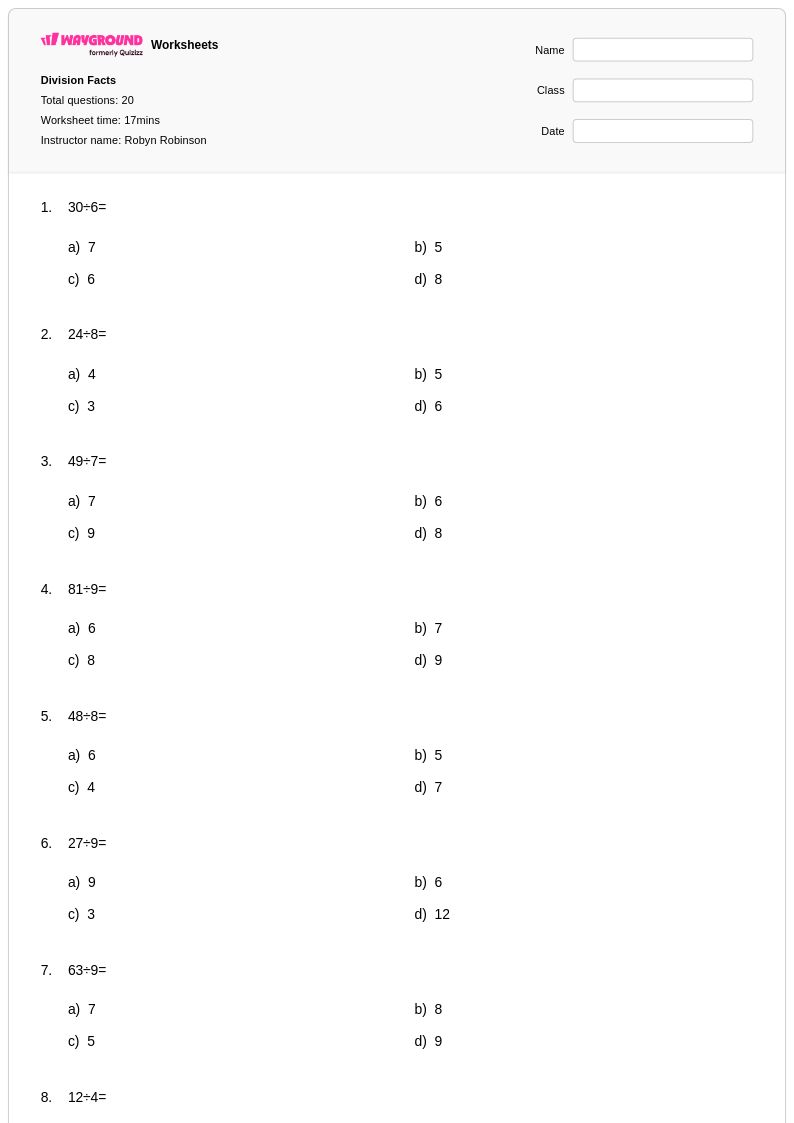
20 Q
3rd - 5th
18 Q
3rd - 4th
20 Q
3rd - 4th
25 Q
3rd
11 Q
3rd - Uni
Explore Other Subject Worksheets for class 3
Explore printable Division Facts worksheets for Class 3
Division facts worksheets for Class 3 students available through Wayground (formerly Quizizz) provide targeted practice for mastering essential multiplication and division relationships that form the foundation of mathematical fluency. These comprehensive printables focus on helping third-grade students develop automatic recall of basic division facts within 100, particularly emphasizing fact families and the inverse relationship between multiplication and division. Each worksheet collection includes carefully structured practice problems that progress from simple single-digit division facts to more complex combinations, complete with answer keys to support independent learning and self-assessment. The free pdf resources strengthen students' computational thinking, number sense, and mental math strategies while building the confidence needed for more advanced mathematical concepts.
Wayground (formerly Quizizz) empowers teachers with an extensive library of millions of educator-created division facts resources specifically designed to meet Class 3 learning objectives and standards alignment requirements. The platform's advanced search and filtering capabilities allow teachers to quickly locate worksheets that match their students' specific skill levels and learning needs, while differentiation tools enable customization for remediation, enrichment, and varied ability groups within the classroom. These versatile materials are available in both printable and digital formats, including downloadable pdfs, giving educators the flexibility to implement division facts practice across different learning environments and teaching contexts. Teachers can efficiently plan targeted skill practice sessions, assess student progress, and provide immediate feedback using these professionally curated resources that support systematic mastery of fundamental division concepts.
FAQs
How do I teach division facts to 3rd graders?
What exercises help 3rd graders practice division facts?
What division fact mistakes are most common in Grade 3?
How do I use these Grade 3 division facts worksheets?
Are division facts worksheets aligned to Common Core for Grade 3?
What grade do students learn division facts?