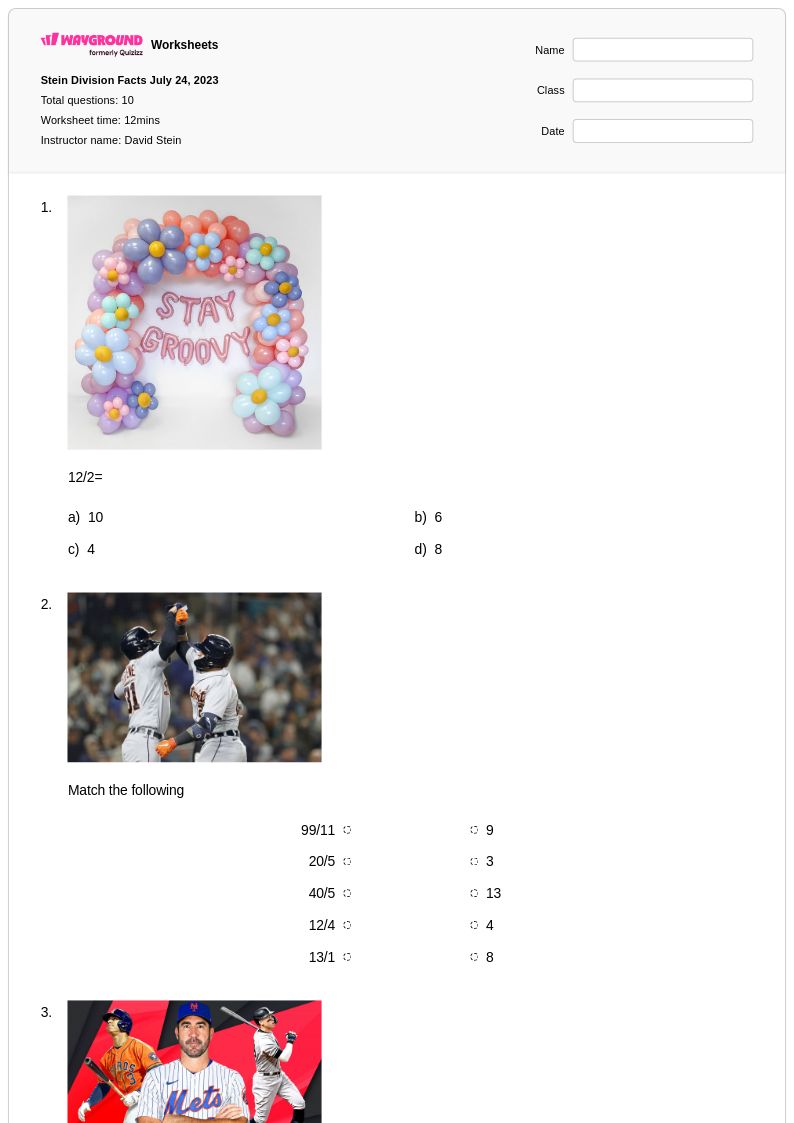
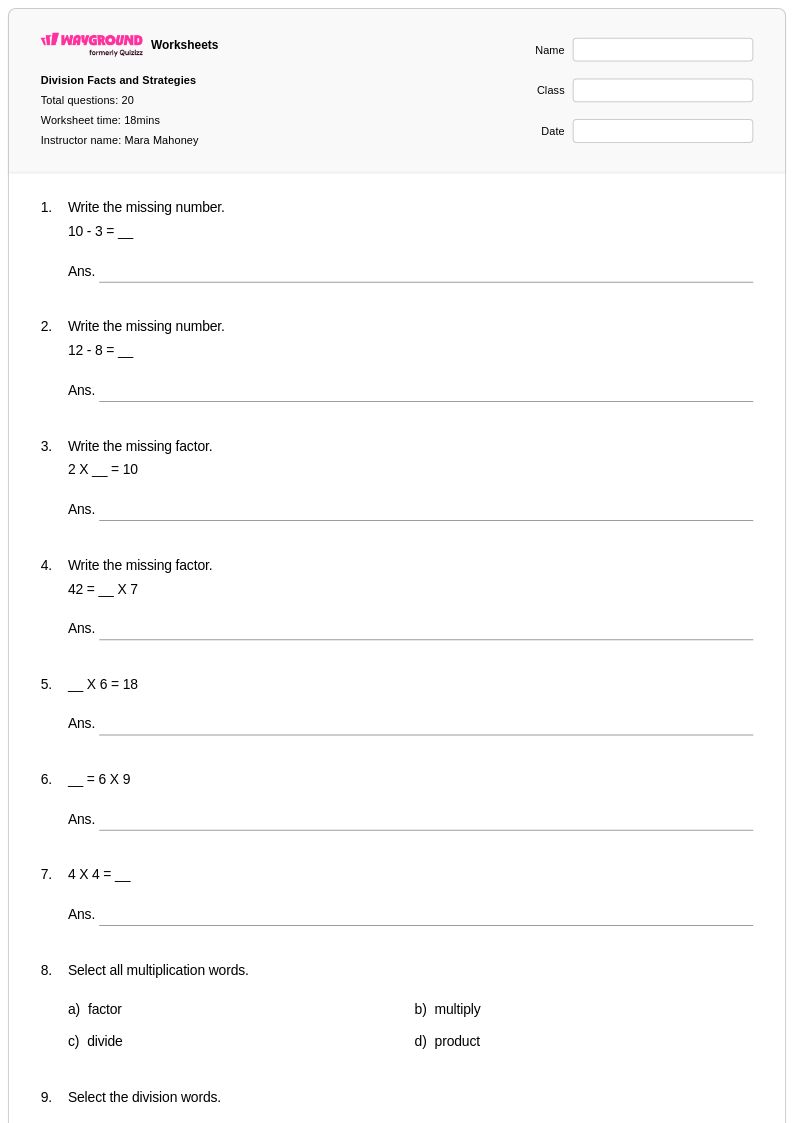
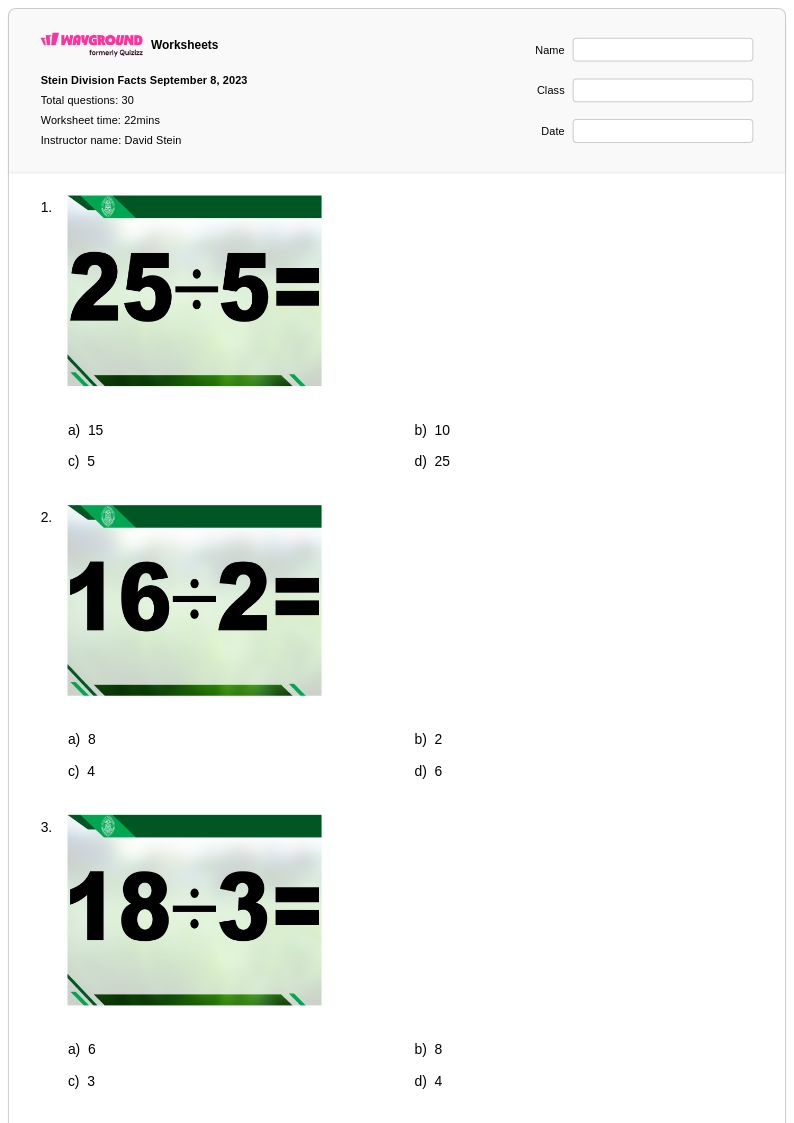
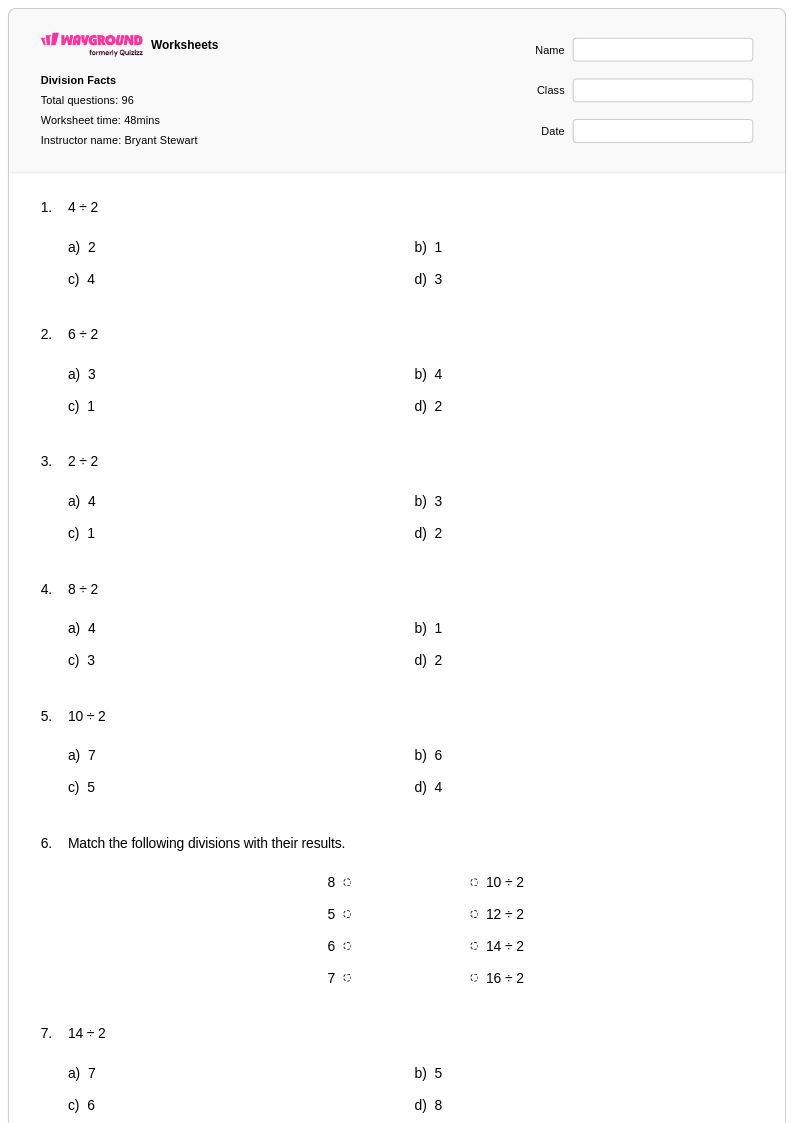
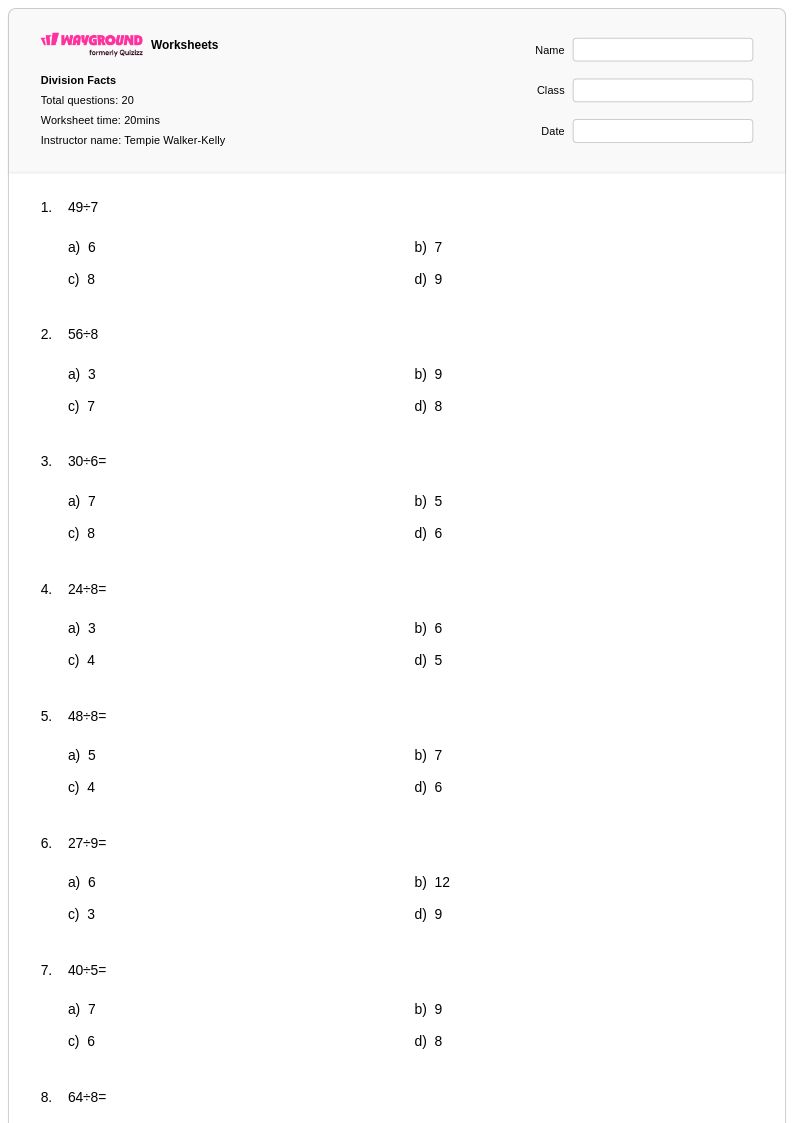
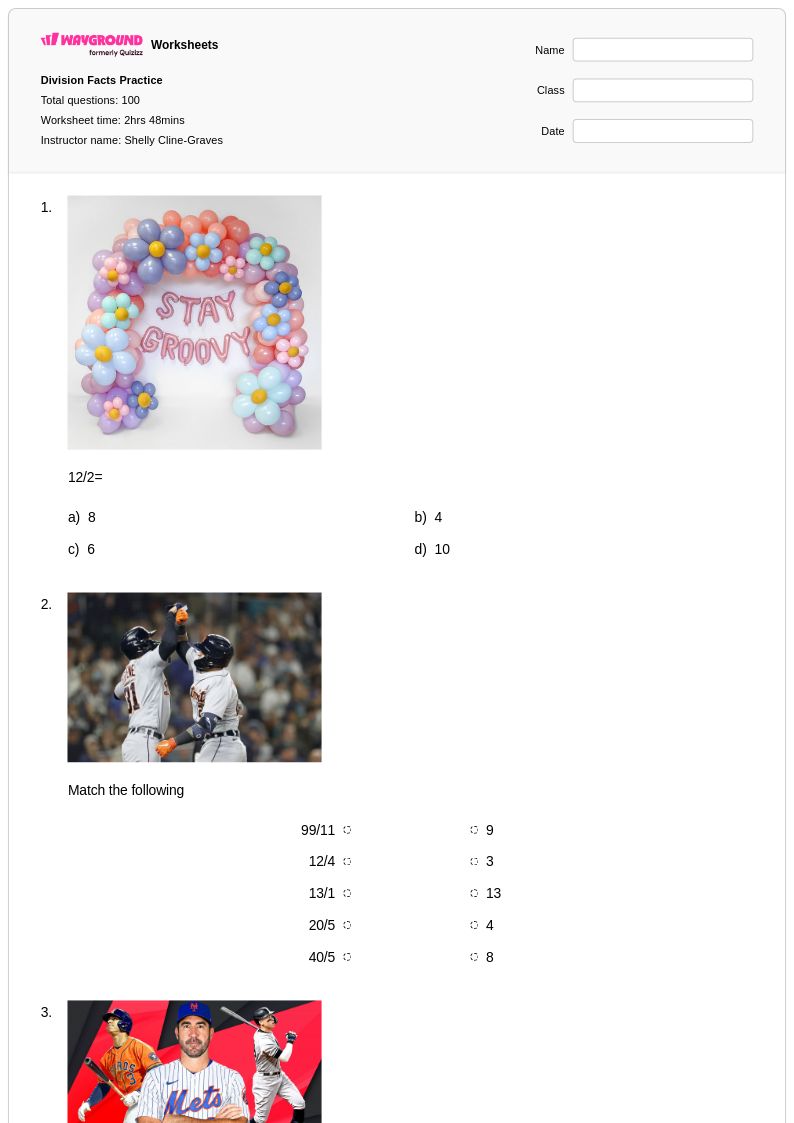
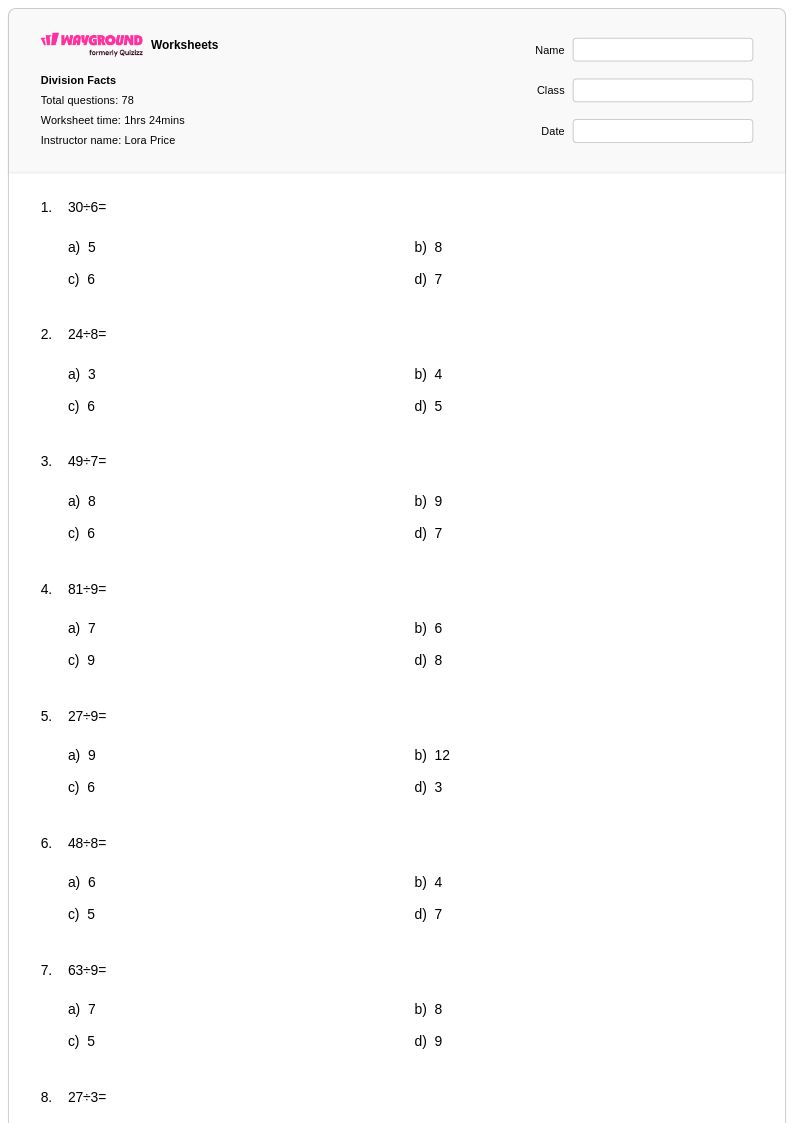
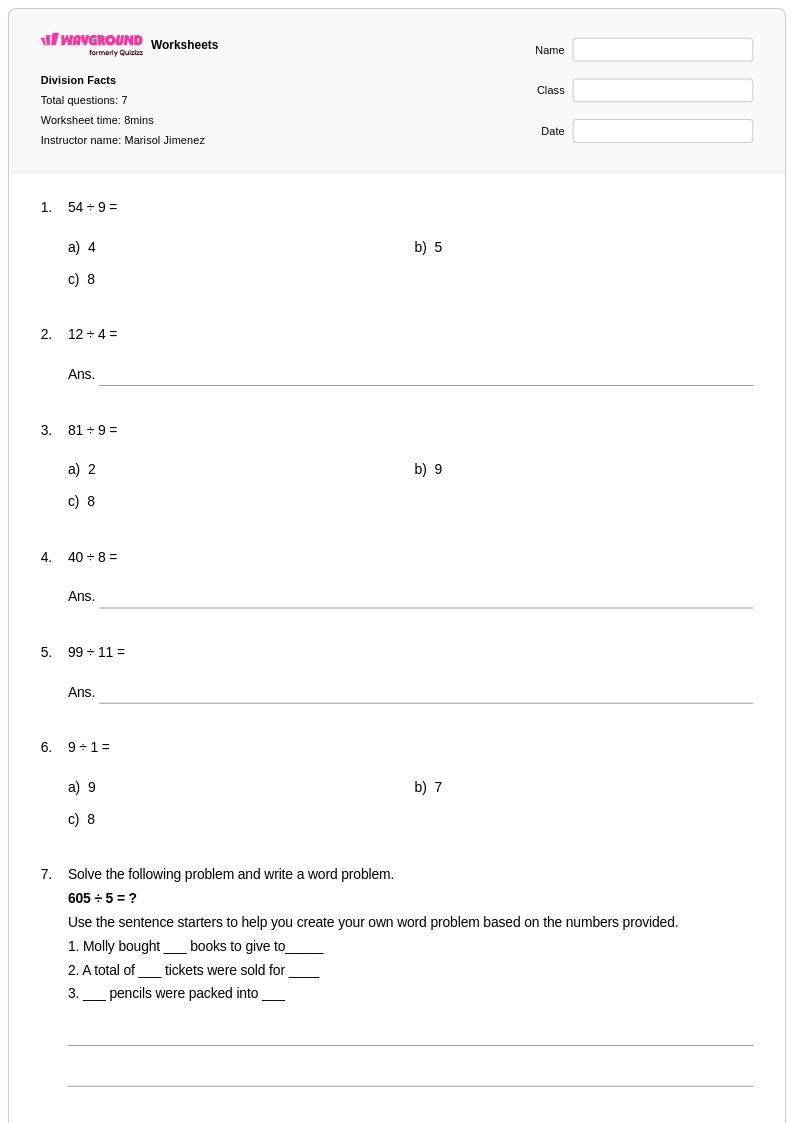
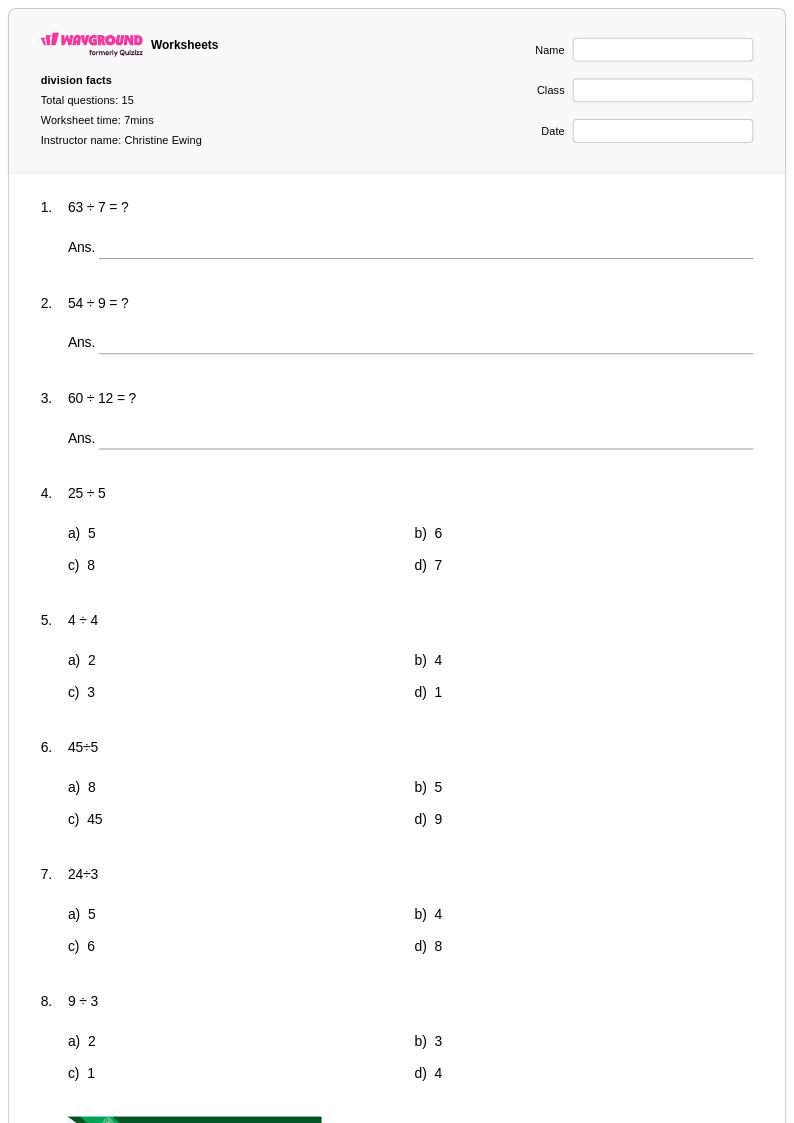
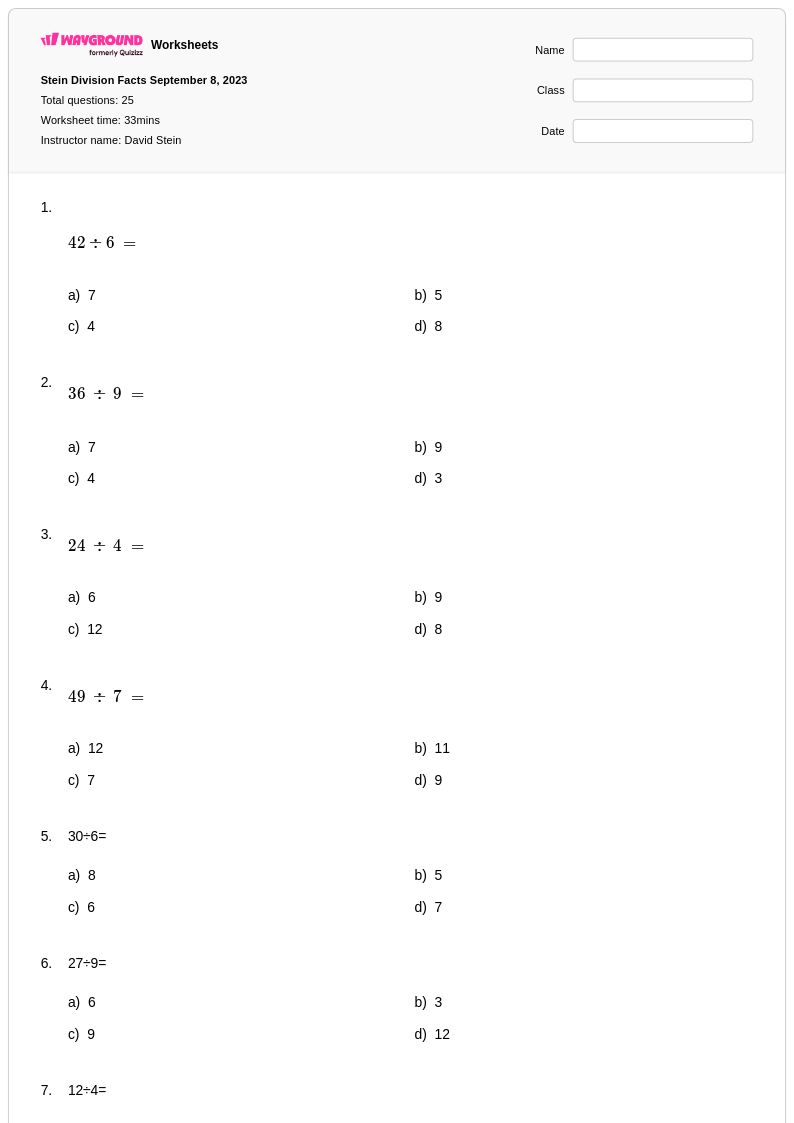
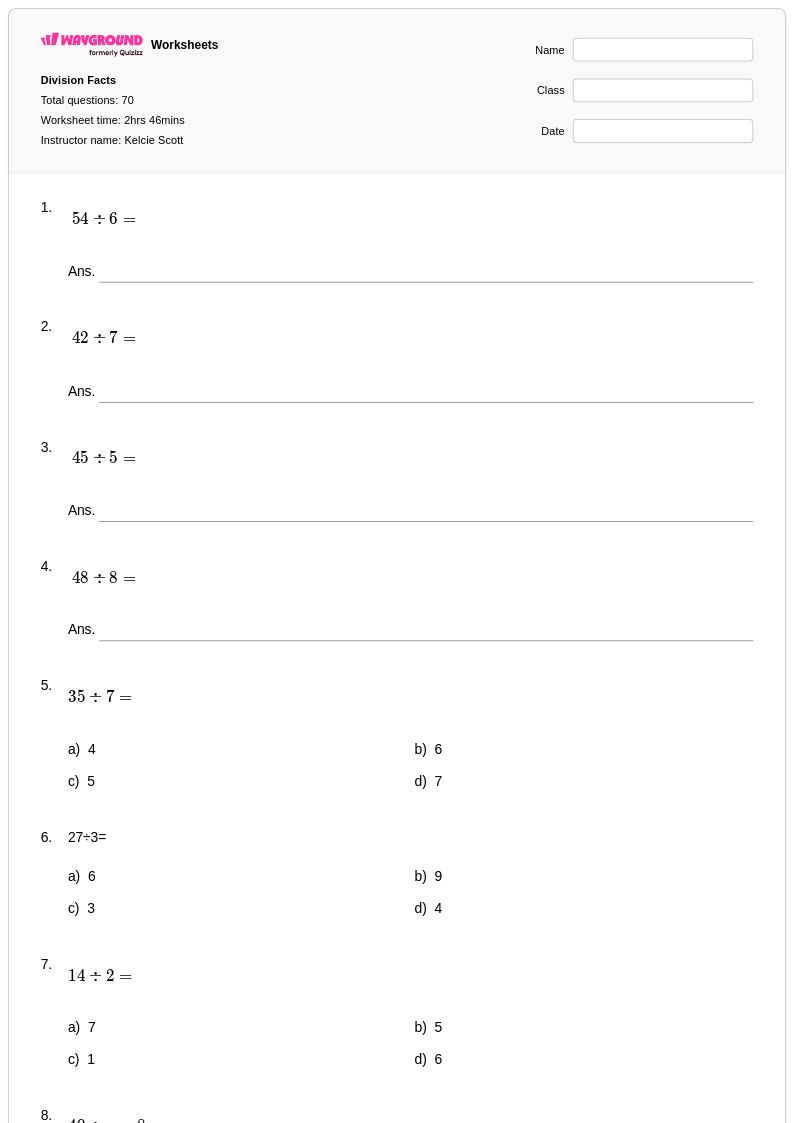
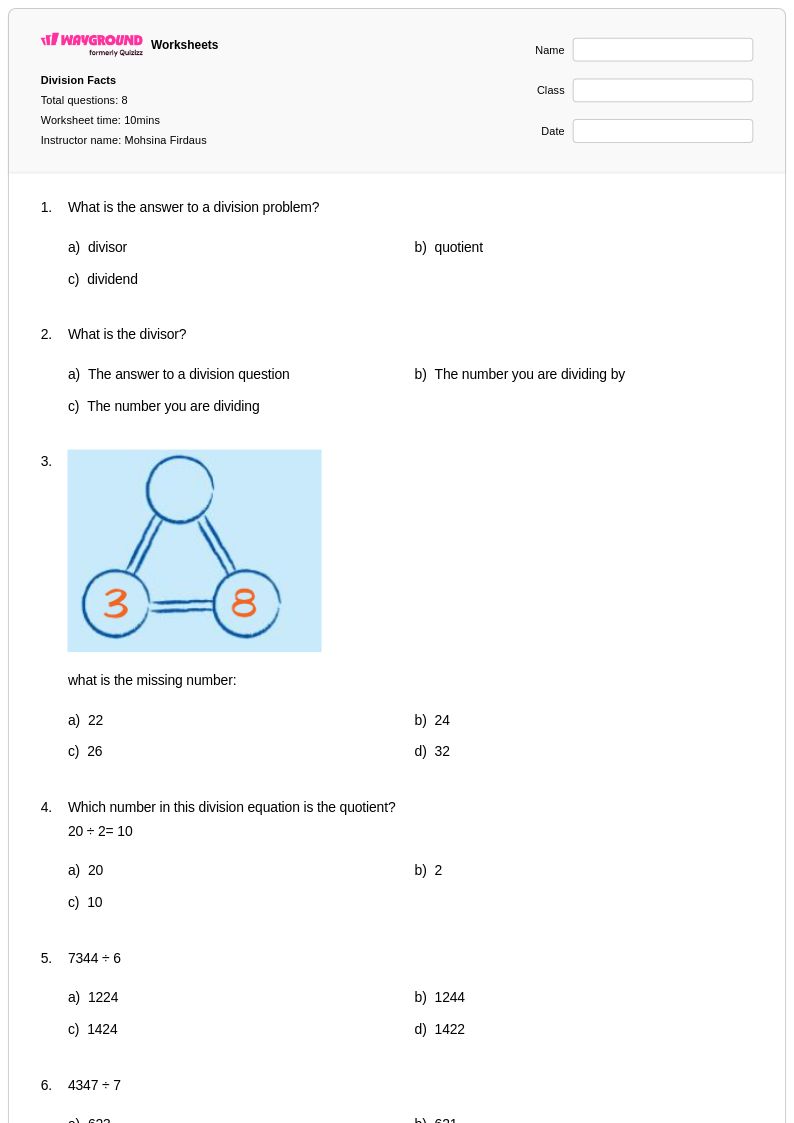
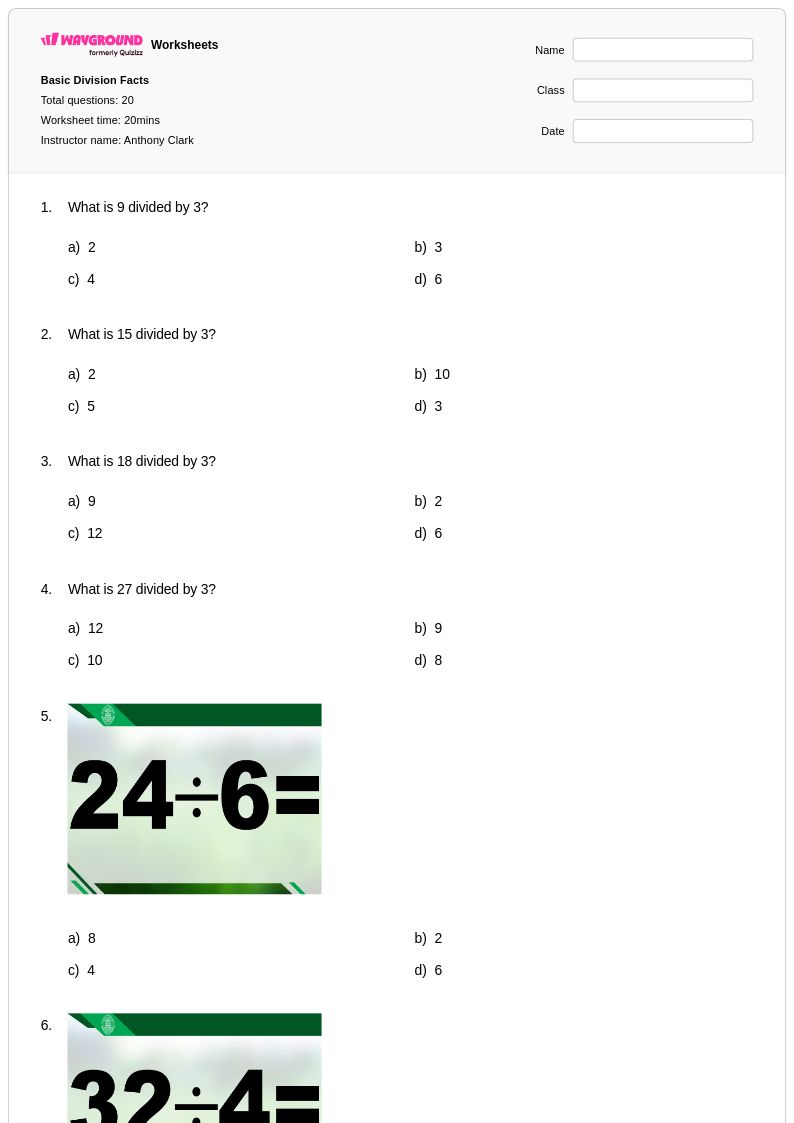
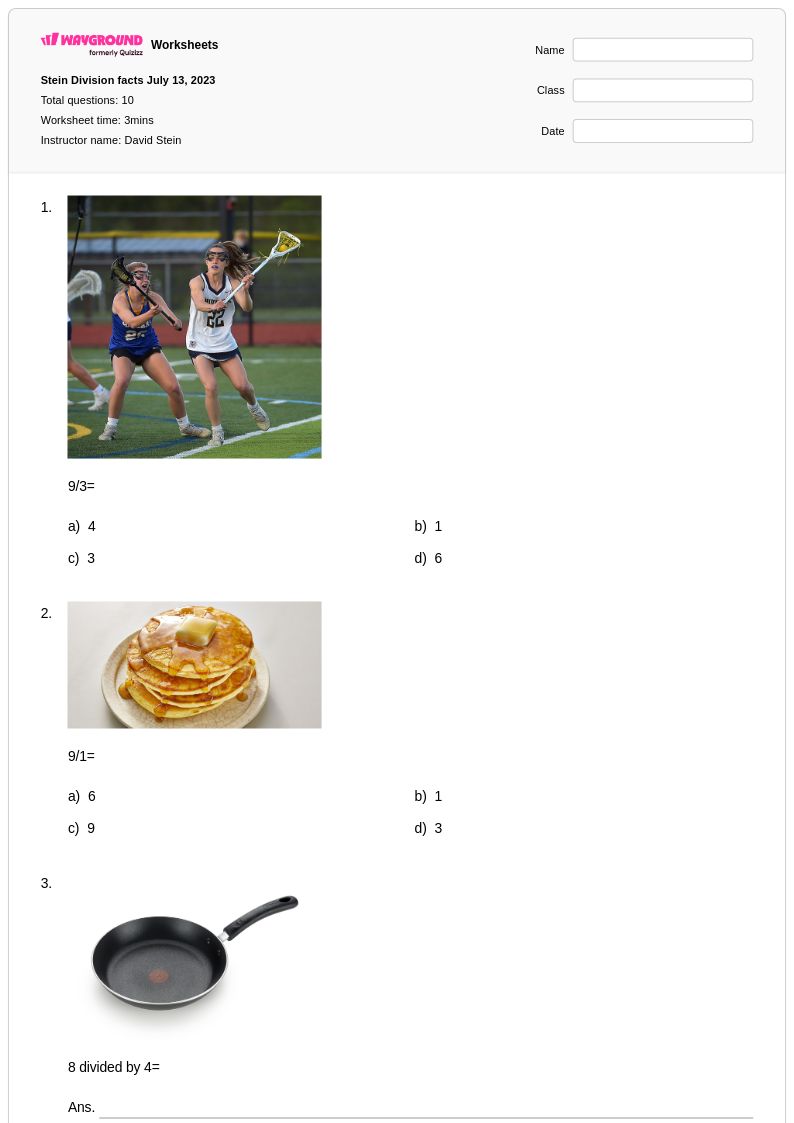
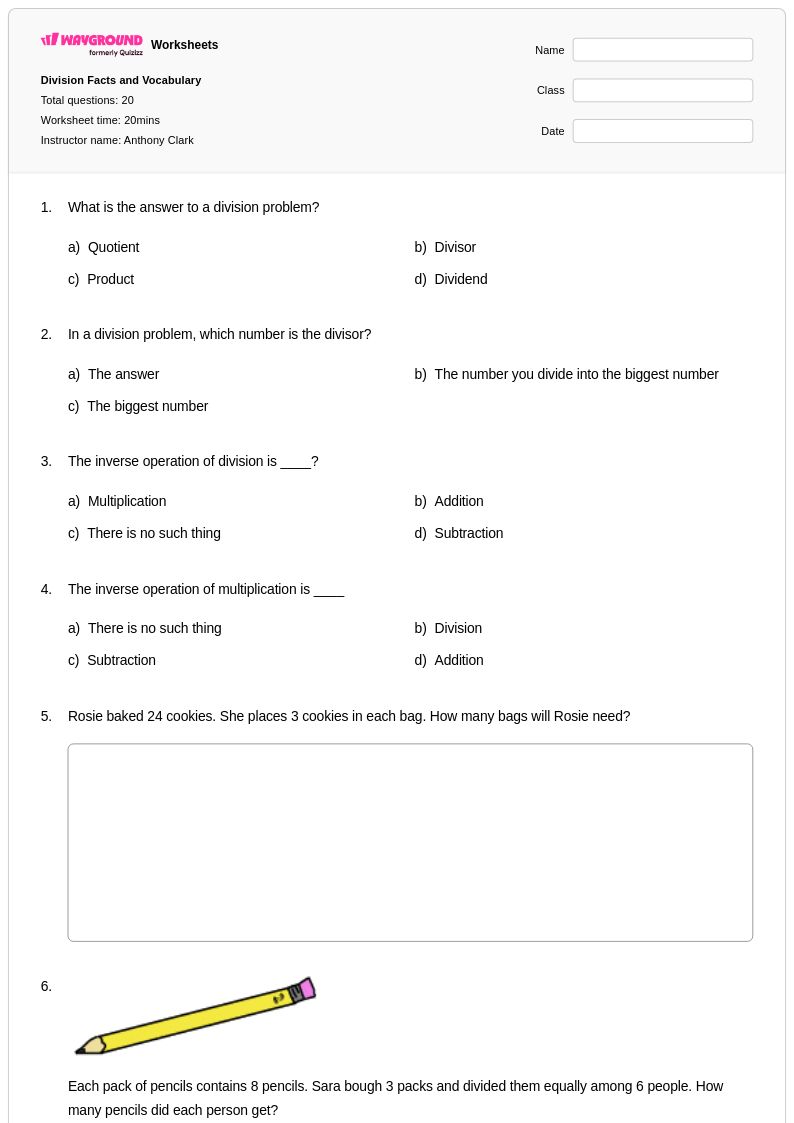
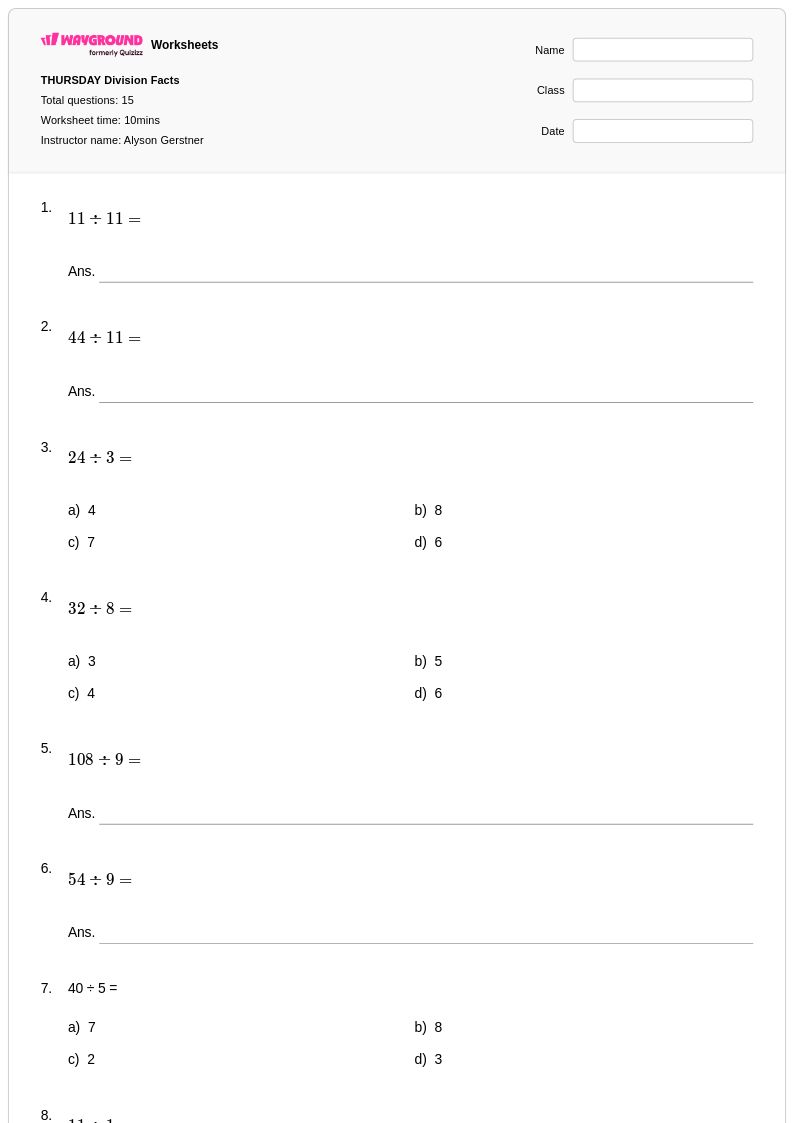
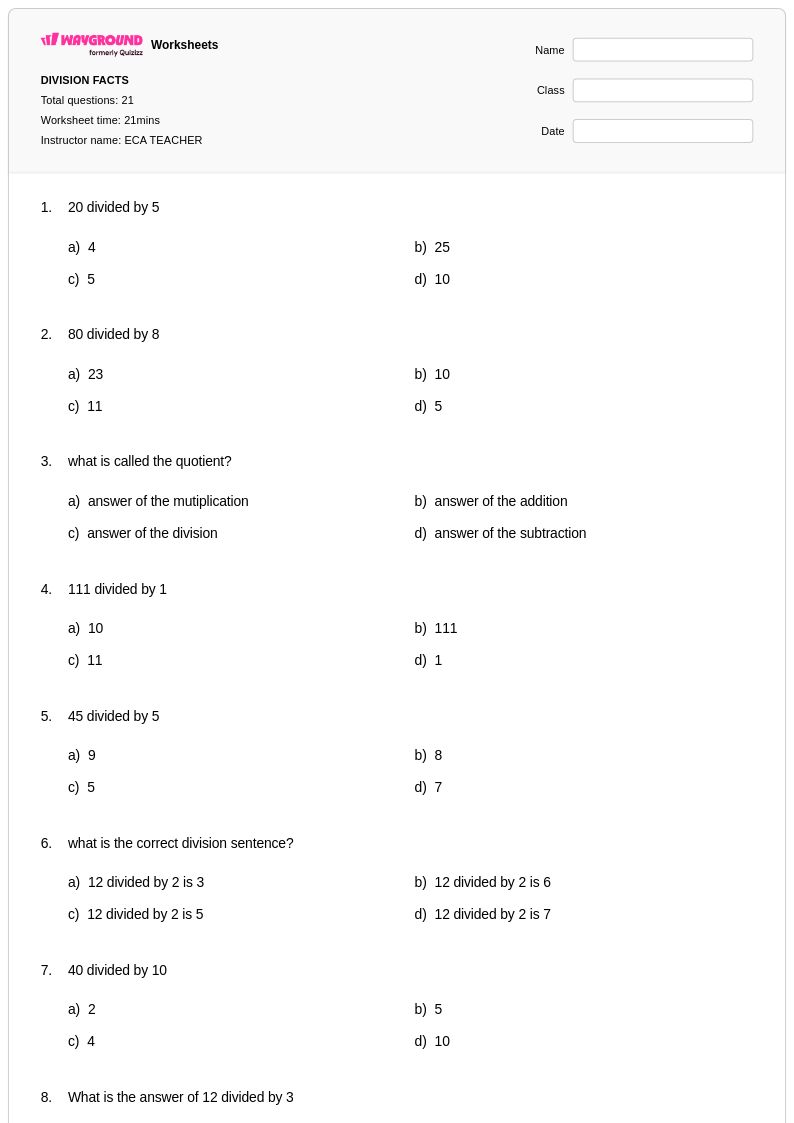
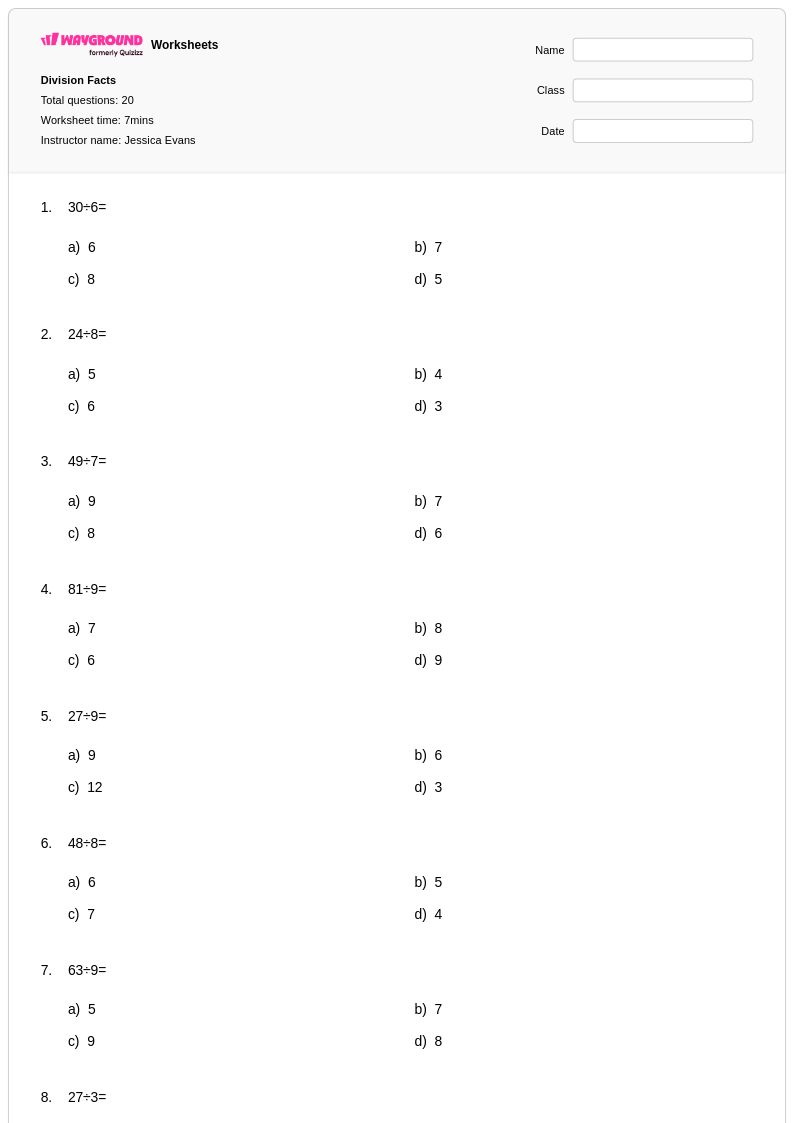
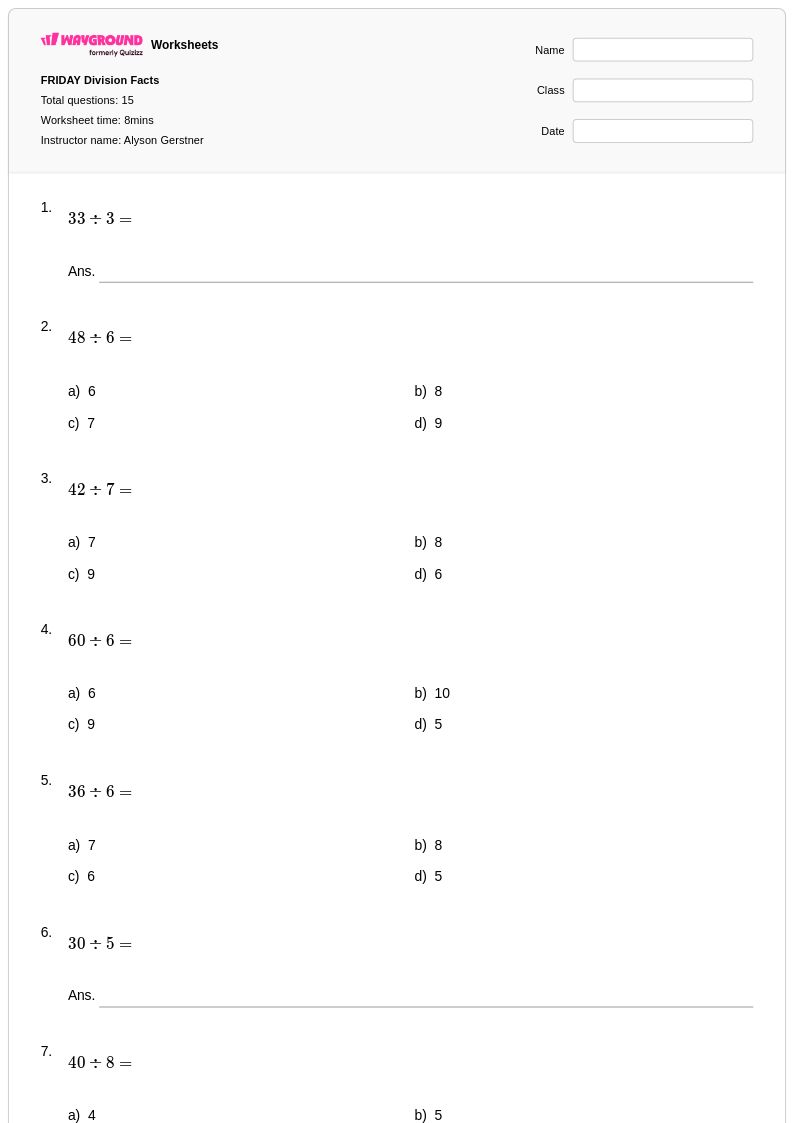
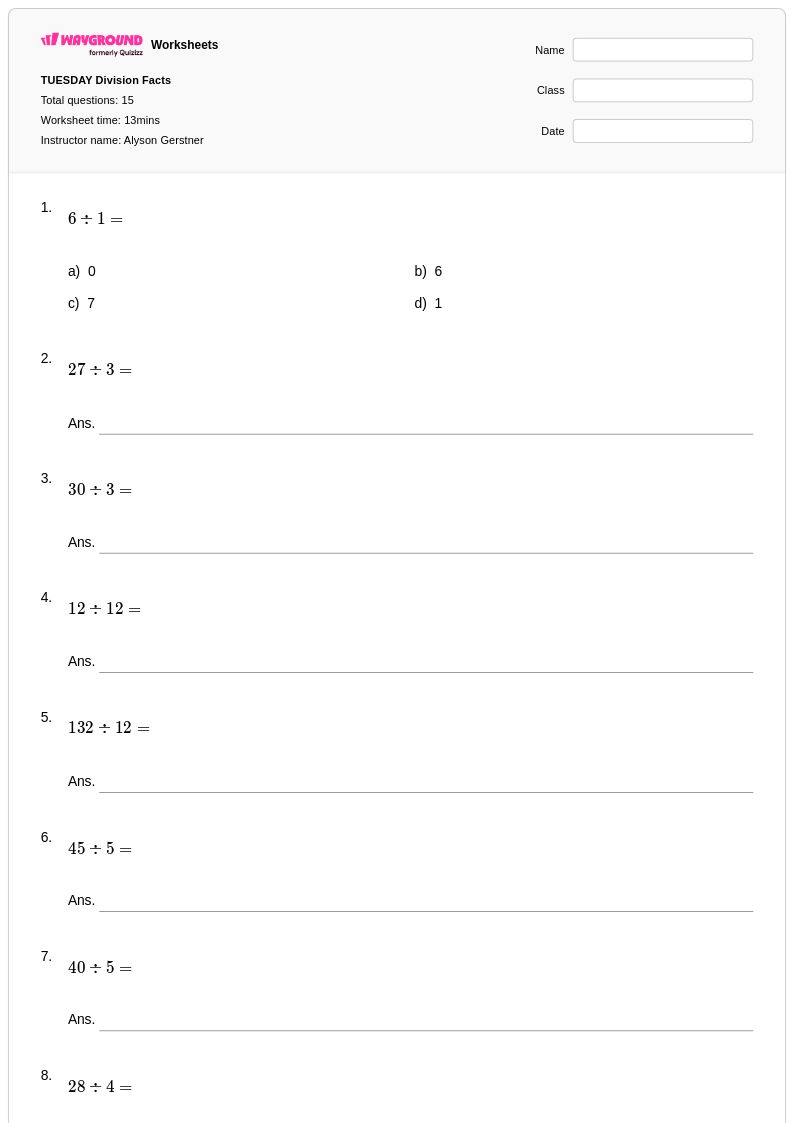
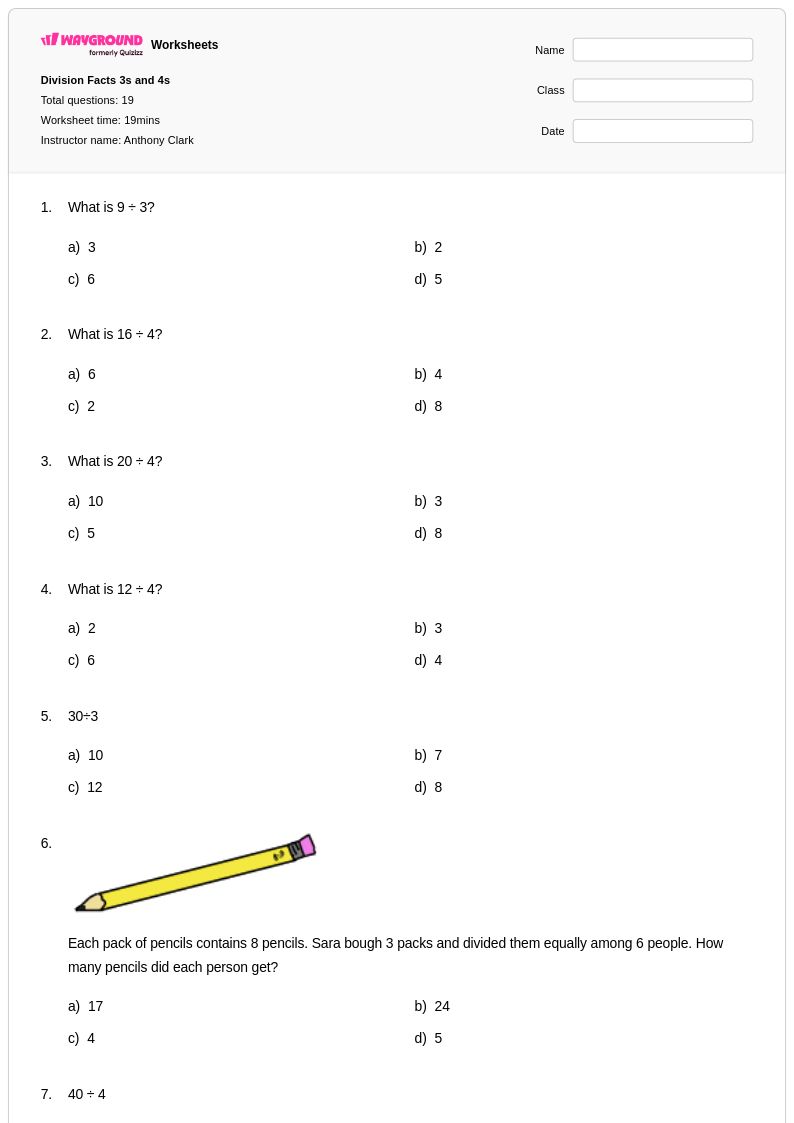
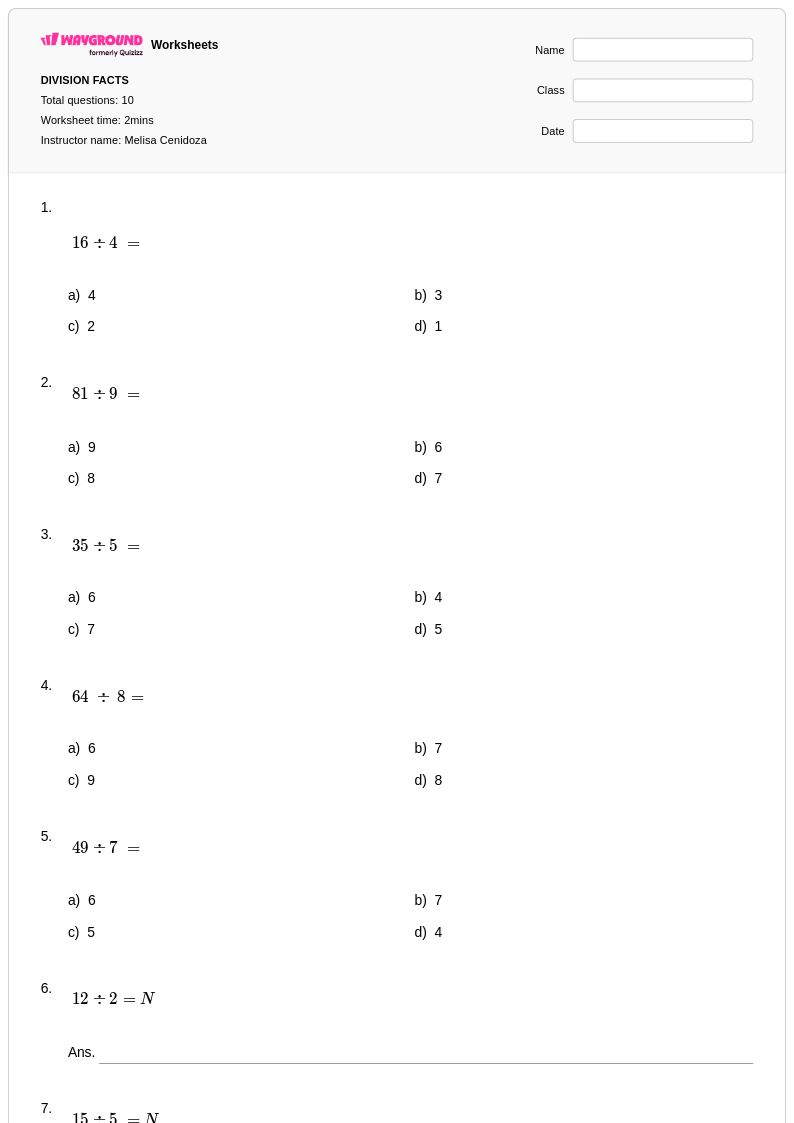
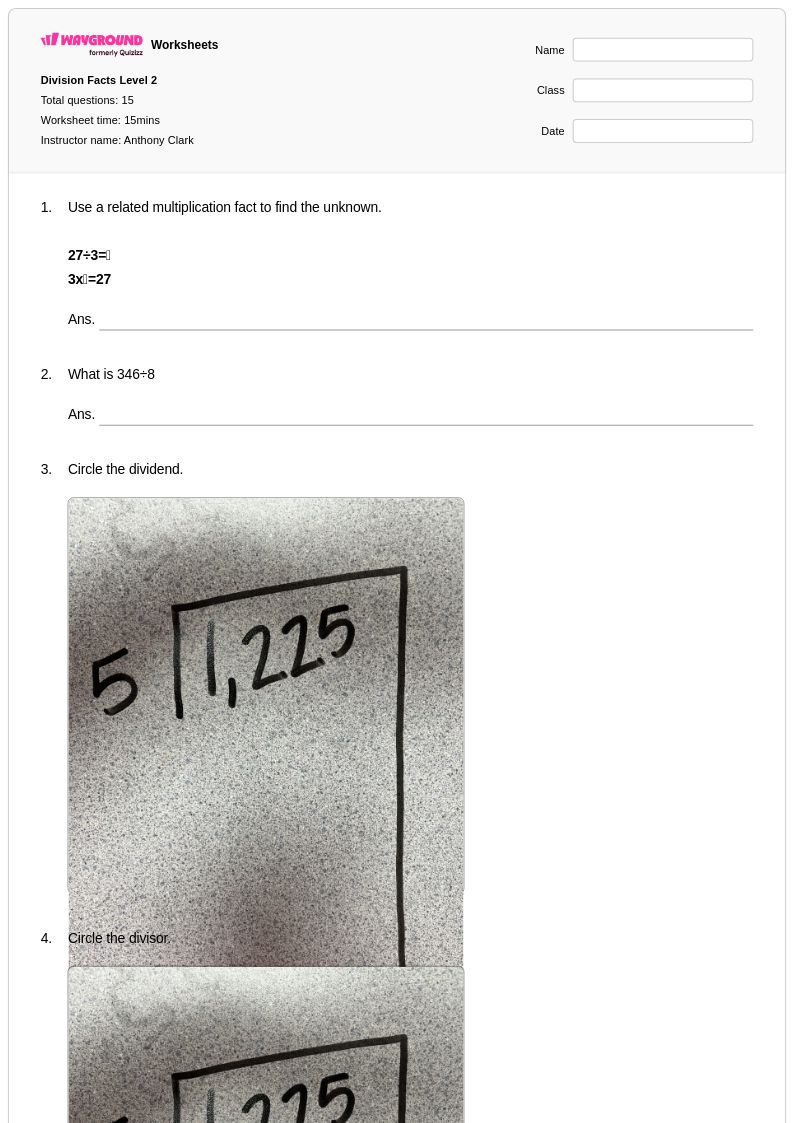
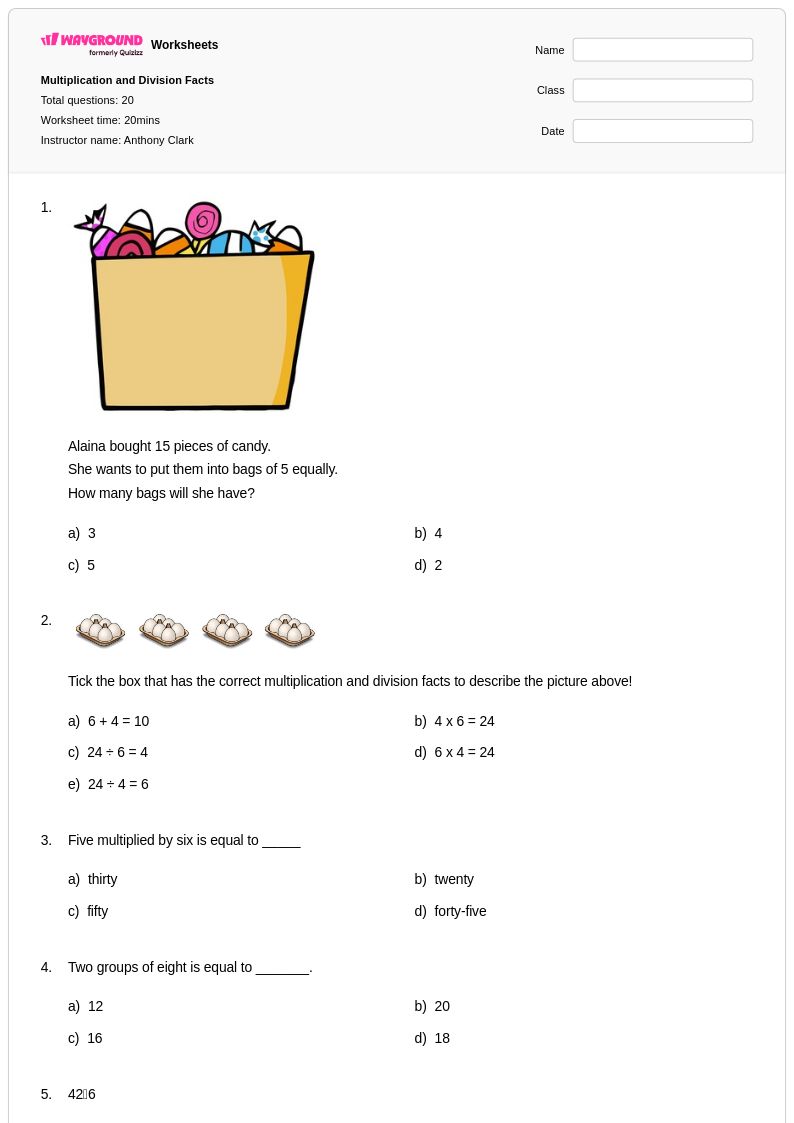
Wayground's free division facts worksheets provide students with essential practice problems and printable PDFs to master basic division skills through engaging exercises with complete answer keys.
Division facts worksheets available through Wayground (formerly Quizizz) provide comprehensive practice opportunities for students to master fundamental division skills and achieve computational fluency. These carefully designed printables focus on helping students memorize essential division facts while building confidence with systematic practice problems that reinforce the relationship between multiplication and division. Each worksheet collection includes answer keys to support independent learning and self-assessment, while the pdf format ensures easy distribution and consistent formatting across different devices. The free resources emphasize rapid recall of division facts, which serves as the foundation for more complex mathematical concepts including long division, fraction operations, and algebraic thinking.
Wayground (formerly Quizizz) empowers teachers with millions of teacher-created division facts resources that streamline lesson planning and differentiate instruction to meet diverse student needs. The platform's robust search and filtering capabilities allow educators to quickly locate worksheets aligned with specific standards and skill levels, while customization tools enable teachers to modify content for targeted remediation or enrichment activities. These comprehensive collections are available in both printable and digital formats, including downloadable pdfs that support flexible classroom implementation whether students are learning in-person or remotely. Teachers can efficiently track student progress and identify areas requiring additional practice, making these resources invaluable for building mathematical fluency through systematic skill development and strategic intervention.
FAQs
How do I teach division facts effectively?
Start by grounding division in multiplication — students who know 6 × 7 = 42 can derive 42 ÷ 6 without memorizing a separate fact. Fact families make this connection explicit. From there, use timed practice in short bursts (2–3 minutes) to build recall speed, and target the facts students miss most rather than drilling all of them equally. Automaticity with division facts frees up working memory for long division and fraction work later.
What exercises help students practice division facts?
Mixed-fact drills, fact-family triangles, and missing-dividend problems (__ ÷ 6 = 7) each target recall from a different angle. Rotating between formats keeps practice from going stale and surfaces gaps that straight quotient drills can miss.
What mistakes do students commonly make with division facts?
The most common errors cluster around a few specific facts — dividing by 7, 8, and 9 trip students up far more than dividing by 2 or 5. Students also confuse the dividend and divisor when a problem is written horizontally, and some apply multiplication logic incorrectly (e.g., thinking 48 ÷ 6 = 9 because 6 × 9 feels close). Targeted drills on the high-error facts, rather than cycling through all facts equally, closes these gaps faster.
How do I use Wayground's division facts worksheets in my classroom?
You can run the worksheet as a digital quiz on Wayground — students complete it on any device and results come back instantly. If you'd rather go paper, download the PDF, print it, and assign it as a timed drill or homework. Every worksheet includes a complete answer key, so students can self-check or you can grade quickly. For paper submissions, the Wayground for Teachers app lets you scan or capture student work to grade it without re-entering anything by hand.
How do division facts fit into the Common Core math progression?
Common Core introduces division in Grade 3 as the inverse of multiplication, with students expected to know all products and quotients within 100 by the end of that year. Grade 4 extends this to multi-digit division using the standard algorithm, and Grade 5 applies fact fluency to fraction and decimal operations. A student who hasn't secured basic division facts by the end of Grade 3 will carry that gap into every subsequent operation — which is why fluency practice at this stage matters so much.
How can I differentiate division facts practice for mixed-ability classes?
For students still building confidence, Wayground's reduced answer choices accommodation lowers the cognitive load on each question, and the Read Aloud feature supports students who struggle to process written problems independently. For the worksheet itself, you can apply a dyslexia-friendly font or adjust font size to make the layout more accessible — without creating a separate assignment for those students.