Free equal sharing worksheets and printables help students master division concepts through hands-on practice problems, complete with answer keys for effective learning and assessment.
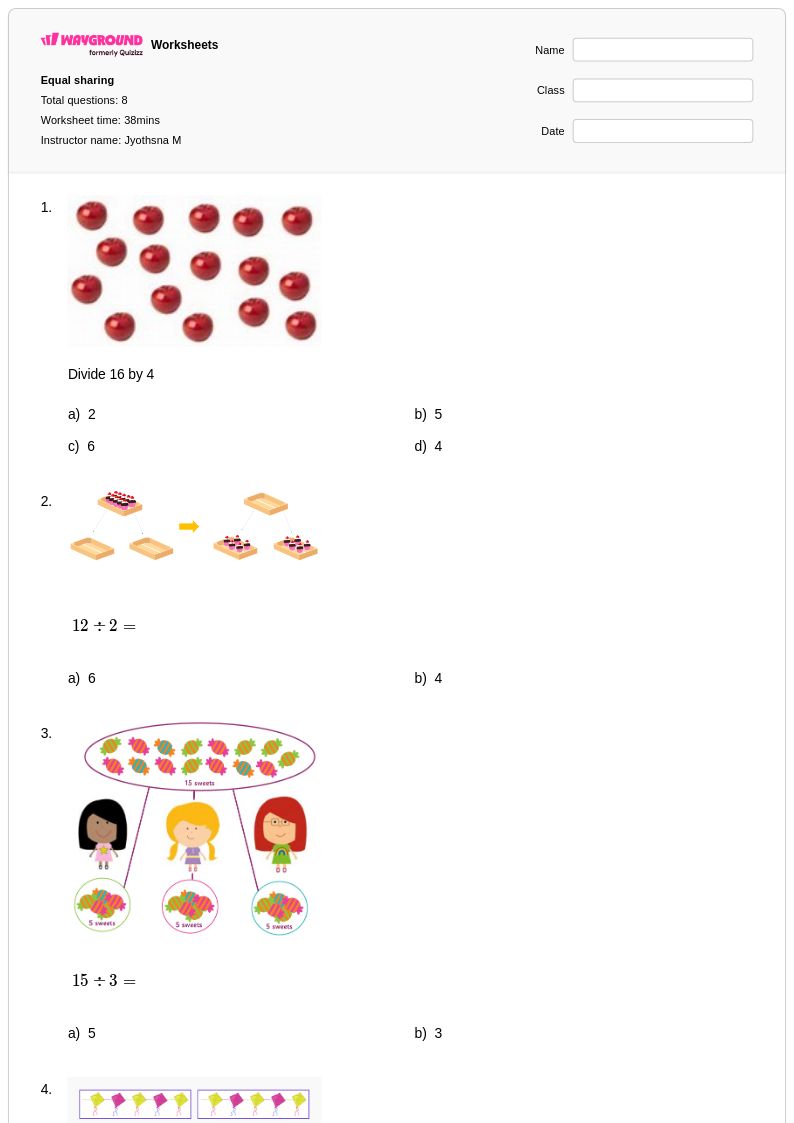
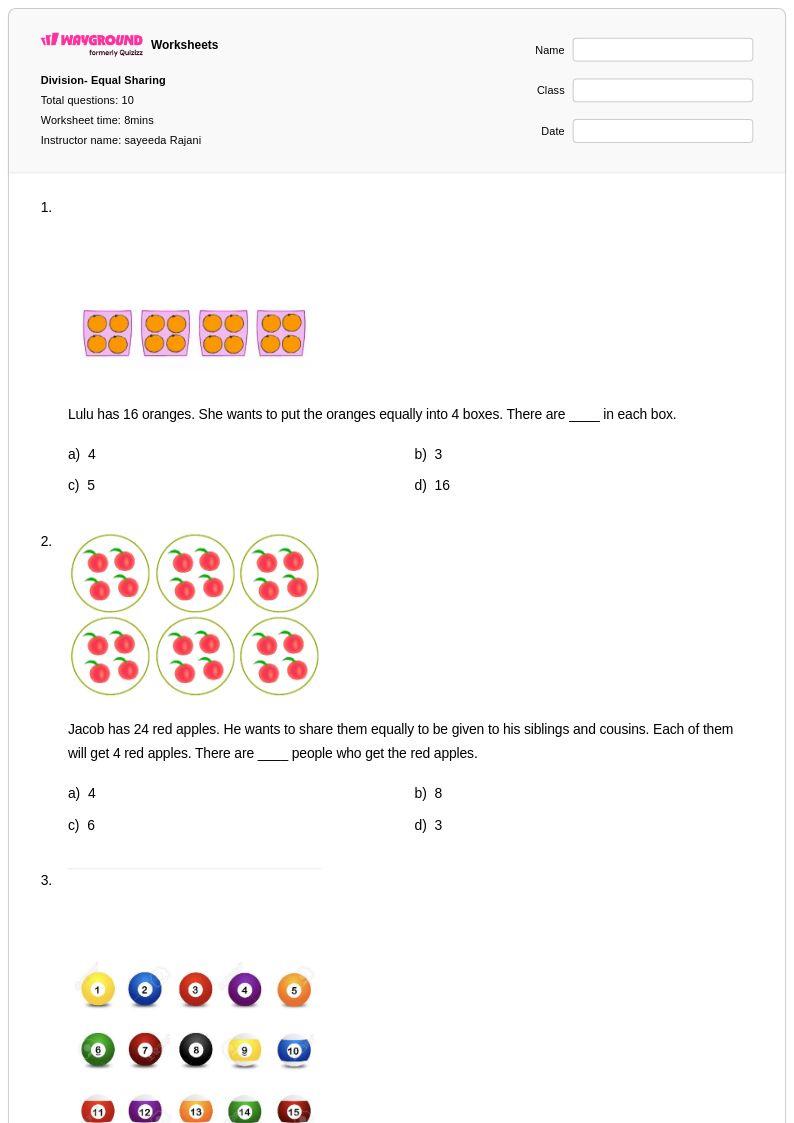
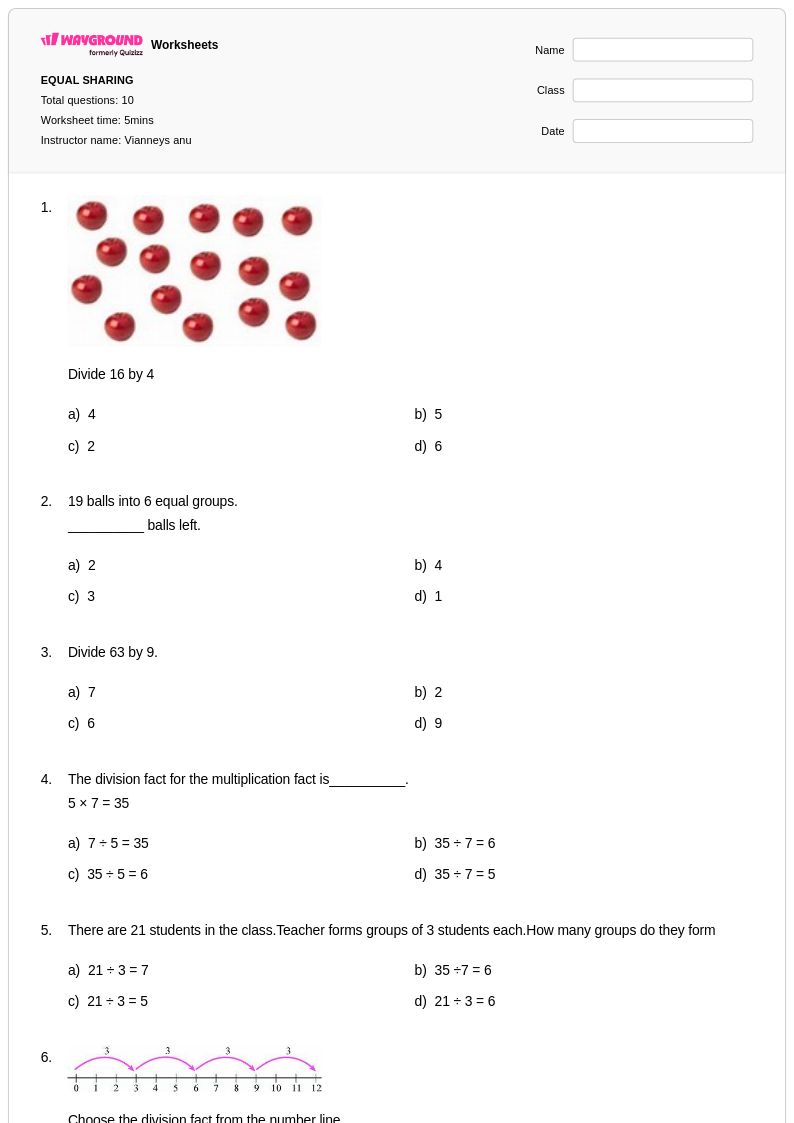
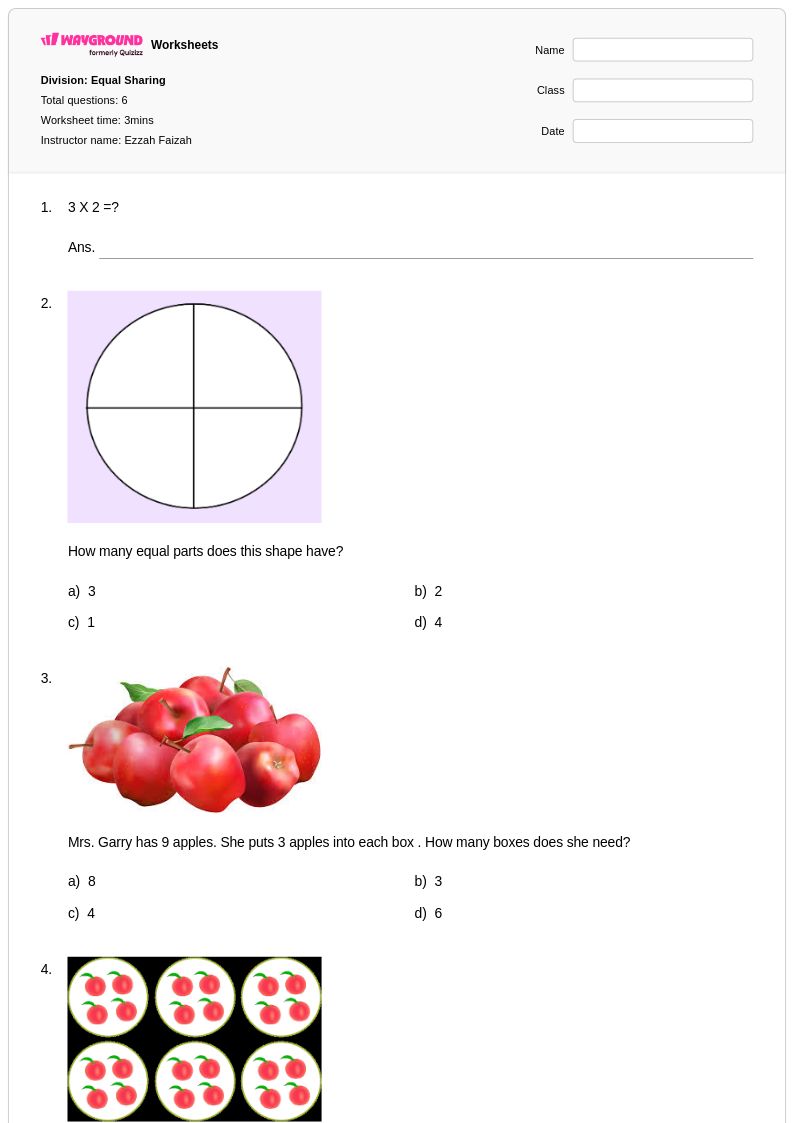
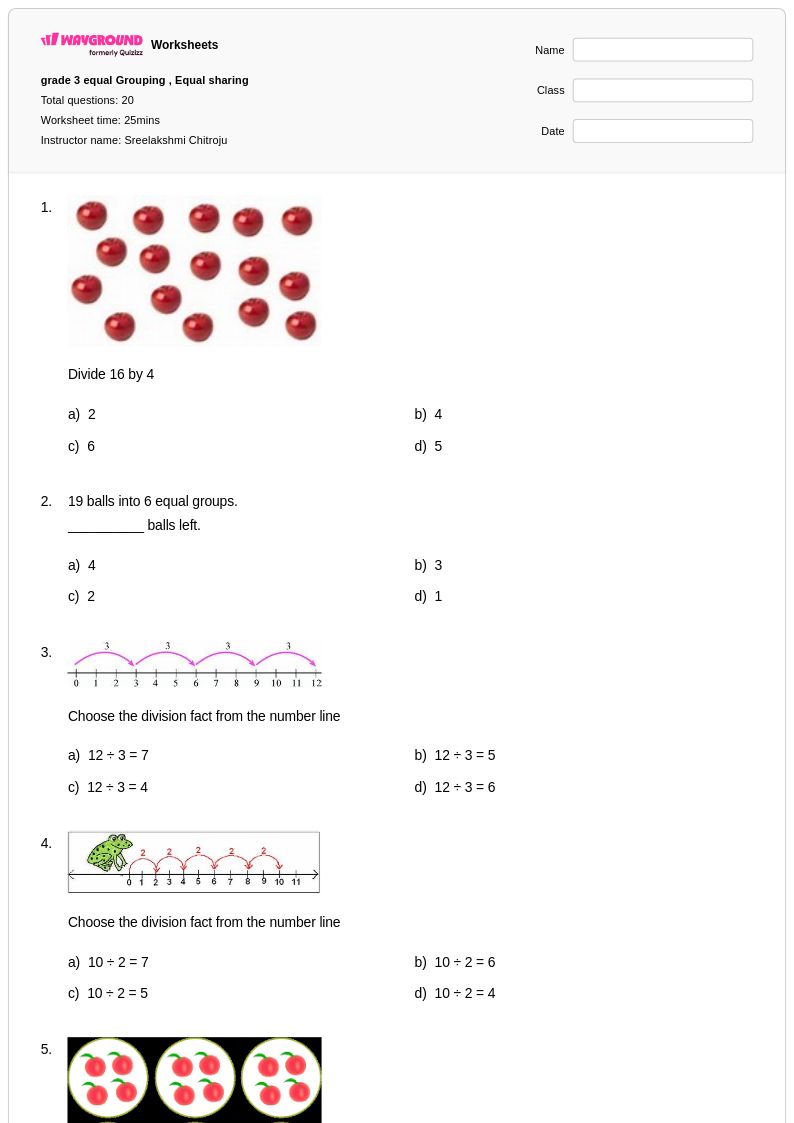
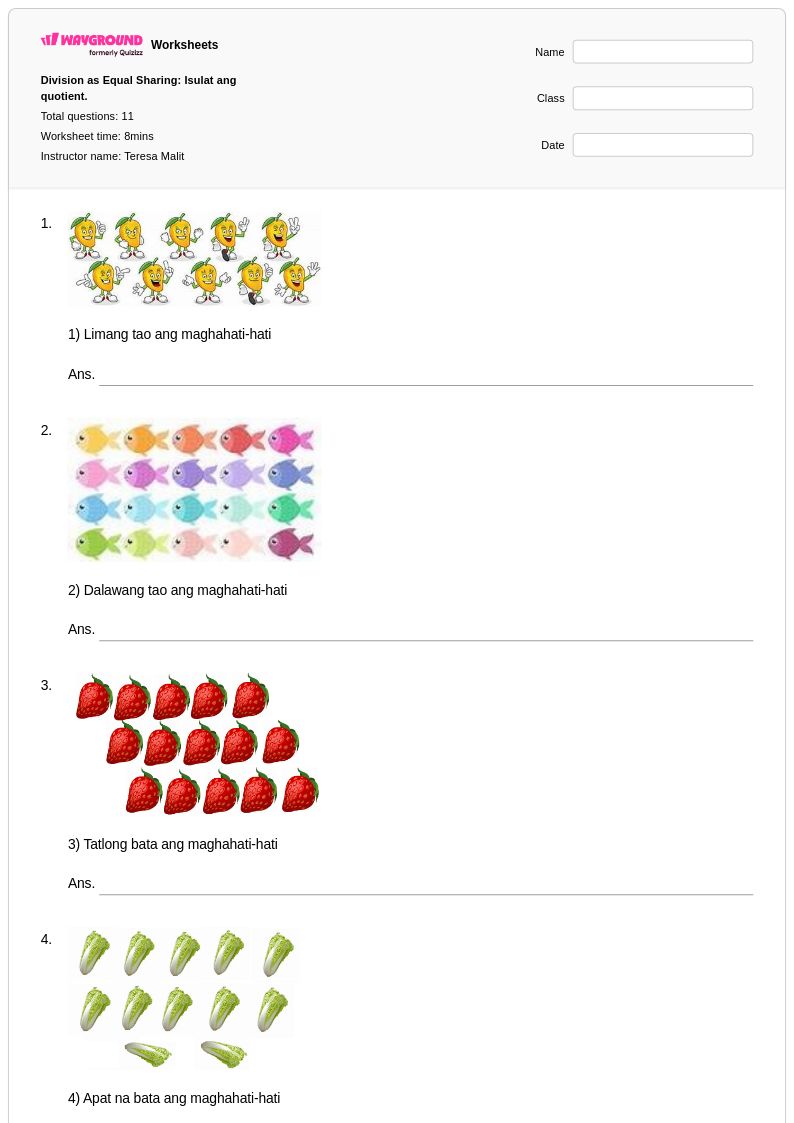
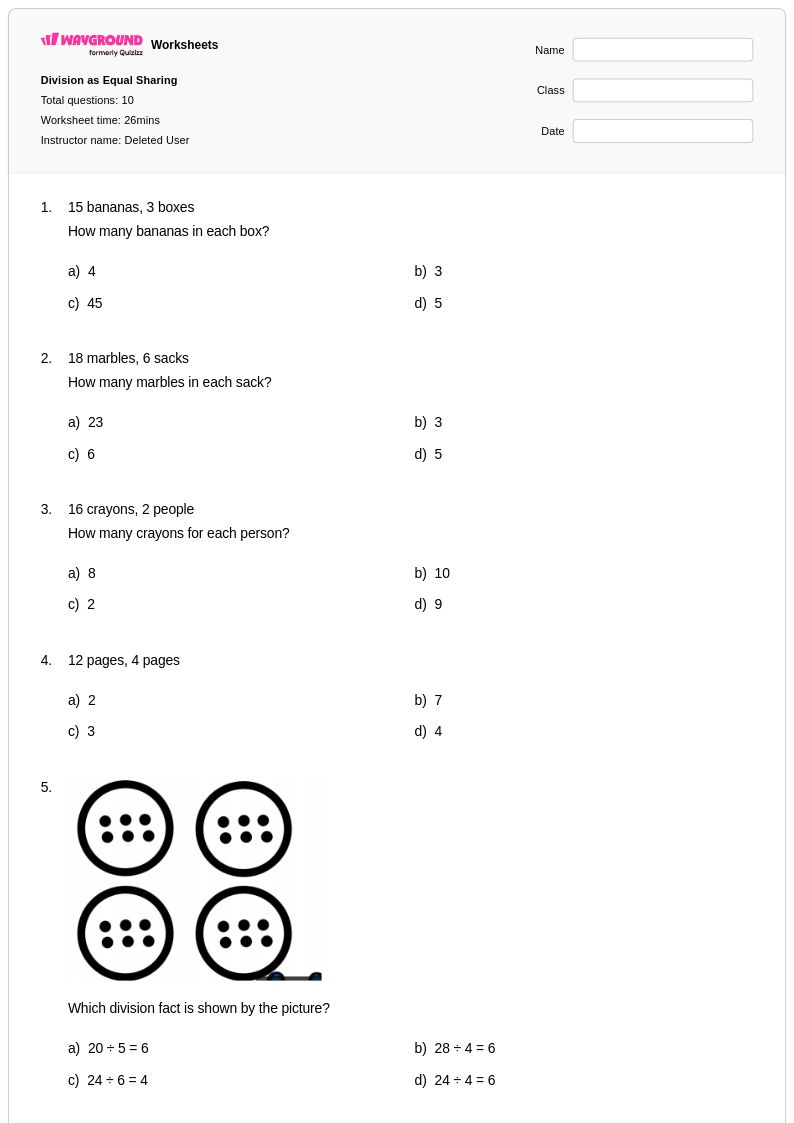
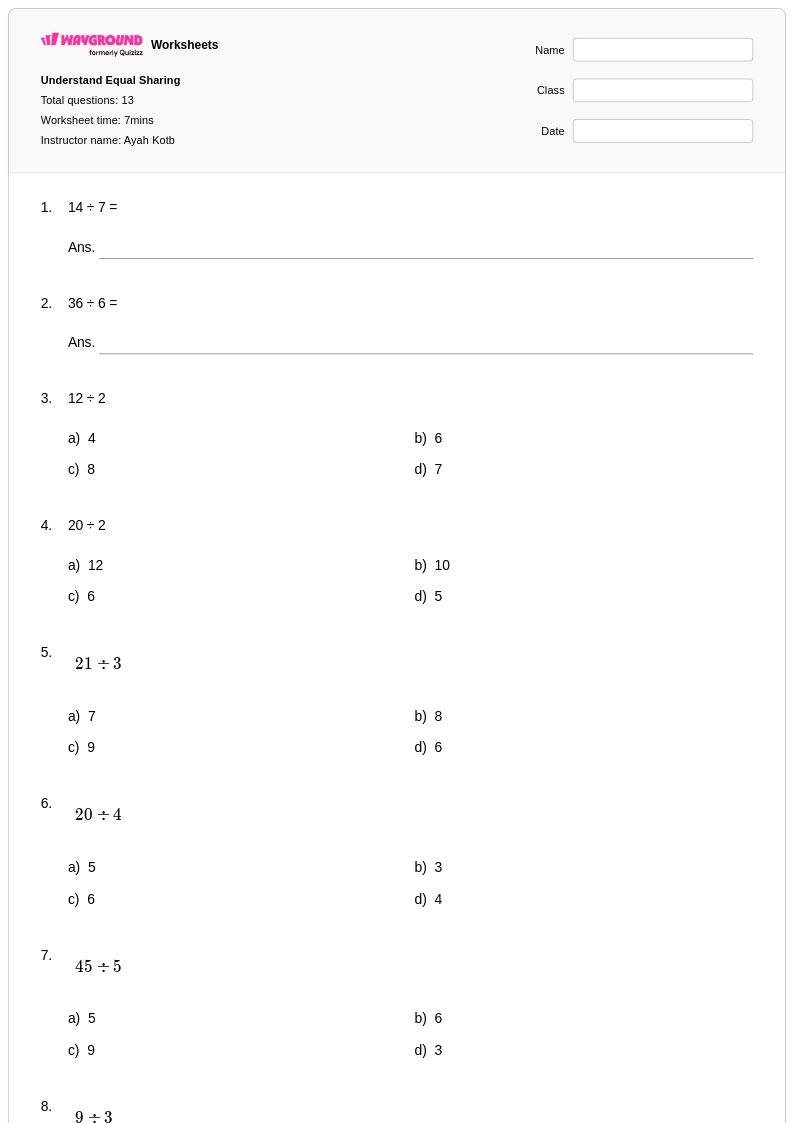
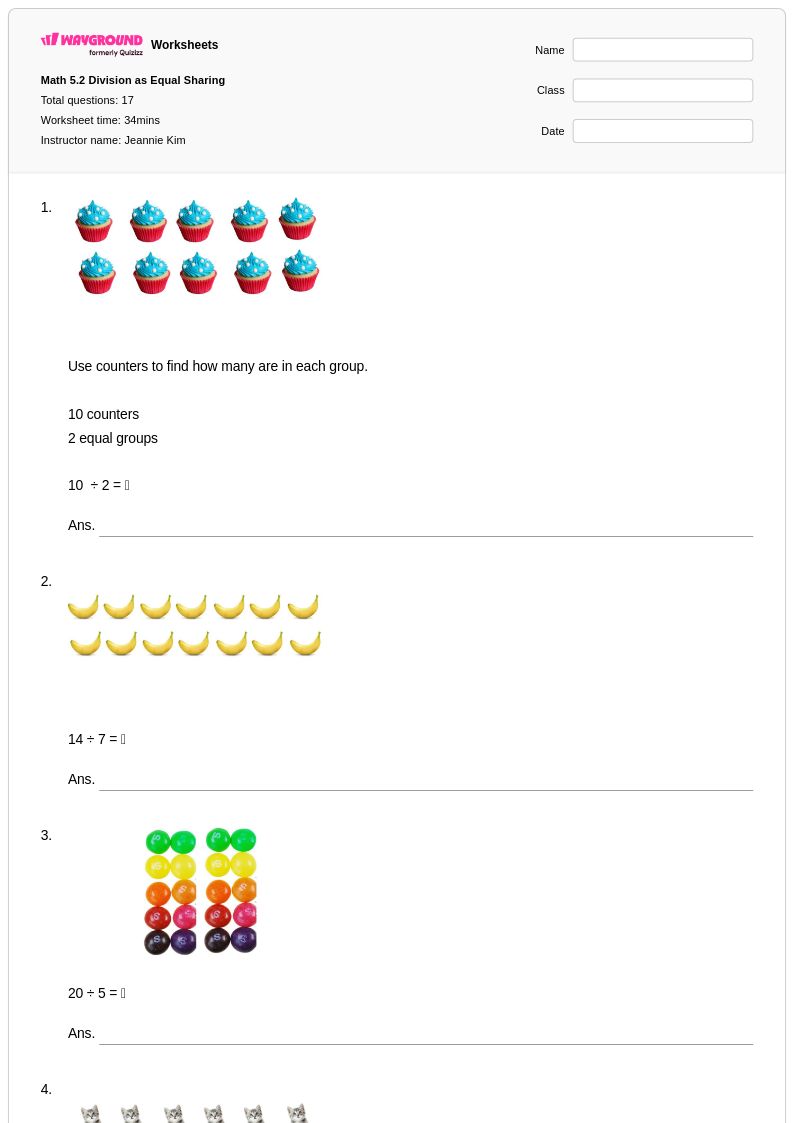
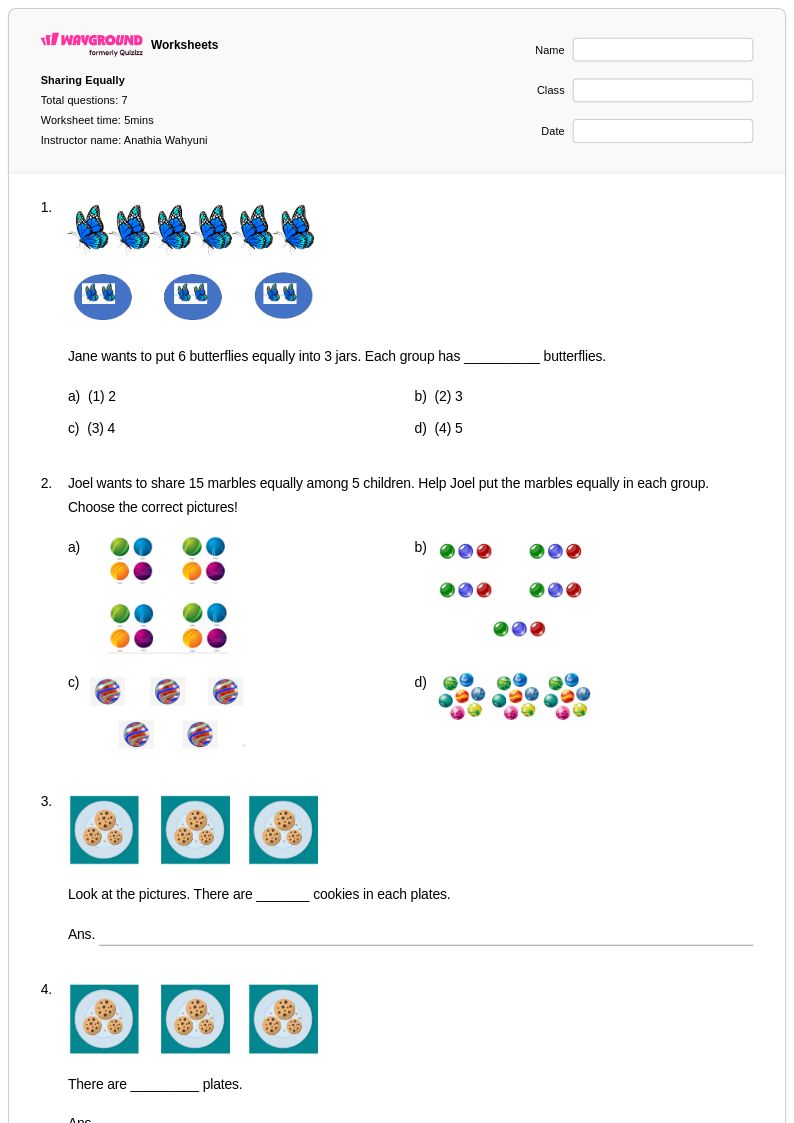
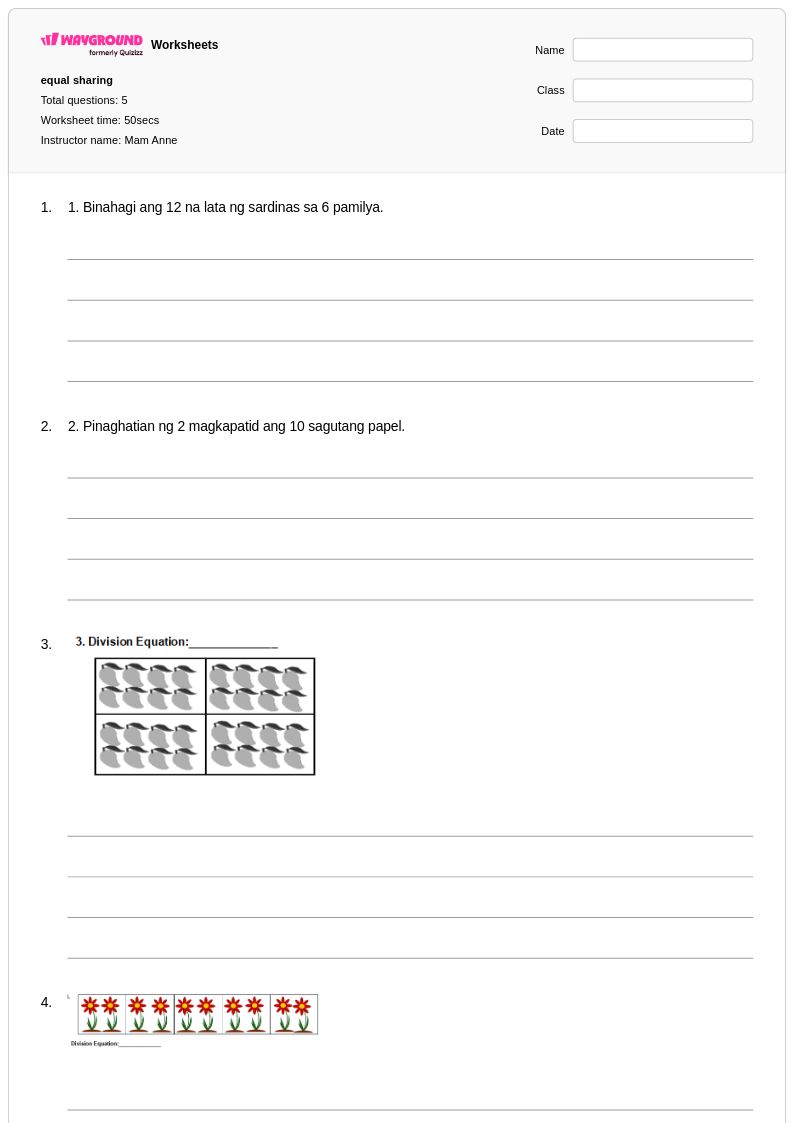
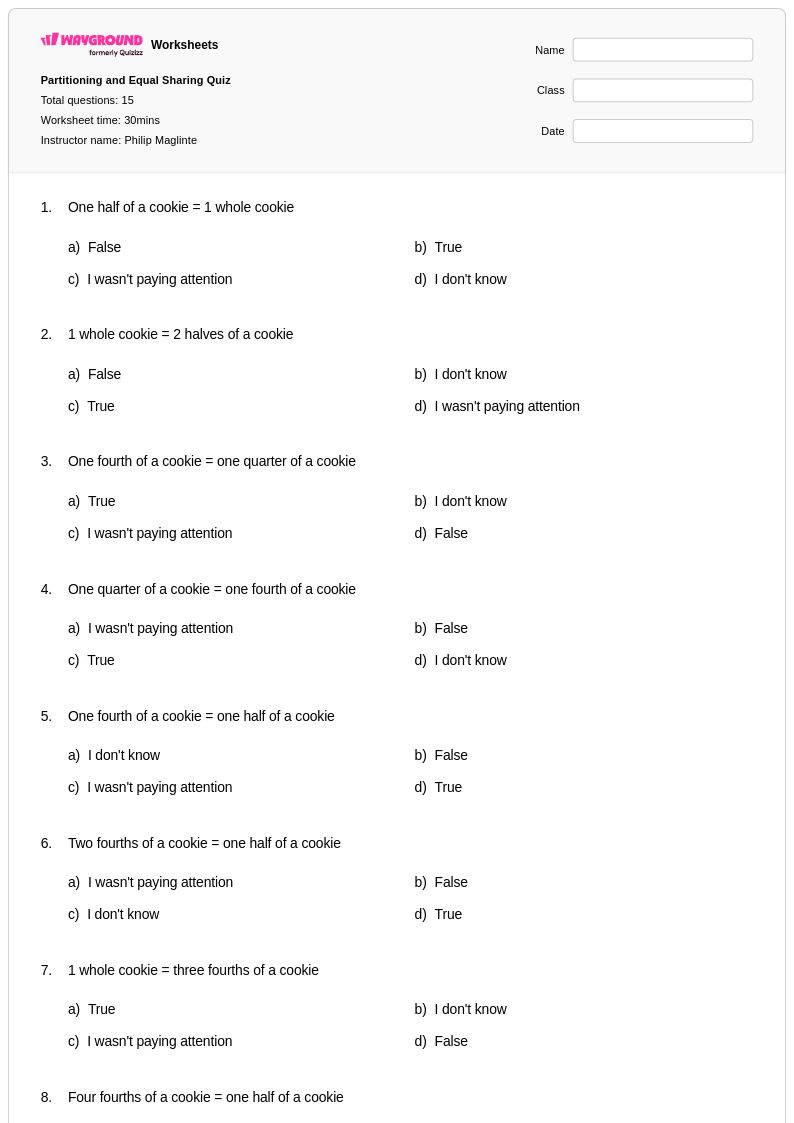
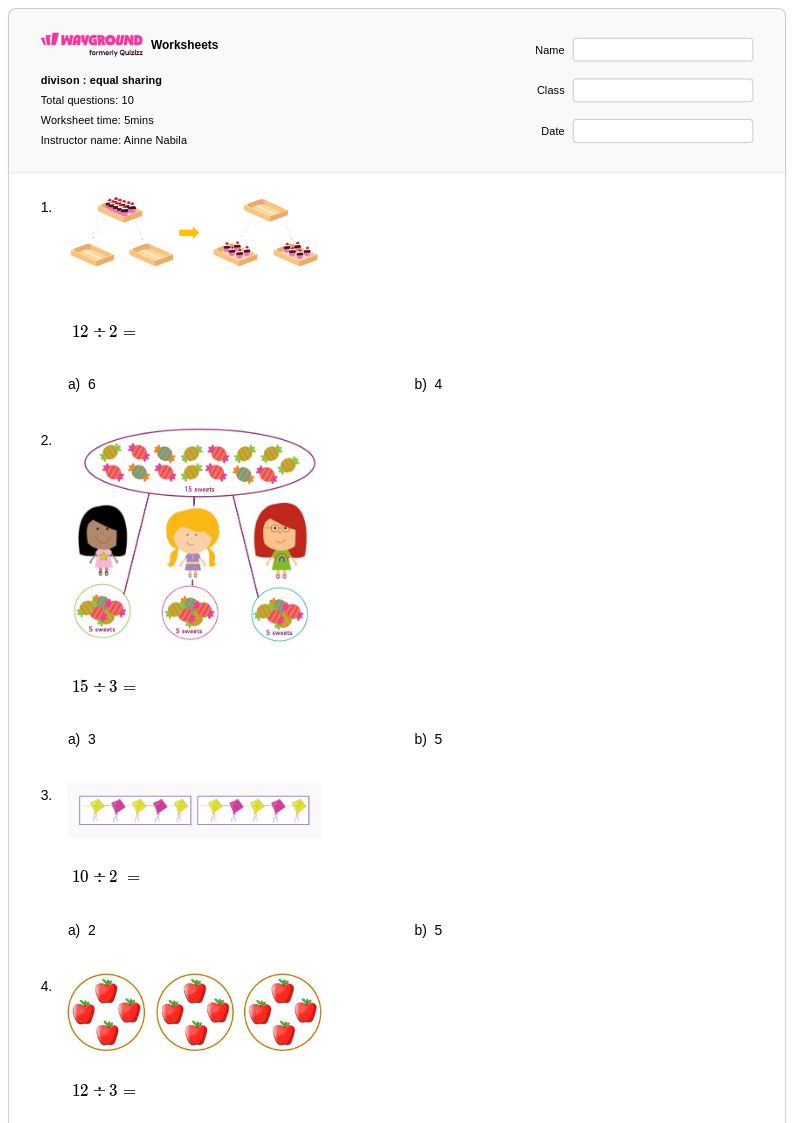
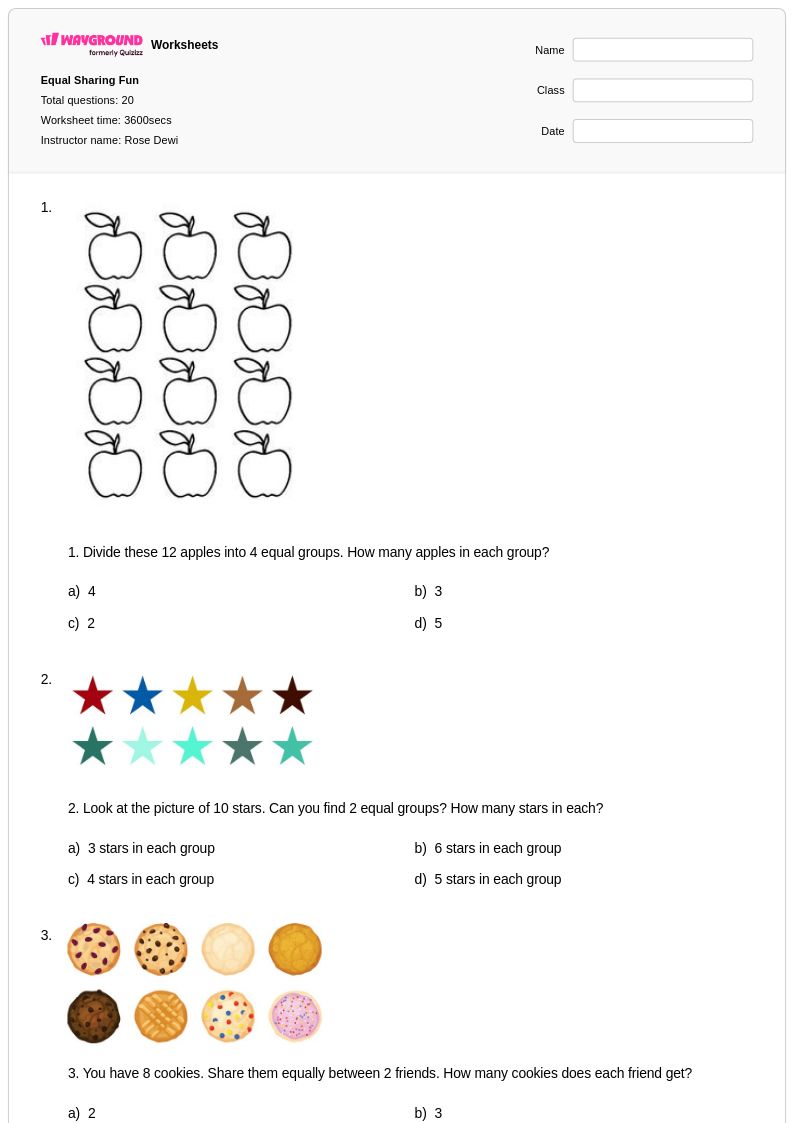
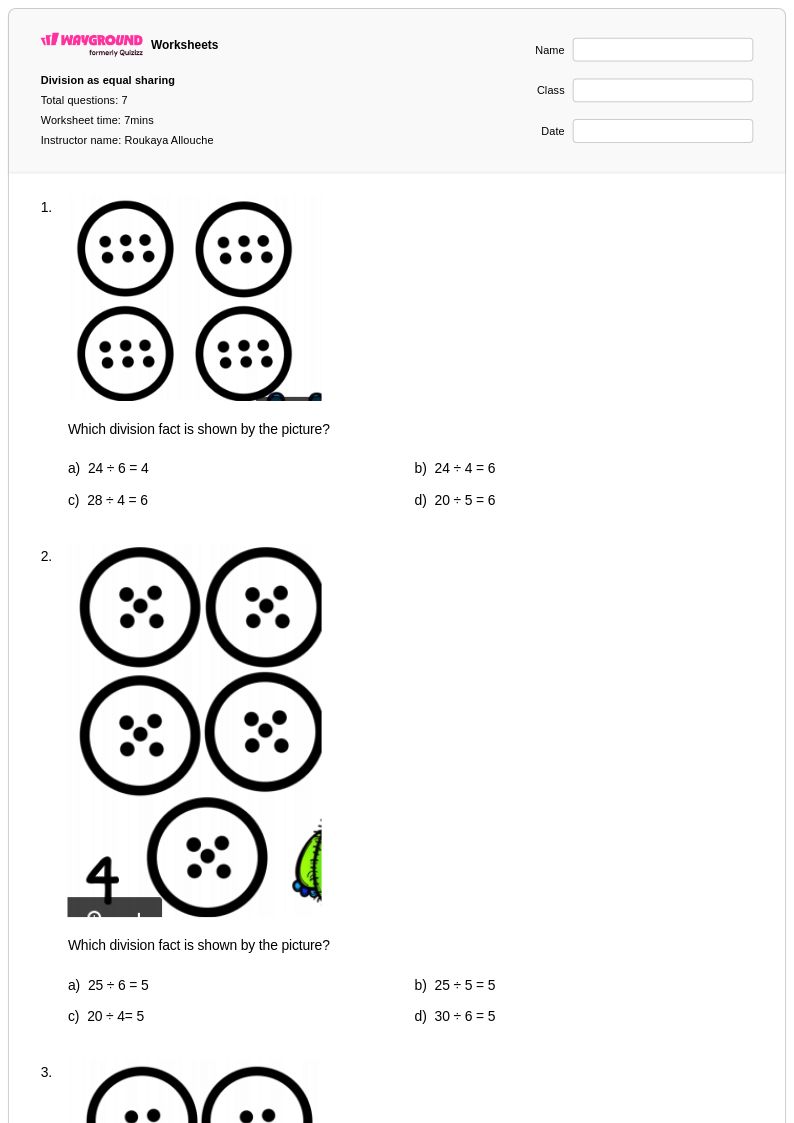
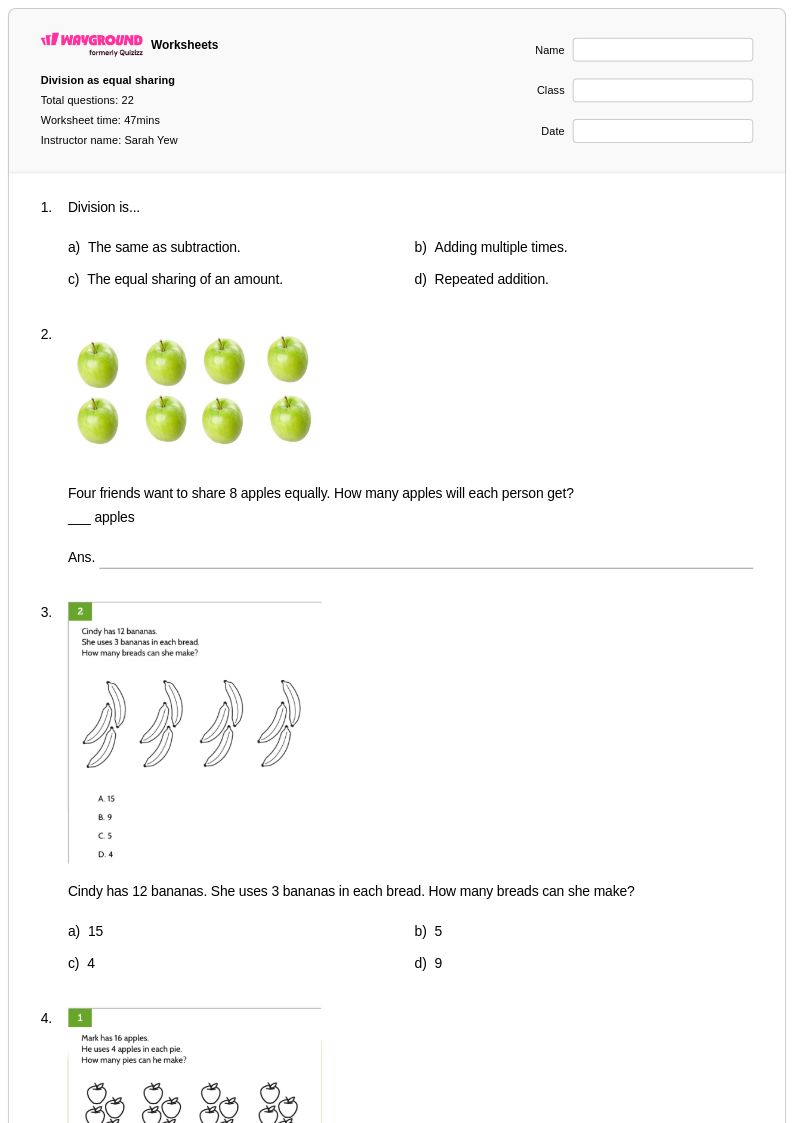
Equal sharing worksheets available through Wayground (formerly Quizizz) provide students with essential foundational practice in understanding division as the process of distributing objects or quantities into equal groups. These comprehensive worksheet collections strengthen critical mathematical reasoning skills by guiding learners through visual representations, manipulative-based problems, and word problems that require partitioning sets into equal parts. Each worksheet includes carefully scaffolded practice problems that progress from concrete scenarios using pictures and objects to more abstract numerical expressions, while comprehensive answer keys enable both independent practice and guided instruction. The free printable resources offer diverse problem types including sharing cookies among friends, dividing toys into equal groups, and distributing classroom supplies, ensuring students develop a solid conceptual understanding before advancing to formal division algorithms.
Wayground (formerly Quizizz) empowers educators with access to millions of teacher-created equal sharing worksheet resources that feature robust search and filtering capabilities for precise instructional alignment. The platform's extensive collection supports differentiated instruction through customizable difficulty levels, varied problem formats, and flexible presentation options available in both printable pdf formats and interactive digital versions. Teachers can efficiently locate standards-aligned materials for lesson planning, targeted remediation, and skill enrichment, while the platform's organizational tools streamline resource management across different learning objectives. These comprehensive worksheet collections enable educators to provide consistent, high-quality practice opportunities that reinforce equal sharing concepts through multiple representations and contexts, supporting diverse learning needs and promoting mathematical fluency development.
FAQs
How do I teach equal sharing to elementary students?
Start with physical objects before anything else — have students actually pass out counters, blocks, or snacks into equal groups. Once they can do it with their hands, move to pictures and diagrams, then to number sentences. The key is making sure students understand that equal sharing means every group gets the same amount, not just that the objects are all distributed. That conceptual anchor is what makes the jump to formal division stick later.
What kinds of practice problems help students get better at equal sharing?
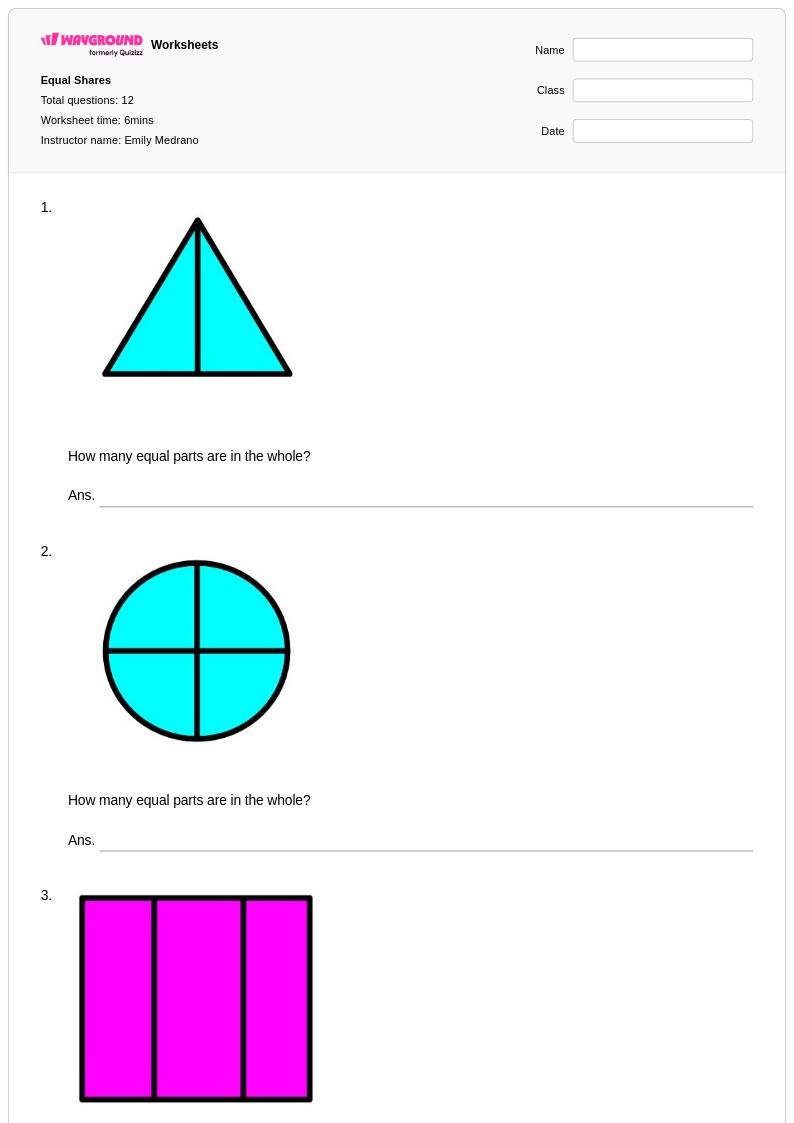
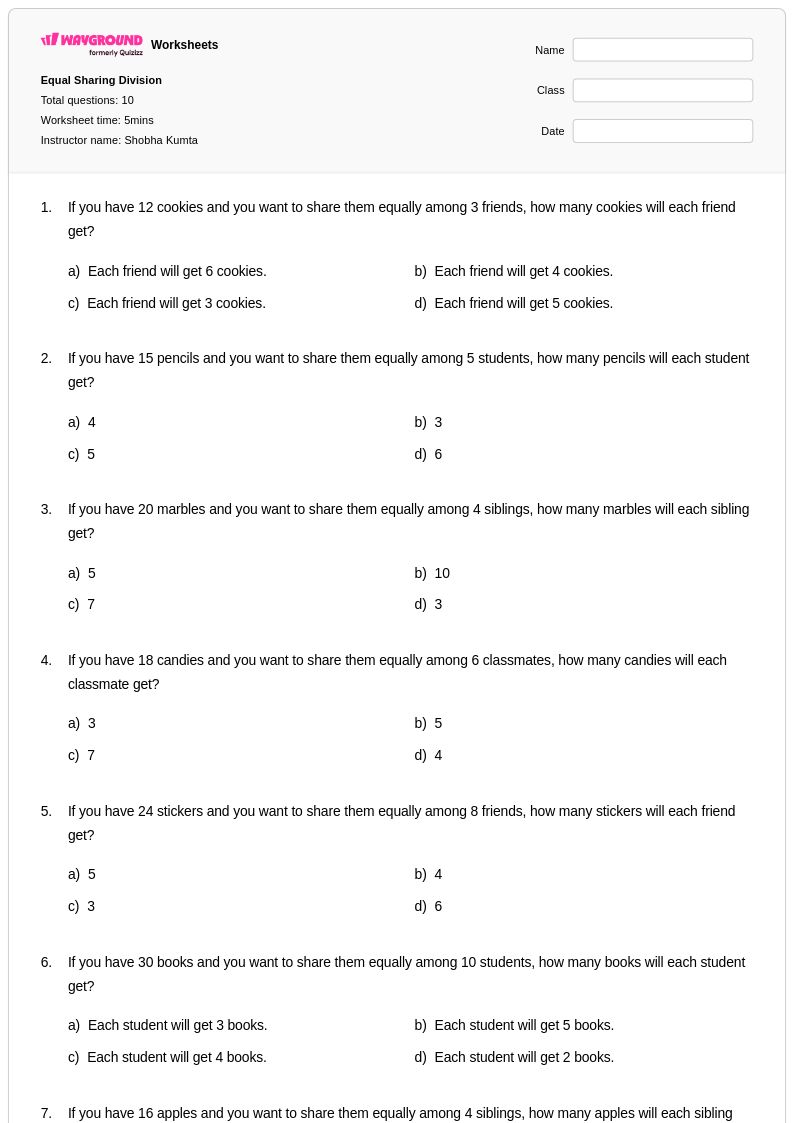
The most effective practice moves through three stages: visual problems (circling equal groups in a picture), word problems with familiar contexts (sharing cookies among friends, dividing crayons into boxes), and bare number problems. Wayground's equal sharing worksheets follow this progression, so students build understanding before they're asked to work abstractly.
What mistakes do students commonly make with equal sharing?
The most common error is distributing all the objects without checking whether each group received the same amount — students focus on "using everything up" rather than on the equal part. A second frequent mistake is confusing the number of groups with the number in each group (e.g., "3 friends share 12 cookies" — students aren't sure whether 3 or 12 is the answer). Asking students to draw their work and label each group helps catch both errors before they become habits.
How do I use Wayground's equal sharing worksheets in my classroom?
Each worksheet comes with a complete answer key, so it works well for independent practice, math centers, or homework without extra prep on your end. If you're going digital, you can host the worksheet as a quiz on Wayground and students complete it on a device. If you prefer paper, download the PDF, print it, and use the Wayground for Teachers app to scan and grade student submissions — useful when you have a full class set to get through quickly.
How does equal sharing fit into the Common Core math progression?
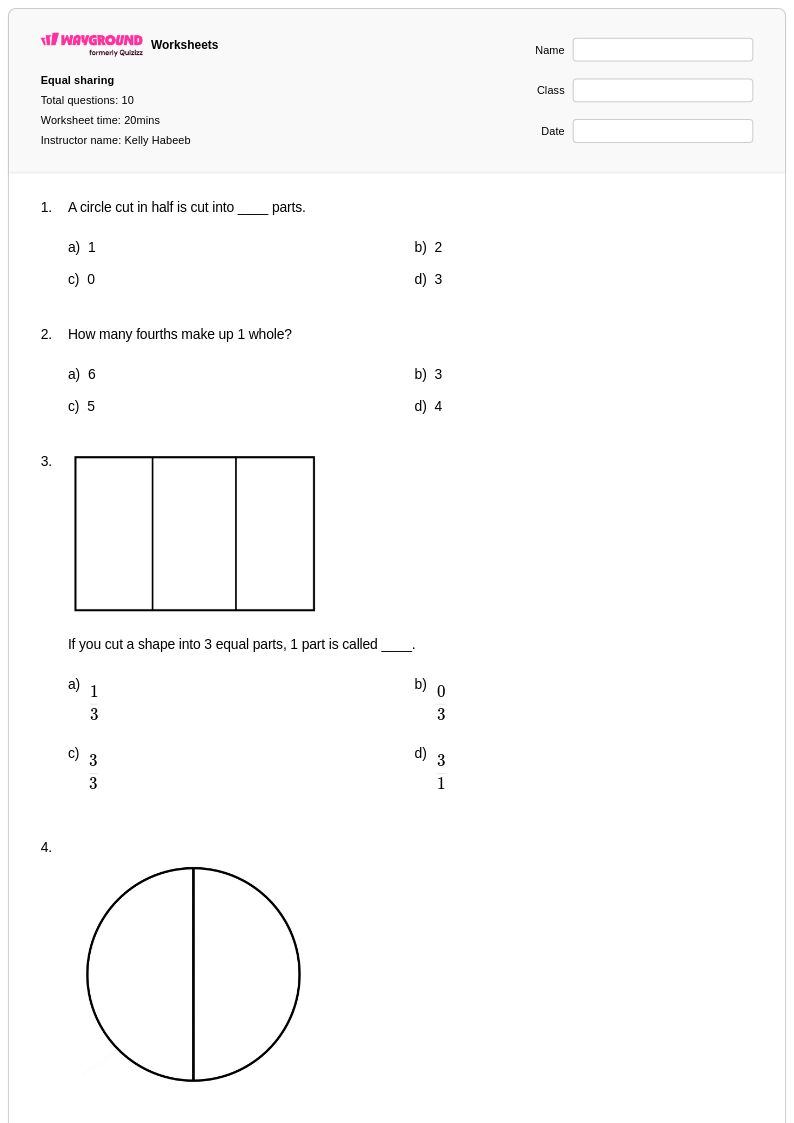
Common Core introduces equal sharing as a conceptual foundation for division in the early elementary grades, where students partition collections into equal groups using objects and drawings before encountering any division notation. This work directly prepares students for the Grade 3 expectation of interpreting whole-number quotients — specifically, understanding that 24 ÷ 6 means "how many in each group" or "how many groups," depending on the context. Equal sharing is the bridge between counting and formal division.
How can I differentiate equal sharing practice for mixed-ability learners?
For students who need more support, Wayground lets you reduce the number of answer choices displayed and enable Read Aloud so word problems are read to them — both reduce the cognitive load of decoding while keeping the math intact. For accessibility, you can also apply a dyslexia-friendly font or increase font size on the worksheet itself. Students who are ready for more challenge can work with larger numbers or problems that introduce remainders, while others continue with smaller, more concrete sets.