Free Printable Doubles Facts Worksheets for Class 1
Class 1 doubles facts worksheets from Wayground provide free printables and practice problems that help young learners master essential addition strategies through engaging exercises with complete answer keys.
Explore printable Doubles Facts worksheets for Class 1
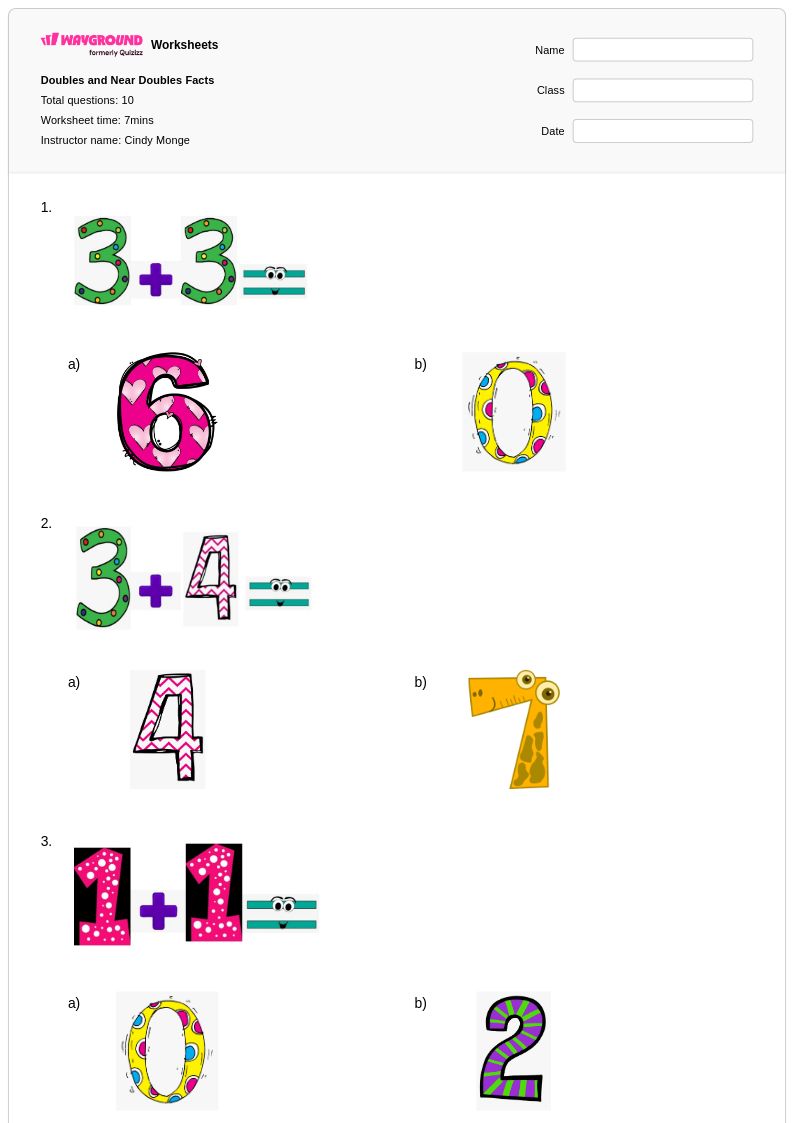
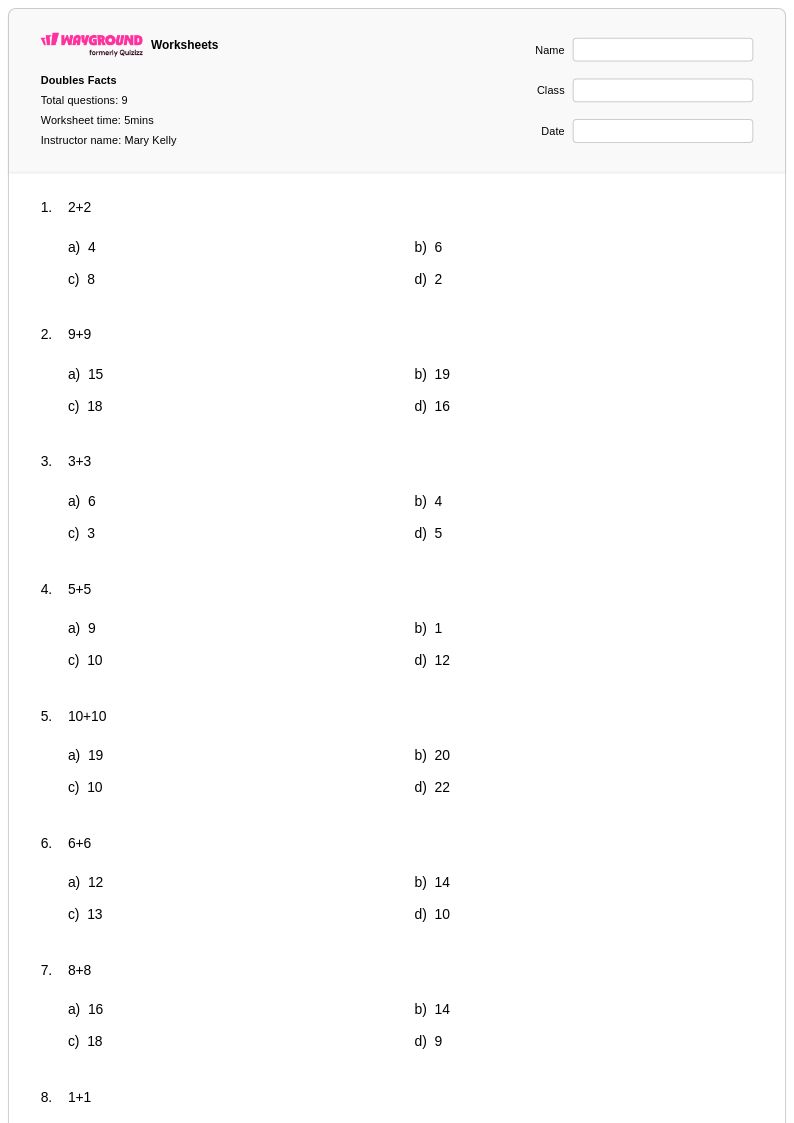
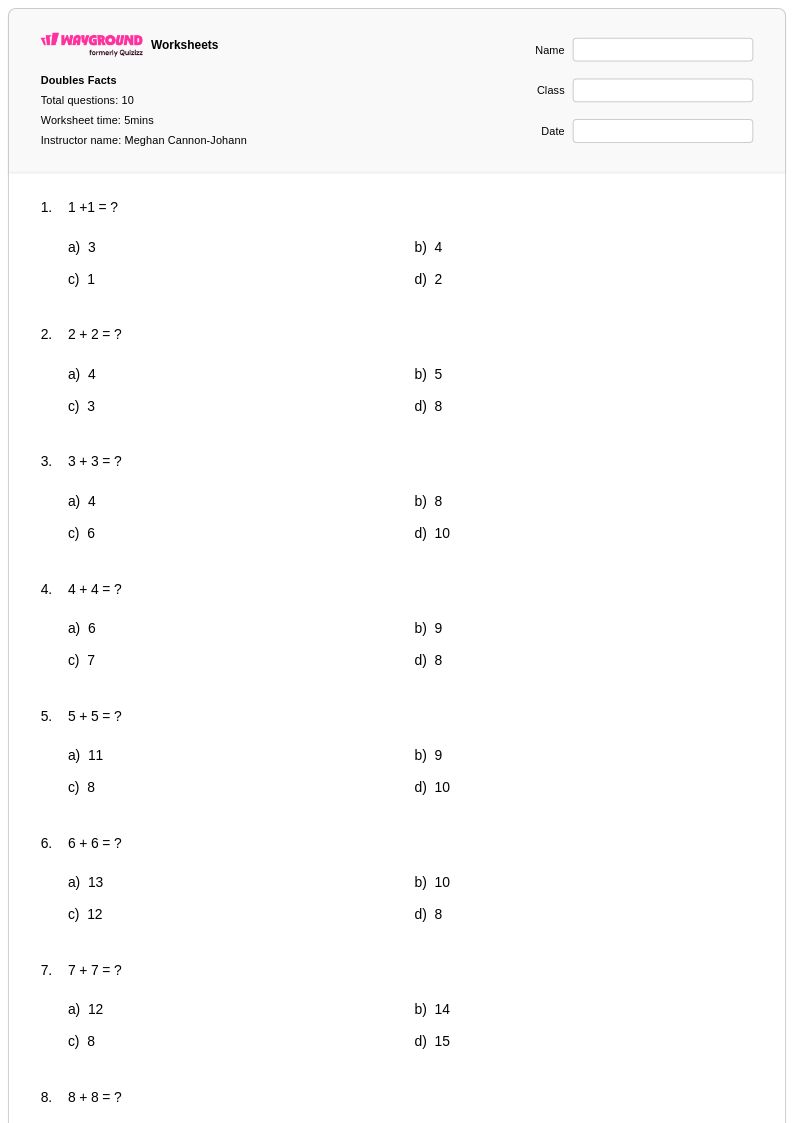
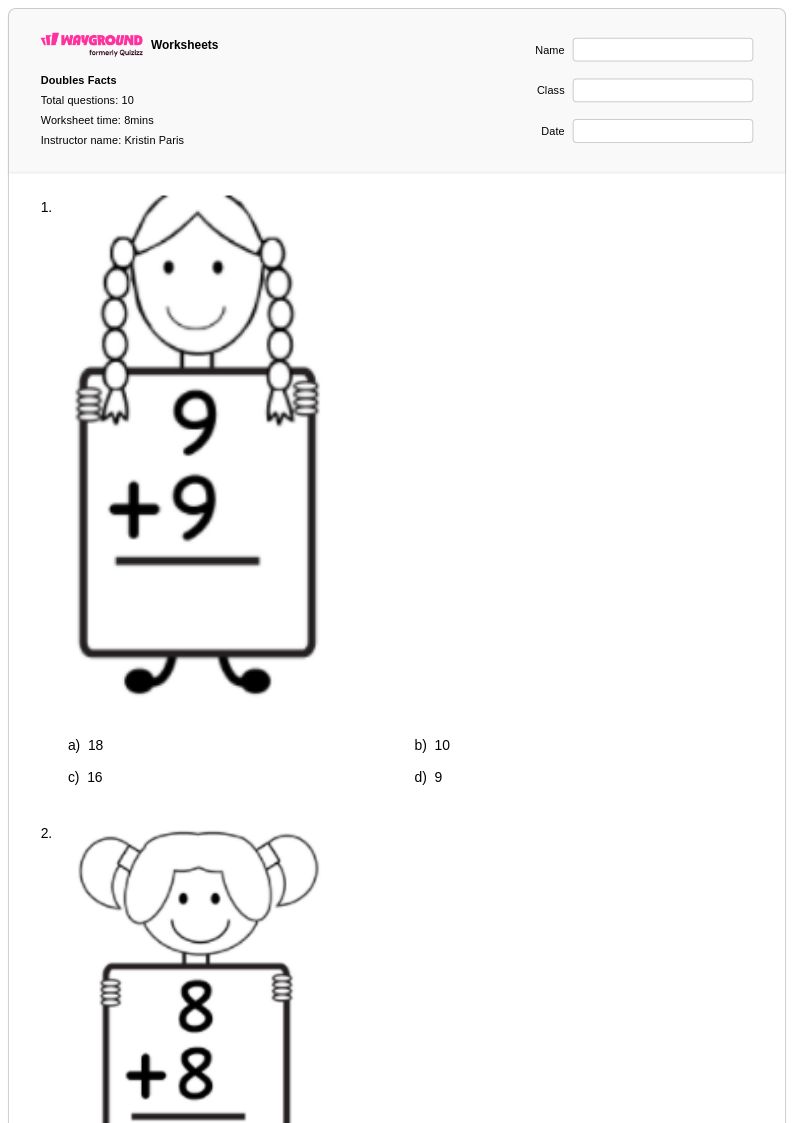
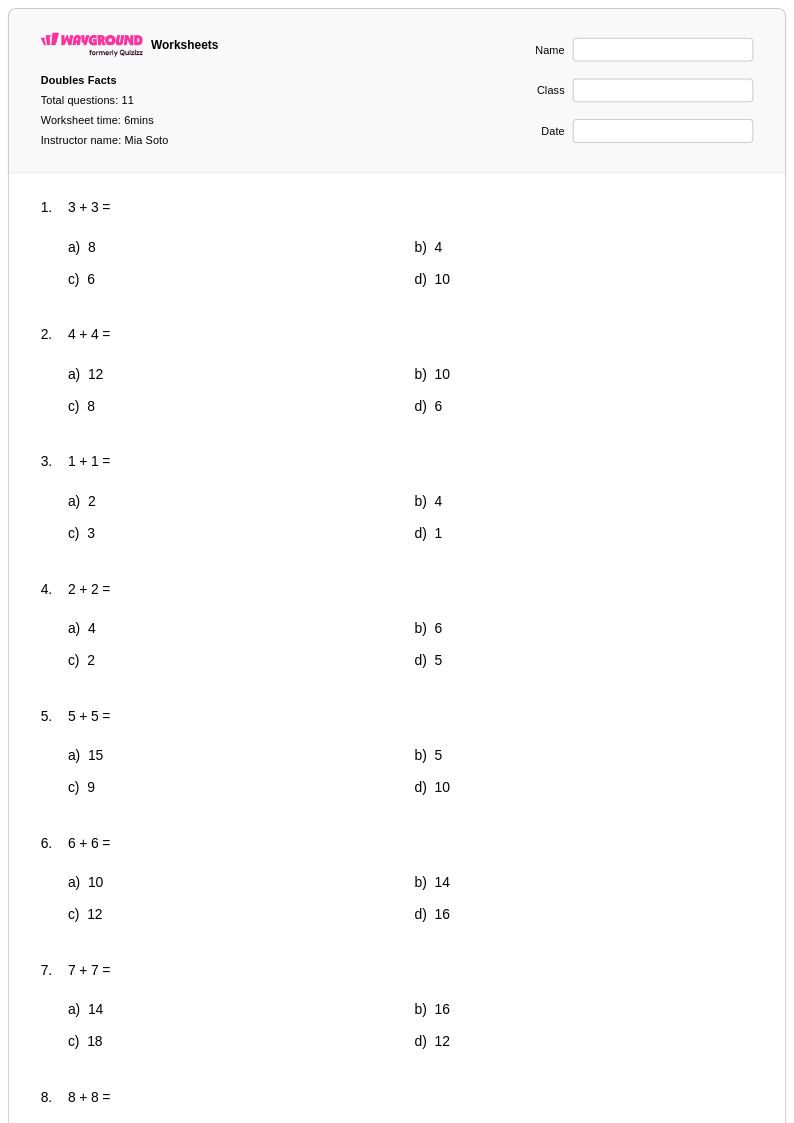
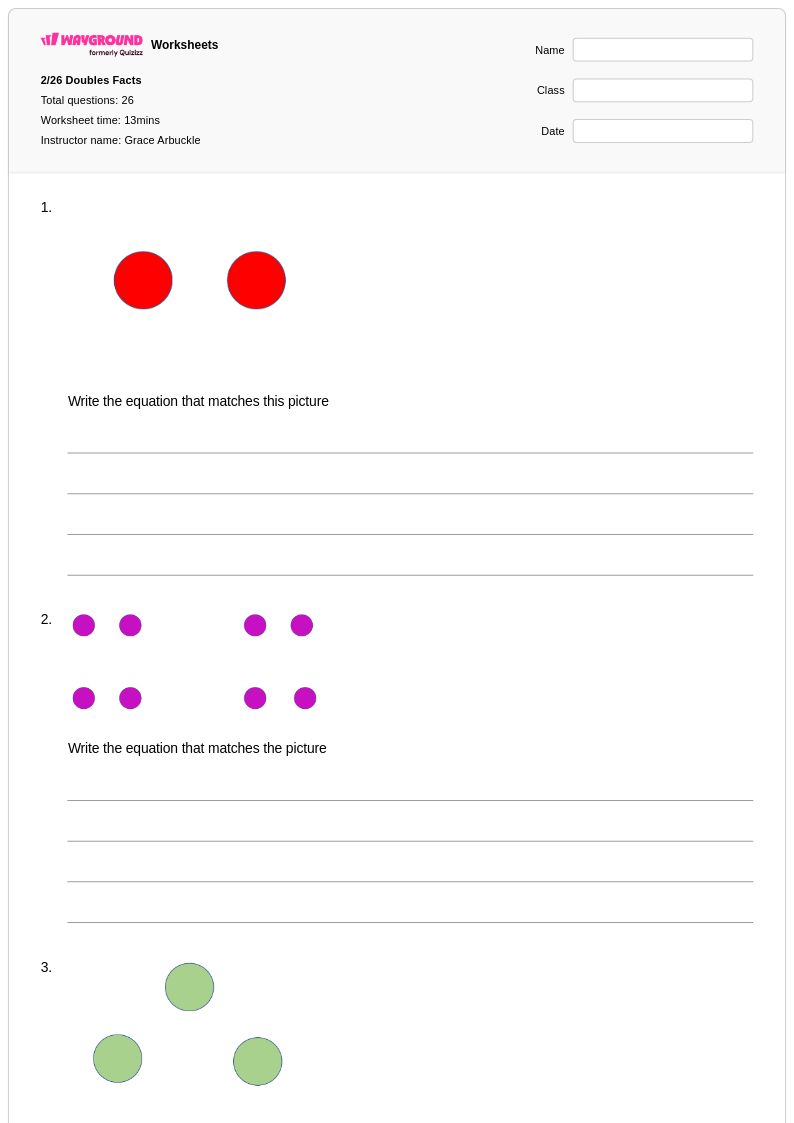
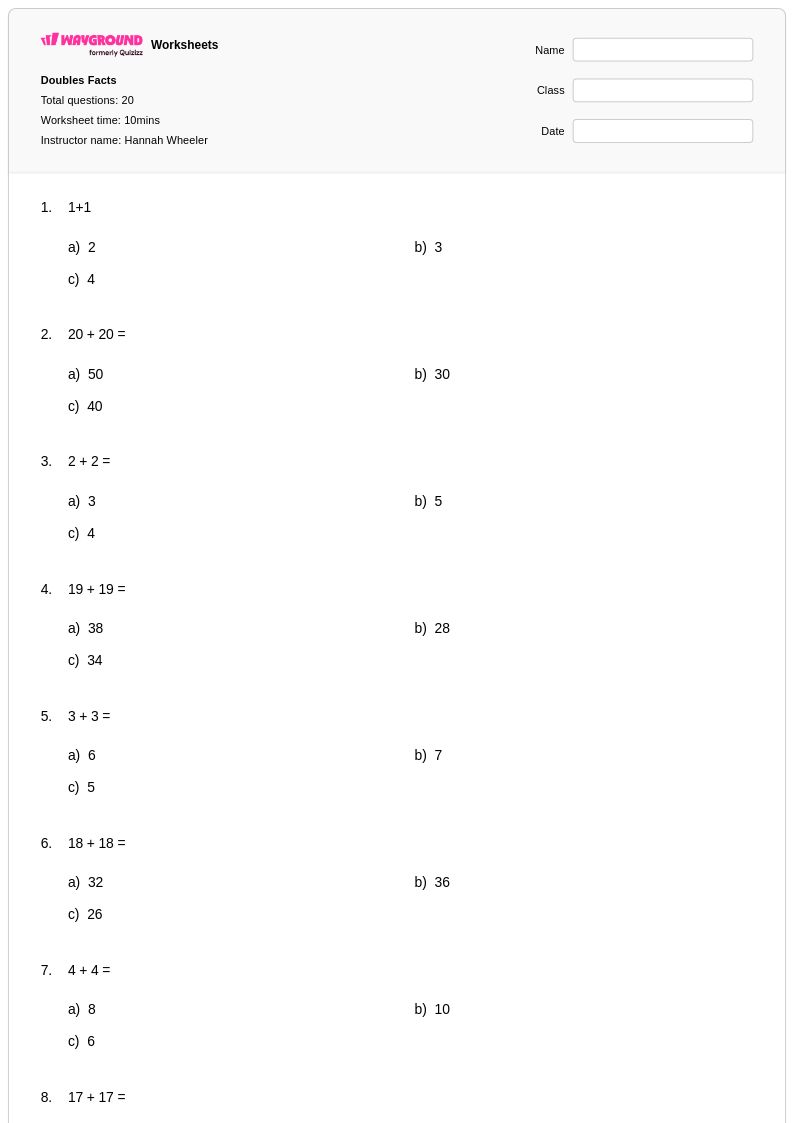
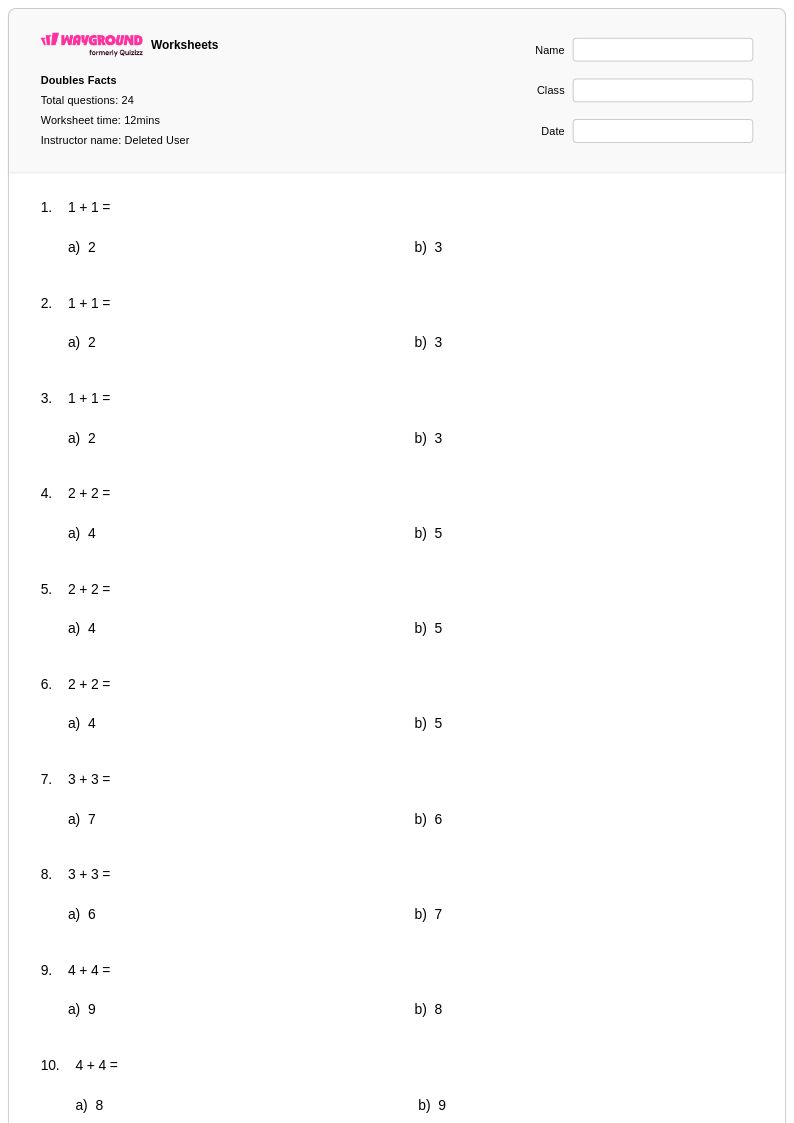
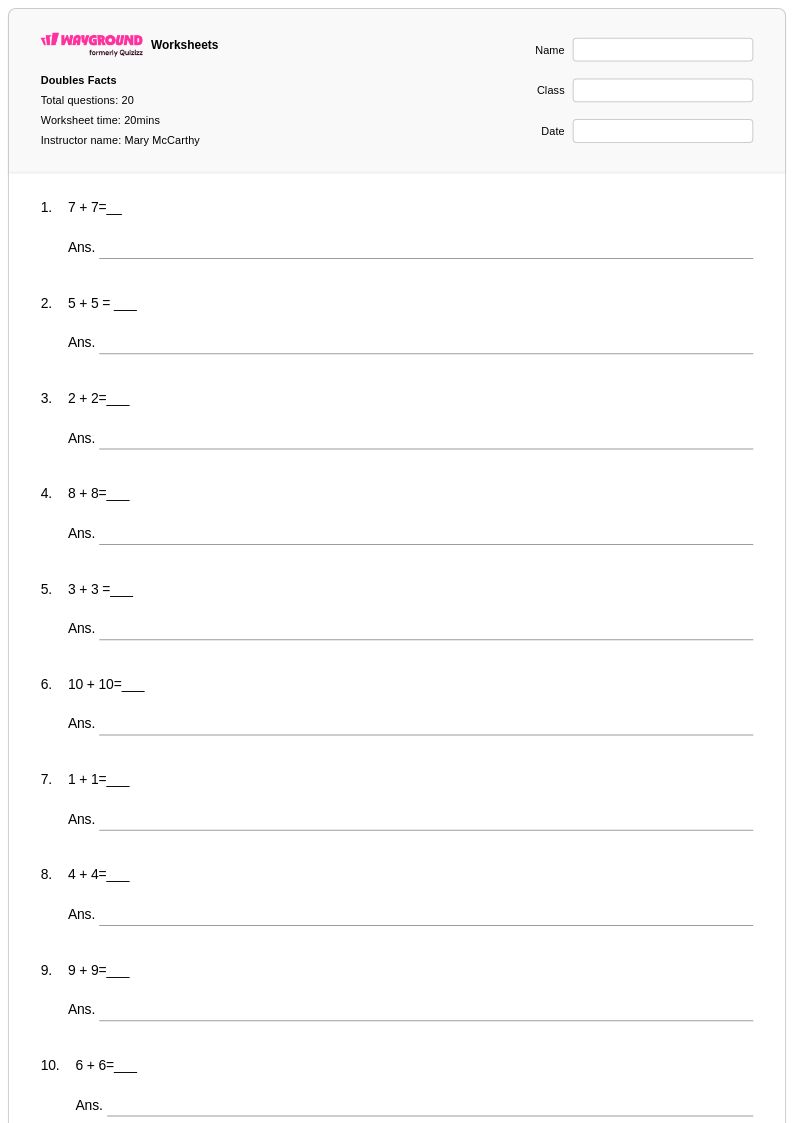
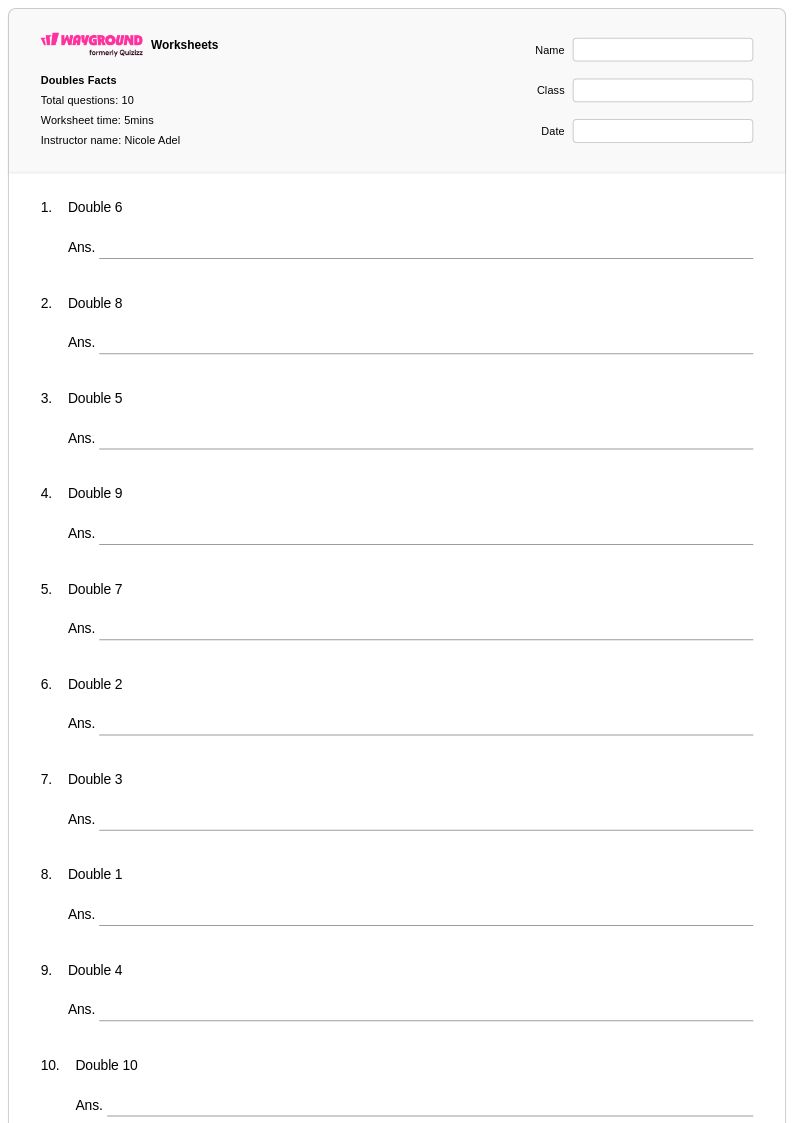
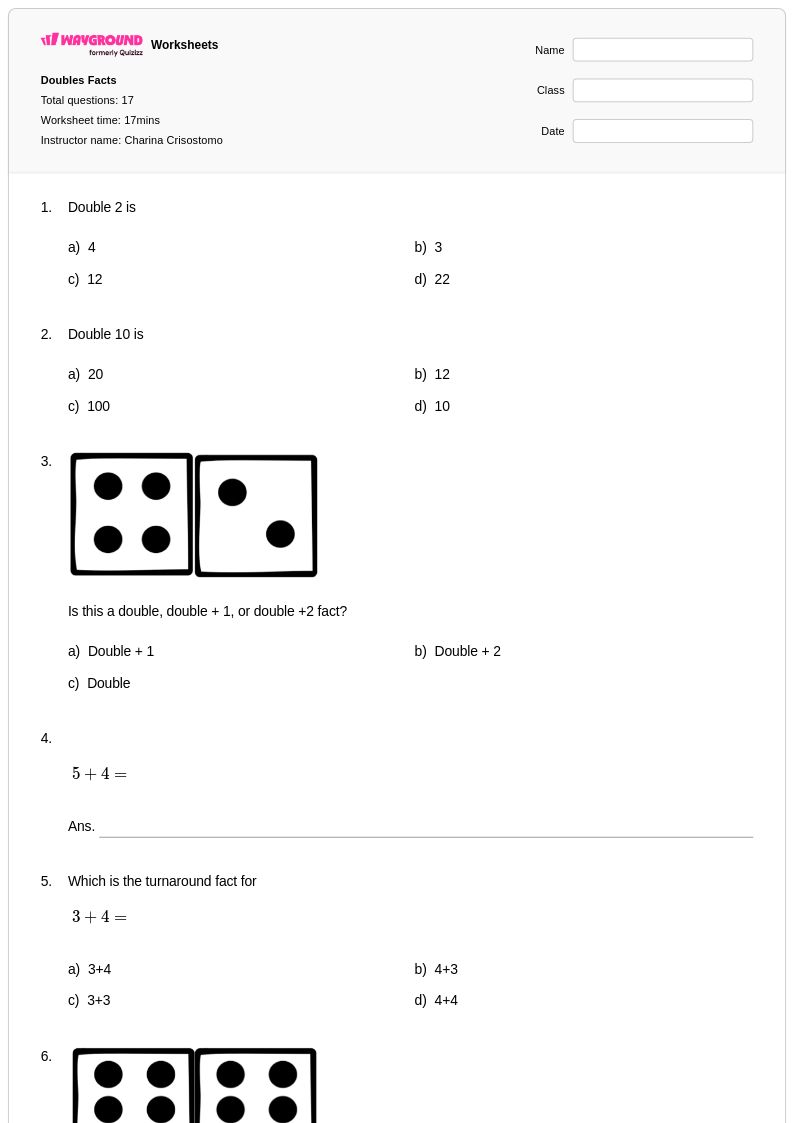
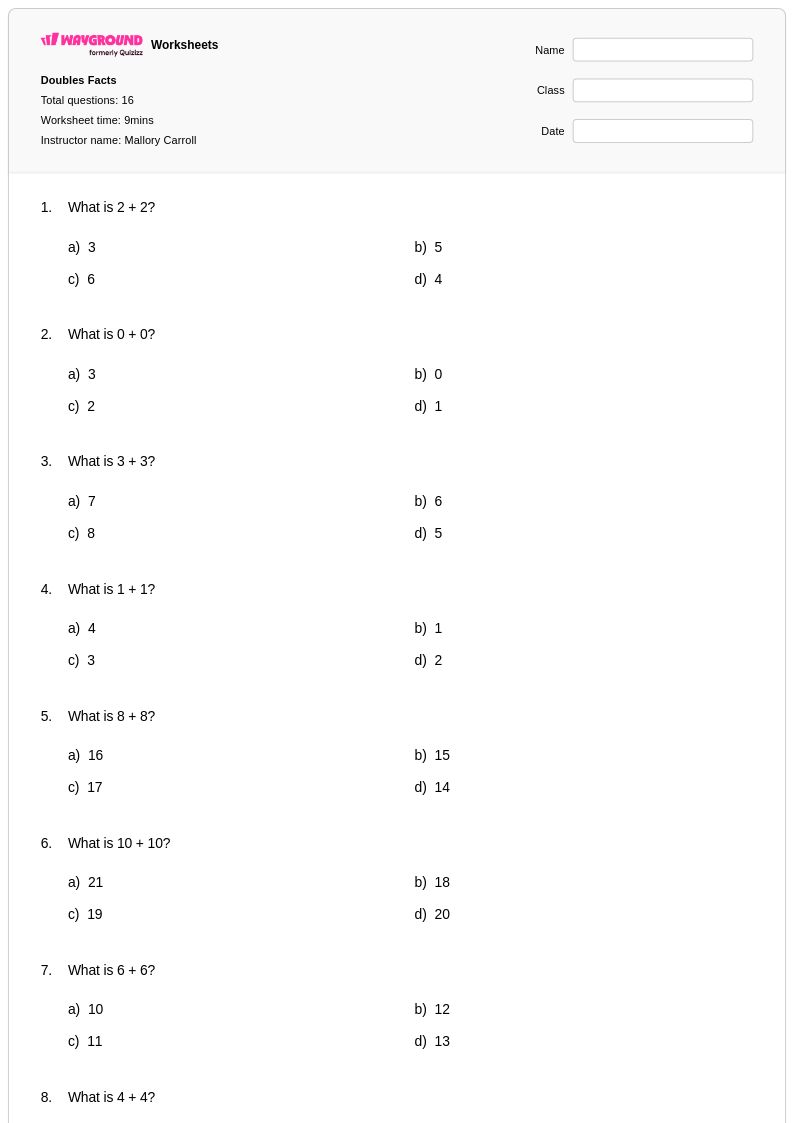
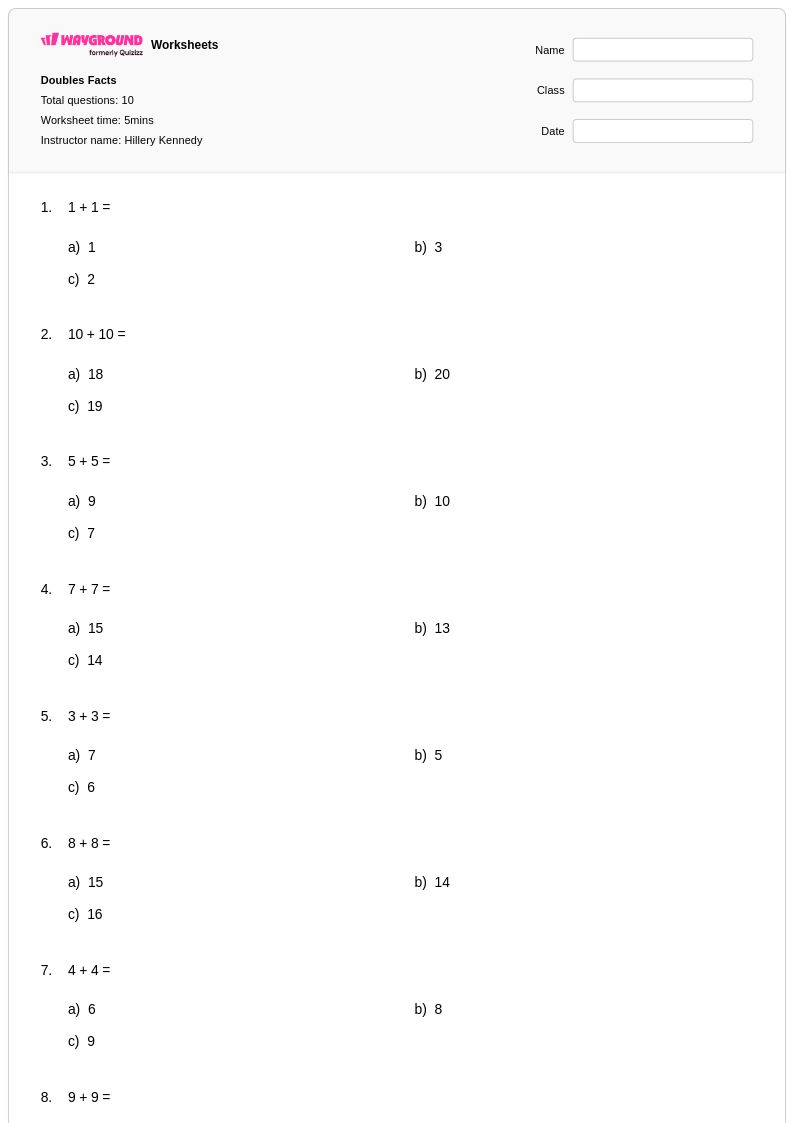
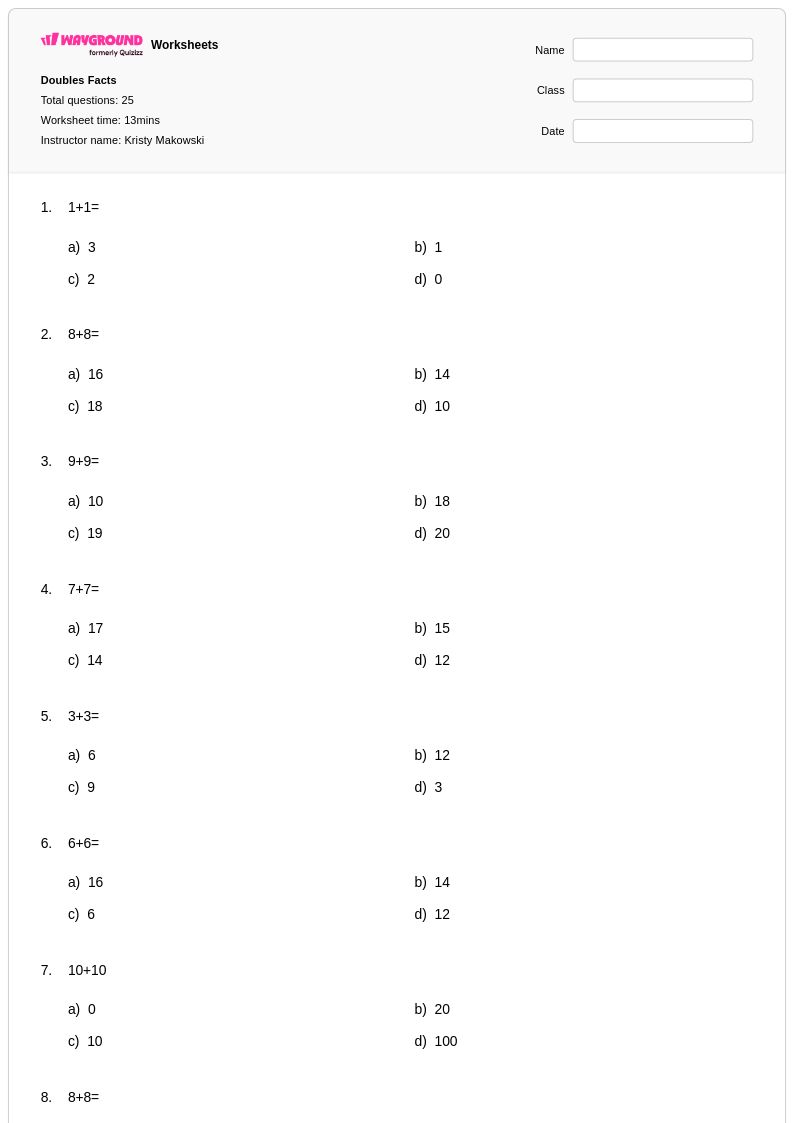
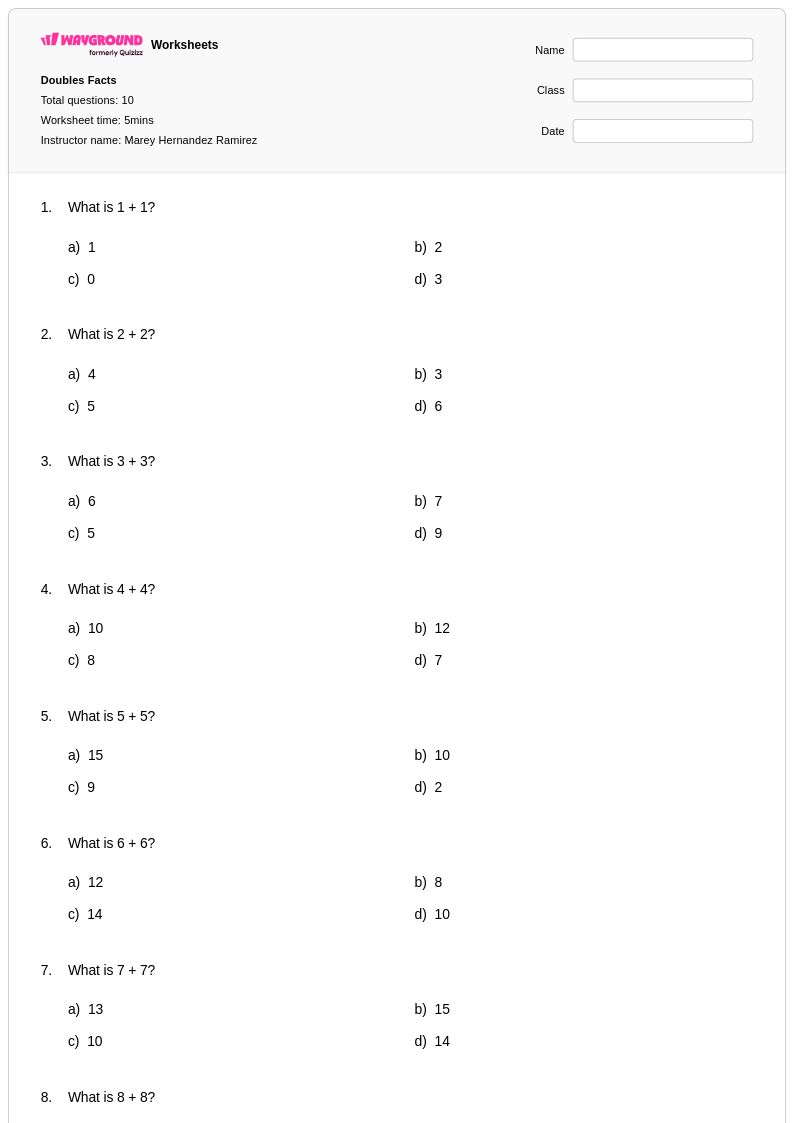
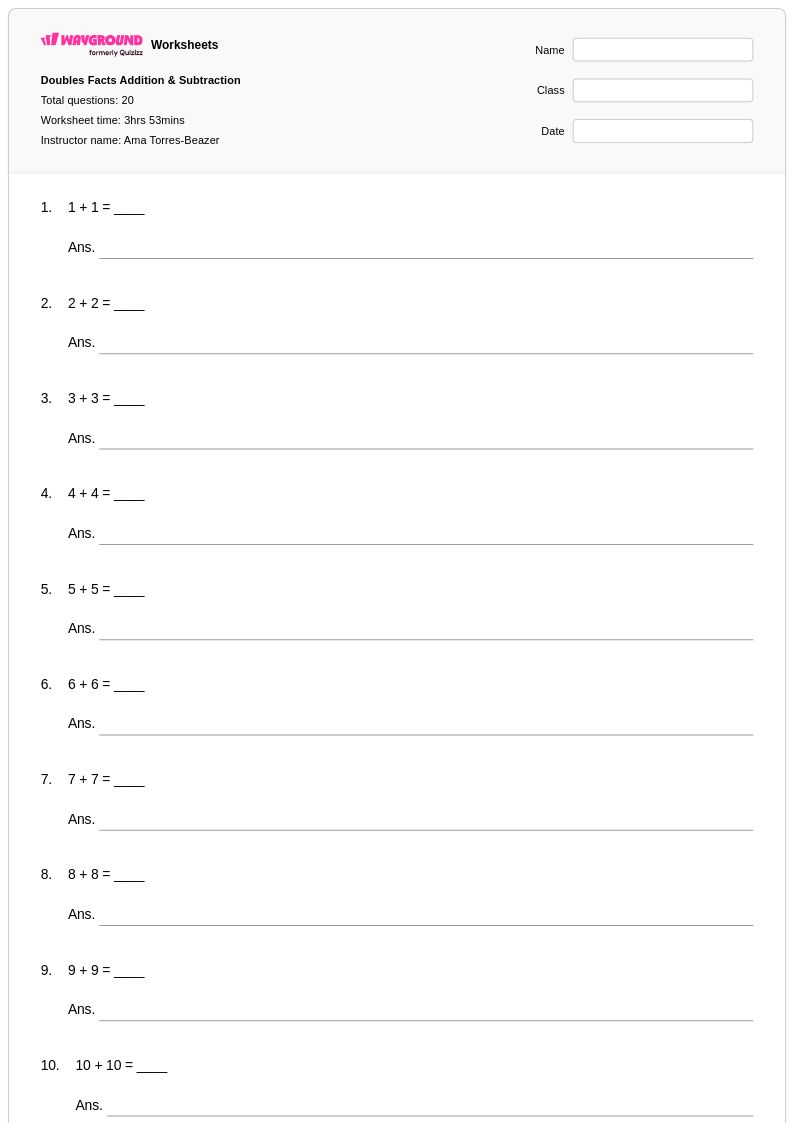
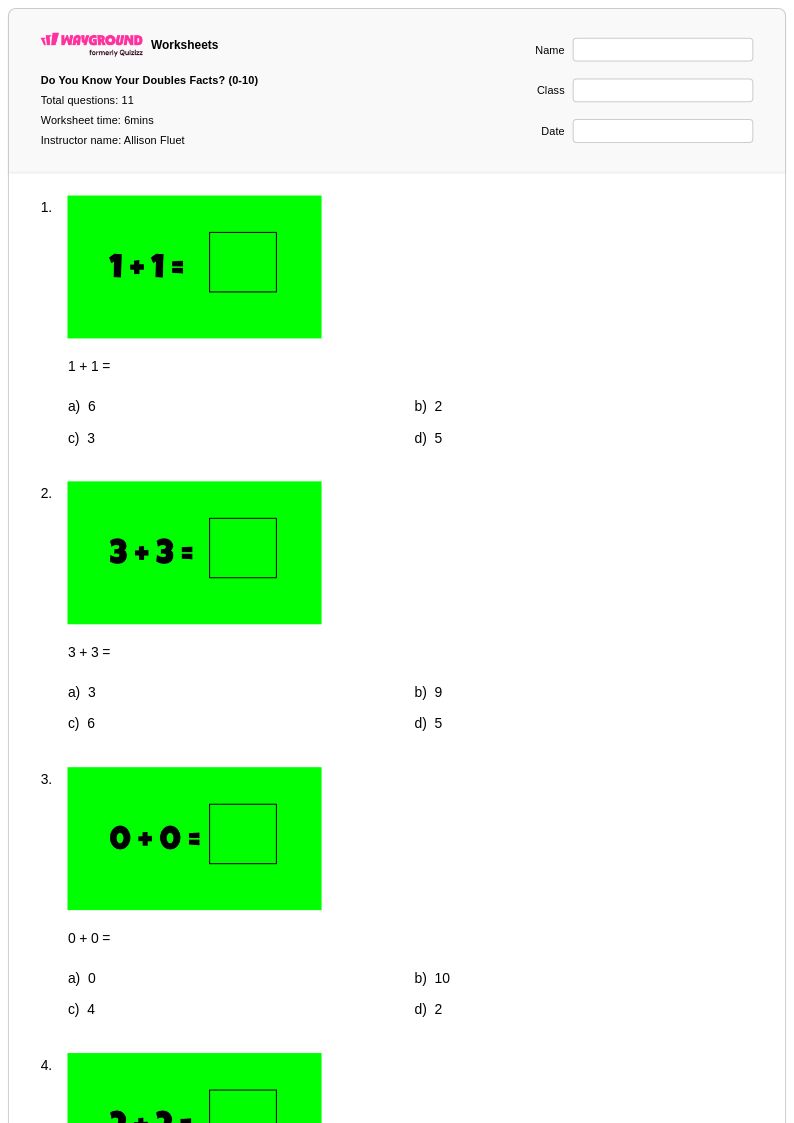
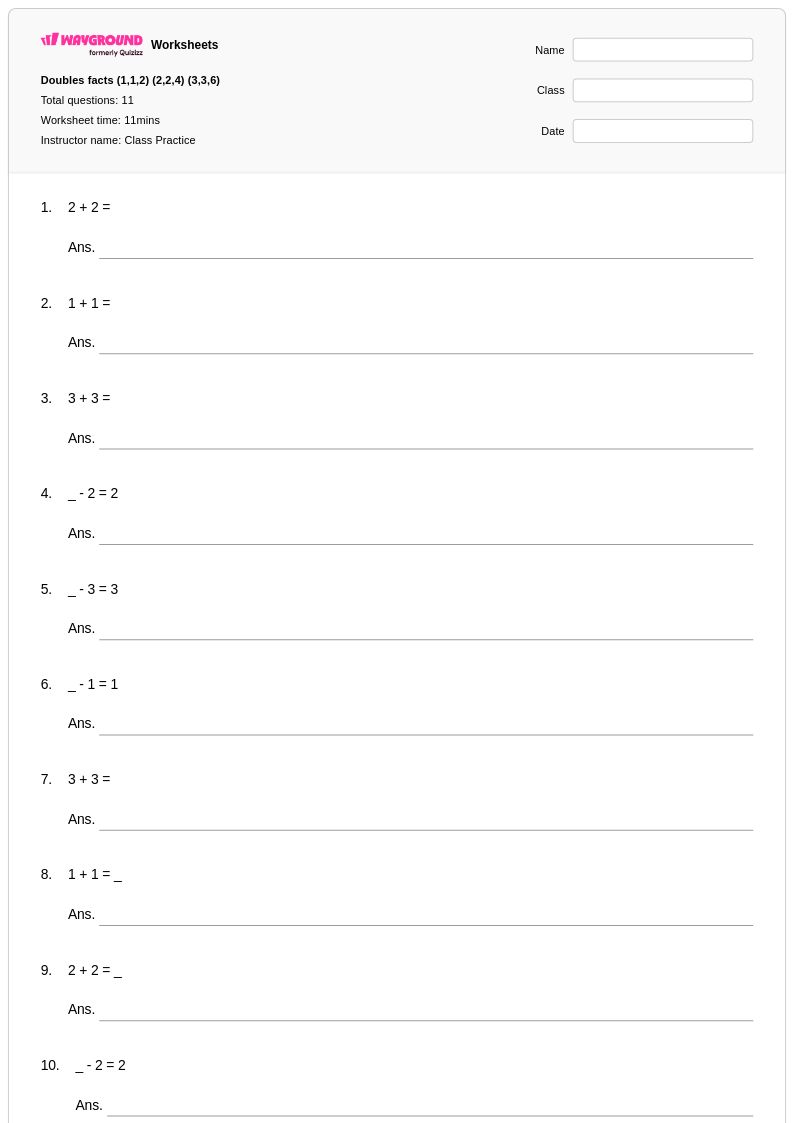
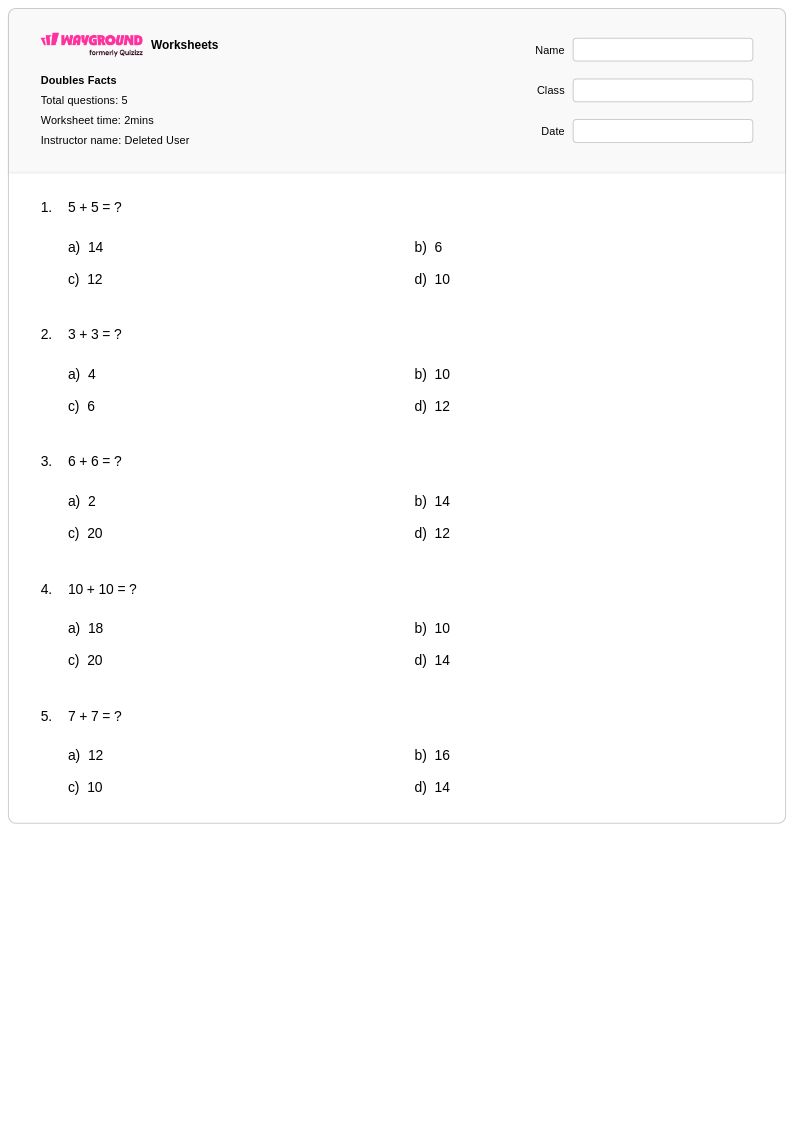
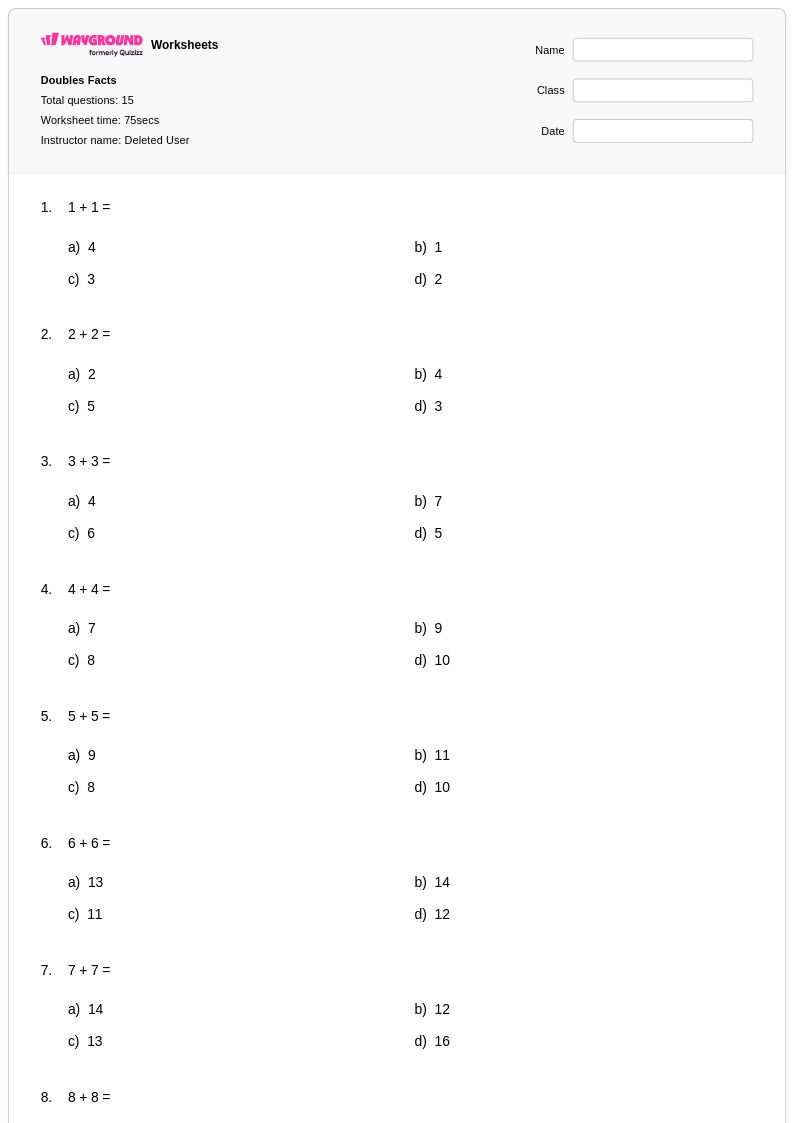
Doubles facts worksheets for Class 1 students through Wayground (formerly Quizizz) provide essential foundational practice for developing mental math fluency and number sense. These carefully designed worksheets focus on helping young learners master addition problems where both addends are identical, such as 3+3, 5+5, and 7+7, building automatic recall of these crucial mathematical relationships. The practice problems systematically introduce doubles combinations from 0+0 through 10+10, strengthening students' ability to recognize patterns in numbers and establish mental math strategies that will support more complex addition concepts. Each printable worksheet includes comprehensive answer keys and free access to pdf formats, making them ideal for classroom instruction, homework assignments, or targeted skill reinforcement.
Wayground's extensive collection of doubles facts resources supports Class 1 teachers with millions of educator-created materials that can be easily customized to meet diverse classroom needs. The platform's robust search and filtering capabilities allow teachers to quickly locate worksheets aligned with specific mathematics standards, while differentiation tools enable seamless adaptation of content for varying skill levels within the same classroom. These printable and digital resources, available in convenient pdf format, facilitate flexible lesson planning whether teachers need materials for whole-group instruction, small-group remediation, or individual enrichment activities. The comprehensive worksheet library empowers educators to provide consistent, targeted practice that helps students build confidence with doubles facts while establishing the mathematical foundation necessary for future addition and subtraction strategies.
FAQs
How do I teach doubles facts to first graders?
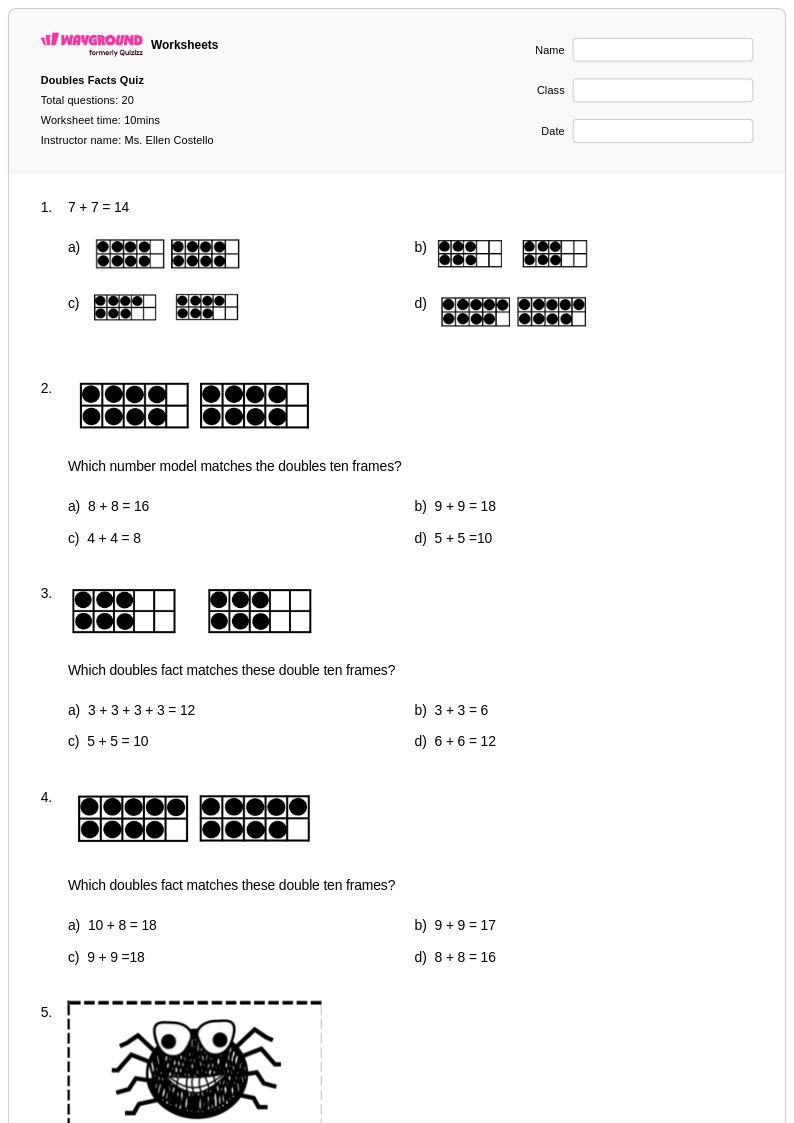
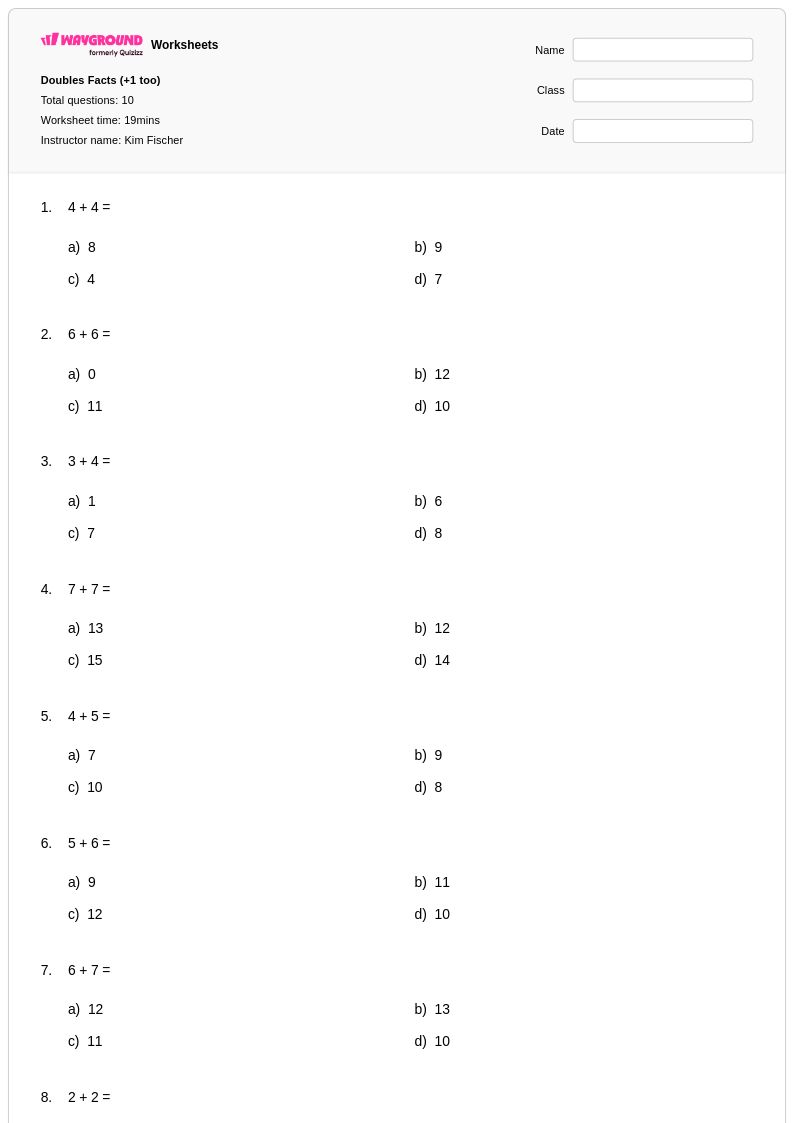
First graders are ready to move from manipulatives toward mental strategies, so the teaching sequence matters. Start by anchoring a few high-utility facts visually — a ten-frame showing 5+5 is hard to forget. Then explicitly teach students to use a known double as a stepping stone: "You know 5+5=10, so what's 5+6?" That near-doubles bridge is where doubles facts pay off most in first grade, and students who see the connection early build addition flexibility much faster than those who just memorize a list.
What exercises help first graders practice doubles facts?
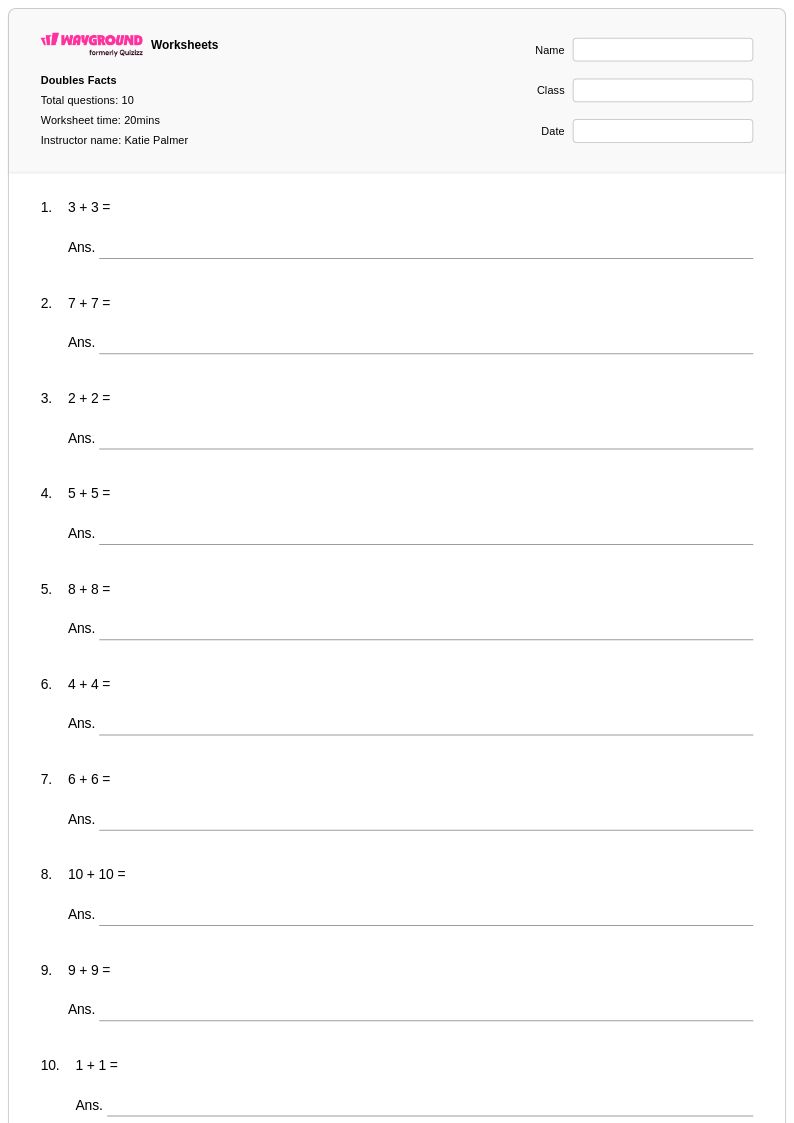
A mix of recall and application works best. Straight equation practice (3+3=__, 7+7=__) builds speed, but problems that ask students to identify which facts are doubles, or to use a double to solve a near-double, build the flexible thinking that Common Core expects at this grade. Wayground's Grade 1 doubles worksheets progress systematically from 0+0 through 10+10, so you can assign earlier sections for students still consolidating small doubles and later sections for students ready to push further.
What mistakes do first graders commonly make with doubles facts?
Two patterns show up most often. First, students confuse doubles with skip-counting and produce answers that are off by two (6+6=10 instead of 12). Second, students who have memorized the fact in one direction struggle when the format changes — they know 4+4=8 but freeze on "__+__=8" or a word problem context. Both errors signal that the student has a fragile, surface-level memory rather than a real understanding of the relationship, and they benefit from going back to visual models before more drill.
How do I use Wayground's Grade 1 doubles facts worksheets?
Each worksheet comes with a complete answer key, so you're not spending prep time creating one. For paper practice, download the PDF and assign it in class or as homework — offline practice is a natural fit for fact fluency work that doesn't need a device. When you collect paper submissions, the Wayground for Teachers app lets you scan student work for grading rather than marking each sheet by hand. You can also run the same worksheet as a digital quiz on Wayground if you want students to get instant feedback during a lesson.
Are doubles facts part of the Common Core first-grade math standards?
Yes. Common Core identifies doubles as one of the key mental strategies first graders should use to add within 20 — alongside making ten and counting on. The standard expects students to apply these strategies, not just execute procedures, which is why first-grade doubles practice should include problems that ask students to explain or extend a fact, not only fill in a blank. Mastering doubles in first grade also sets up the near-doubles strategy, which becomes a bridge to fluency with all sums within 20 by the end of second grade.
How can I differentiate doubles facts practice for my first-grade class?
For students who are still building the concept, keep the range small (0+0 through 5+5) and use Wayground's Read Aloud accommodation so they can focus on the math rather than reading the problem. For students ready to extend, push the range to 10+10 and introduce near-doubles problems alongside. Wayground also lets you adjust font size and apply a dyslexia-friendly font at the worksheet level, which helps students who find dense number pages visually overwhelming — a real barrier at this age that's easy to remove.