Free Printable Eccentricity Worksheets for Class 12
Class 12 eccentricity worksheets from Wayground provide comprehensive printables and practice problems with answer keys to help students master calculating and understanding eccentricity in conic sections through structured PDF exercises.
Explore printable Eccentricity worksheets for Class 12
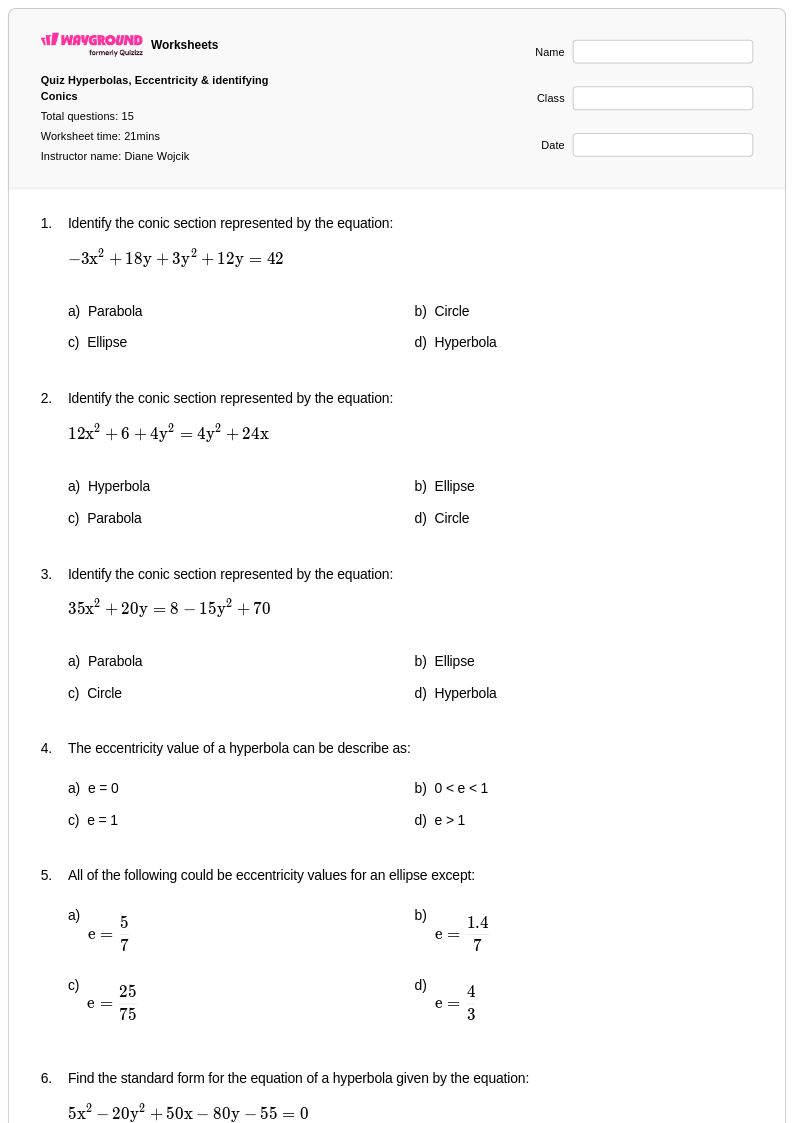
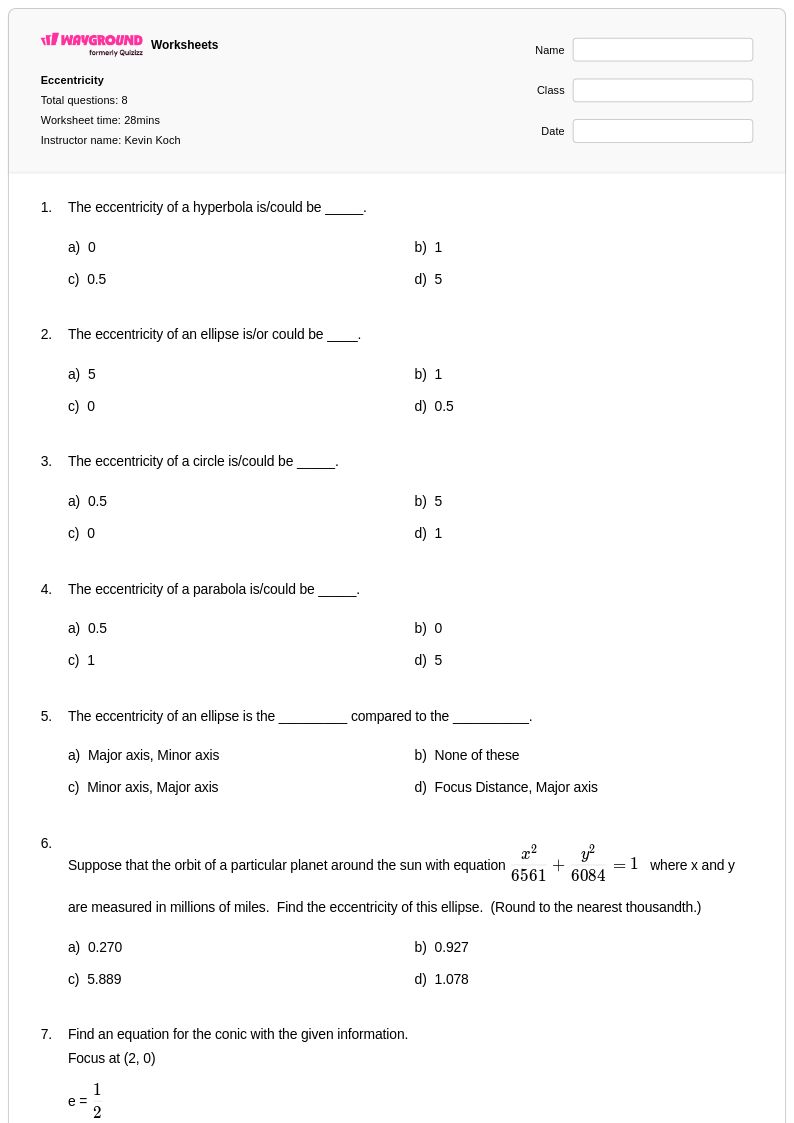
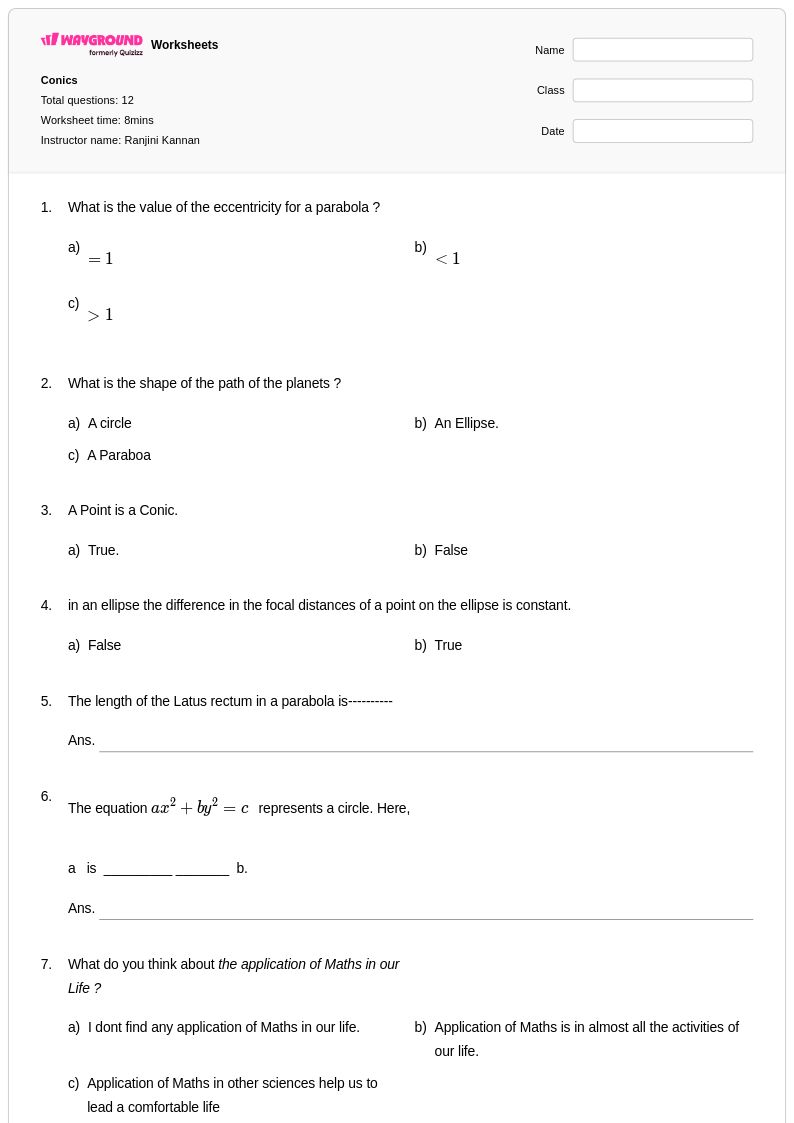
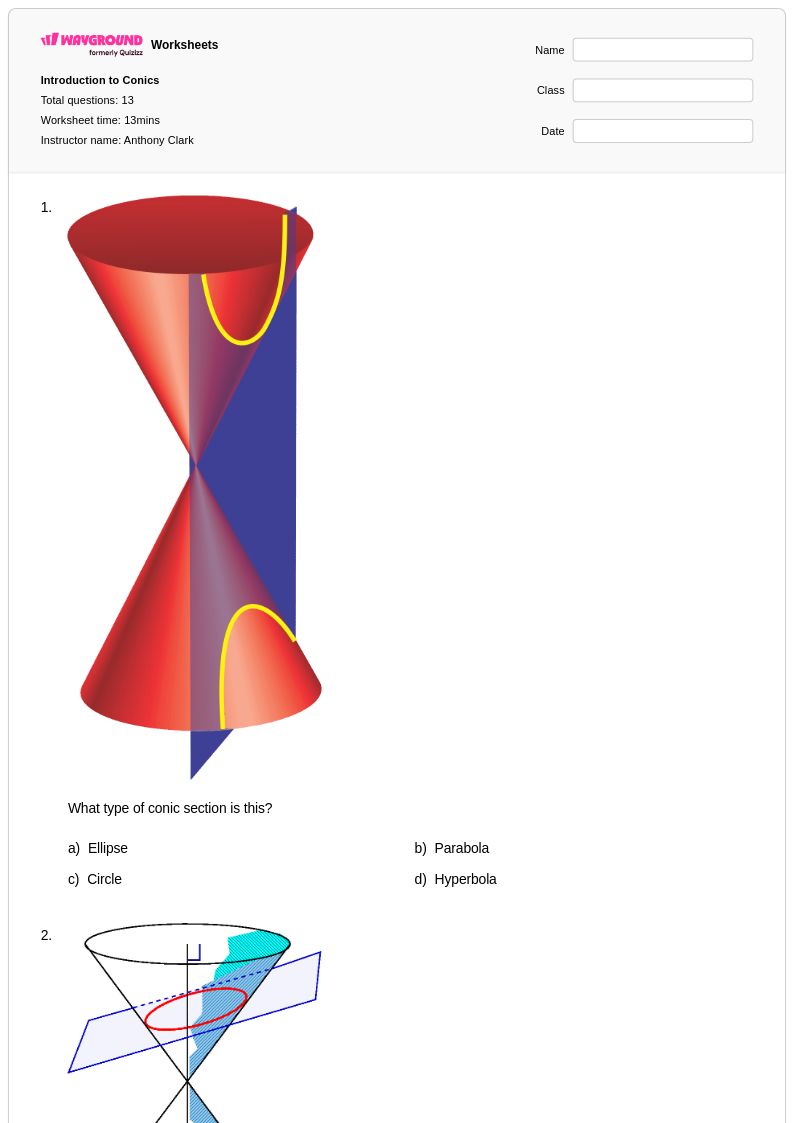
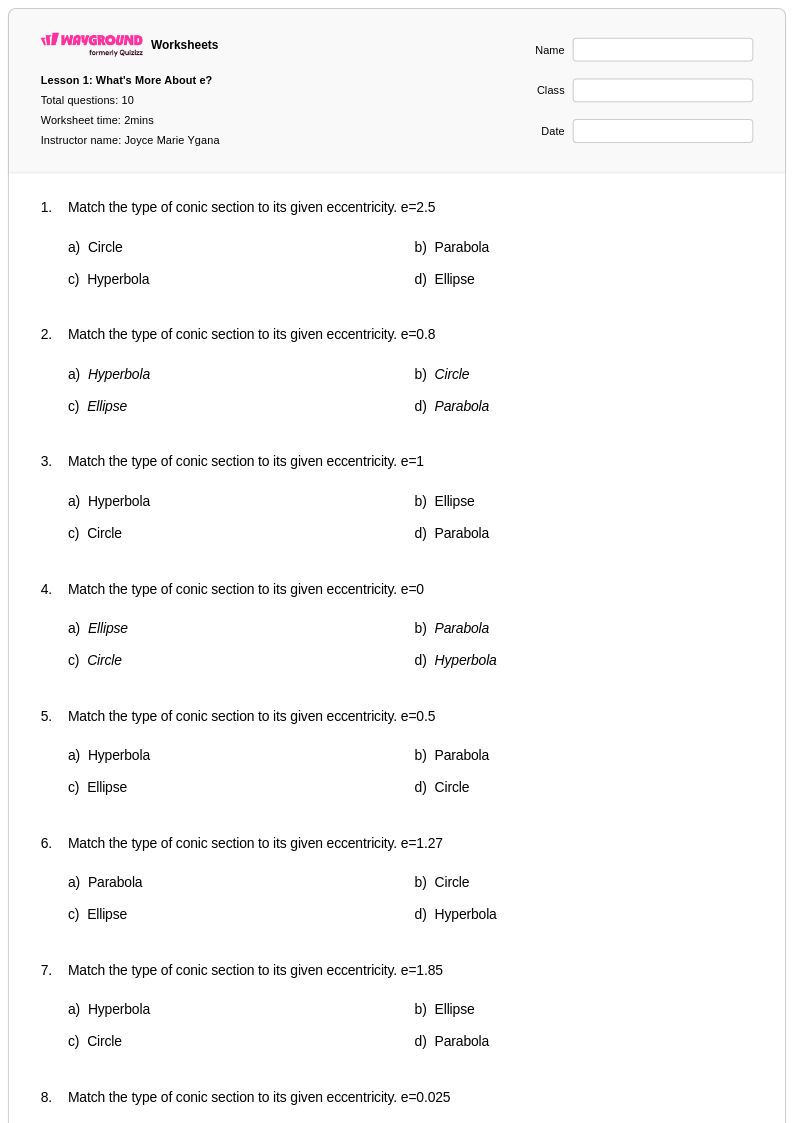
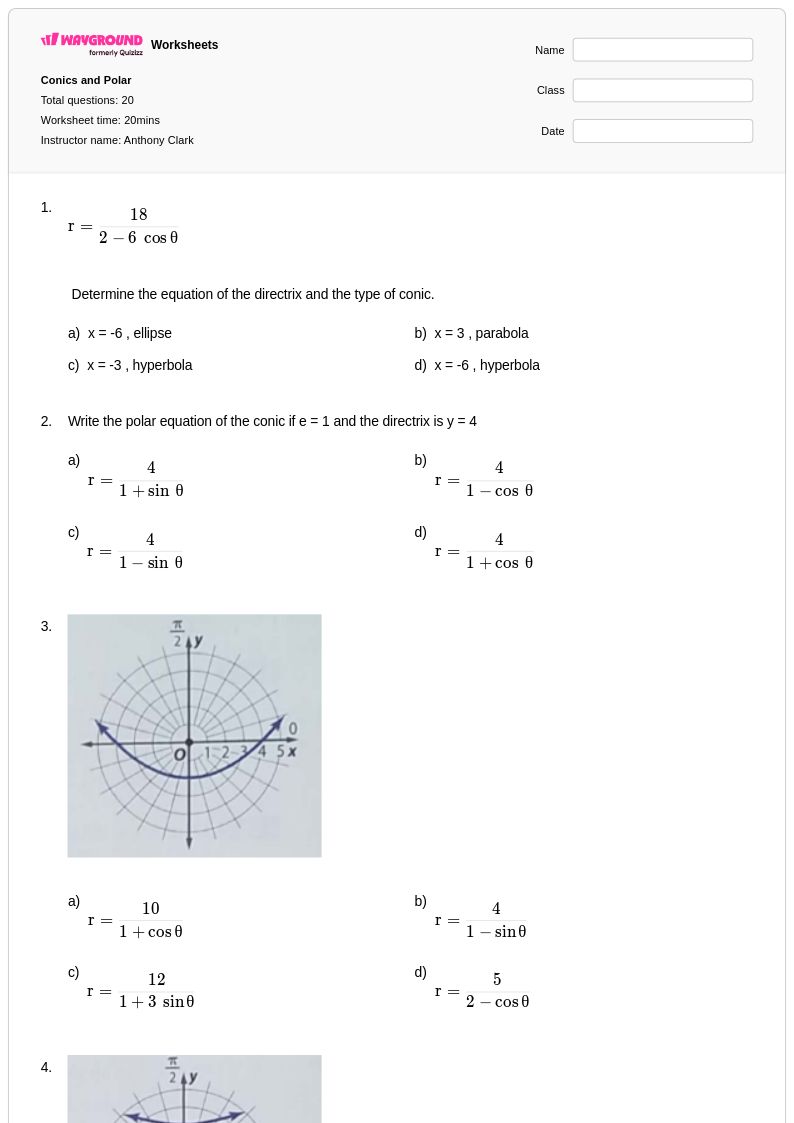
Eccentricity worksheets for Class 12 students available through Wayground (formerly Quizizz) provide comprehensive practice with this fundamental concept in analytic geometry. These carefully crafted resources help students master the mathematical relationship that defines the shape of conic sections, including ellipses, parabolas, and hyperbolas. Students develop critical skills in calculating eccentricity values, interpreting their geometric significance, and applying eccentricity formulas to determine the nature of conic curves. The worksheets feature detailed practice problems that guide learners through computing eccentricity from standard and general forms of conic equations, while accompanying answer keys allow for immediate verification and self-assessment. These free printables and pdf resources systematically build understanding of how eccentricity values distinguish between different types of conics and their geometric properties.
Wayground (formerly Quizizz) empowers educators with millions of teacher-created worksheet collections specifically designed for advanced geometry instruction at the Class 12 level. The platform's robust search and filtering capabilities enable teachers to quickly locate eccentricity resources that align with curriculum standards and match their students' specific learning objectives. Advanced differentiation tools allow instructors to customize worksheets for varying ability levels, supporting both remediation for struggling learners and enrichment opportunities for advanced students. Teachers can access these materials in both printable and digital formats, including downloadable pdf versions, making lesson planning more efficient and adaptable to different classroom environments. This comprehensive resource collection facilitates targeted skill practice and assessment, enabling educators to strengthen their students' mastery of eccentricity concepts through systematic, standards-aligned instruction.
FAQs
How do I teach eccentricity at the Grade 12 level?
Grade 12 students should be working with eccentricity in its most general forms — deriving it from equations in standard and general form, connecting it to the focus-directrix definition, and applying it in contexts like polar equations of conics. The instructional emphasis at this level should be on fluency and transfer: students who can only compute e from a labeled diagram aren't ready for the analytic geometry and calculus applications that follow. Push them to move between representations — equation to graph to eccentricity value and back.
What exercises help Grade 12 students practice eccentricity?
The most rigorous practice at Grade 12 involves three problem types: computing eccentricity from a conic in general form (requiring completing the square first), using eccentricity to write the equation of a conic given geometric constraints, and interpreting eccentricity in applied problems such as orbital mechanics or satellite paths. Problems that require students to work in both directions — from equation to e, and from e to equation — are the most effective preparation for college-level analytic geometry.
What errors do Grade 12 students still make with eccentricity?
The most common Grade 12 error is algebraic rather than conceptual: students make mistakes completing the square when converting a general conic equation to standard form, which cascades into a wrong value of a or c and therefore a wrong eccentricity. A second issue is applying ellipse logic to hyperbolas — specifically using c² = a² − b² instead of c² = a² + b². These aren't new errors, but they persist because students rarely get explicit practice distinguishing the two cases side by side.
How do I use Wayground's Grade 12 eccentricity worksheets?
Each worksheet comes with a complete answer key, which makes it practical for self-paced review or test prep. You can assign it as a digital quiz on Wayground to track which problems students miss, or print the PDF for paper-based practice — if you go the print route, the Wayground for Teachers app lets you scan student work for grading rather than checking each paper by hand.
How does eccentricity fit into the Grade 12 math curriculum?
In Common Core-aligned courses, Grade 12 analytic geometry builds on the conic section foundations from Grades 10–11 by extending to polar and parametric forms, where eccentricity appears directly in the polar equation of a conic as the parameter that determines the curve's type. Mastery of eccentricity at this level is a prerequisite for calculus topics like arc length of ellipses and the two-body orbital problem — students who leave Grade 12 without a solid grasp of it will encounter it again in college calculus or physics with less support.
Can I differentiate eccentricity practice for my Grade 12 class?
For students who need scaffolding on multi-step problems, Wayground's extended time accommodation gives them more space to work through the algebra without the pressure of a timed session. At the worksheet level, you can adjust font size or spacing for students who need it, or translate the worksheet for English language learners — all without creating a separate assignment. Students who are ready for more challenge can be directed to problems involving polar forms or real-world orbital modeling, which the worksheet collection includes.