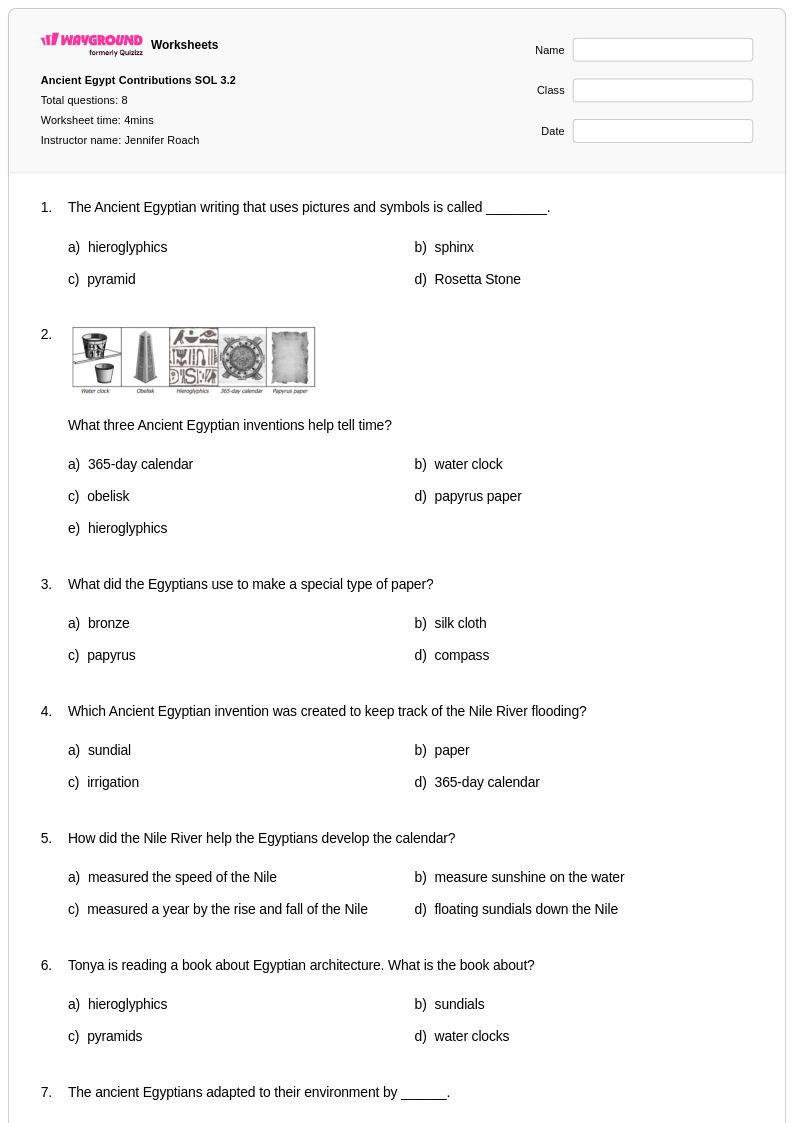
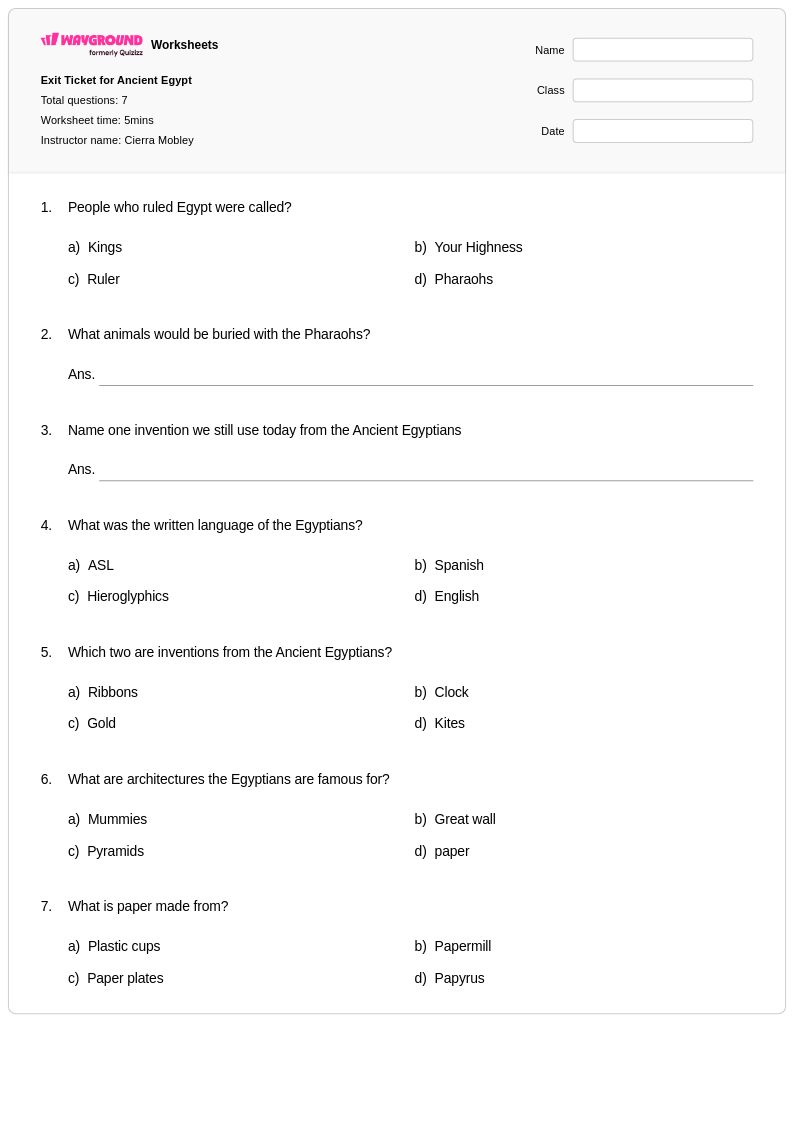
Free Printable Egyptian Engineering Worksheets for Class 3
Explore Class 3 Egyptian Engineering worksheets and printables that help students discover ancient pyramid construction, irrigation systems, and architectural innovations through engaging practice problems with answer keys available as free PDF downloads.
Explore printable Egyptian Engineering worksheets for Class 3
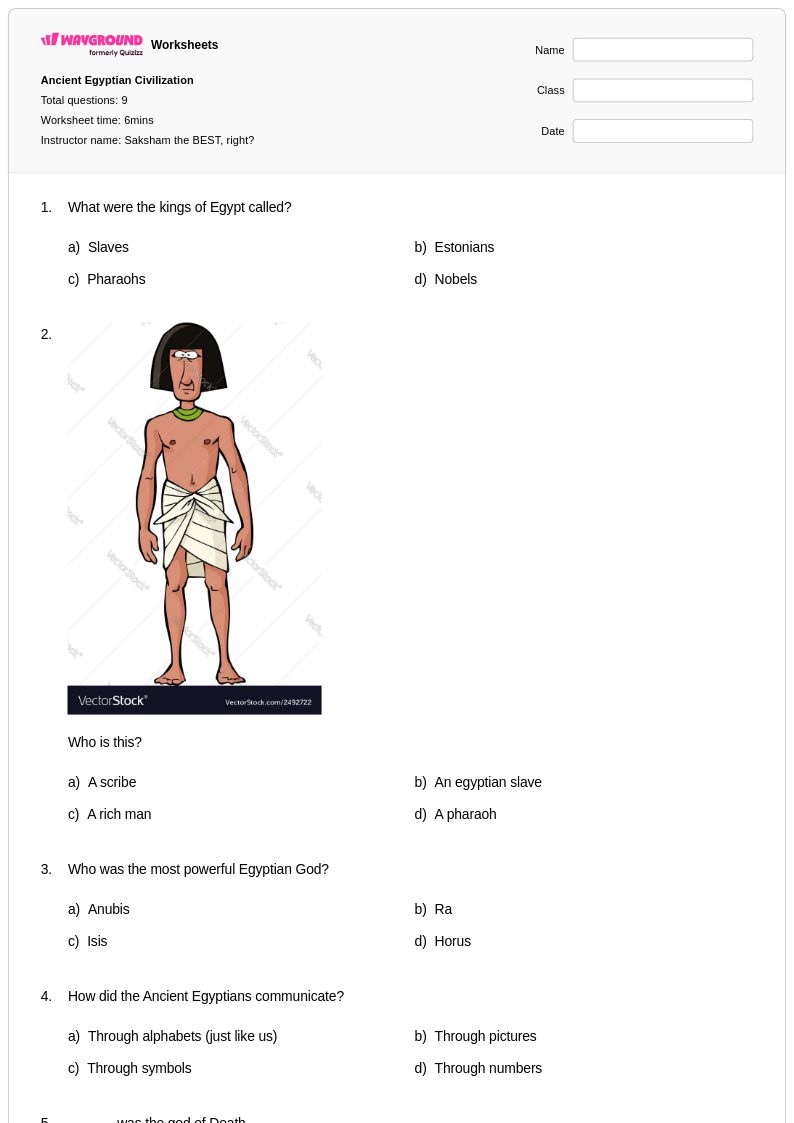
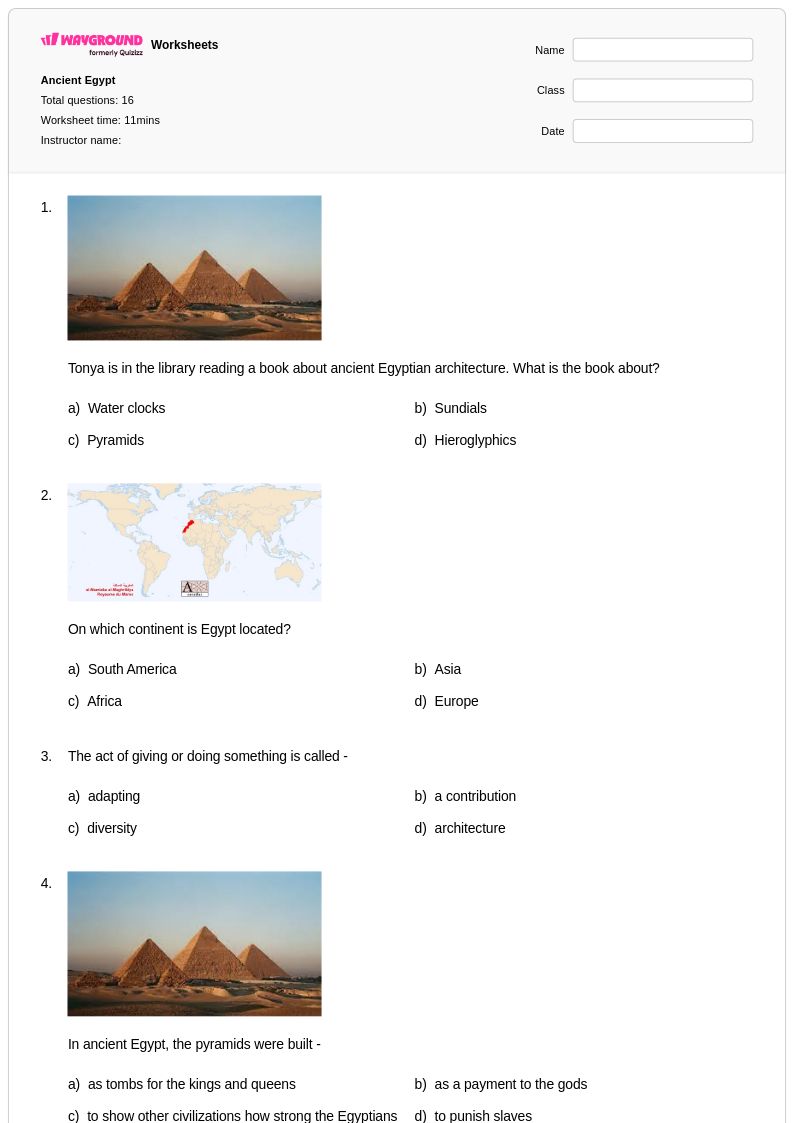
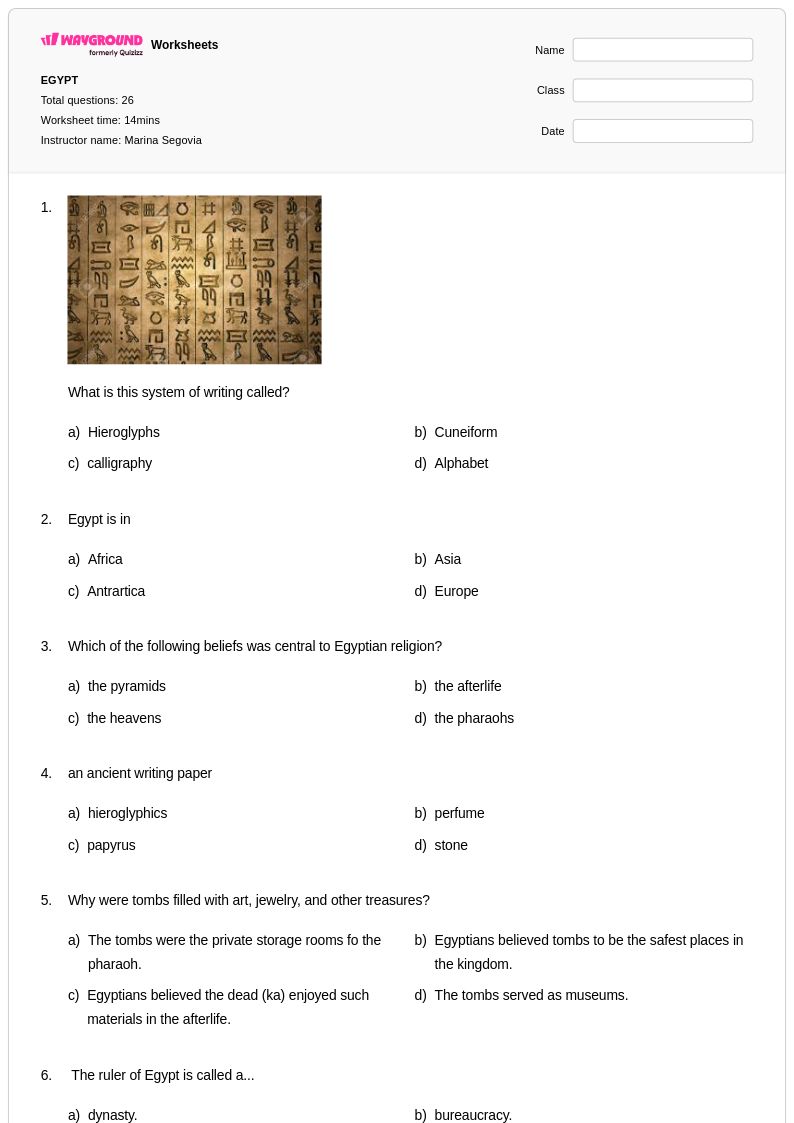
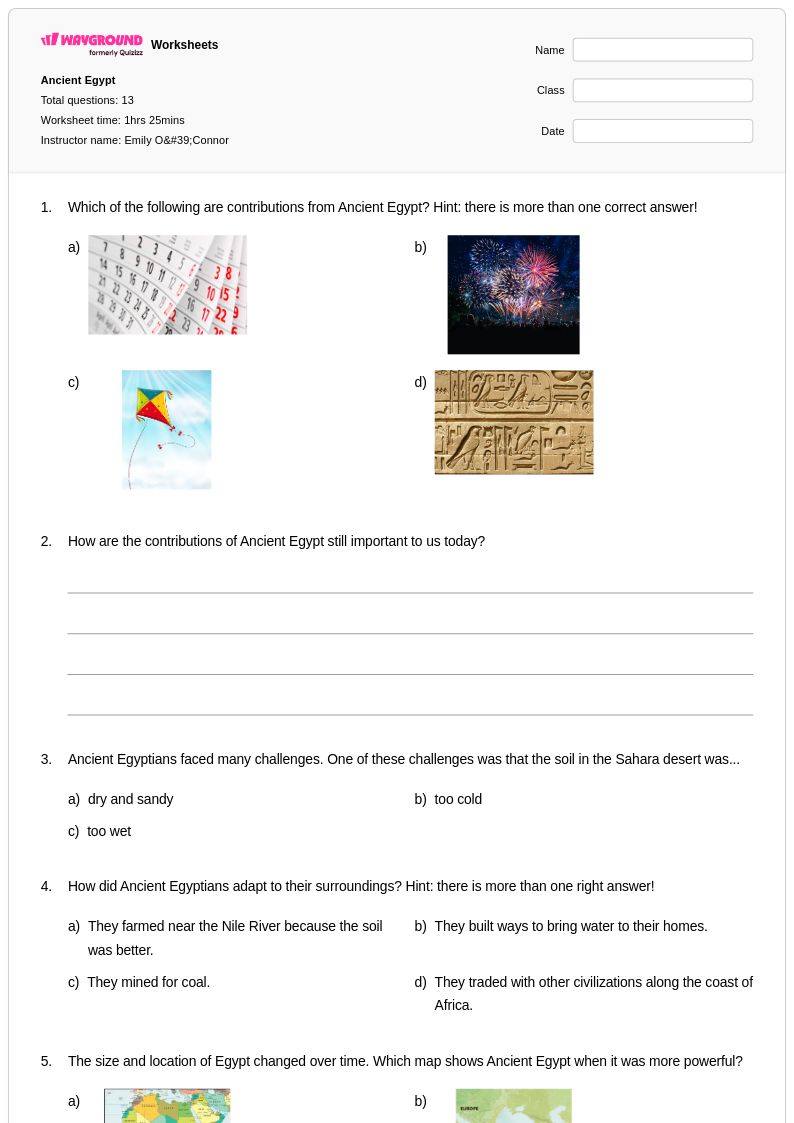
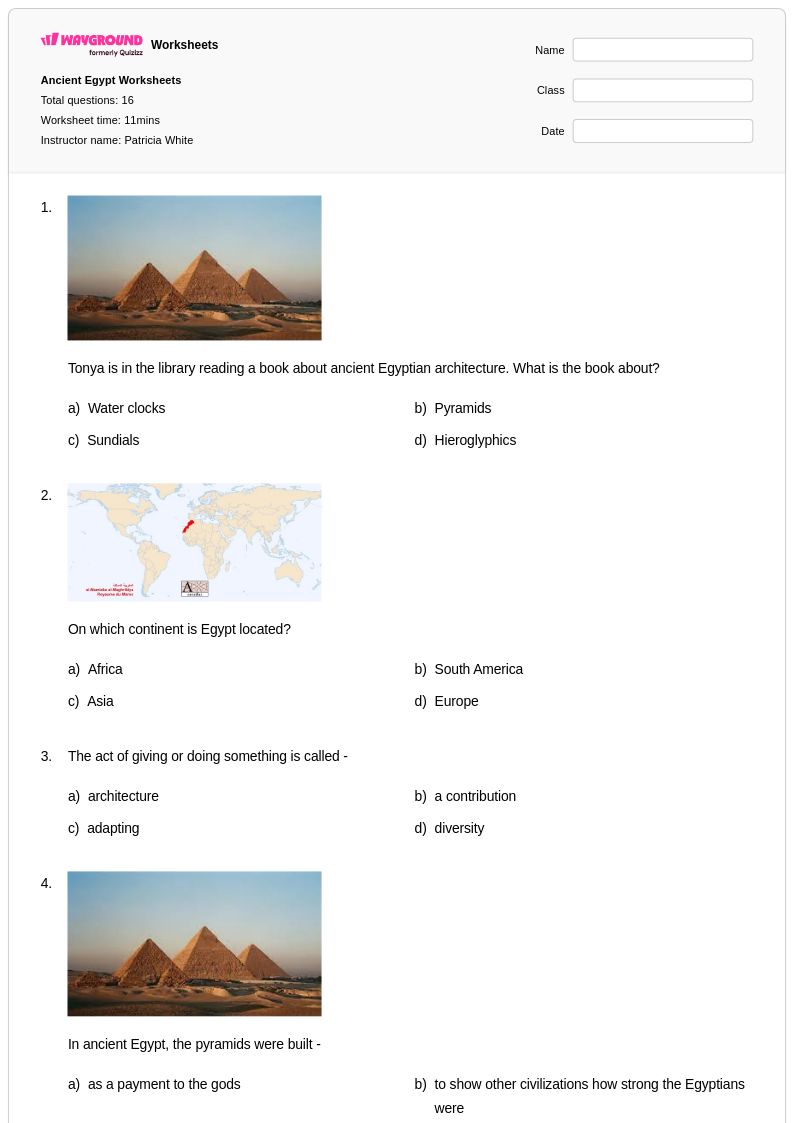
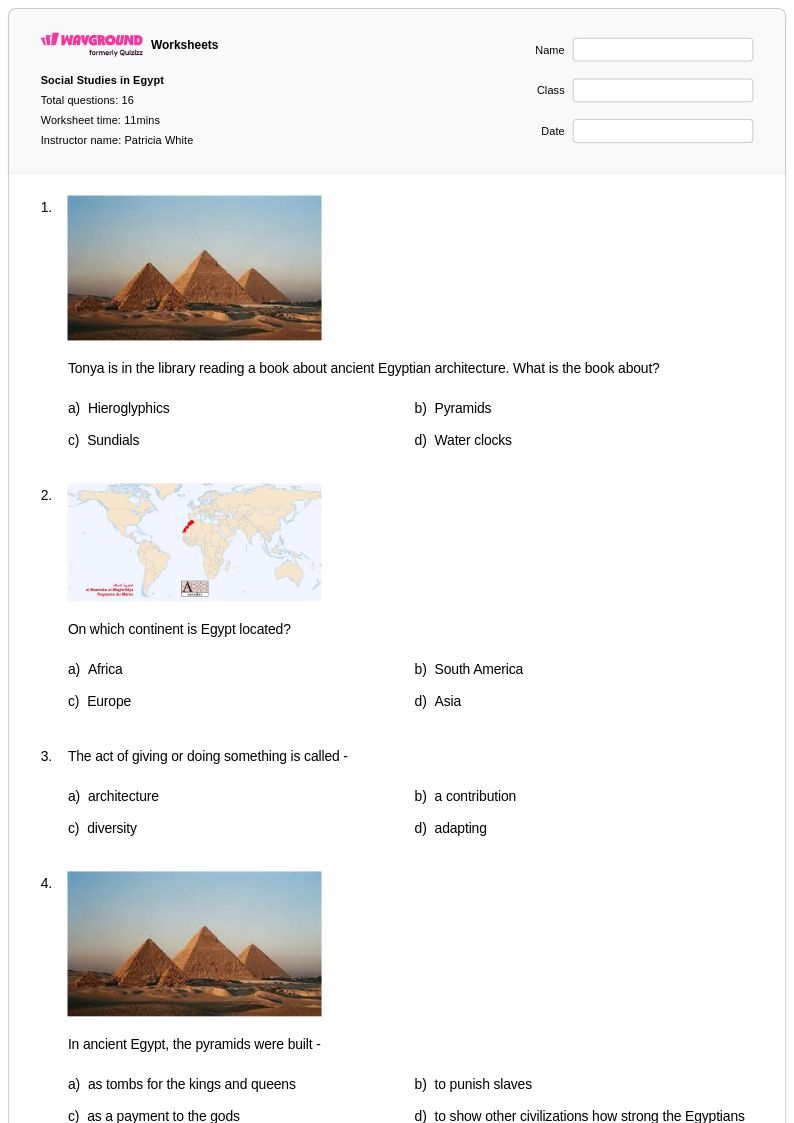
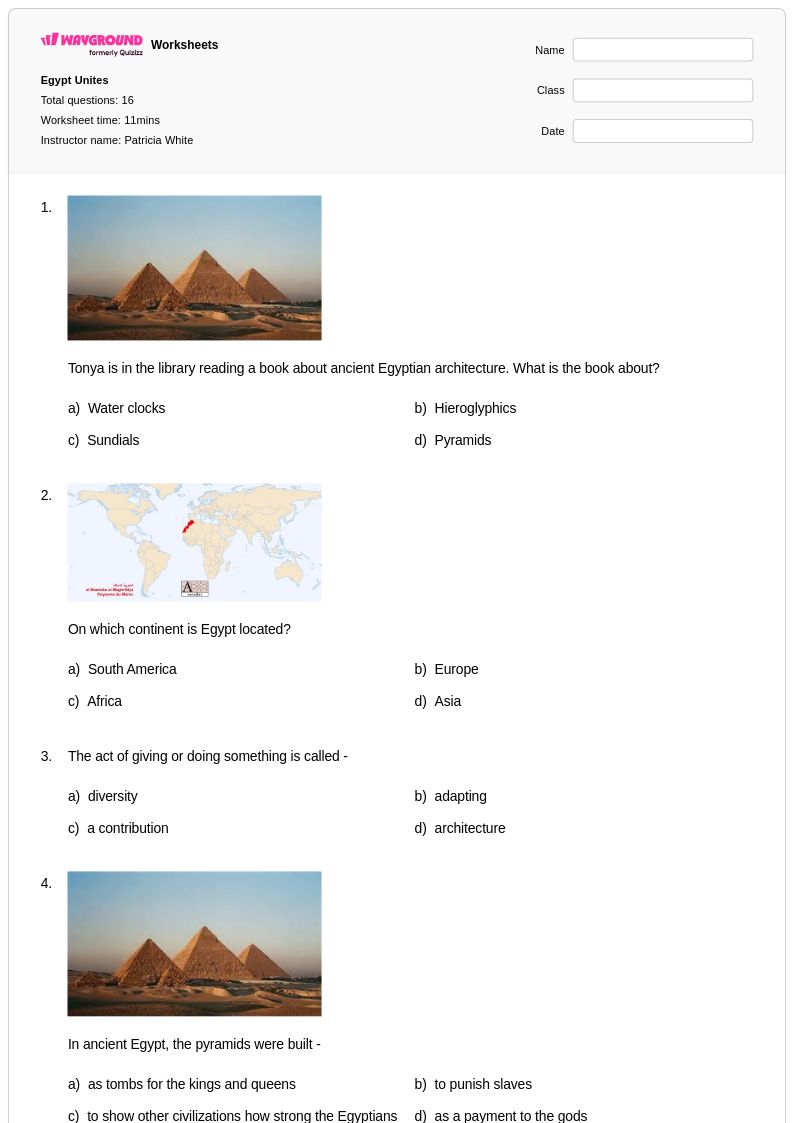
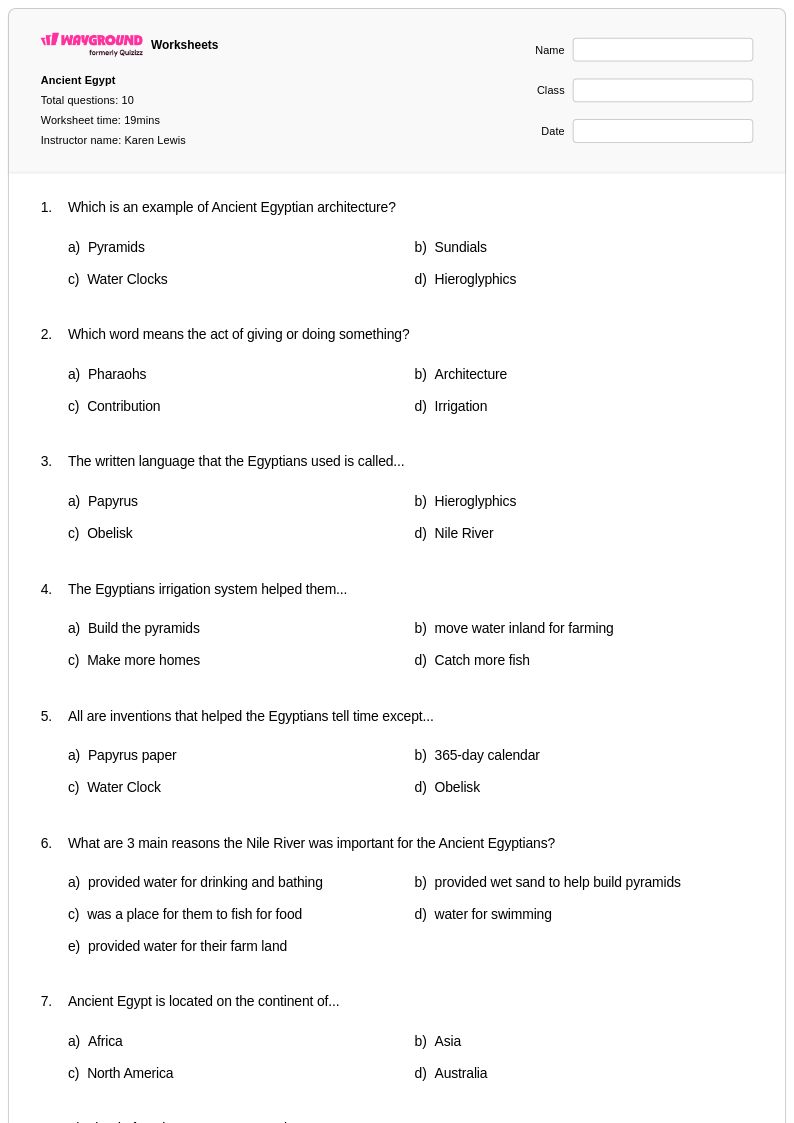
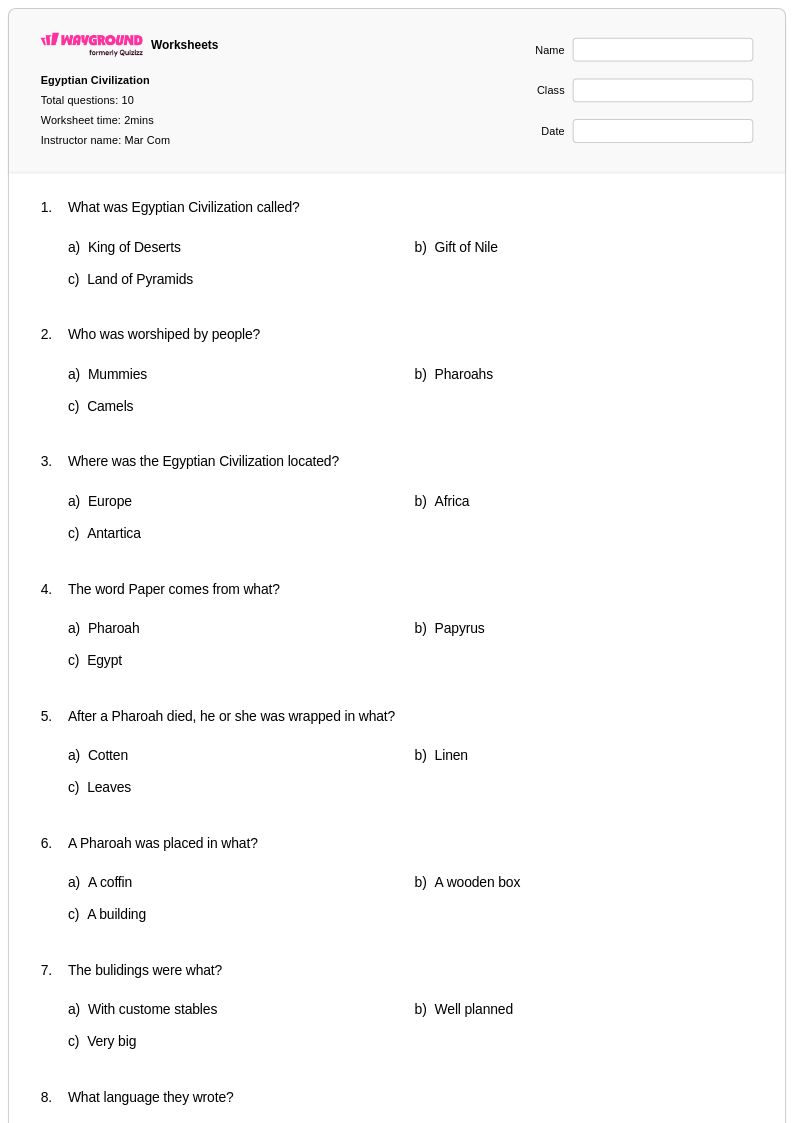
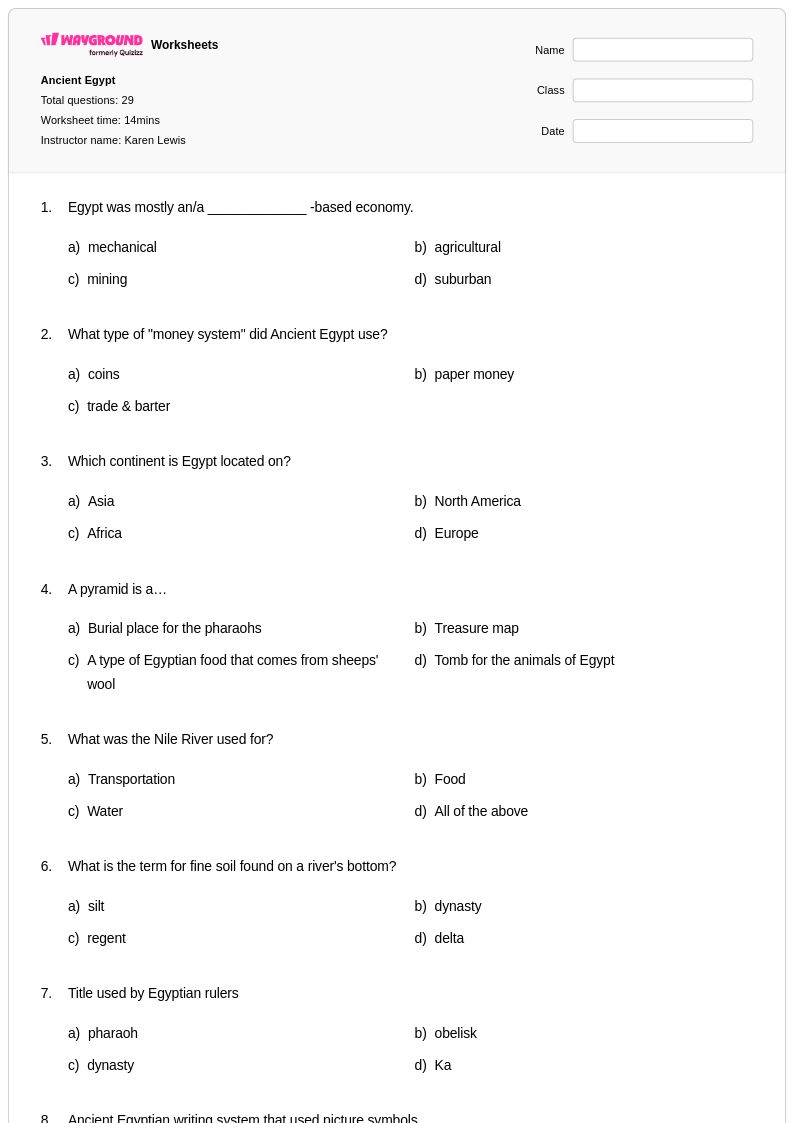
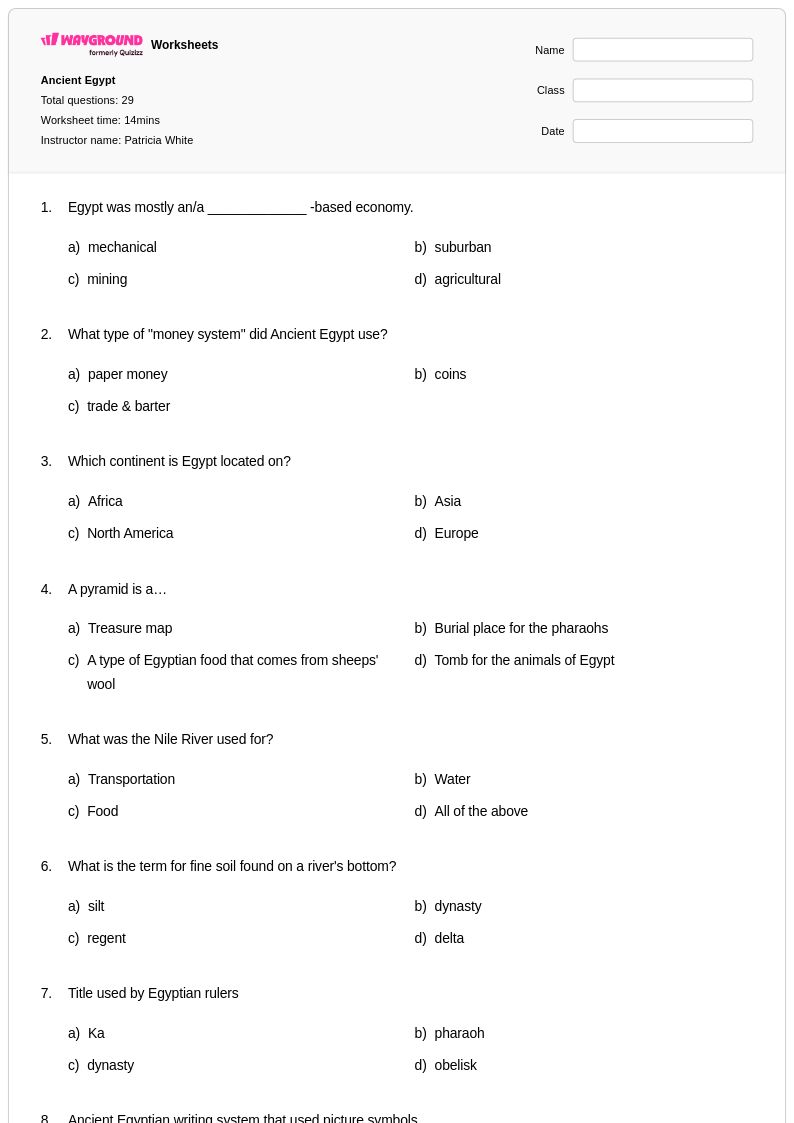
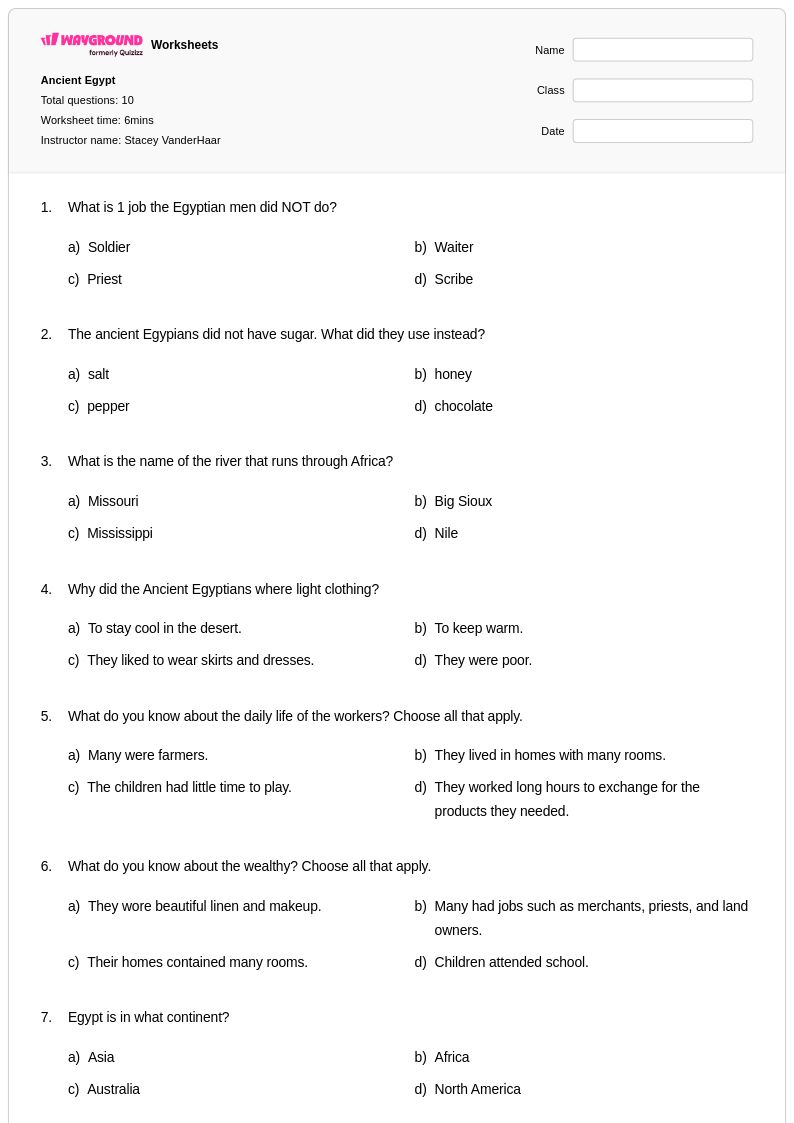
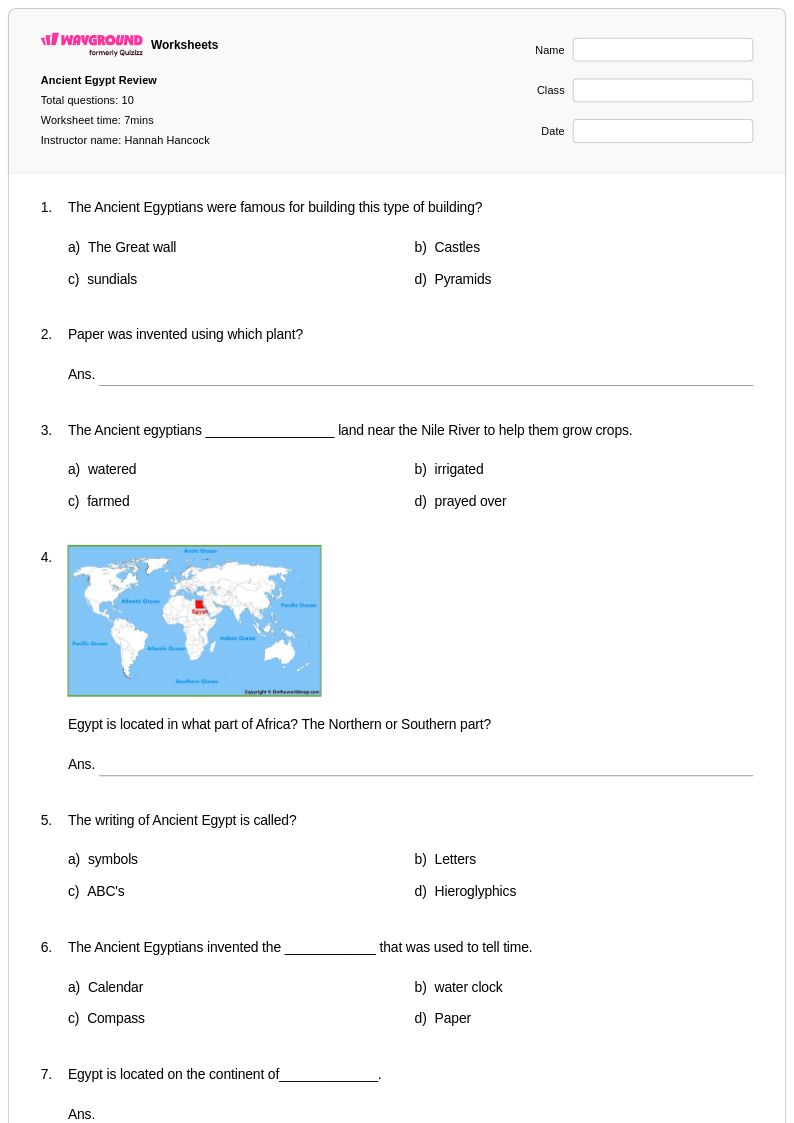
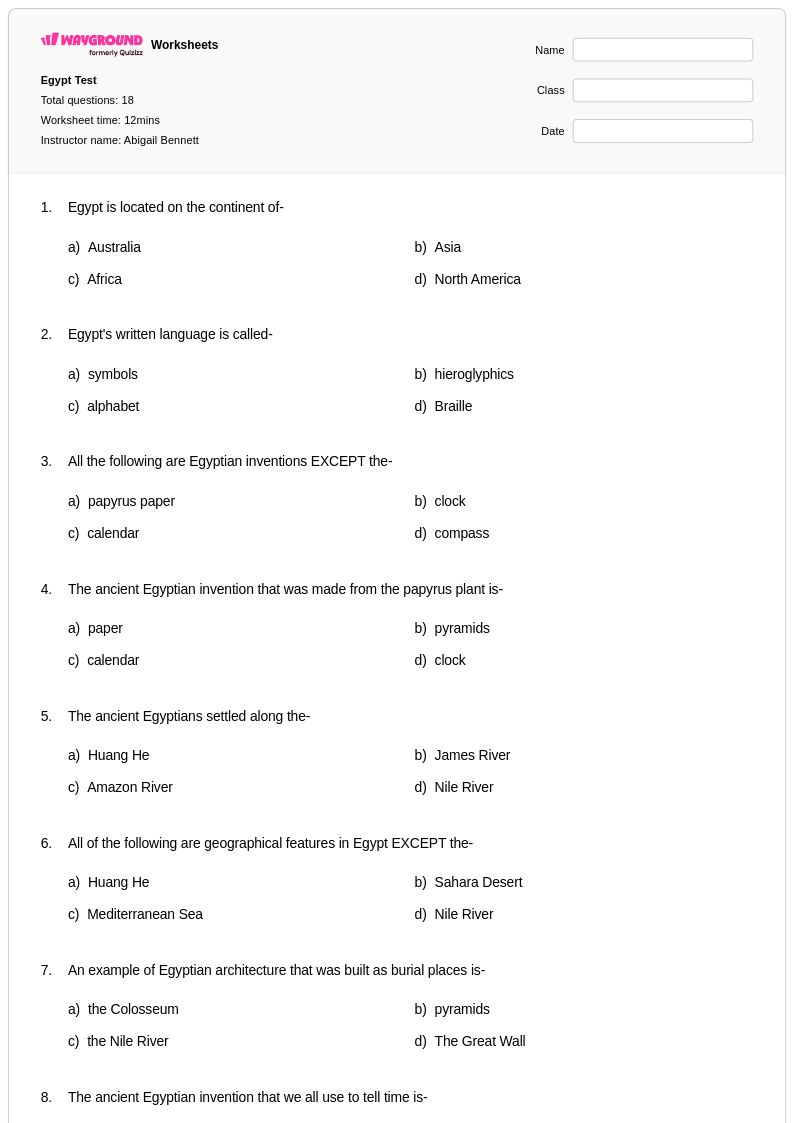
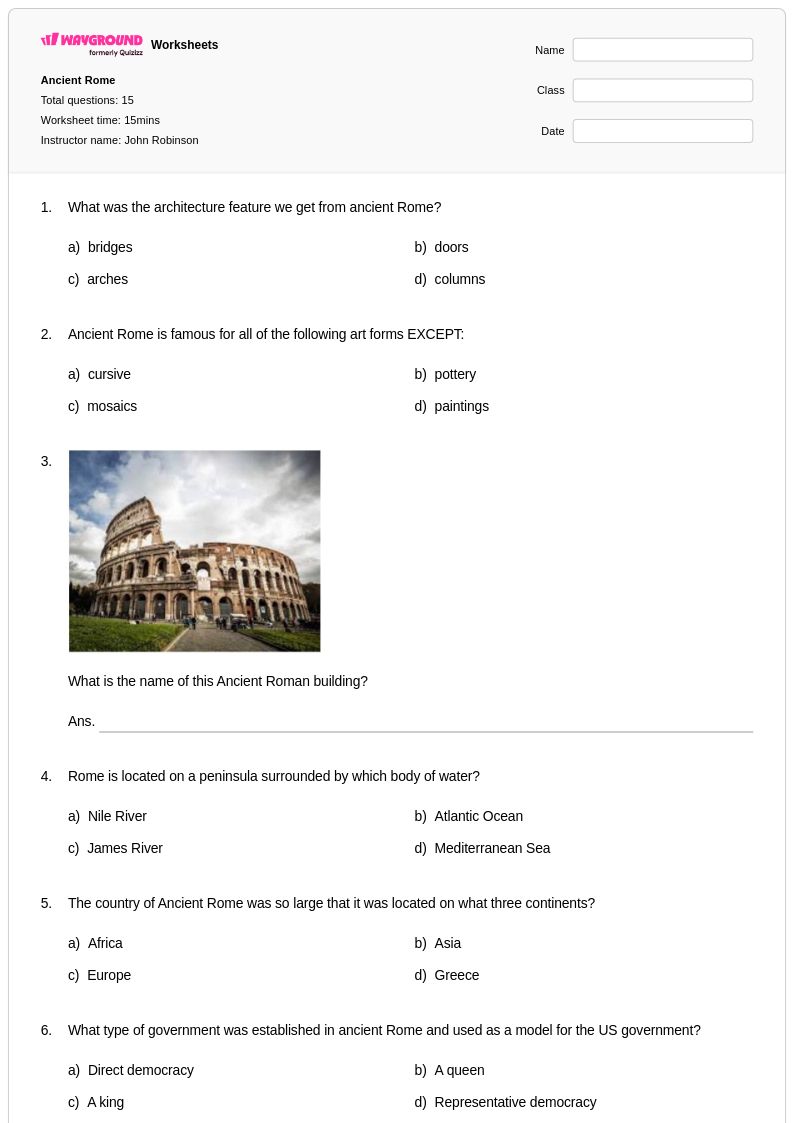
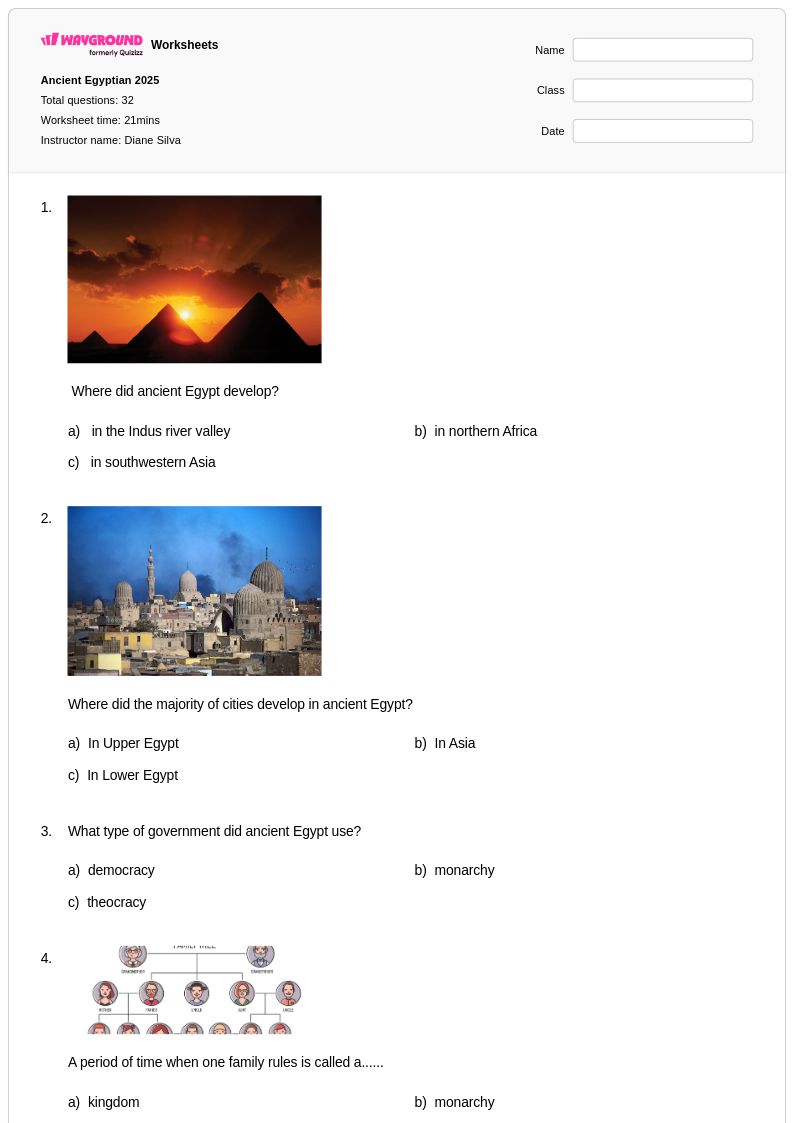
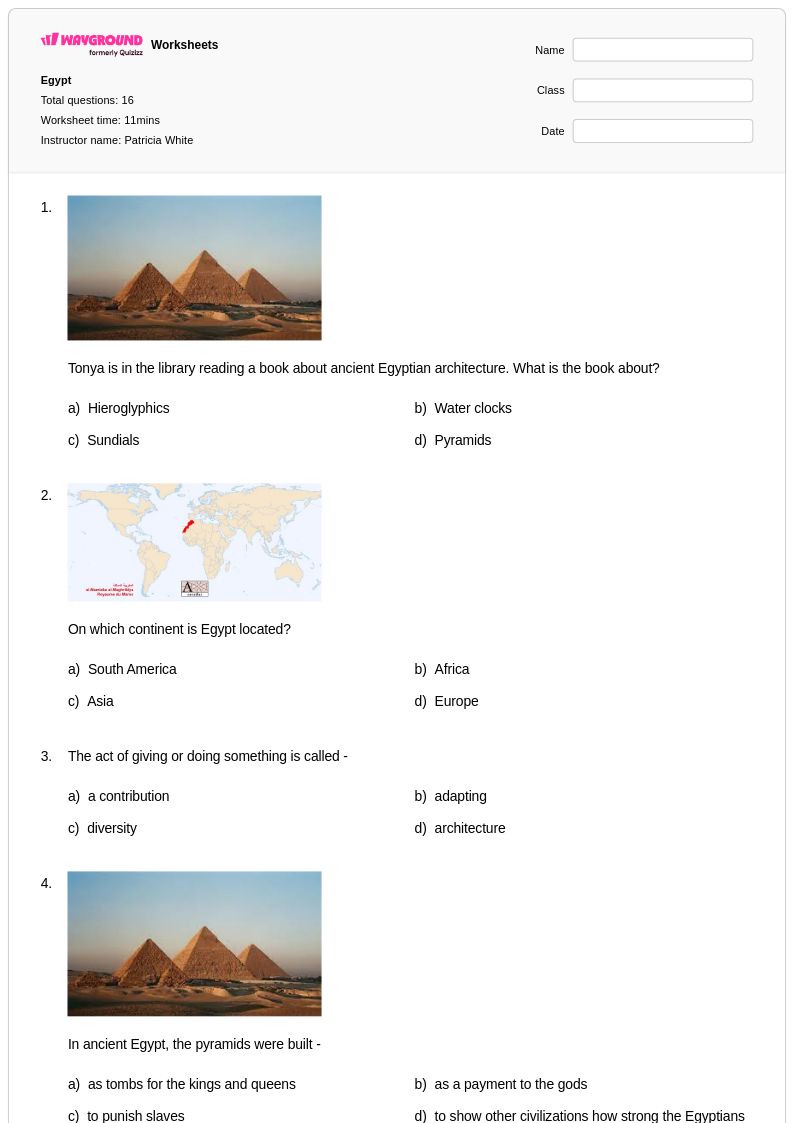
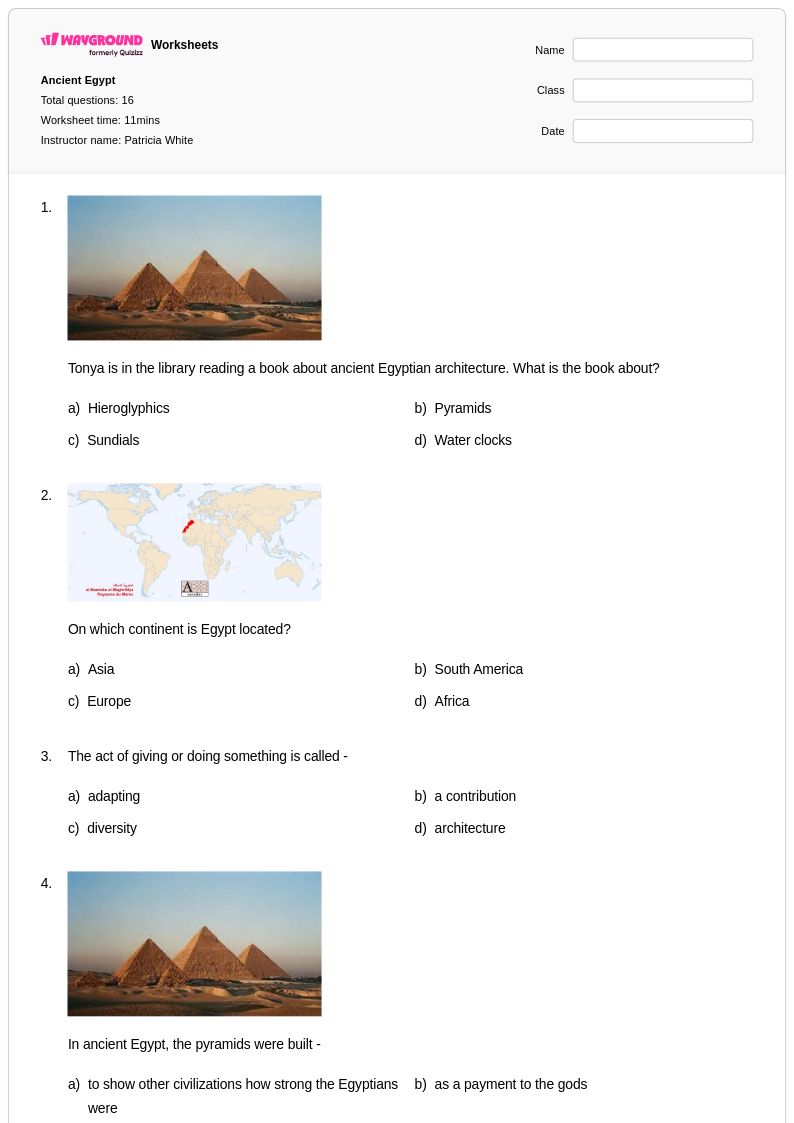
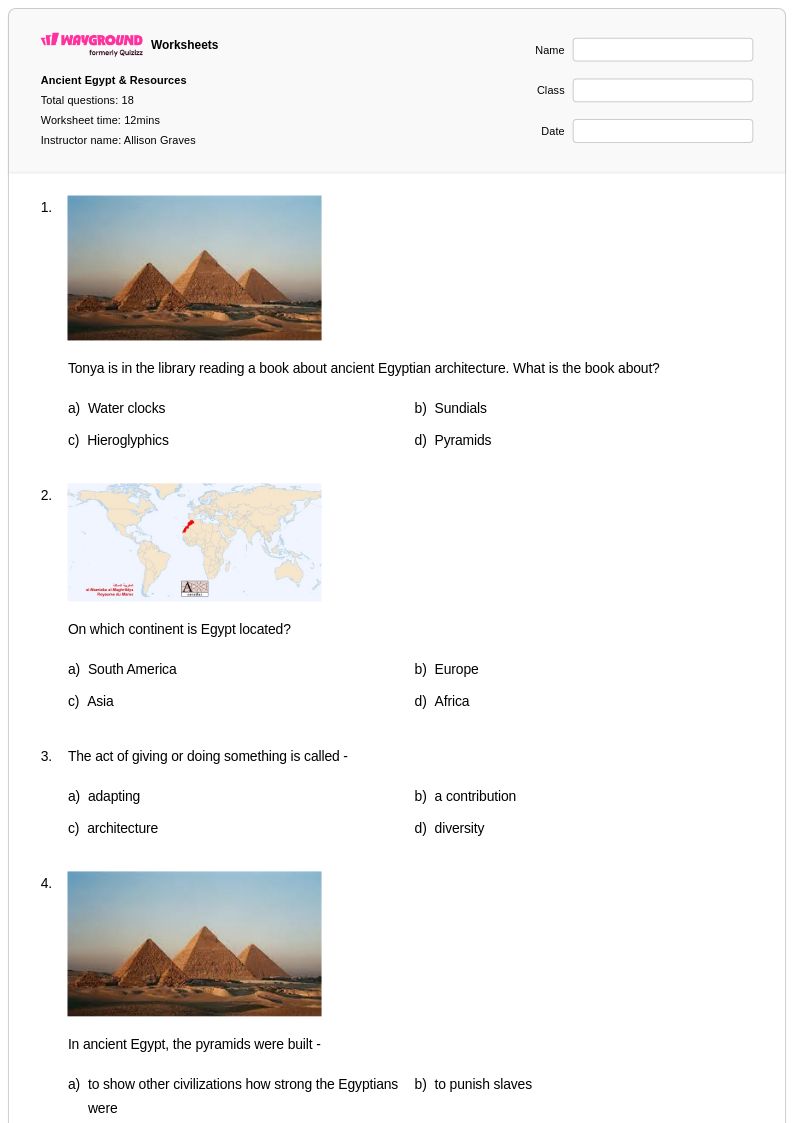
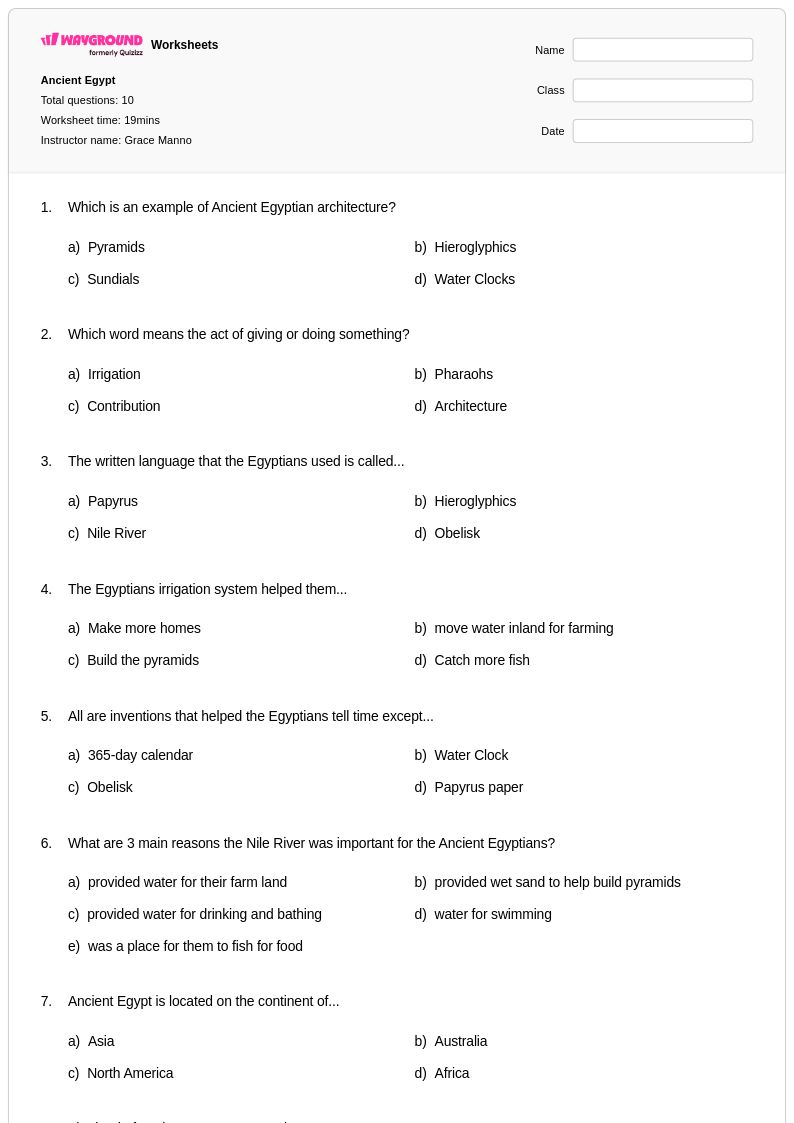
Egyptian engineering worksheets for Class 3 students through Wayground (formerly Quizizz) introduce young learners to the remarkable architectural and construction achievements of ancient Egypt. These carefully designed educational resources help third-grade students explore how the Egyptians built massive pyramids, constructed irrigation systems along the Nile River, and created impressive temples that still stand today. The worksheets strengthen critical thinking skills as students analyze ancient building techniques, compare Egyptian engineering methods to modern construction, and understand how geography influenced architectural decisions. Each printable resource includes comprehensive answer keys and practice problems that reinforce learning objectives, while the free pdf format ensures easy classroom distribution and home study support.
Wayground (formerly Quizizz) empowers teachers with millions of educator-created resources specifically focused on ancient civilizations and Egyptian engineering concepts appropriate for elementary learners. The platform's robust search and filtering capabilities allow instructors to quickly locate worksheets that align with social studies standards and match their students' developmental needs. Teachers can easily differentiate instruction by accessing materials at various complexity levels, customize content to emphasize specific engineering marvels like the Great Pyramid of Giza or ancient Egyptian tools, and choose between digital interactive formats or traditional printable pdf versions. These versatile resources support comprehensive lesson planning while providing targeted practice opportunities for skill reinforcement, remediation for struggling learners, and enrichment activities that challenge advanced students to delve deeper into the fascinating world of ancient Egyptian innovation.
FAQs
How do I teach Egyptian engineering to students?
Teaching Egyptian engineering works best when students connect abstract concepts to tangible structures like the pyramids, irrigation canals, and temple complexes. Start with the problem-solving logic ancient Egyptians used — how they managed labor, materials, and geometry without modern tools. Grounding lessons in specific engineering challenges, such as how ramps were used to move massive stone blocks or how shadoofs regulated water flow, gives students a concrete framework for understanding ancient technological innovation.
What are good practice activities for students learning about ancient Egyptian construction techniques?
Effective practice activities include analyzing diagrams of pyramid construction methods, working through the mathematical ratios used in slope and alignment calculations, and comparing Egyptian engineering solutions to modern equivalents. Worksheets that require students to explain the purpose behind specific structures, such as the function of irrigation systems during Nile flooding, build both content knowledge and analytical thinking. These activities reinforce how engineering decisions were driven by environmental, mathematical, and logistical constraints.
What misconceptions do students commonly have about how the Egyptian pyramids were built?
A common misconception is that the pyramids were built by enslaved workers, when current evidence points more strongly to organized, paid labor forces. Students also frequently underestimate the mathematical sophistication involved, assuming construction was purely physical rather than deeply geometric. Another error is treating the pyramids as isolated achievements rather than understanding them as part of a broader engineering tradition that included temples, causeways, and hydraulic systems.
How can I use Egyptian engineering worksheets to support different skill levels in my class?
Egyptian engineering worksheets can be differentiated by adjusting the complexity of questions — from identifying basic structural features to analyzing the engineering logic behind construction choices. For struggling learners, reduced-answer-choice formats and read-aloud support can lower barriers to engagement while keeping content rigorous. Advanced students benefit from open-ended prompts that ask them to evaluate the lasting influence of Egyptian innovations on modern civil engineering.
How do I use Wayground's Egyptian engineering worksheets in my classroom?
Wayground's Egyptian engineering worksheets are available as printable PDFs for traditional classroom use and in digital formats for technology-integrated environments, including the option to host them as a quiz directly on Wayground. Teachers can use them for direct instruction support, independent practice, or targeted remediation depending on where students are in the unit. Each worksheet includes a complete answer key, making them easy to deploy without additional preparation.
How does Egyptian engineering connect to math standards I'm already teaching?
Pyramid construction involves applied geometry, including slope calculations, volume, and proportional reasoning, making Egyptian engineering a practical context for reinforcing math standards. The precise alignment of structures like the Great Pyramid to cardinal directions introduces concepts of measurement accuracy and spatial reasoning. Using engineering examples from ancient Egypt helps students see mathematical concepts as tools used to solve real-world problems rather than abstract exercises.