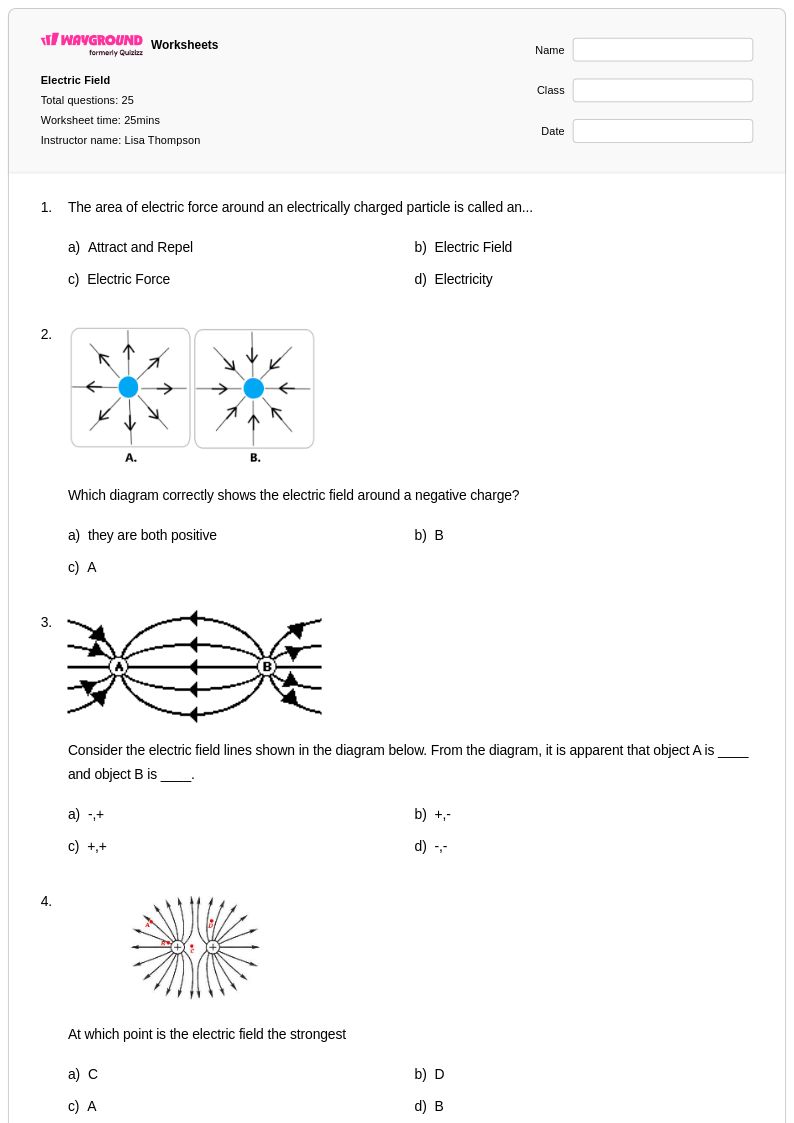
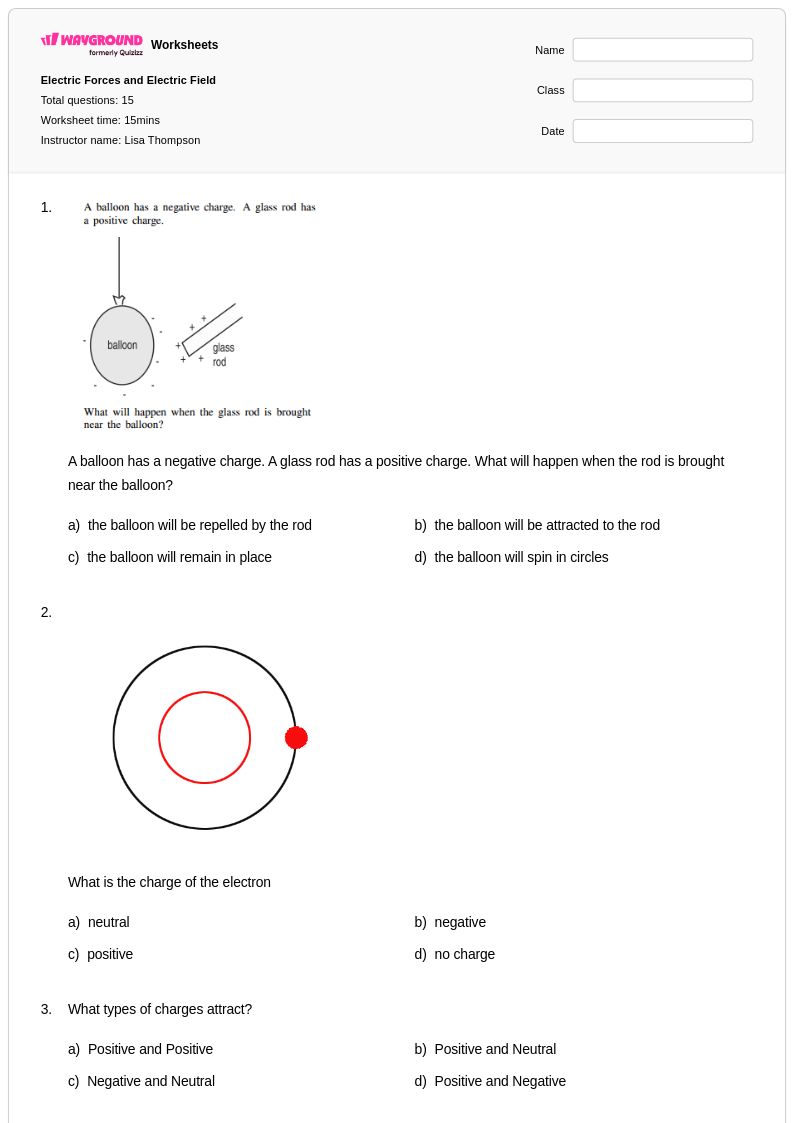
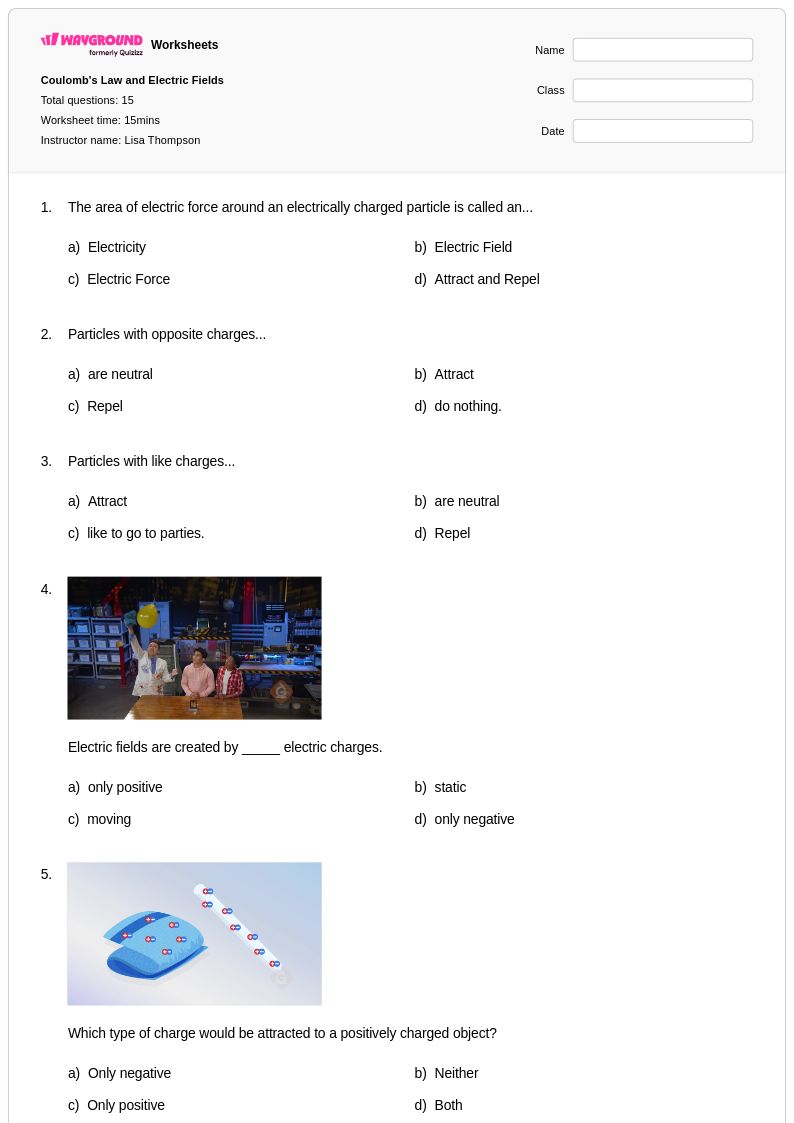
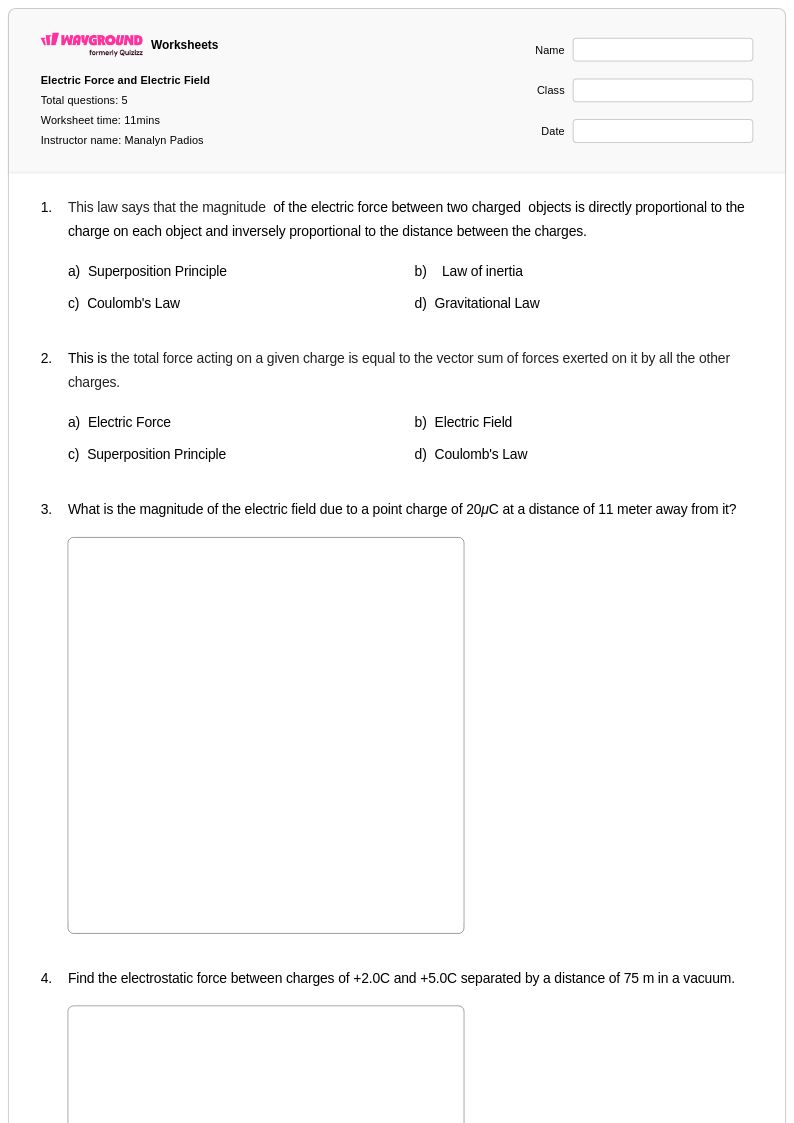
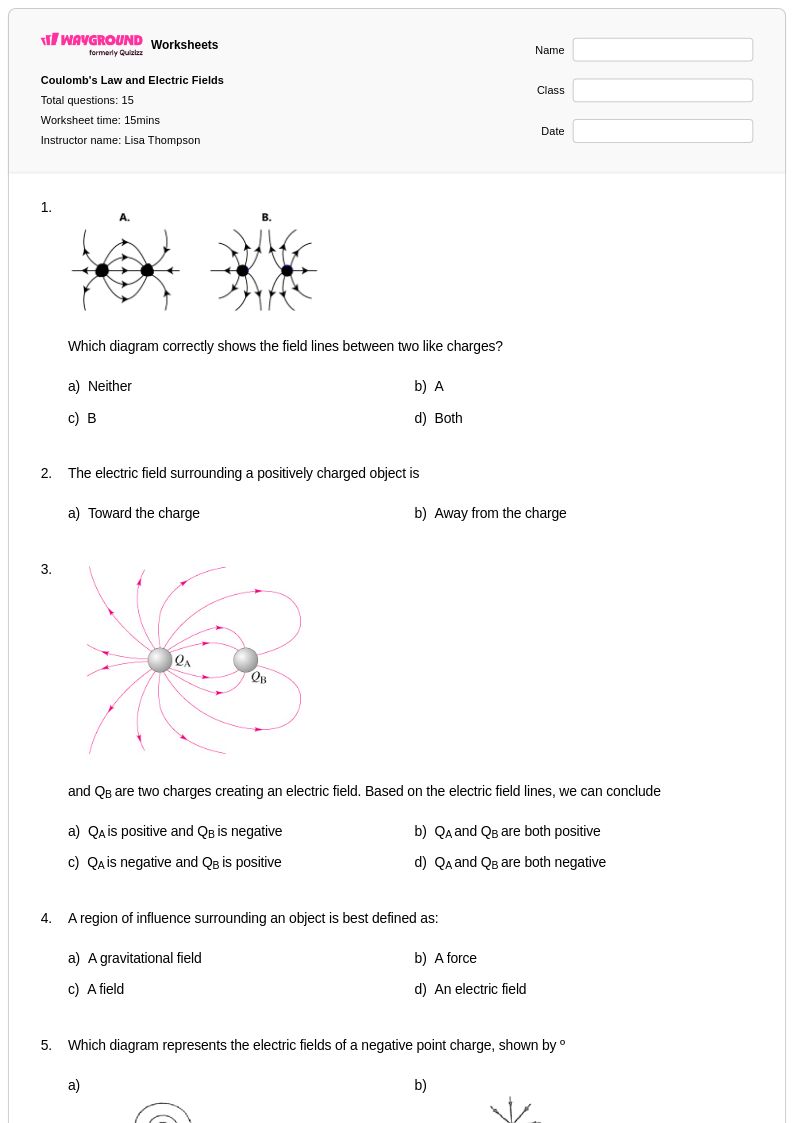
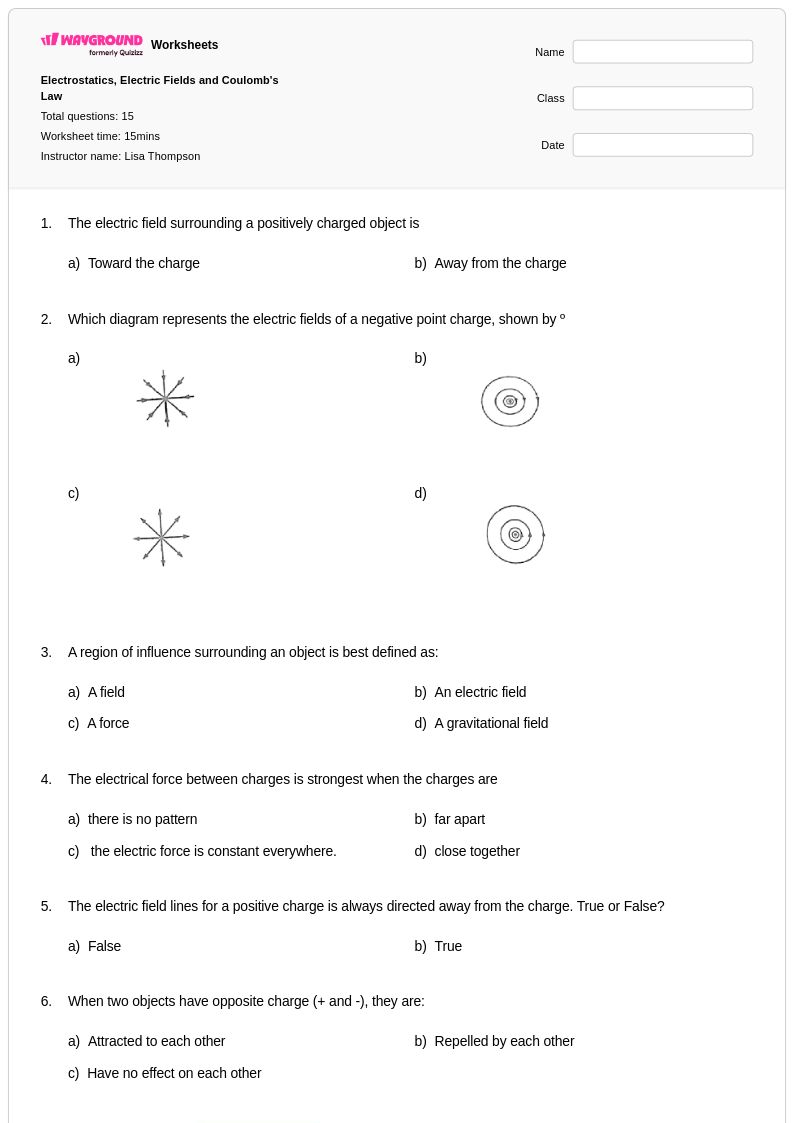
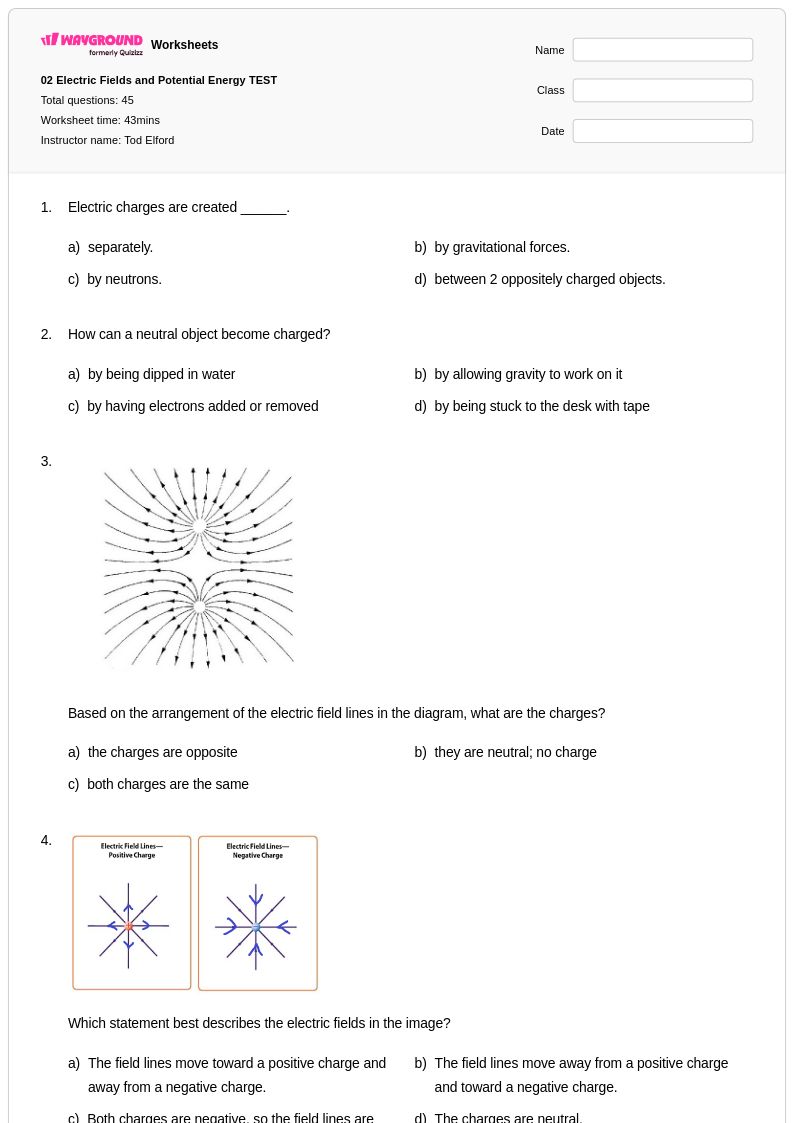
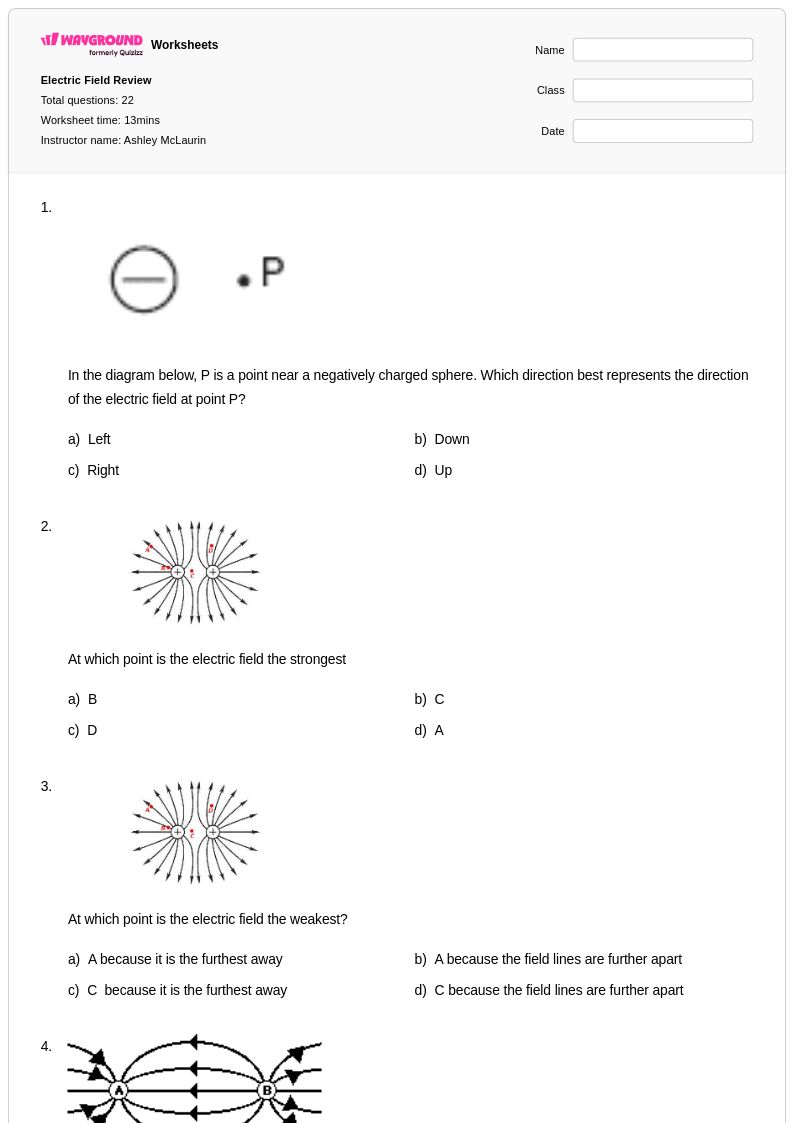
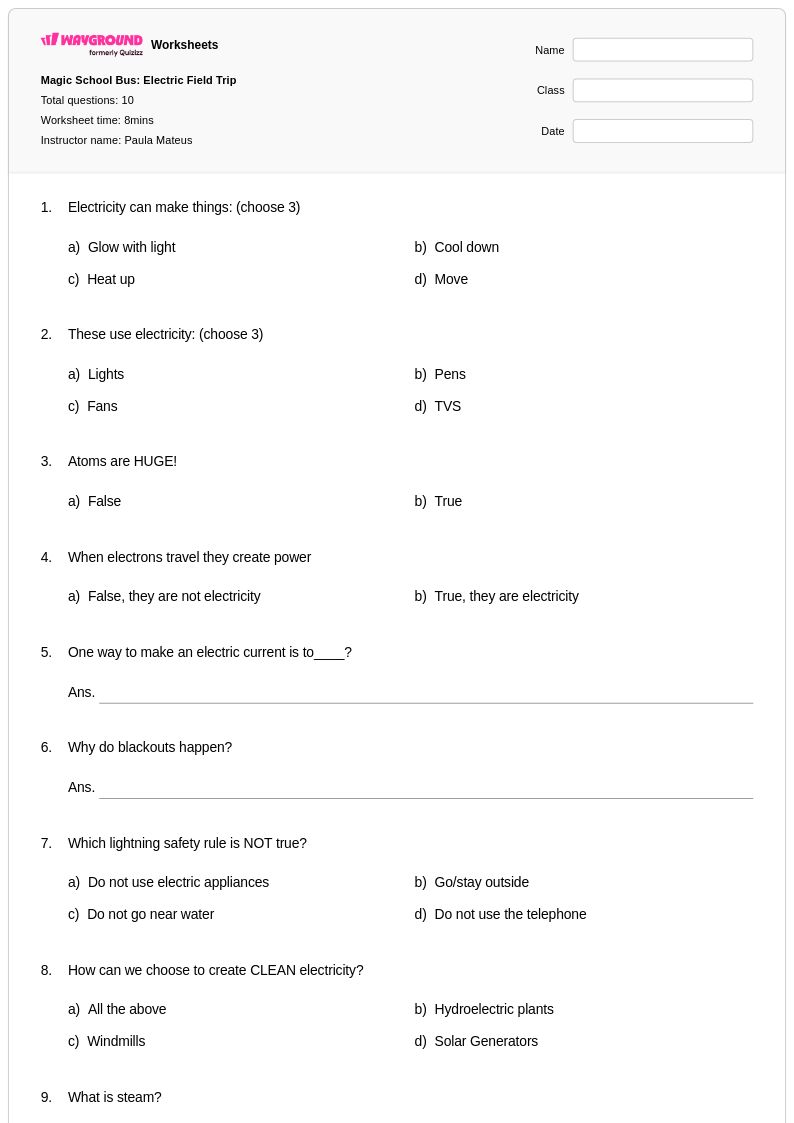
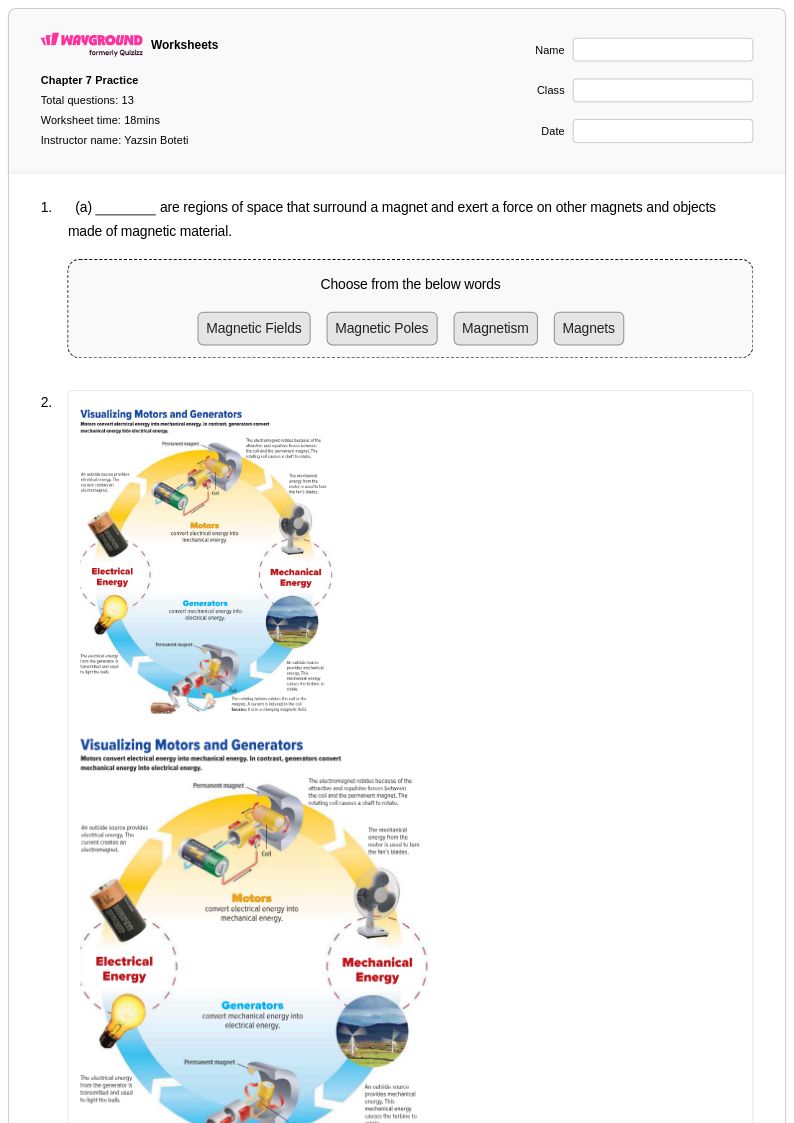
Explore Wayground's comprehensive collection of electric field worksheets featuring free printables, practice problems, and answer keys to help students master fundamental concepts of electric forces, field lines, and electromagnetic interactions in physics.
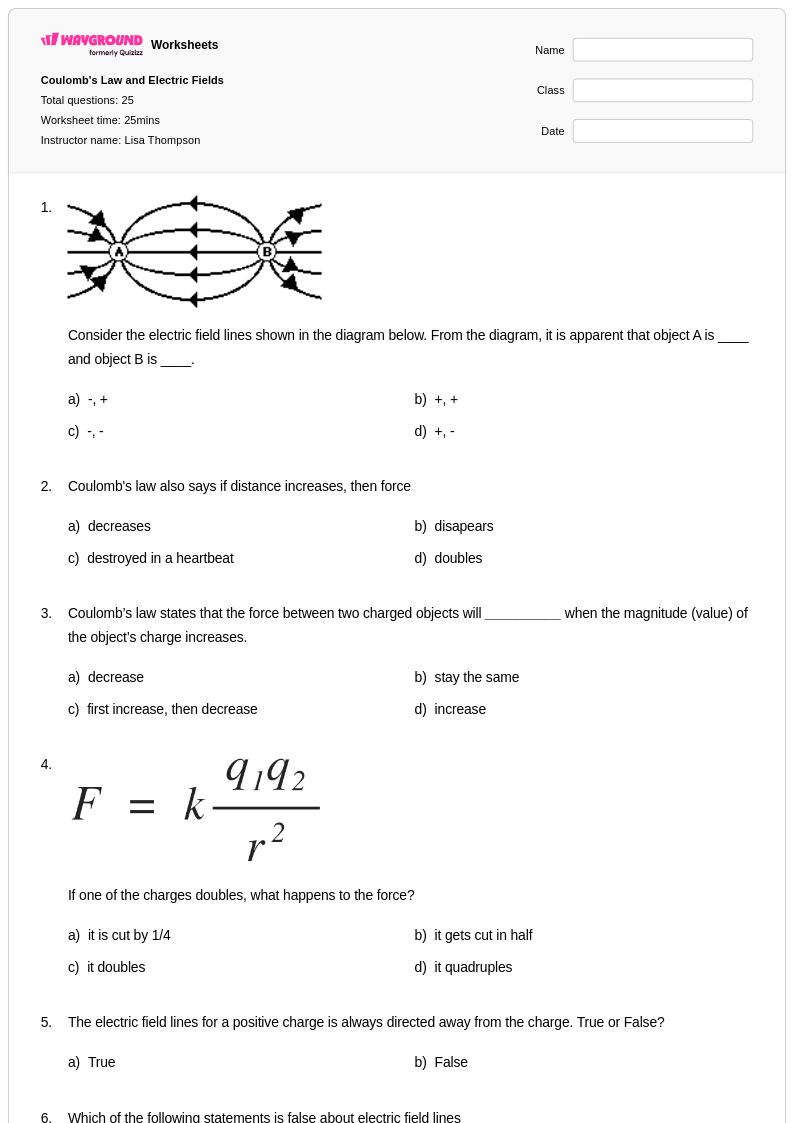
Electric field worksheets available through Wayground (formerly Quizizz) provide comprehensive practice materials that help students master one of the fundamental concepts in electromagnetism. These educational resources focus on developing critical skills including calculating electric field strength, understanding field line patterns, applying Coulomb's law in field contexts, and analyzing the behavior of charged particles in electric fields. Students work through systematically designed practice problems that progress from basic field calculations around point charges to more complex scenarios involving multiple charges and field superposition. Each worksheet collection includes detailed answer keys and explanations, making these free printables valuable for both guided instruction and independent study, while the pdf format ensures easy distribution and consistent formatting across different devices and printing systems.
Wayground (formerly Quizizz) supports educators with an extensive library of millions of teacher-created electric field worksheets that can be easily located through robust search and filtering capabilities. Teachers can quickly find resources that align with specific physics standards and learning objectives, then utilize built-in differentiation tools to modify content complexity for diverse student needs. The platform's flexible customization features allow educators to adapt existing worksheets or combine elements from multiple resources to create targeted practice sets for remediation or enrichment purposes. These materials are available in both printable pdf formats for traditional classroom use and digital formats for online learning environments, enabling teachers to seamlessly integrate electric field practice into their lesson planning while providing students with varied opportunities to strengthen their understanding of field concepts, vector analysis, and electromagnetic principles.
FAQs
How do I teach electric fields to high school physics students?
Start by grounding students in the concept of a field as a region of influence before introducing vector notation and field line diagrams. Use point charge scenarios to build intuition, then progress to multiple charge configurations so students can apply superposition. Connecting electric field strength to Coulomb's law early helps students see the mathematical structure before tackling more complex problems involving charged particle motion.
What practice problems help students get better at calculating electric field strength?
The most effective practice sequences begin with single point charge calculations to establish the formula E = kq/r², then add complexity by introducing two or more charges that require vector addition of field contributions. Problems that ask students to find the net field at a specific location between opposite charges are especially useful because they force students to track both magnitude and direction simultaneously. Scaffolded problem sets that progress from basic computation to field superposition are ideal for building lasting fluency.
What mistakes do students commonly make when drawing and interpreting electric field lines?
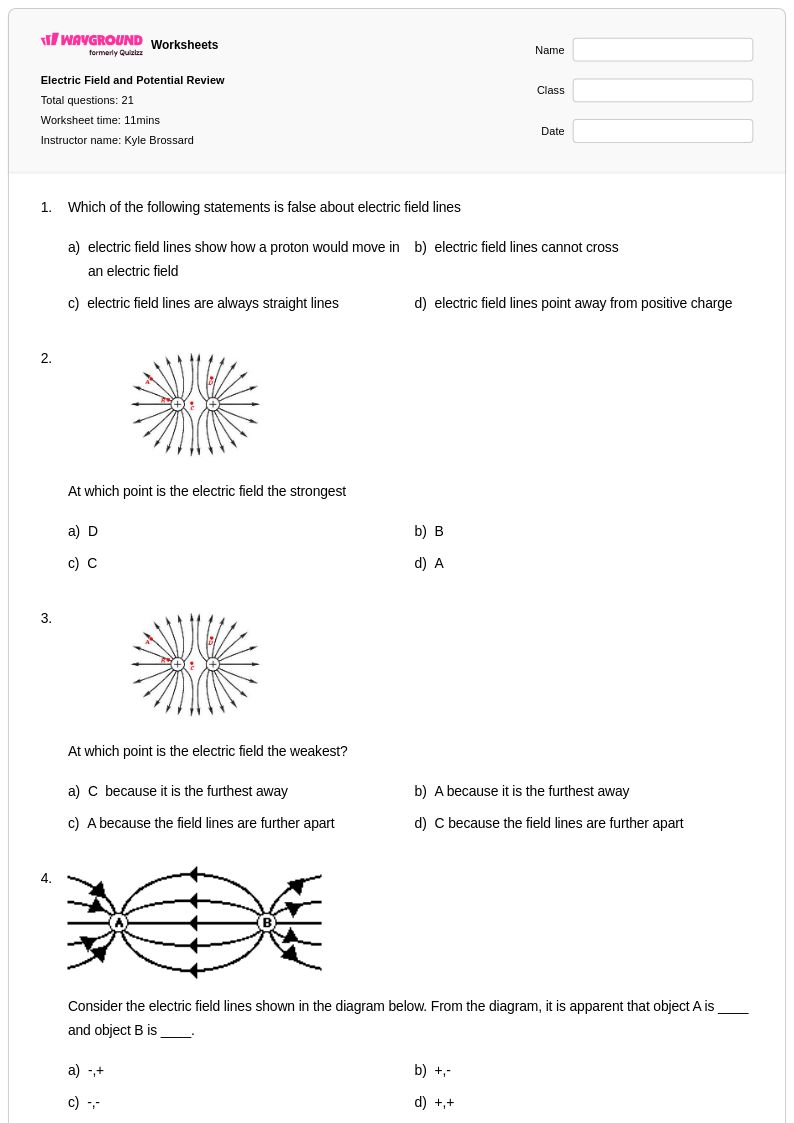
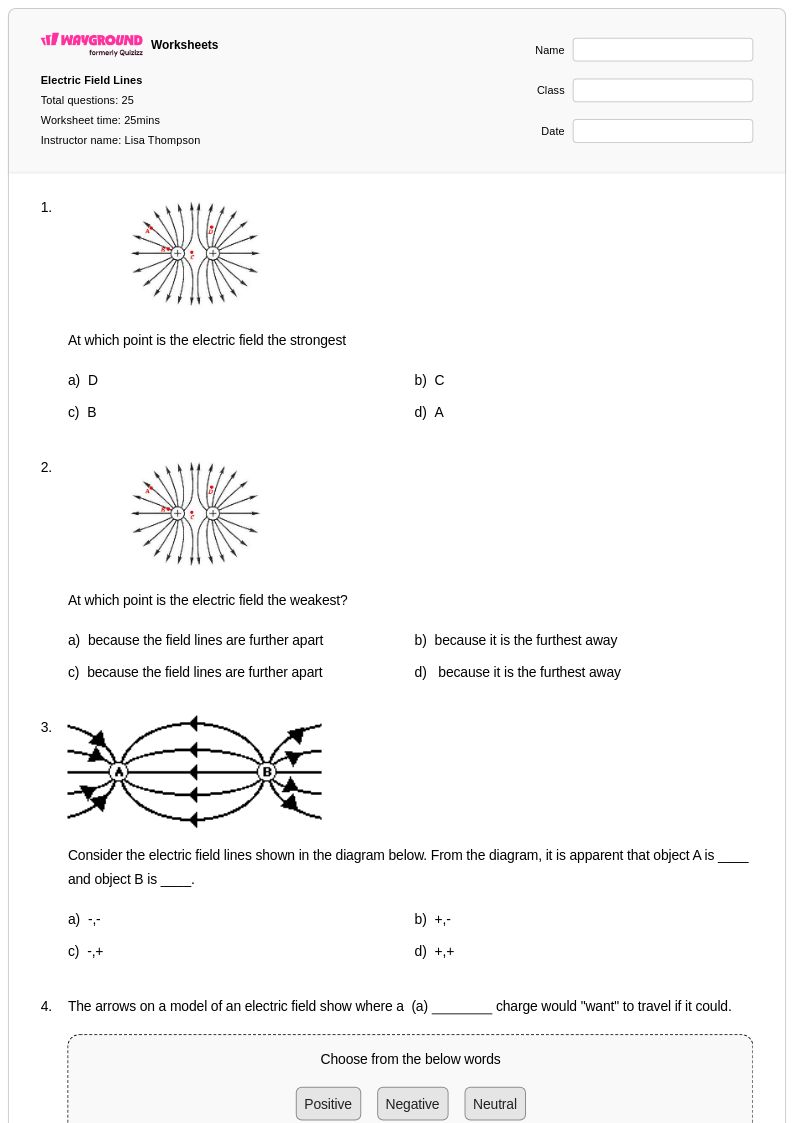
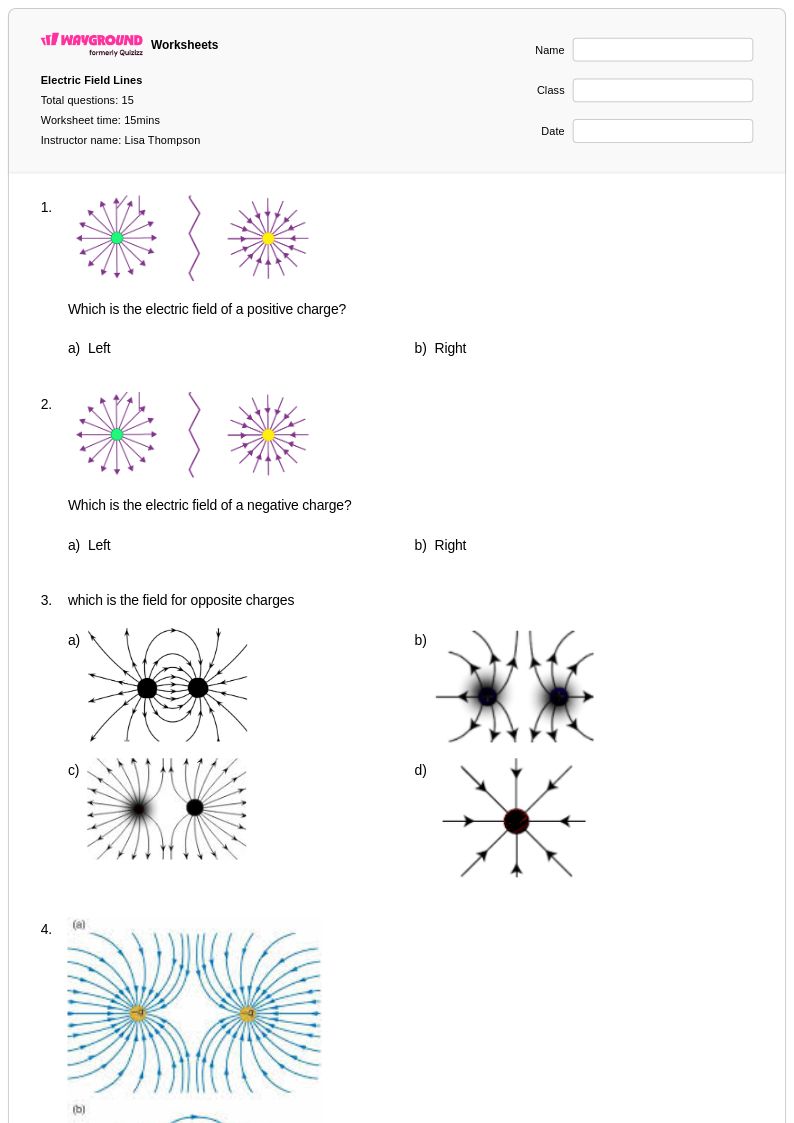
Students frequently draw field lines that cross one another, which is physically impossible since a field line represents the direction of force on a positive test charge at a single point. Another common error is treating field line density as decorative rather than meaningful, missing the fact that closer spacing indicates a stronger field. Students also often reverse field line direction near negative charges, drawing lines pointing away from them instead of toward them.
How do students typically confuse electric field and electric force?
Students often treat electric field and electric force as interchangeable, failing to recognize that the field exists independently of any test charge placed in it. The field is a property of the source charge and the surrounding space, while force only arises when a second charge is introduced. Emphasizing the equation F = qE and asking students to calculate both quantities separately for different test charge values is an effective way to break this misconception.
How can I use these electric field worksheets in my classroom?
Wayground's electric field worksheets are available as printable PDFs for traditional classroom use and in digital formats for technology-integrated or remote learning environments, giving you flexibility depending on your setup. You can also host them as a live quiz on Wayground, which enables real-time student response tracking. Each worksheet includes a complete answer key, making them practical for independent practice, homework assignments, guided in-class work, or formative assessment.
How do I support students who struggle with the vector components of electric field problems?
Students who struggle with vector decomposition in electric field problems often need explicit scaffolding before they can handle multi-charge scenarios. Break problems into labeled steps: identify each charge, calculate the magnitude of its field at the target point, determine the direction using a diagram, then resolve into x and y components before summing. On Wayground, you can apply accommodations such as reduced answer choices or read-aloud support for individual students who need additional accessibility support while the rest of the class works with standard settings.