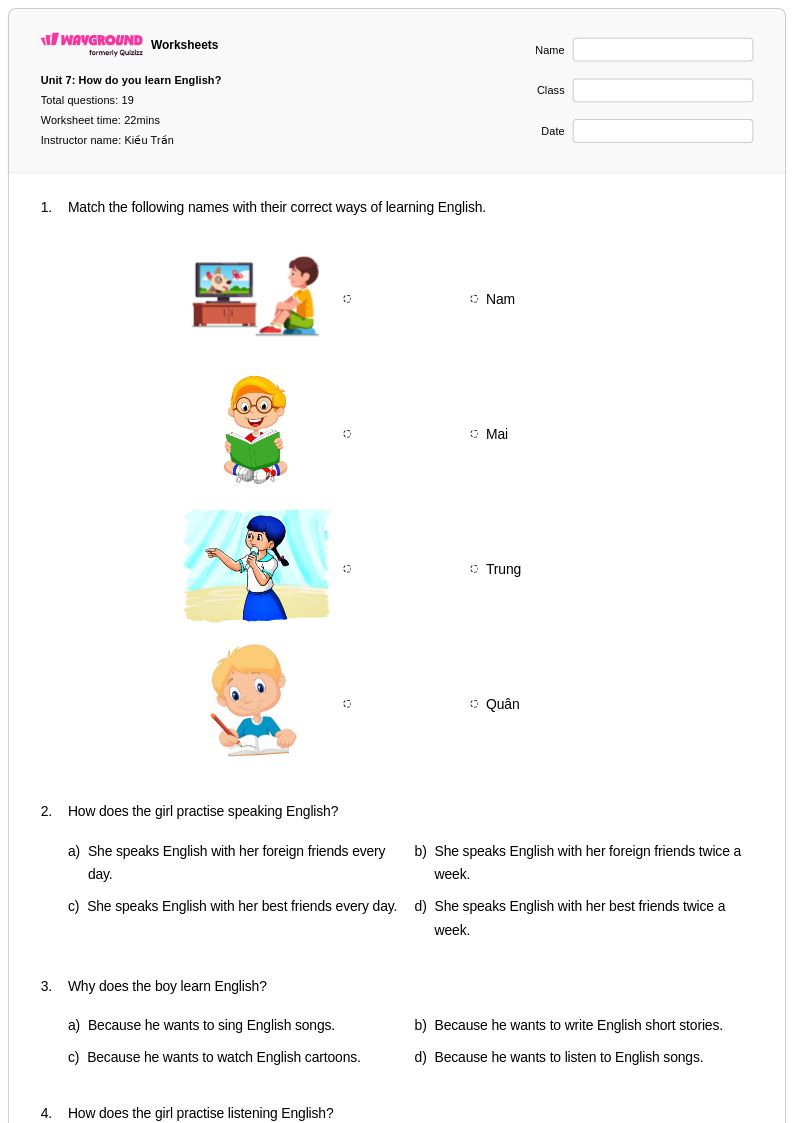
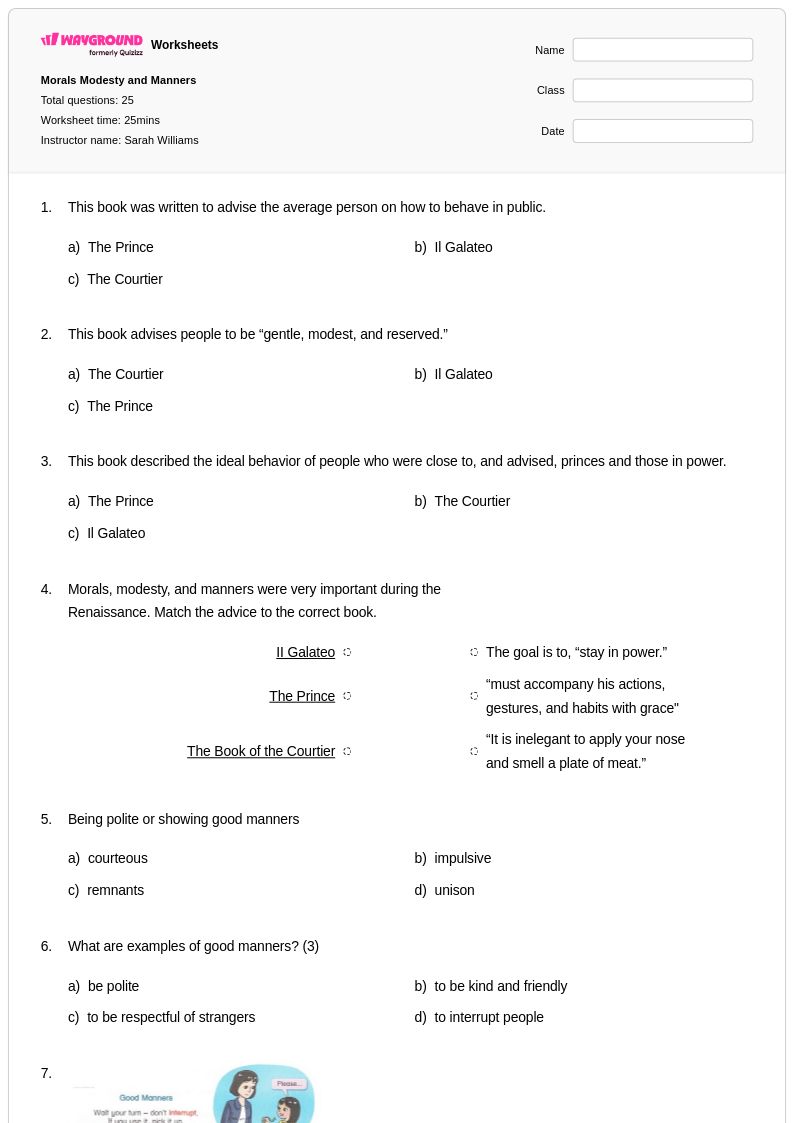
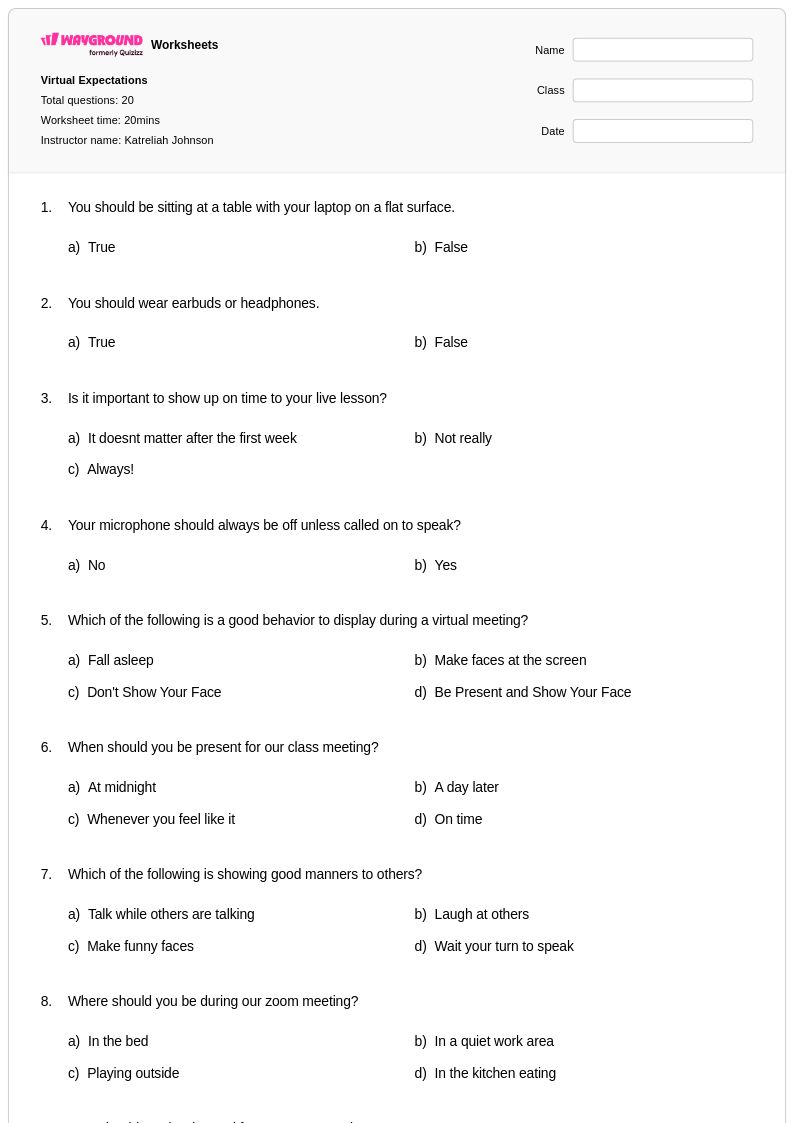
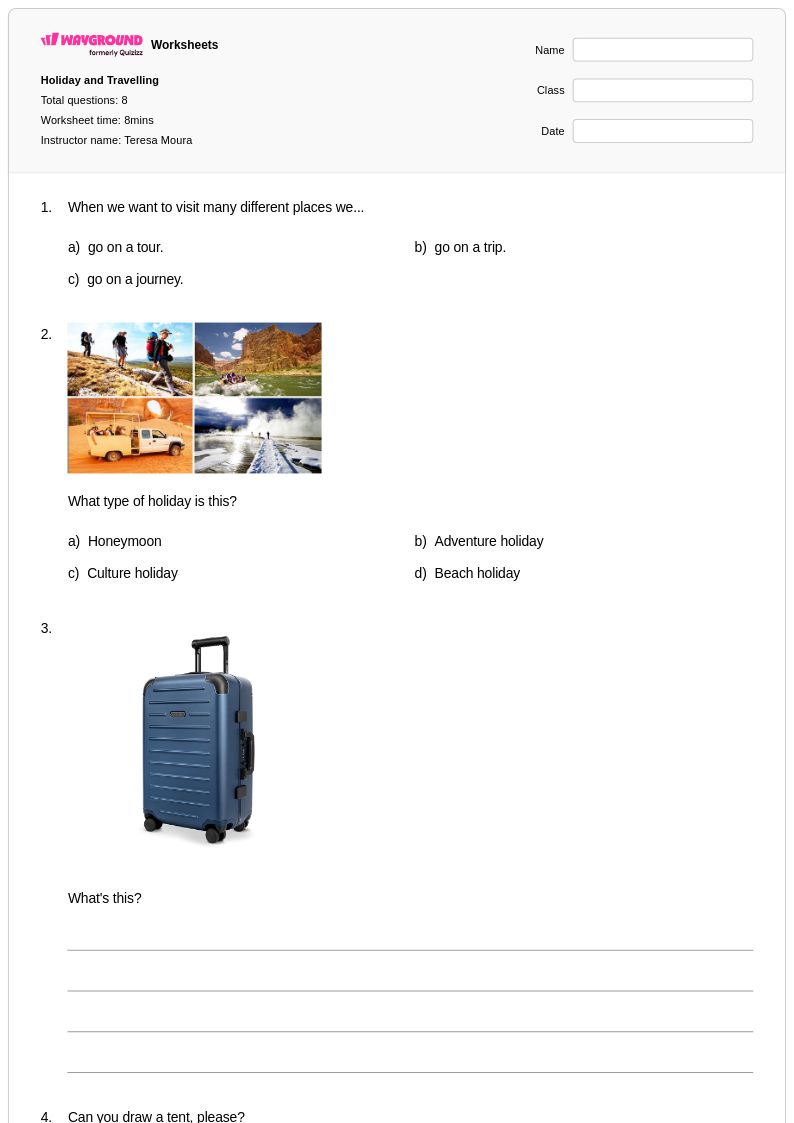
Free Printable Email Etiquette Worksheets for Class 5
Master Class 5 email etiquette with Wayground's comprehensive collection of free worksheets and printables, featuring practice problems and answer keys to help students learn professional digital communication skills.
Explore printable Email Etiquette worksheets for Class 5
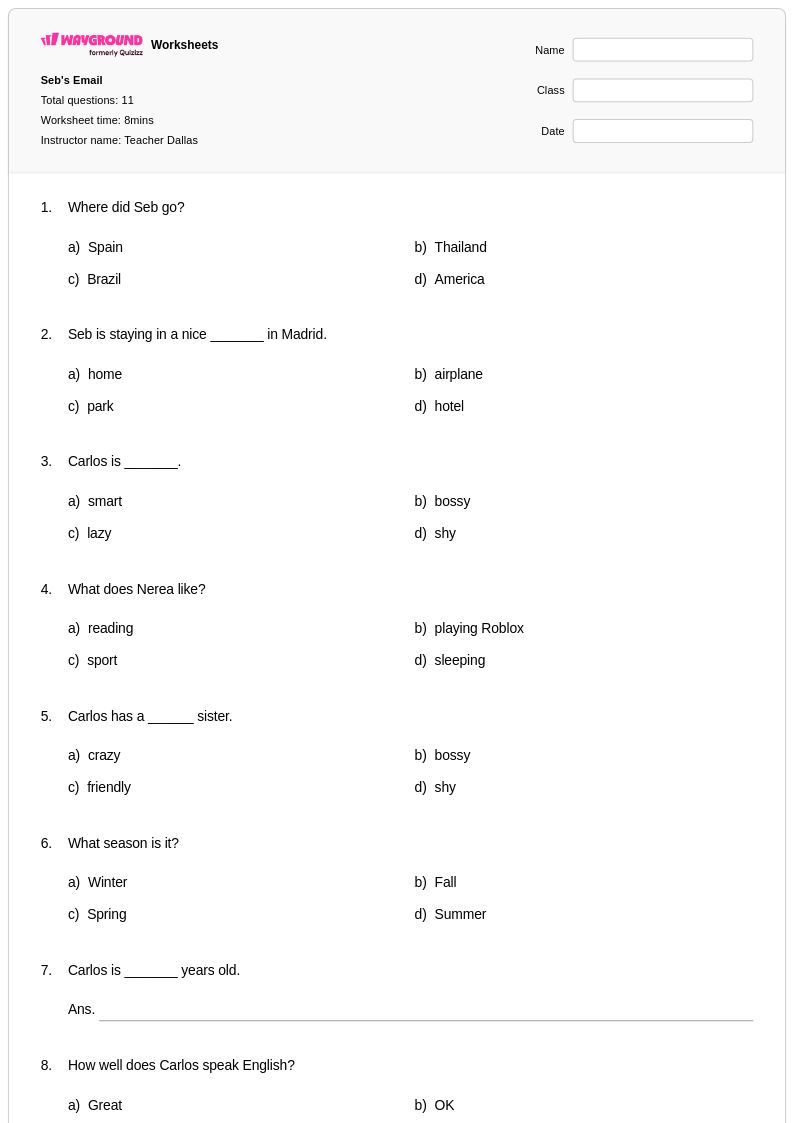
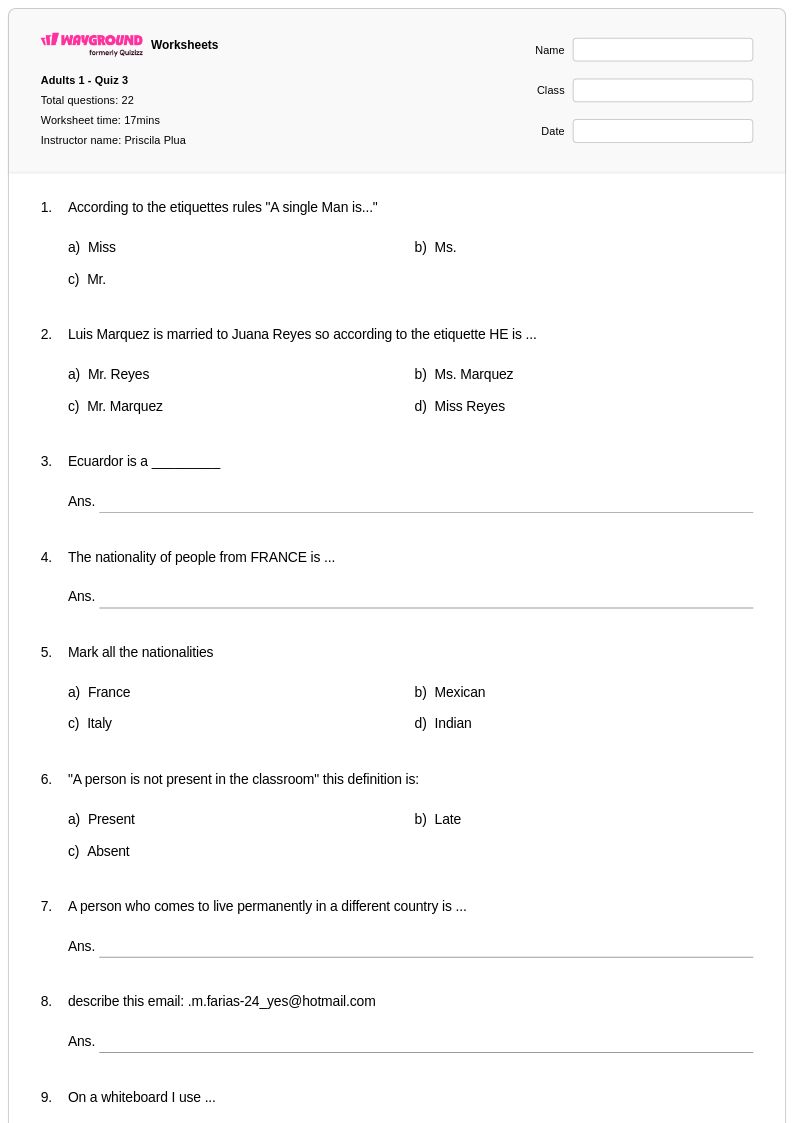
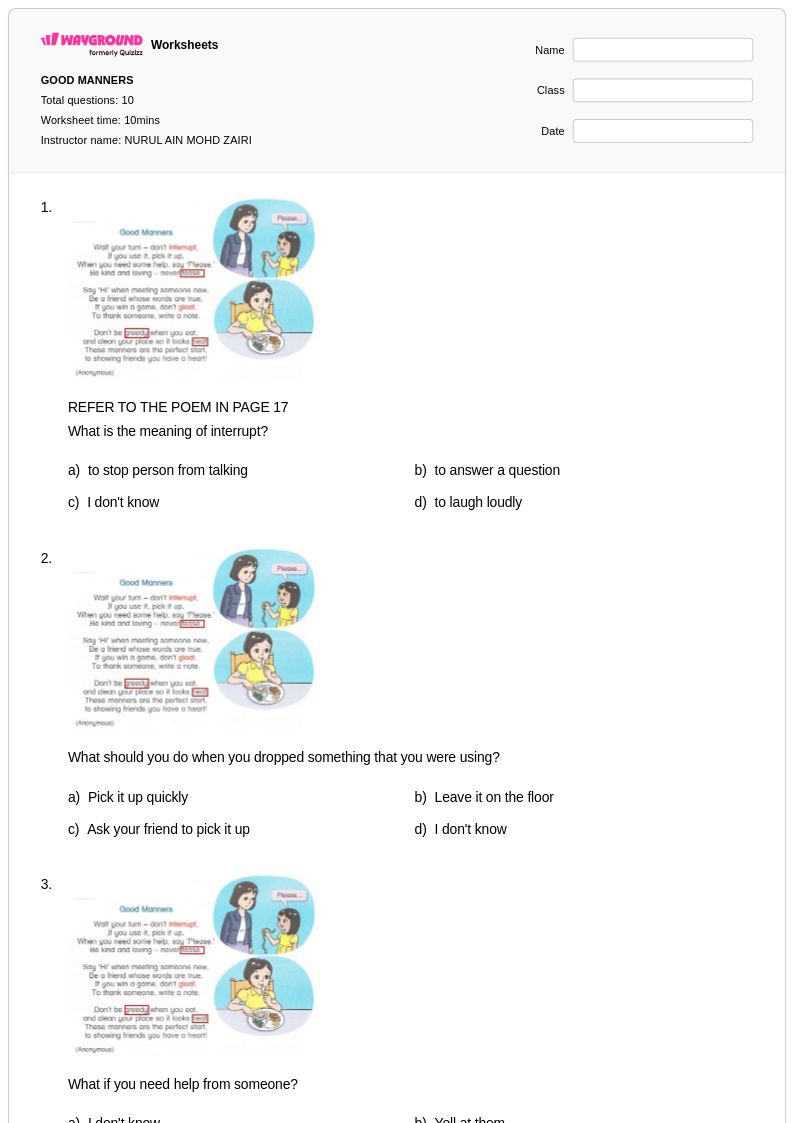
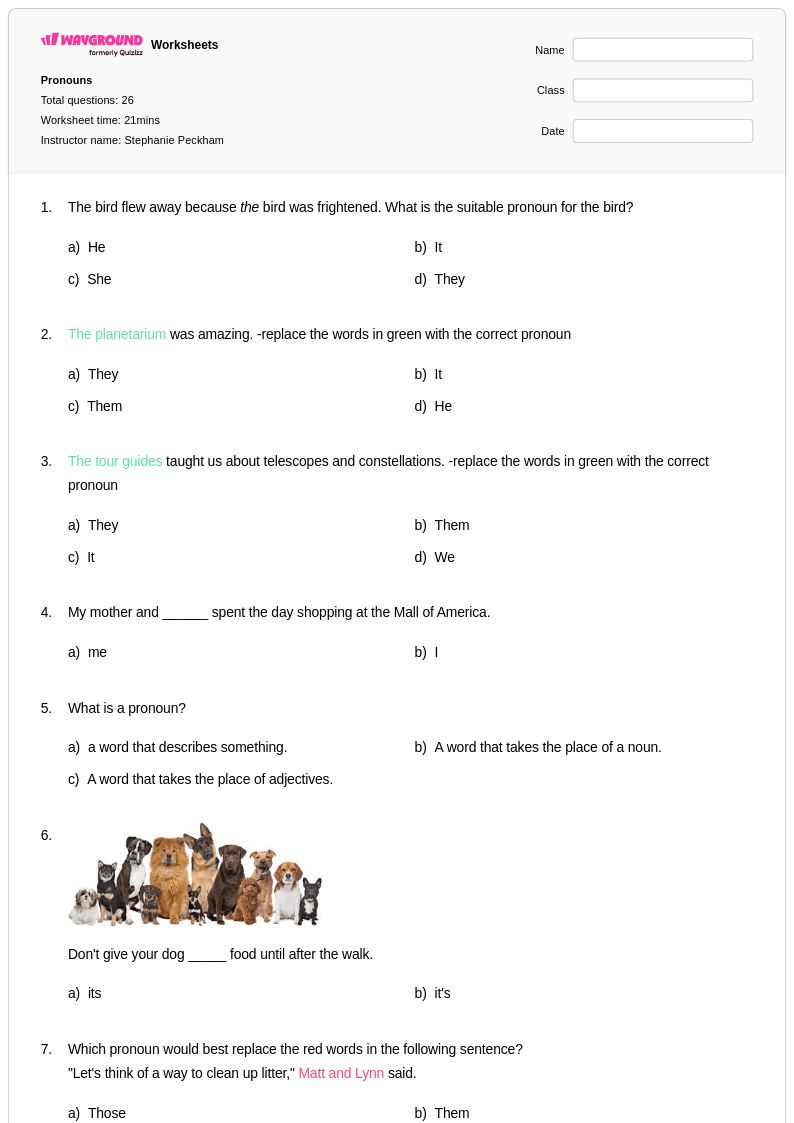
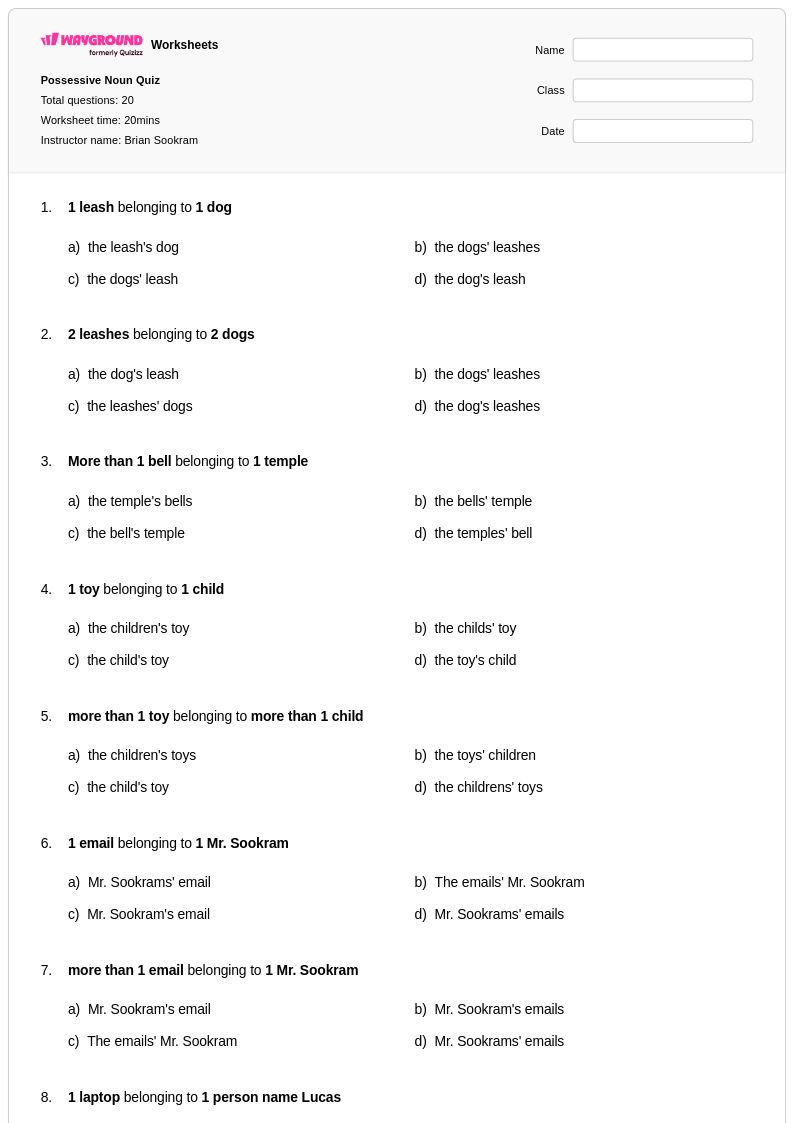
Email etiquette worksheets for Class 5 students available through Wayground (formerly Quizizz) provide essential practice in professional digital communication skills that students will use throughout their academic and professional careers. These comprehensive worksheets focus on teaching proper email structure, appropriate tone and language, effective subject lines, and respectful recipient addressing. Students engage with practice problems that cover greeting protocols, body paragraph organization, closing statements, and signature formatting while learning to distinguish between formal and informal email contexts. The collection includes answer key materials and free printable resources in pdf format, enabling teachers to assess student understanding of critical communication concepts such as clarity, conciseness, and courtesy in electronic correspondence.
Wayground (formerly Quizizz) supports educators with an extensive library of millions of teacher-created email etiquette resources that streamline lesson planning and skill development. The platform's robust search and filtering capabilities allow teachers to locate grade-appropriate materials that align with writing standards and communication objectives, while differentiation tools enable customization for diverse learning needs and abilities. These worksheets are available in both printable and digital formats, including downloadable pdf versions, making them suitable for classroom instruction, homework assignments, or remote learning environments. Teachers can effectively use these resources for targeted skill practice, remediation of communication weaknesses, and enrichment activities that prepare students for increasingly digital academic and workplace communication expectations.
FAQs
How do I teach email etiquette to students who have never written a professional email?
Start by contrasting informal texting language with professional email conventions side by side so students can see the register shift clearly. Introduce the core components in sequence: subject line, salutation, body structure, closing, and signature. Using real-world scenarios, such as emailing a teacher to request an extension or contacting a potential employer, gives students a concrete purpose and makes the formality expectations feel authentic rather than arbitrary.
What exercises help students practice professional email writing?
Scenario-based practice is the most effective approach: give students a situation and ask them to draft an appropriate email from scratch, then revise a poorly written version of the same email. Targeted exercises that isolate specific components, such as writing subject lines for five different situations or choosing between formal and informal closings, build competency incrementally. Peer review rounds out practice by having students evaluate each other's tone, formatting, and word choice against a clear rubric.
What are the most common mistakes students make when writing professional emails?
The most frequent errors fall into three categories: tone, structure, and subject line quality. Students often default to casual language, using contractions, slang, or overly brief replies that read as dismissive. Subject lines are frequently vague or left blank entirely. Many students also omit a proper closing or forget to include their name, which undermines professionalism. Addressing these patterns explicitly, with before-and-after examples, helps students internalize what separates an effective professional email from an ineffective one.
How do I differentiate email etiquette instruction for students at different skill levels?
For students still building foundational writing skills, reduce cognitive load by focusing on one component at a time, such as salutations and closings, before asking them to compose full emails. More advanced students can tackle nuanced scenarios requiring them to adjust tone for different audiences, such as a peer versus a department head. On Wayground, teachers can apply accommodations such as read aloud support, reduced answer choices, and extended time to individual students, allowing the same worksheet to serve diverse learners without singling anyone out.
How do I use Wayground's email etiquette worksheets in my classroom?
Wayground's email etiquette worksheets are available as printable PDFs for traditional classroom use and in digital formats for technology-integrated or remote learning environments. Teachers can also host worksheets directly as a quiz on Wayground, enabling real-time student responses and instant feedback. Each worksheet includes a complete answer key, so teachers can efficiently review student work or allow for self-assessment after practice sessions.
How do I assess whether students understand professional email conventions?
The most reliable assessment strategy combines structured rubrics with authentic tasks. Ask students to compose an original email in response to a realistic prompt, then score it across dimensions including subject line clarity, appropriate salutation, tone consistency, body organization, and professional closing. Common misconceptions to watch for include students who use correct structure but inappropriate tone, or who write formally in the opening and then slip into casual language by the second paragraph. Formative checks after each component lesson catch these gaps early.