Free Printable Environmental Science Worksheets for Class 12
Explore Class 12 Environmental Science worksheets and printables through Wayground that help students master ecological principles, pollution analysis, and sustainability concepts with comprehensive practice problems and answer keys.
Explore printable Environmental Science worksheets for Class 12
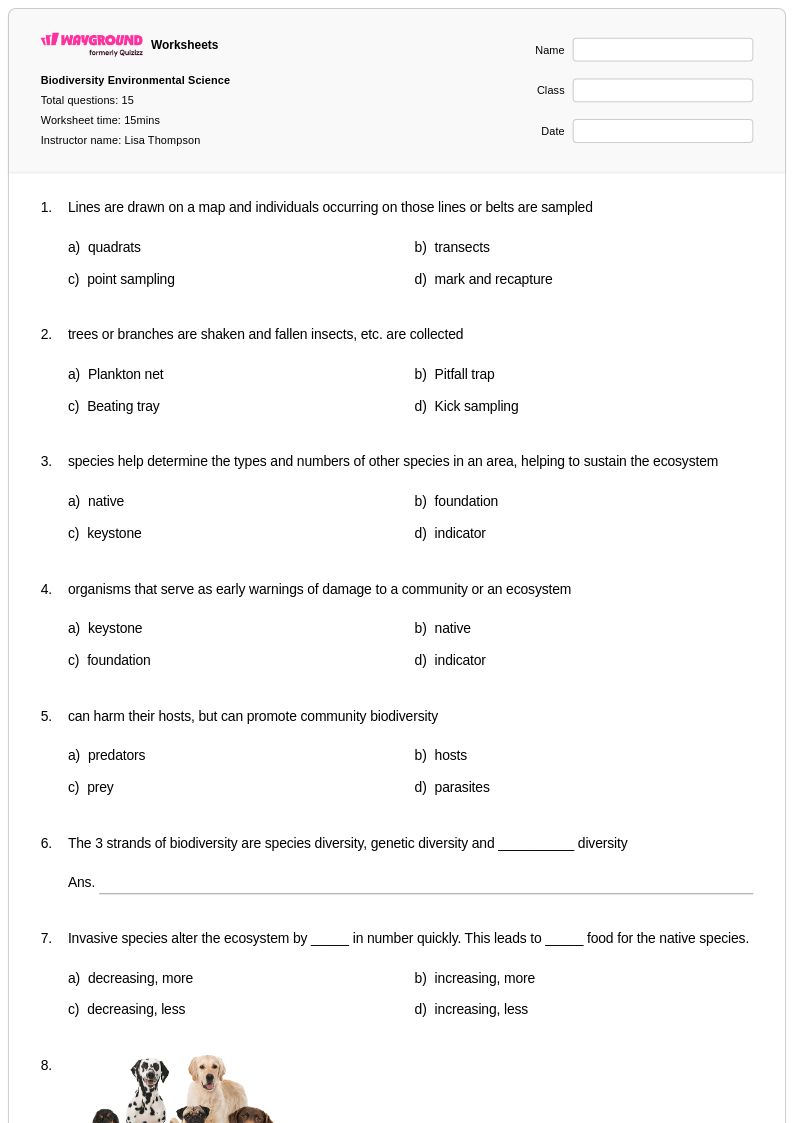
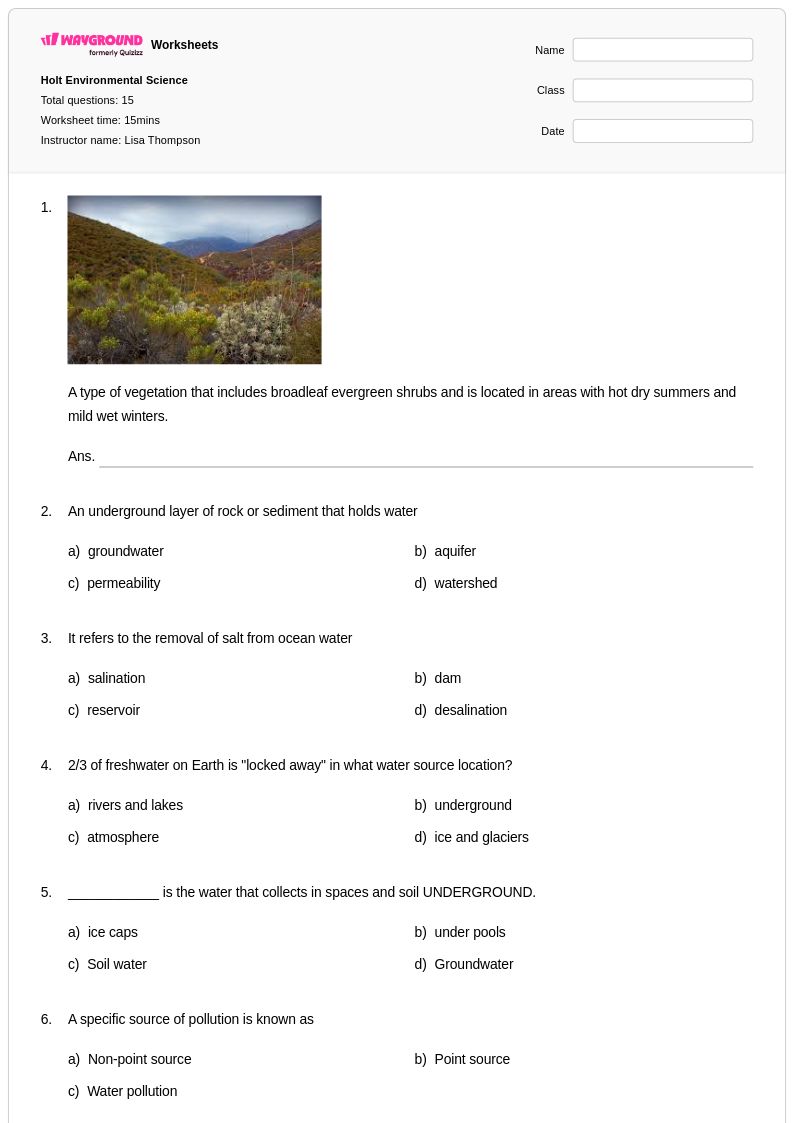
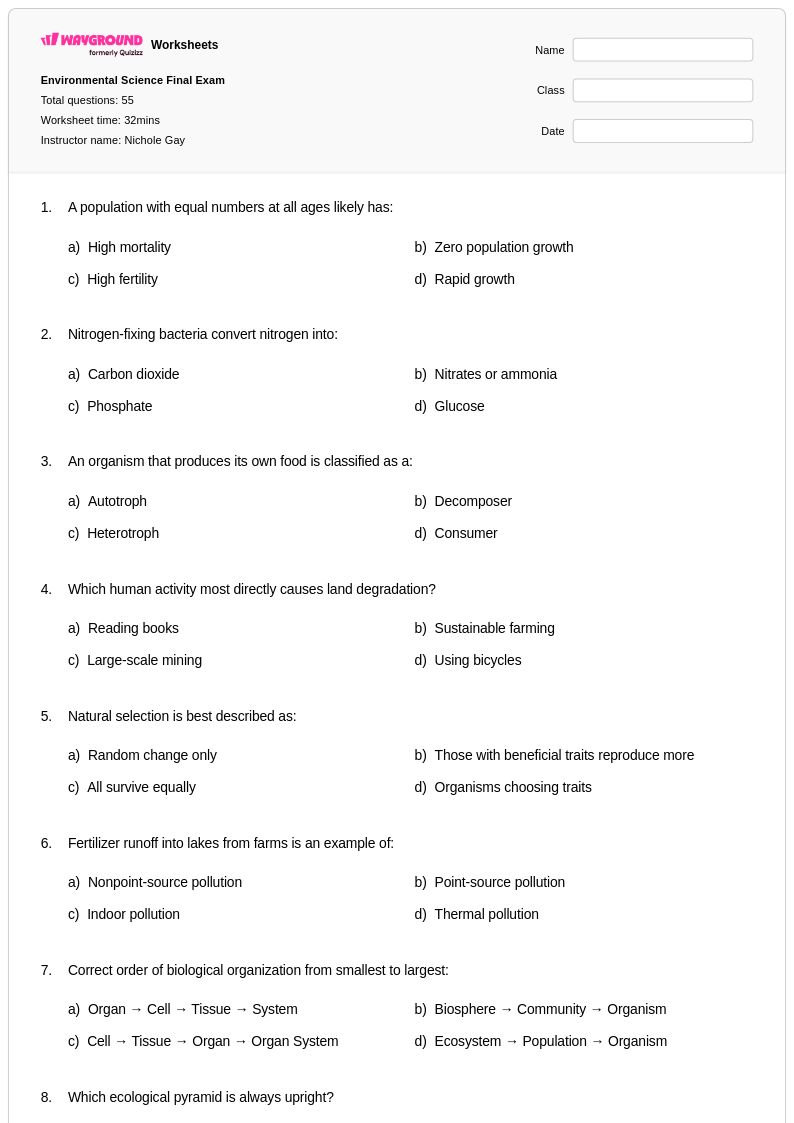
Environmental Science worksheets for Class 12 students available through Wayground (formerly Quizizz) provide comprehensive coverage of critical ecological concepts, sustainability principles, and human-environment interactions that form the foundation of advanced environmental studies. These expertly designed worksheets strengthen essential skills including ecosystem analysis, pollution assessment, resource management evaluation, and environmental policy interpretation while engaging students with real-world case studies and data-driven practice problems. Each worksheet comes complete with detailed answer keys and is available in convenient pdf format, offering free access to high-quality printables that challenge students to apply scientific reasoning to complex environmental issues such as climate change, biodiversity loss, and sustainable development strategies.
Wayground (formerly Quizizz) empowers educators with millions of teacher-created Environmental Science resources that can be easily discovered through robust search and filtering capabilities, ensuring alignment with state and national science standards for Class 12 curricula. The platform's sophisticated differentiation tools allow teachers to customize worksheet difficulty levels and content focus areas, accommodating diverse learning needs while maintaining academic rigor appropriate for college-bound students. Available in both printable pdf formats and interactive digital versions, these versatile resources support seamless lesson planning, targeted remediation for struggling concepts, and enrichment opportunities for advanced learners, enabling teachers to provide comprehensive skill practice that prepares students for environmental science coursework at the collegiate level and fosters scientifically literate citizens capable of addressing contemporary environmental challenges.
FAQs
How do I teach environmental science concepts effectively in the classroom?
Effective environmental science instruction connects abstract ecological concepts to real-world scenarios students can observe and analyze. Teachers should ground lessons in local environmental issues — such as regional pollution, land use changes, or local biodiversity — before scaling up to global systems like climate change. Using data interpretation exercises, case studies, and evidence-based argumentation tasks helps students build the scientific literacy needed to evaluate environmental problems and propose solutions.
What topics are typically covered in environmental science worksheets?
Environmental science worksheets typically cover ecosystem dynamics, food webs, pollution analysis, climate change impacts, biodiversity conservation, and sustainable resource management. Strong materials also address the relationships between human activities and natural systems, requiring students to apply scientific reasoning to real-world scenarios rather than simply recall definitions. Coverage of these interconnected topics helps students understand environmental issues as systemic rather than isolated problems.
What exercises help students practice environmental science skills?
Practice exercises that require students to analyze data, interpret graphs of pollution levels or species population trends, and evaluate trade-offs in resource management are especially effective for building environmental science skills. Case-based problems that ask students to assess human impact on ecosystems and propose evidence-based solutions push beyond recall and develop applied scientific thinking. Combining these with vocabulary reinforcement on terms like biodiversity, carrying capacity, and carbon cycles ensures conceptual fluency alongside analytical skill.
What misconceptions do students commonly have in environmental science?
A common misconception is that ecosystems are static systems that return to an identical state after disturbance, when in reality they undergo succession and may stabilize at a different equilibrium. Students also frequently conflate weather with climate, which creates confusion when discussing climate change evidence. Another persistent error is viewing human activity and ecological health as inherently opposed, rather than understanding that sustainable resource management can support both human needs and ecosystem stability.
How can I differentiate environmental science worksheets for students with different learning needs?
Differentiation in environmental science can include scaffolded reading passages, reduced answer choices for students who need lower cognitive load, and extended time for complex data analysis tasks. On Wayground, teachers can apply individual student accommodations such as read aloud support, adjustable font sizes through reading mode, and reduced answer choices — all configurable per student without notifying the rest of the class. These settings are saved and reusable, making it efficient to support diverse learners consistently across multiple environmental science units.
How do I use Wayground's environmental science worksheets in my classroom?
Wayground's environmental science worksheets are available as printable PDFs for traditional classroom use and in digital formats for technology-integrated learning environments, including the option to host them as an interactive quiz directly on the platform. Teachers can use the search and filtering tools to find grade-appropriate content aligned to specific standards, then assign worksheets for direct instruction, independent practice, or remediation. Each worksheet includes a detailed answer key, reducing prep time and making formative assessment straightforward.