Free Printable Exponential Function Manipulation Worksheets for Class 11
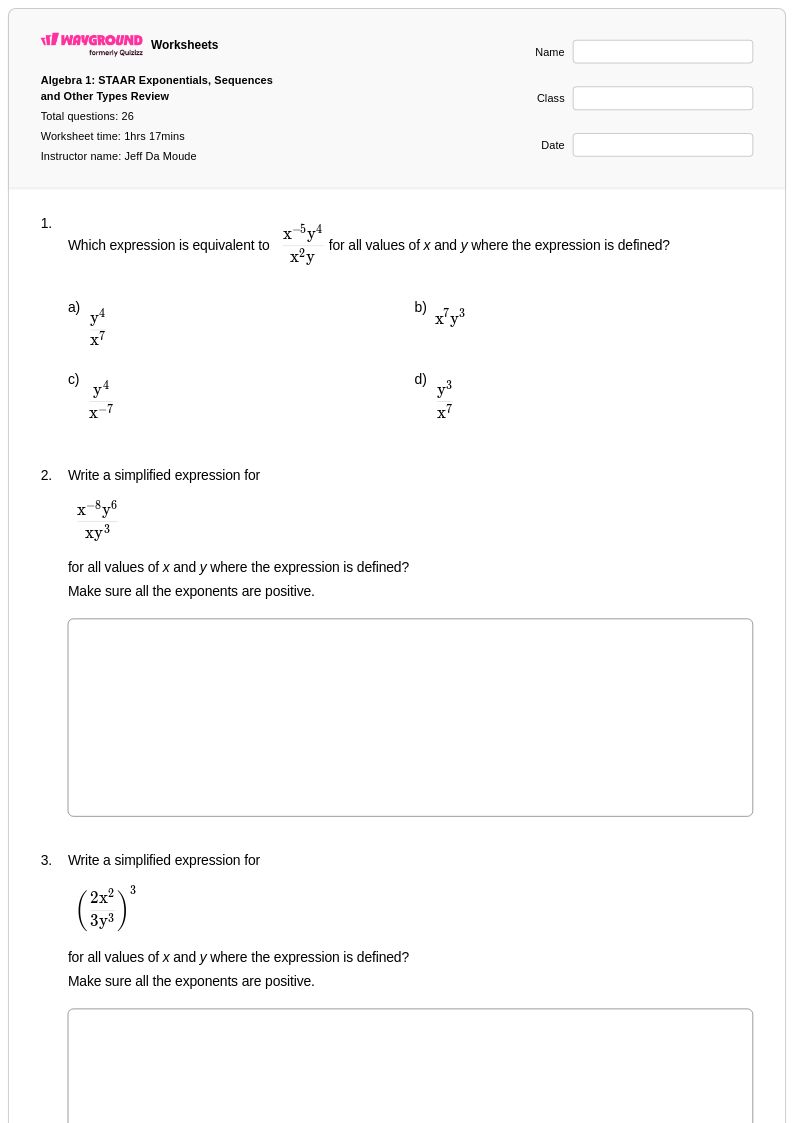
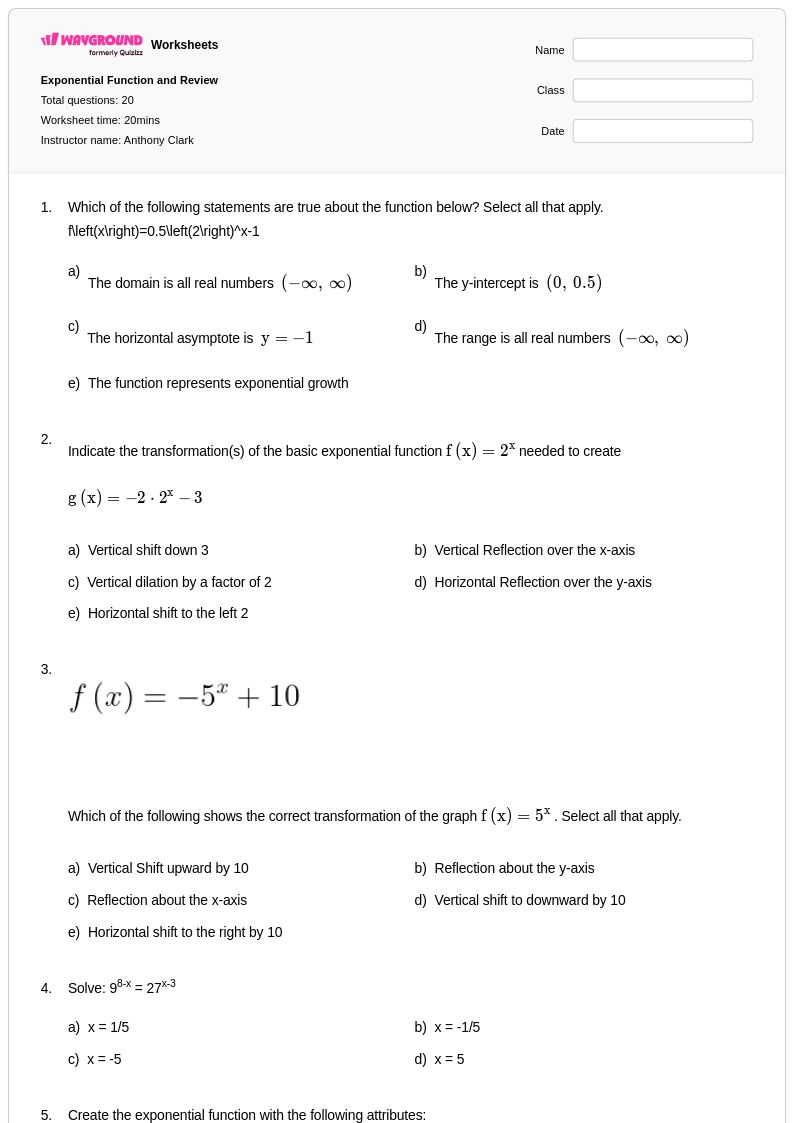
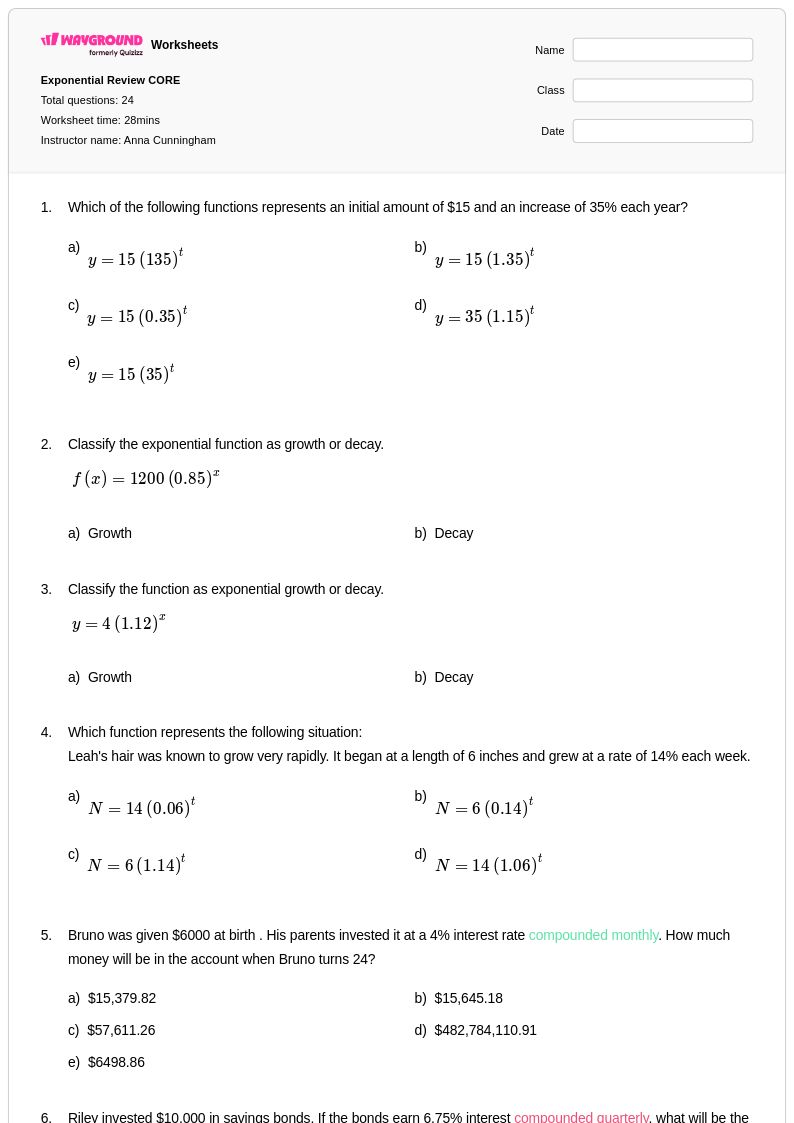
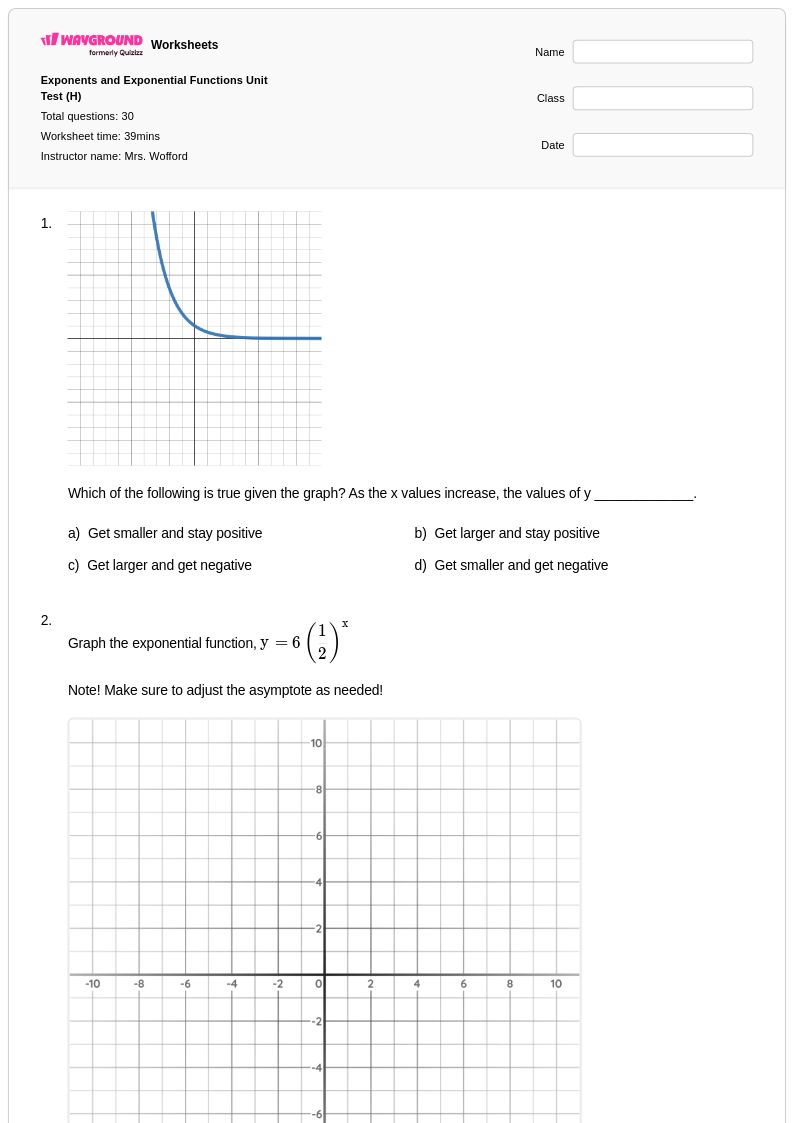
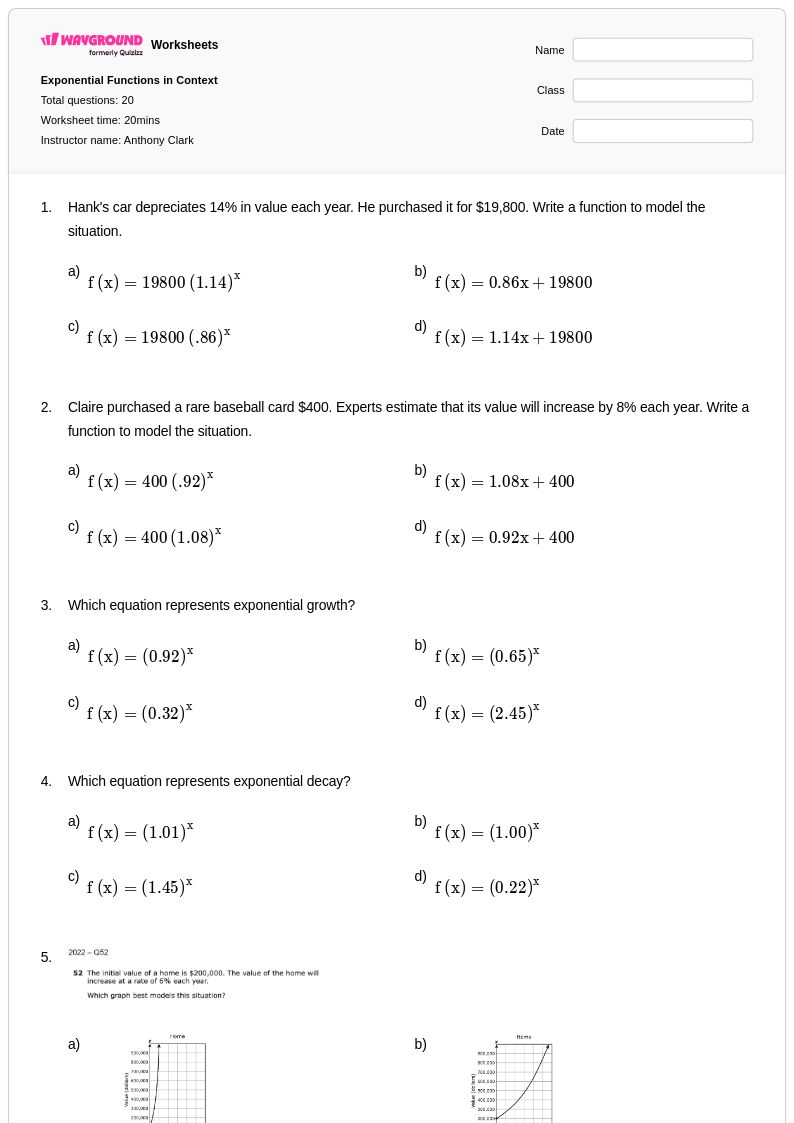
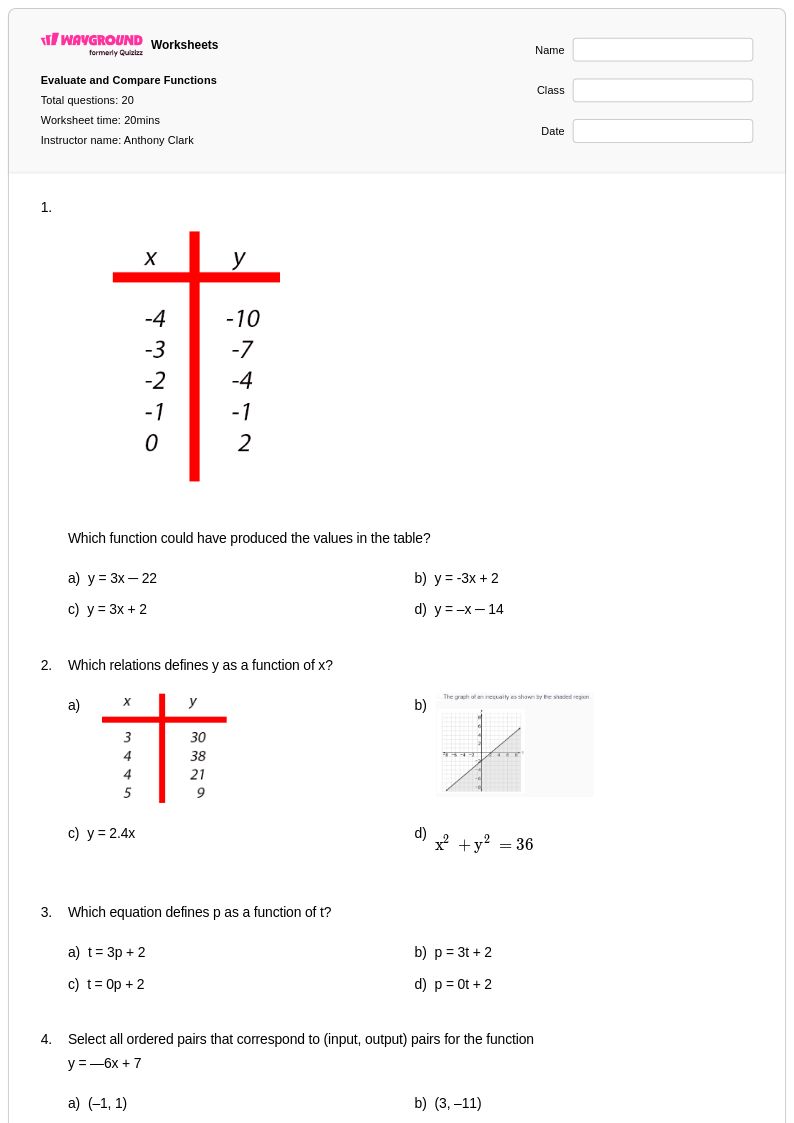
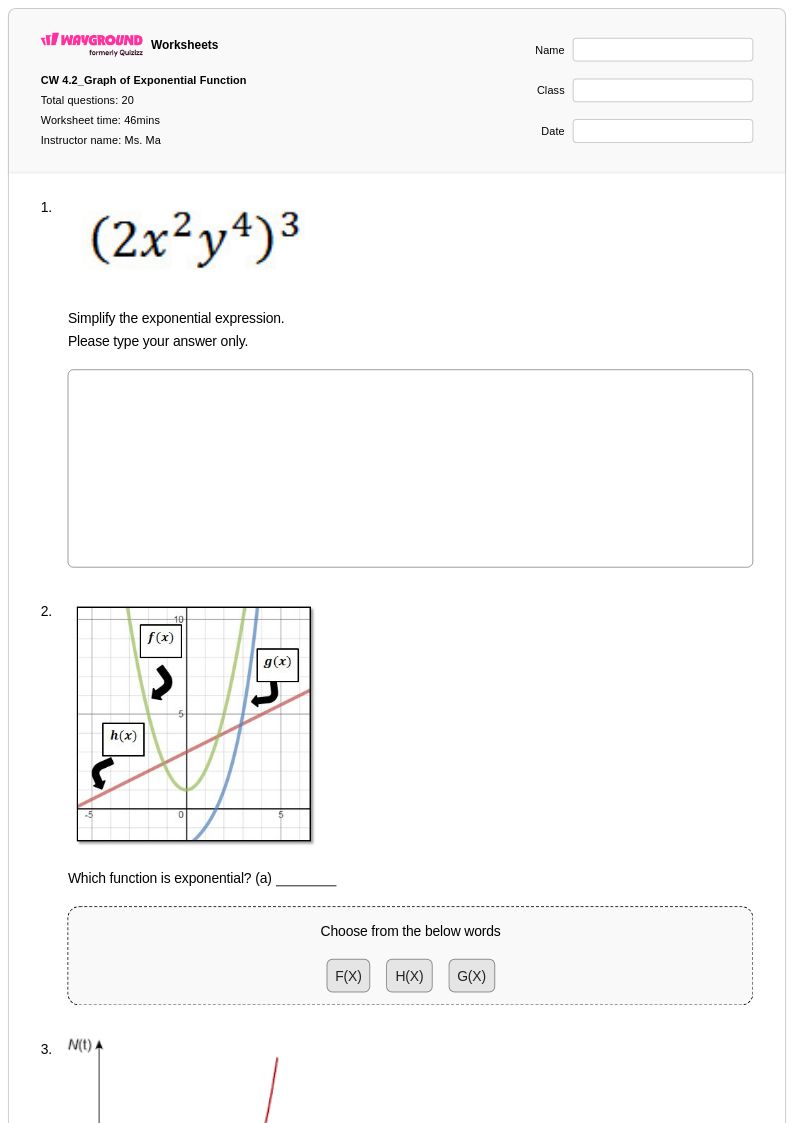
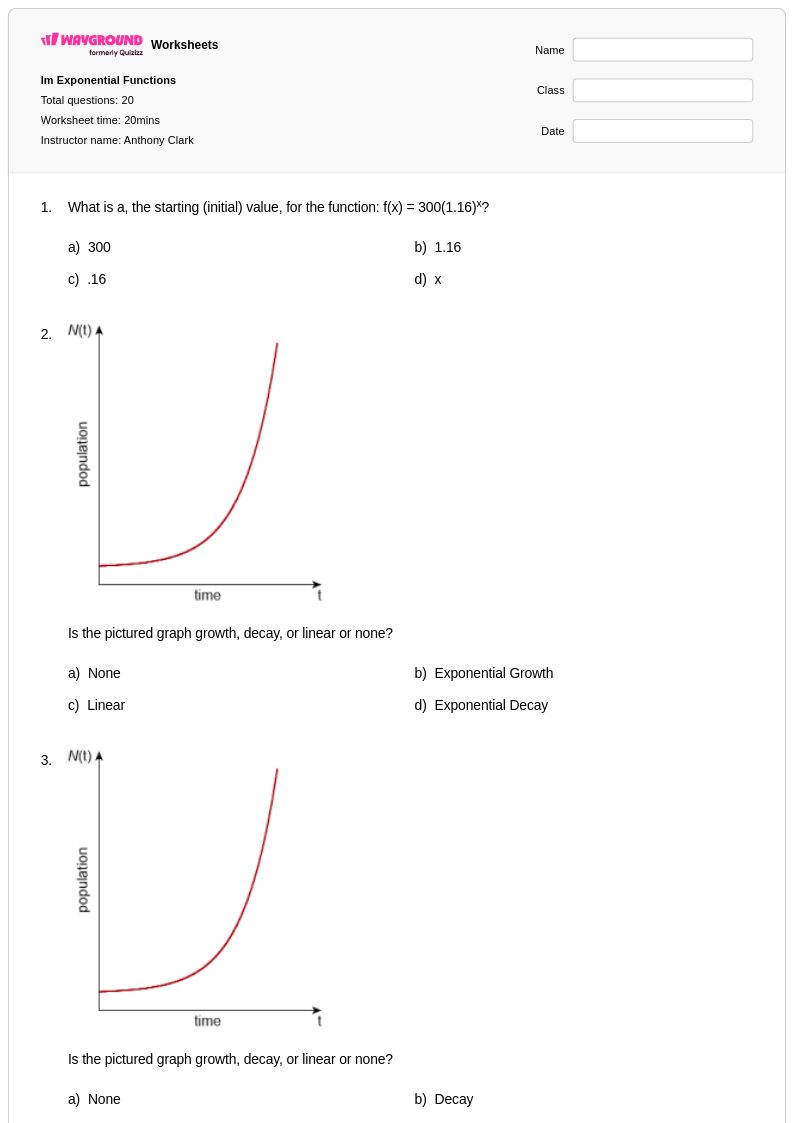
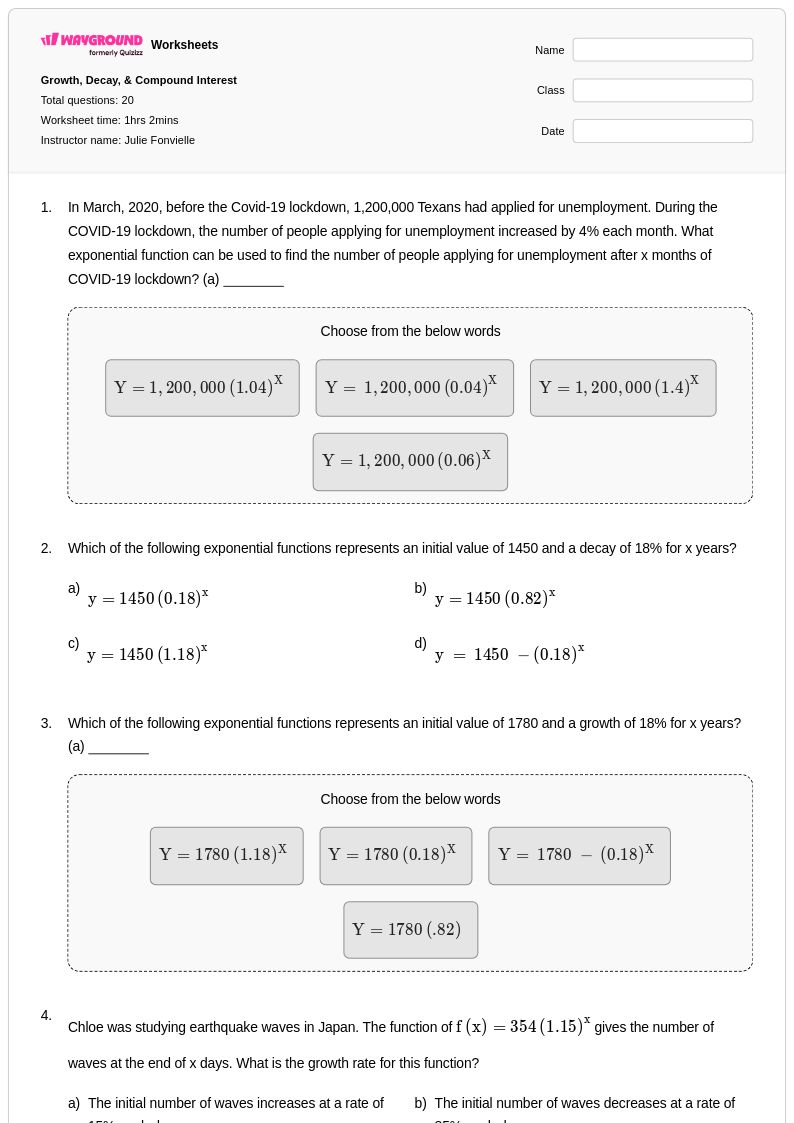
Class 11 exponential function manipulation worksheets from Wayground provide comprehensive printables and practice problems with answer keys to help students master transforming, graphing, and analyzing exponential functions through targeted exercises.
Explore printable Exponential Function Manipulation worksheets for Class 11
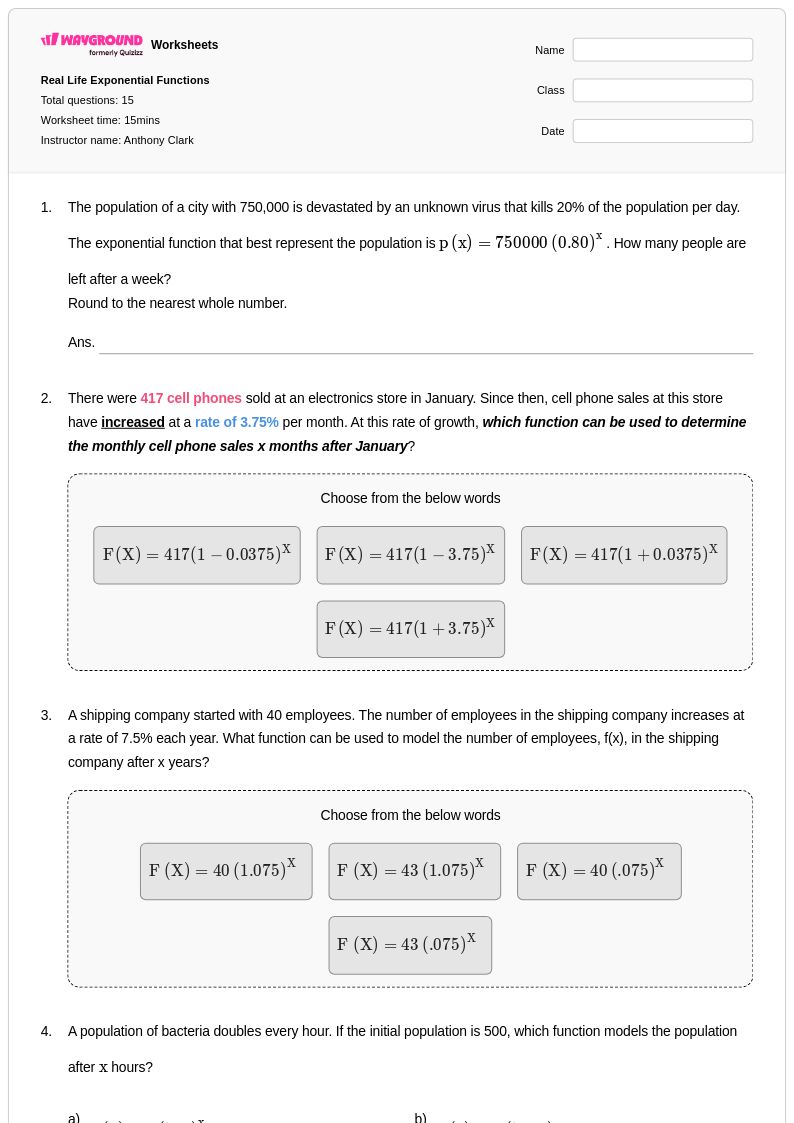
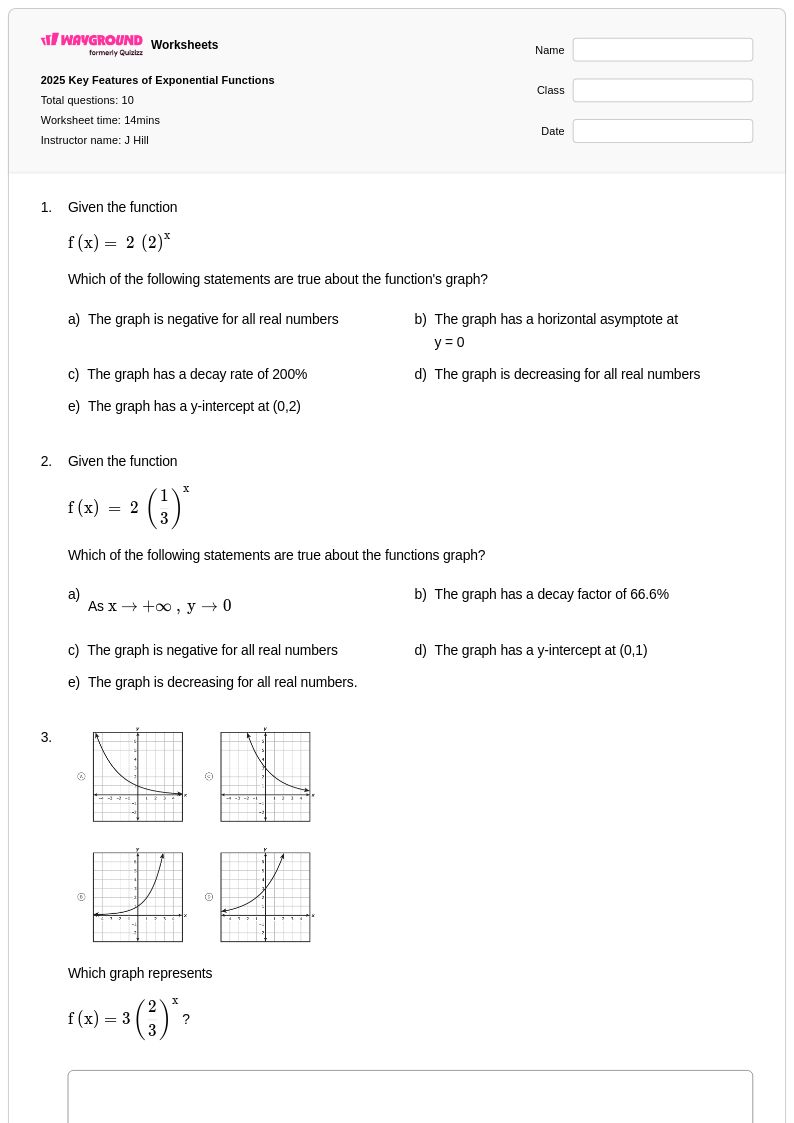
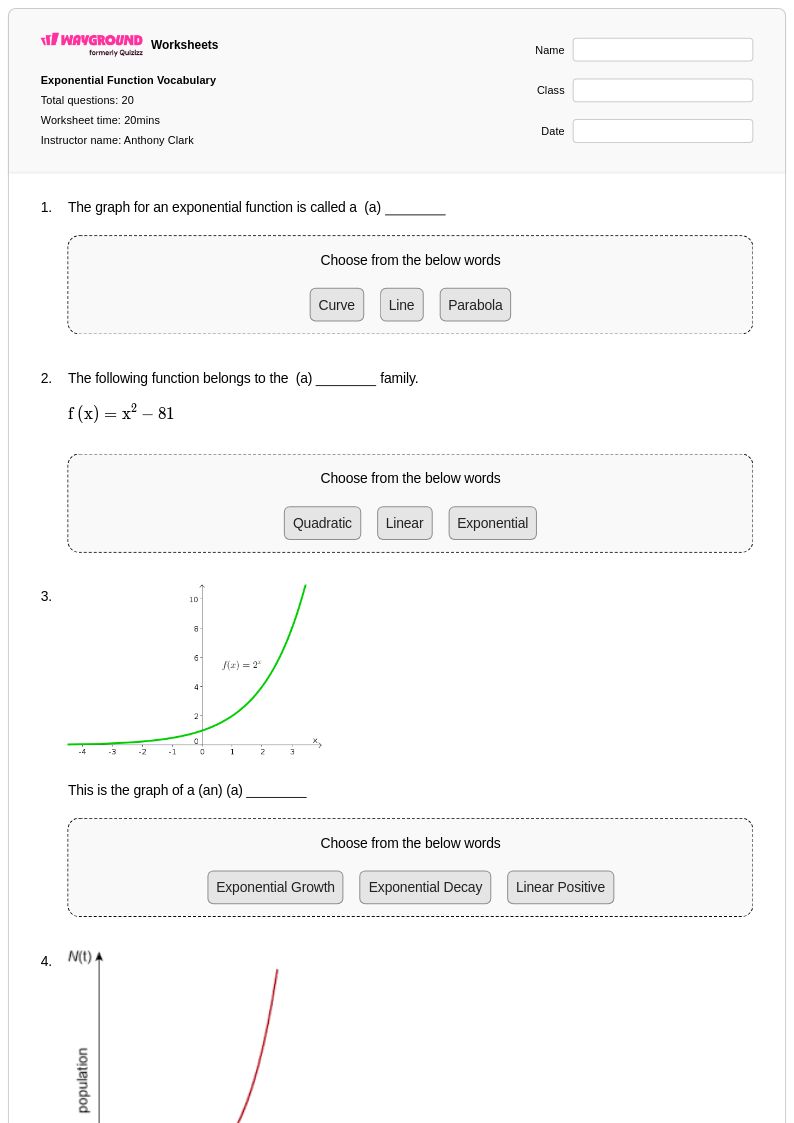
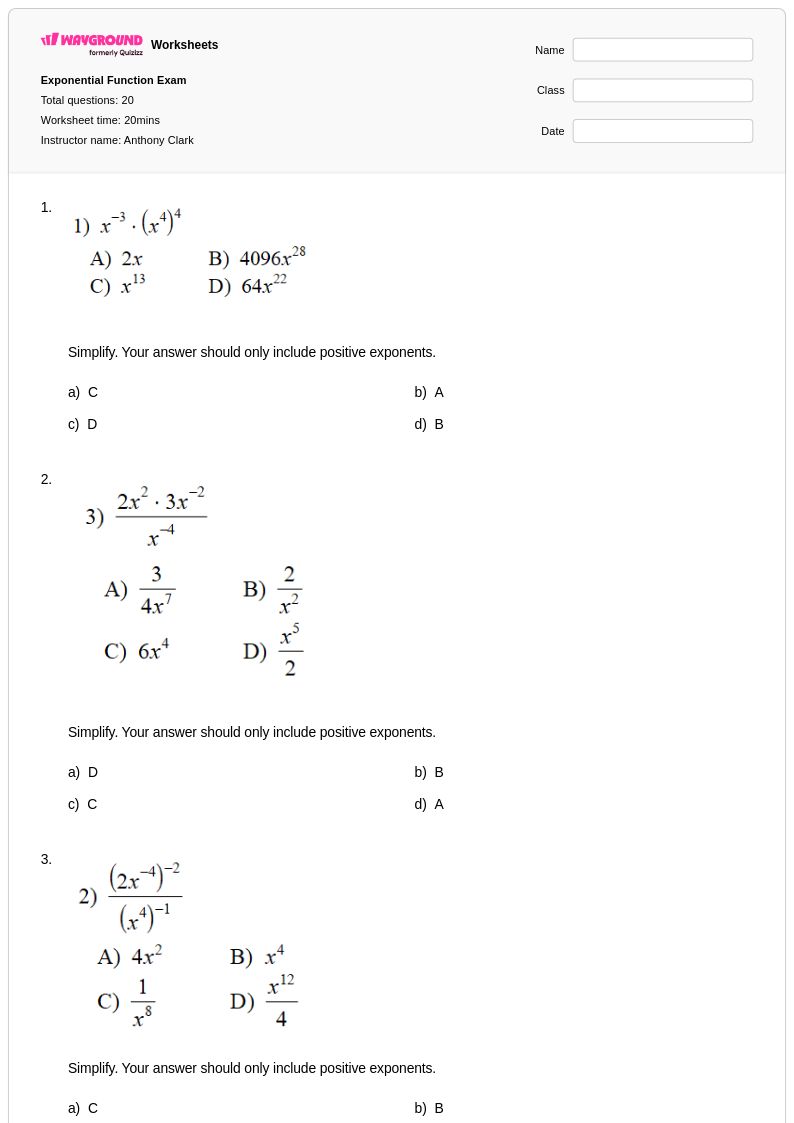
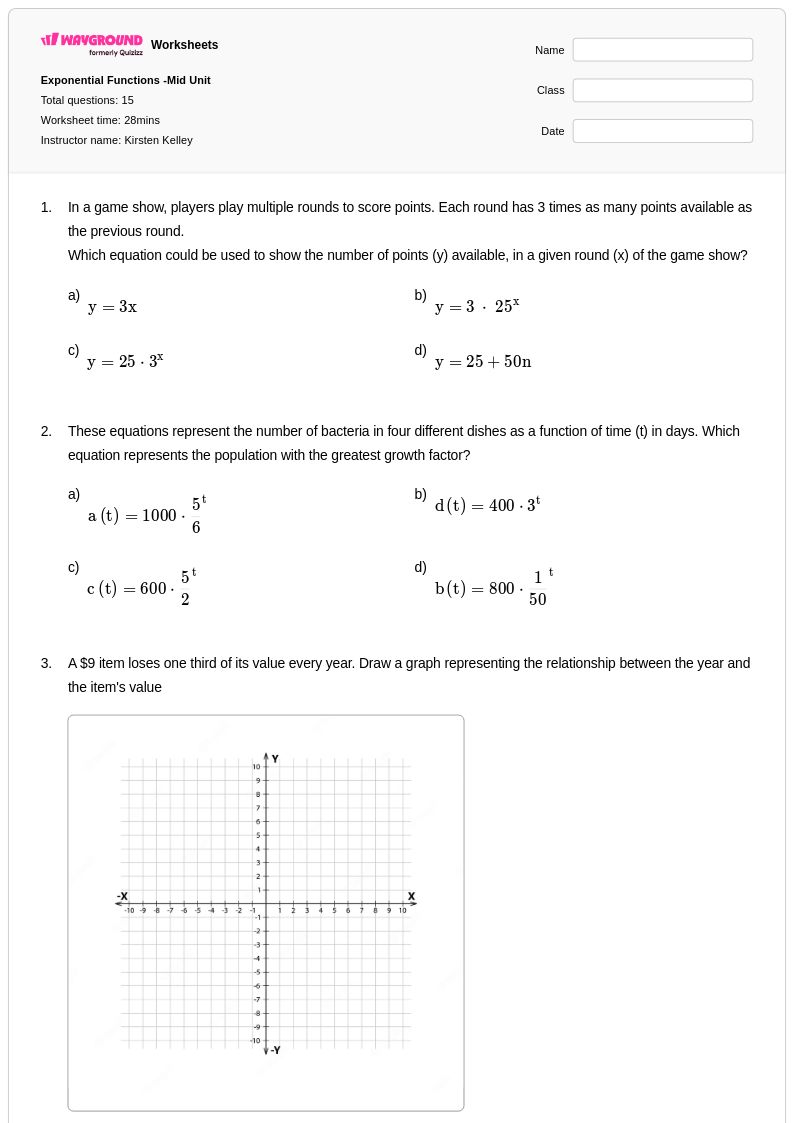
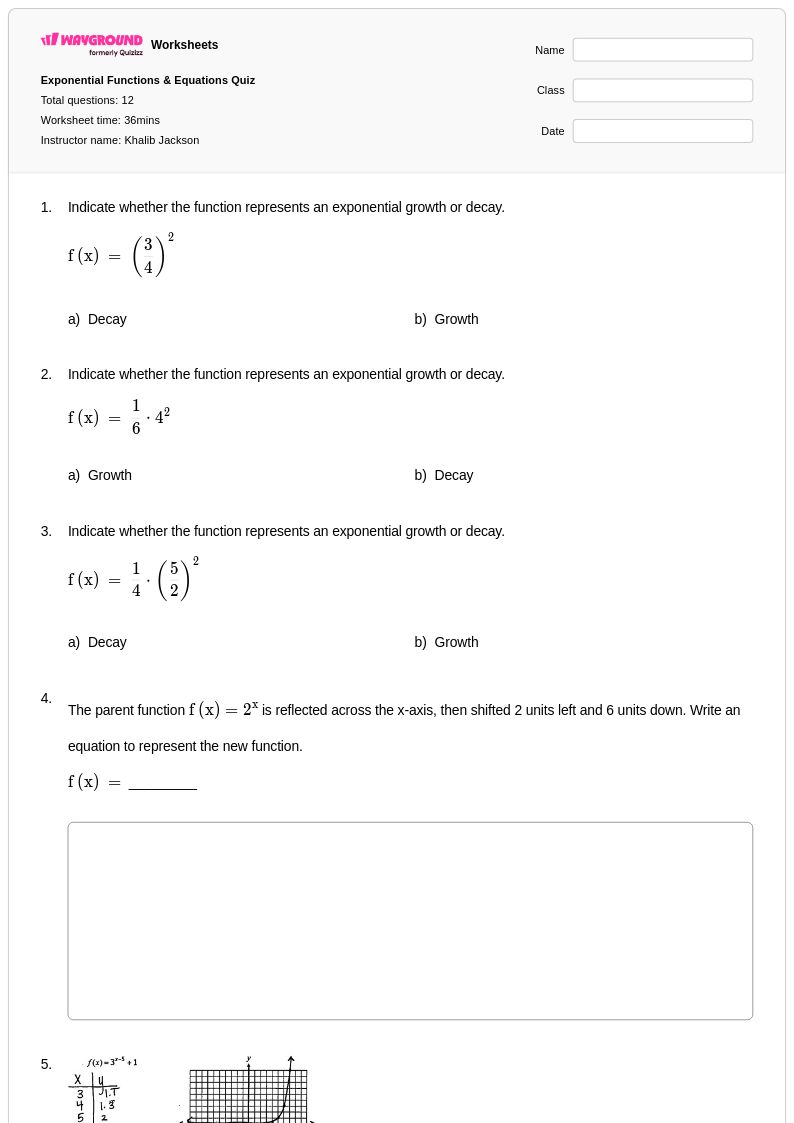
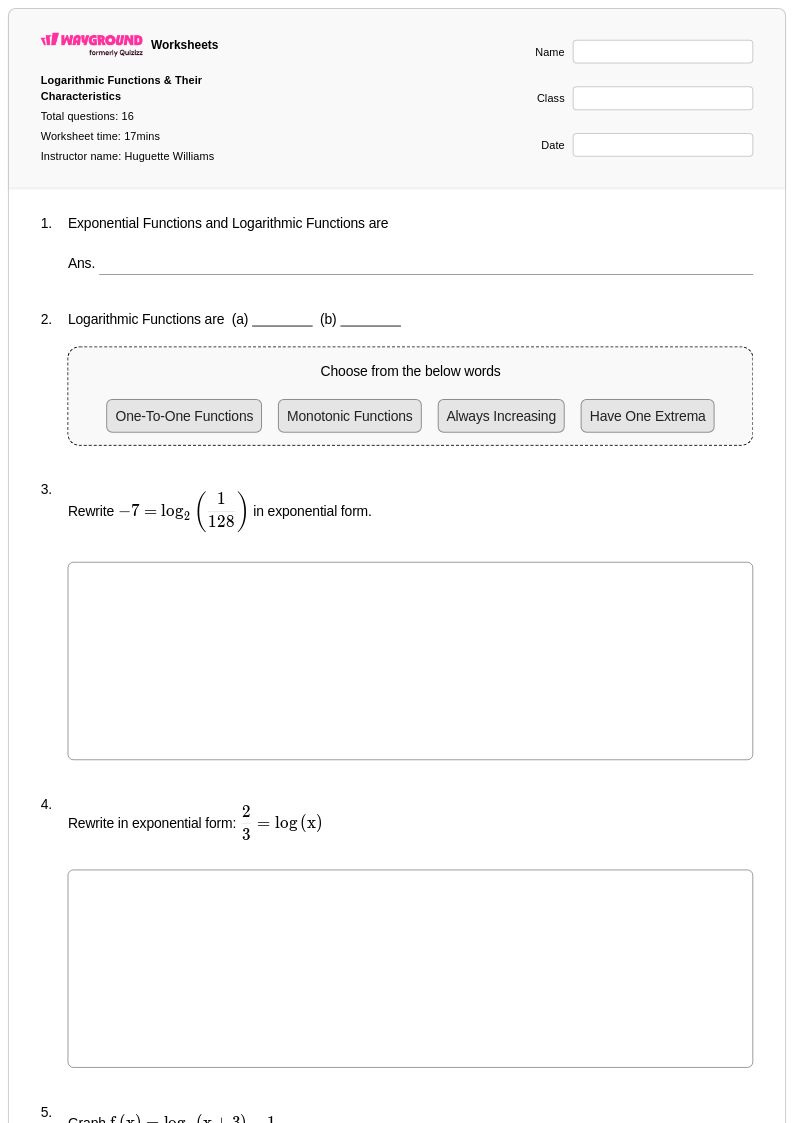
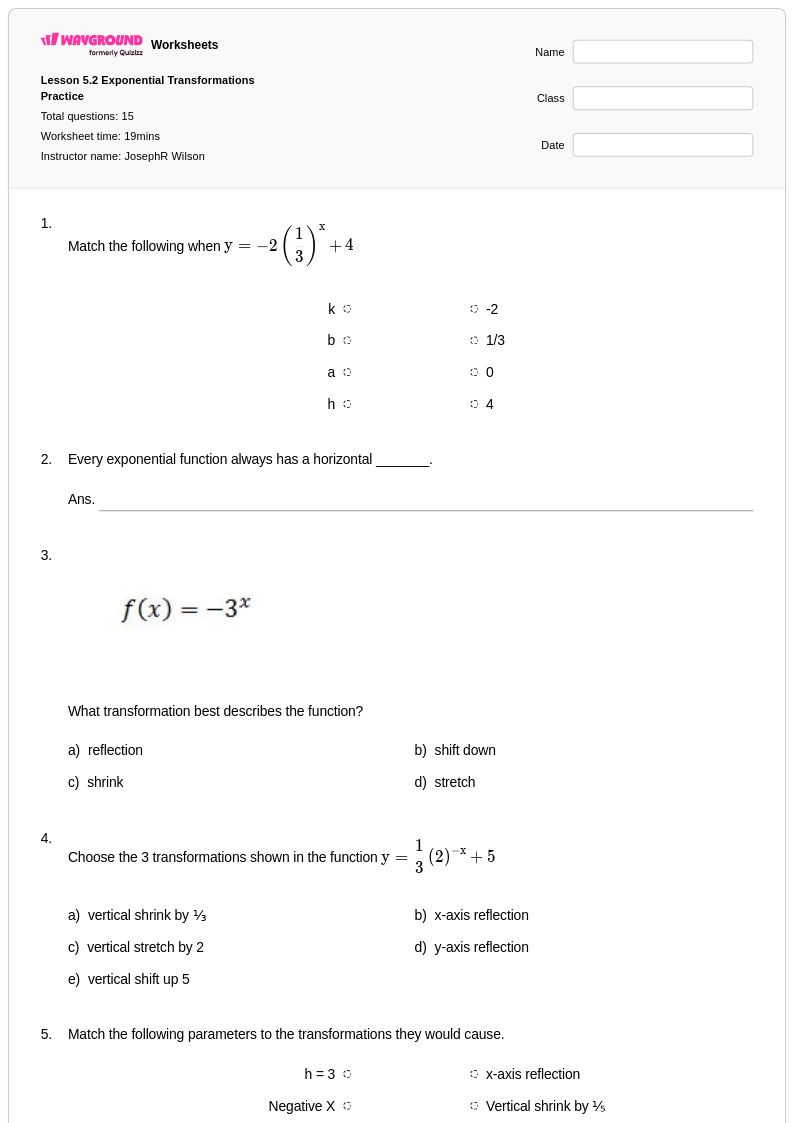
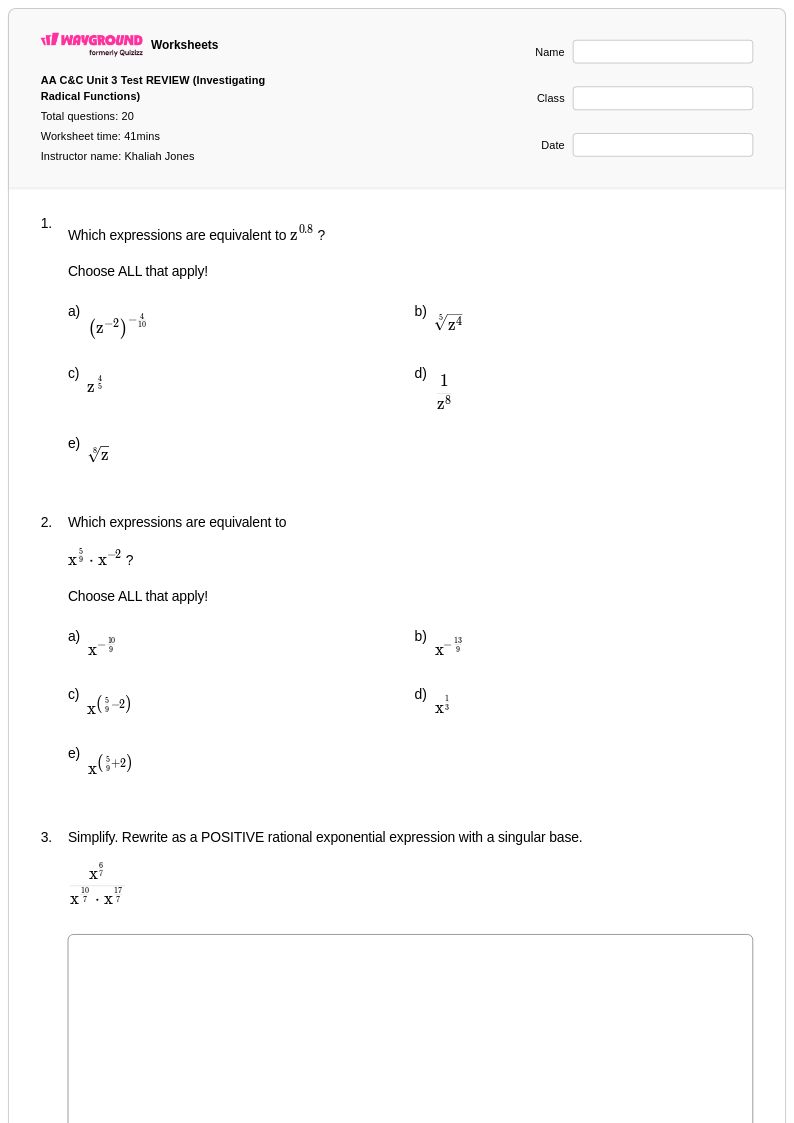
Exponential function manipulation worksheets for Class 11 students available through Wayground (formerly Quizizz) provide comprehensive practice with advanced algebraic techniques essential for precalculus and calculus readiness. These carefully designed resources strengthen critical skills including transforming exponential expressions, applying logarithmic properties to solve complex equations, and manipulating exponential models to analyze real-world phenomena such as population growth and radioactive decay. Students work through systematic practice problems that progress from basic exponential rule applications to sophisticated multi-step manipulations involving composition of functions, inverse relationships, and parameter adjustments. Each worksheet collection includes detailed answer keys and step-by-step solution methods, with materials available as free printables and downloadable pdf formats to accommodate various classroom needs and individual study preferences.
Wayground (formerly Quizizz) empowers mathematics educators with millions of teacher-created exponential function manipulation resources that streamline lesson planning and enhance student learning outcomes. The platform's robust search and filtering capabilities allow instructors to quickly locate Class 11 appropriate materials aligned with state and national mathematics standards, while built-in differentiation tools enable seamless customization for diverse learning needs and ability levels. Teachers can easily modify existing worksheets or combine multiple resources to create targeted practice sets for remediation, skill reinforcement, or enrichment activities. Whether delivered in traditional printable format, interactive digital assignments, or convenient pdf downloads, these flexible resources support comprehensive instruction in exponential function concepts while providing educators with the analytical tools needed to track student progress and identify areas requiring additional mathematical intervention.
FAQs
How do I teach exponential function manipulation at the Grade 11 / precalculus level?
At Grade 11, the teaching emphasis is on the relationship between exponential and logarithmic functions — students need to see them as inverses, not as separate topics. Build manipulation tasks that move fluidly between the two: rewriting an exponential equation in logarithmic form, using logarithmic properties to isolate a variable, then interpreting the result in context. Real-world models like radioactive decay and population growth are especially useful here because they require students to manipulate the model to answer a specific question, not just evaluate it.
What practice problems are most effective for Grade 11 exponential function manipulation?
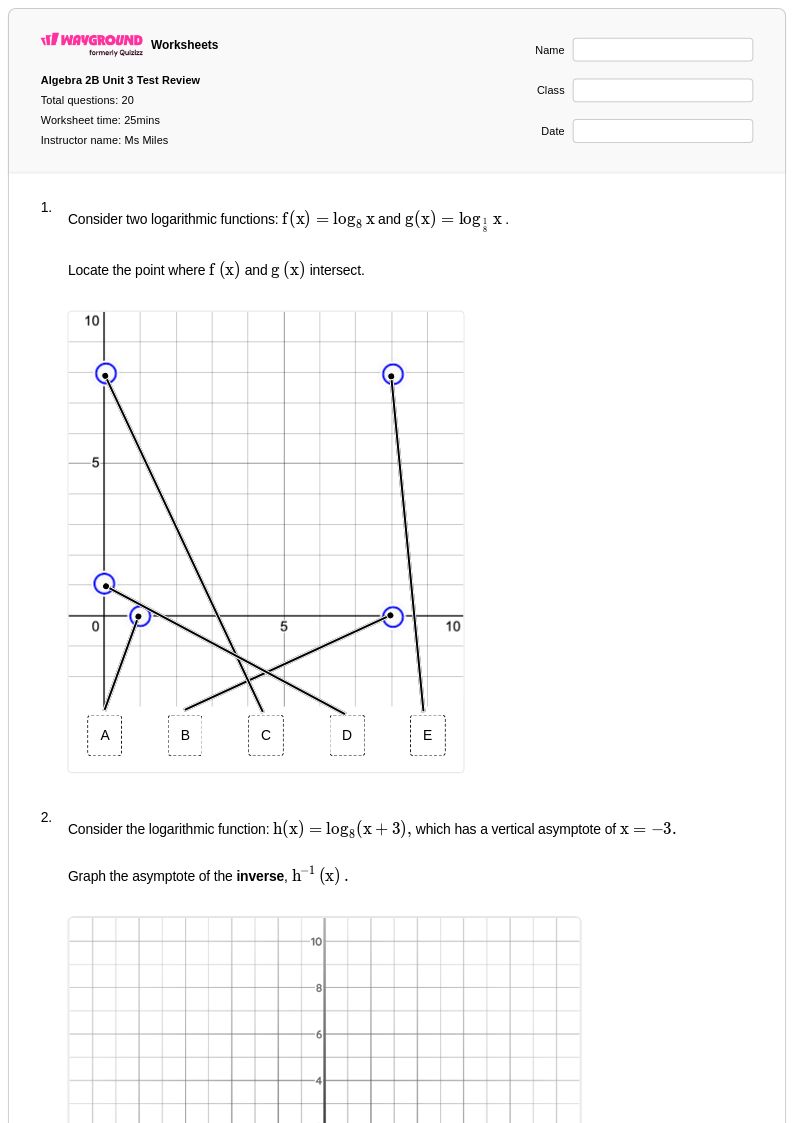
Multi-step problems are the right level of challenge: solving exponential equations that require logarithms, composing exponential functions with other function types, and working with inverse functions. Problems that ask students to analyze parameter changes in a model — 'if the growth rate doubles, how does the equation change and what does the graph look like?' — build the kind of flexible thinking precalculus demands. Avoid over-relying on straightforward evaluate-and-simplify problems; those are below the appropriate challenge level by Grade 11.
What misconceptions do 11th graders commonly have about exponential functions?
The most stubborn misconception at this level is treating logarithms as a separate topic rather than as the inverse of exponentiation. Students who hold this view struggle to choose the right tool when solving equations. A second common error is misapplying logarithm properties — particularly the product and quotient rules — when simplifying expressions, often because students learned the rules as formulas rather than understanding why they work. Targeted problems that require students to justify each step, rather than just produce an answer, surface both issues quickly.
How do I use Wayground's Grade 11 exponential function worksheets?
The worksheets include complete answer keys and step-by-step solutions, which makes them practical for both in-class work and independent study. Hosting a worksheet as a digital quiz on Wayground gives you immediate data on where students are struggling — useful before a unit test. For students who benefit from working on paper, the printable PDF version is available, and the Wayground for Teachers app handles grading from scanned submissions so you're not entering scores manually.
How does Grade 11 exponential function manipulation align with Common Core?
Common Core's high school Functions and Algebra standards position Grade 11 as the level where students formalize the exponential-logarithmic inverse relationship and apply it to solve equations that can't be handled by matching bases alone. The specific skill progression moves from rewriting exponential expressions using logarithms, to solving multi-step equations, to analyzing exponential models for growth and decay rate. This is the last major treatment of exponential functions before calculus, where students will differentiate and integrate them — so fluency here has direct downstream consequences.
How can I differentiate exponential function manipulation practice for my Grade 11 students?
For students who are behind on the prerequisite logarithm rules, Wayground's Read Aloud feature can help — hearing a problem read aloud reduces the cognitive load of parsing dense notation and lets students focus on the math. Extended time is worth configuring for students who process accurately but slowly on multi-step problems. Both accommodations are set per student and don't affect how the assignment appears to the rest of the class.