Free Printable Fibonacci Numbers Worksheets for Class 6
Wayground's Class 6 Fibonacci Numbers worksheets provide free printables and practice problems that help students discover patterns in this famous sequence, complete with answer keys and PDF resources for mathematical exploration.
Explore printable Fibonacci Numbers worksheets for Class 6
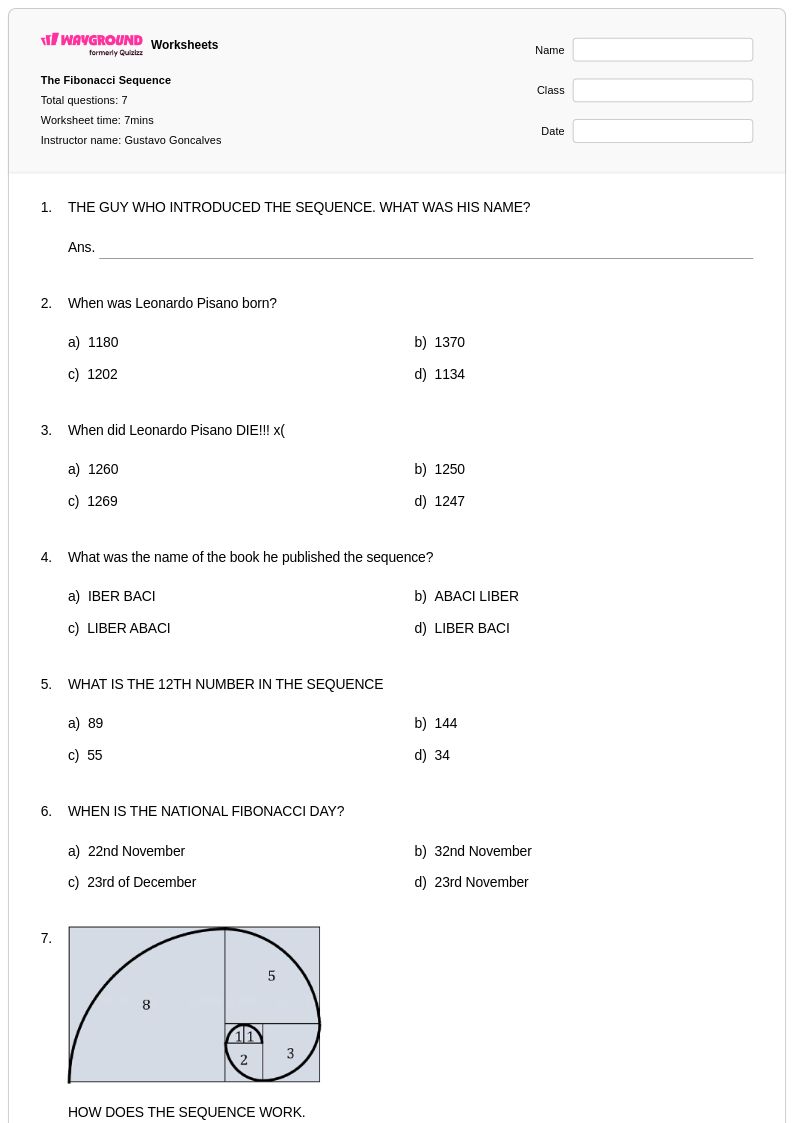
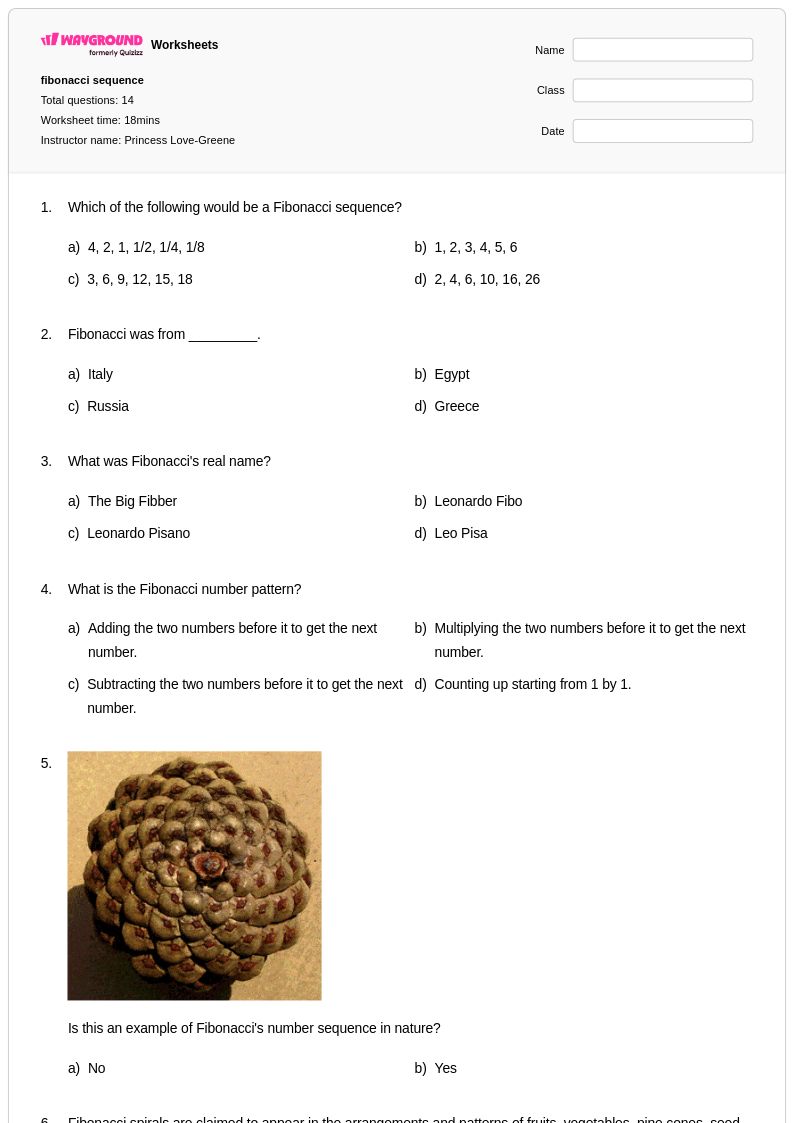
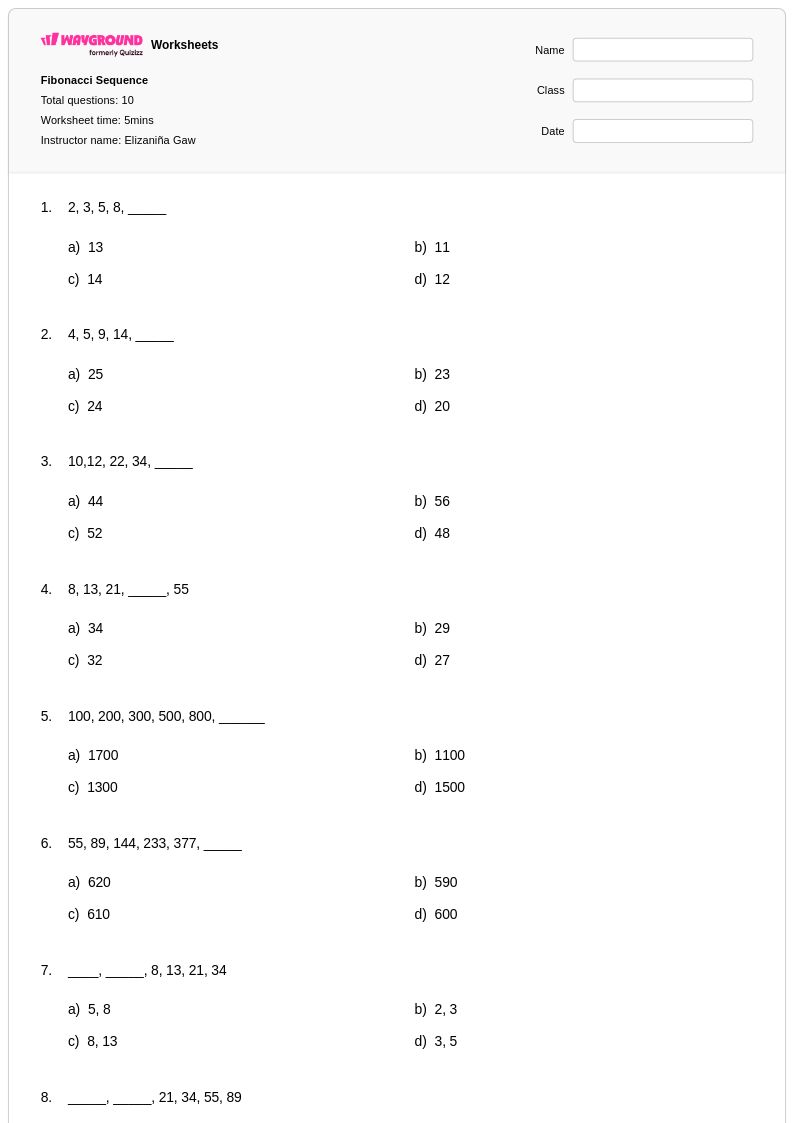
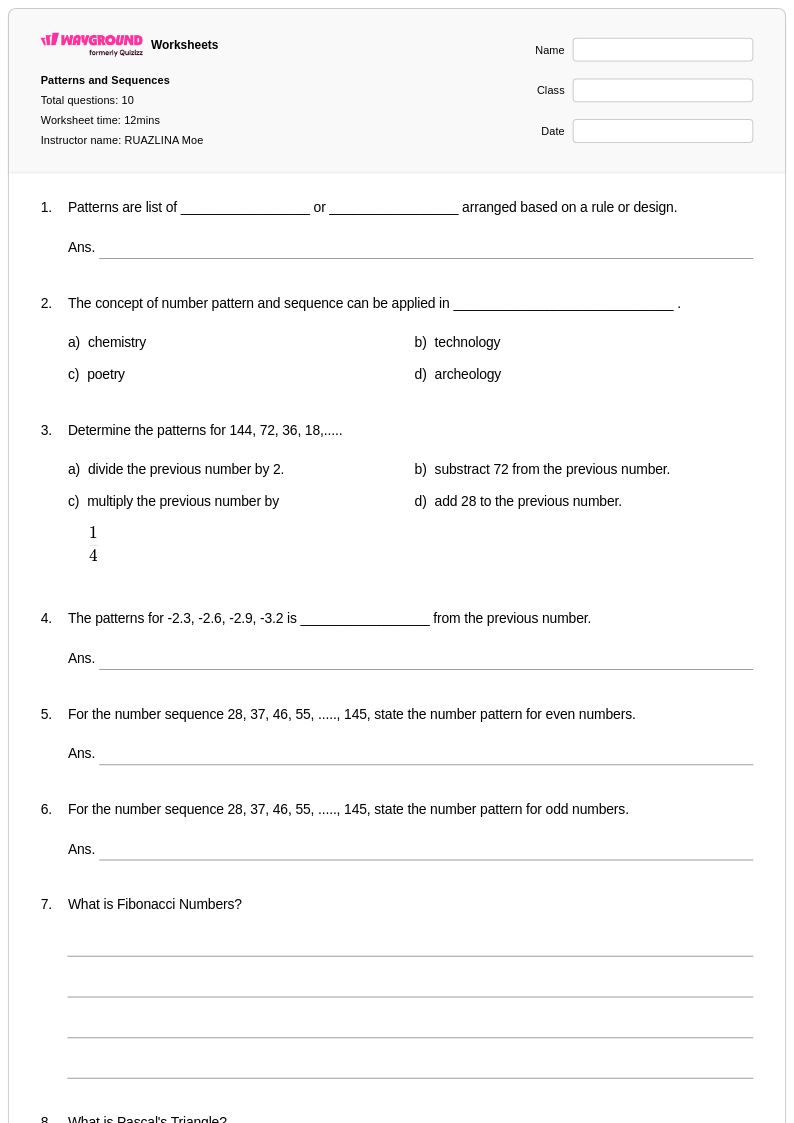
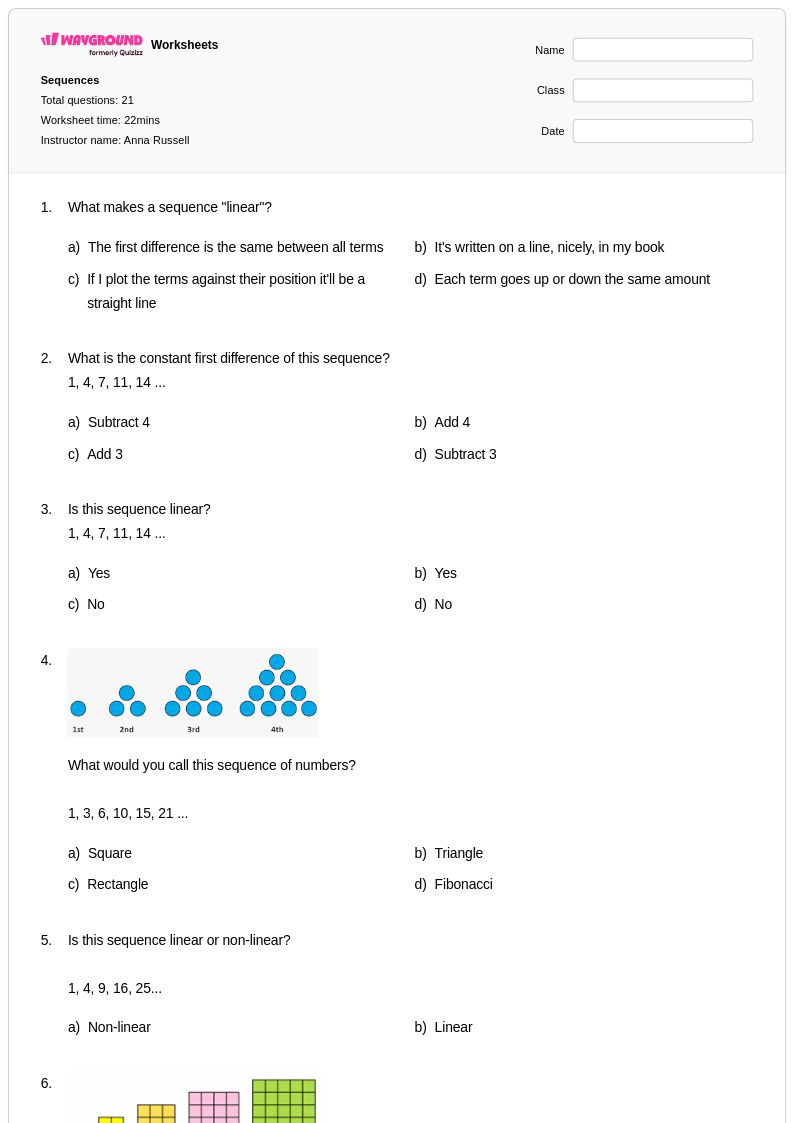
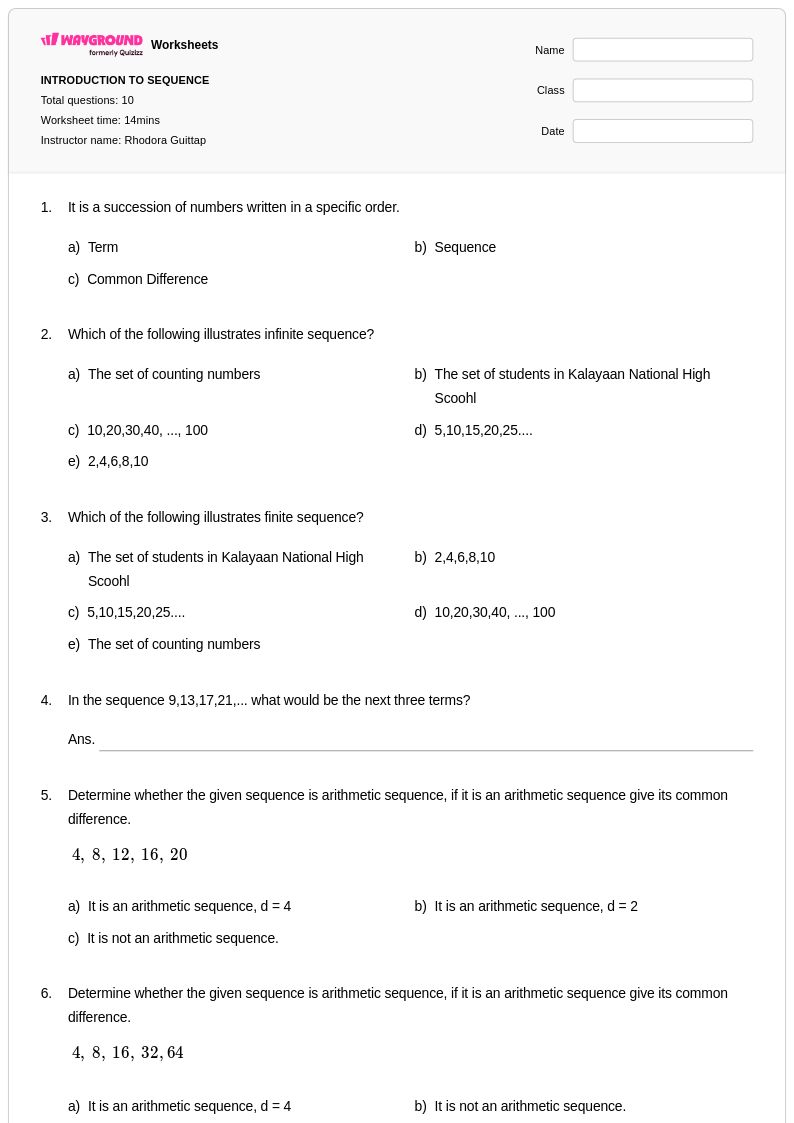
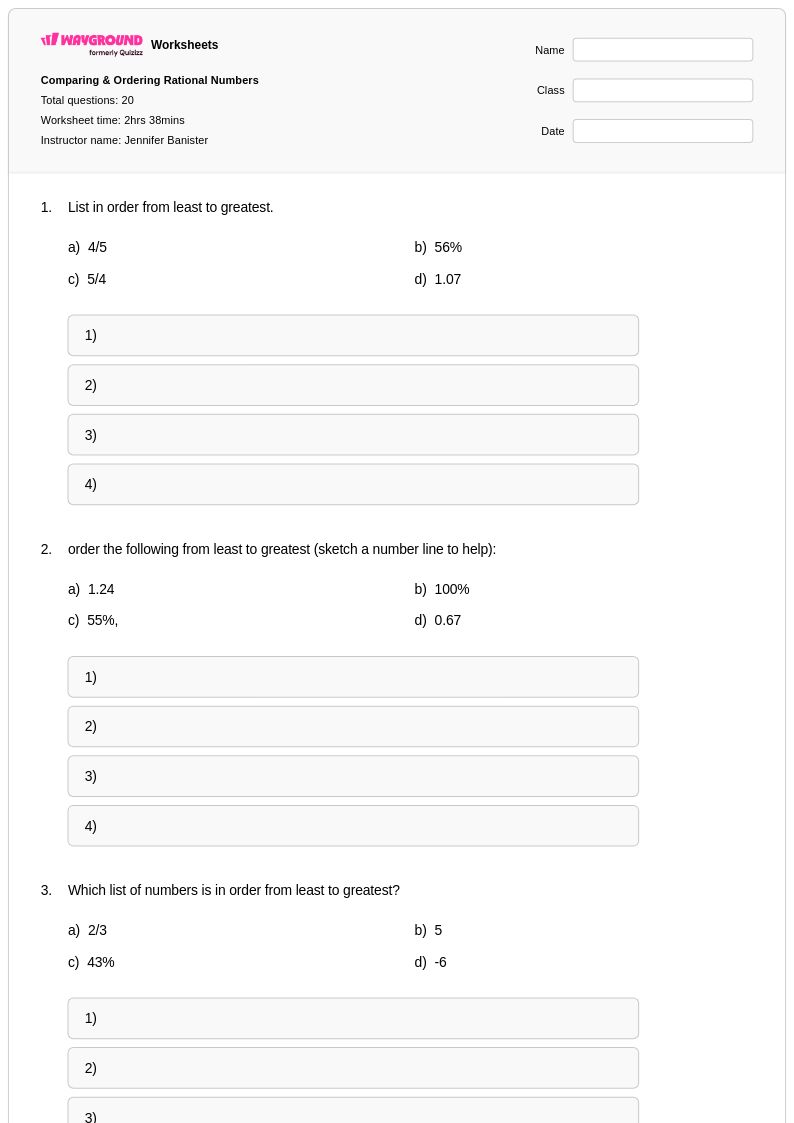
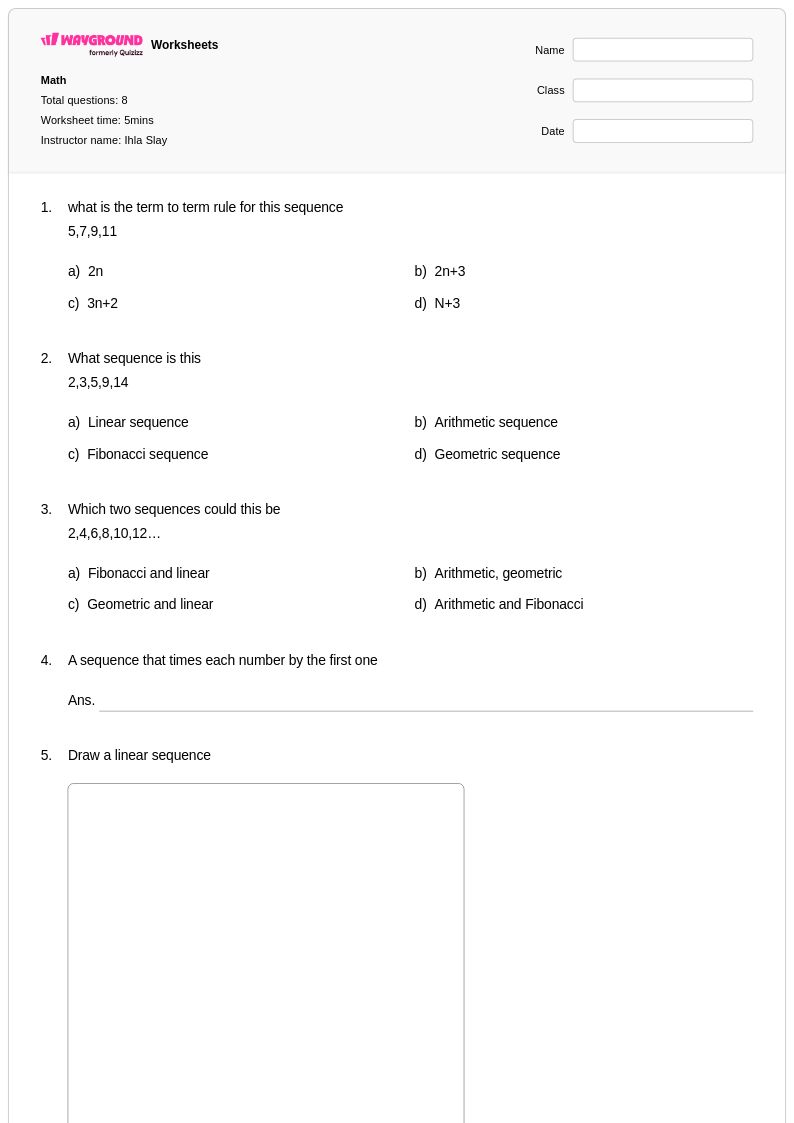
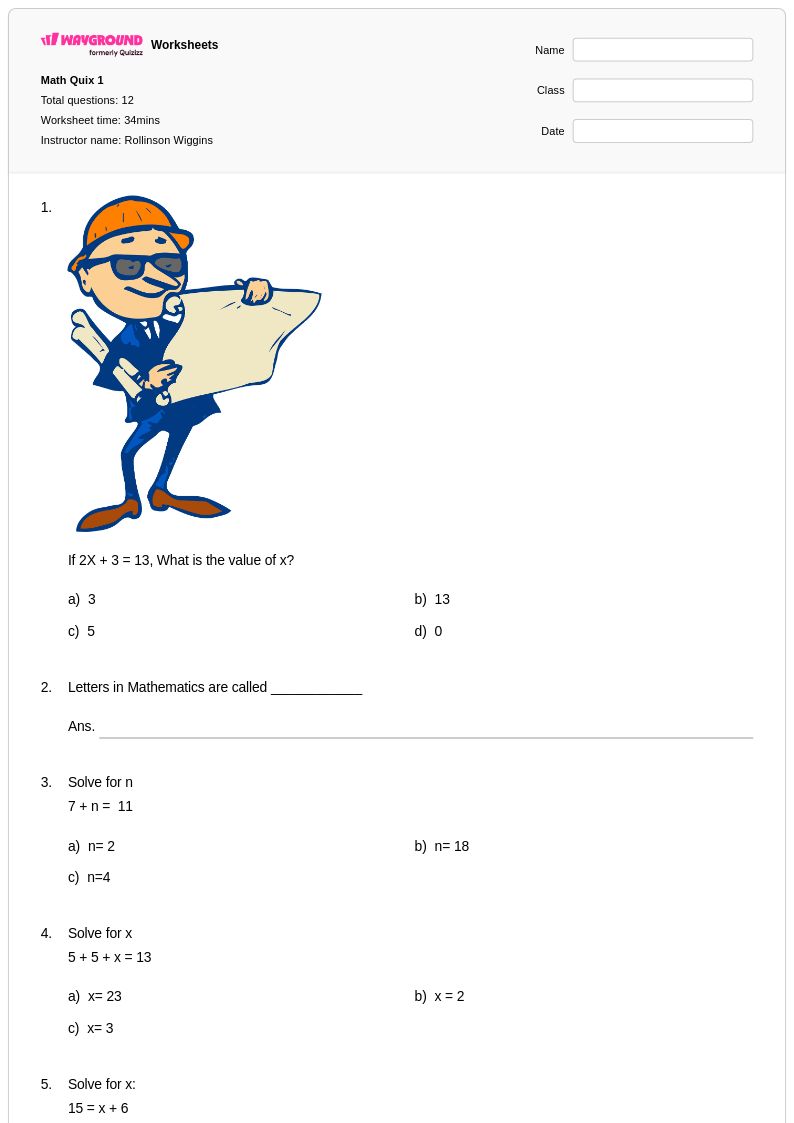
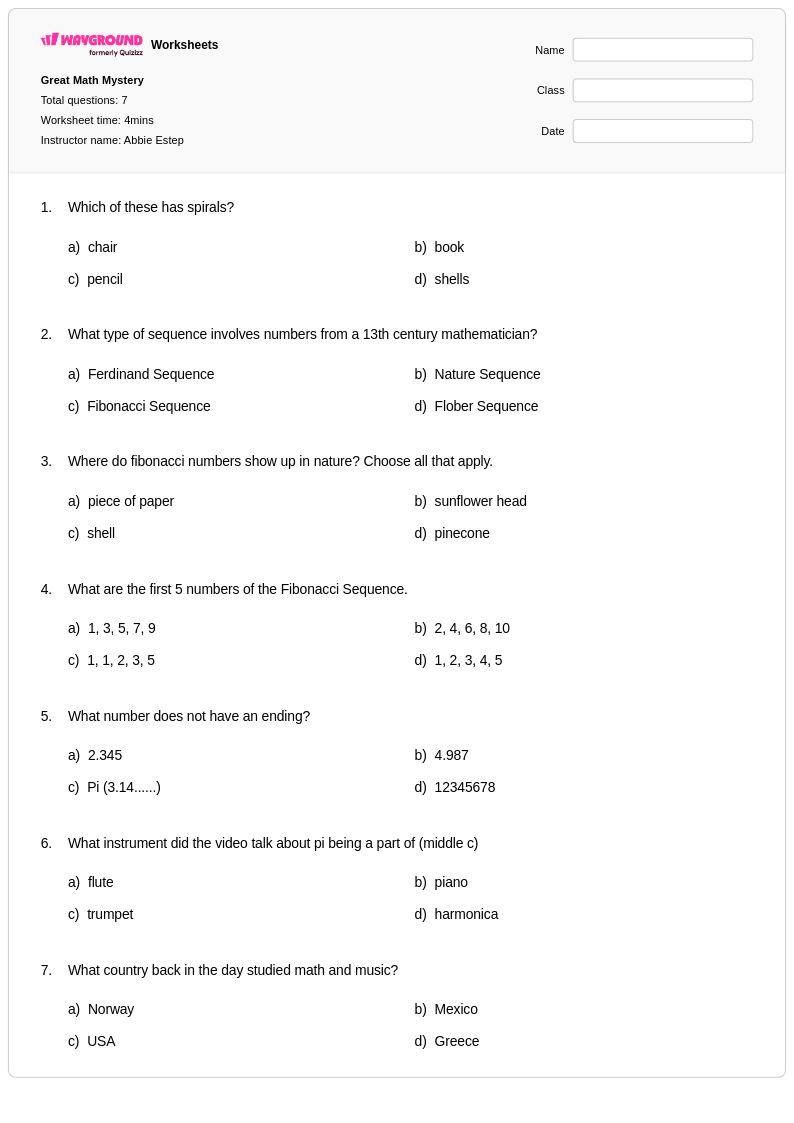
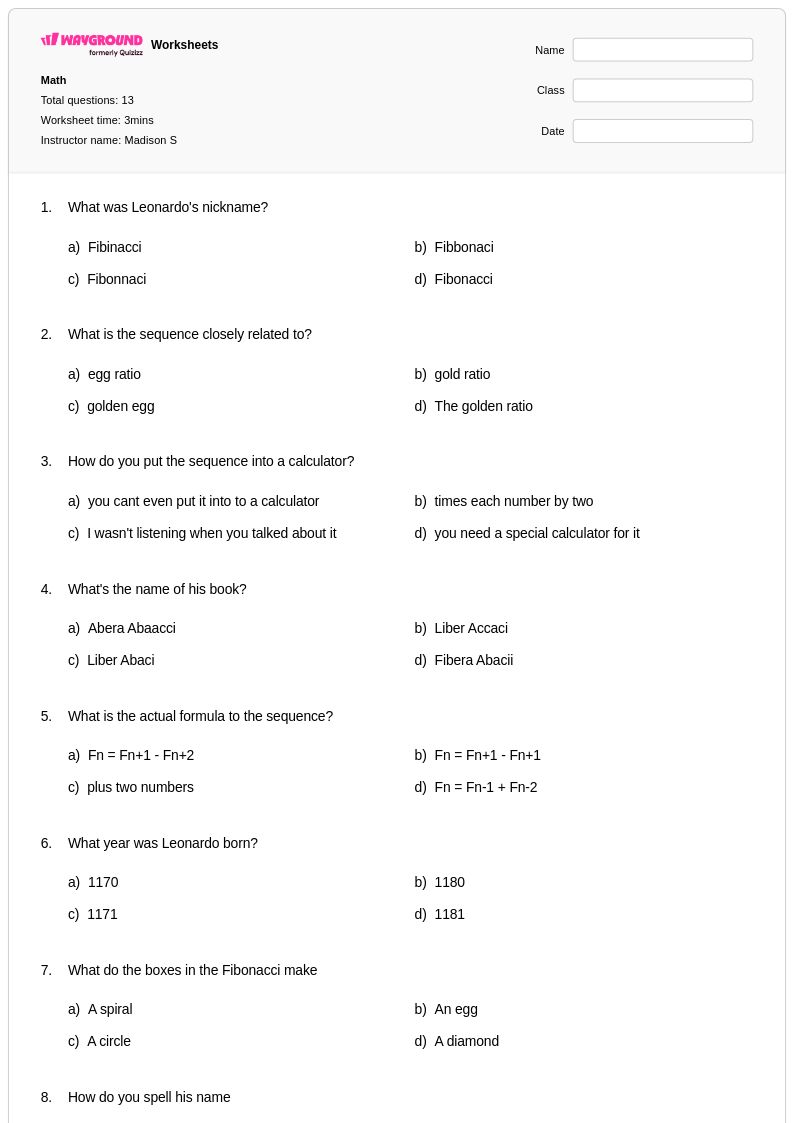
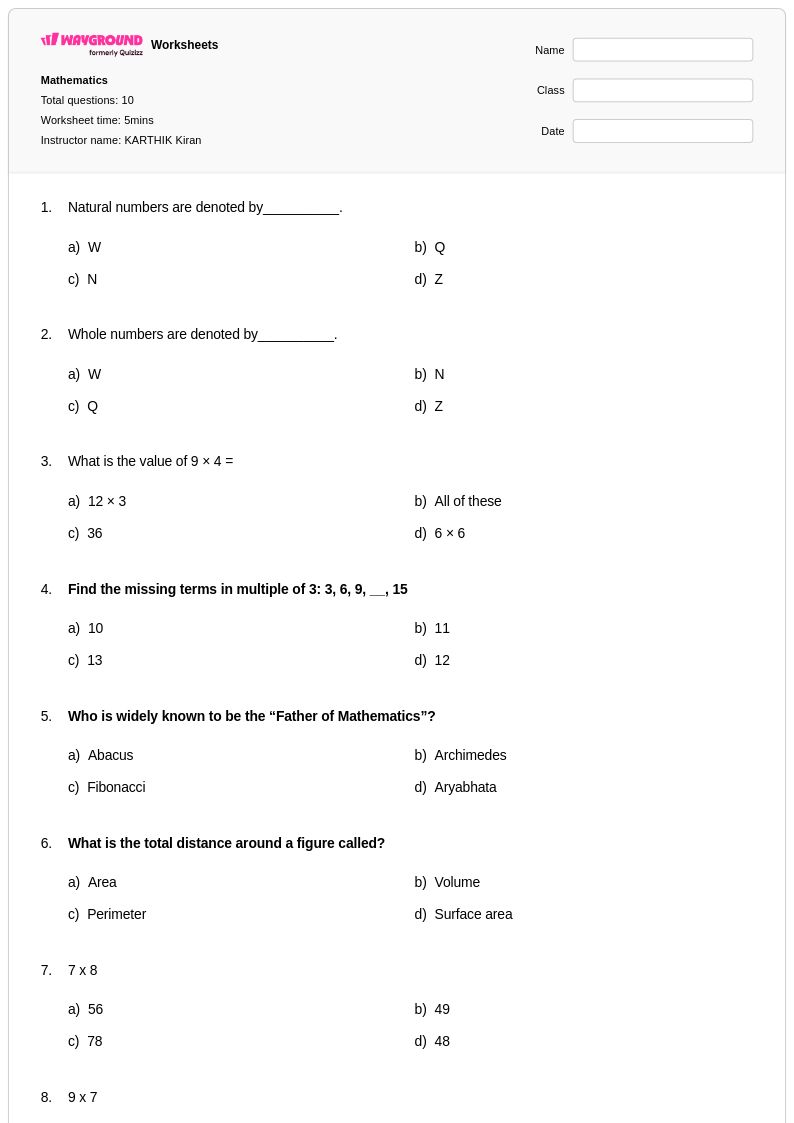
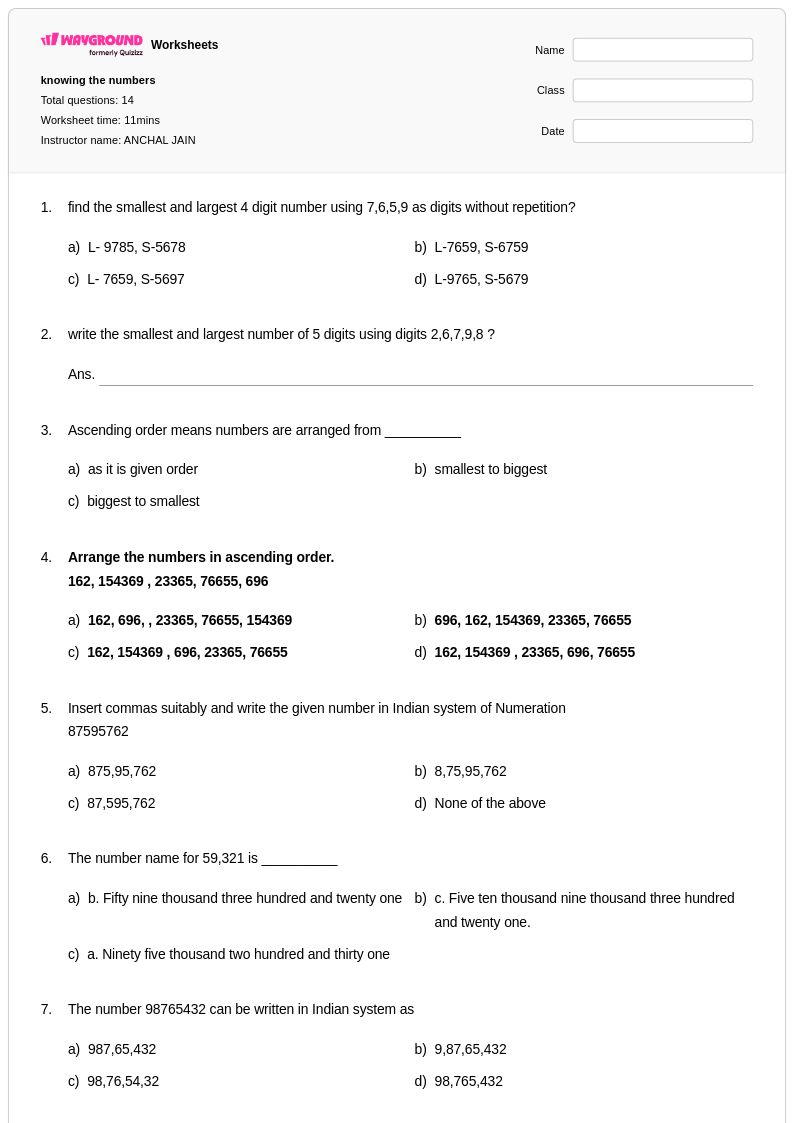
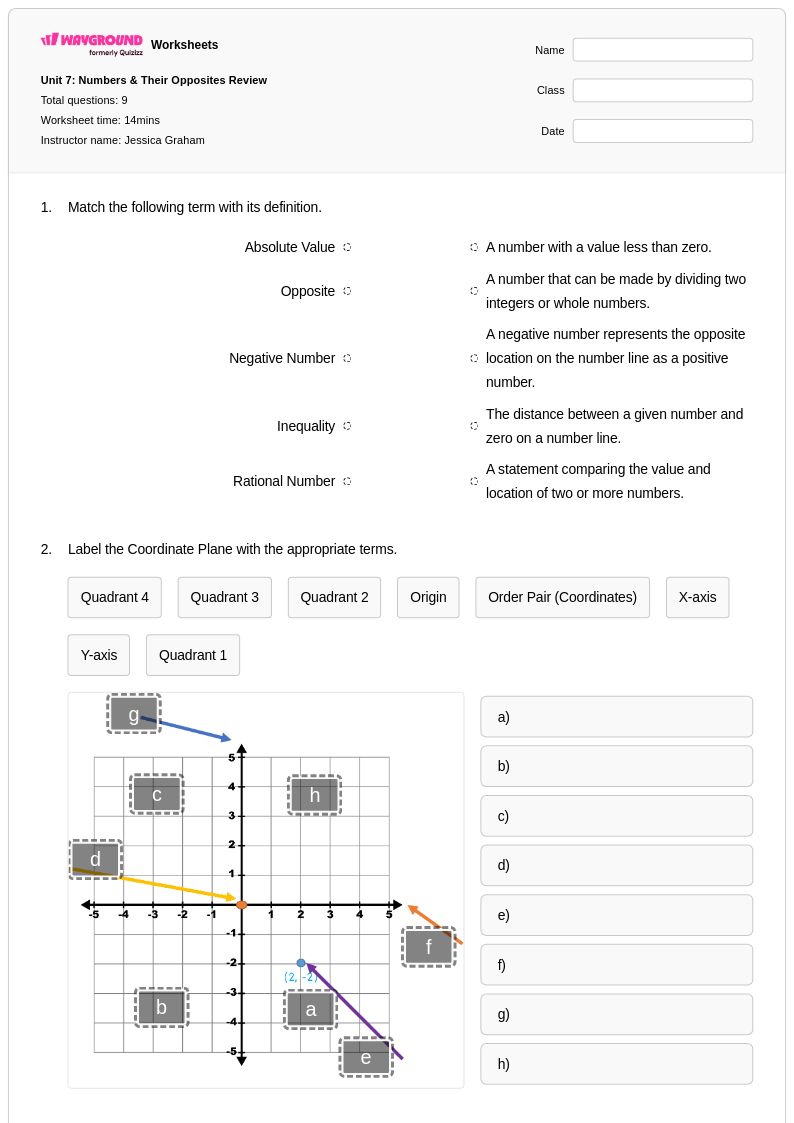
Fibonacci Numbers worksheets available through Wayground (formerly Quizizz) provide Class 6 students with engaging practice problems that introduce this fascinating mathematical sequence where each number is the sum of the two preceding ones. These carefully designed printables help students recognize patterns, develop logical reasoning skills, and build foundational understanding of mathematical sequences that will serve them throughout their academic journey. The comprehensive worksheet collection includes problems that guide students through identifying Fibonacci patterns in nature, calculating sequence terms, and exploring the relationship between consecutive numbers, with each resource featuring detailed answer keys that support independent learning and self-assessment. These free pdf resources strengthen critical thinking abilities while making abstract mathematical concepts accessible and enjoyable for middle school learners.
Wayground (formerly Quizizz) supports mathematics educators with millions of teacher-created Fibonacci Numbers resources that streamline lesson planning and enhance classroom instruction for Class 6 students. The platform's robust search and filtering capabilities enable teachers to quickly locate worksheets aligned with specific learning objectives and curriculum standards, while built-in differentiation tools allow for seamless customization based on individual student needs and abilities. These versatile resources are available in both printable and digital formats, including downloadable pdf versions, making them ideal for in-class practice, homework assignments, remediation sessions, and enrichment activities. Teachers can efficiently adapt these professionally developed materials to support struggling learners who need additional pattern recognition practice or challenge advanced students with more complex Fibonacci applications, ensuring every student develops confidence with this important mathematical concept.
FAQs
How do I teach Fibonacci numbers to sixth graders?
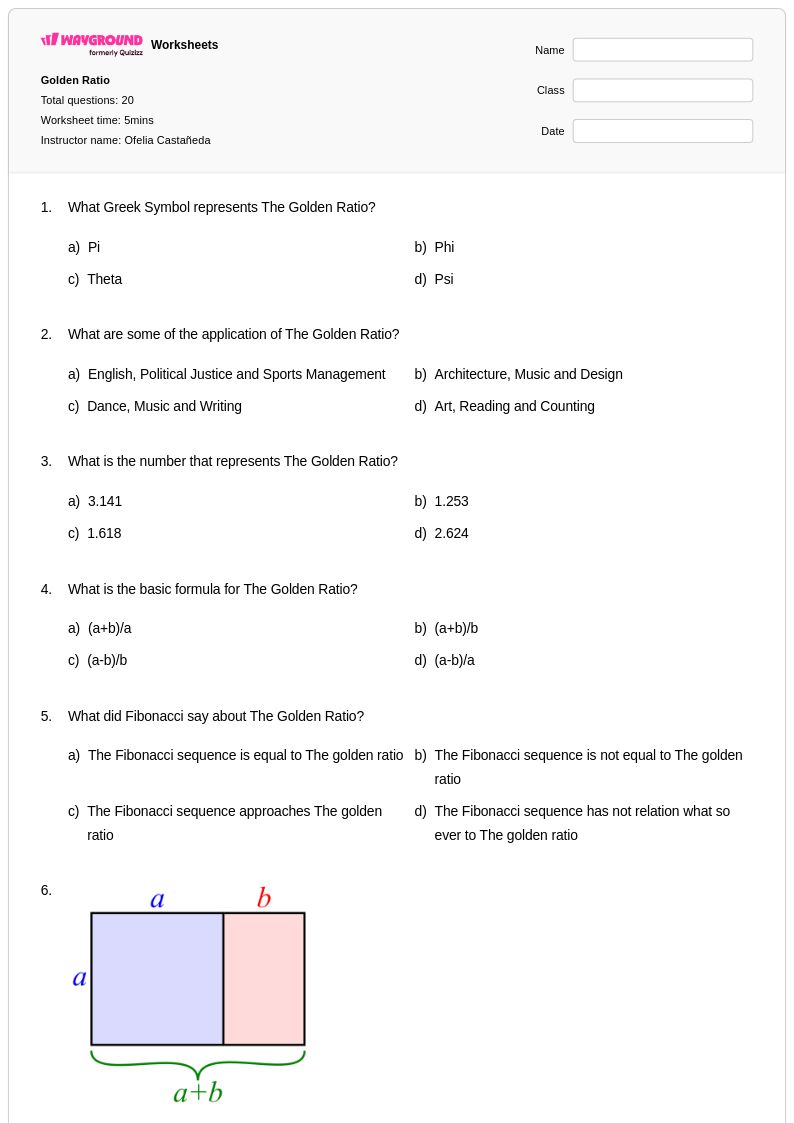
Sixth graders can engage with the sequence analytically, not just procedurally. A strong entry point: have students compute the ratio of consecutive Fibonacci terms as fractions and then as decimals, and ask them what they notice as the terms get larger. The convergence toward the golden ratio (~1.618) is mathematically significant and genuinely interesting to students at this age. From there, connect the sequence to ratio and proportional reasoning — the core of Grade 6 math — by asking whether the relationship between consecutive terms is proportional (it isn't exactly, but it approaches one). That tension is worth exploring.
What Fibonacci exercises are appropriate for Grade 6 students?
At Grade 6, good practice includes ratio tables comparing consecutive Fibonacci terms, problems that ask students to determine whether a large number (like 144 or 233) is a Fibonacci number and justify their answer, and tasks that connect the sequence to percent change (how much does each term grow relative to the previous one?). Problems involving the golden ratio in geometric contexts — rectangles, spirals — extend the sequence into visual and spatial reasoning. Avoid purely mechanical fill-in-the-sequence work; sixth graders need problems that require them to reason about the sequence, not just reproduce it.
What mistakes do sixth graders make when working with Fibonacci numbers?
The most common analytical error at this level is assuming the ratio between consecutive terms is constant — students familiar with geometric sequences expect a fixed multiplier and are confused when the Fibonacci ratio keeps changing (even if it's converging). A second issue: when working backwards from a given term, students sometimes subtract incorrectly because they forget which term is which in the relationship F(n) = F(n-1) + F(n-2). Labeling terms explicitly before computing helps. Students also sometimes confuse the Fibonacci sequence with the Lucas sequence (2, 1, 3, 4, 7, 11...), which follows the same rule but starts differently — worth addressing if you introduce the idea that the rule matters more than the starting values.
How do I use Wayground's Grade 6 Fibonacci worksheets?
Host the worksheet as a digital quiz on Wayground for immediate scoring and feedback — useful when you want to quickly gauge where students are with ratio reasoning before moving on. For more analytical work where students need to show their thinking, the printable PDF is the better choice; grade those submissions using the Wayground for Teachers app. Either way, the answer key is included so you're not building one from scratch.
How do Fibonacci numbers connect to the Grade 6 math curriculum?
Common Core's Grade 6 standards center on ratio and proportional reasoning, and Fibonacci numbers offer a concrete, non-routine context for that work. Students who are learning to write and interpret ratios can apply those skills to consecutive Fibonacci terms and observe that the ratio is nearly — but not exactly — proportional, which deepens their understanding of what proportionality actually means. The sequence also connects to Grade 6 work on expressions and patterns, where students are expected to describe rules for sequences using words and symbols. Fibonacci is a natural bridge from arithmetic pattern work in elementary school to the algebraic sequences students will study in middle and high school.
How can I differentiate Fibonacci worksheets for my Grade 6 class?
For students who need language support, Wayground can translate the worksheet into another language — useful in classes with English learners who can handle the math but struggle with English-language word problems. For students who need a visual accessibility adjustment, the dyslexia-friendly font option reduces the reading barrier on text-heavy problems. Advanced students who finish early can be directed to golden-ratio extension problems or asked to investigate what happens when you apply the Fibonacci rule to negative starting values — no separate worksheet required.