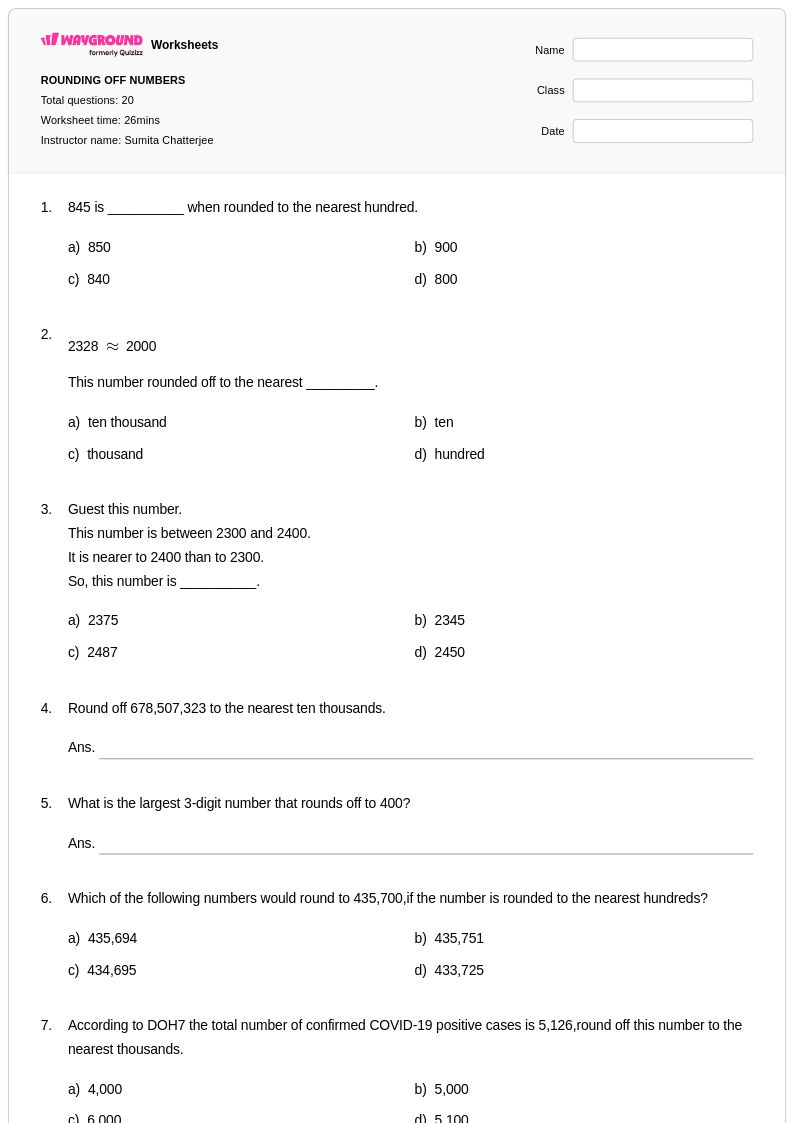
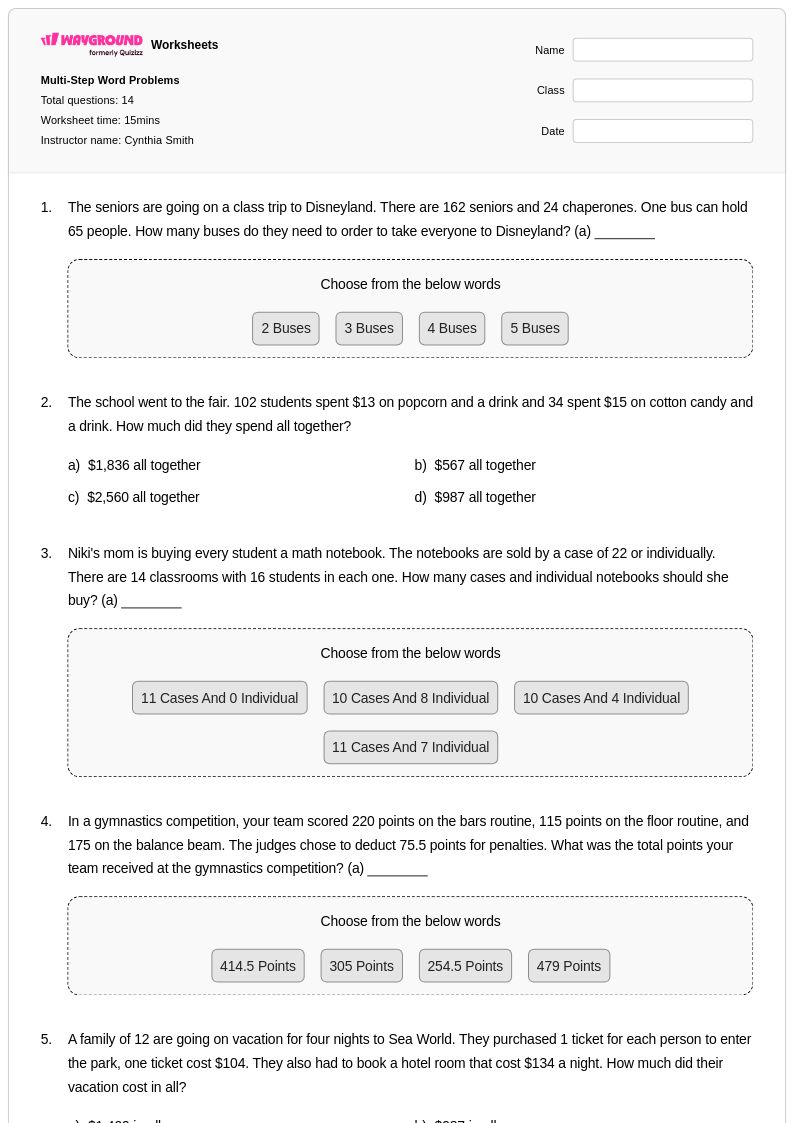
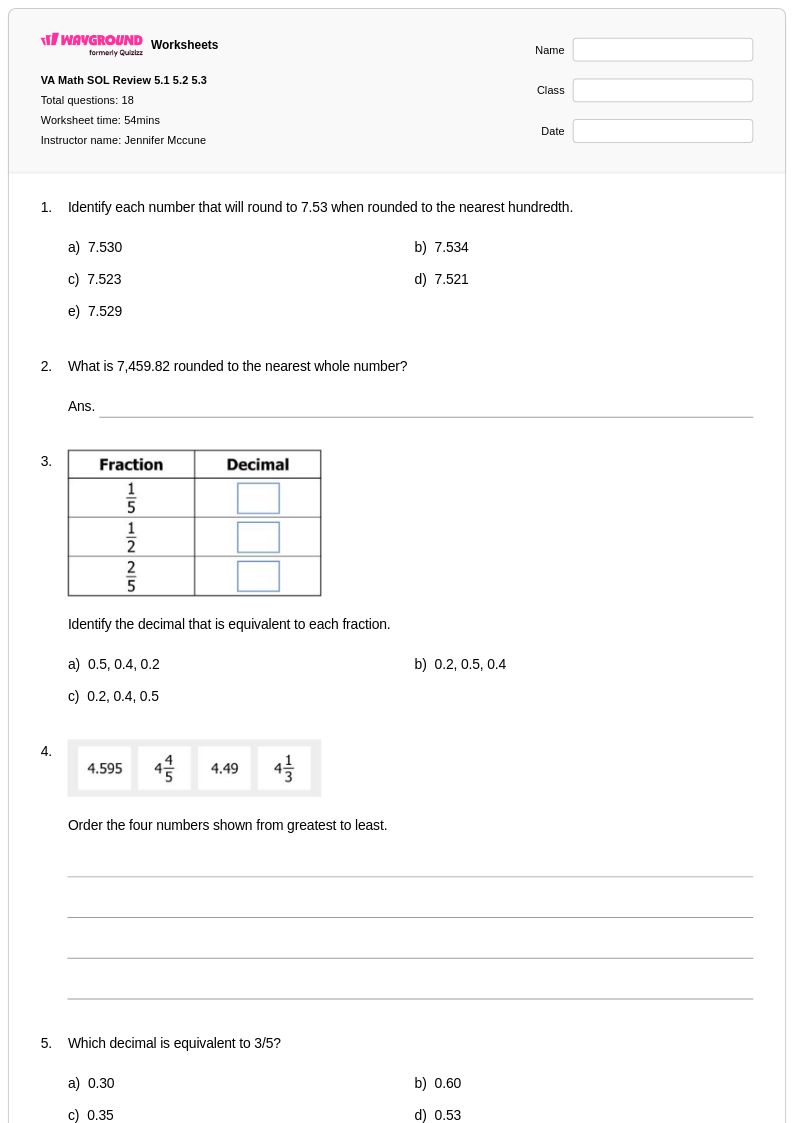
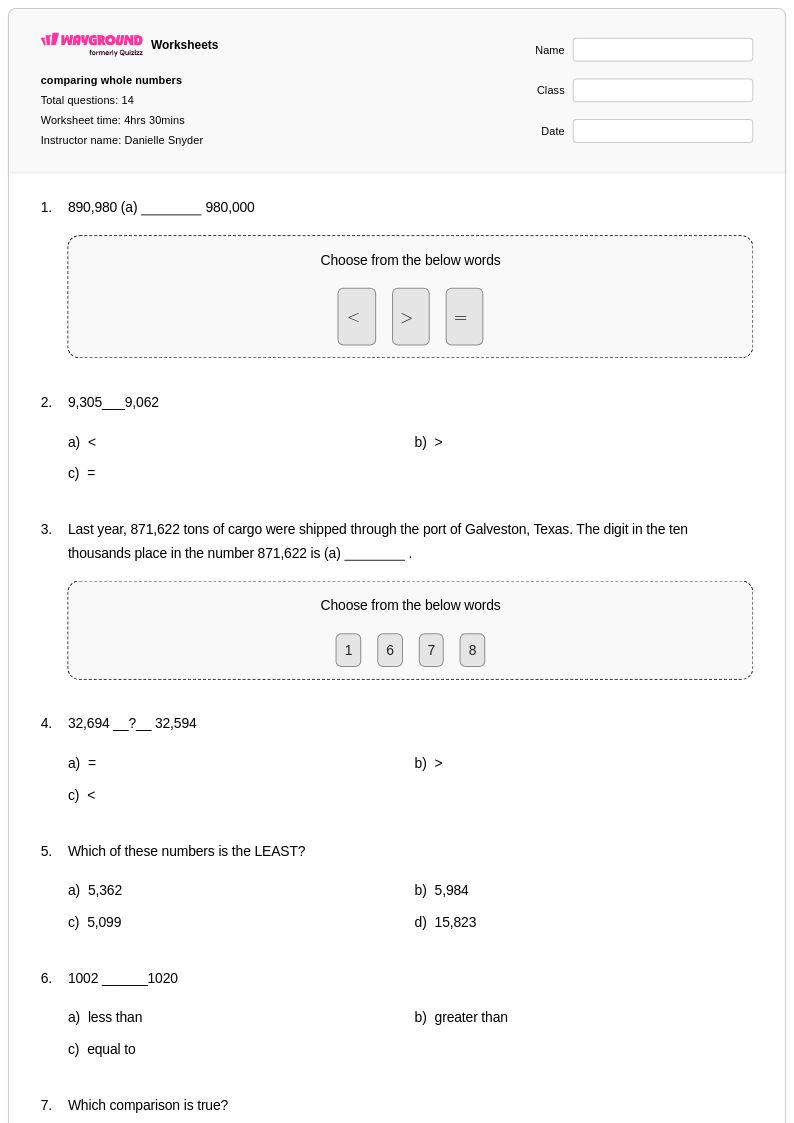
Free Printable Fibonacci Numbers Worksheets for Class 5
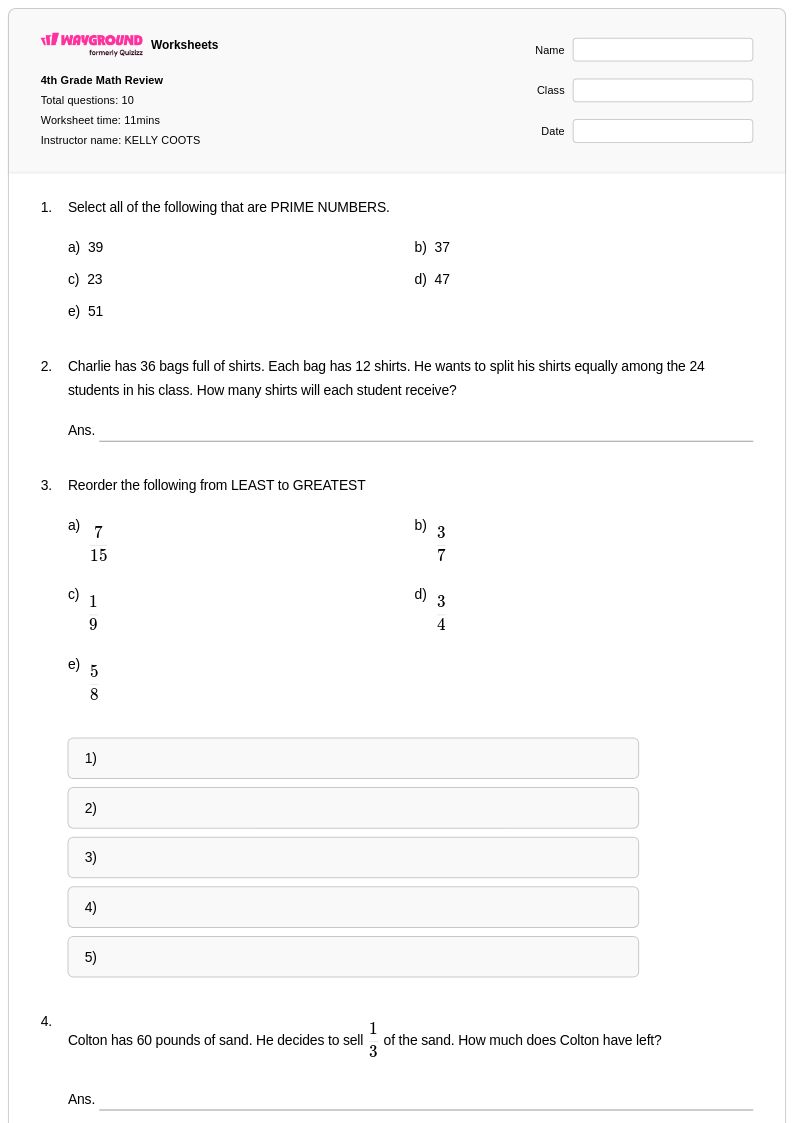
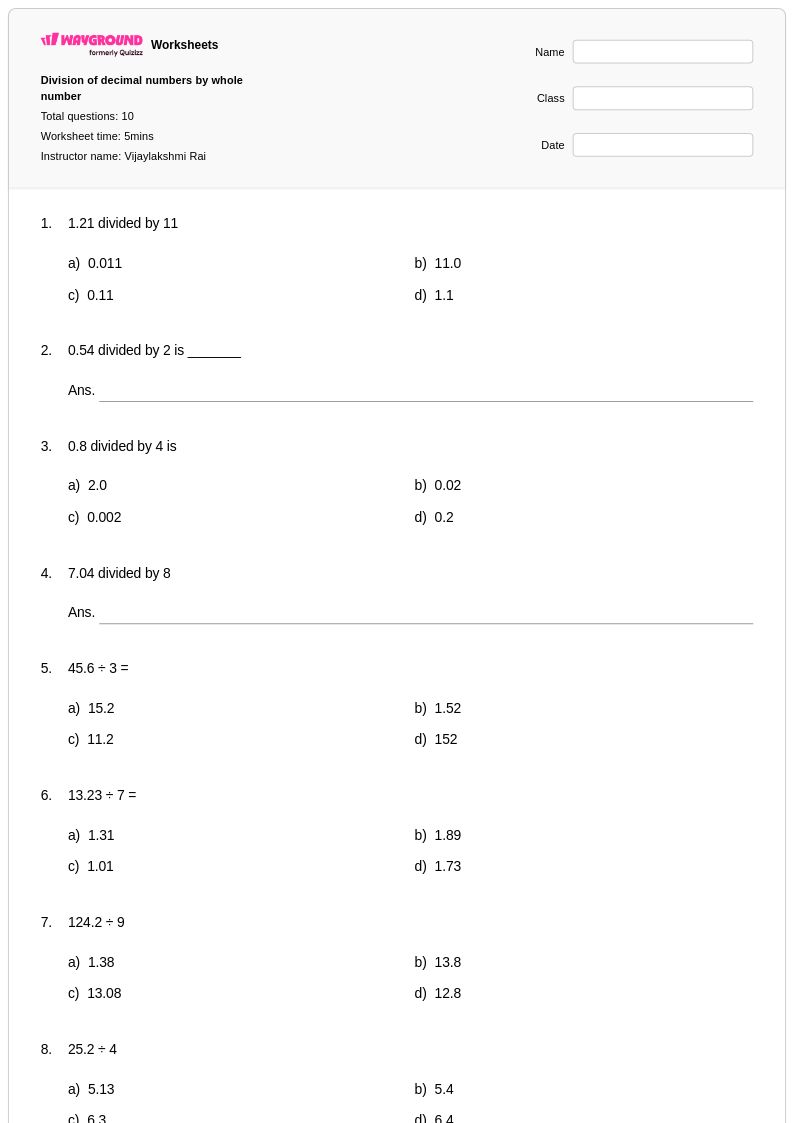
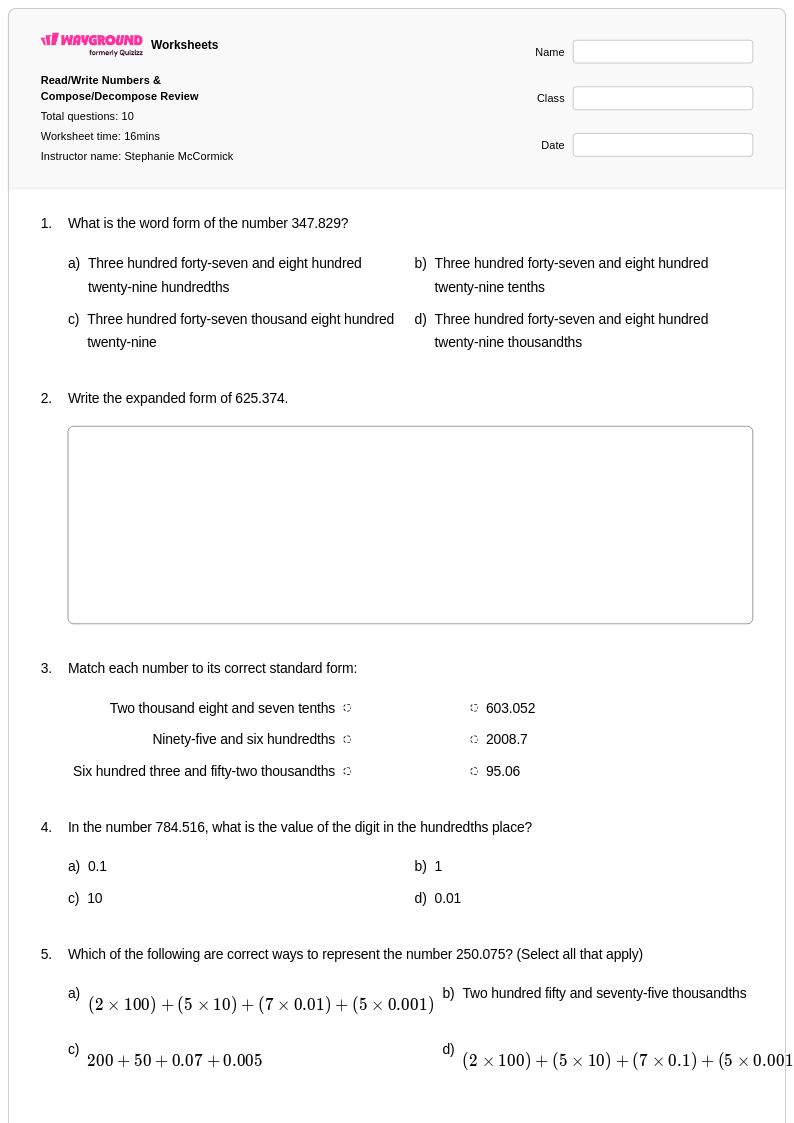
Class 5 Fibonacci Numbers worksheets from Wayground help students discover number patterns through engaging printables and practice problems, complete with answer keys for effective math learning.
Explore printable Fibonacci Numbers worksheets for Class 5
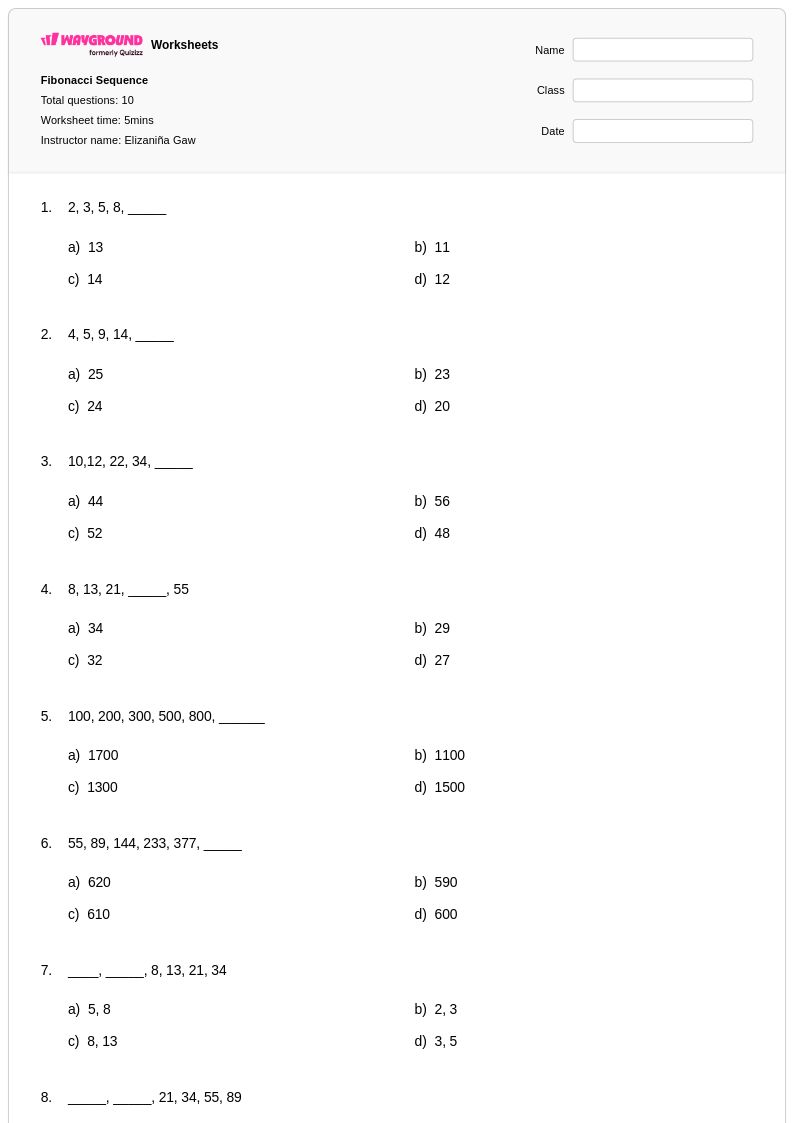
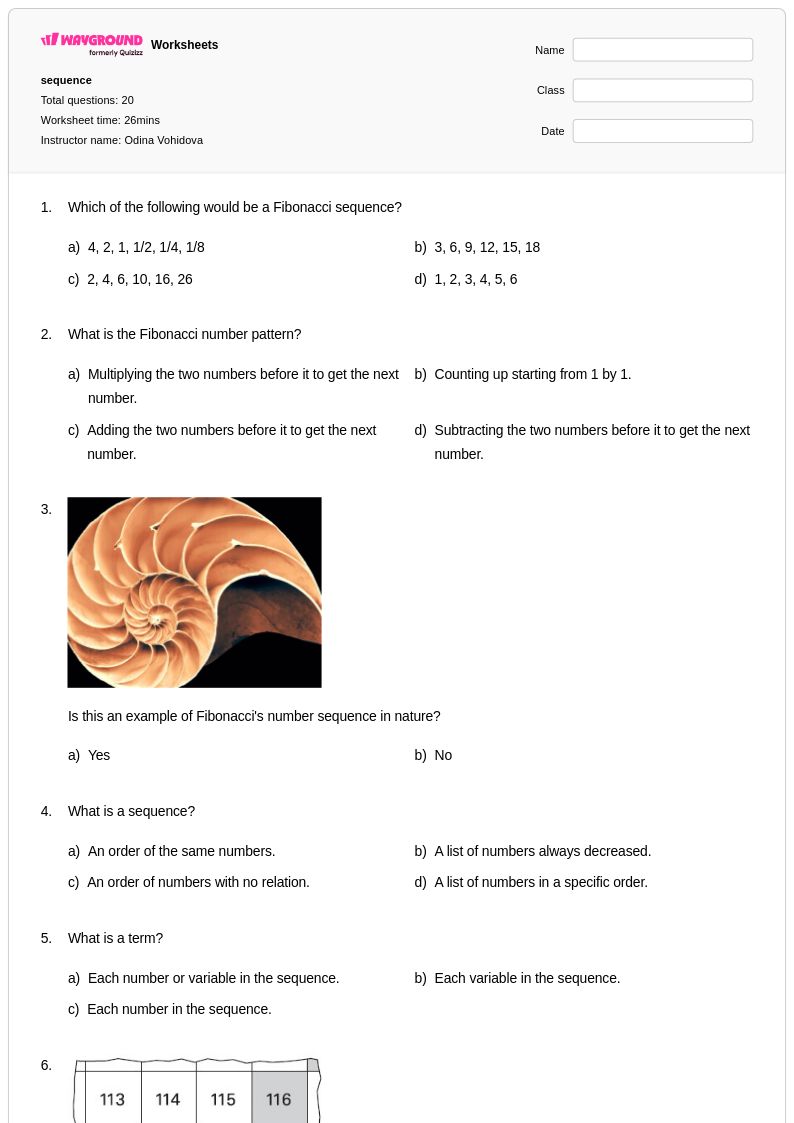
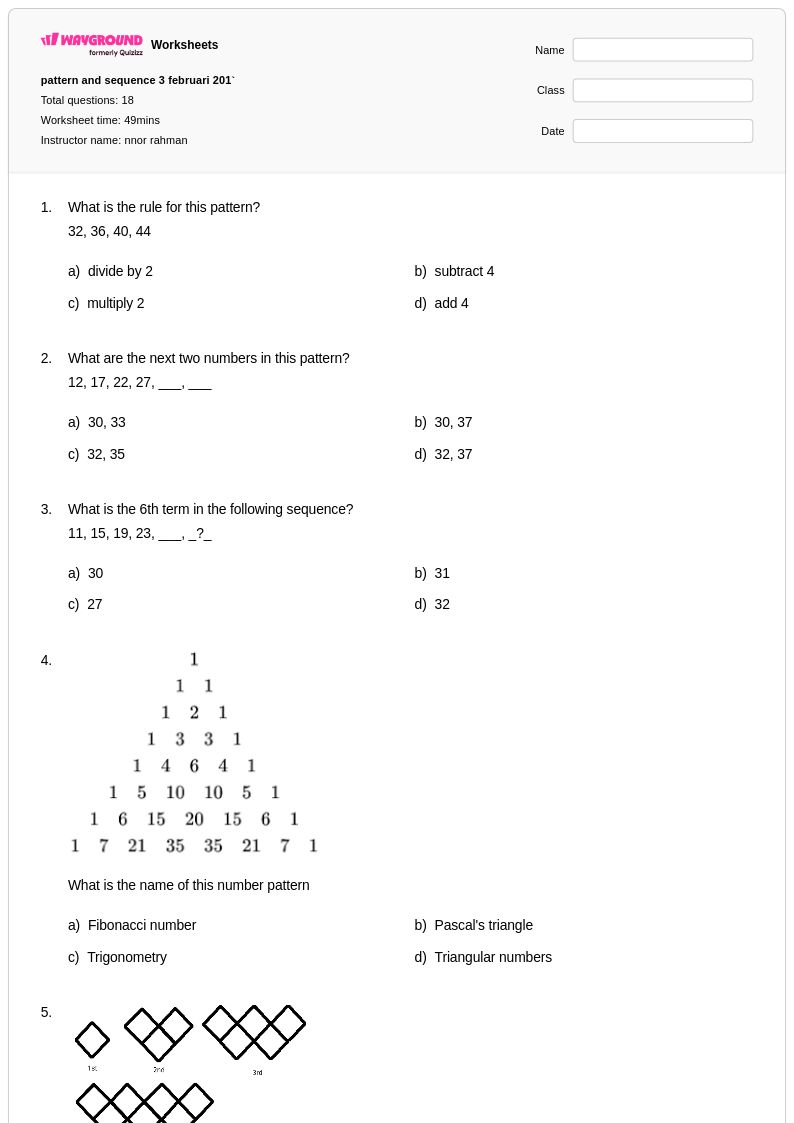
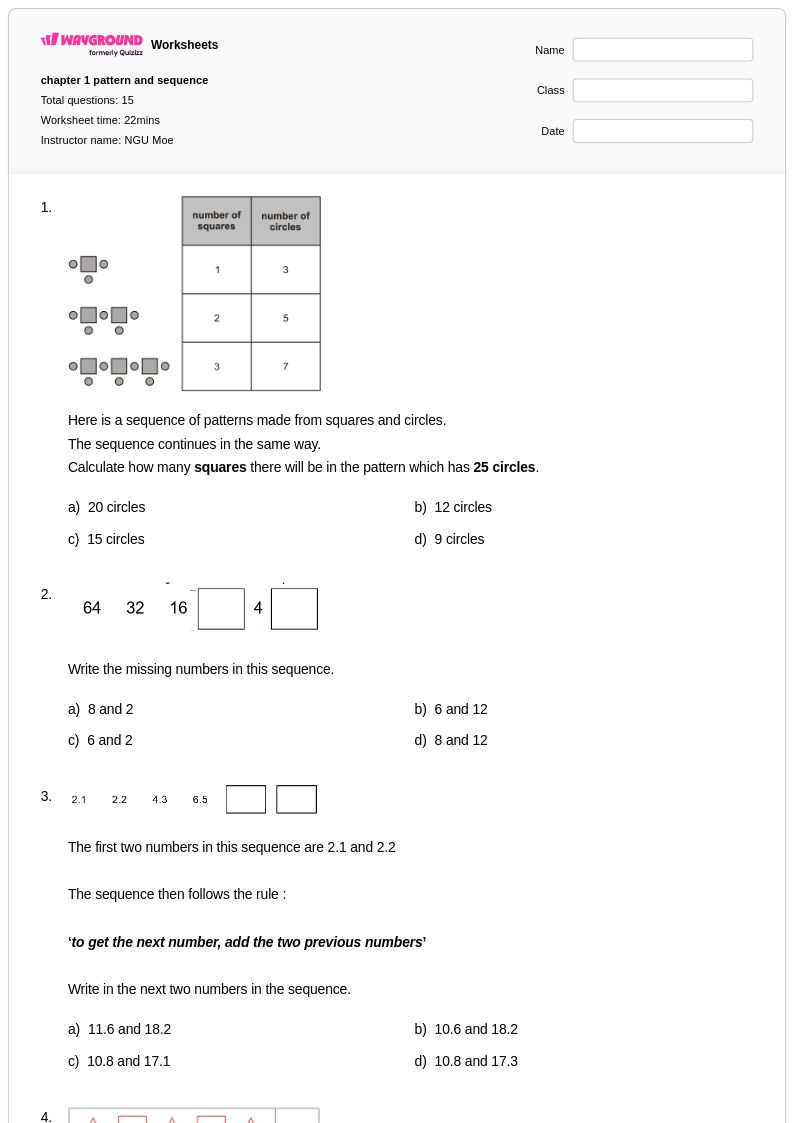
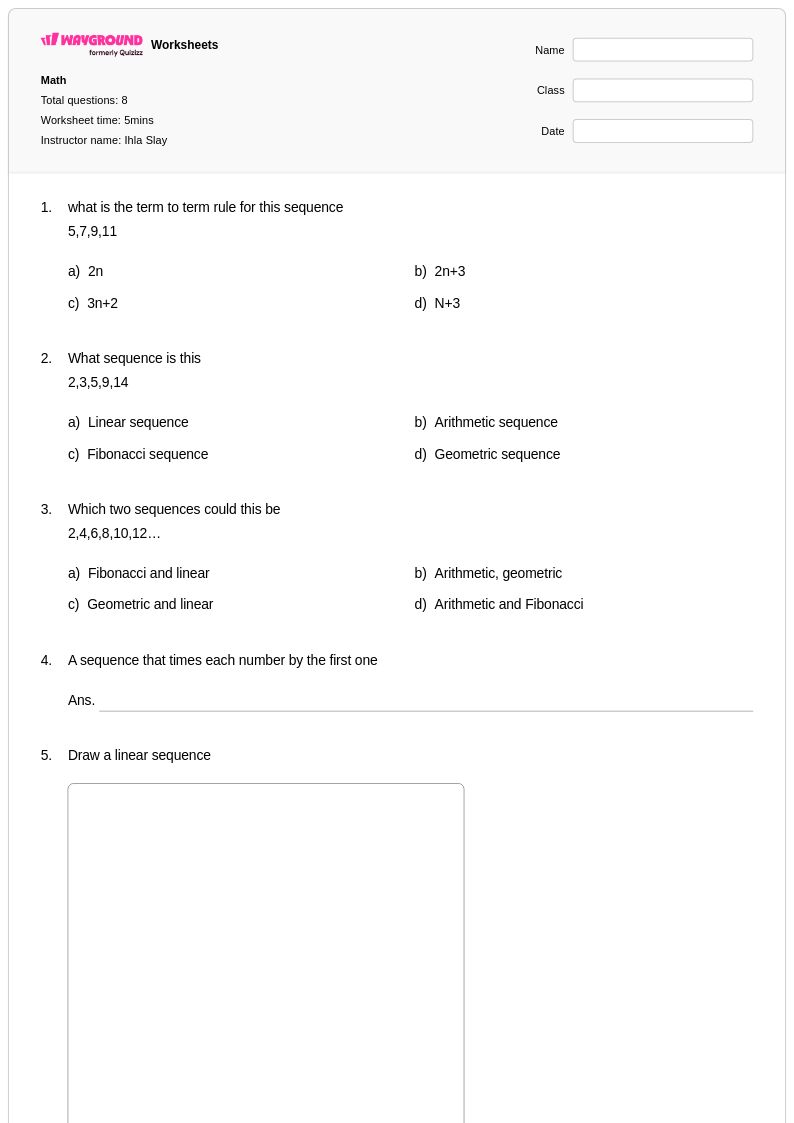
Fibonacci Numbers worksheets for Class 5 students available through Wayground (formerly Quizizz) introduce young mathematicians to one of the most fascinating sequences in mathematics, where each number is the sum of the two preceding numbers (0, 1, 1, 2, 3, 5, 8, 13...). These carefully designed practice problems help students recognize patterns, develop logical reasoning skills, and understand how mathematical sequences appear in nature and art. The worksheets strengthen critical thinking abilities as students learn to identify the next numbers in Fibonacci sequences, explore the relationship between consecutive terms, and discover real-world applications of this mathematical concept. Each printable worksheet includes comprehensive answer keys and free pdf formats, making it easy for educators to provide immediate feedback and support independent learning.
Wayground (formerly Quizizz) empowers teachers with access to millions of educator-created Fibonacci Numbers resources that can be seamlessly integrated into Class 5 mathematics instruction. The platform's robust search and filtering capabilities allow instructors to quickly locate worksheets that align with specific learning objectives and academic standards, while differentiation tools enable customization for students with varying skill levels. Teachers can utilize these materials in both printable and digital formats, providing flexibility for classroom instruction, homework assignments, and remote learning environments. Whether used for introducing new concepts, reinforcing previously taught skills, or providing enrichment opportunities for advanced learners, these comprehensive worksheet collections support effective lesson planning and help educators address diverse student needs through targeted practice and remediation activities.
FAQs
How do I teach Fibonacci numbers to fifth graders?
By fifth grade, students can handle both the mechanics and some of the mathematics behind the sequence. Start by having them generate the first 15 terms, then ask them to divide each term by the one before it and record the results as decimals. They'll notice the quotients creeping toward 1.618 — and that convergence is genuinely surprising to most students. From there, you can connect the sequence to real-world contexts: petal counts in flowers, branching patterns in trees, or the spiral proportions in a nautilus shell. The goal at this level is for students to see the sequence as a mathematical structure, not just a list of numbers to memorize.
What Fibonacci exercises are right for Grade 5 students?
Fifth graders are ready for problems that go beyond sequence extension. Good practice at this level includes: computing ratios of consecutive terms and observing the pattern, identifying Fibonacci numbers within larger sets, working with the sequence starting from 0 rather than 1, and solving word problems that embed Fibonacci numbers in a real-world context. Problems that ask students to explain why a given number is or isn't a Fibonacci number push them toward the kind of reasoning that supports algebraic thinking in middle school.
What misconceptions do fifth graders have about Fibonacci numbers?
A common one: students think the sequence is unique to starting with 1, 1. Show them that the same recursive rule applied to any two starting numbers (say, 2 and 5) produces a sequence whose consecutive ratios also converge toward the golden ratio — that surprises most students and deepens their understanding of why the rule matters more than the starting values. Another misconception is that Fibonacci numbers grow exponentially at a constant rate; students who've studied exponential patterns sometimes conflate the two. The ratio work described above is the clearest way to address both.
How do I use these Grade 5 Fibonacci worksheets in my class?
For ratio and pattern-analysis problems, paper practice has a real advantage — students can annotate, draw arrows between terms, and work through calculations without navigating a digital interface. Download the printable PDF, assign it, and use the Wayground for Teachers app to scan and grade submissions. Each worksheet includes a full answer key, so you can also have students self-check after completing the work.
How does Fibonacci number work connect to the Grade 5 math curriculum?
Common Core's Grade 5 standards include generating and analyzing numerical patterns, and Fibonacci fits directly into that work — students are expected to identify relationships between corresponding terms and explain rules informally. The sequence also gives students meaningful practice with decimal division when they compute consecutive-term ratios, connecting to the Grade 5 emphasis on extending division to decimals. It bridges naturally toward the ratio and proportional reasoning that becomes central in Grade 6.
How can I differentiate Fibonacci practice for my Grade 5 class?
For students who need scaffolding, a worksheet version with larger font and wider spacing reduces the visual crowding that dense number sequences create — Wayground's worksheet tools let you generate that alternate version quickly. Students who are ready for more can move from sequence generation to ratio tables and golden-ratio exploration without needing a separate worksheet. On digital assignments, the reduced answer choices accommodation helps students who understand the pattern but get overwhelmed by close-together distractors.