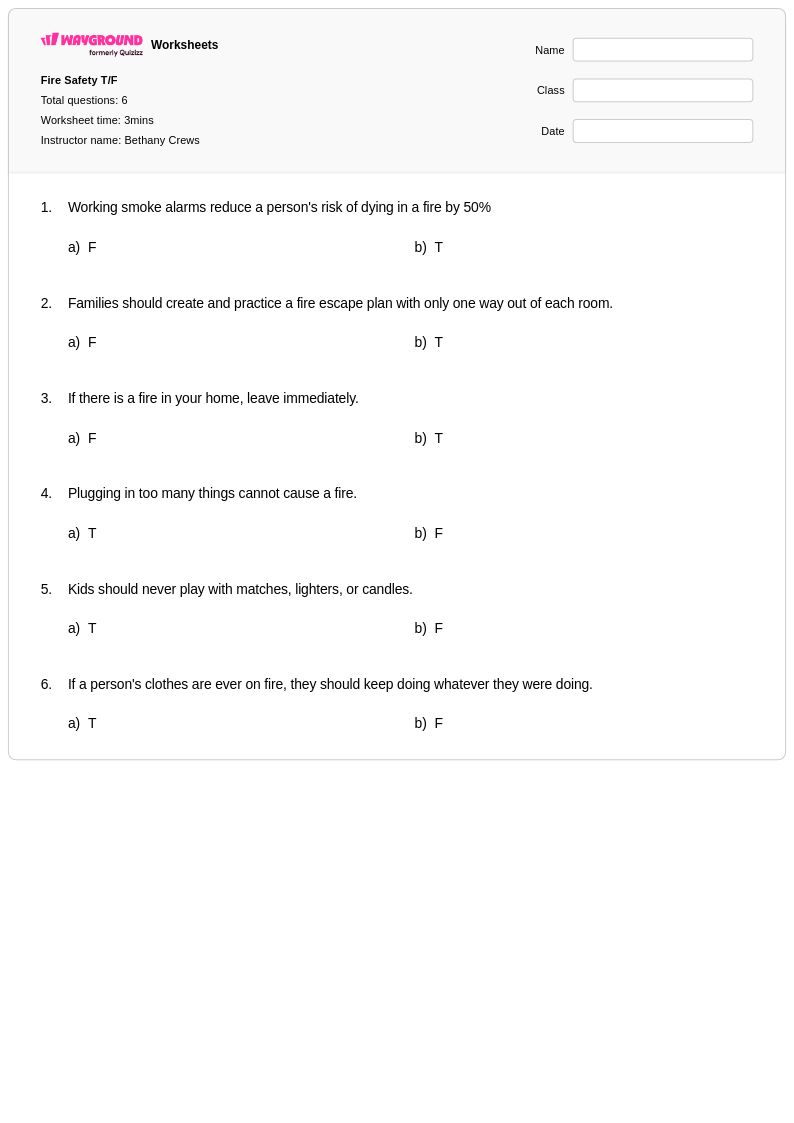
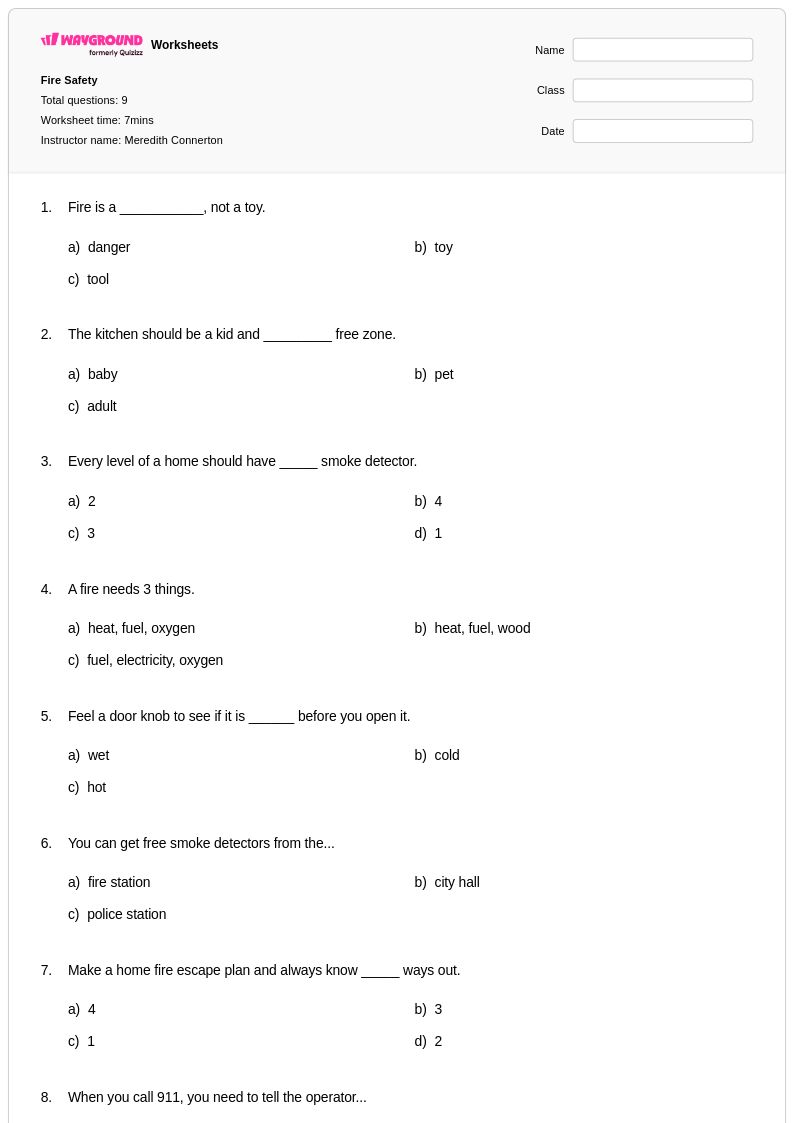
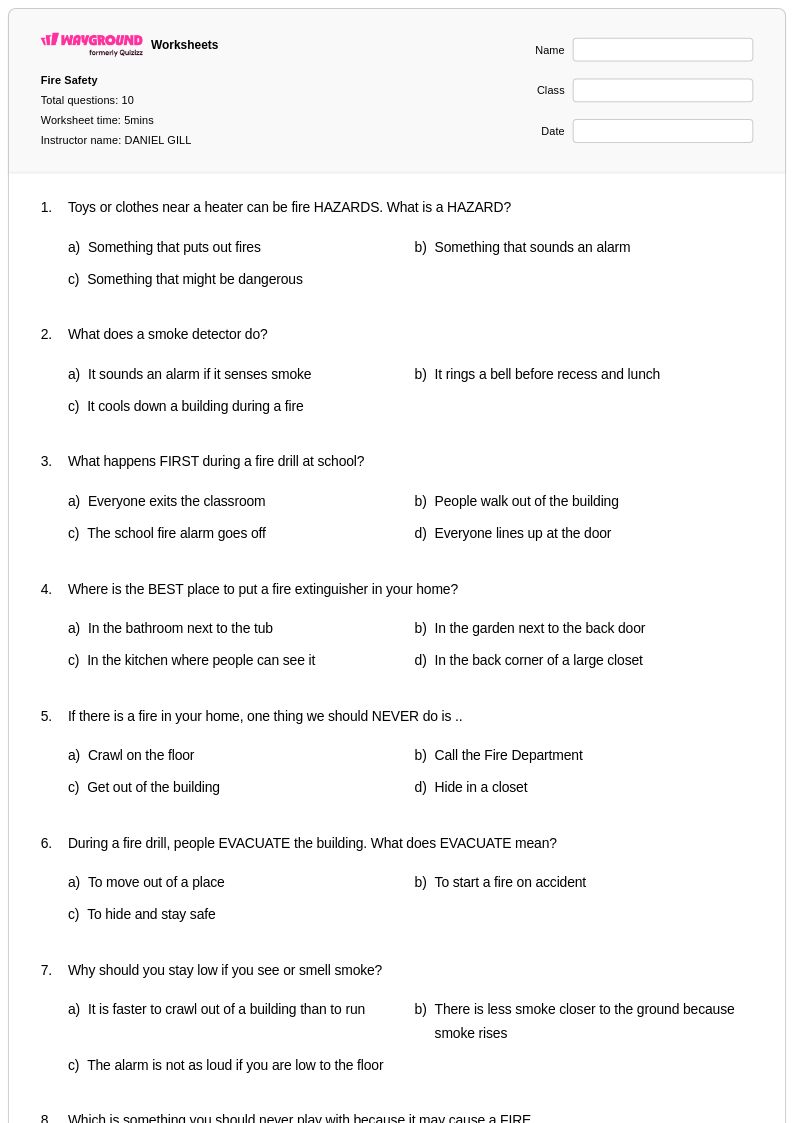
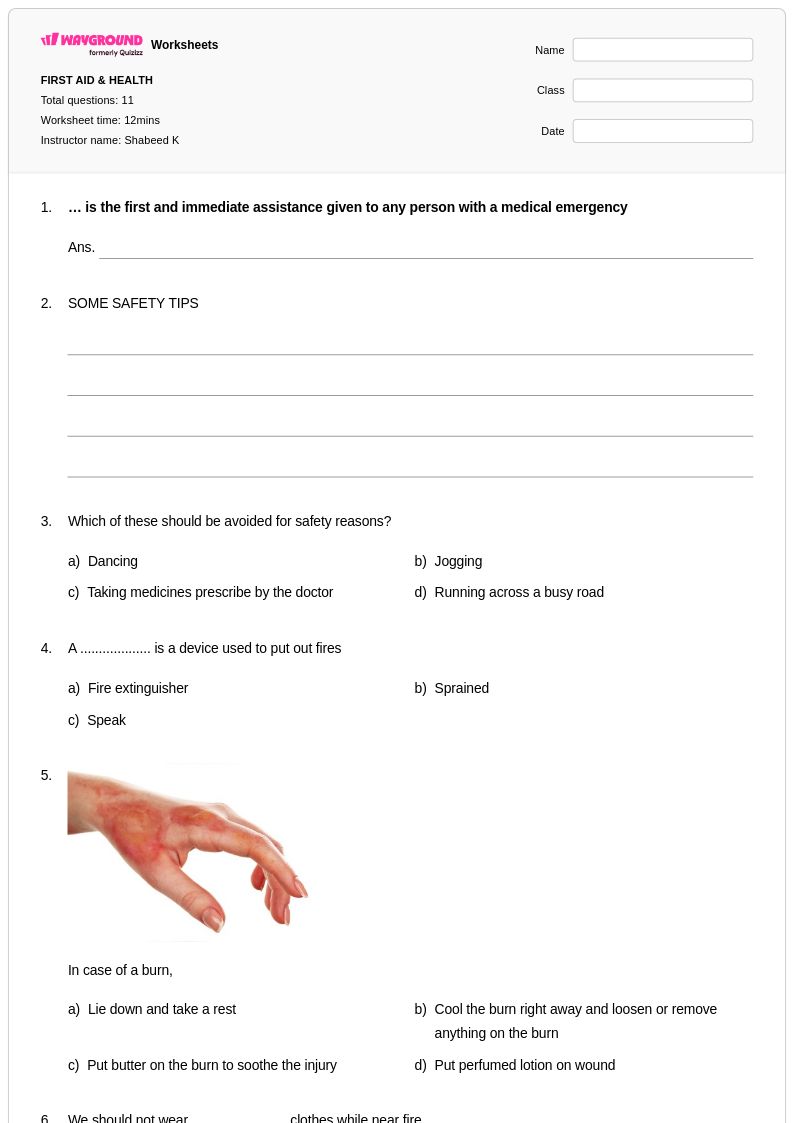
Enhance Class 5 students' fire safety knowledge with Wayground's comprehensive collection of free worksheets and printables, featuring practice problems and answer keys to build essential emergency preparedness skills.
Explore printable Fire Safety worksheets for Class 5
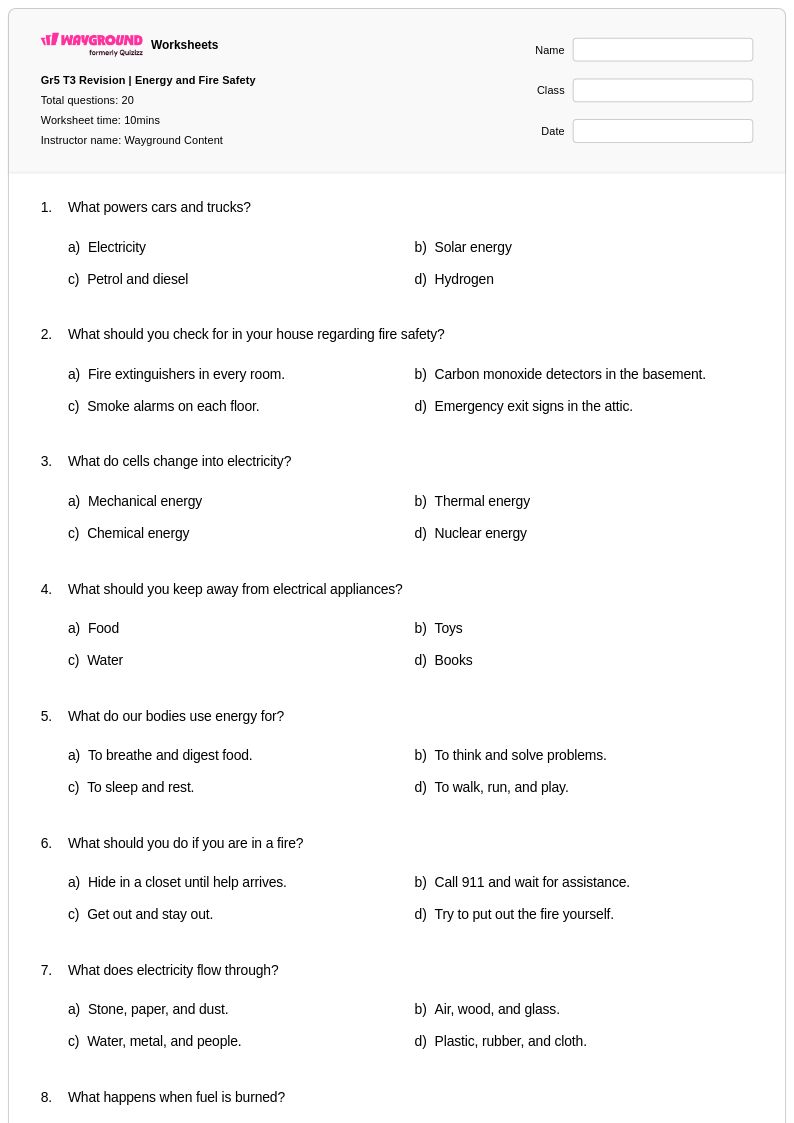
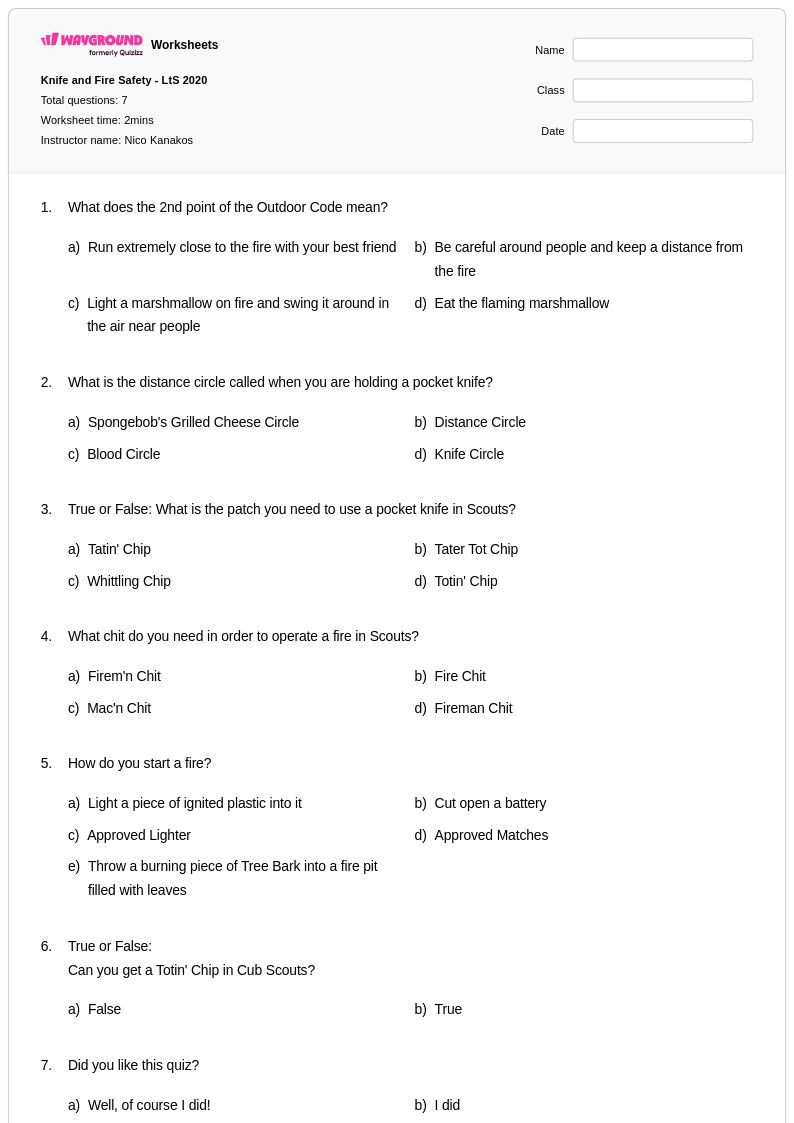
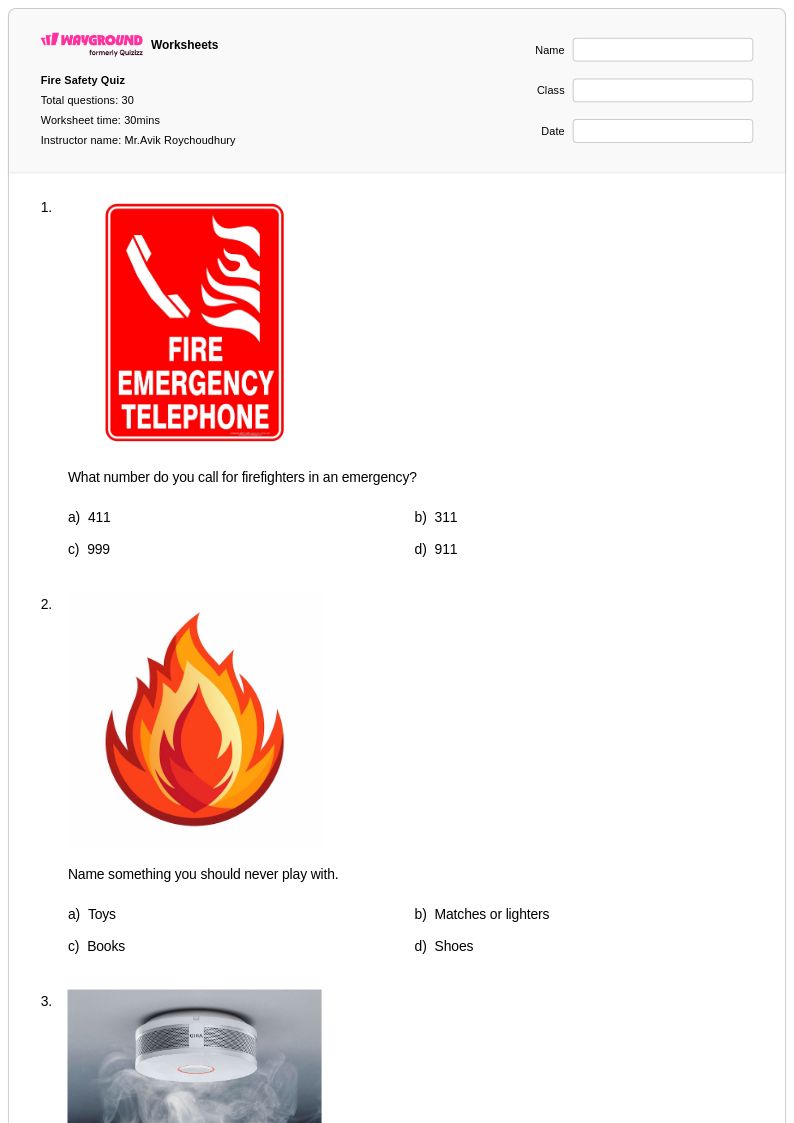
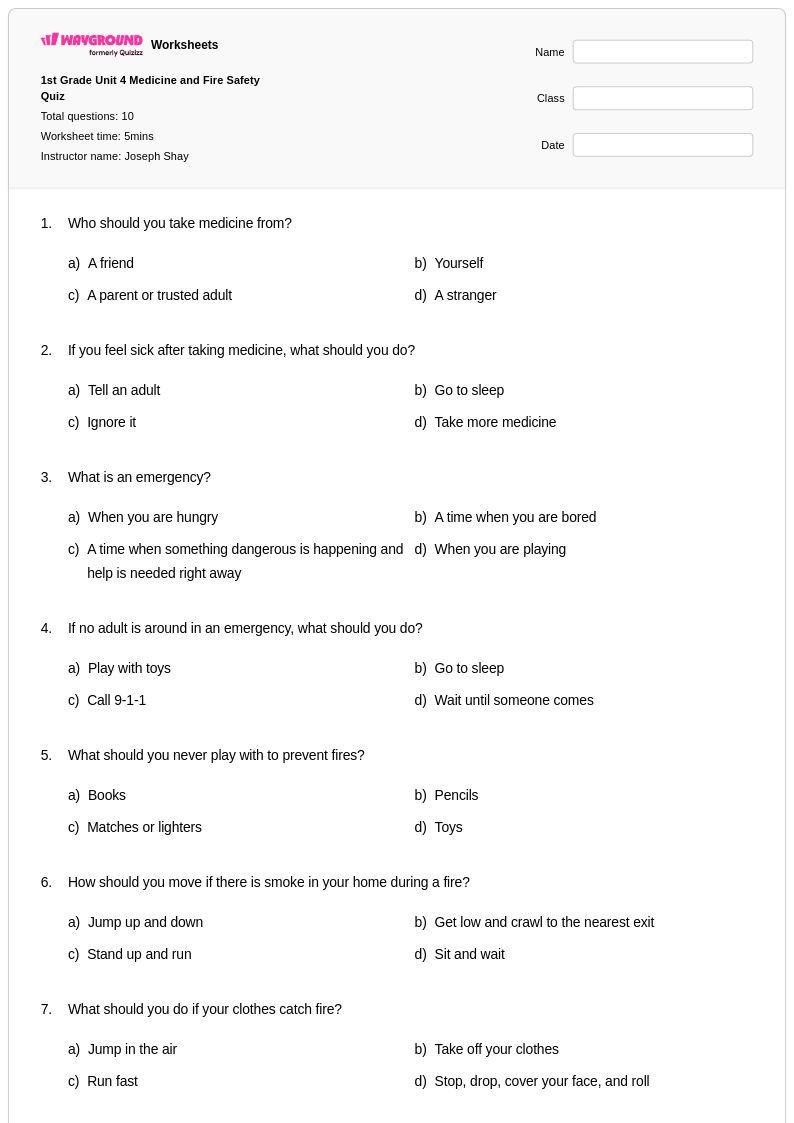
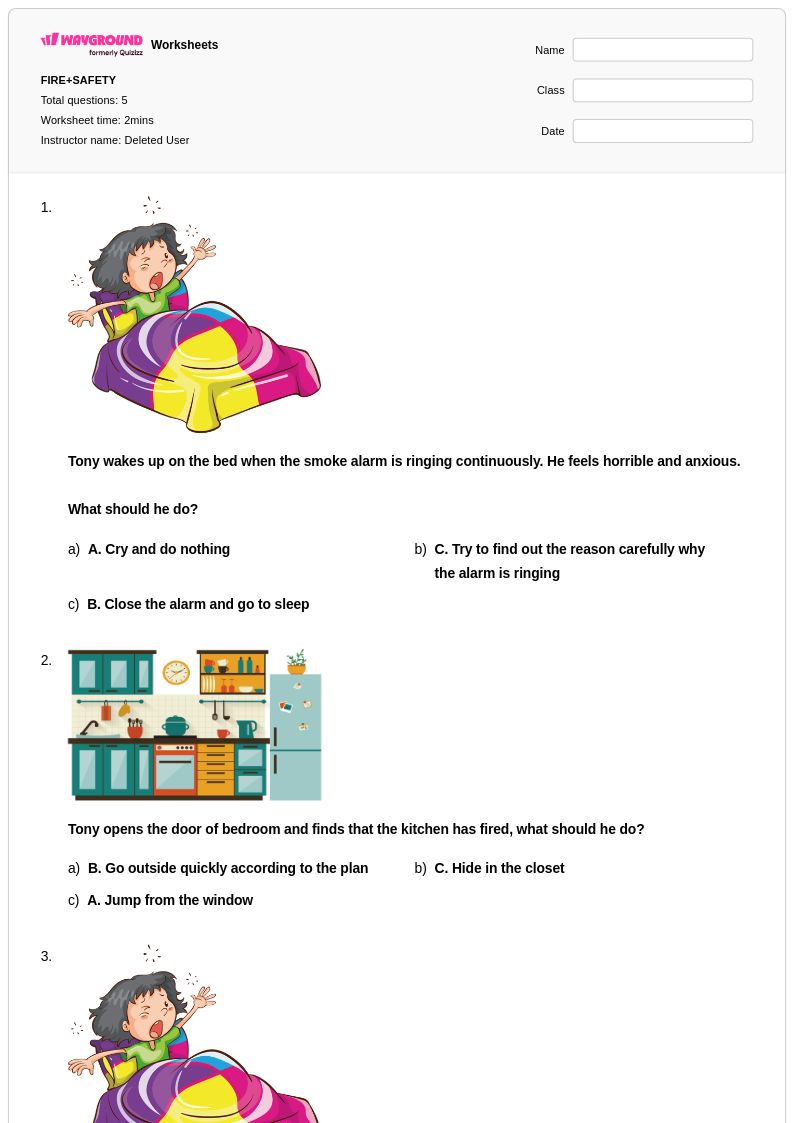
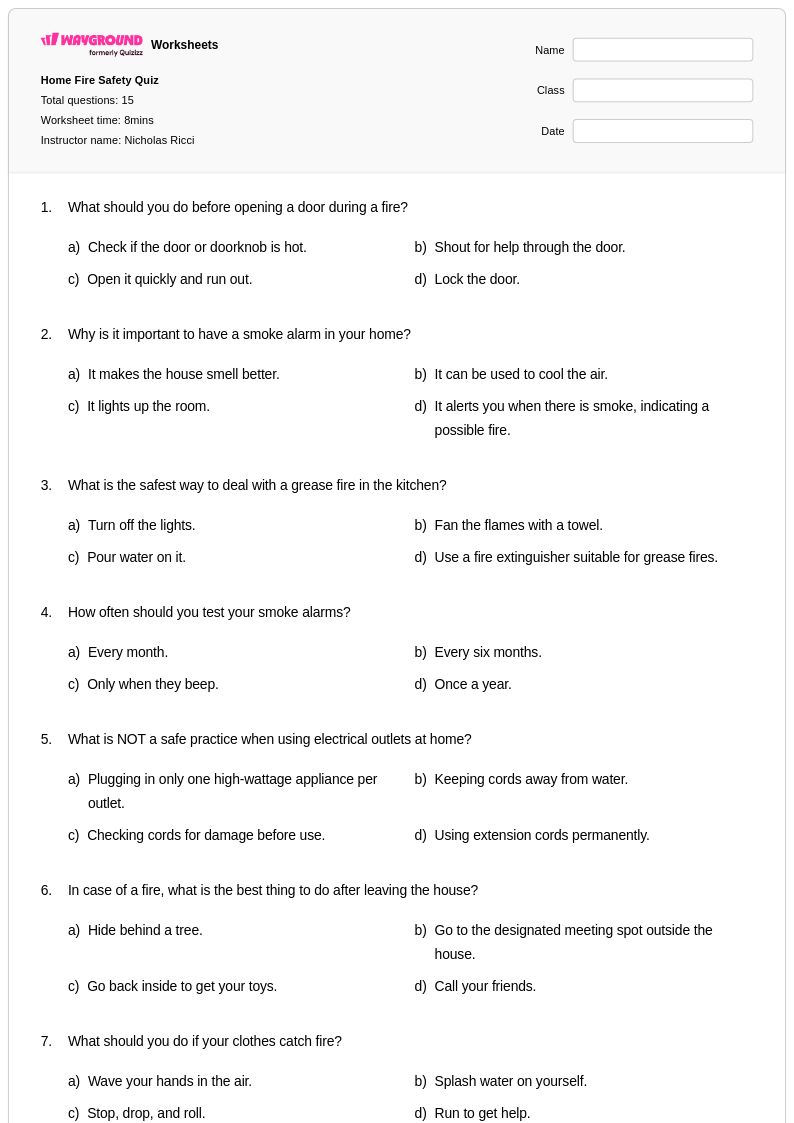
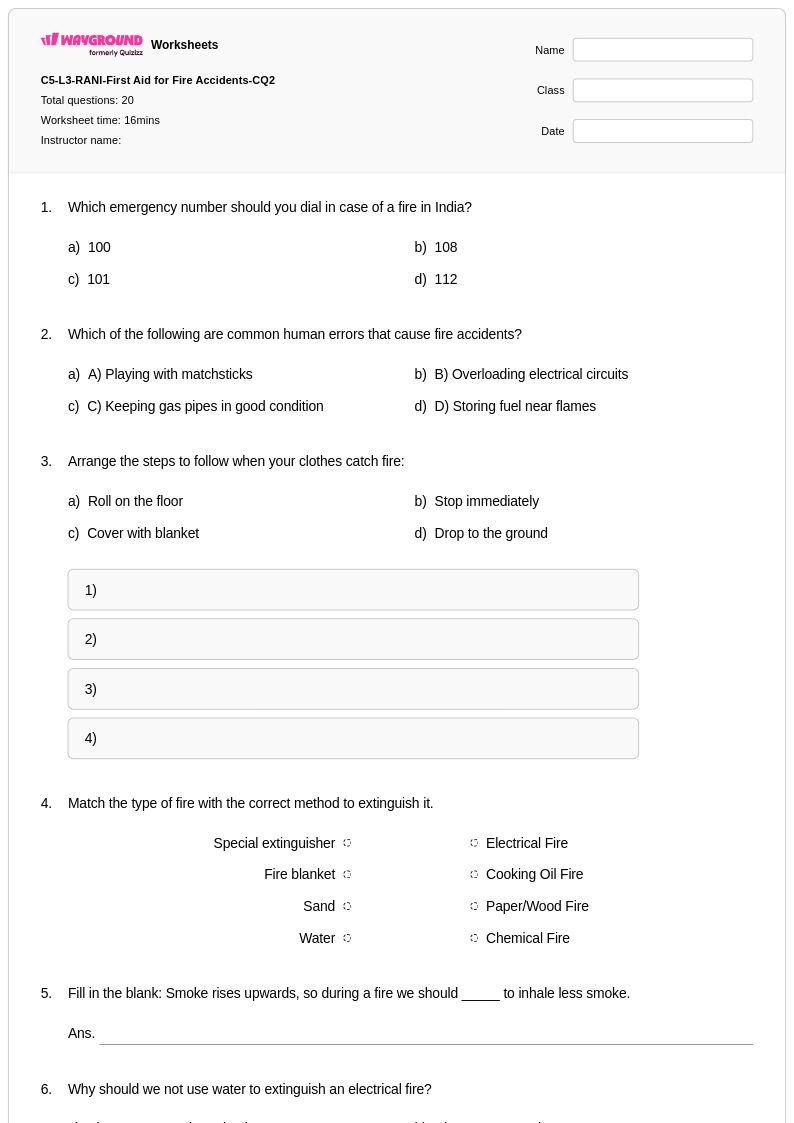
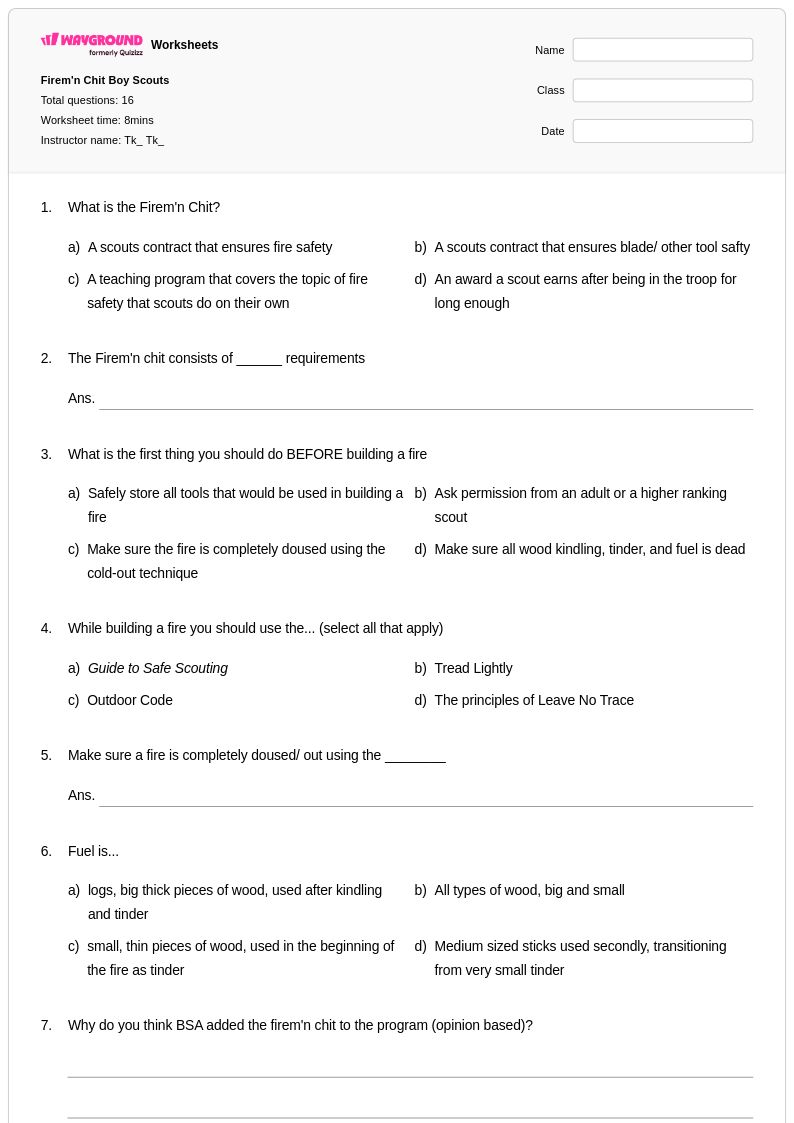
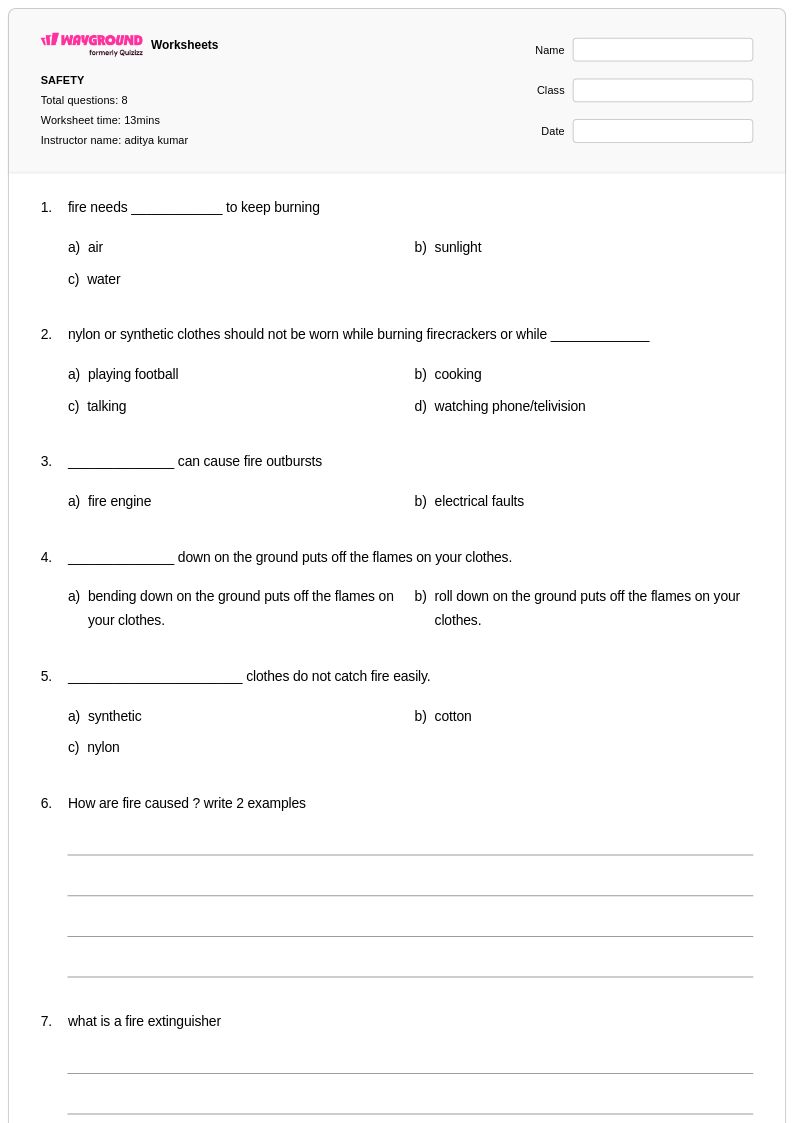
Fire safety education for Class 5 students becomes engaging and comprehensive through Wayground's extensive collection of specialized worksheets that teach essential life-saving skills and emergency preparedness concepts. These carefully designed resources help fifth-grade learners master critical fire safety knowledge, including understanding fire hazards, practicing escape route planning, recognizing smoke alarm sounds, and learning proper responses during fire emergencies. The worksheets strengthen students' ability to identify potential fire dangers in various environments, develop personal safety strategies, and build confidence in emergency situations through interactive practice problems that simulate real-world scenarios. Each printable resource includes detailed answer keys that support both independent learning and guided instruction, with free pdf formats making these valuable fire safety materials easily accessible for classroom use and home reinforcement.
Wayground's robust platform empowers physical education teachers with millions of teacher-created fire safety resources that can be seamlessly integrated into health and safety curriculum planning. The platform's advanced search and filtering capabilities allow educators to quickly locate Class 5-appropriate materials that align with safety education standards and match specific learning objectives for fire prevention and emergency response skills. Teachers benefit from comprehensive differentiation tools that enable them to customize worksheets for diverse learning needs, supporting both remediation for students requiring additional safety concept reinforcement and enrichment opportunities for advanced learners ready to explore more complex emergency preparedness scenarios. The flexible availability of materials in both printable and digital pdf formats facilitates varied instructional approaches, whether conducting hands-on fire safety drills, creating interactive safety stations, or providing targeted skill practice that builds students' confidence in making smart safety decisions.
FAQs
How do I teach fire safety to elementary students?
Teaching fire safety to elementary students is most effective when abstract concepts are made concrete and actionable. Focus on three core behaviors: recognizing fire hazards, knowing what to do when a fire alarm sounds, and practicing stop-drop-and-roll. Use role-play, visual diagrams of evacuation routes, and scenario-based discussions to help students internalize procedures rather than just memorize them. Repetition through structured practice activities reinforces retention of these life-saving skills.
What topics should a fire safety worksheet cover?
A well-rounded fire safety worksheet should address fire prevention strategies, proper evacuation procedures, stop-drop-and-roll techniques, and how to identify fire hazards in everyday environments such as kitchens, classrooms, and hallways. Including scenario-based questions that ask students to respond to simulated emergencies helps bridge the gap between knowledge and real-world application. Answer key support allows teachers to assess comprehension efficiently and correct misconceptions on the spot.
What mistakes do students commonly make when learning fire safety?
One of the most common misconceptions is that students believe hiding during a fire emergency is safer than evacuating, which can be dangerous in a real situation. Students also frequently confuse the sequence of stop-drop-and-roll, applying it incorrectly or only when prompted rather than as an automatic response. Another error is underestimating everyday fire hazards, such as overloaded electrical outlets or unattended candles, because they seem familiar and routine. Worksheets that use scenario-based prompts help surface and correct these misunderstandings before they become ingrained.
How can I assess whether students understand fire safety procedures?
Effective assessment of fire safety knowledge should go beyond recall and test whether students can apply procedures in context. Use scenario-based questions that present a fire emergency situation and ask students to identify the correct response step by step. Checking whether students can sequence evacuation procedures correctly, identify hazards in a diagram, or explain the reasoning behind stop-drop-and-roll reveals deeper comprehension than true/false questions alone. Worksheets with complete answer keys make it easy to score responses consistently and identify students who need additional instruction.
How do I use fire safety worksheets in my classroom?
Fire safety worksheets on Wayground are available as printable PDFs for traditional classroom use and in digital formats for technology-integrated learning environments, and teachers can also host them as a quiz directly on Wayground. Printable versions work well for whole-class instruction before a fire drill or during a dedicated safety unit, while digital formats allow for self-paced independent practice. Using them in both formats across a unit helps reinforce retention through varied exposure to the same core concepts.
How do I differentiate fire safety instruction for students with different learning needs?
Differentiation for fire safety instruction can include adjusting the complexity of scenario prompts, reducing the number of answer choices for students who need additional support, or providing read-aloud access for students with reading challenges. On Wayground, teachers can apply individual accommodations such as extended time, read aloud, and reduced answer choices to specific students without notifying the rest of the class, ensuring all students can access the same fire safety content at an appropriate level. These settings are saved and reusable across future sessions, which reduces setup time for recurring safety practice activities.