
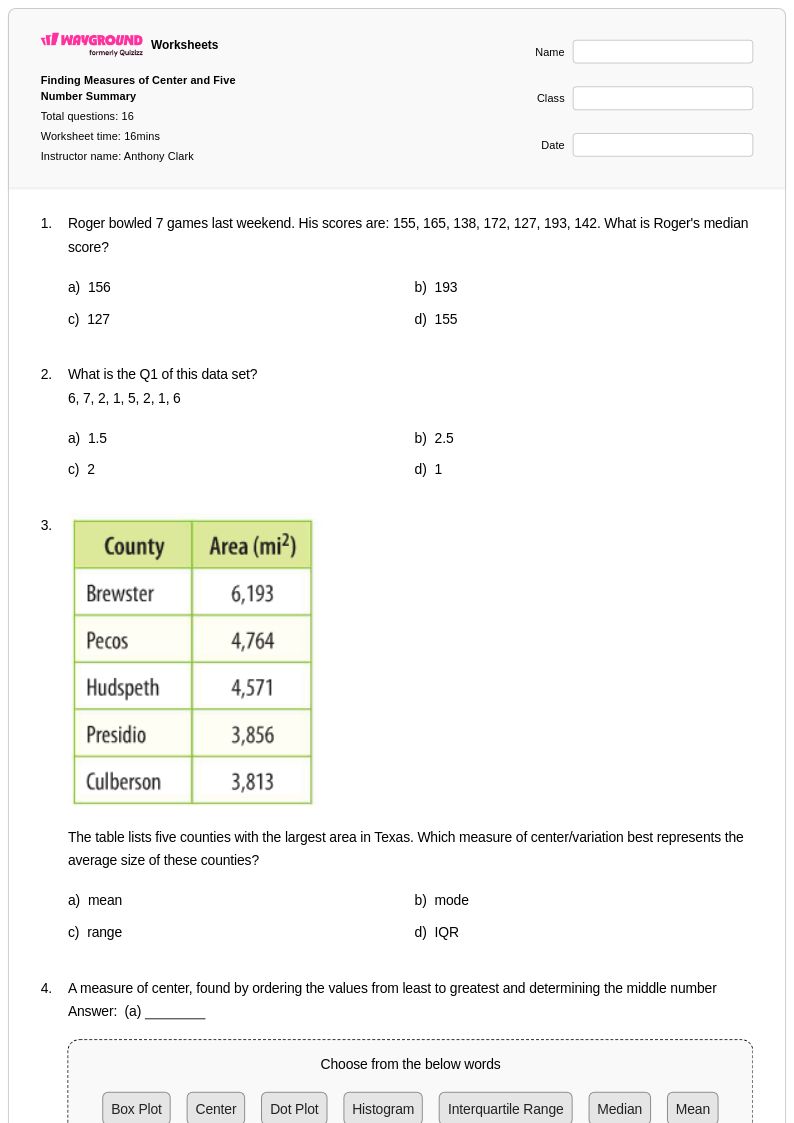
16 Q
6th - Uni
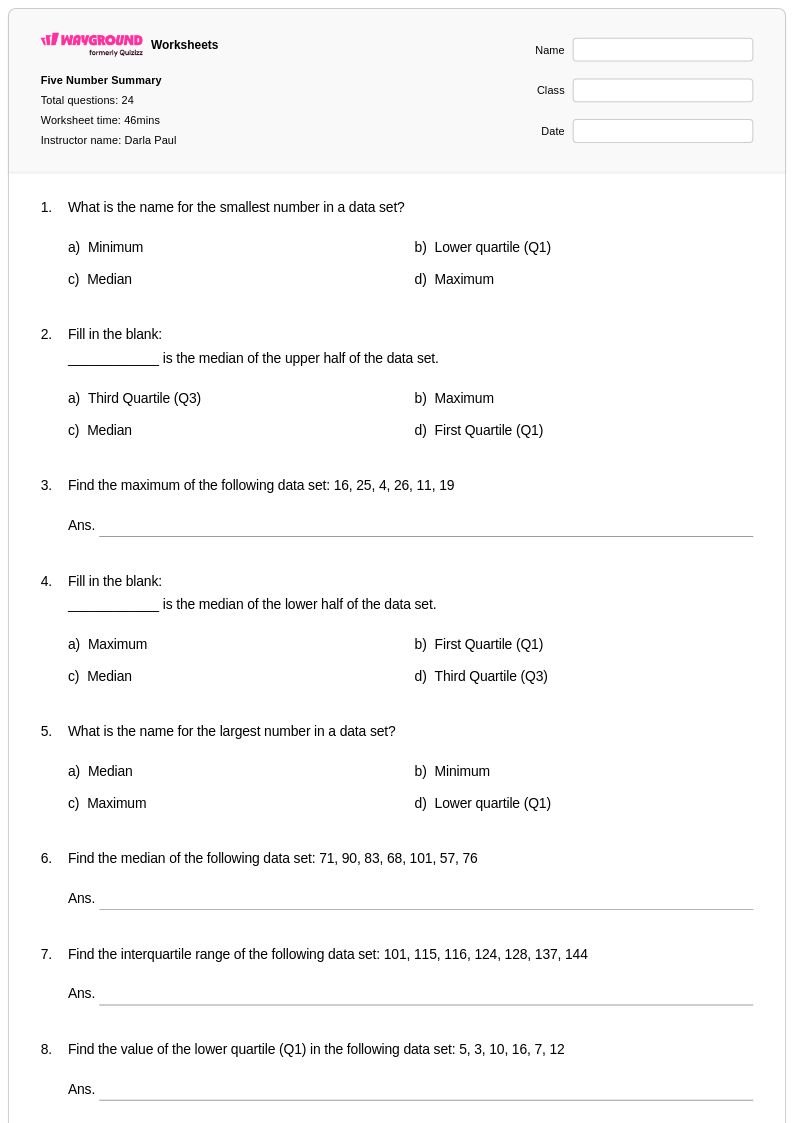
24 Q
6th - 9th
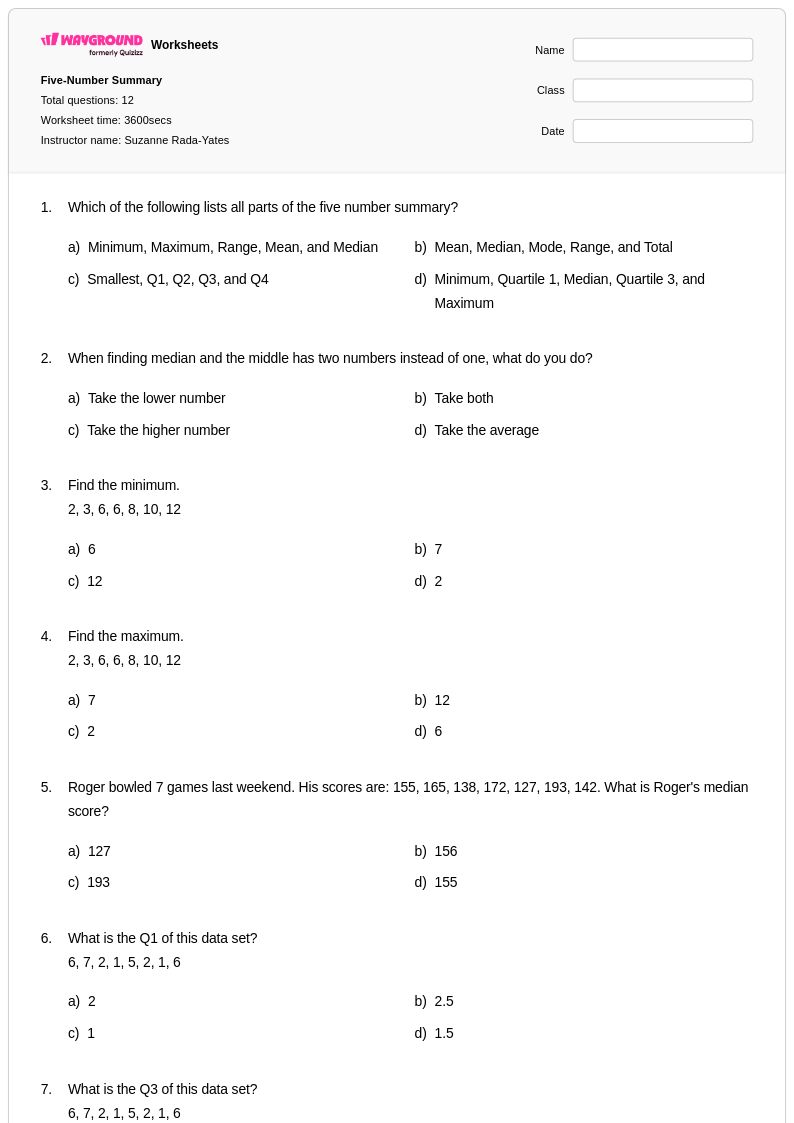
12 Q
8th
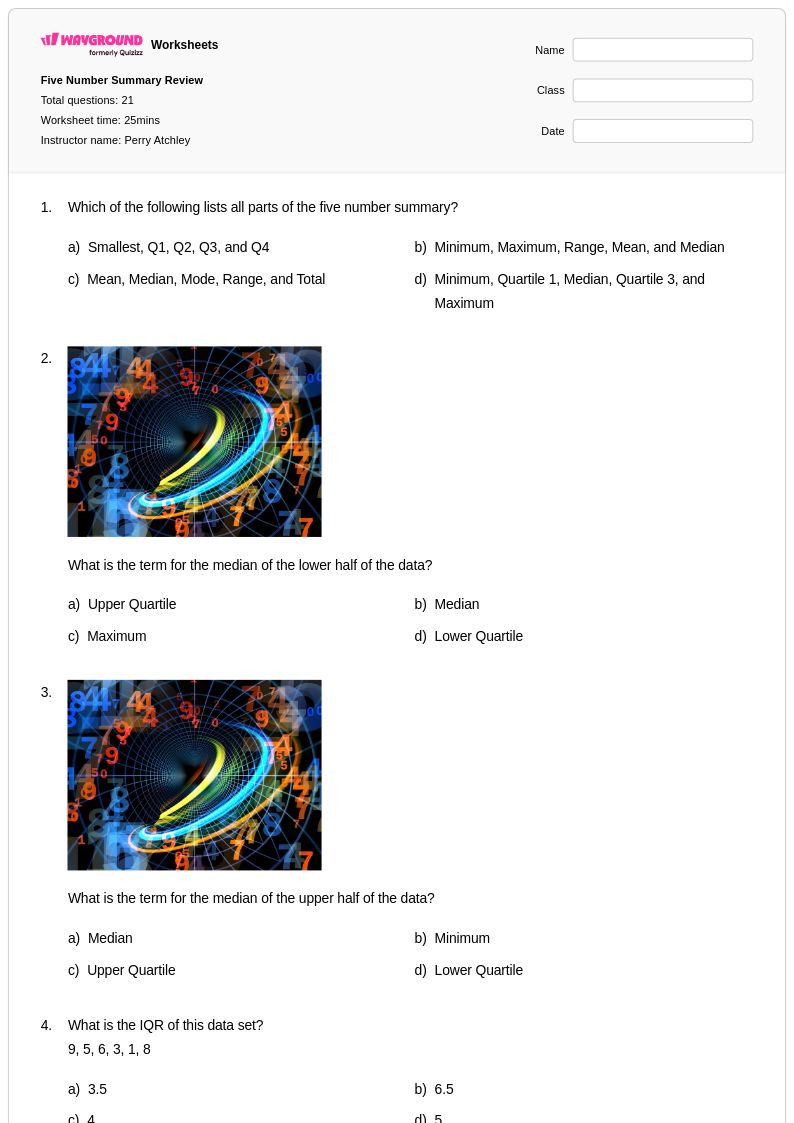
21 Q
6th - 8th
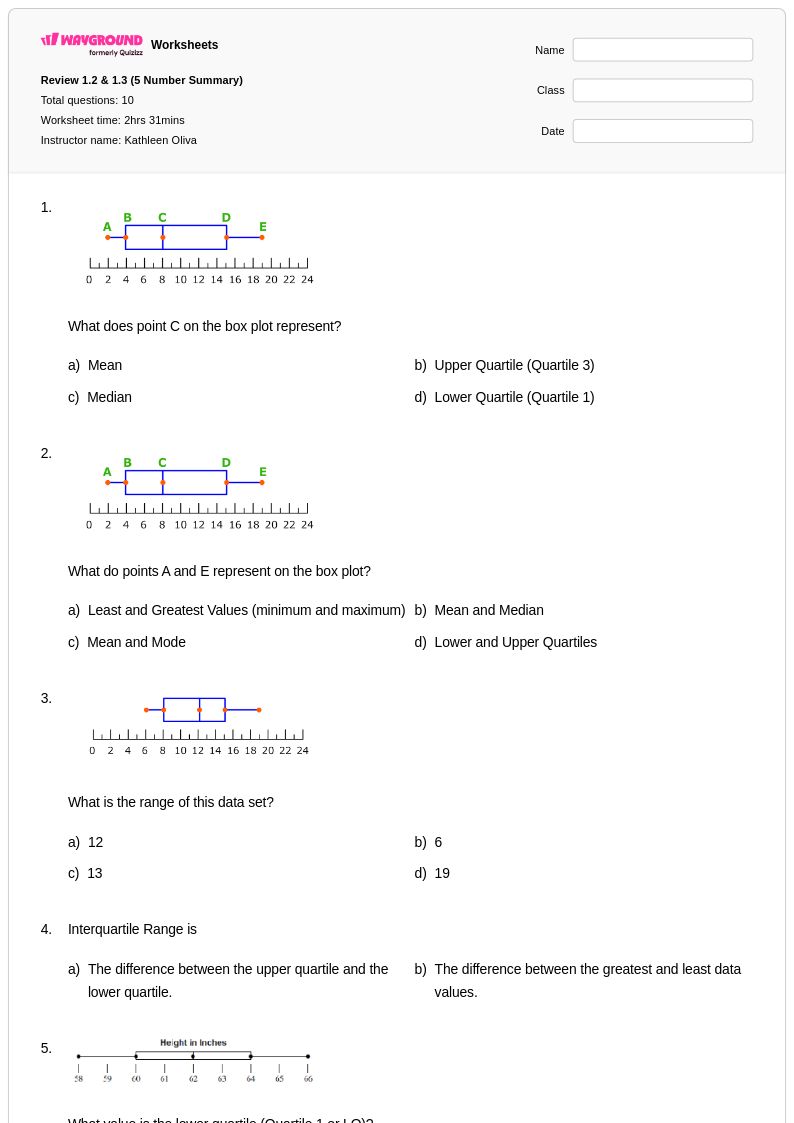
10 Q
8th
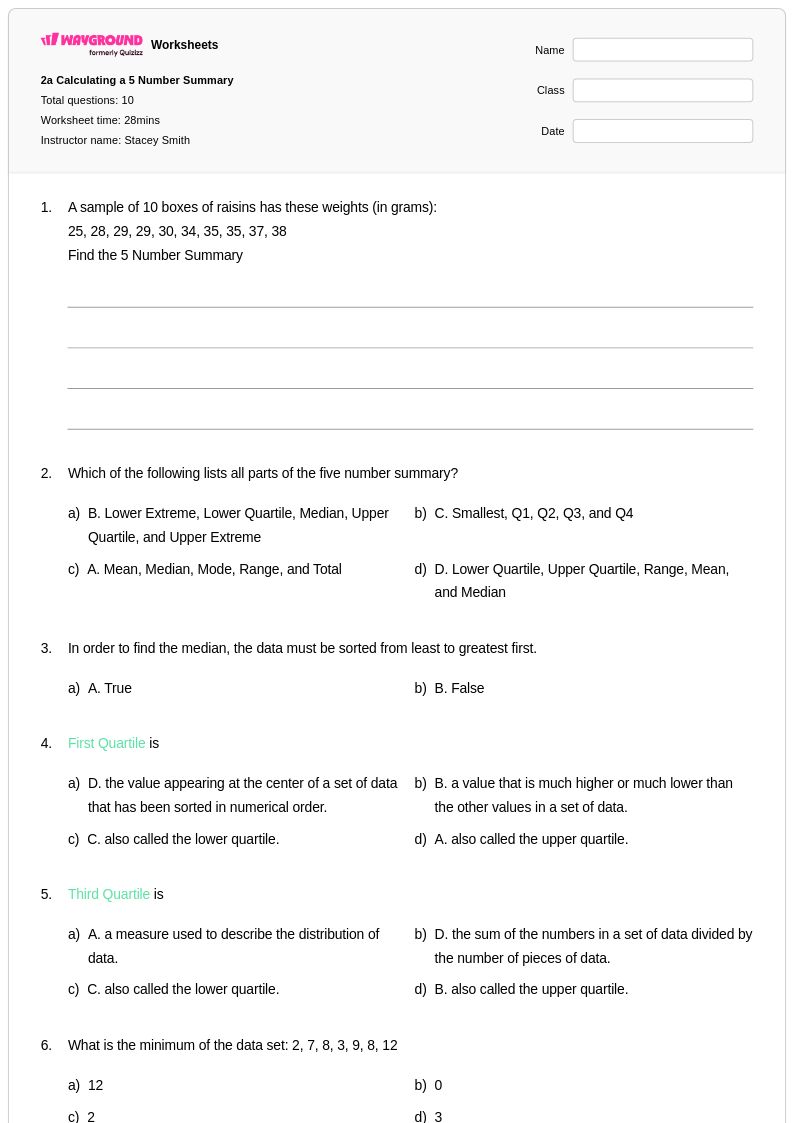
10 Q
6th - 8th
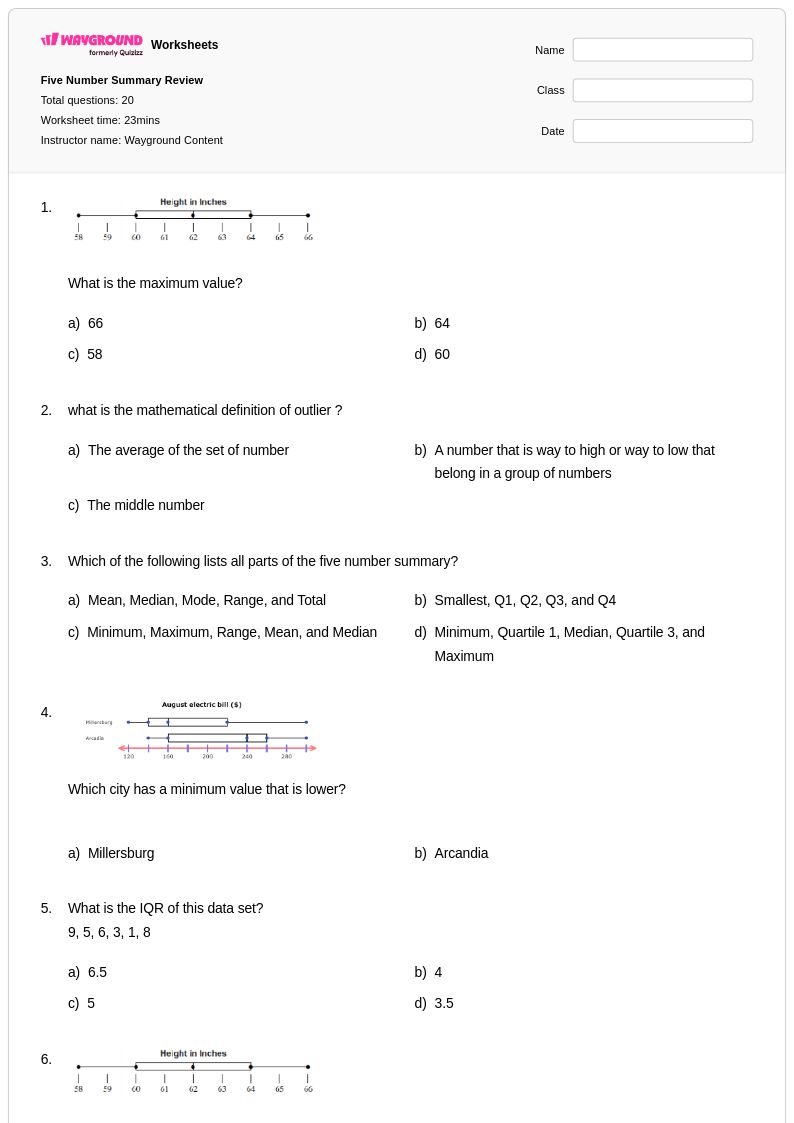
20 Q
6th - 8th
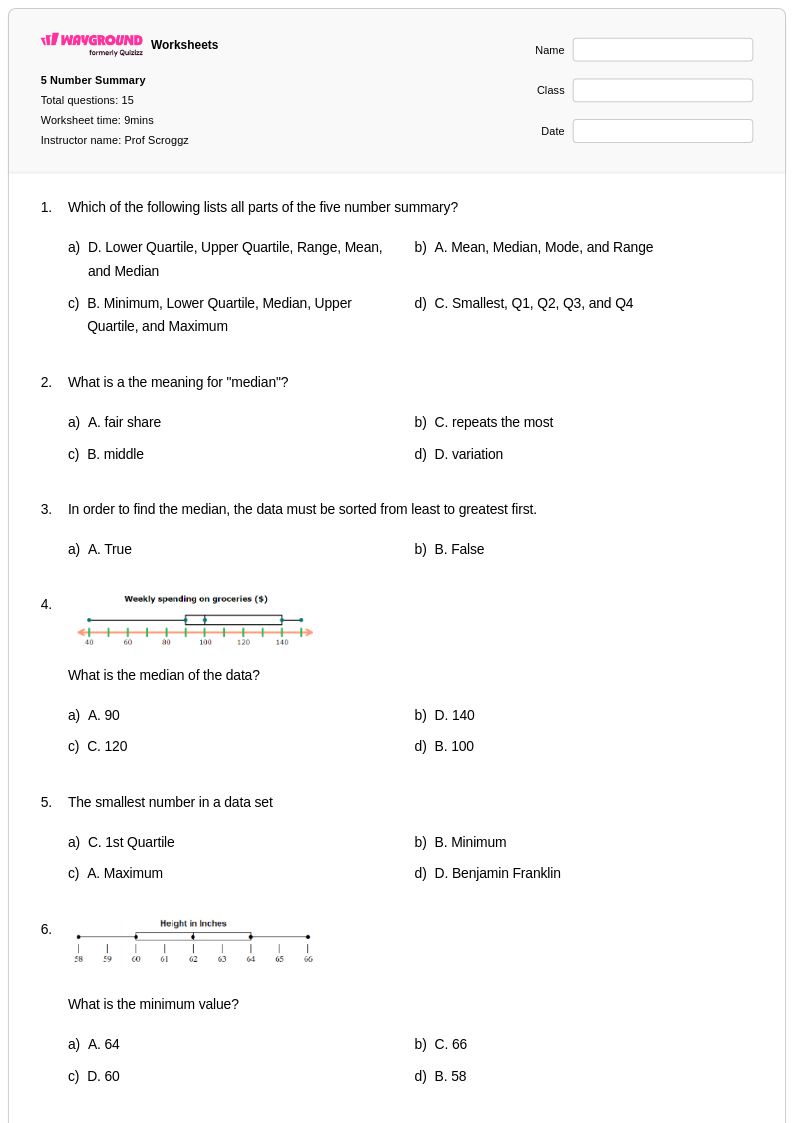
15 Q
6th - 8th
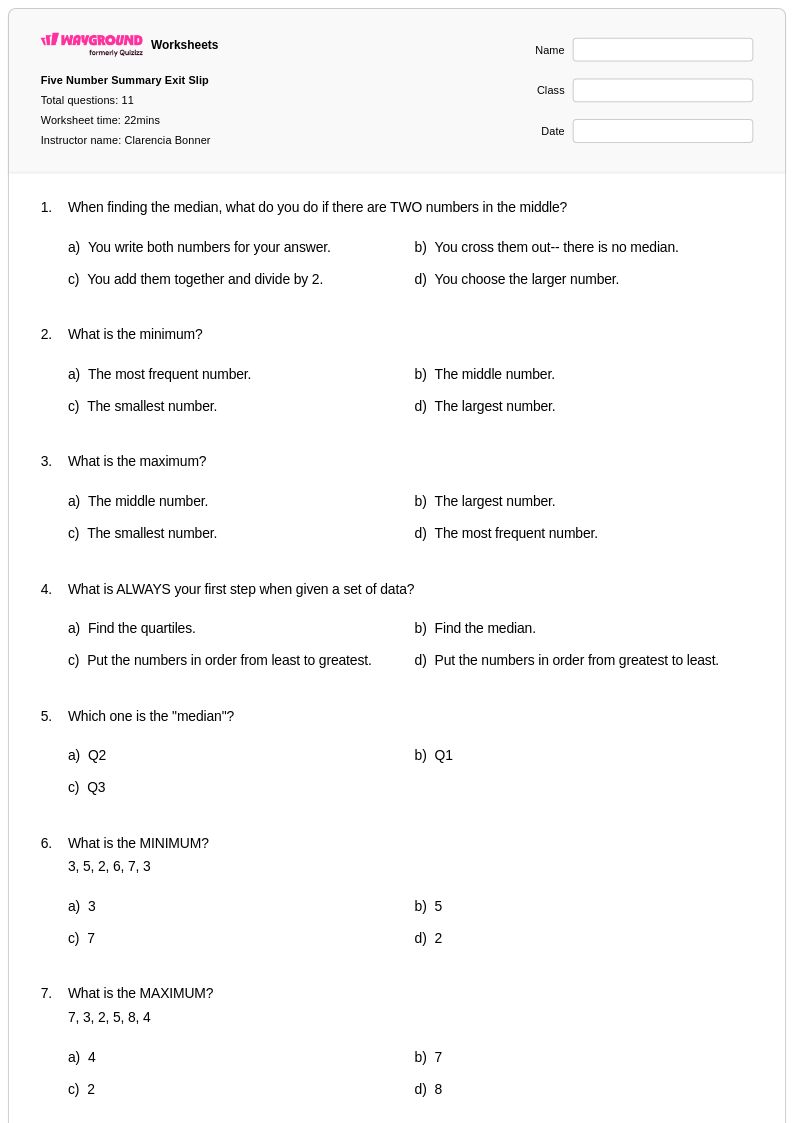
11 Q
6th - 8th
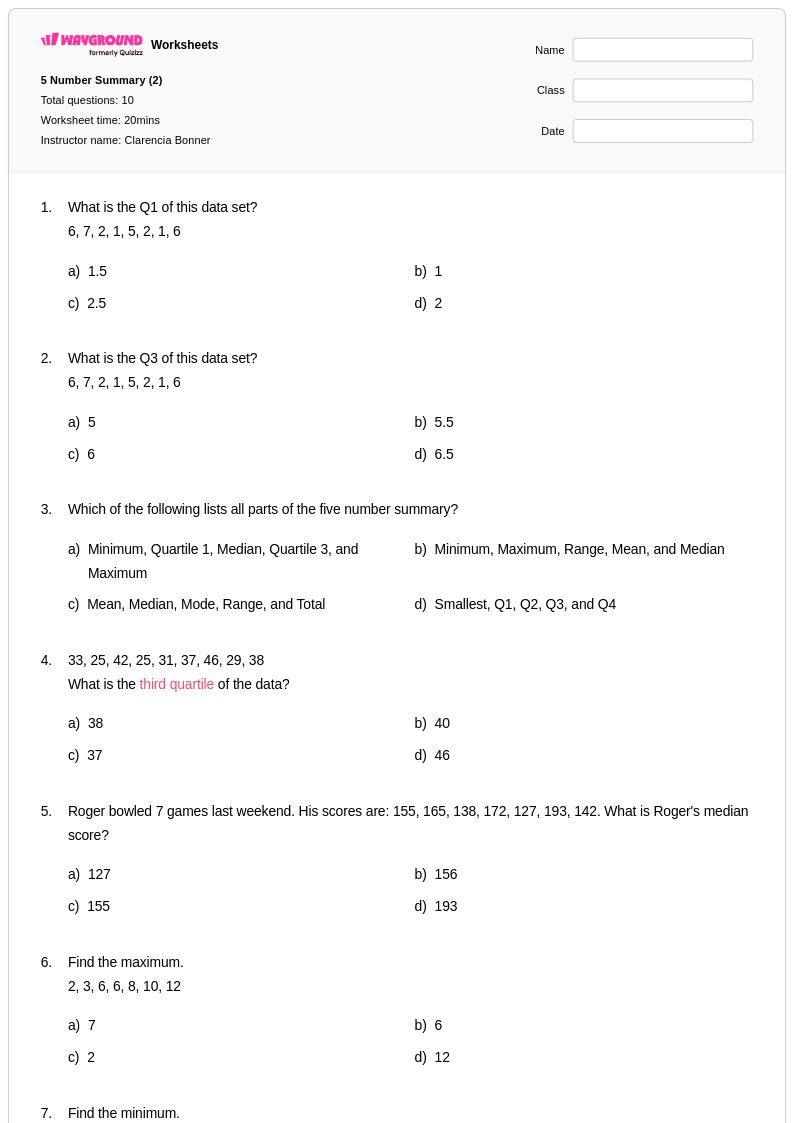
10 Q
6th - 8th
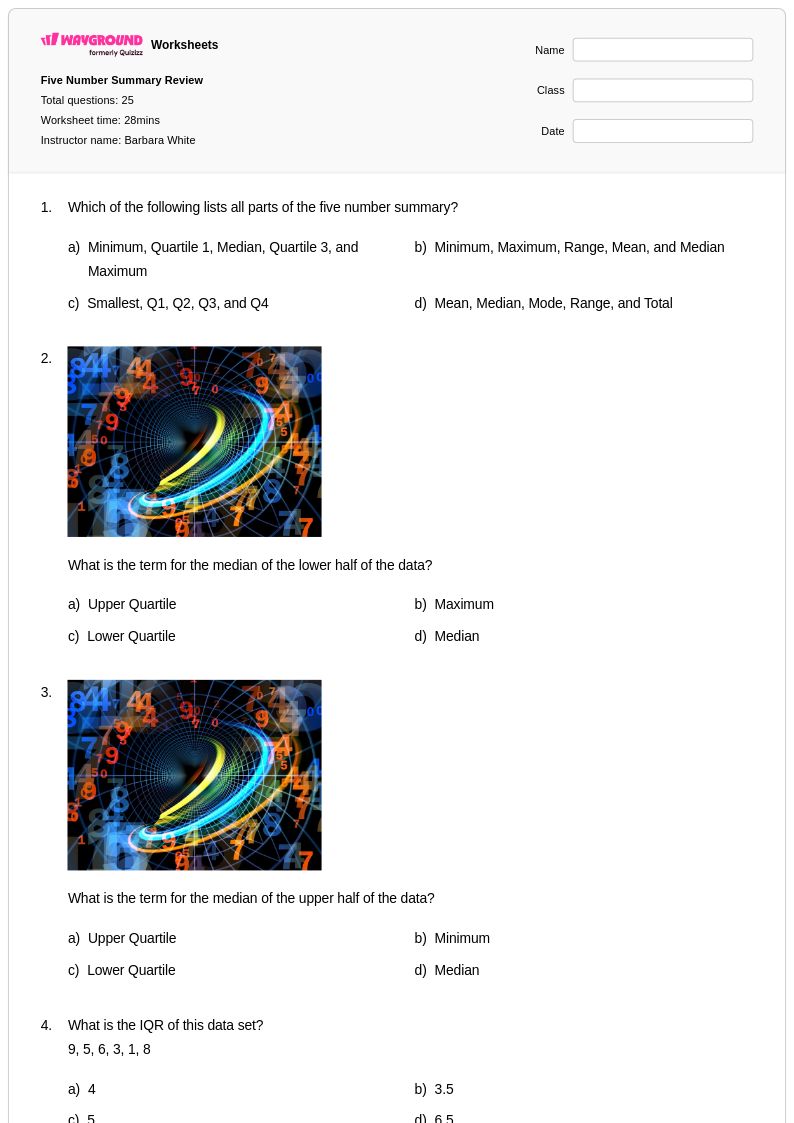
25 Q
6th - 8th
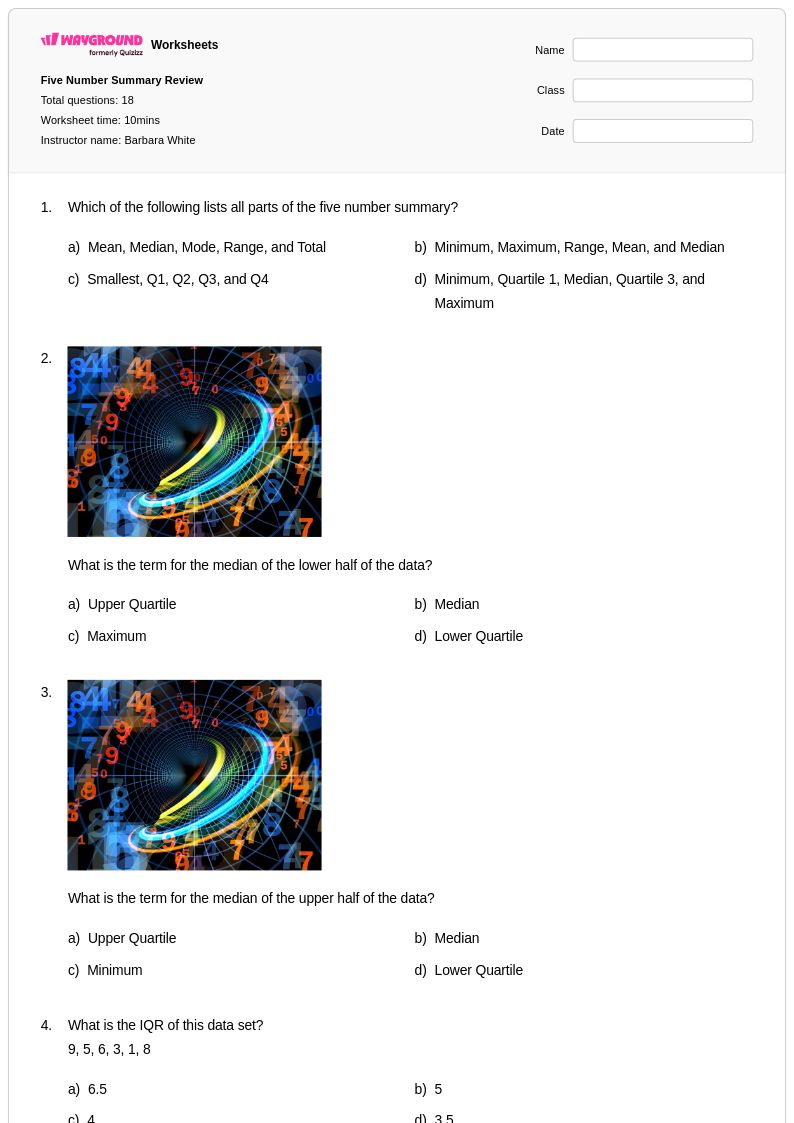
18 Q
6th - 8th
20 Q
7th - Uni
20 Q
6th - Uni
19 Q
8th - 11th
20 Q
6th - Uni
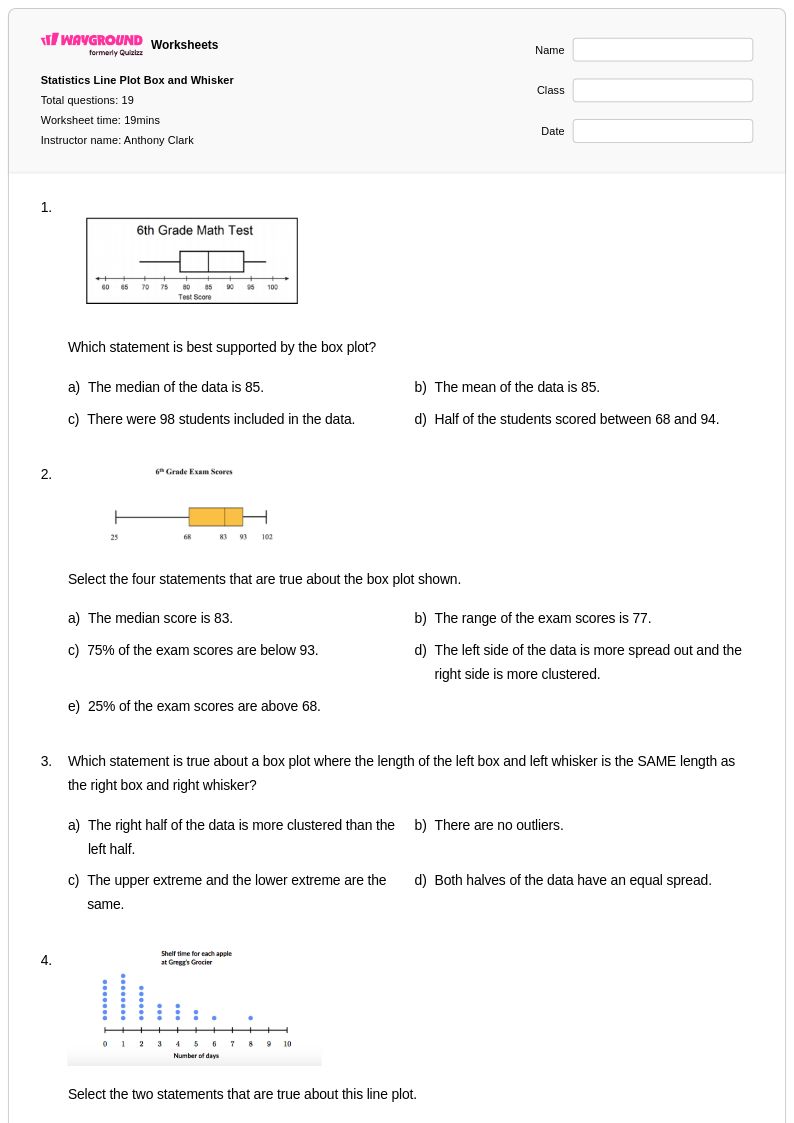
19 Q
6th - Uni
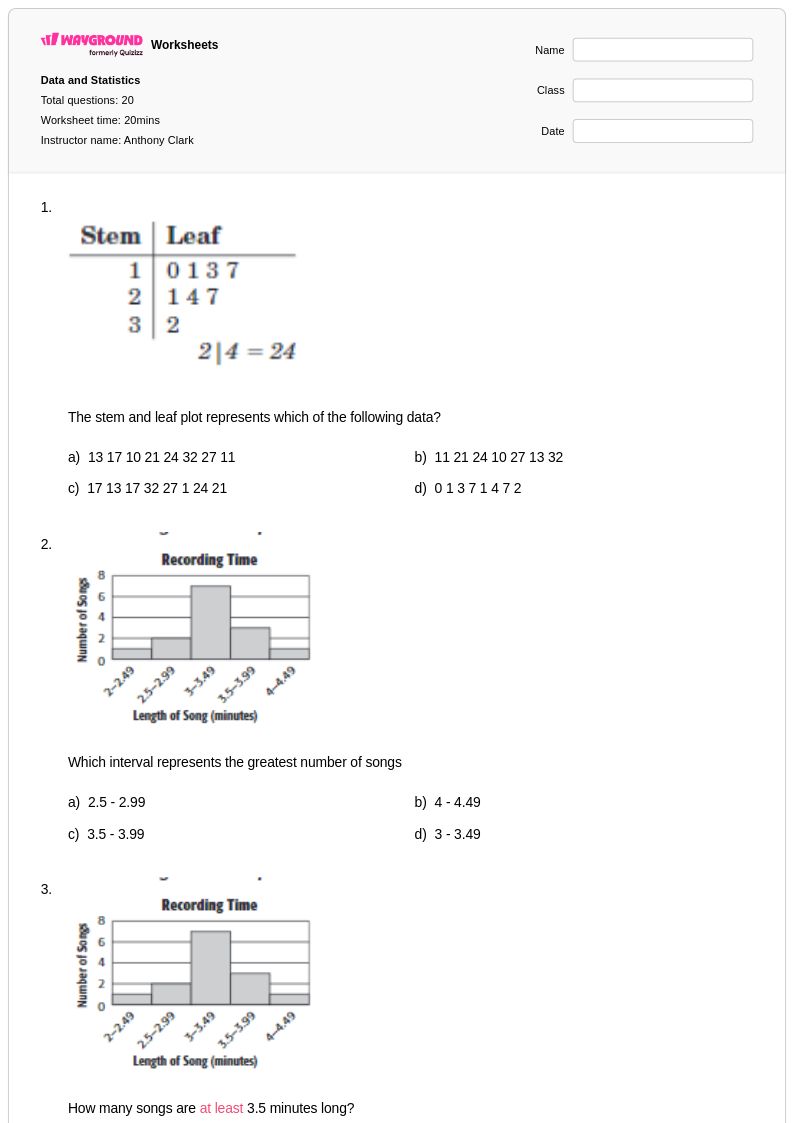
20 Q
7th - Uni
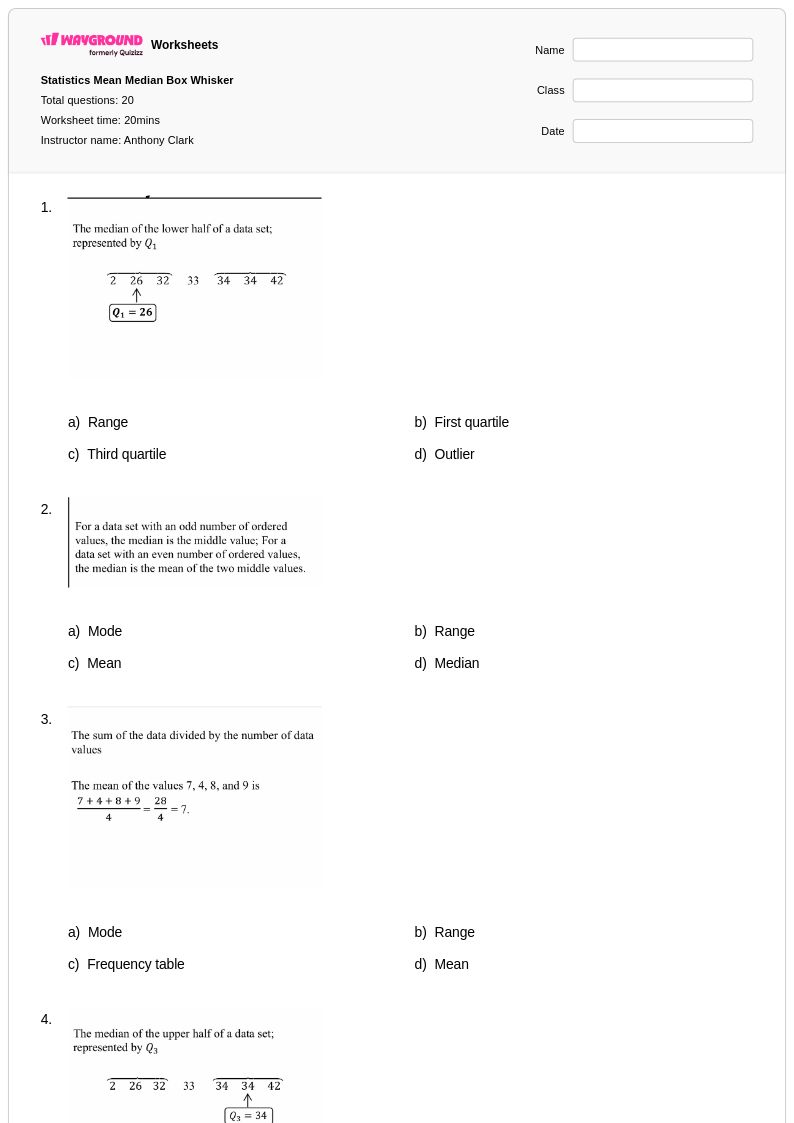
20 Q
6th - Uni
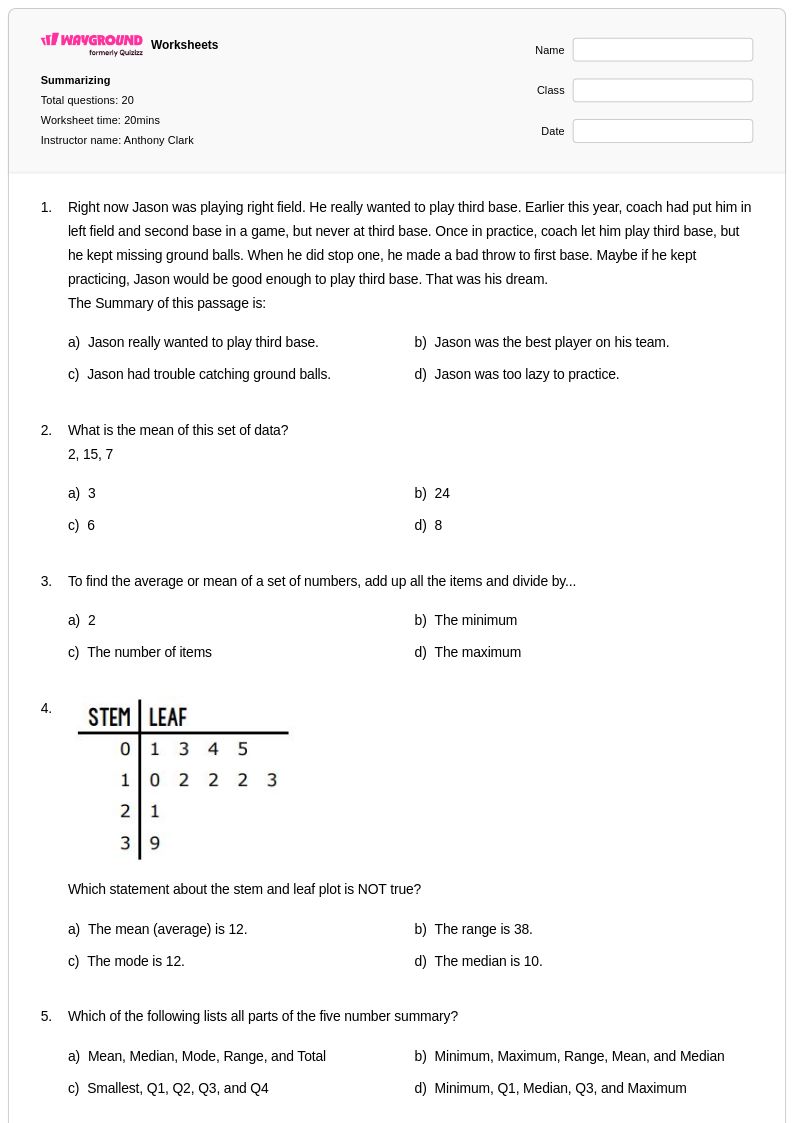
20 Q
6th - Uni
20 Q
7th - Uni
14 Q
6th - Uni
30 Q
8th
Explore Five Number Summary Worksheets by Grades
Explore Other Subject Worksheets for class 8
Explore printable Five Number Summary worksheets for Class 8
Five Number Summary worksheets available through Wayground (formerly Quizizz) provide Class 8 students with comprehensive practice in understanding and calculating the essential statistical measures that define data distribution. These carefully designed resources help students master the identification and computation of minimum values, first quartiles, medians, third quartiles, and maximum values while strengthening their ability to interpret box plots and analyze data spread. Each worksheet collection includes detailed answer keys and step-by-step solutions, making them invaluable for both classroom instruction and independent study. Students work through practice problems that range from basic five number summary calculations to more complex applications involving real-world data sets, with free printable pdf versions ensuring accessibility for all learning environments.
Wayground (formerly Quizizz) empowers mathematics teachers with millions of educator-created Five Number Summary resources that streamline lesson planning and enhance statistical instruction for Class 8 students. The platform's robust search and filtering capabilities allow teachers to quickly locate worksheets aligned with specific curriculum standards, while differentiation tools enable customization based on individual student needs and skill levels. These comprehensive worksheet collections are available in both printable and digital formats, including downloadable pdfs, providing flexibility for traditional classroom settings, homework assignments, and remote learning scenarios. Teachers can efficiently implement these resources for initial concept introduction, targeted remediation for struggling learners, enrichment activities for advanced students, and ongoing skill practice to ensure mastery of this fundamental statistical concept.
FAQs
Why is the five-number summary still taught in 8th grade?
How can I connect the five-number summary to 8th-grade topics?
What should I look for when assessing 8th graders on this topic?
How can I use this worksheet with my 8th graders?
How can I differentiate this topic for 8th graders?
What types of problems are on this 8th-grade worksheet?