Free Printable Forces and Motion Worksheets for Class 5
Enhance Class 5 students' understanding of forces and motion with Wayground's comprehensive collection of free physics worksheets, featuring engaging practice problems, printable PDFs, and complete answer keys for effective learning.
Explore printable Forces and Motion worksheets for Class 5
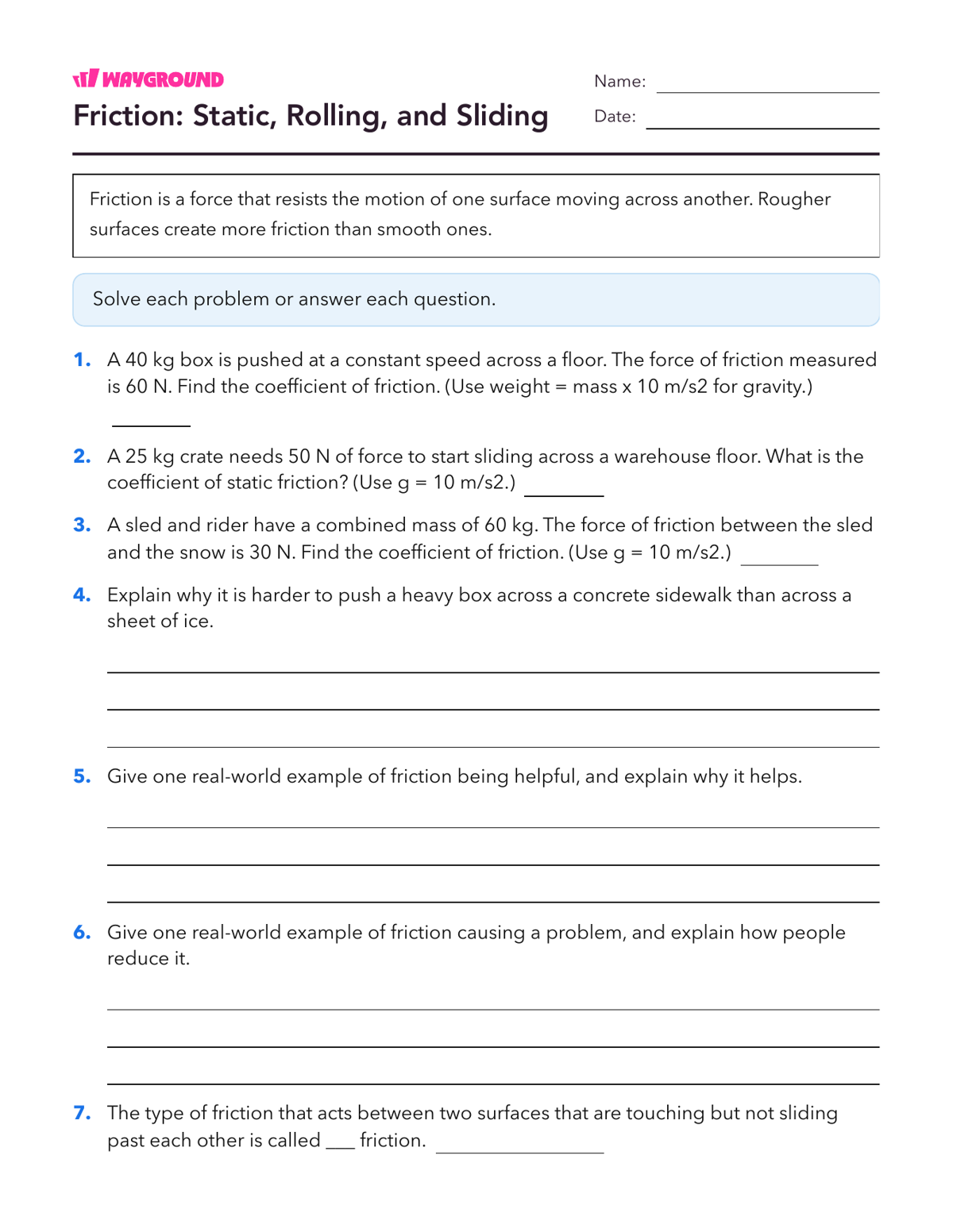
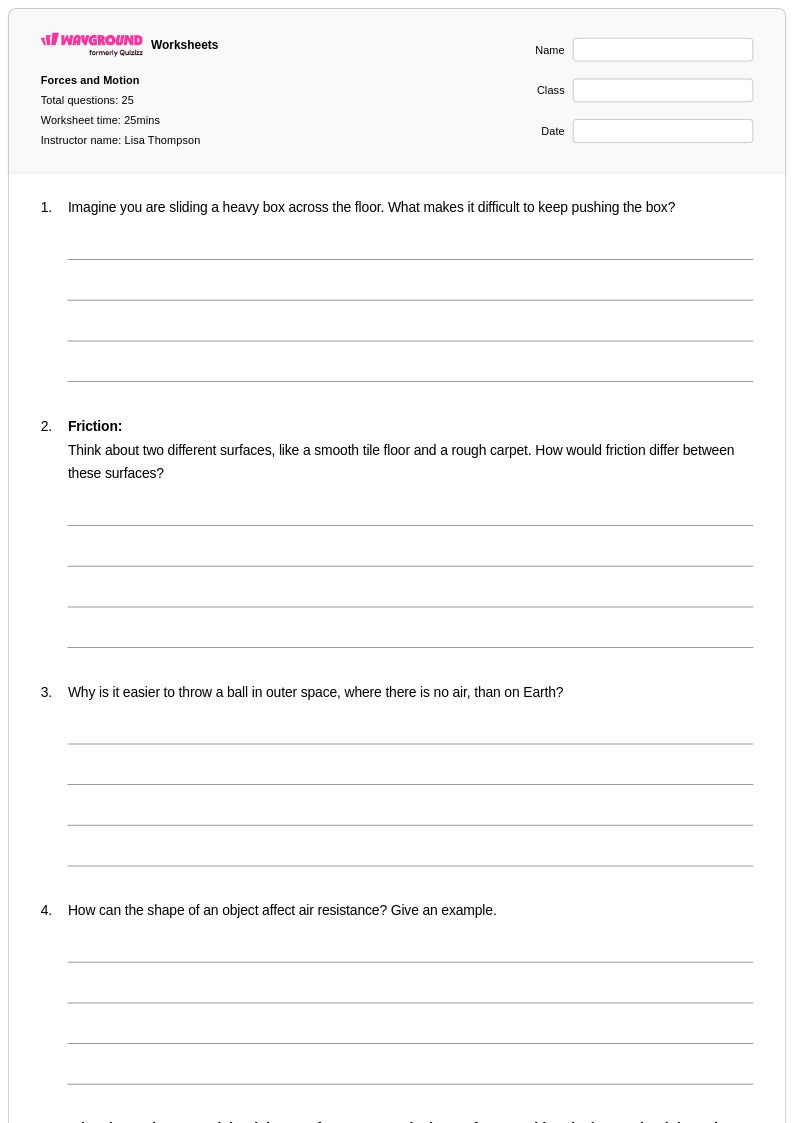
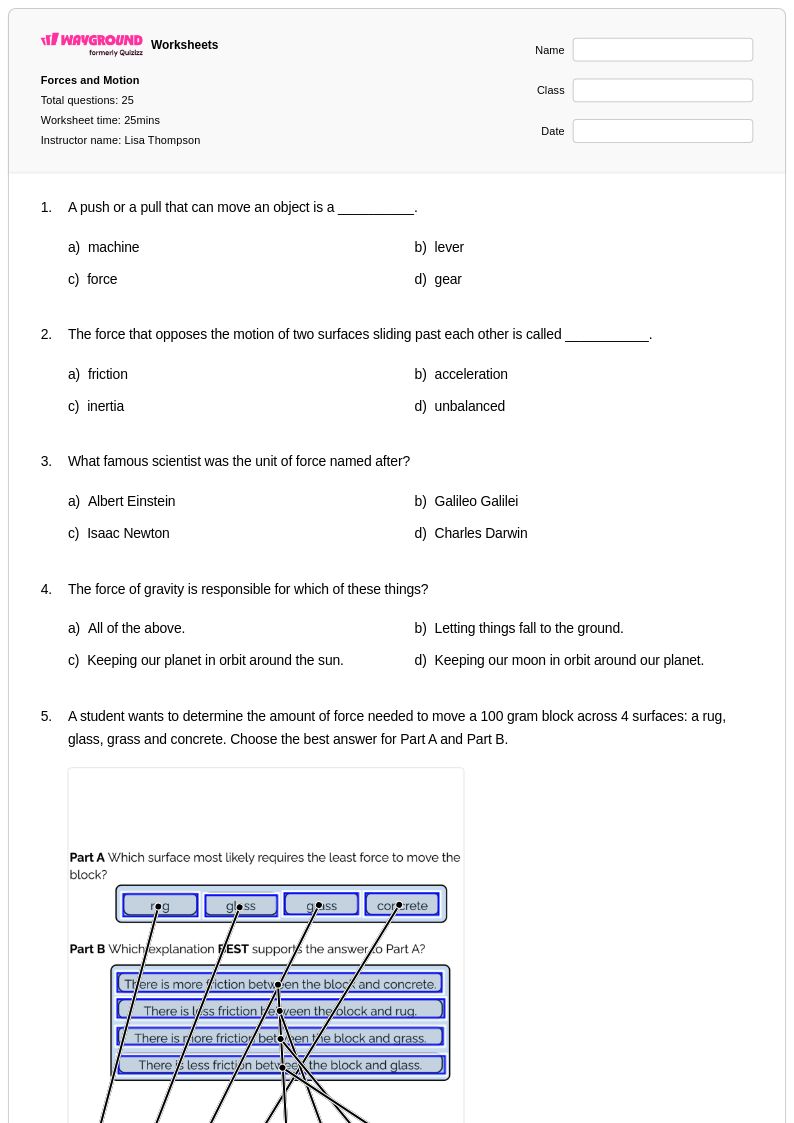
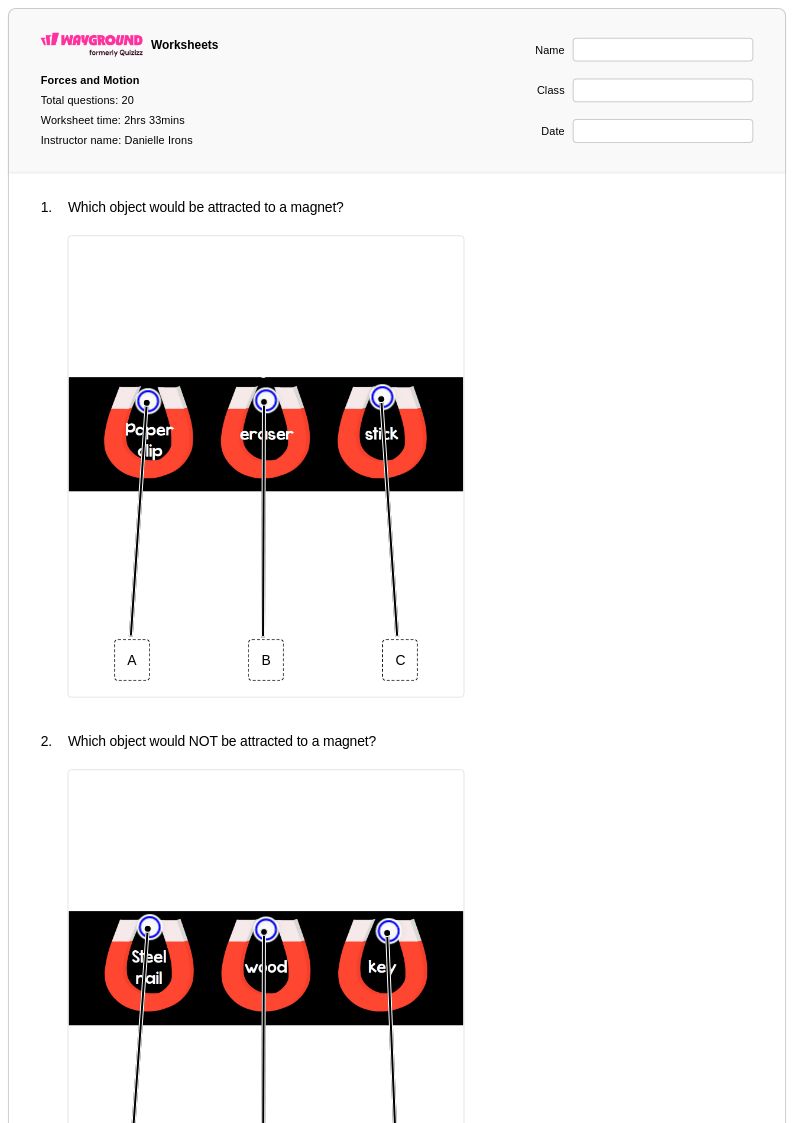
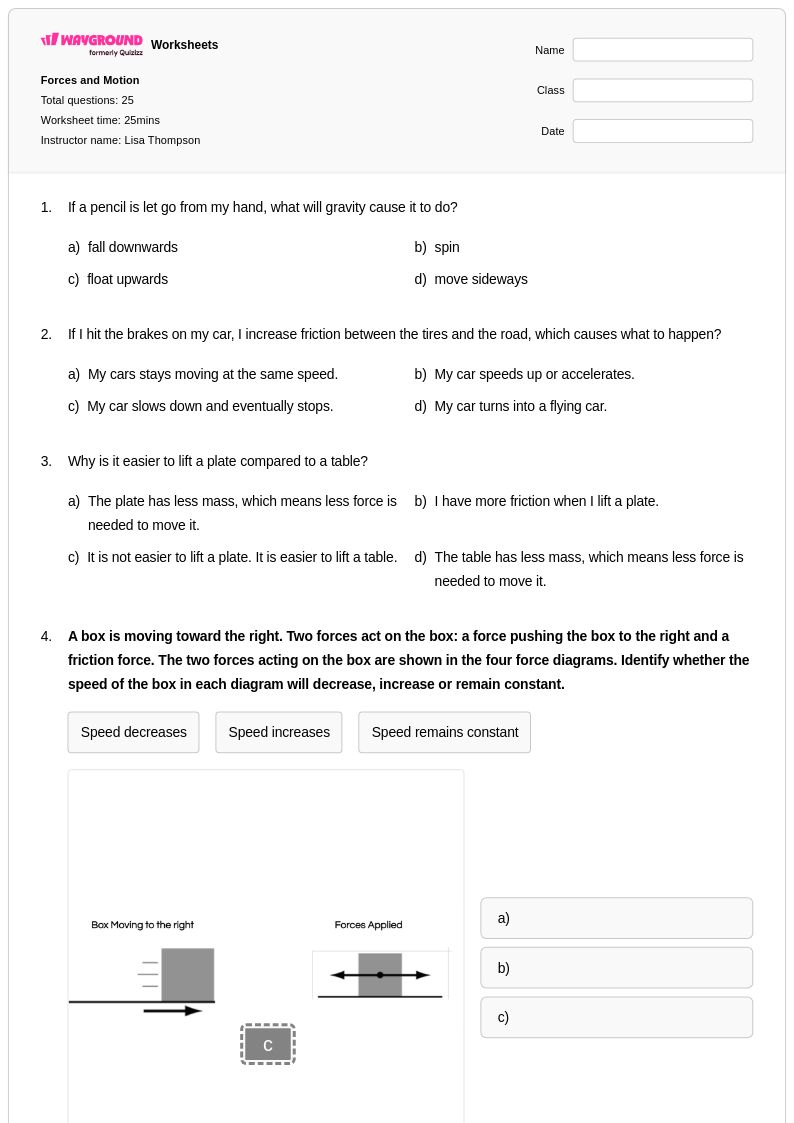
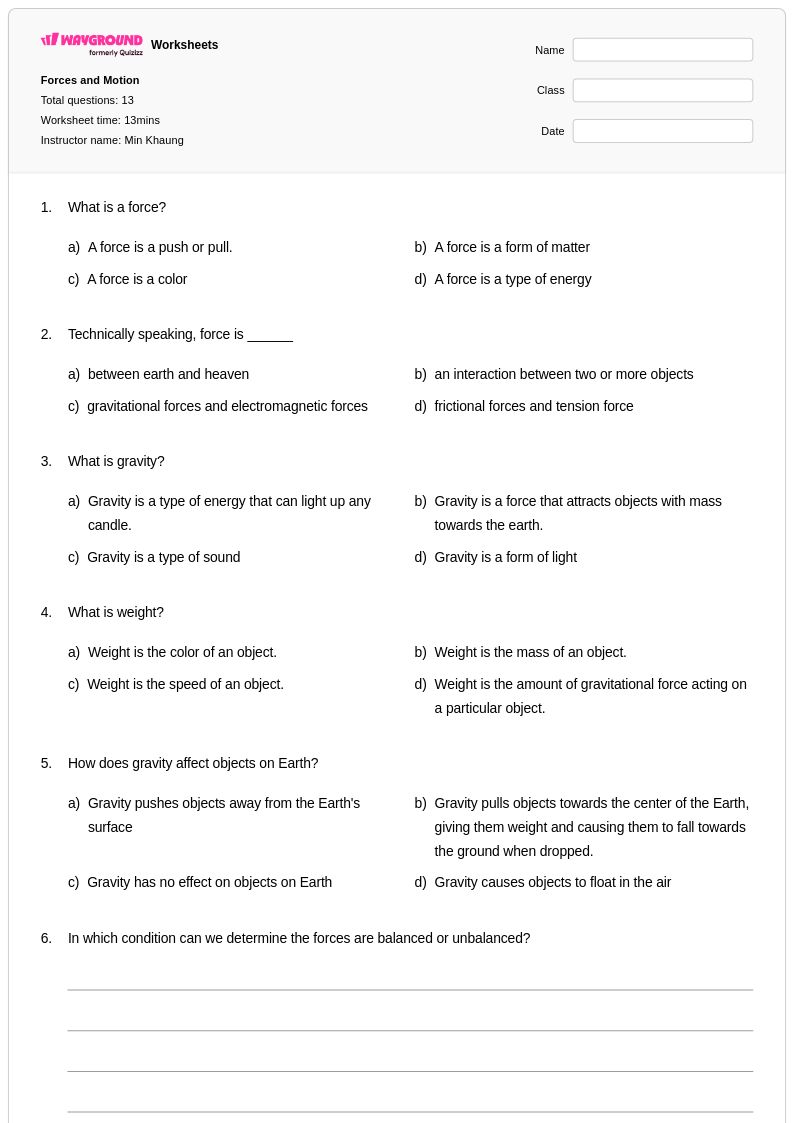
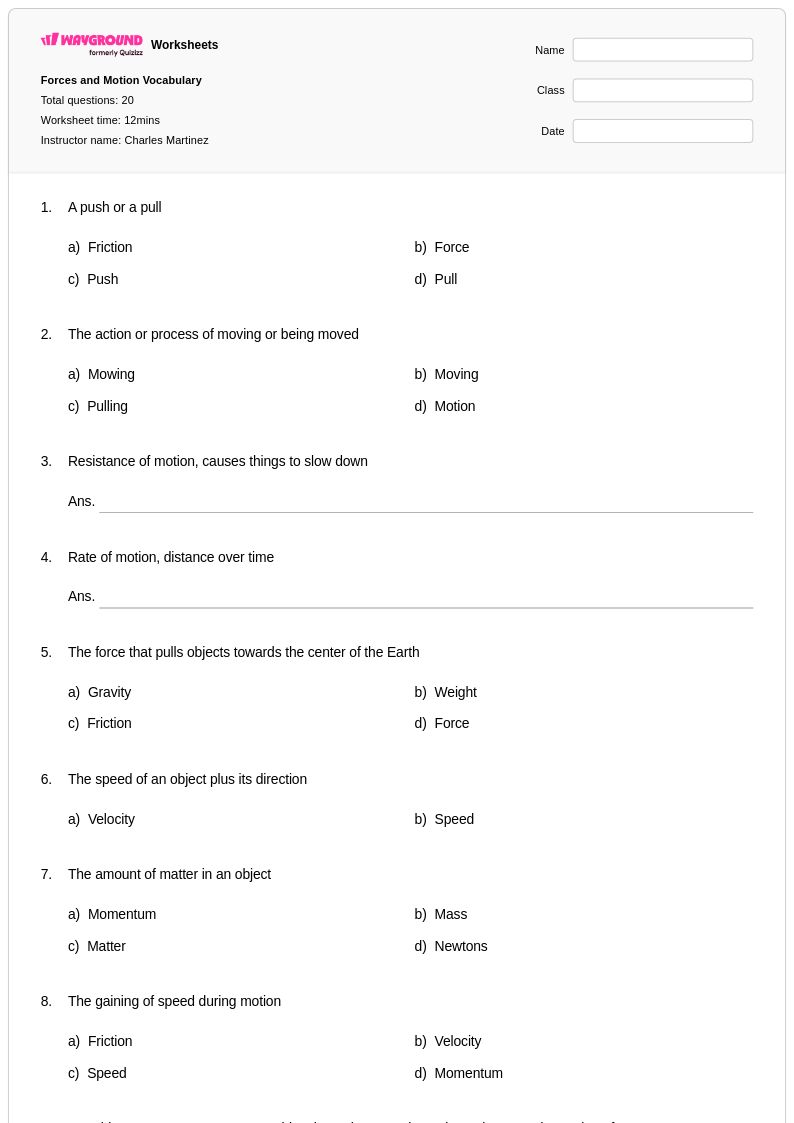
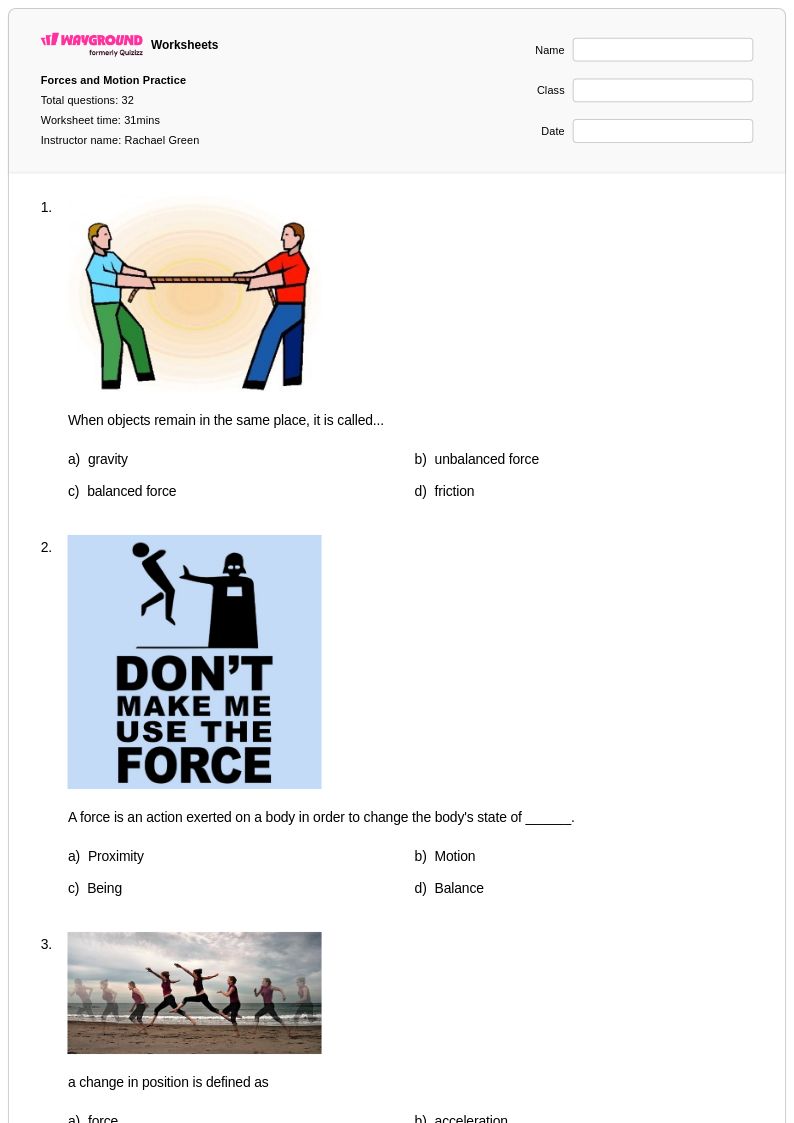
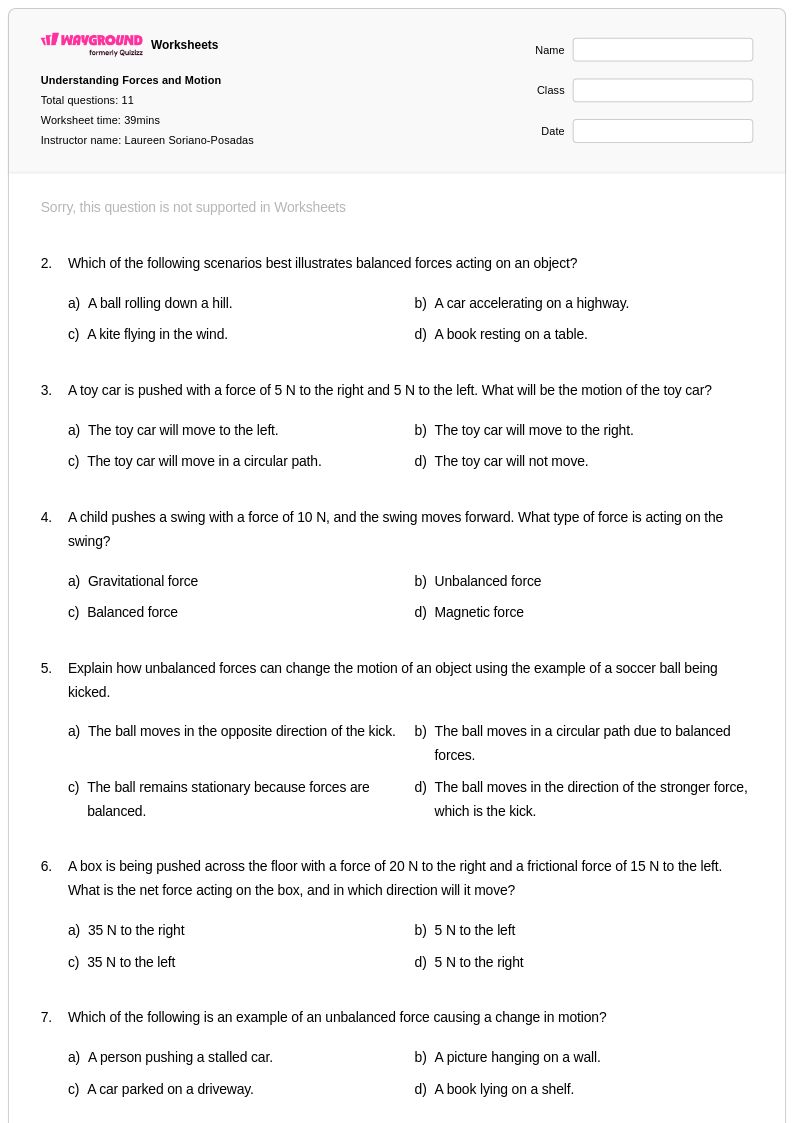
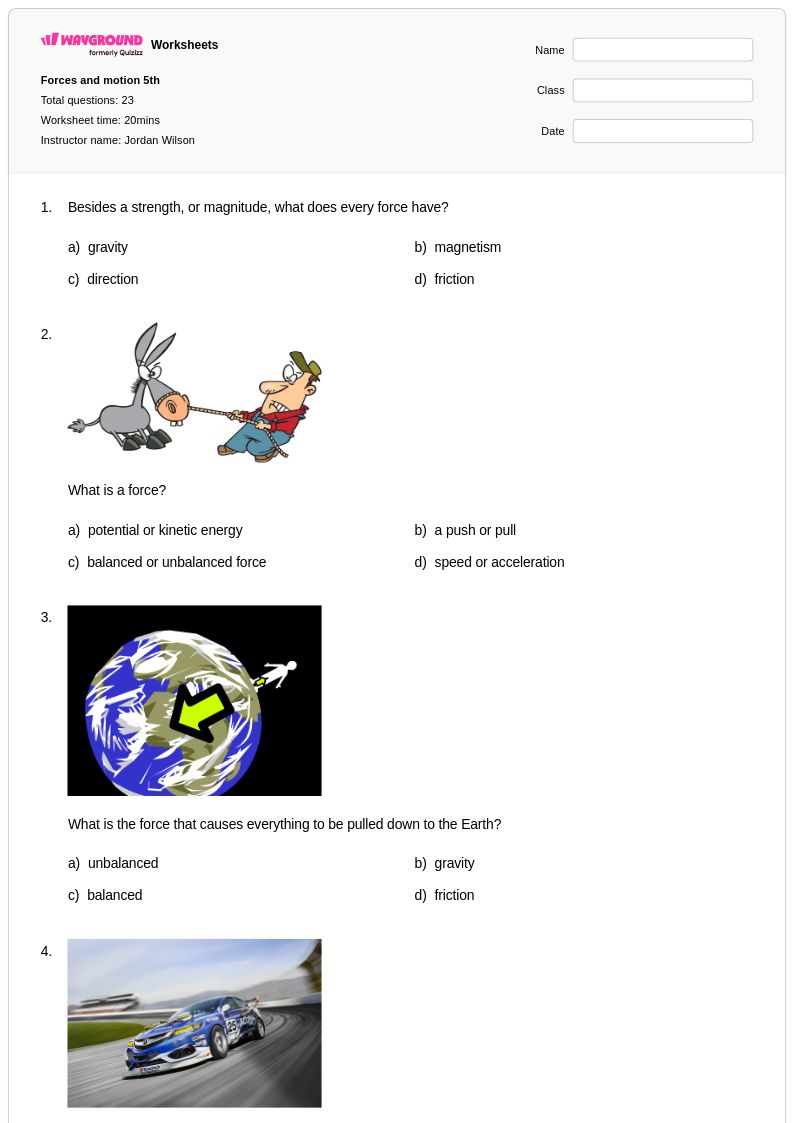
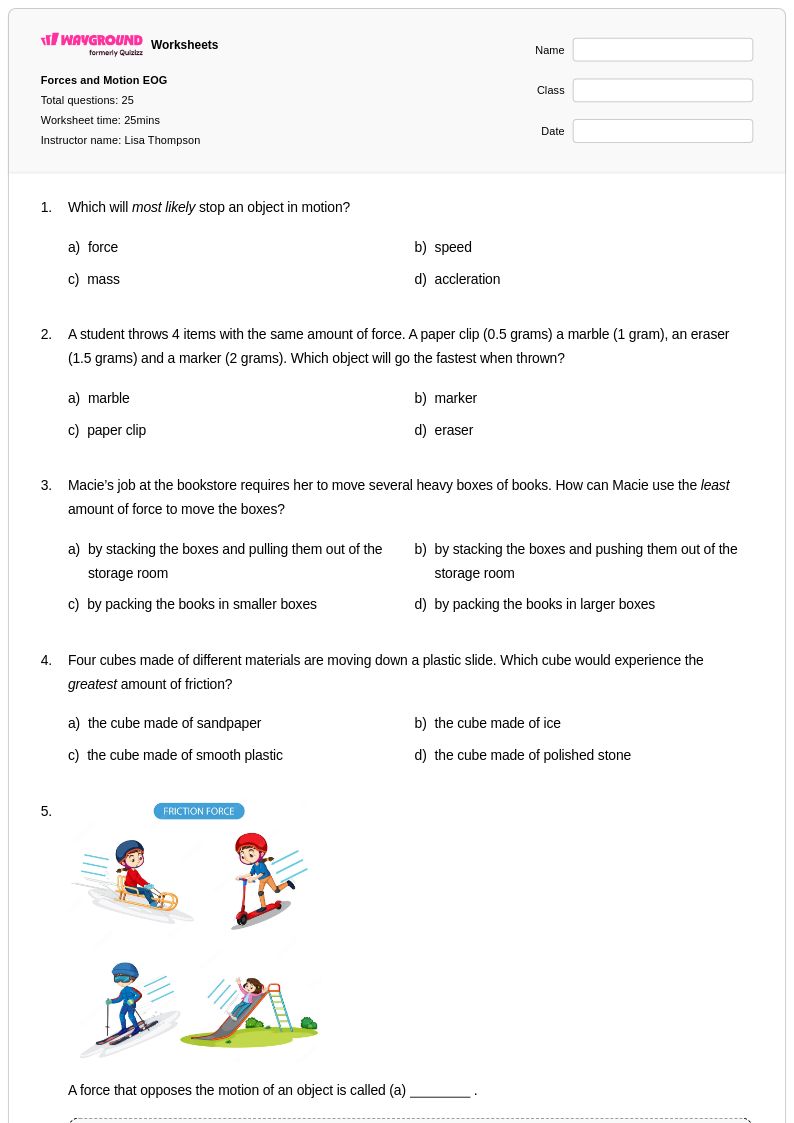
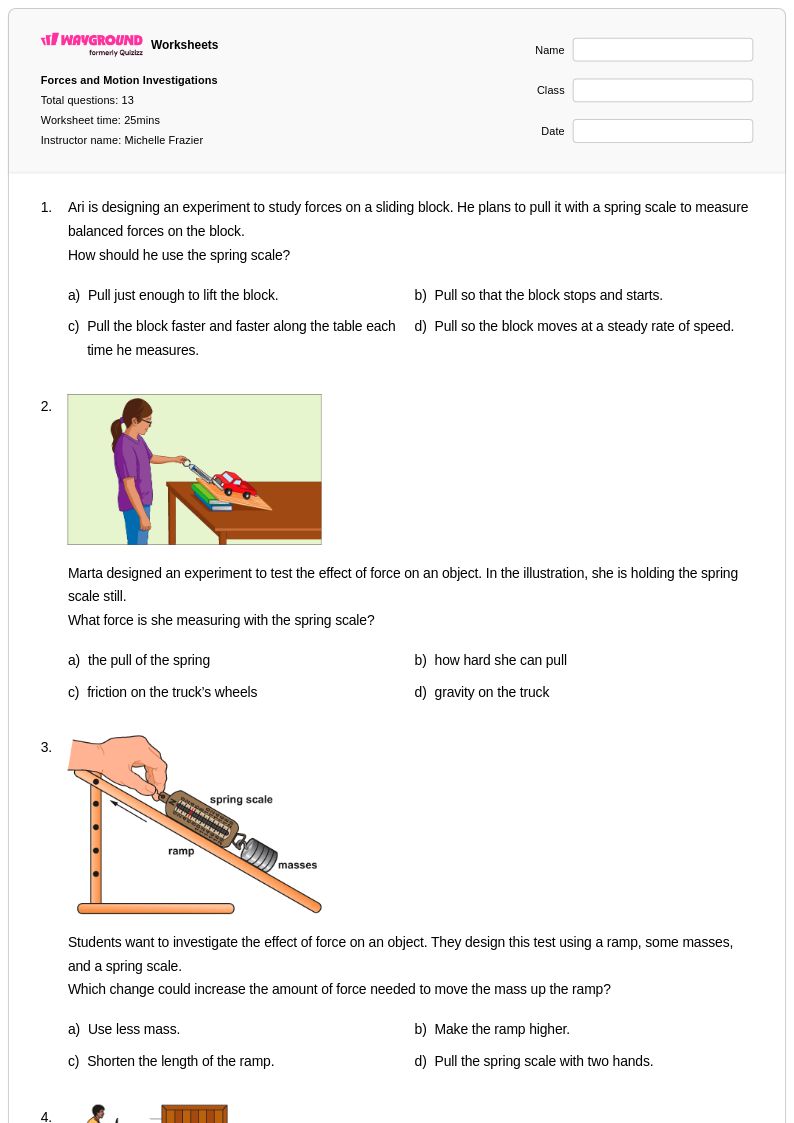
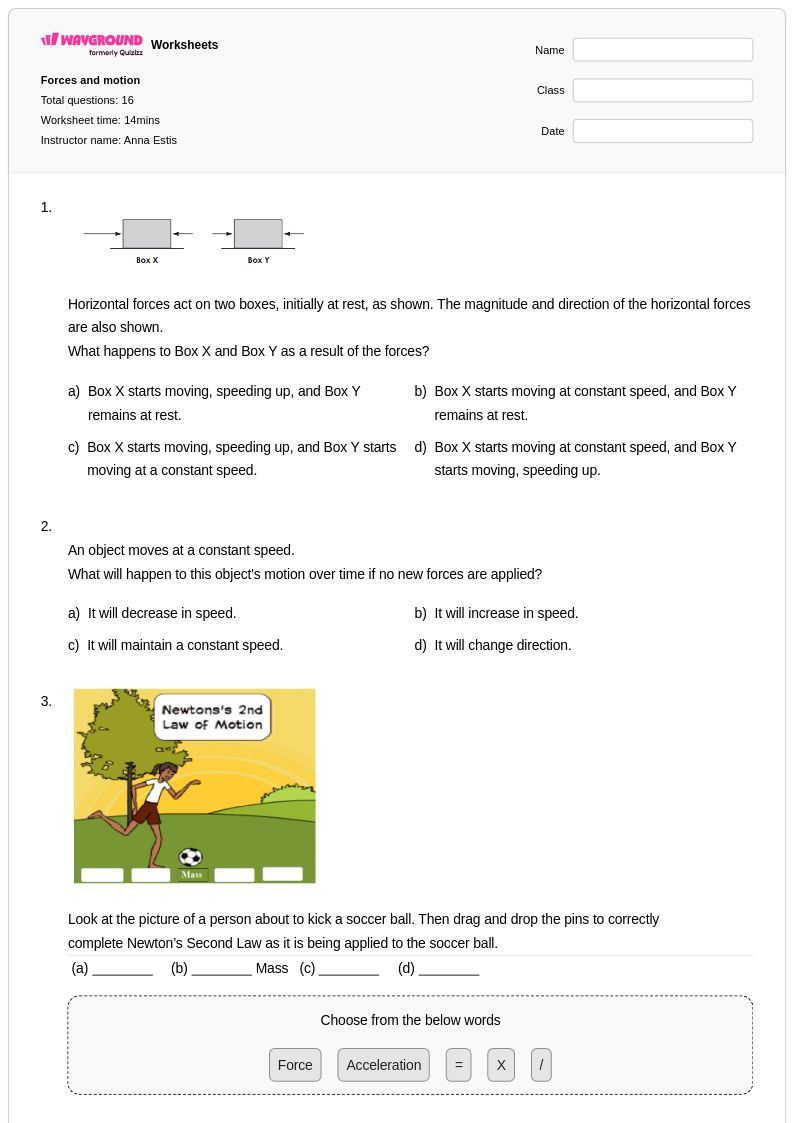
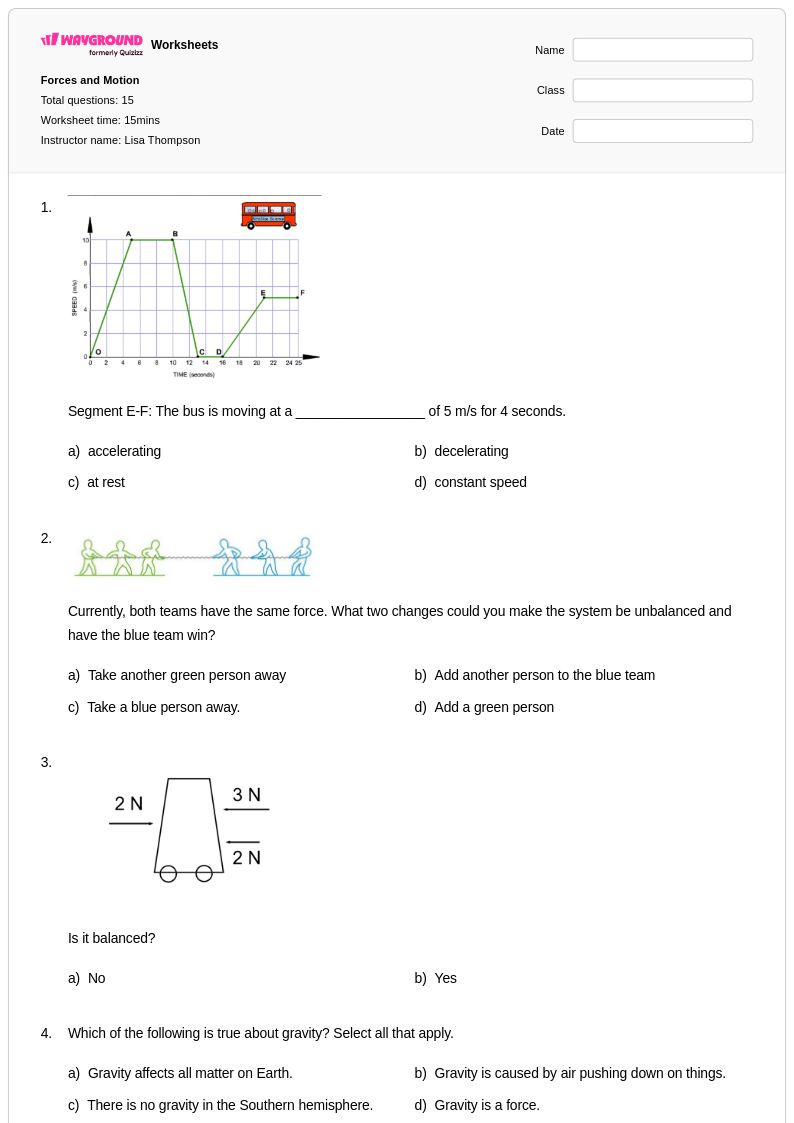
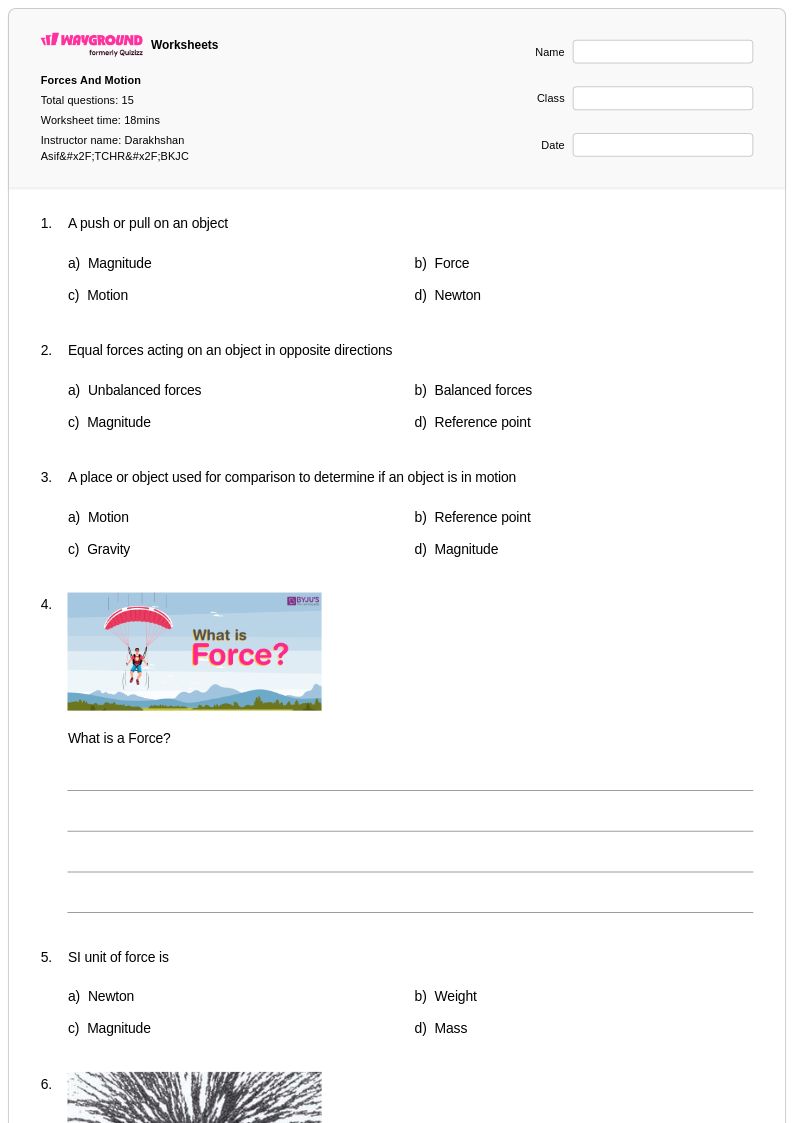
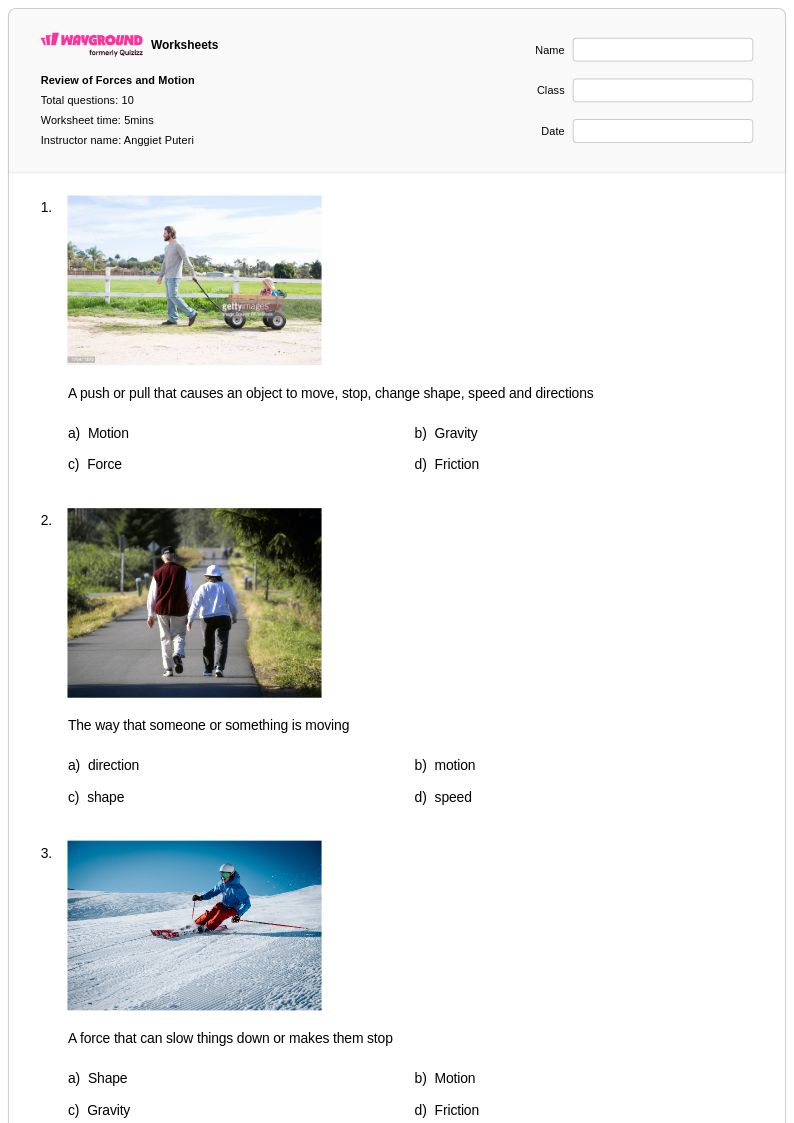
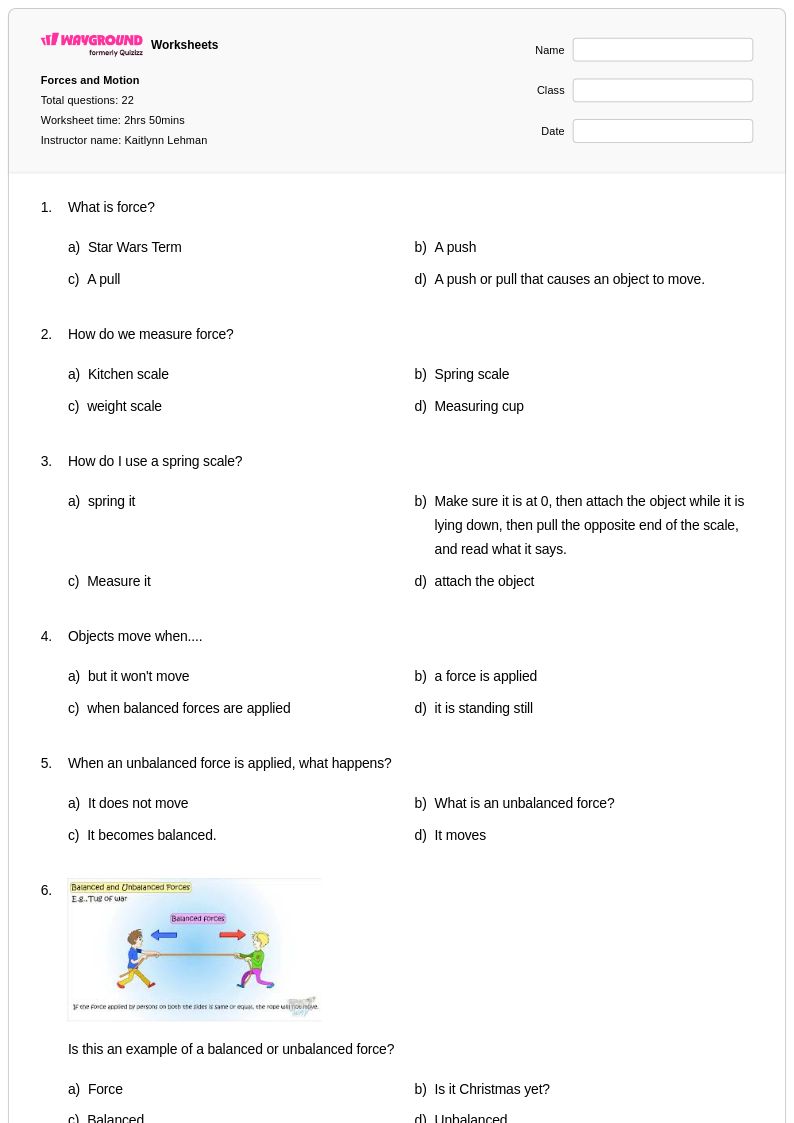
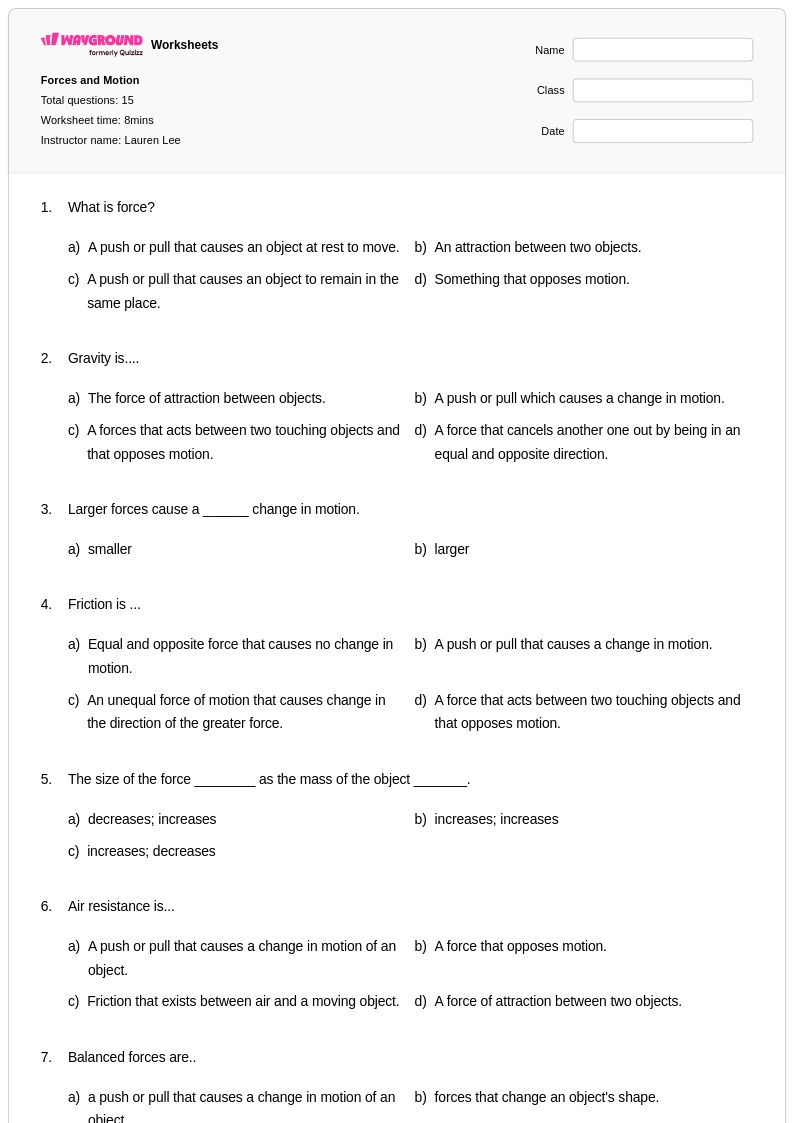
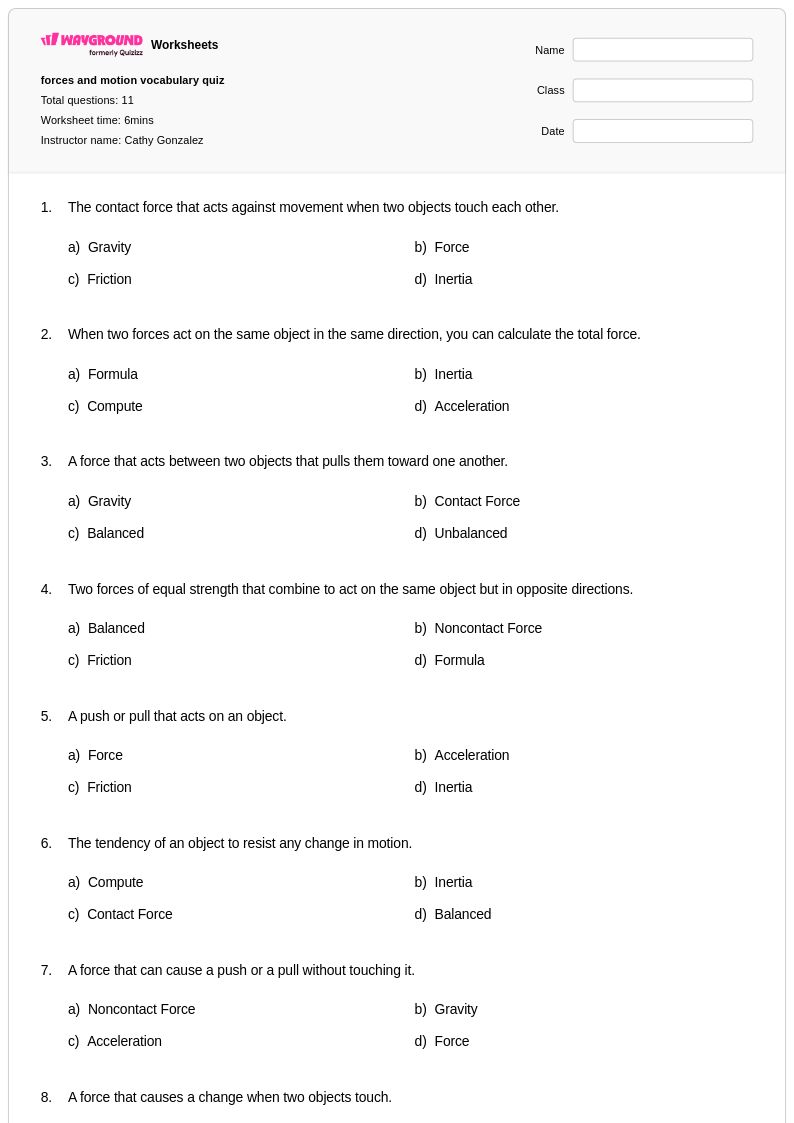
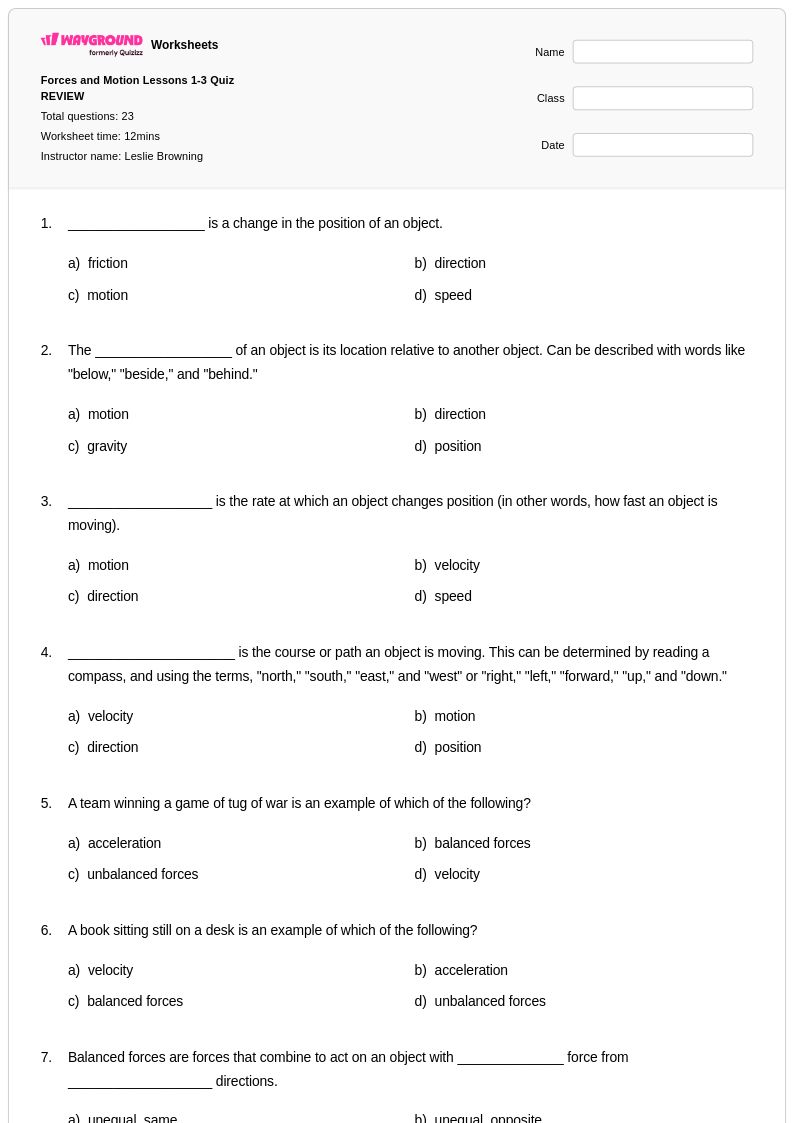
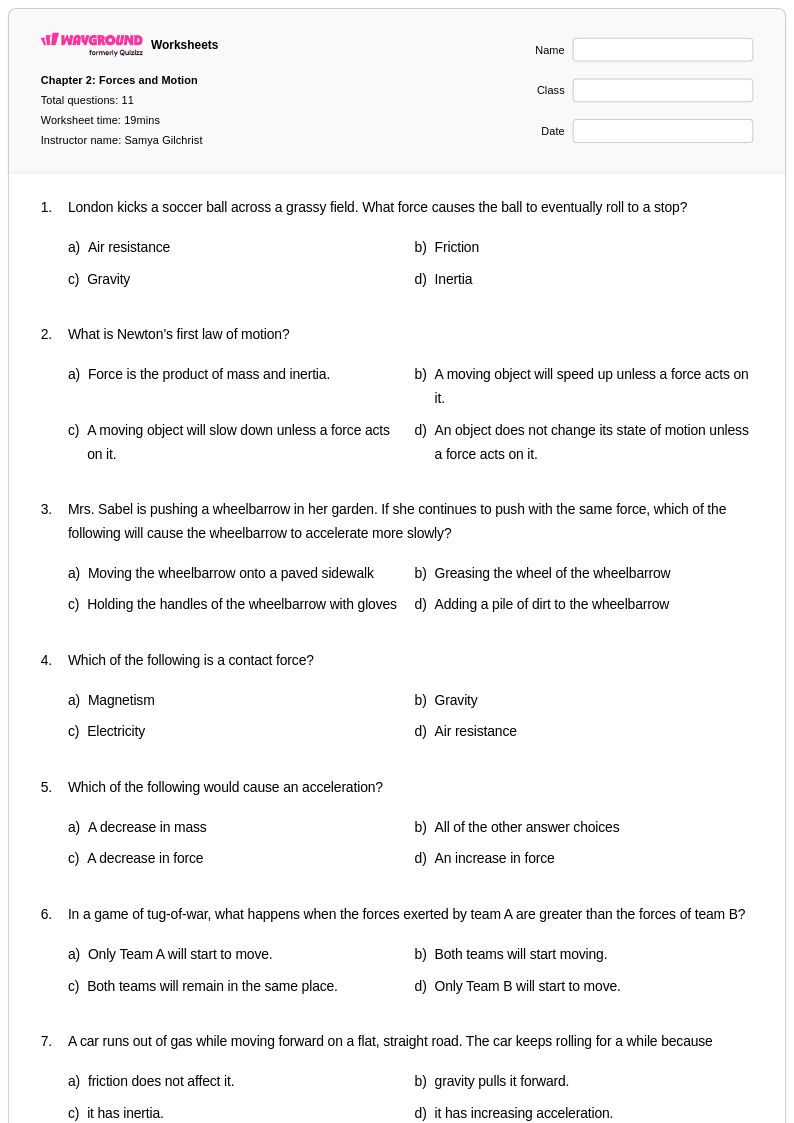
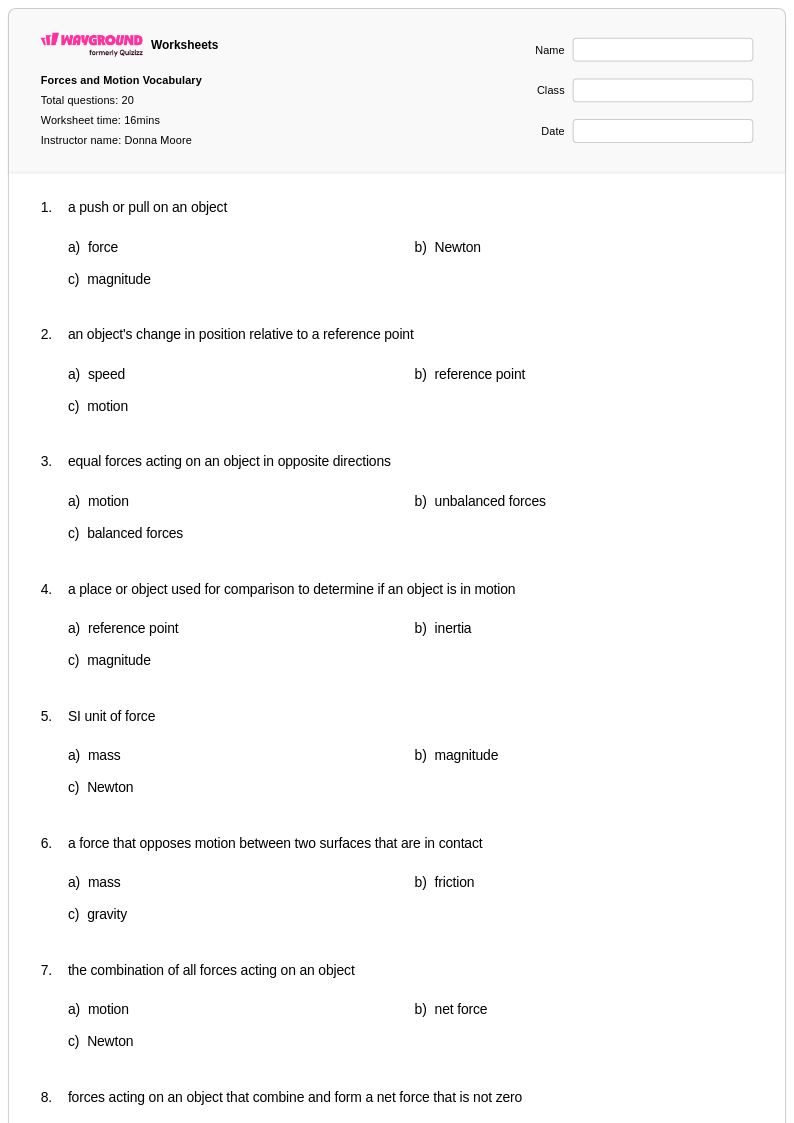
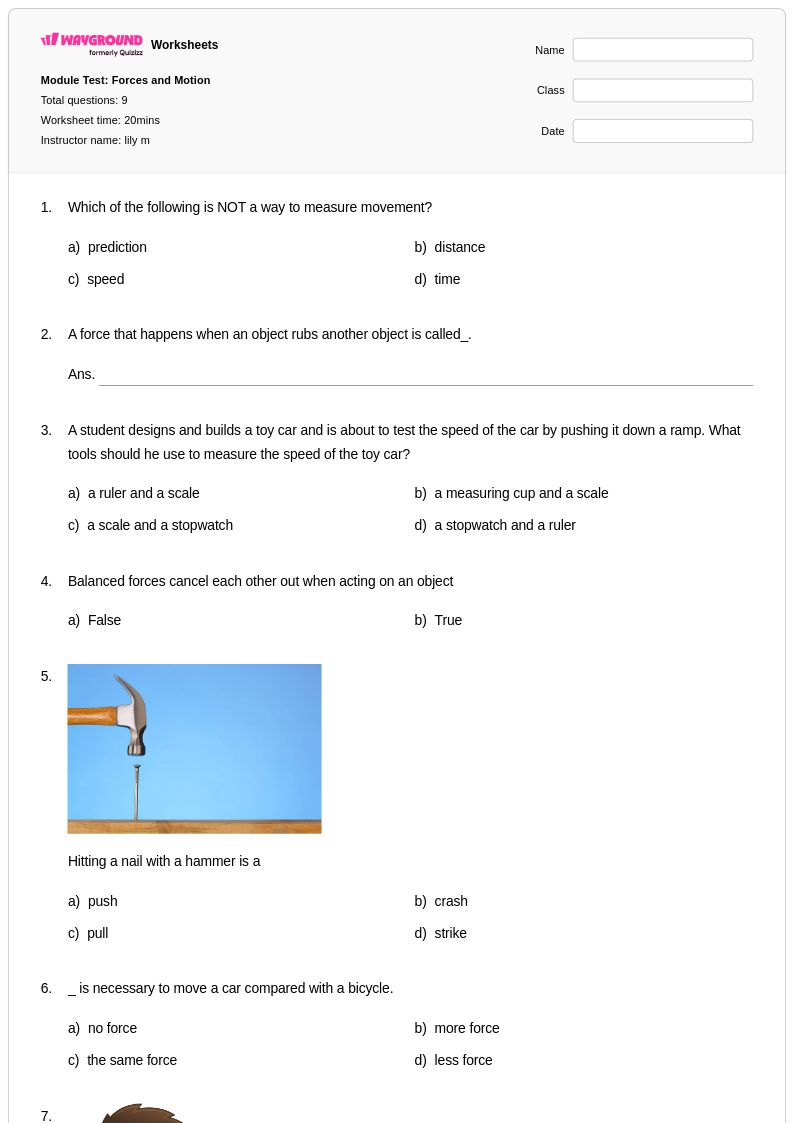
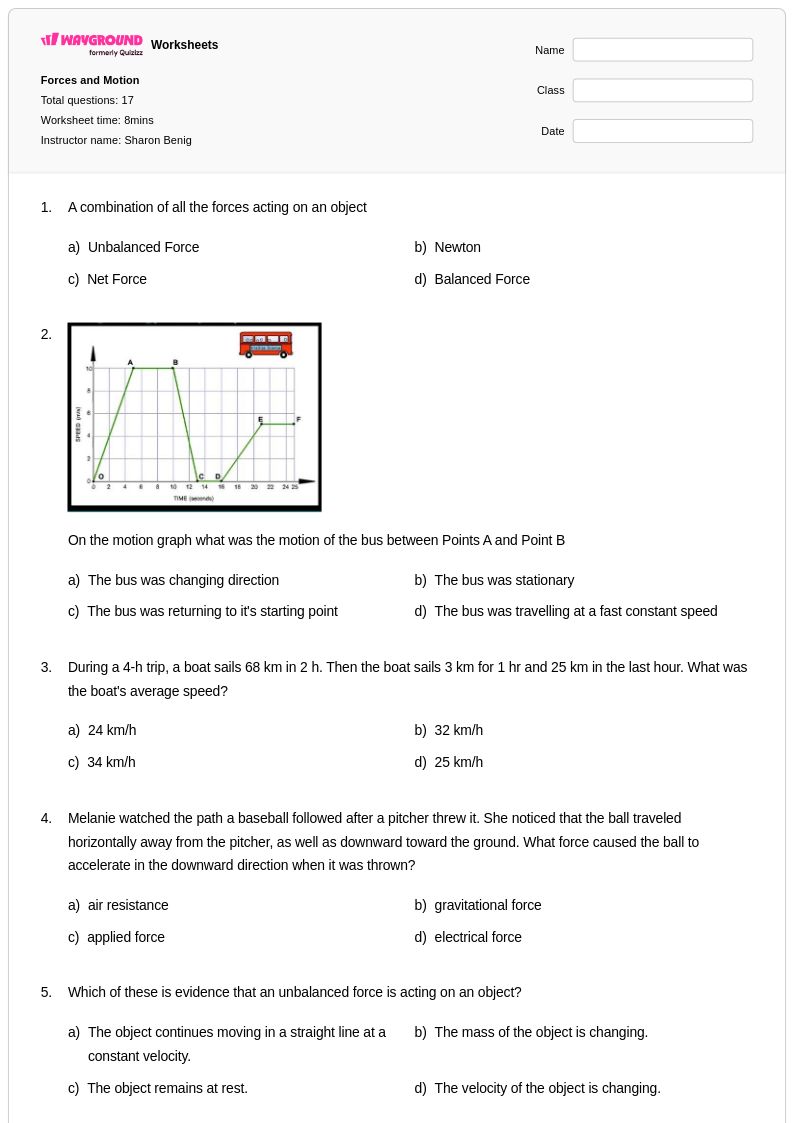
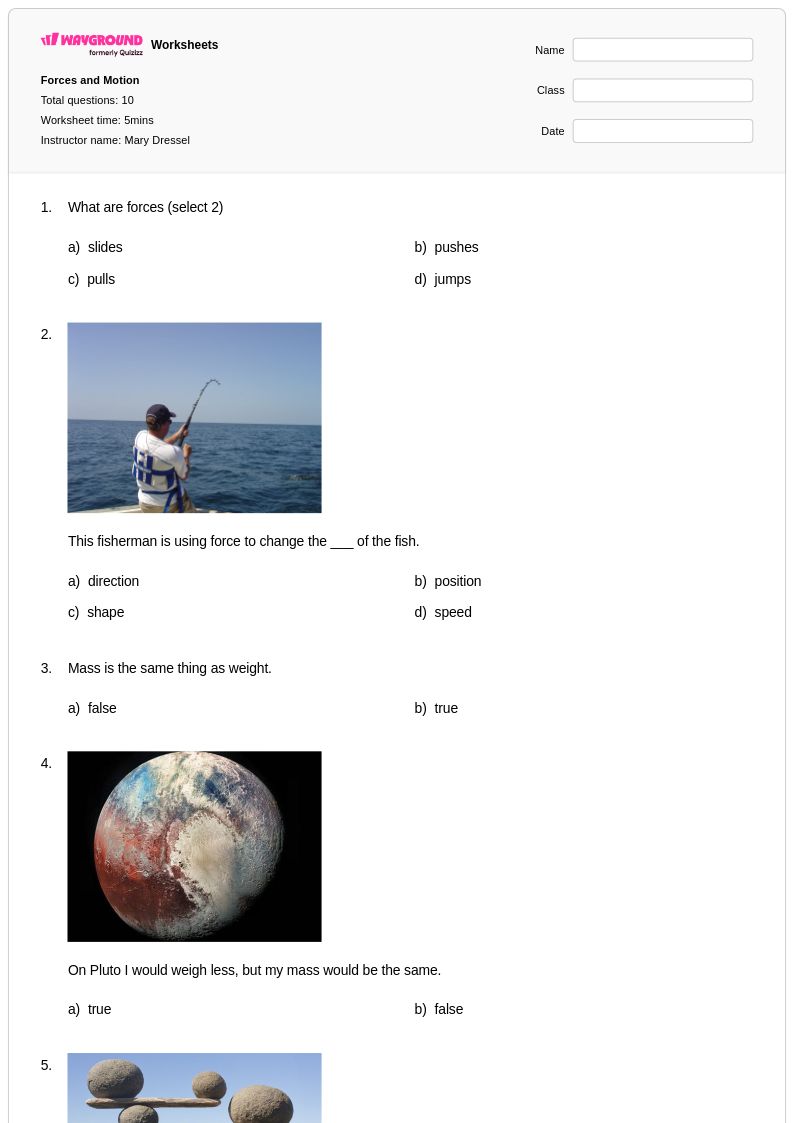
Forces and Motion worksheets for Class 5 students available through Wayground (formerly Quizizz) provide comprehensive coverage of fundamental physics concepts that form the foundation of scientific understanding at the elementary level. These carefully designed practice problems guide students through explorations of push and pull forces, friction, gravity, and the relationship between force and motion, helping them develop critical thinking skills while building conceptual knowledge. The collection includes diverse question formats ranging from identifying forces in everyday situations to predicting motion outcomes, with each printable worksheet accompanied by a detailed answer key that supports both independent learning and teacher-led instruction. These free resources strengthen students' ability to observe, analyze, and explain physical phenomena while developing scientific vocabulary and reasoning skills essential for advanced physics concepts.
Wayground (formerly Quizizz) supports educators with an extensive library of millions of teacher-created Forces and Motion resources that streamline lesson planning and enhance instructional effectiveness. The platform's robust search and filtering capabilities allow teachers to quickly locate worksheets aligned with specific learning standards while differentiation tools enable customization for diverse learning needs and abilities. Available in both digital and printable pdf formats, these materials offer flexibility for classroom instruction, homework assignments, remediation sessions, and enrichment activities. Teachers can modify existing worksheets or create personalized versions to target specific skill gaps, ensuring that students receive appropriate challenge levels while building mastery of force and motion concepts through systematic practice and reinforcement.
FAQs
How do I teach forces and motion to students who struggle with abstract physics concepts?
Start with concrete, observable examples before introducing formulas — have students push and pull objects of different masses and record what they notice. From there, connect those observations to Newton's laws by naming what students already experienced. Using diagrams of force vectors alongside real-world scenarios, such as a book resting on a table or a ball rolling to a stop, helps students build a conceptual bridge between physical intuition and mathematical reasoning.
What kinds of practice problems help students understand net force and acceleration?
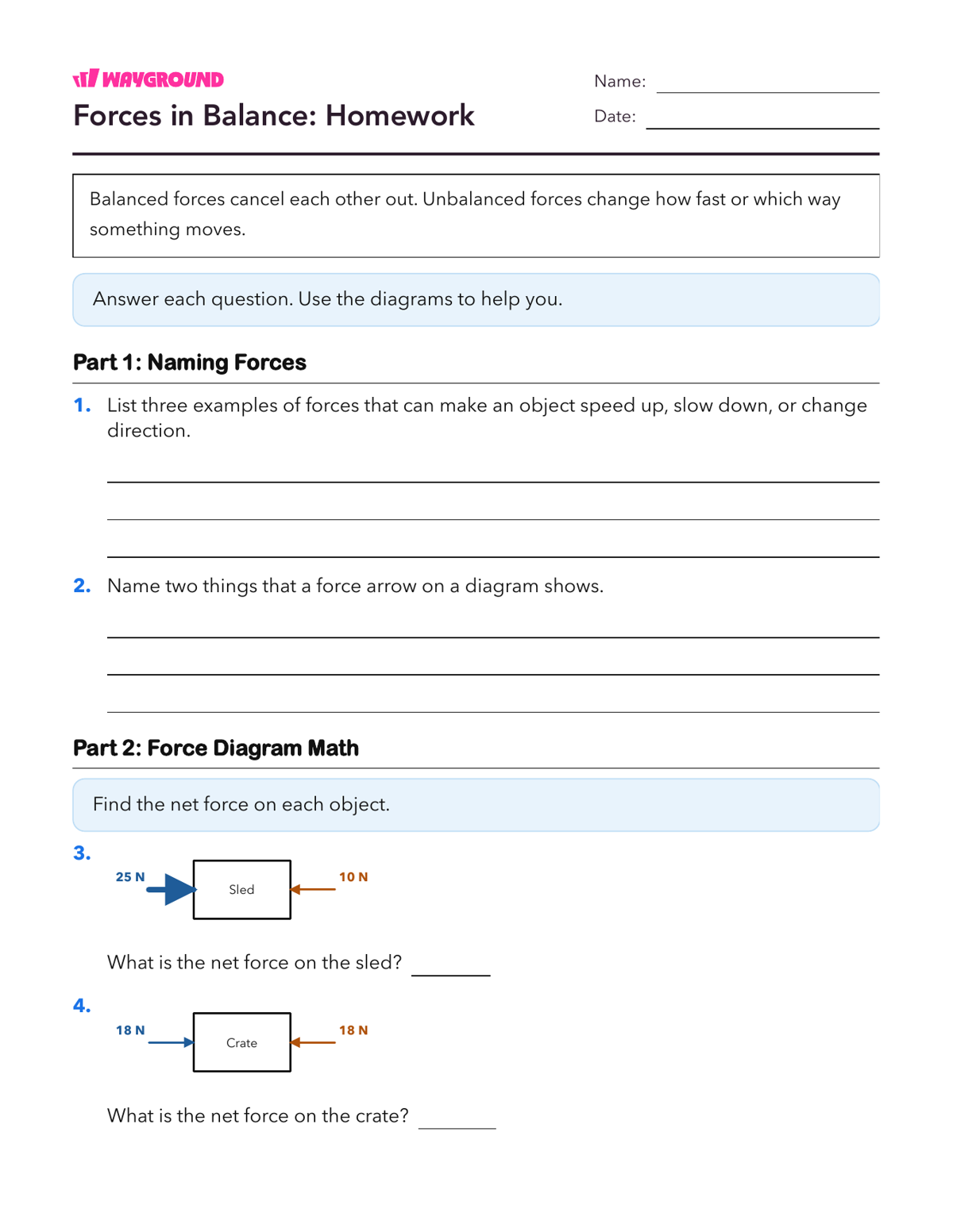
Students benefit most from problems that require them to identify all forces acting on an object, determine direction, and calculate the net force before applying Newton's second law. Start with single-direction problems involving one or two forces, then progress to scenarios with balanced and unbalanced forces acting in opposite directions. Scaffolded problem sets that show partial worked examples alongside independent practice problems are especially effective for building procedural fluency.
What misconceptions do students commonly have about forces and motion?
One of the most persistent misconceptions is that a moving object requires a continuous force to keep moving — students often confuse force with velocity rather than understanding that force causes a change in motion. Another common error is treating friction as the absence of force rather than as an active force opposing motion. Students also frequently struggle to distinguish between balanced forces, which produce no change in motion, and unbalanced forces, which cause acceleration.
How can I use forces and motion worksheets to differentiate instruction in the same classroom?
Wayground supports student-level accommodations that allow you to tailor worksheet sessions without disrupting the rest of the class. You can enable Read Aloud for students who need audio support, reduce the number of answer choices for students who need lower cognitive load, and grant extended time to individuals on timed digital activities. These settings are saved per student and apply automatically in future sessions, so differentiation scales without requiring extra setup each time.
How do I use Wayground's forces and motion worksheets in my classroom?
Wayground's forces and motion worksheets are available as printable PDFs for traditional classroom use and in digital formats for technology-integrated learning environments, including the option to host them as a quiz directly on Wayground. Teachers can distribute printed worksheets for independent or group practice, or assign digital versions for homework and in-class review. All worksheets include complete answer keys, making them practical for both self-paced student practice and teacher-led instruction.
How do I help students understand the difference between balanced and unbalanced forces?
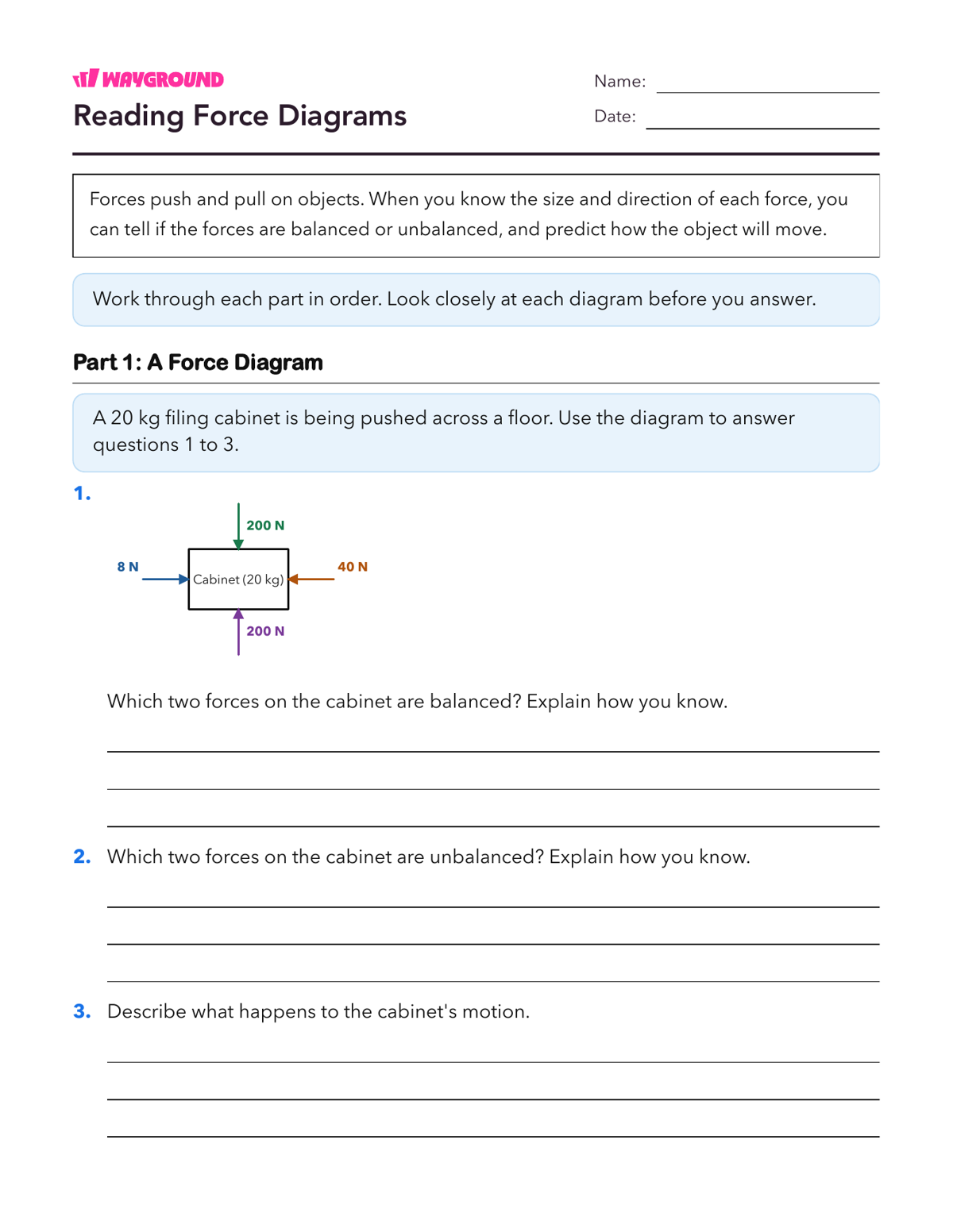
Use free-body diagrams early and consistently — drawing arrows to represent forces in magnitude and direction makes it visually clear when forces cancel out versus when one side dominates. Balanced forces result in no change in an object's motion, while unbalanced forces cause acceleration in the direction of the greater force. Pair diagramming practice with scenario-based questions, such as a tug-of-war or a car braking, to help students apply the distinction in context.
What's the best way to assess whether students understand push and pull as foundational force concepts?
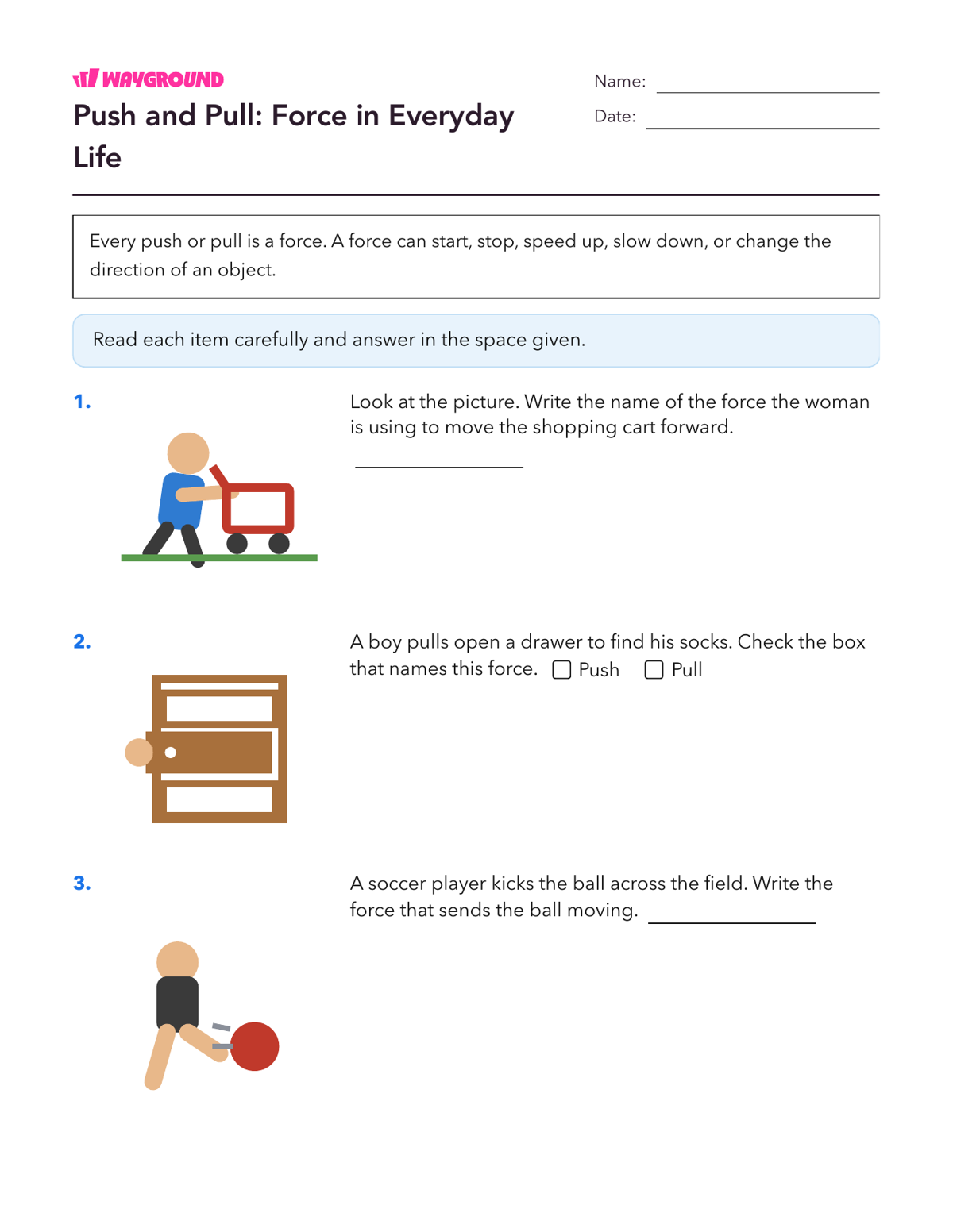
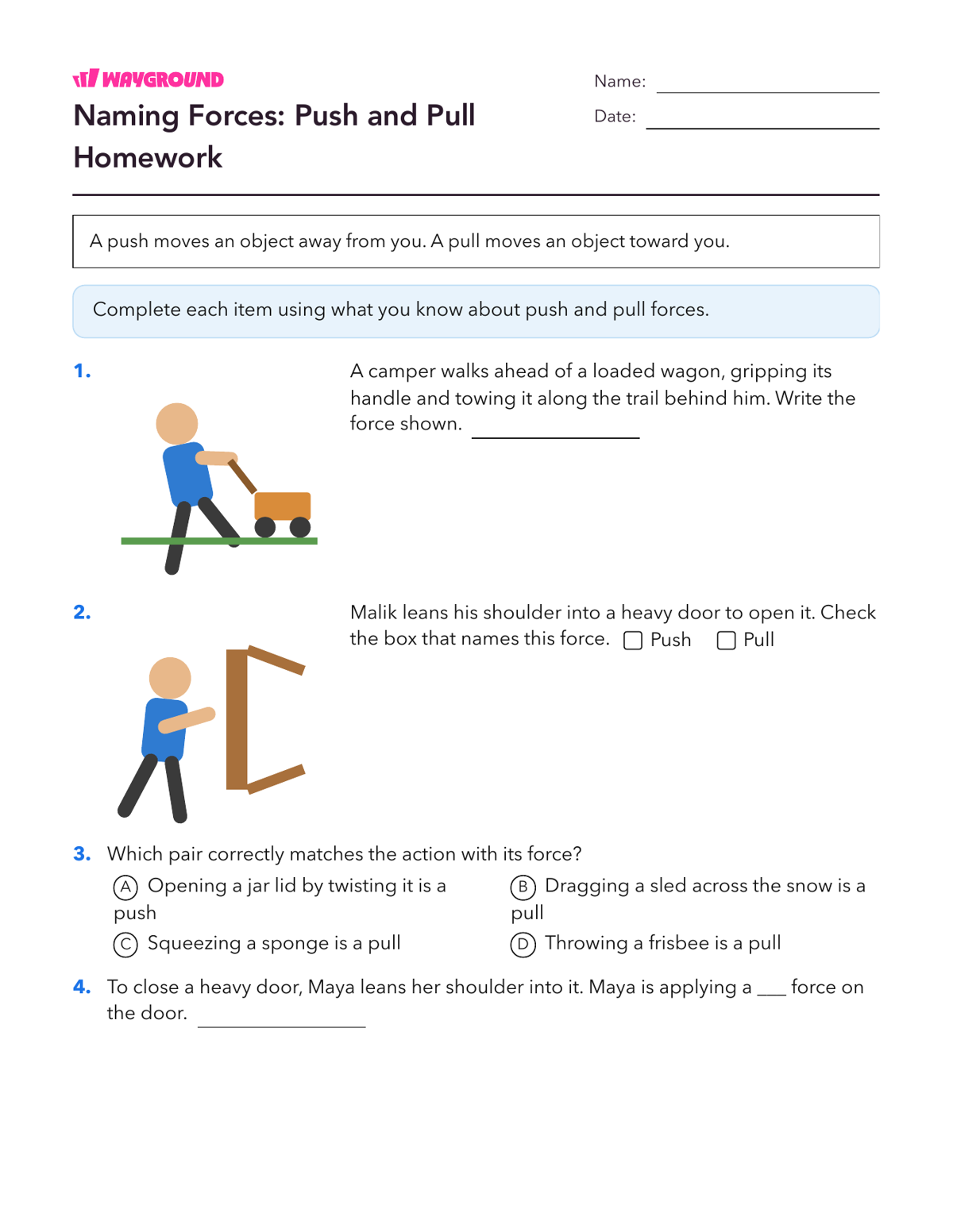
Effective assessment at the introductory level should ask students to identify and label forces in everyday situations rather than immediately solving equations. Look for whether students can correctly distinguish the direction of a push versus a pull, identify the object exerting the force and the object receiving it, and recognize that forces always involve an interaction between two objects. Common errors include describing force as a property of the object rather than as an interaction, which reveals a gap in foundational understanding.