Free Printable Forms of Government Worksheets for Class 11
Explore Class 11 forms of government worksheets and printables that help students analyze different political systems, compare democratic and authoritarian structures, and practice civics concepts with comprehensive answer keys.
Explore printable Forms of Government worksheets for Class 11
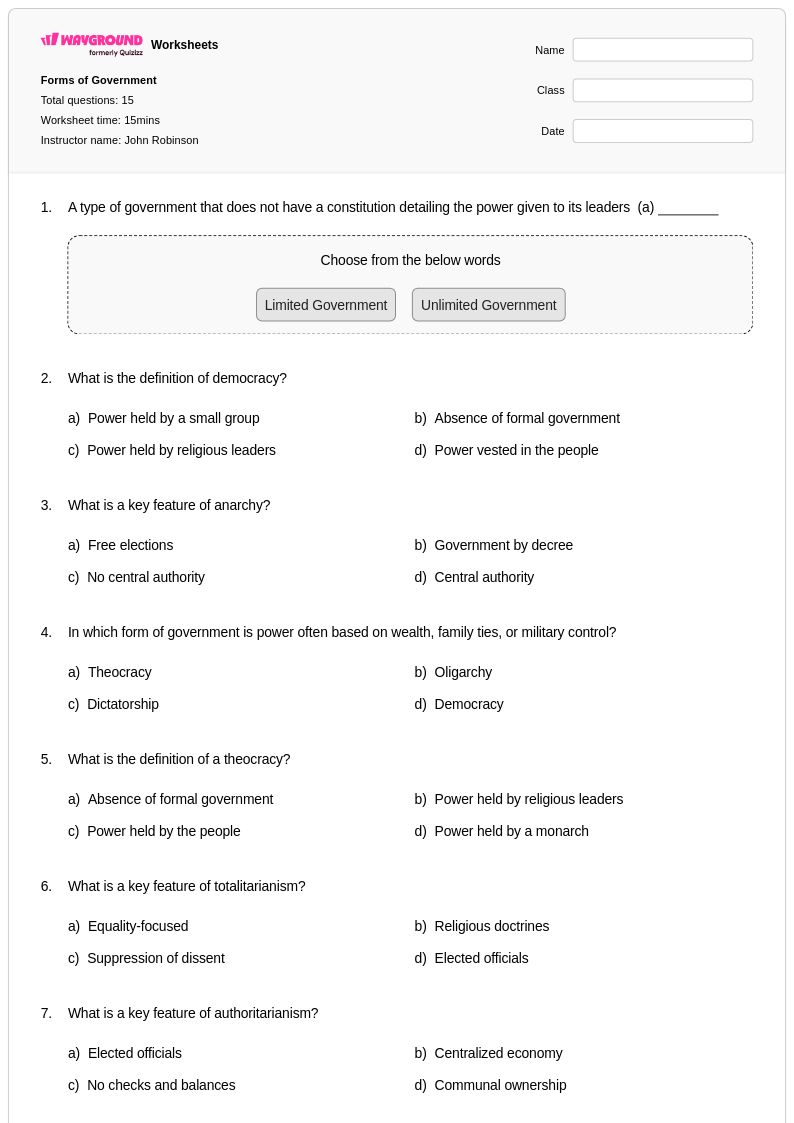
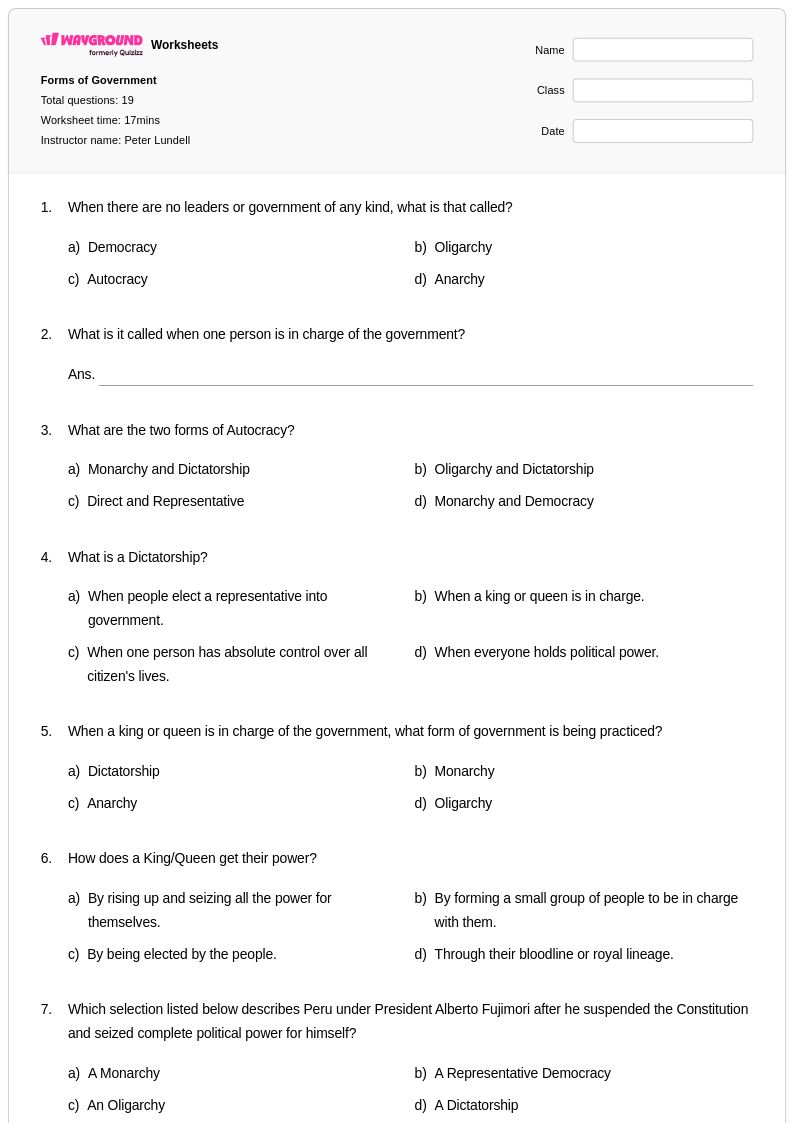
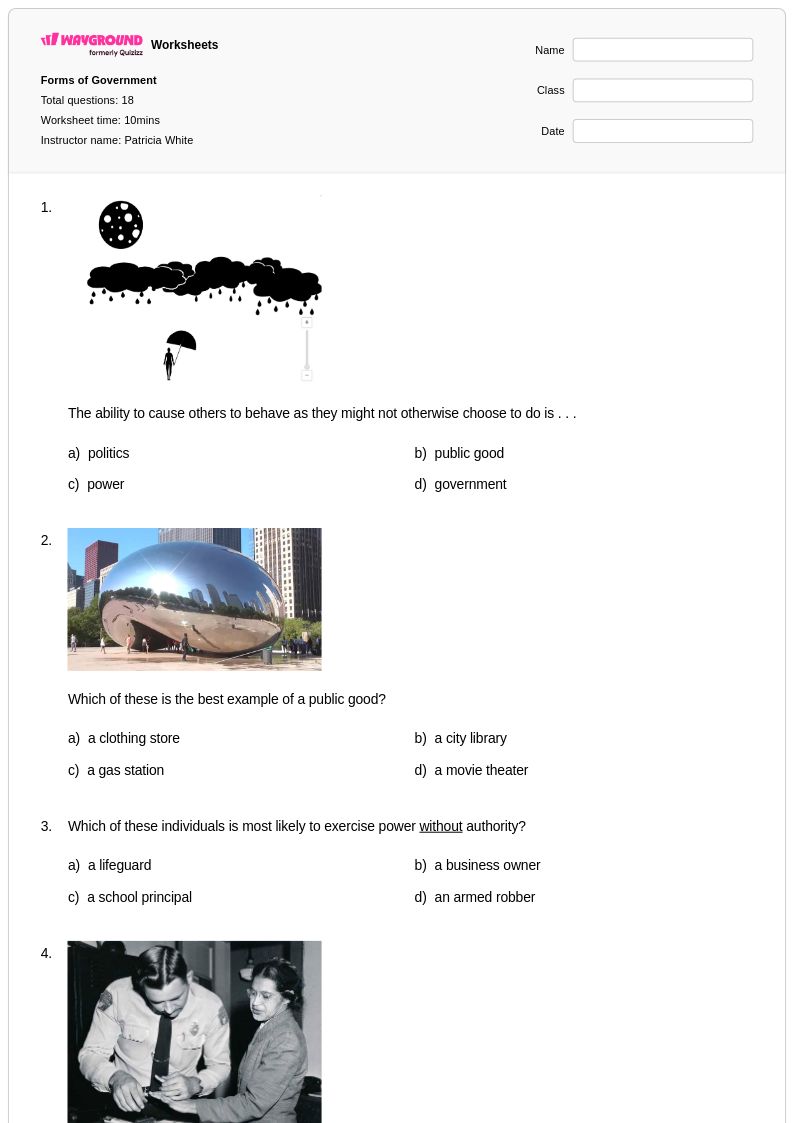
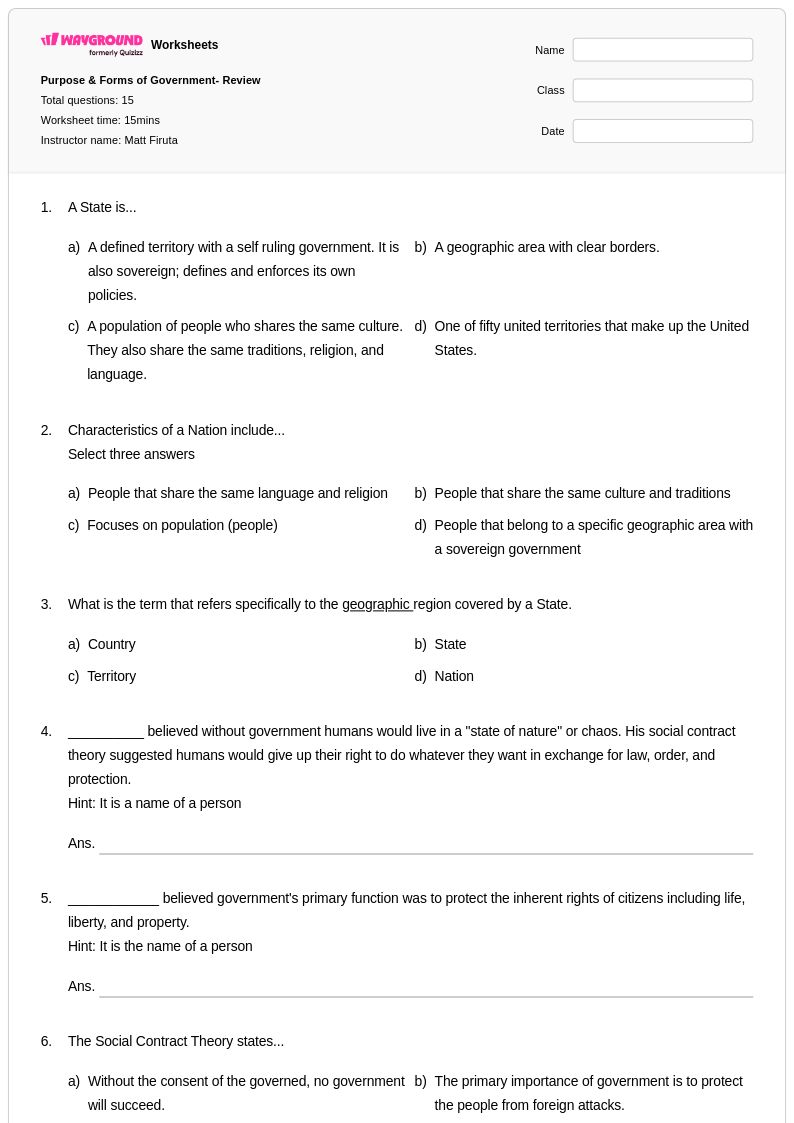
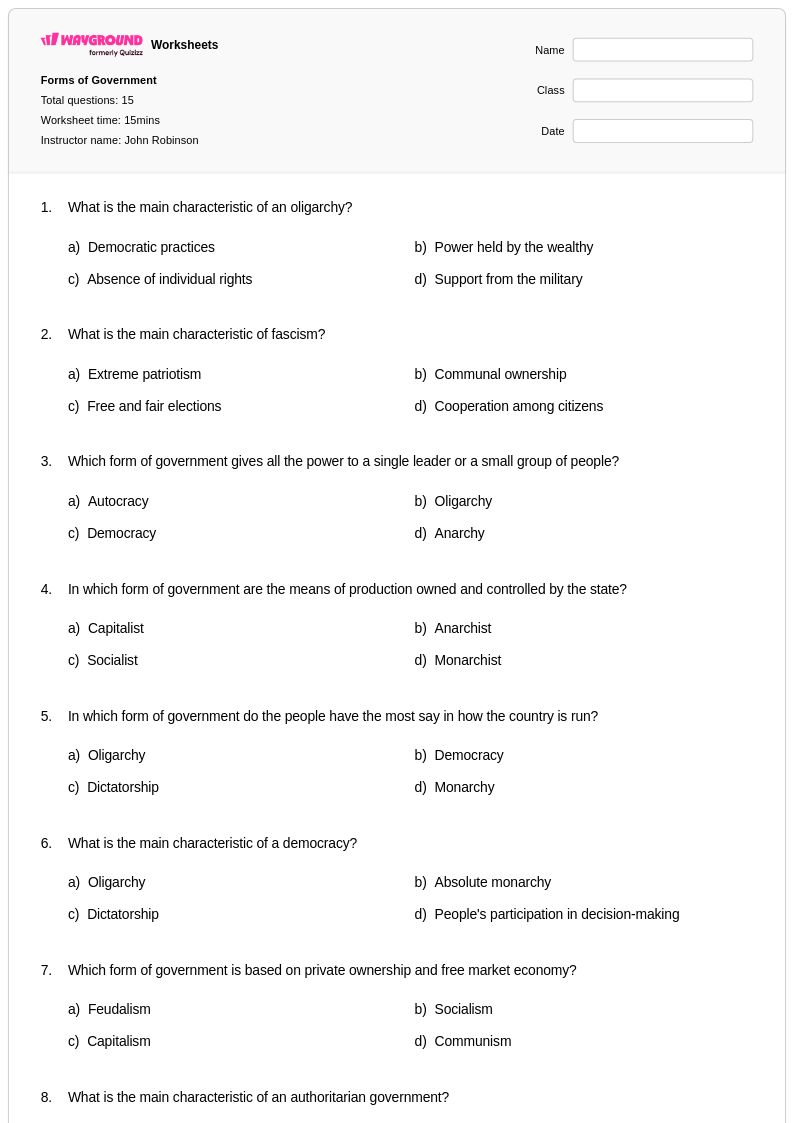
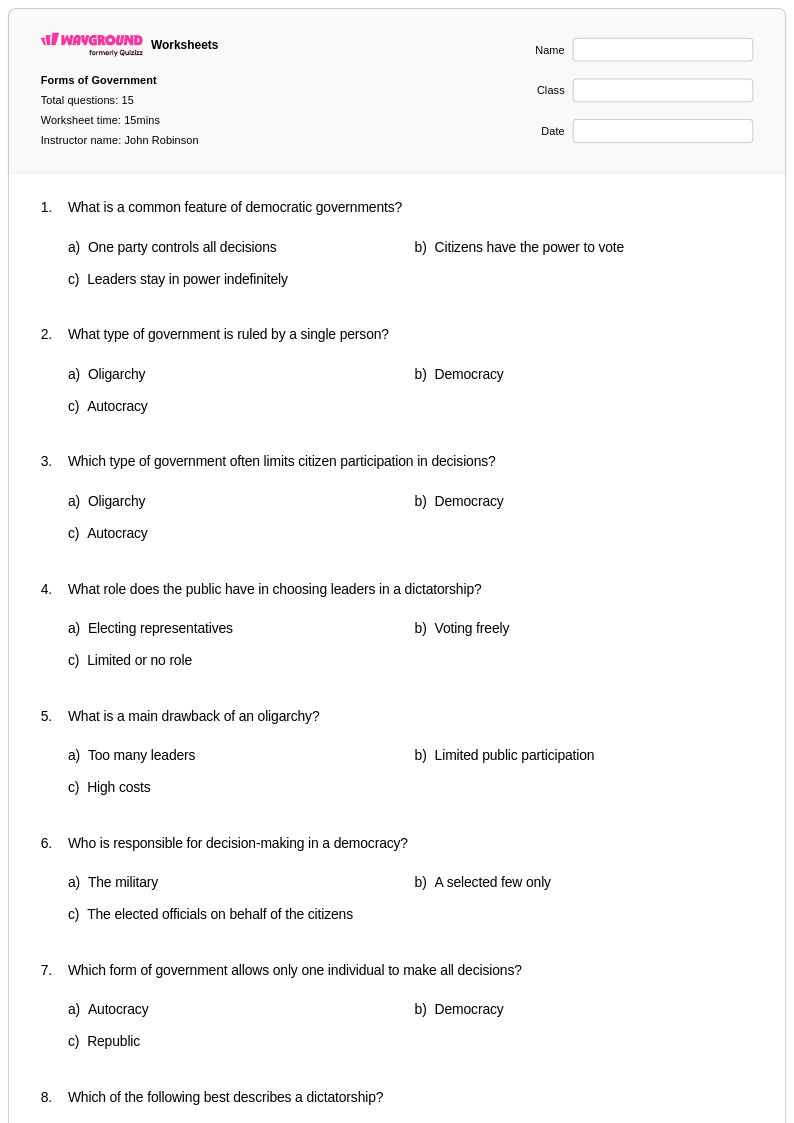
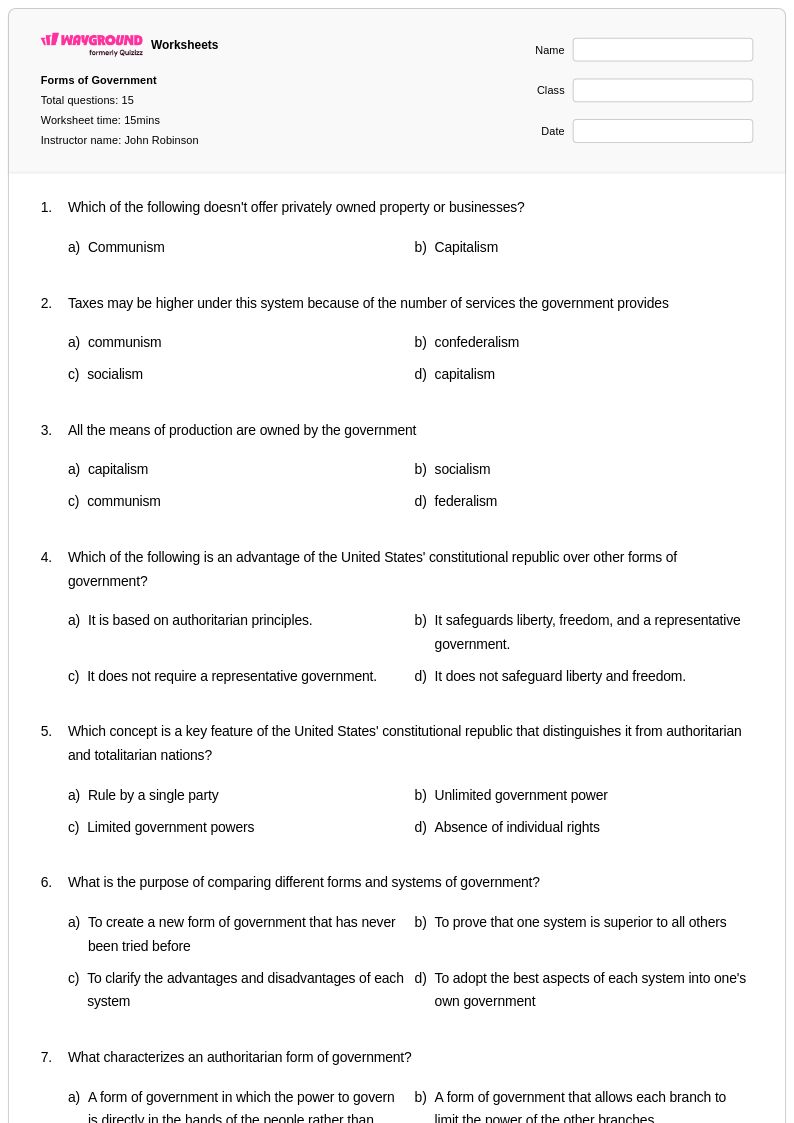
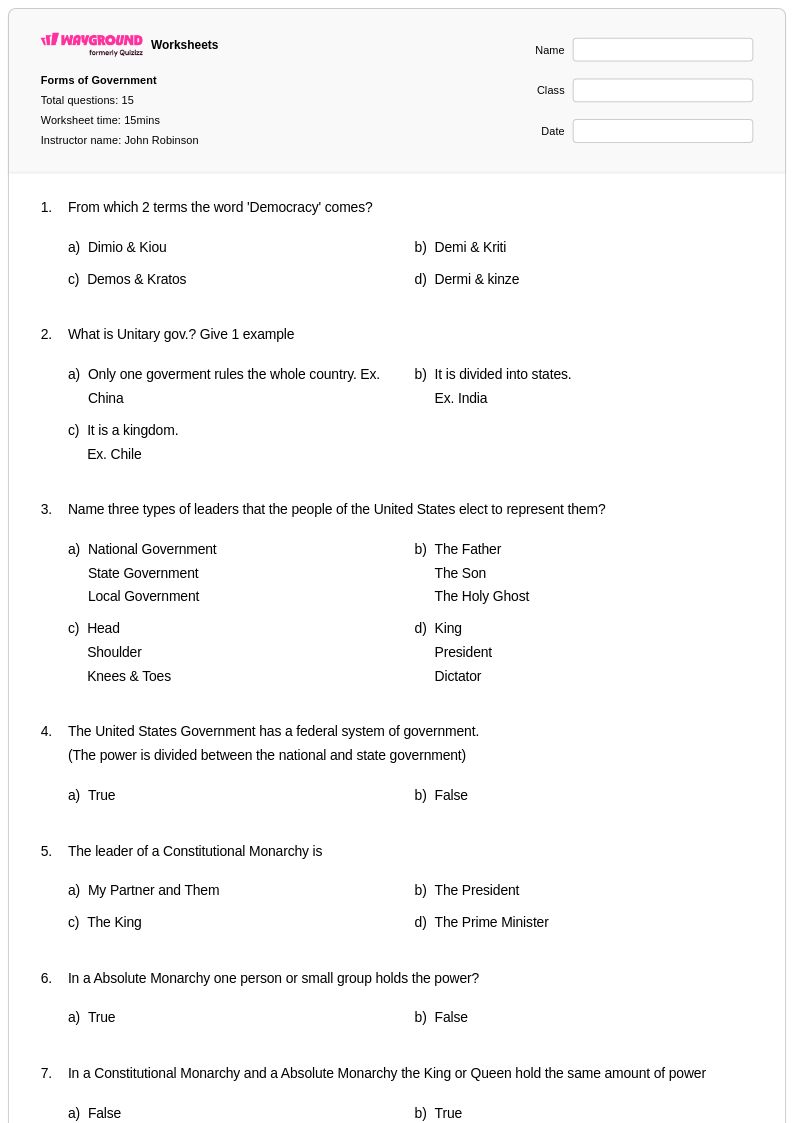
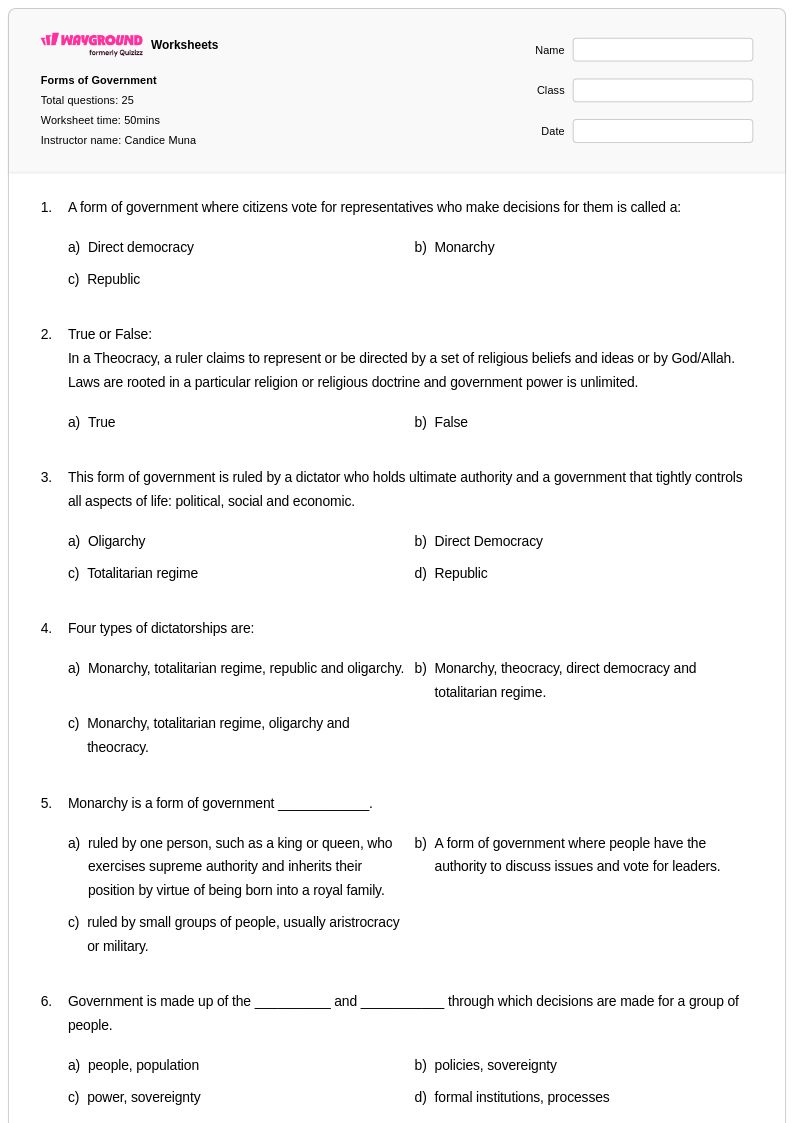
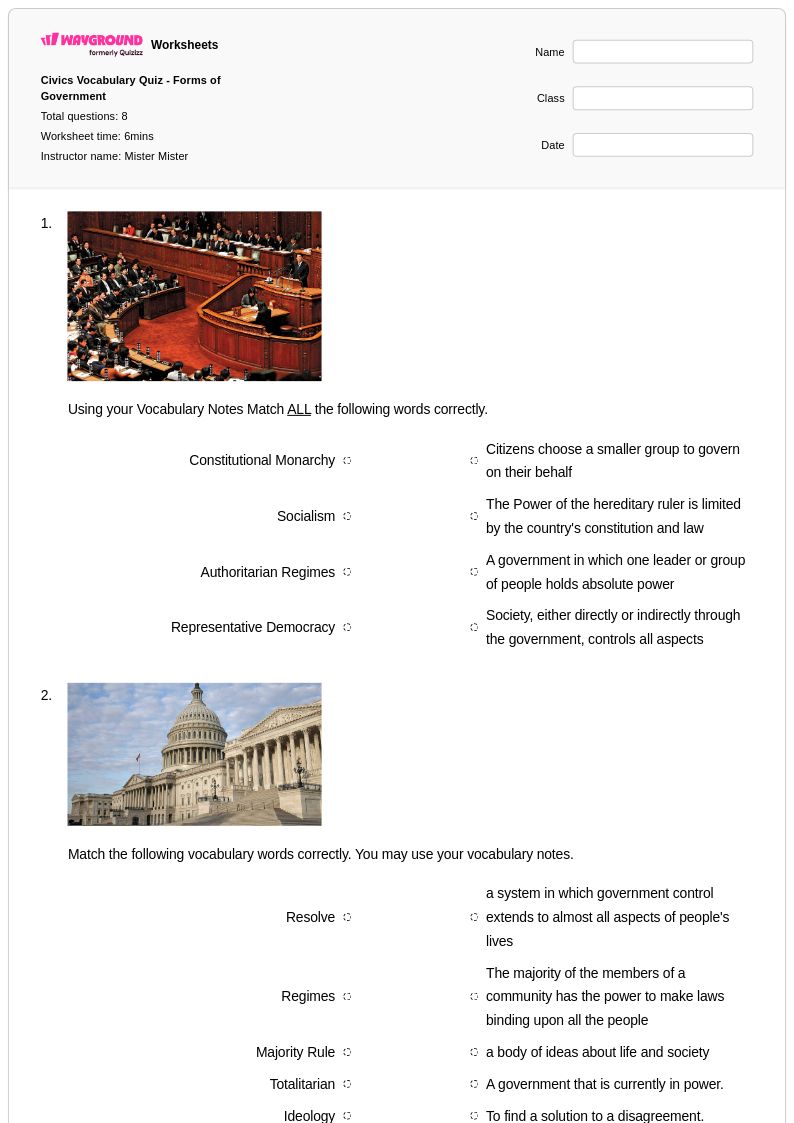
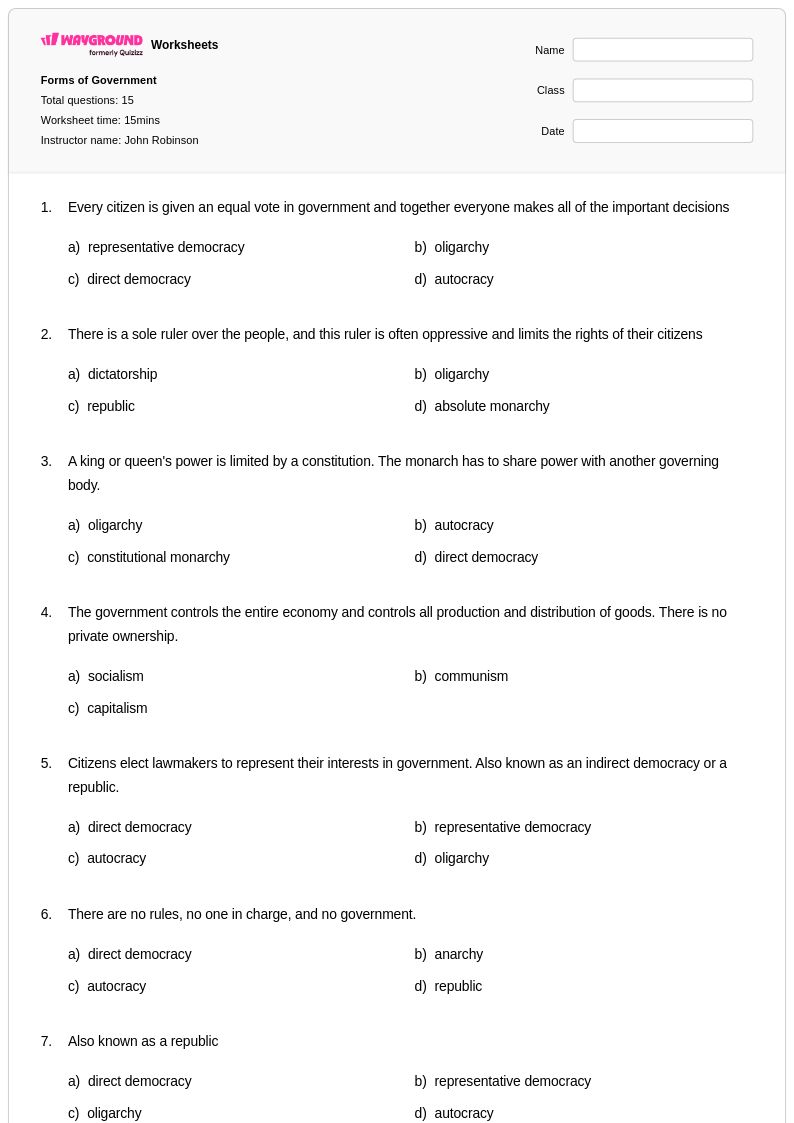
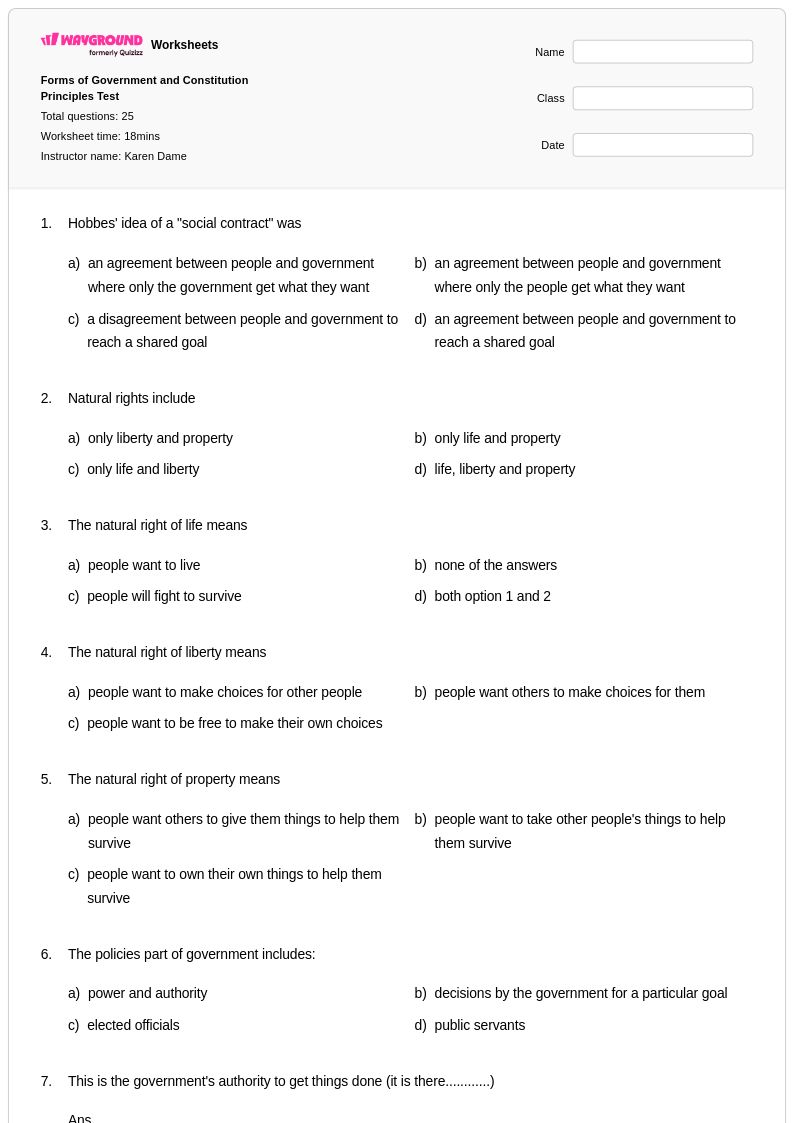
Forms of government worksheets for Class 11 students available through Wayground (formerly Quizizz) provide comprehensive exploration of the diverse political systems that shape nations worldwide. These expertly crafted resources strengthen students' analytical skills by examining democratic, authoritarian, federal, unitary, and hybrid governmental structures through engaging practice problems and critical thinking exercises. Each worksheet collection includes detailed answer keys that support independent learning while reinforcing key concepts such as separation of powers, checks and balances, and the relationship between citizens and their governing institutions. The free printable materials and pdf formats ensure accessible learning opportunities that develop students' ability to compare governmental systems, analyze their effectiveness, and understand how different forms of government impact individual rights and societal organization.
Wayground's extensive collection of millions of teacher-created resources transforms how educators approach forms of government instruction for Class 11 social studies curricula. The platform's sophisticated search and filtering capabilities allow teachers to locate precisely targeted worksheets that align with specific standards while supporting differentiated instruction for diverse learning needs. These flexible customization tools enable educators to modify content for remediation or enrichment purposes, ensuring that struggling students receive foundational support while advanced learners encounter challenging analytical tasks. Available in both printable and digital formats including pdf downloads, these resources streamline lesson planning by providing ready-to-use materials that can be seamlessly integrated into classroom instruction, homework assignments, or independent study programs focused on developing deep understanding of governmental structures and their real-world applications.
FAQs
How do I teach different forms of government to students?
Start by establishing clear definitions for each system — democracy, monarchy, republic, authoritarian, federal, and unitary — before moving into comparative analysis. Use structured activities that ask students to examine how power is distributed, who makes decisions, and what role citizens play in each system. Connecting these structures to real-world examples and current events helps students move beyond memorization toward genuine civic understanding.
What exercises help students practice comparing forms of government?
Comparative analysis charts, constitutional interpretation activities, and real-world case studies are among the most effective practice formats for this topic. These exercises push students to evaluate governmental frameworks side by side rather than studying each in isolation, which builds the critical thinking skills needed for civic reasoning. Worksheets that require students to classify systems by characteristics — such as how power is distributed or how leaders are chosen — reinforce conceptual distinctions in a concrete, repeatable way.
What mistakes do students commonly make when learning about forms of government?
A common misconception is conflating related but distinct concepts, such as treating 'democracy' and 'republic' as synonyms or confusing 'federal' with 'democratic.' Students also tend to oversimplify authoritarian systems by assuming they are all identical, when in practice they vary significantly in structure and ideology. Another frequent error is failing to distinguish between parliamentary and presidential systems, particularly in terms of how the executive is selected and held accountable.
How can I use forms of government worksheets to support students at different skill levels?
Worksheets that include comparative analysis exercises can be scaffolded by adjusting the complexity of the systems being compared or the depth of analysis required. On Wayground, teachers can apply accommodations at the individual student level, including reduced answer choices to lower cognitive load for struggling learners and read-aloud support for students who need it. These settings are saved and reusable, so differentiation doesn't require rebuilding from scratch each session.
How do I use Wayground's forms of government worksheets in my classroom?
Wayground's forms of government worksheets are available as printable PDFs for traditional classroom use and in digital formats for technology-integrated or remote learning environments. Teachers can also host these worksheets as a quiz directly on Wayground, making them suitable for whole-class instruction, independent practice, or targeted remediation. The included answer keys make grading straightforward and allow students to self-check their work.
At what grade level should forms of government be taught?
Forms of government are typically introduced in middle school civics or social studies courses and revisited with greater depth in high school government and AP Government classes. The complexity of the content — comparing parliamentary versus presidential systems or analyzing federal versus unitary structures — scales well across grade levels depending on the framing. Teachers at both levels can use structured worksheets to build foundational vocabulary first, then layer in comparative and analytical tasks.