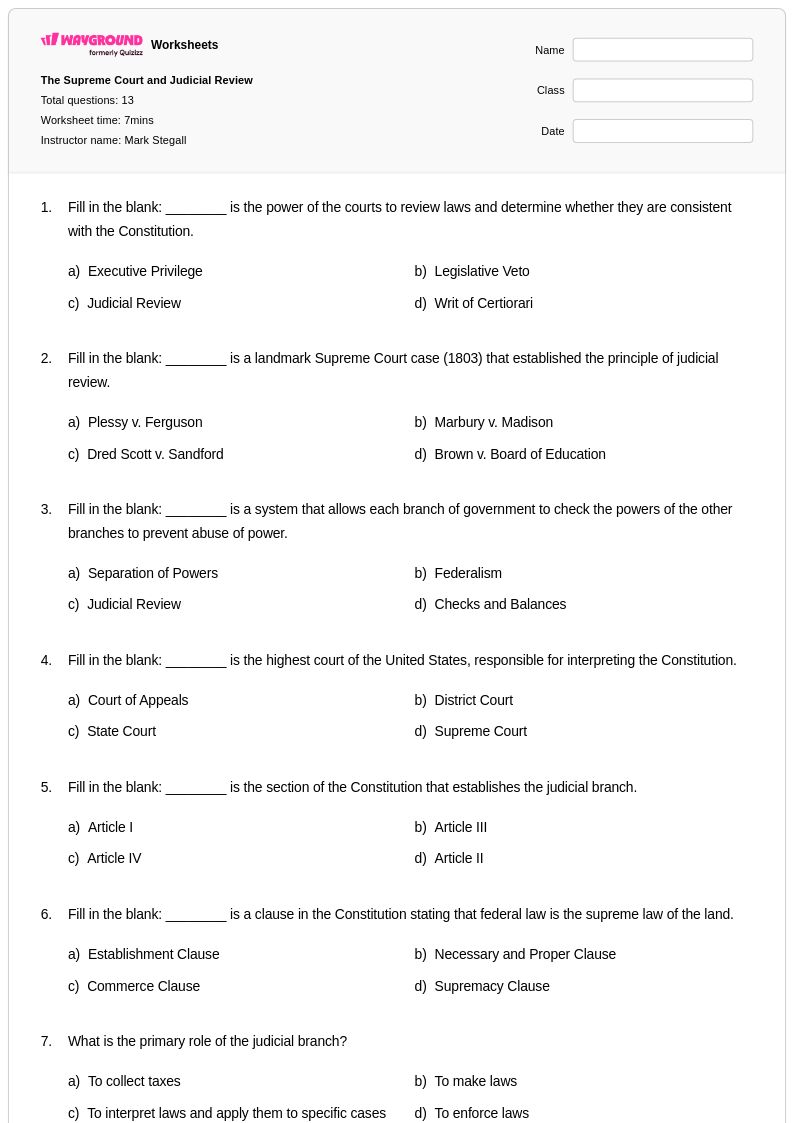
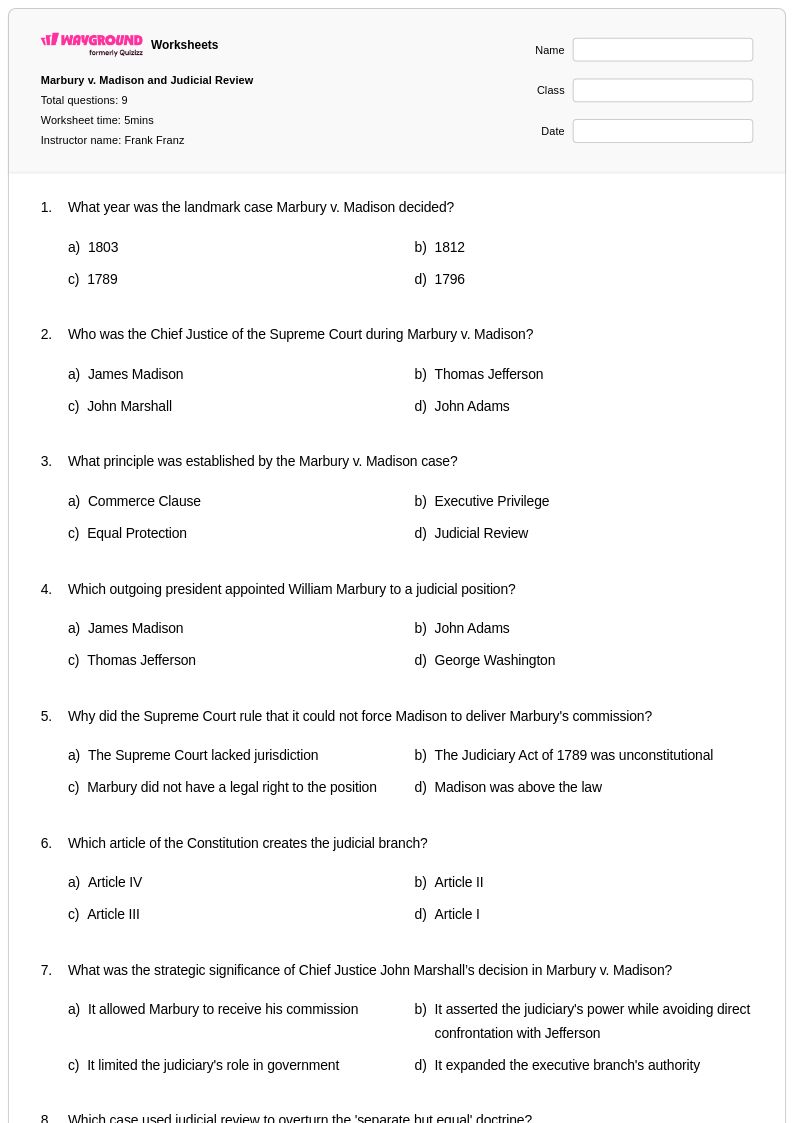
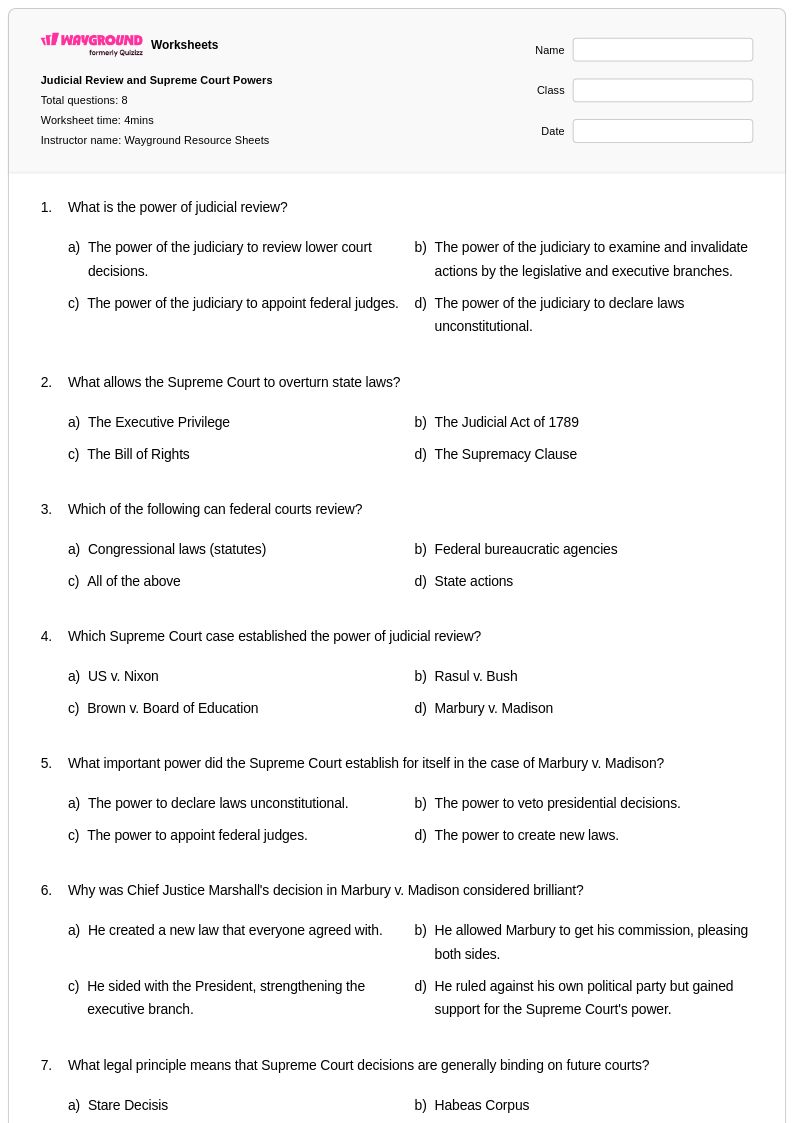
Free Printable Judicial Review Worksheets for Class 11
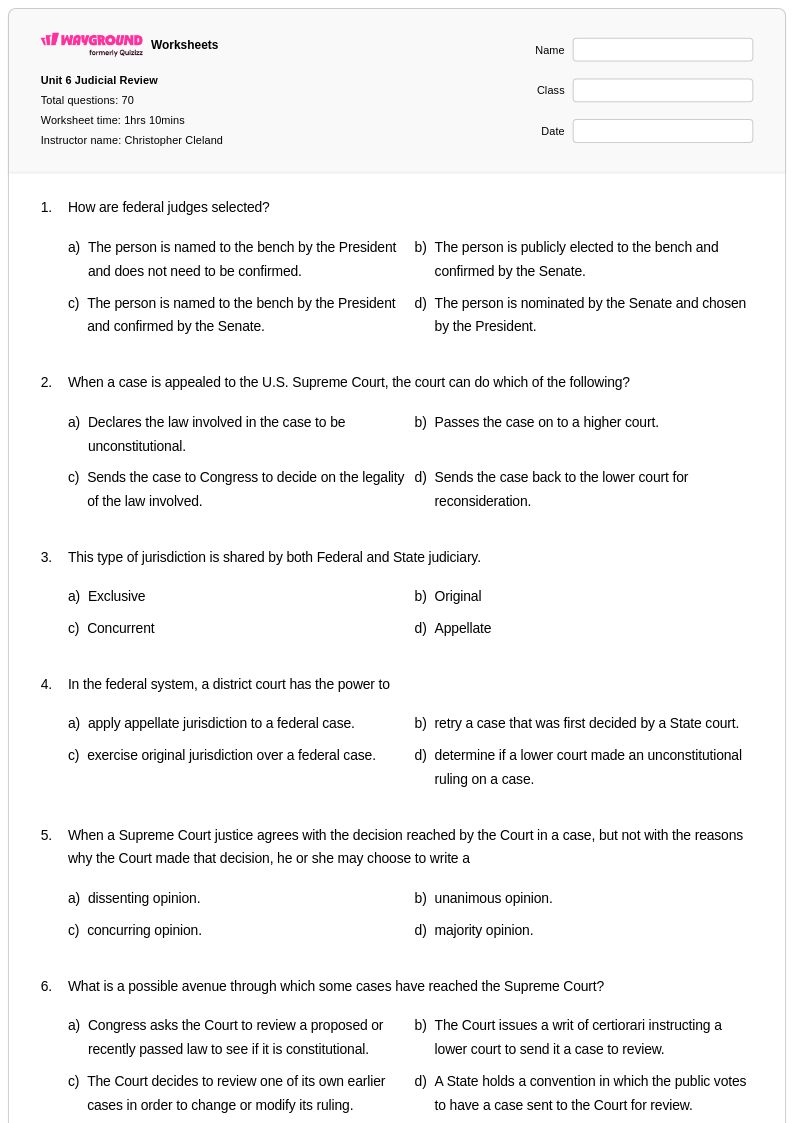
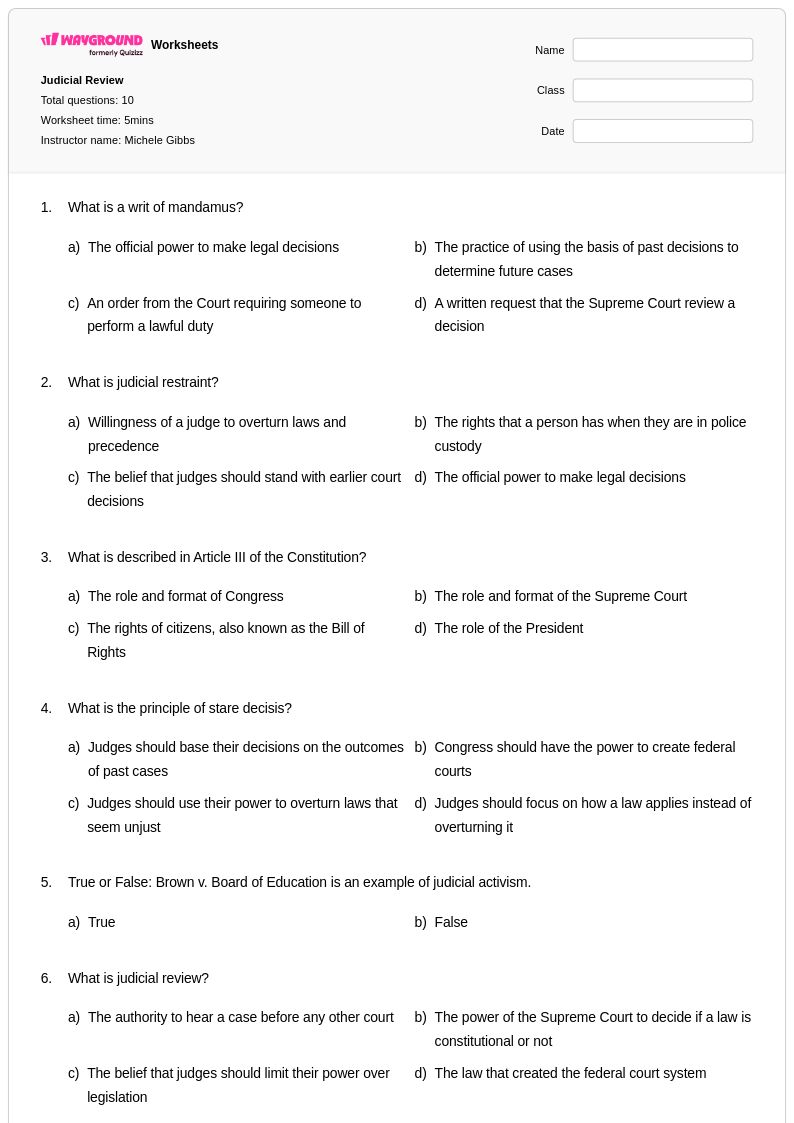
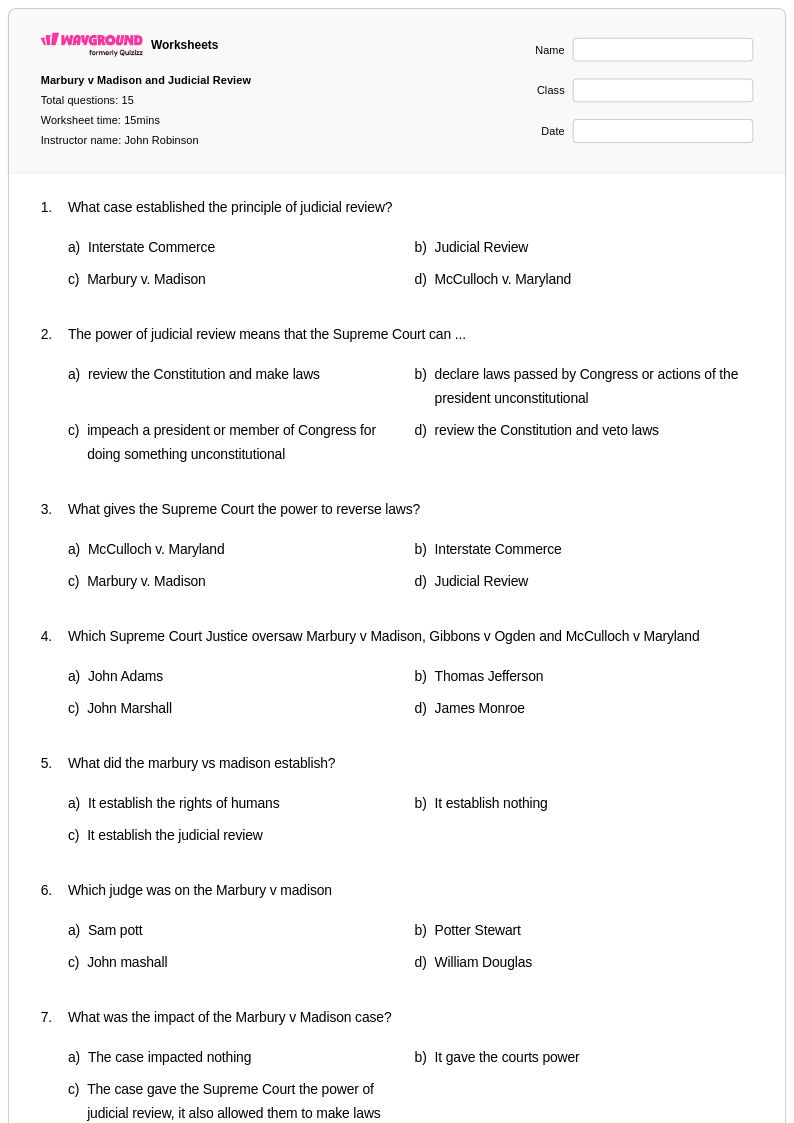
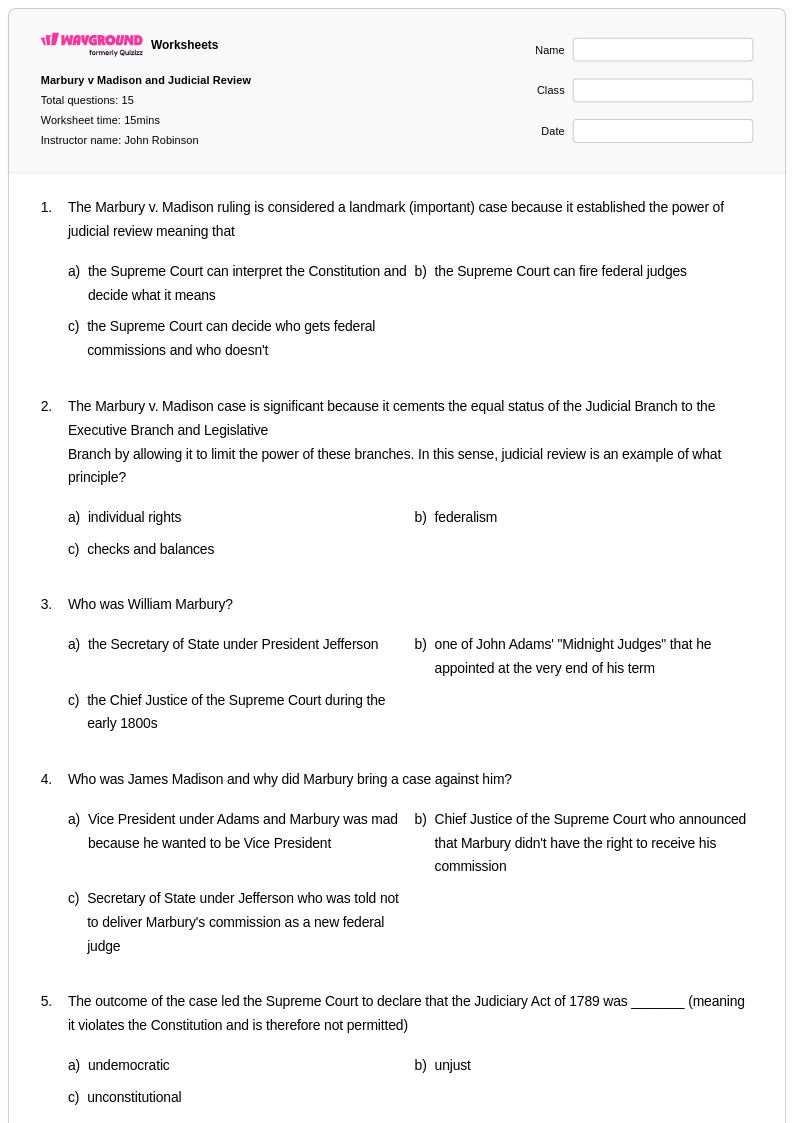
Explore Wayground's free Class 11 judicial review worksheets and printables that help students master the principles of constitutional law, court authority, and the checks and balances system through engaging practice problems with comprehensive answer keys.
Explore printable Judicial Review worksheets for Class 11
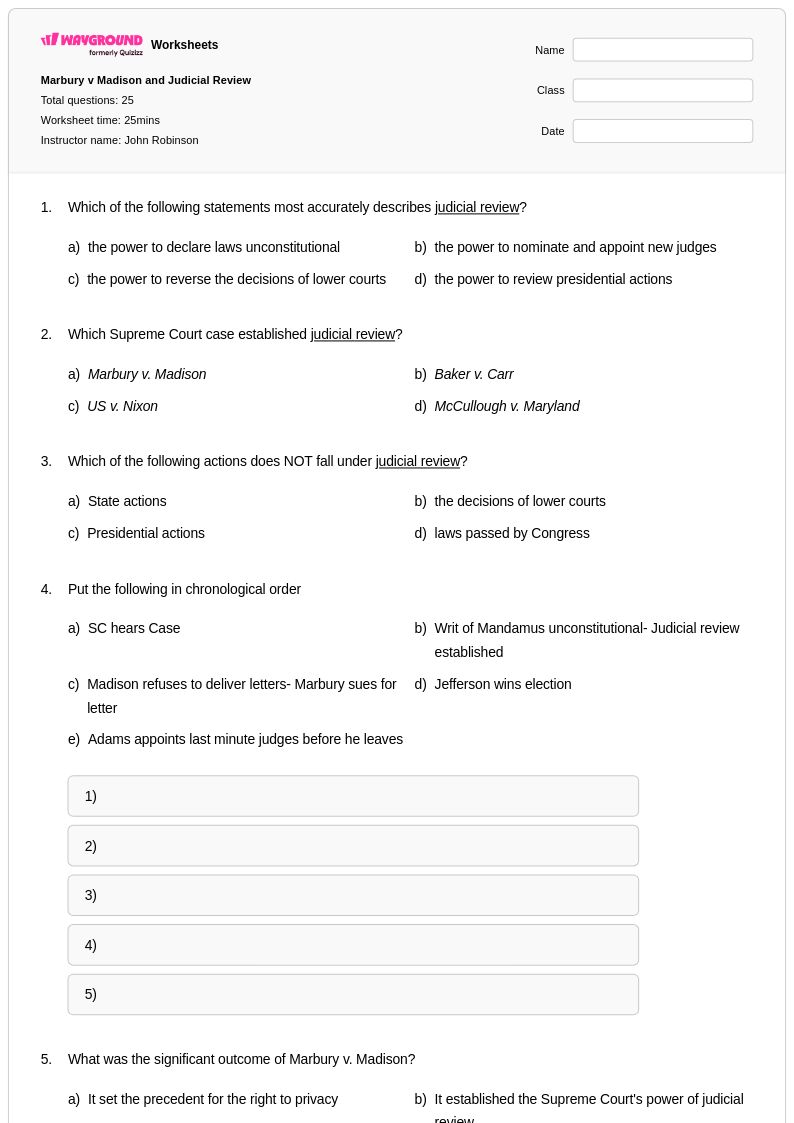
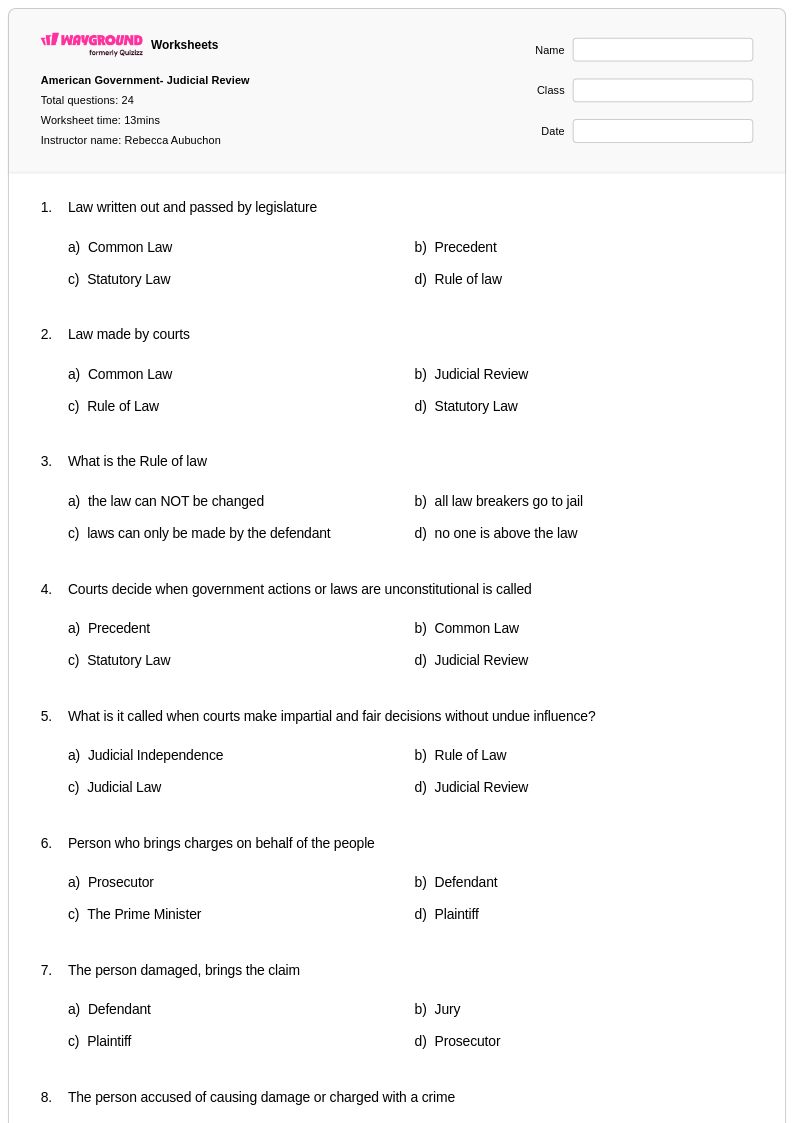
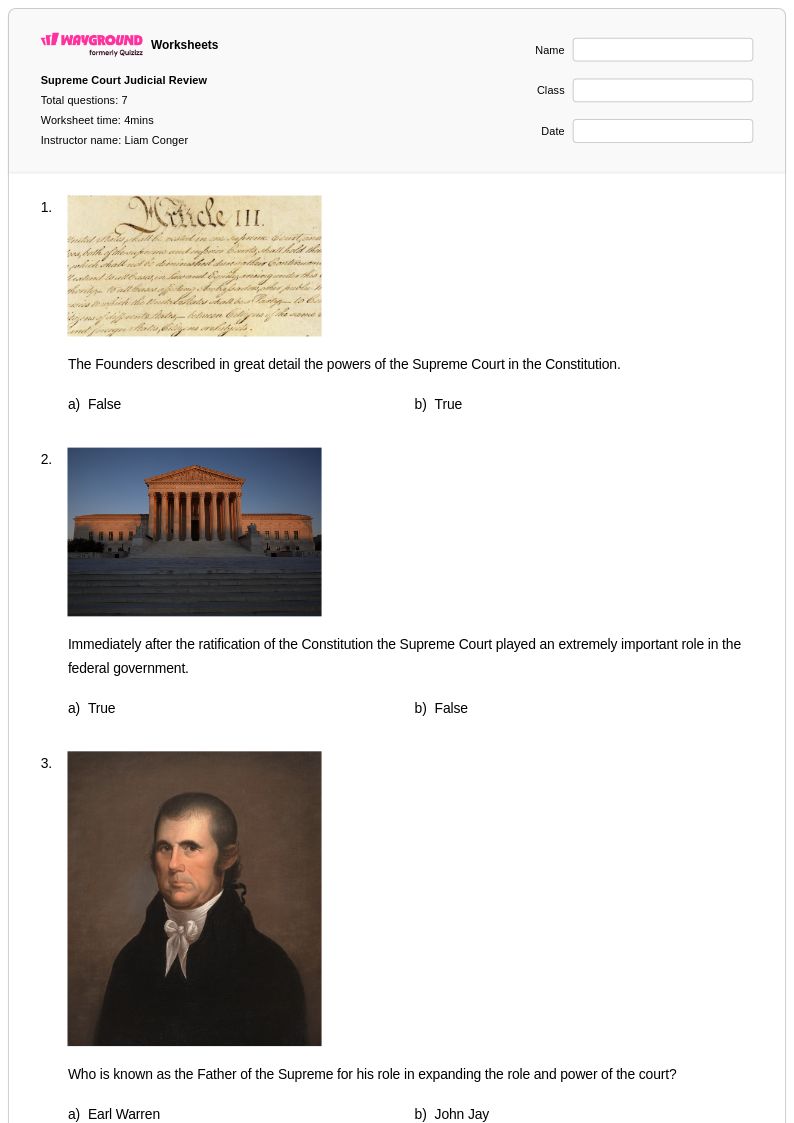
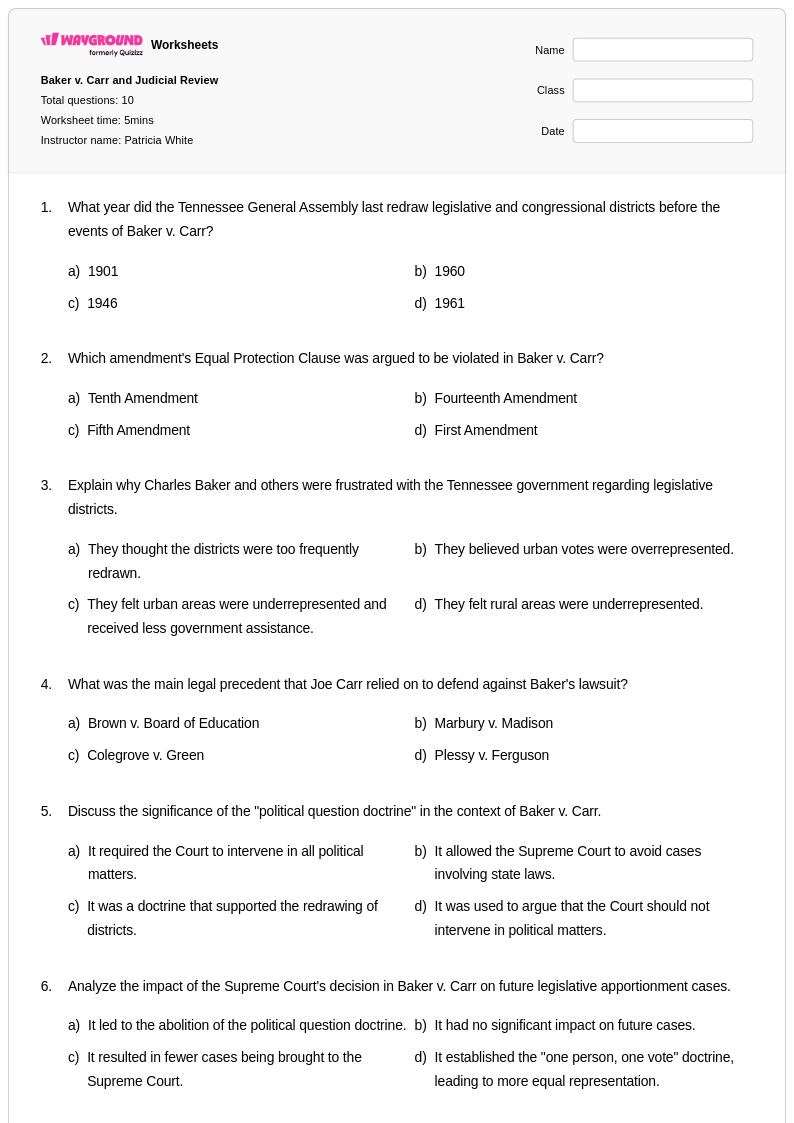
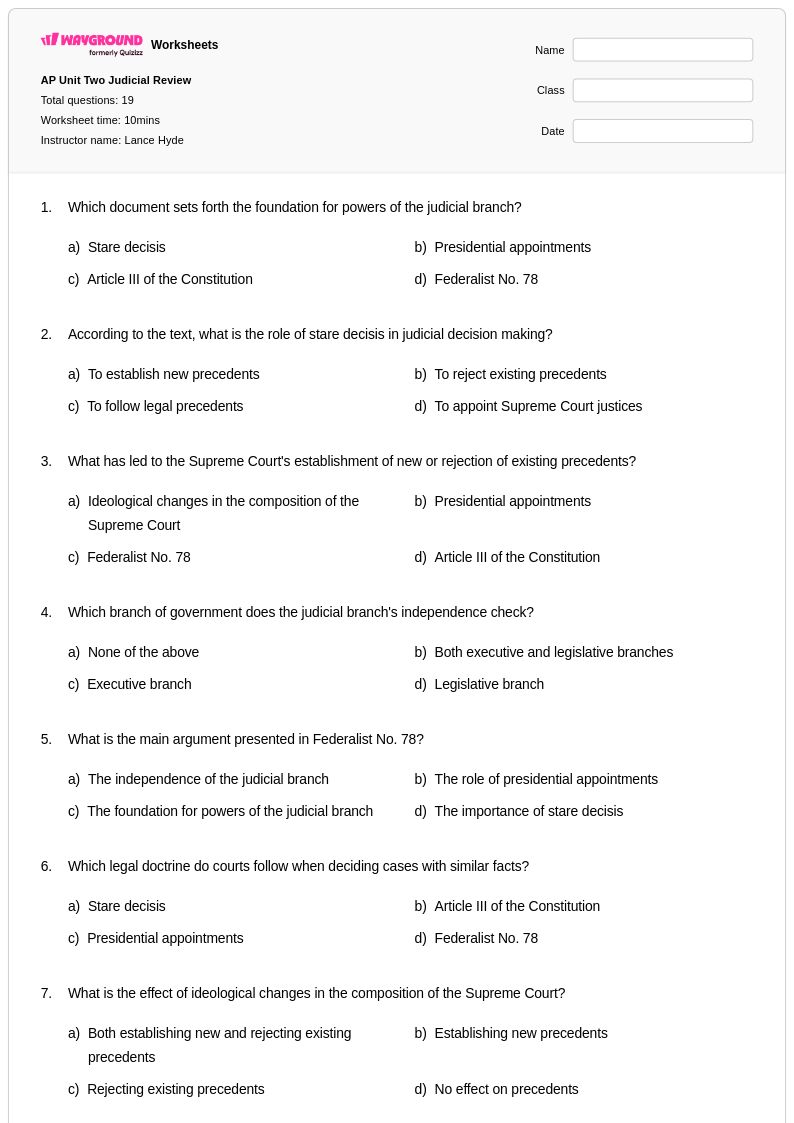
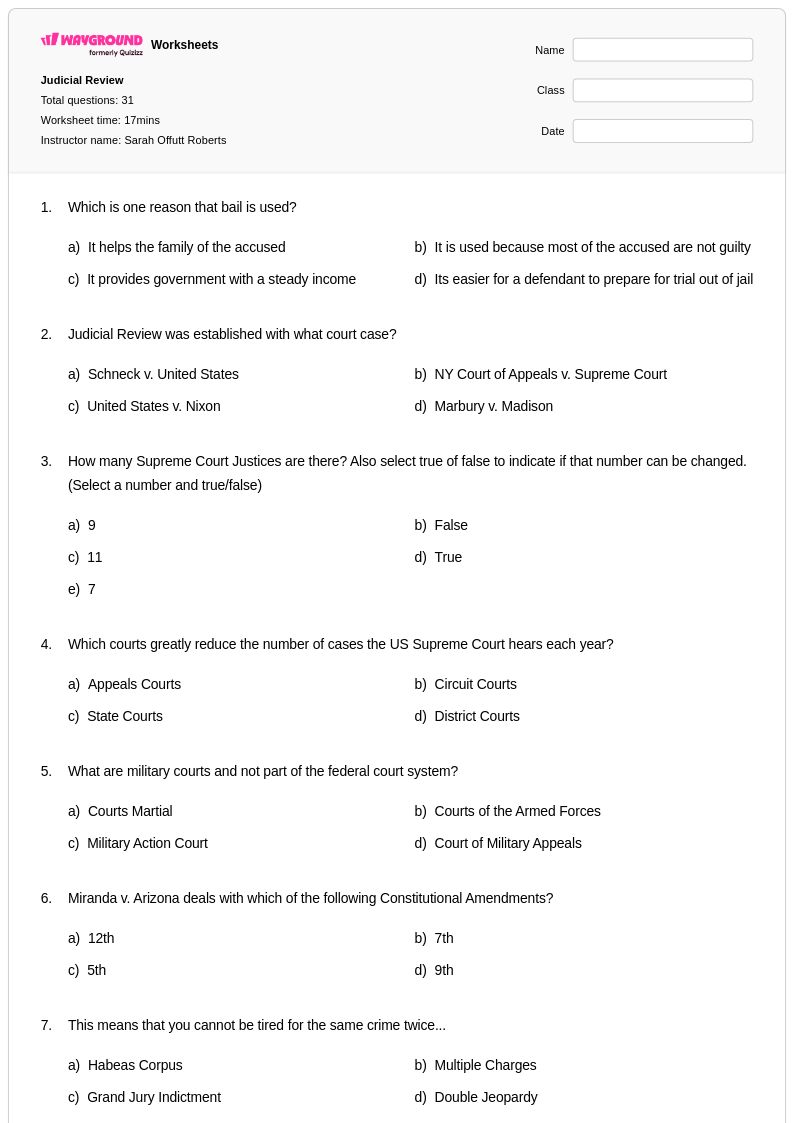
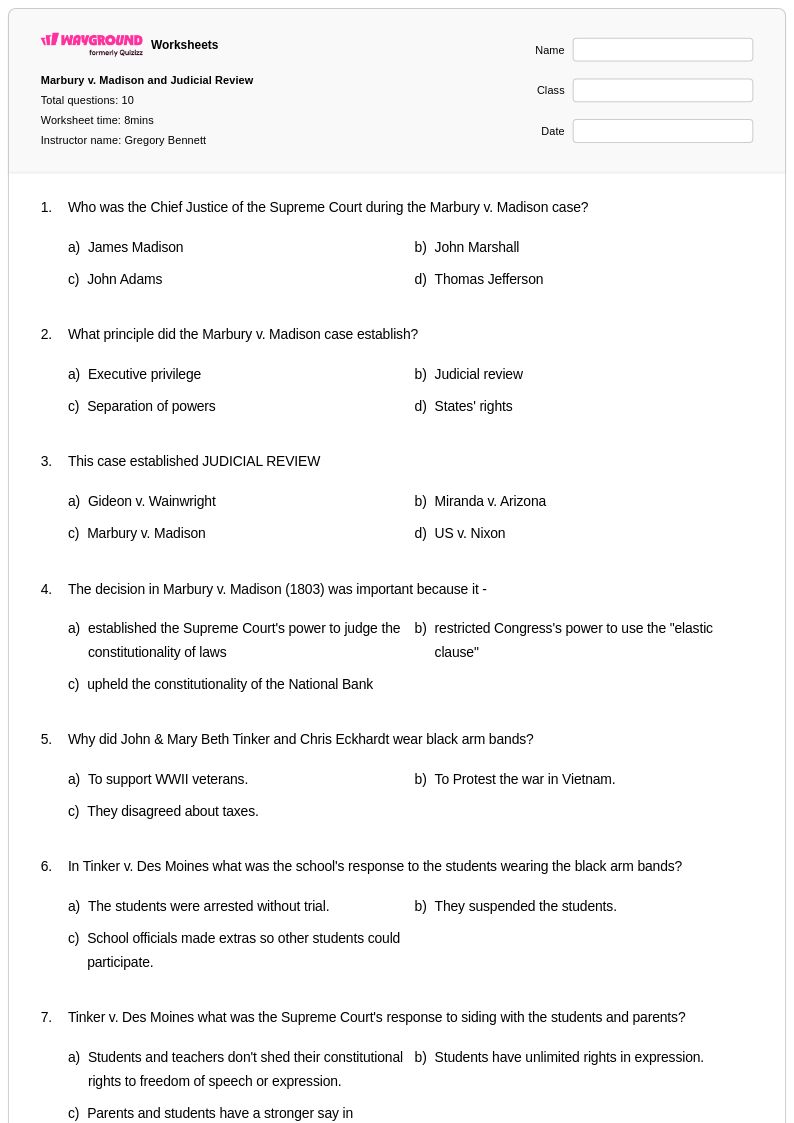
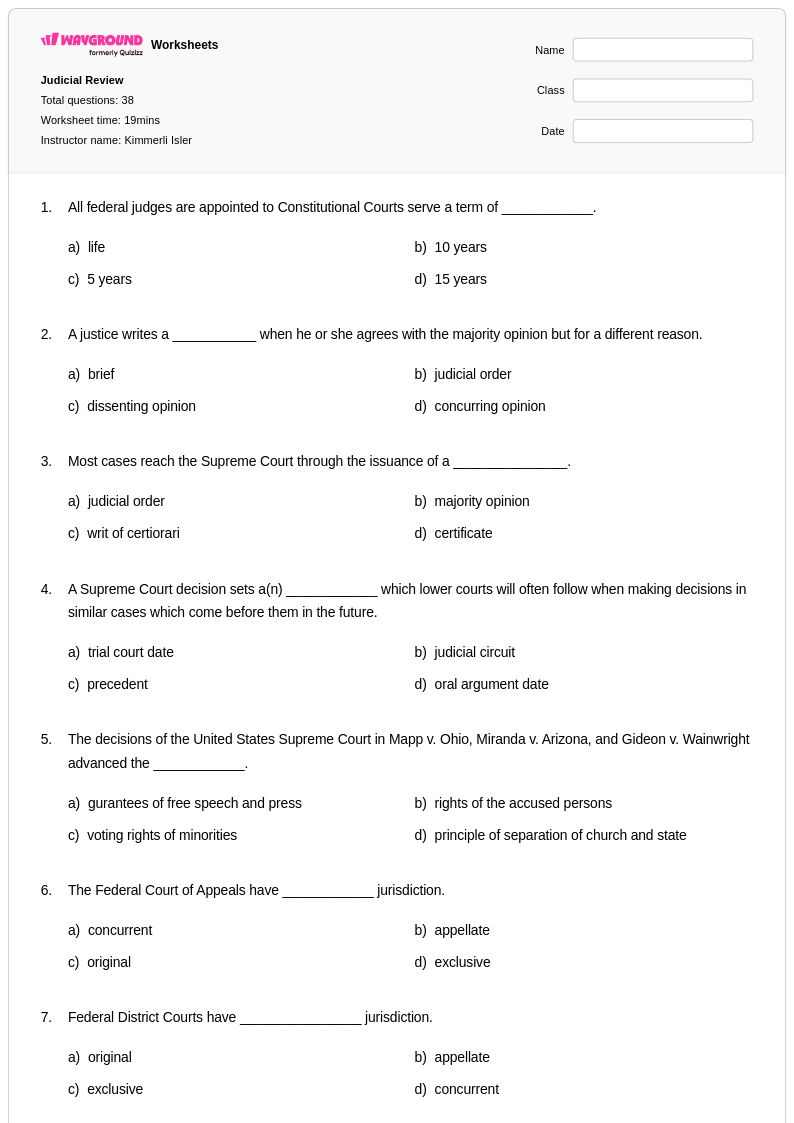
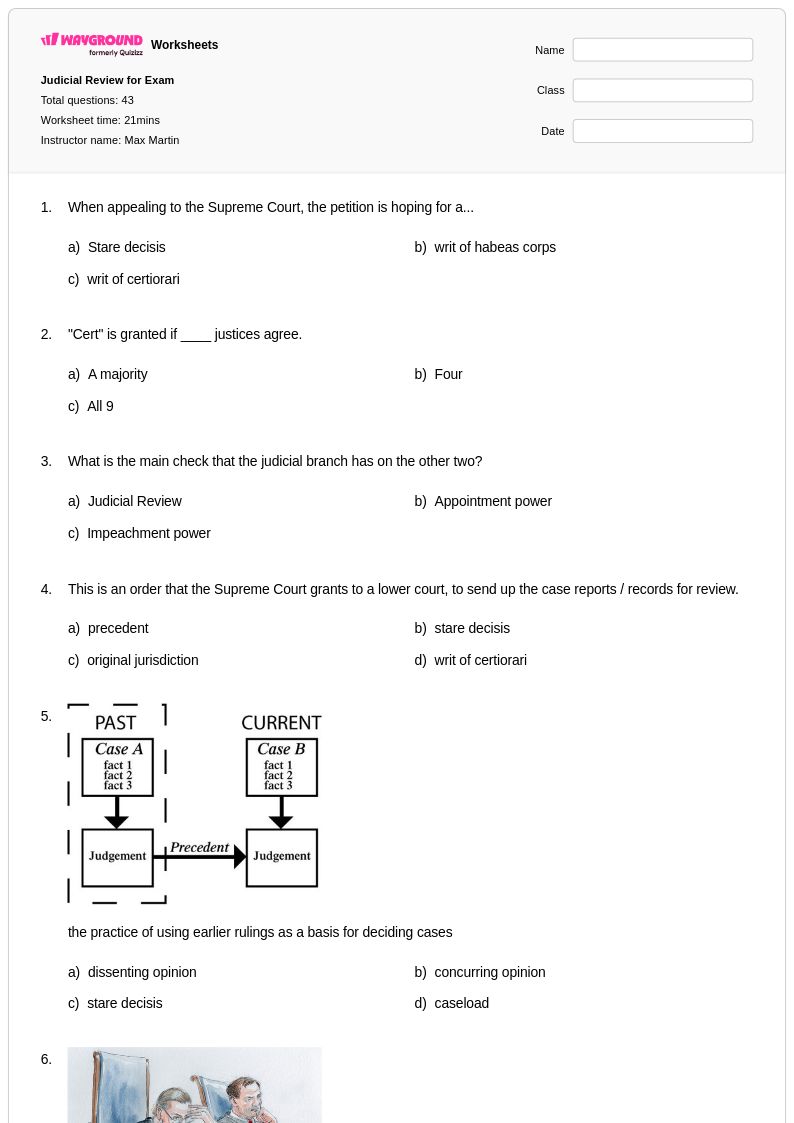
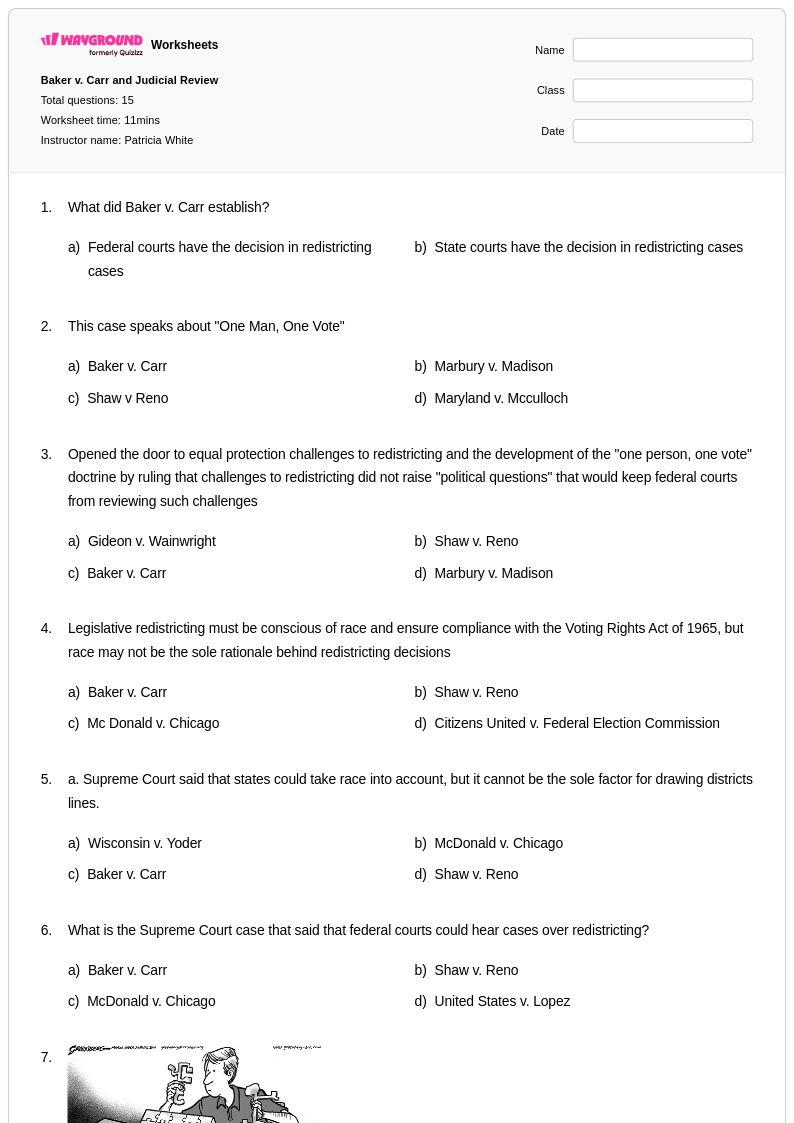
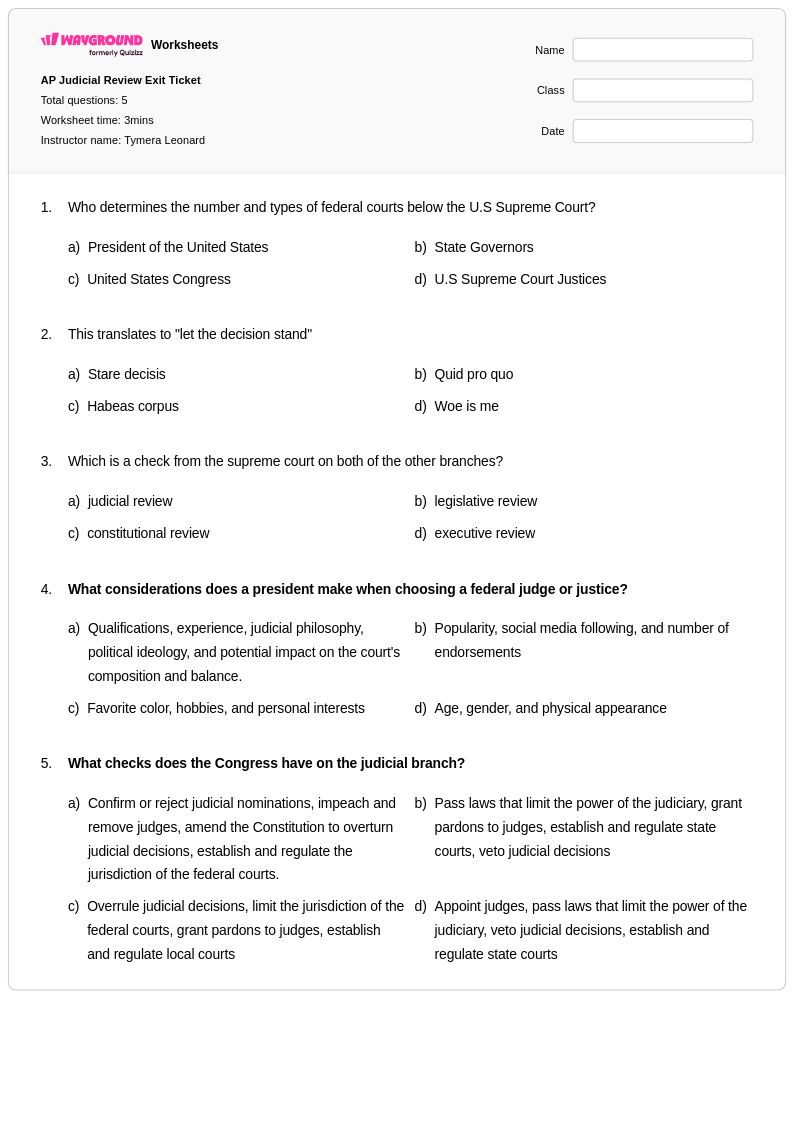
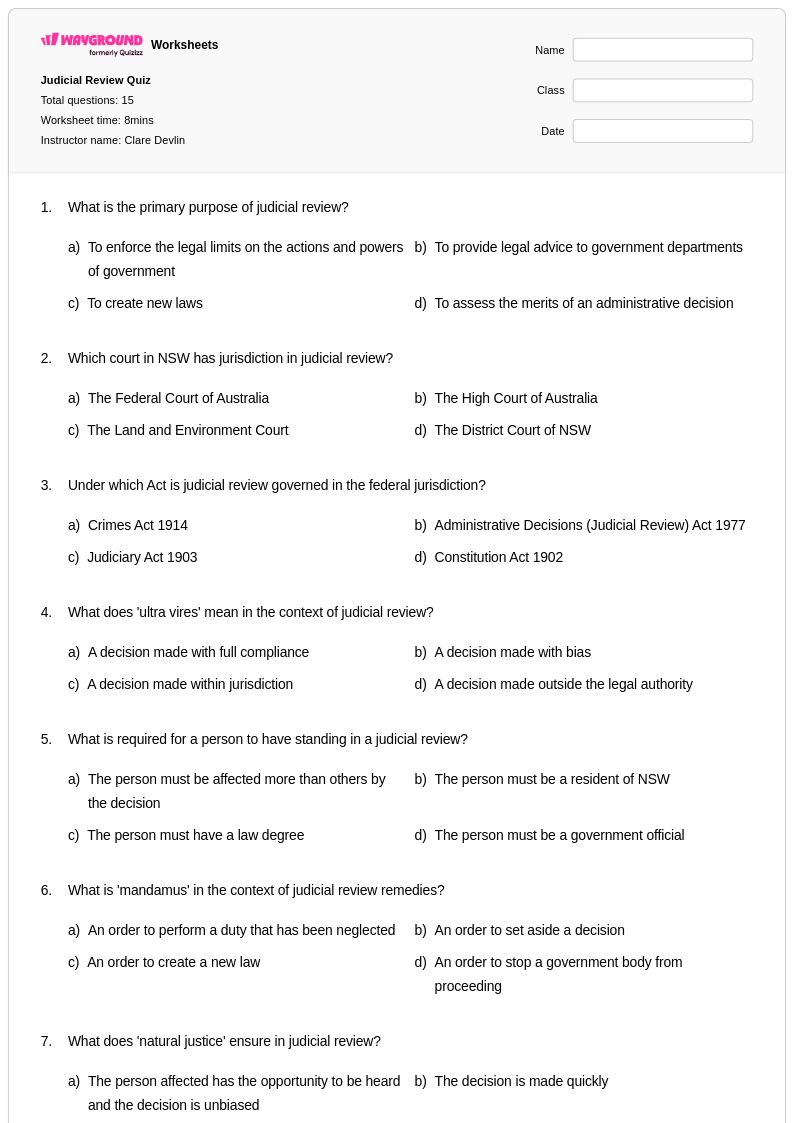
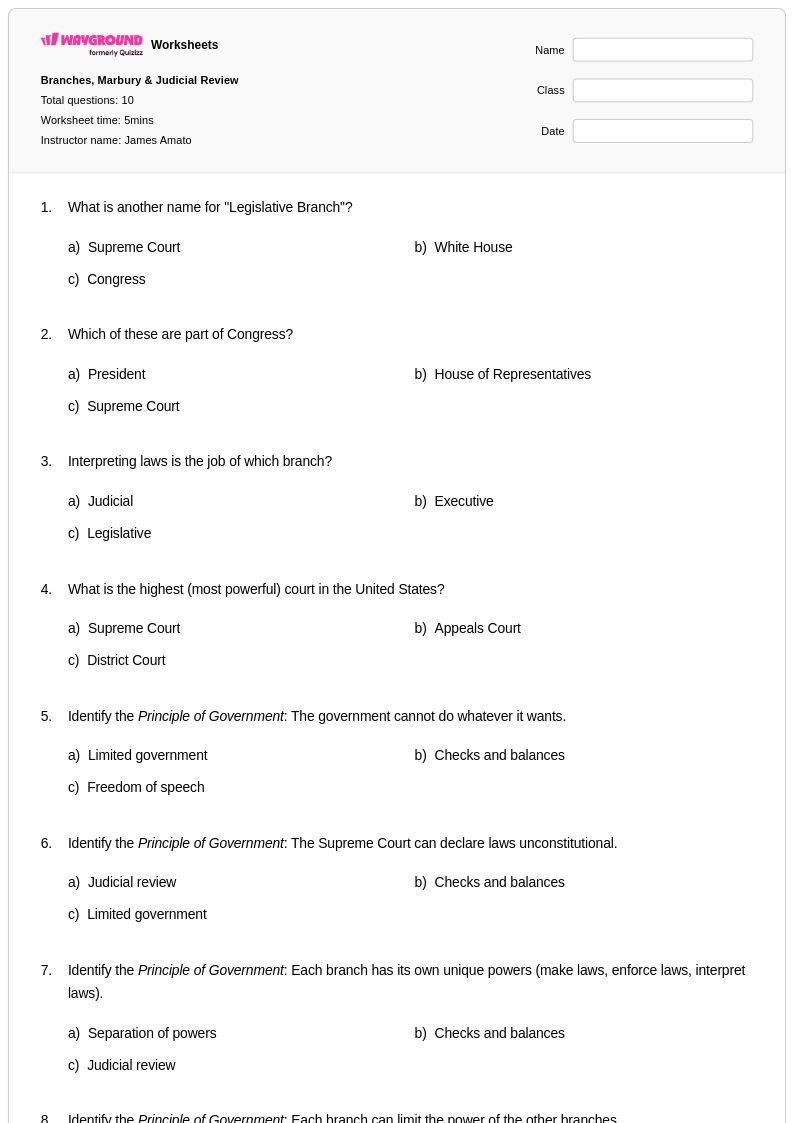
Judicial review worksheets for Class 11 students through Wayground (formerly Quizizz) provide comprehensive practice in understanding this fundamental principle of constitutional law and the separation of powers. These educational resources help students master critical concepts including the Supreme Court's authority to interpret the Constitution, landmark cases that established and expanded judicial review powers, and the ongoing tension between judicial interpretation and democratic governance. The worksheets strengthen analytical skills through examination of primary source documents, case study analysis, and constitutional interpretation exercises, with complete answer key materials and free printable pdf options supporting independent study and classroom assessment of student understanding.
Wayground (formerly Quizizz) empowers educators with access to millions of teacher-created judicial review resources that align with state civics standards and Class 11 learning objectives. The platform's advanced search and filtering capabilities allow teachers to locate materials targeting specific aspects of judicial review, from Marbury v. Madison to contemporary constitutional debates, while differentiation tools enable customization for varied student readiness levels and learning preferences. Available in both printable pdf formats and interactive digital versions, these worksheet collections support flexible lesson planning, targeted remediation for struggling students, enrichment opportunities for advanced learners, and ongoing skill practice that builds constitutional literacy and critical thinking capabilities essential for informed citizenship.
FAQs
How do I teach judicial review to high school students?
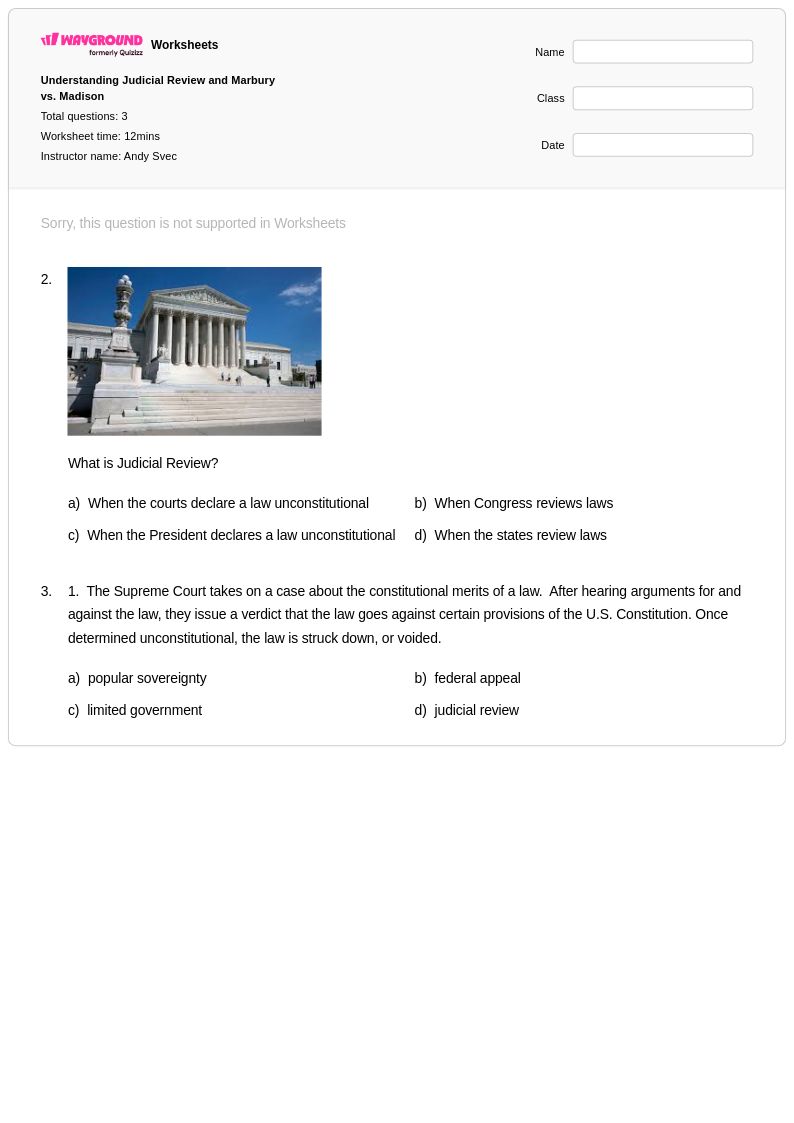
Start by grounding students in the concept that judicial review is the Supreme Court's authority to strike down laws or executive actions that violate the Constitution — a power established by precedent in Marbury v. Madison (1803), not explicitly written in the Constitution itself. From there, walk students through the logic of that case: why Chief Justice Marshall ruled as he did and what it meant for the balance of power between the three branches. Connecting judicial review to the separation of powers and checks and balances framework helps students see it as a structural feature of American government rather than an isolated legal procedure.
What exercises help students practice understanding judicial review?
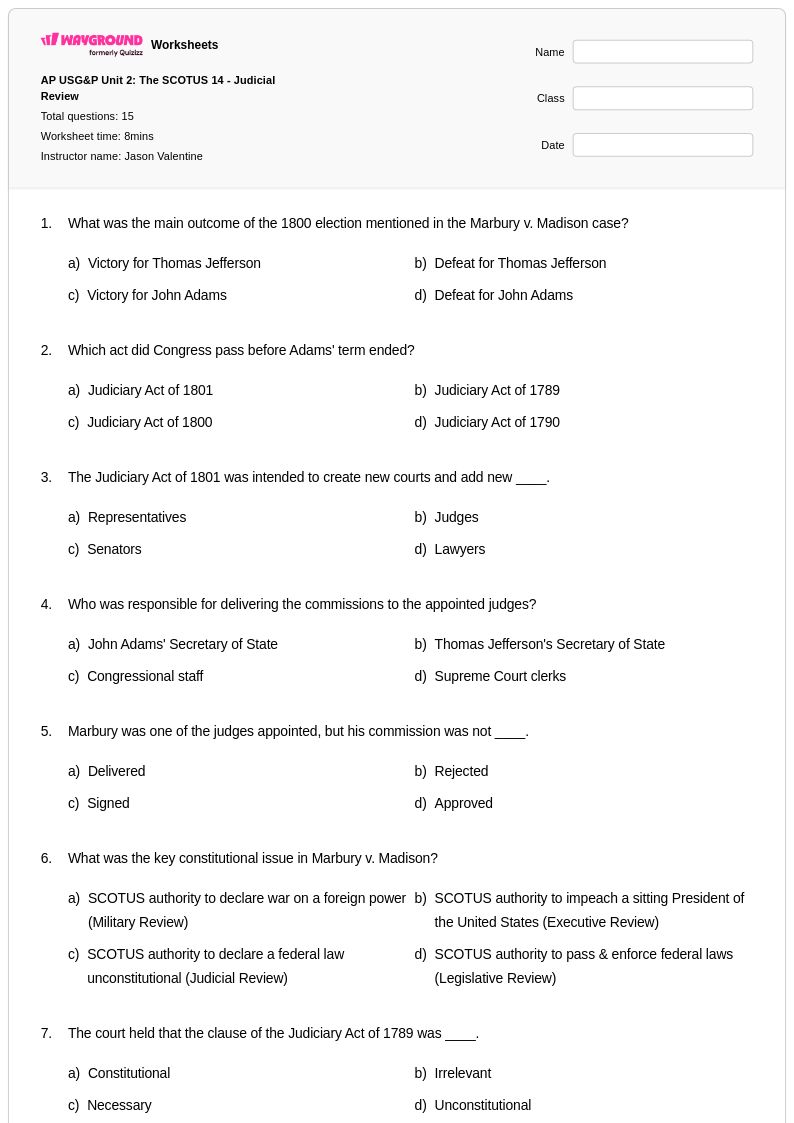
Worksheet exercises that present students with landmark case summaries and ask them to identify the constitutional question, the Court's ruling, and the reasoning behind the decision are among the most effective. Having students analyze cases like Marbury v. Madison, McCulloch v. Maryland, or Brown v. Board of Education in a structured format builds both content knowledge and constitutional reasoning skills. Practice problems that ask students to evaluate whether a hypothetical law would survive judicial review reinforce the concept at a deeper analytical level.
What misconceptions do students commonly have about judicial review?
The most common misconception is that judicial review is explicitly stated in the Constitution — students are often surprised to learn it was established through the Court's own ruling in Marbury v. Madison. Students also frequently confuse judicial review with the general role of the judiciary, not realizing it refers specifically to the power to invalidate legislation or executive actions. Another error is assuming the Supreme Court reviews all laws automatically; in practice, cases must reach the Court through a specific appellate process before any constitutional review takes place.
How does judicial review function as a check on the other branches of government?
Judicial review gives the Supreme Court the authority to declare acts of Congress or the President unconstitutional, effectively nullifying them without requiring legislative action. This makes the judiciary a co-equal branch in the checks and balances system, capable of limiting both legislative overreach and executive power. Because federal judges serve lifetime appointments, the Court is structurally insulated from political pressure, which reinforces its role as an independent constitutional arbiter.
How can I use Wayground's judicial review worksheets in my classroom?
Wayground's judicial review worksheets are available as printable PDFs for traditional classroom use and in digital formats for technology-integrated environments, including the option to host them as a quiz directly on the Wayground platform. This flexibility makes them suitable for in-class instruction, homework assignments, and independent study. Complete answer keys are included with each worksheet, allowing for efficient grading and immediate student feedback without additional teacher preparation.
How can I differentiate judicial review instruction for students at different levels?
For students who need additional support, focus first on the core definition and the Marbury v. Madison precedent before introducing broader case analysis. Advanced students can be challenged with hypothetical scenarios that require them to apply constitutional reasoning to novel situations or evaluate competing judicial philosophies. On Wayground, teachers can apply accommodations such as read aloud, reduced answer choices, or extended time to individual students, ensuring that differentiation is built into the assignment itself rather than requiring separate materials.