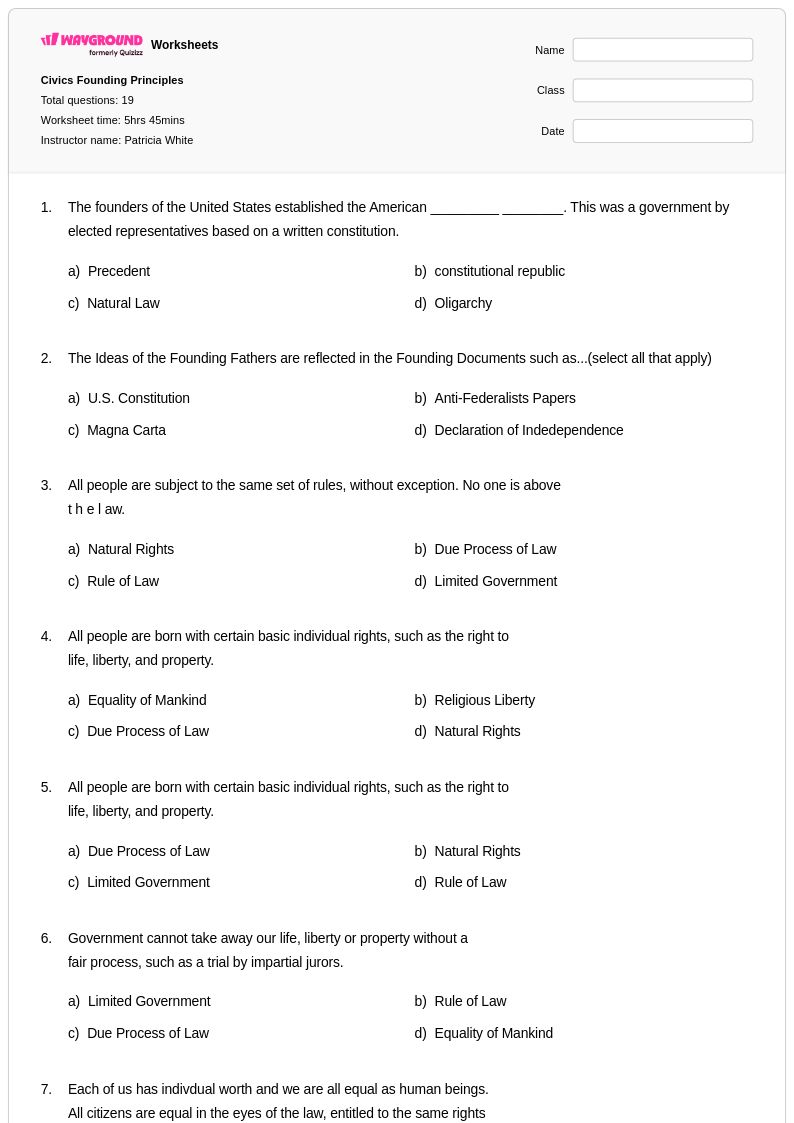
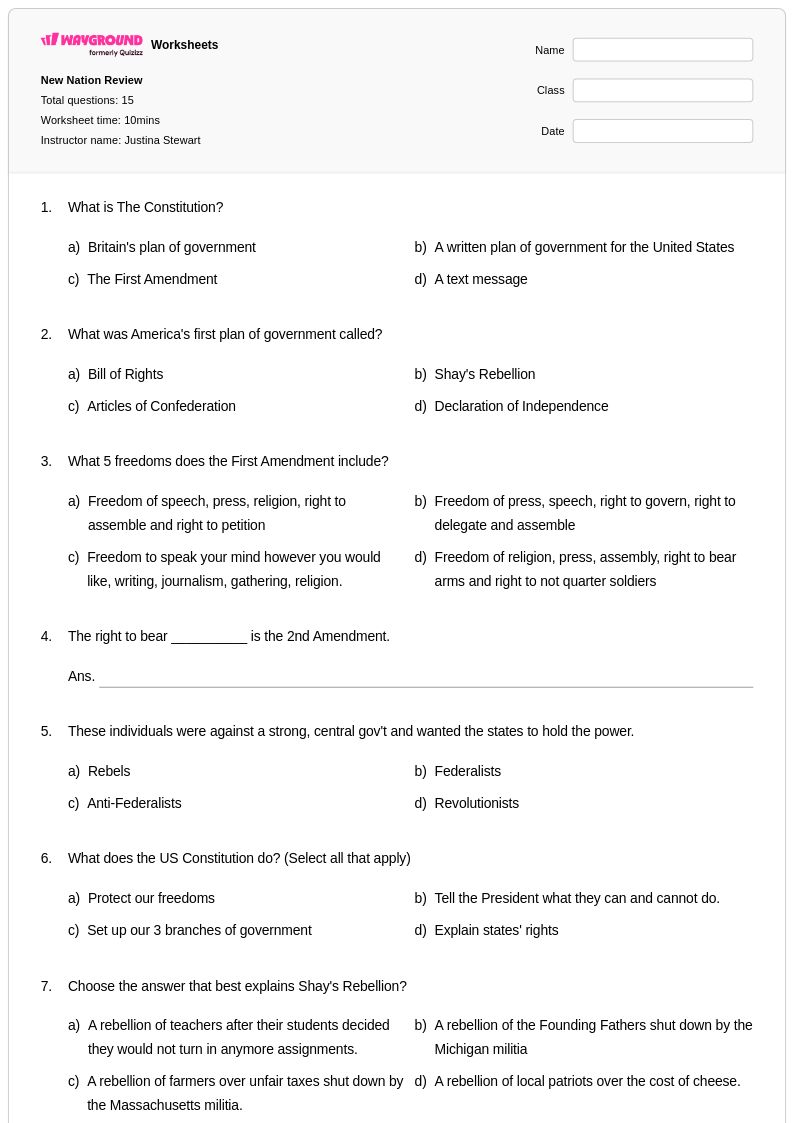
Free Printable Founding Fathers Worksheets for Class 6
Explore Wayground's free Class 6 Founding Fathers worksheets and printables that help students learn about America's revolutionary leaders through engaging practice problems and comprehensive answer keys.
Explore printable Founding Fathers worksheets for Class 6
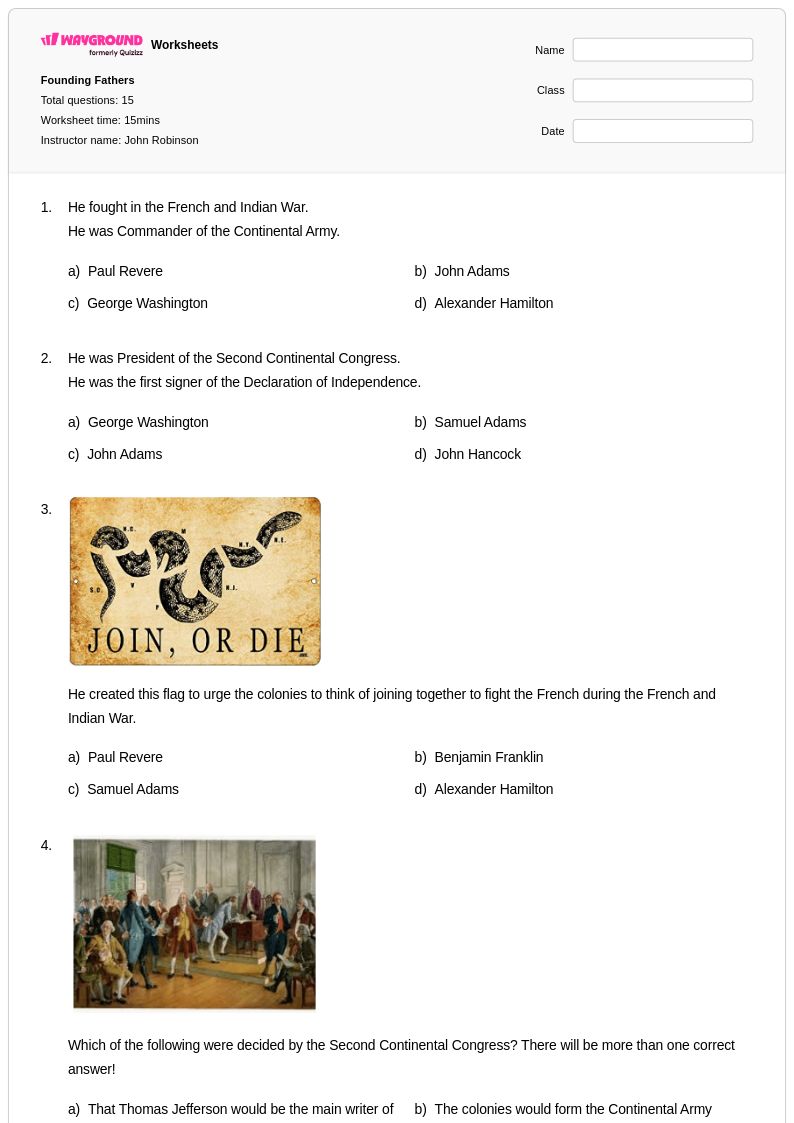
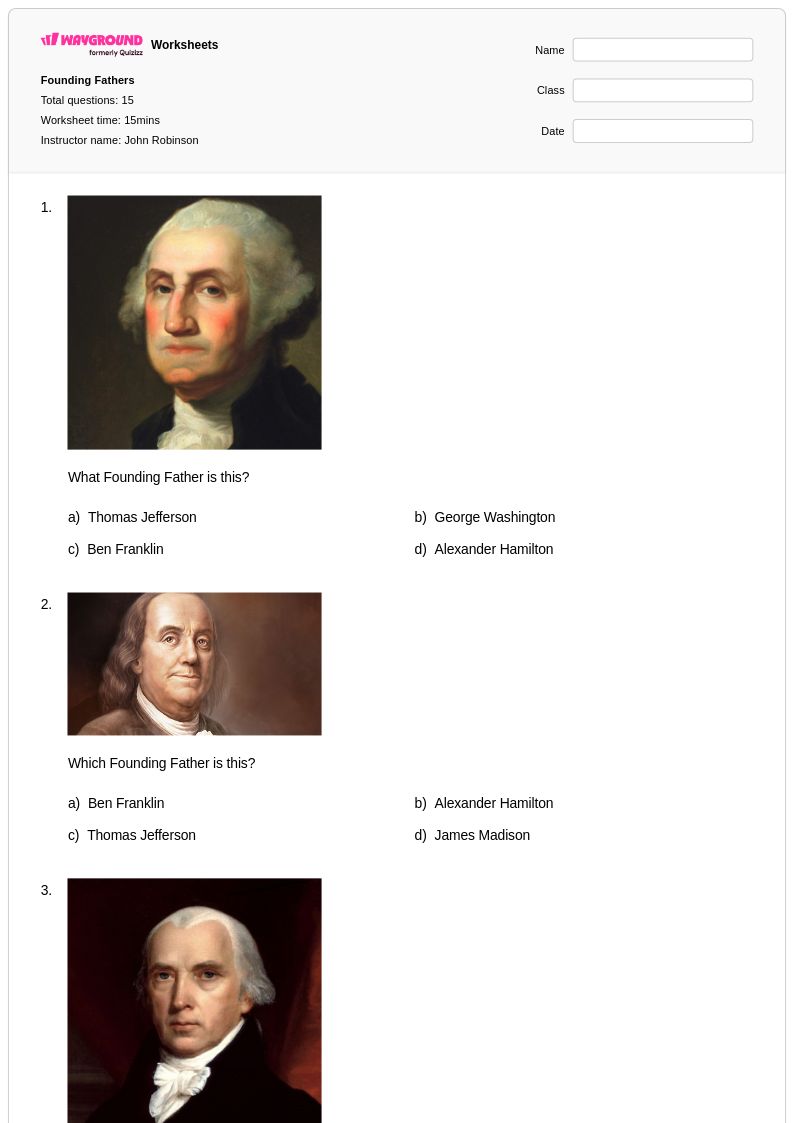
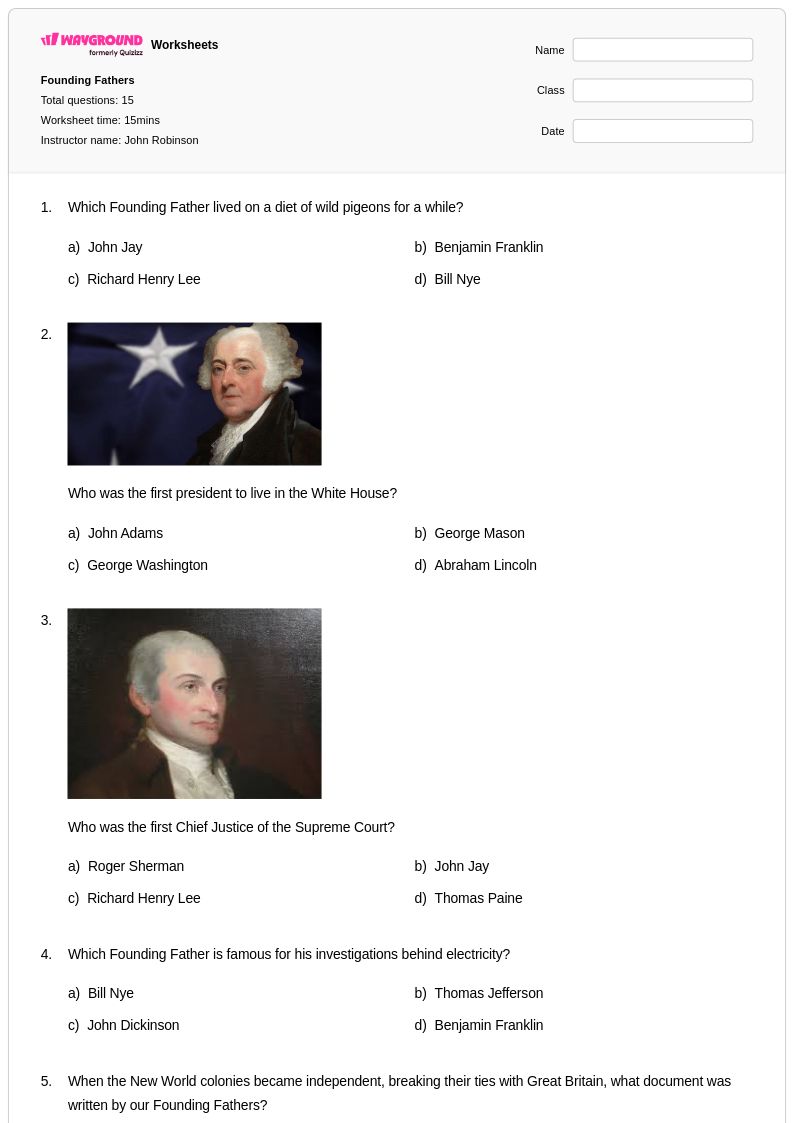
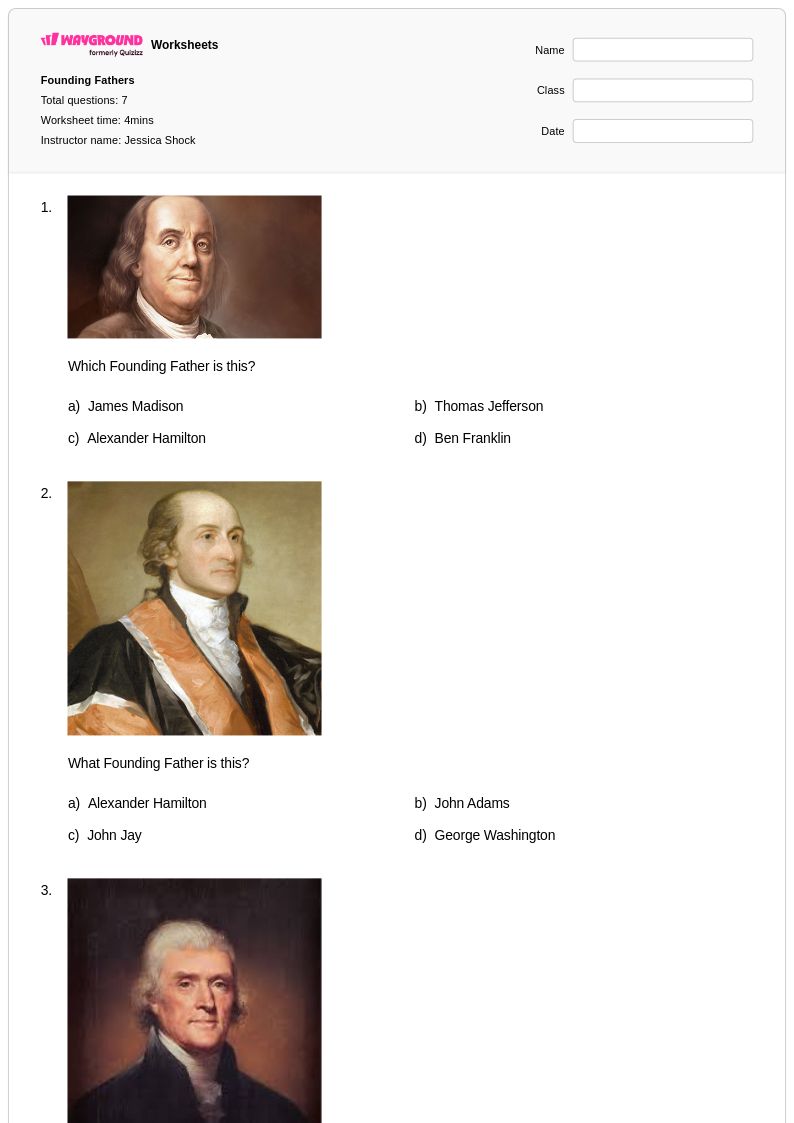
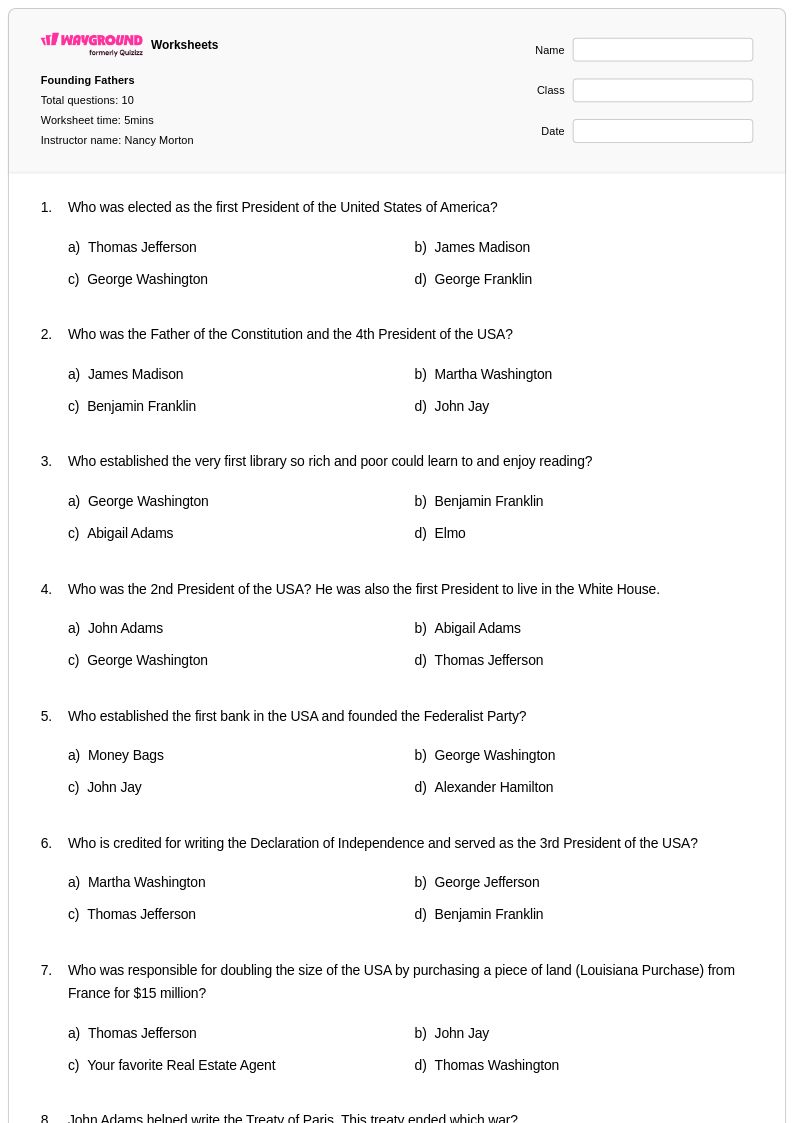
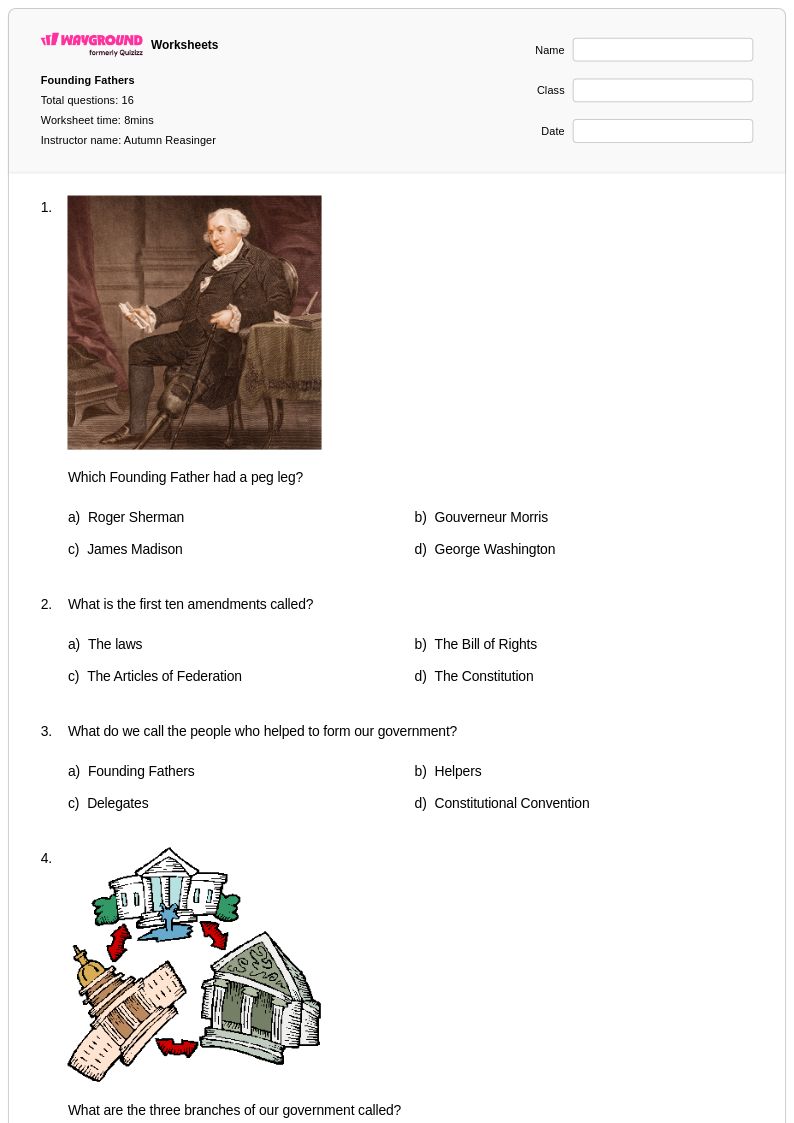
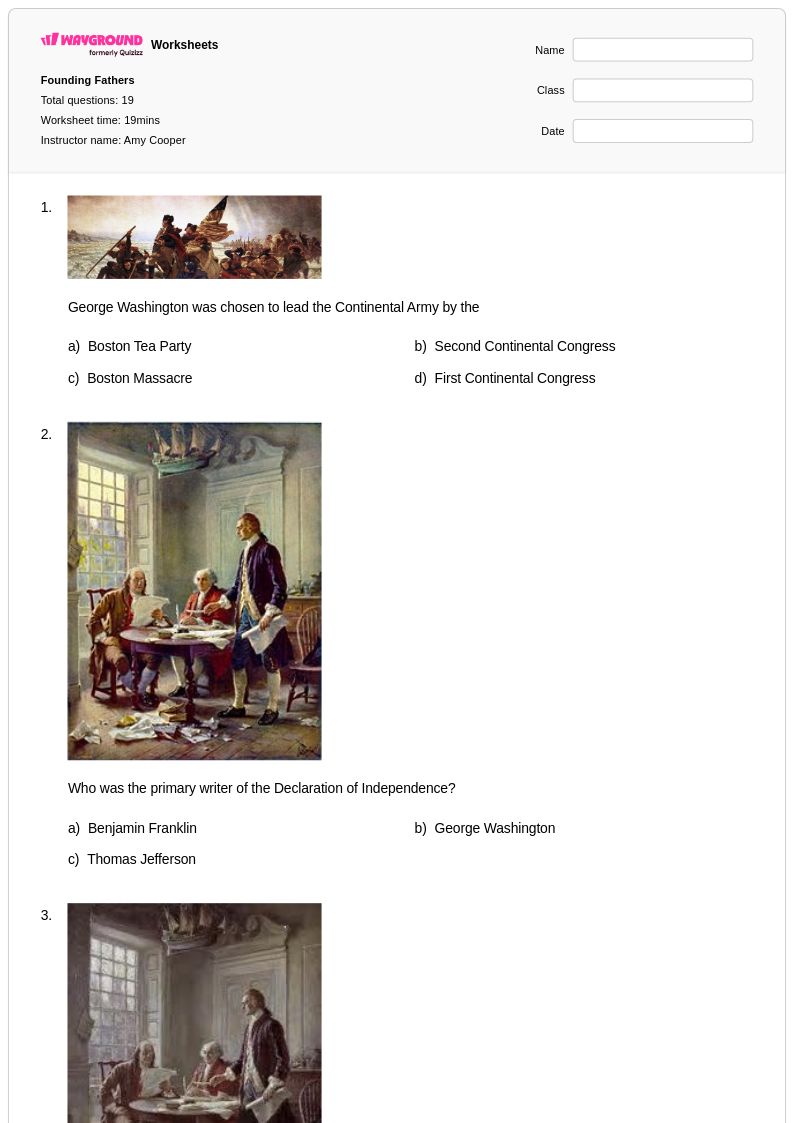
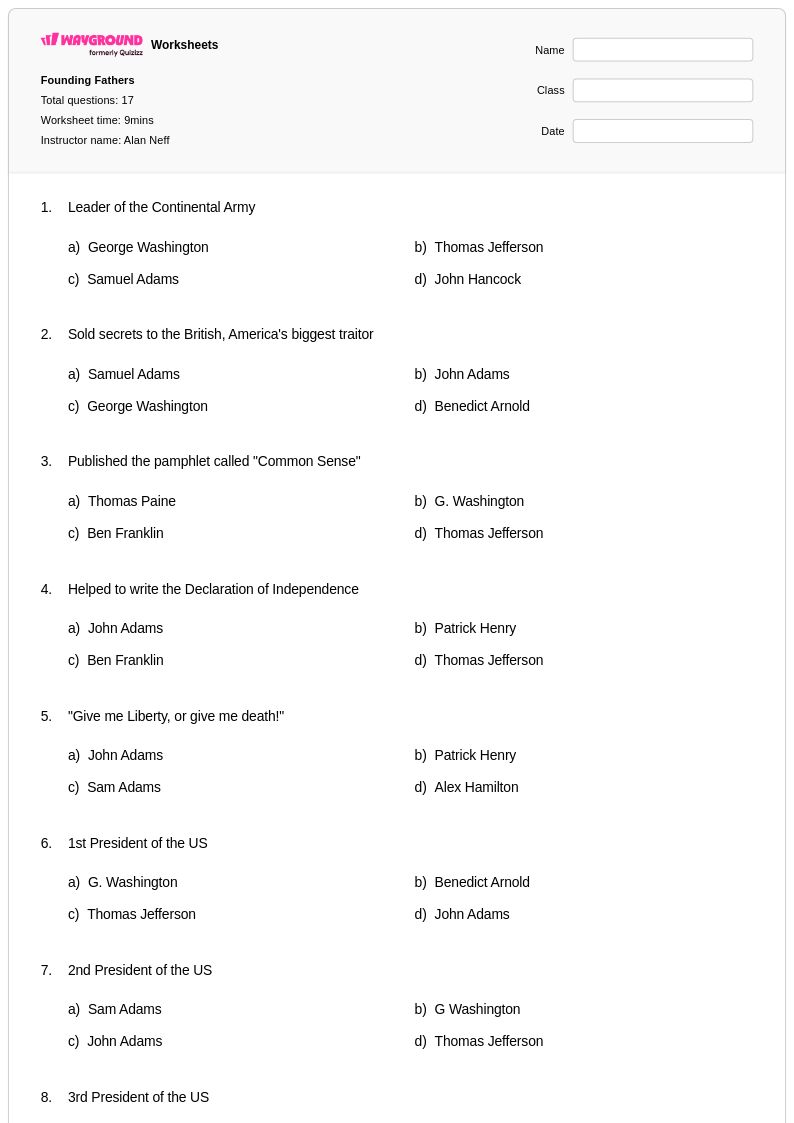
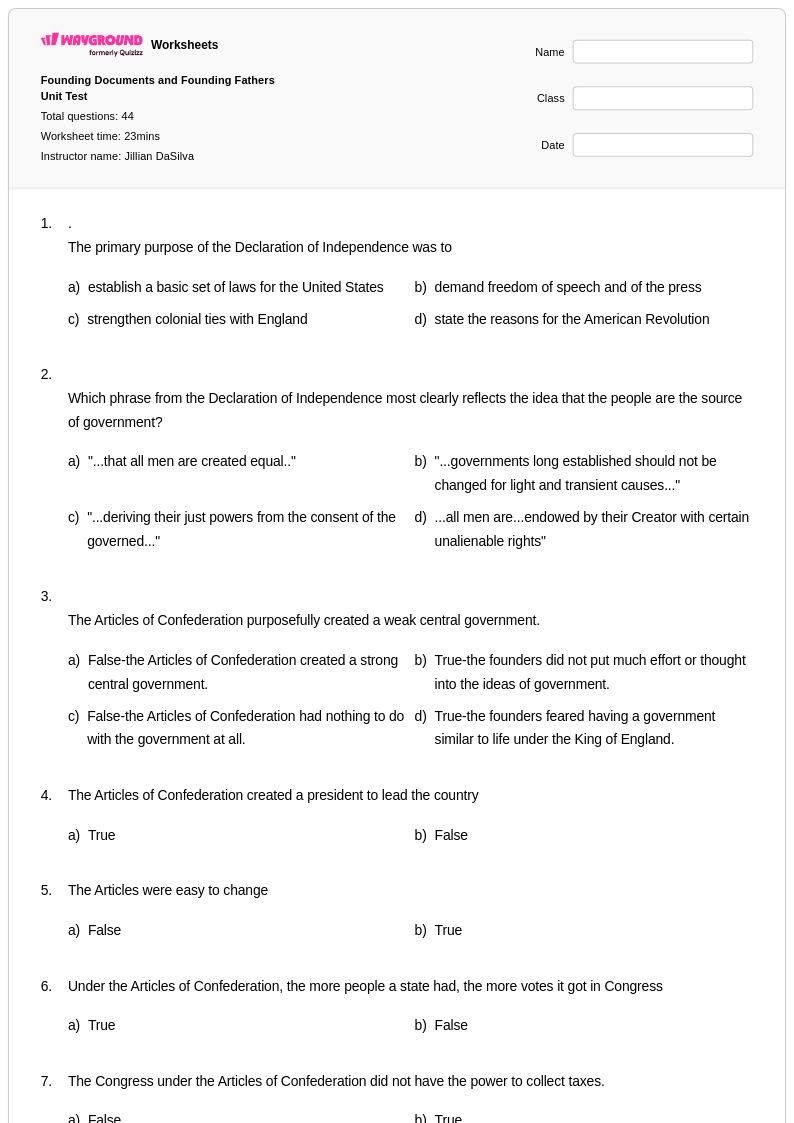
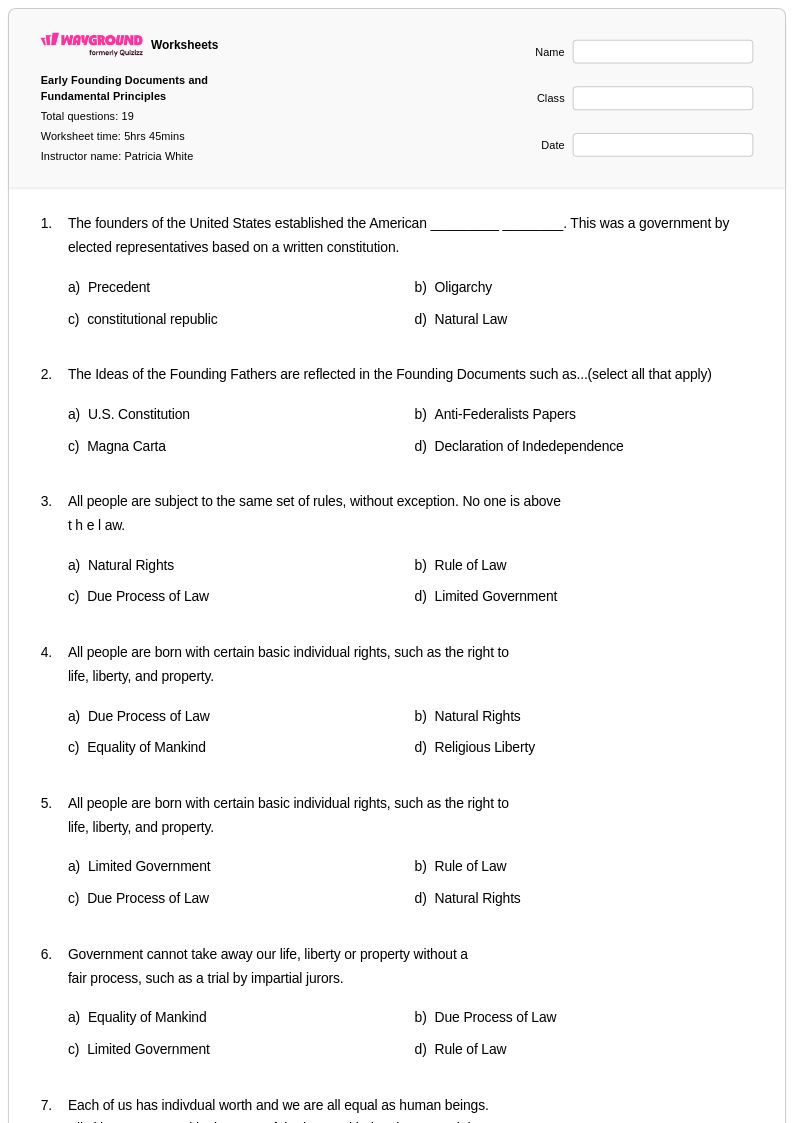
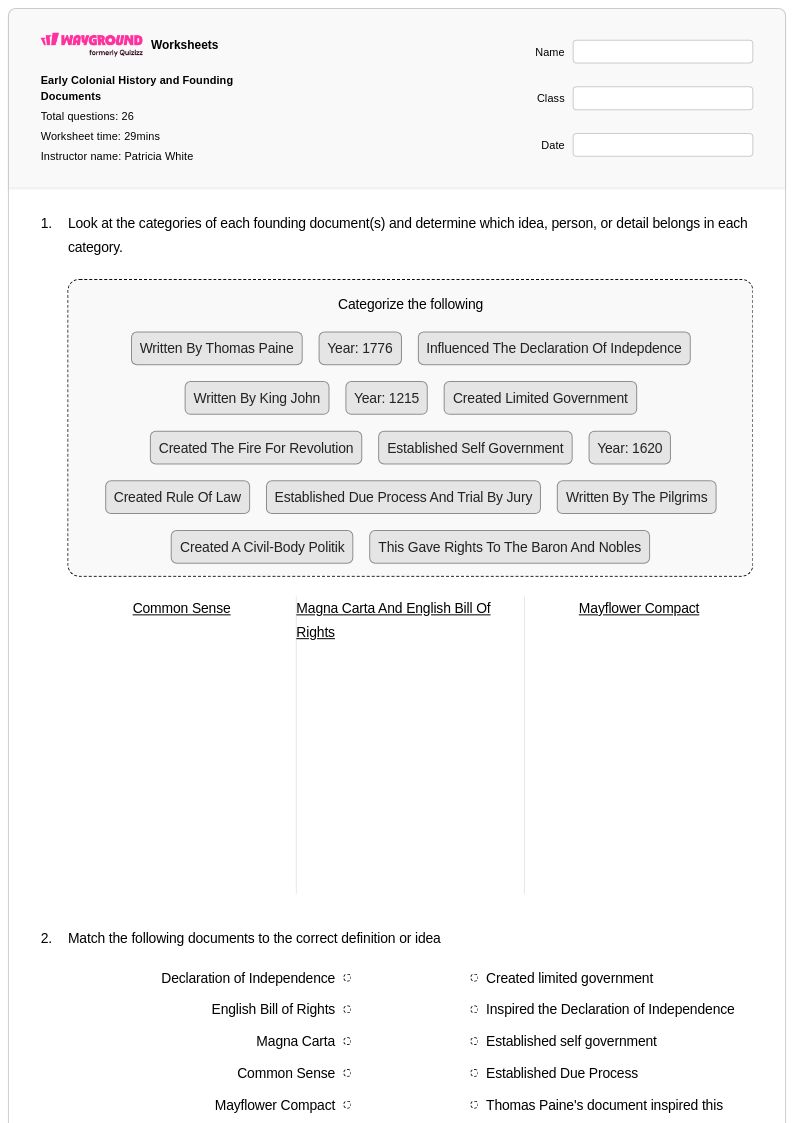
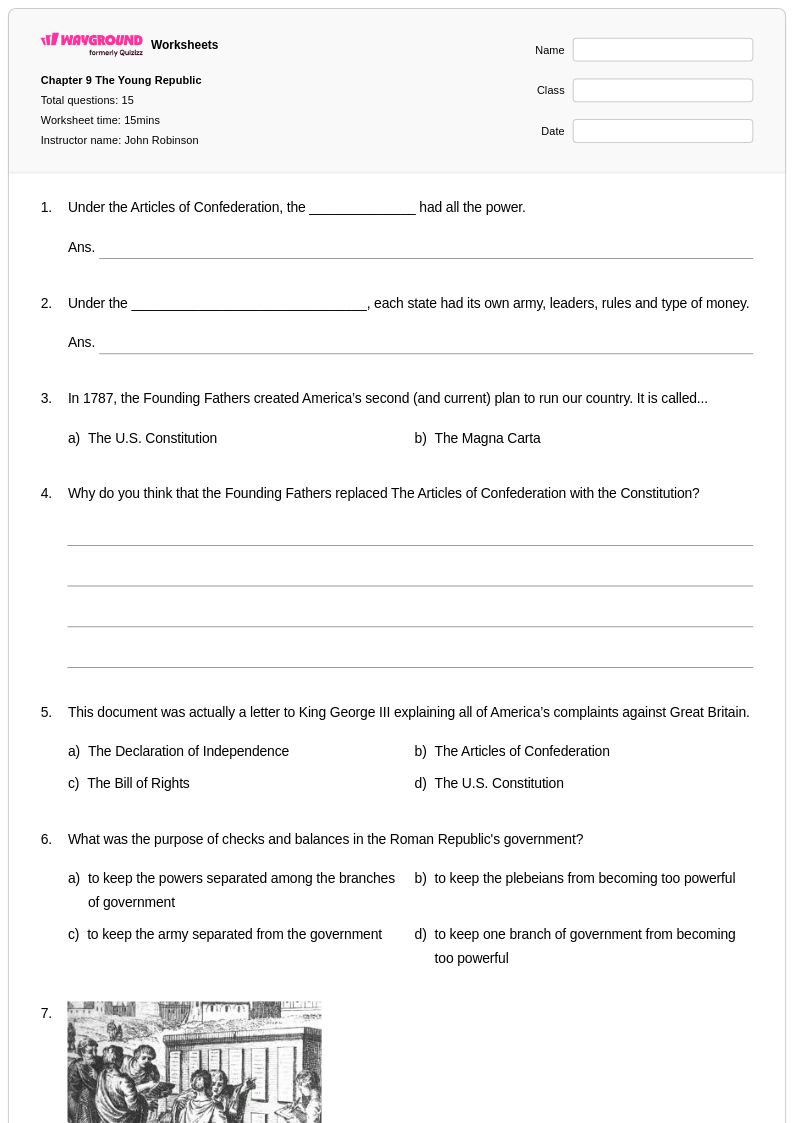
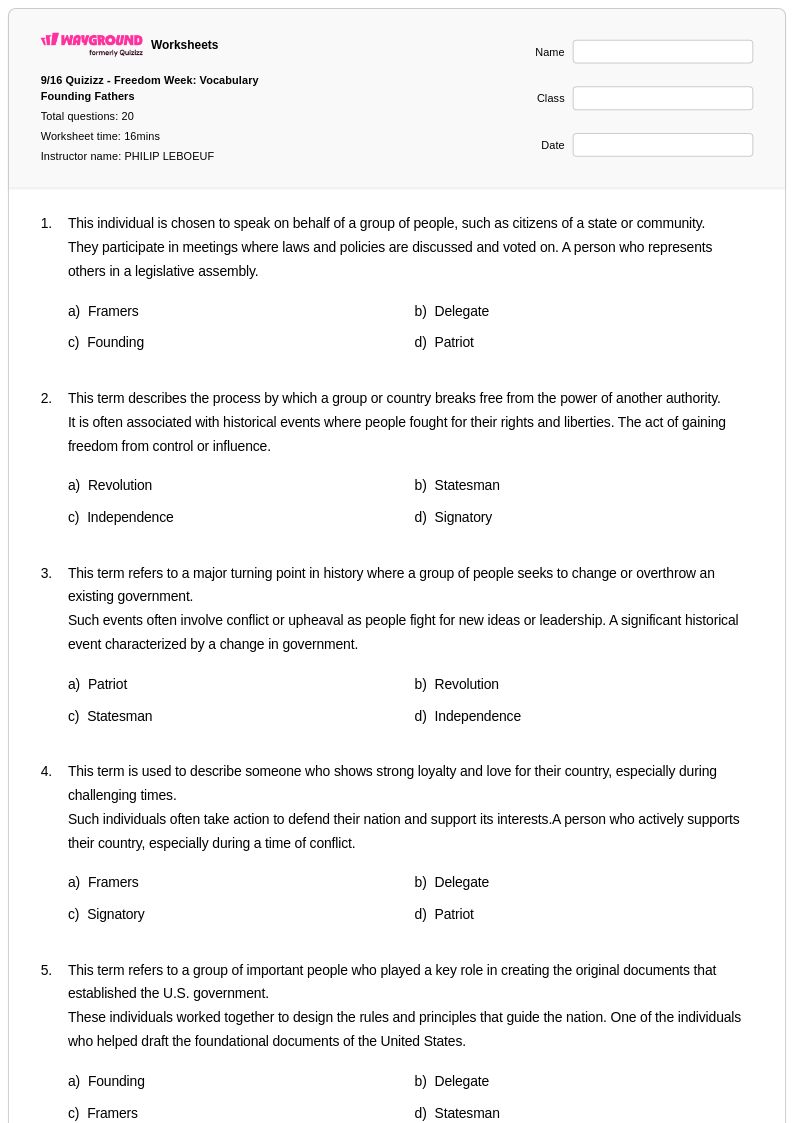
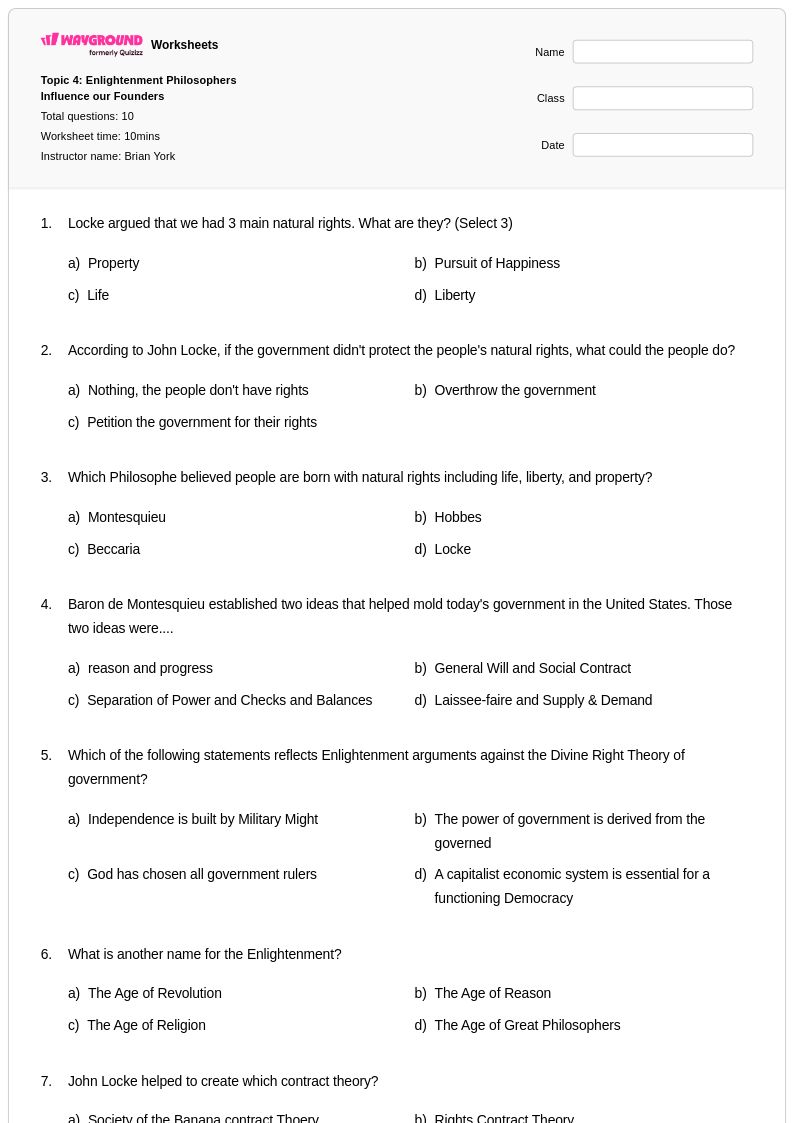
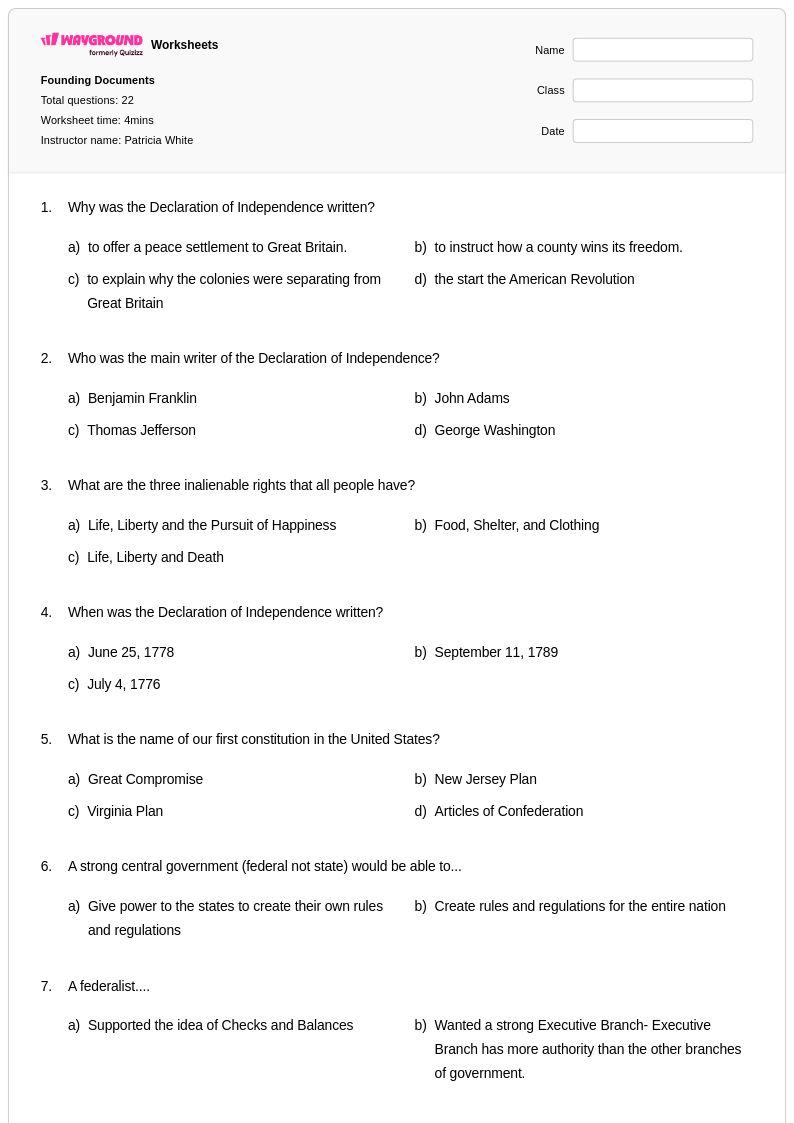
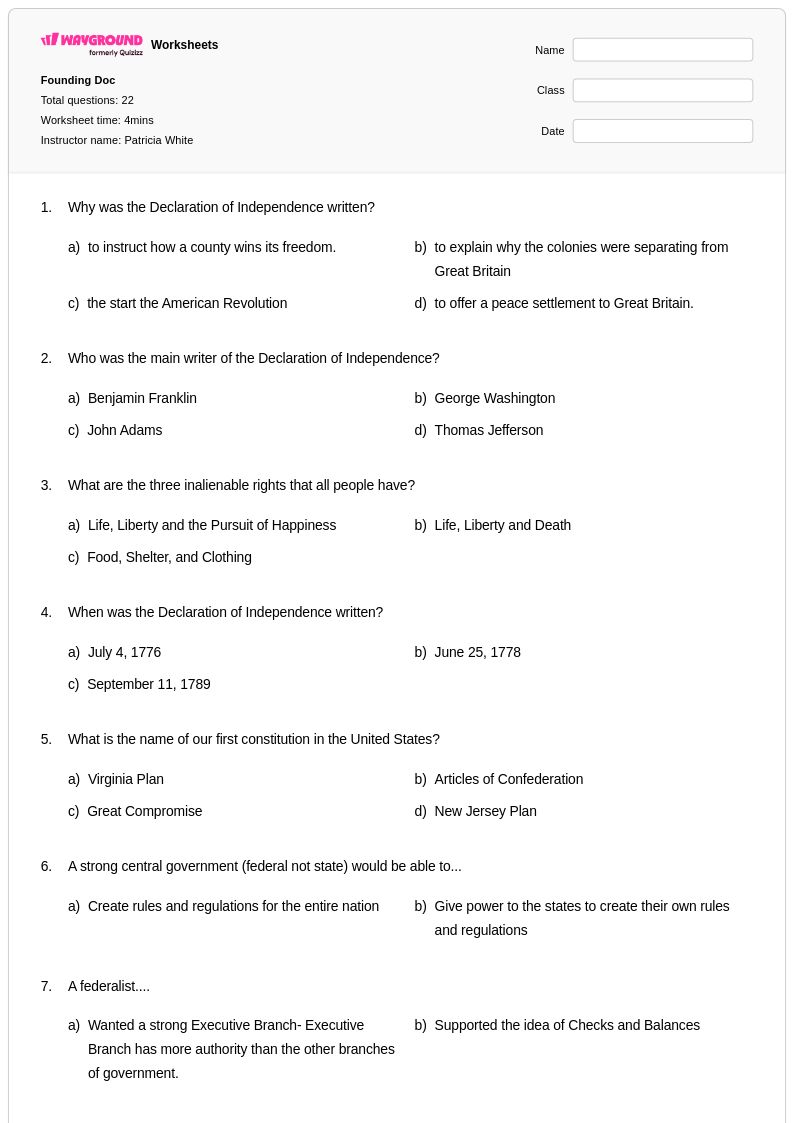
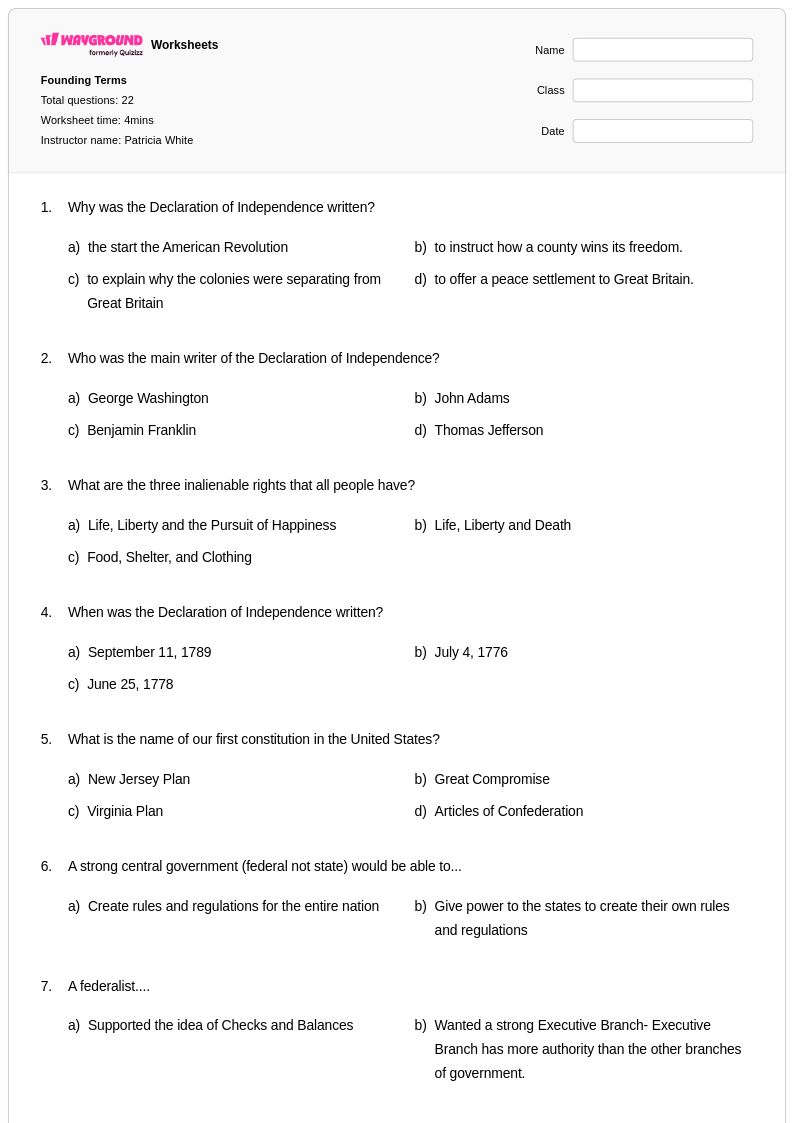
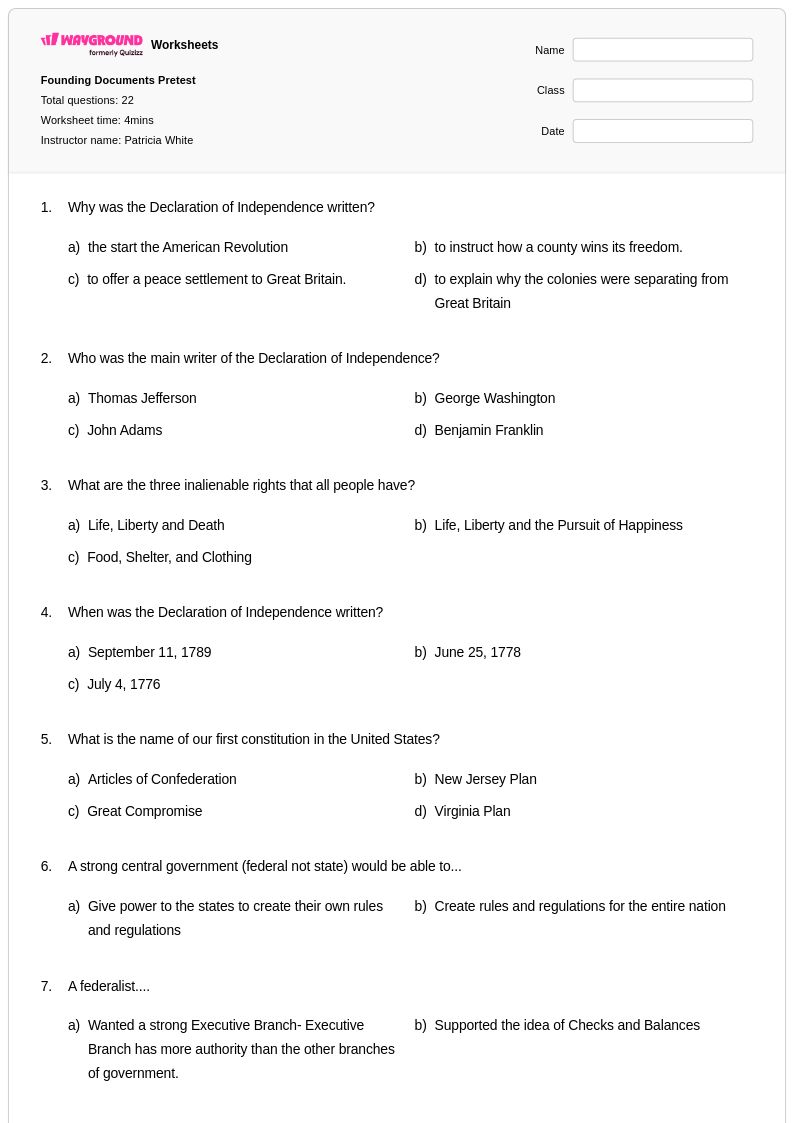
Class 6 Founding Fathers worksheets available through Wayground (formerly Quizizz) provide comprehensive educational resources that bring America's revolutionary leaders to life for middle school students. These carefully crafted materials explore the contributions, philosophies, and lasting impact of key figures such as George Washington, Benjamin Franklin, Thomas Jefferson, John Adams, and Alexander Hamilton. The worksheets strengthen critical thinking skills by encouraging students to analyze primary source documents, compare different perspectives on colonial governance, and evaluate how the Founding Fathers' ideas shaped the Constitution and early American government. Each resource includes detailed answer keys to support effective assessment, and teachers can access these materials as free printables in convenient PDF format, making them ideal for both classroom instruction and independent practice problems that reinforce essential historical concepts.
Wayground (formerly Quizizz) empowers educators with an extensive collection of teacher-created Founding Fathers resources, drawing from millions of high-quality materials that have been developed and refined by experienced classroom professionals. The platform's robust search and filtering capabilities allow teachers to quickly locate worksheets that align with specific curriculum standards and learning objectives, while built-in differentiation tools enable seamless customization for diverse student needs and ability levels. These resources are available in both printable and digital formats, including downloadable PDFs that provide maximum flexibility for lesson planning and implementation. Whether used for initial concept introduction, targeted remediation, advanced enrichment activities, or systematic skill practice, these Founding Fathers worksheets support comprehensive instructional approaches that help Class 6 students develop deeper understanding of America's foundational period and the remarkable individuals who shaped the nation's democratic principles.
FAQs
How do I teach the Founding Fathers in a way that goes beyond memorizing names and dates?
Effective Founding Fathers instruction moves students from rote recall toward historical analysis by centering lessons on the debates and tensions between key figures. Have students compare Thomas Jefferson's vision of agrarian democracy with Alexander Hamilton's push for centralized economic power, or examine how Benjamin Franklin's diplomatic experience shaped his role at the Constitutional Convention. Primary source analysis, structured discussions around competing political philosophies, and perspective-taking activities help students understand that the founding era was defined by disagreement as much as consensus.
What are the best exercises to help students practice identifying the contributions of individual Founding Fathers?
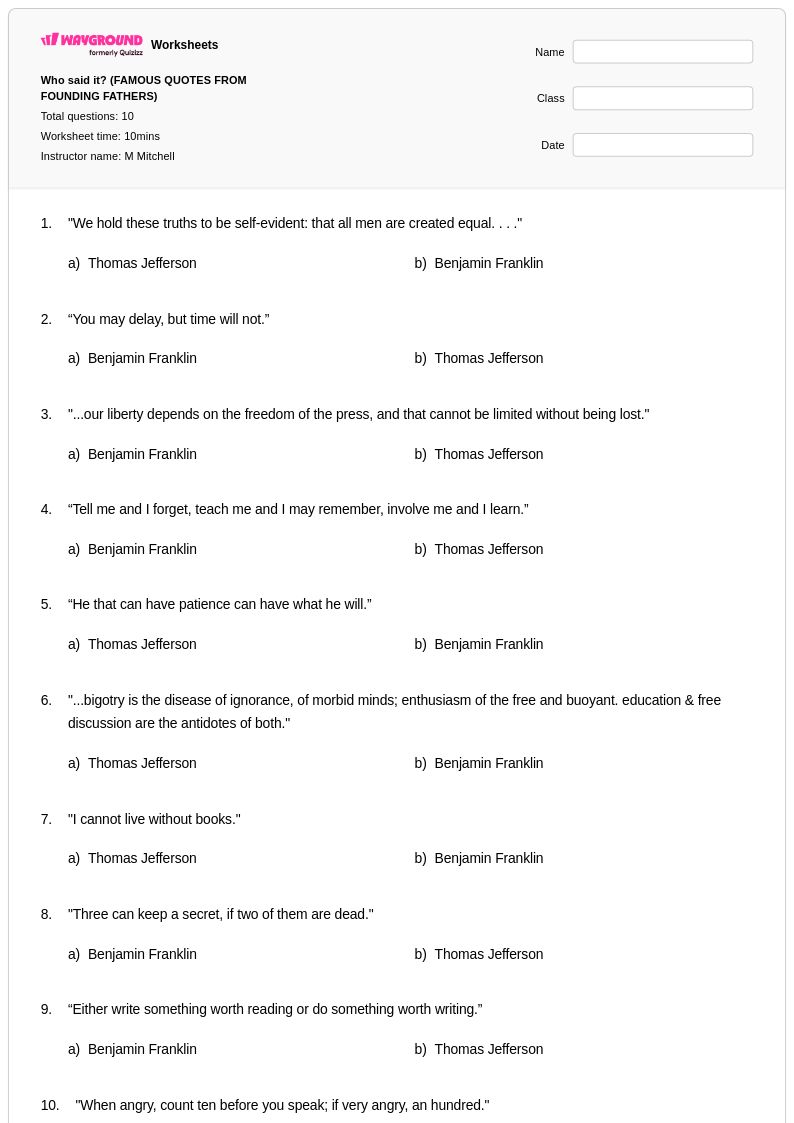
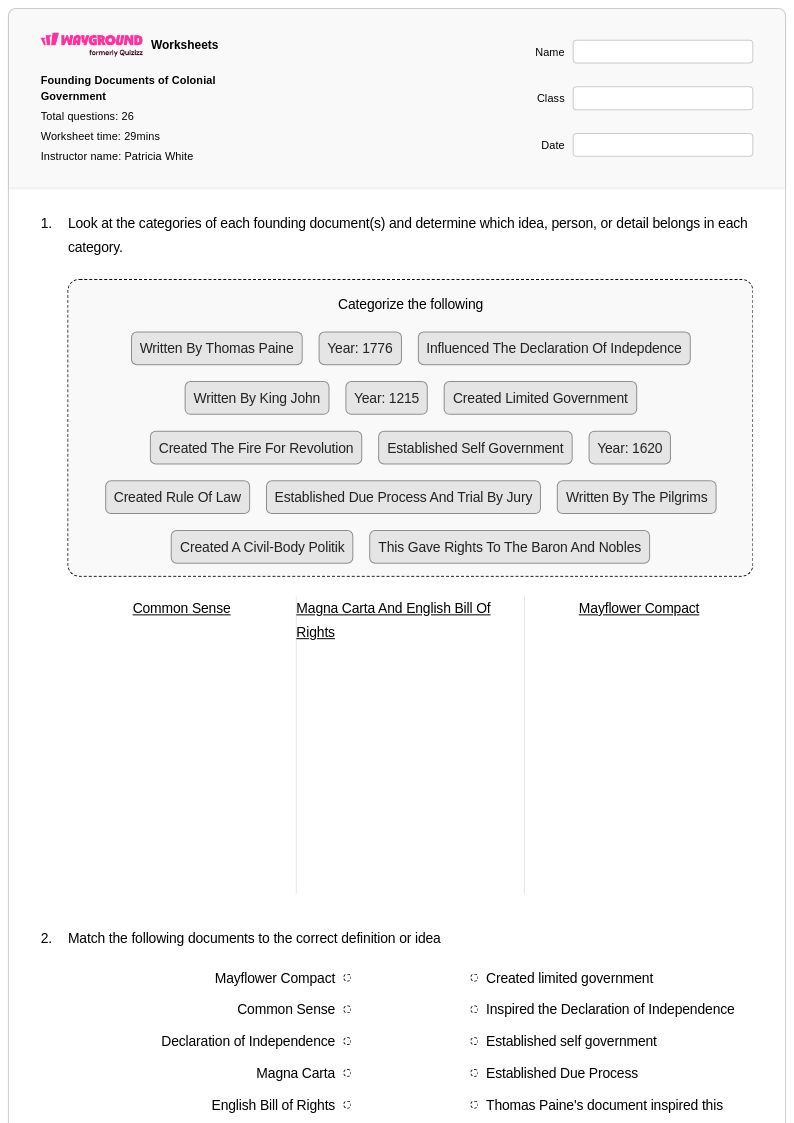
Matching and sorting exercises that link specific founders to their written works, political roles, and constitutional contributions are highly effective for building fluency with this content. Tasks that ask students to evaluate primary source excerpts and attribute them to the correct founder reinforce both identification skills and analytical reading. Comparison charts that place figures like Madison, Hamilton, and Jefferson side by side on issues such as federal power and individual rights help students move from surface-level identification to nuanced understanding of each figure's distinct legacy.
What misconceptions do students commonly have about the Founding Fathers?
One of the most persistent misconceptions is that the Founding Fathers were a unified group who agreed on the shape of American government. In reality, figures like Hamilton and Jefferson held sharply opposing views on federal authority, economic policy, and the role of ordinary citizens in governance. Students also frequently conflate the Declaration of Independence and the Constitution as a single document or event, rather than recognizing them as products of different moments and different coalitions. Addressing these misconceptions directly through document-based tasks that highlight disagreement among founders builds more accurate and durable historical understanding.
How do I use Founding Fathers worksheets to support different skill levels in my classroom?
Founding Fathers worksheets on Wayground are available in both printable PDF formats for traditional classroom use and digital formats for technology-integrated environments, including the option to host them as a quiz directly on Wayground. For differentiation, Wayground's digital platform supports per-student accommodations such as read aloud for students who need text support, reduced answer choices to lower cognitive load, and extended time for assessments. These settings can be applied to individual students while the rest of the class receives default settings, making it straightforward to support diverse learners without disrupting instruction.
How can I assess whether students understand the Founding Fathers' roles in constitutional debates, not just their biographical facts?
Assessment tasks that require students to evaluate and defend positions using evidence from specific founders are more revealing than biography-based quizzes. Ask students to identify which founder's argument best supports a given constitutional principle, or have them analyze a short primary source excerpt and explain how it reflects a particular founder's political philosophy. These approaches surface whether students understand the ideological stakes of the founding era or have only memorized surface-level facts about individual figures.
How do Founding Fathers worksheets help students connect historical figures to present-day American political institutions?
Well-designed Founding Fathers worksheets ask students to trace specific constitutional provisions, political norms, or institutional structures back to the individuals who advocated for them. For example, connecting Hamilton's Federalist arguments to the structure of the executive branch, or linking Madison's notes from the Constitutional Convention to the system of checks and balances, makes the relevance of these historical figures concrete and lasting. This kind of forward-looking analysis builds civic literacy alongside historical knowledge, helping students understand that the founding era is not a closed chapter but an ongoing framework for American governance.