Free Printable Function of Objects Worksheets for Class 5
Class 5 students explore how the function of objects relates to their physical properties through our free science worksheets, featuring engaging practice problems, printable PDFs, and comprehensive answer keys.
Explore printable Function of Objects worksheets for Class 5
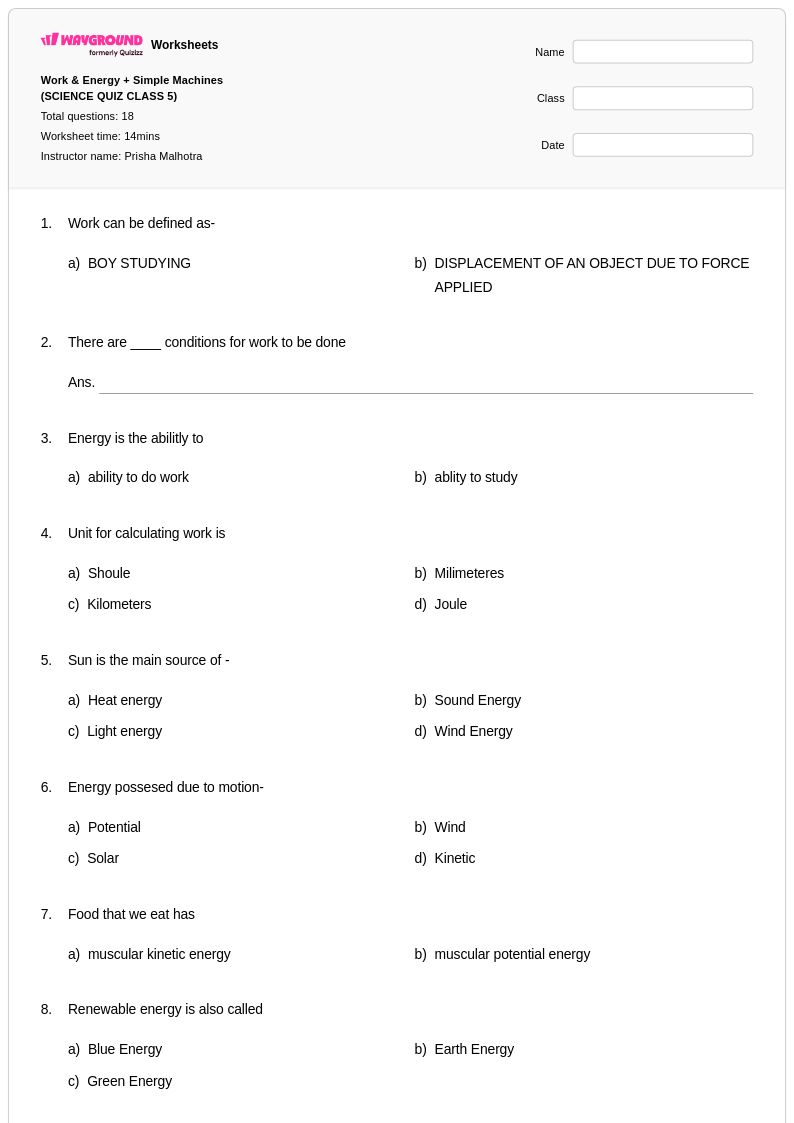
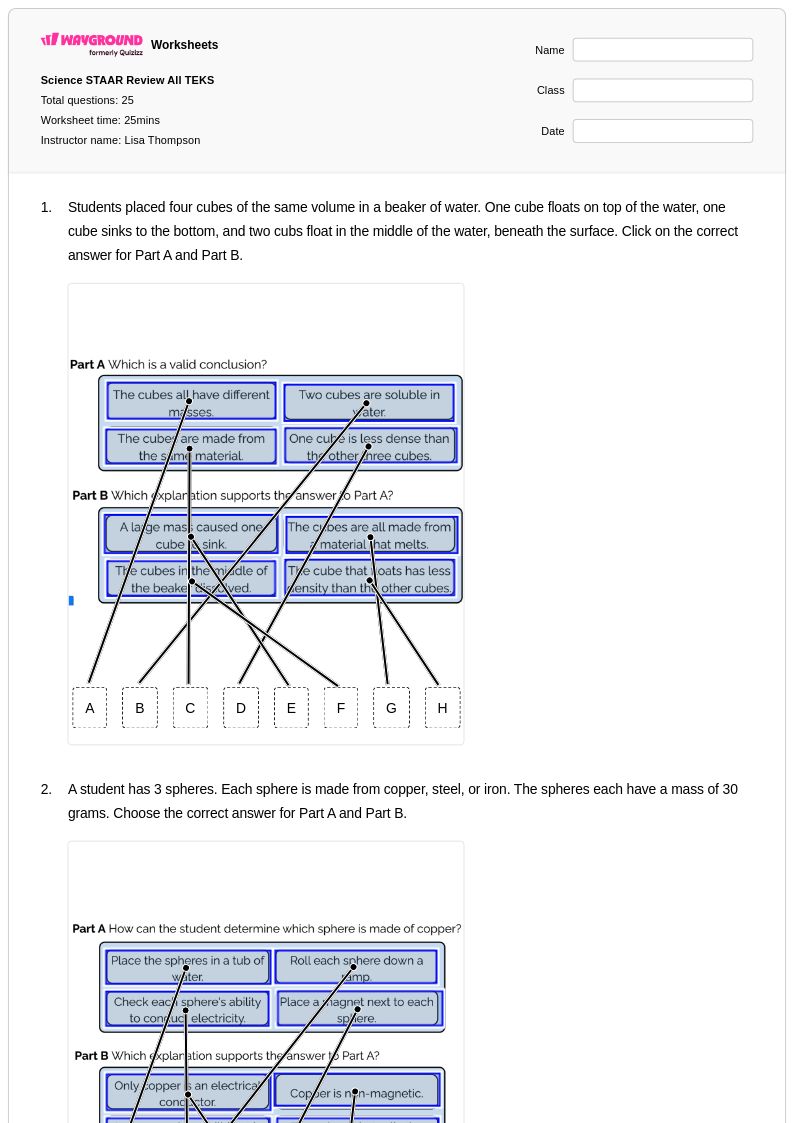
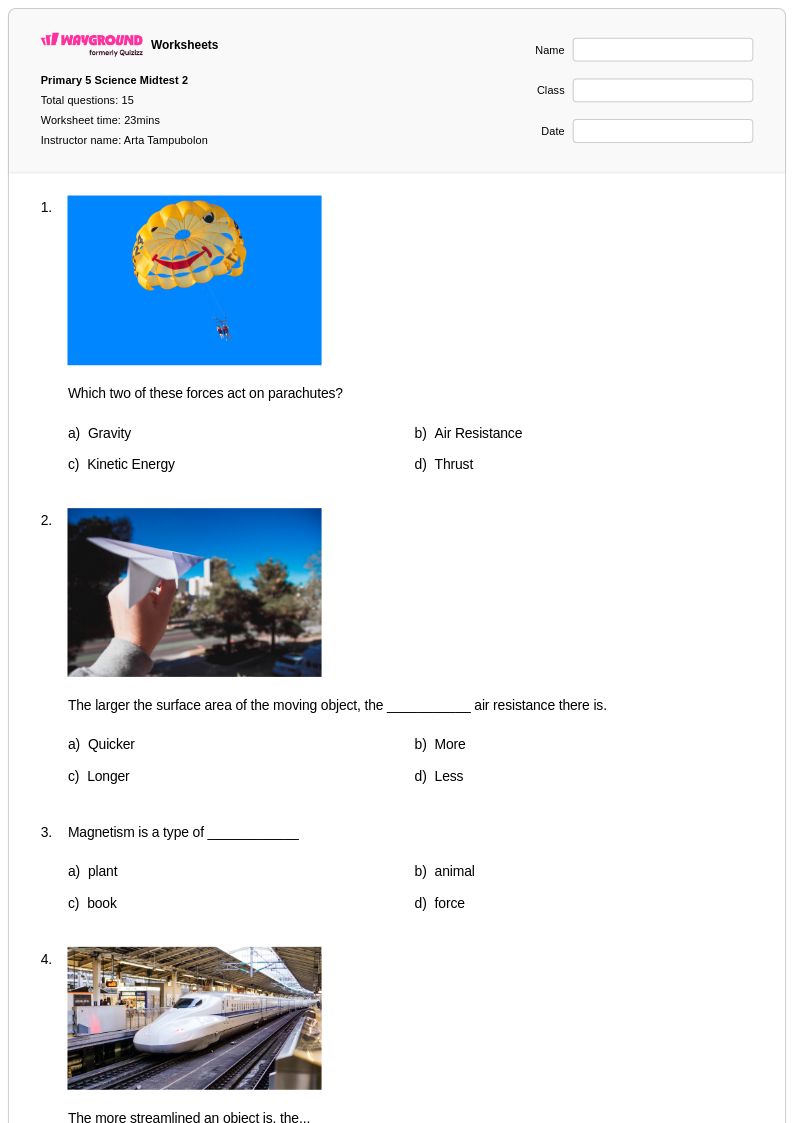
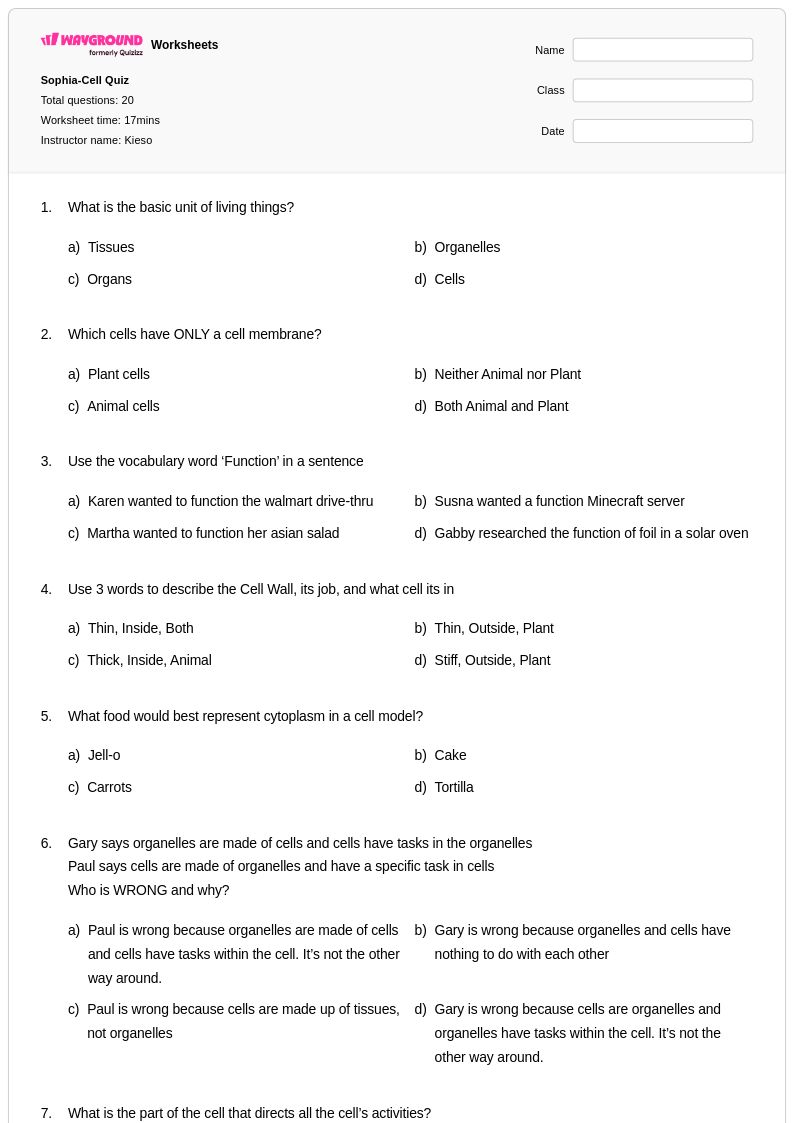
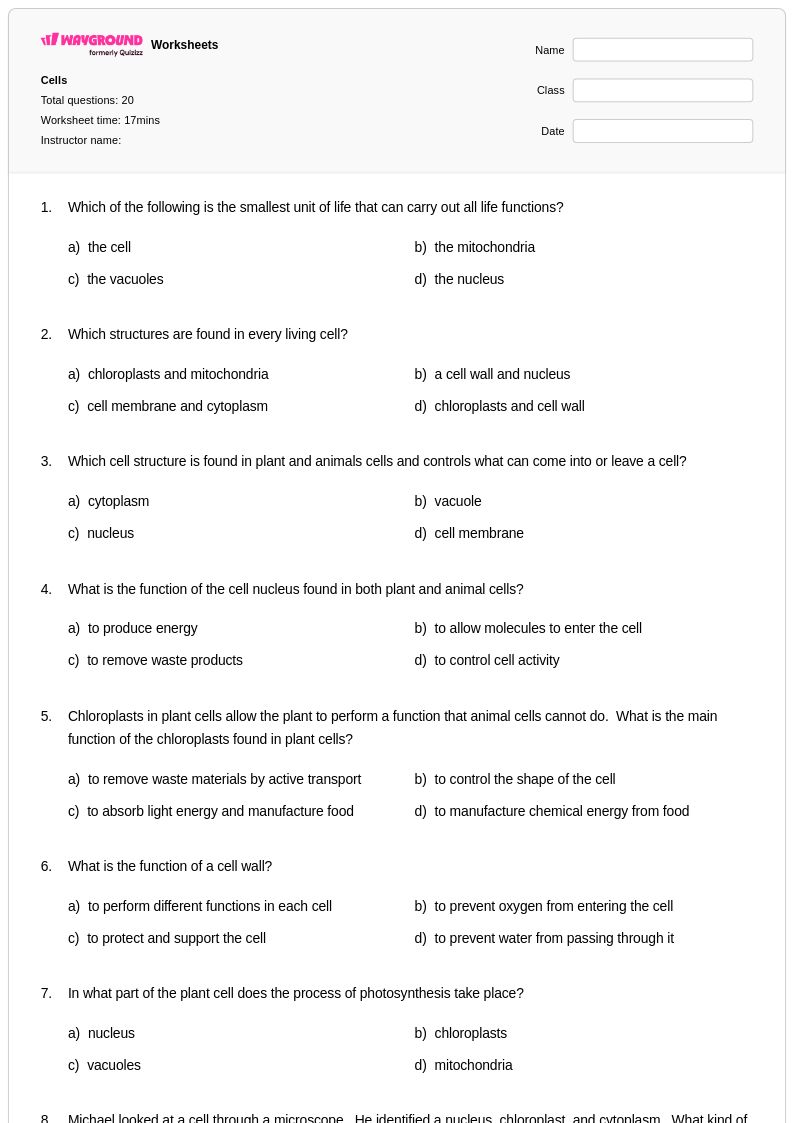
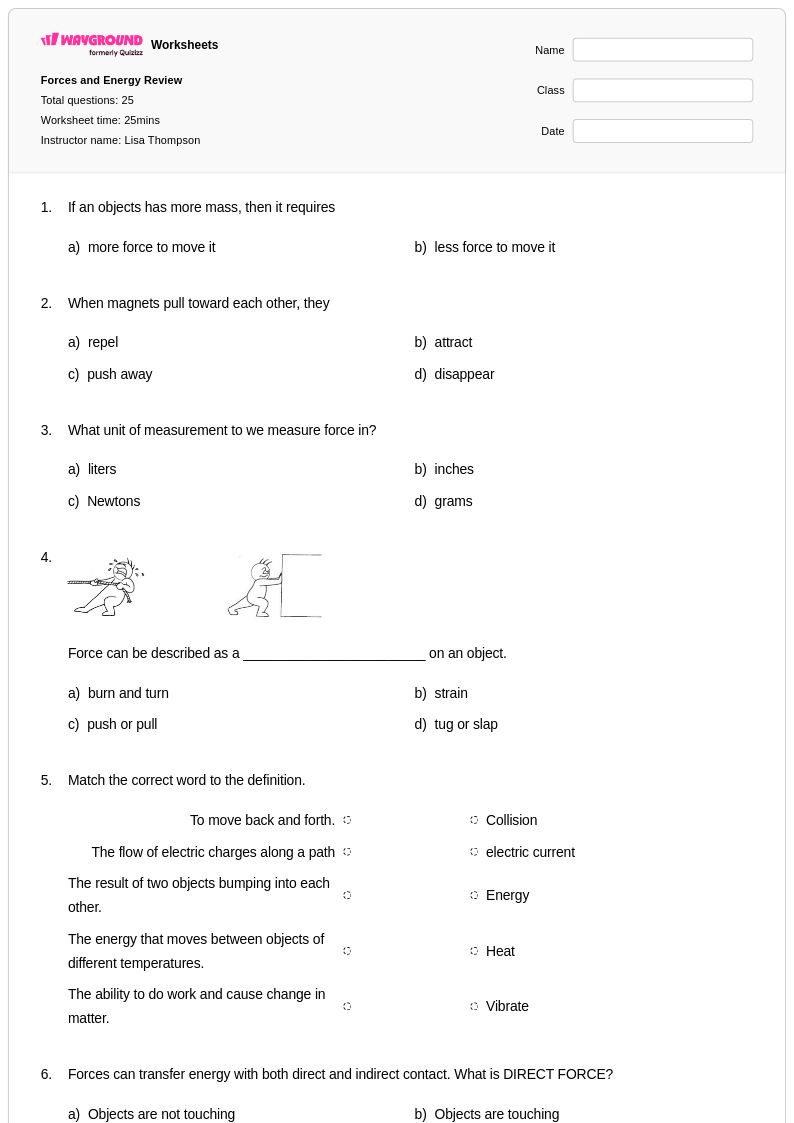
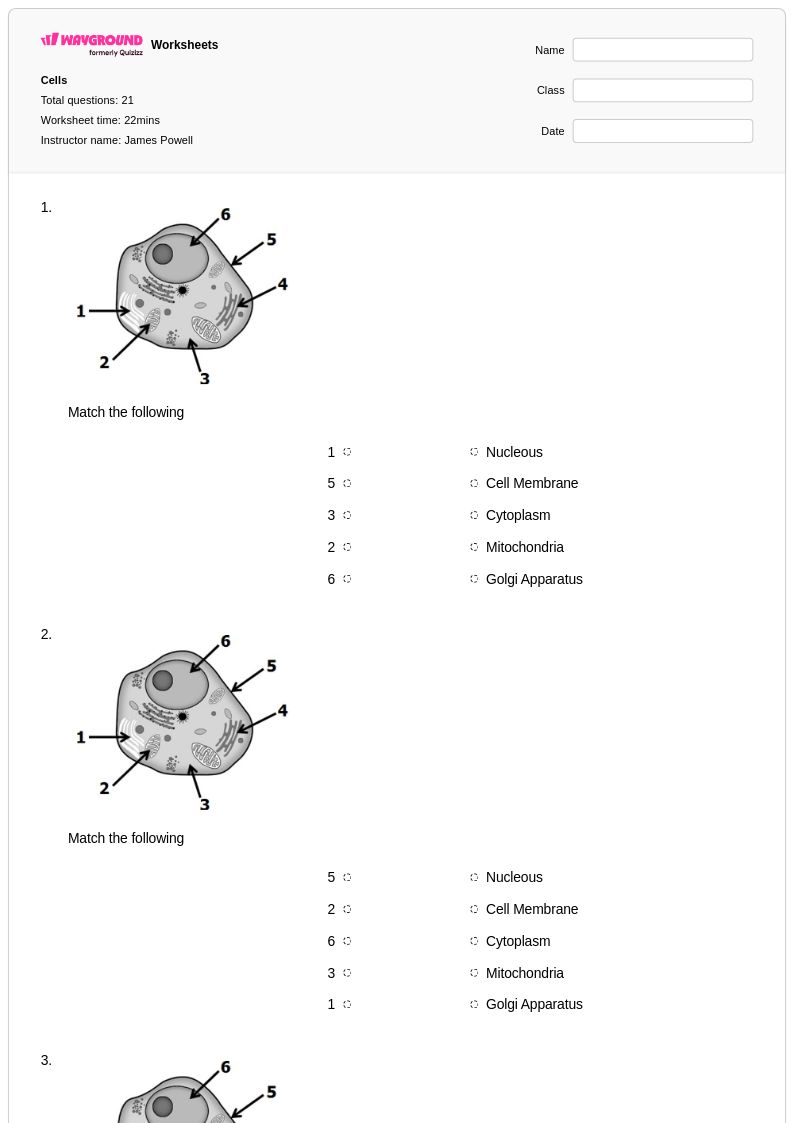
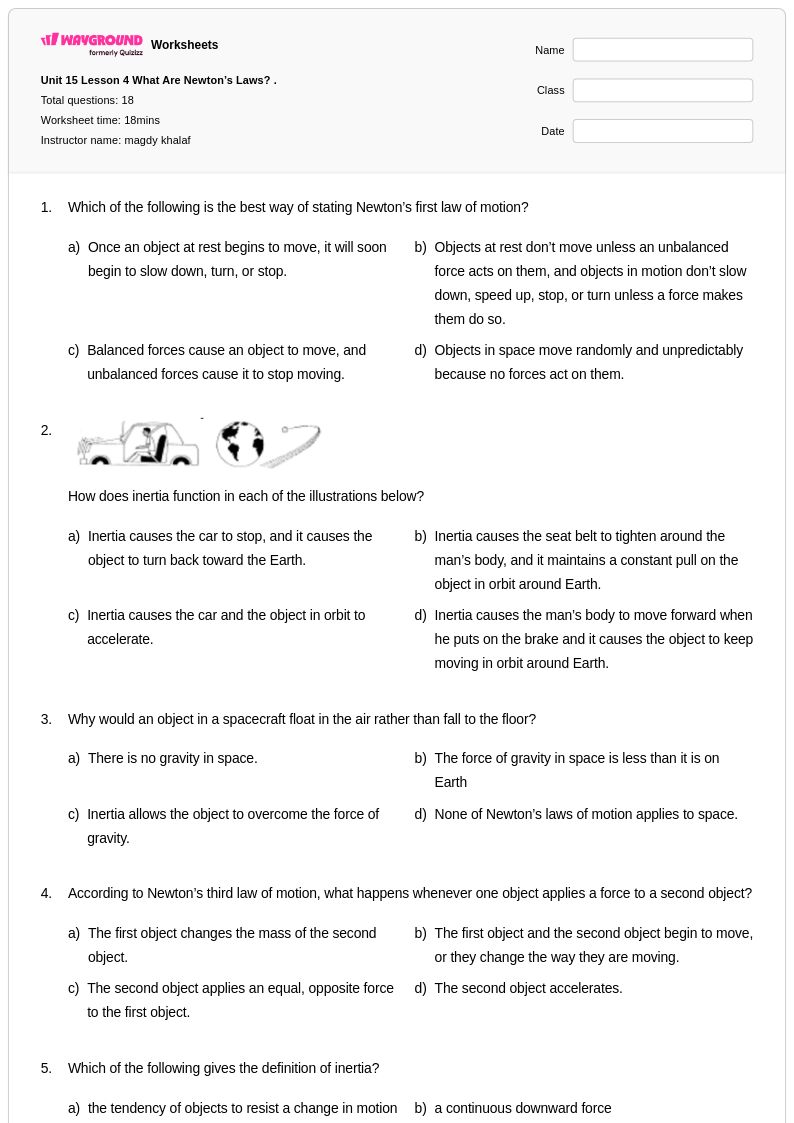
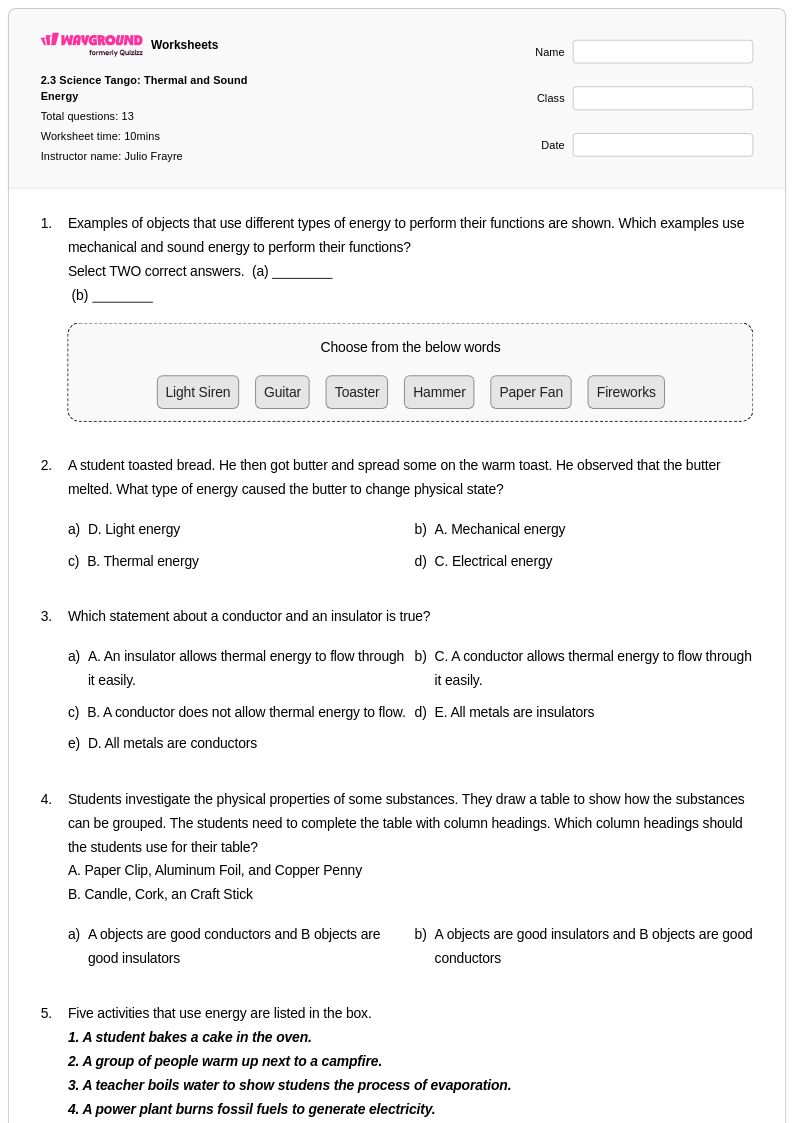
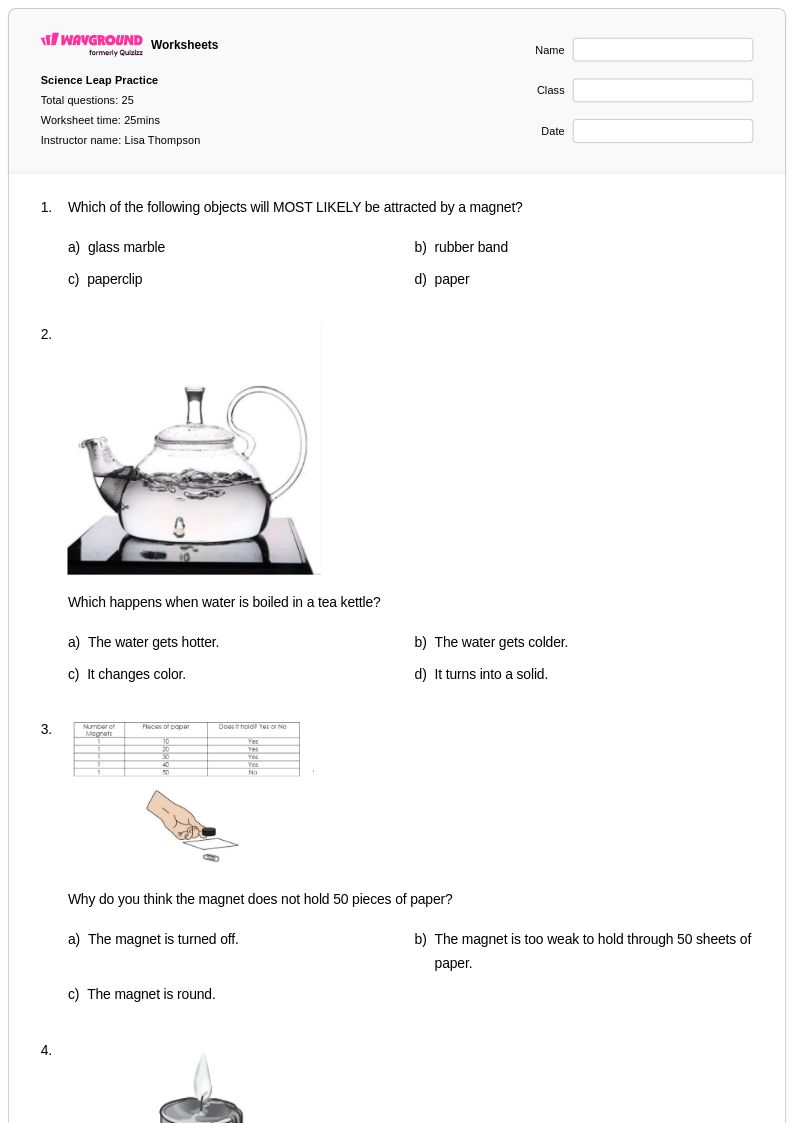
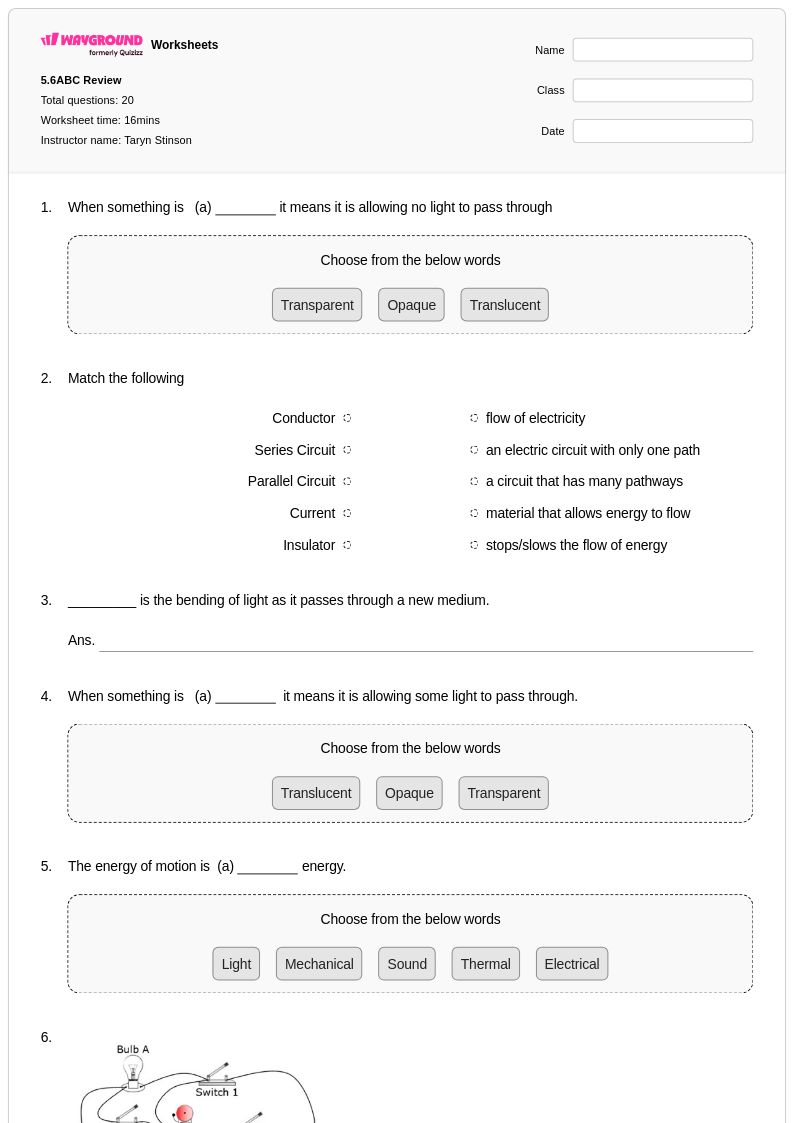
Function of Objects worksheets for Class 5 students provide essential practice in understanding how the properties of matter determine how objects are used in everyday life. These comprehensive resources help students analyze the relationship between an object's physical characteristics—such as hardness, flexibility, transparency, and conductivity—and its practical applications in real-world scenarios. Students develop critical thinking skills as they work through practice problems that require them to predict which materials would be best suited for specific tasks, from choosing the right fabric for outdoor gear to selecting appropriate building materials. Each worksheet collection includes detailed answer keys that support both independent learning and guided instruction, with free printables available in convenient pdf formats that teachers can easily distribute and students can complete at their own pace.
Wayground, formerly Quizizz, empowers educators with an extensive library of millions of teacher-created resources specifically designed to support Class 5 science instruction on the function of objects and properties of matter. The platform's robust search and filtering capabilities allow teachers to quickly locate worksheets that align with specific learning standards and curriculum requirements, while built-in differentiation tools enable customization for diverse learning needs within the classroom. Teachers can seamlessly access materials in both printable and digital formats, including downloadable pdfs, making it simple to adapt lessons for various instructional settings whether for whole-class activities, small group work, or individual assignments. These flexible resources prove invaluable for lesson planning, targeted remediation for struggling learners, enrichment opportunities for advanced students, and ongoing skill practice that reinforces understanding of how material properties influence object functionality.
FAQs
How do I teach students about the function of objects and material properties?
Start by anchoring instruction in familiar everyday objects — a rubber eraser, a metal spoon, a plastic bottle — and ask students to explain why each is made from its specific material. Guide them to connect observable properties like hardness, flexibility, and transparency to the object's intended purpose. Building this habit of analytical observation before introducing formal vocabulary helps students internalize the concept rather than memorize it.
What exercises help students practice matching materials to their functions?
Effective practice involves prediction tasks where students are given a specific use case — such as insulating electrical wiring or making a transparent window — and must select the most suitable material and justify their reasoning. Worksheets that pair systematic observation with written explanation reinforce both the scientific thinking process and the vocabulary of material properties. Repeated exposure to varied contexts, from cookware to construction materials, builds transferable reasoning skills.
What mistakes do students commonly make when learning about object functions and material properties?
A frequent misconception is that material choice is based on appearance or familiarity rather than specific physical properties. Students often default to answers like 'metal is strong' without being able to identify which property of metal — hardness, thermal conductivity, malleability — makes it appropriate for a given function. Another common error is treating properties as binary rather than relative, for example assuming a material is either flexible or rigid rather than understanding that flexibility varies by degree and context.
How can I use function of objects worksheets to support different ability levels in my class?
Scaffolded worksheets work well here — lower-level versions might provide a word bank or limit answer choices, while advanced versions ask students to evaluate multiple material options and defend a selection with evidence. On Wayground, teachers can apply accommodations such as reduced answer choices for students who need less cognitive load, or enable Read Aloud so questions are read to students who struggle with text. These settings can be applied per student without disrupting the rest of the class, making differentiation practical rather than time-consuming.
How do I use Wayground's function of objects worksheets in my classroom?
Wayground's function of objects worksheets are available as printable PDFs for traditional classroom use and in digital formats for technology-integrated environments, including the option to host them as an interactive quiz directly on the platform. Answer keys are included with every worksheet, supporting both self-assessment by students and quick evaluation by teachers. The digital format is especially useful for assigning practice independently, while the printable version suits structured lab or class activities.