
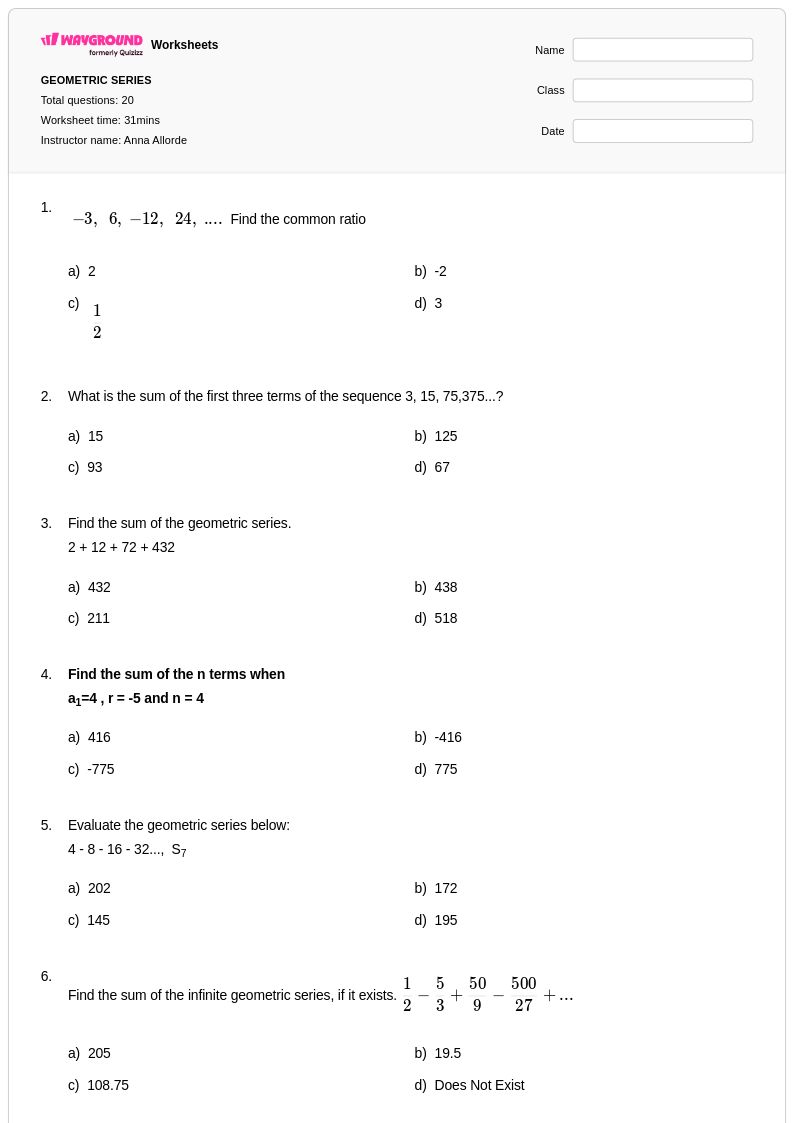
20 Q
10th
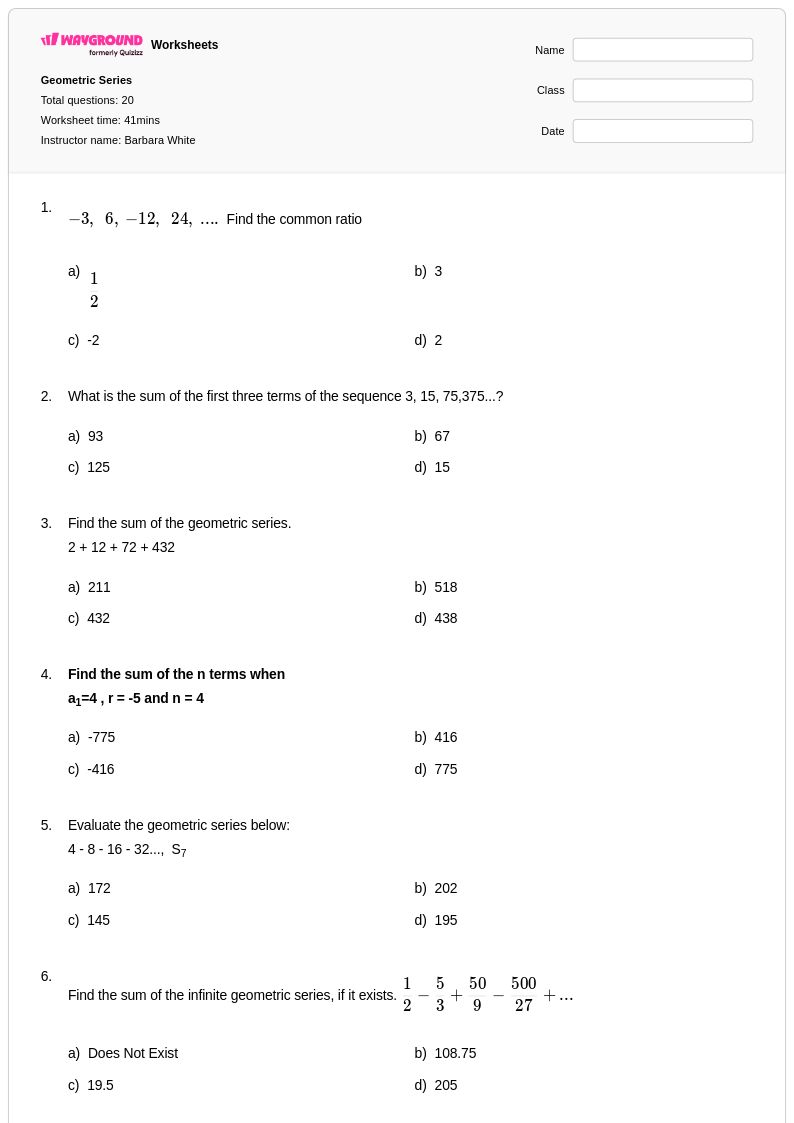
20 Q
10th
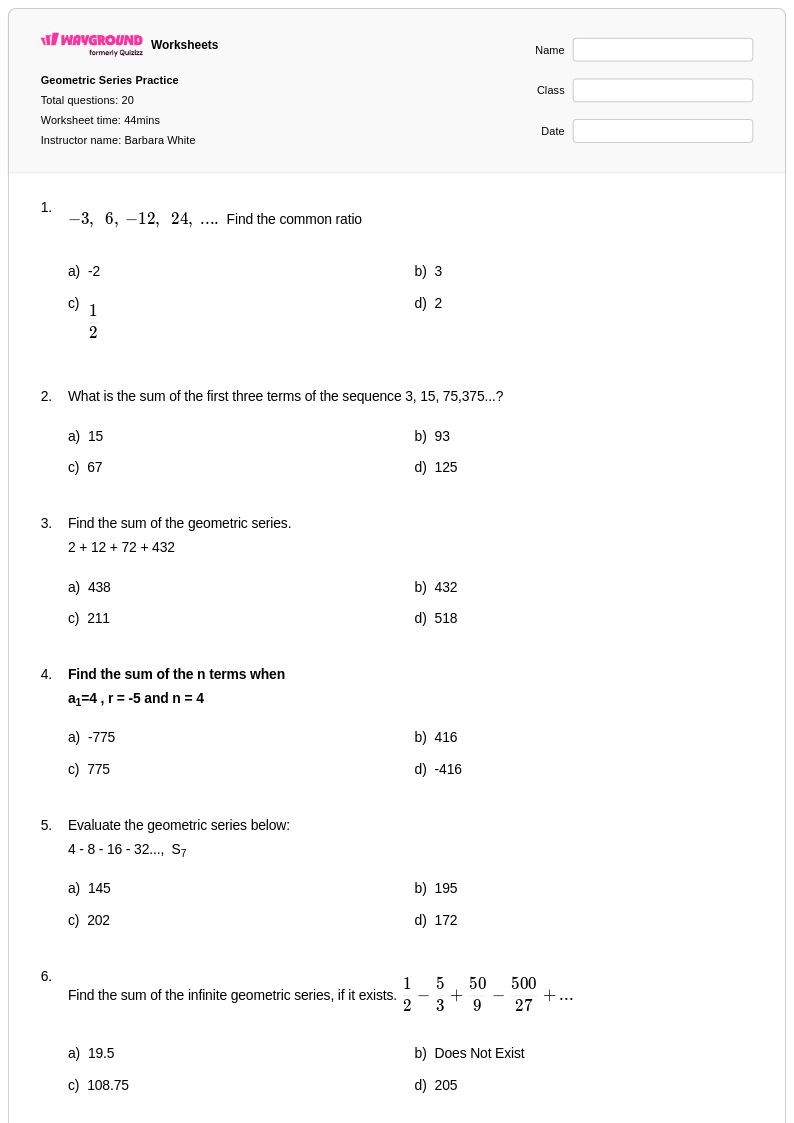
20 Q
10th
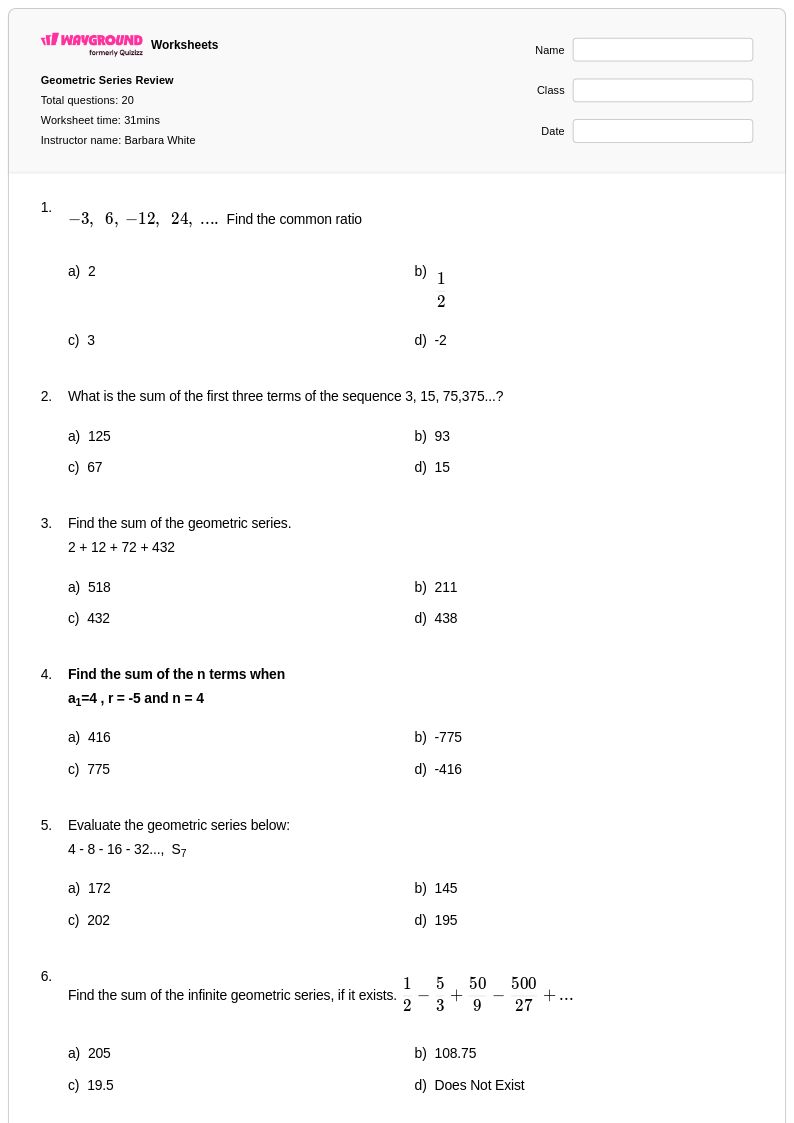
20 Q
10th
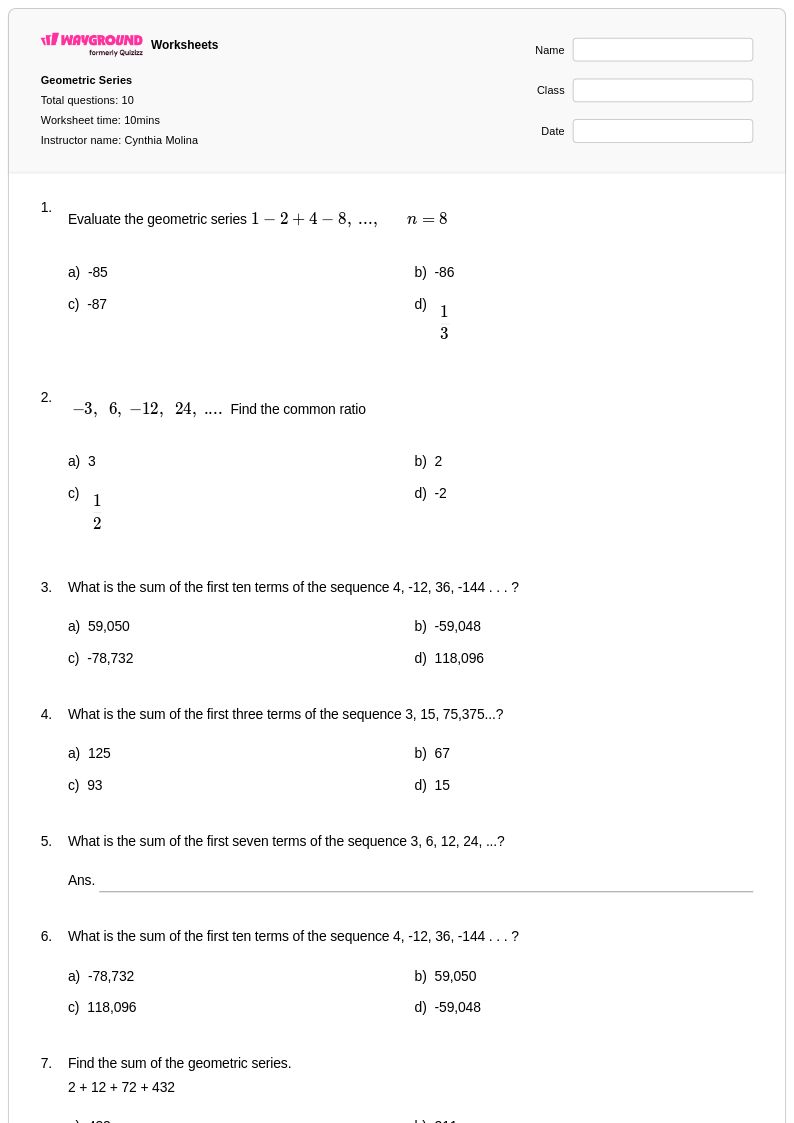
10 Q
10th
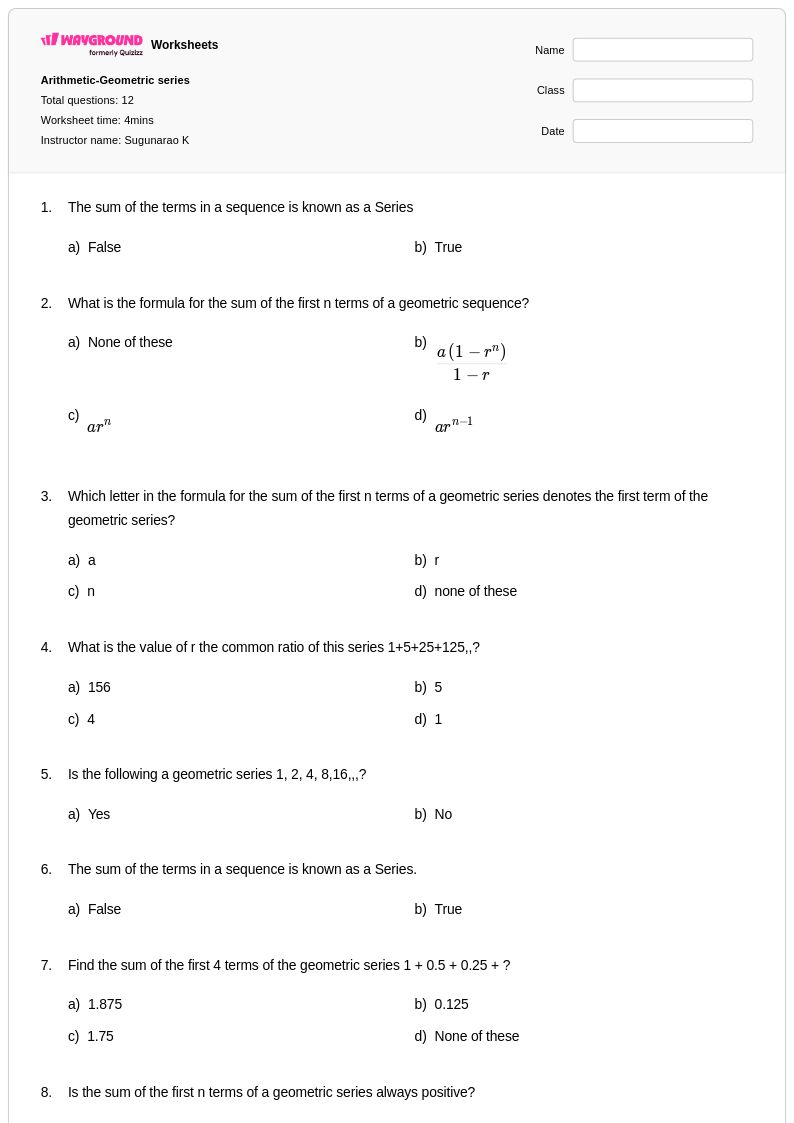
12 Q
12th
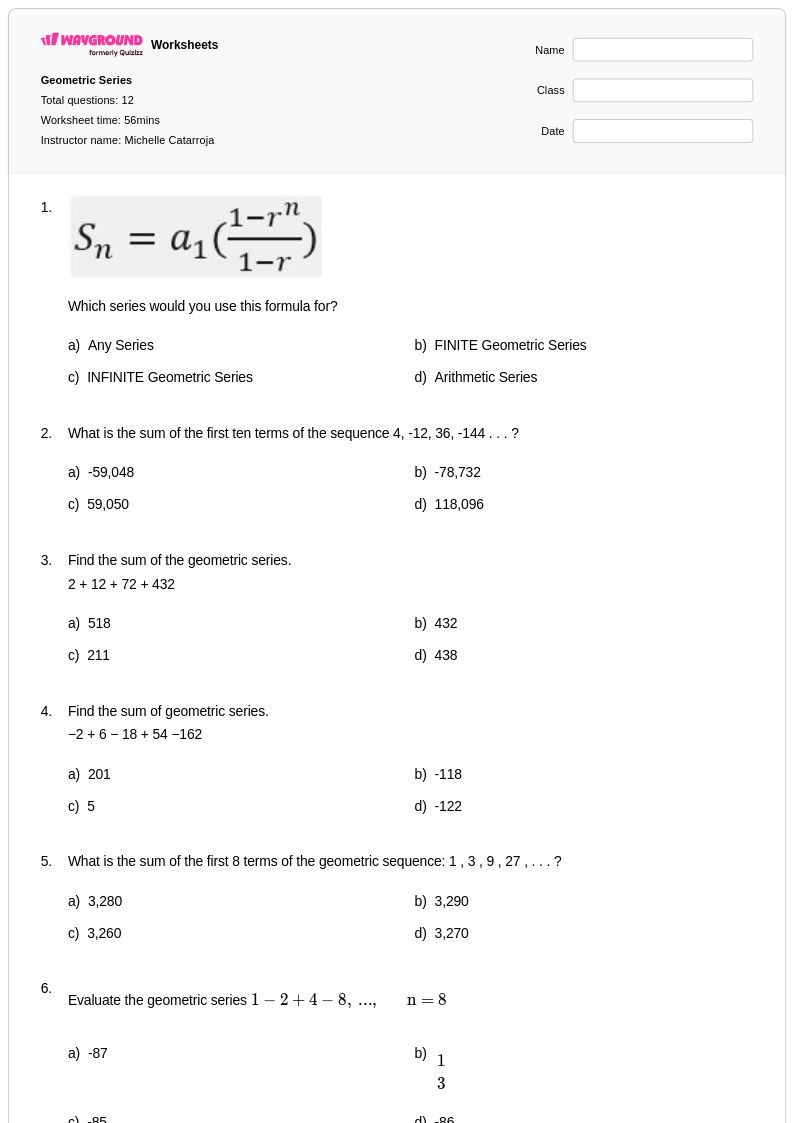
12 Q
9th
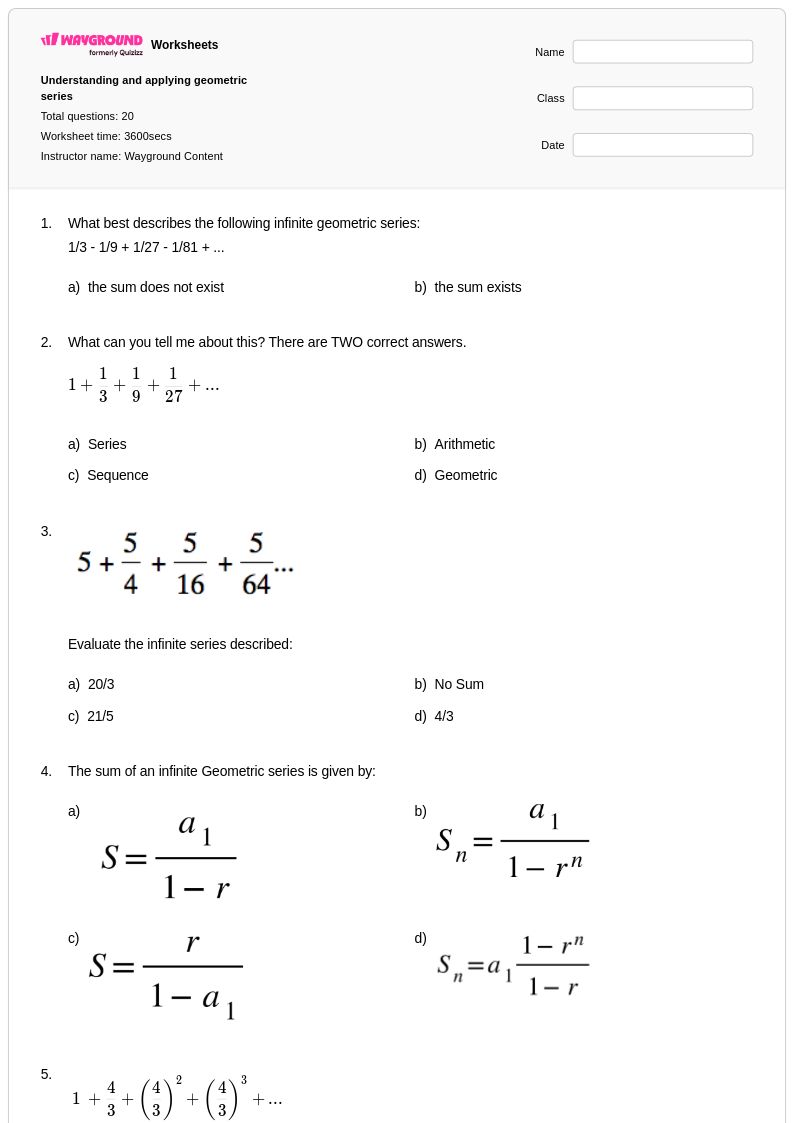
20 Q
9th - 12th
10 Q
10th - 12th
10 Q
Uni
19 Q
11th - Uni
12 Q
10th - 12th
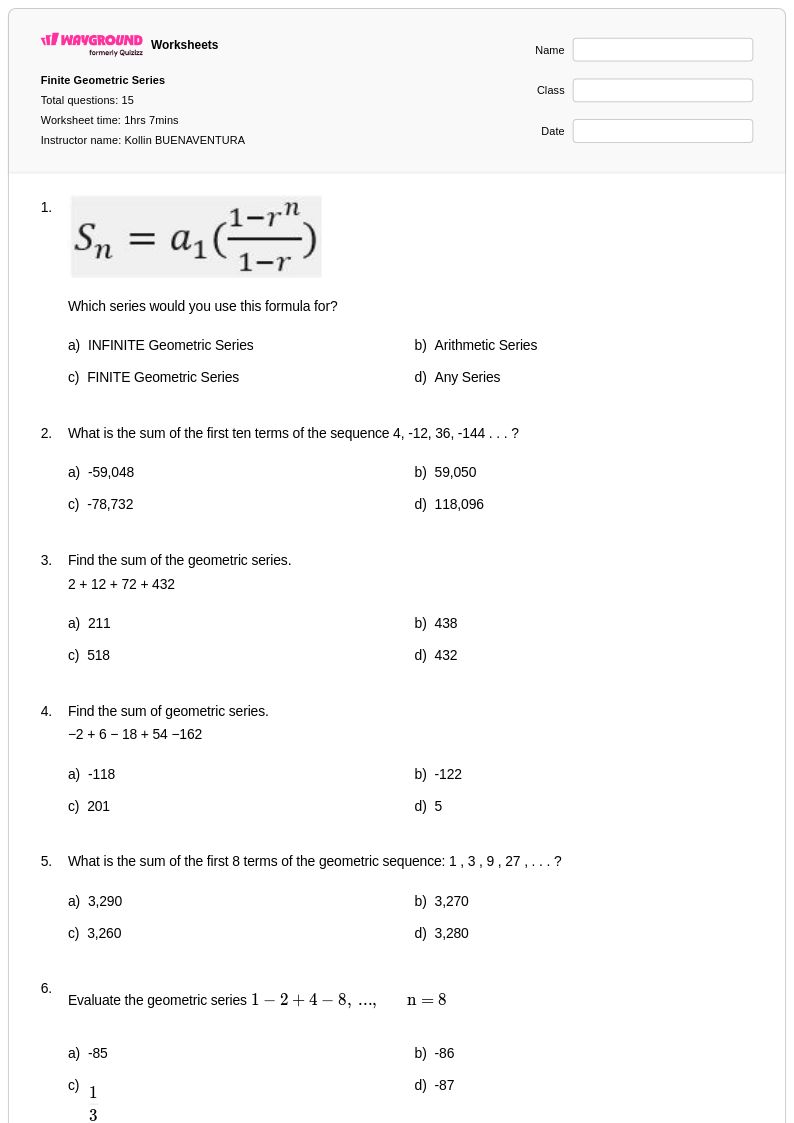
15 Q
10th - 12th
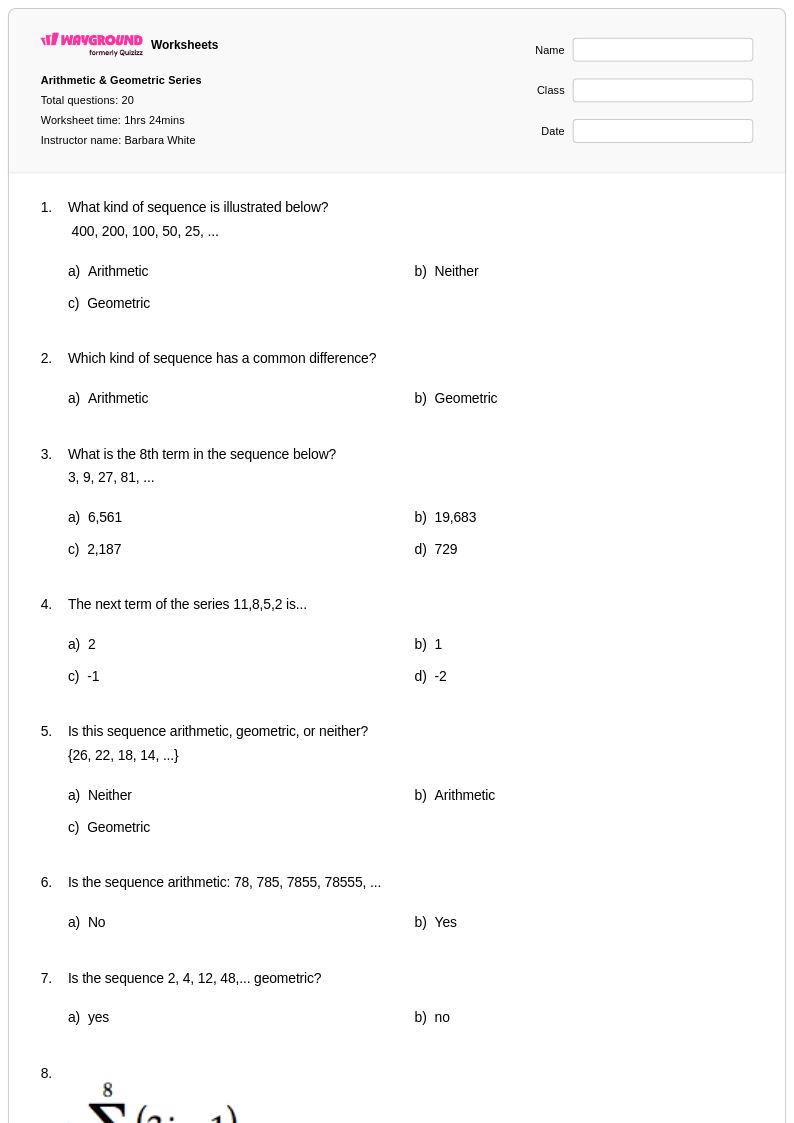
20 Q
10th
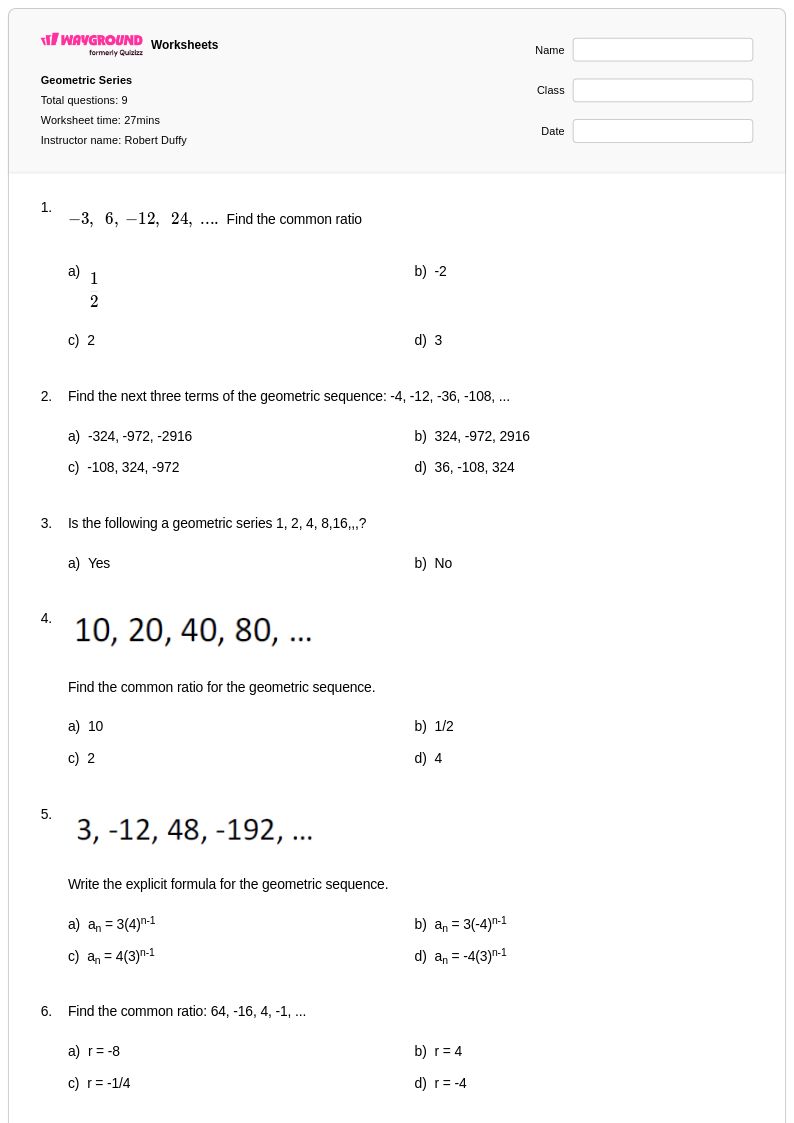
9 Q
8th - 9th
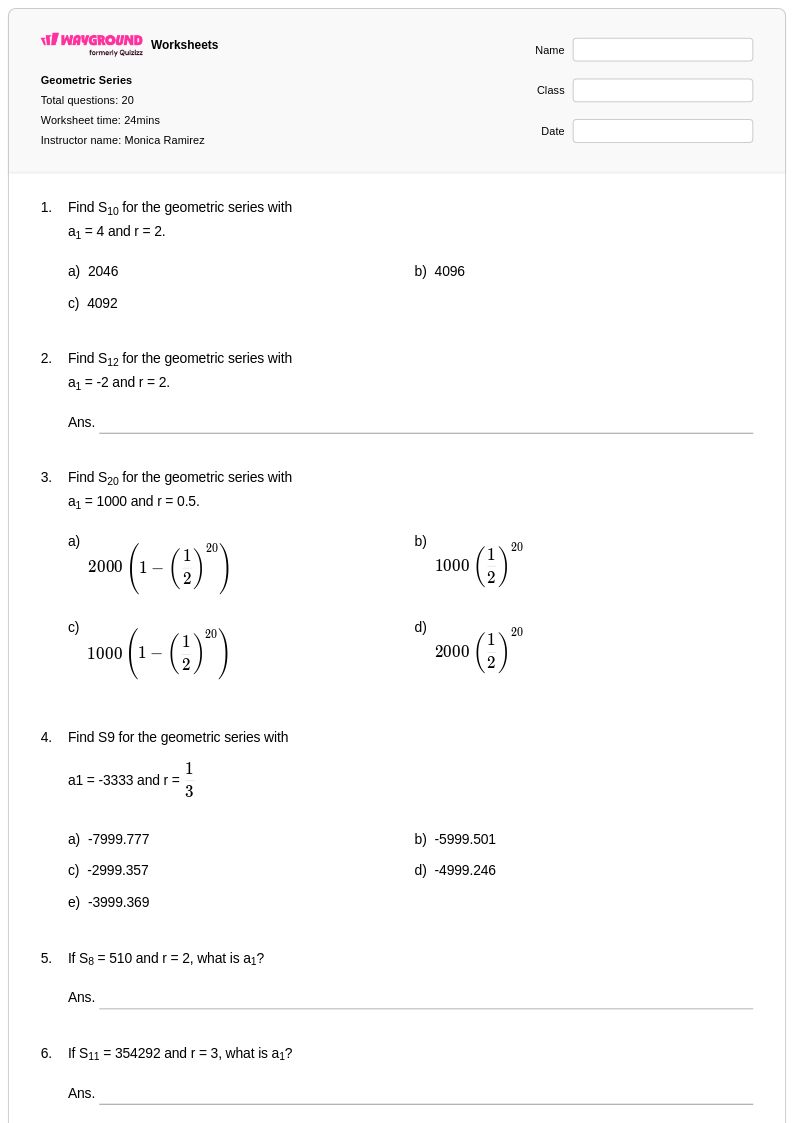
20 Q
9th - Uni
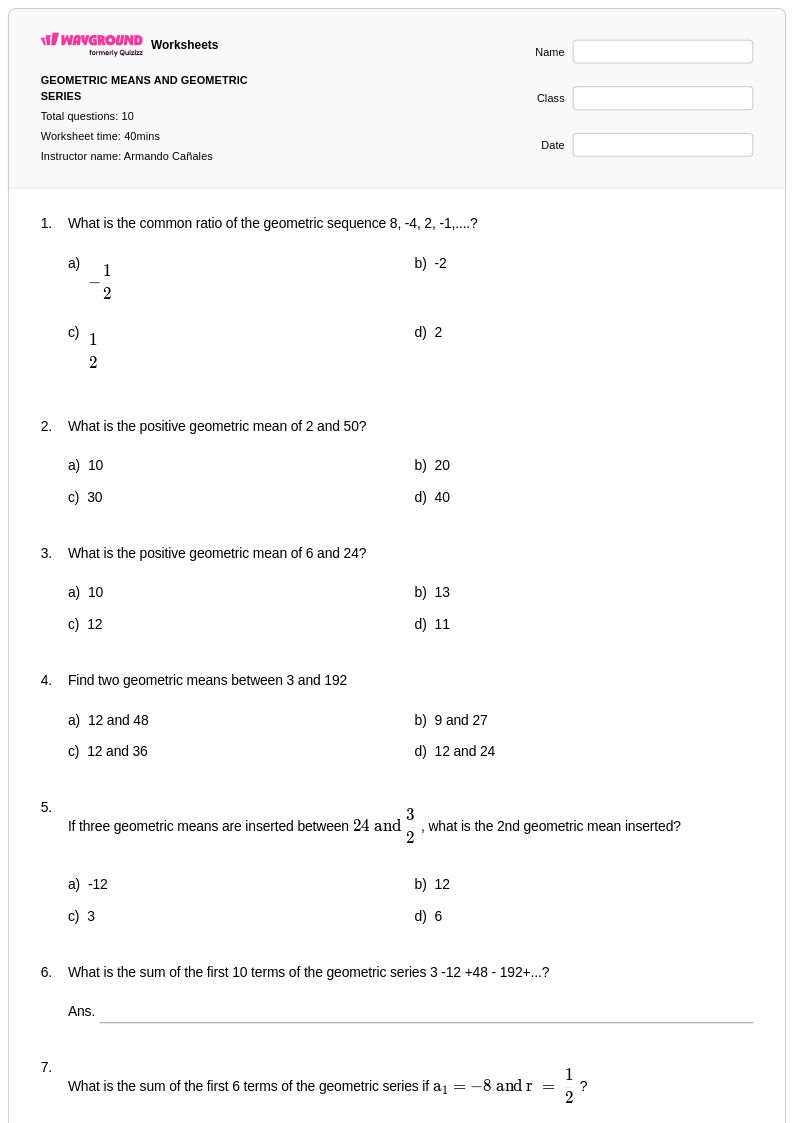
10 Q
10th
![Formative Assessment 7 [Geometric Series] - Printable Geometric-series Worksheets - Wayground](https://quizizz-static.s3.amazonaws.com/_media/worksheets-new/5f2e298b57e465001ba5ca9d-formative-assessment-7-geometric-series)
10 Q
10th
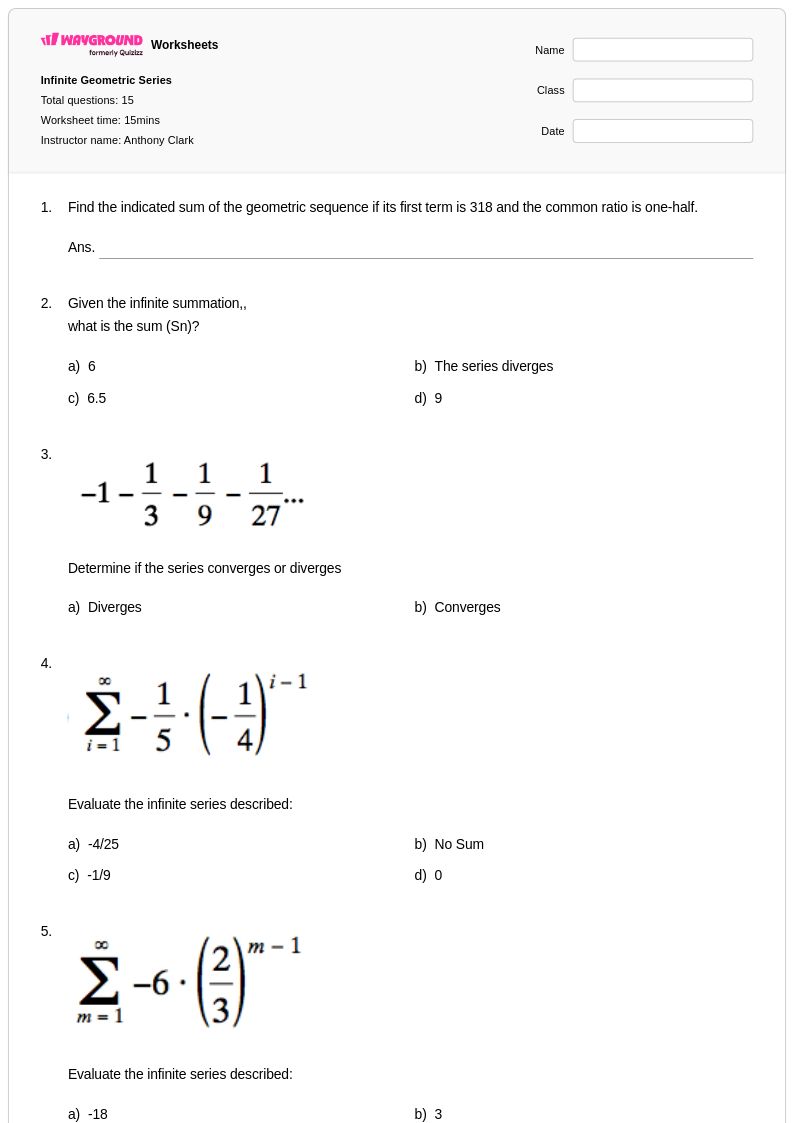
15 Q
11th - Uni
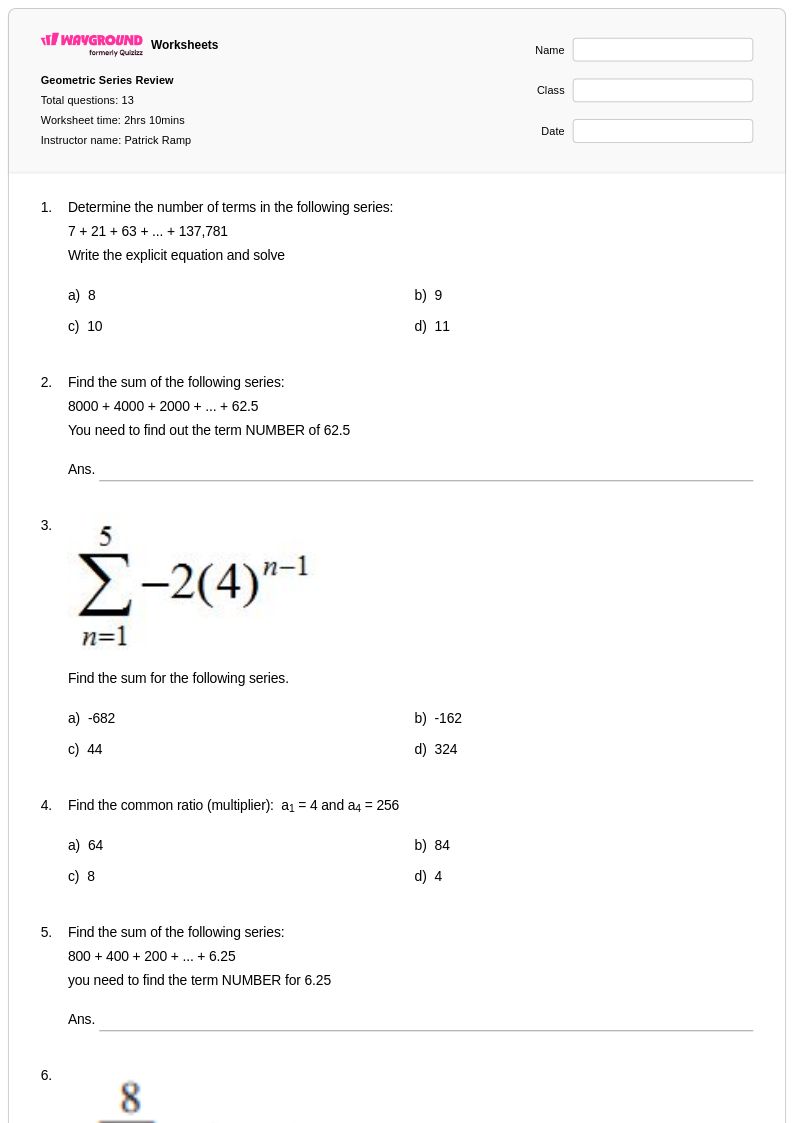
13 Q
10th - 12th

20 Q
12th
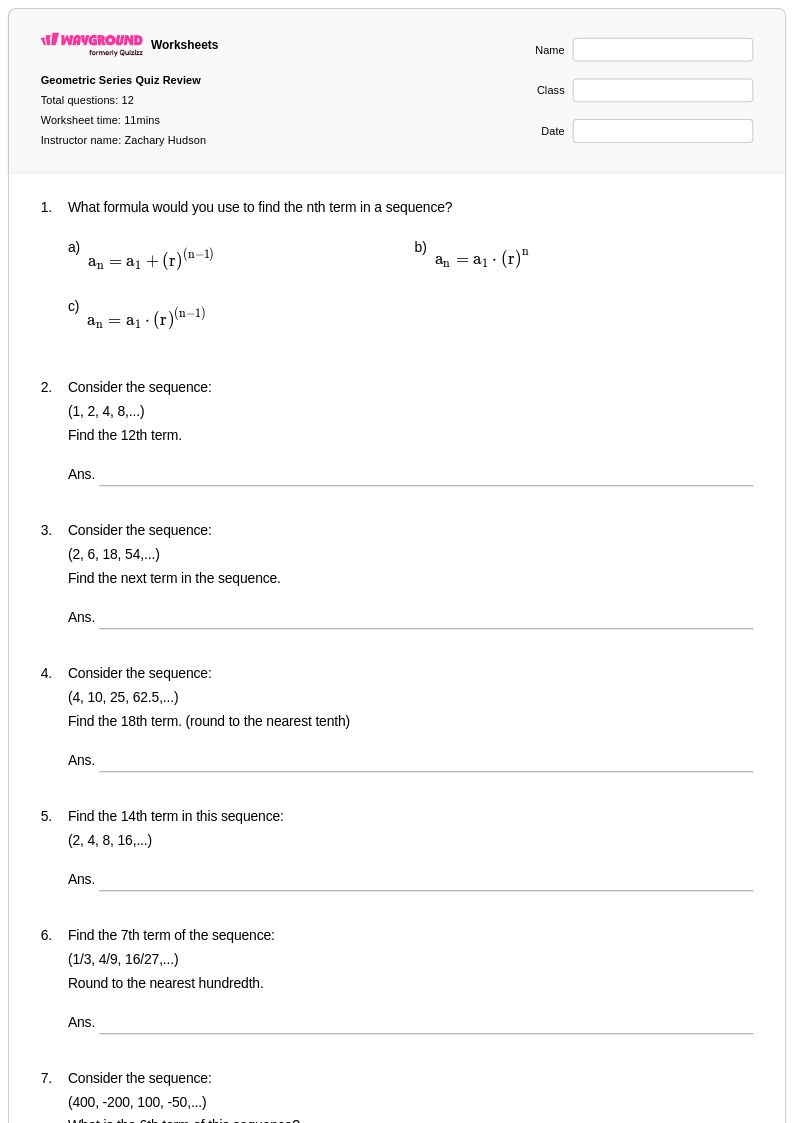
12 Q
9th - 12th
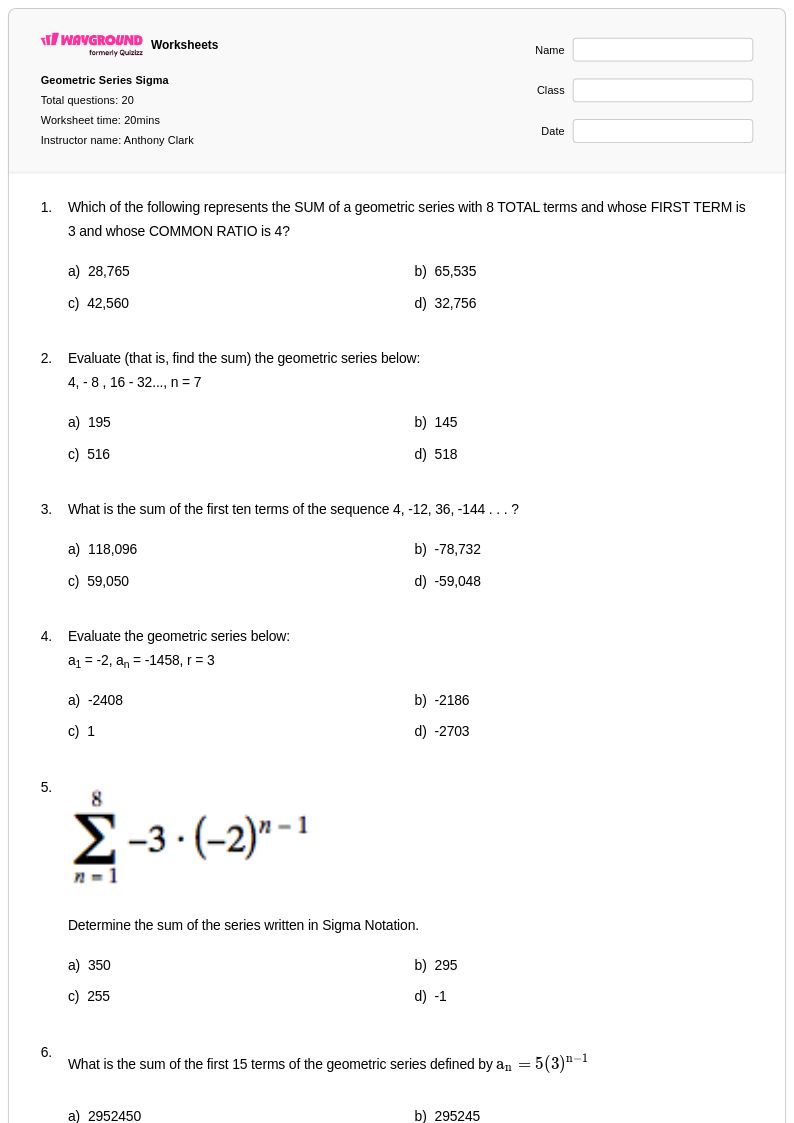
20 Q
11th - Uni
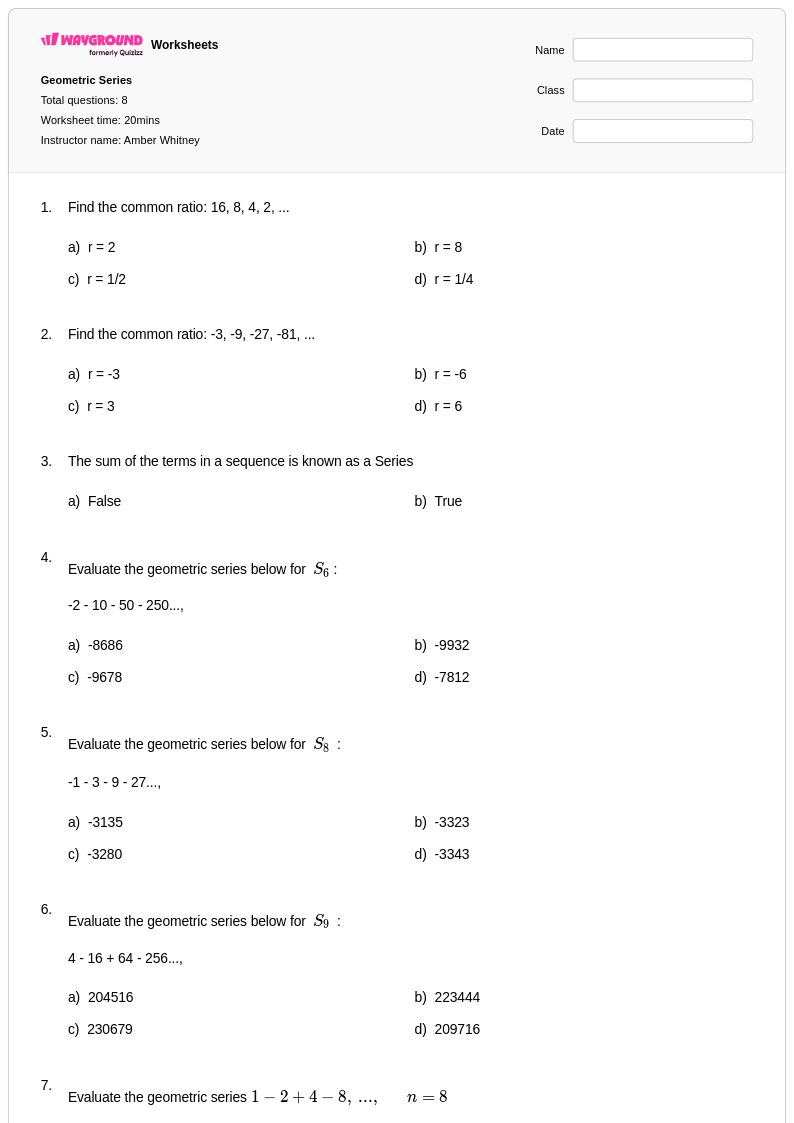
8 Q
11th
Explore Worksheets by Subjects
Explore printable Geometric Series worksheets
Geometric series worksheets available through Wayground (formerly Quizizz) provide mathematics educators with comprehensive resources designed to strengthen students' understanding of convergent and divergent infinite series, sum calculations, and real-world applications of geometric progressions. These expertly crafted practice problems guide learners through essential concepts including identifying common ratios, applying the geometric series formula, determining convergence conditions, and calculating finite and infinite sums. Each worksheet collection includes detailed answer keys and step-by-step solutions that support independent learning and enable students to verify their problem-solving approaches. Available as free printables and downloadable pdf resources, these materials cover fundamental geometric series principles from basic pattern recognition through advanced applications in compound interest, population modeling, and mathematical proof techniques.
Wayground's extensive collection of geometric series worksheets draws from millions of teacher-created resources, offering educators powerful search and filtering capabilities to locate materials perfectly aligned with their curriculum standards and instructional objectives. The platform's differentiation tools enable teachers to customize worksheet difficulty levels, problem types, and mathematical complexity to meet diverse learning needs within their classrooms. Whether accessed in printable pdf format for traditional paper-based instruction or utilized through digital interfaces for interactive learning experiences, these resources support flexible lesson planning approaches. Teachers can efficiently identify materials for targeted skill practice, design remediation activities for struggling learners, create enrichment challenges for advanced students, and develop comprehensive assessment tools that accurately measure student mastery of geometric series concepts and computational techniques.
FAQs
How do I teach the difference between a geometric sequence and a series?
What types of problems are included in these geometric series worksheets?
What is a common mistake when calculating the sum of an infinite geometric series?
How do geometric series fit into the high school math curriculum?
How can I use this Wayground worksheet with my class?
How can I support students who struggle with the abstract nature of infinite series?