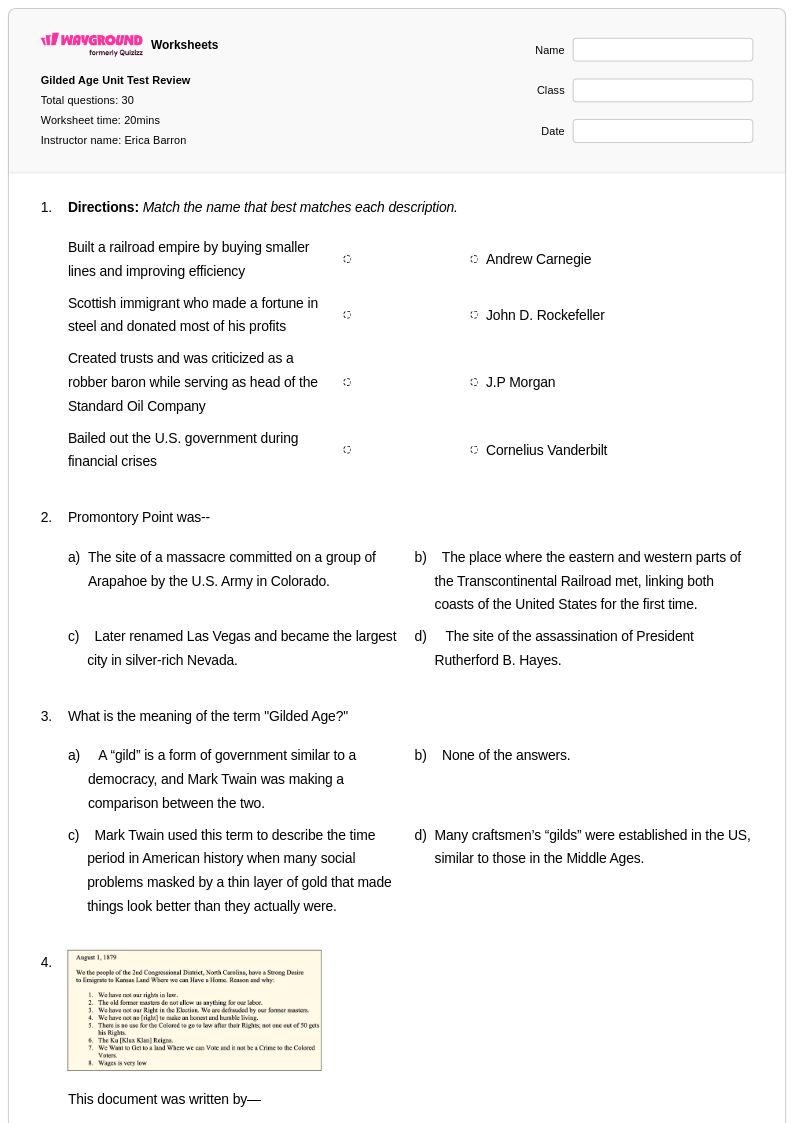
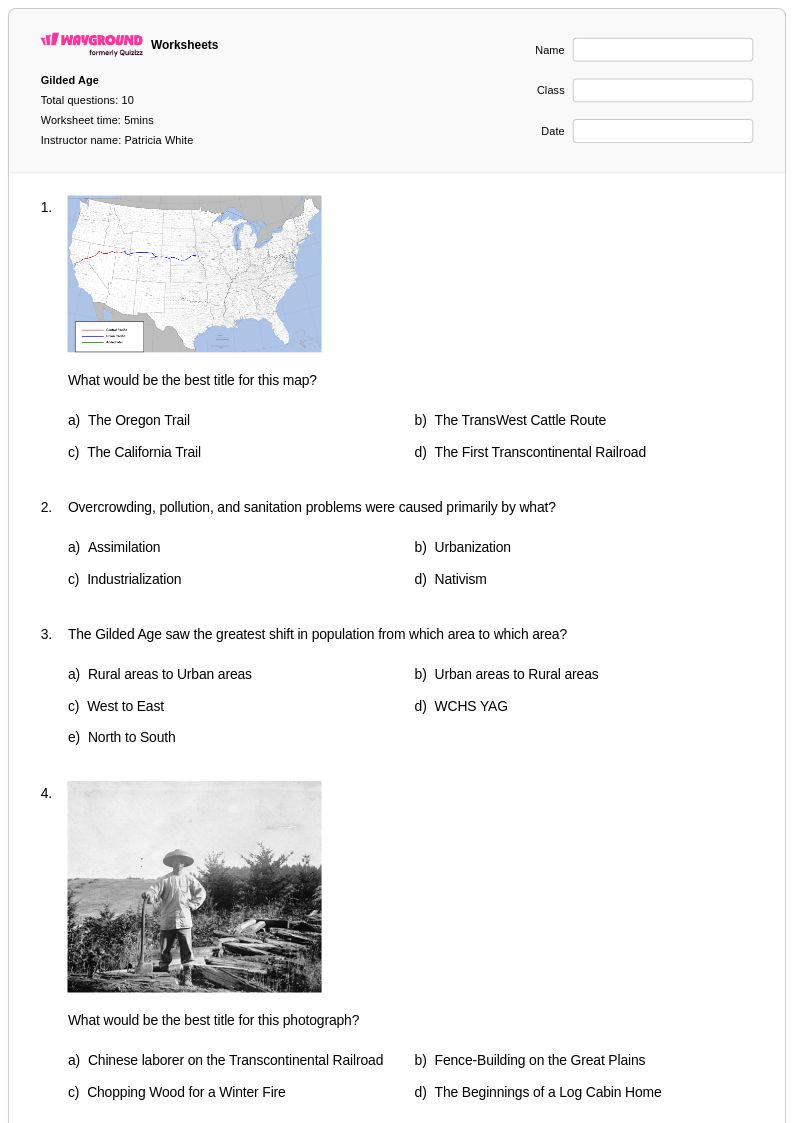
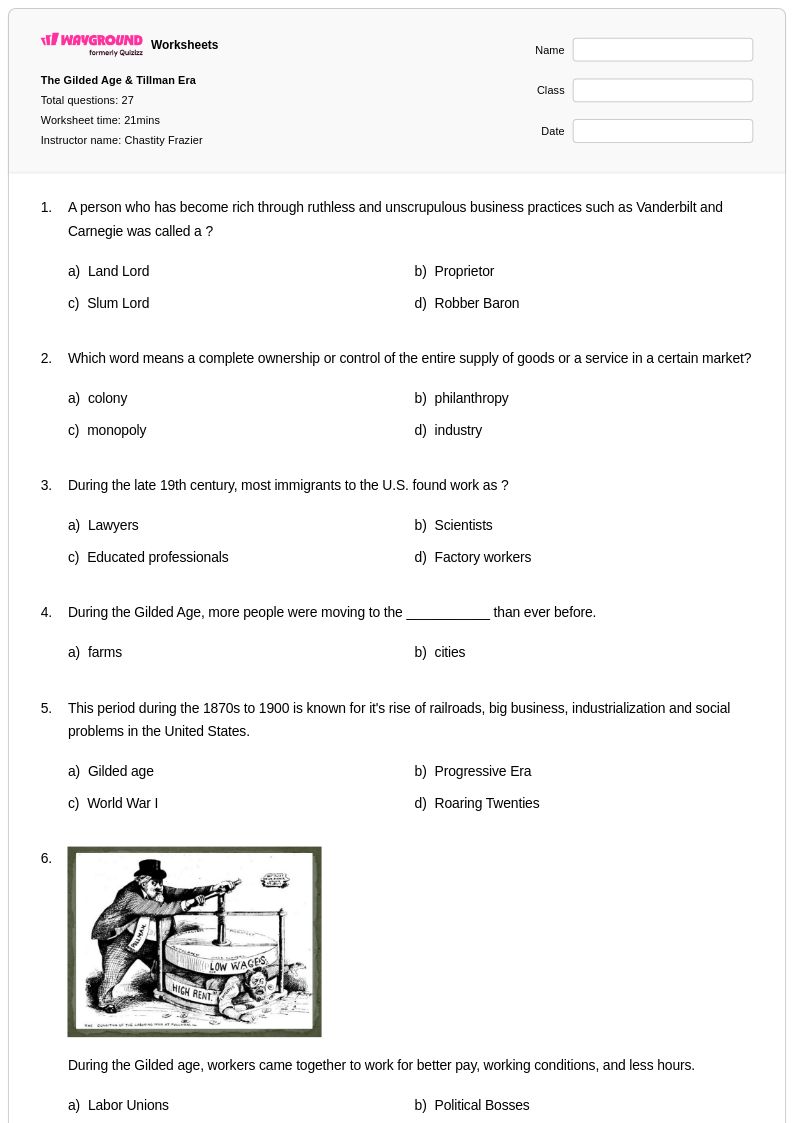
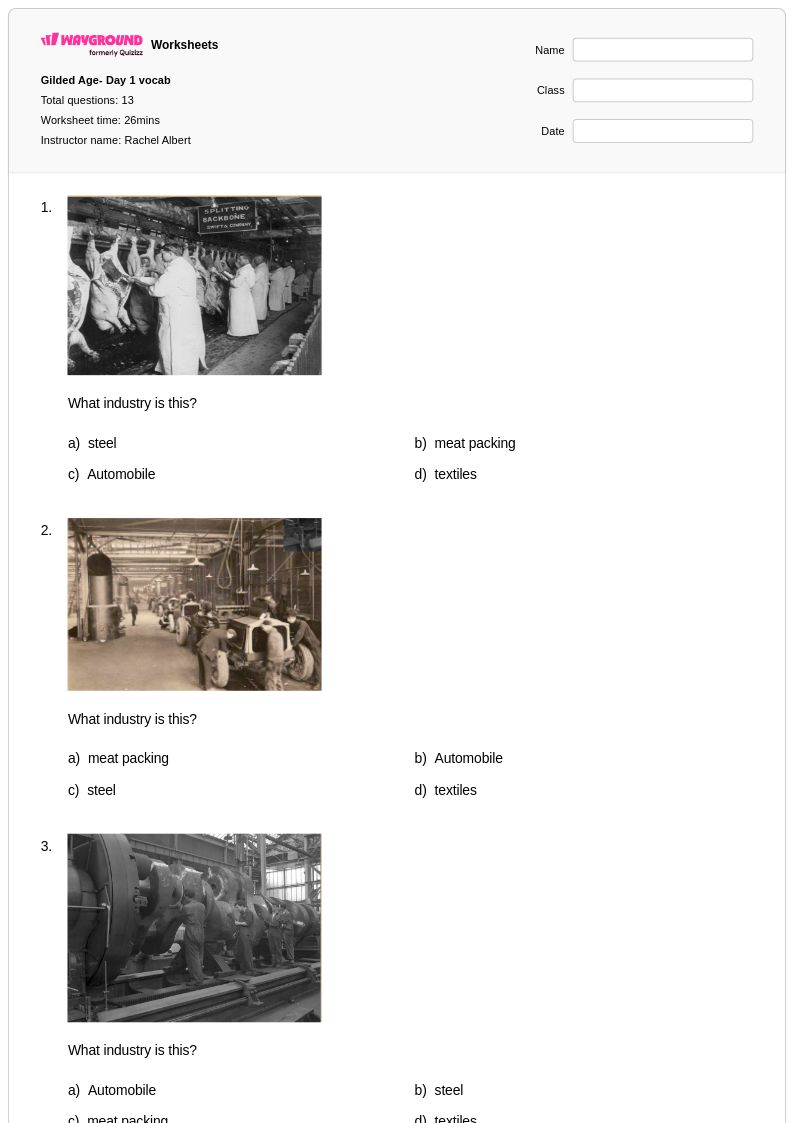
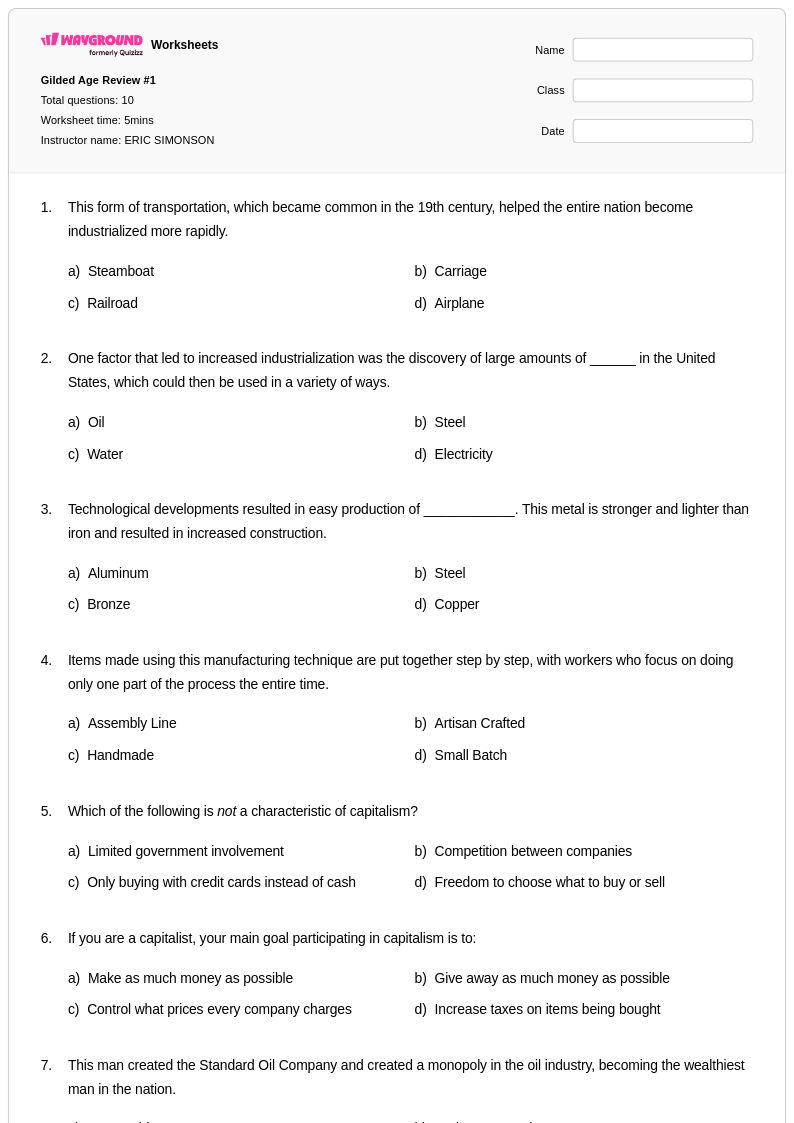
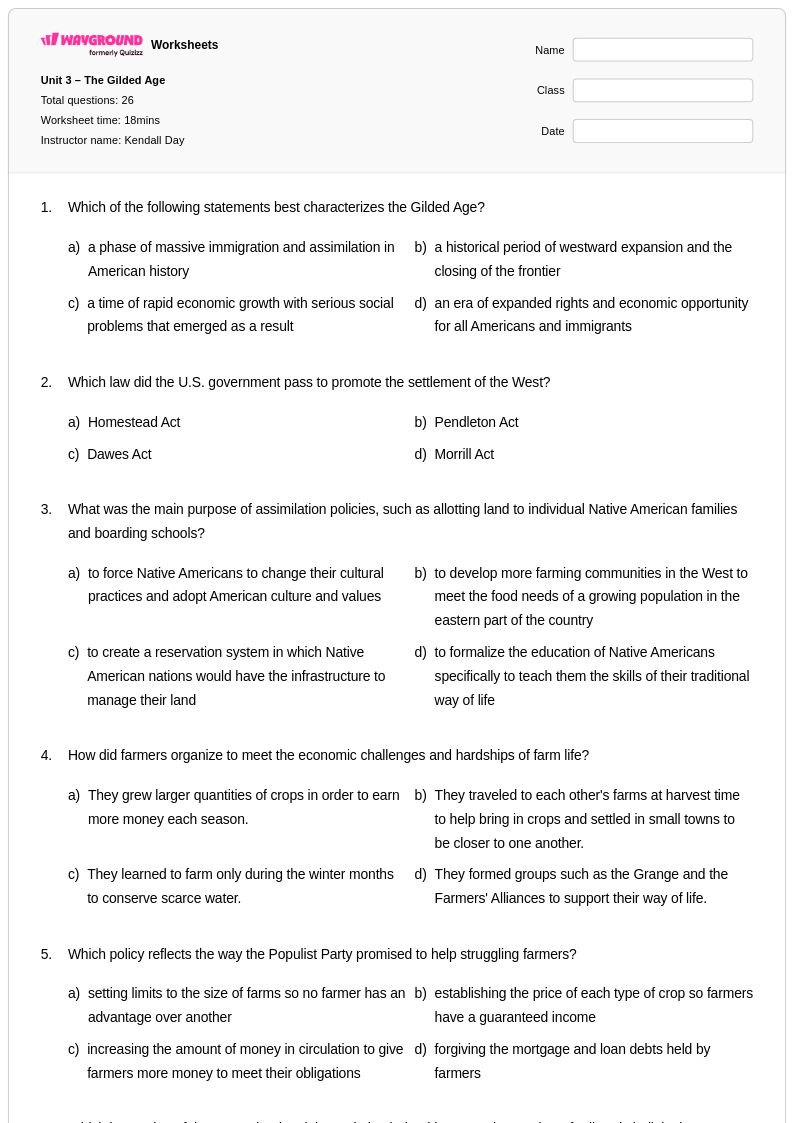
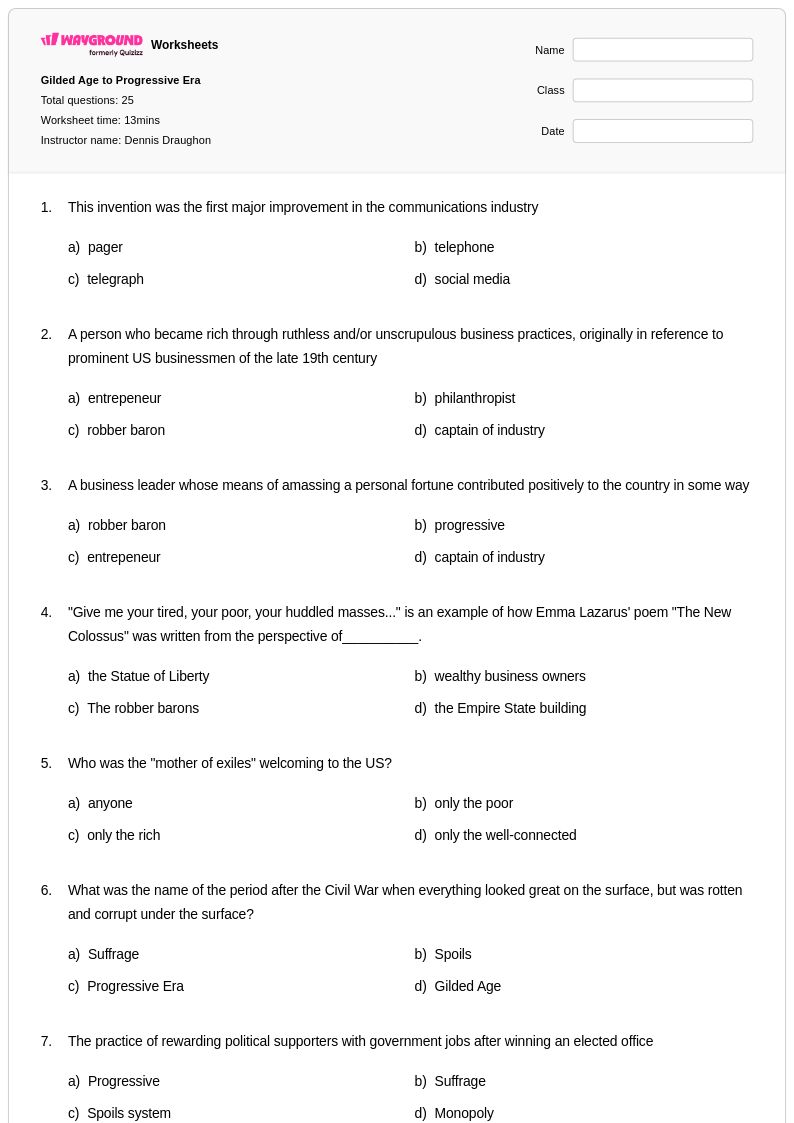
Discover Class 8 Gilded Age worksheets and printables that help students explore America's transformative era through engaging practice problems, free PDF resources, and comprehensive answer keys.
Explore printable Gilded Age worksheets for Class 8
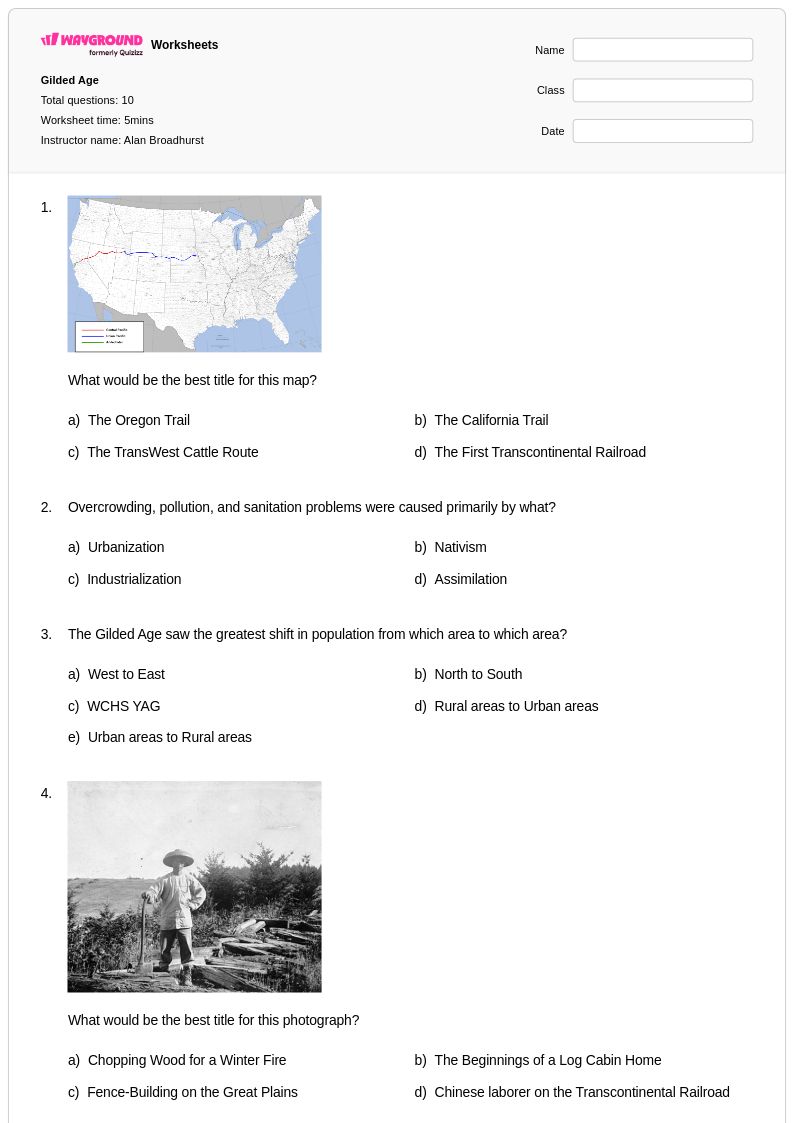
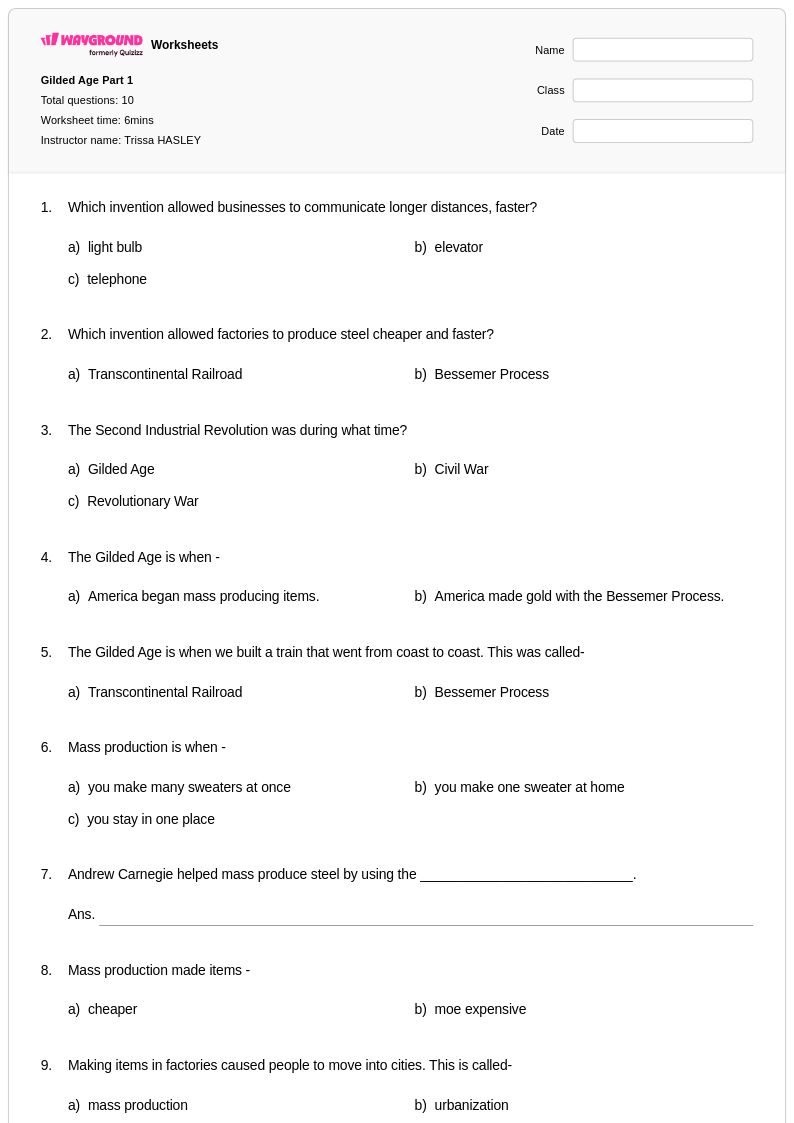
Gilded Age worksheets for Class 8 students available through Wayground provide comprehensive coverage of this transformative period in American history from the 1870s through the early 1900s. These educational resources strengthen critical thinking skills as students analyze the stark contrasts between immense wealth and widespread poverty that defined the era, examine the rise of industrial monopolies and labor movements, and evaluate the social and political reforms that emerged in response to rapid urbanization and immigration. The practice problems guide students through primary source analysis of documents from figures like Andrew Carnegie and Samuel Gompers, while answer keys support both independent study and classroom instruction. Teachers can access these materials as free printables in convenient pdf format, making it easy to incorporate authentic historical thinking exercises into daily lessons.
Wayground's extensive collection draws from millions of teacher-created resources specifically designed to support Class 8 U.S. History instruction on the Gilded Age period. The platform's advanced search and filtering capabilities allow educators to quickly locate worksheets aligned with state and national social studies standards, while differentiation tools enable customization for diverse learning needs and reading levels. Teachers can seamlessly transition between printable pdf versions for traditional classroom use and digital formats for online learning environments, providing flexibility for lesson planning and implementation. These comprehensive worksheet collections support targeted skill practice in historical analysis, remediation for struggling learners, and enrichment opportunities for advanced students, ensuring that all eighth-graders develop a nuanced understanding of this complex era in American development.
FAQs
How do I teach the Gilded Age to middle or high school students?
Teaching the Gilded Age effectively means helping students hold two realities at once: extraordinary industrial growth and deep social inequality. Anchor instruction around concrete figures like Andrew Carnegie and Samuel Gompers, then use primary sources such as political cartoons, immigrant testimony, and labor strike reports to make abstract economic shifts tangible. Structured comparison activities that ask students to evaluate the perspectives of industrialists, factory workers, and Progressive reformers build the analytical habits required for historical thinking at this level.
What topics should a Gilded Age worksheet cover?
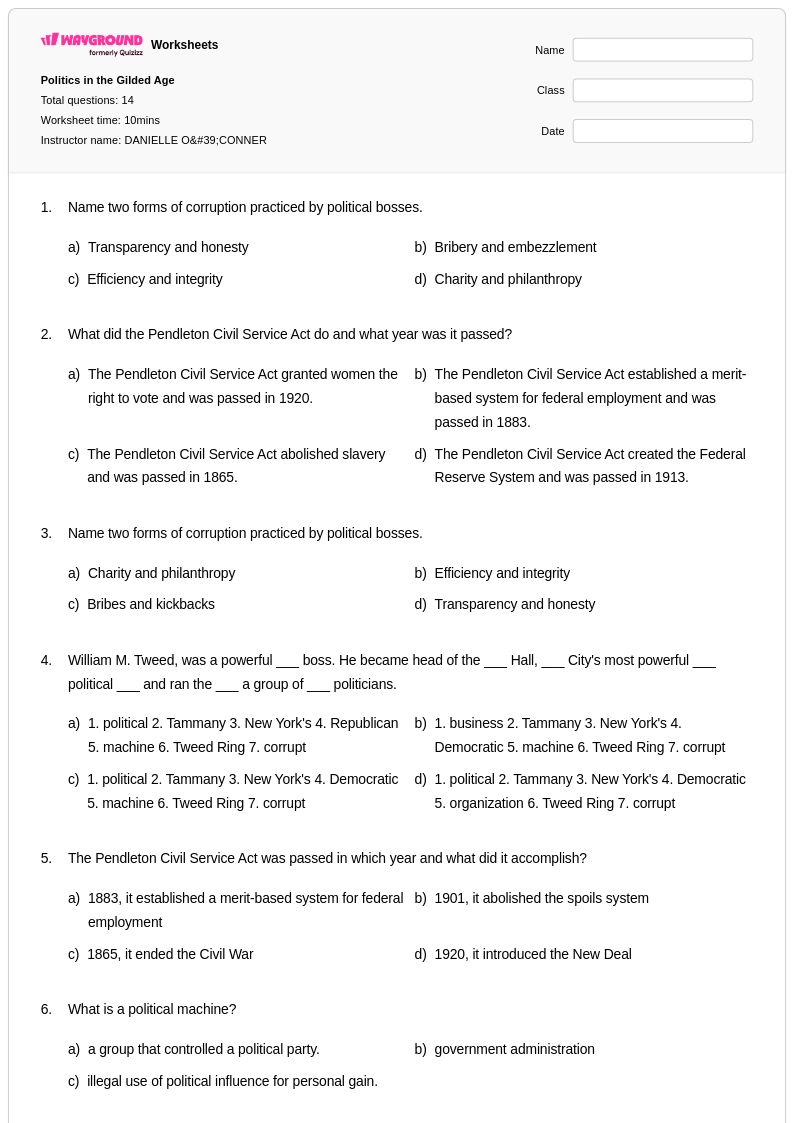
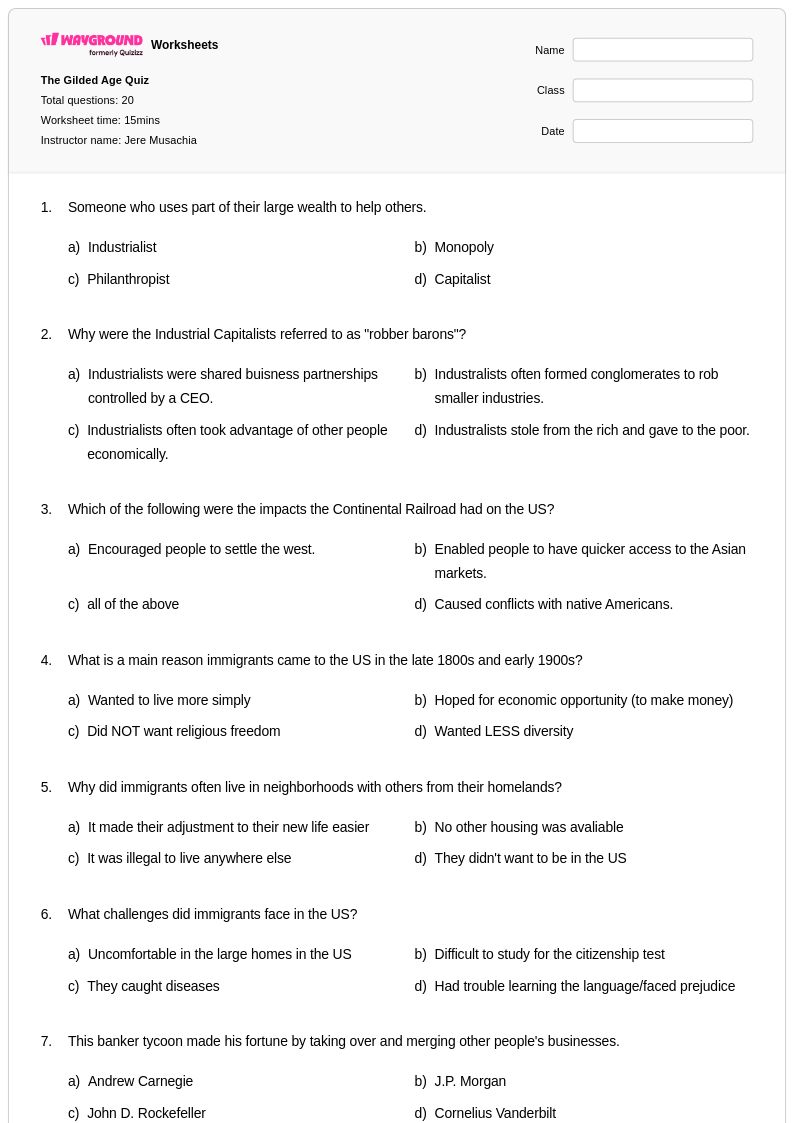
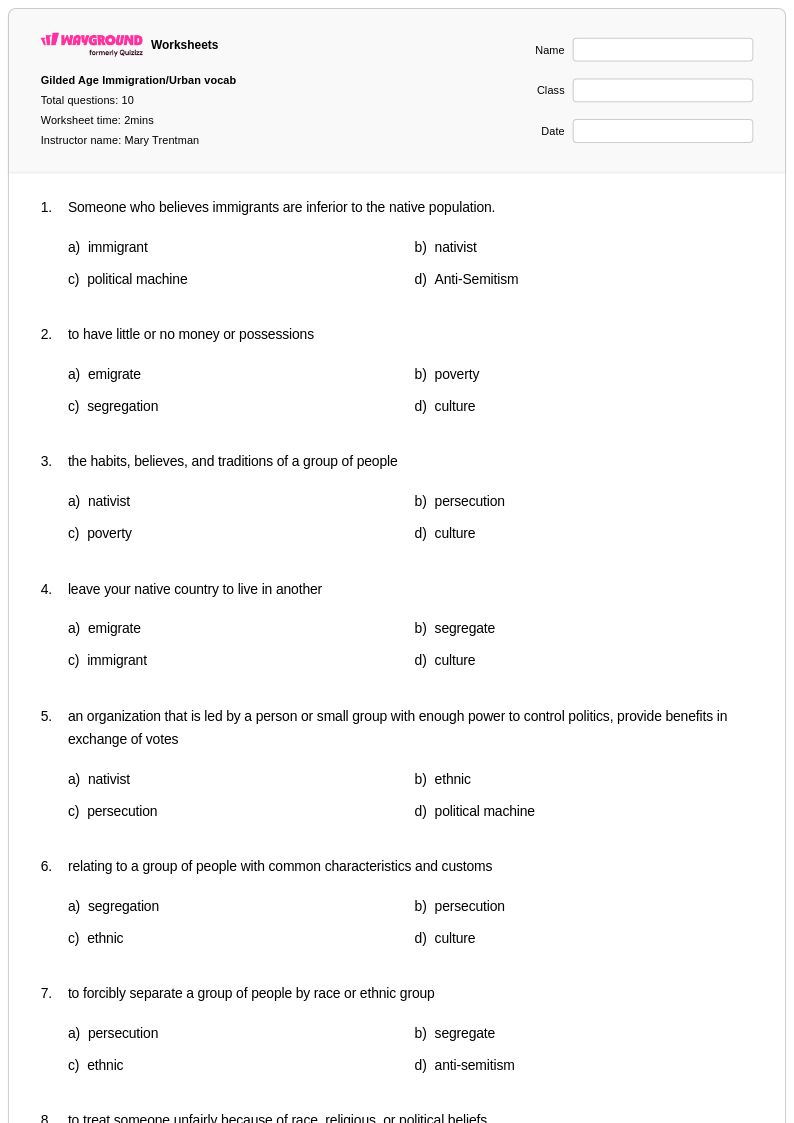
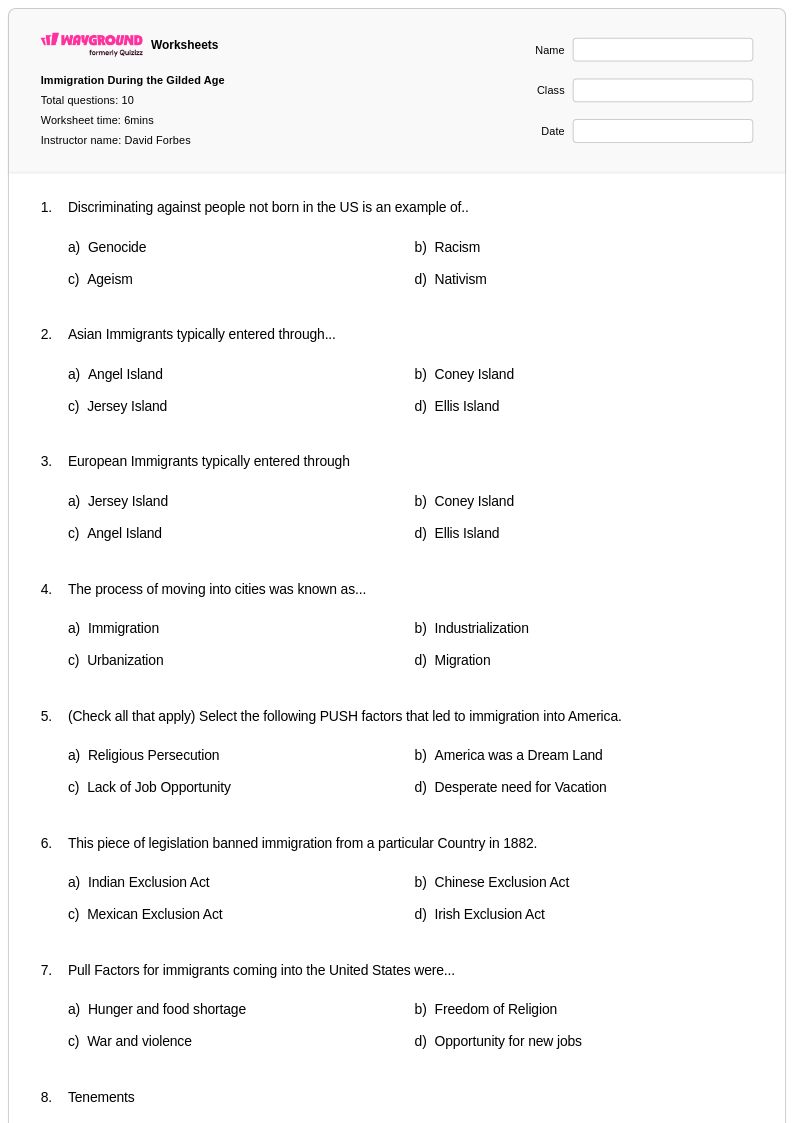
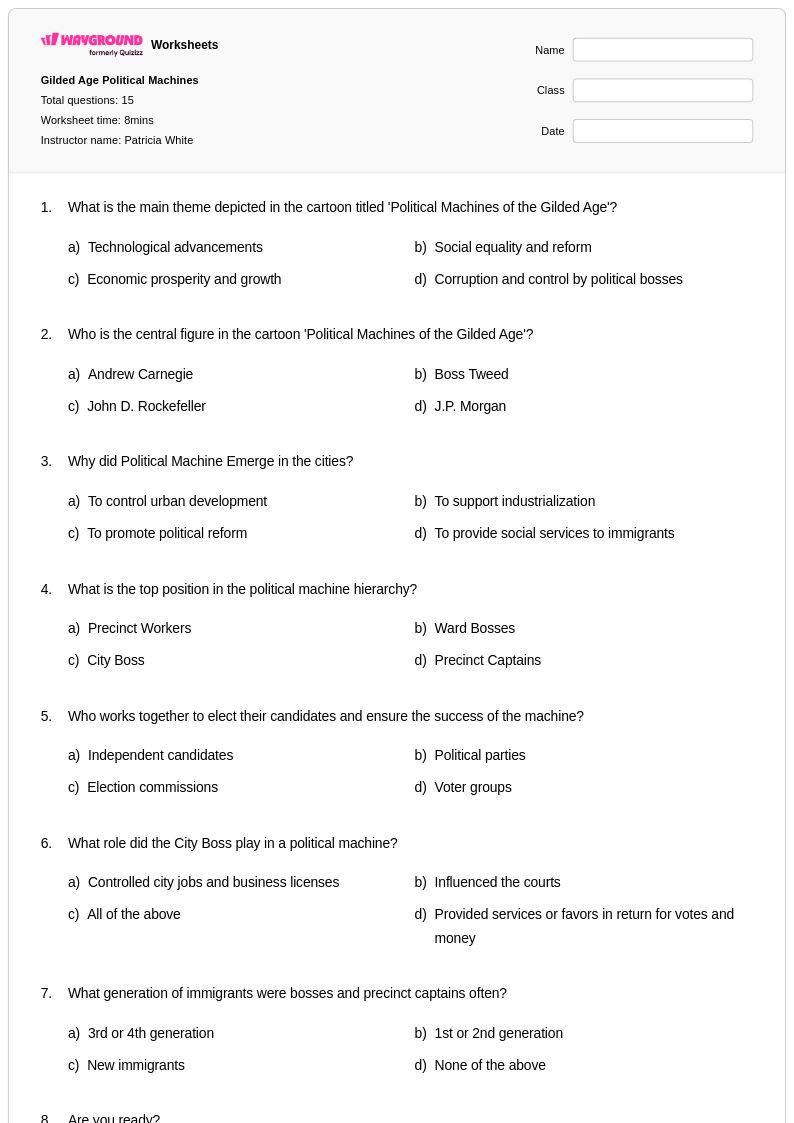
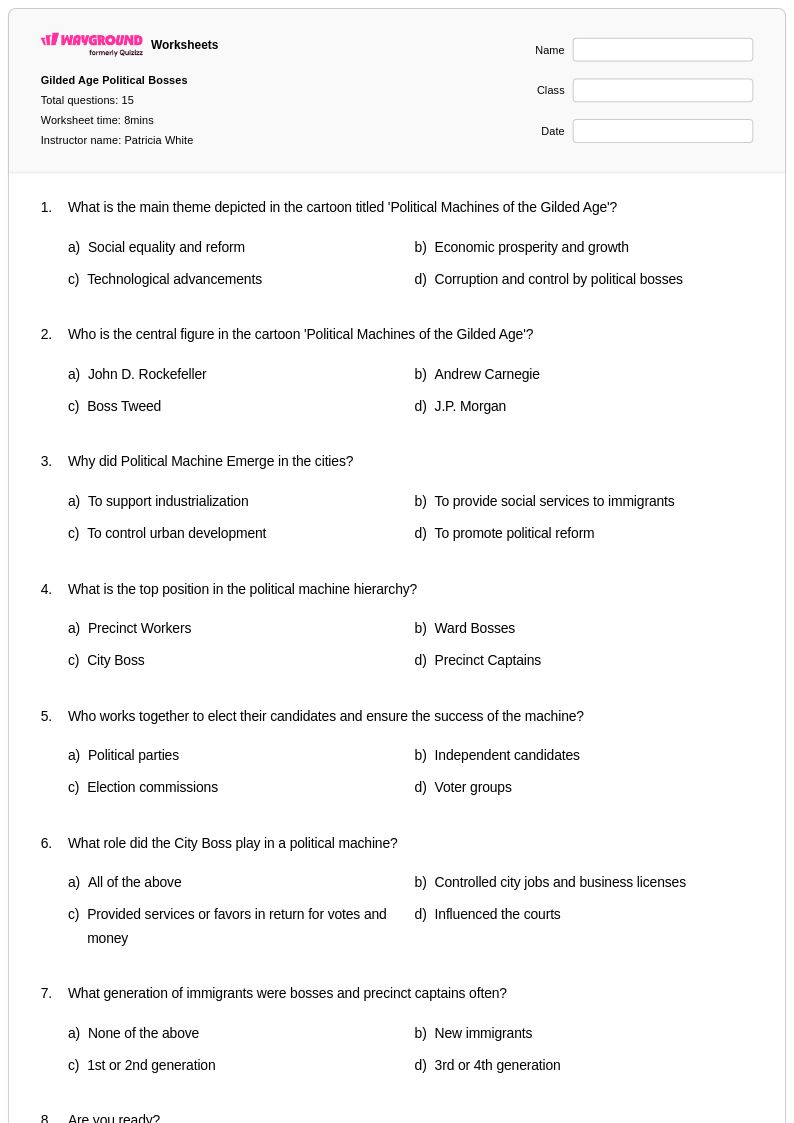
A well-designed Gilded Age worksheet should address the Second Industrial Revolution, the rise of robber barons and monopolies, immigration patterns and tenement conditions, the labor movement and major strikes, political corruption and machine politics, and the early stirrings of Progressive reform. Covering these interconnected topics helps students understand the era not as a series of isolated events but as a period of systemic tension between wealth and inequality that shaped modern American society.
What exercises help students practice analyzing the Gilded Age?
Primary source analysis is one of the most effective practice formats for the Gilded Age because the era produced rich documentary evidence including political cartoons, muckraker journalism, and congressional testimony. Document-based questions that ask students to compare the perspective of a Gilded Age industrialist with that of a striking worker reinforce causation and point-of-view skills simultaneously. Graphic organizers that map the causes and effects of events like the Pullman Strike or the rise of Standard Oil help students organize complex information before moving to written analysis.
What mistakes do students commonly make when studying the Gilded Age?
The most common error is treating Gilded Age industrialists as purely villainous or purely heroic rather than analyzing their actions within the economic and political context of the era. Students also frequently confuse the Gilded Age with the Progressive Era, not recognizing that the latter emerged as a direct response to the former. A third recurring misconception is underestimating the scale and diversity of immigration during this period and its connection to both industrial labor supply and nativist political backlash.
How can I use Gilded Age worksheets in my classroom?
Gilded Age worksheets on Wayground are available as printable PDFs for traditional classroom use and in digital formats for technology-integrated environments, including the option to host them as an interactive quiz on Wayground. Printable versions work well for close-reading and annotation activities, while digital formats allow for immediate feedback and easier differentiation. Each worksheet includes a complete answer key, which supports both teacher-led instruction and independent student practice.
How do I differentiate Gilded Age instruction for students at different levels?
For students who need foundational support, graphic organizers that introduce key figures like robber barons and political machines provide scaffolded entry points before moving to more complex analysis. Advanced students benefit from document-based questions that require them to synthesize multiple perspectives and evaluate the era's lasting impact on modern American inequality. On Wayground, teachers can also apply individual accommodations such as read-aloud support, extended time, or reduced answer choices, so all students can engage with the same content at an appropriate level of challenge.