Explore Wayground's free Class 7 habit loop worksheets and printables that help students understand behavioral patterns, practice identifying cue-routine-reward cycles, and develop stronger social awareness through engaging PDF activities with complete answer keys.
Explore printable Habit Loop worksheets for Class 7
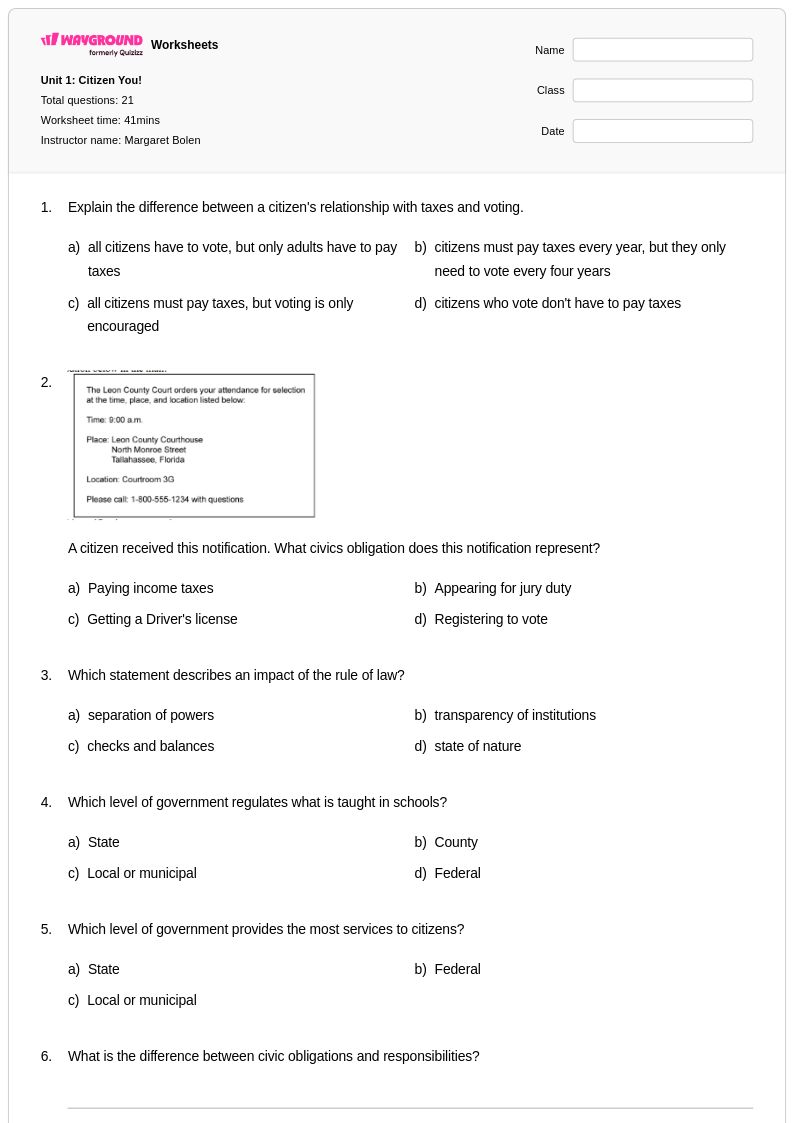
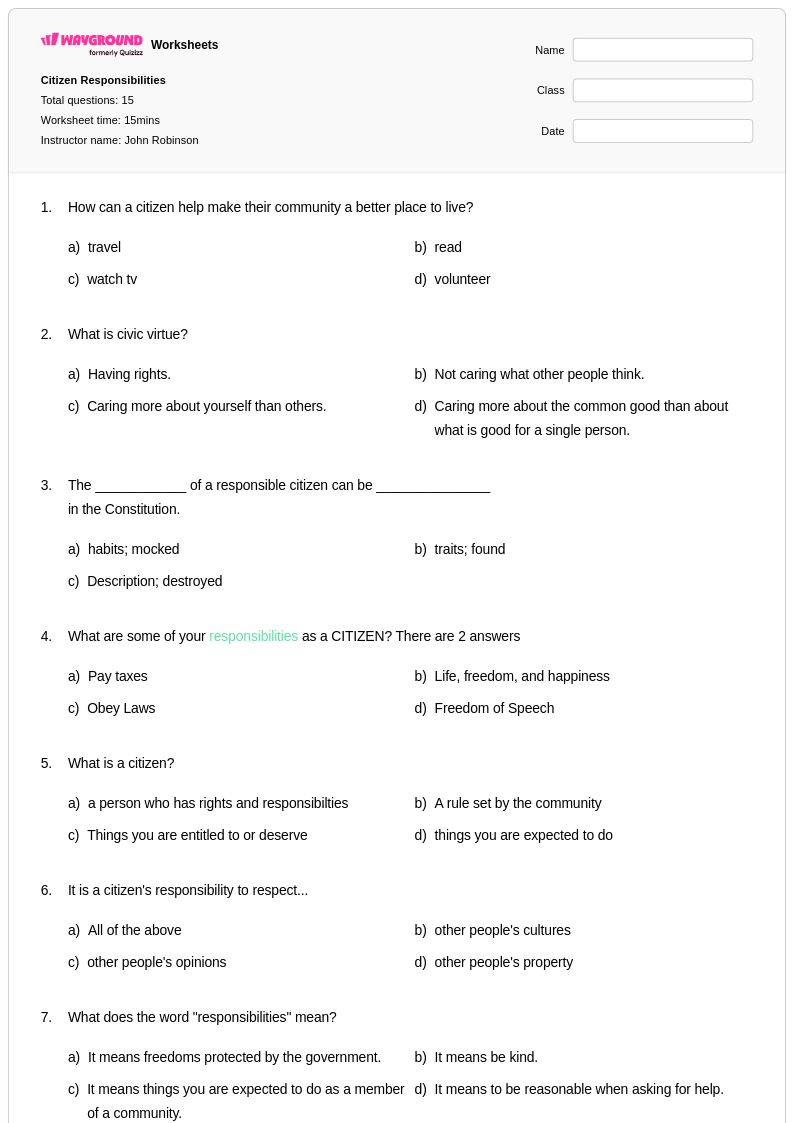
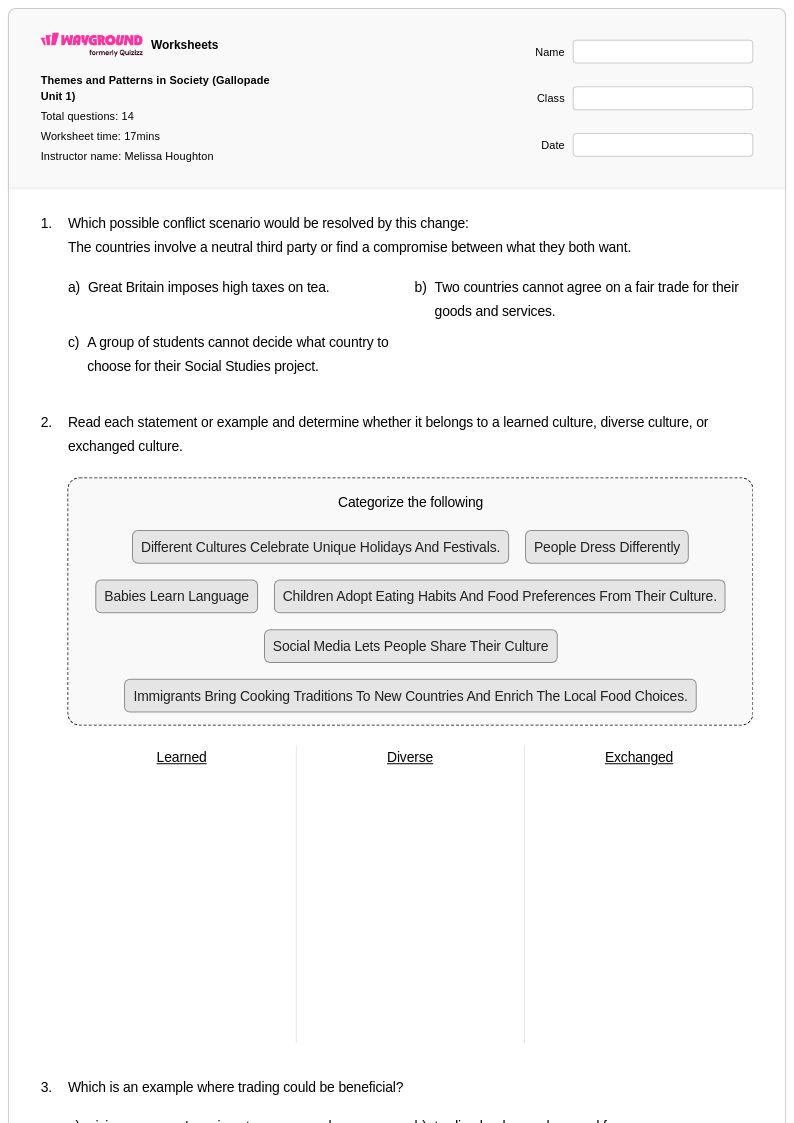
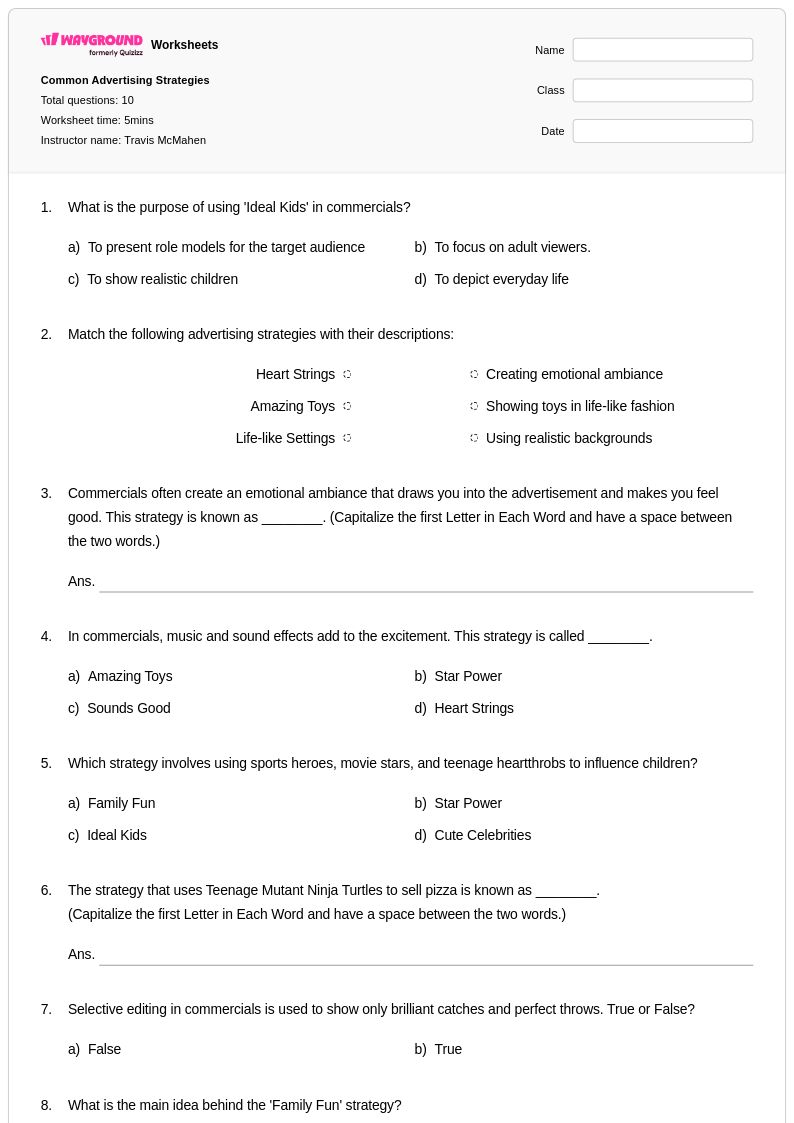
Habit loop worksheets for Class 7 social studies provide students with essential tools for understanding the psychological mechanisms that drive human behavior and decision-making. These comprehensive resources from Wayground (formerly Quizizz) focus on the three-component cycle of cue, routine, and reward that forms the foundation of habit formation, helping seventh graders develop critical social awareness skills. Students engage with practice problems that require them to identify habit loops in real-world scenarios, analyze the triggers that initiate behavioral patterns, and evaluate the rewards that reinforce these cycles. The worksheets include detailed answer keys that support both independent learning and classroom instruction, while free printable pdf formats ensure accessibility for diverse educational settings and individual student needs.
Wayground (formerly Quizizz) empowers educators with millions of teacher-created habit loop resources specifically designed for Class 7 social studies instruction. The platform's robust search and filtering capabilities allow teachers to quickly locate worksheets aligned with specific learning objectives and academic standards, while differentiation tools enable customization for students with varying skill levels and learning needs. These versatile materials are available in both printable and digital formats, including downloadable pdfs, providing flexibility for classroom instruction, homework assignments, and remote learning environments. Teachers can utilize these resources for targeted skill practice, remediation for students struggling with behavioral analysis concepts, and enrichment activities that challenge advanced learners to apply habit loop principles to complex social situations and personal development scenarios.
FAQs
How do I teach the habit loop to students?
Start by introducing the three components of the habit loop — cue, routine, and reward — using concrete, relatable examples from students' daily lives, such as morning routines or phone use. Once students grasp the basic cycle, layer in more complex examples from historical events or cultural practices to show how the same framework applies at a societal level. Having students map out a habit loop they personally recognize tends to accelerate understanding before moving to abstract or academic contexts.
What exercises help students practice identifying habit loops?
Effective practice exercises ask students to identify and label all three components of the cue-routine-reward cycle in a given scenario, rather than simply defining terms. Case studies drawn from historical events, cultural traditions, or current social issues push students to apply the framework beyond personal experience. Worksheets that include real-world applications and guided practice problems help students move from recognition to analysis, which is the deeper skill the concept demands.
What mistakes do students commonly make when learning about the habit loop?
The most common error is conflating the cue with the routine — students often describe what triggers a behavior and the behavior itself as the same thing. Another frequent misconception is treating the reward as always positive or intentional, when in reality reinforcing outcomes can be subtle or even counterproductive. Students also tend to oversimplify by applying the model only to individual behavior, missing how the habit loop operates at a community or cultural scale.
How can habit loop worksheets support social studies instruction?
The habit loop provides a behavioral framework that connects naturally to social studies content — students can use it to analyze how cultural norms are reinforced, why certain community behaviors persist over time, or how historical movements formed and changed collective routines. Structured worksheets that link cue-routine-reward cycles to real social contexts help students see individual psychology as inseparable from broader societal patterns. This approach strengthens both content knowledge and critical thinking within a single activity.
How do I use Wayground's habit loop worksheets in my classroom?
Wayground's habit loop worksheets are available as printable PDFs for traditional classroom use and in digital formats for technology-integrated environments, making them flexible for both in-person and remote settings. Teachers can also host the worksheets as a quiz directly on Wayground, which adds an interactive layer to the practice. Each worksheet comes with a complete answer key, so the grading process is straightforward whether students work independently or in groups.
How can I differentiate habit loop instruction for students at different readiness levels?
For students who need additional support, begin with personal habit mapping before introducing academic or historical scenarios, and consider reducing the number of answer choices on structured questions to lower cognitive load. For students ready for enrichment, challenge them to evaluate habit loops embedded in complex social issues or historical case studies where the reward is not immediately obvious. On Wayground, teachers can apply individual accommodations such as extended time, read-aloud support, and reduced answer choices to specific students without disrupting the experience for the rest of the class.

![TX25-26 Q1 Review [NTP, AoC, SC] - Printable Habit-loop Worksheets Class 7 - Wayground](https://quizizz-static.s3.amazonaws.com/_media/worksheets-new/68cb035518180425a0fe747d-tx25-26-q1-review-ntp-aoc-sc)