Free Printable Rhyming Words Worksheets for Class 1
Class 1 rhyming words worksheets from Wayground help students master letter sounds through engaging printables and practice problems, complete with answer keys for effective phonics learning.
Explore printable Rhyming Words worksheets for Class 1
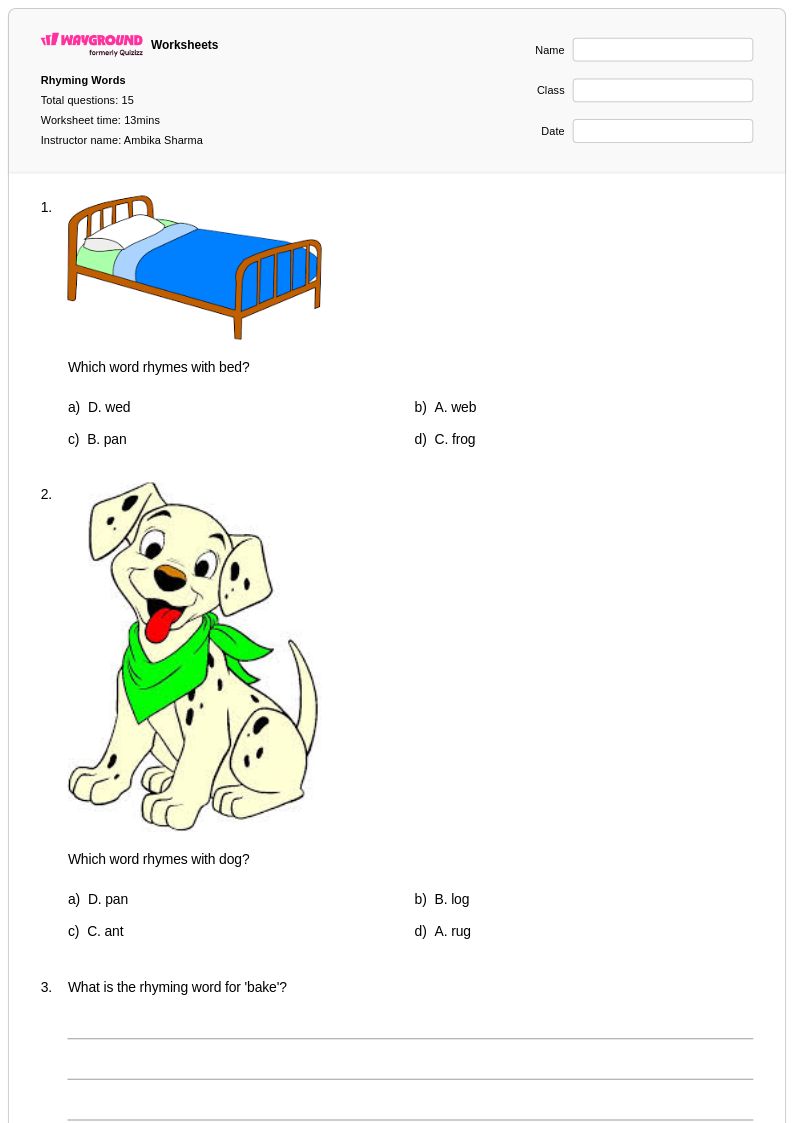
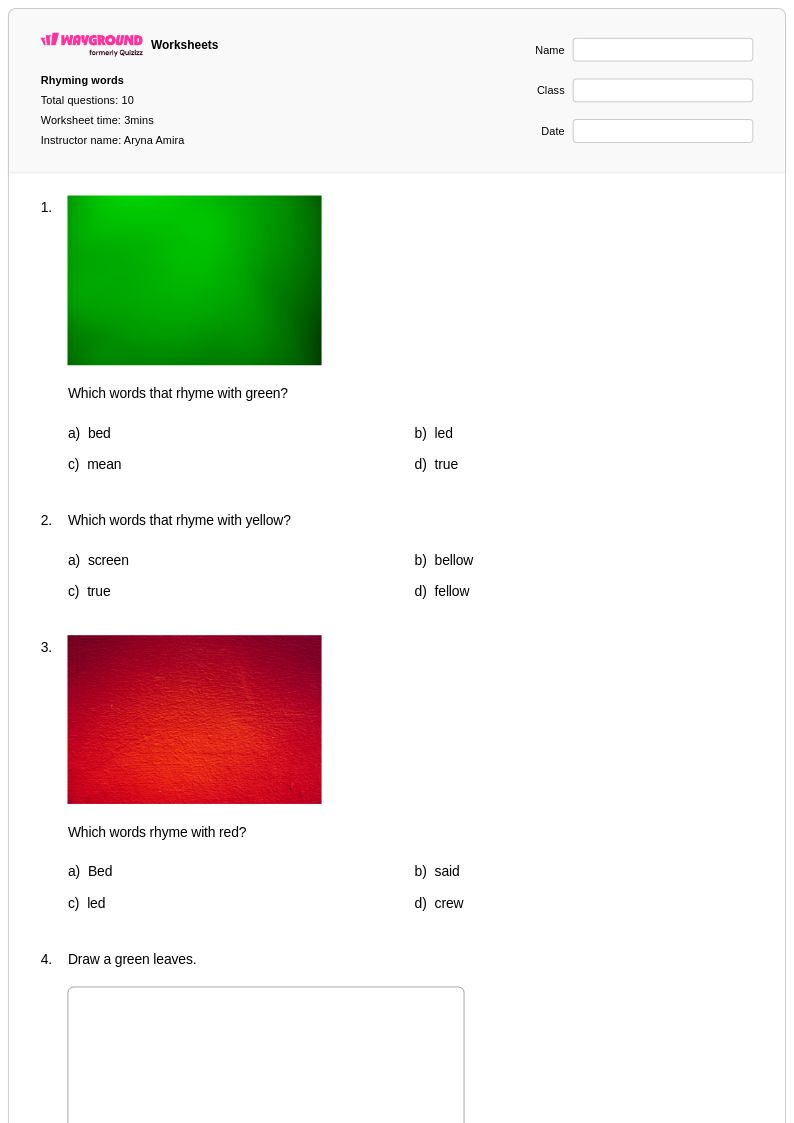
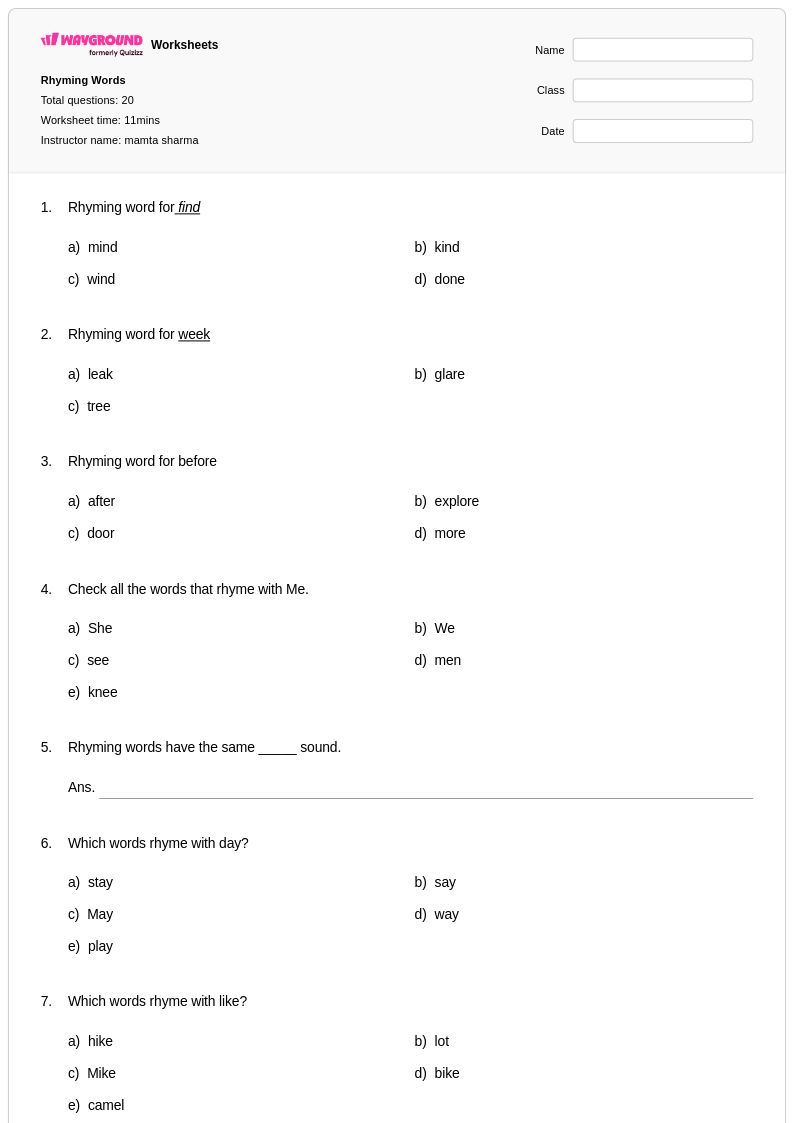
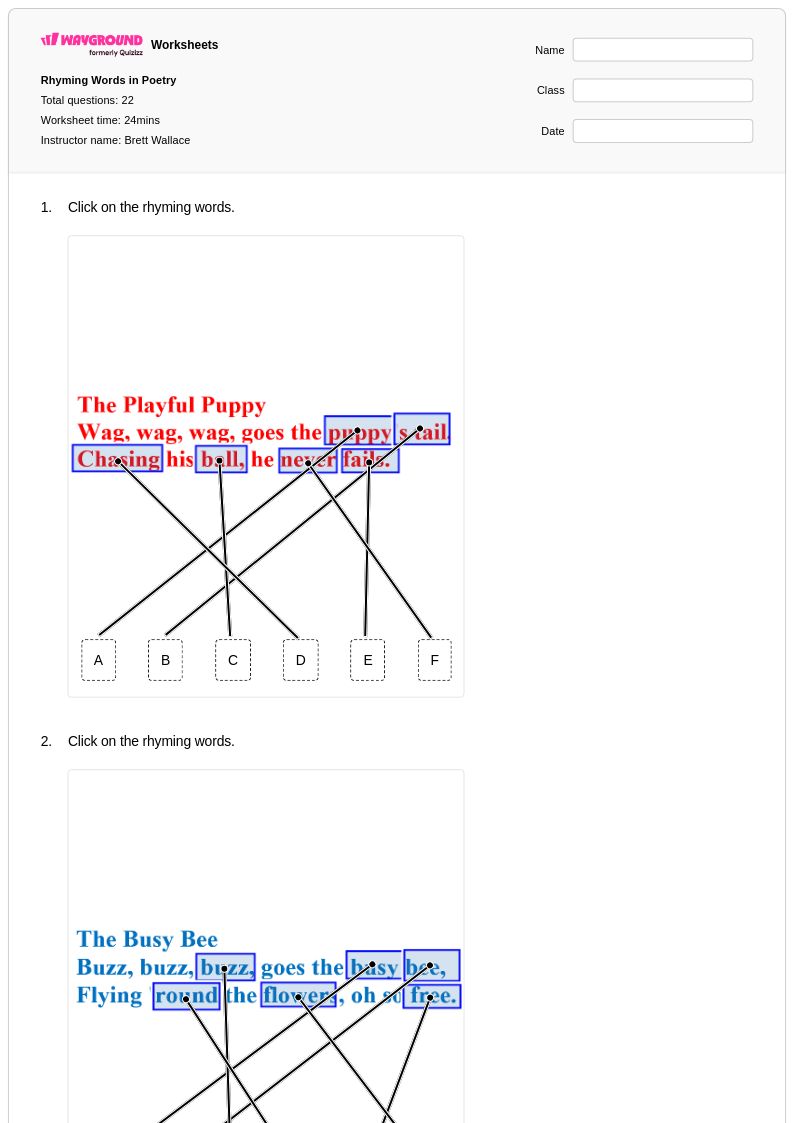
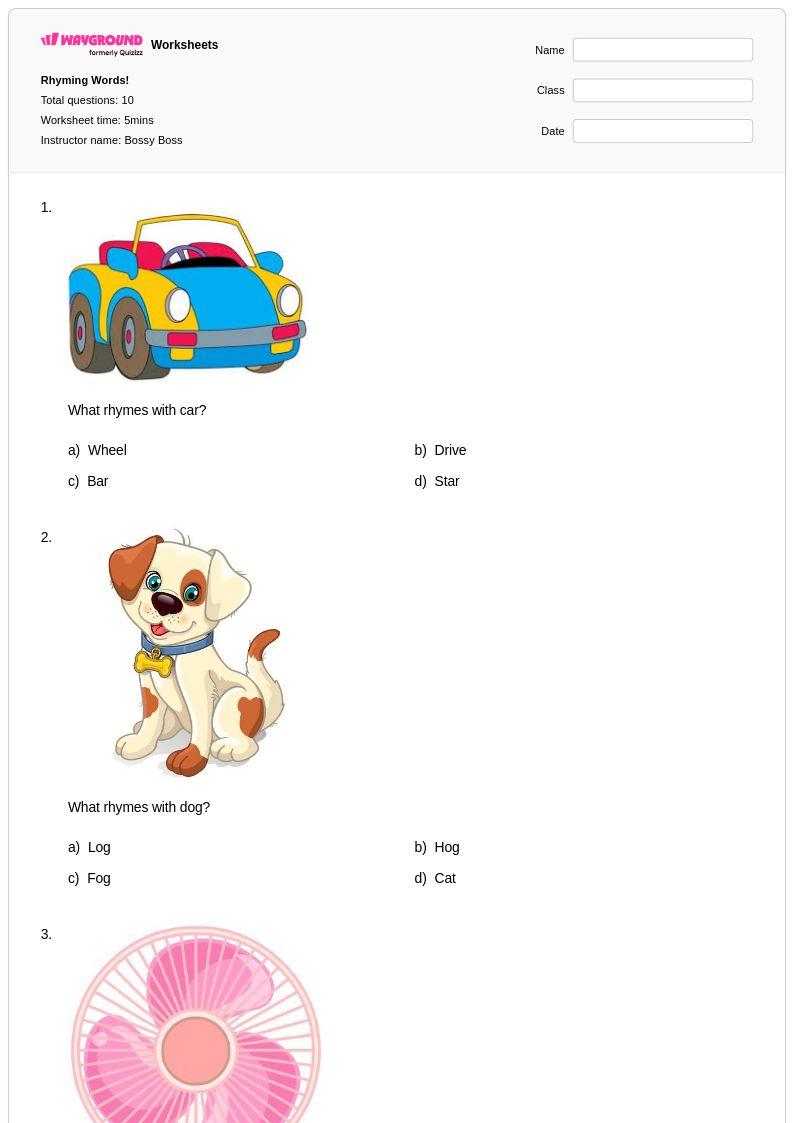
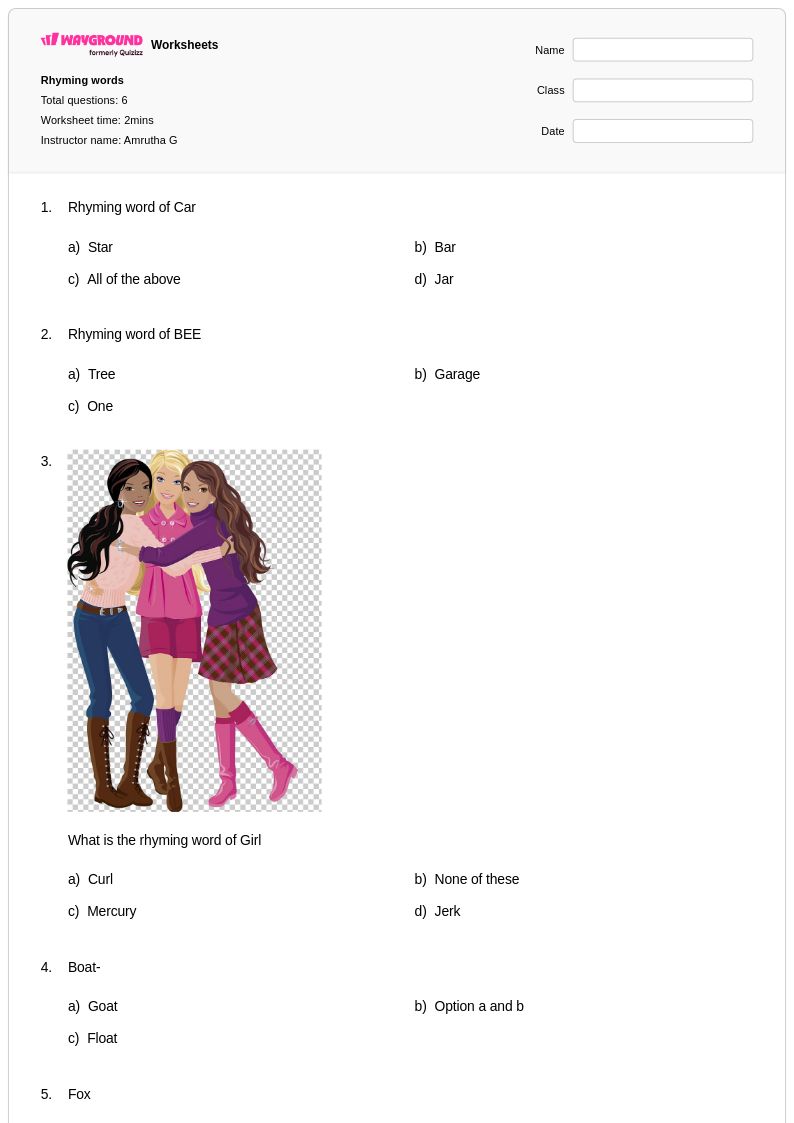
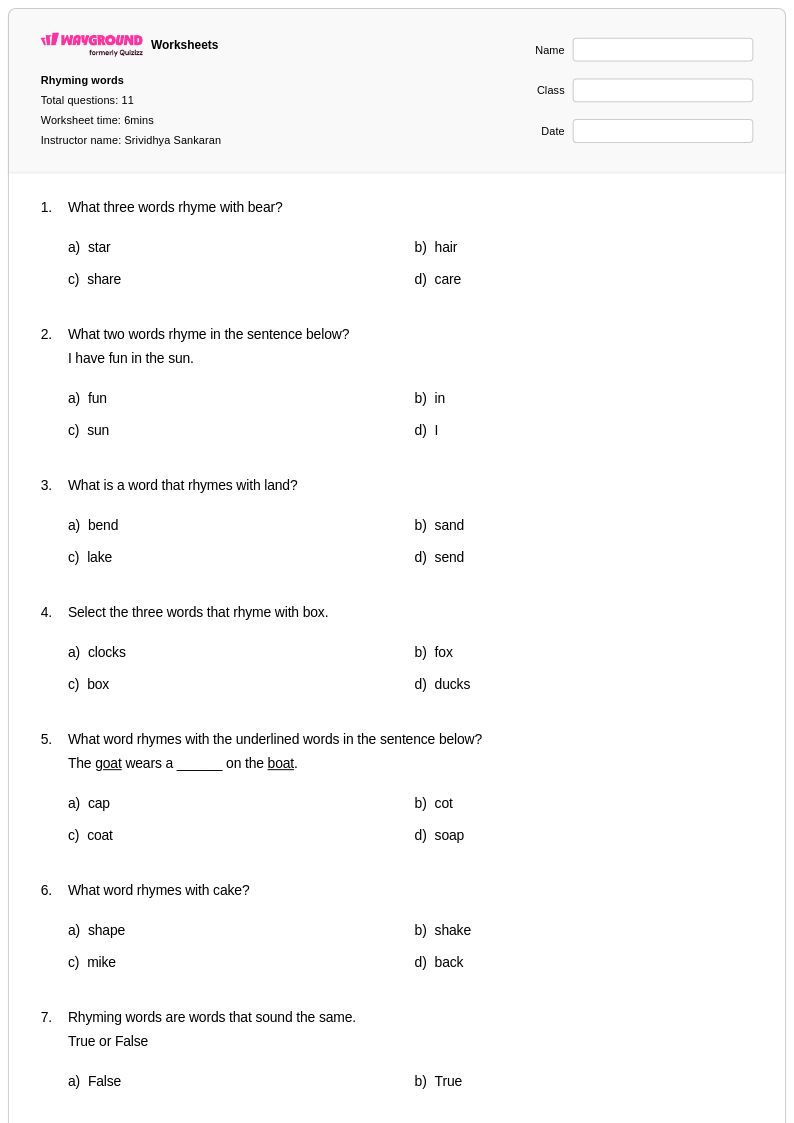
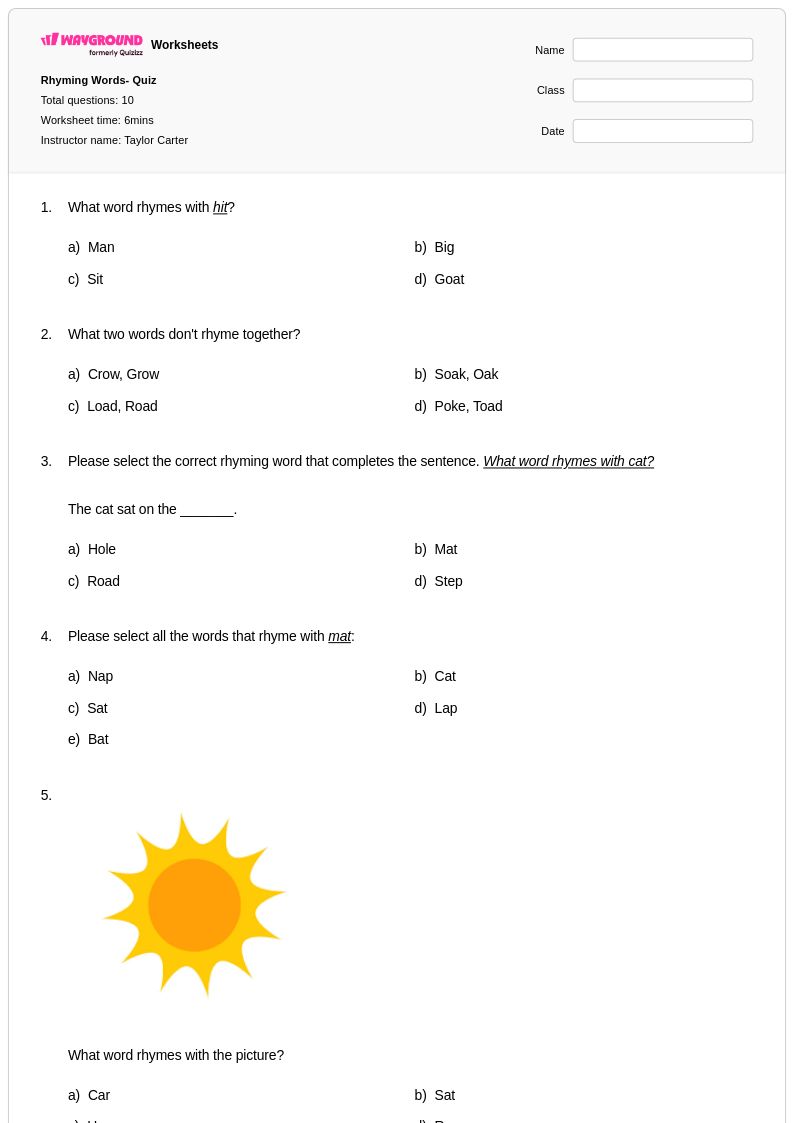
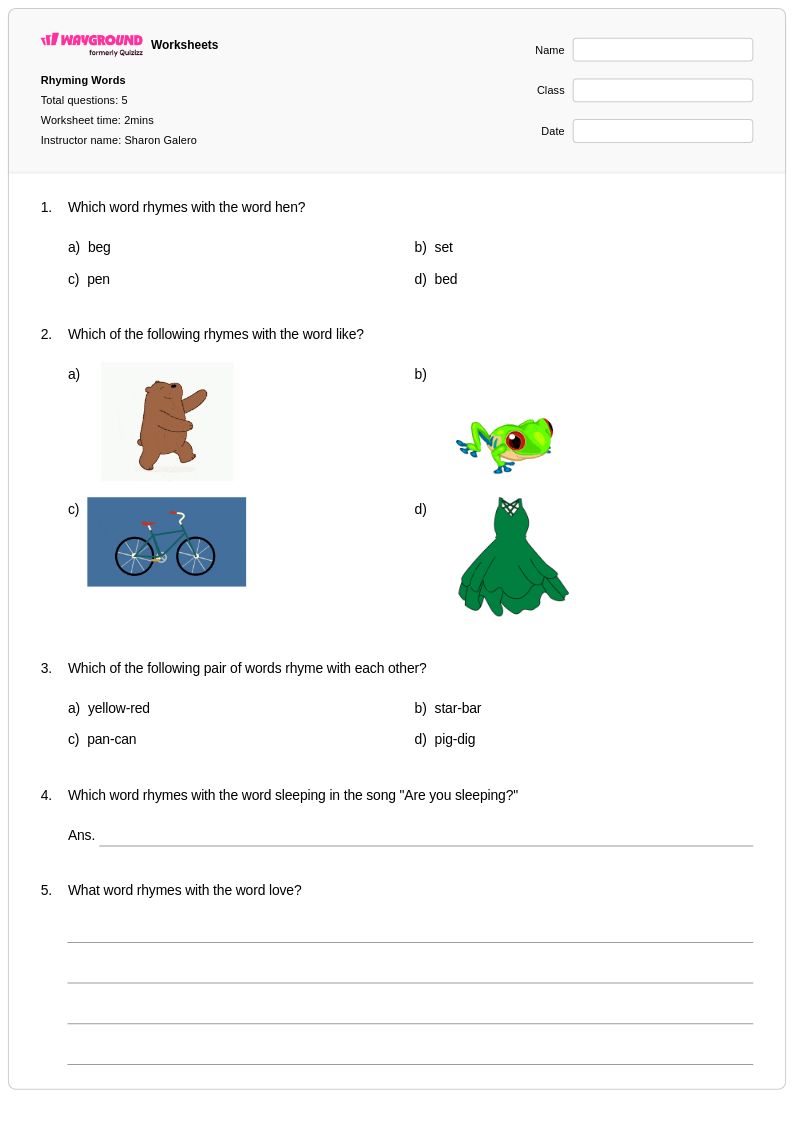
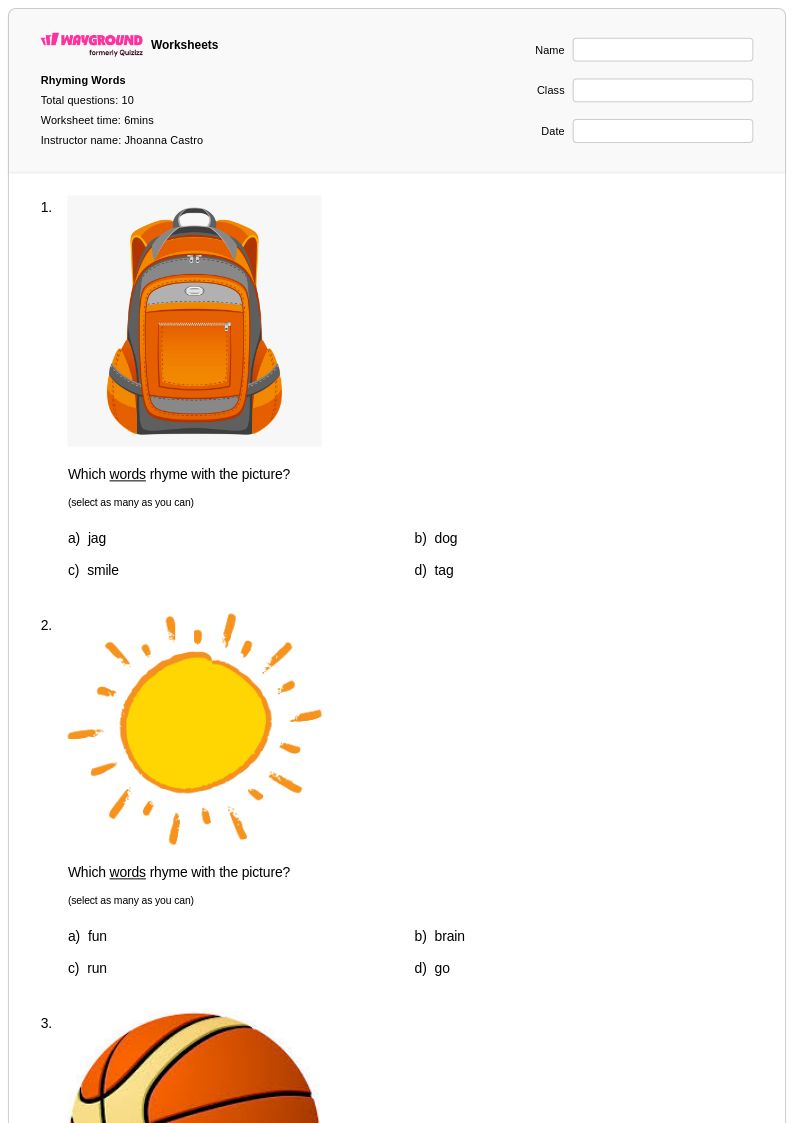
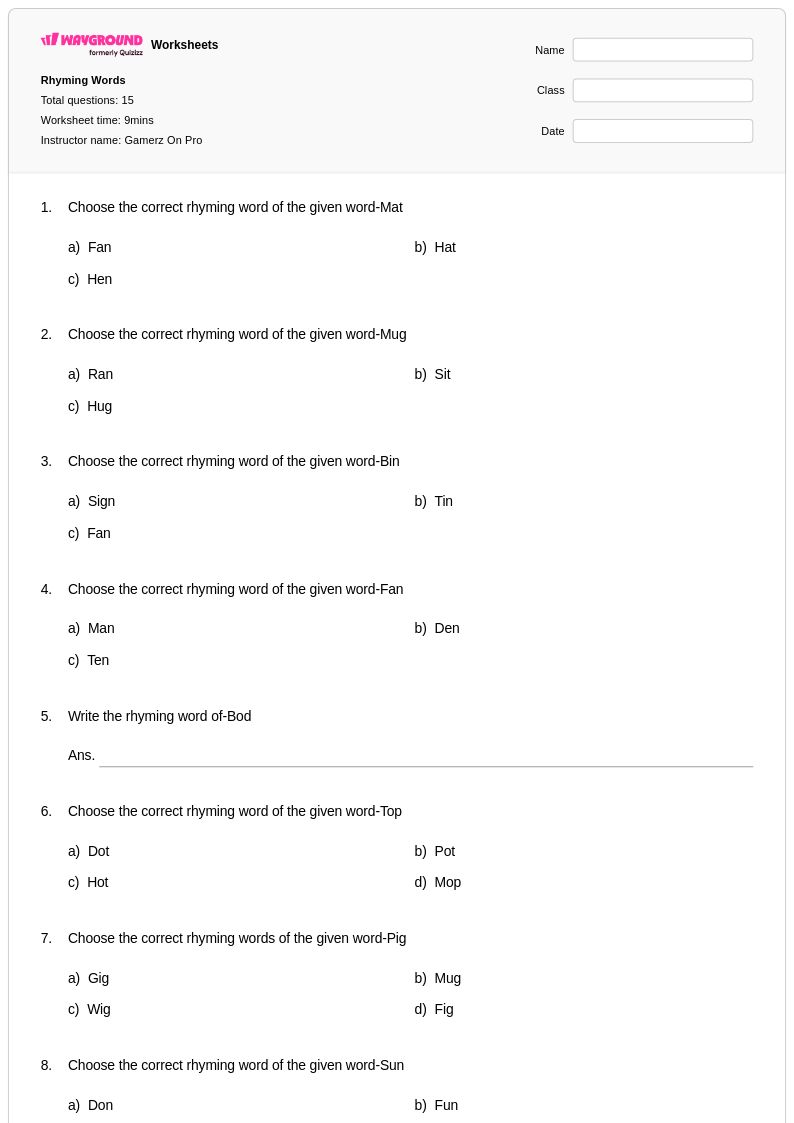
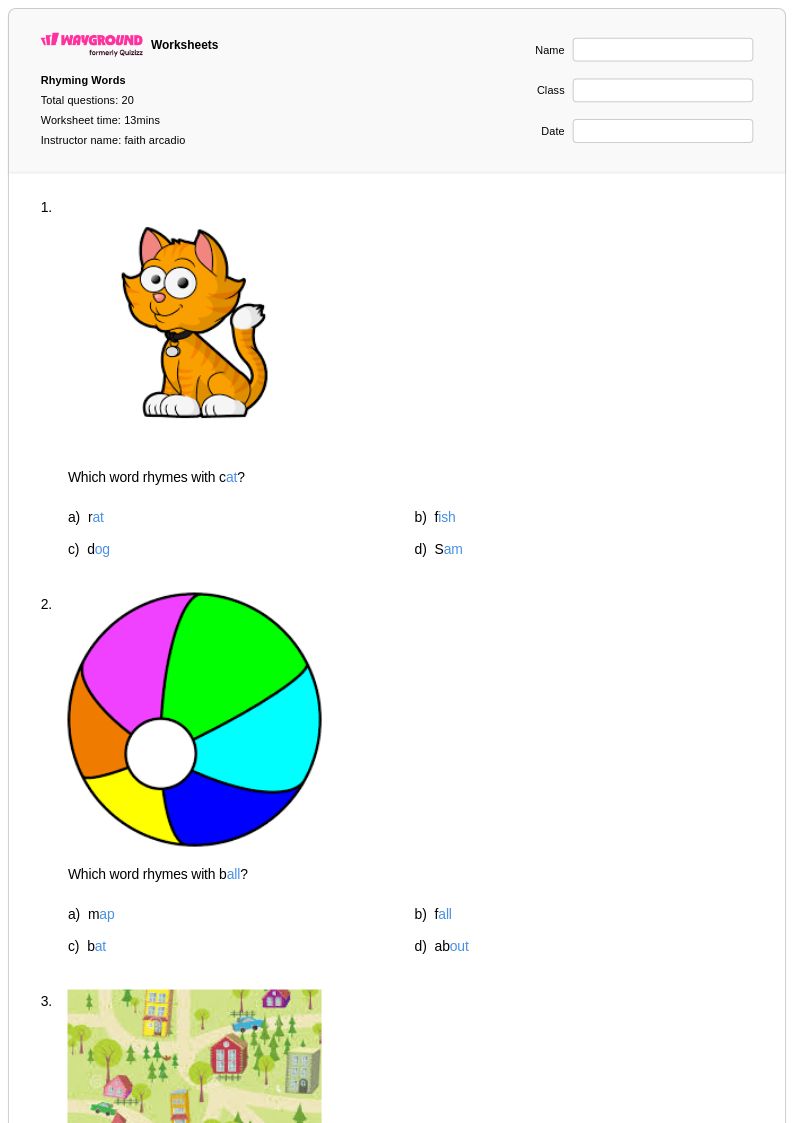
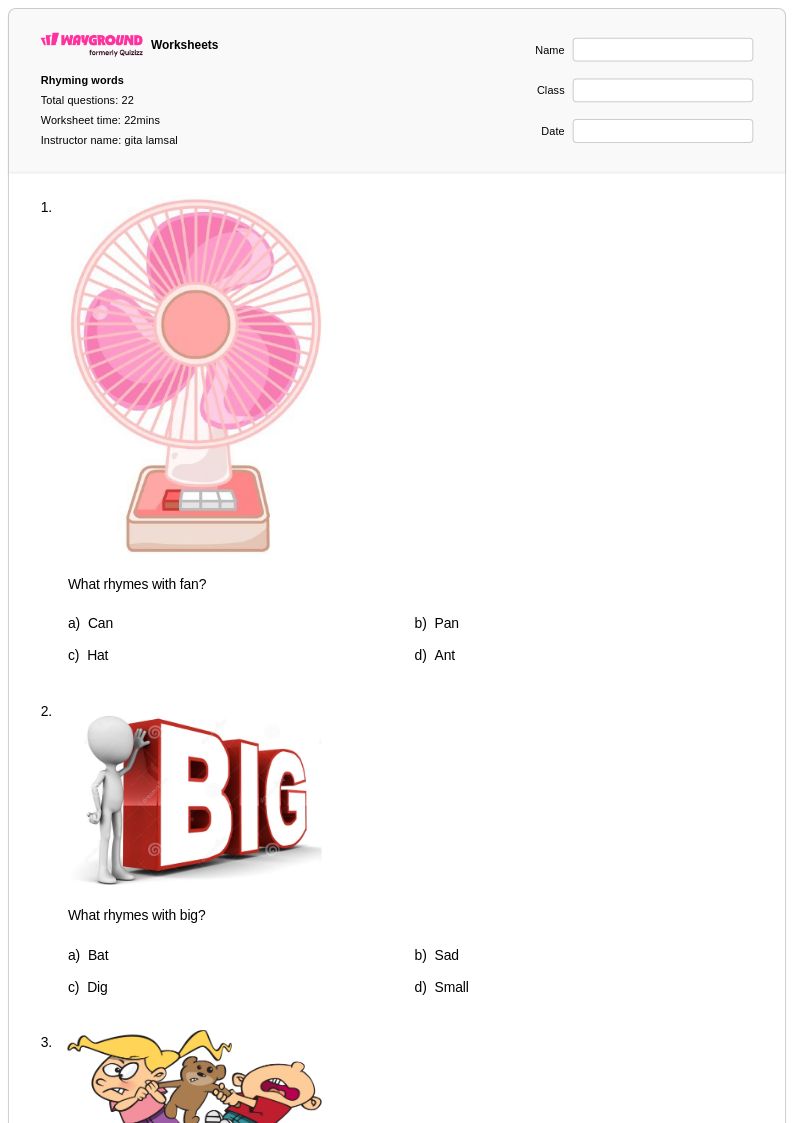
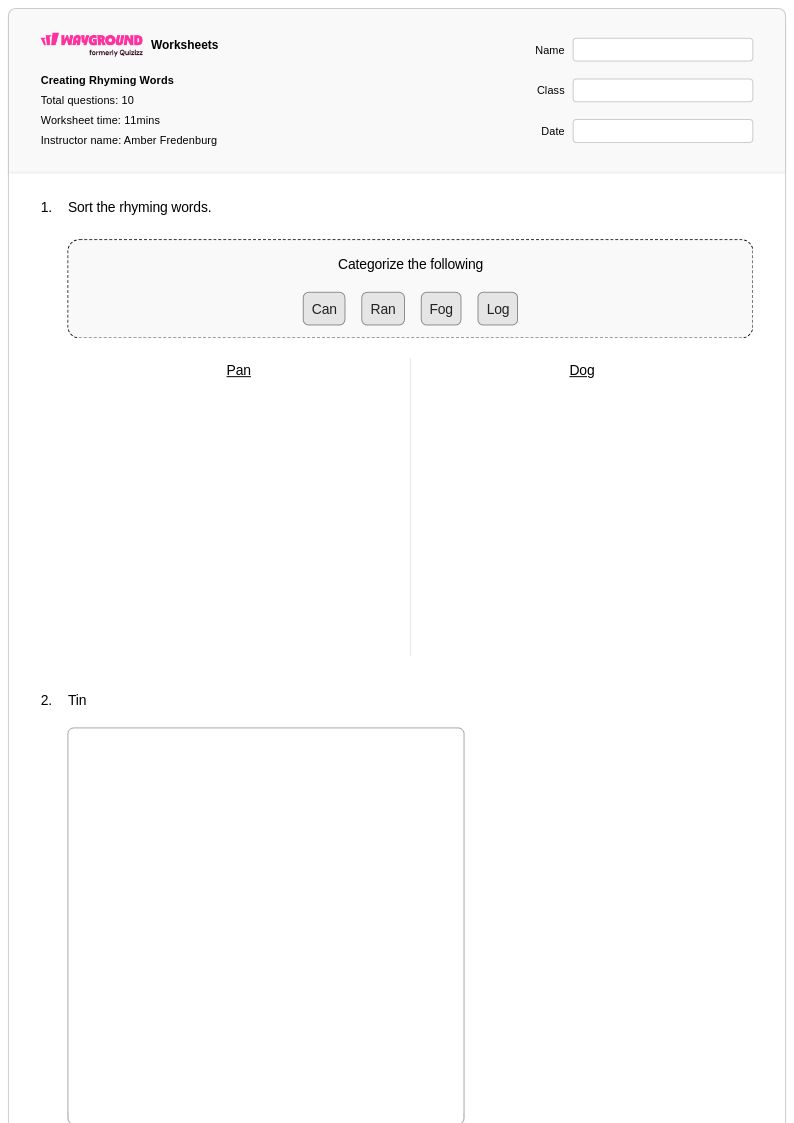
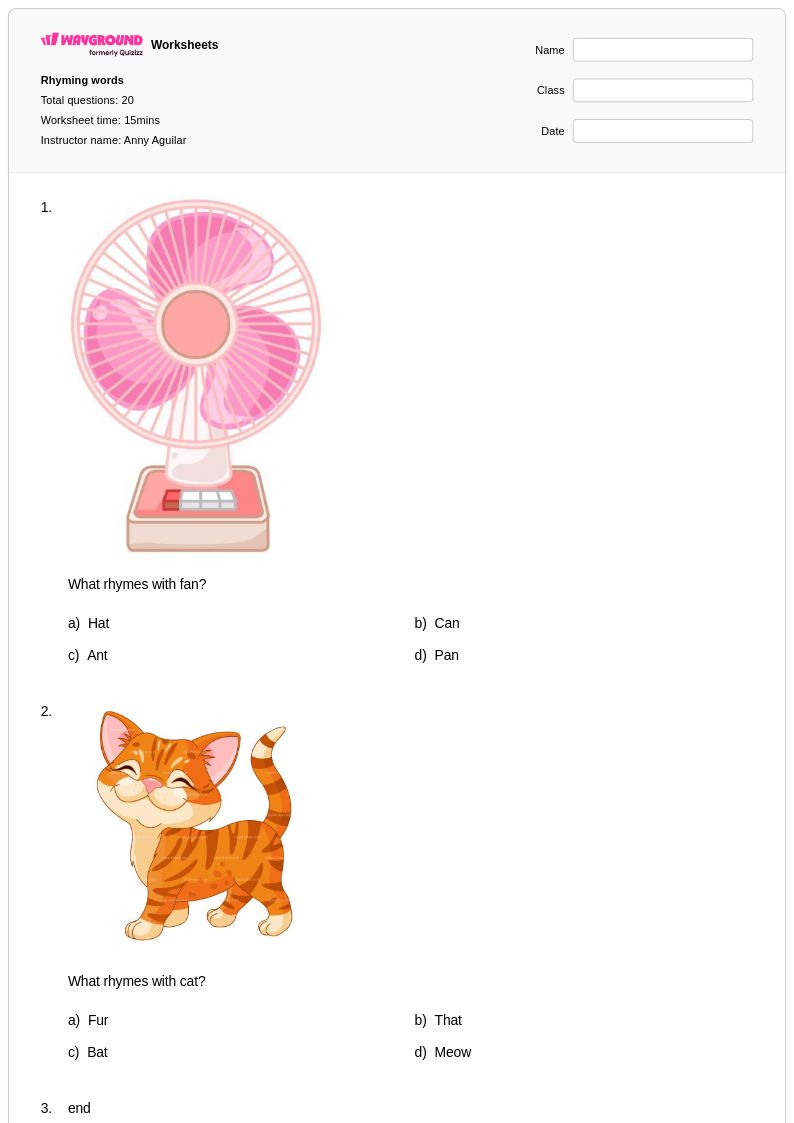
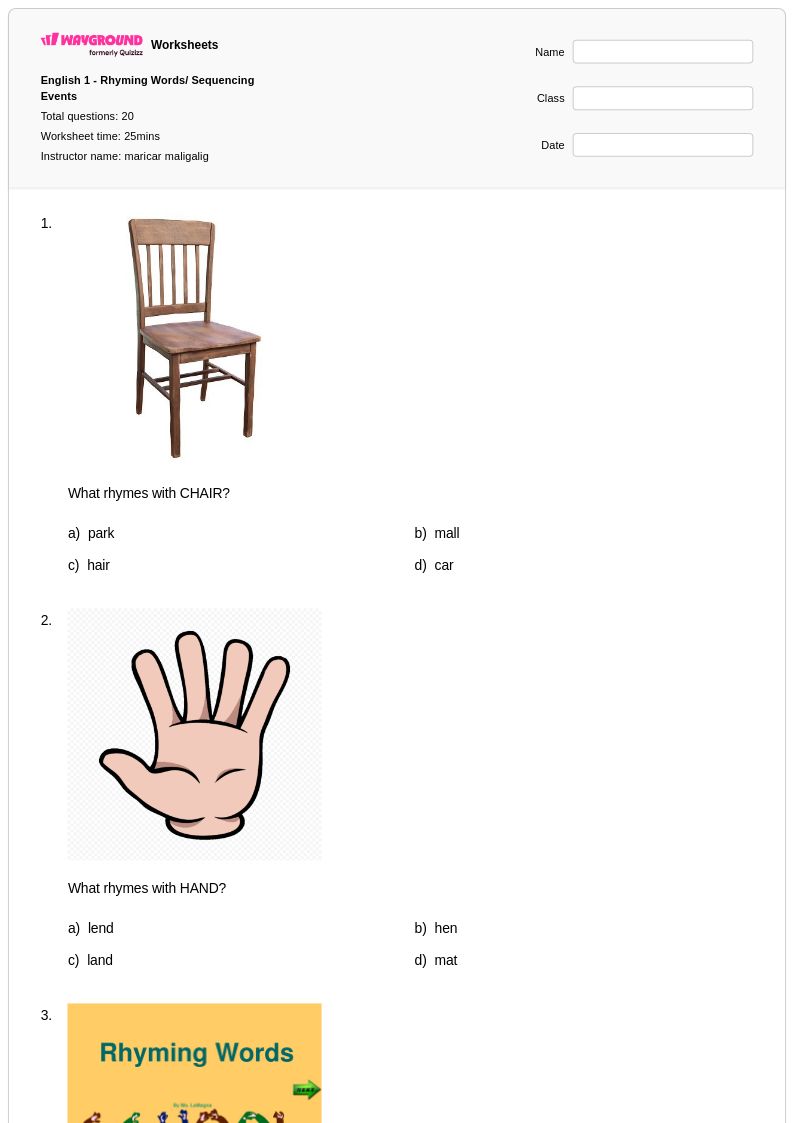
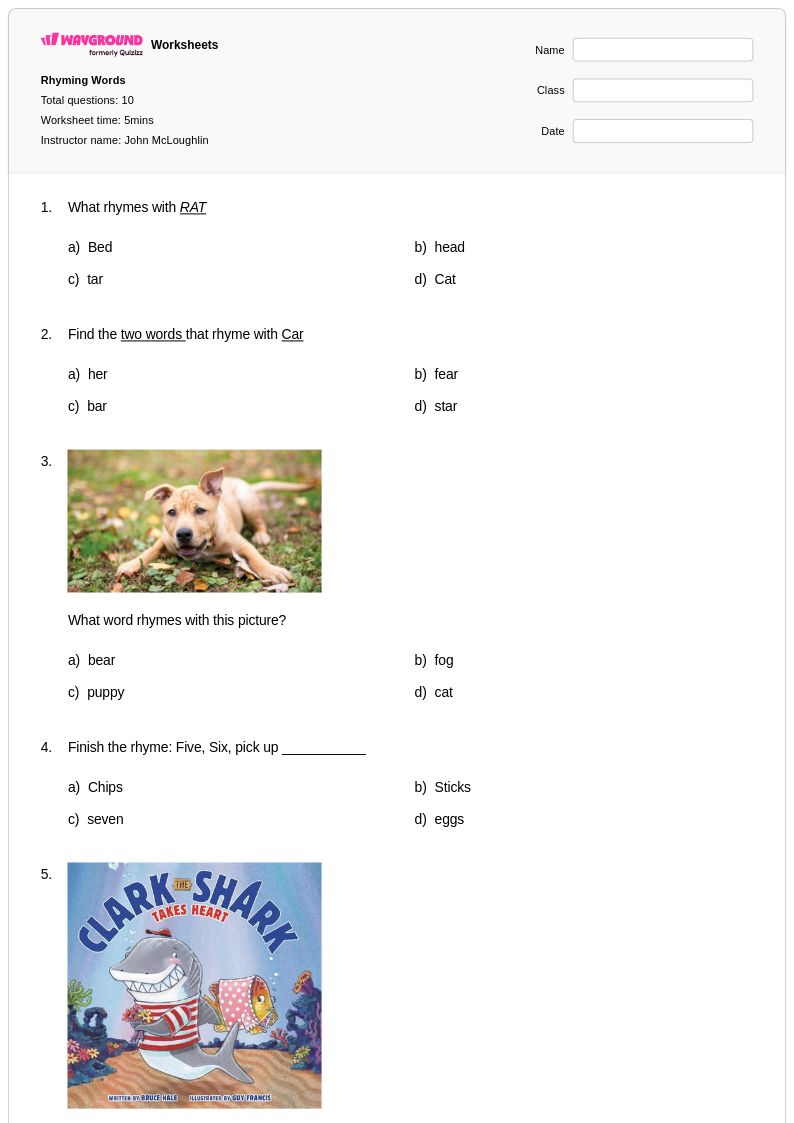
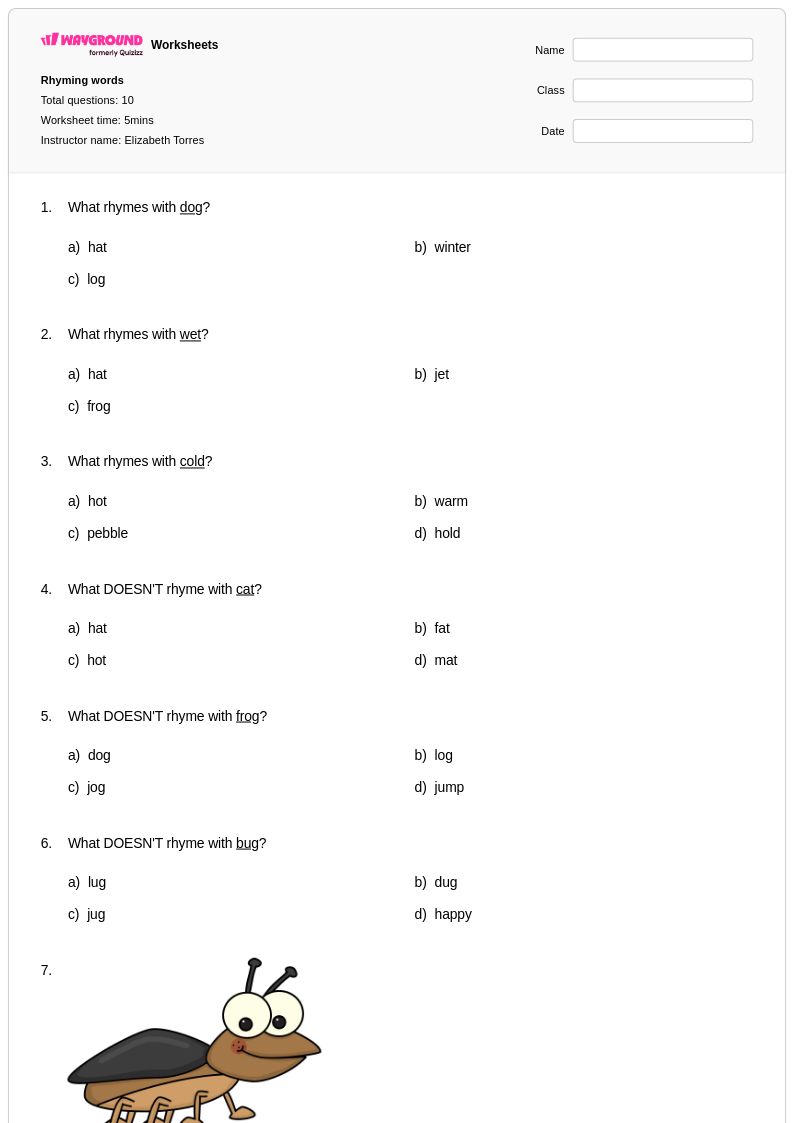
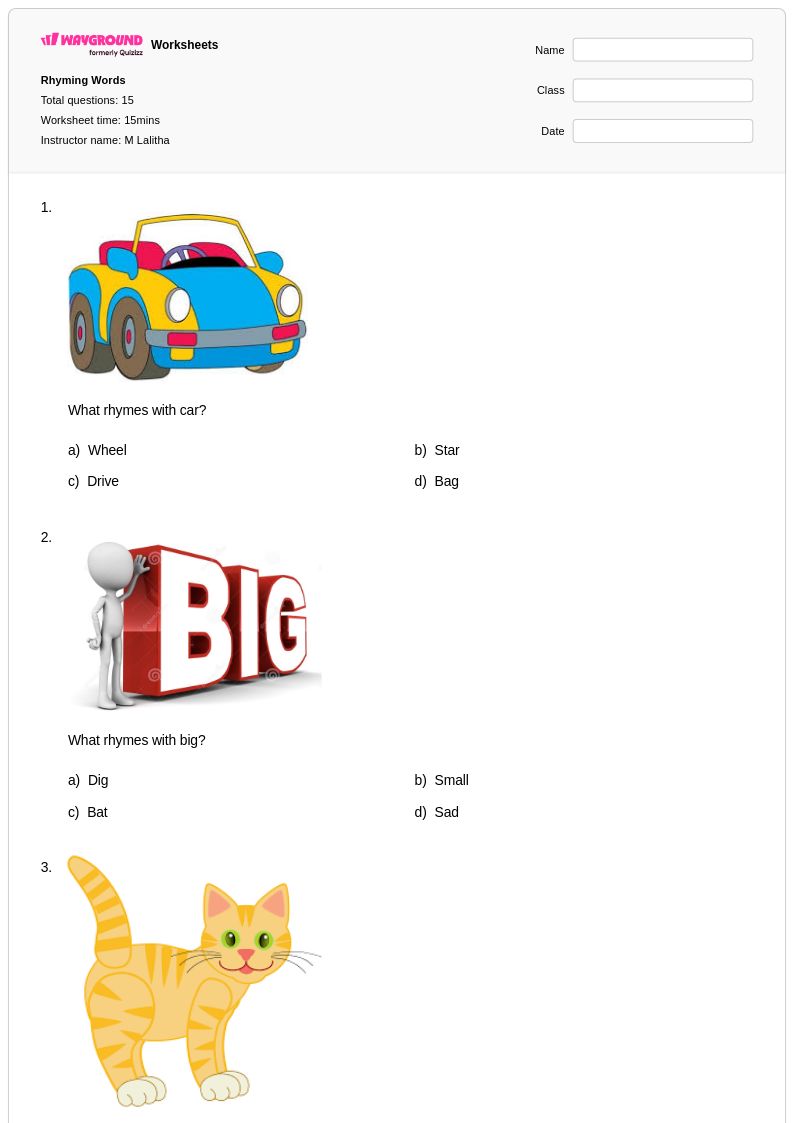
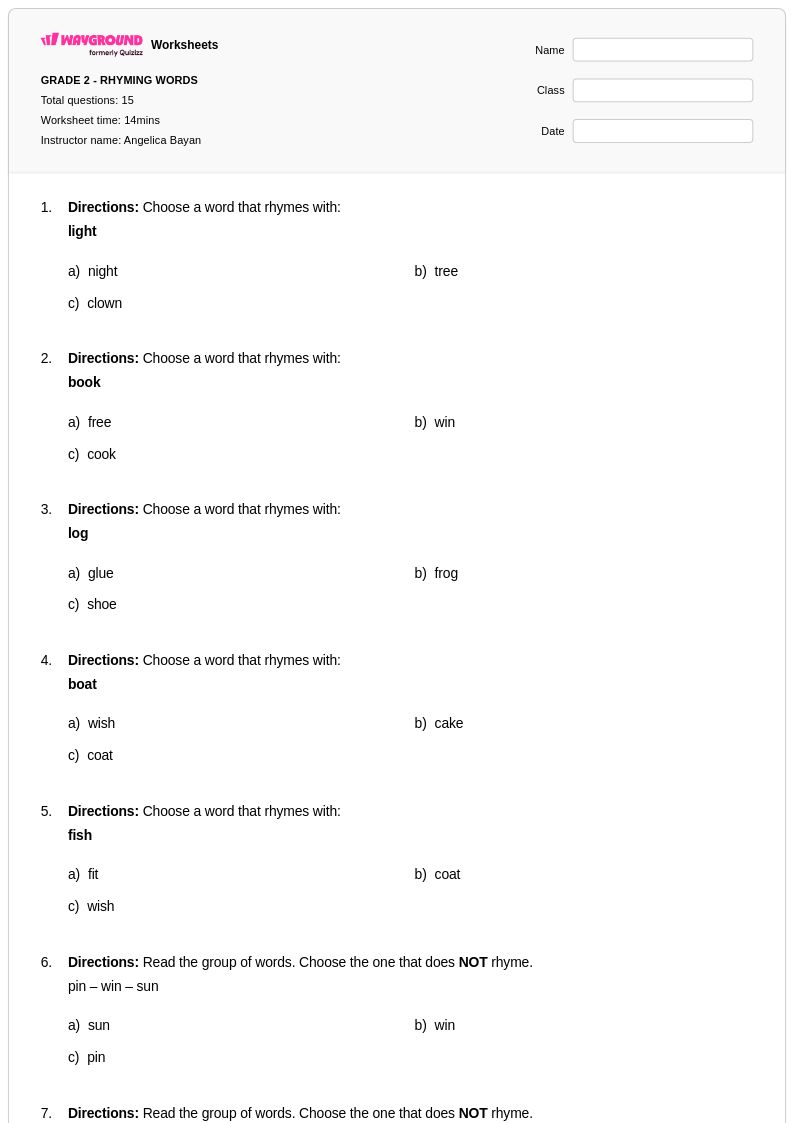
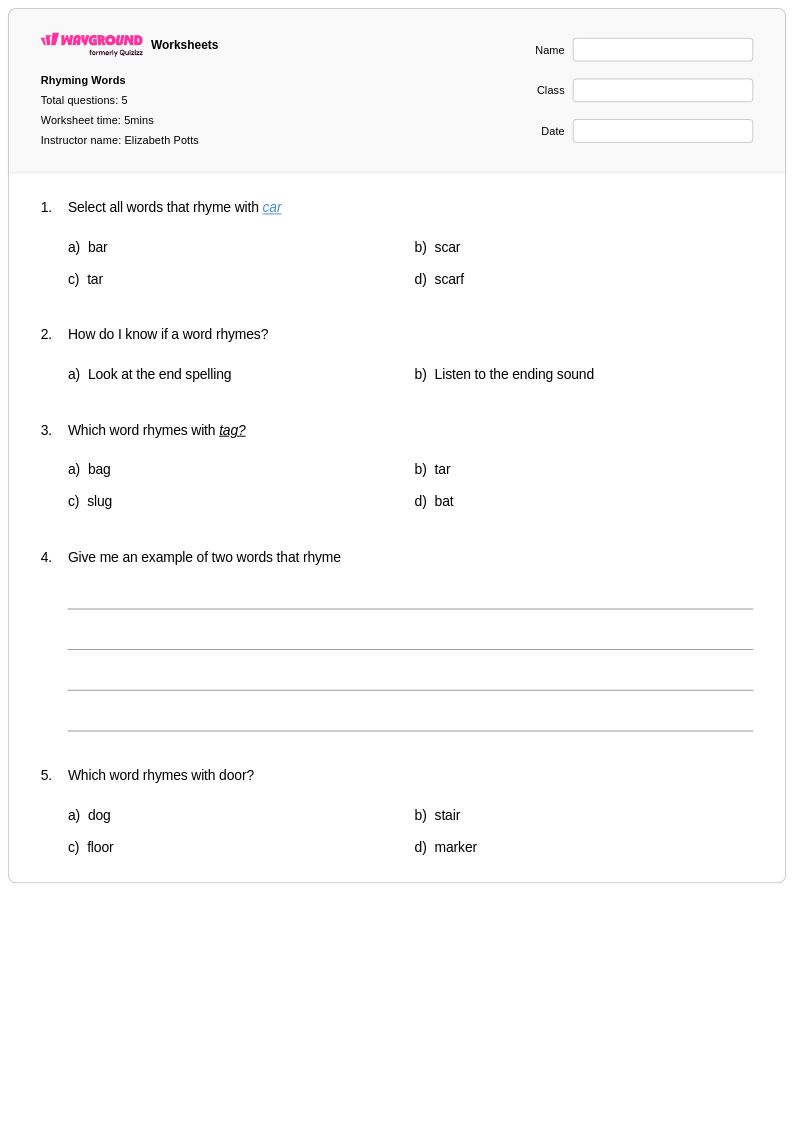
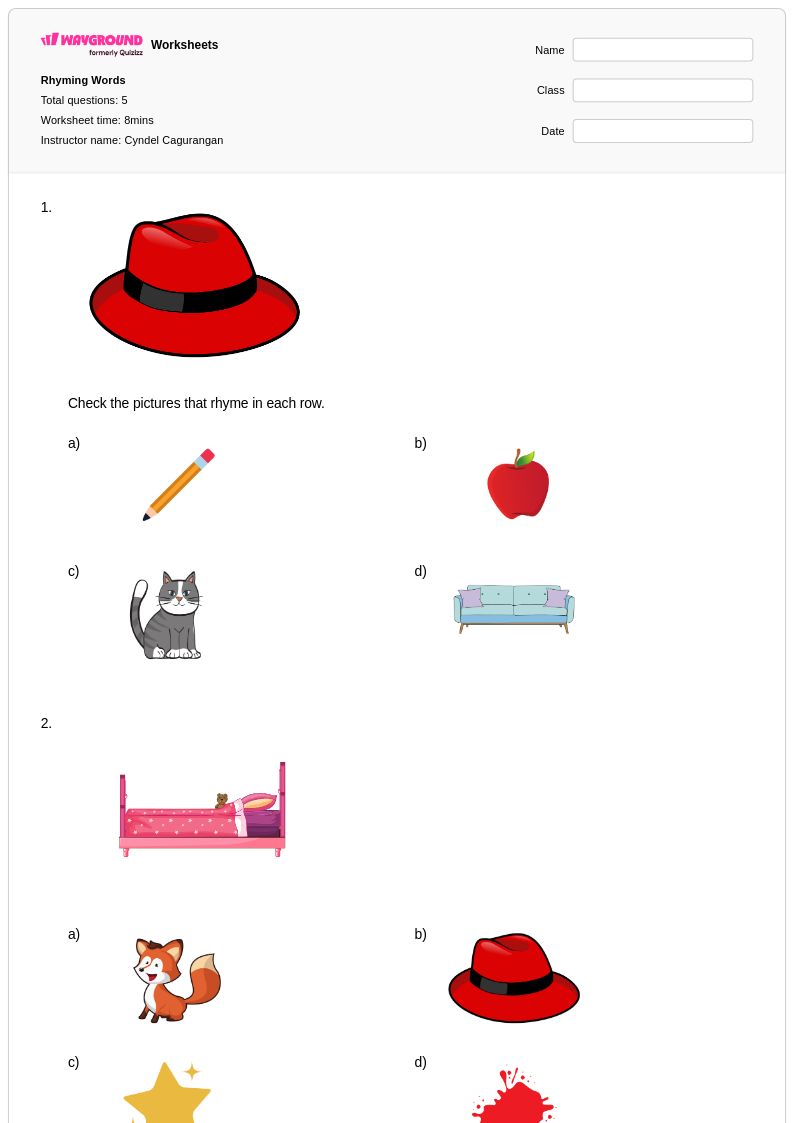
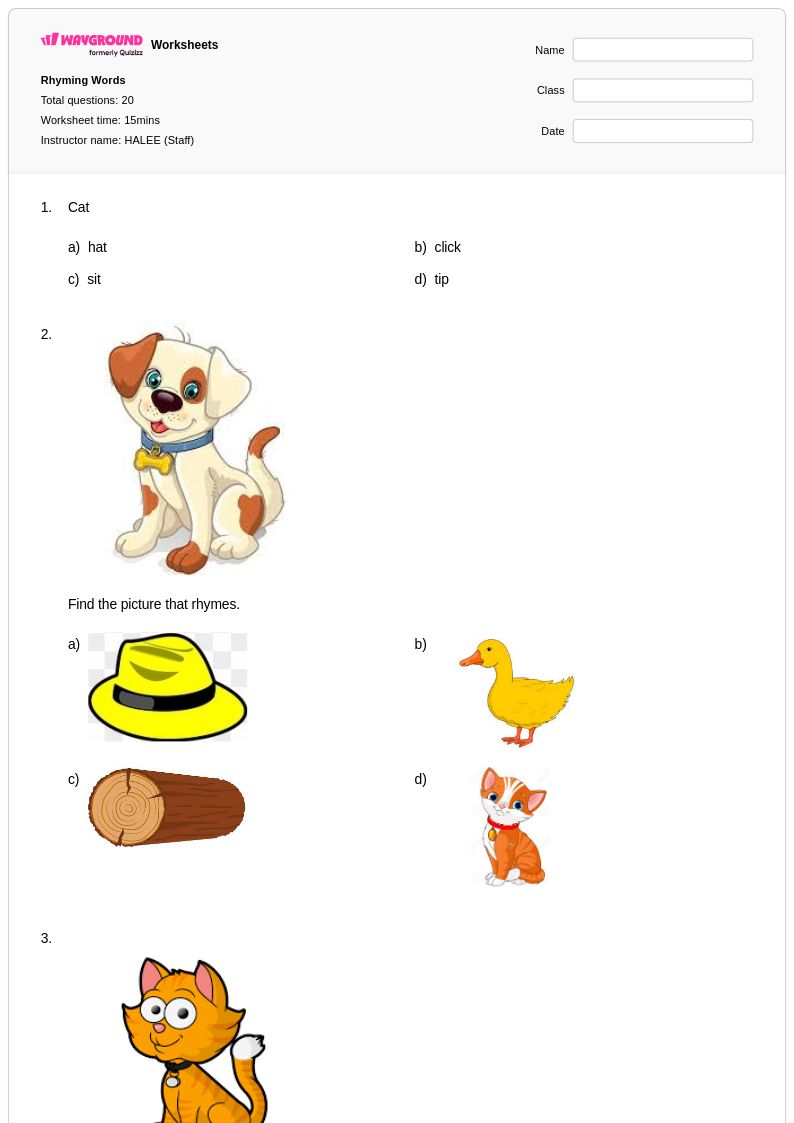
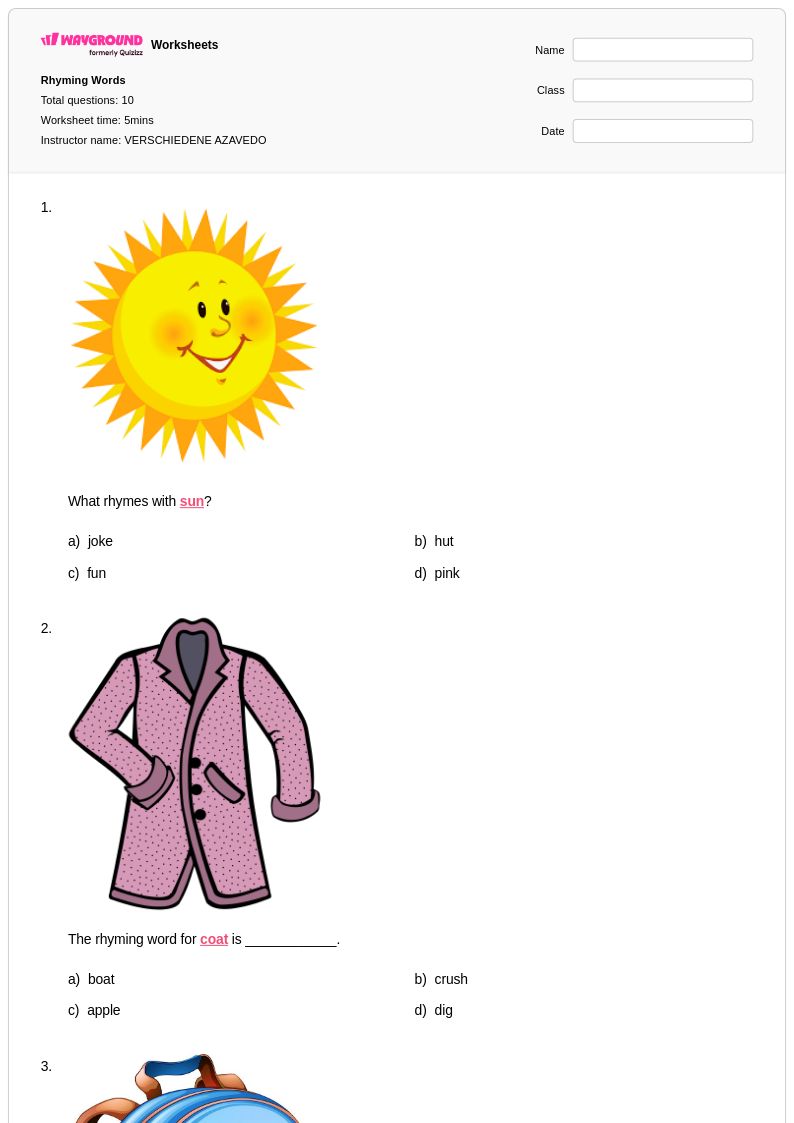
Rhyming words worksheets for Class 1 students available through Wayground (formerly Quizizz) provide essential foundational practice for developing phonological awareness and early reading skills. These carefully designed printables focus on helping young learners identify, match, and generate words that share similar ending sounds, strengthening their ability to recognize sound patterns within the English language. Each worksheet collection includes varied practice problems that engage students through colorful illustrations, word-picture matching activities, and fill-in-the-blank exercises that make rhyming concepts accessible and enjoyable. Teachers can access comprehensive answer keys alongside these free resources, ensuring efficient grading and immediate feedback opportunities that support student learning progression in this critical pre-reading skill.
Wayground (formerly Quizizz) empowers educators with an extensive library of millions of teacher-created rhyming words worksheets specifically curated for Class 1 instruction. The platform's robust search and filtering capabilities allow teachers to quickly locate materials that align with specific learning standards and match their students' developmental needs. Advanced differentiation tools enable educators to customize worksheet difficulty levels, modify content for diverse learners, and create targeted interventions for both remediation and enrichment purposes. These versatile resources are available in both printable pdf format and interactive digital versions, providing flexibility for classroom instruction, homework assignments, and independent practice sessions that reinforce phonological awareness skills essential for reading readiness.
FAQs
How do I teach rhyming words to early readers?
Start by building auditory awareness before introducing print — read aloud rhyming texts, then ask students to identify and repeat the rhyming pairs they hear. Once students can recognize rhymes by ear, transition to visual activities where they match or sort written word families. Progressing from oral to written practice helps students connect the sound patterns they hear with the spelling patterns they see, which strengthens both phonemic awareness and early decoding skills.
What exercises help students practice identifying rhyming words?
Effective practice exercises include identifying rhyming pairs from a list, completing rhyming sequences by supplying the missing word, and sorting words into rhyme families. Activities that ask students to generate their own rhyming words — rather than just recognize them — push deeper phonological processing. Worksheets that progress from simple same-family rhymes (cat, bat, hat) to more varied sound patterns give students the scaffolded repetition needed to internalize the concept.
What mistakes do students commonly make when learning rhyming words?
A common error is confusing rhyme with alliteration — students may group words that start with the same sound rather than end with the same sound. Others match words by meaning or topic (e.g., 'dog' and 'cat') rather than sound. Some students also struggle to distinguish near-rhymes from true rhymes, particularly with vowel sounds that look similar in print but sound different. Targeted practice that separates auditory recognition from visual pattern-matching helps address these misconceptions directly.
How can I use rhyming words worksheets to support struggling readers?
For students who struggle with phonemic awareness, start with oral warm-ups before distributing written worksheets so the sound pattern is already familiar when they encounter print. Worksheets that include picture cues alongside written words reduce decoding load and keep the focus on the rhyming concept itself. On Wayground, teachers can enable Read Aloud so questions and answer choices are read to students who need auditory support, and Reduced Answer Choices can lower cognitive demand for students who are easily overwhelmed by too many options.
How do I use Wayground's rhyming words worksheets in my classroom?
Wayground's rhyming words worksheets are available as printable PDFs for traditional classroom use and in digital formats for technology-integrated instruction, including the option to host them as a live quiz on Wayground. Each worksheet includes a complete answer key, so teachers can assess student understanding quickly without additional preparation. The digital format also allows teachers to assign worksheets for independent practice or homework, making them easy to integrate into both in-class lessons and take-home review.
How do rhyming words connect to reading and spelling development?
Recognizing rhymes is a foundational phonological awareness skill that signals a student's ability to hear and manipulate individual sound units in words — a strong predictor of early reading success. When students internalize rhyme families (e.g., -ight: night, fight, right), they can apply that pattern to decode and spell unfamiliar words rather than memorizing each word individually. This is why rhyming practice is most valuable when explicitly linked to word families and spelling patterns, not treated as a standalone listening activity.