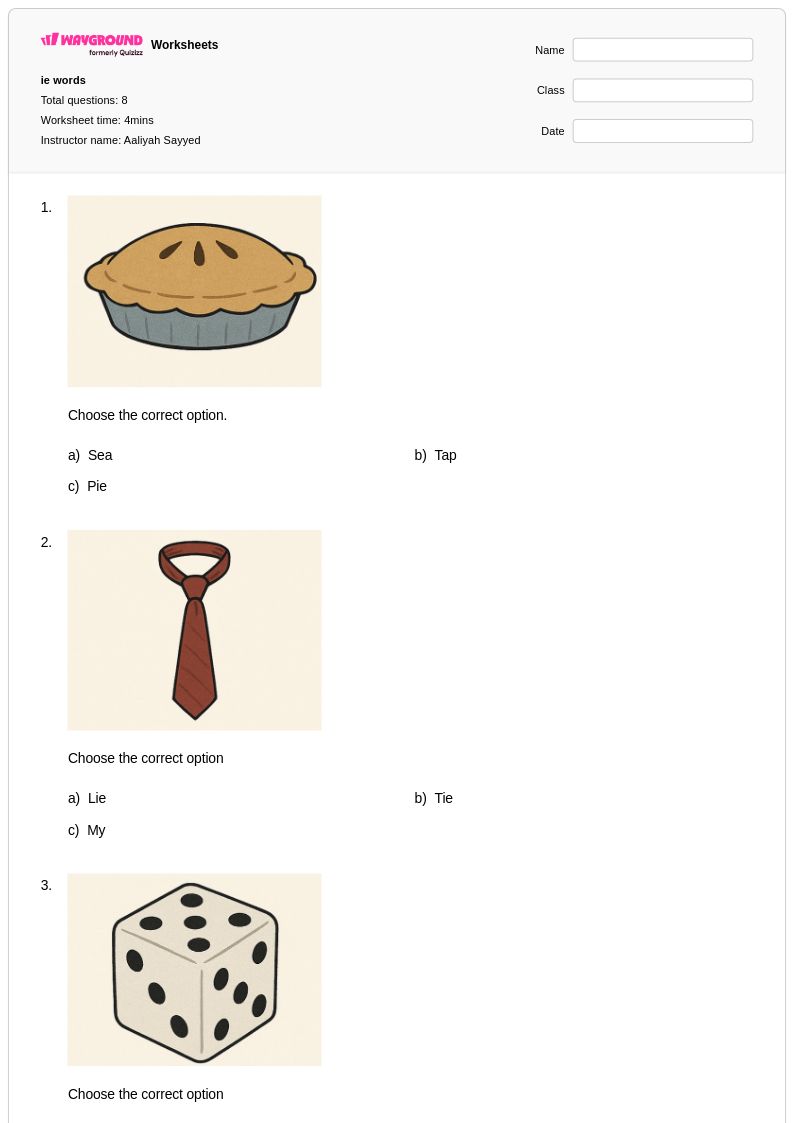
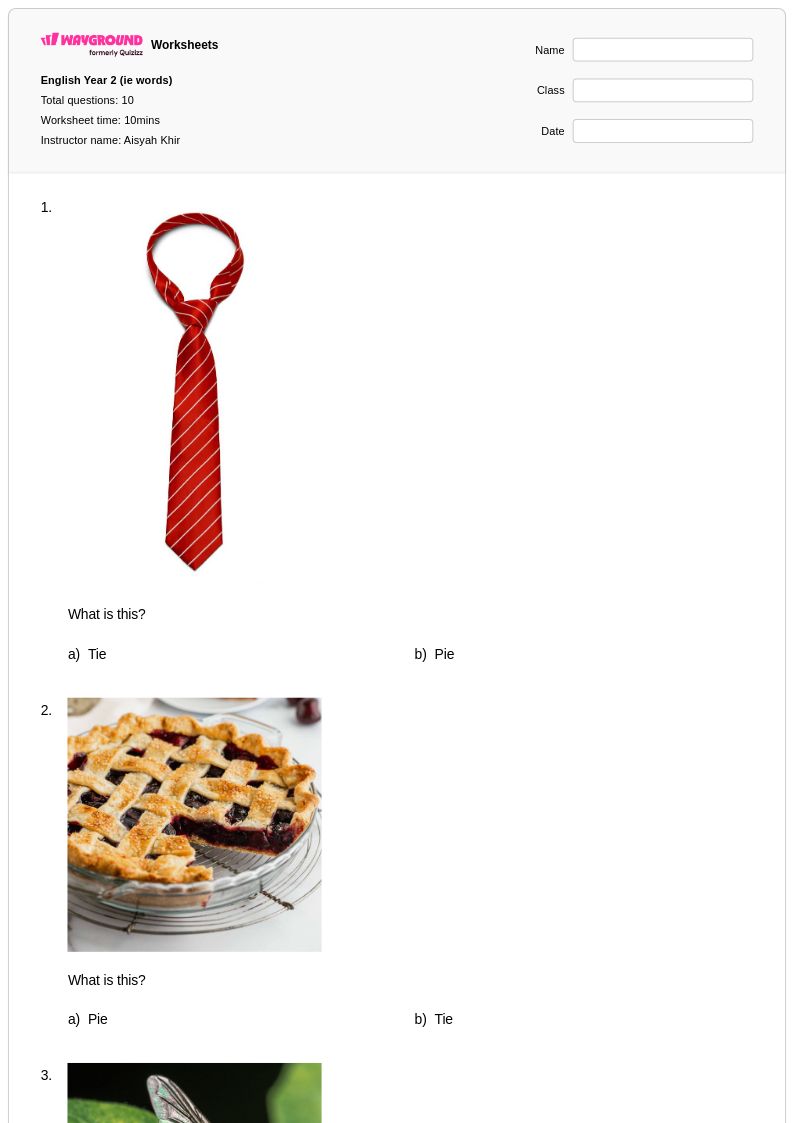
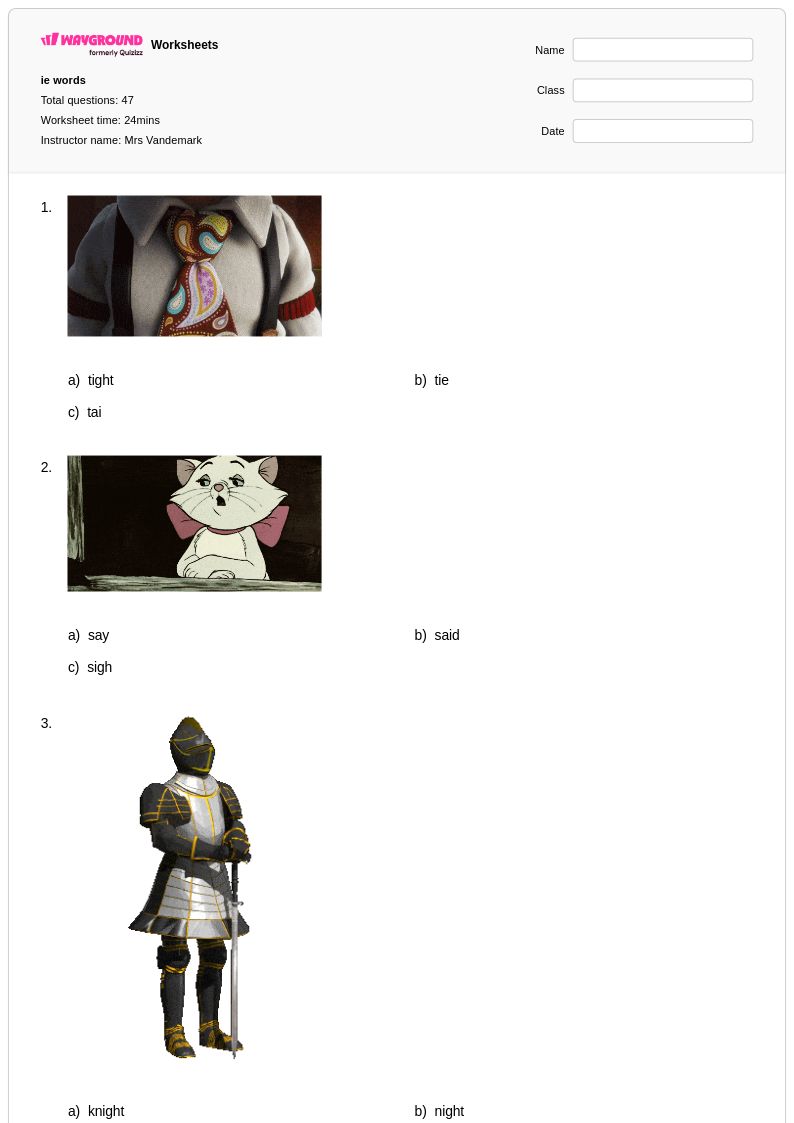
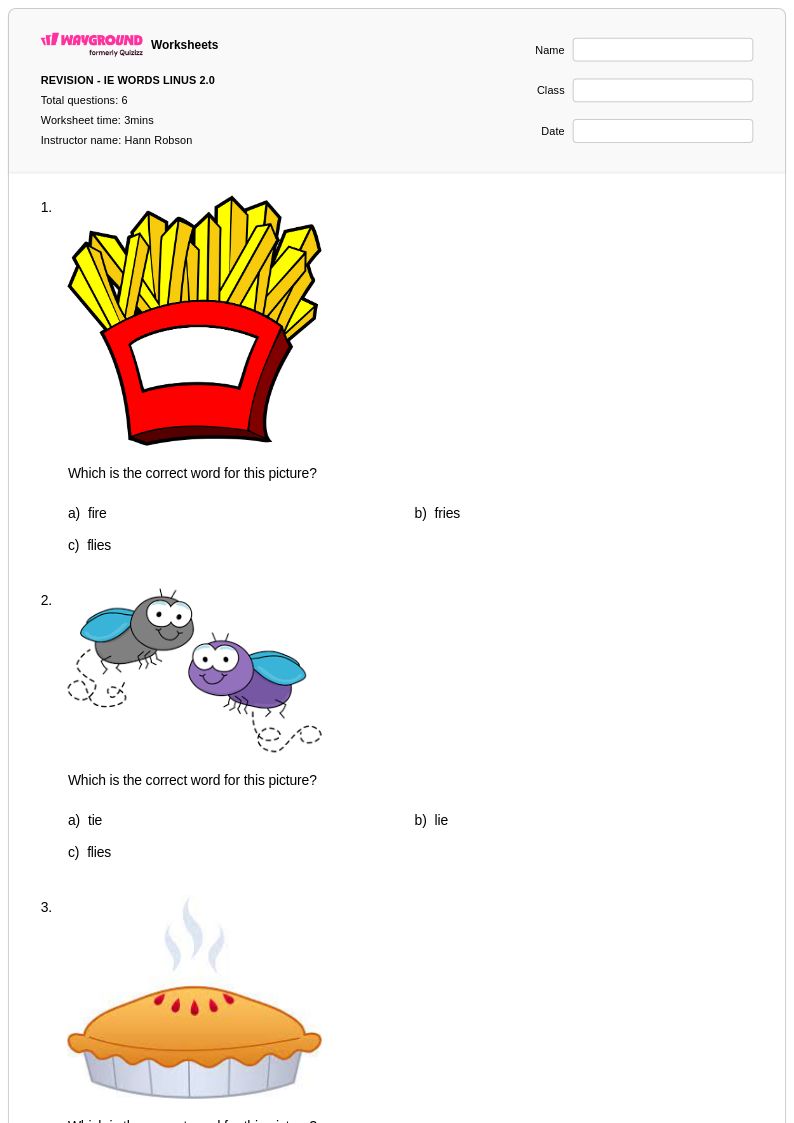
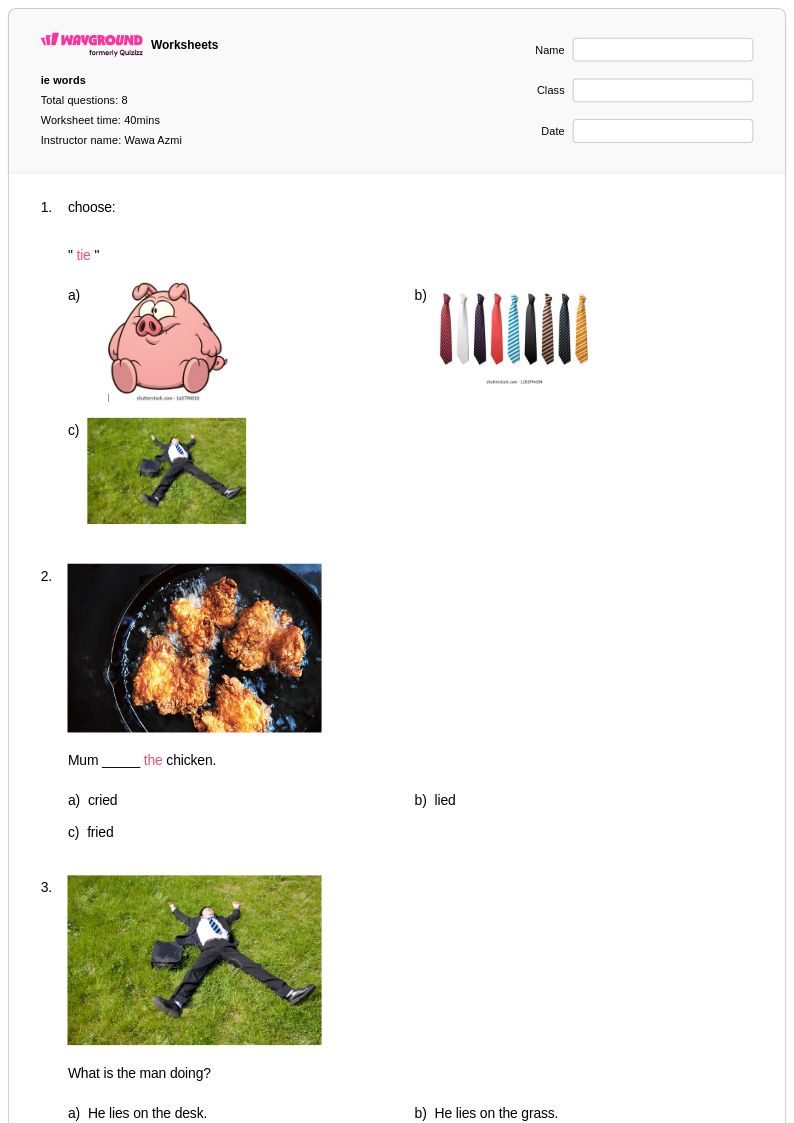
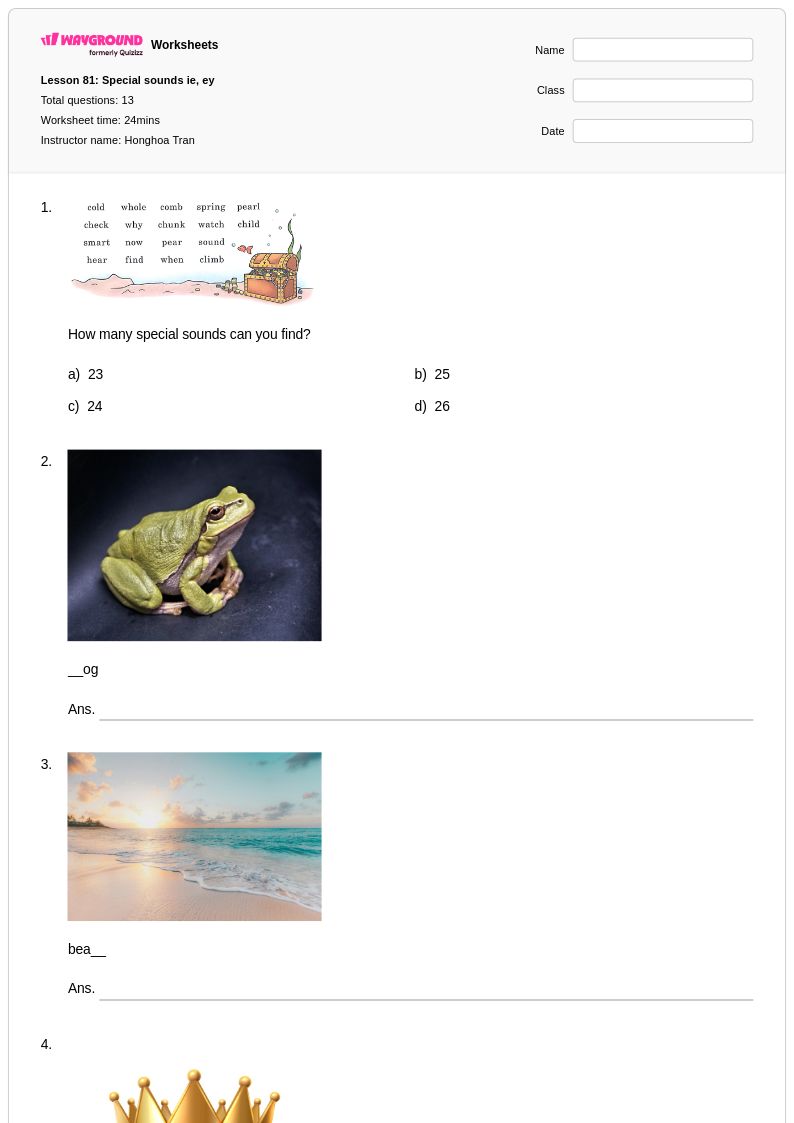
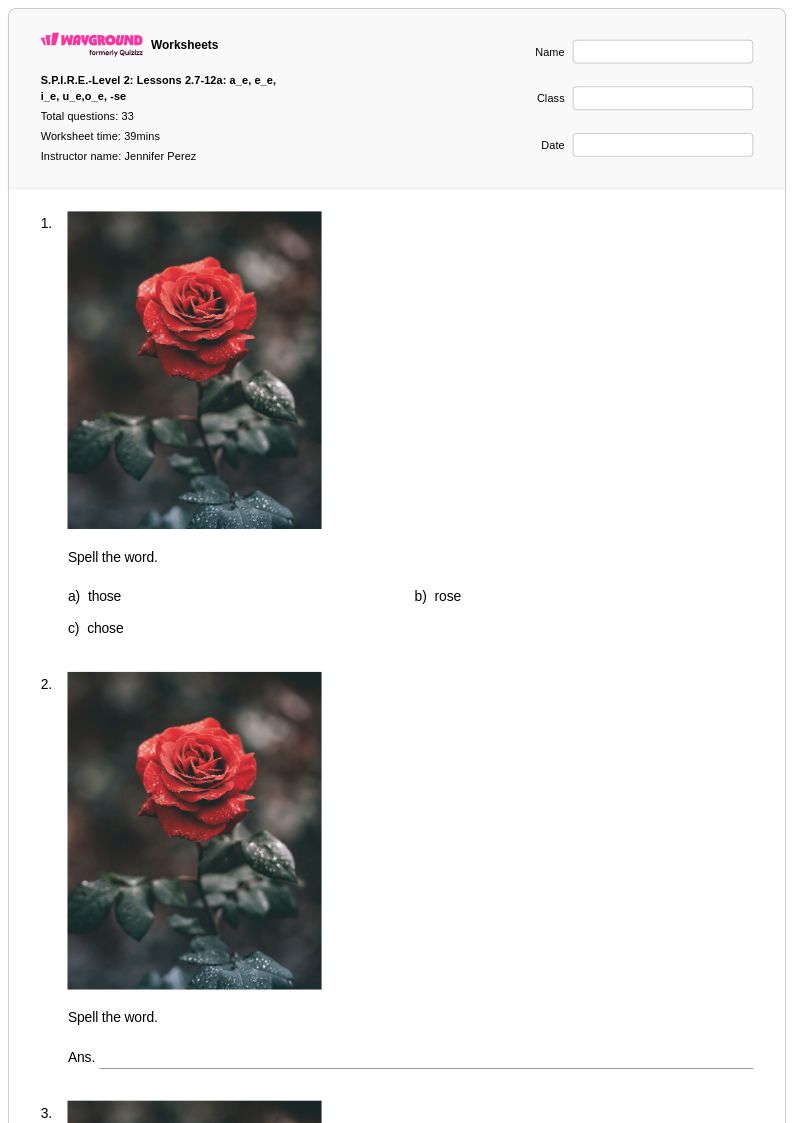
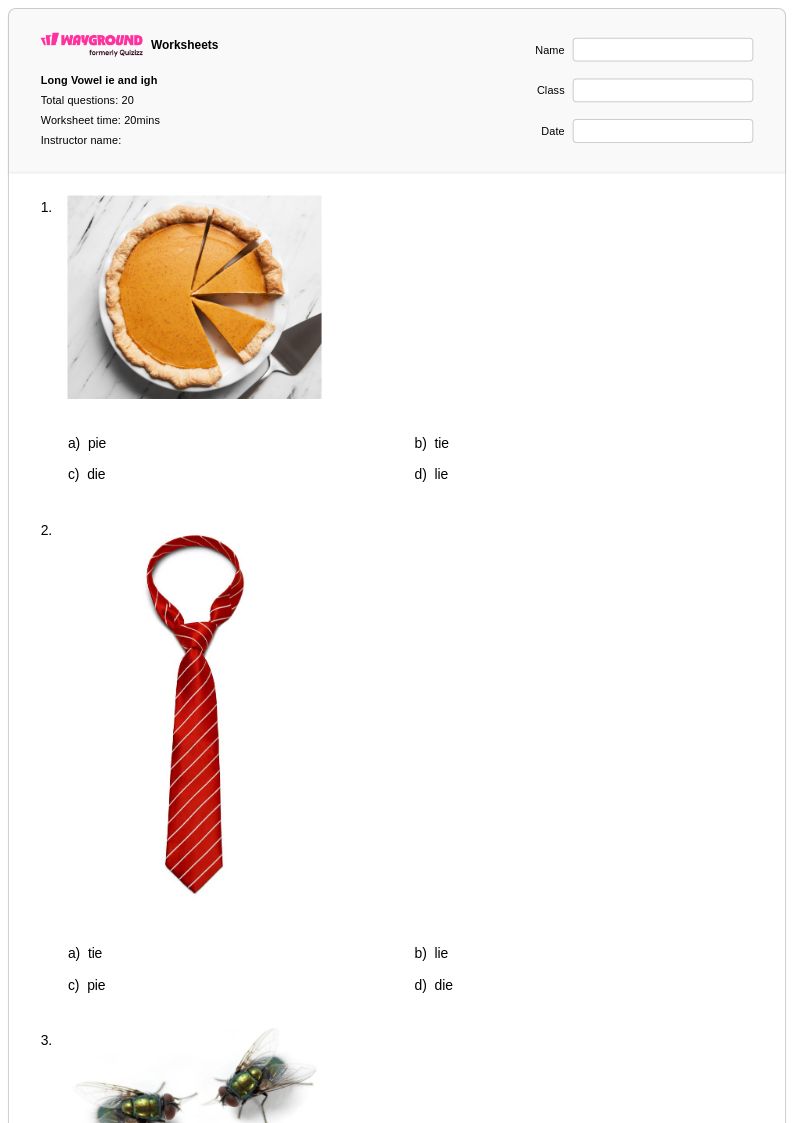
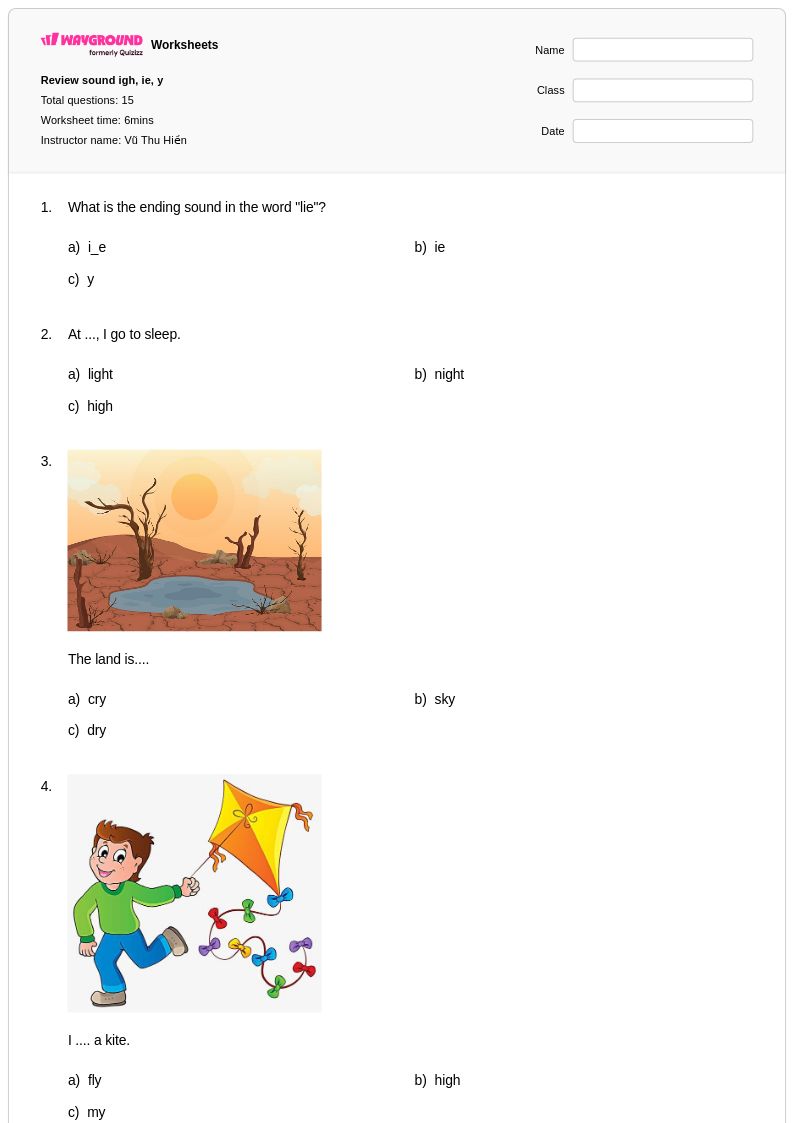
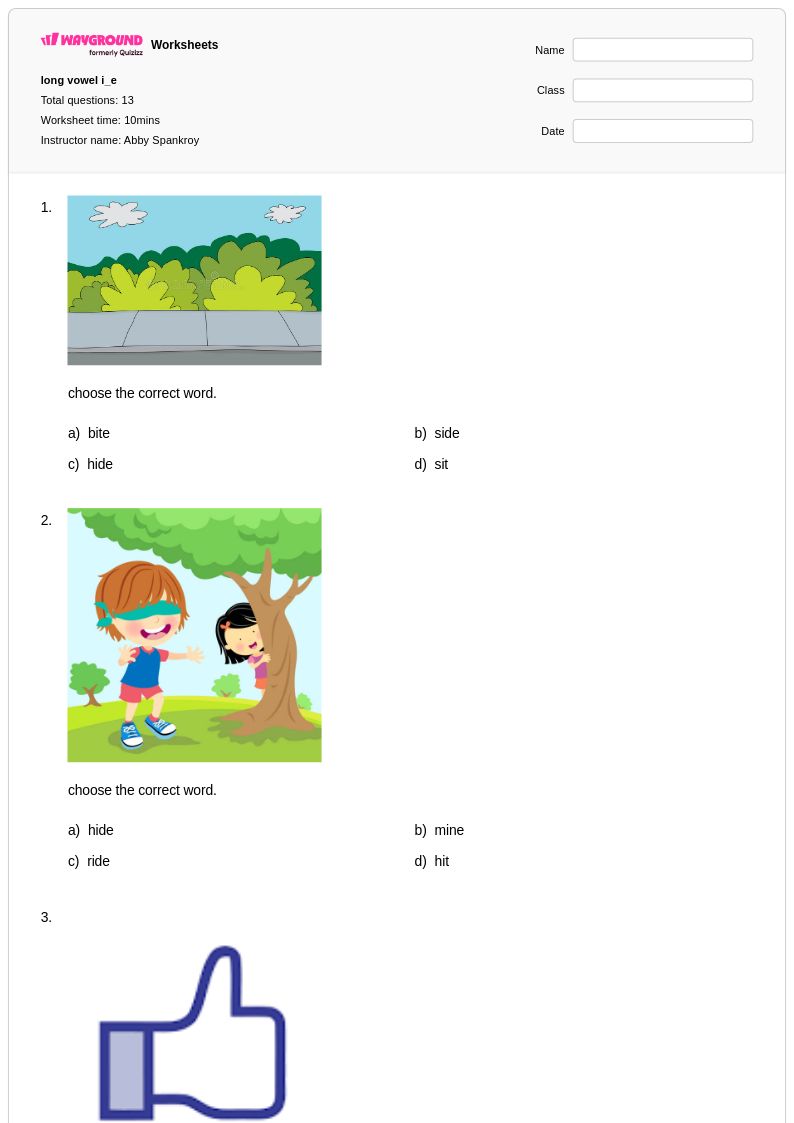
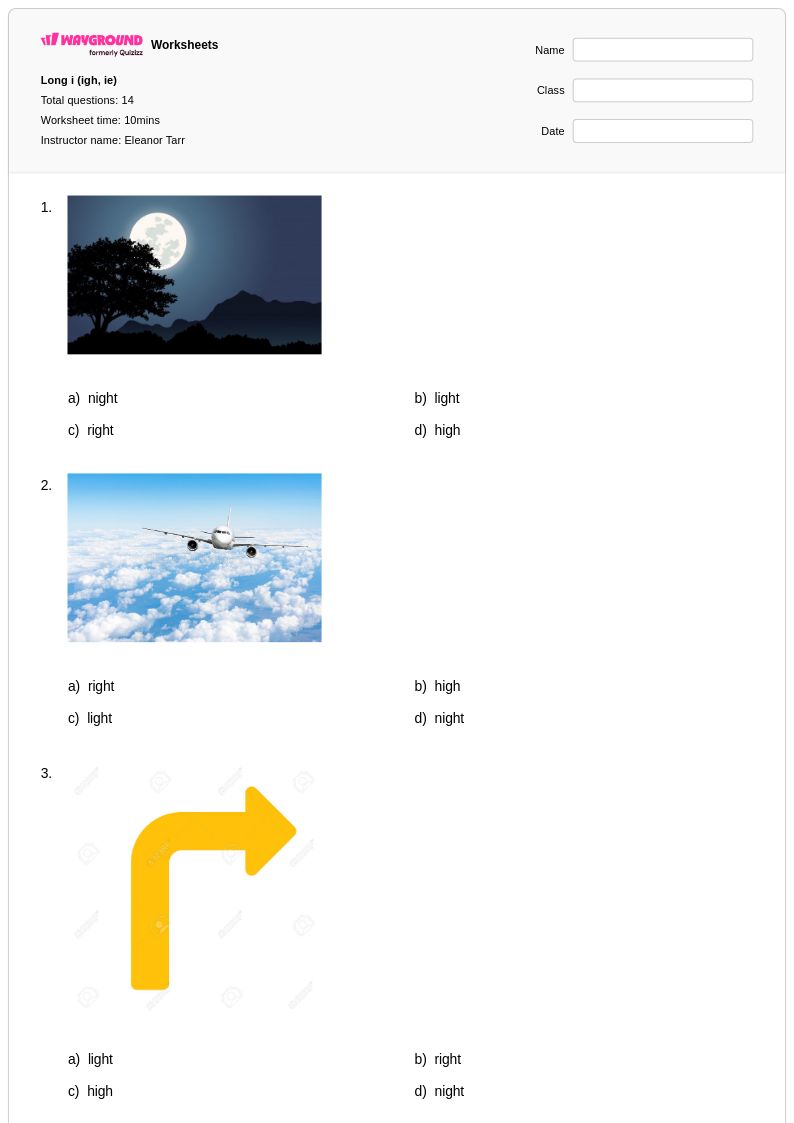
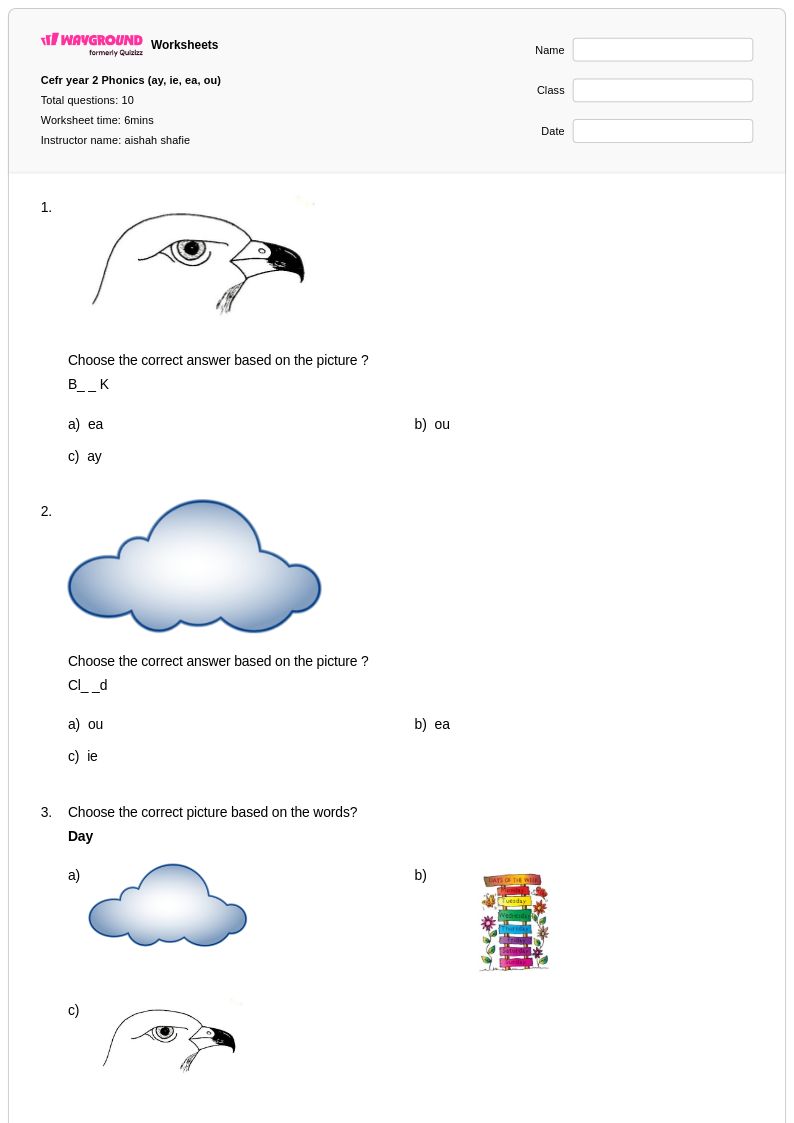
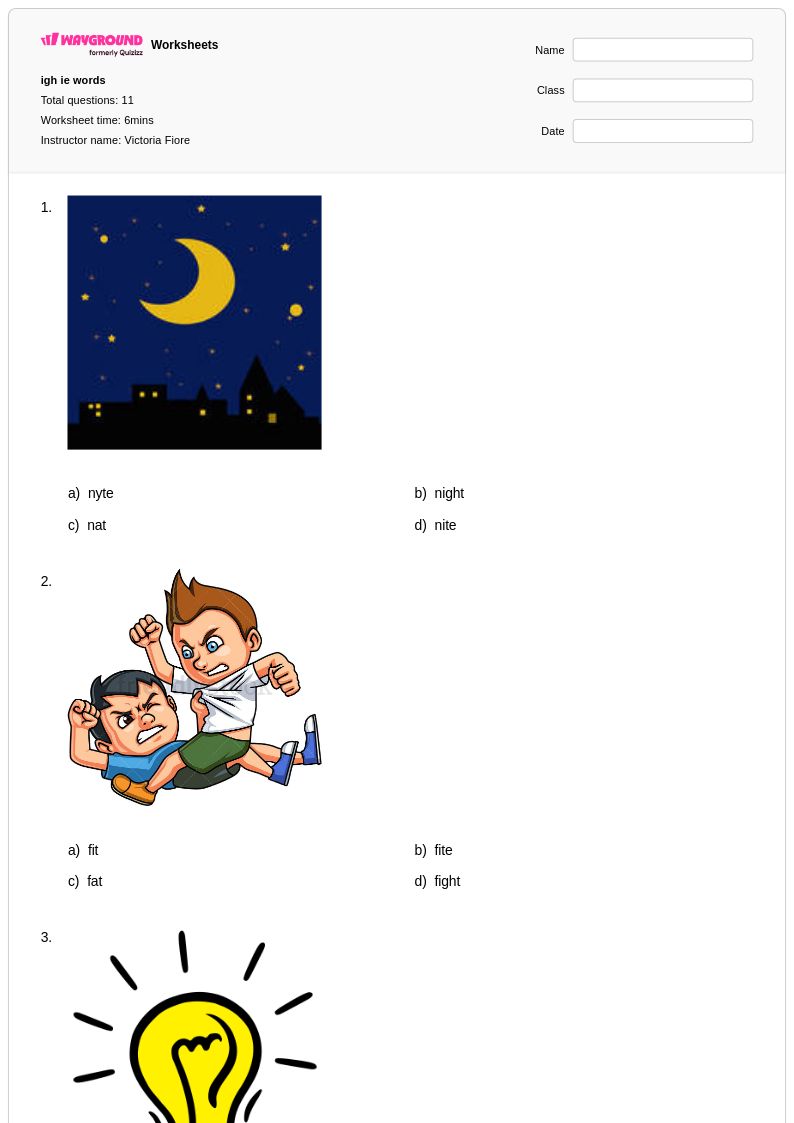
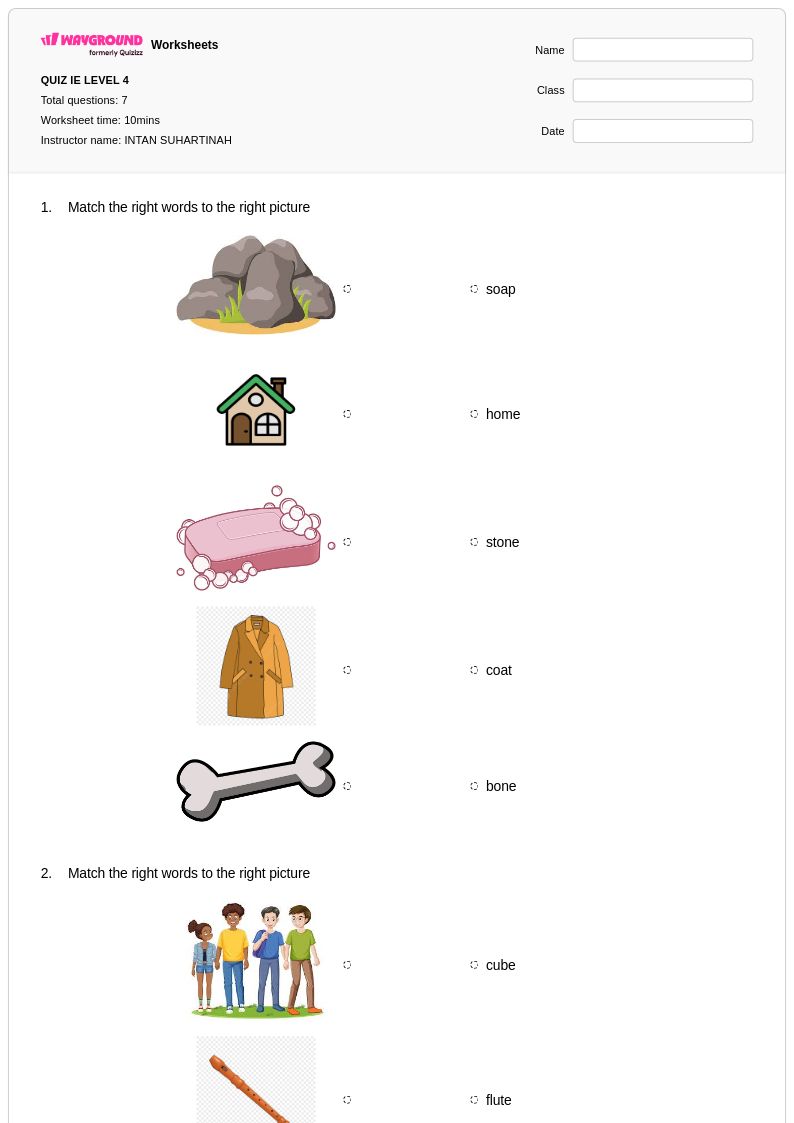
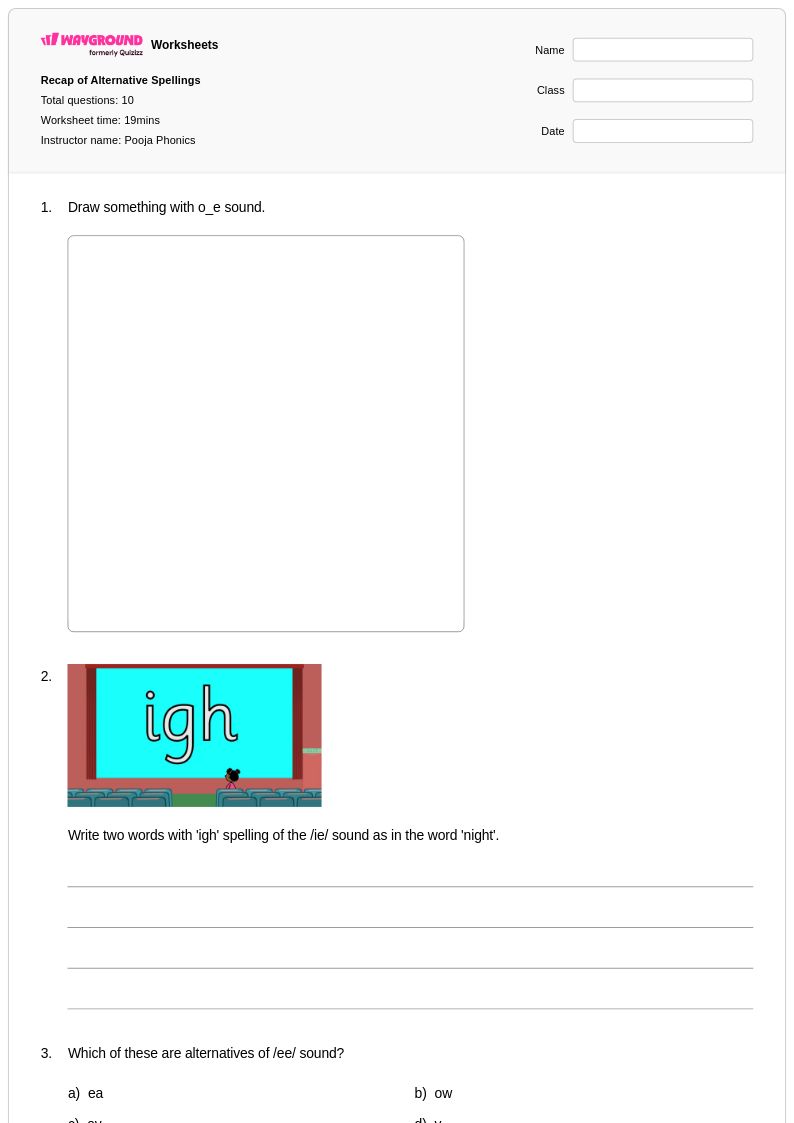
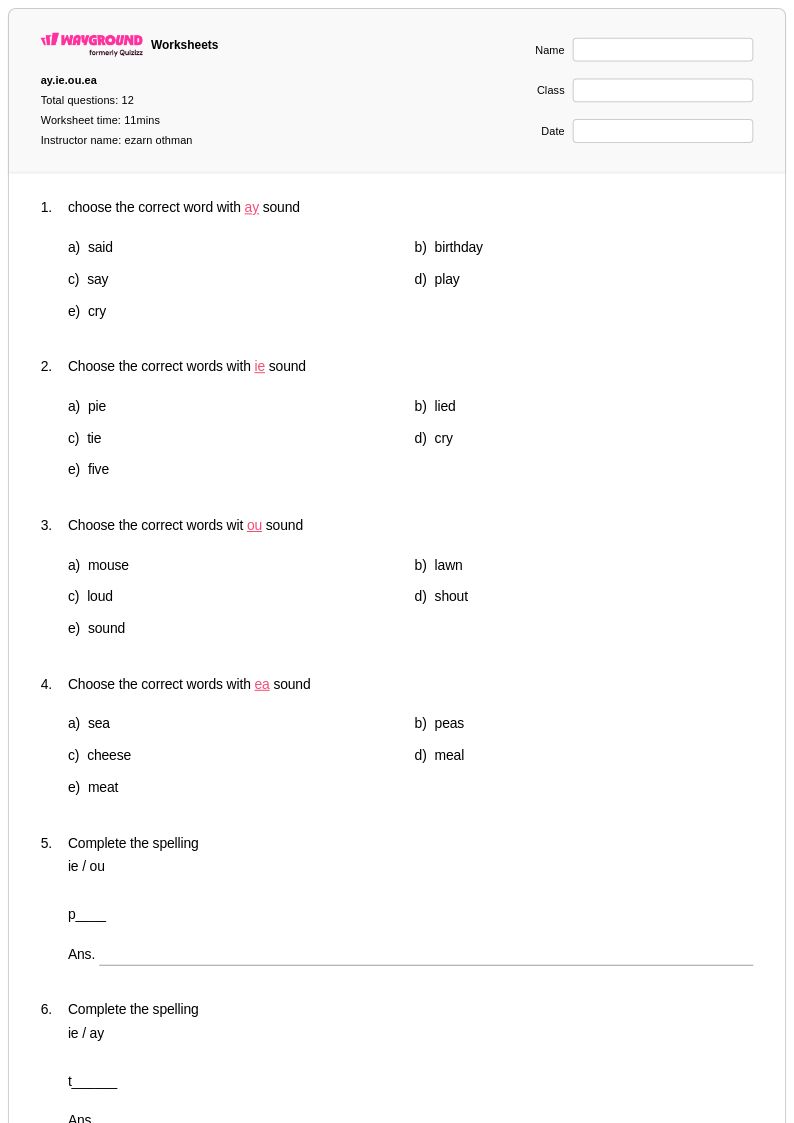
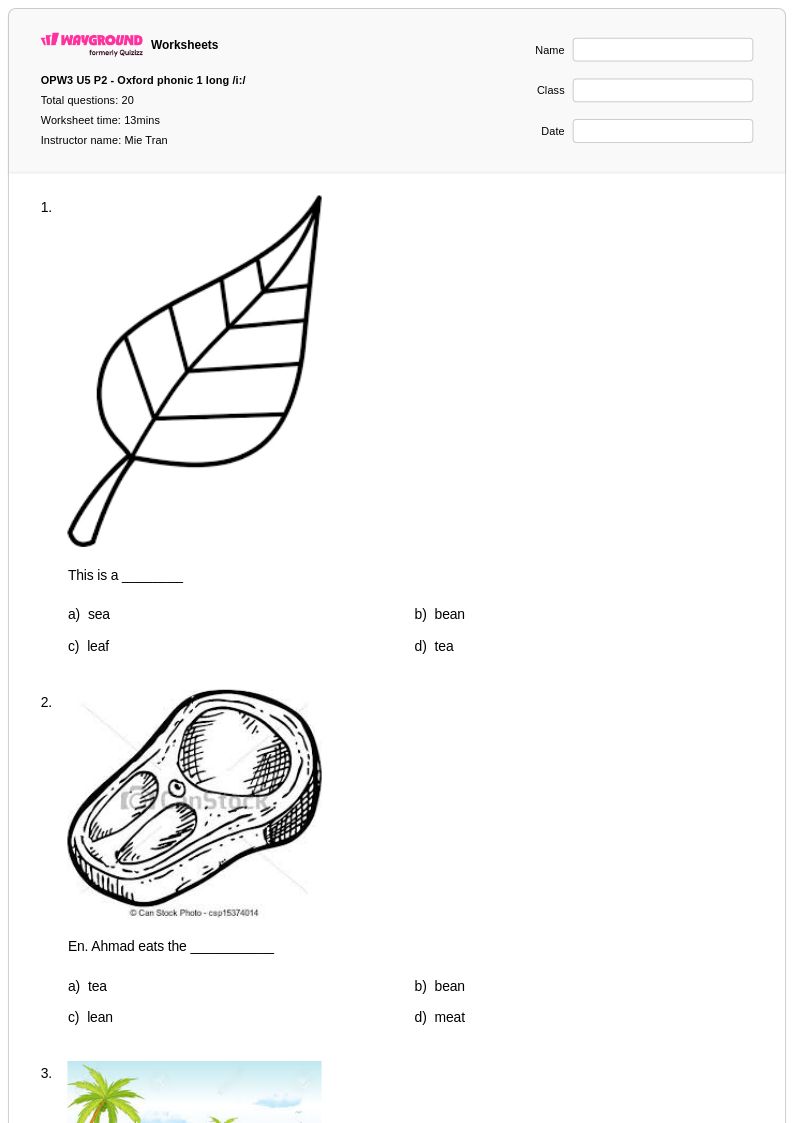
Class 1 ie words phonics worksheets provide engaging printables and practice problems to help young learners master ie sound patterns, featuring free PDF downloads with complete answer keys for effective phonics instruction.
Class 1 ie words worksheets available through Wayground (formerly Quizizz) provide systematic phonics instruction focused on the long i sound represented by the ie digraph in common English words like pie, tie, and lie. These carefully designed educational resources strengthen foundational reading skills by helping young learners recognize, decode, and spell words containing the ie vowel pattern through engaging practice problems that reinforce sound-letter relationships. Each worksheet collection includes comprehensive answer keys and is available as free printables in convenient pdf format, allowing teachers to easily implement structured phonics lessons that build students' confidence in reading unfamiliar words and enhance their overall literacy development.
Wayground (formerly Quizizz) empowers educators with access to millions of teacher-created ie words worksheets that support differentiated instruction for Class 1 phonics learning. The platform's robust search and filtering capabilities enable teachers to quickly locate resources aligned with specific learning standards and customize materials to meet individual student needs, whether for remediation, skill practice, or enrichment activities. These versatile worksheet collections are available in both printable and digital formats, including downloadable pdf options, making lesson planning more efficient while providing flexible tools for classroom instruction, homework assignments, and targeted intervention sessions that help students master this essential phonics pattern.
FAQs
How do I teach ie words to early readers?
Teaching ie words works best when you introduce the vowel team explicitly and contrast it with other long vowel spellings like 'igh' and 'y' at the end of a word. Start with high-frequency ie words such as 'pie,' 'tie,' and 'lie' before moving to multisyllabic examples like 'believe' and 'achieve.' Sorting activities, word building with letter tiles, and read-aloud practice help students internalize the pattern across different word positions.
What exercises help students practice ie words?
Effective ie words practice includes fill-in-the-blank sentences, word sorting by vowel pattern, spelling dictation, and cloze reading passages that embed ie words in context. Activities that ask students to identify the ie pattern within longer words, such as 'relief' or 'field,' build decoding skills beyond single-syllable recognition. Repeated exposure through varied exercise types consolidates both reading and spelling accuracy.
What mistakes do students commonly make with ie words?
Students frequently confuse the ie vowel team with the ei pattern, misreading words like 'believe' or misspelling them as 'beleive.' Another common error is applying the ie sound inconsistently, particularly in multisyllabic words where the pattern appears in an unstressed syllable. Students also sometimes overgeneralize and use ie in words that require a different long vowel spelling, so explicit comparison between patterns is essential.
How do I differentiate ie words instruction for struggling readers?
For struggling readers, narrow the focus to single-syllable ie words first and provide visual anchors like color-coded vowel teams on worksheets. On Wayground, teachers can enable the Read Aloud accommodation so students hear words spoken aloud as they work, and reduced answer choices can lower cognitive load for students who find multiple-option tasks overwhelming. Extended time settings are also available per student, allowing each learner to work at an appropriate pace without disrupting the rest of the class.
How do I use Wayground's ie words worksheets in my classroom?
Wayground's ie words worksheets are available as free printable PDFs for traditional classroom use and in digital formats for technology-integrated learning environments, including the option to host them as a quiz directly on Wayground. Teachers can use them for whole-class phonics lessons, small-group remediation, independent practice centers, or homework. Each worksheet includes a complete answer key, making grading and self-assessment straightforward for both teachers and students.
How do ie words fit into a broader phonics scope and sequence?
The ie vowel team is typically introduced after students have solid command of short vowels and basic long vowel CVCe patterns, making it a mid-to-late foundational phonics skill. It connects to broader vowel team instruction alongside patterns such as 'ea,' 'oa,' and 'ai,' and serves as a bridge to morphologically complex words like 'believe' and 'achieve' encountered in fluent reading. Placing ie words practice within this sequence ensures students build on prior knowledge rather than memorizing patterns in isolation.