
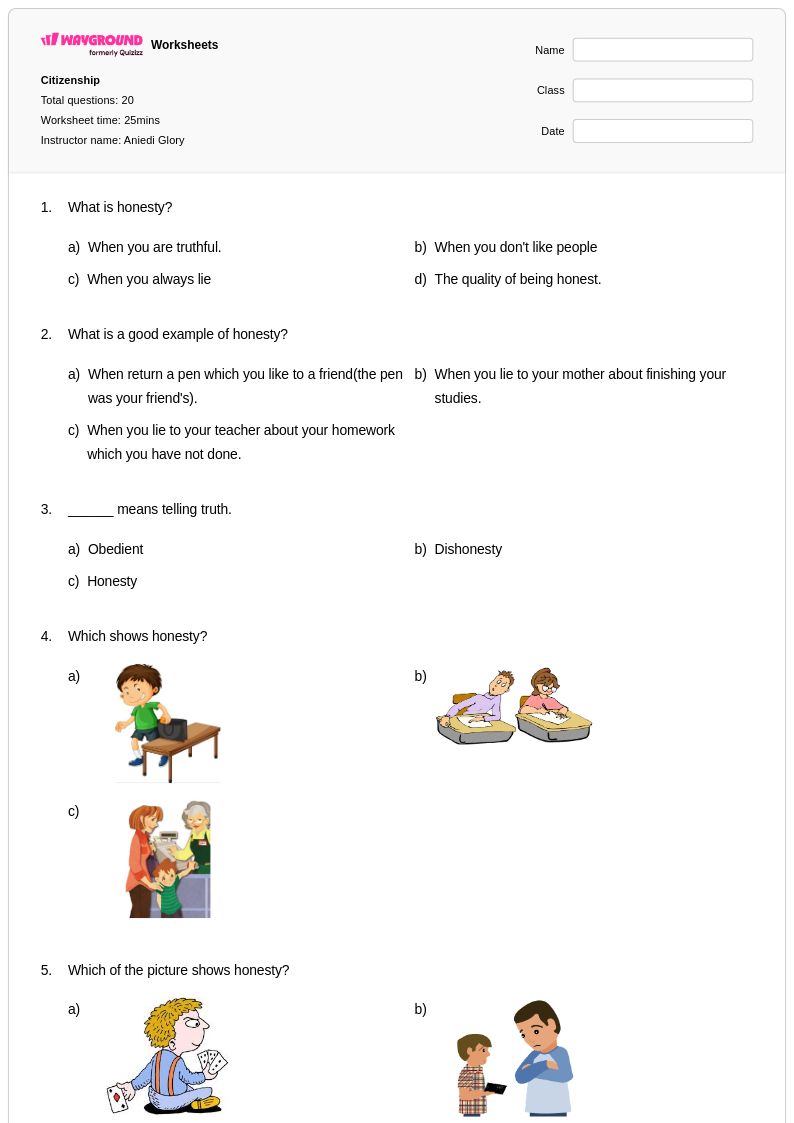
20 Q
3rd
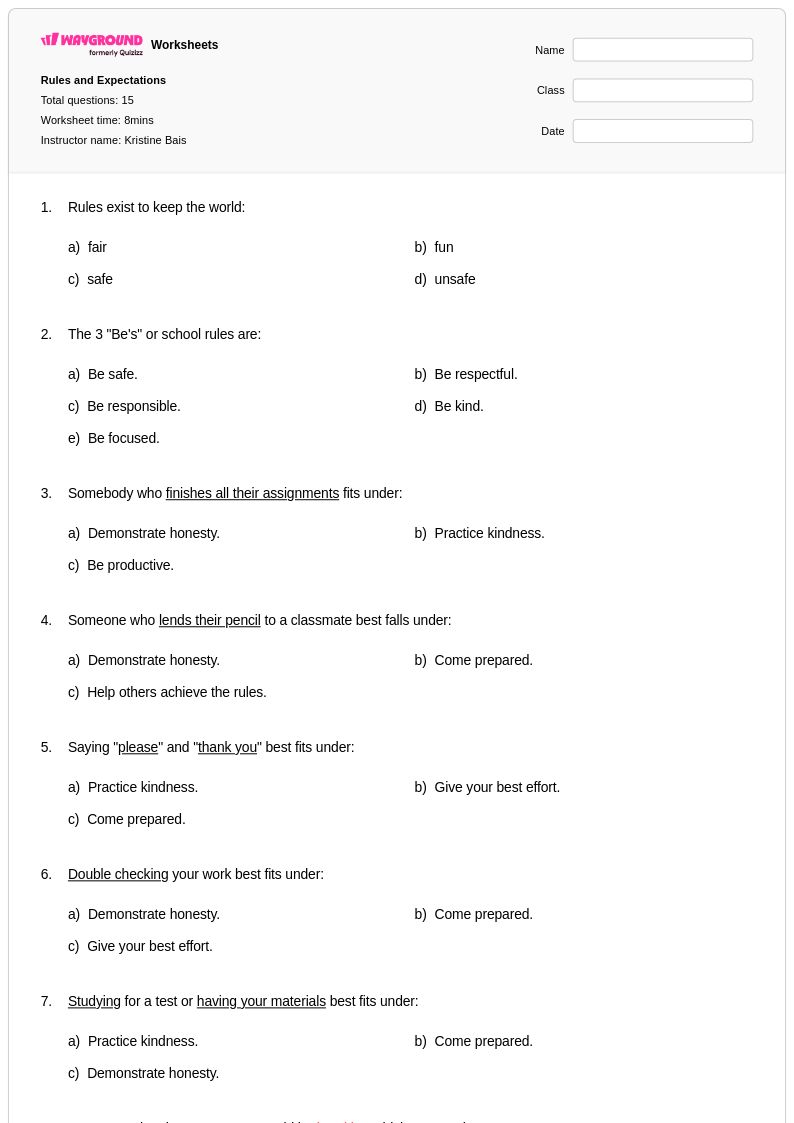
15 Q
3rd
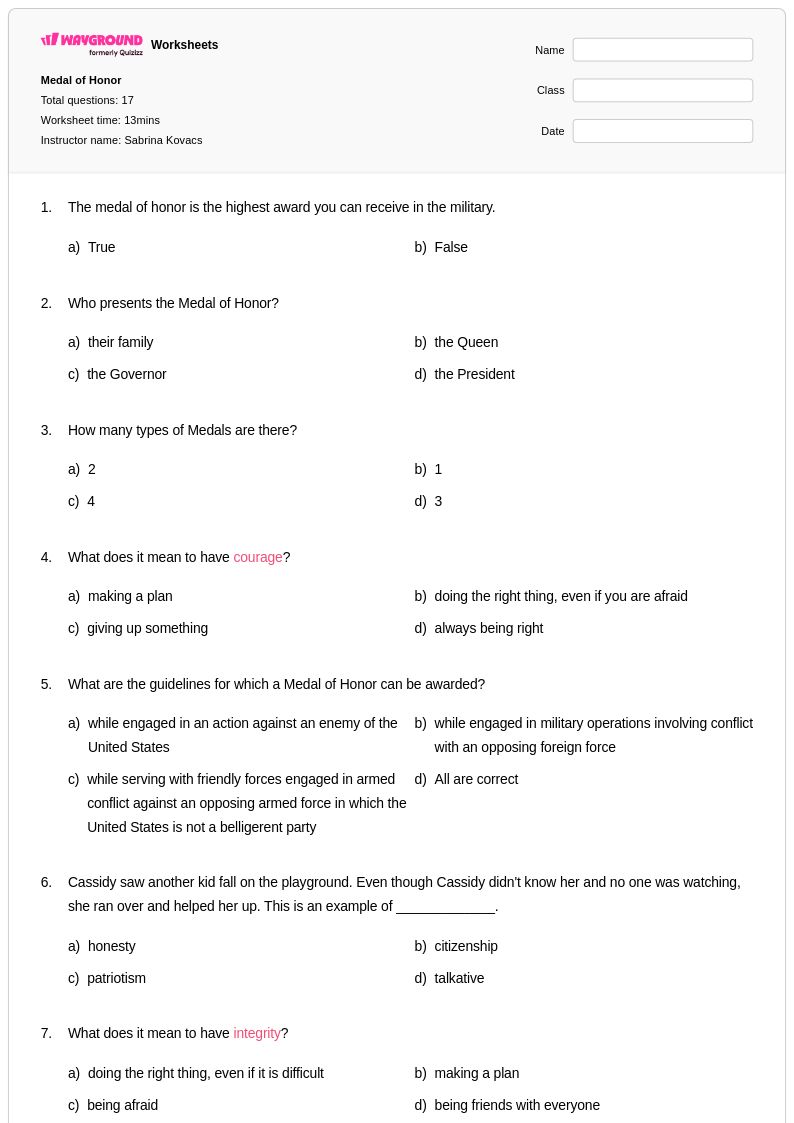
17 Q
3rd - 5th
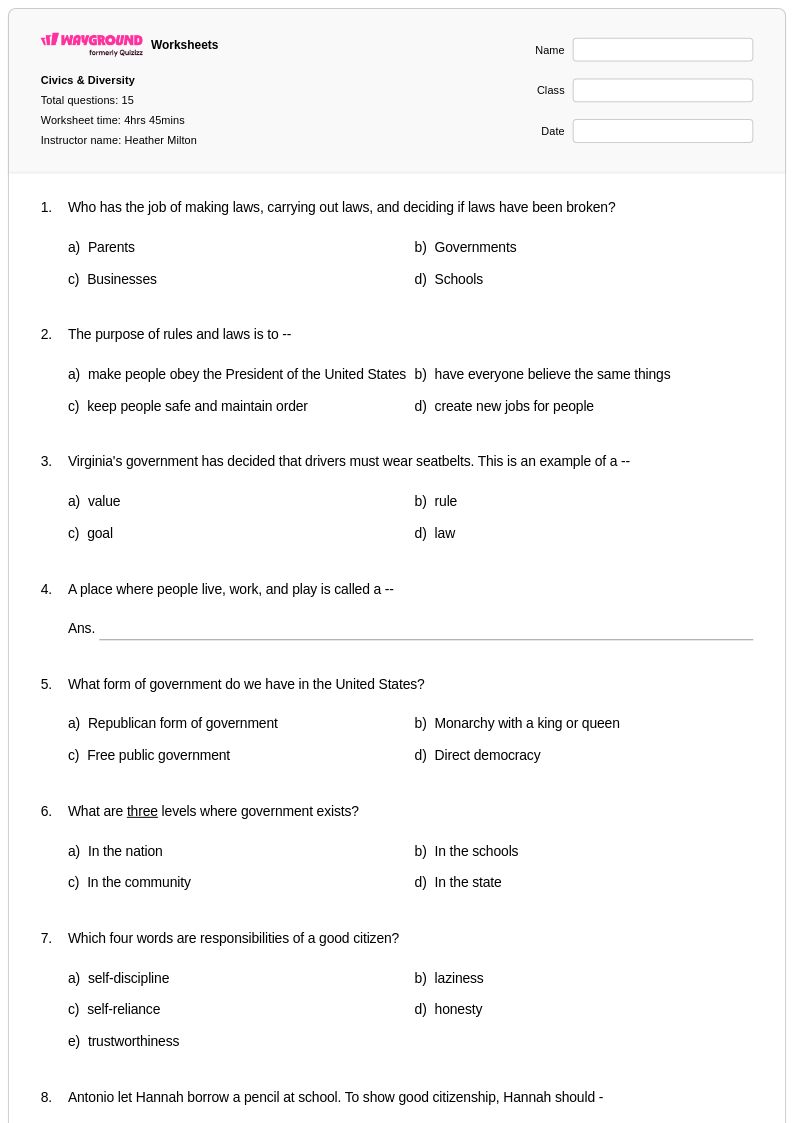
15 Q
3rd
30 Q
3rd
10 Q
3rd
33 Q
1st - 3rd
18 Q
3rd
11 Q
3rd
13 Q
KG - 12th
20 Q
3rd
7 Q
3rd
15 Q
1st - 5th
16 Q
3rd - 12th
17 Q
3rd
25 Q
3rd
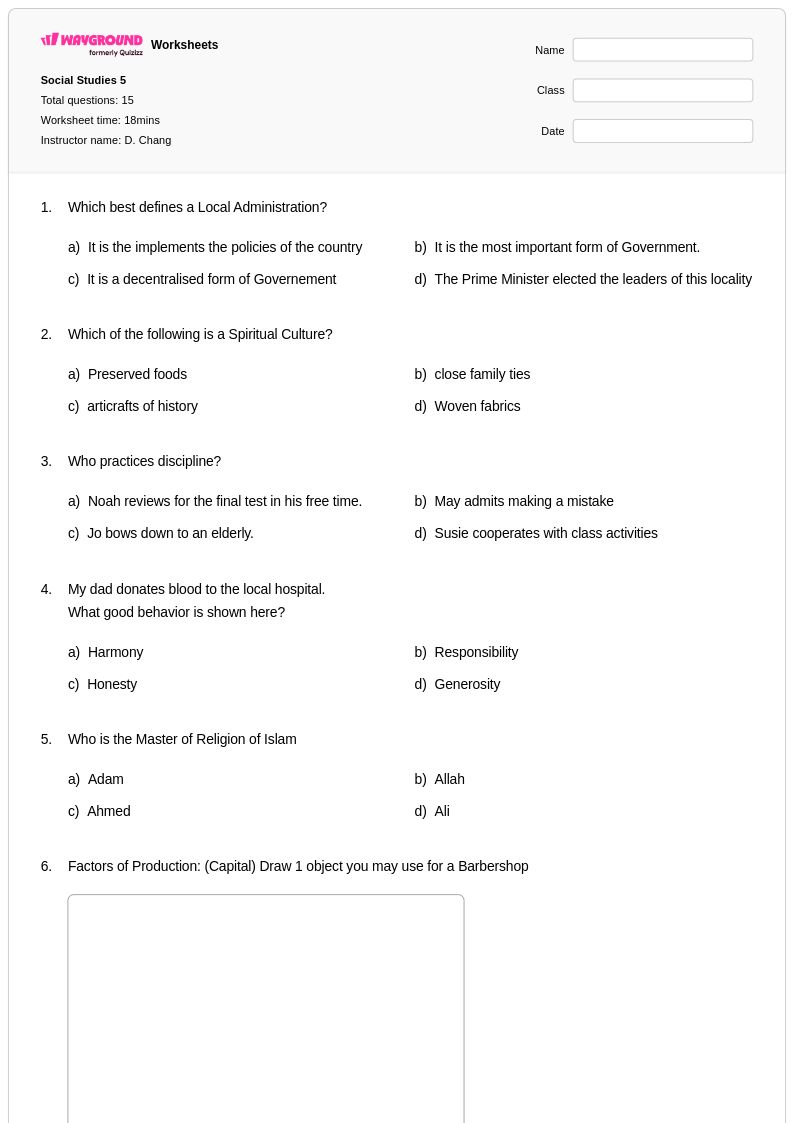
15 Q
3rd
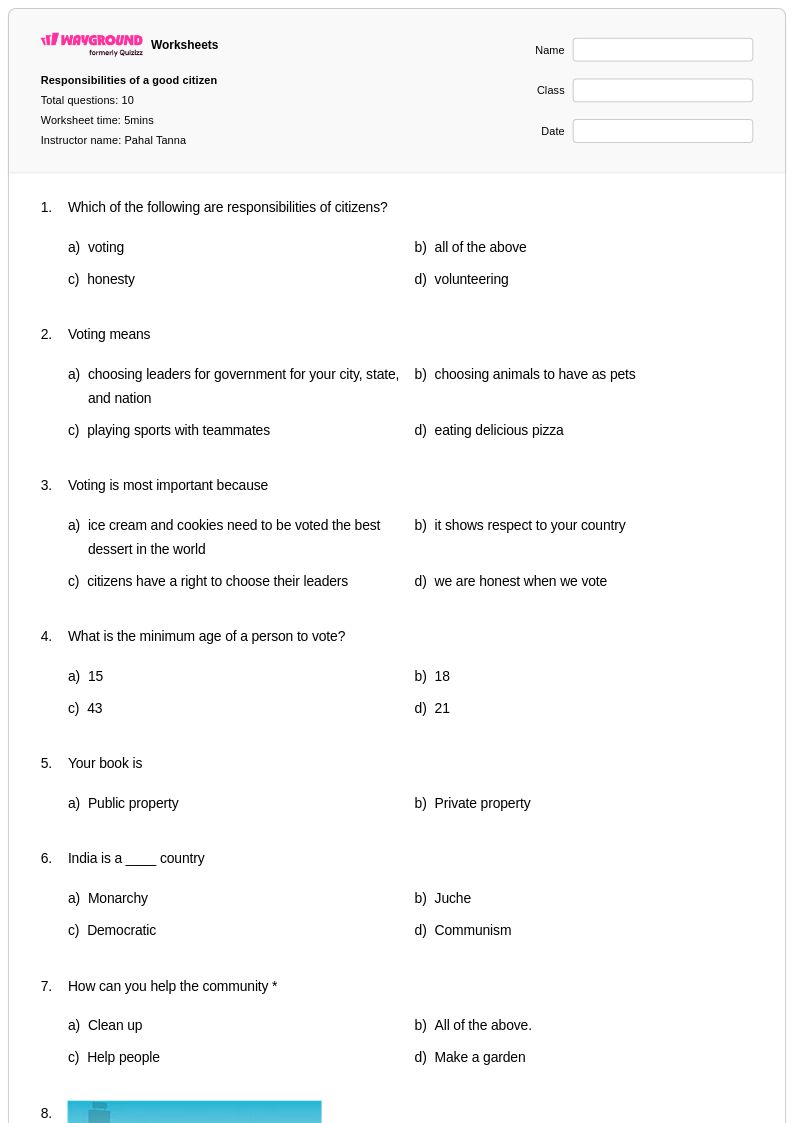
10 Q
2nd - 5th
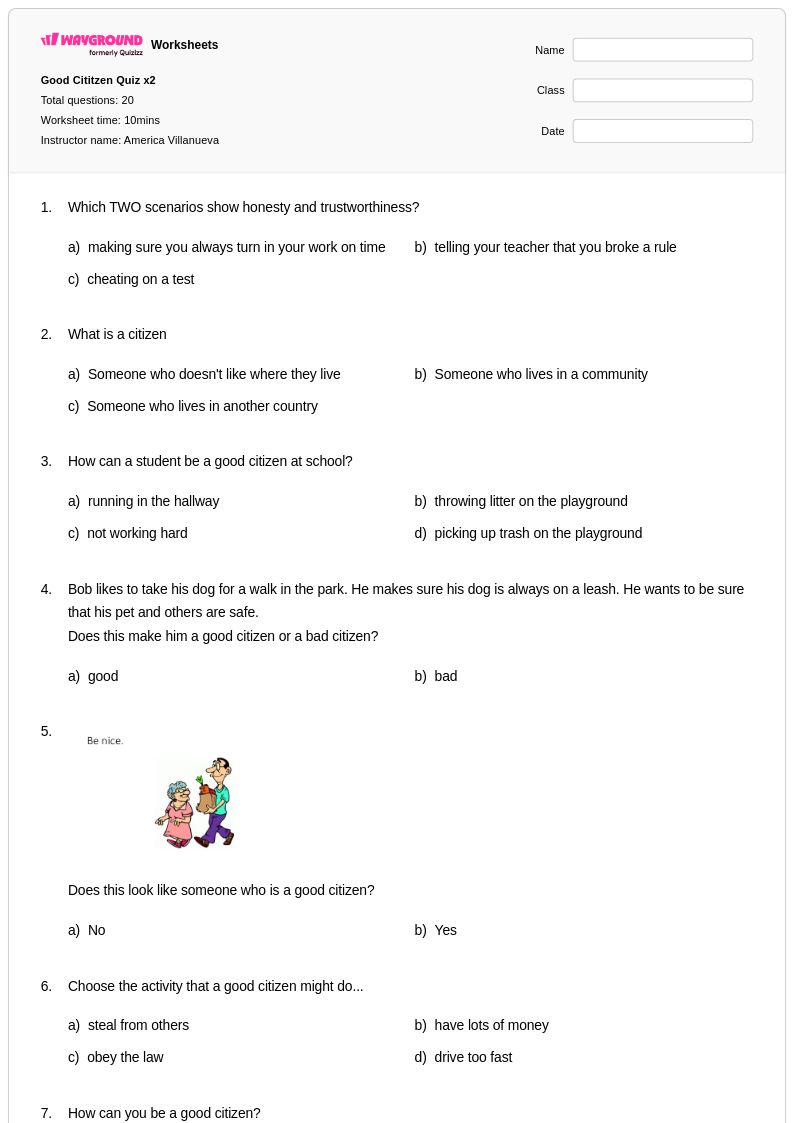
20 Q
3rd
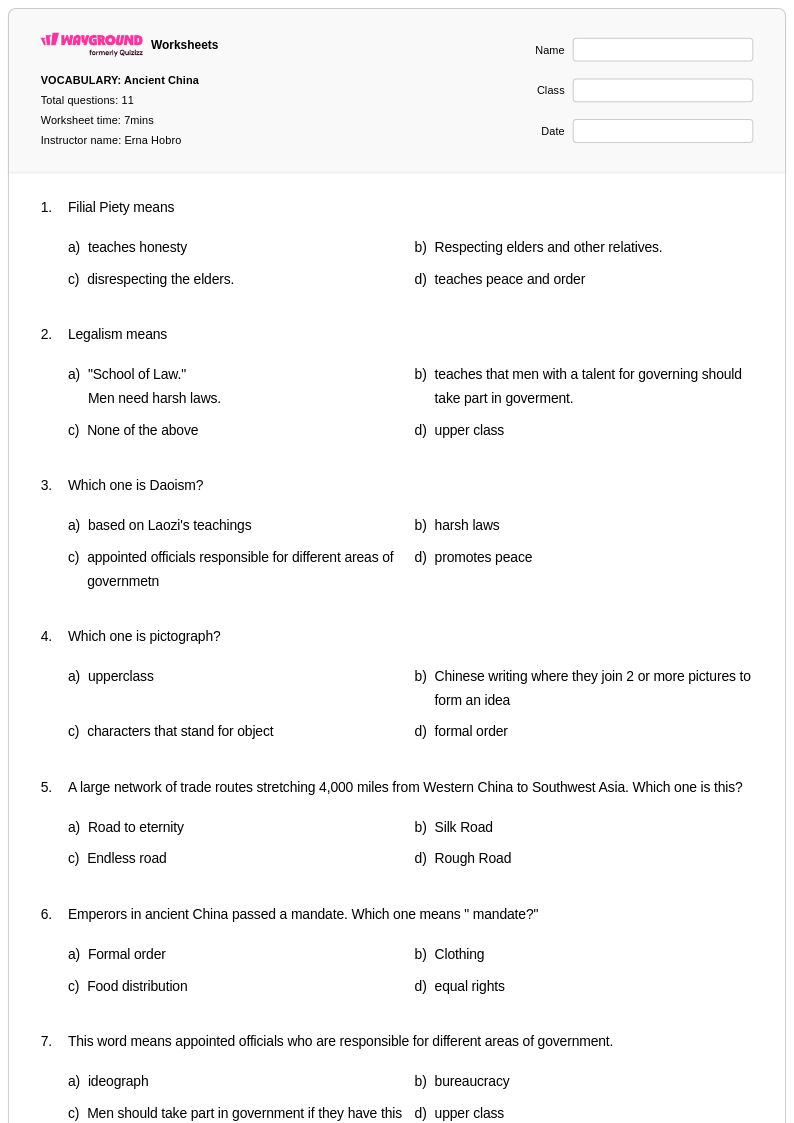
11 Q
KG - 6th
10 Q
3rd
18 Q
3rd - 5th
14 Q
3rd
Explore Honesty Worksheets by Grades
Explore Other Subject Worksheets for class 3
Explore printable Honesty worksheets for Class 3
Honesty worksheets for Class 3 students available through Wayground (formerly Quizizz) provide essential practice in developing one of the most fundamental character traits young learners need to cultivate. These carefully designed educational resources help third-grade students understand the importance of truthfulness in their daily interactions, explore the consequences of dishonest behavior, and practice making honest choices in various scenarios. The worksheets feature age-appropriate situations that children can relate to, such as admitting mistakes at school, being truthful about completed homework, or telling the truth when something breaks at home. Each printable resource includes practice problems that encourage critical thinking about moral decision-making, while comprehensive answer keys support both independent learning and guided instruction. These free materials strengthen students' ability to recognize honest versus dishonest behaviors, understand why honesty builds trust in relationships, and develop the courage to tell the truth even in difficult situations.
Wayground (formerly Quizizz) empowers educators with an extensive collection of teacher-created honesty worksheets that support comprehensive Class 3 social skills instruction through millions of high-quality educational resources. The platform's robust search and filtering capabilities allow teachers to quickly locate materials that align with character education standards and match their specific classroom needs for teaching integrity and truthfulness. Advanced differentiation tools enable instructors to customize worksheets for diverse learning abilities, ensuring that all students can engage meaningfully with concepts about honest communication and ethical behavior. Available in both printable pdf formats and interactive digital versions, these resources provide flexible options for classroom instruction, homework assignments, and assessment preparation. Teachers can seamlessly integrate these materials into lesson planning for introducing new concepts about honesty, providing targeted remediation for students who need additional support in understanding truthfulness, offering enrichment activities for advanced learners, and delivering consistent skill practice that reinforces positive character development throughout the academic year.
FAQs
How do I teach honesty as a character trait in the classroom?
What activities help students practice ethical decision-making around honesty?
What misconceptions do students commonly have about honesty?
How can I use honesty worksheets to support students who struggle with social-emotional learning?
How do I use Wayground's honesty worksheets in my classroom?