
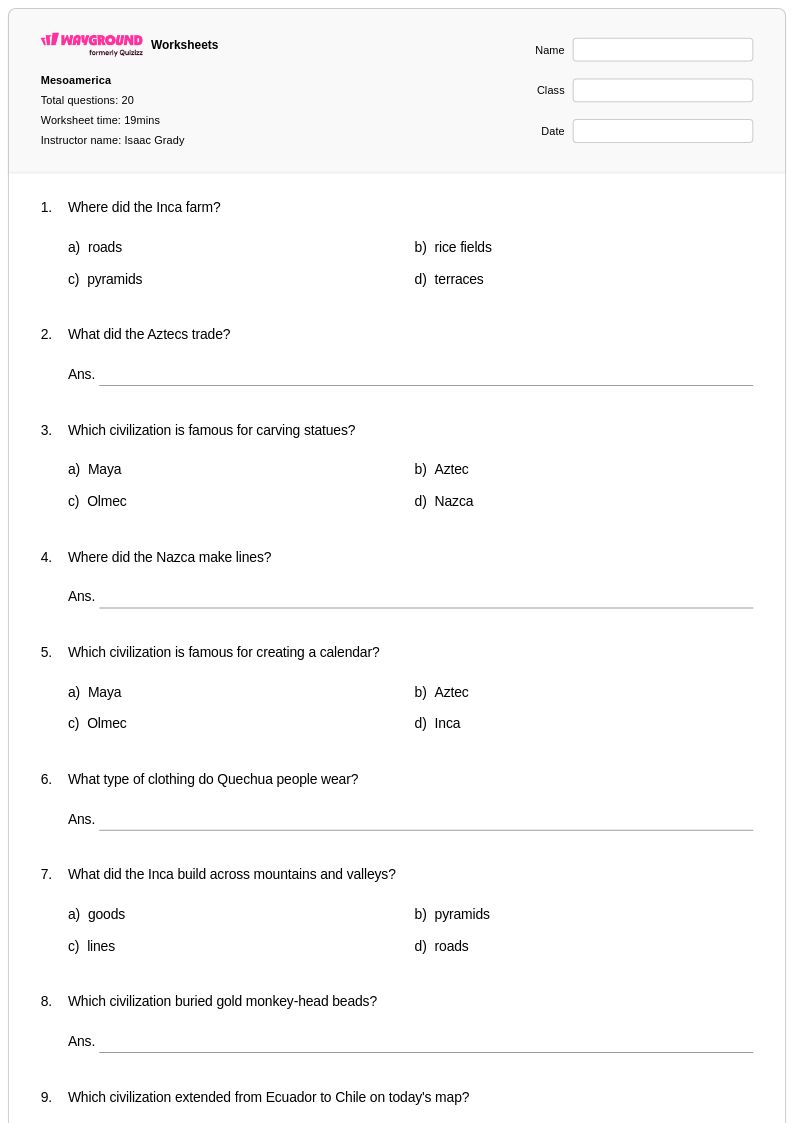
21 Q
6th - 8th
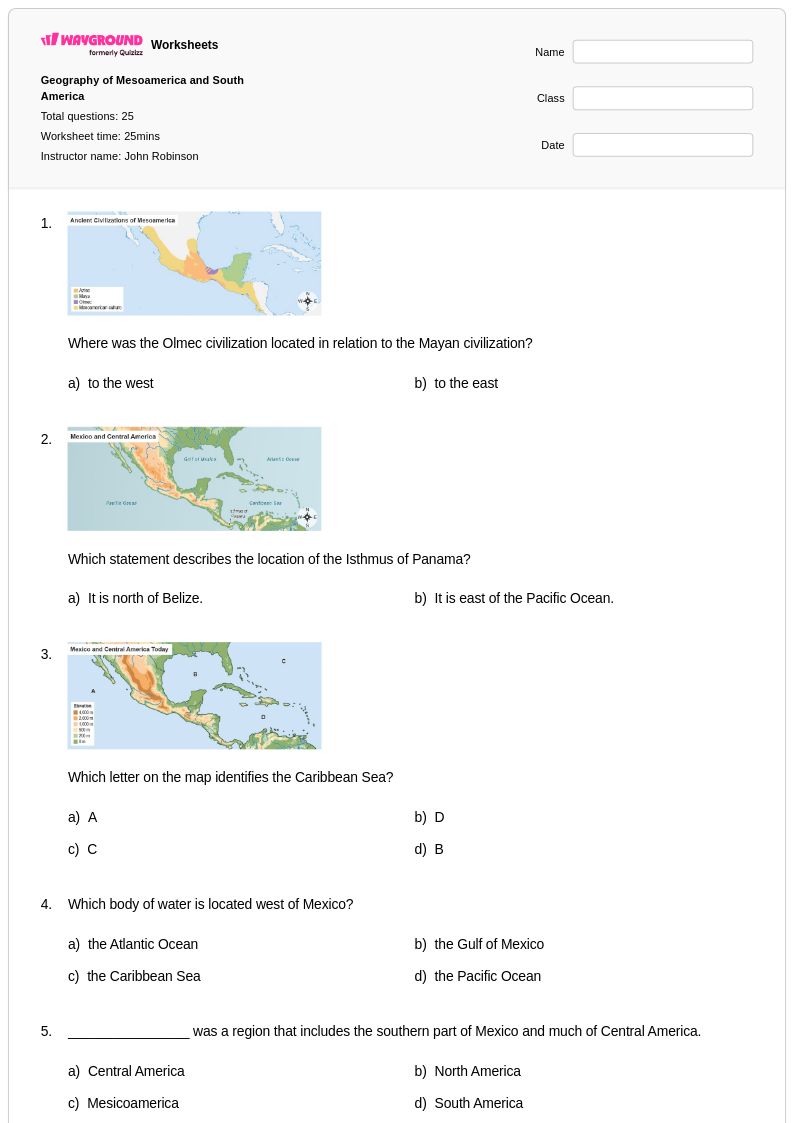
25 Q
6th - Uni
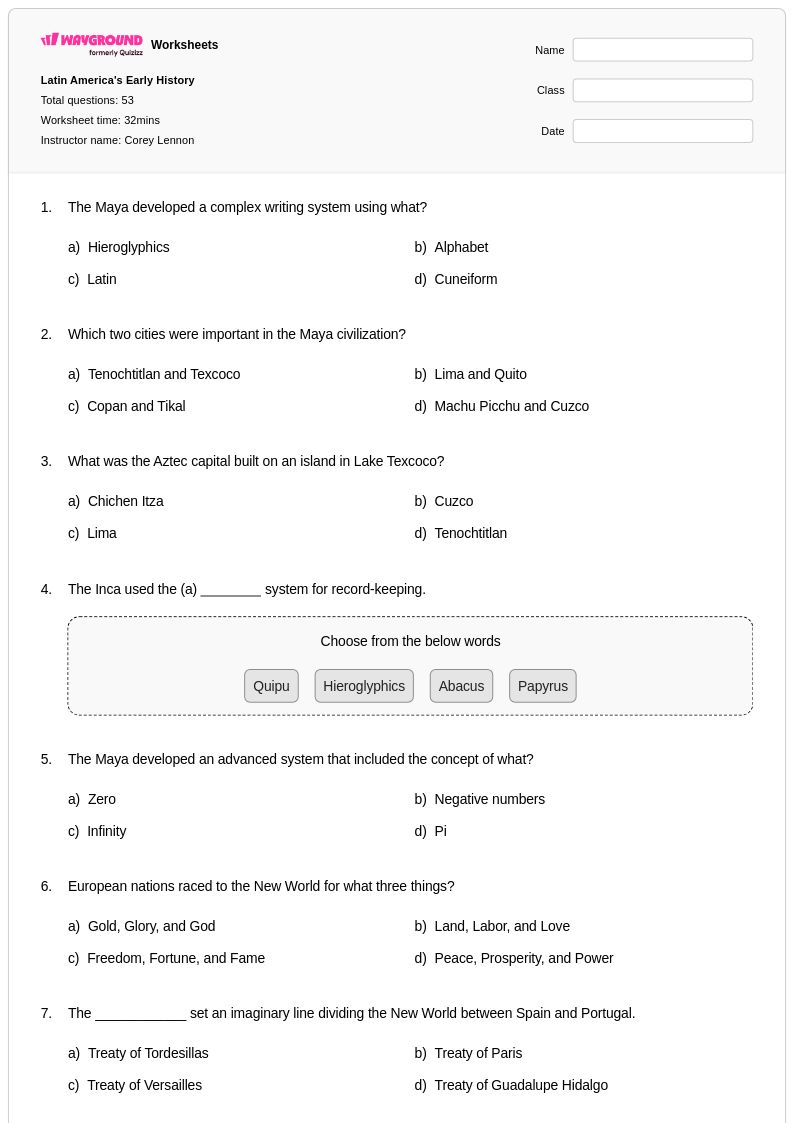
53 Q
6th
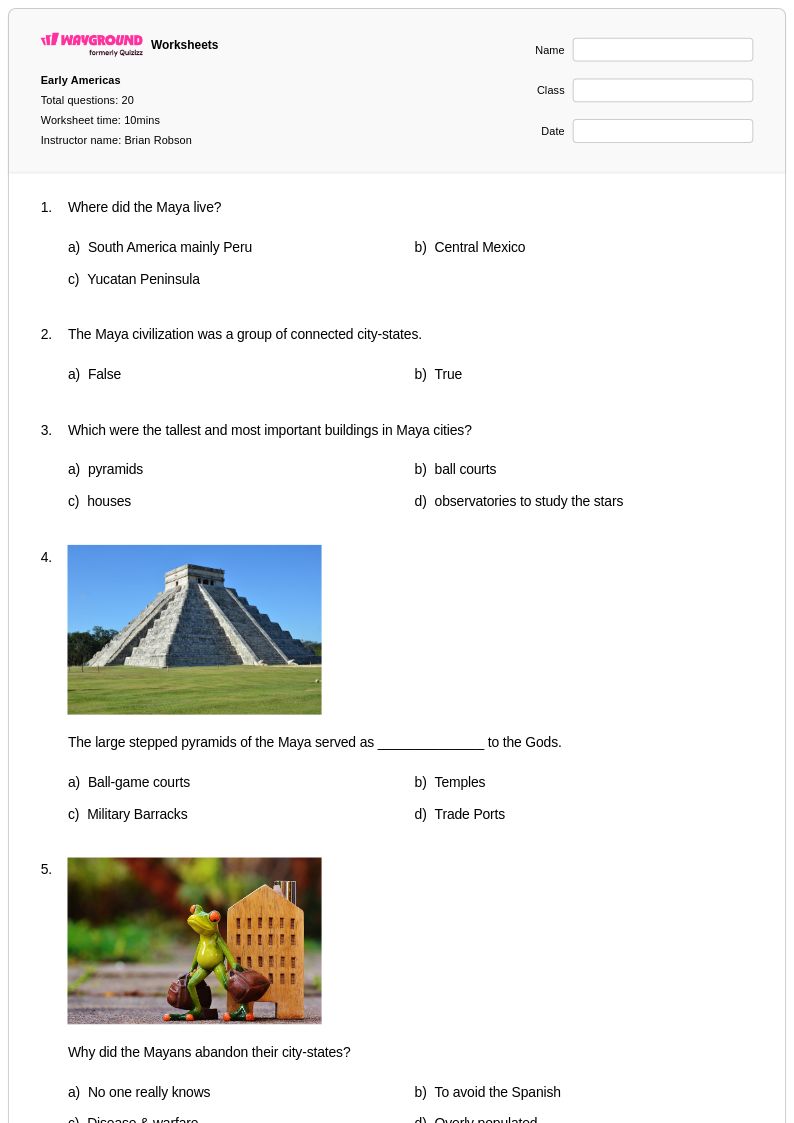
20 Q
6th
23 Q
6th
21 Q
6th - 8th
24 Q
6th - 9th
25 Q
6th - Uni
15 Q
6th - Uni
19 Q
6th - 8th
15 Q
6th - Uni
20 Q
6th - Uni
25 Q
6th - Uni
20 Q
6th
25 Q
6th - Uni
27 Q
6th
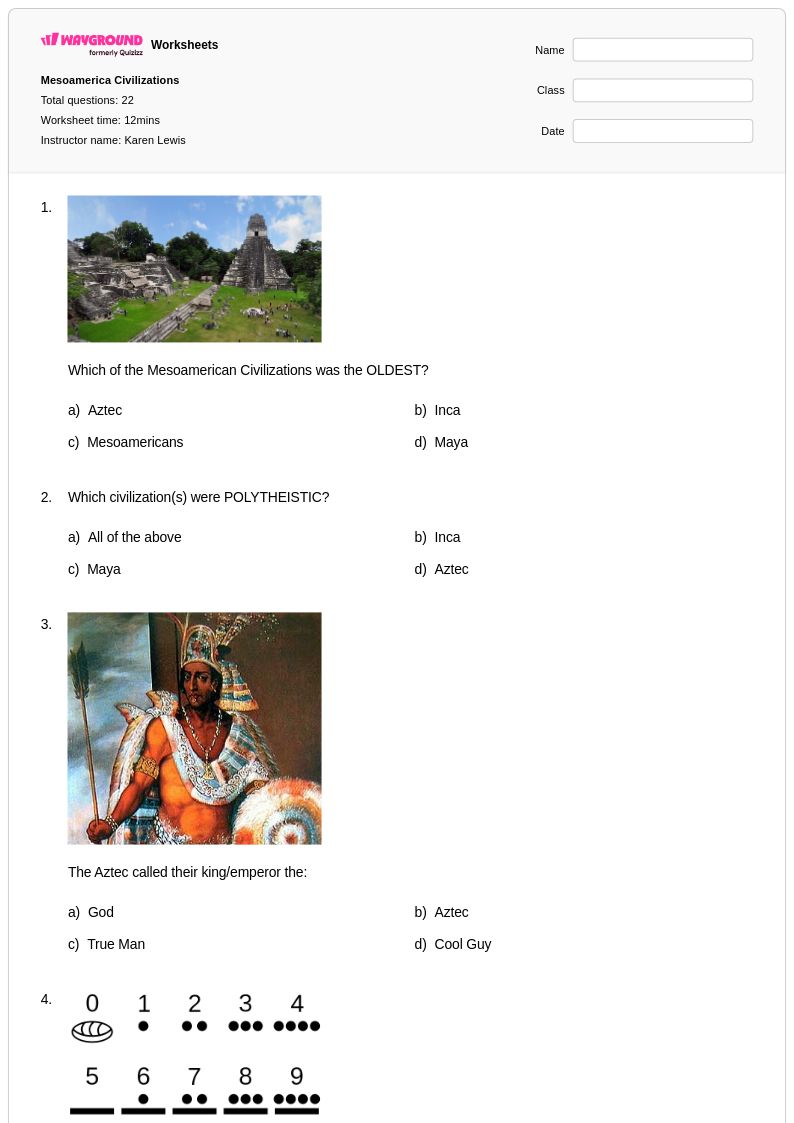
22 Q
6th
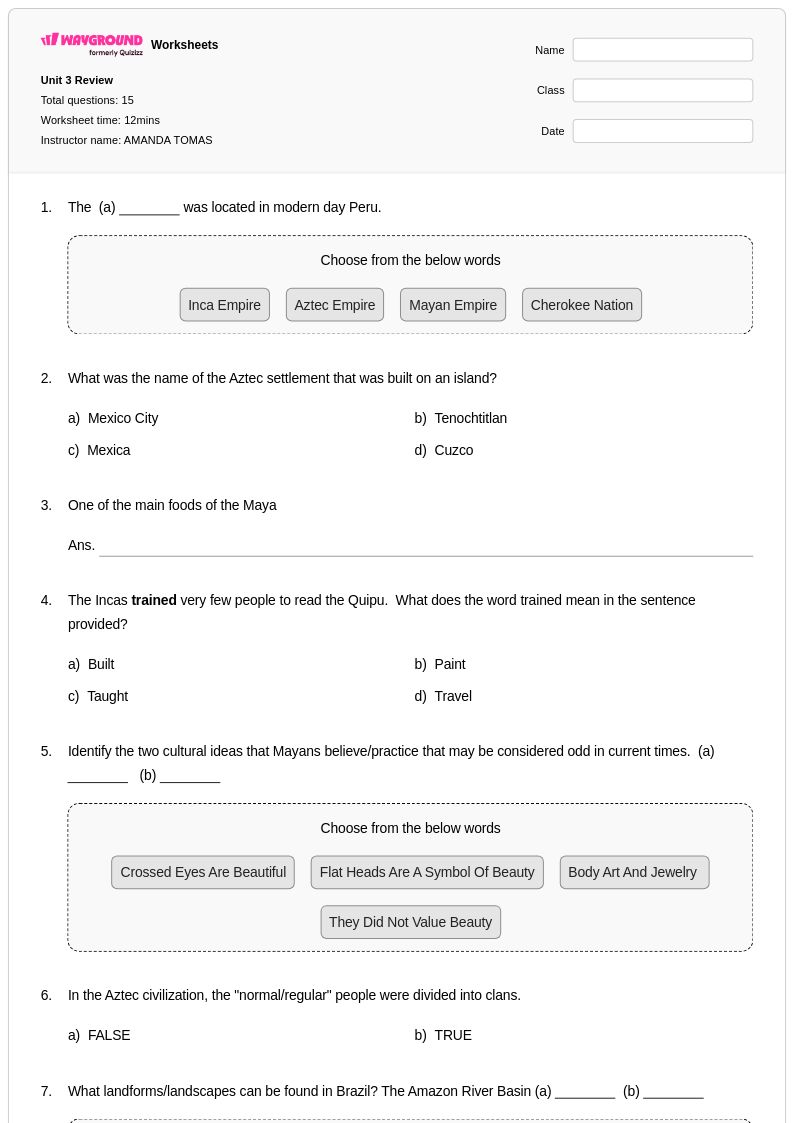
15 Q
6th
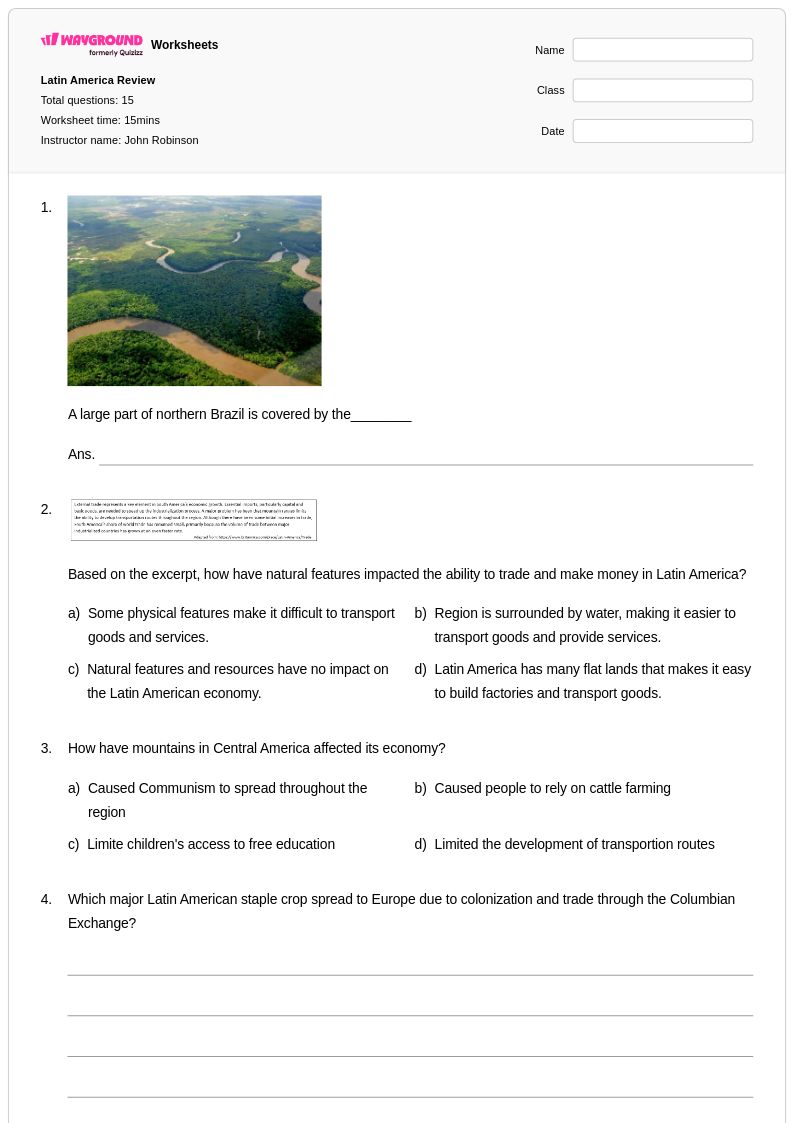
15 Q
6th - Uni
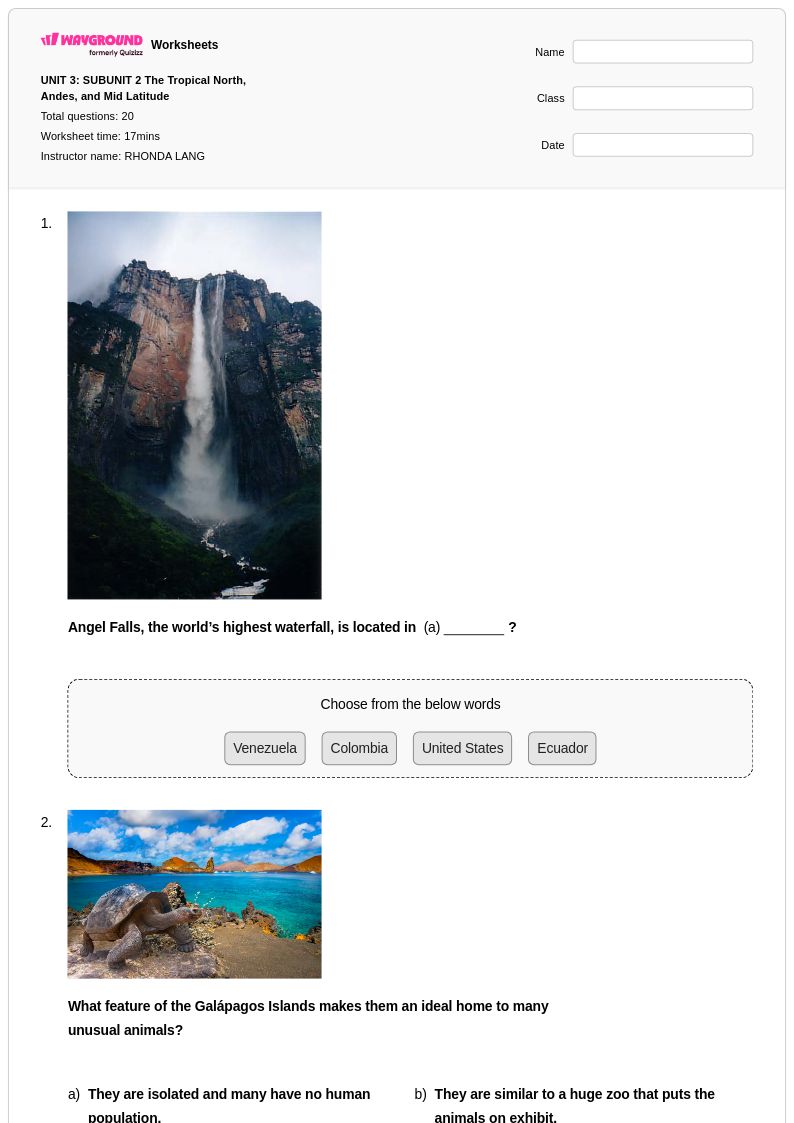
20 Q
6th
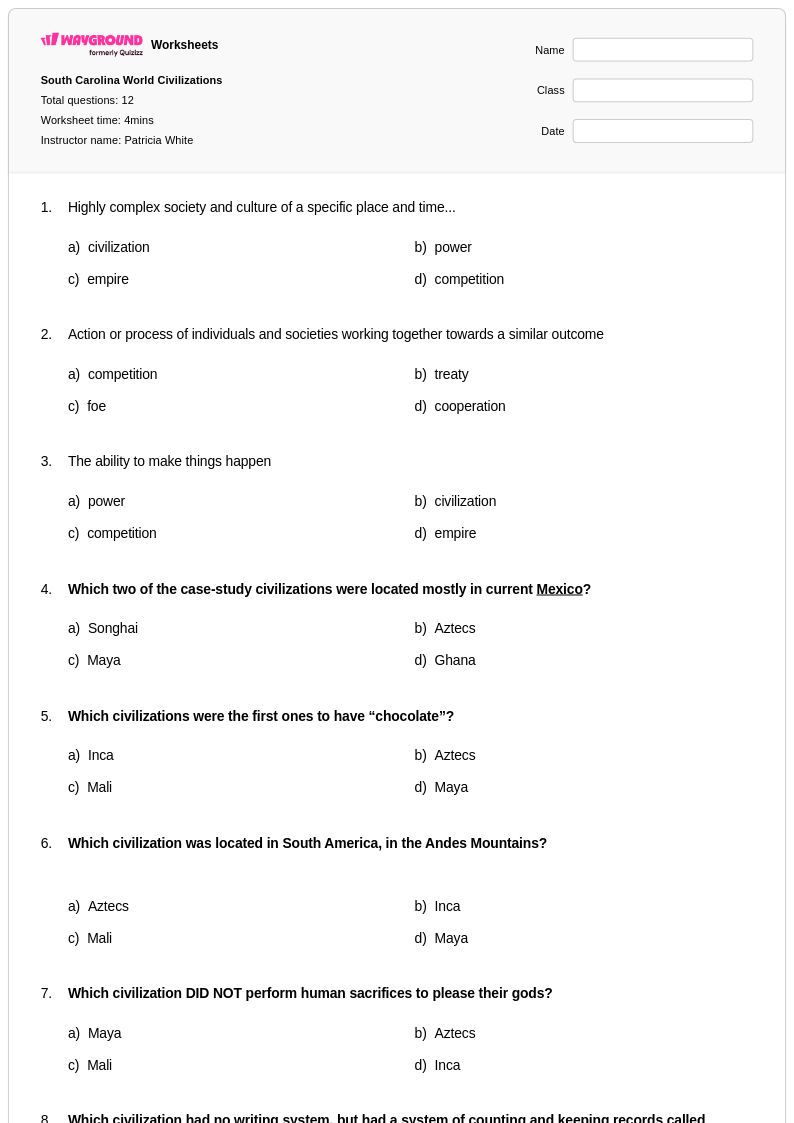
12 Q
6th - 8th
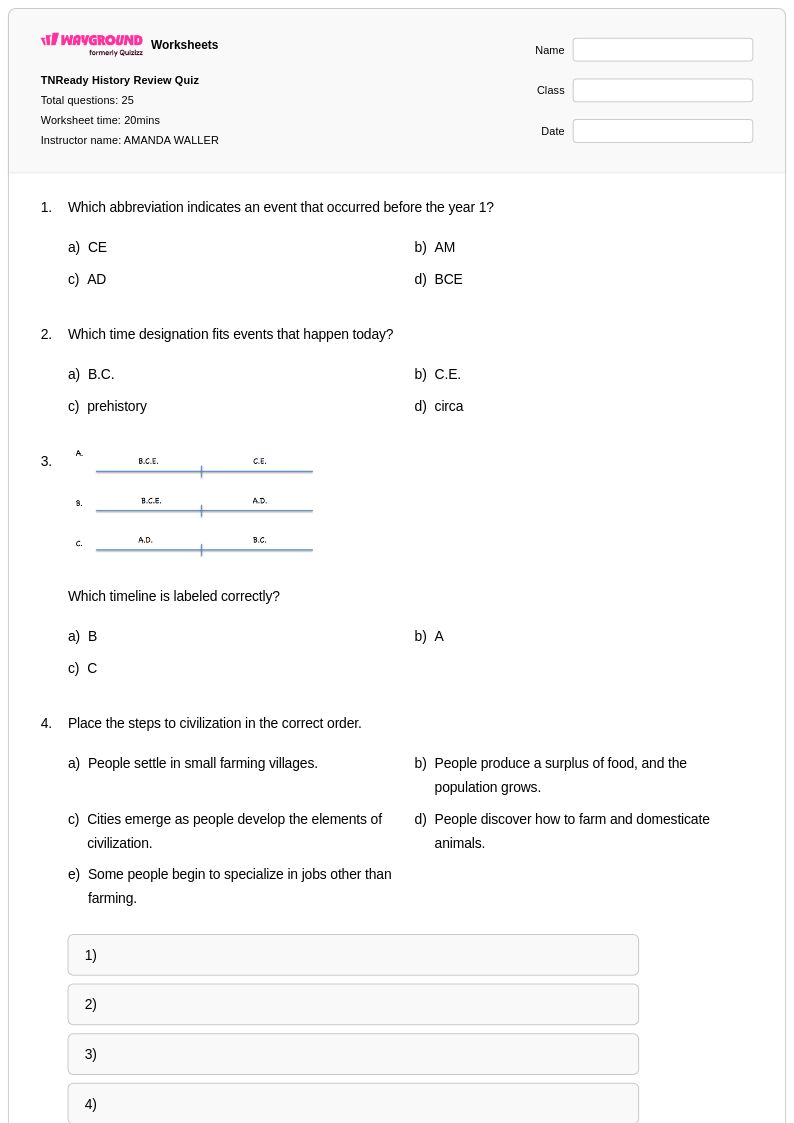
25 Q
6th
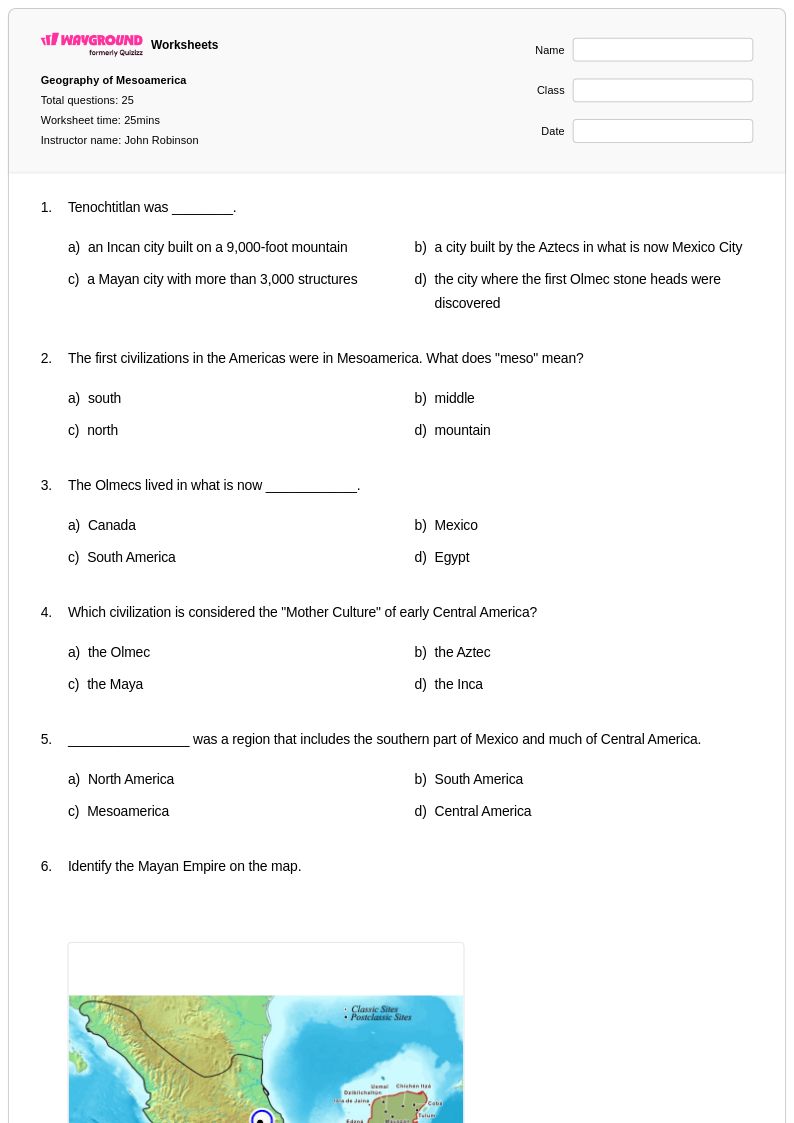
25 Q
6th - Uni
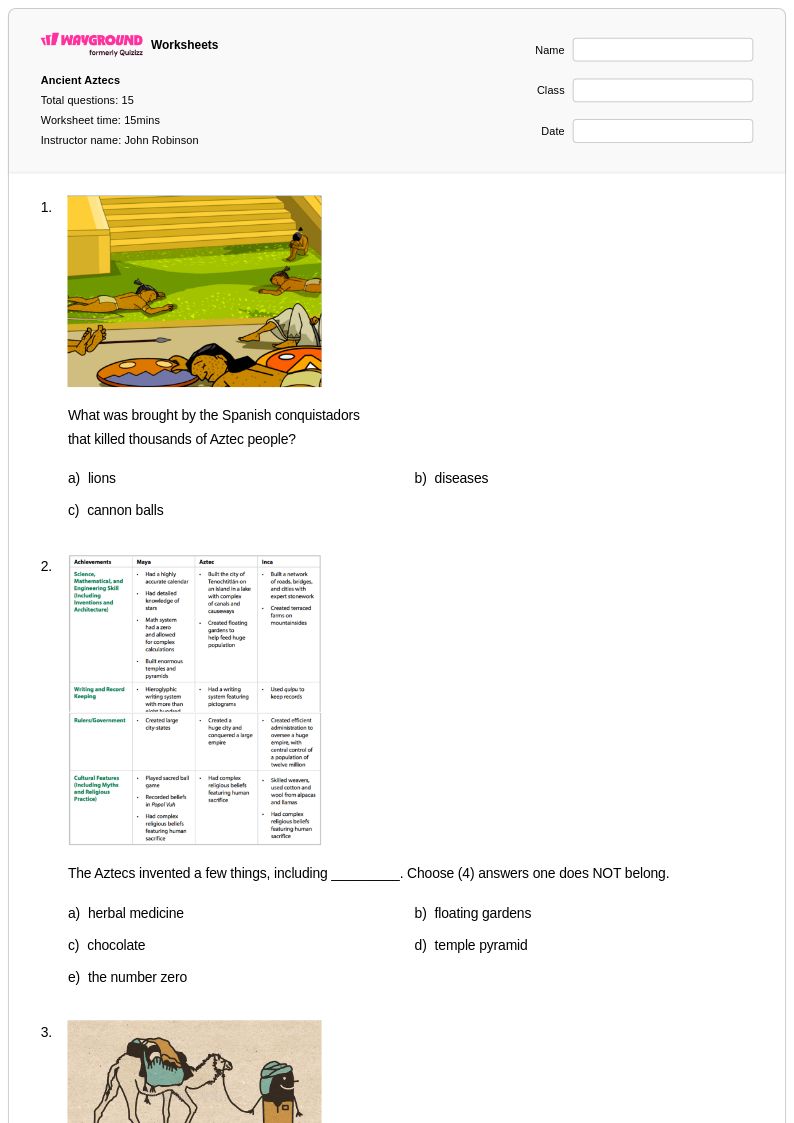
15 Q
5th - Uni
Explore Other Subject Worksheets for class 6
Explore printable Inca Civilization worksheets for Class 6
Inca Civilization worksheets for Class 6 students available through Wayground (formerly Quizizz) provide comprehensive exploration of one of South America's most remarkable ancient empires. These educational resources guide sixth-grade learners through the sophisticated political, social, and technological achievements of the Inca people, from their origins in the Andean highlands to the vast empire that stretched across modern-day Peru, Ecuador, Bolivia, and beyond. The worksheets strengthen critical thinking skills as students analyze primary and secondary sources, interpret archaeological evidence, and examine the complex administrative systems that allowed the Inca to govern millions of people across diverse geographical regions. Practice problems challenge students to understand concepts like the mit'a labor system, quipu record-keeping, and terraced agriculture, while comprehensive answer keys support both independent study and classroom instruction. These free printables cover essential topics including Inca religious beliefs, the role of the emperor, impressive architectural achievements like Machu Picchu, and the impact of Spanish conquest on indigenous populations.
Wayground (formerly Quizizz) empowers teachers with an extensive collection of teacher-created Inca Civilization worksheets that streamline lesson planning and enhance student engagement across diverse learning needs. The platform's robust search and filtering capabilities allow educators to quickly locate resources that align with state social studies standards, while differentiation tools enable customization for various skill levels within the same Class 6 classroom. Teachers can access millions of high-quality resources in both printable pdf format for traditional classroom use and digital formats for technology-integrated instruction, providing flexibility for different teaching environments and student preferences. These comprehensive worksheet collections support targeted skill practice, remediation for struggling learners, and enrichment opportunities for advanced students, allowing teachers to address individual learning gaps while maintaining rigorous academic expectations. The platform's user-friendly interface and extensive customization options help educators efficiently create meaningful learning experiences that bring the fascinating world of Inca Civilization to life for middle school students.
FAQs
How do I teach the Inca Civilization to middle or high school students?
What exercises help students practice and retain knowledge of the Inca Empire?
What misconceptions do students commonly have about the Inca Civilization?
How can I use Inca Civilization worksheets to differentiate instruction for diverse learners?
How do I use Inca Civilization worksheets from Wayground in my classroom?
What topics within the Inca Civilization should I prioritize for a social studies unit?