
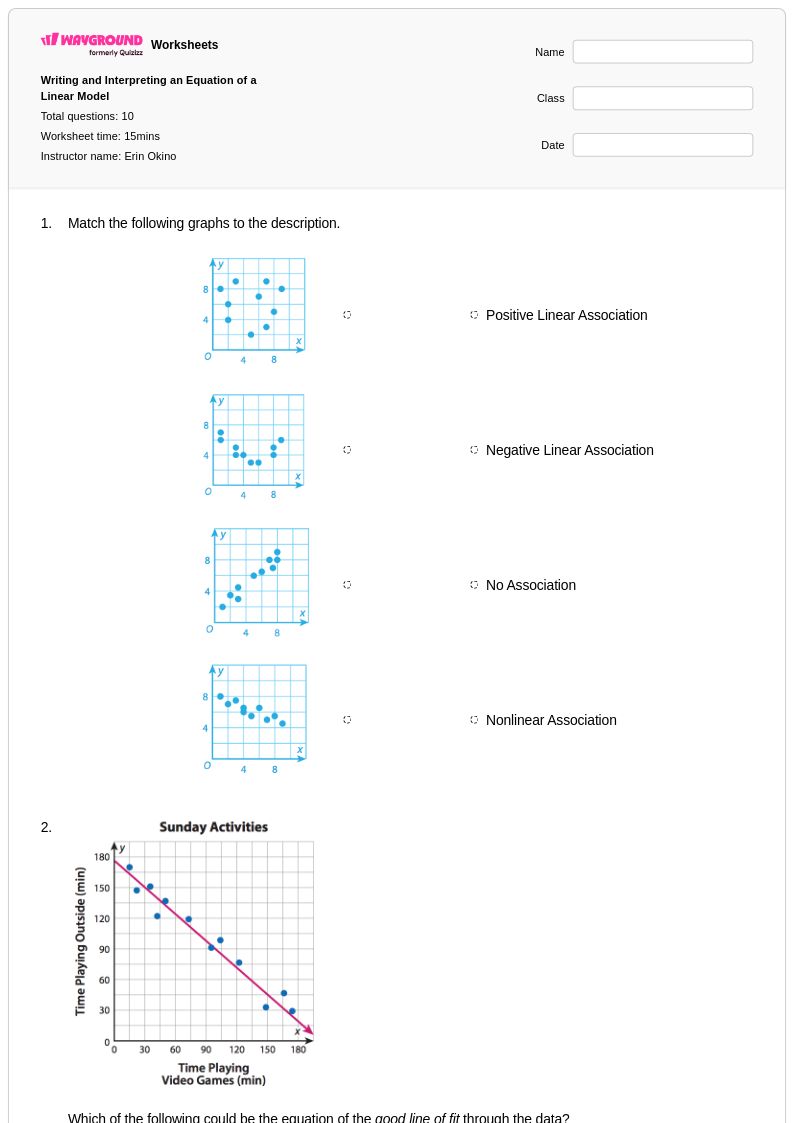
10 Q
8th
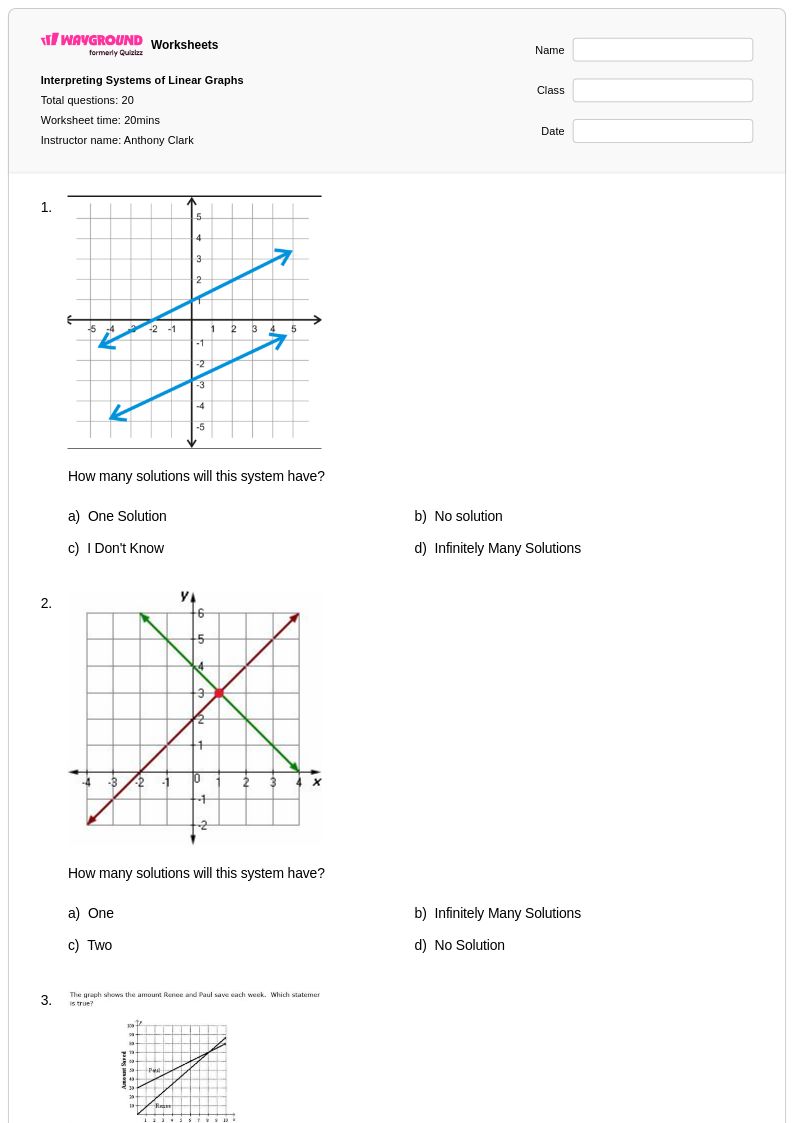
20 Q
9th - Uni
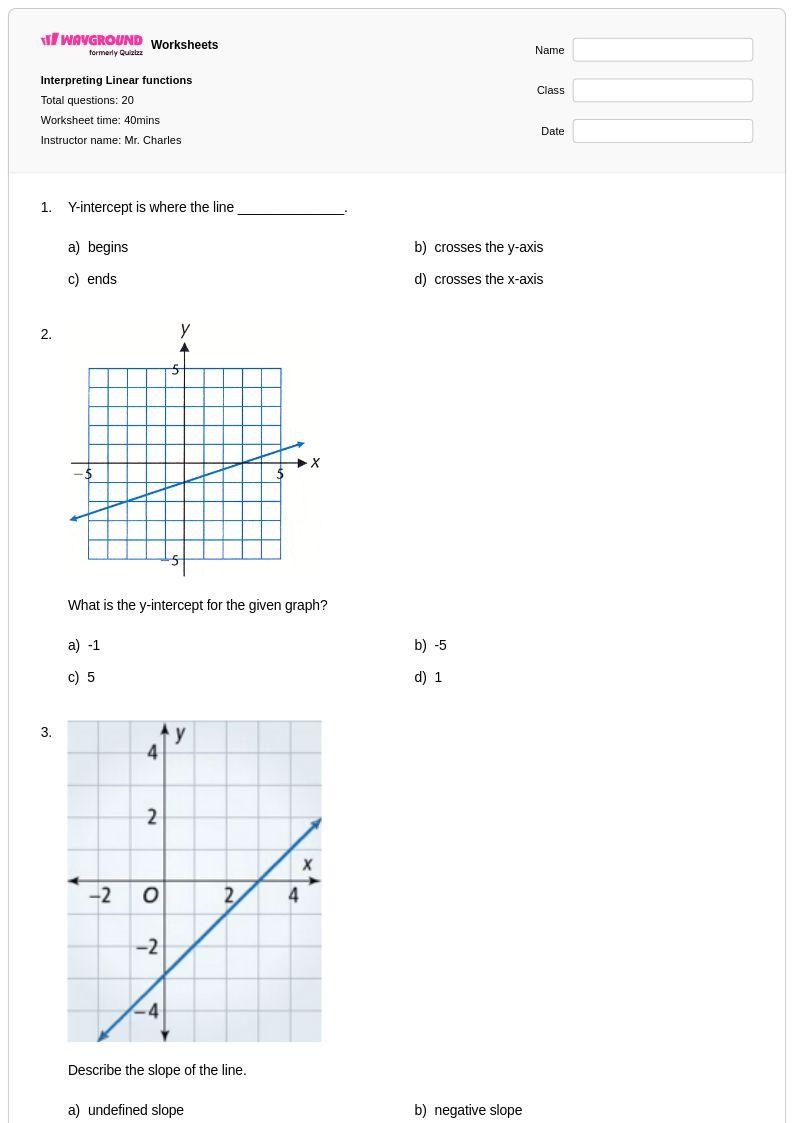
20 Q
9th
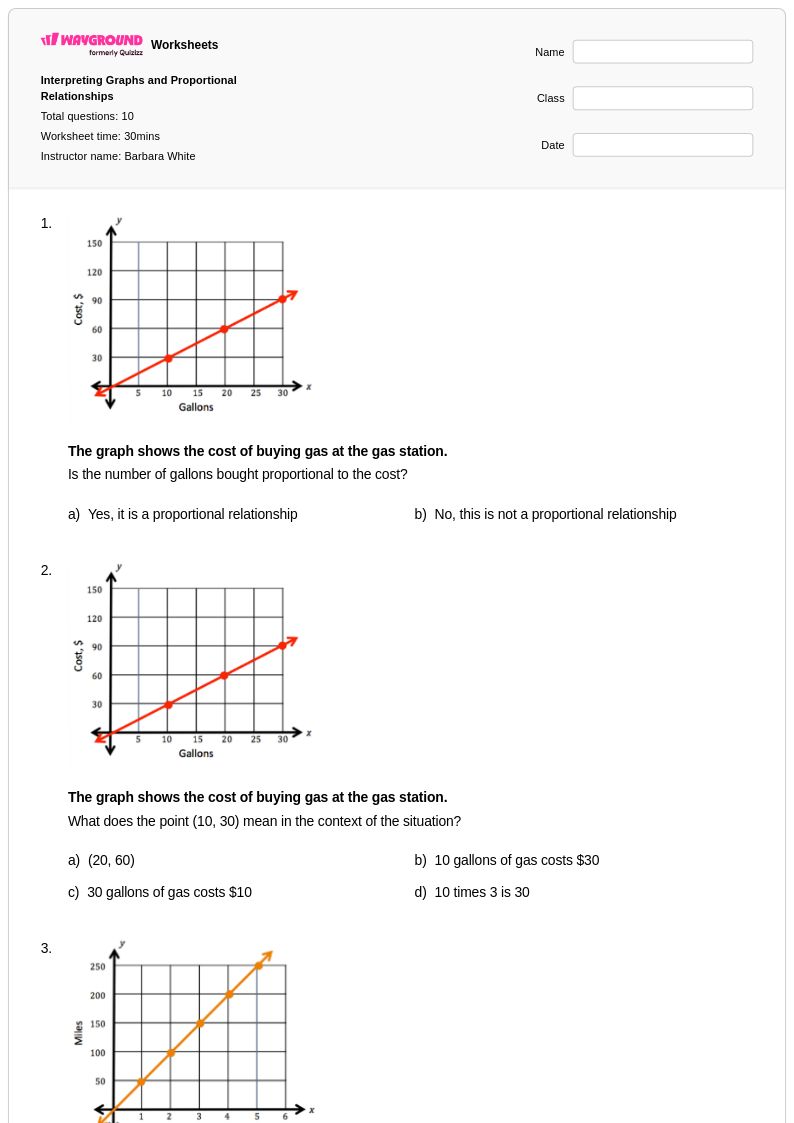
10 Q
7th
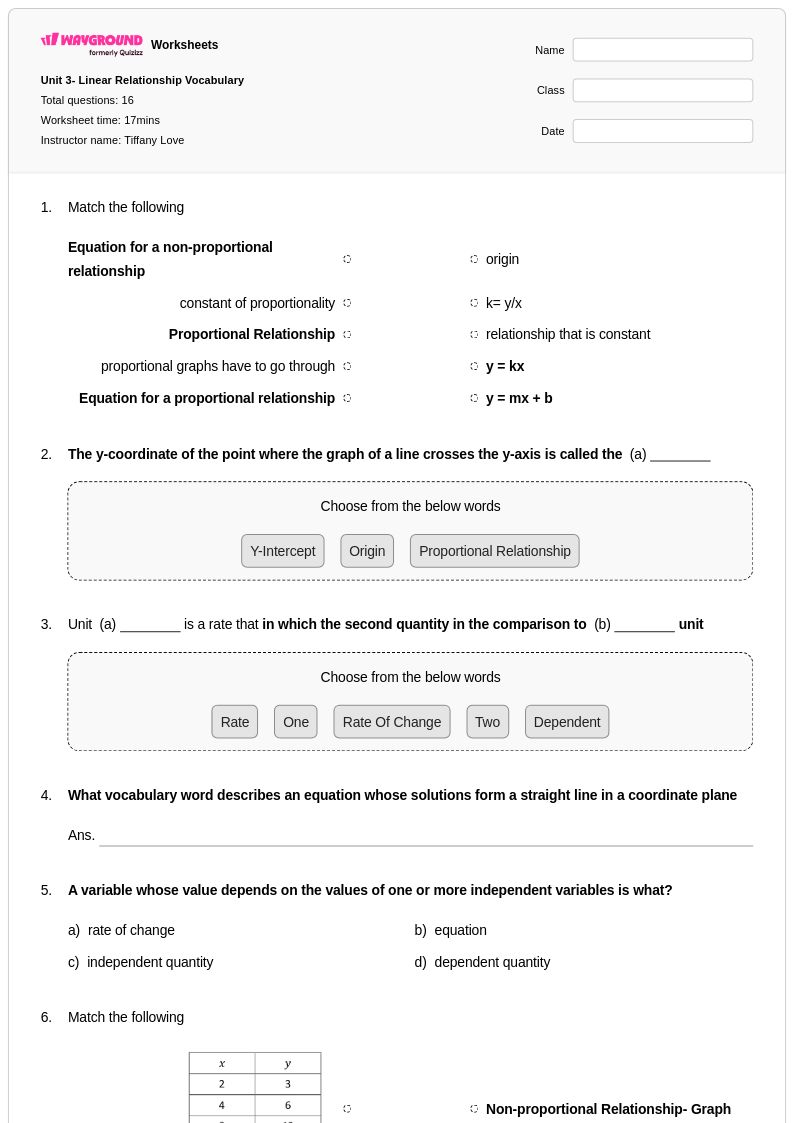
16 Q
7th
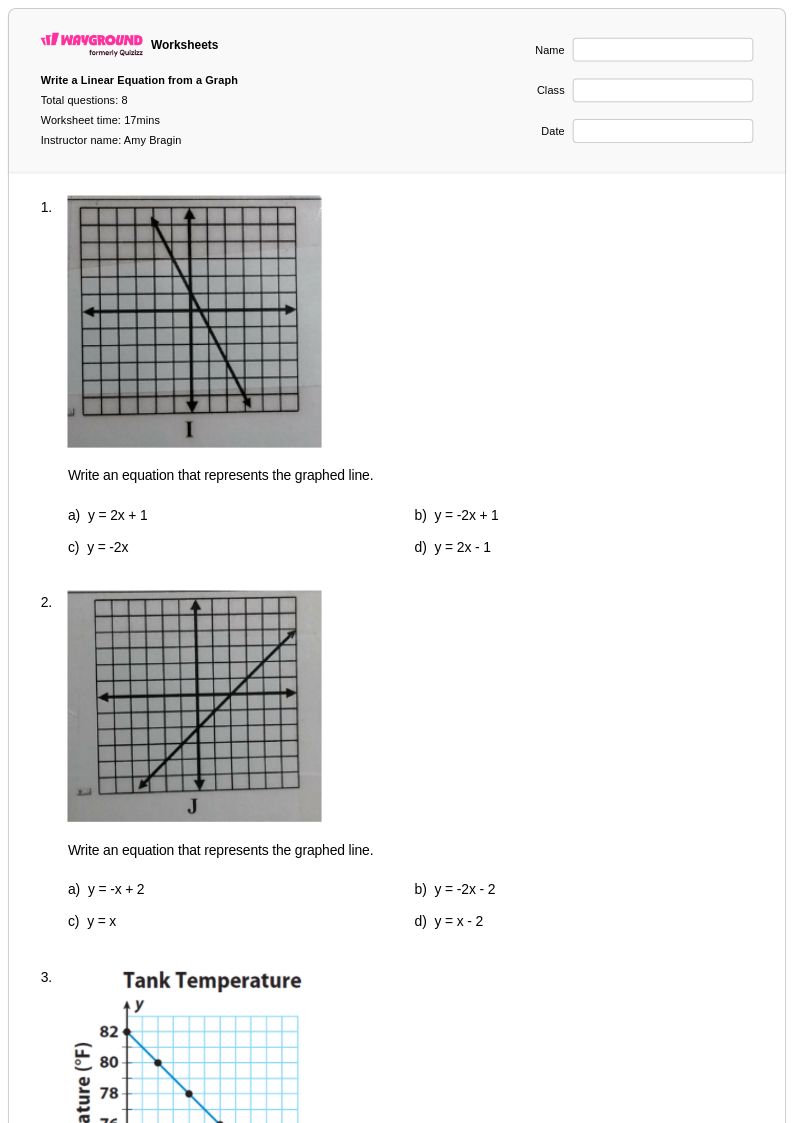
8 Q
8th - 9th
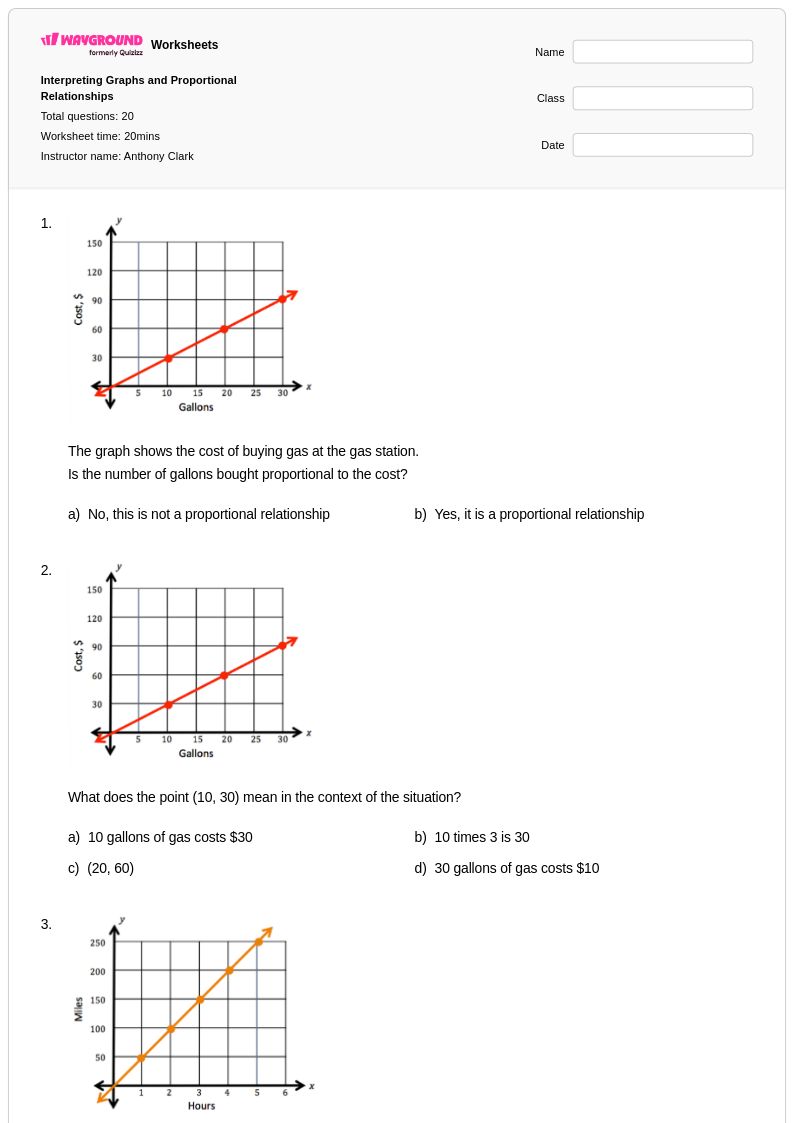
20 Q
7th - Uni
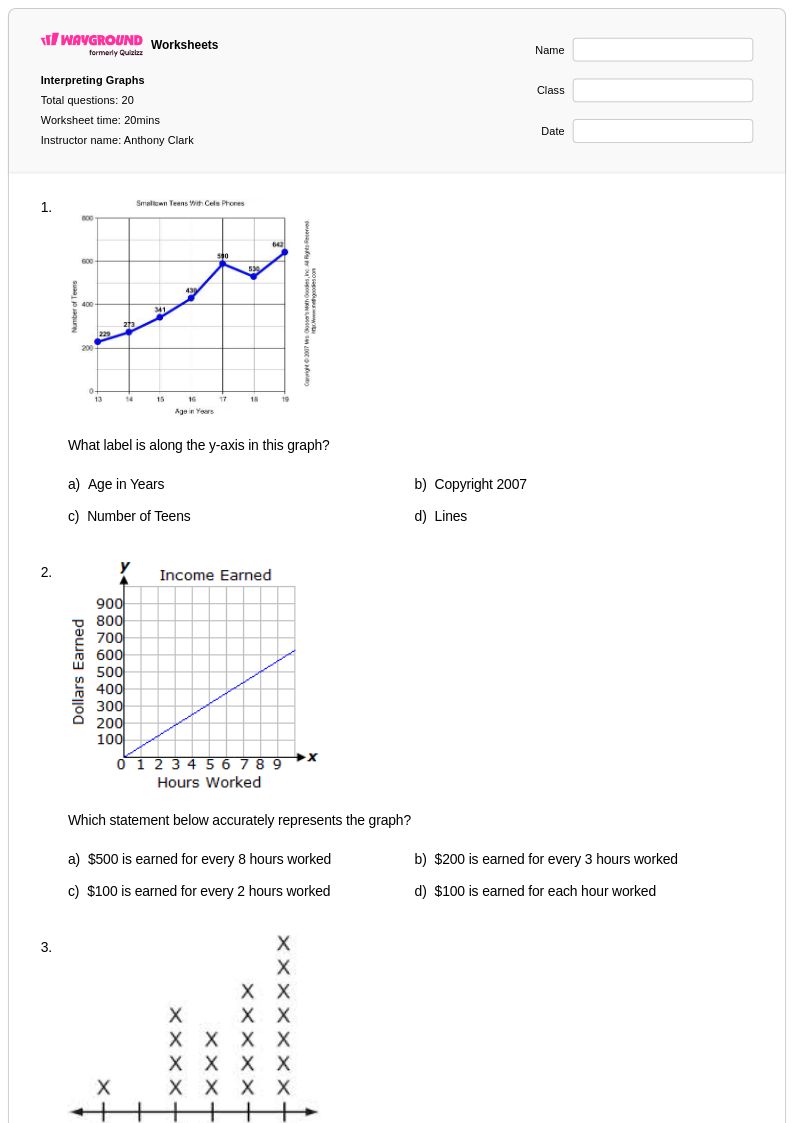
20 Q
6th - Uni
15 Q
8th
13 Q
9th
23 Q
9th
23 Q
8th
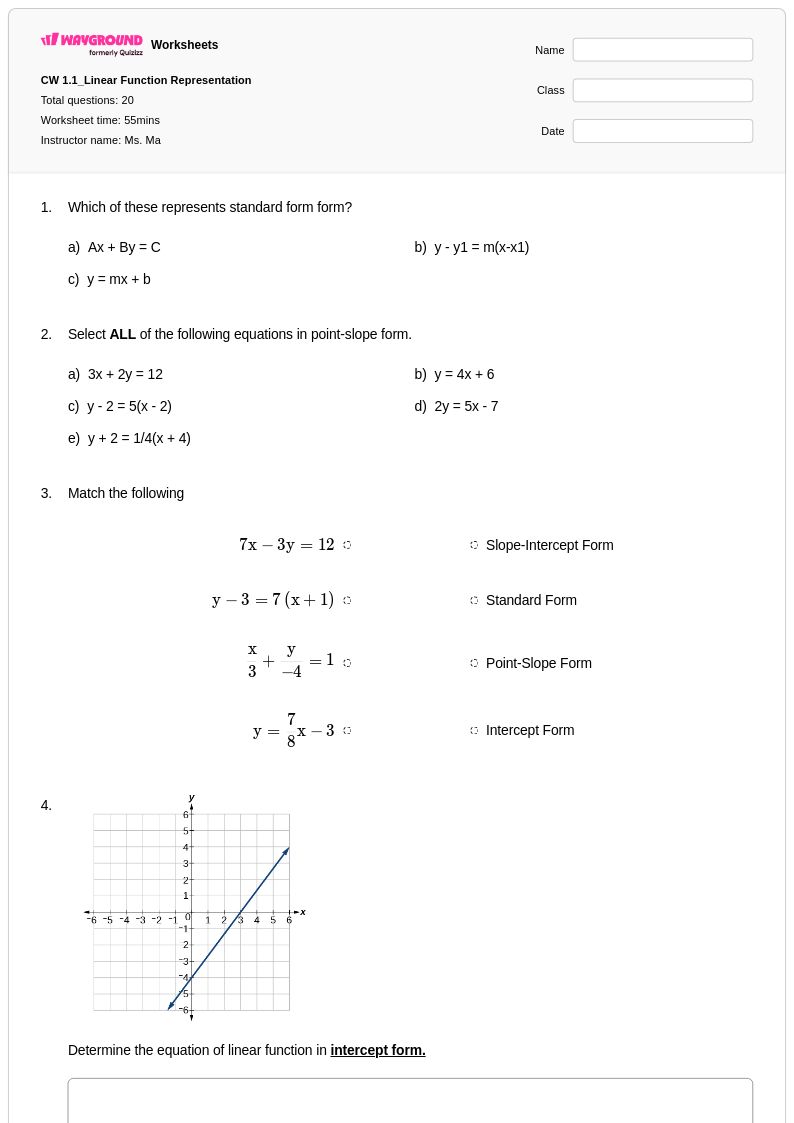
20 Q
9th - 12th
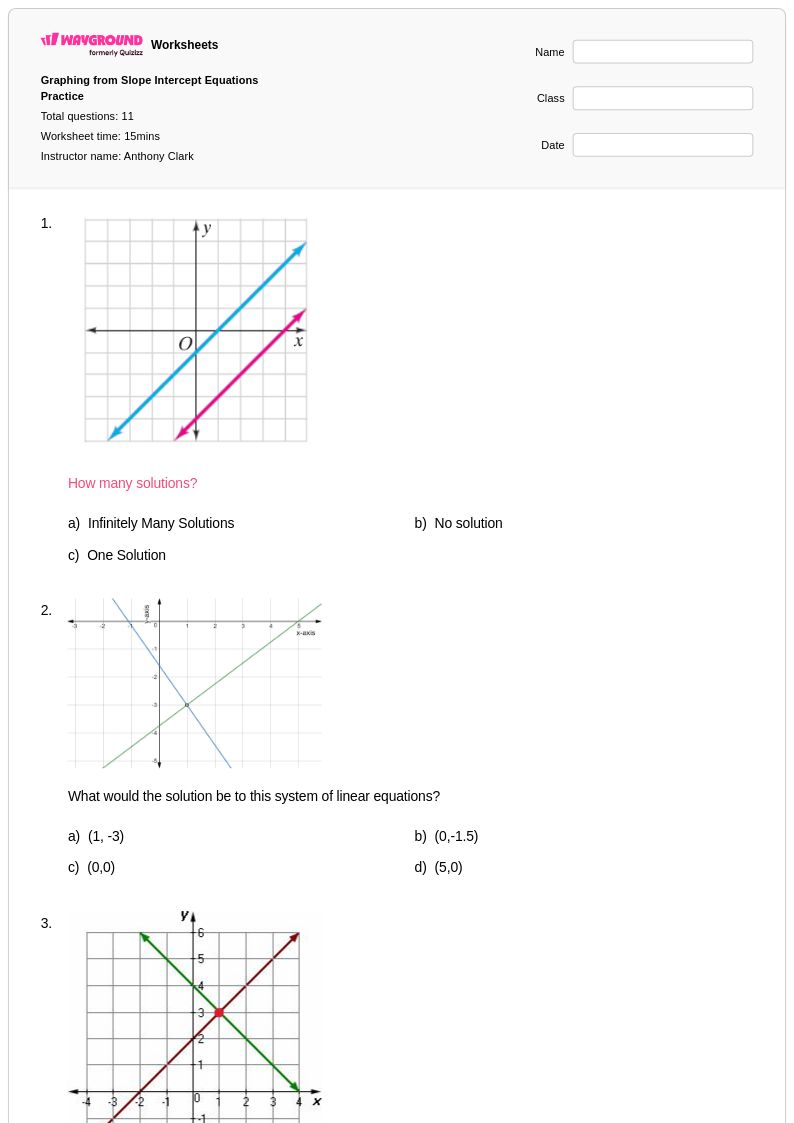
15 Q
9th - Uni
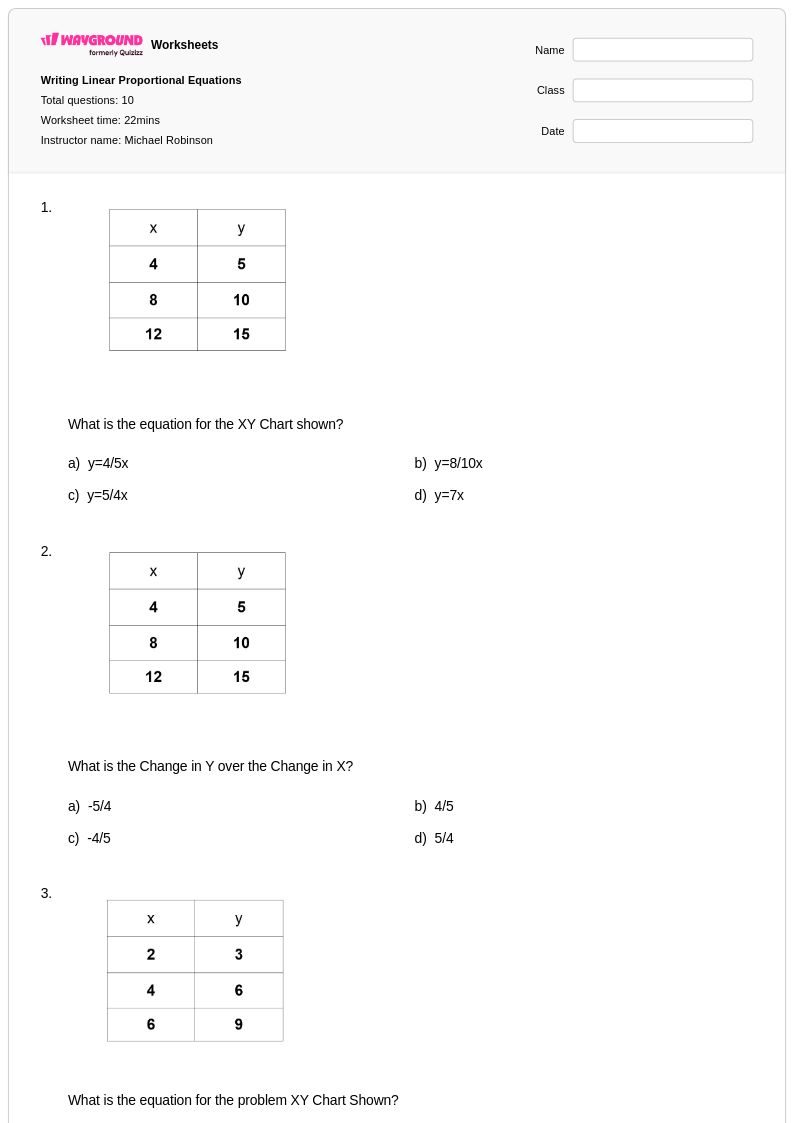
10 Q
8th
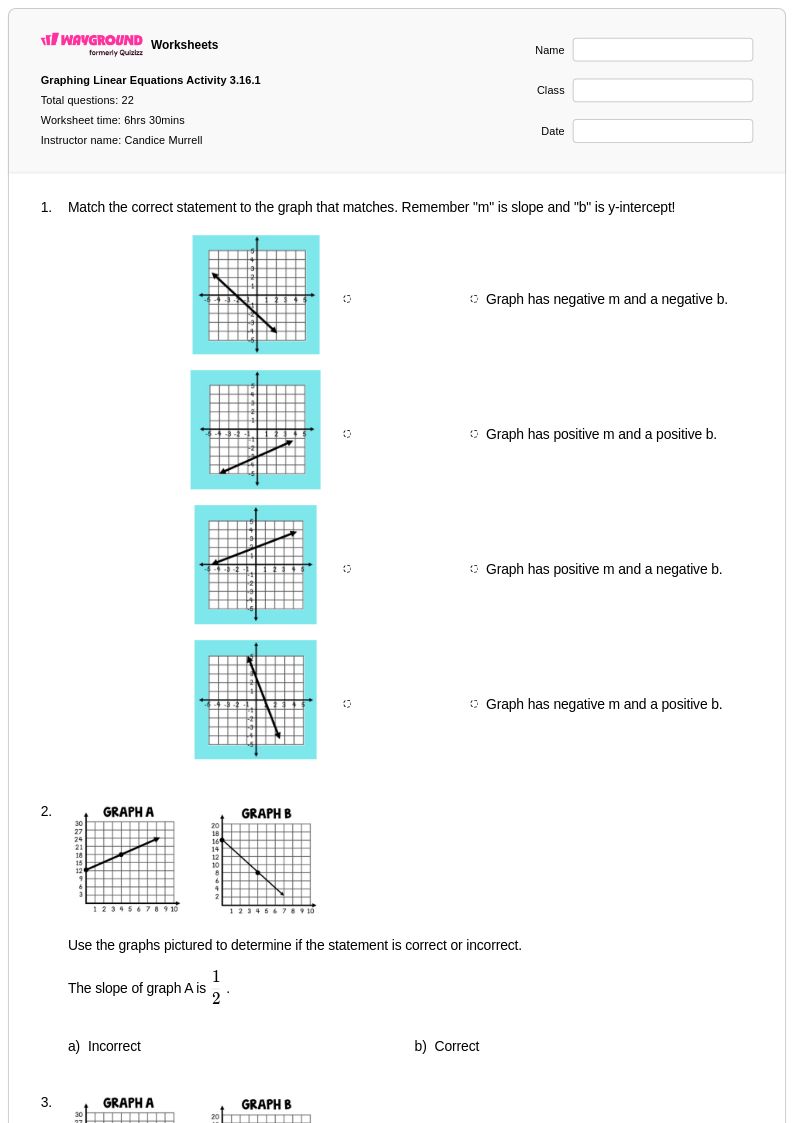
22 Q
8th
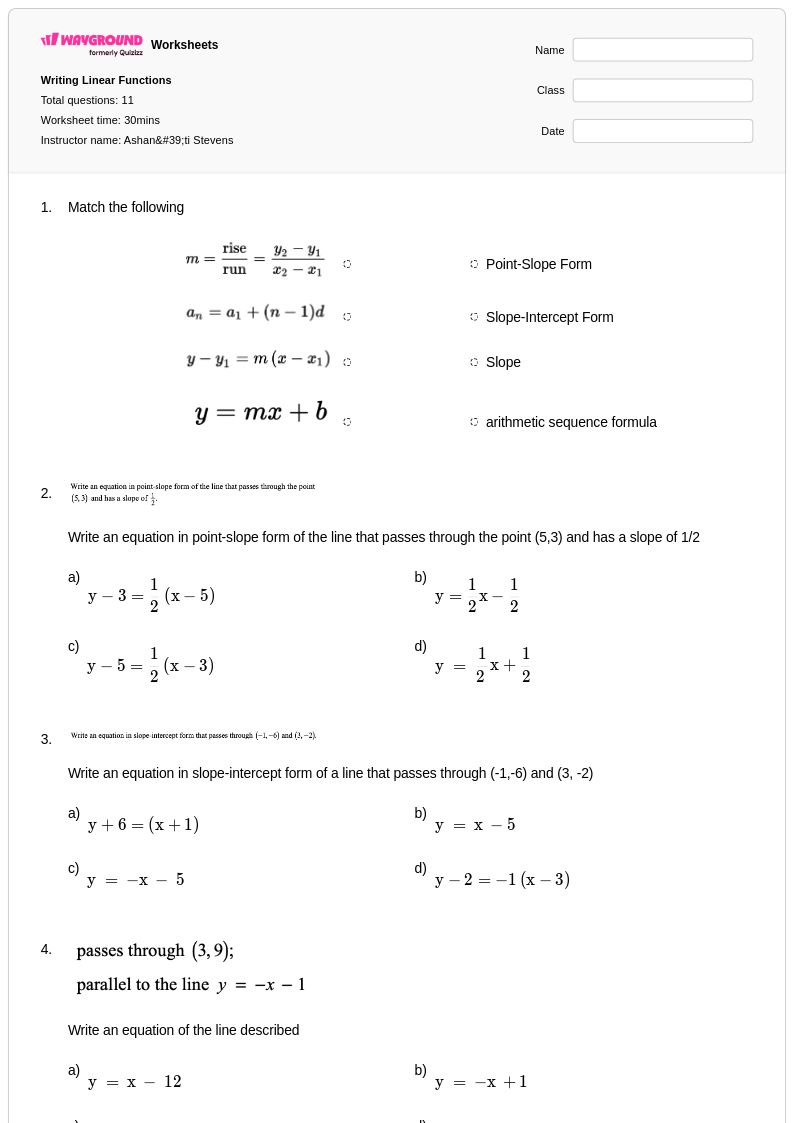
11 Q
8th
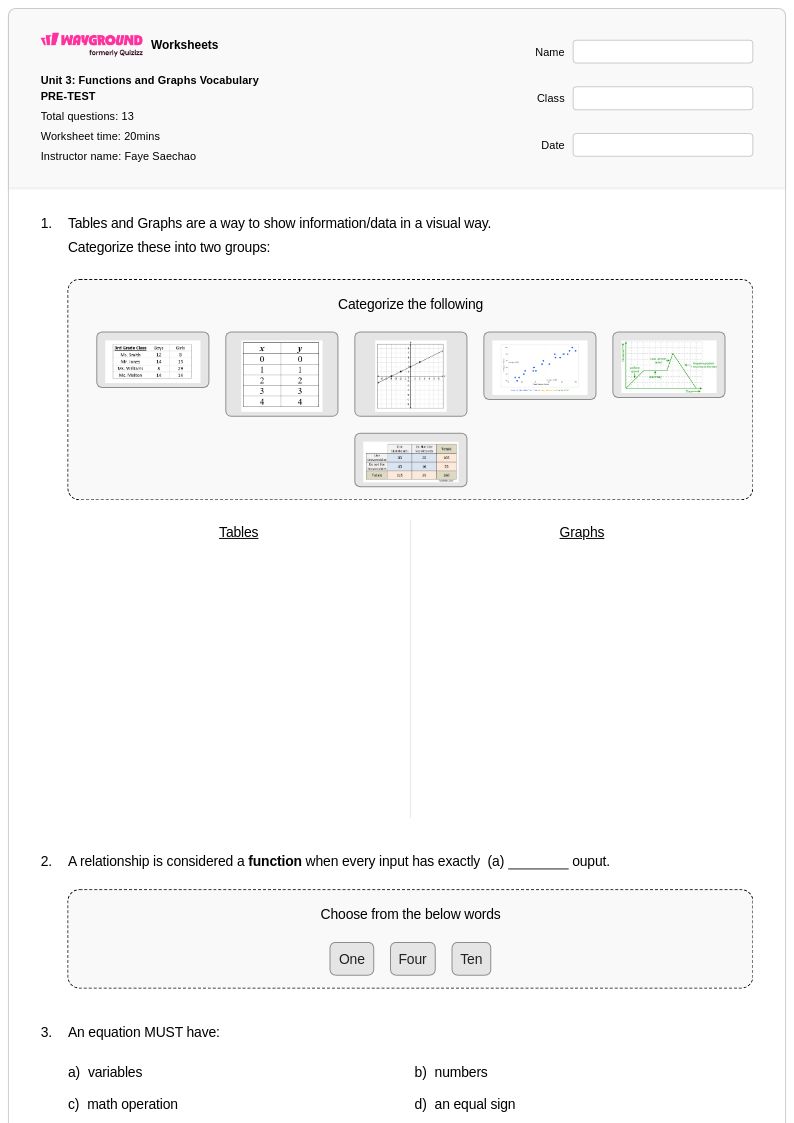
13 Q
8th
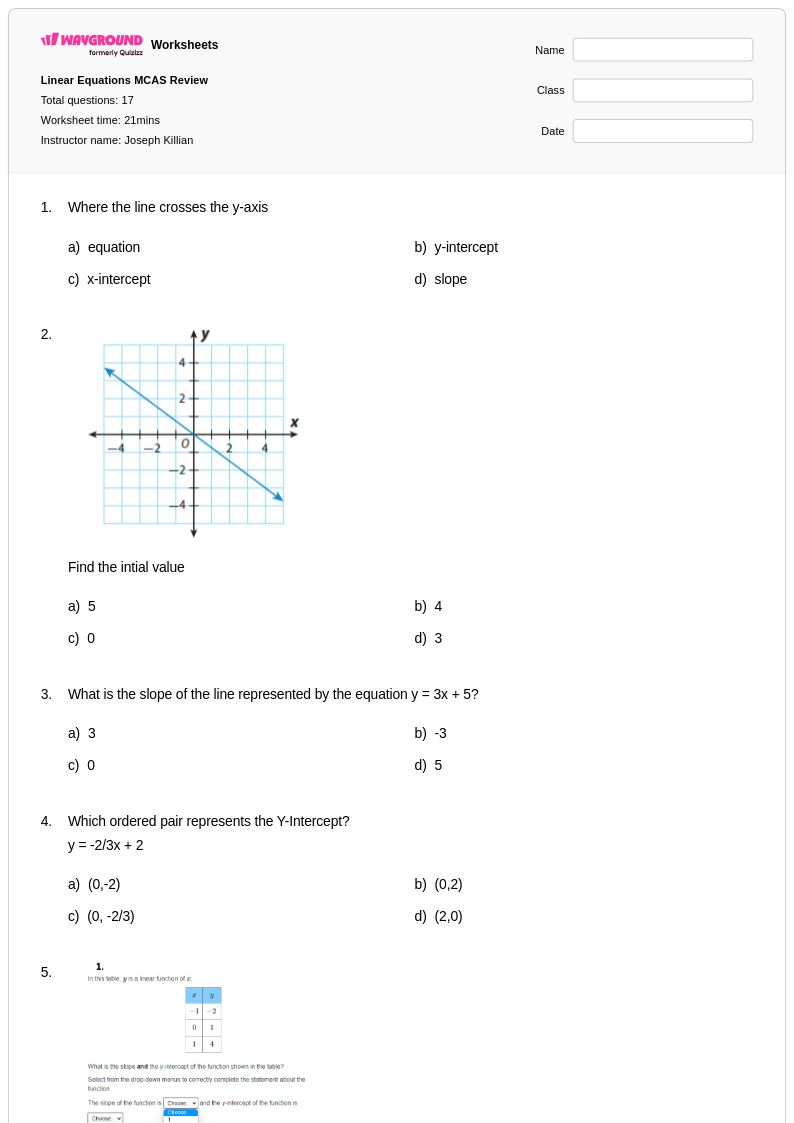
17 Q
8th
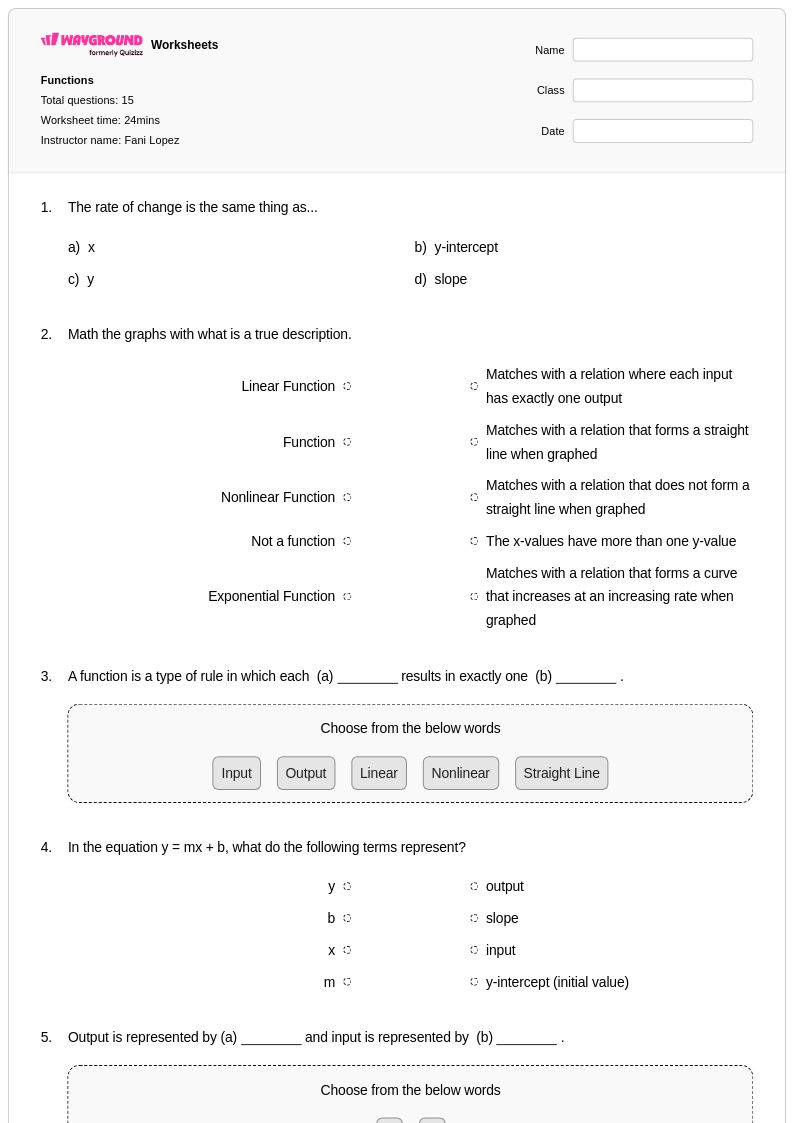
15 Q
8th
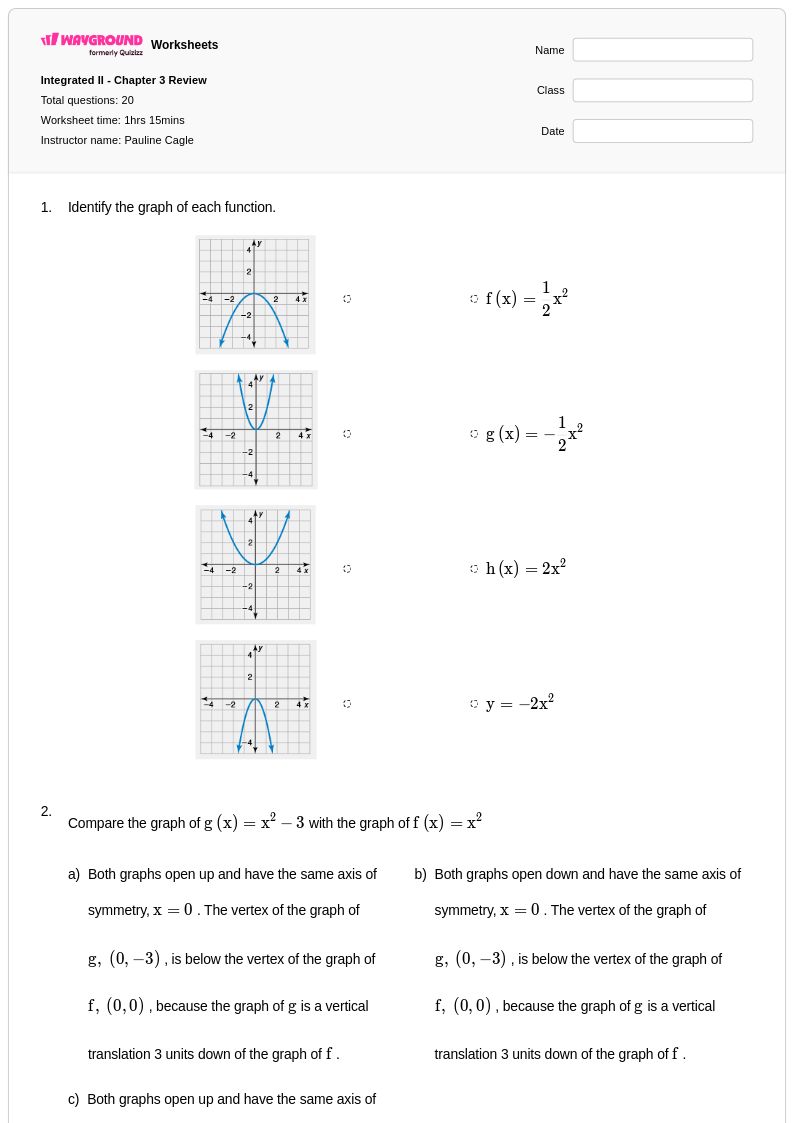
20 Q
9th - 12th
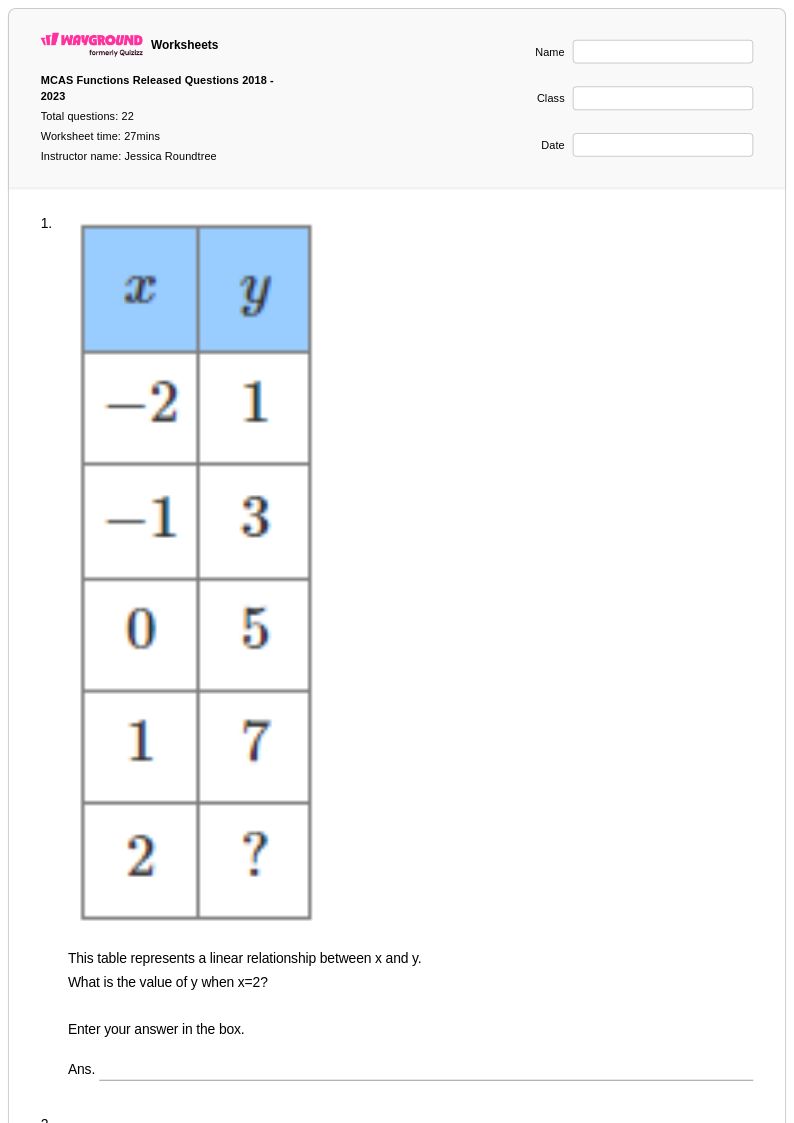
22 Q
8th
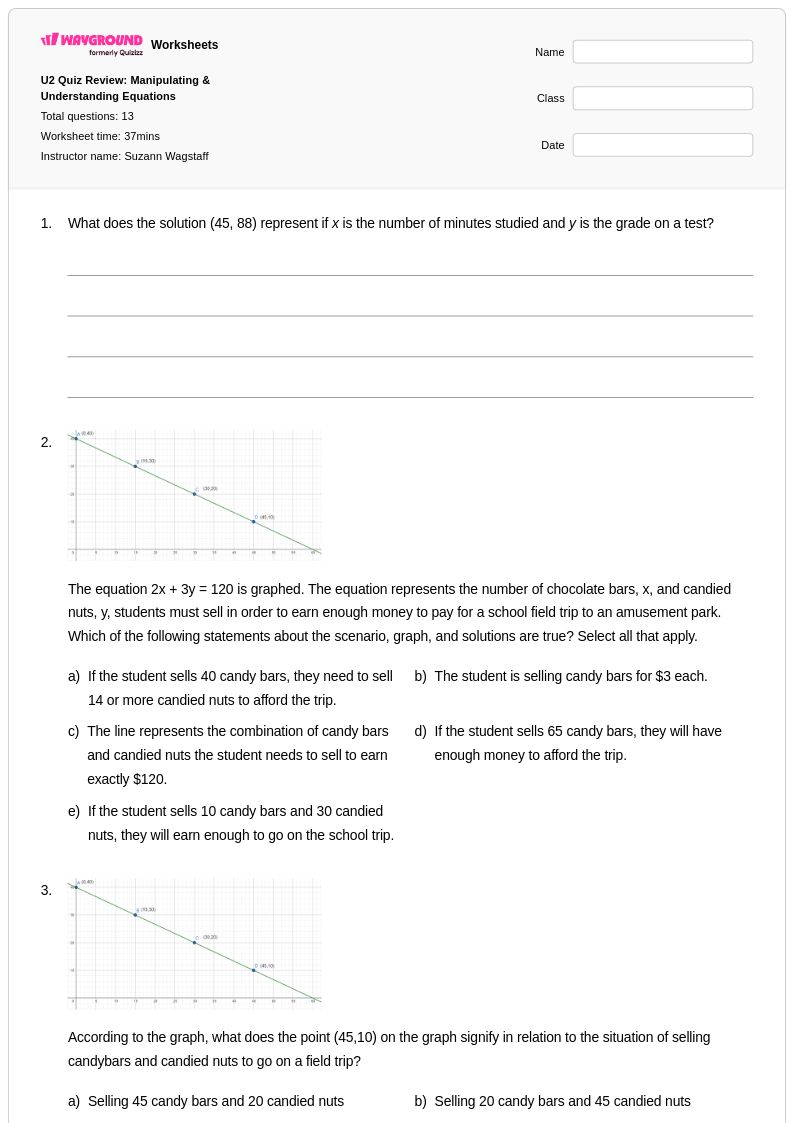
13 Q
9th - Uni
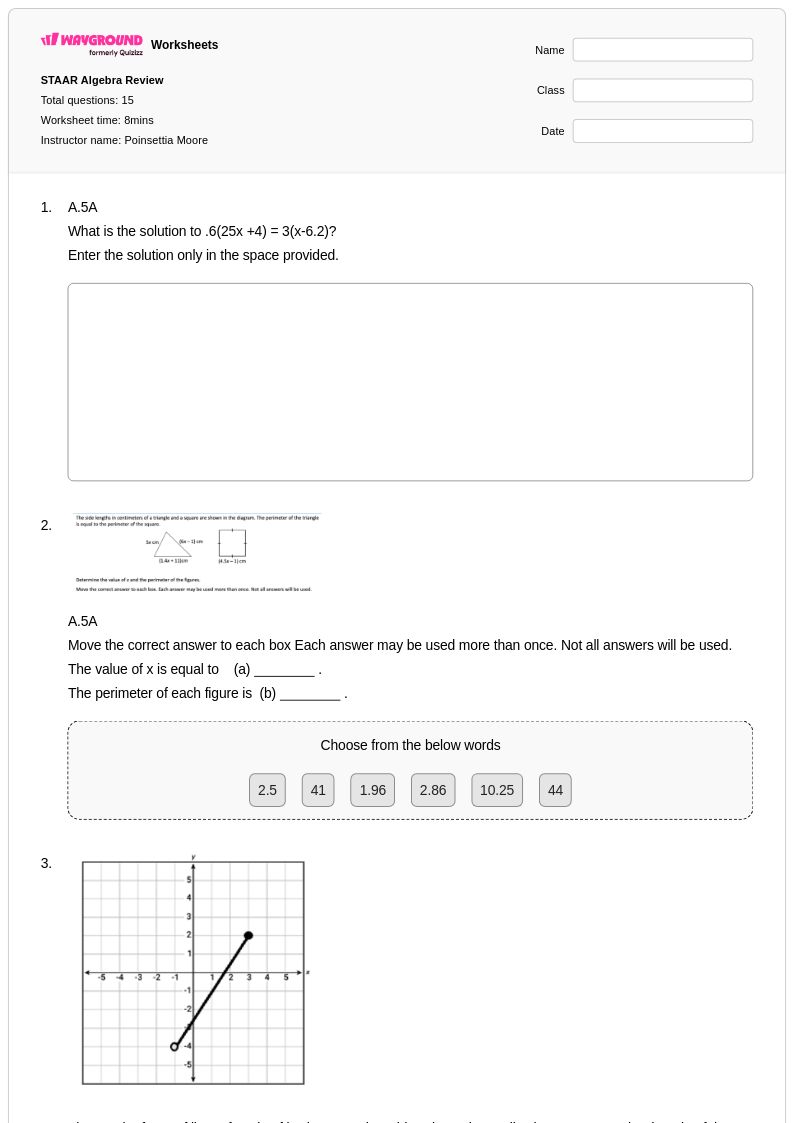
15 Q
8th
Explore Worksheets by Subjects
Explore printable Interpreting Linear Graphs worksheets
Interpreting linear graphs represents a fundamental skill in mathematics that bridges algebraic concepts with visual data representation, enabling students to analyze relationships between variables and extract meaningful information from coordinate systems. Wayground's comprehensive collection of interpreting linear graphs worksheets provides educators with expertly designed practice problems that systematically develop students' abilities to read coordinates, determine slope and y-intercept values, identify increasing and decreasing trends, and make predictions based on linear relationships. These free printable resources include detailed answer keys that facilitate both independent student practice and guided instruction, with pdf formats ensuring easy distribution and consistent formatting across different devices and printing systems. The worksheets progressively build complexity, starting with basic point plotting and advancing to sophisticated analysis of real-world scenarios represented through linear models, strengthening critical thinking skills essential for advanced mathematical concepts.
Wayground's robust platform, formerly known as Quizizz, empowers teachers with access to millions of educator-created resources specifically focused on linear graph interpretation, supported by powerful search and filtering capabilities that allow precise targeting of specific skills and difficulty levels. The platform's standards alignment features ensure that worksheet selections directly correspond to curriculum requirements, while built-in differentiation tools enable teachers to customize content for diverse learning needs and ability levels within their classrooms. These interpreting linear graphs resources are available in both printable and digital formats, providing flexibility for traditional classroom instruction, remote learning environments, and hybrid educational approaches. Teachers can efficiently plan comprehensive lesson sequences, design targeted remediation activities for struggling students, create enrichment opportunities for advanced learners, and implement systematic skill practice routines that reinforce graph interpretation competencies across various mathematical contexts and applications.
FAQs
How do I teach students to interpret linear graphs?
What exercises help students practice interpreting linear graphs?
What are common mistakes when interpreting linear graphs?
How can I use this linear graphs worksheet with my class?
How does interpreting linear graphs fit into the math curriculum?
How can I differentiate this topic for diverse learners?