Free Printable Julius Caesar Worksheets for Class 6
Explore Class 6 Julius Caesar printables and free worksheets with answer keys that help students practice understanding this pivotal Roman leader's impact on ancient civilization through engaging social studies activities.
Explore printable Julius Caesar worksheets for Class 6
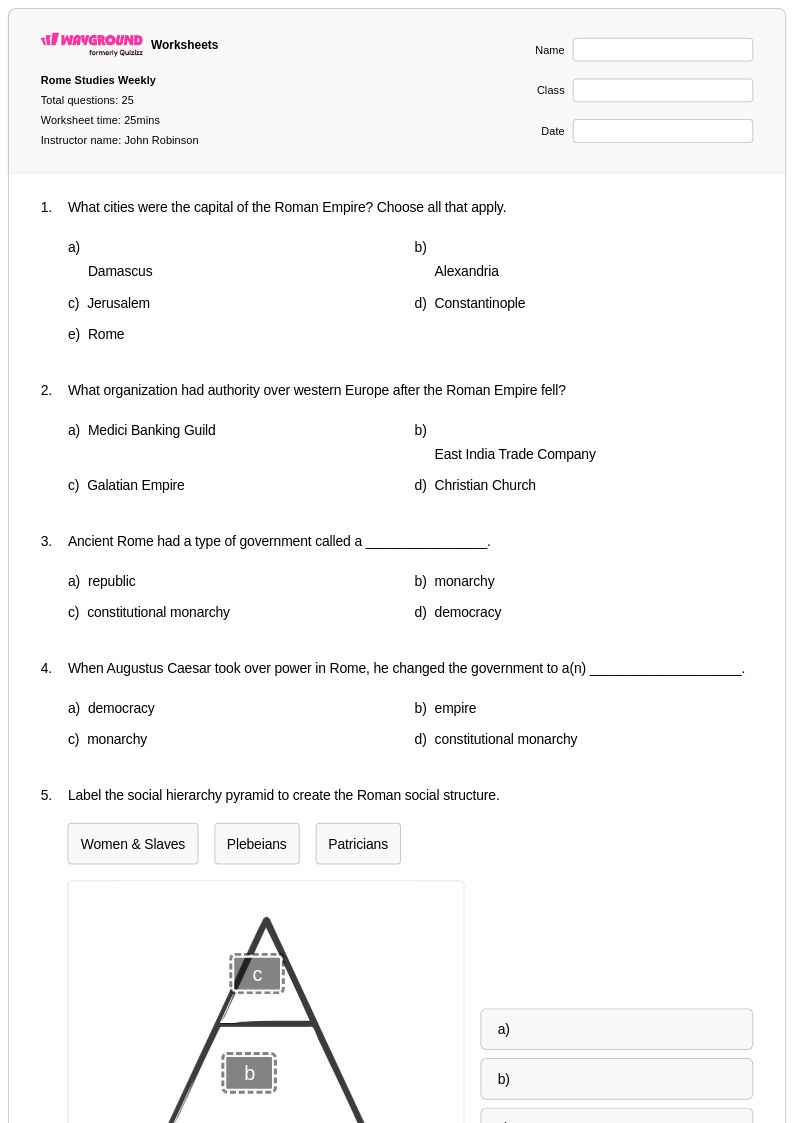
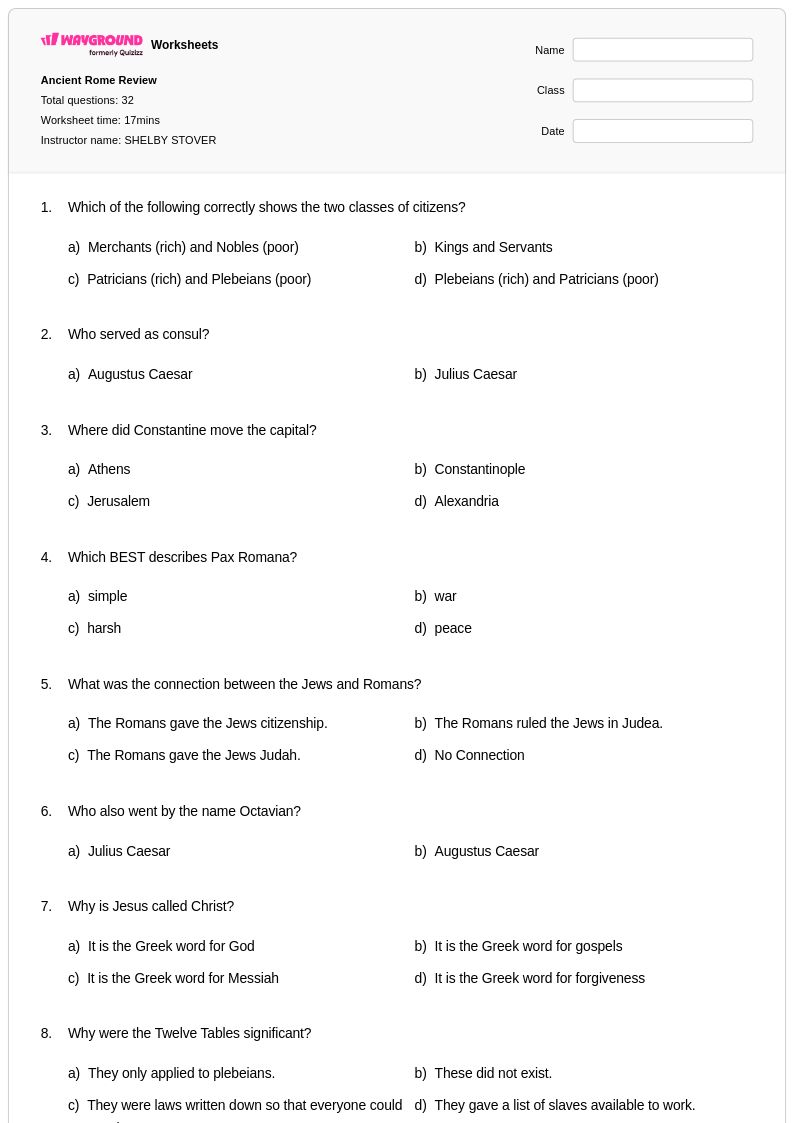
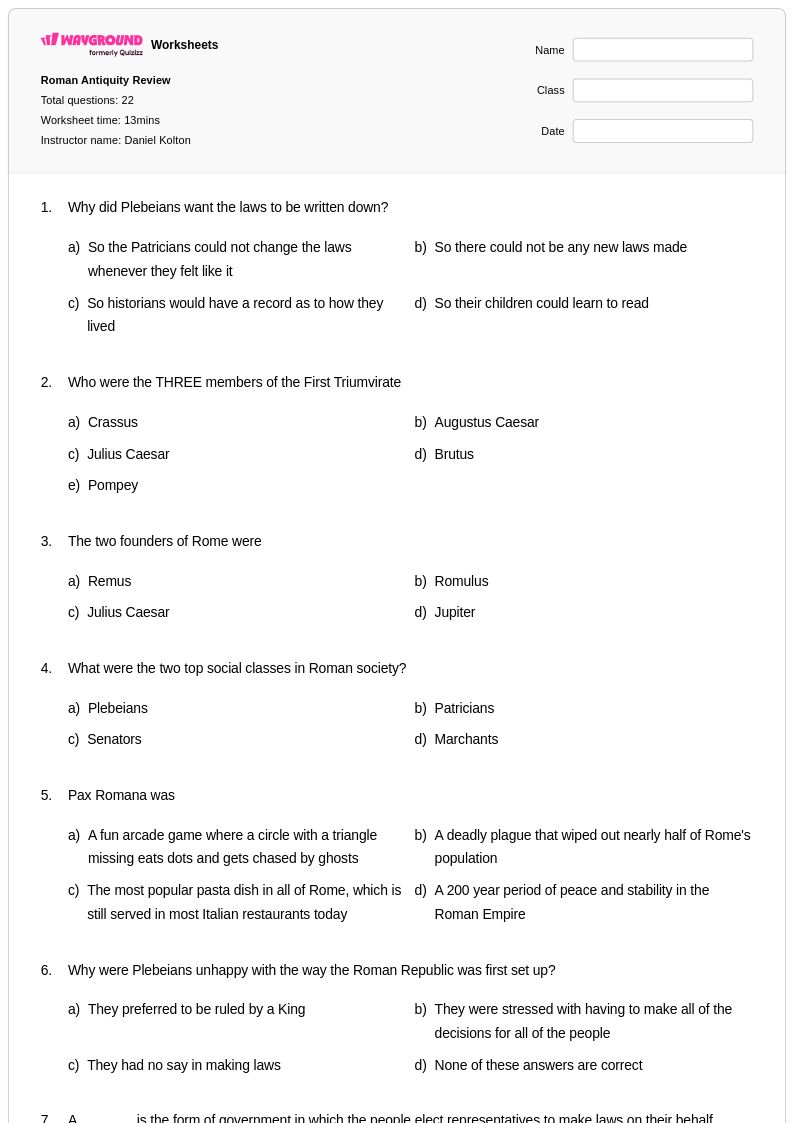
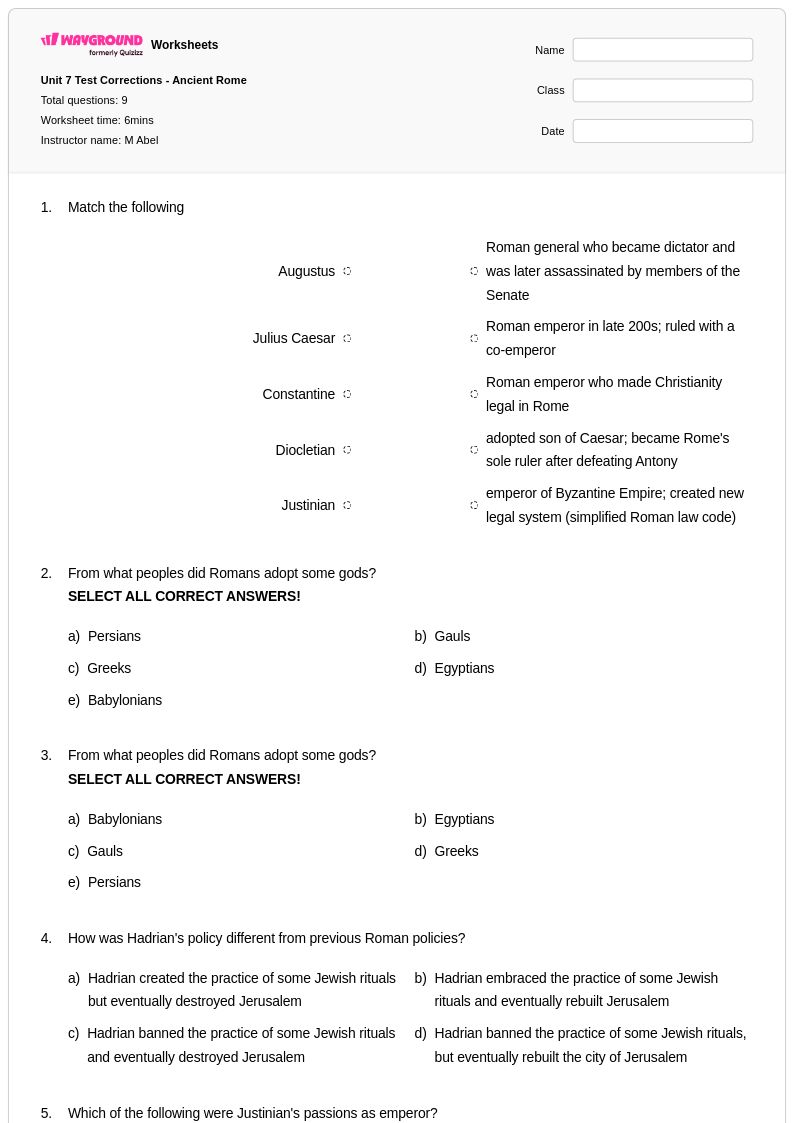
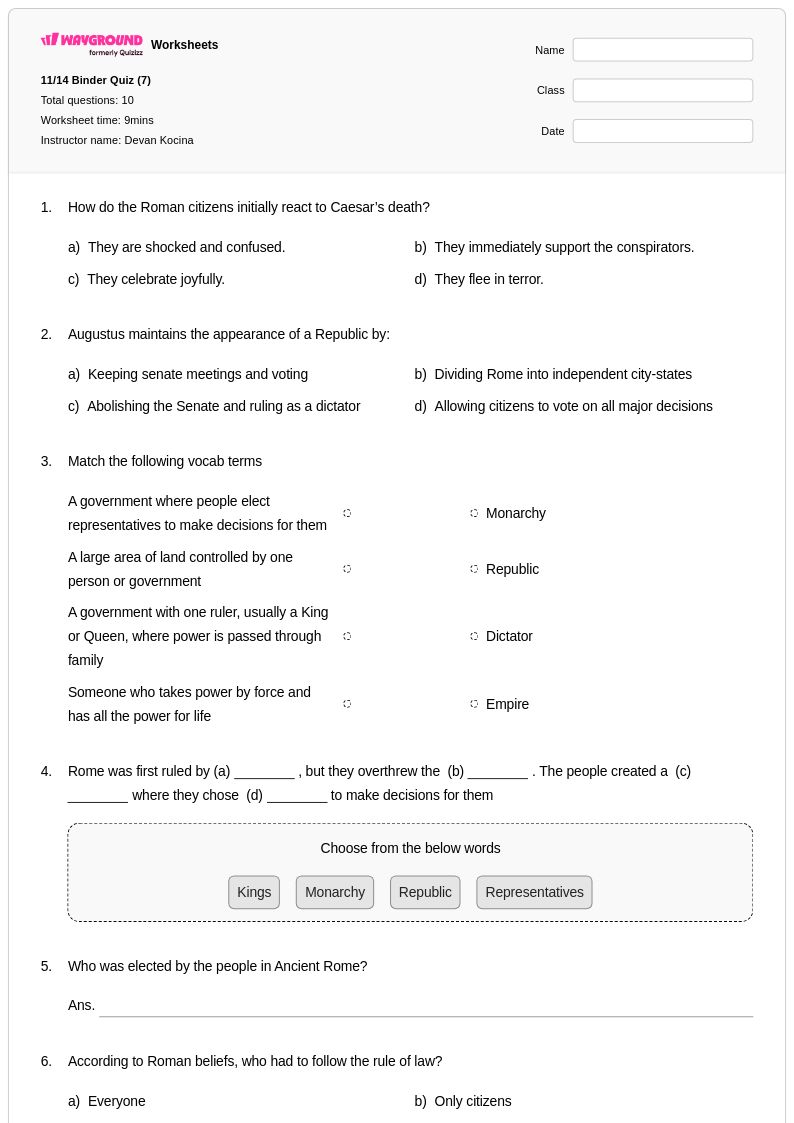
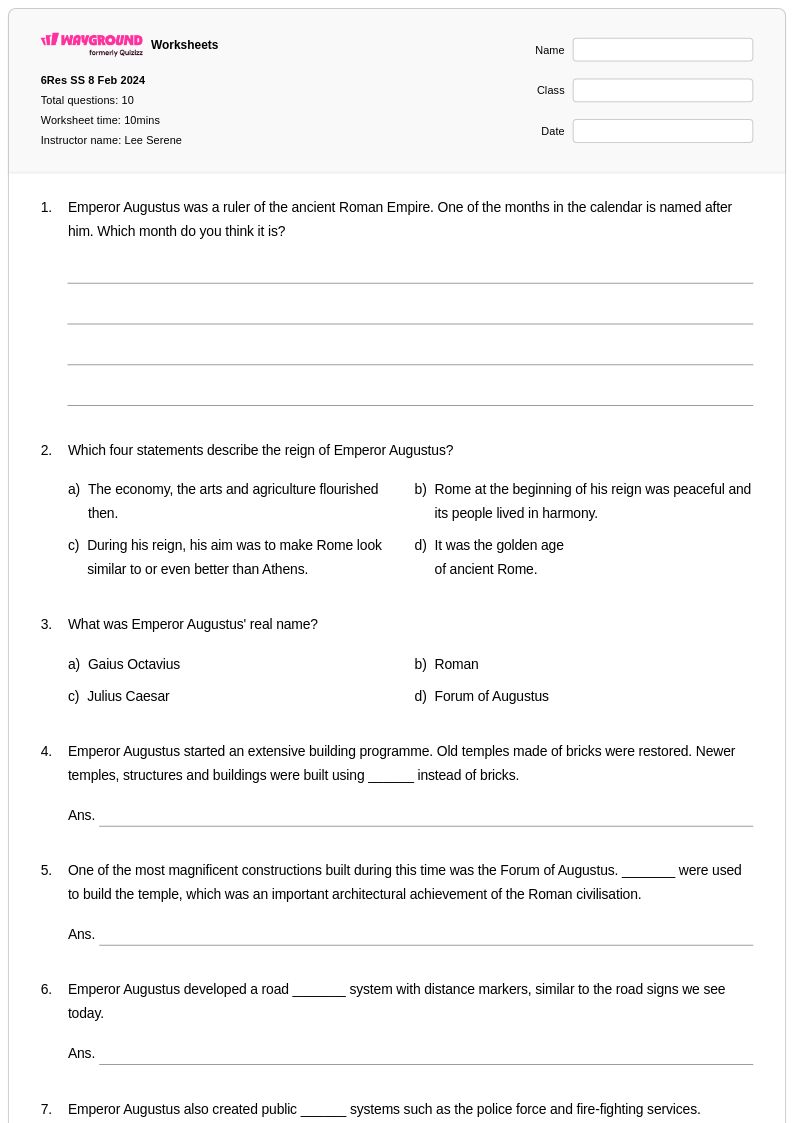
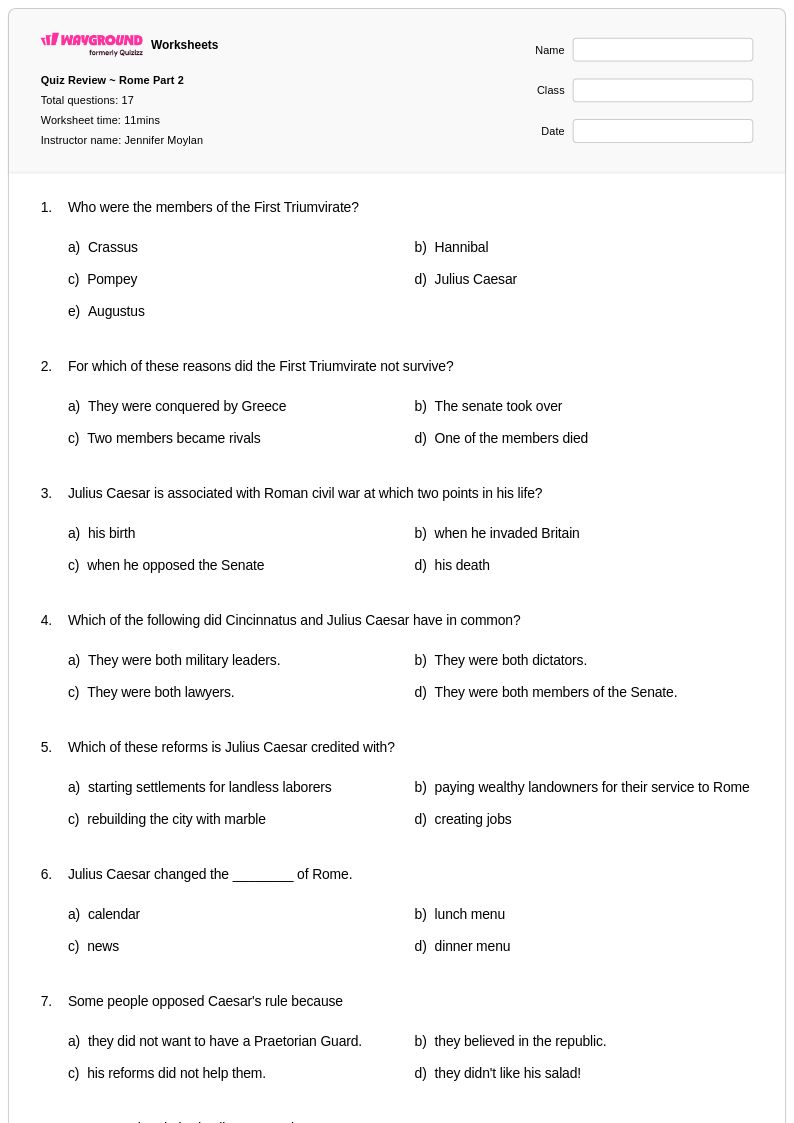
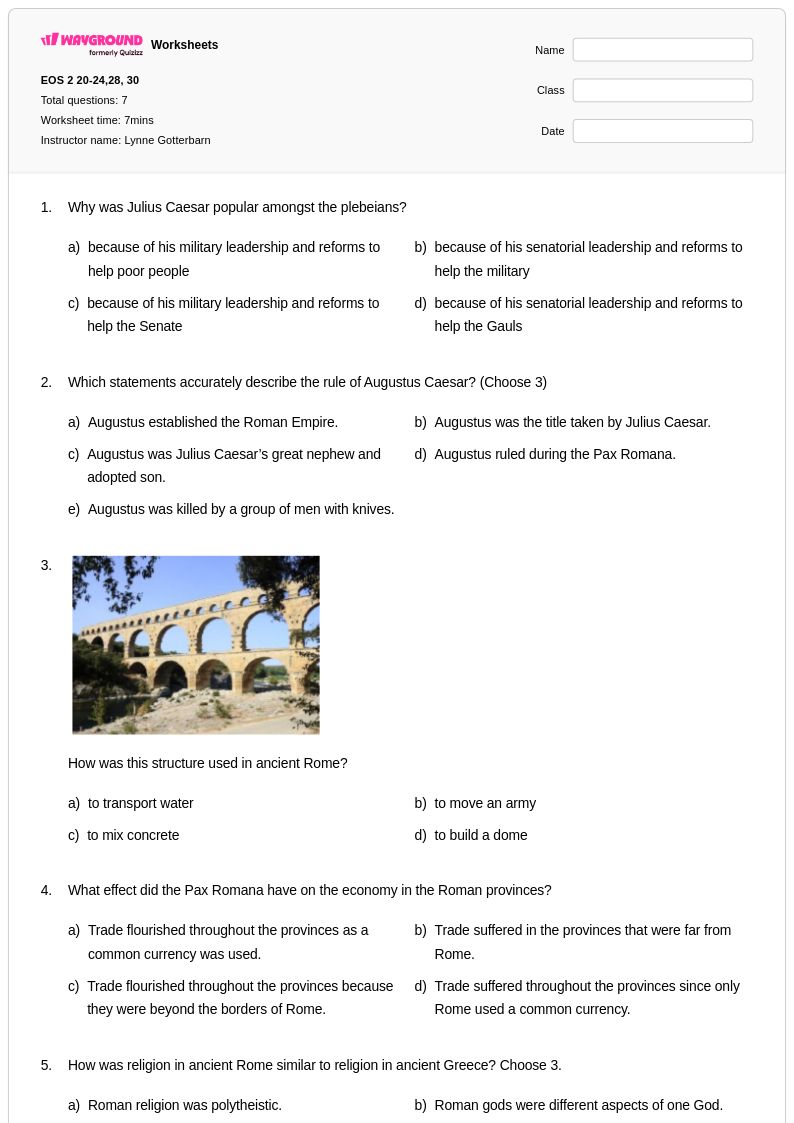
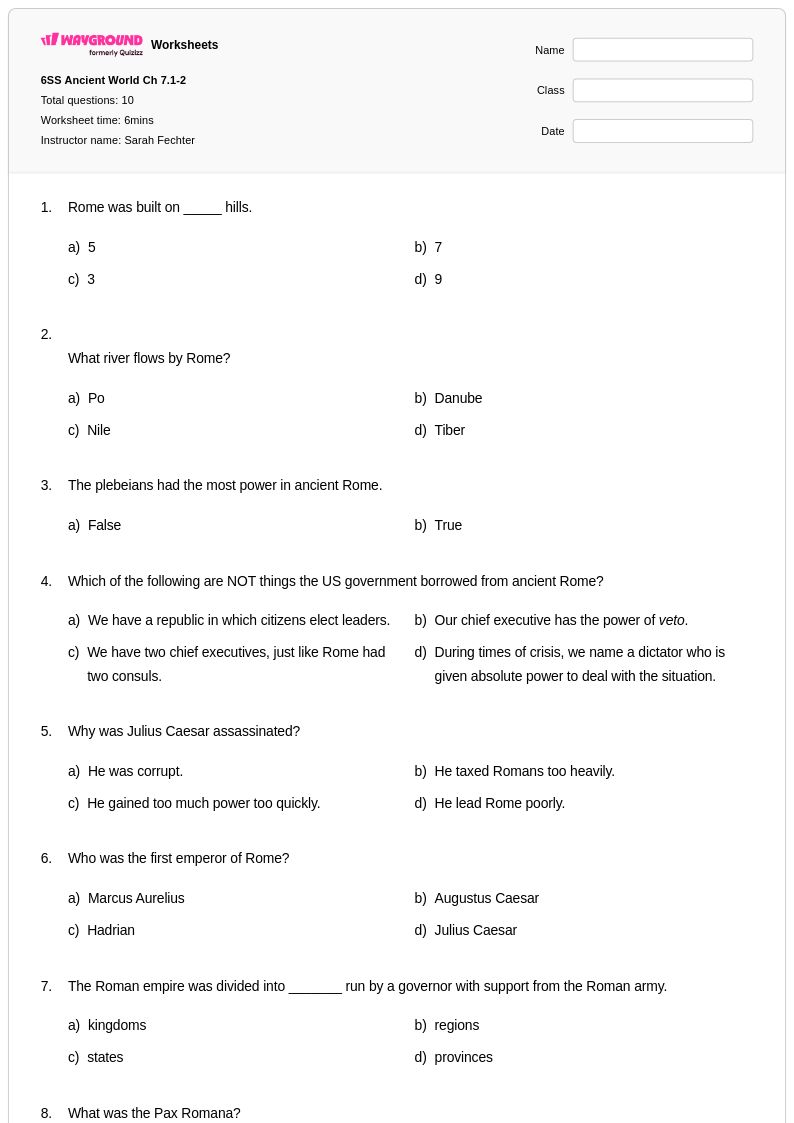
Julius Caesar worksheets for Class 6 students provide comprehensive exploration of one of history's most influential Roman leaders and the pivotal role he played in ancient civilizations. These educational resources guide sixth-grade learners through Caesar's rise to power, his military conquests in Gaul, his crossing of the Rubicon, and the dramatic events leading to his assassination in 44 BCE. The worksheets strengthen critical thinking skills by examining primary source excerpts, analyzing cause-and-effect relationships in Roman politics, and evaluating Caesar's impact on the transformation from Roman Republic to Roman Empire. Students engage with practice problems that require them to interpret historical timelines, compare Caesar's leadership style with other ancient rulers, and assess how his actions influenced the course of Western civilization. These printables include comprehensive answer keys and are available as free pdf downloads, making them accessible resources for reinforcing essential concepts about Roman history and ancient governmental structures.
Wayground, formerly Quizizz, supports educators with an extensive collection of Julius Caesar worksheets created by millions of teachers who specialize in ancient civilizations curriculum for Class 6 students. The platform's robust search and filtering capabilities allow teachers to quickly locate materials that align with state social studies standards and match their specific instructional needs, whether focusing on Caesar's military campaigns, political reforms, or cultural legacy. Advanced differentiation tools enable educators to customize worksheets for varying skill levels, supporting both remediation for struggling learners and enrichment opportunities for advanced students. These resources are available in both printable and digital formats, including downloadable pdfs, providing flexibility for classroom instruction, homework assignments, and independent study. Teachers can efficiently plan lessons that build historical thinking skills while using these materials for targeted practice, formative assessment, and reinforcement of key concepts about Julius Caesar's lasting influence on ancient Roman society and modern democratic institutions.
FAQs
How do I teach Julius Caesar to middle or high school students?
Teaching Julius Caesar effectively means grounding students in the political context of the late Roman Republic before diving into his biography. Start with the conflict between the Senate and Caesar's growing power, then trace his military campaigns, political alliances, and eventual assassination. Using primary source excerpts alongside timeline activities helps students connect events to their causes and consequences, building historical thinking skills rather than rote memorization.
What topics should a Julius Caesar worksheet cover?
A strong Julius Caesar worksheet should cover his military conquests, rise through Roman political offices, relationships with key figures like Pompey, Cleopatra, and Brutus, and the circumstances of his assassination in 44 BCE. Effective practice also includes analysis of how his actions accelerated the fall of the Roman Republic and shaped the transition to the Roman Empire. Comparative exercises that ask students to evaluate different historical perspectives on Caesar deepen critical thinking beyond surface-level recall.
What are common mistakes students make when studying Julius Caesar?
One of the most common errors is conflating Julius Caesar with Augustus Caesar, leading to confusion about who actually became the first Roman Emperor. Students also frequently oversimplify Caesar's assassination as purely personal betrayal rather than a complex political act driven by Republican ideals and fear of tyranny. Another misconception is treating Caesar's rise as inevitable rather than as the result of deliberate political maneuvering within a fragile and fractured Republic.
How can I use Julius Caesar worksheets to build primary source analysis skills?
Julius Caesar is an ideal subject for introducing primary source analysis because students can examine accounts from writers like Plutarch and Suetonius alongside Caesar's own Commentarii de Bello Gallico. Worksheets that include excerpts with guided annotation questions help students practice identifying bias, corroborating evidence across sources, and distinguishing fact from interpretation. This approach builds transferable historical thinking skills while keeping the content anchored to a compelling and well-documented historical figure.
How do I use Wayground's Julius Caesar worksheets in my classroom?
Wayground's Julius Caesar worksheets are available as printable PDFs for traditional classroom use and in digital formats for technology-integrated environments, including the option to host them as a quiz directly on Wayground. Each worksheet includes a complete answer key, making them practical for independent study, guided instruction, or remediation. Teachers can also apply student-level accommodations such as read aloud, extended time, and reduced answer choices to support diverse learners without disrupting the rest of the class.
How do I differentiate Julius Caesar instruction for students at different ability levels?
For students who need additional support, scaffolded worksheets with sentence starters, word banks, and simplified primary source excerpts reduce barriers while maintaining content rigor. Advanced learners benefit from comparative exercises that ask them to evaluate Caesar's legacy across different time periods or connect his political tactics to modern leadership contexts. On Wayground, teachers can assign individual accommodations such as read aloud or reduced answer choices to specific students, allowing differentiation without singling anyone out.