Free Printable Language and Vocabulary Worksheets for Kindergarten
Build kindergarten language and vocabulary skills with Wayground's free printable worksheets and practice problems, complete with answer keys to support early English learning development.
Explore printable Language and Vocabulary worksheets for Kindergarten
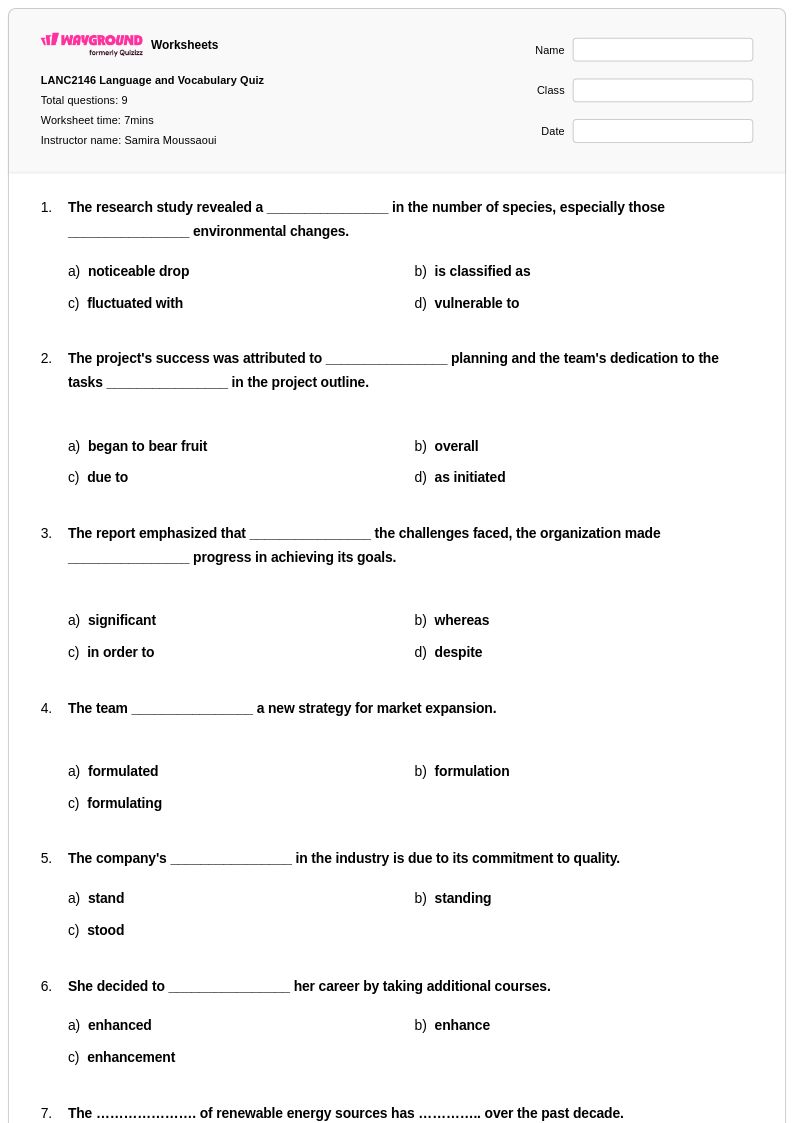
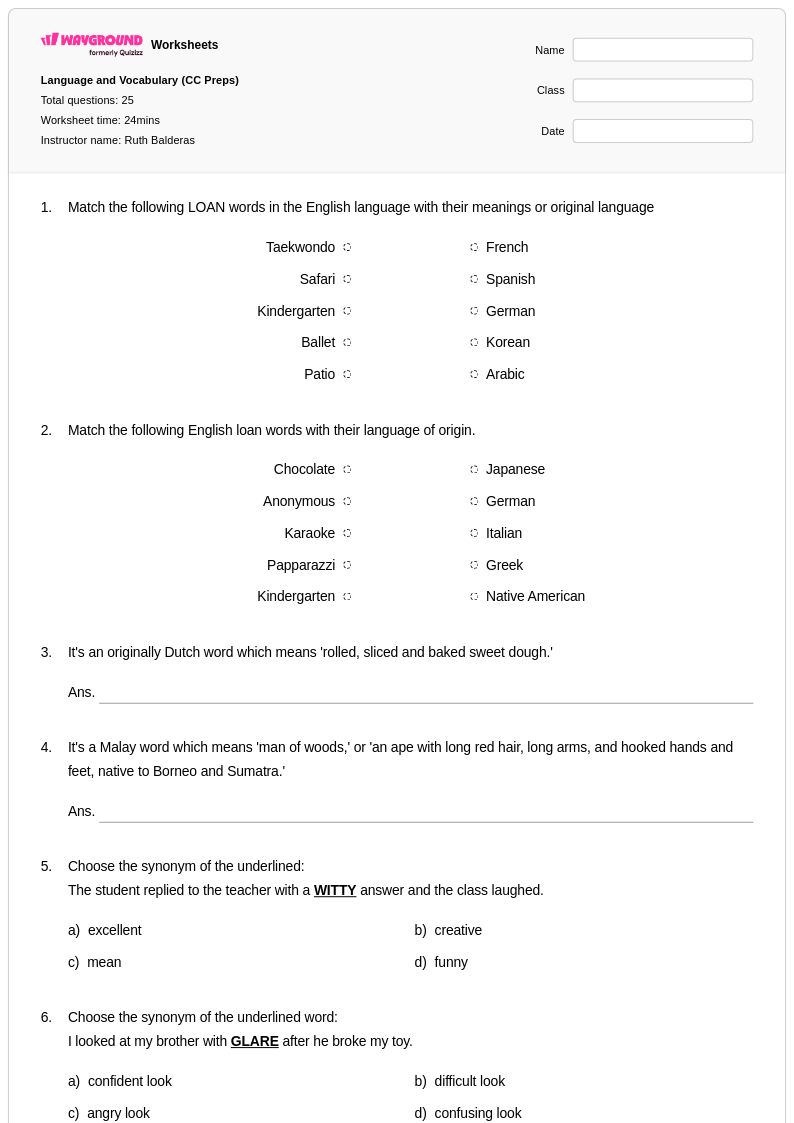
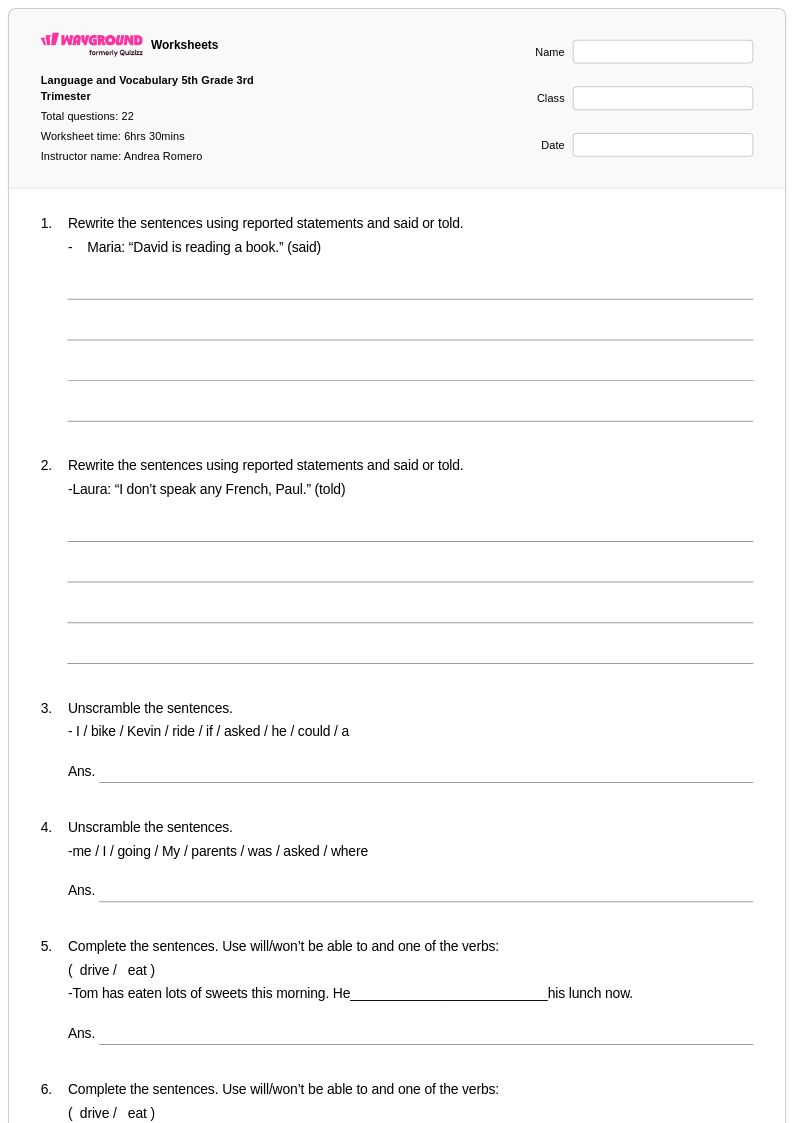
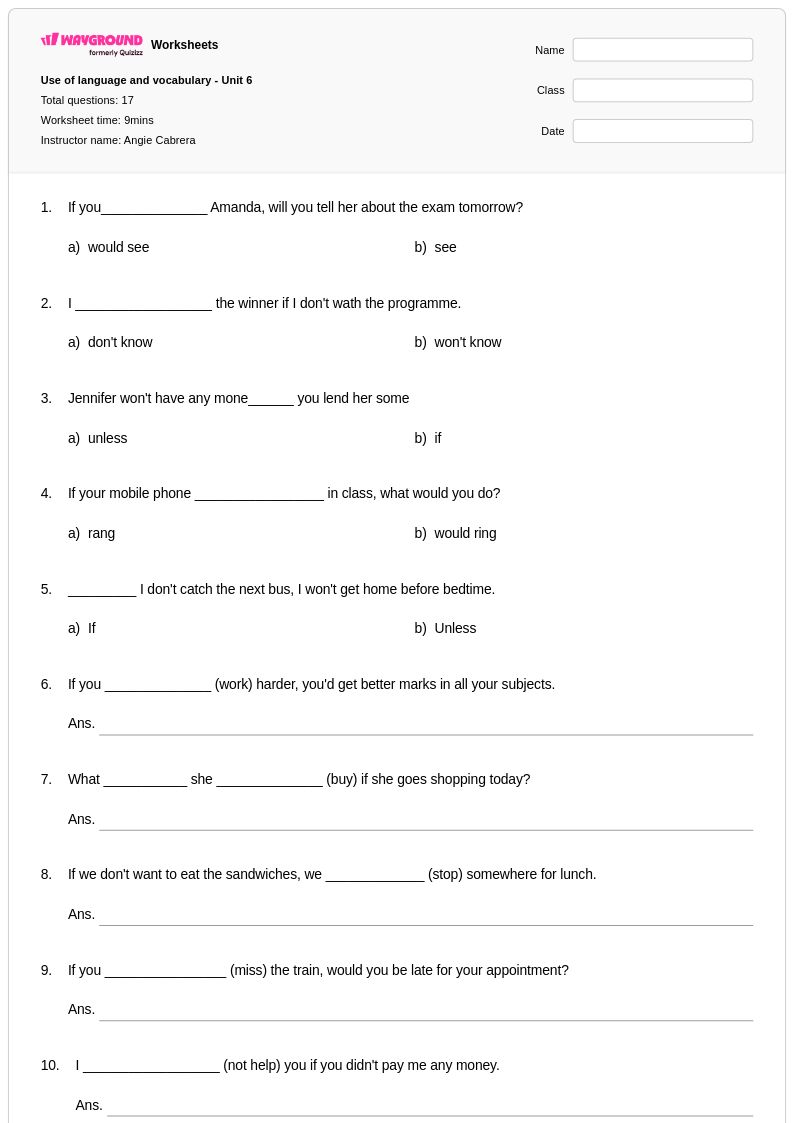
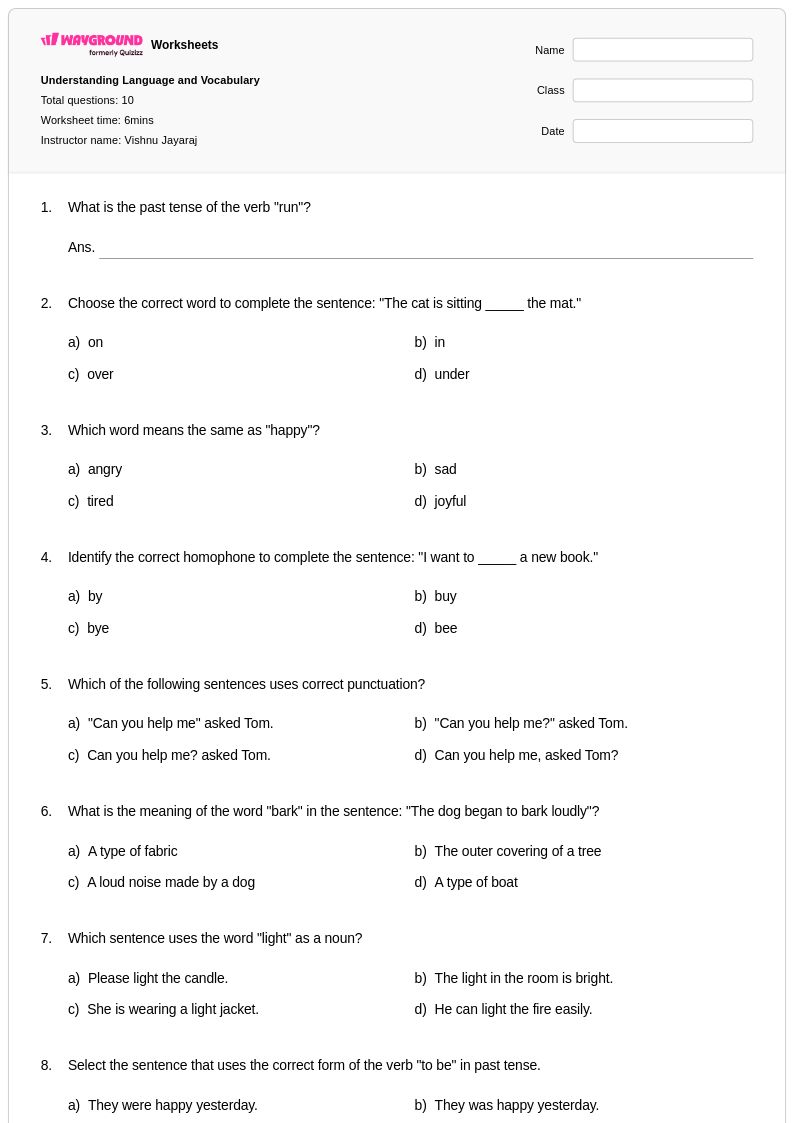
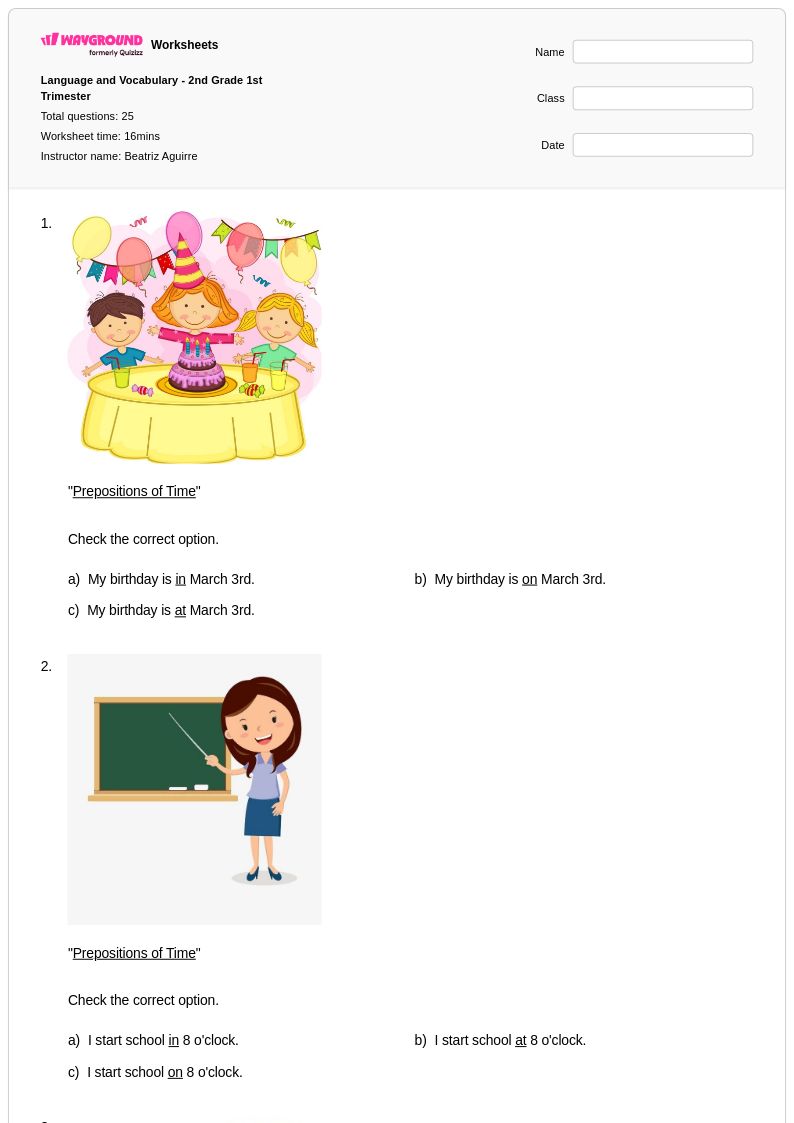
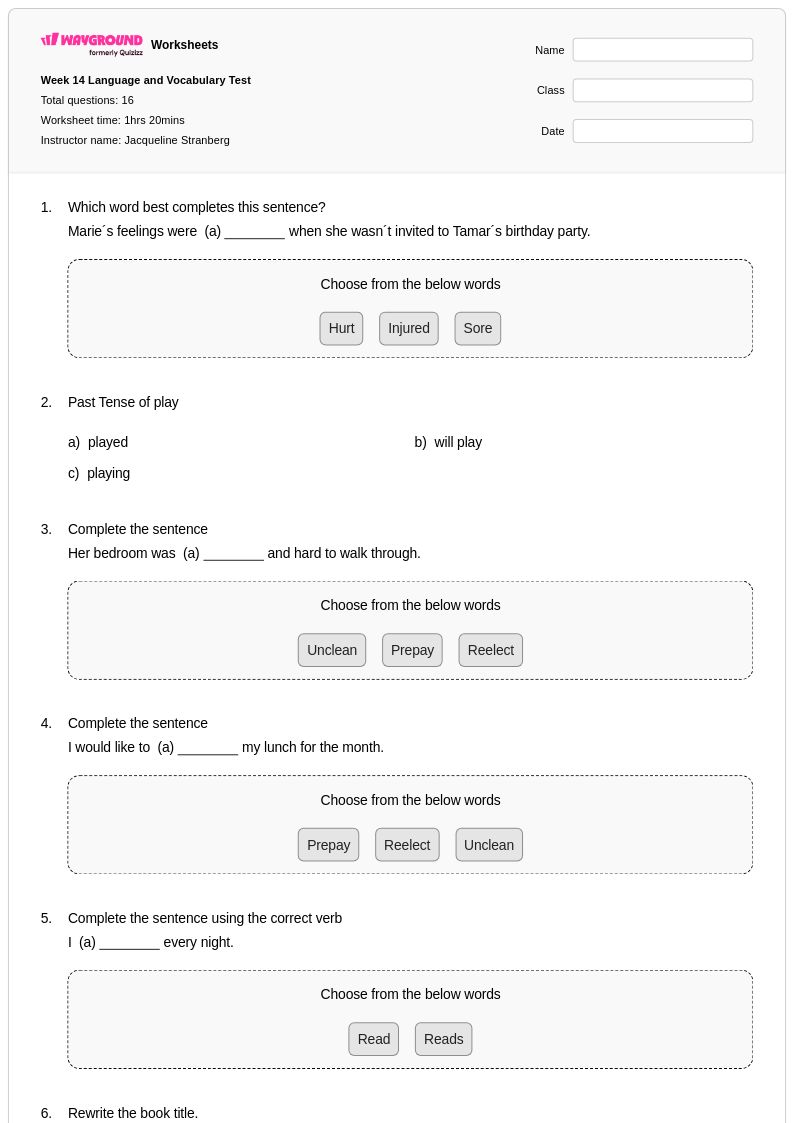
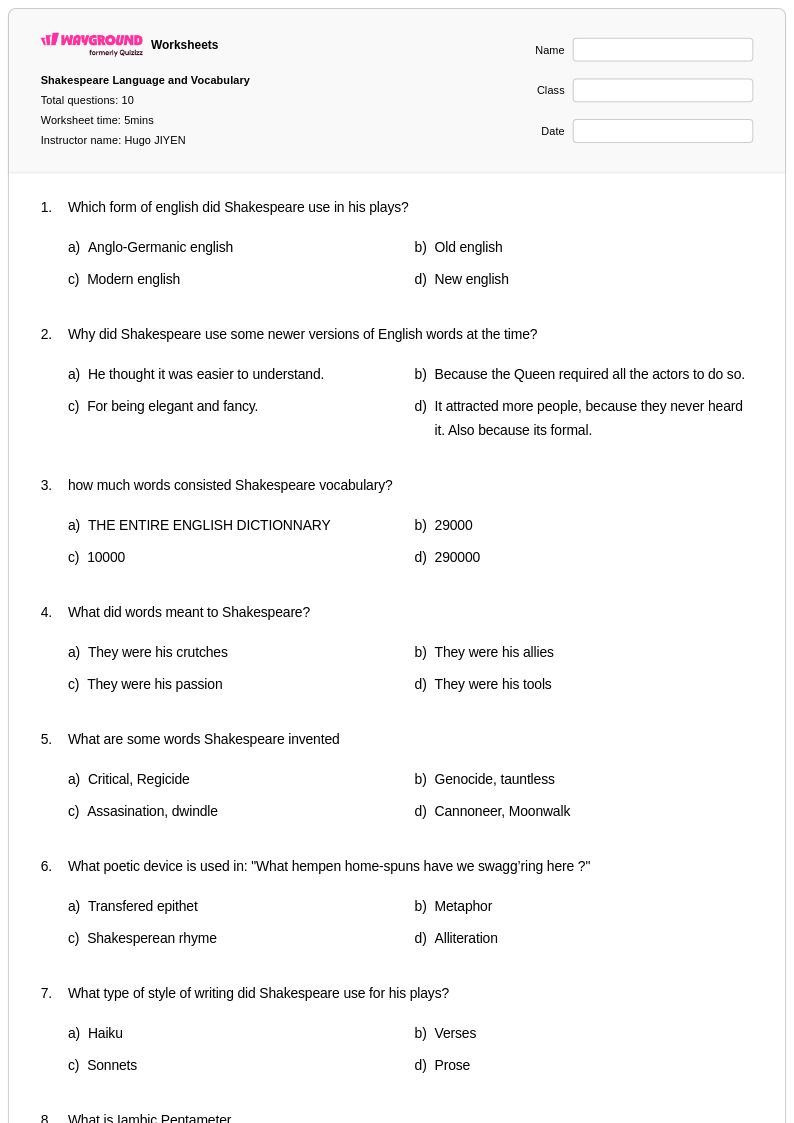
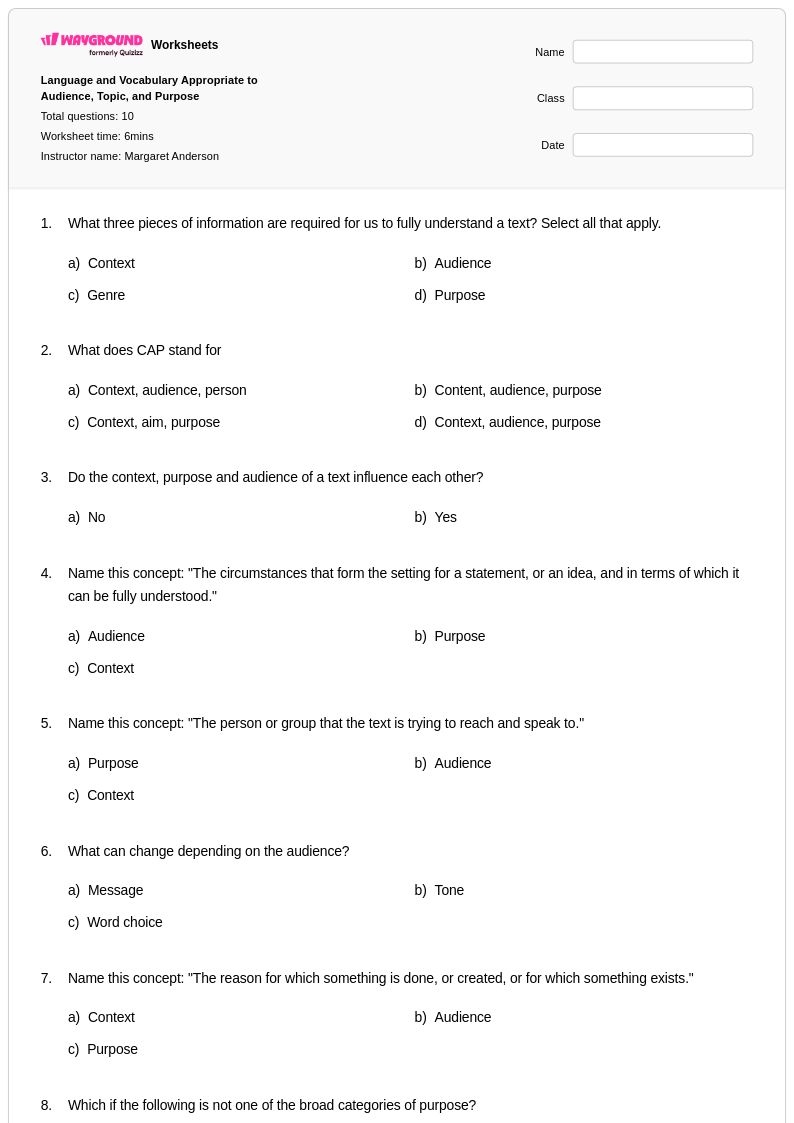
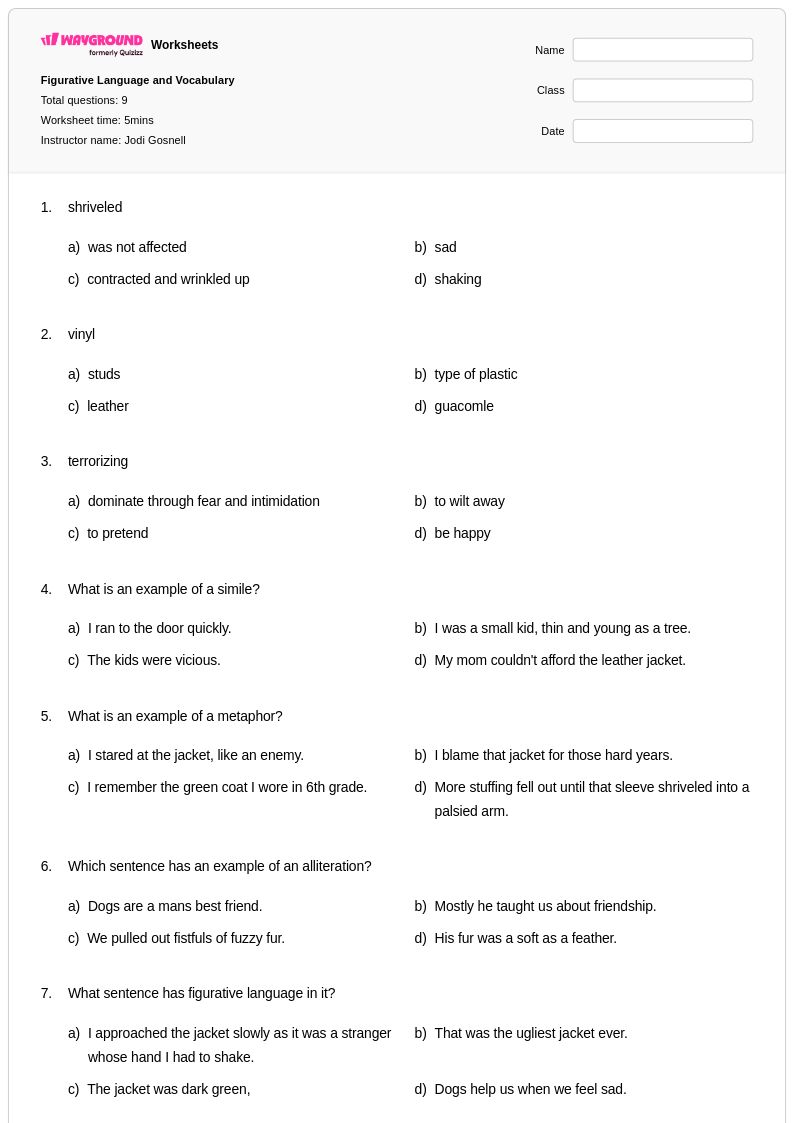
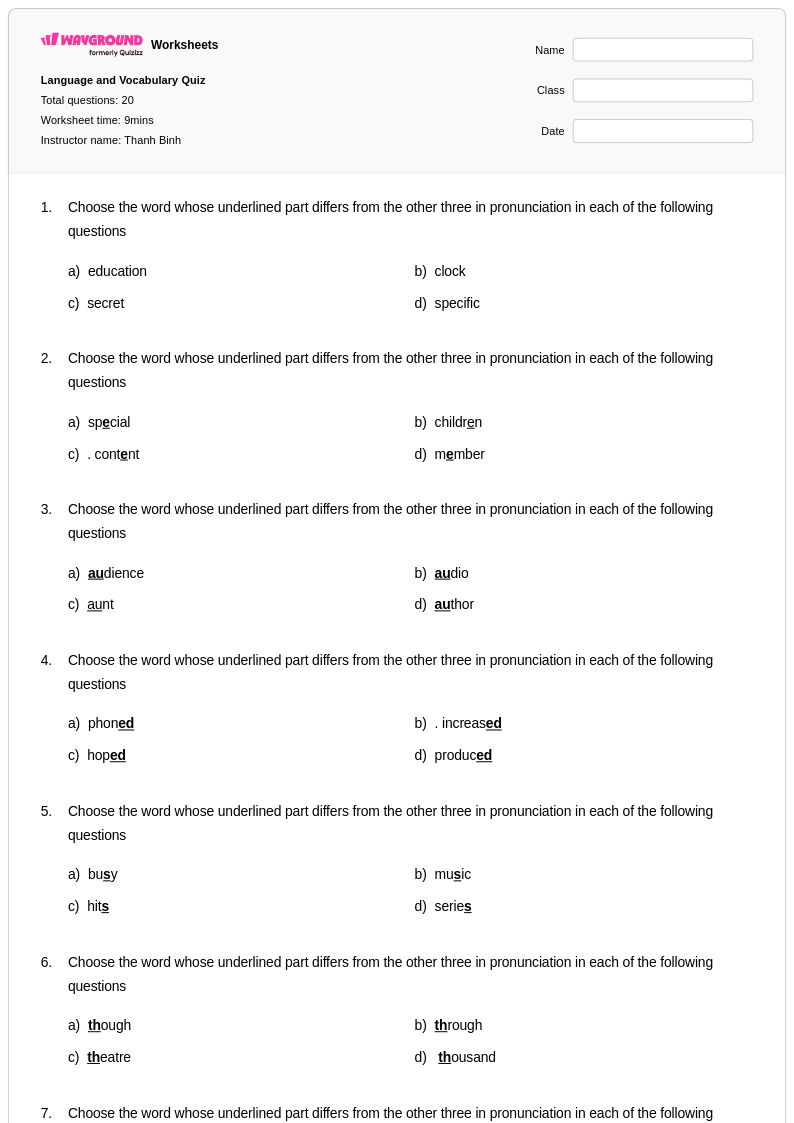
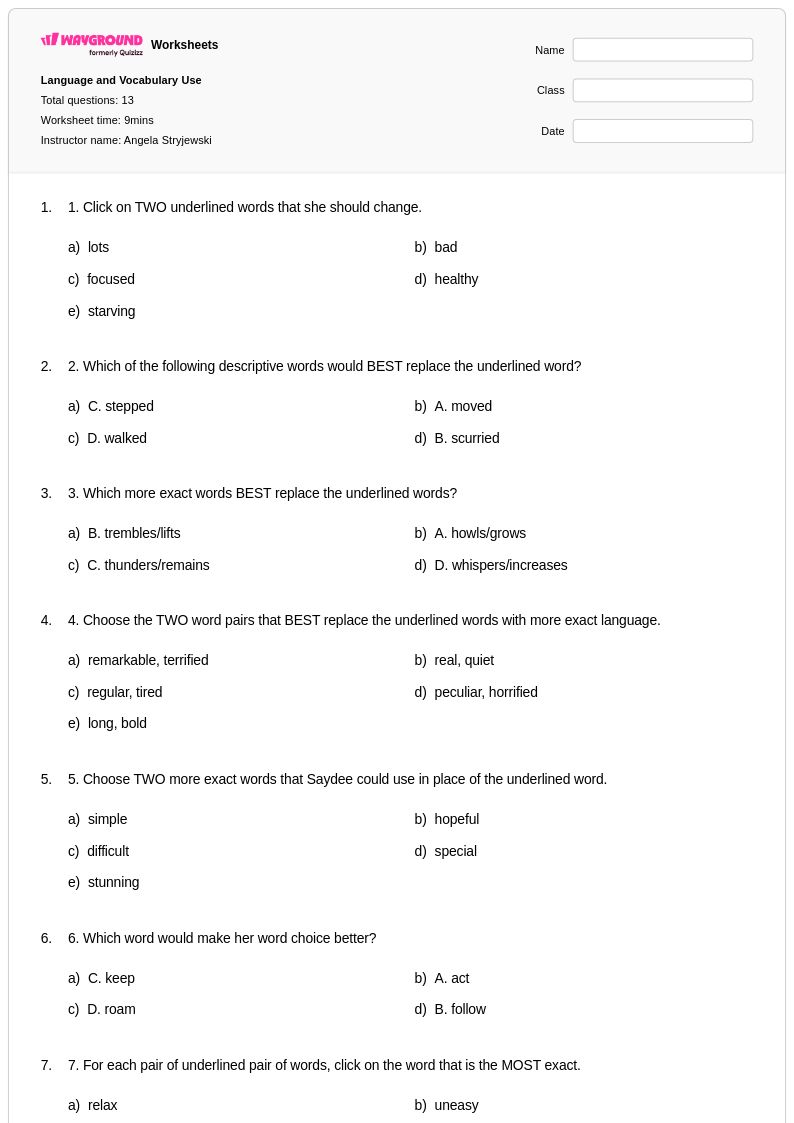
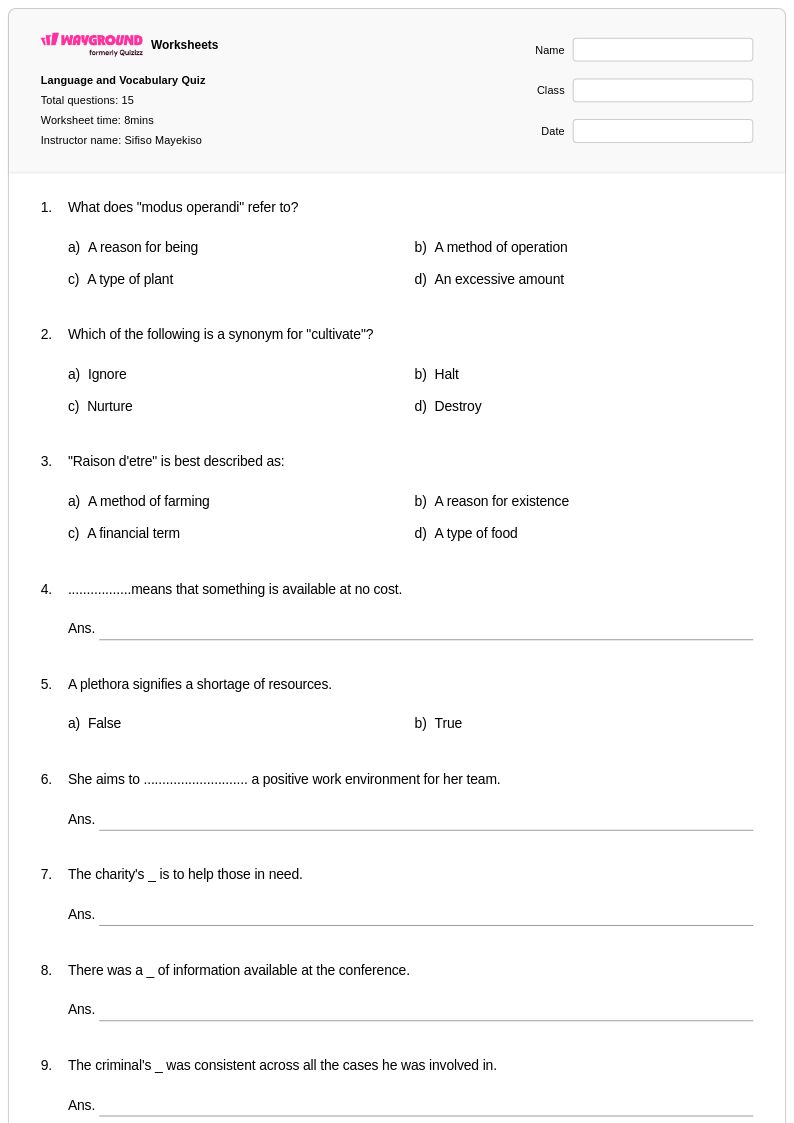
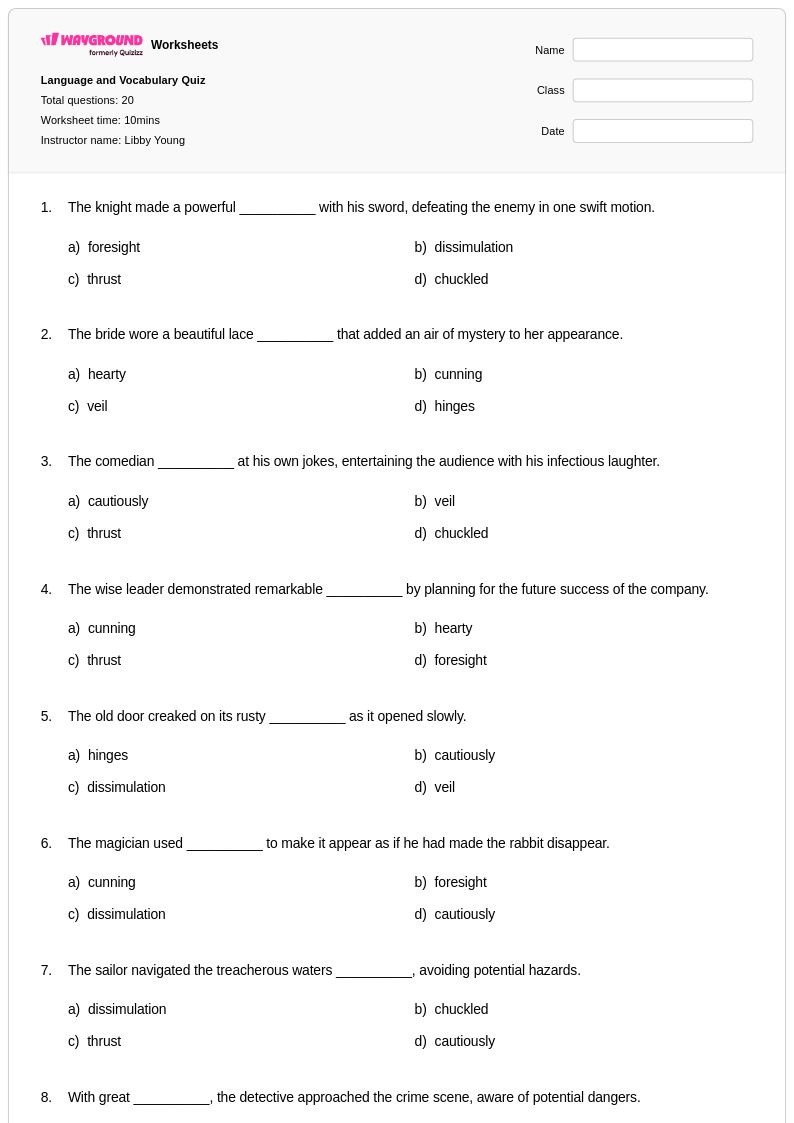
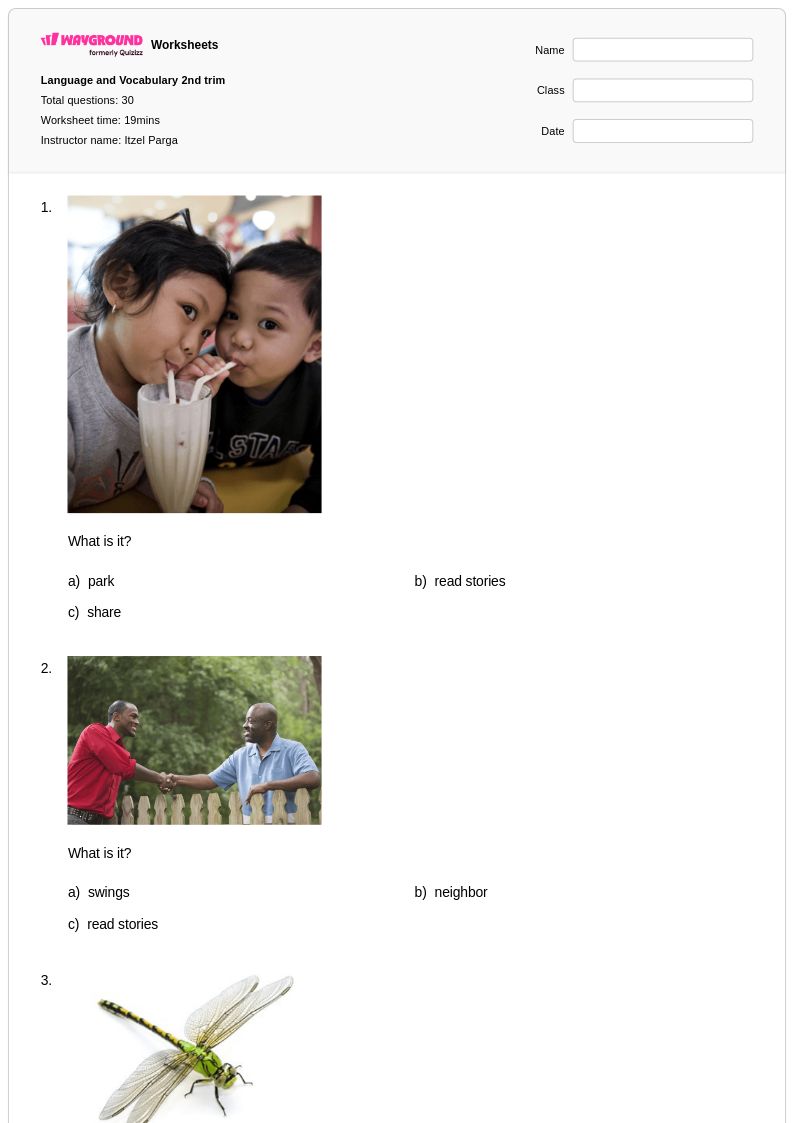
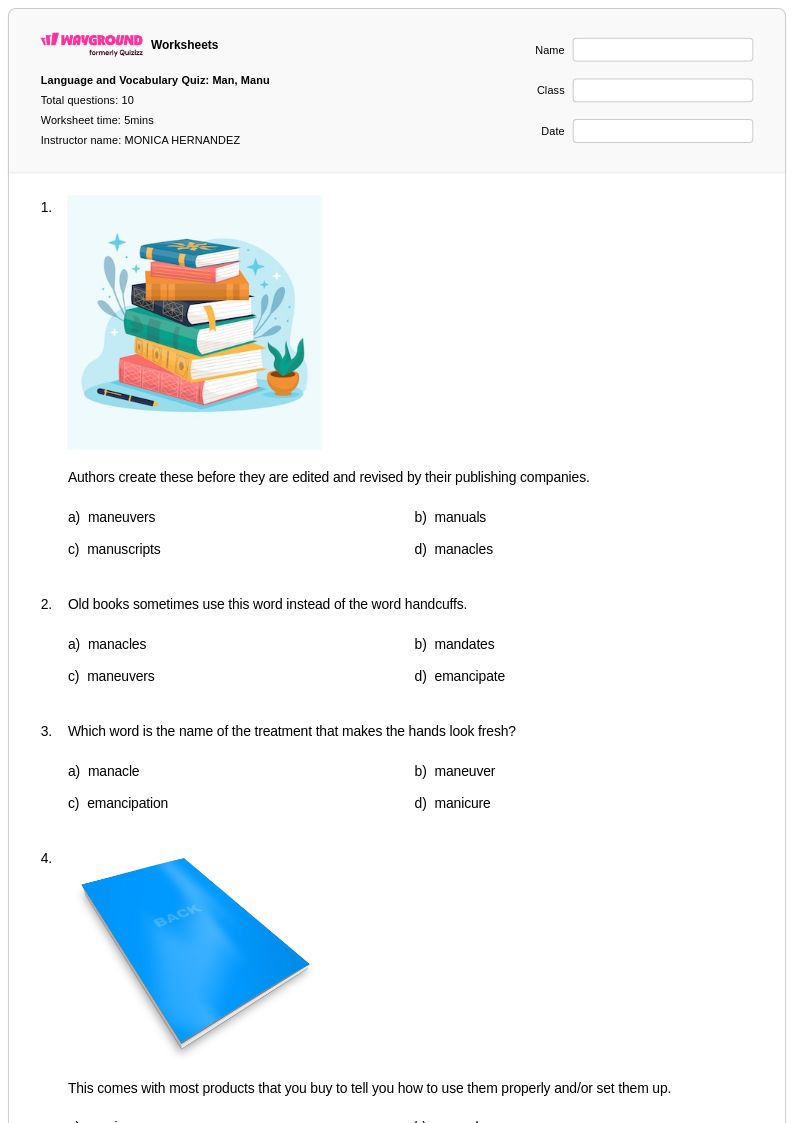
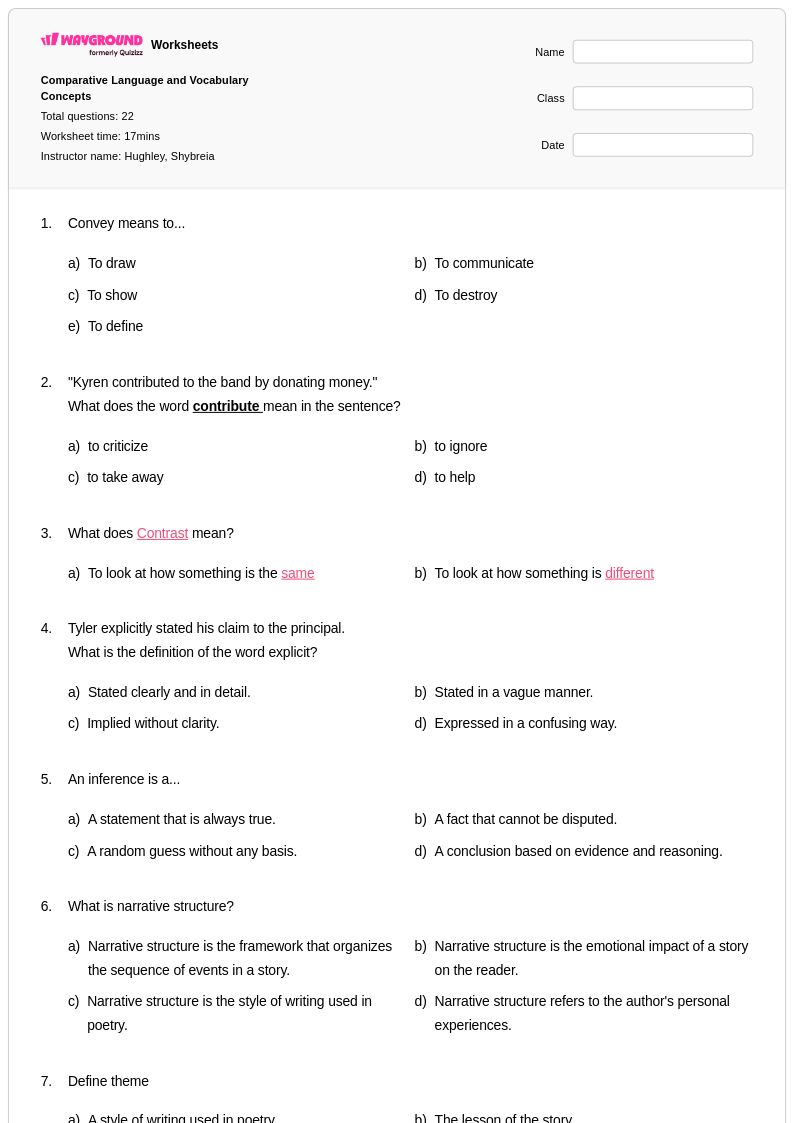
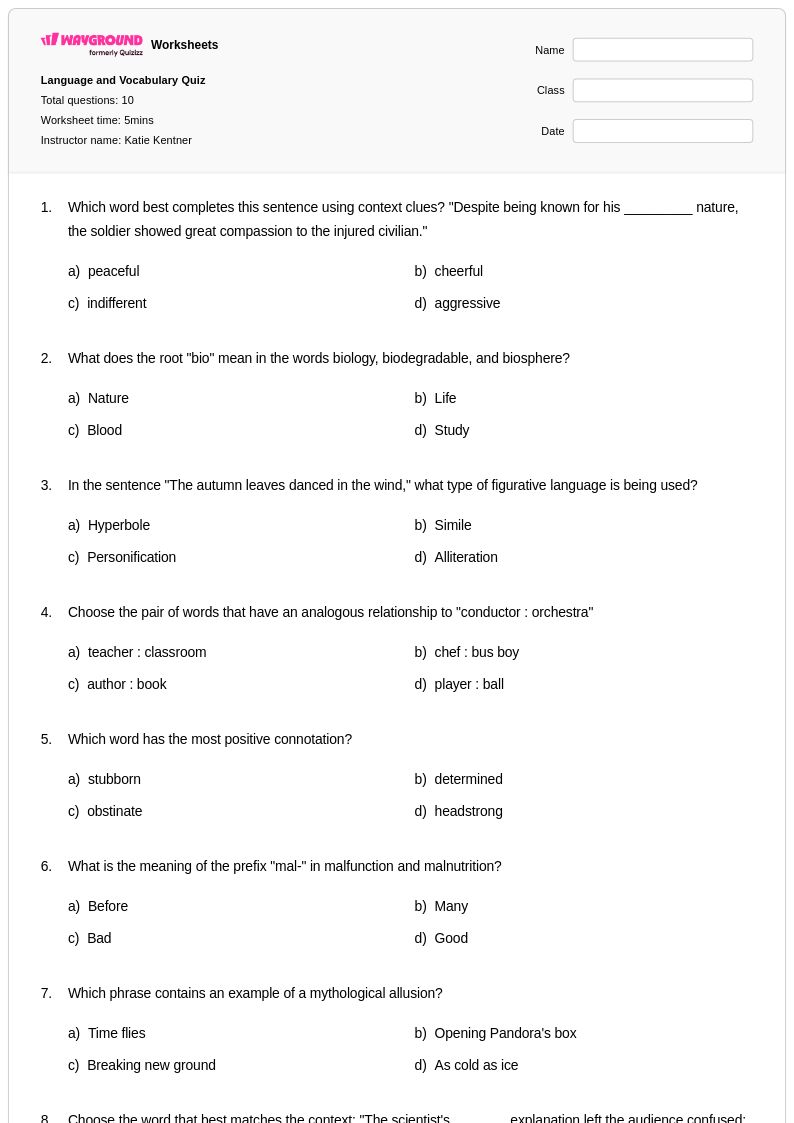
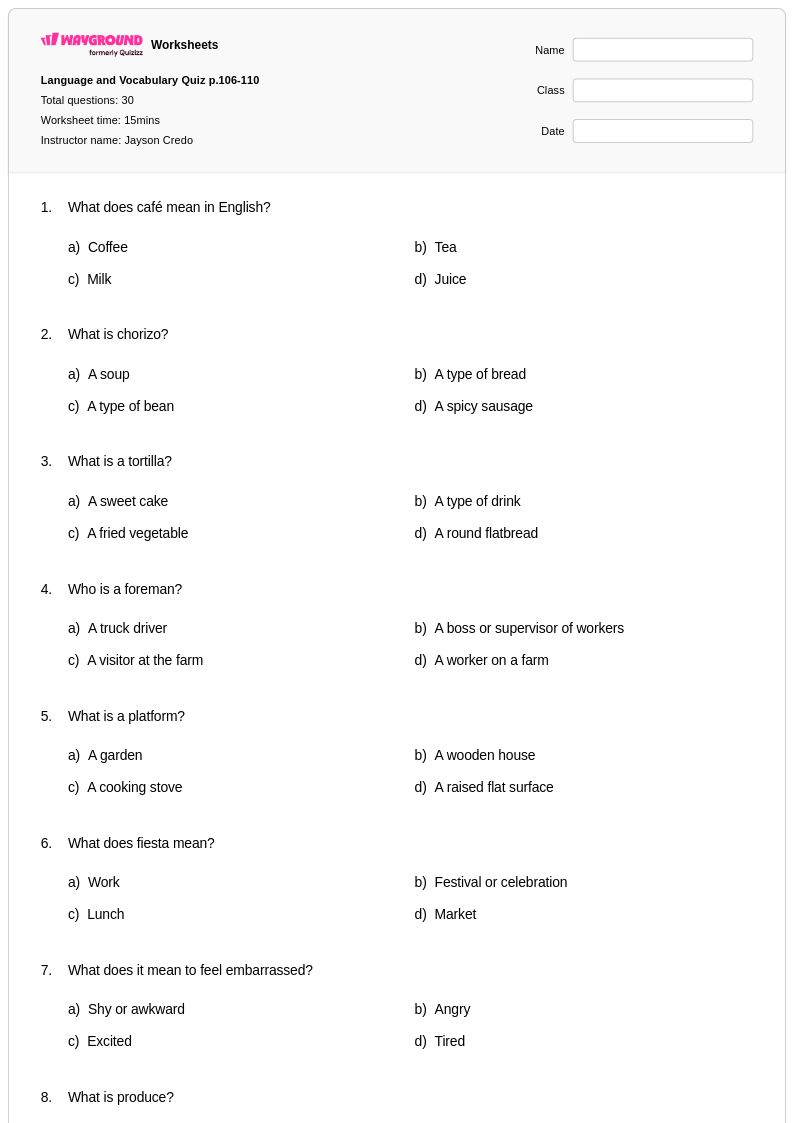
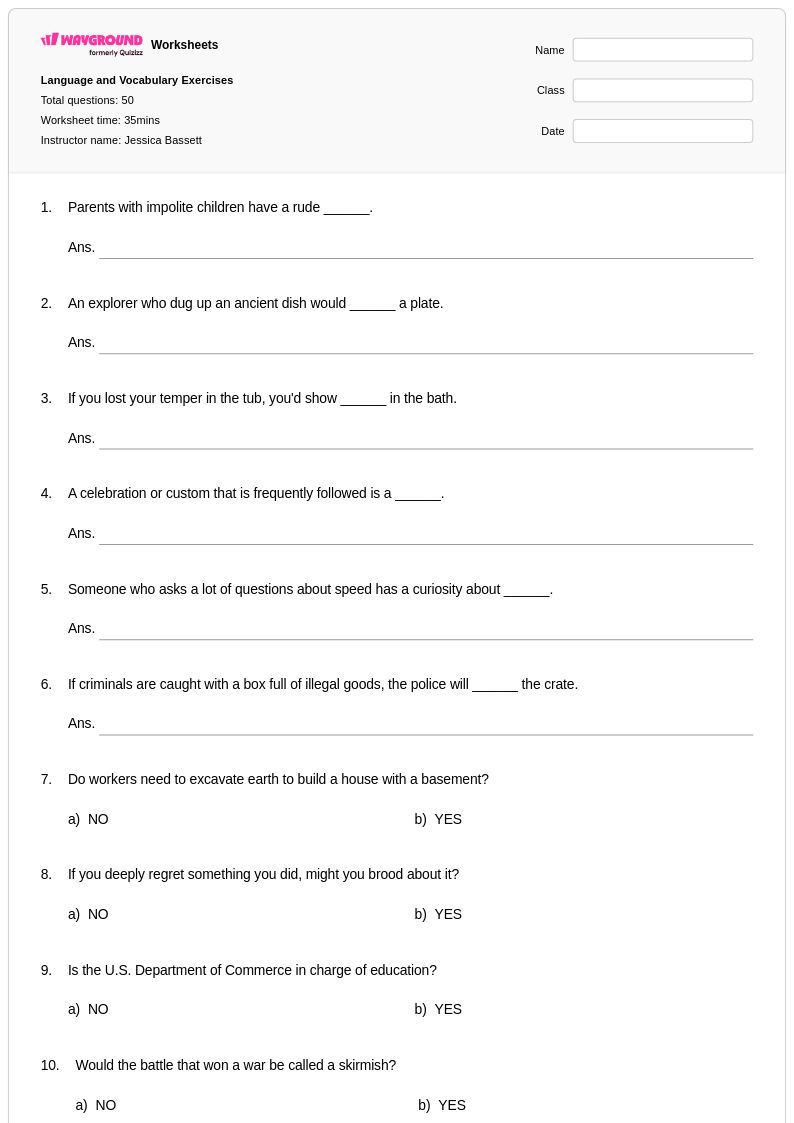
Language and vocabulary worksheets for kindergarten students through Wayground provide essential foundational practice in early literacy development, focusing on building word recognition, phonemic awareness, and basic communication skills. These carefully designed printables target critical areas including letter-sound relationships, sight word recognition, simple vocabulary building, and beginning reading comprehension activities that align with kindergarten developmental milestones. Each worksheet collection includes comprehensive practice problems that strengthen students' ability to identify letters, match words to pictures, complete simple sentences, and expand their working vocabulary through engaging exercises. Teachers can access complete answer keys and free pdf downloads that support both independent practice and guided instruction, ensuring students develop the language skills necessary for reading readiness and academic success.
Wayground's extensive collection of teacher-created language and vocabulary resources offers educators millions of professionally developed worksheets with robust search and filtering capabilities that streamline lesson planning and differentiated instruction. The platform's standards alignment features ensure that kindergarten language activities meet curriculum requirements while providing flexible customization tools that allow teachers to modify content for individual student needs and learning objectives. Available in both printable pdf formats and interactive digital versions, these resources support effective remediation for struggling learners, enrichment opportunities for advanced students, and consistent skill practice across diverse classroom settings. The comprehensive filtering system enables educators to quickly locate age-appropriate vocabulary exercises, phonics practice sheets, and language development activities that seamlessly integrate into daily instruction while addressing varying proficiency levels within the kindergarten classroom.
FAQs
How do I teach vocabulary effectively in the classroom?
Effective vocabulary instruction goes beyond memorizing definitions — students need repeated, varied exposure to new words in context. Strategies like word mapping, semantic grouping, morpheme analysis, and mnemonic devices help students build durable word knowledge. Incorporating word games, word ladders, and word-building activities reinforces retention while keeping engagement high. Pairing explicit instruction with guided practice through worksheets ensures students move from recognition to application.
What exercises help students practice vocabulary and language skills?
Effective practice activities include word matching, word-picture matching, anagrams, cryptogram puzzles, and word ladder activities, all of which build recognition and reinforce meaning through active engagement. Dictionary skills exercises and guide word activities develop reference literacy, while multiple meaning word tasks sharpen contextual understanding. Morphology and morpheme-focused worksheets help students decode unfamiliar words by breaking them into recognizable parts. Rotating across these activity types prevents rote learning and develops flexible, transferable vocabulary skills.
What are the most common vocabulary mistakes students make?
One of the most persistent errors is confusing words that sound alike or look similar, such as to/two/too, homonyms, and multiple meaning words used out of context. Students also struggle with positional and location words when they over-generalize usage, and with question words when they confuse interrogative function with meaning. A common misconception in morphology is assuming that a familiar root guarantees a predictable definition, which breaks down with irregular or borrowed words. Targeted practice with these specific problem areas is more effective than general vocabulary review.
How do I support struggling readers with vocabulary instruction?
For students who struggle with vocabulary, reducing cognitive load is essential — starting with word-picture matching and word recognition activities builds a visual foundation before introducing abstract definitions. Mnemonic devices and word-finding strategies give students concrete tools to retrieve and retain new vocabulary independently. On Wayground, teachers can enable read-aloud support so questions and content are audio-read for students who need it, and reduced answer choices can be applied to individual students to lower the difficulty of multiple-choice vocabulary tasks without alerting the rest of the class.
How can I use language and vocabulary worksheets to assess student understanding?
Vocabulary worksheets are most effective as formative assessment tools when they move students through a progression — from recognition tasks like word matching, to application tasks like using words correctly in context. Reviewing completed worksheets for patterns in errors, such as consistent confusion with homonyms or incorrect usage of positional words, helps teachers identify which concepts need reteaching. Using worksheets as exit tickets or brief check-ins gives teachers actionable data without requiring a formal quiz format.
How do I use Wayground's language and vocabulary worksheets in my classroom?
Wayground's language and vocabulary worksheets are available as printable PDFs for traditional classroom use and in digital formats for technology-integrated environments, giving teachers flexibility depending on their setup. Teachers can also host worksheets as a quiz directly on Wayground, enabling automatic scoring and immediate feedback. Each worksheet includes a complete answer key, making them practical for independent practice, homework, or small group instruction. Wayground also supports per-student accommodations such as extended time, read aloud, and reduced answer choices, which can be configured from the Students or Classes tab and reused across future sessions.