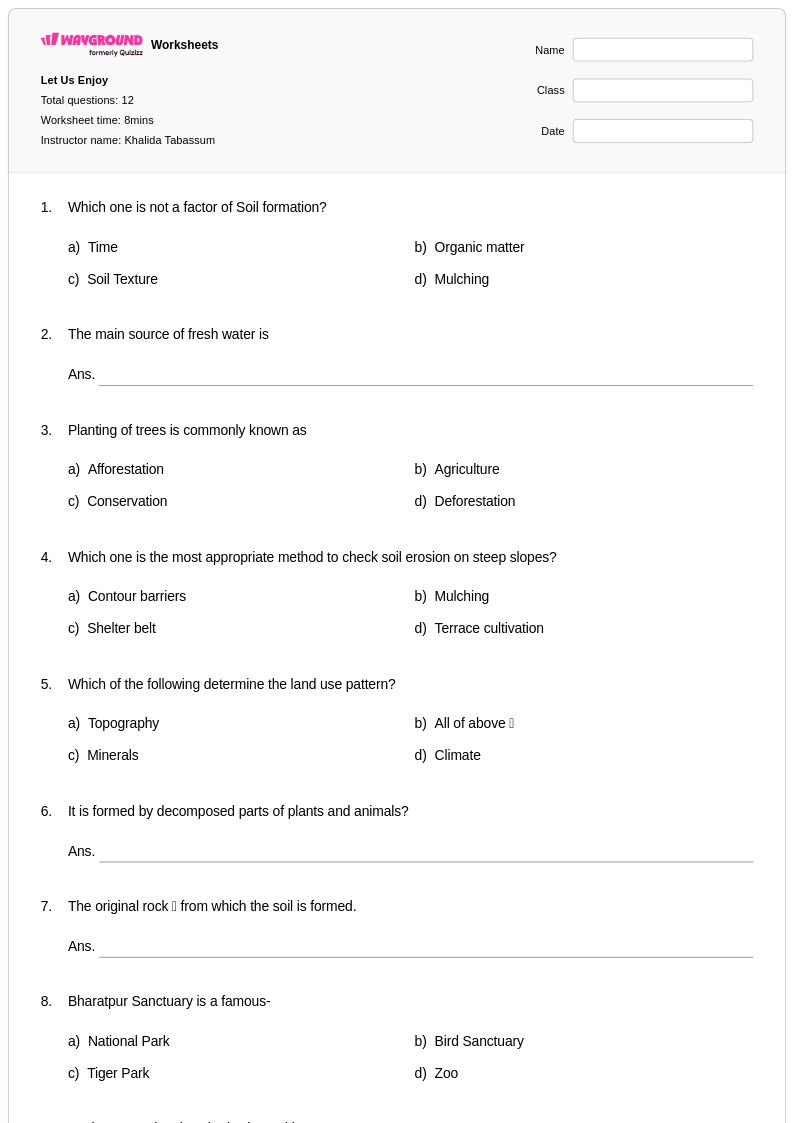
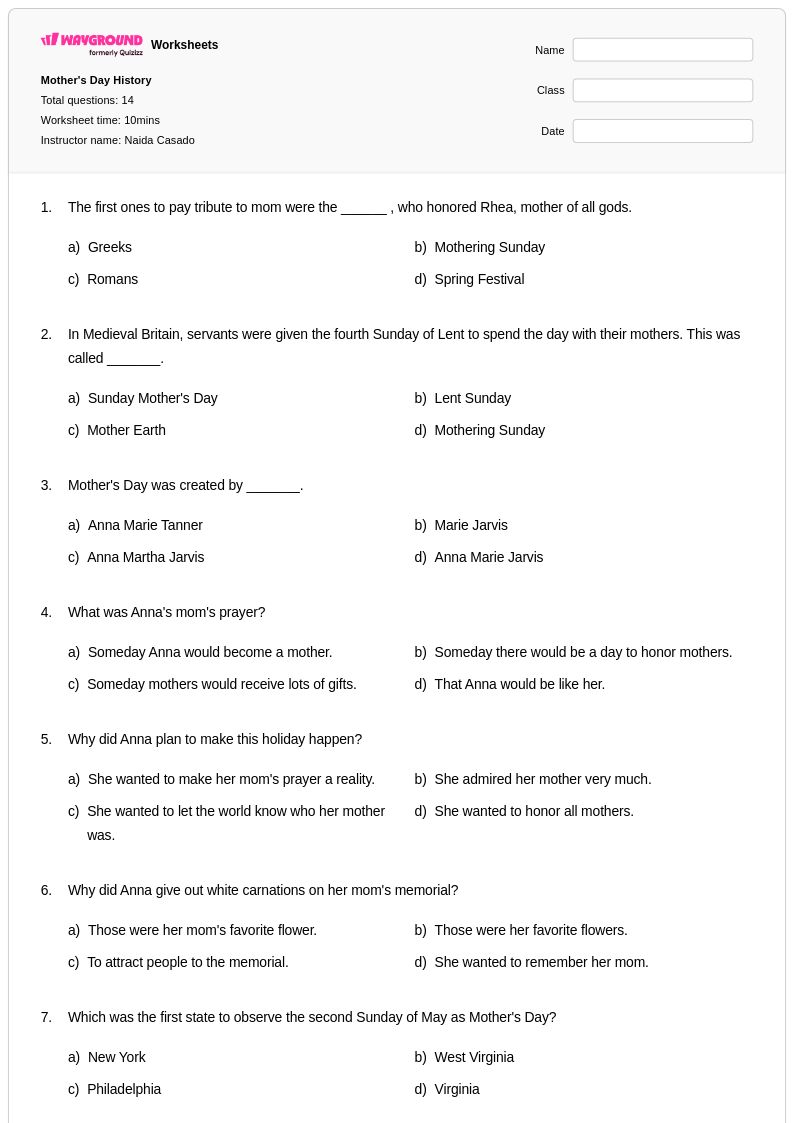
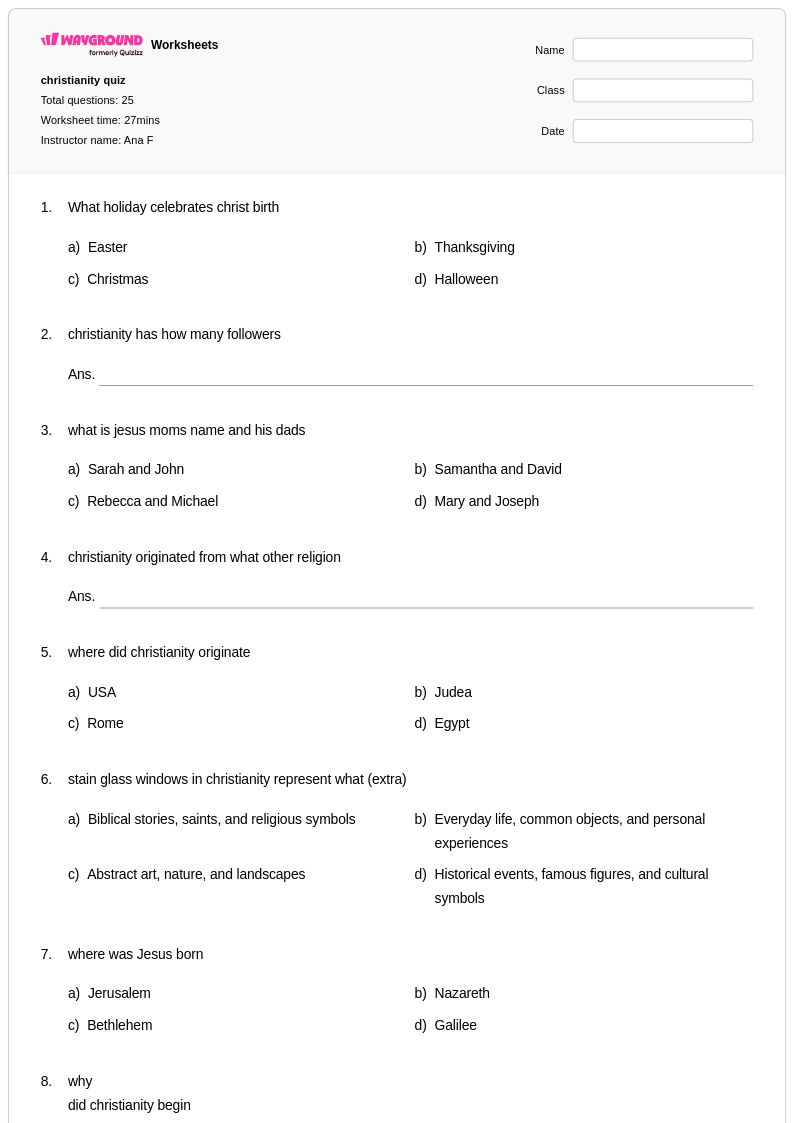
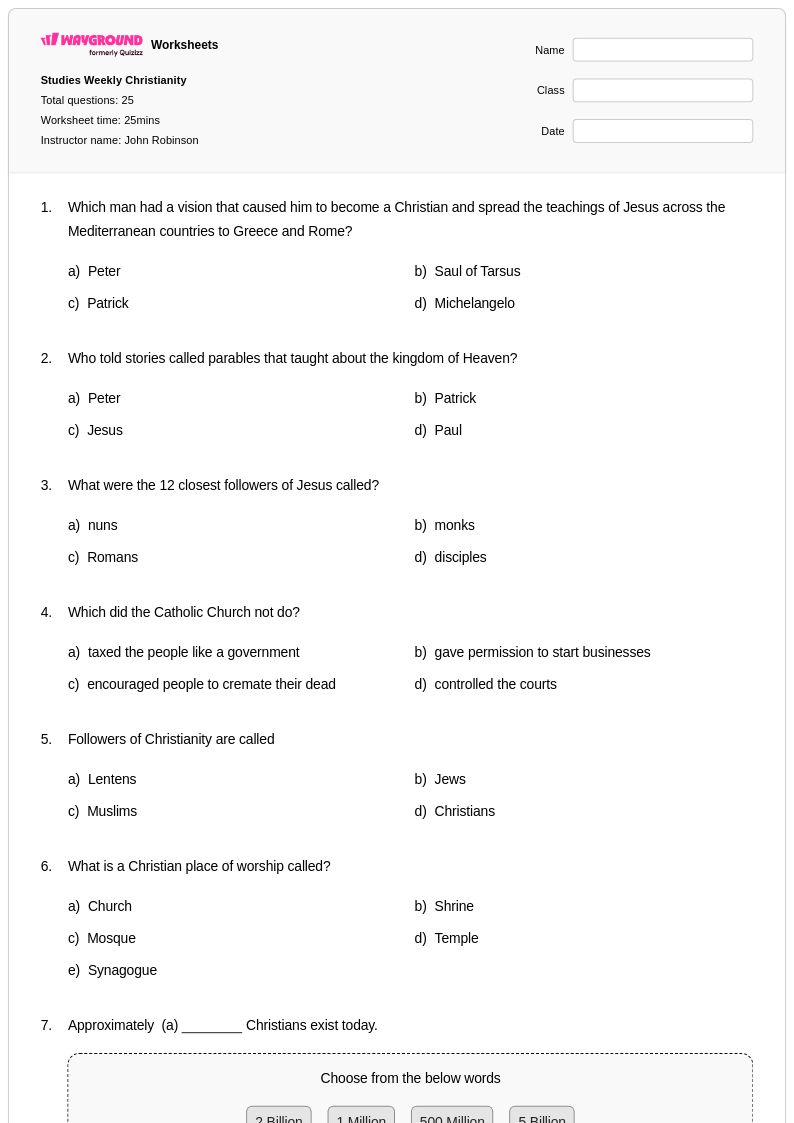
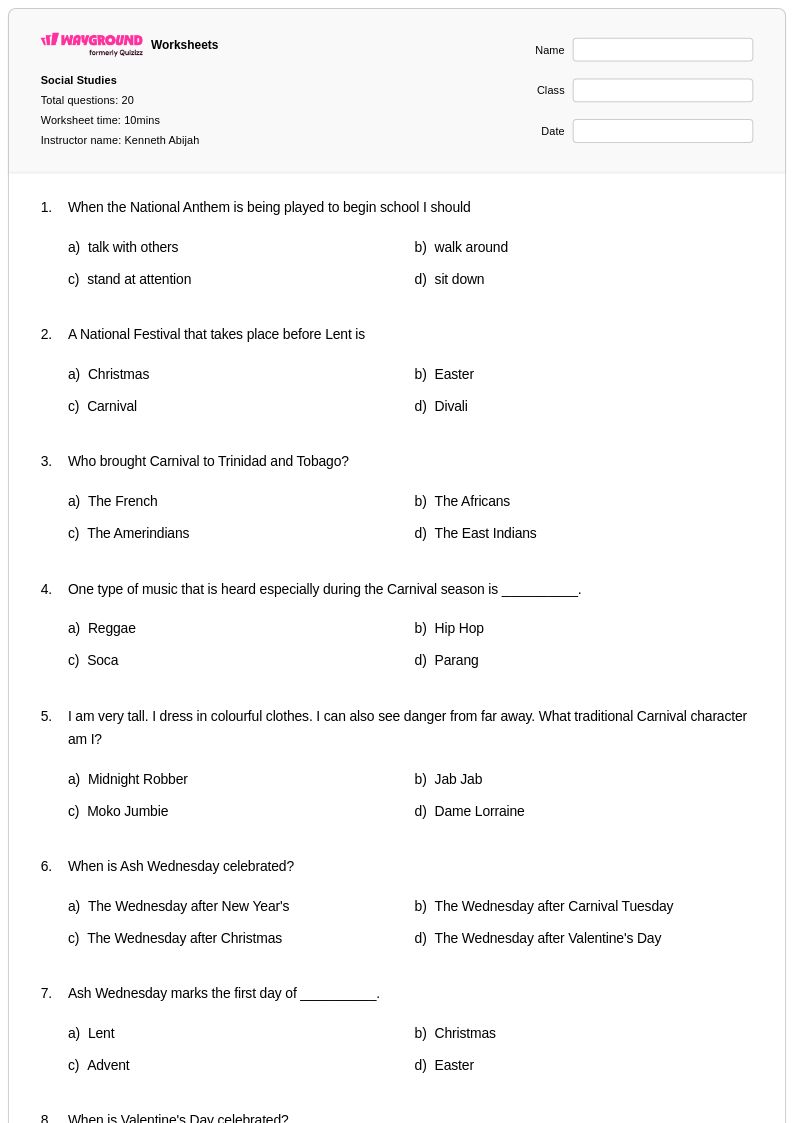
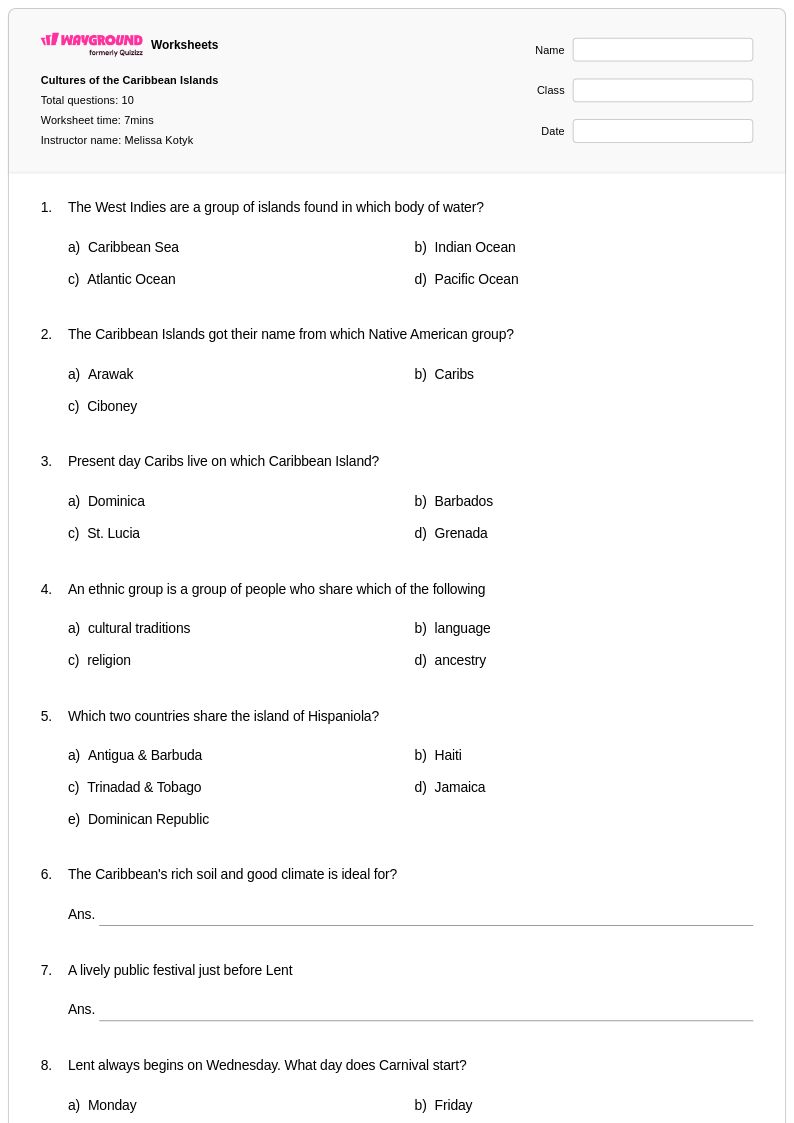
Explore Wayground's free Lent worksheets and printables that help students learn about this important Christian observance, its traditions, and cultural significance through engaging practice problems with answer keys.
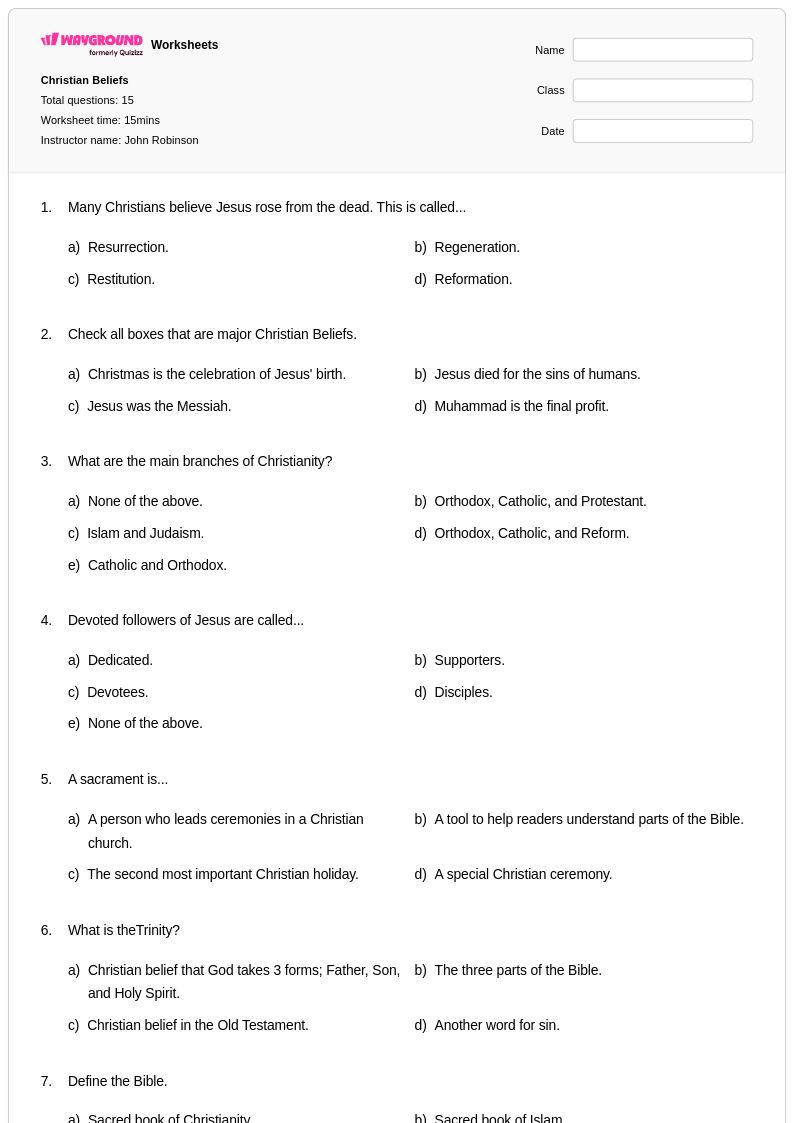
Lent worksheets available through Wayground (formerly Quizizz) provide comprehensive educational resources that explore this significant 40-day period of preparation and reflection in Christian tradition. These thoughtfully designed materials help students understand the historical origins, cultural practices, and contemporary observance of Lent across different communities and denominations. The worksheets strengthen critical thinking skills through engaging activities that examine how Lenten traditions like fasting, prayer, and almsgiving reflect broader themes of sacrifice, renewal, and spiritual growth. Students develop cultural literacy and comparative analysis abilities while exploring how Lent is observed differently around the world, from Mardi Gras celebrations to Ash Wednesday services. Each worksheet includes detailed answer keys and is available as free printables in convenient pdf format, featuring practice problems that encourage students to connect historical religious practices with modern community traditions and personal reflection.
Wayground (formerly Quizizz) supports educators with millions of teacher-created resources specifically focused on religious and cultural studies, including extensive collections covering Lenten traditions and their role in community life. The platform's robust search and filtering capabilities enable teachers to quickly locate materials appropriate for their specific curriculum needs, whether exploring the theological significance of Lent or examining its cultural impact across different societies. Standards alignment features ensure that these worksheets meet educational objectives while differentiation tools allow teachers to customize content for diverse learning needs and backgrounds. The flexible format options, including both printable and digital pdf versions, facilitate seamless integration into lesson planning for in-person, remote, or hybrid learning environments. These comprehensive resources prove invaluable for skill practice, targeted remediation, and enrichment activities that deepen students' understanding of how religious observances like Lent shape community identity and cultural expression.
FAQs
How do I teach Lent in a classroom setting?
Teaching Lent works best when it is framed as both a religious observance and a cultural phenomenon, giving students multiple entry points regardless of their personal background. Start with the historical origins of the 40-day period, its connection to early Christian tradition, and then broaden the lens to show how practices like fasting, prayer, and almsgiving are interpreted differently across denominations and communities. Connecting Lent to universal themes of sacrifice, renewal, and reflection helps make the content accessible and meaningful to all students.
What exercises help students practice understanding Lent and its traditions?
Effective practice activities for Lent include comparative analysis tasks where students examine how different Christian communities observe the season, from Ash Wednesday services to Mardi Gras celebrations. Reading comprehension exercises that focus on primary or secondary sources about Lenten history build literacy skills while reinforcing content knowledge. Reflection prompts that ask students to connect historical religious practices to modern community traditions encourage deeper critical thinking and cultural literacy.
What common misconceptions do students have about Lent?
A frequent misconception is that Lent is observed identically across all Christian denominations, when in reality practices vary significantly between Catholic, Protestant, Orthodox, and other traditions. Students also sometimes conflate Lent solely with giving something up, overlooking the equally important pillars of prayer and almsgiving. Another common error is treating Lent as a purely personal or private observance, missing its communal and cultural dimensions that shape community identity across many societies.
How can I use Lent worksheets to support students with different learning needs?
Lent worksheets on Wayground are available in both printable PDF and digital formats, making them easy to deploy in in-person, remote, or hybrid environments. When using the digital format on Wayground, teachers can apply individual accommodations such as read aloud for students who benefit from audio support, reduced answer choices to lower cognitive load, and extended time settings for students who need it. These accommodations can be assigned to individual students without notifying the rest of the class, allowing every student to engage with the same Lent content in a way that works for them.
How do Lent worksheets connect to social studies or world religion curriculum standards?
Lent worksheets support curriculum standards related to world religions, cultural studies, and global citizenship by asking students to analyze how a single religious observance manifests differently across geographic and denominational contexts. Activities that examine the historical origins of Lent alongside its contemporary practice build the comparative analysis and critical thinking skills central to social studies and humanities objectives. Teachers can use these materials to address standards around understanding how religious traditions influence community values and cultural expression.
What grade levels are Lent worksheets appropriate for?
Lent worksheets are appropriate across a wide range of grade levels, from elementary students being introduced to world religions and cultural traditions to middle and high school students conducting more nuanced comparative analysis of how Lent is observed across denominations and cultures. The depth of content can be adjusted depending on whether the goal is basic familiarity with the 40-day observance or a more sophisticated examination of its theological and sociocultural significance. Teachers should select or adapt materials based on students' prior knowledge of religious studies and their analytical reading level.