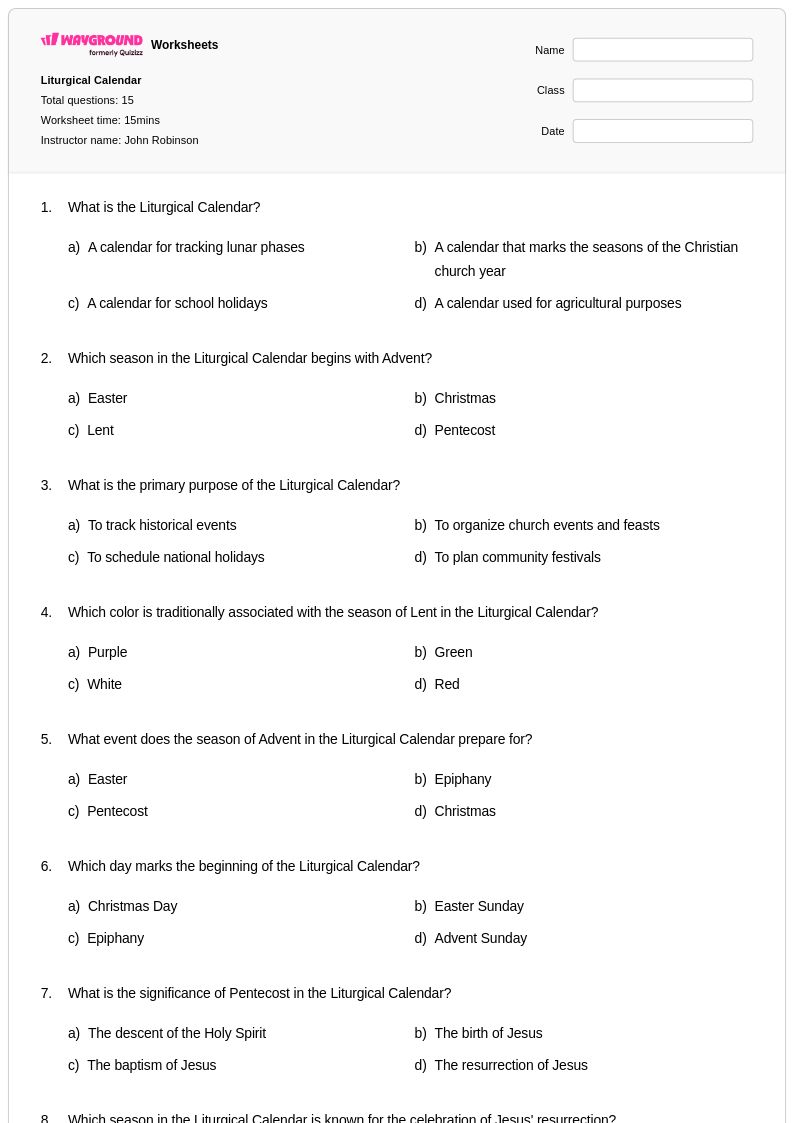
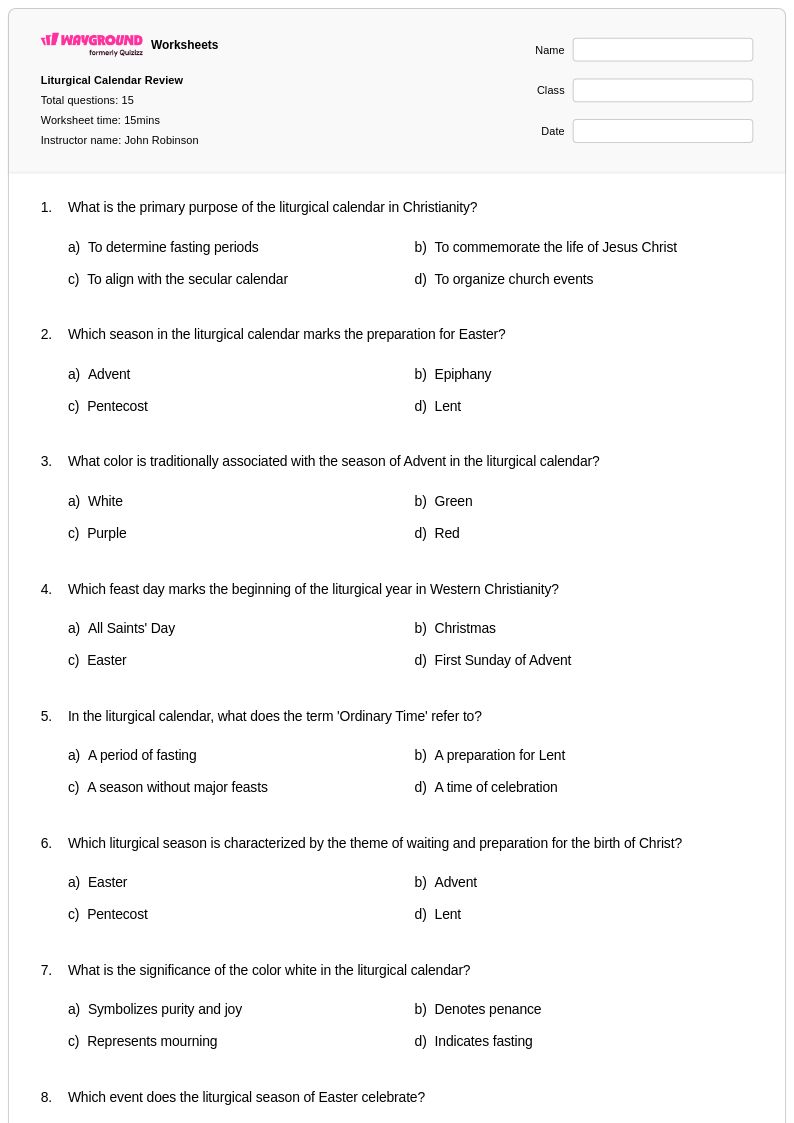
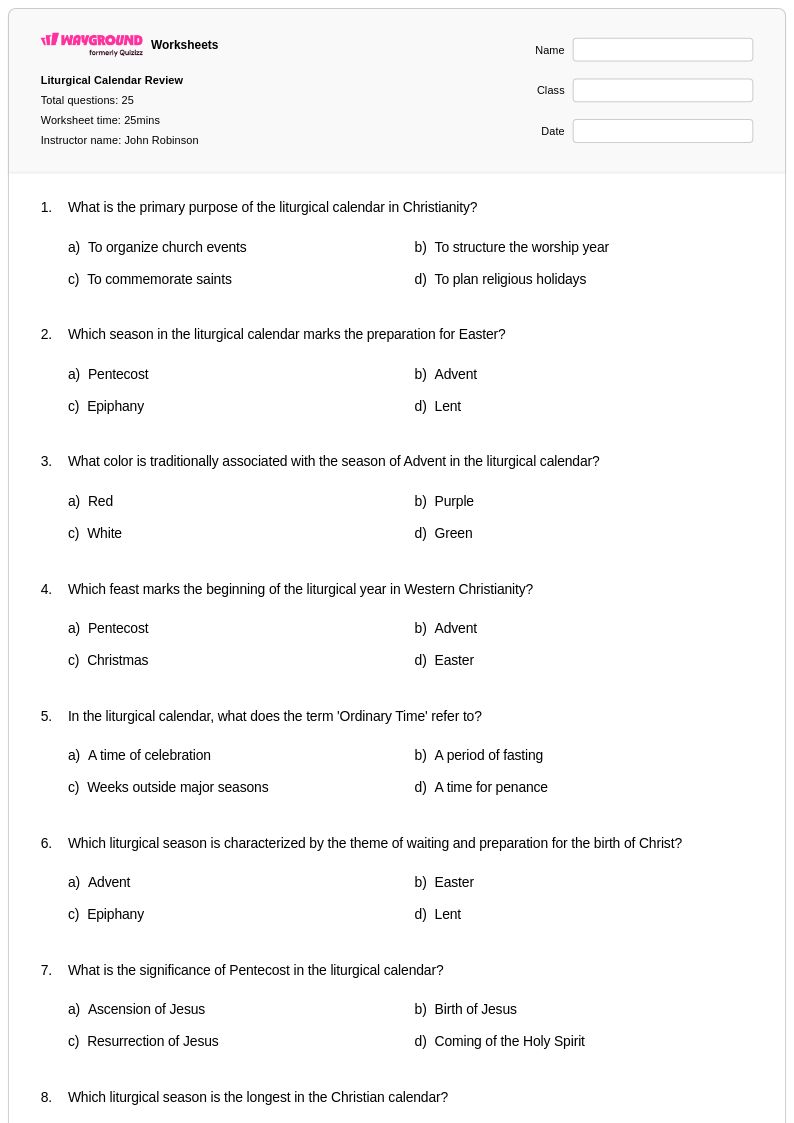
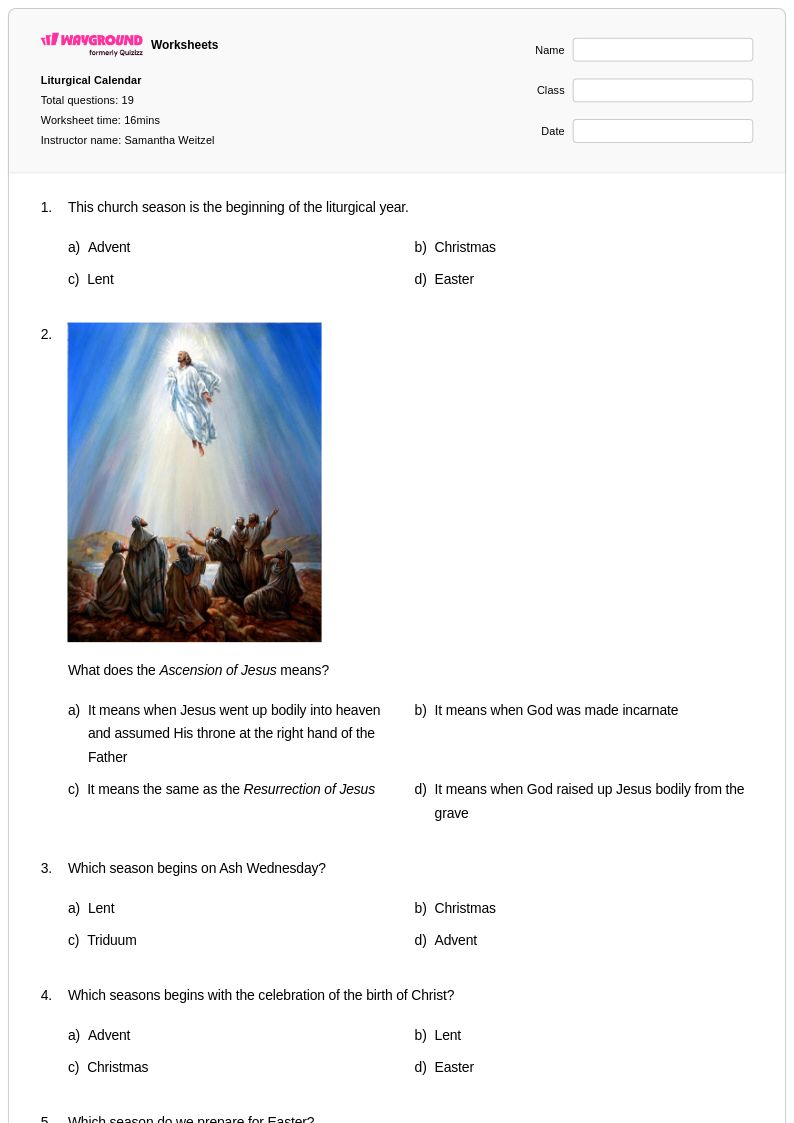
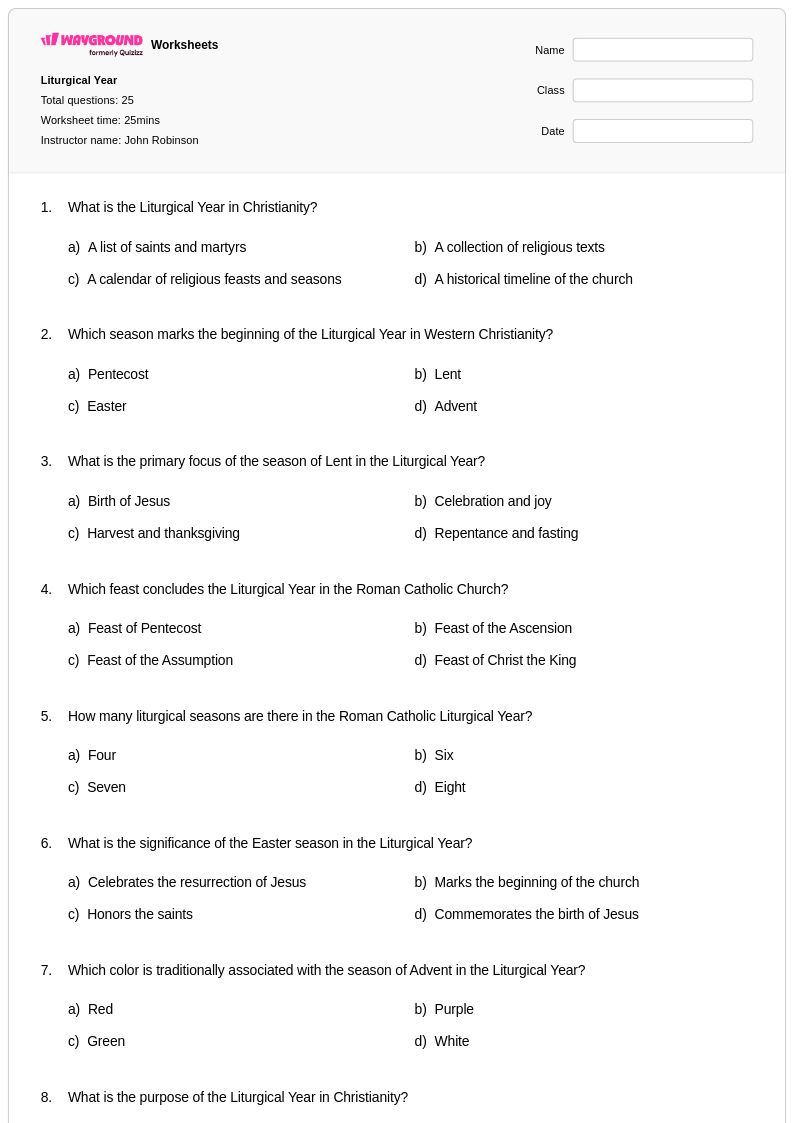
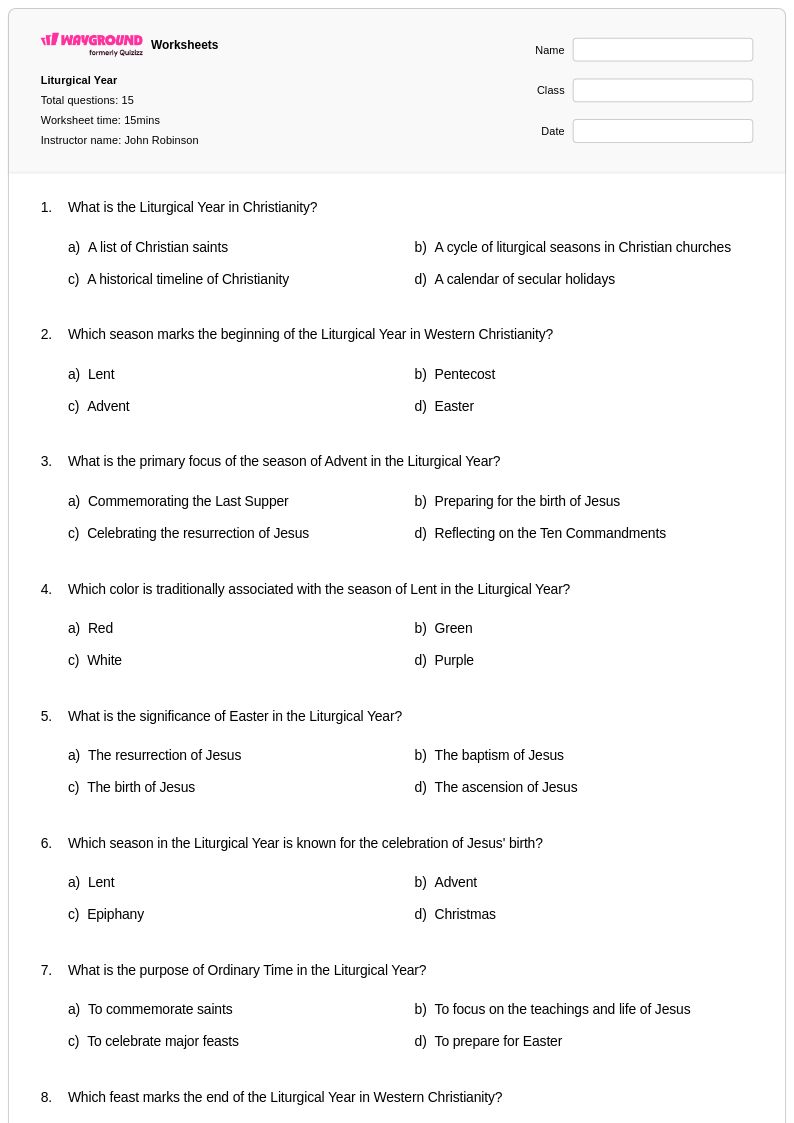
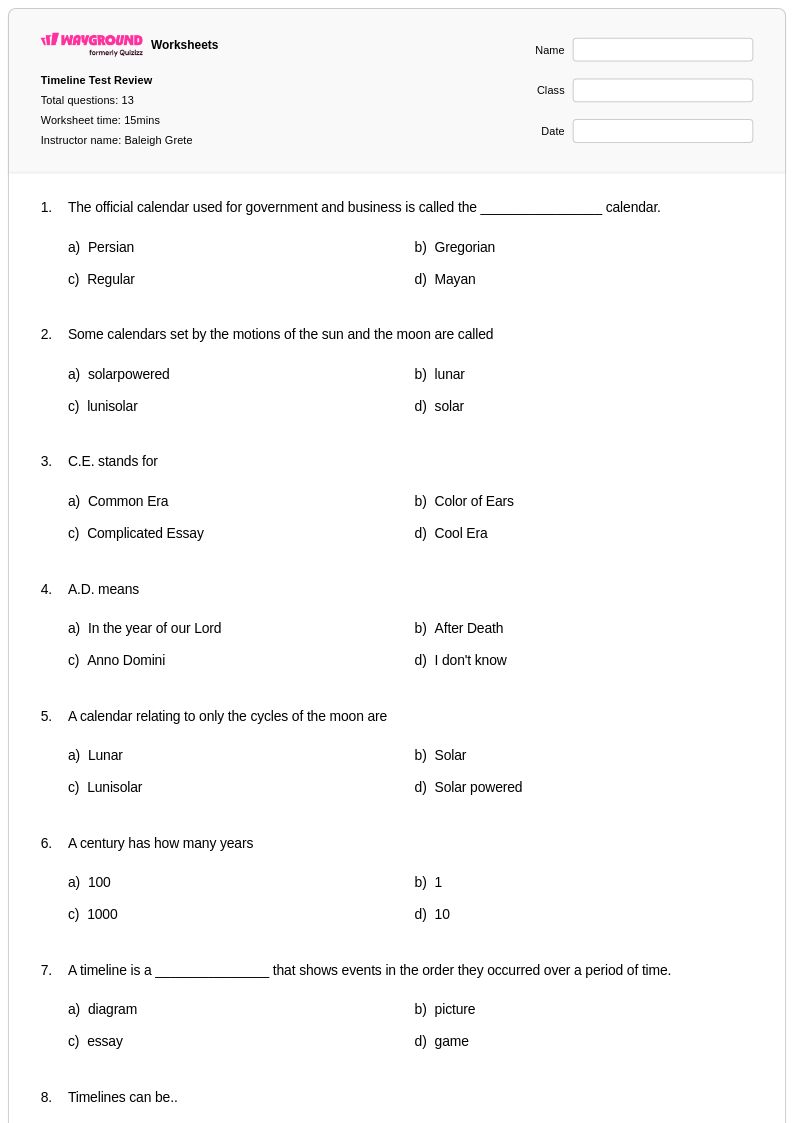
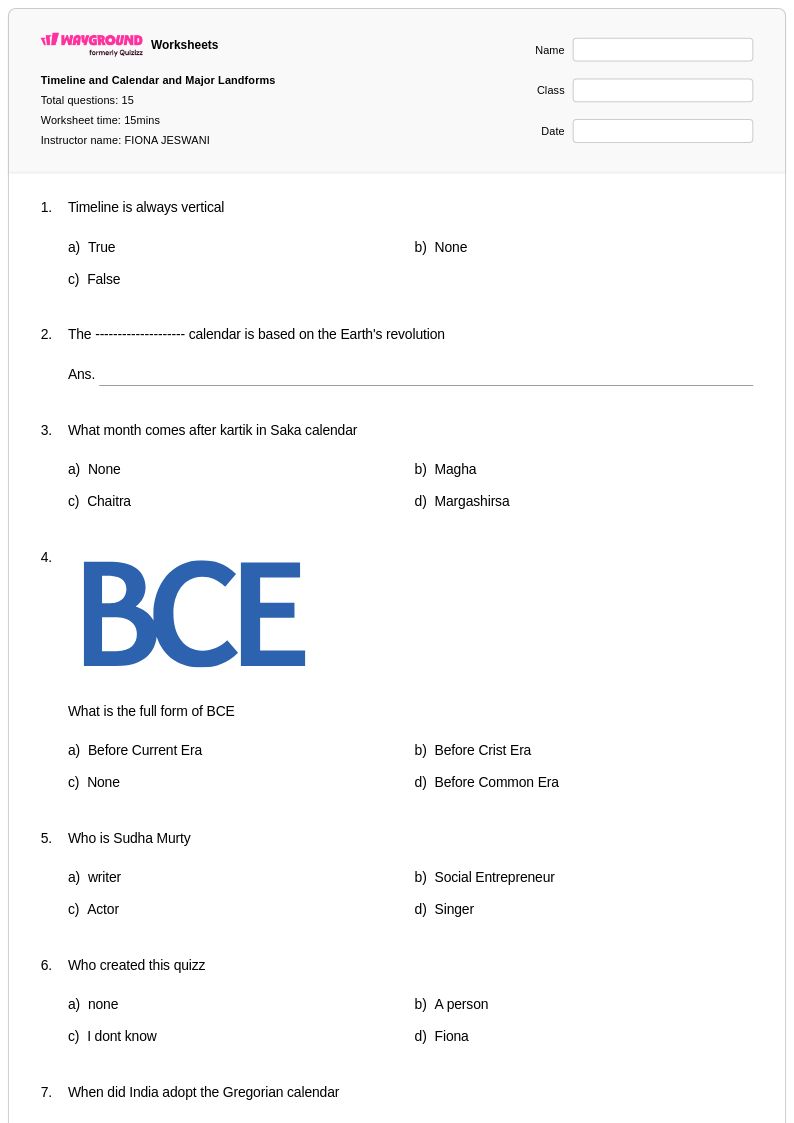
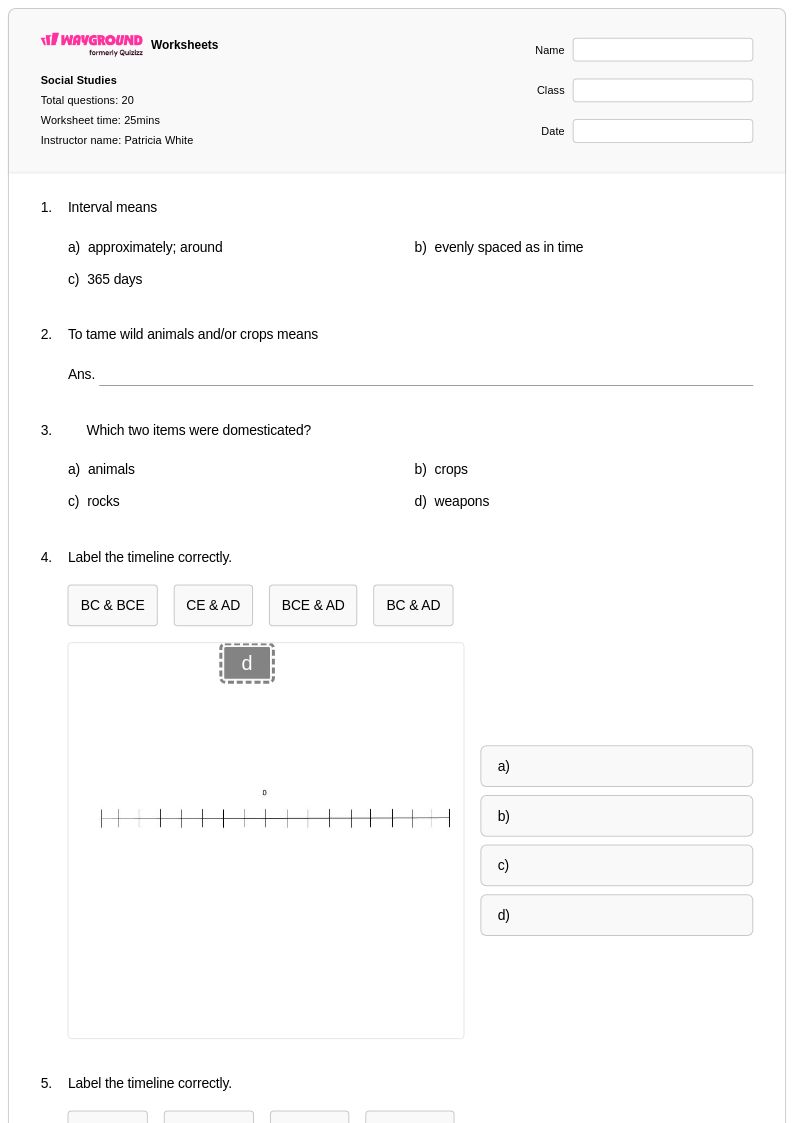
Explore Wayground's free liturgical calendar worksheets and printables that help students understand religious traditions, seasonal celebrations, and cultural practices within communities through engaging practice problems and comprehensive answer keys.
Liturgical Calendar worksheets available through Wayground (formerly Quizizz) provide students with comprehensive resources to explore the sacred rhythms and seasonal celebrations that structure religious communities throughout the year. These expertly designed materials guide learners through the major feast days, holy seasons, and ceremonial observances that define various faith traditions, helping students understand how liturgical cycles connect communities to their spiritual heritage and cultural identity. The worksheets strengthen critical thinking skills as students analyze the historical origins of religious celebrations, compare liturgical practices across different denominations, and examine how sacred calendars influence community life and personal devotion. Each resource includes detailed answer keys and practice problems that reinforce learning objectives, while free printables in convenient pdf format make these valuable materials accessible for immediate classroom implementation.
Wayground (formerly Quizizz) empowers educators with an extensive collection of millions of teacher-created liturgical calendar resources that support diverse instructional needs and learning environments. The platform's robust search and filtering capabilities enable teachers to quickly locate materials aligned with specific curriculum standards and educational objectives, while differentiation tools allow for seamless customization to accommodate varying skill levels and learning styles. These comprehensive worksheet collections are available in both printable and digital formats, including downloadable pdf versions that facilitate flexible lesson planning and instructional delivery. Teachers can effectively utilize these resources for targeted skill practice, remediation support for struggling learners, and enrichment opportunities for advanced students, ensuring that all learners develop a nuanced understanding of how liturgical traditions shape community cultures and religious observance throughout the academic year.
FAQs
How do I teach the liturgical calendar to students?
Teaching the liturgical calendar works best when students can see its structure as a repeating cycle rather than a list of isolated dates. Start by introducing the major seasons (such as Advent, Lent, or Ordinary Time, depending on the tradition) and explain how each season connects to a broader theological narrative. Visual timelines and comparative charts help students see how the year is organized and how different faith communities observe similar cycles in distinct ways. Anchoring lessons in primary questions like 'Why does this season exist?' and 'What does the community do differently during it?' builds genuine comprehension rather than surface-level memorization.
What exercises help students practice identifying liturgical seasons and feast days?
Effective practice exercises include matching feast days to their correct seasons, ordering liturgical events chronologically, and comparing how two different denominations observe the same time of year. Fill-in-the-blank and short-answer problems push students to retrieve specific vocabulary like 'liturgical cycle,' 'solemnity,' or 'observance' in context. Worksheets that ask students to analyze how a community's practices change across seasons encourage deeper engagement than simple recall tasks.
What common misconceptions do students have about the liturgical calendar?
A frequent misconception is that the liturgical calendar is the same across all Christian denominations or all religious traditions, when in fact significant differences exist in how seasons are named, dated, and observed. Students also often conflate the liturgical year with the civic calendar year, not realizing that many liturgical cycles begin at different points, such as the First Sunday of Advent. Another common error is treating feast days as purely historical commemorations rather than as living practices that continue to shape community identity and worship today.
How can I use liturgical calendar worksheets to support students from different religious backgrounds?
Liturgical calendar worksheets can be framed as comparative cultural studies rather than instruction in a single tradition, which makes them accessible and respectful for students from diverse backgrounds. Prompts that ask students to examine how sacred calendars function across traditions, rather than affirming one tradition's practices, create an academically inclusive environment. On Wayground, teachers can apply Read Aloud accommodations for students who need audio support and adjust font sizes and themes using Reading Mode, ensuring all learners can access the content regardless of reading level or learning need.
How do I use Wayground's liturgical calendar worksheets in my classroom?
Wayground's liturgical calendar worksheets are available as printable PDFs for traditional classroom use and in digital formats for technology-integrated environments, including the option to host them as a live quiz on Wayground. Teachers can assign worksheets for independent practice, use them as discussion anchors for comparative religion units, or deploy them digitally for remote or hybrid learning. Each worksheet includes a complete answer key, so teachers can use them for both formative assessment and self-paced student review without additional preparation.