Free Printable Listening Comprehension Worksheets for Class 1
Class 1 listening comprehension printables and free worksheets from Wayground help young students develop essential auditory processing skills through engaging practice problems with complete answer keys in PDF format.
Explore printable Listening Comprehension worksheets for Class 1
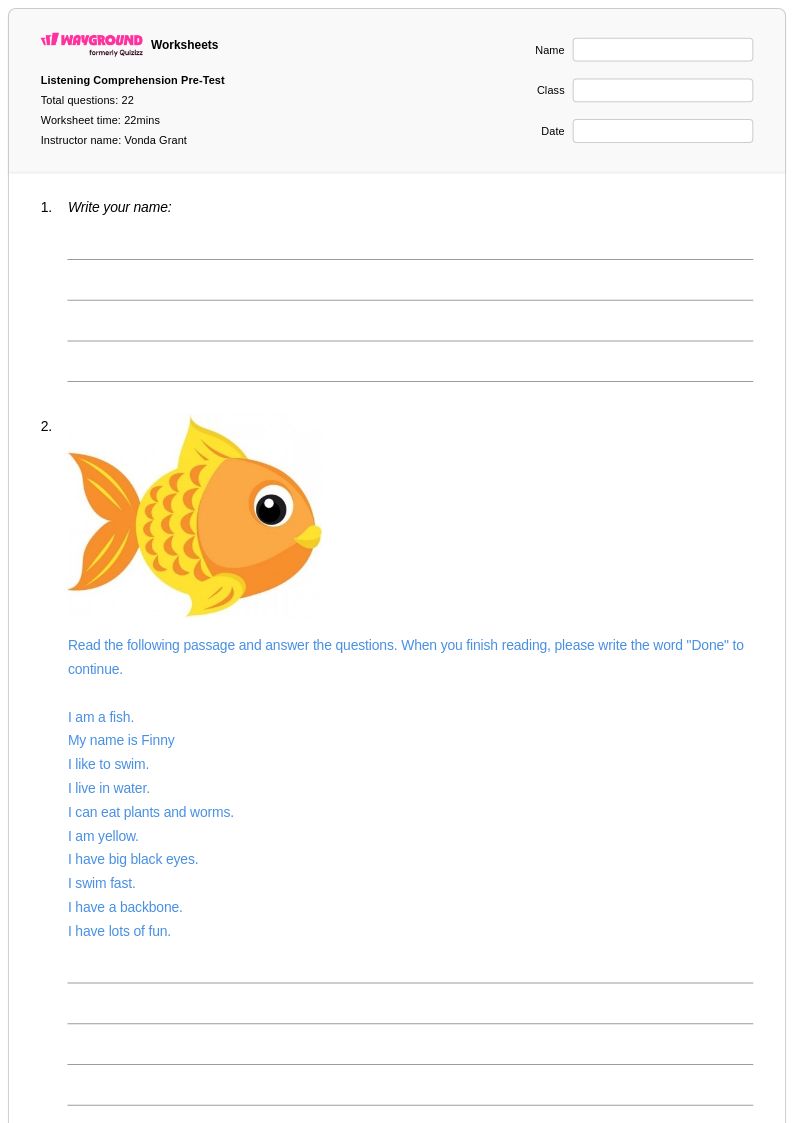
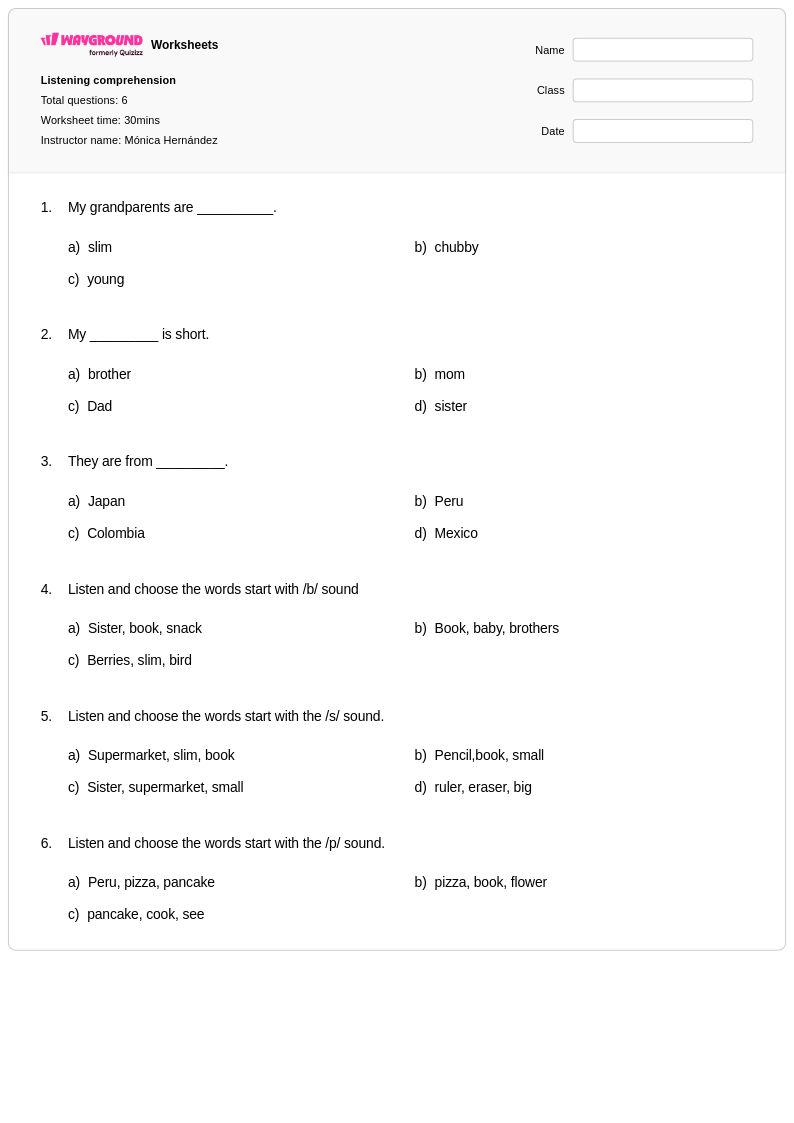
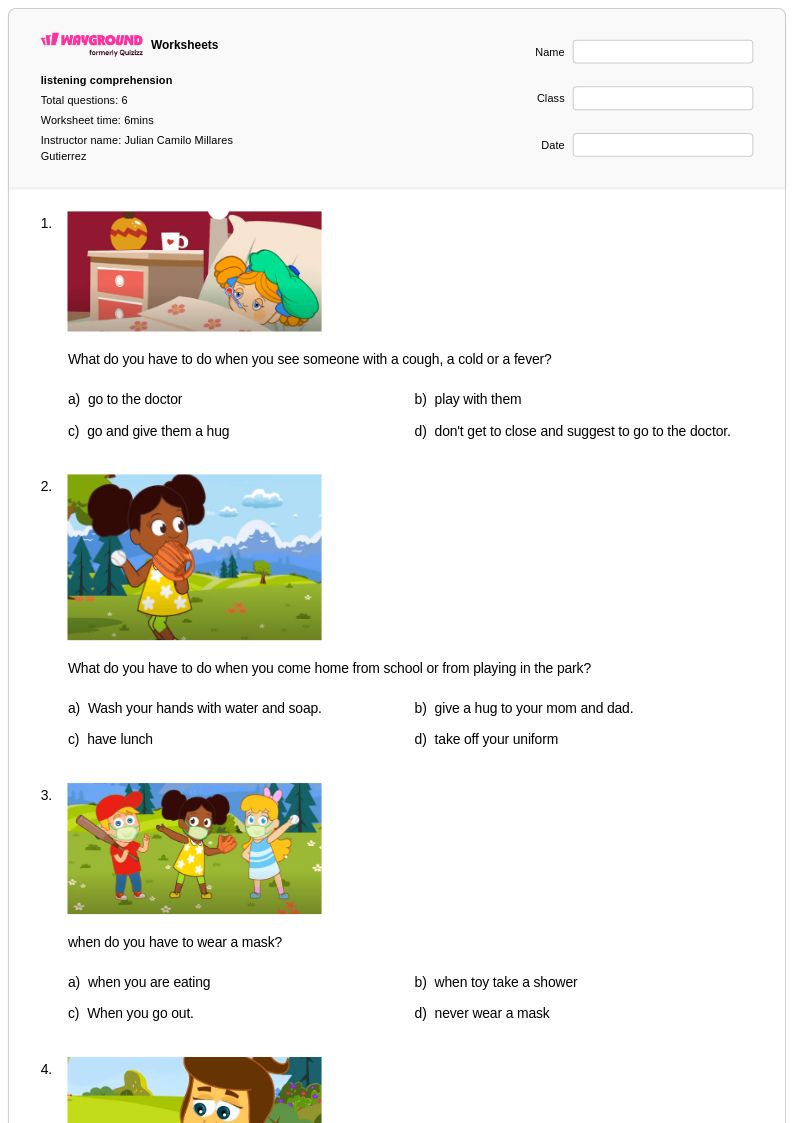
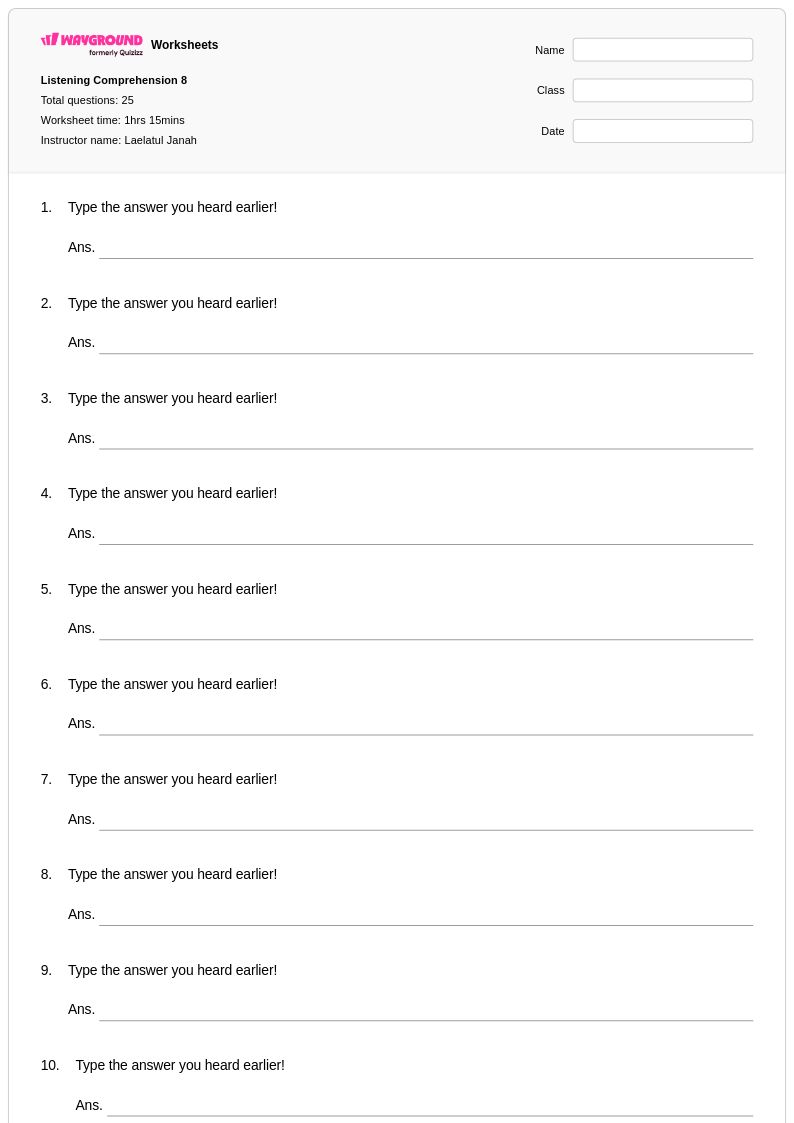
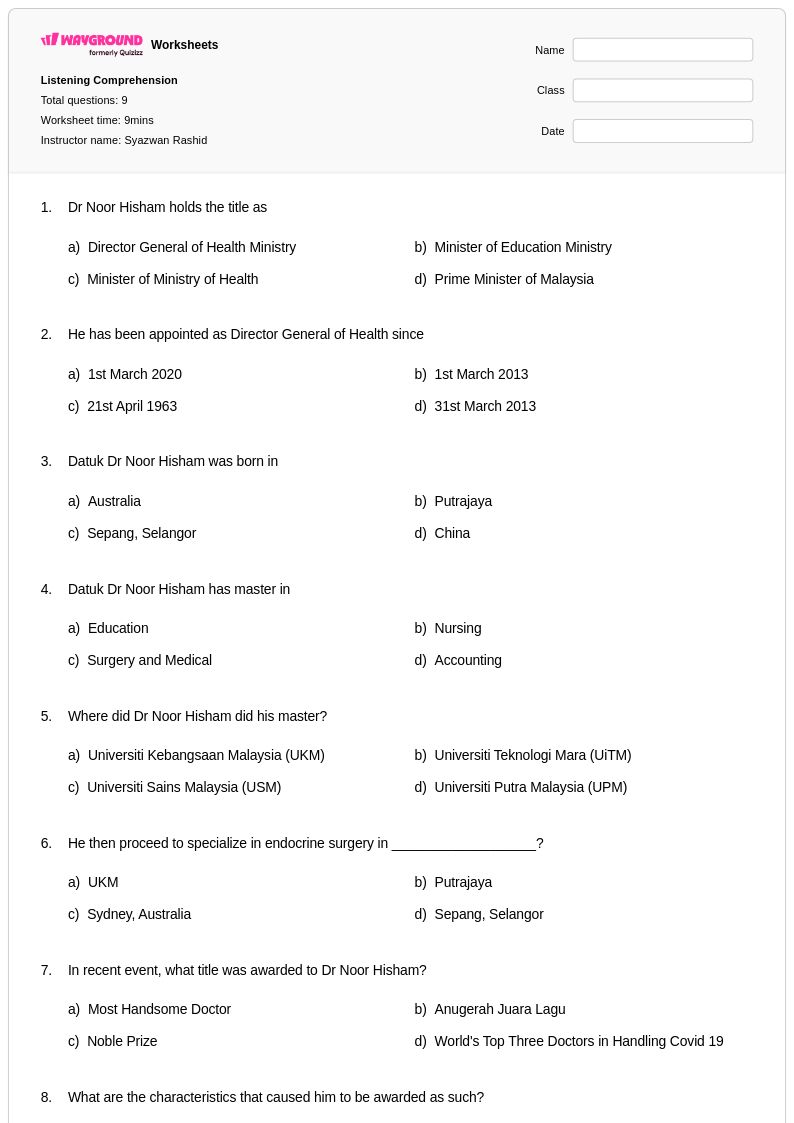
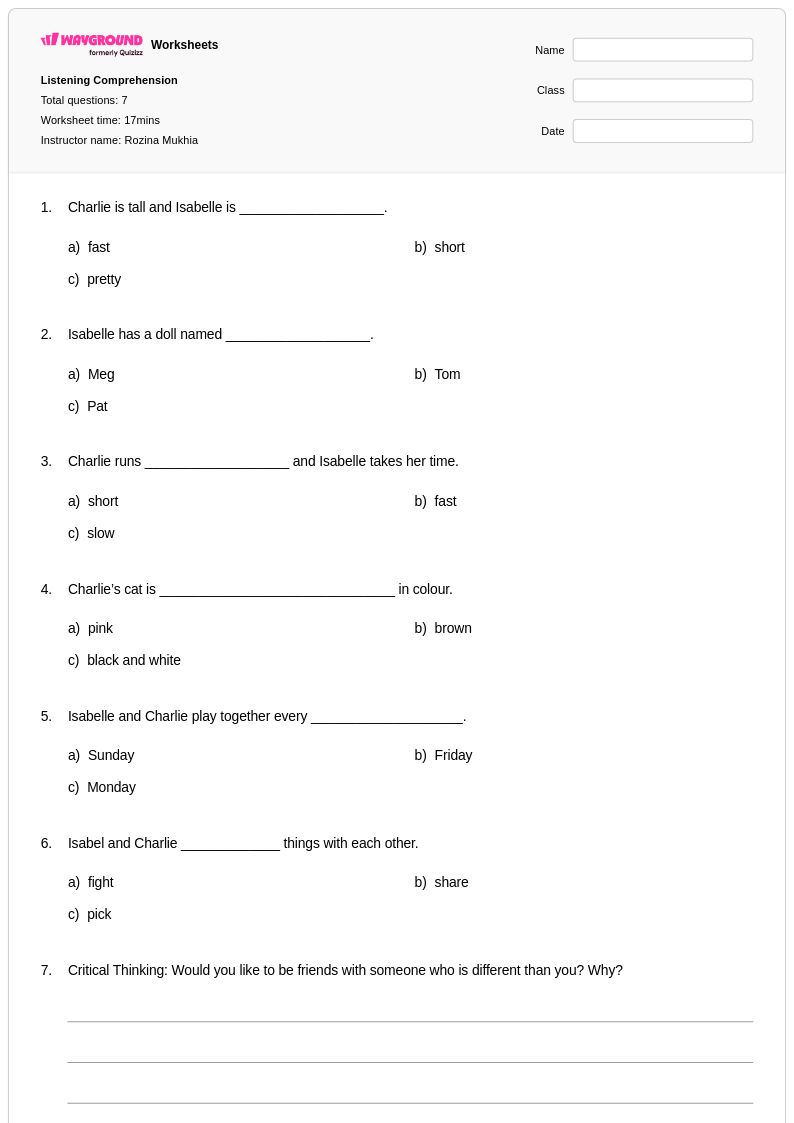
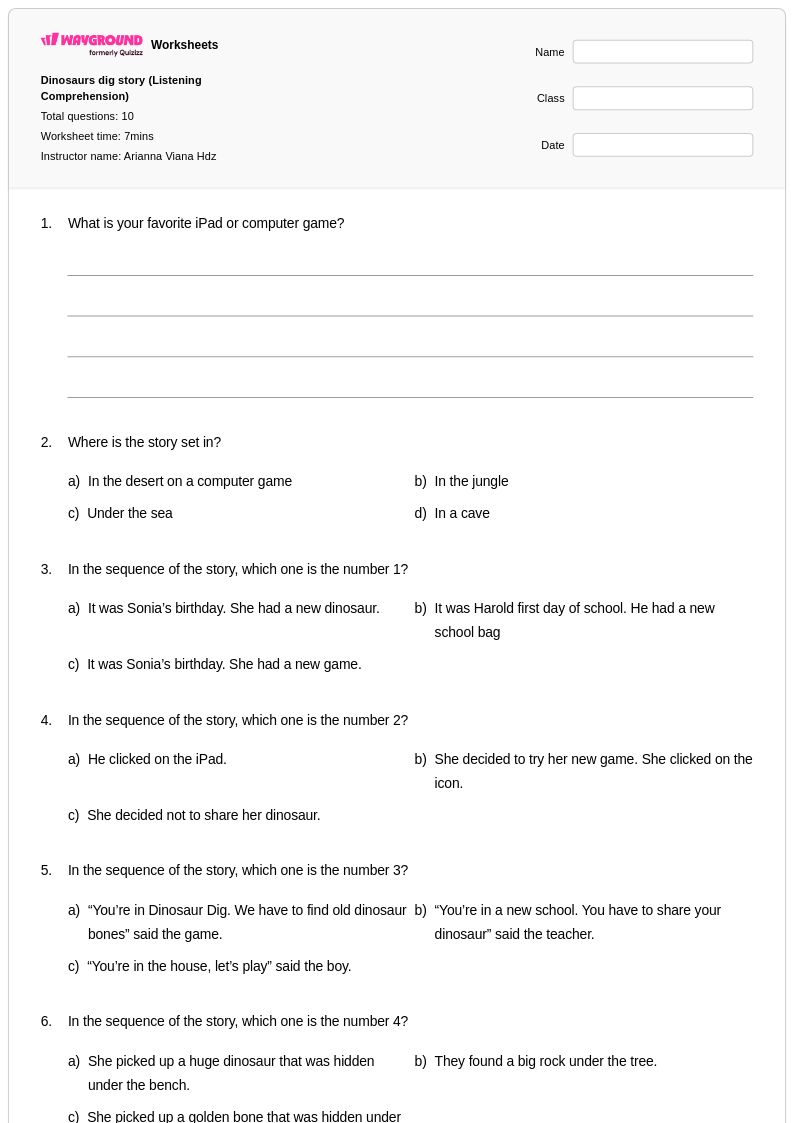
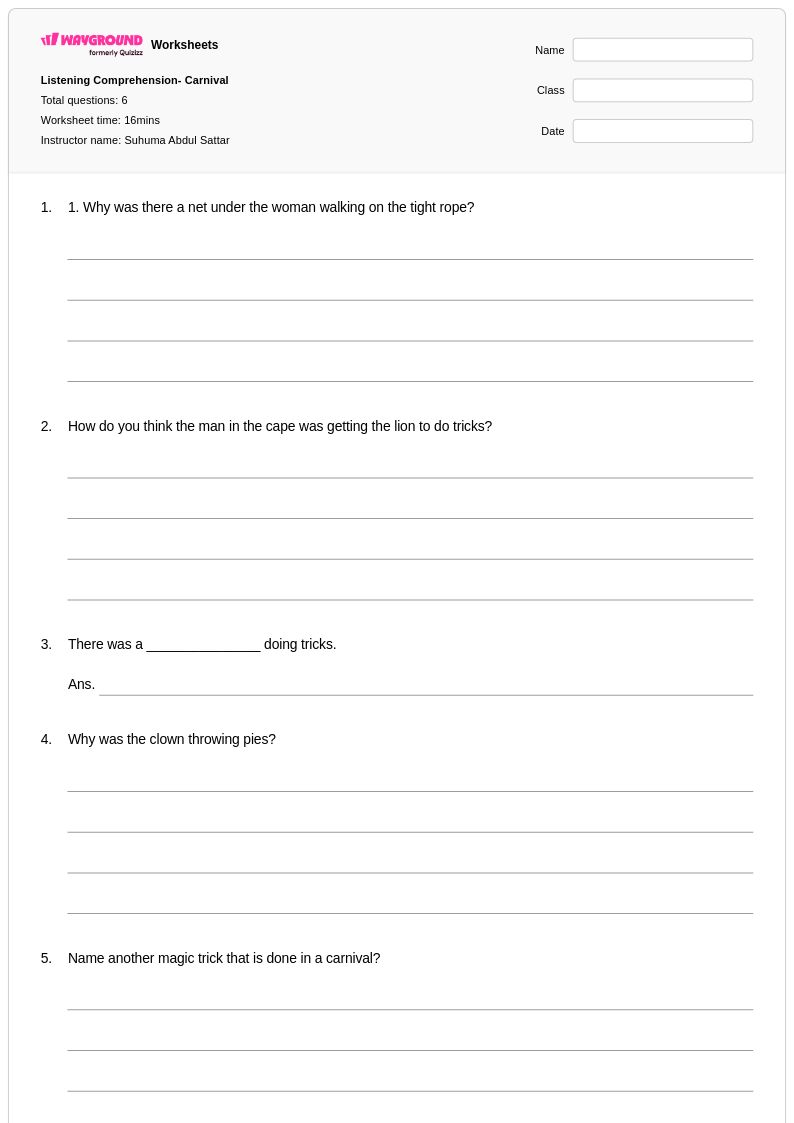
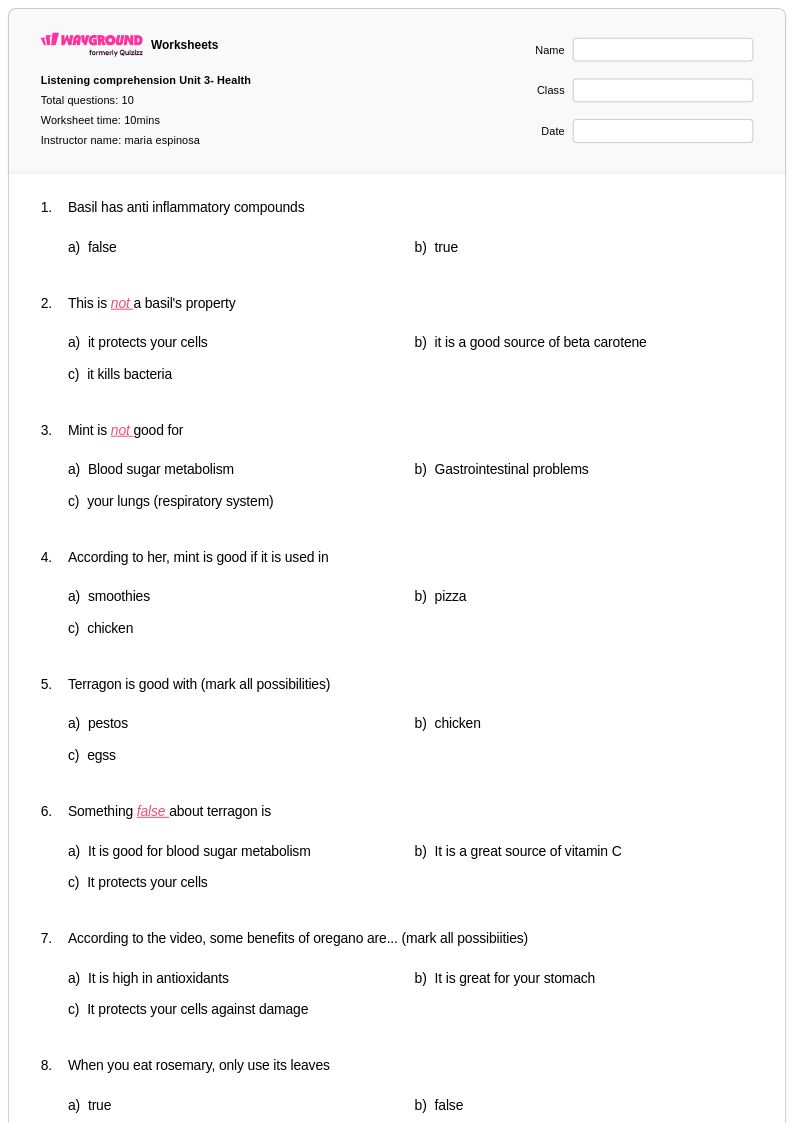
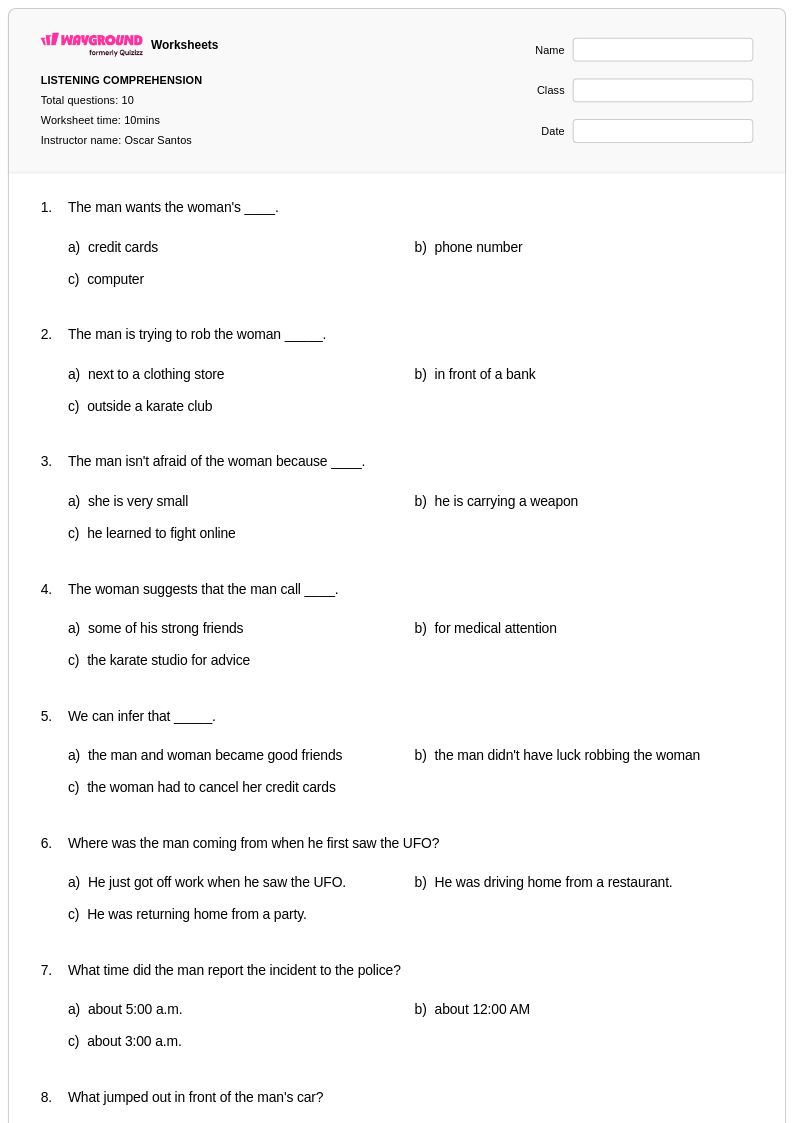
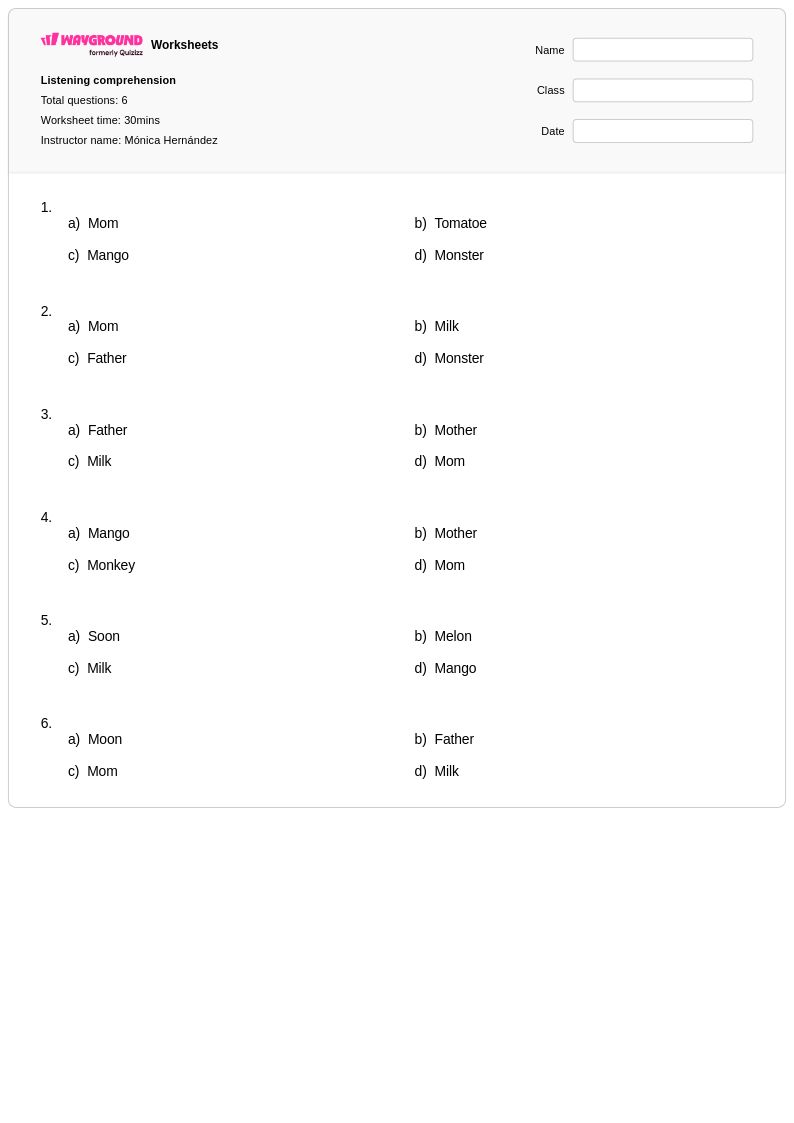
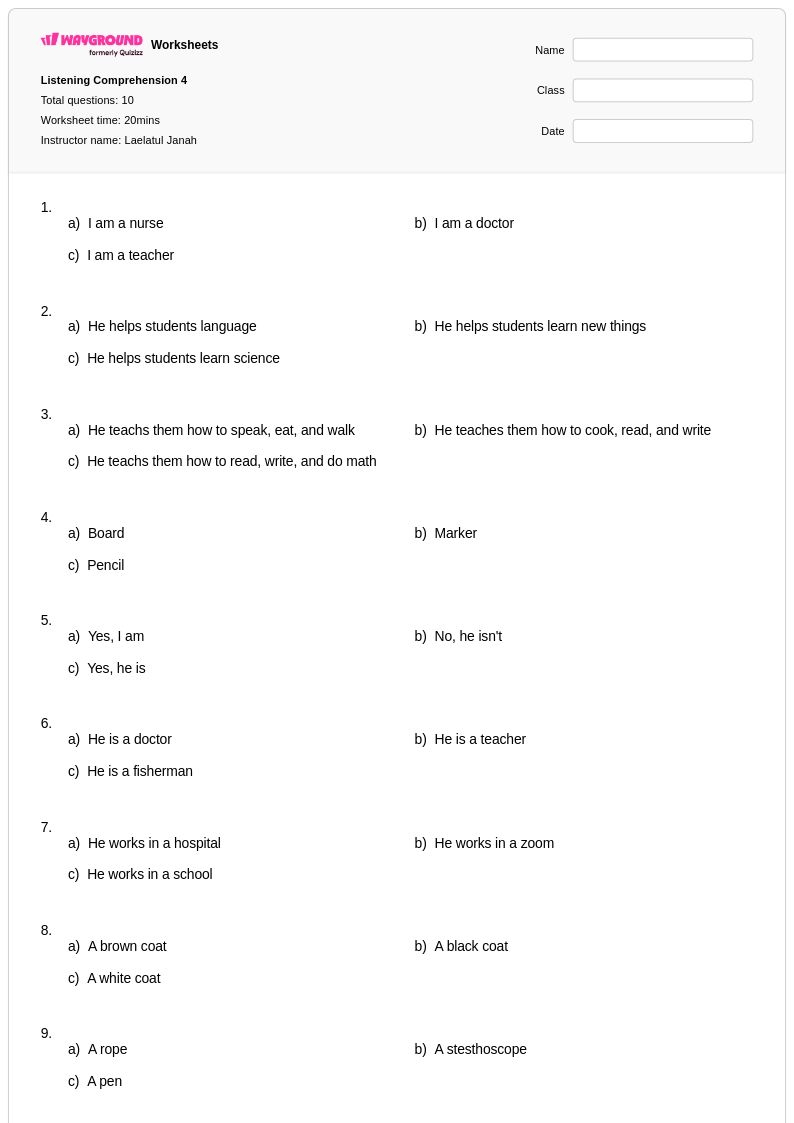
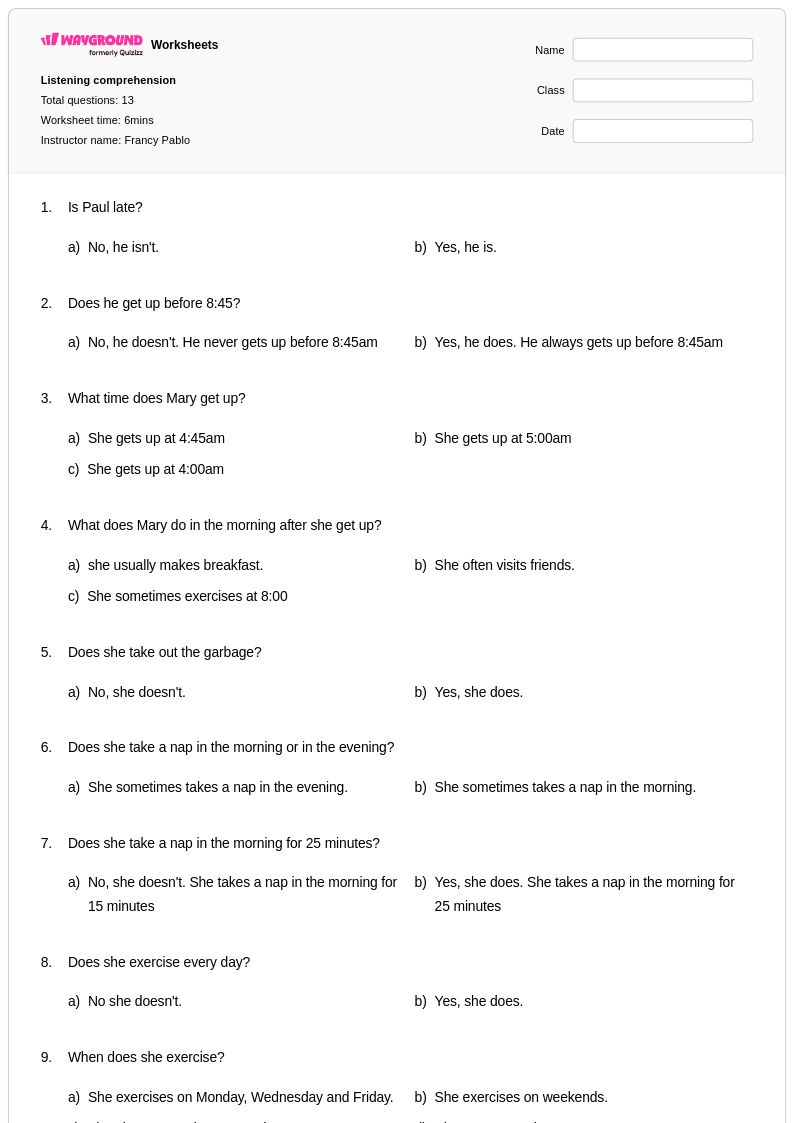
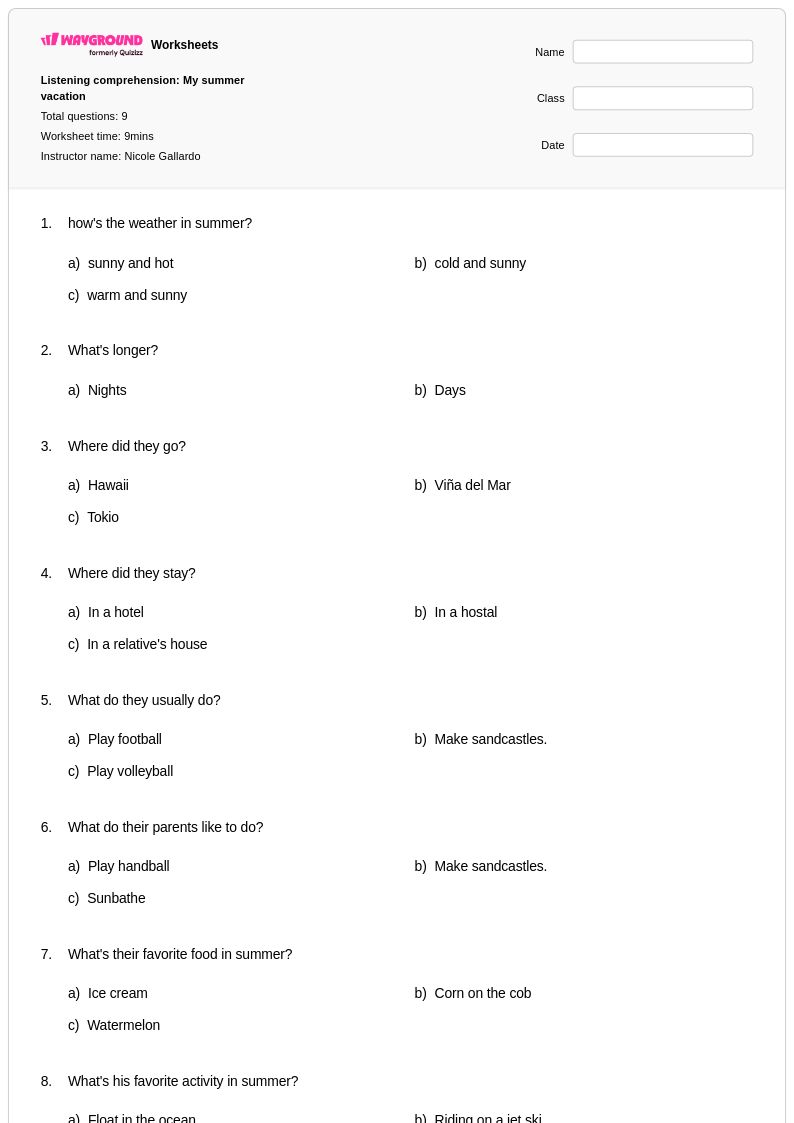
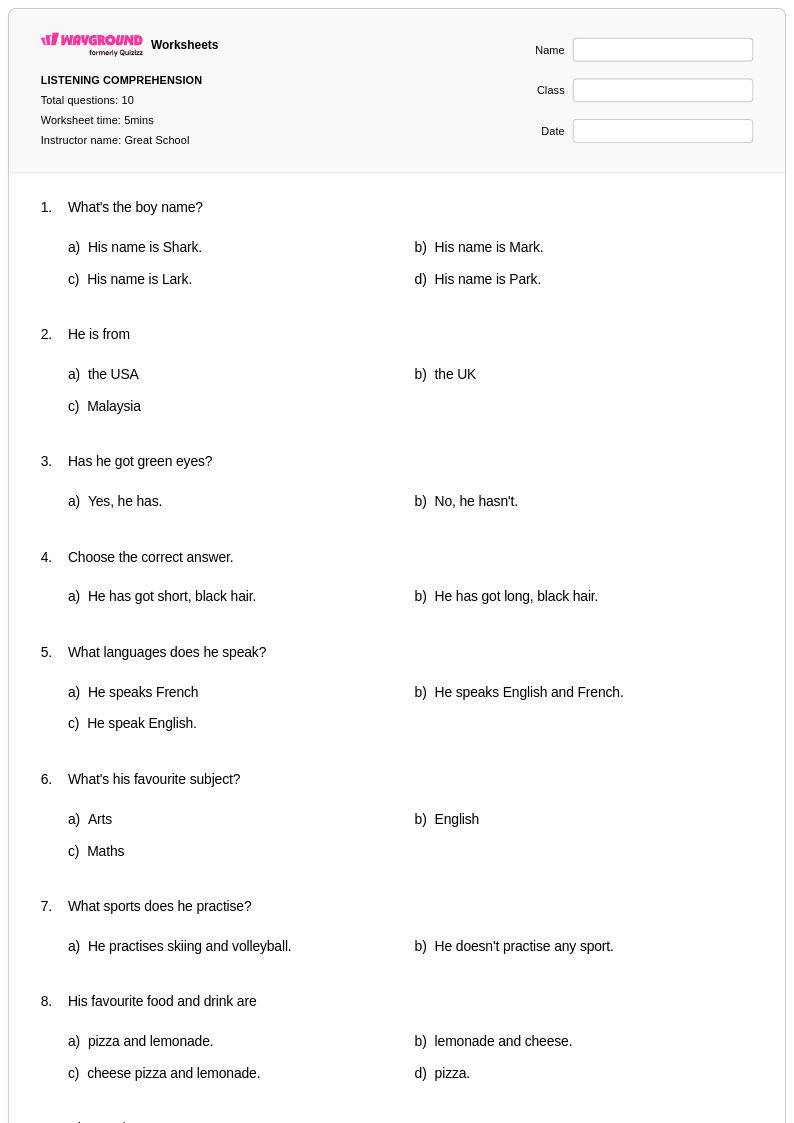
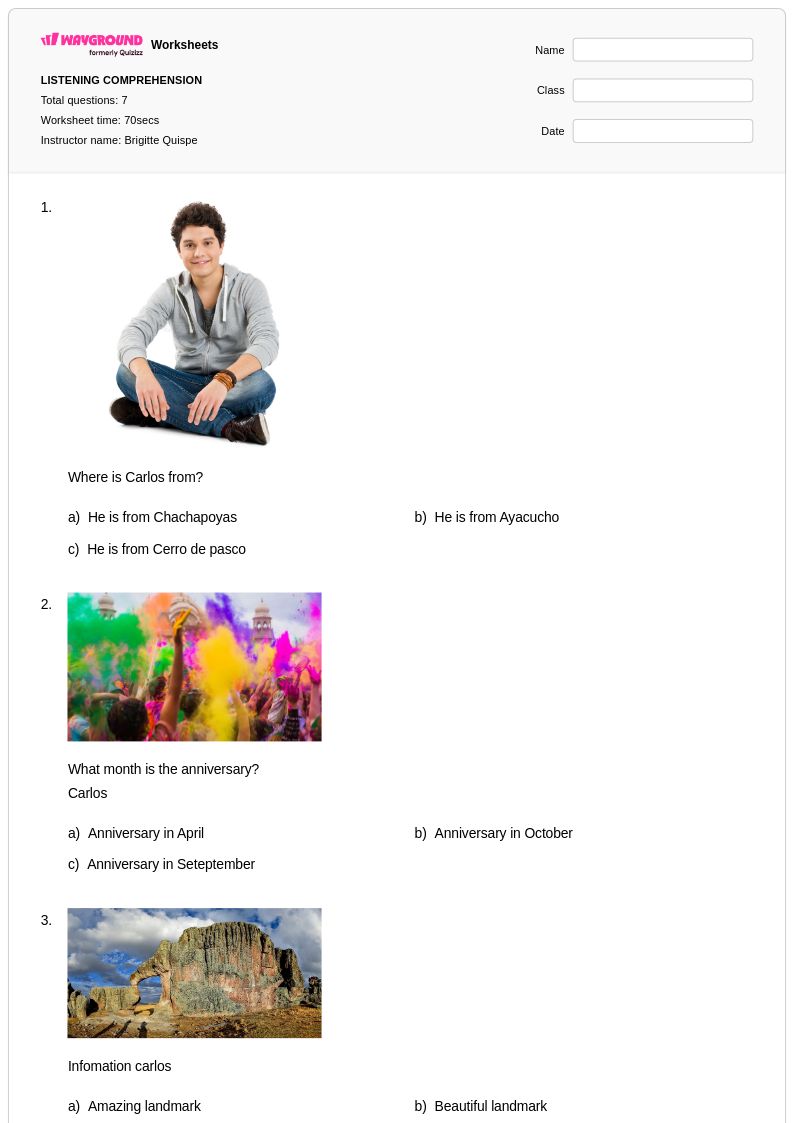
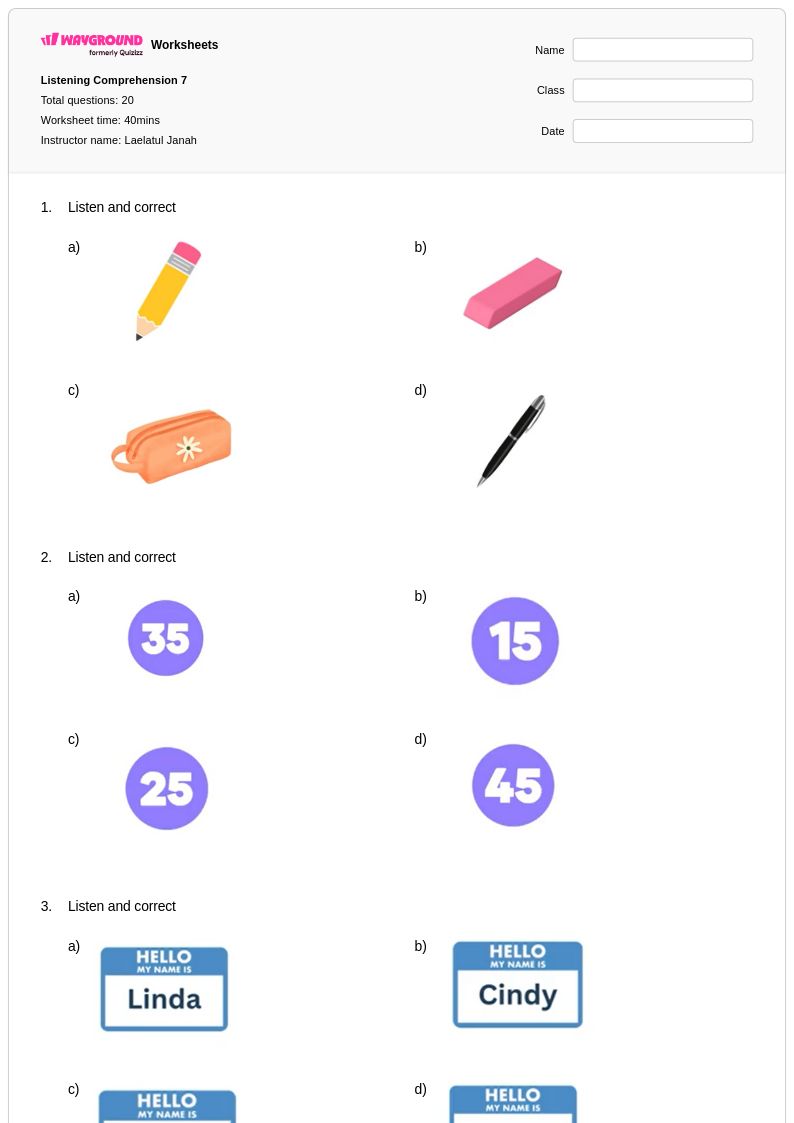
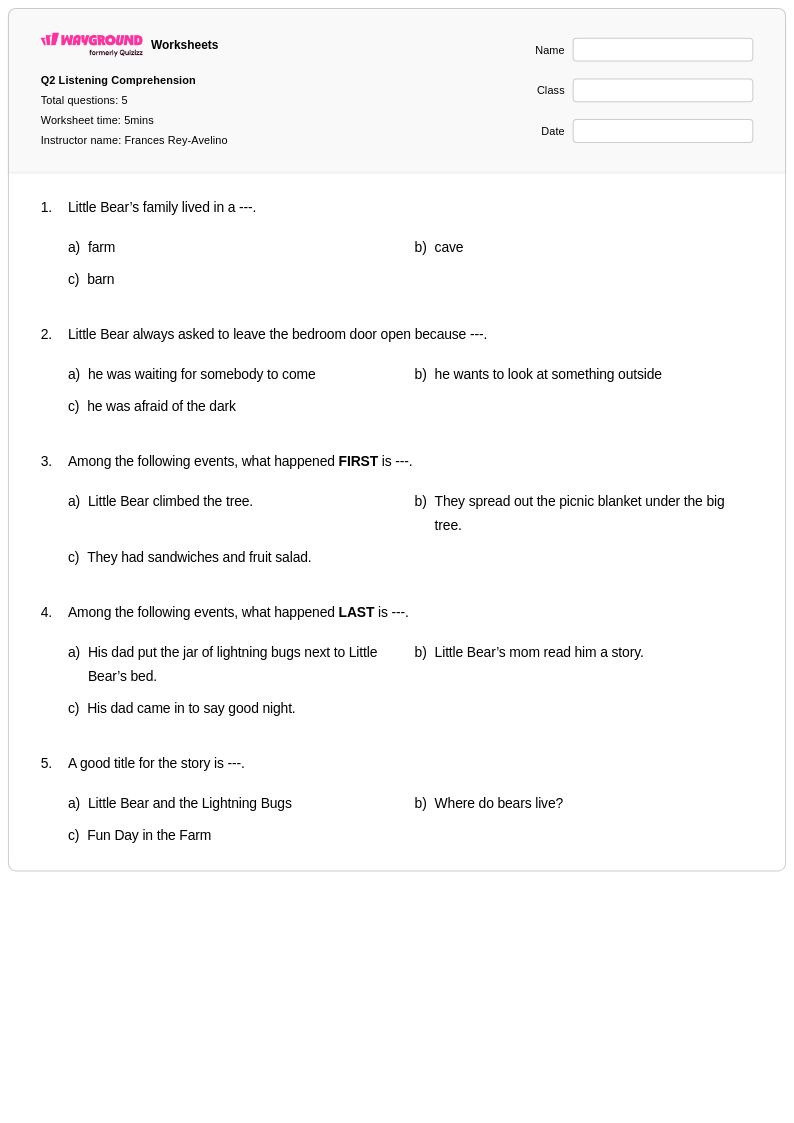
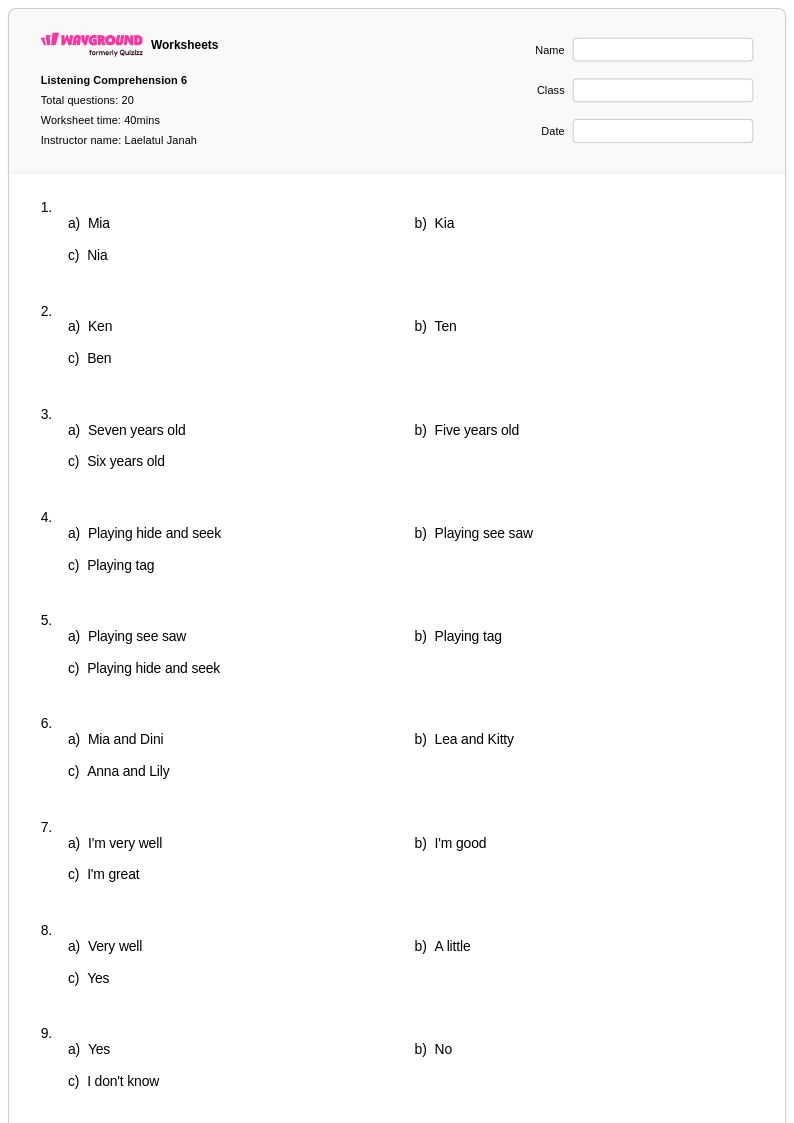
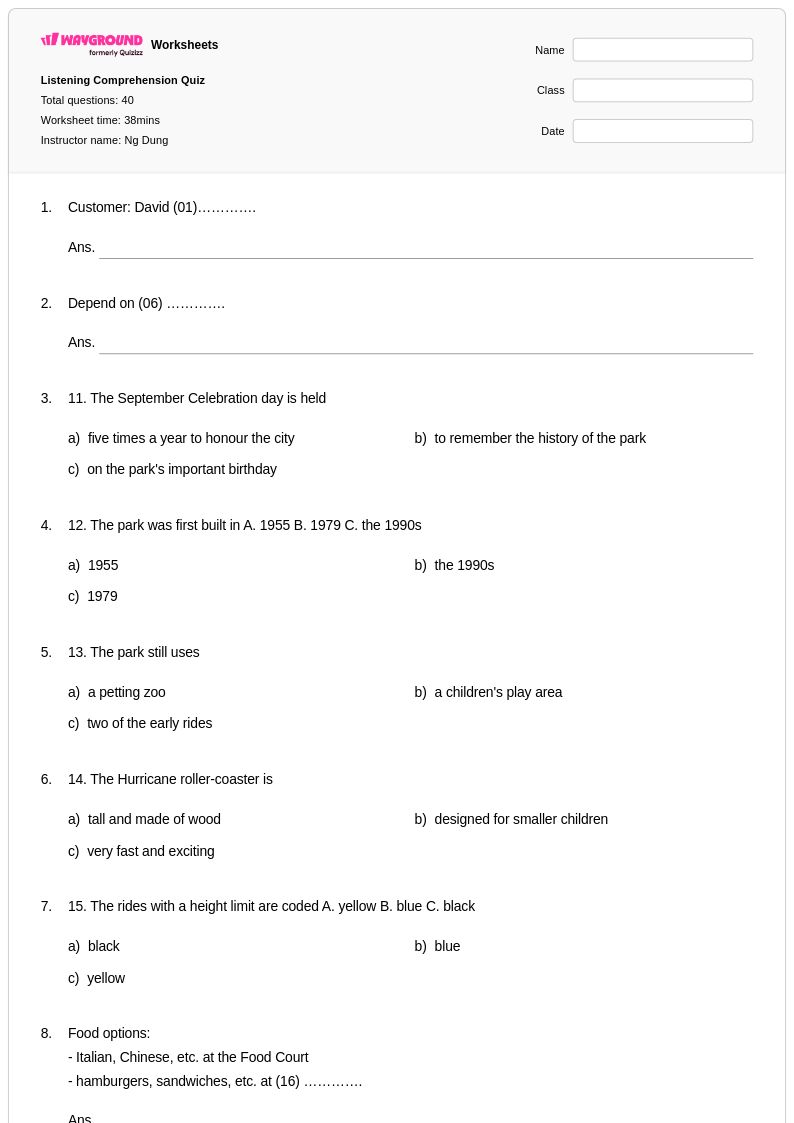
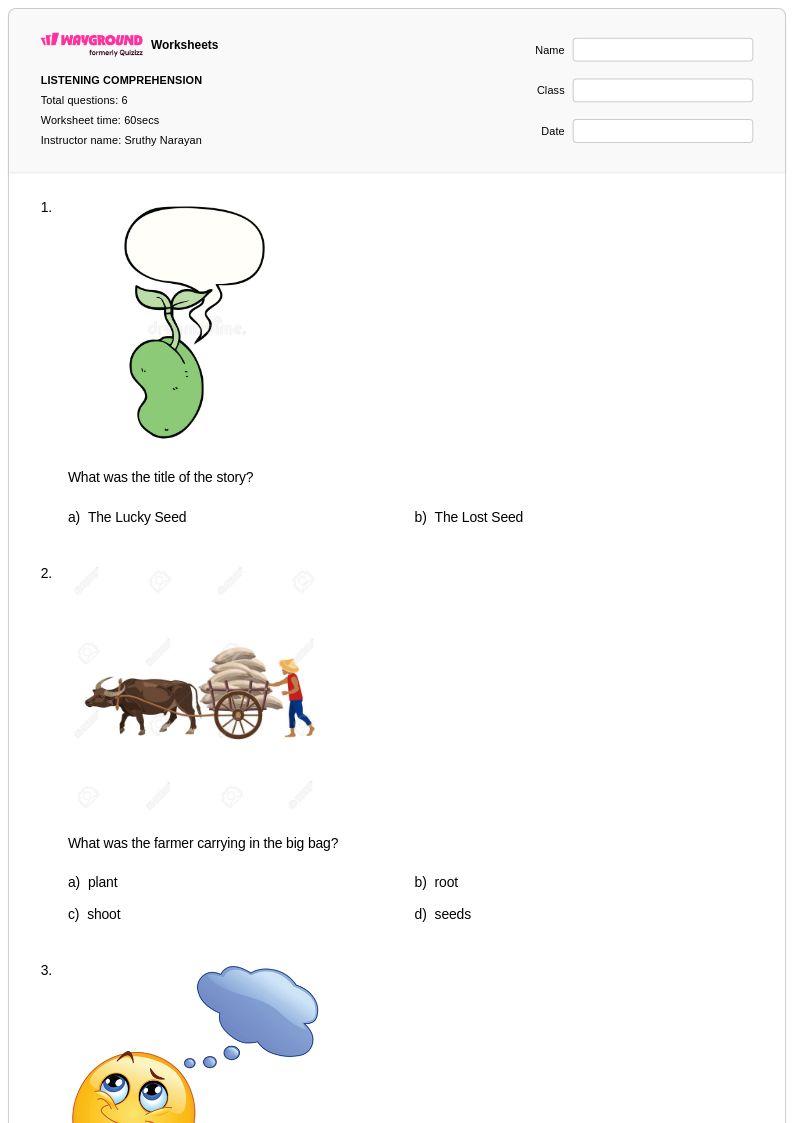
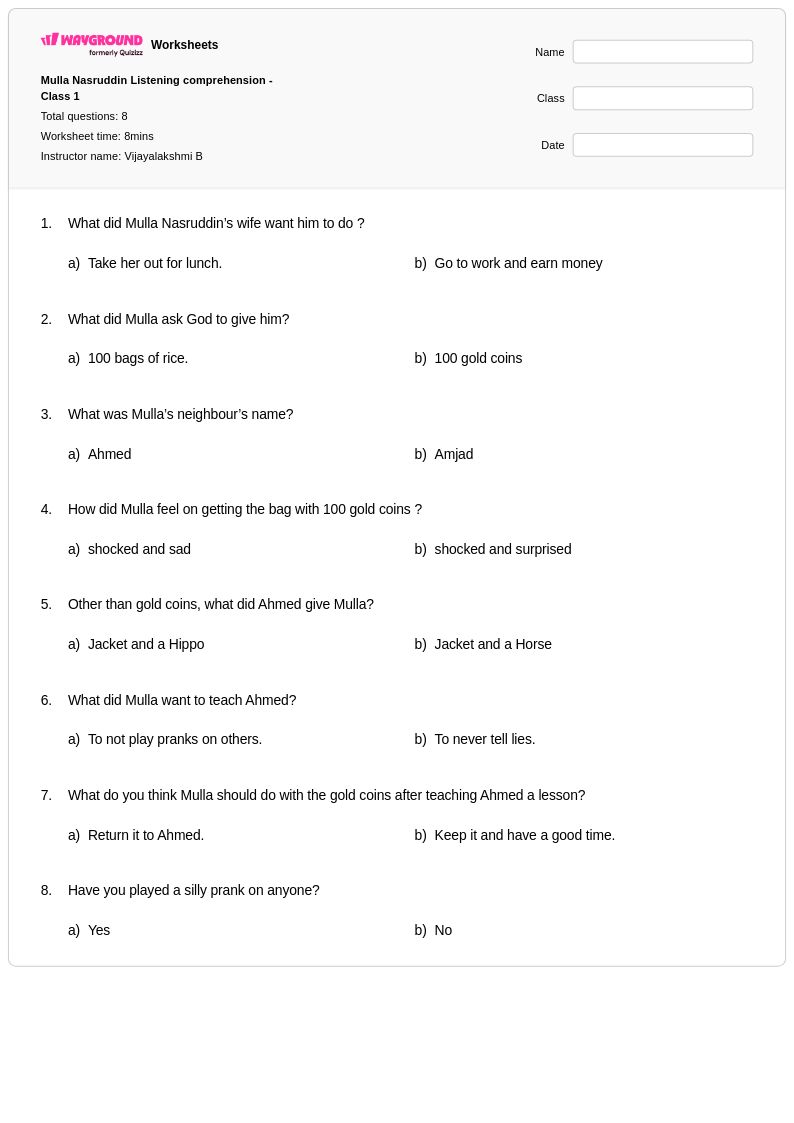
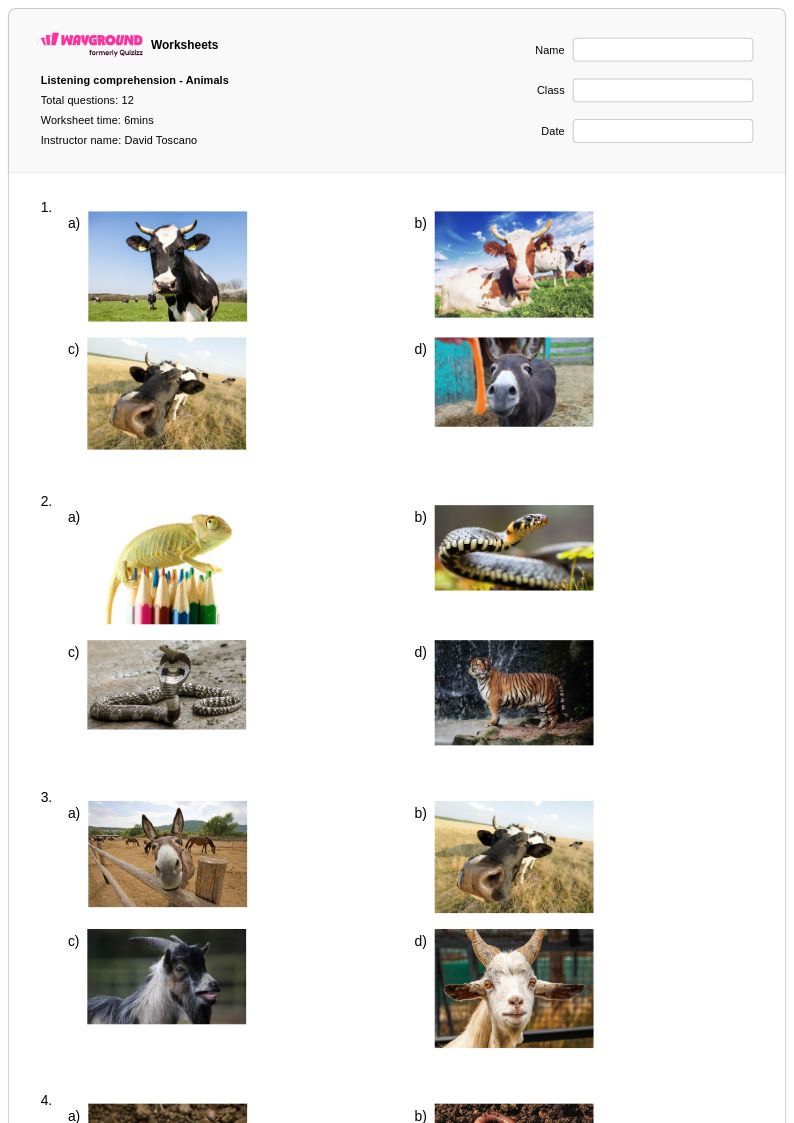
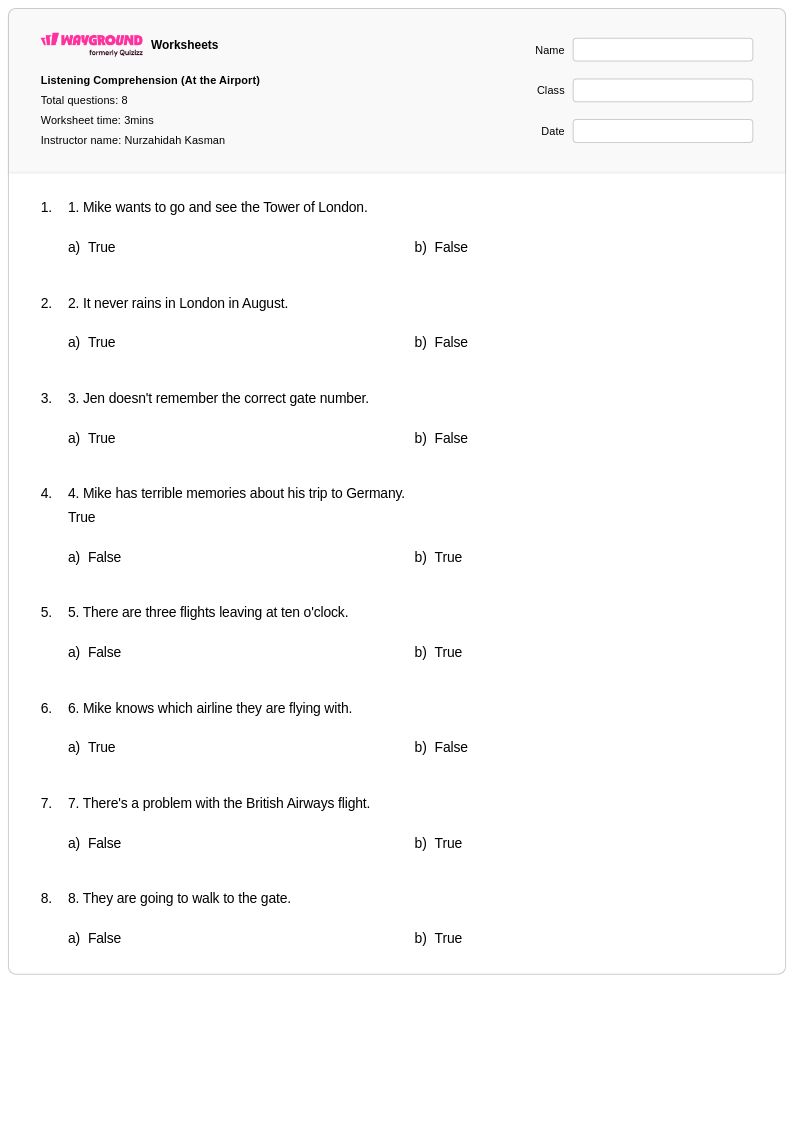
Class 1 listening comprehension worksheets available through Wayground (formerly Quizizz) provide young learners with essential foundational skills for processing and understanding spoken language. These carefully designed printables focus on developing critical pre-reading abilities such as following oral directions, identifying key details in stories read aloud, sequencing events from audio narratives, and making predictions based on verbal cues. Each worksheet comes with a comprehensive answer key to support accurate assessment and includes engaging practice problems that encourage active listening through age-appropriate activities like picture matching, simple drawing responses, and basic recall questions. The free pdf format ensures easy access for educators seeking to strengthen their students' auditory processing skills, which serve as crucial building blocks for future reading comprehension success.
Wayground's extensive collection supports teachers with millions of educator-created listening comprehension resources specifically tailored for Class 1 learners. The platform's robust search and filtering capabilities allow instructors to quickly locate materials aligned with curriculum standards and individual student needs, while built-in differentiation tools enable seamless customization for diverse learning levels within the classroom. Teachers can access these resources in both printable pdf format for traditional paper-based instruction and digital formats for technology-integrated lessons, providing maximum flexibility for lesson planning and implementation. This comprehensive approach facilitates targeted remediation for struggling listeners, enrichment opportunities for advanced students, and consistent skill practice that helps educators track progress in developing these fundamental auditory comprehension abilities throughout the academic year.
FAQs
How do I teach listening comprehension in the classroom?
Effective listening comprehension instruction begins with explicit teaching of active listening behaviors, such as maintaining focus, visualizing content, and noting key details while audio is playing. Teachers should model the process by thinking aloud during shared listening experiences, then gradually release responsibility to students through guided and independent practice. Pairing audio content with structured response tasks, such as identifying the main idea, supporting details, or the speaker's tone, helps students internalize strategies they can apply across academic contexts.
What exercises help students practice listening comprehension skills?
Structured practice exercises for listening comprehension include tasks that ask students to follow multi-step spoken directions, identify the main idea and supporting details from a passage read aloud, make inferences based on tone and context, and distinguish fact from opinion in oral presentations. Rotating across narrative storytelling, informational passages, and conversational dialogues builds the flexibility students need to comprehend listening content in varied real-world and academic contexts. Repeated exposure to structured questions after listening builds the habit of purposeful attention.
What are common mistakes students make with listening comprehension?
A frequent error is passive listening, where students hear words but fail to actively construct meaning, which becomes apparent when they cannot recall supporting details or sequence of events shortly after the audio ends. Students also tend to over-rely on the first detail they catch, missing the overall main idea or misinterpreting tone. Struggling readers are especially likely to confuse literal recall with inference, treating explicitly stated facts and implied meaning as interchangeable rather than as distinct comprehension skills.
How can I differentiate listening comprehension instruction for students at different levels?
Differentiation in listening comprehension can involve adjusting the complexity of audio content, the number of questions students respond to, or the scaffold provided during the task. On Wayground, teachers can apply student-level accommodations such as Read Aloud support, reduced answer choices to lower cognitive load for struggling learners, and extended time per question. These settings can be assigned to individual students without notifying the rest of the class, allowing differentiated support to run silently alongside standard instruction.
How do I use Wayground's listening comprehension worksheets in my classroom?
Wayground's listening comprehension worksheets are available as printable PDFs for traditional classroom use and in digital formats for technology-integrated environments, making them flexible enough for whole-class instruction, small group pull-outs, or independent centers. Teachers can also host the materials as an interactive quiz directly on Wayground, which allows for real-time student response and built-in answer key support. The structured format, with progressive practice problems and complete answer keys, makes these resources ready to use without additional preparation.
Why is listening comprehension important for reading development?
Listening comprehension is a foundational component of overall literacy because the cognitive processes involved, including inferencing, identifying main ideas, and interpreting context, directly transfer to reading comprehension. Research consistently shows that students who struggle with listening comprehension are at higher risk for reading difficulties, particularly as text complexity increases in upper elementary and middle school. Strengthening auditory processing skills in the early grades builds the interpretive framework students need to handle complex academic language in both spoken and written forms.