Free Printable Story Mapping Worksheets for Class 1
Class 1 story mapping worksheets and printables help young readers organize story elements through engaging practice problems, with free PDF downloads and answer keys available.
Explore printable Story Mapping worksheets for Class 1
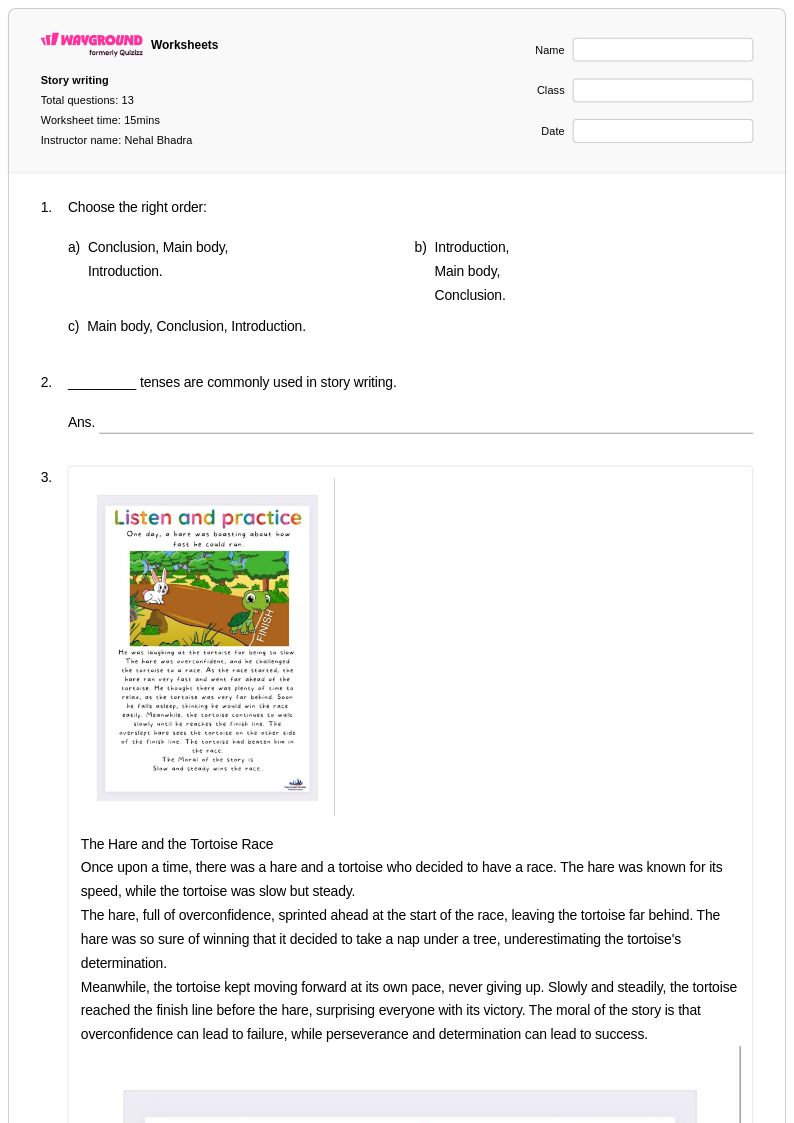
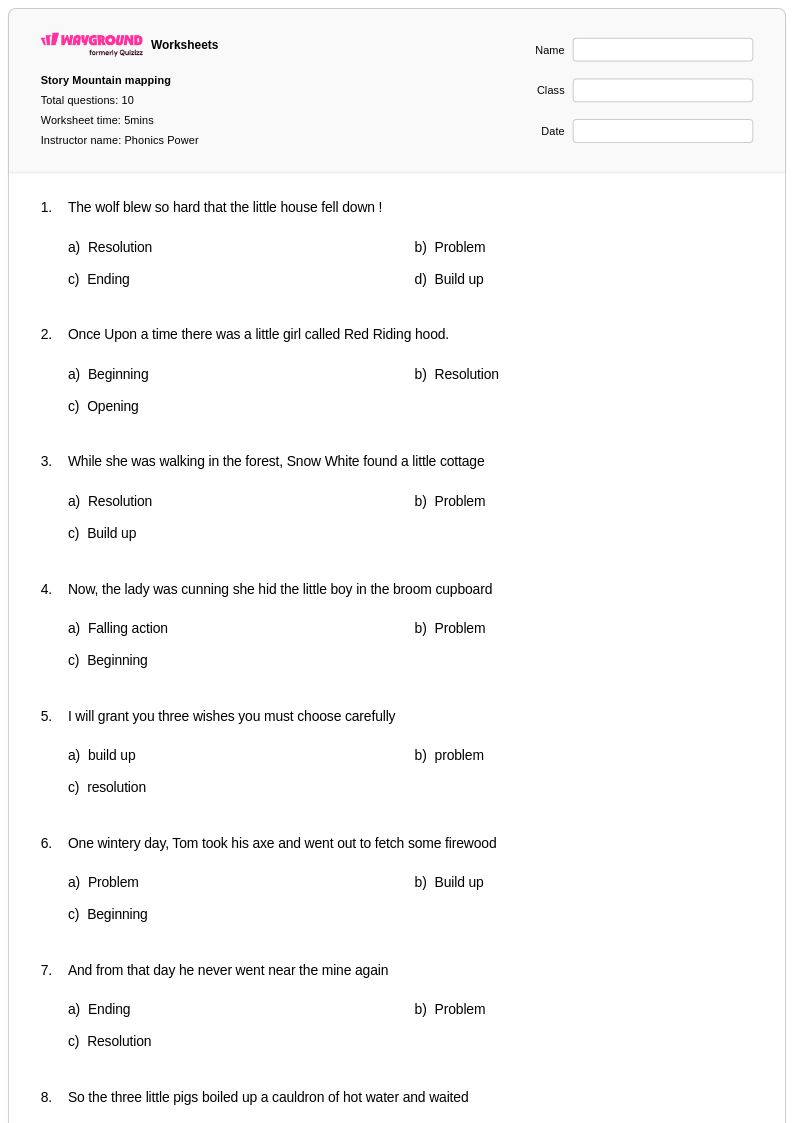
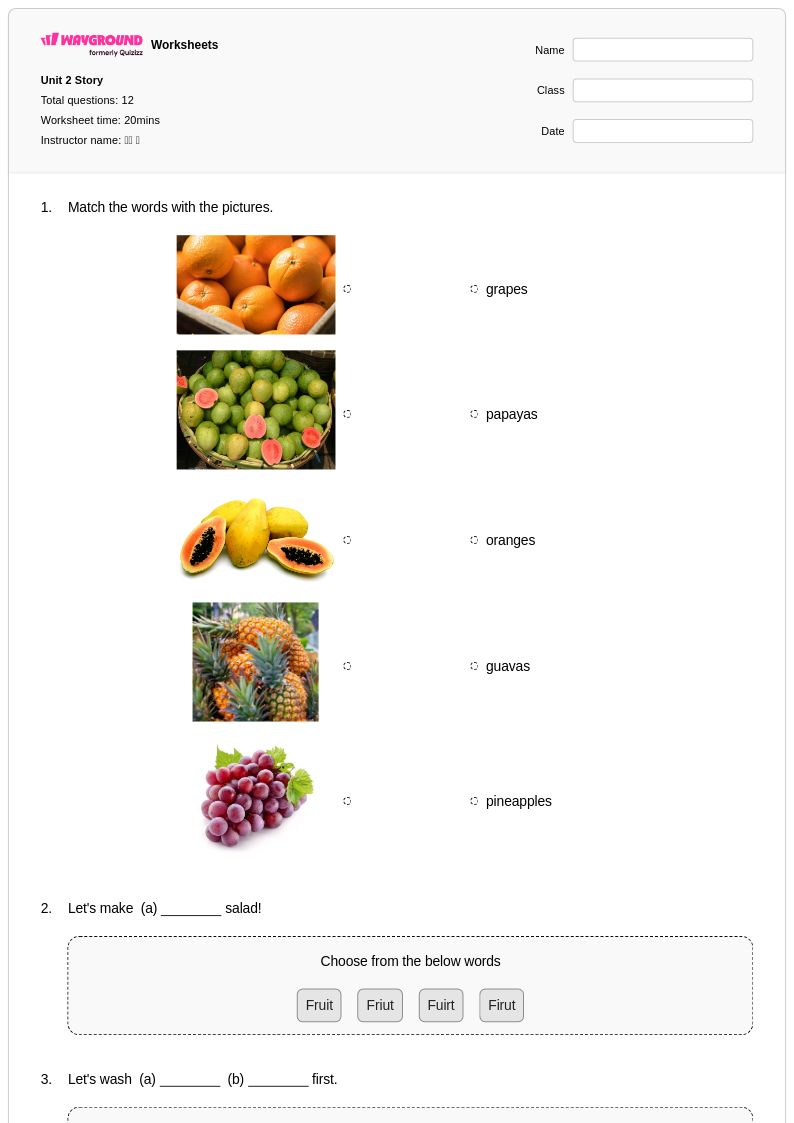
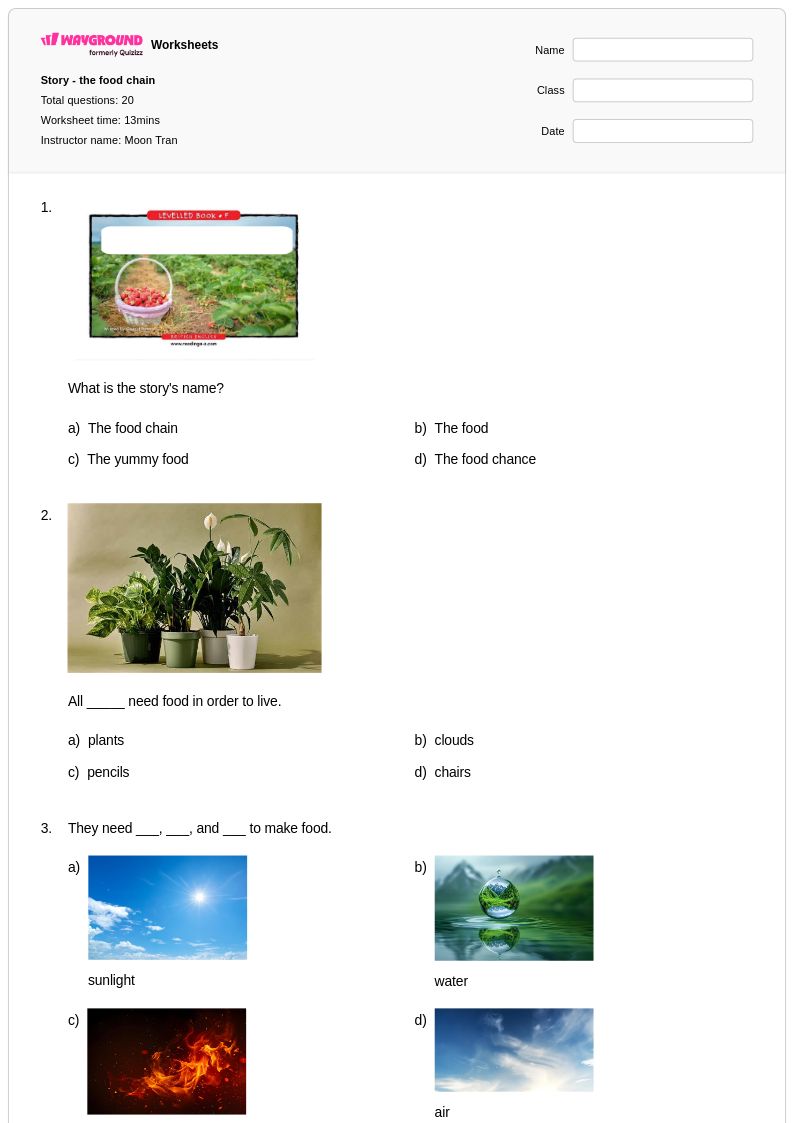
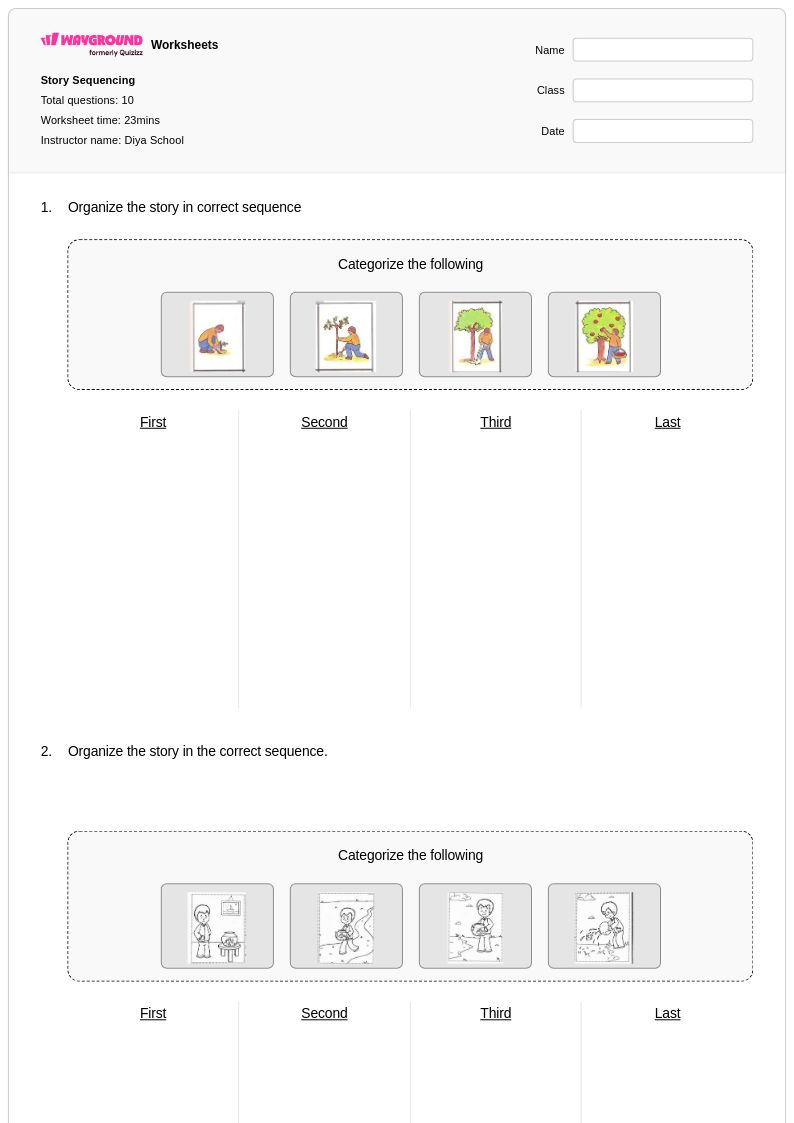
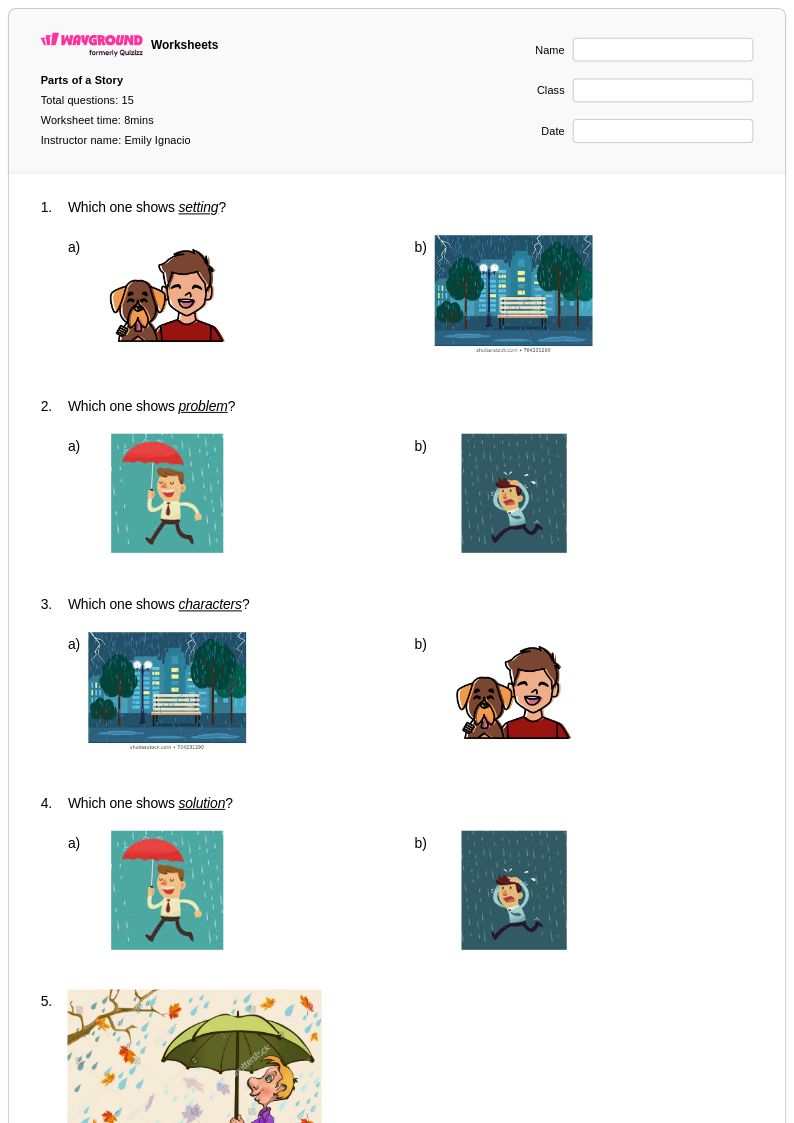
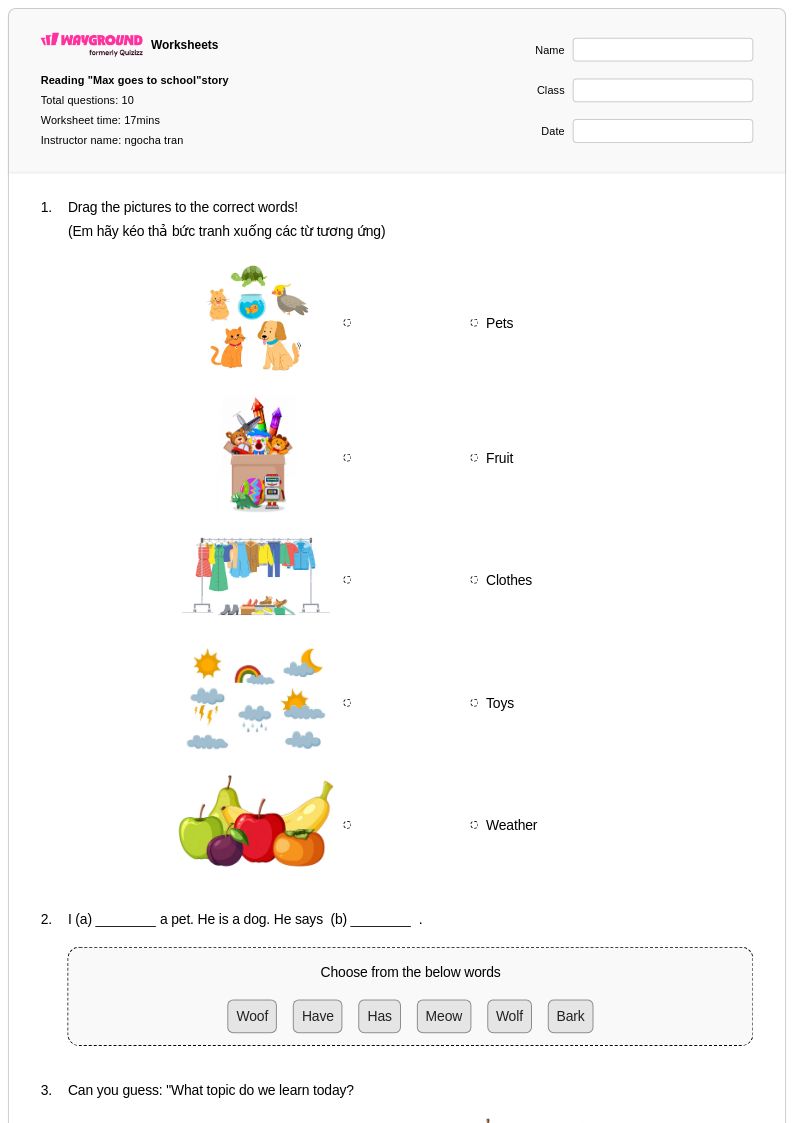
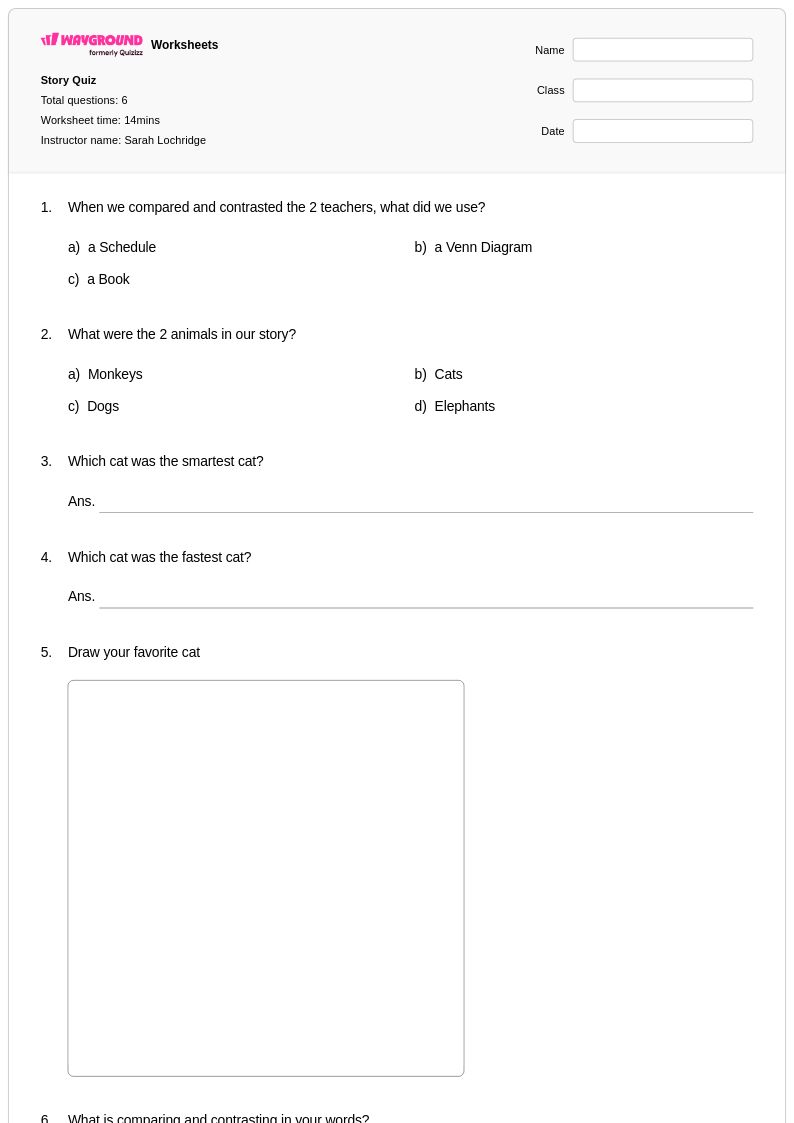
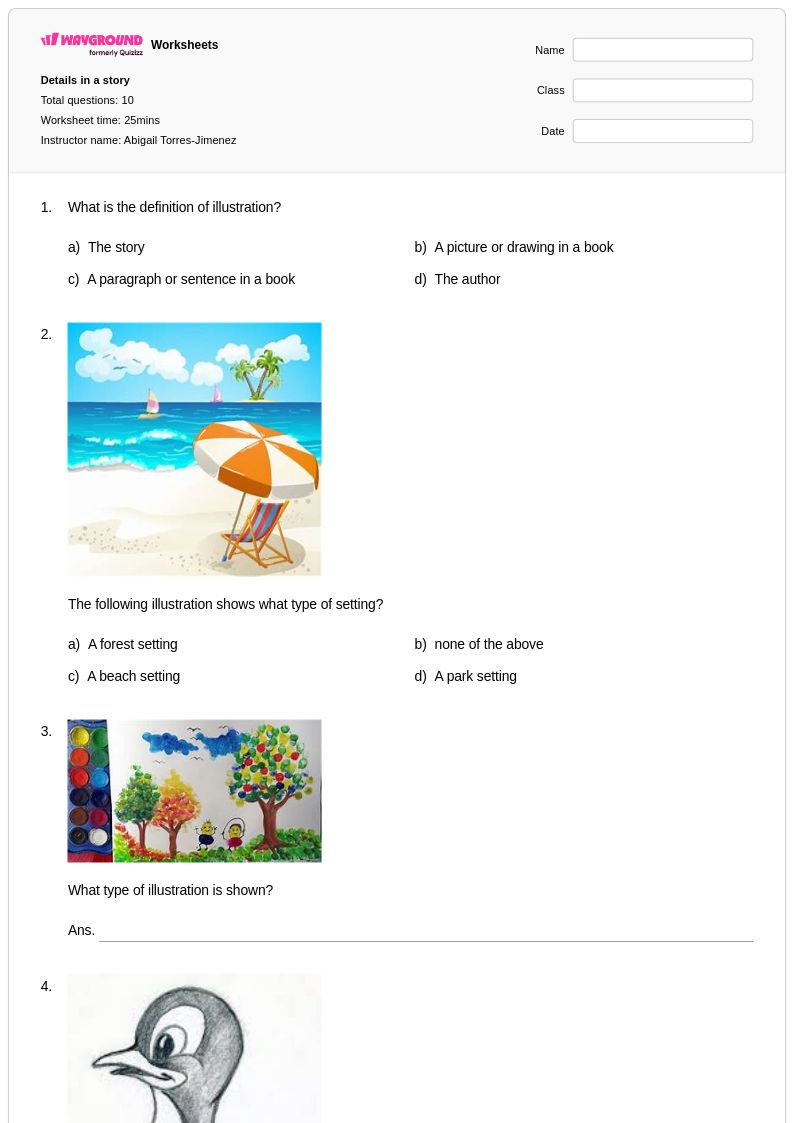
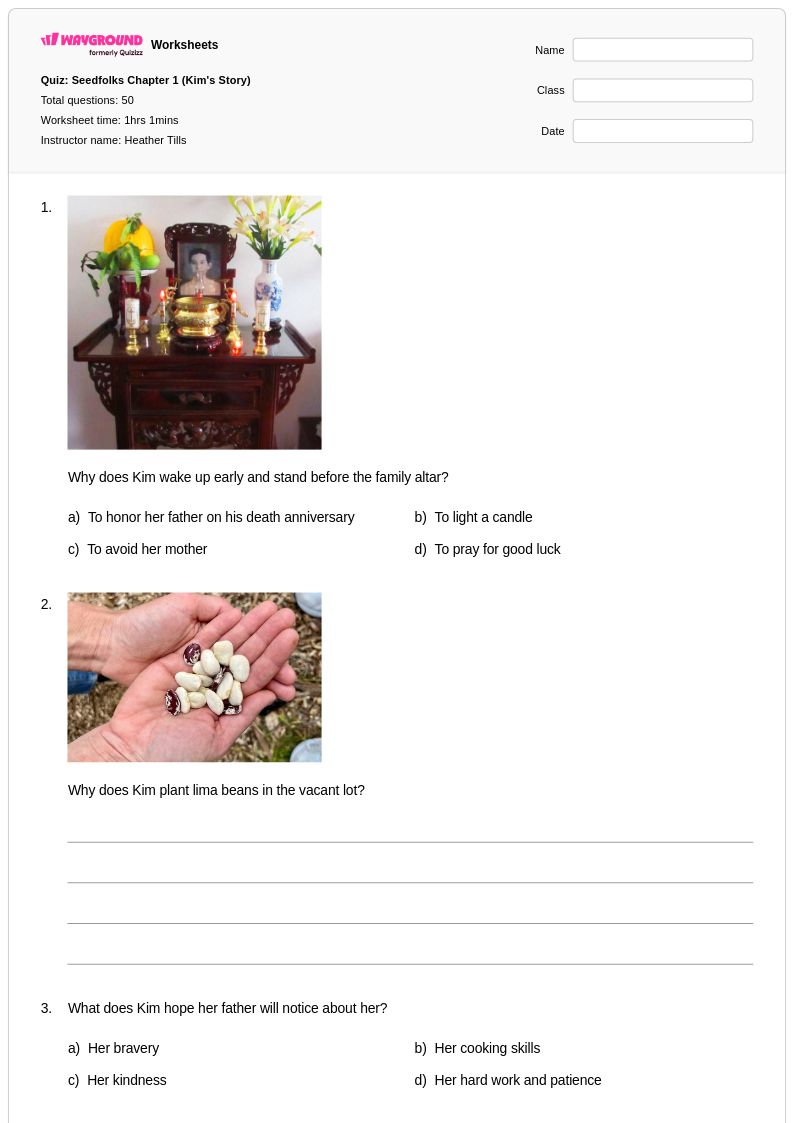
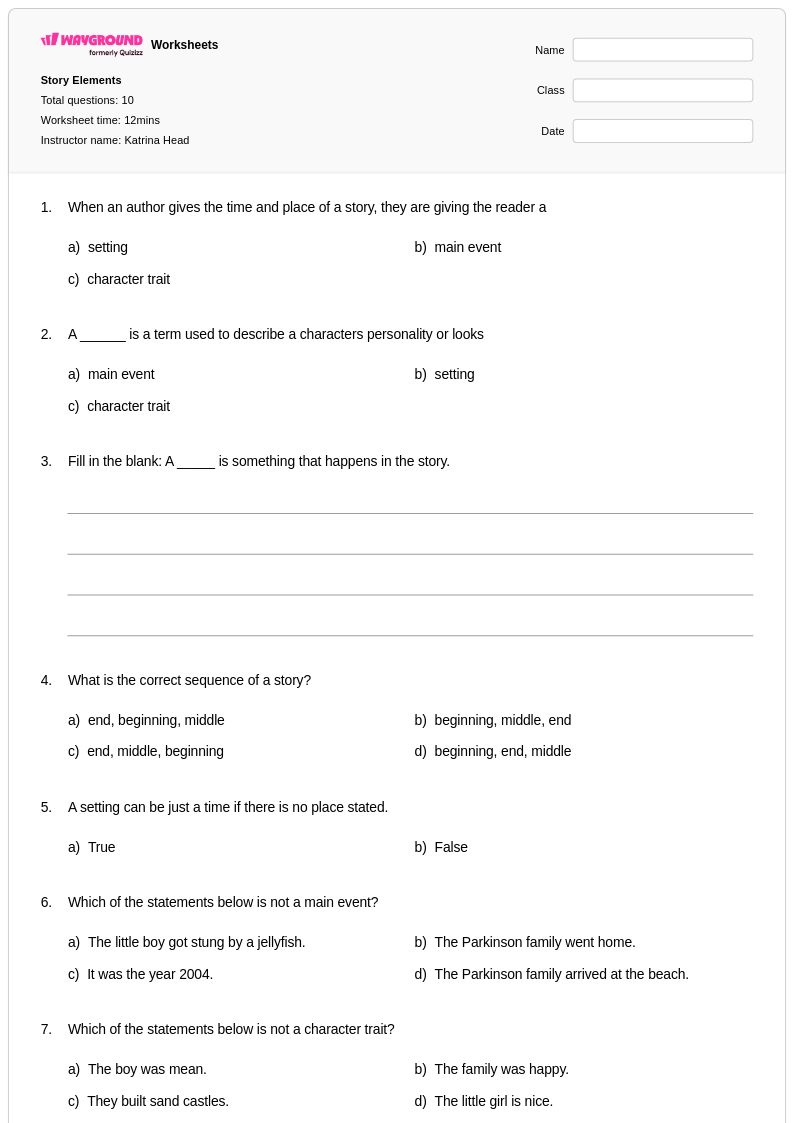
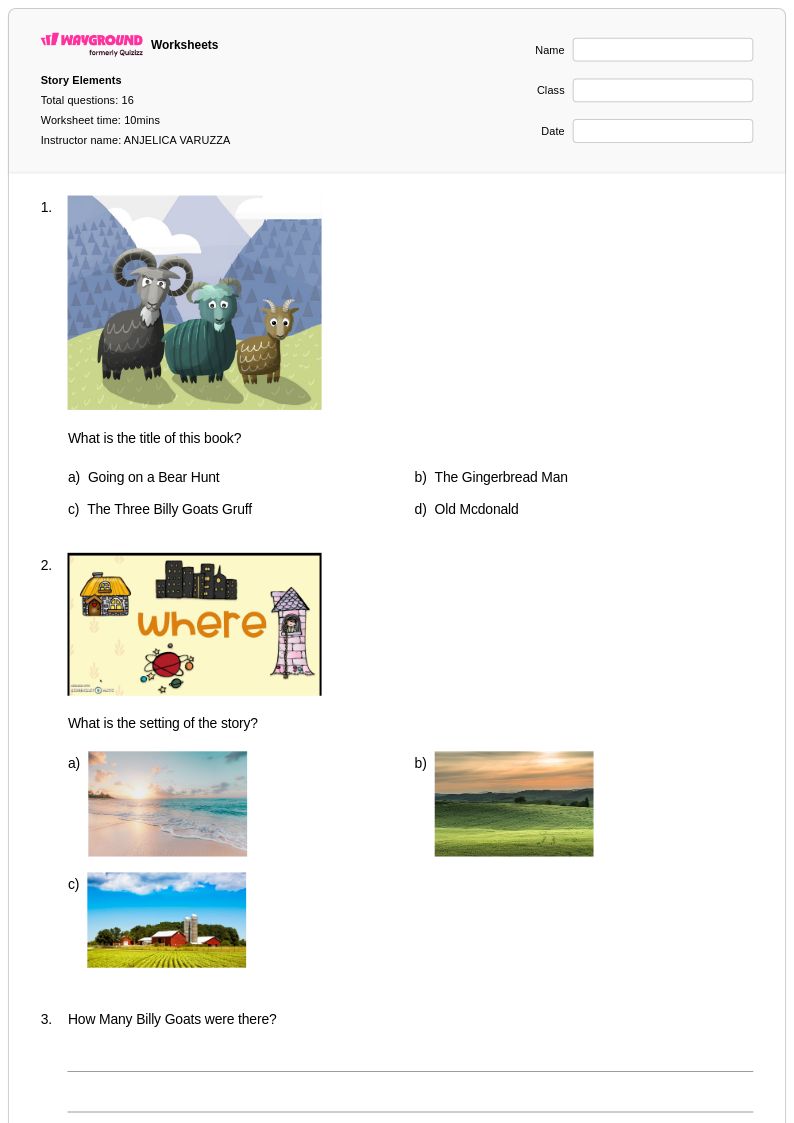
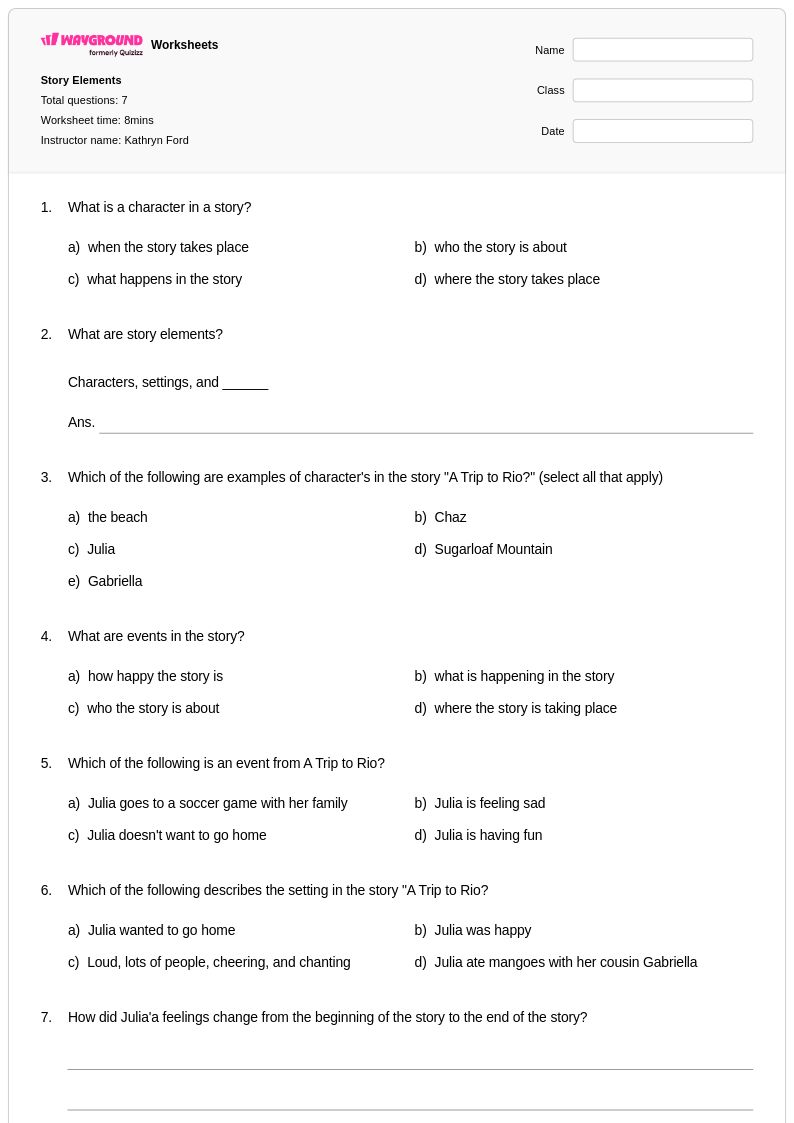
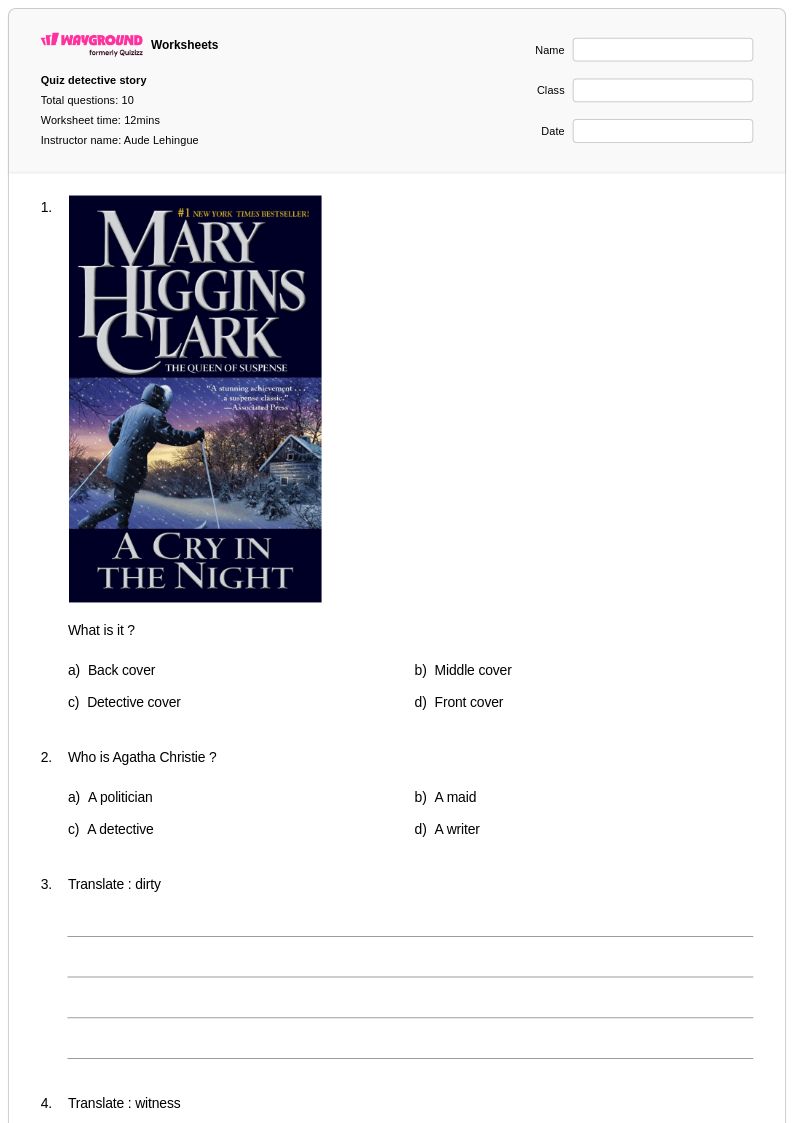
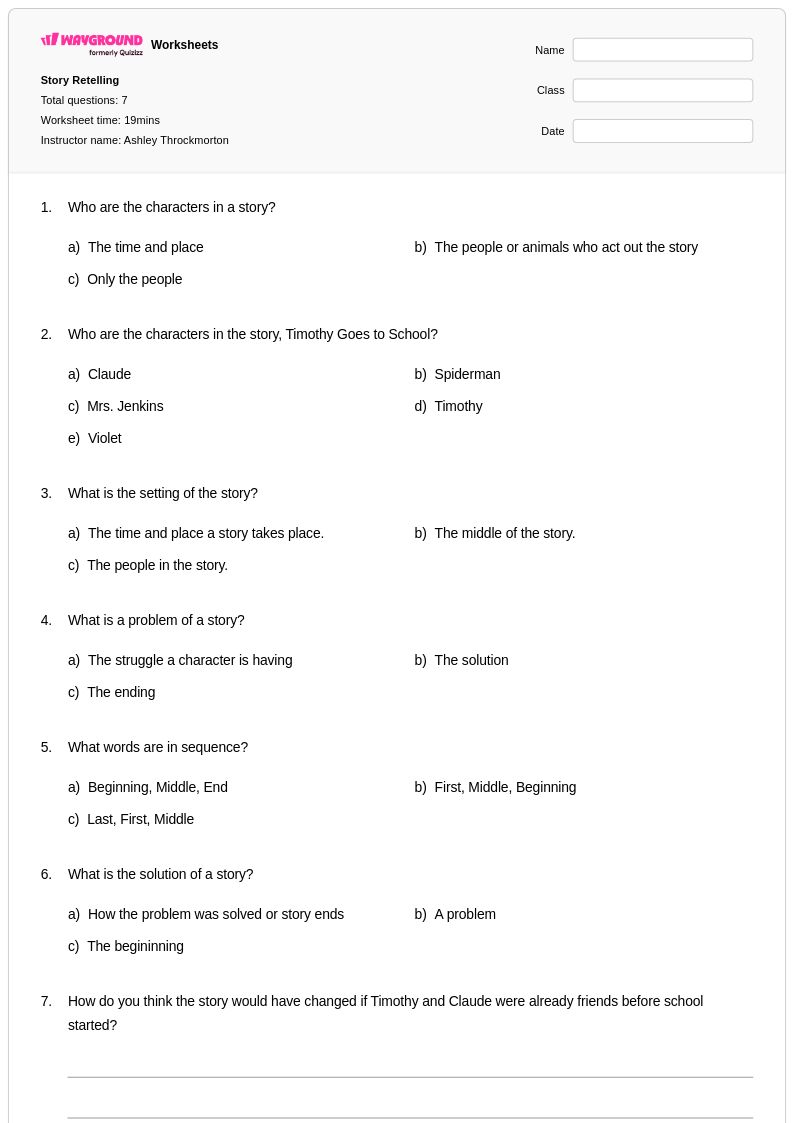
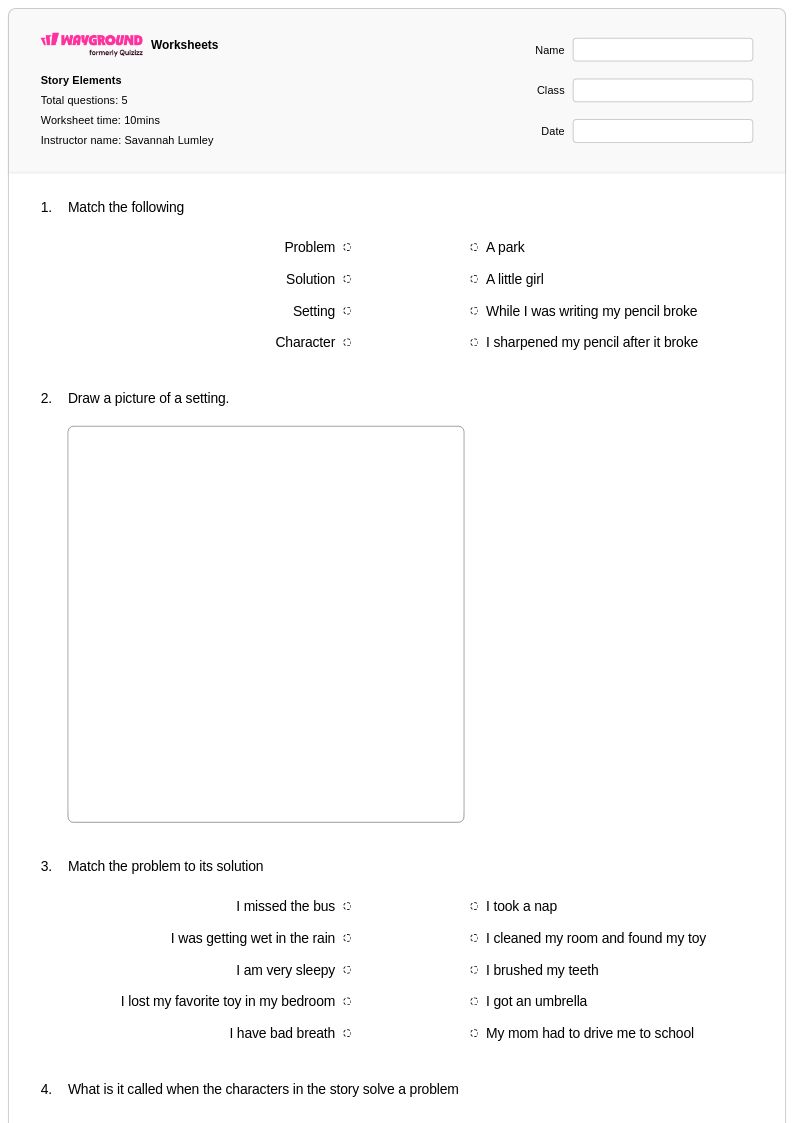
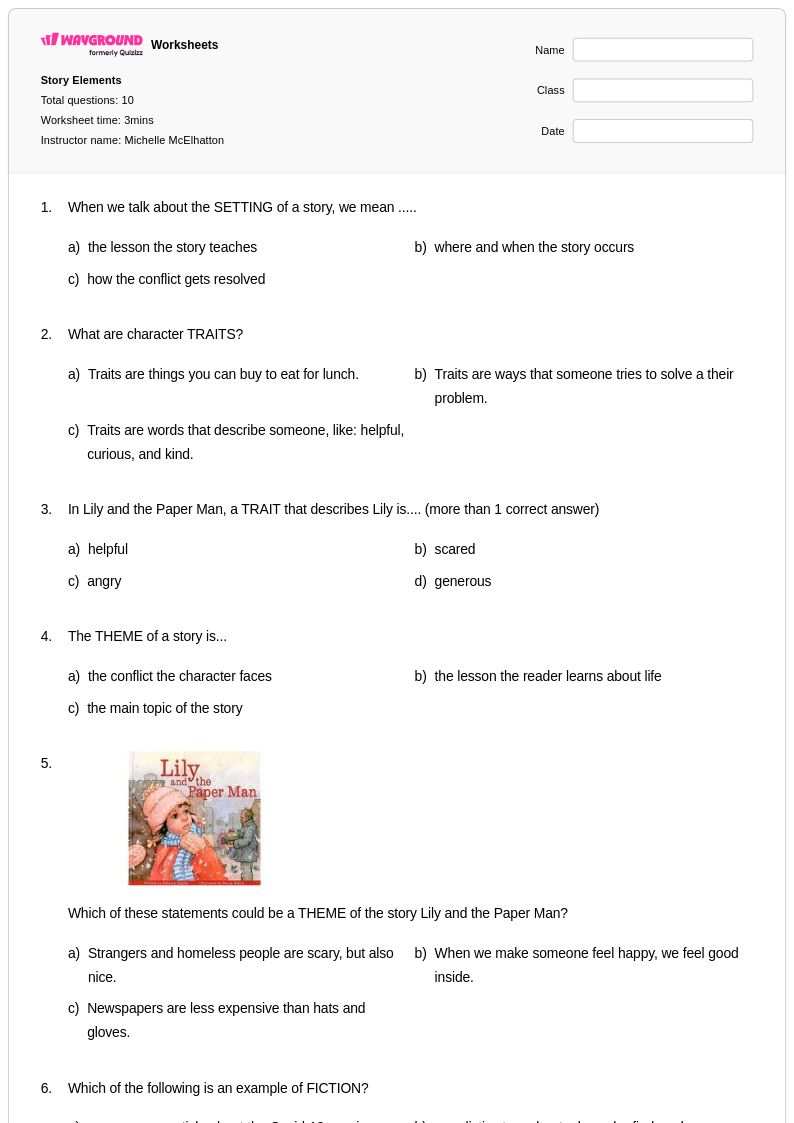
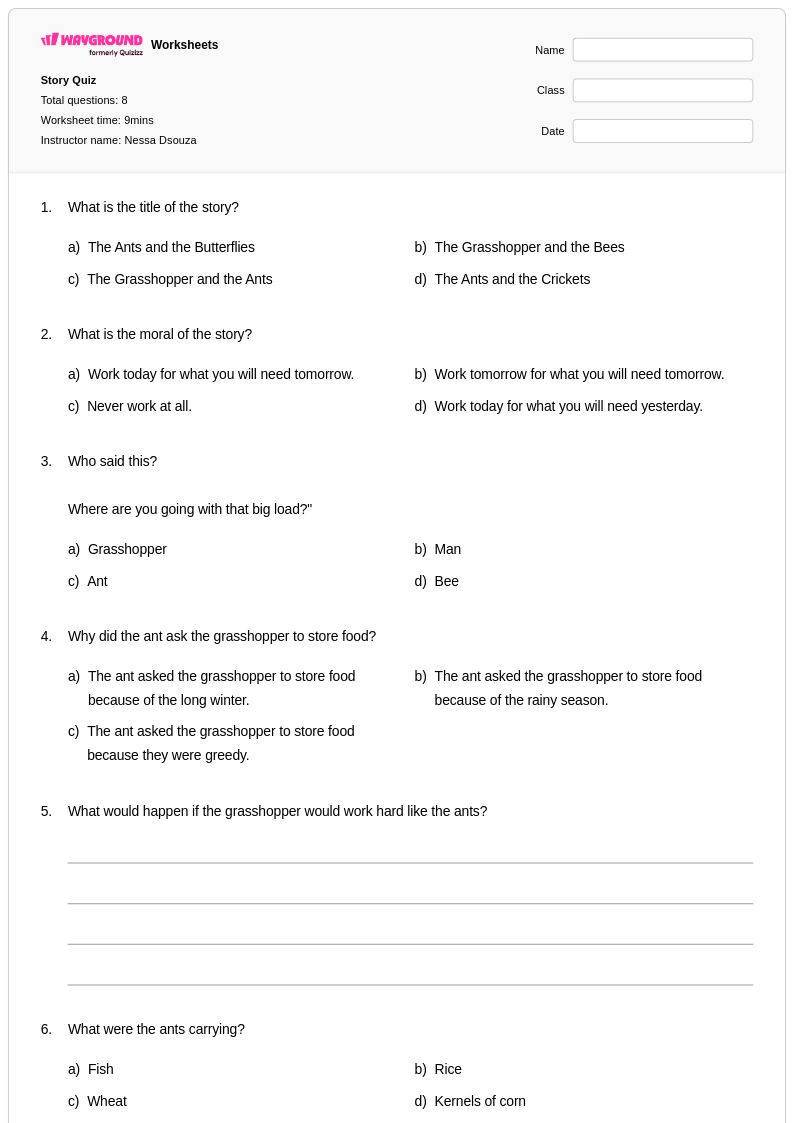
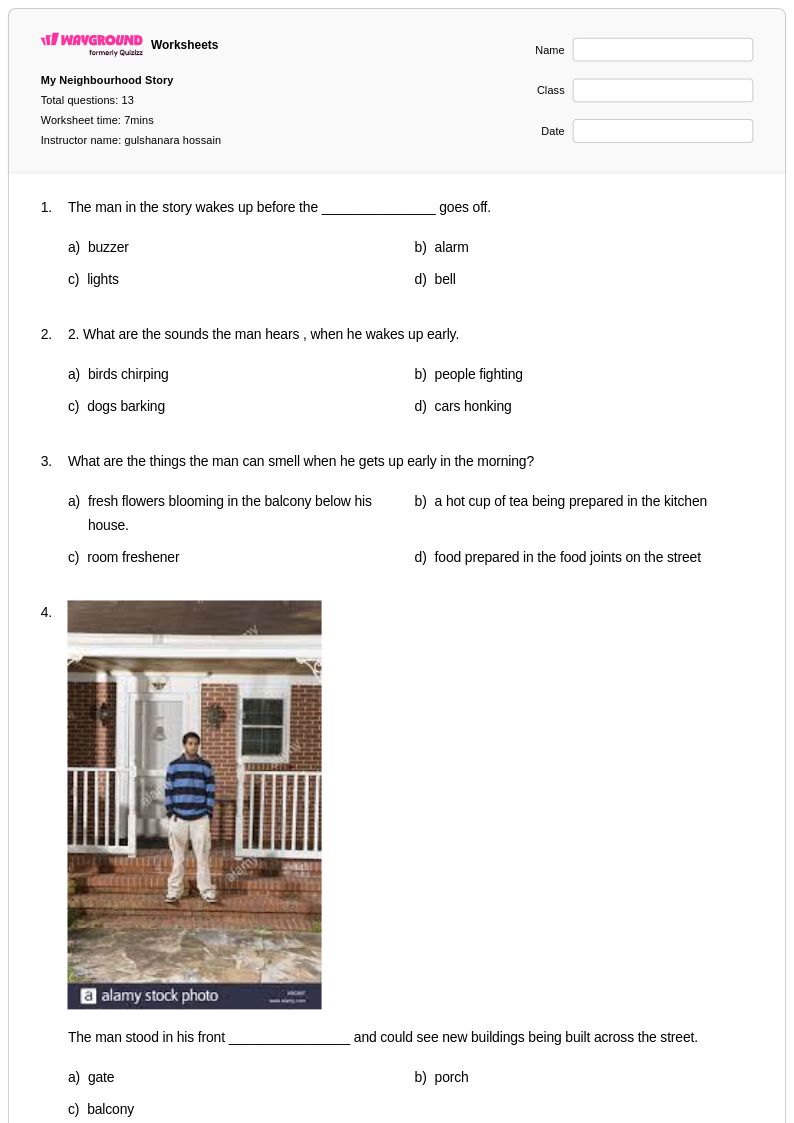
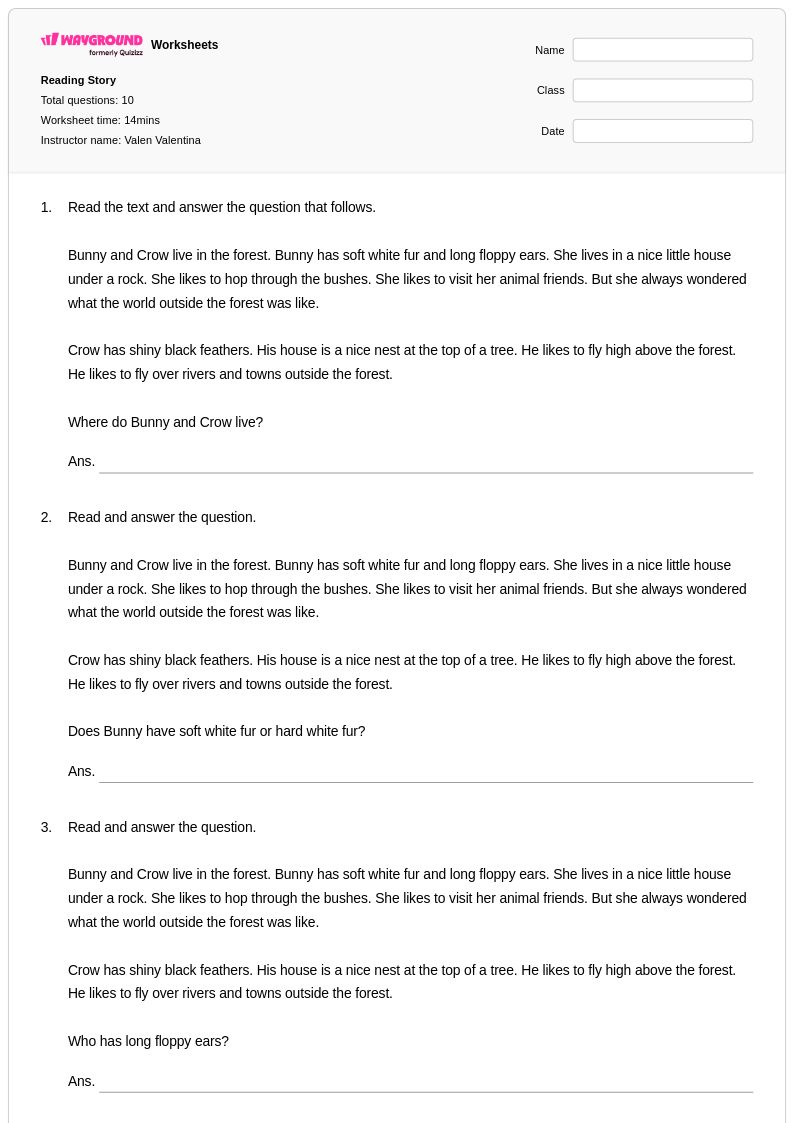
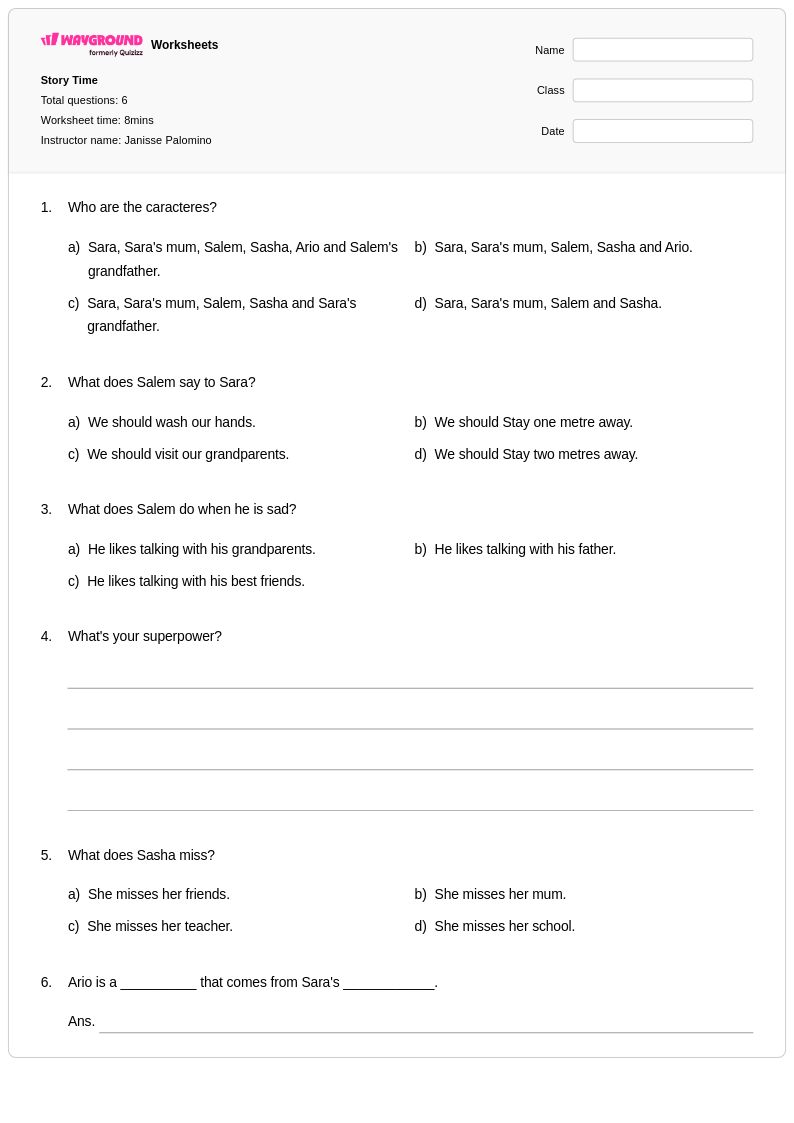
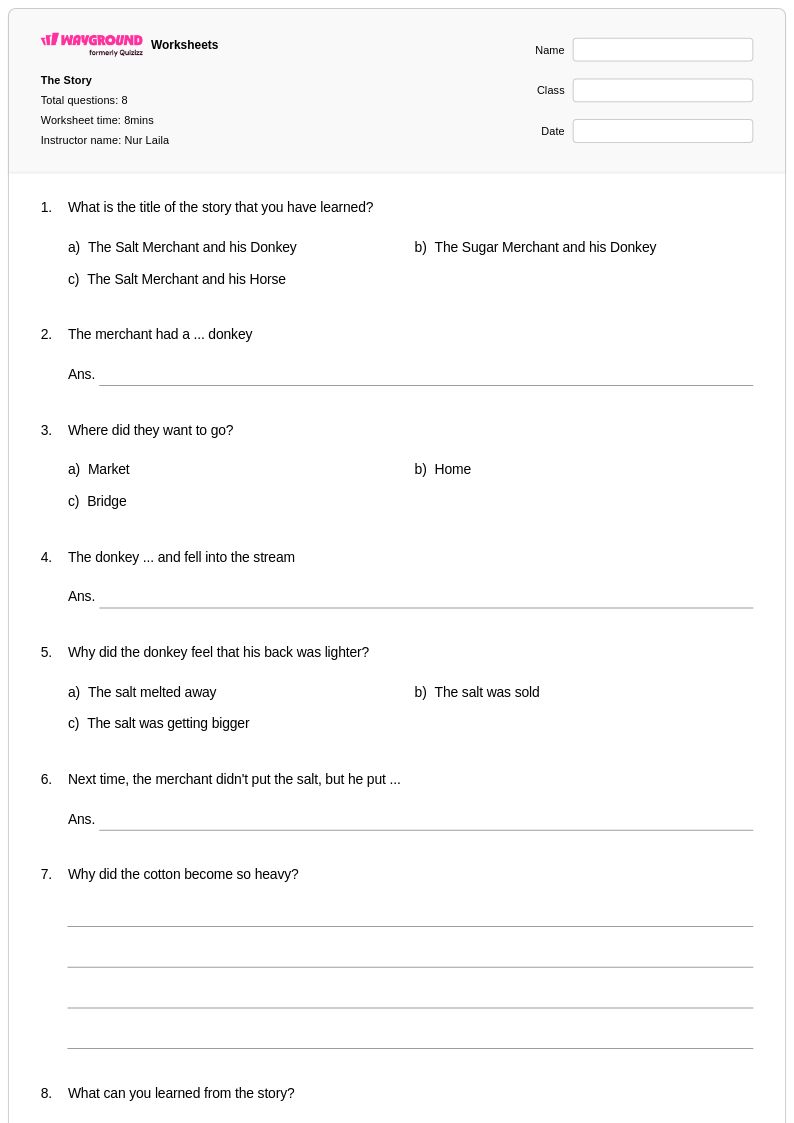
Story mapping worksheets for Class 1 students available through Wayground (formerly Quizizz) provide young learners with essential tools to develop foundational reading comprehension skills through visual story organization. These carefully designed printables guide first graders in identifying and organizing key story elements including characters, setting, problem, and solution in a structured, age-appropriate format. Each worksheet strengthens critical thinking abilities by encouraging students to break down narratives into manageable components, helping them better understand story structure and sequence. The practice problems included in these free resources feature engaging, grade-level appropriate texts with accompanying answer keys that support both independent work and teacher-guided instruction, making story mapping accessible and enjoyable for beginning readers.
Wayground's extensive collection of story mapping worksheets draws from millions of teacher-created resources, providing educators with comprehensive search and filtering capabilities to locate materials perfectly suited to their Class 1 reading comprehension objectives. The platform's standards alignment ensures that each worksheet supports curriculum goals while offering differentiation tools that allow teachers to customize content for diverse learning needs within their classrooms. Available in both printable PDF formats and interactive digital versions, these worksheets provide flexibility for various instructional settings, whether used for whole-class lessons, small group remediation, or individual enrichment activities. Teachers can efficiently plan targeted skill practice sessions, assess student understanding of narrative structure, and provide meaningful reading comprehension support that builds the foundation for more advanced literary analysis skills.
FAQs
How do I teach story mapping to students?
Story mapping works best when introduced with a familiar, simple text so students can focus on the framework rather than the content. Begin by modeling how to identify each narrative element — characters, setting, conflict, rising action, climax, falling action, and resolution — using a think-aloud strategy before asking students to complete their own maps independently. Gradually release responsibility by moving from whole-class modeling to guided practice to independent application across different genres.
What are the key elements students should include in a story map?
A complete story map typically includes the main characters, the setting, the central conflict, rising action events, the climax, falling action, and the resolution. Teaching students to distinguish between these components helps them understand how narrative structure functions across fiction, folktales, and other literary genres. Consistent practice with these elements builds students' ability to analyze and compare stories systematically.
What exercises help students practice story mapping skills?
Structured worksheets that prompt students to fill in labeled sections for each plot element are among the most effective practice tools for story mapping. Having students complete maps after reading short stories, picture books, or passages reinforces the framework and builds the habit of identifying narrative structure as they read. Repeated practice across multiple genres helps students internalize plot sequencing and improves overall reading comprehension.
What mistakes do students commonly make when completing a story map?
One of the most frequent errors is confusing the climax with the resolution — students often identify the most exciting moment as the ending rather than recognizing it as the turning point. Another common mistake is listing too many events in the rising action without prioritizing those that directly build toward the central conflict. Students also sometimes describe the setting only as a physical place, overlooking time period or atmosphere, which can affect their understanding of how setting influences plot.
How can story mapping worksheets support struggling readers?
Story mapping gives struggling readers a concrete visual scaffold that breaks a narrative into manageable parts, reducing the cognitive load of tracking a full text at once. By focusing on one element at a time, students build confidence and develop a repeatable strategy they can apply independently. On Wayground, teachers can enable accommodations such as Read Aloud support and reduced answer choices for individual students, making story mapping worksheets accessible for diverse learners without disrupting the rest of the class.
How do I use story mapping worksheets from Wayground in my classroom?
Wayground's story mapping worksheets are available as printable PDFs for traditional classroom use and in digital formats for technology-integrated environments, including the option to host them as a quiz directly on the platform. Teachers can assign them as in-class activities, homework, or independent reading response tasks. Each worksheet includes a complete answer key, making them practical for both guided instruction and self-paced practice.