Free Printable Long A/short a Worksheets for Class 2
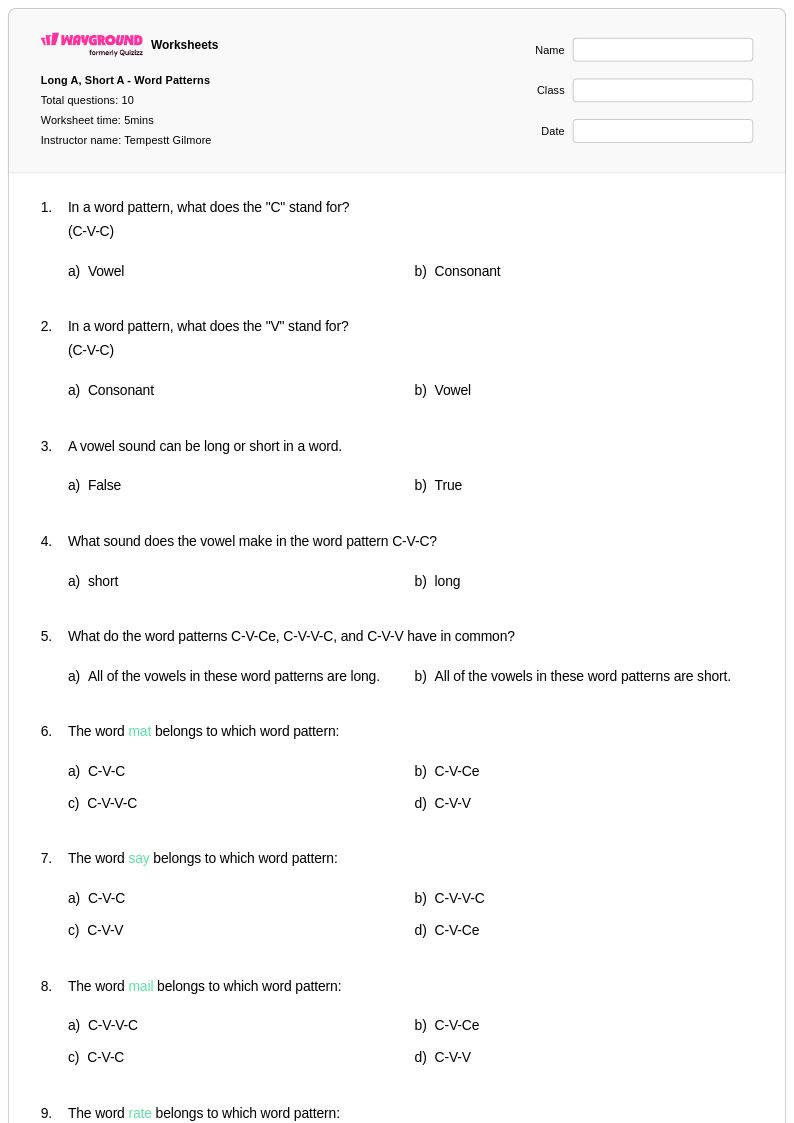
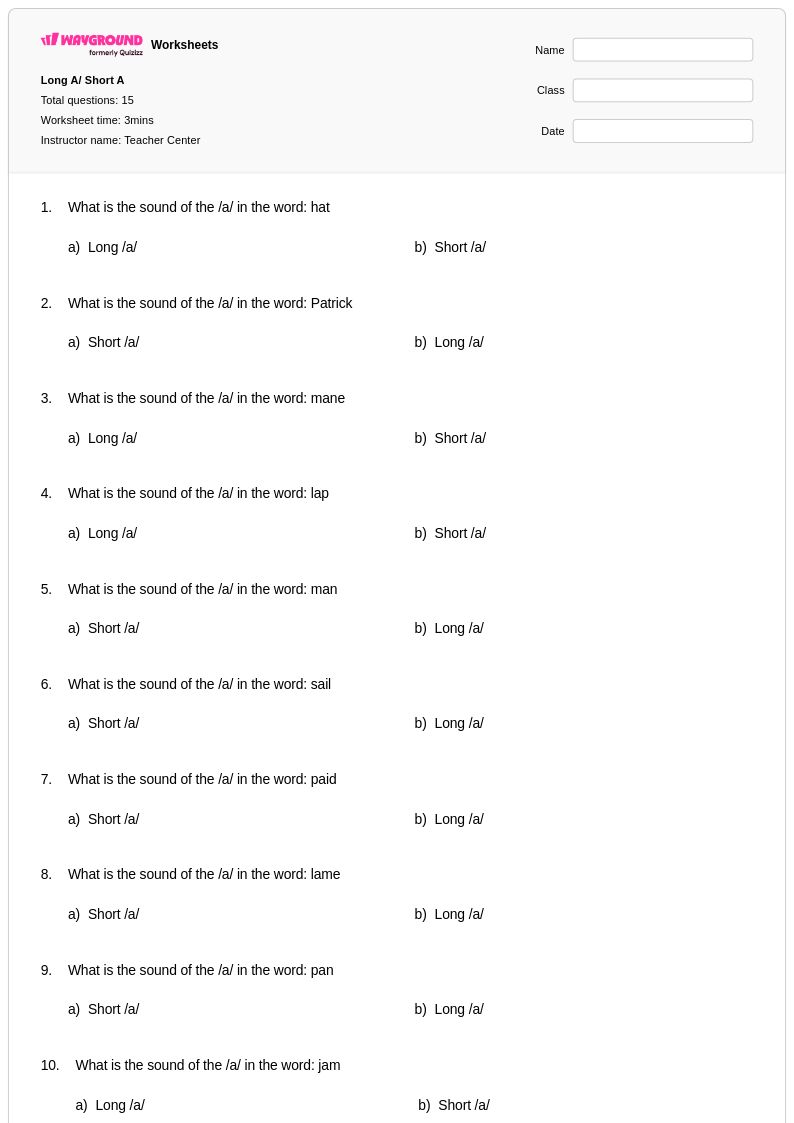
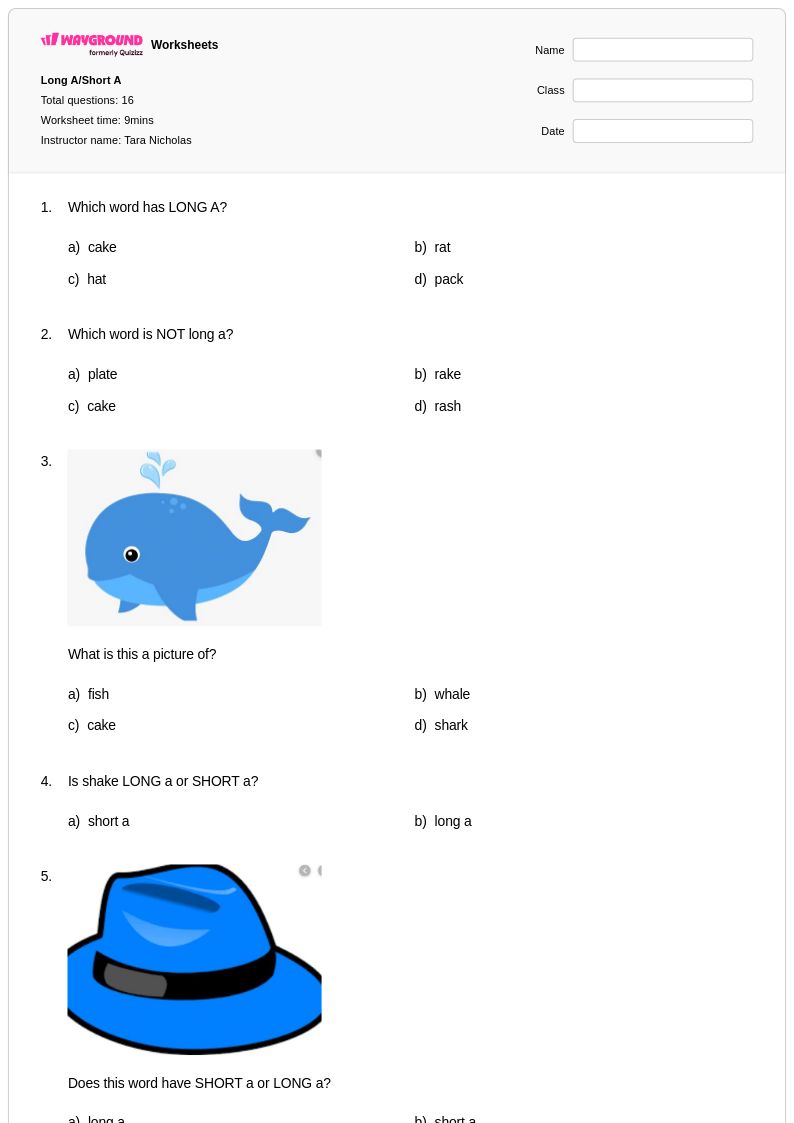
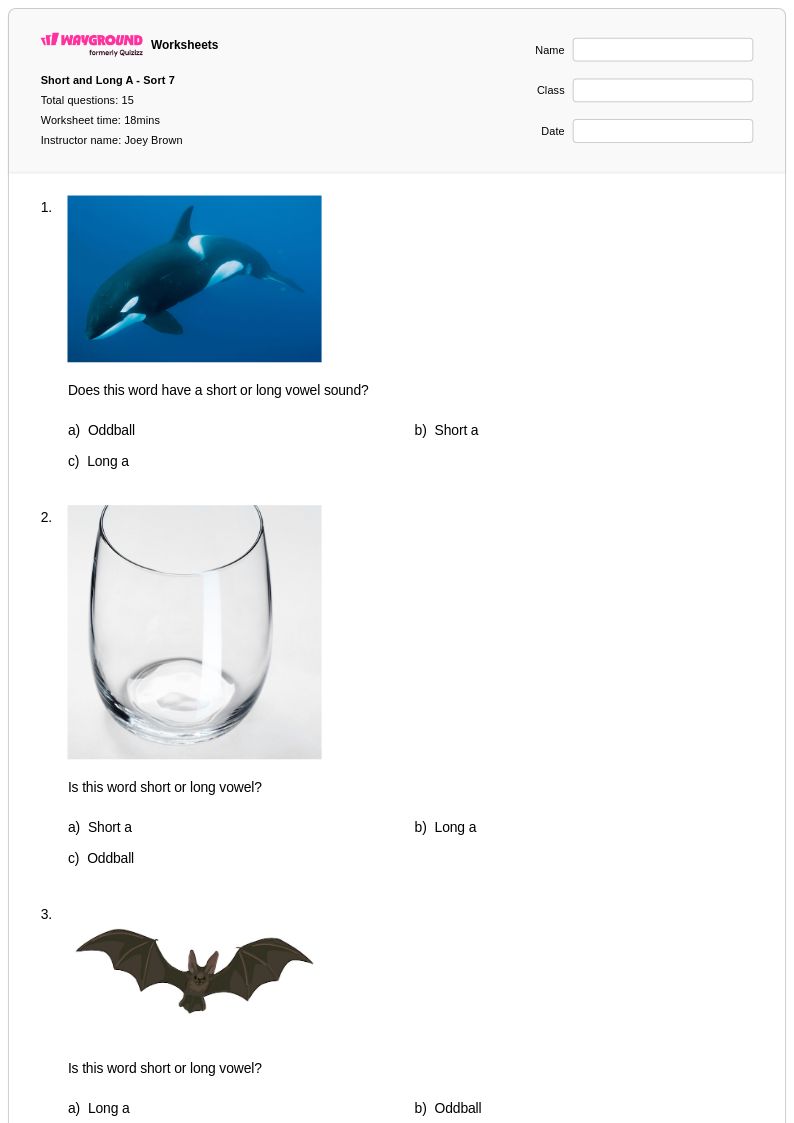
Class 2 students can master long A and short A vowel sounds with Wayground's free printable worksheets, featuring engaging practice problems and complete answer keys to build essential phonics skills.
Explore printable Long A/short a worksheets for Class 2
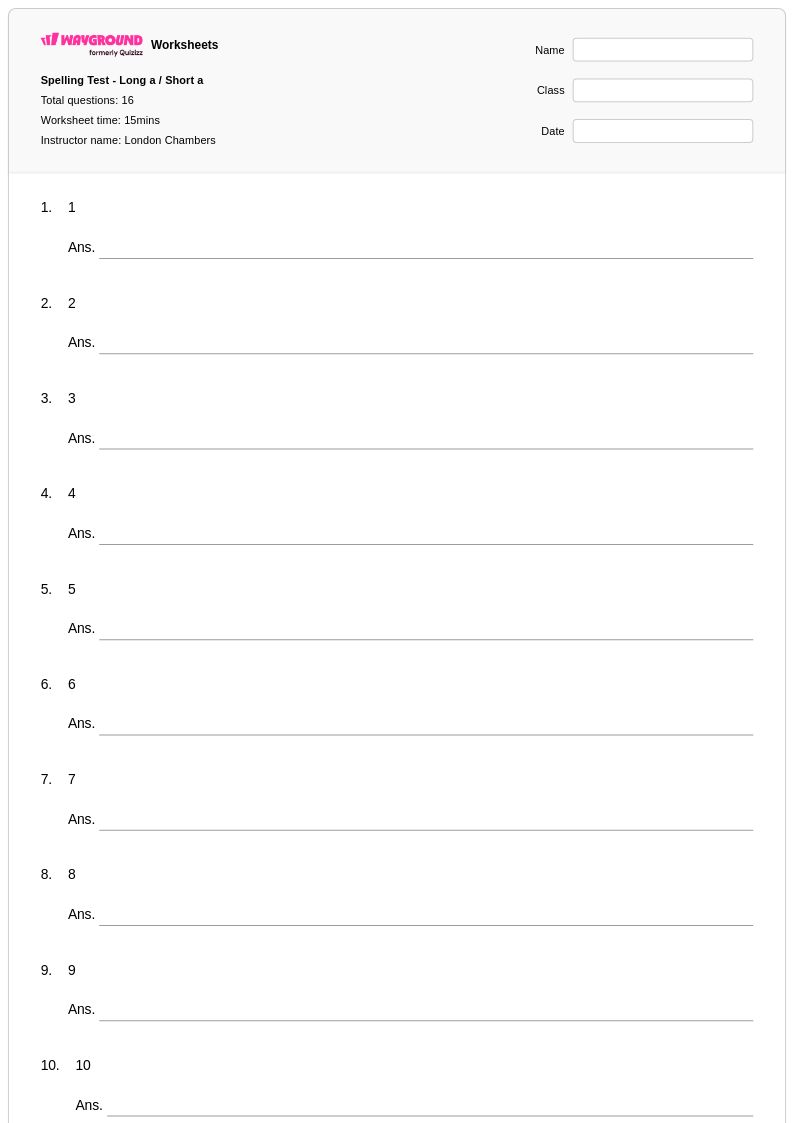
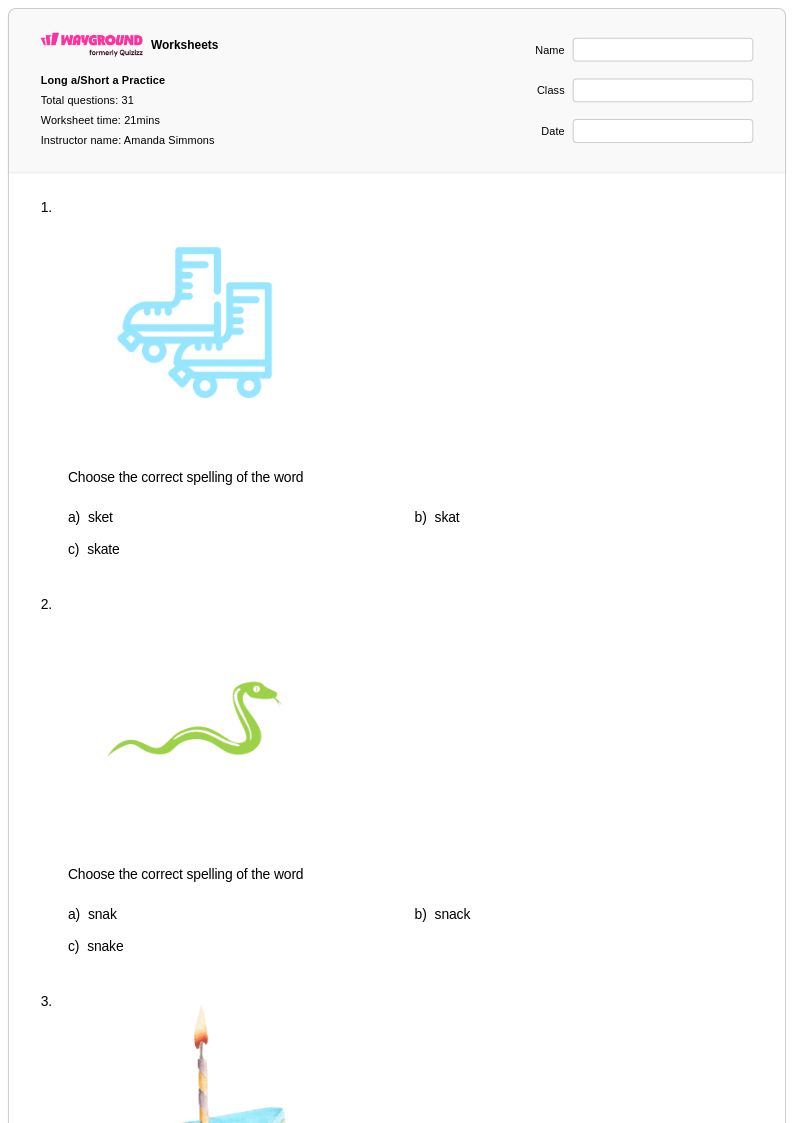
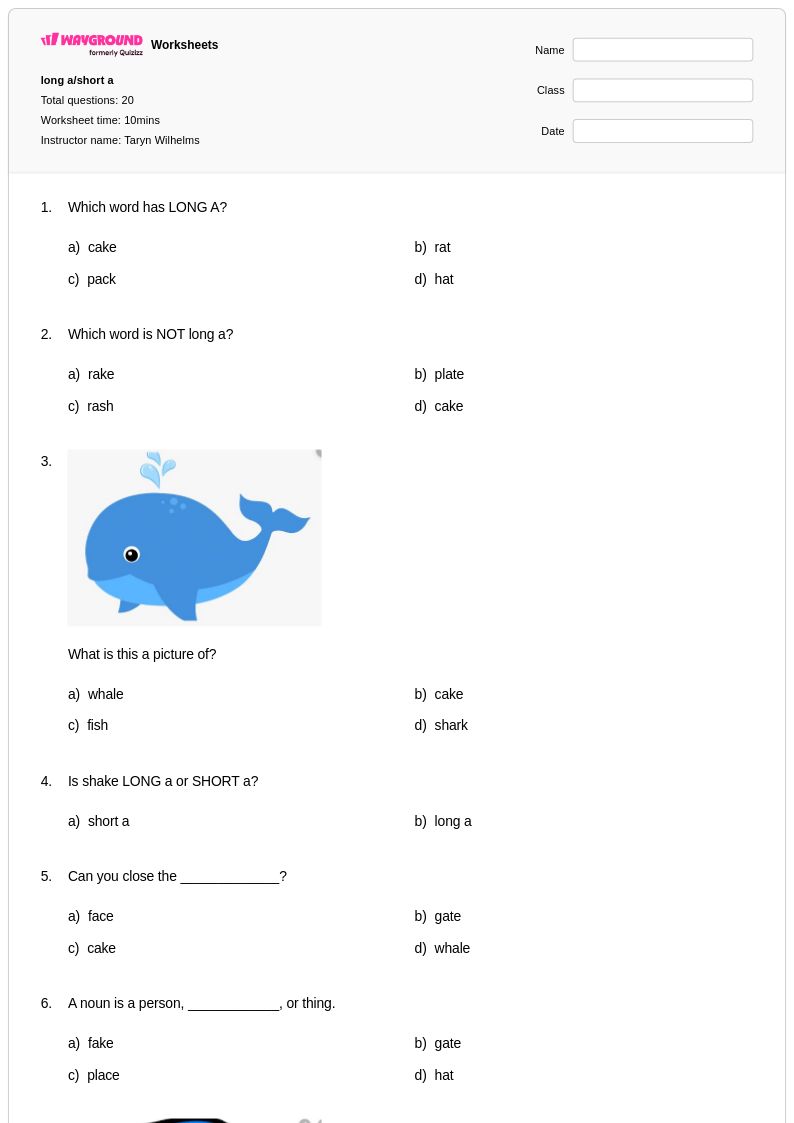
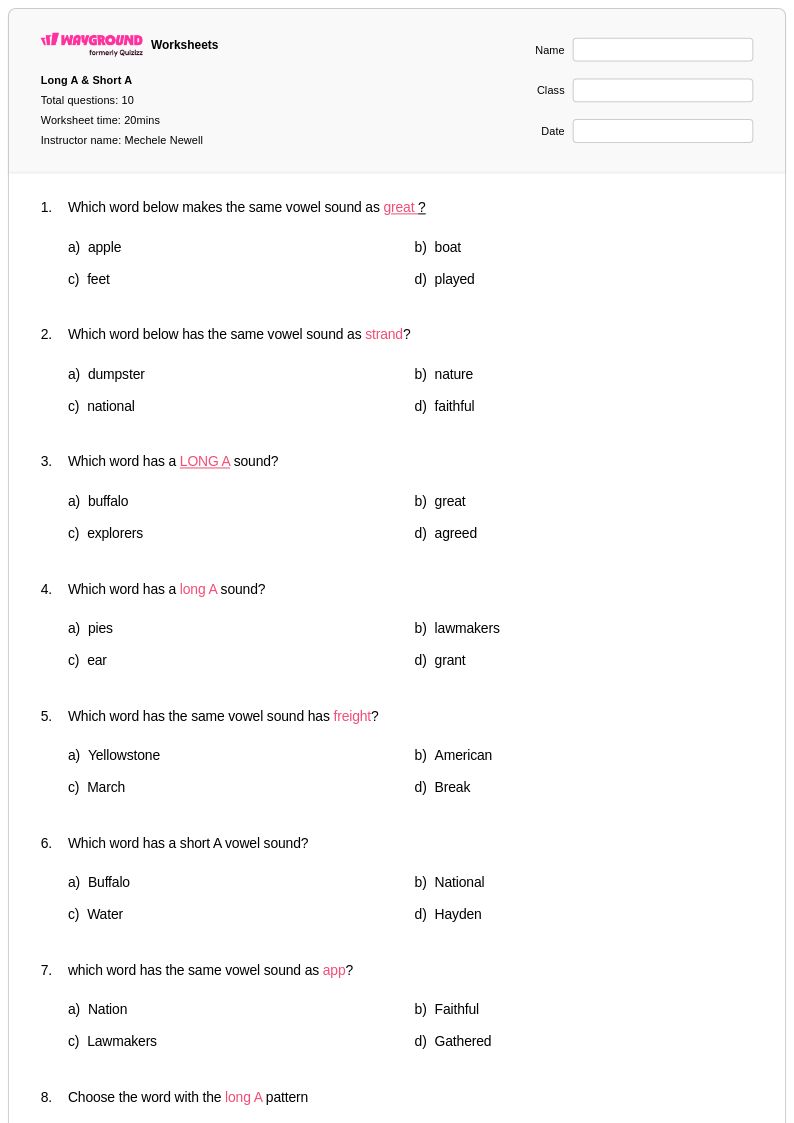
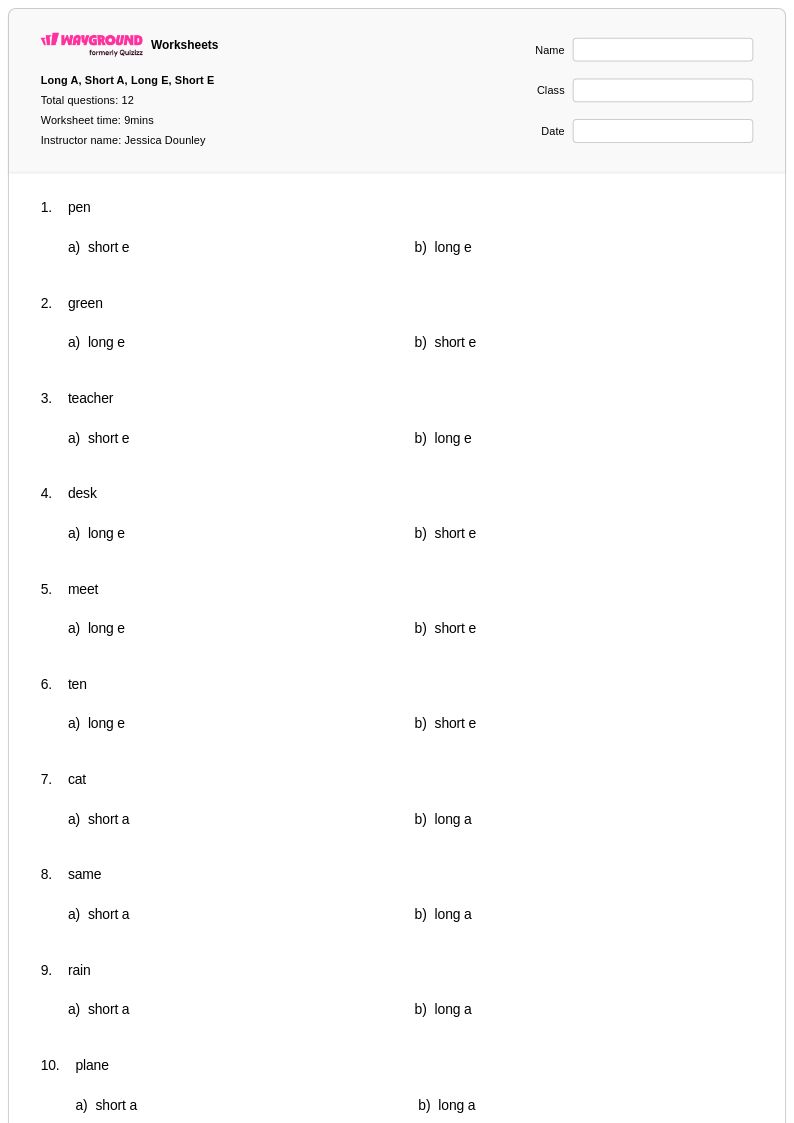
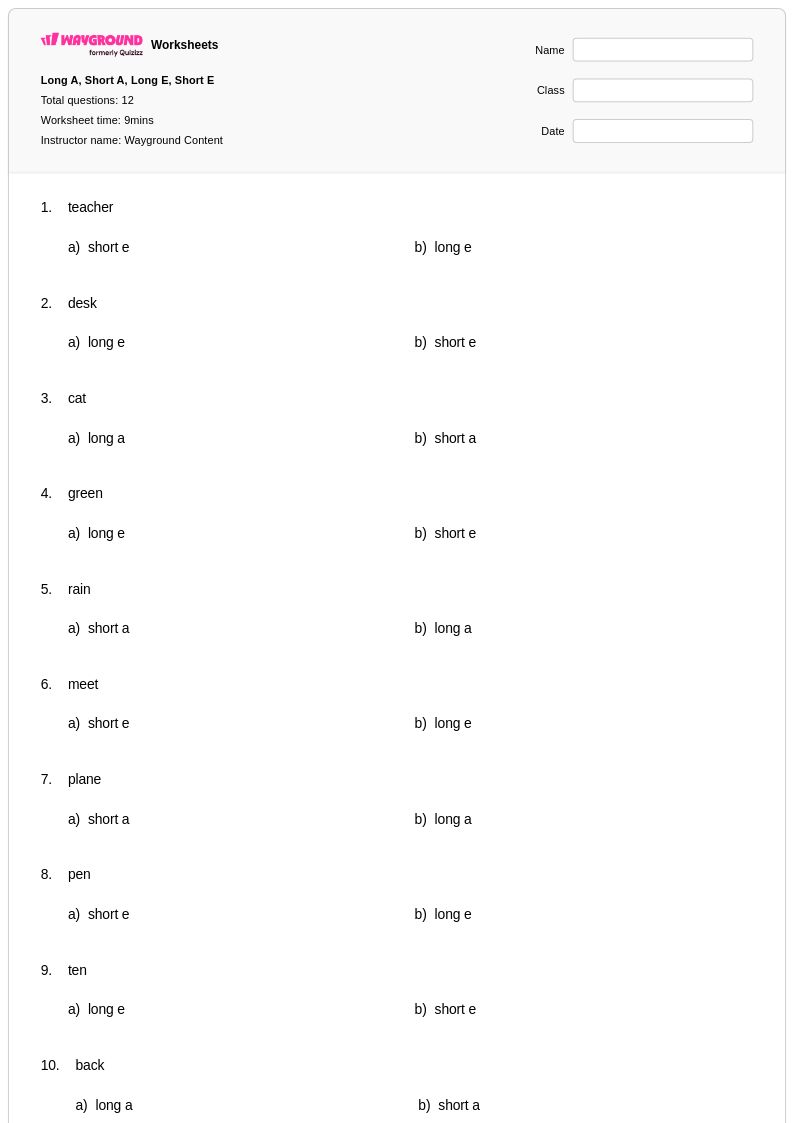
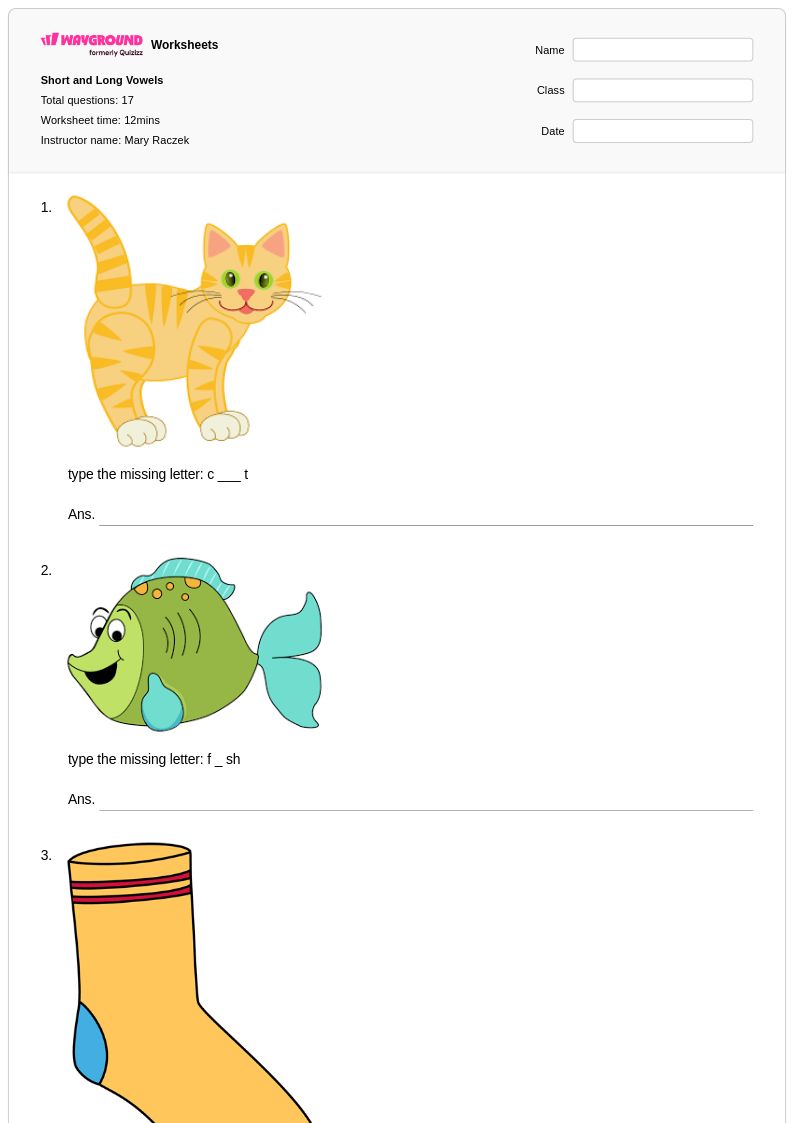
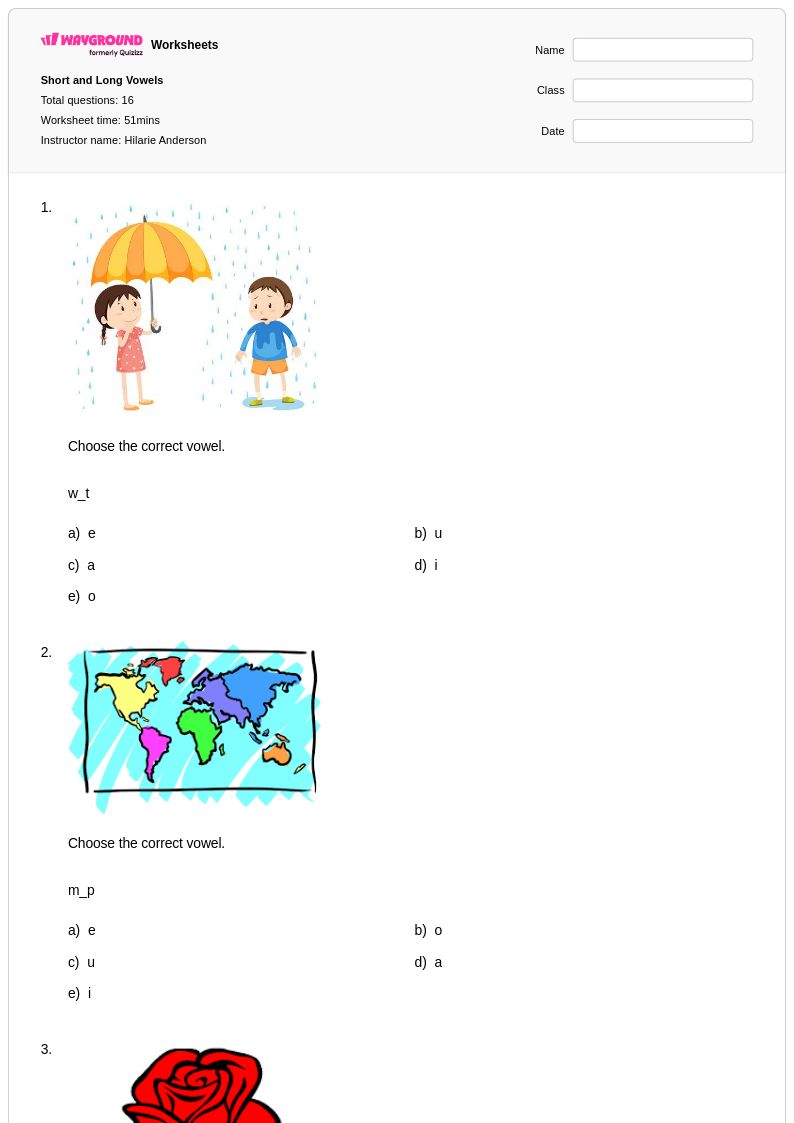
Long A and short A vowel sound worksheets for Class 2 students through Wayground provide comprehensive practice in distinguishing between these fundamental phonetic patterns. These carefully designed printables strengthen students' ability to recognize, decode, and apply both vowel sounds across various word families and reading contexts. Each worksheet collection includes systematic practice problems that progress from simple word identification to more complex reading comprehension tasks, with answer keys provided to support independent learning and quick assessment. The free pdf resources cover essential skills including vowel sound discrimination, spelling patterns, and phonemic awareness activities that build the foundation for fluent reading and accurate spelling in second grade.
Wayground's extensive collection of teacher-created long A and short A vowel worksheets offers educators powerful tools for differentiated instruction and targeted skill development. With millions of resources available through intuitive search and filtering options, teachers can easily locate materials that align with specific curriculum standards and match individual student needs. The platform's flexible customization features allow educators to modify existing worksheets or combine multiple resources for comprehensive lesson planning, remediation sessions, and enrichment activities. Available in both printable pdf formats and interactive digital versions, these vowel sound practice materials seamlessly integrate into any classroom environment, supporting systematic phonics instruction and providing the repeated practice essential for mastering Class 2 reading fundamentals.
FAQs
How do I teach long A and short A sounds to early readers?
Start by helping students hear the contrast between long A (as in 'cake' or 'rain') and short A (as in 'cat' or 'hat') through repeated oral practice before moving to print. Use minimal pairs — words that differ only in vowel sound — so students isolate the sound change. Once students can distinguish the sounds aurally, introduce common spelling patterns like silent-e and vowel teams (ai, ay) for long A, and CVC patterns for short A. Anchor each pattern with high-frequency example words students can return to as reference points.
What exercises help students practice telling the difference between long A and short A?
Sorting activities are especially effective — students categorize picture cards or written words into long A and short A columns, reinforcing pattern recognition without the added load of spelling. Fill-in-the-blank sentences that require choosing between two vowel sound options also build discrimination skills in context. For spelling practice, dictation exercises where students hear a word and must apply the correct vowel pattern push students to connect sound to print. Worksheets that combine identification, sorting, and writing within the same activity give students multiple exposures to both sounds in a single session.
What mistakes do students commonly make when learning long A and short A?
The most common error is overgeneralizing one pattern — students who have just learned silent-e may start adding it to short A words, writing 'cate' instead of 'cat.' Vowel team spellings like 'ai' and 'ay' also cause confusion because students may know the sound but not which spelling pattern to use in a given word. Another frequent mistake is misreading vowel sounds in consonant clusters, where the surrounding sounds make the vowel harder to isolate. Targeted practice with words that follow predictable patterns, alongside explicit discussion of exceptions, helps students build more reliable decoding habits.
How do I use long A and short A worksheets effectively in my classroom?
Long A and short A worksheets on Wayground are available as printable PDFs for traditional classroom use and in digital formats for technology-integrated instruction, so they work equally well for paper-based phonics centers and device-based independent practice. Teachers can also host worksheets as a live quiz on Wayground to gather real-time data on which vowel patterns students have mastered. For differentiated small groups, select worksheets that isolate one pattern at a time — such as silent-e words only — before combining both sounds in the same activity. Using answer keys to review work immediately after completion reinforces correct sound-spelling connections while errors are still fresh.
How do I support struggling readers who can't distinguish long A from short A?
Students who struggle with this distinction often need more time at the phonemic awareness stage before working with print — practice saying and segmenting words aloud without looking at text. On Wayground, teachers can enable the Read Aloud accommodation so struggling readers hear questions and words read to them, reducing decoding load while they focus on the vowel sound itself. Reducing answer choices is another available accommodation that lowers cognitive demand for students who become overwhelmed by too many options. Extended time settings can also be applied per student, ensuring that pace pressure does not interfere with phonics processing for students who need more time to respond.
At what reading level or grade should students learn long A and short A vowel sounds?
Short A is typically introduced in kindergarten as part of CVC word work, while long A patterns — including silent-e and vowel teams like 'ai' and 'ay' — are commonly taught in first and second grade. Students who are working through a structured phonics sequence generally encounter long A after they have solidified short vowel CVC words and basic blends. Students who enter upper elementary still confusing these sounds benefit from targeted review worksheets that revisit foundational patterns explicitly rather than incidentally.