
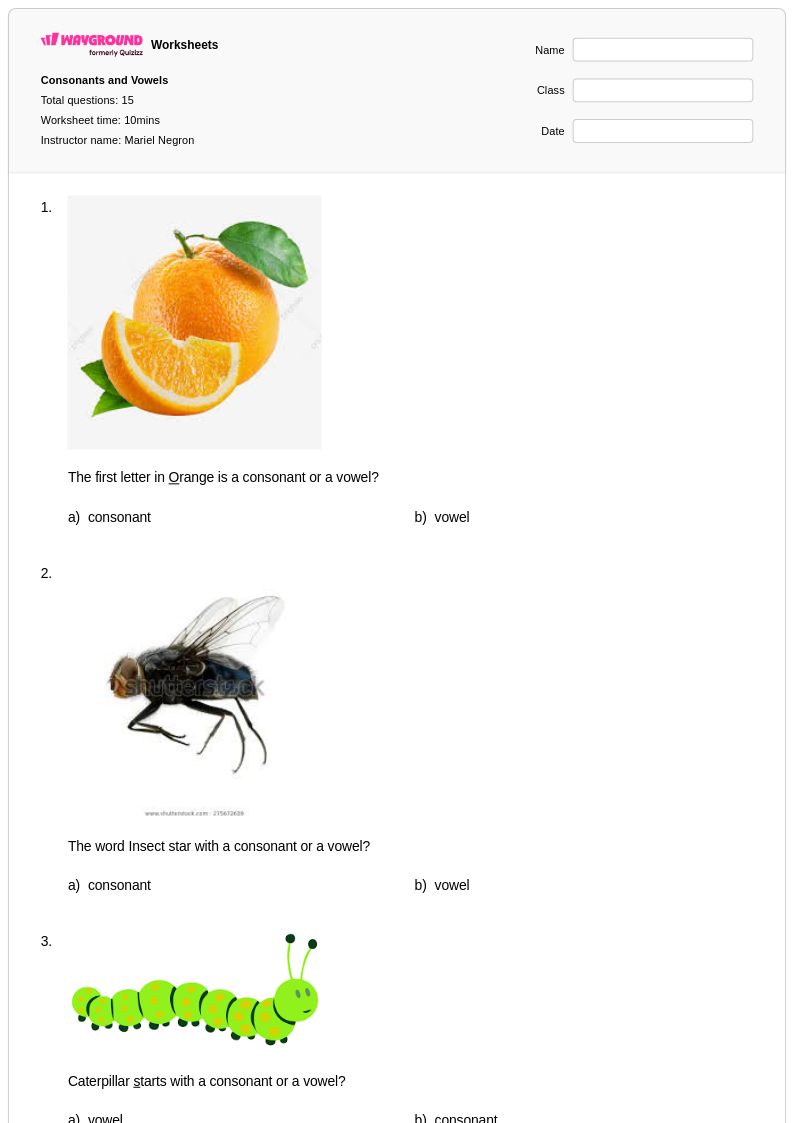
15 Q
2nd
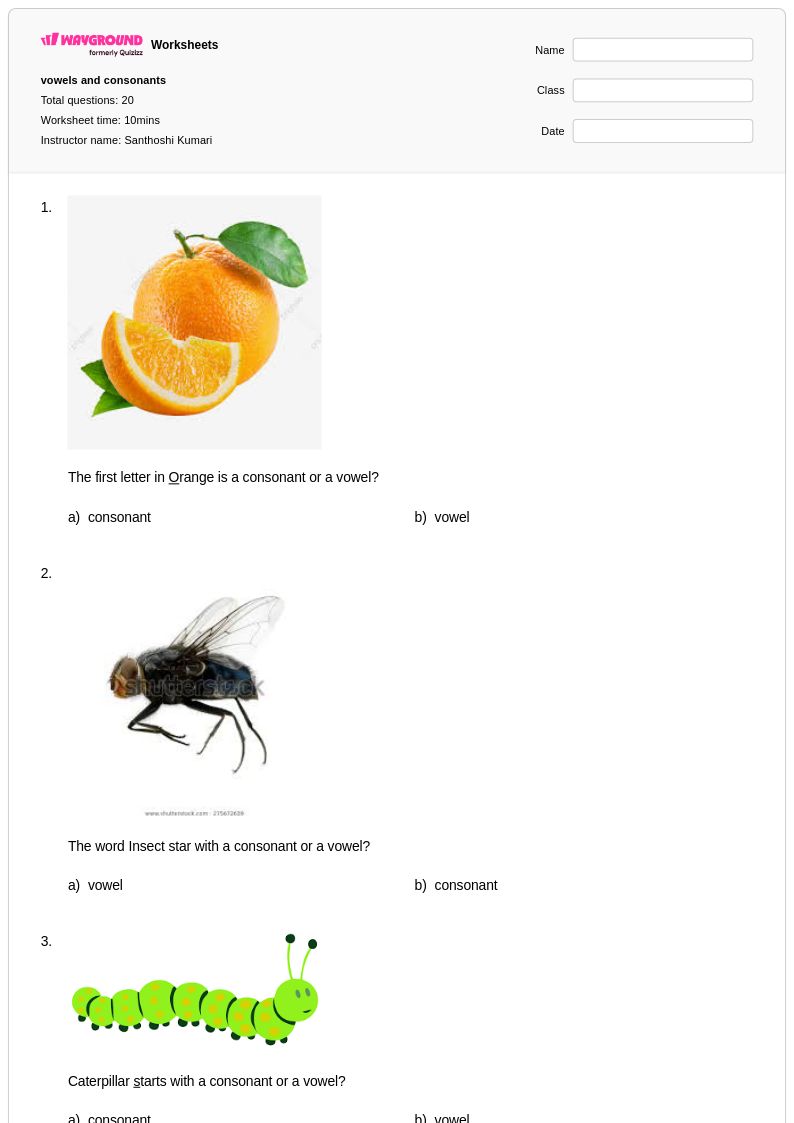
20 Q
1st - 2nd
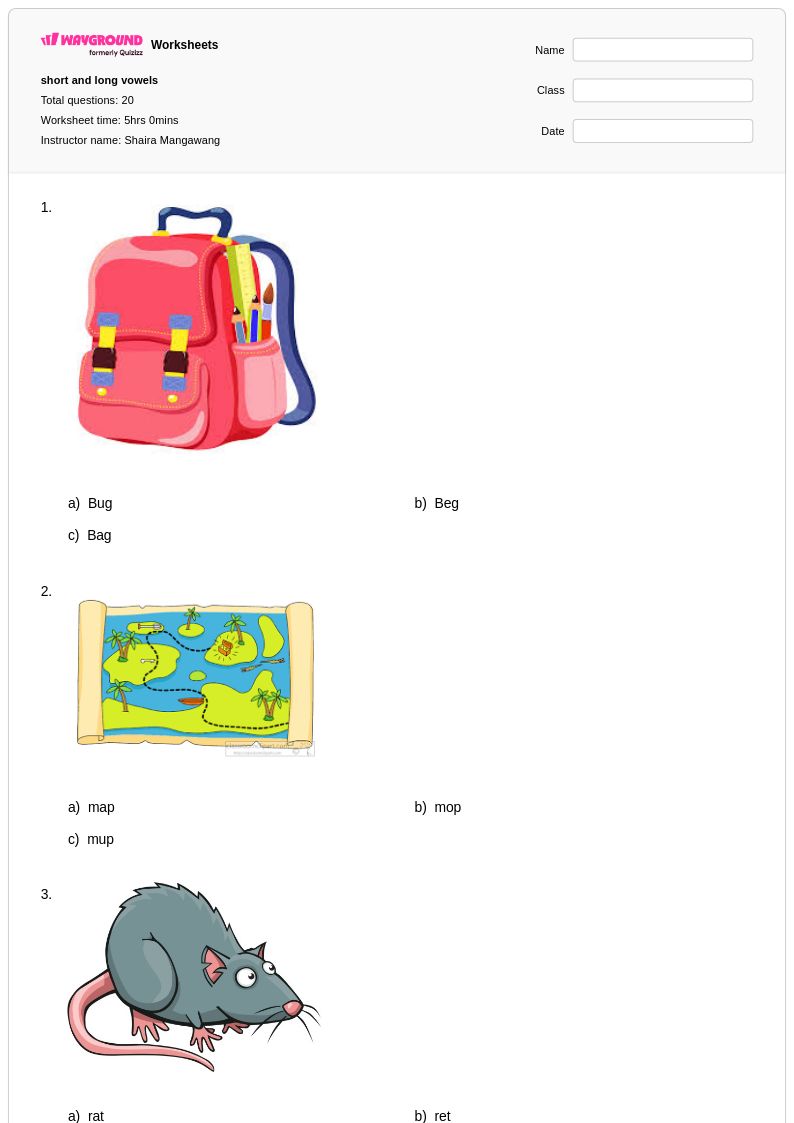
20 Q
1st - 2nd
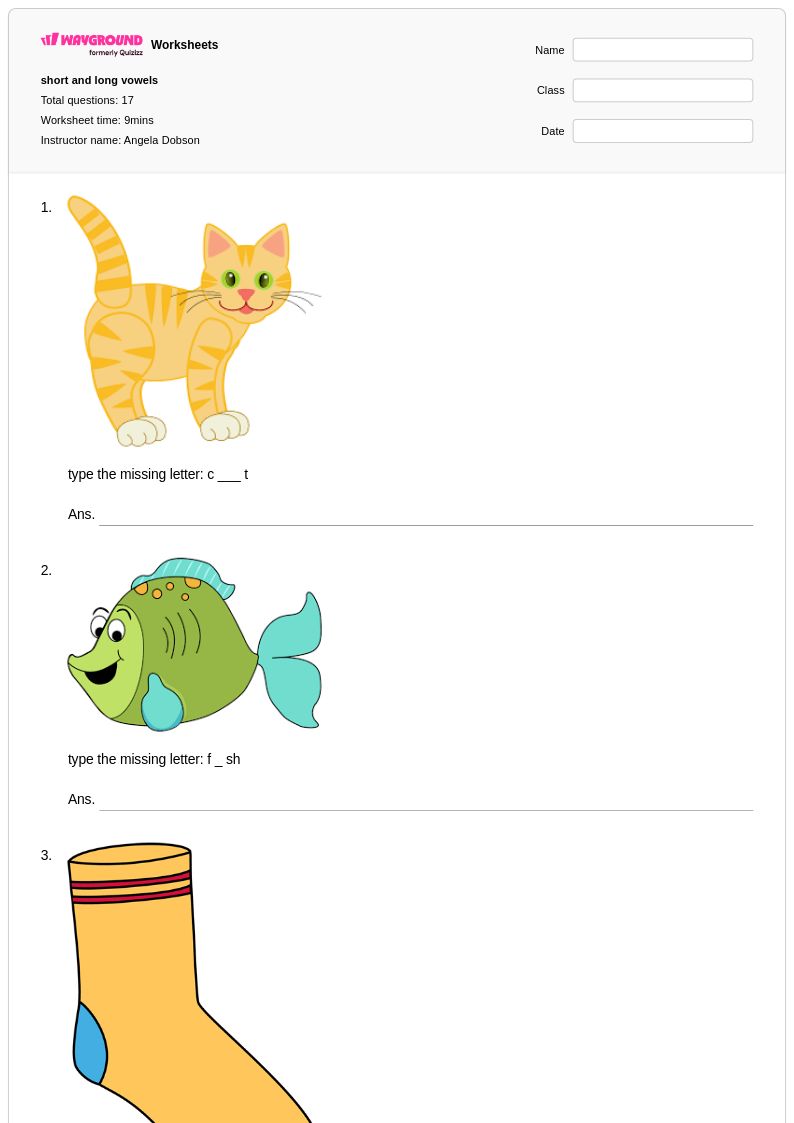
17 Q
1st - 3rd
17 Q
1st - 2nd
18 Q
1st - Uni
16 Q
2nd - 3rd
8 Q
2nd
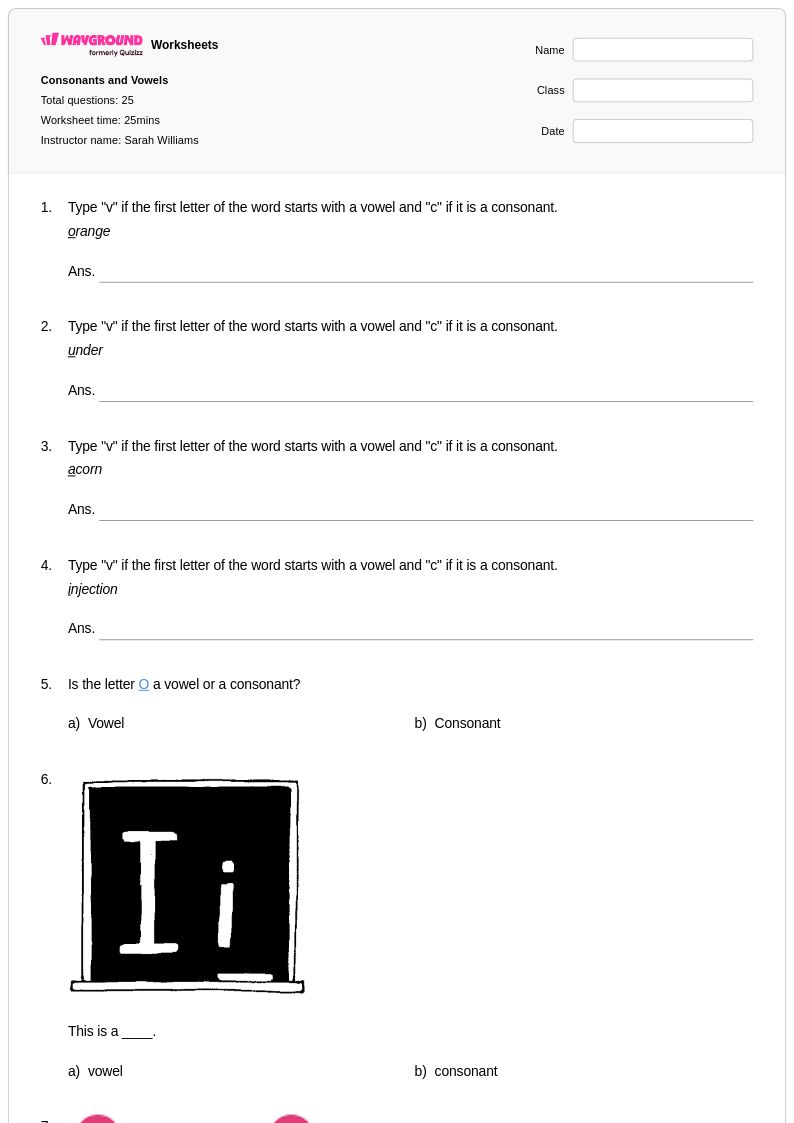
25 Q
2nd - Uni
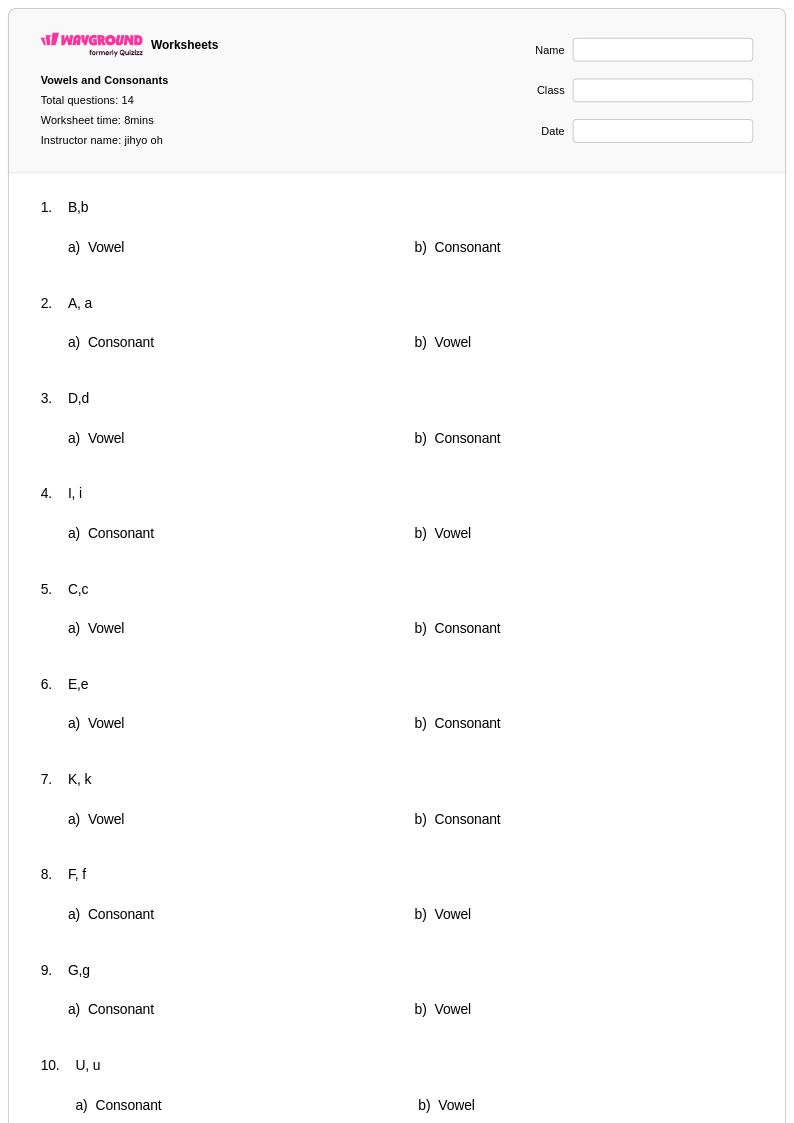
14 Q
KG - 2nd
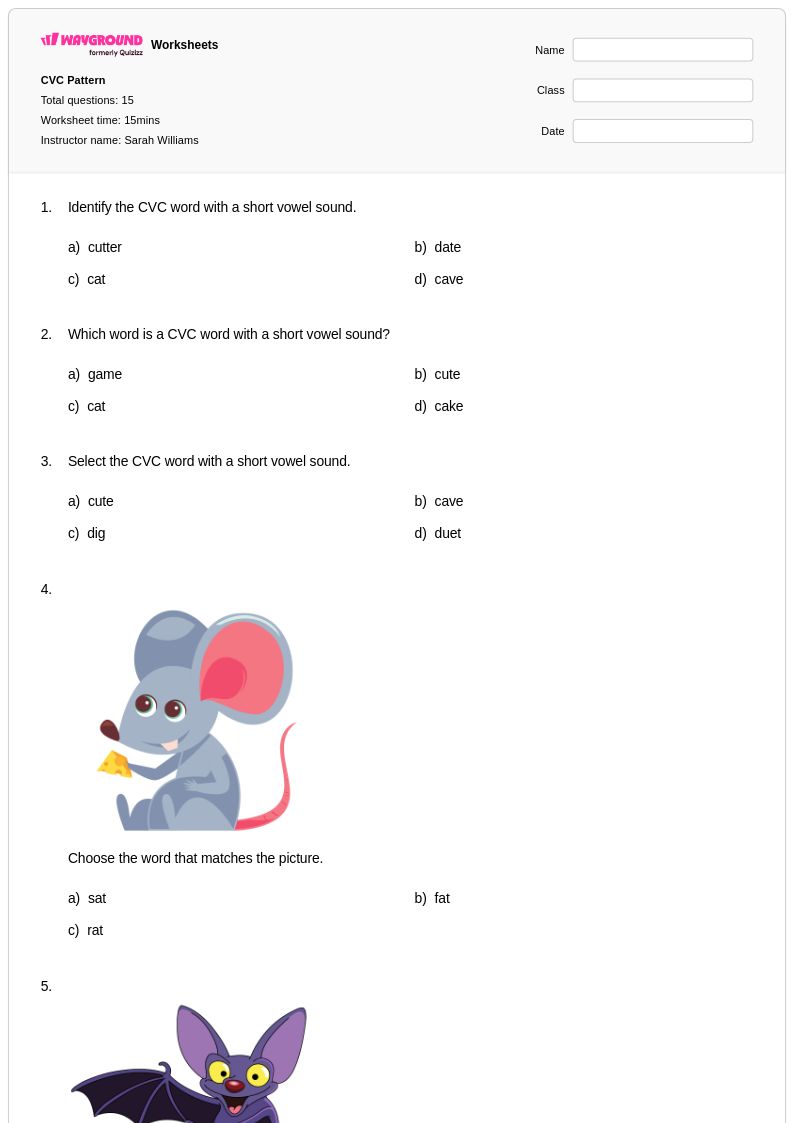
15 Q
2nd - Uni
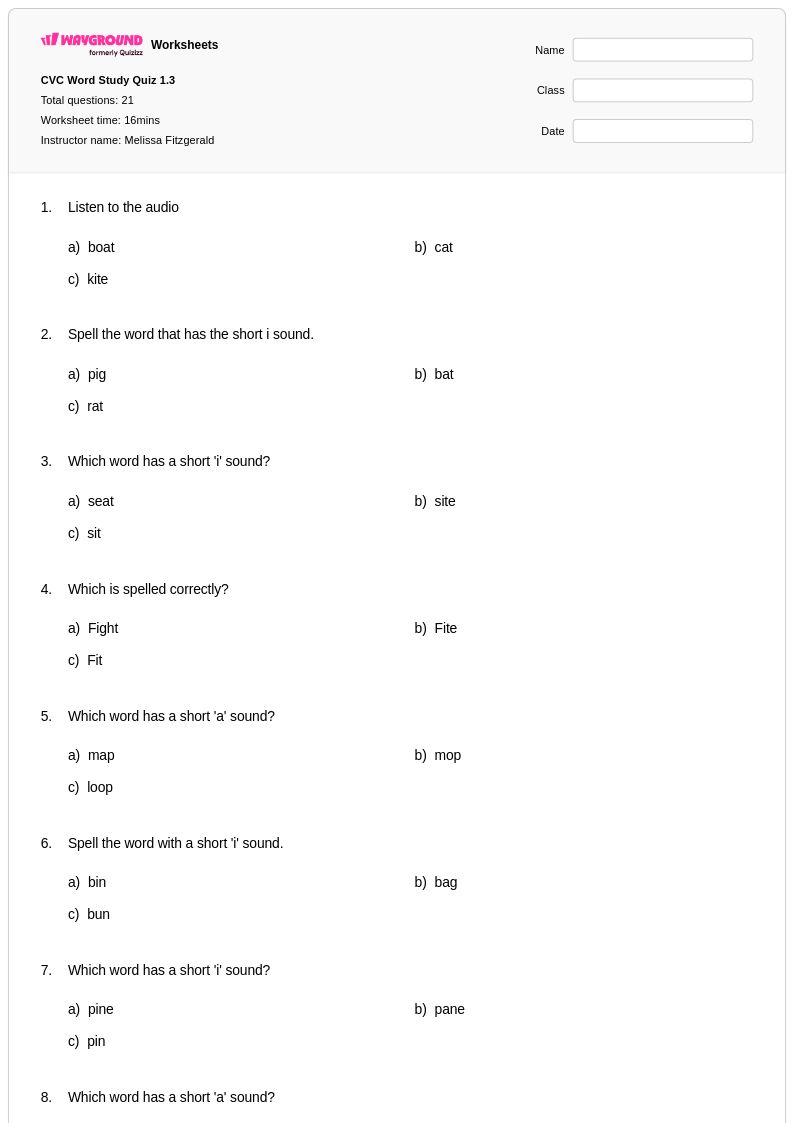
21 Q
2nd
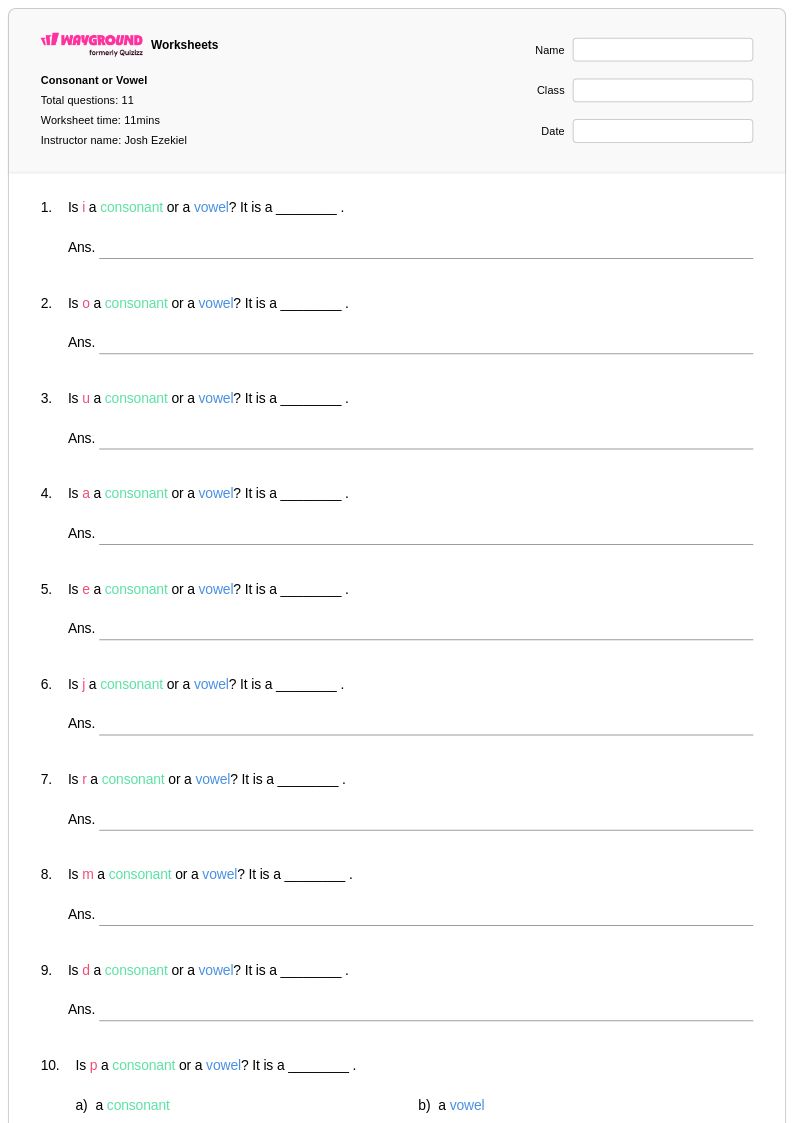
11 Q
1st - 5th
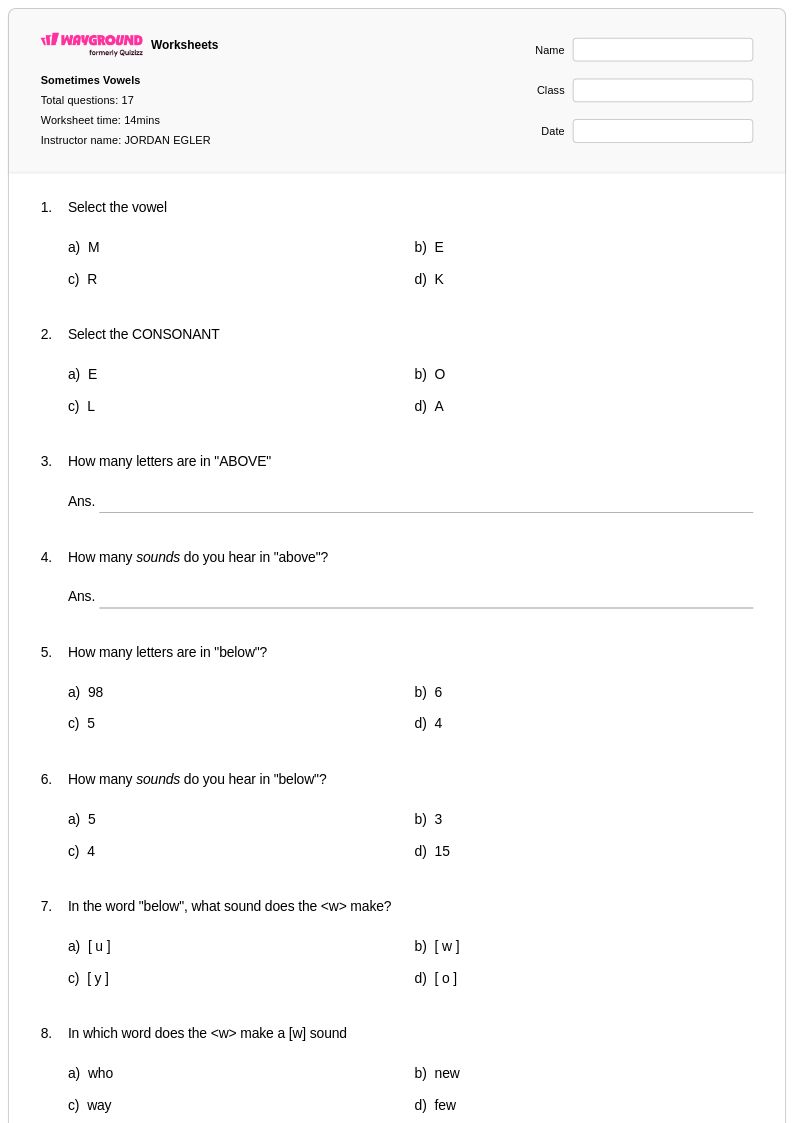
17 Q
2nd - 6th
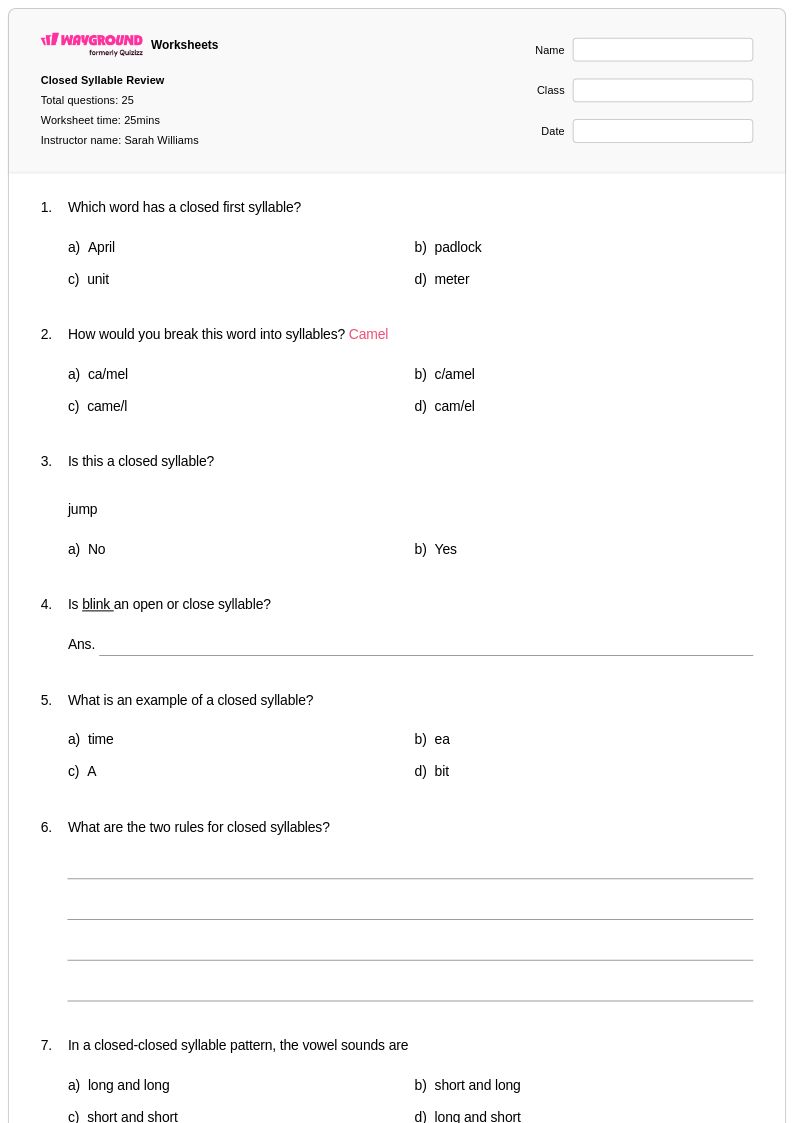
25 Q
2nd - Uni
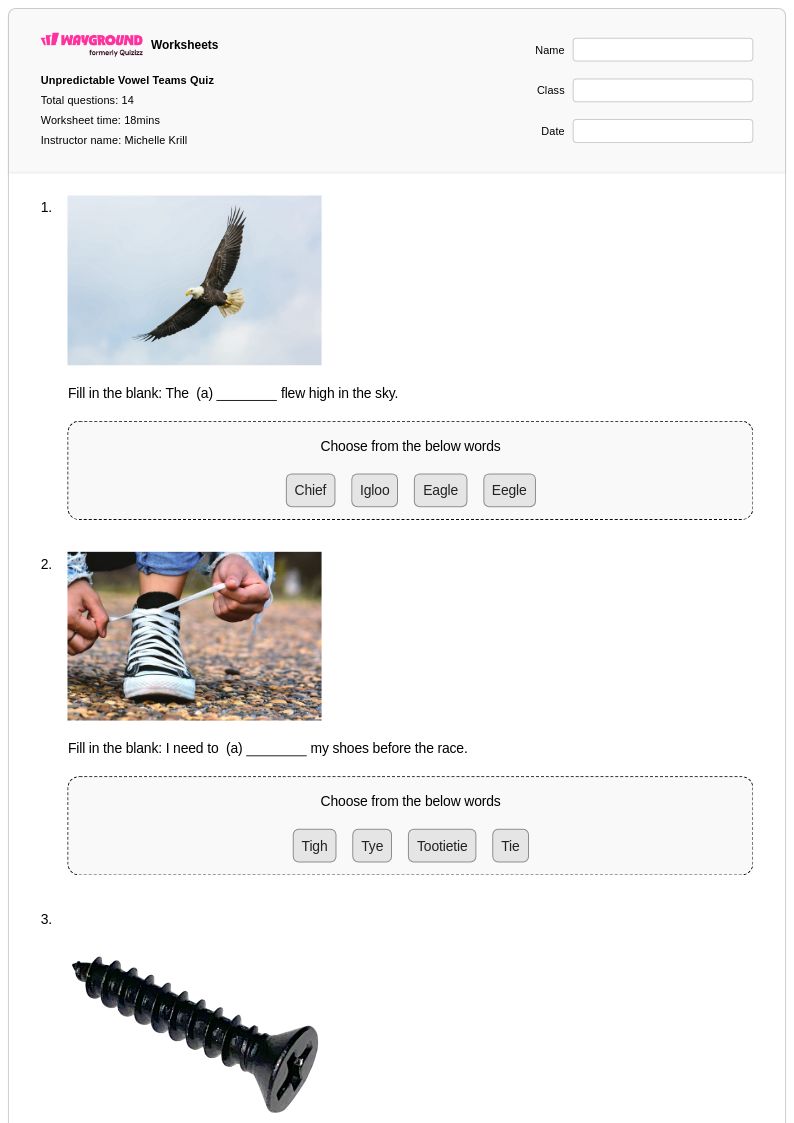
14 Q
2nd
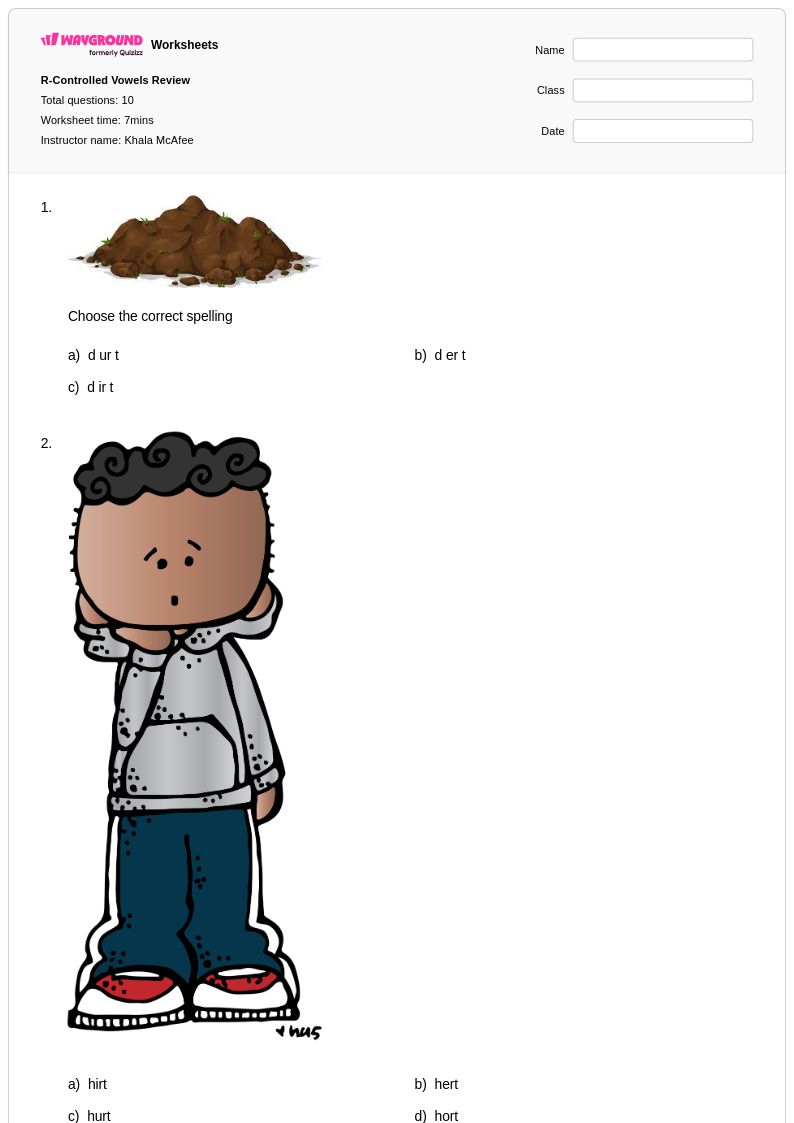
10 Q
2nd
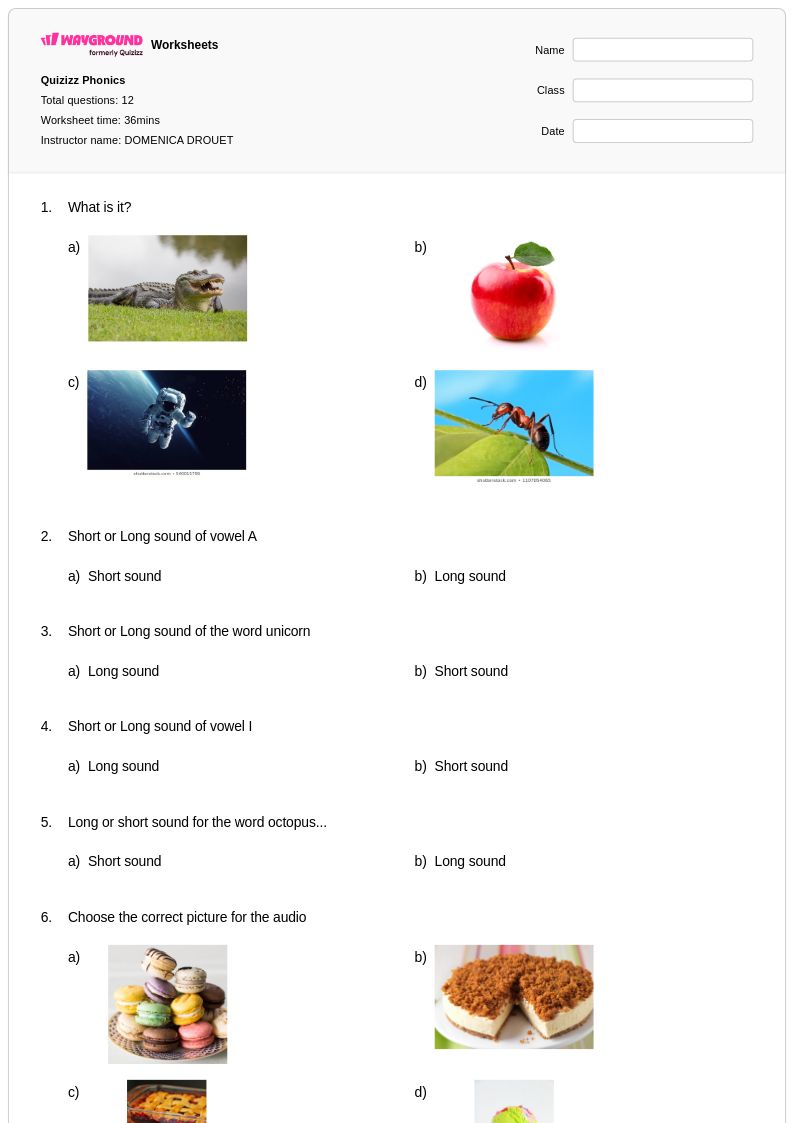
12 Q
2nd
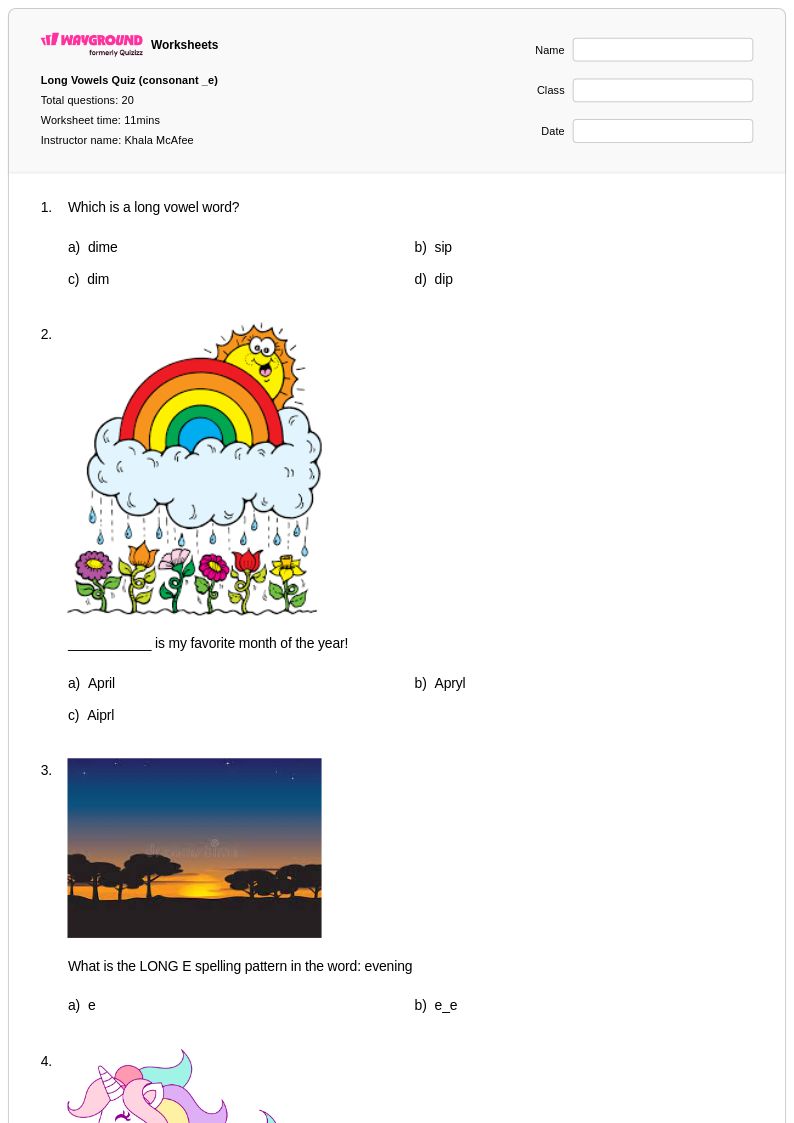
20 Q
2nd
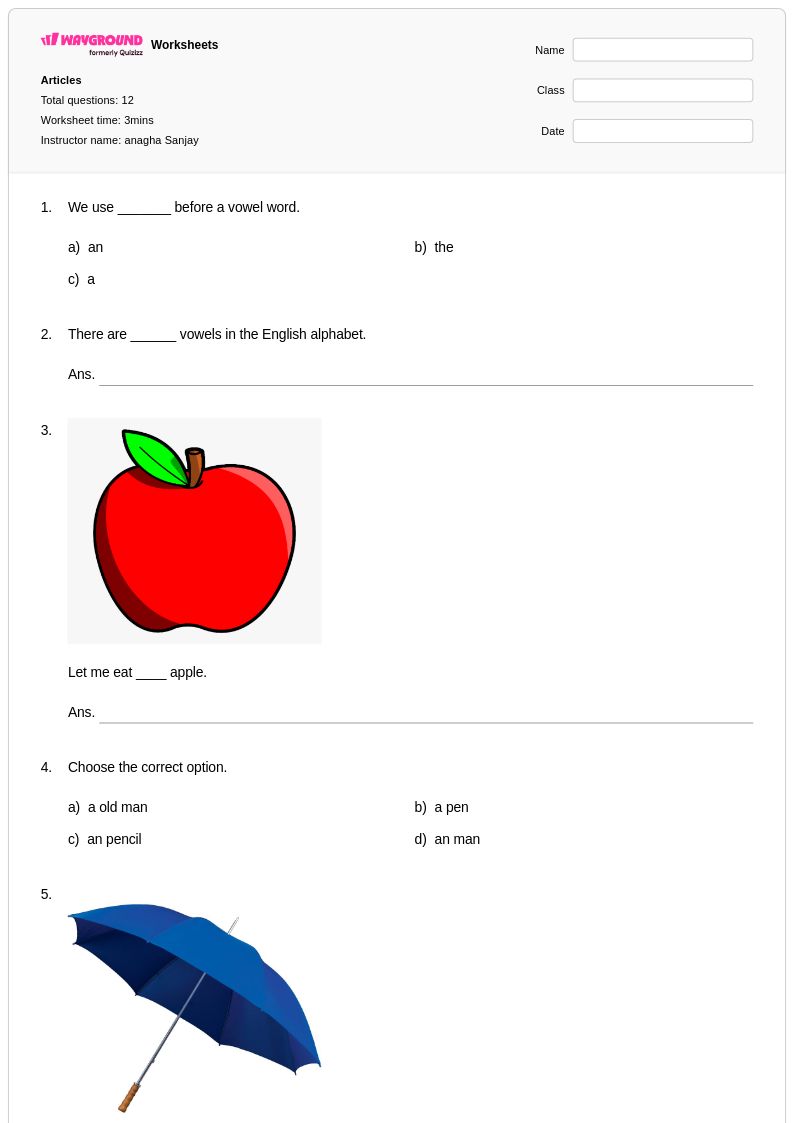
12 Q
1st - 2nd
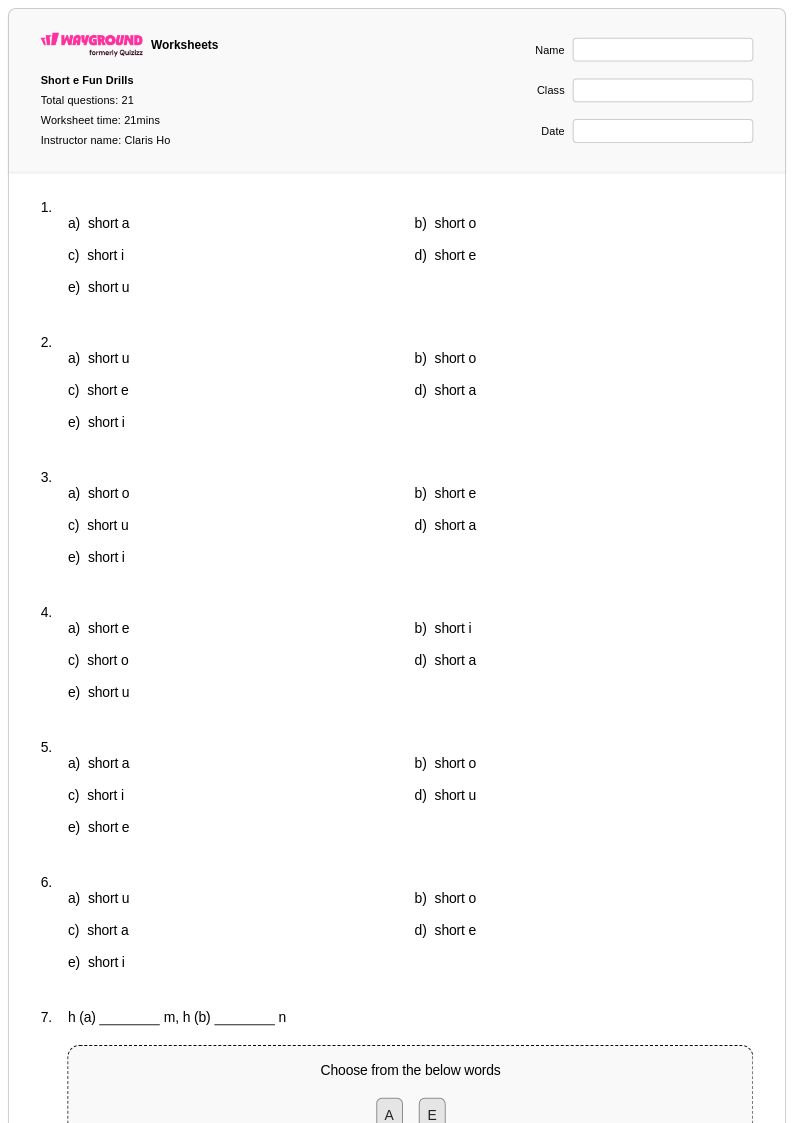
21 Q
2nd
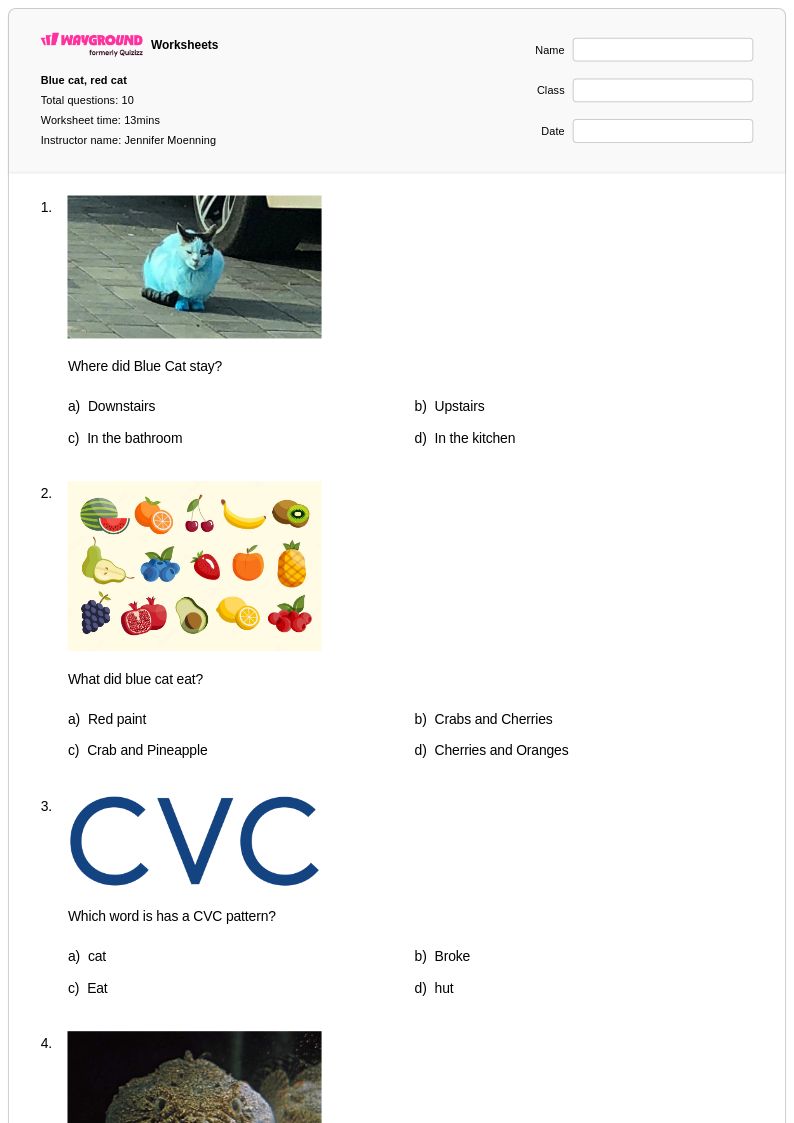
10 Q
2nd
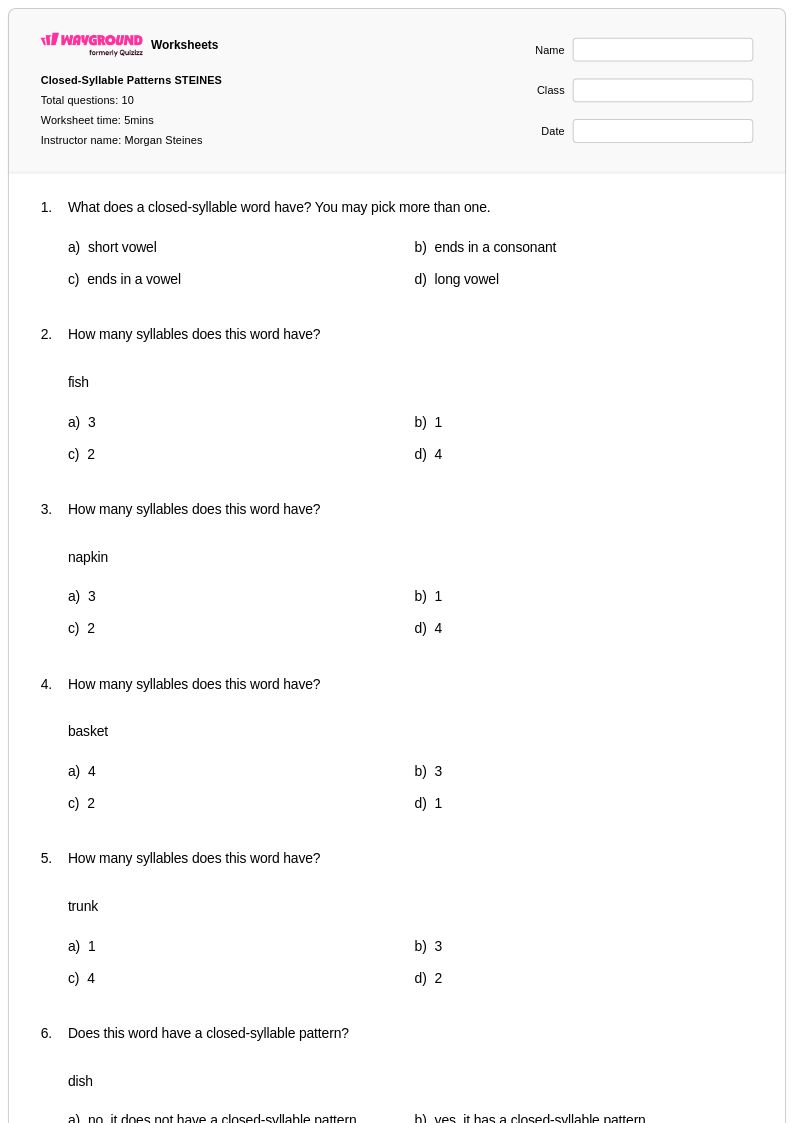
10 Q
2nd
Explore Vowel-consonant-vowel Pattern Worksheets by Grades
Explore Other Subject Worksheets for class 2
Explore printable Vowel-consonant-vowel Pattern worksheets for Class 2
Vowel-consonant-vowel pattern worksheets for Class 2 students available through Wayground (formerly Quizizz) provide comprehensive practice with one of the most fundamental phonics concepts in early literacy development. These educational resources strengthen students' ability to recognize and decode CVC words like "cat," "pen," and "dog," while building their understanding of how vowel sounds change within different consonant contexts. The worksheets feature systematic practice problems that guide second graders through identifying vowel sounds in the middle position, blending letter sounds to form complete words, and applying this pattern recognition to improve their reading fluency. Teachers can access these materials as free printables with accompanying answer keys, making assessment and progress monitoring straightforward while supporting independent practice opportunities.
Wayground's extensive collection draws from millions of teacher-created resources specifically designed to support phonics instruction at the Class 2 level, with robust search and filtering capabilities that allow educators to locate vowel-consonant-vowel pattern materials aligned to their curriculum standards. The platform's differentiation tools enable teachers to customize worksheets based on individual student needs, whether providing remediation for struggling readers or enrichment activities for advanced learners. These resources are available in both printable pdf format for traditional classroom use and digital formats for interactive learning experiences, giving educators the flexibility to integrate phonics practice seamlessly into their lesson planning. The comprehensive nature of these worksheet collections supports systematic skill building while providing teachers with reliable tools for ongoing assessment and targeted instruction in this critical phonics pattern.
FAQs
How do I teach the vowel-consonant-vowel pattern to early readers?
What exercises help students practice the vowel-consonant-vowel pattern?
What mistakes do students commonly make with the vowel-consonant-vowel pattern?
How can I differentiate VCV phonics instruction for struggling readers?
How do I use vowel-consonant-vowel pattern worksheets from Wayground in my classroom?
At what reading level should students learn the vowel-consonant-vowel pattern?