Free Printable Vowel-consonant-vowel Pattern Worksheets for Class 3
Discover free Class 3 phonics worksheets and printables focusing on vowel-consonant-vowel patterns, complete with practice problems and answer keys to help students master this essential reading skill through Wayground's comprehensive collection.
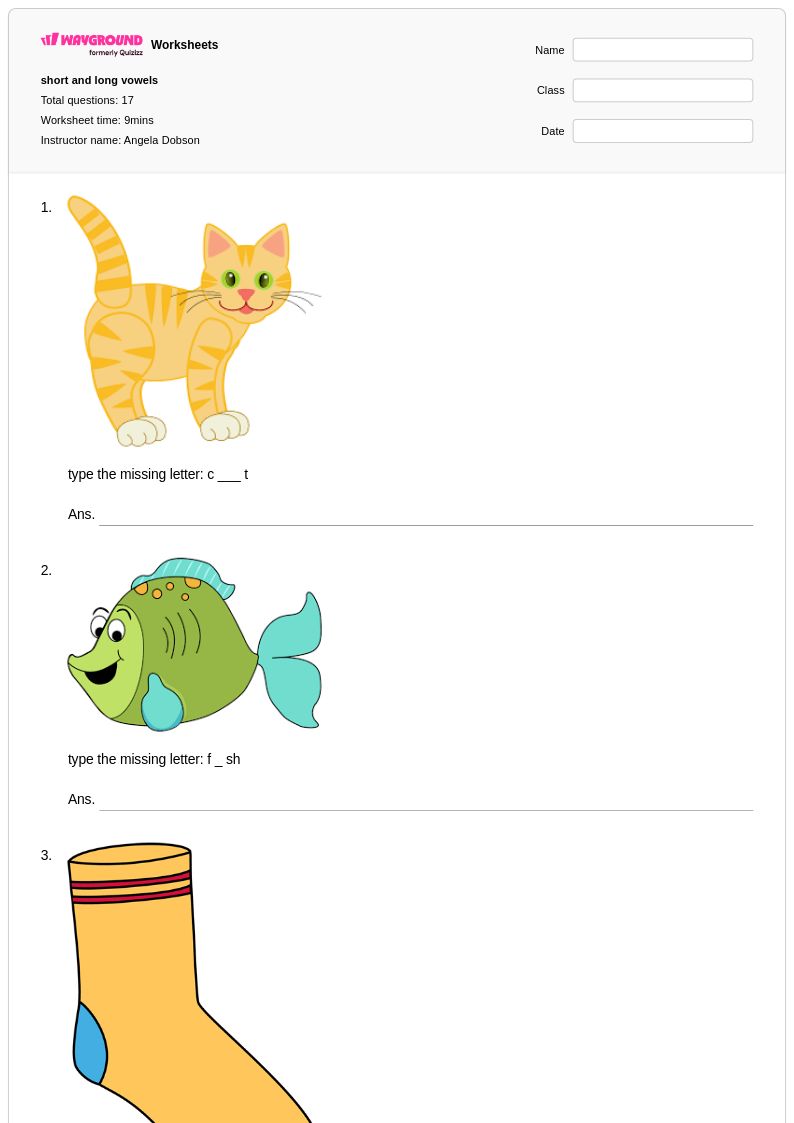
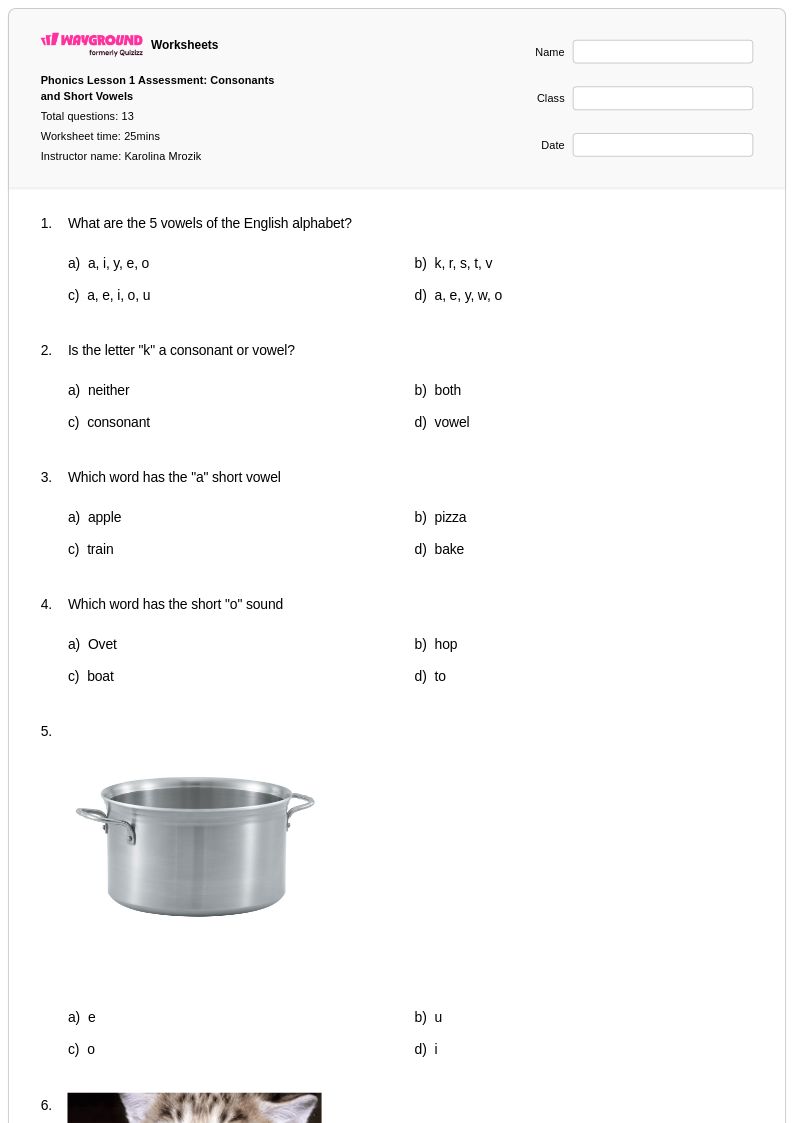
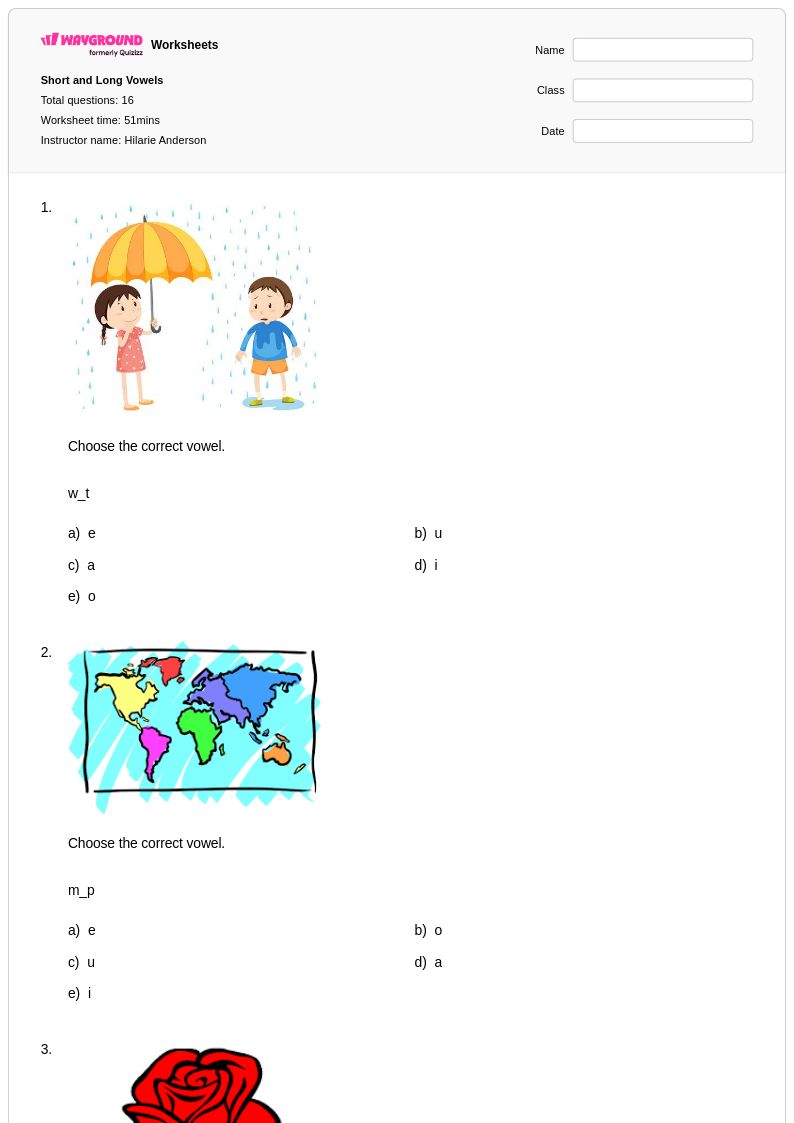
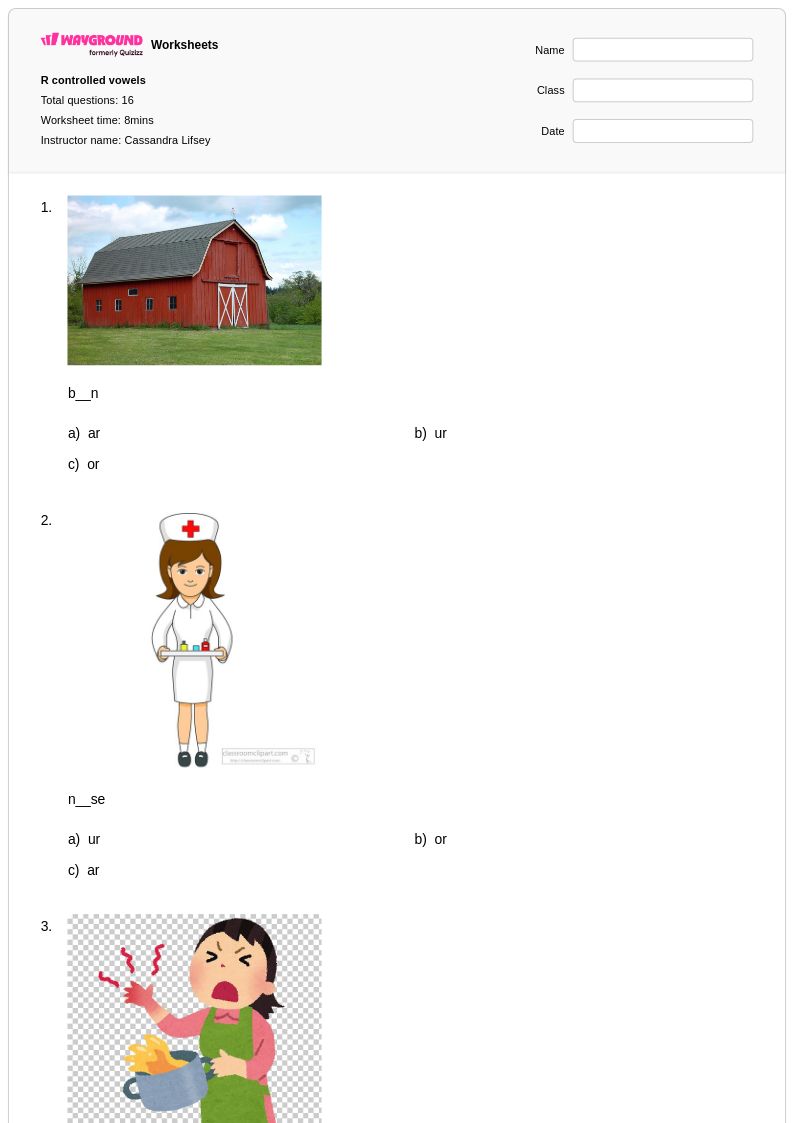
Explore printable Vowel-consonant-vowel Pattern worksheets for Class 3
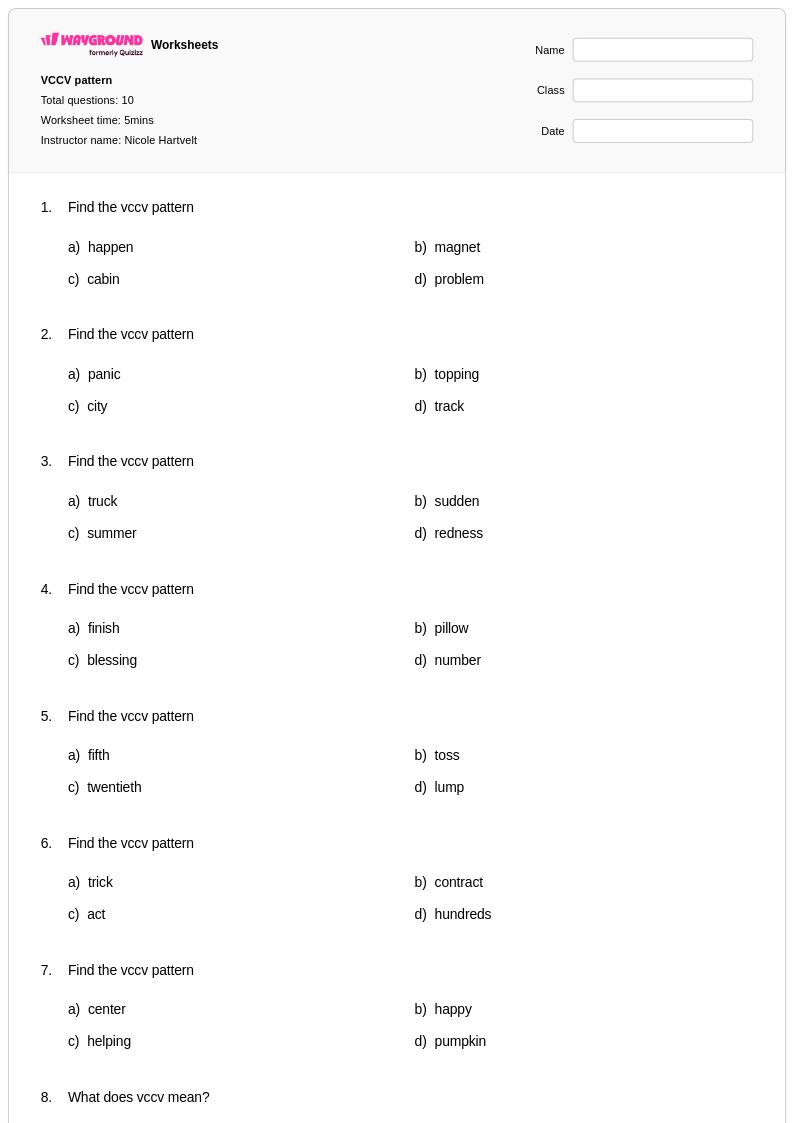
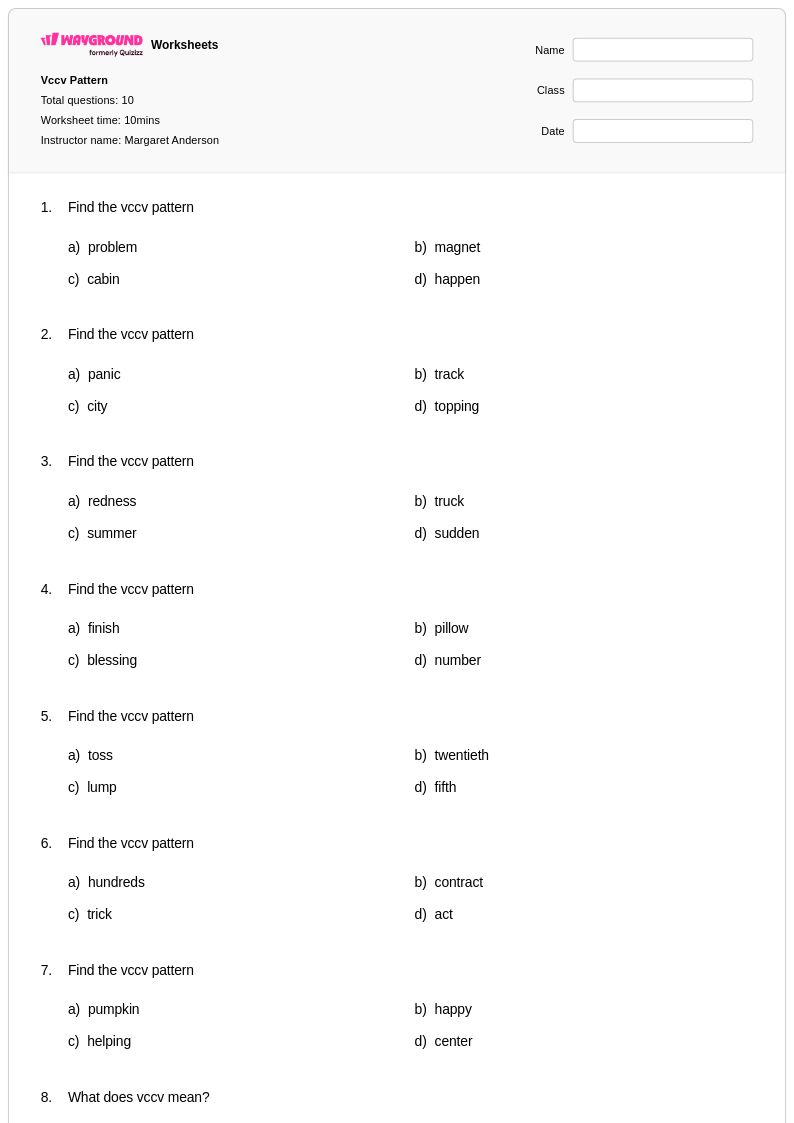
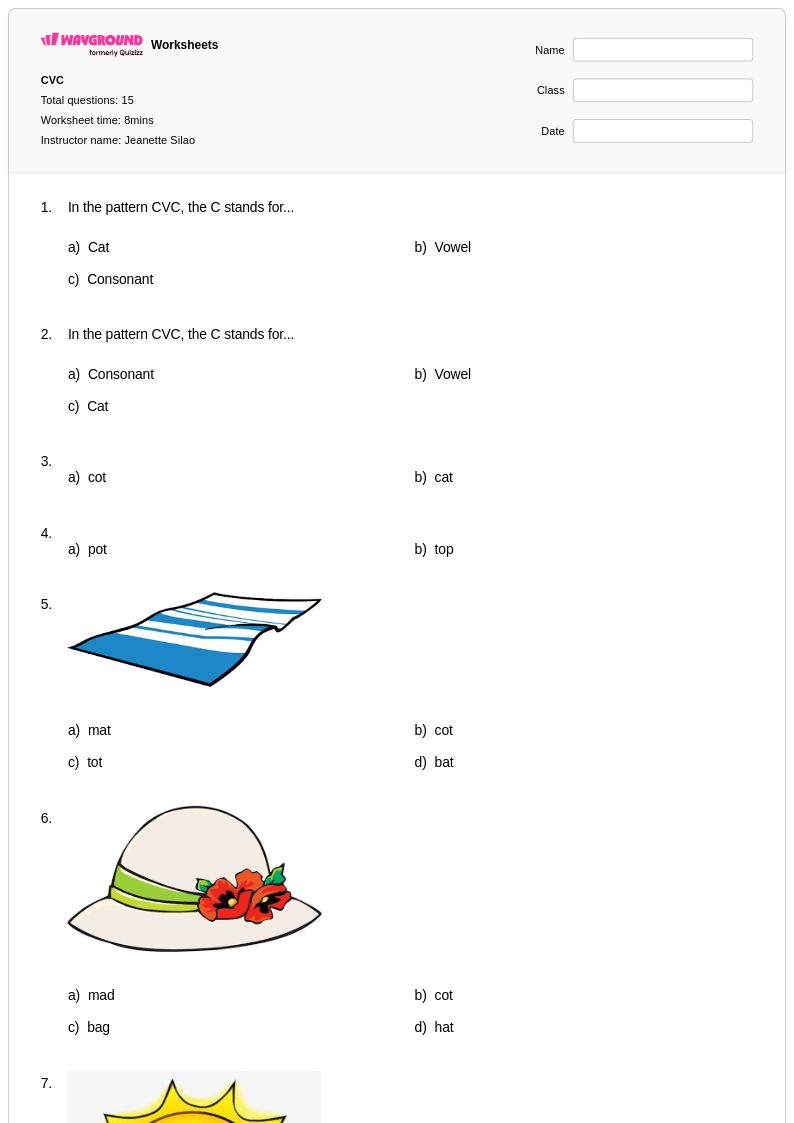
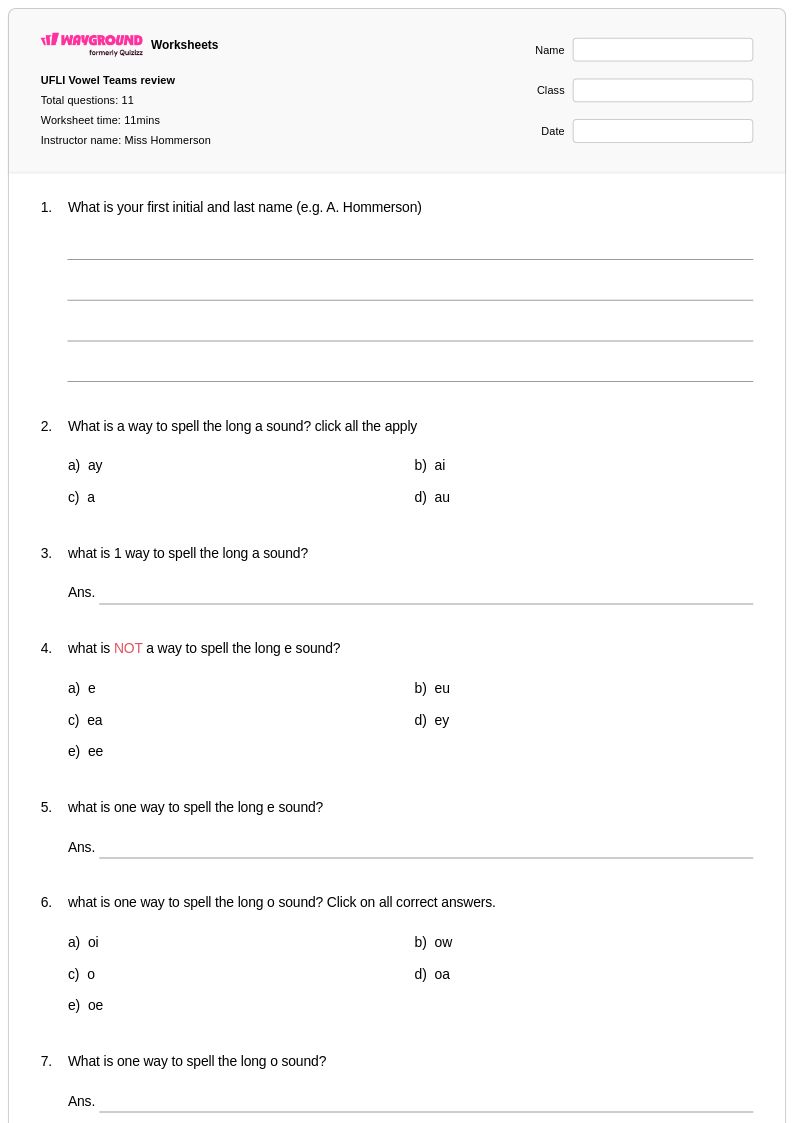
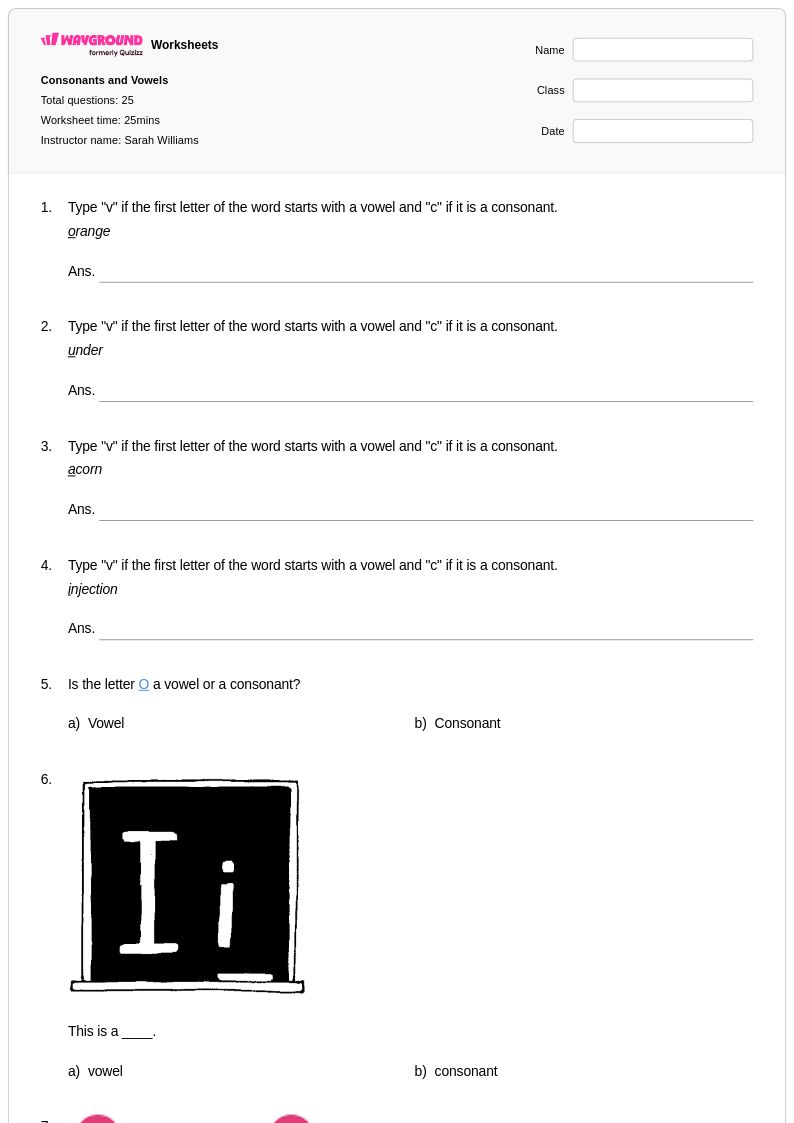
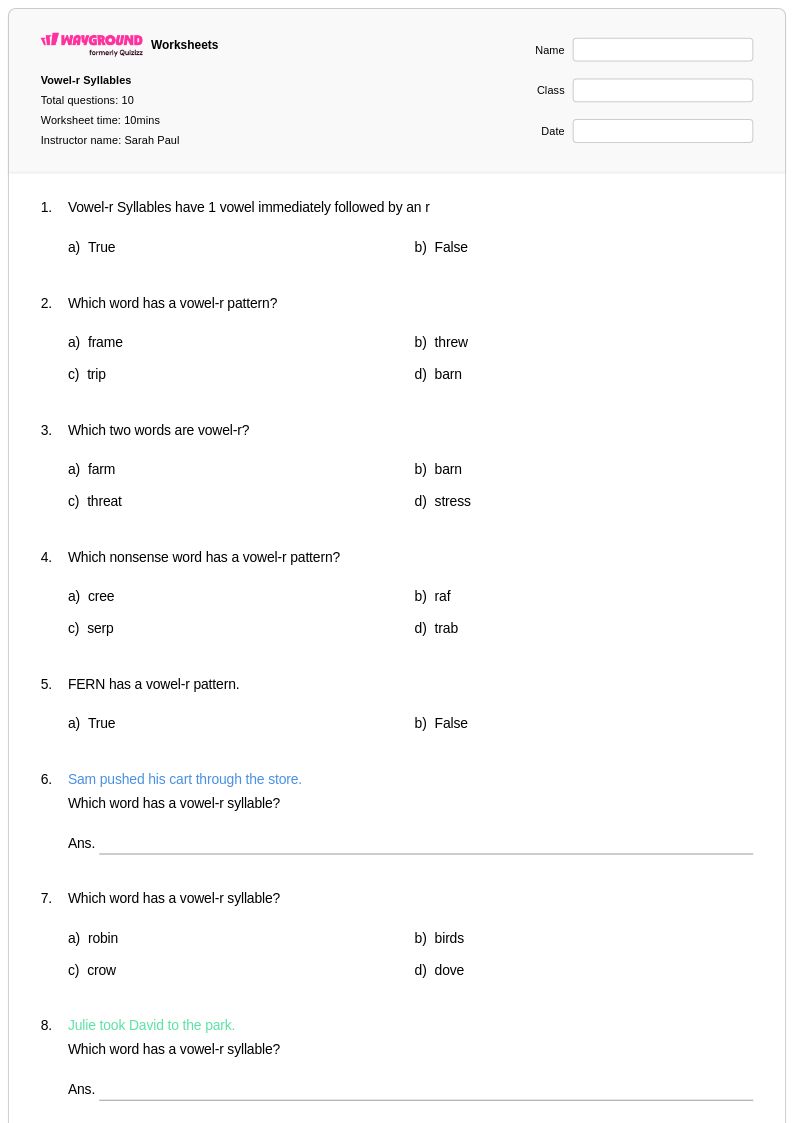
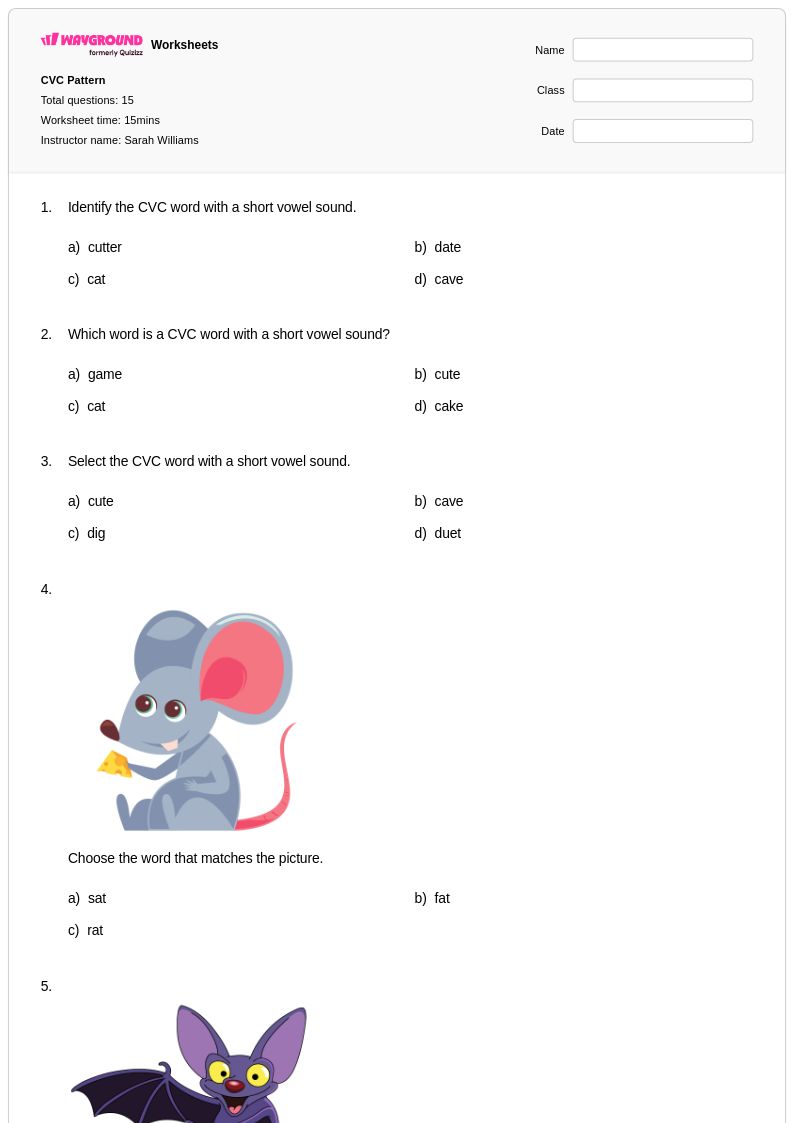
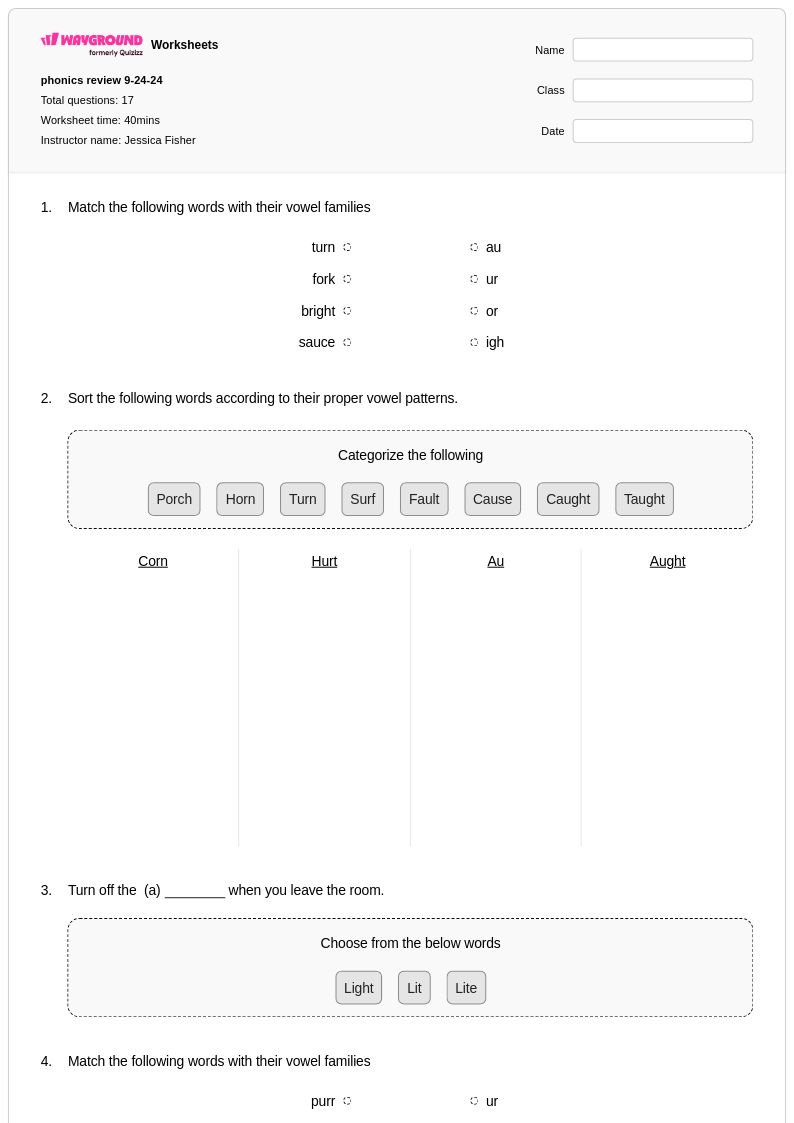
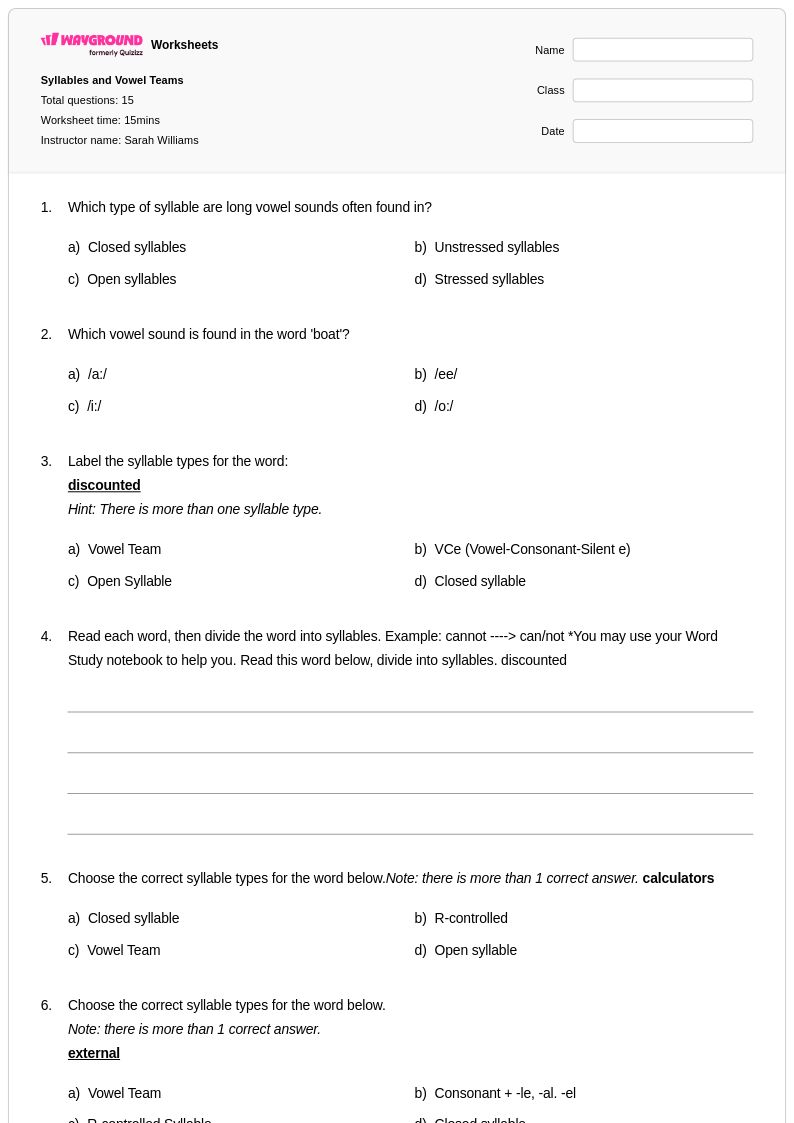
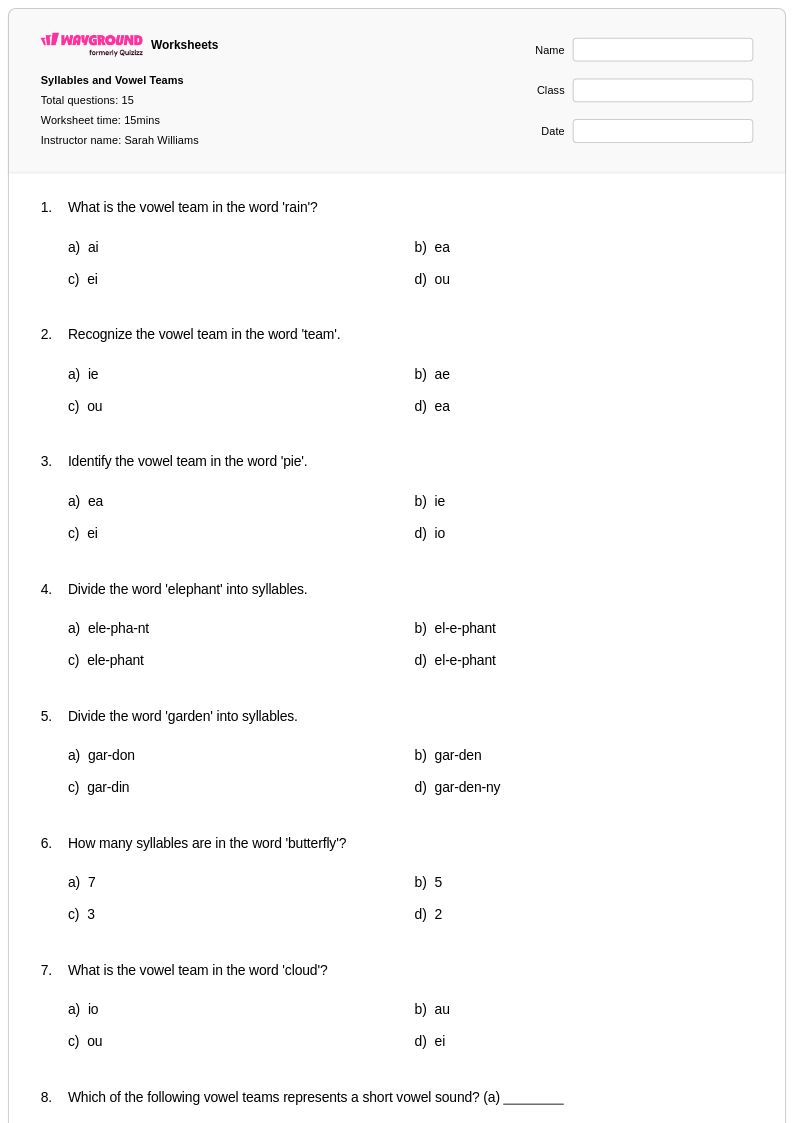
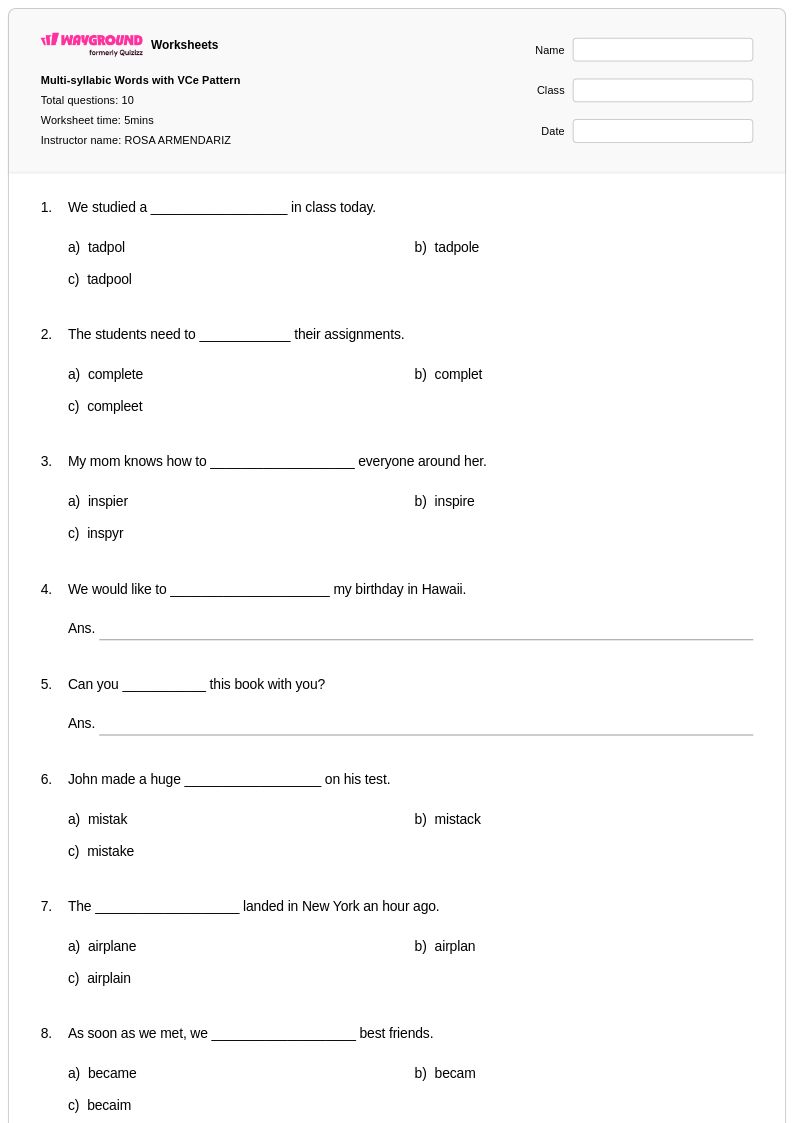
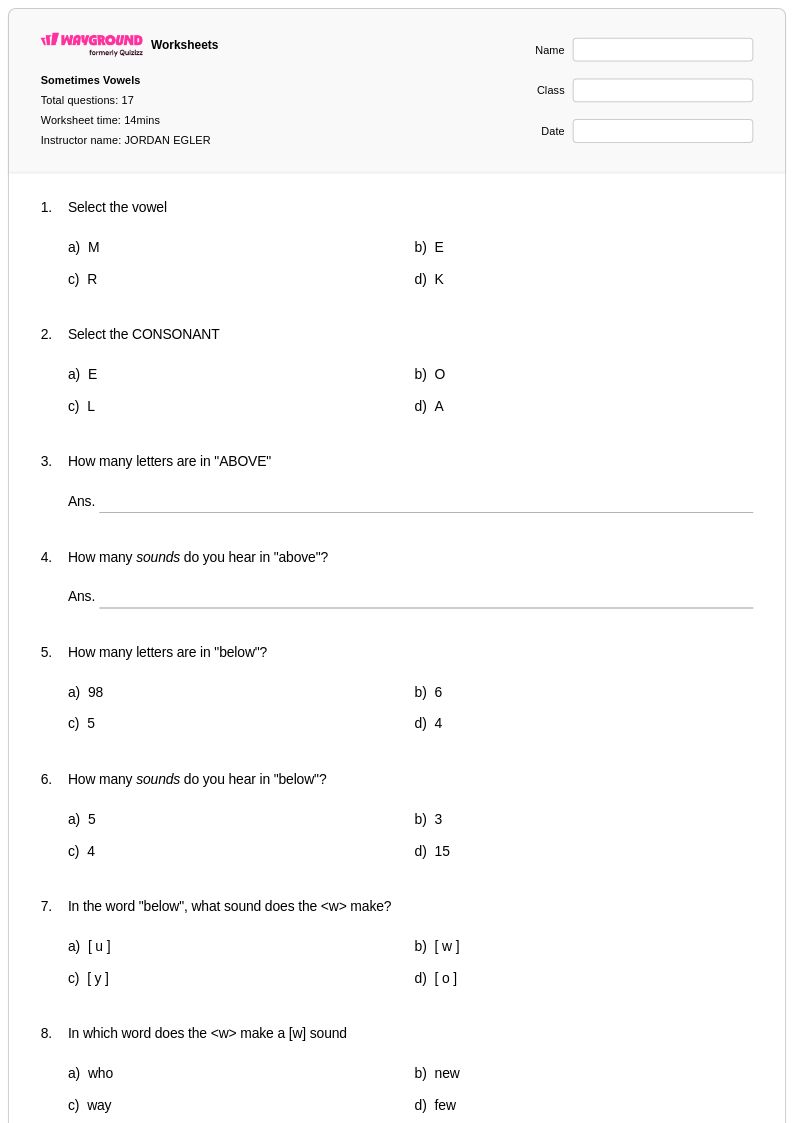
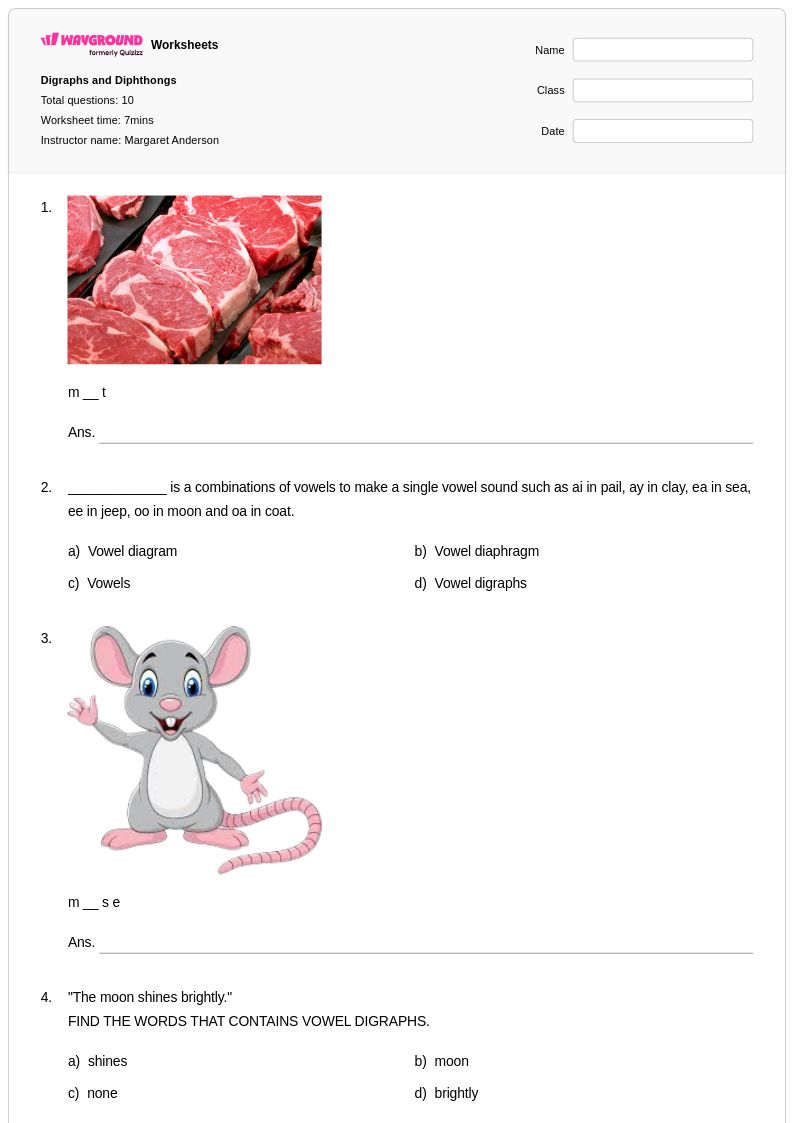
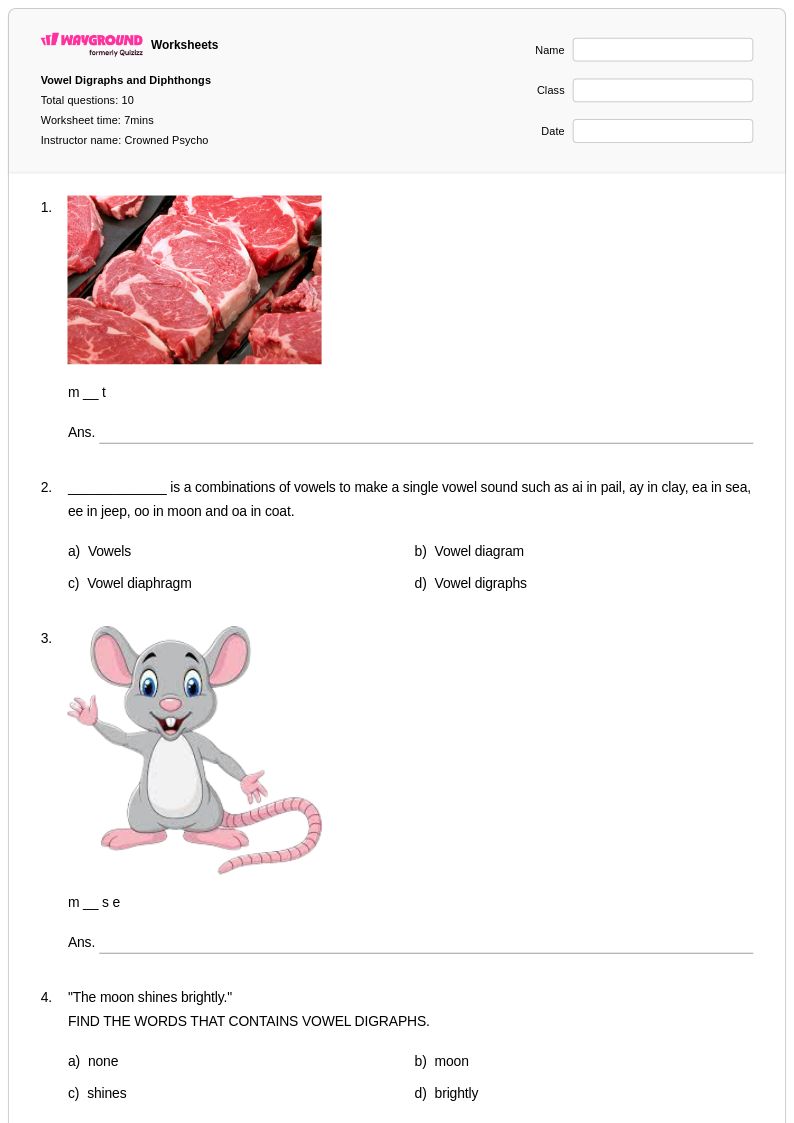
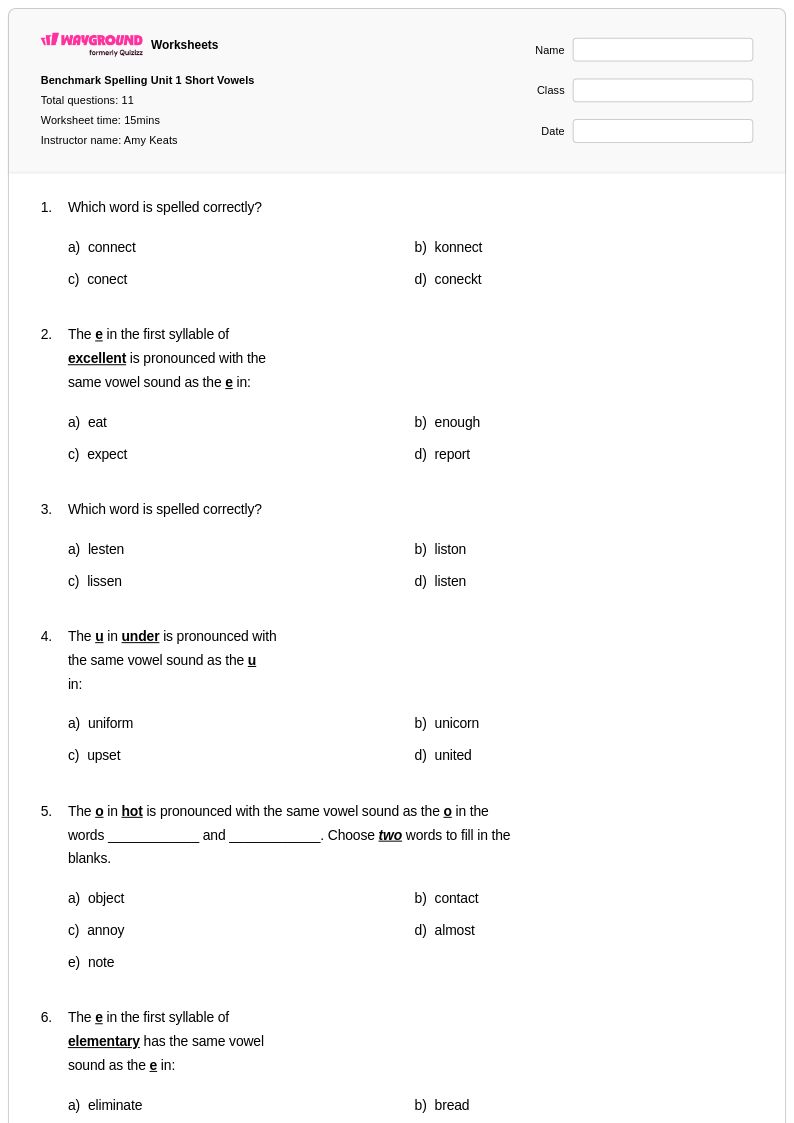
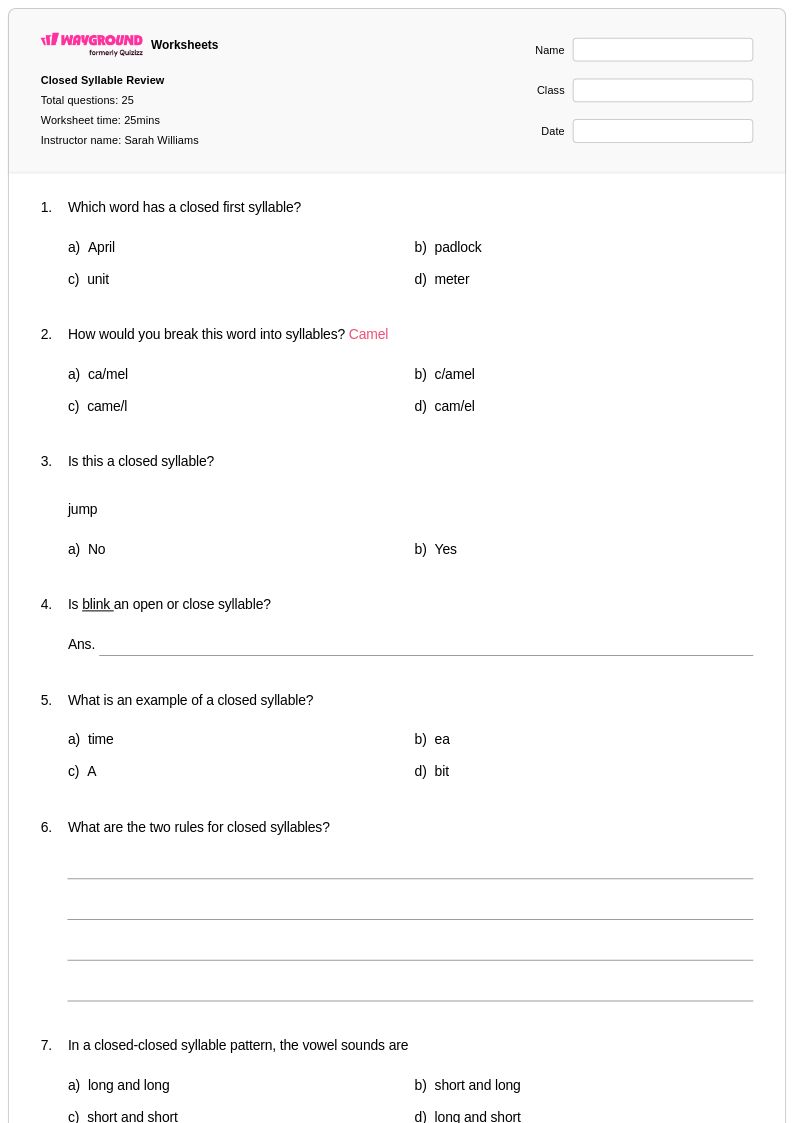
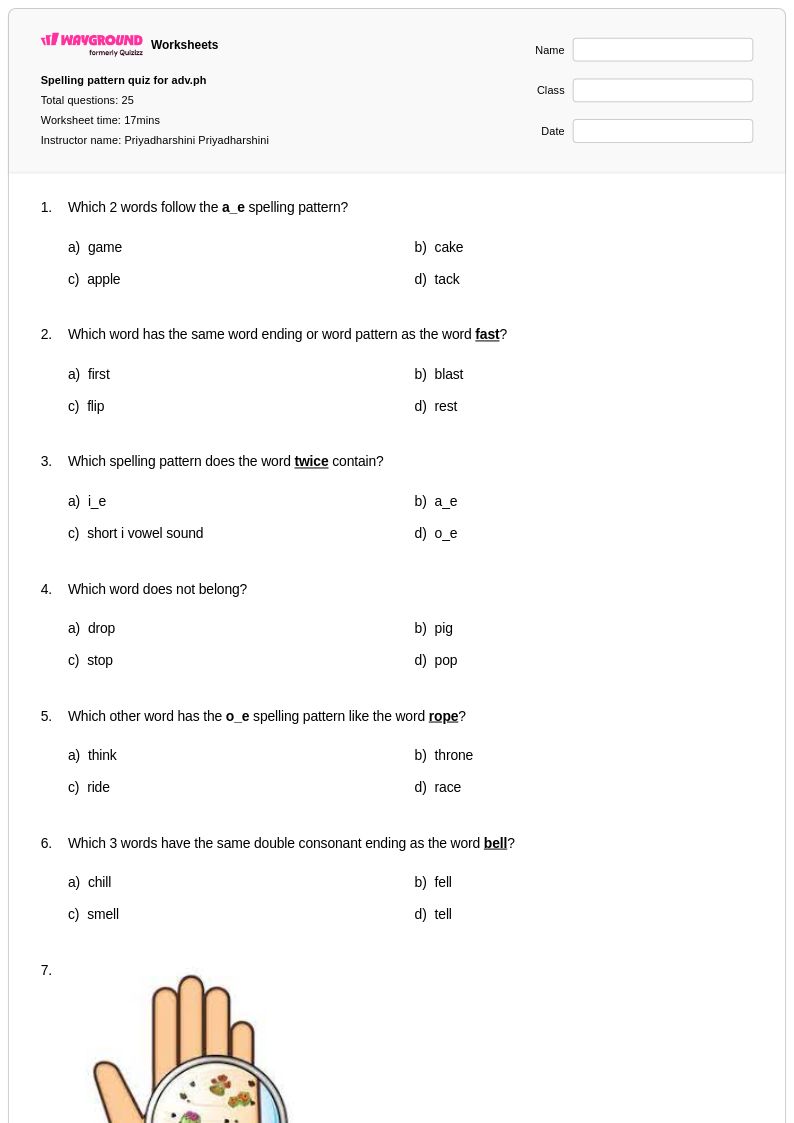
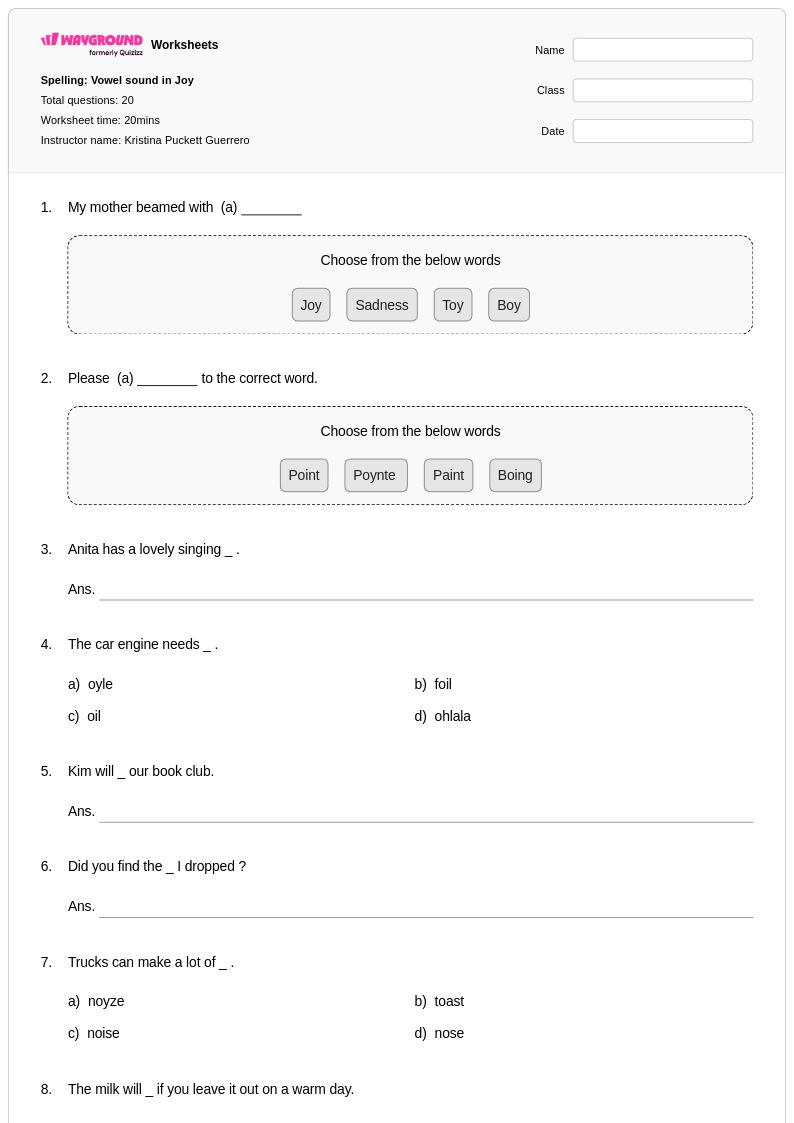
Vowel-consonant-vowel pattern worksheets for Class 3 students available through Wayground (formerly Quizizz) provide systematic practice with one of the most fundamental phonics concepts in early reading development. These comprehensive worksheets help third-grade learners recognize and decode words that follow the VCV pattern, where the first vowel typically produces a long sound, such as in words like "piano," "robot," and "music." Students strengthen their phonetic awareness and reading fluency through carefully structured practice problems that progress from simple identification exercises to more complex word analysis tasks. Each worksheet collection includes a complete answer key and is available as free printables in convenient PDF format, allowing educators to seamlessly integrate these essential phonics activities into their literacy instruction.
Wayground (formerly Quizizz) empowers teachers with an extensive library of millions of teacher-created resources specifically designed for vowel-consonant-vowel pattern instruction and other critical Class 3 phonics skills. The platform's robust search and filtering capabilities enable educators to quickly locate worksheets that align with specific learning standards and match their students' individual needs. Teachers can easily customize these digital and printable materials to support differentiated instruction, whether providing additional practice for students requiring phonics remediation or offering enrichment activities for advanced learners. The flexible PDF format ensures that these vowel-consonant-vowel pattern worksheets can be seamlessly incorporated into lesson planning, homework assignments, literacy centers, or assessment preparation, giving educators the tools they need to support every student's reading development journey.
FAQs
How do I teach the vowel-consonant-vowel pattern to early readers?
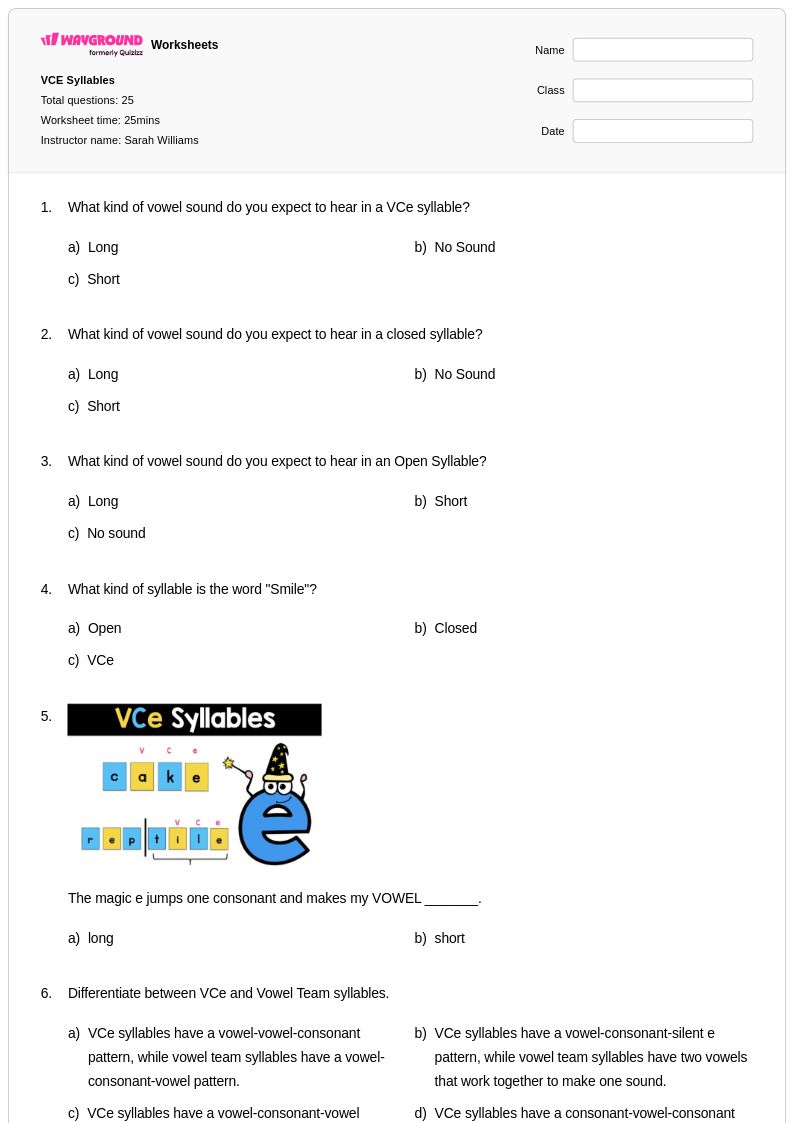
Introduce the vowel-consonant-vowel (VCV) pattern by contrasting minimal pairs — words like 'cap' and 'cape' or 'kit' and 'kite' — so students can hear the shift from short to long vowel sound. Explain that the final 'e' is silent but signals the first vowel to say its long sound. Building from recognition to application, move students from sorting activities to spelling and then to reading words in context.
What exercises help students practice the vowel-consonant-vowel pattern?
Effective practice includes word identification tasks where students mark or circle VCV words, spelling exercises where students add silent 'e' to CVC words and read the result, and sentence-level reading comprehension tasks that embed VCV words in context. Layering these exercise types — recognition first, then production, then reading — reinforces the pattern systematically and builds automaticity over time.
What mistakes do students commonly make with the vowel-consonant-vowel pattern?
The most common error is applying the short vowel sound even when a silent 'e' is present — reading 'hope' as 'hop' or 'pine' as 'pin.' Students also frequently misread words that look like VCV words but follow different rules, such as 'have' or 'come,' which can cause confusion. Teachers should explicitly flag these exception words rather than letting students discover them through trial and error, as undifferentiated exposure can erode confidence in the rule.
How can I differentiate VCV phonics instruction for struggling readers?
For students who struggle with the VCV pattern, reducing the number of answer choices in practice activities can lower cognitive load and help them focus on the target pattern rather than decoding all options simultaneously. On Wayground, teachers can enable reduced answer choices and read-aloud support for individual students while the rest of the class works with standard settings, and these accommodations are saved and reusable across future sessions.
How do I use vowel-consonant-vowel pattern worksheets from Wayground in my classroom?
Wayground's vowel-consonant-vowel pattern worksheets are available as printable PDFs for traditional classroom use and in digital formats for technology-integrated learning environments, including the option to host them as a quiz directly on Wayground. Complete answer keys are included with every worksheet, reducing prep time and making it straightforward to use the materials for guided practice, independent work, or remediation sessions.
At what reading level should students learn the vowel-consonant-vowel pattern?
The VCV or CVCe pattern is typically introduced in kindergarten or first grade, once students have a solid foundation in short vowel CVC words. Mastery is reinforced through second grade as students encounter longer and less common VCV words in decodable texts. Students who have not yet secured the pattern by second grade may benefit from targeted remediation before moving to multisyllabic word work.