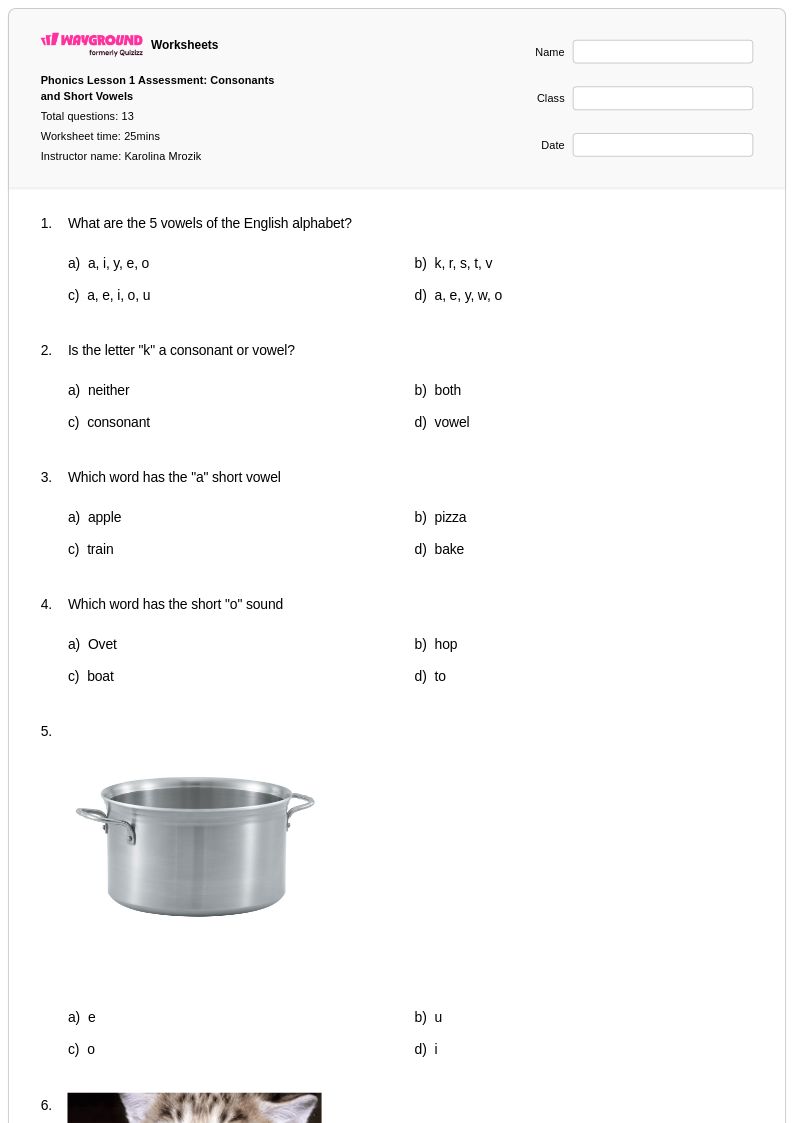
Free Printable Final Consonant Deletion Worksheets for Class 3
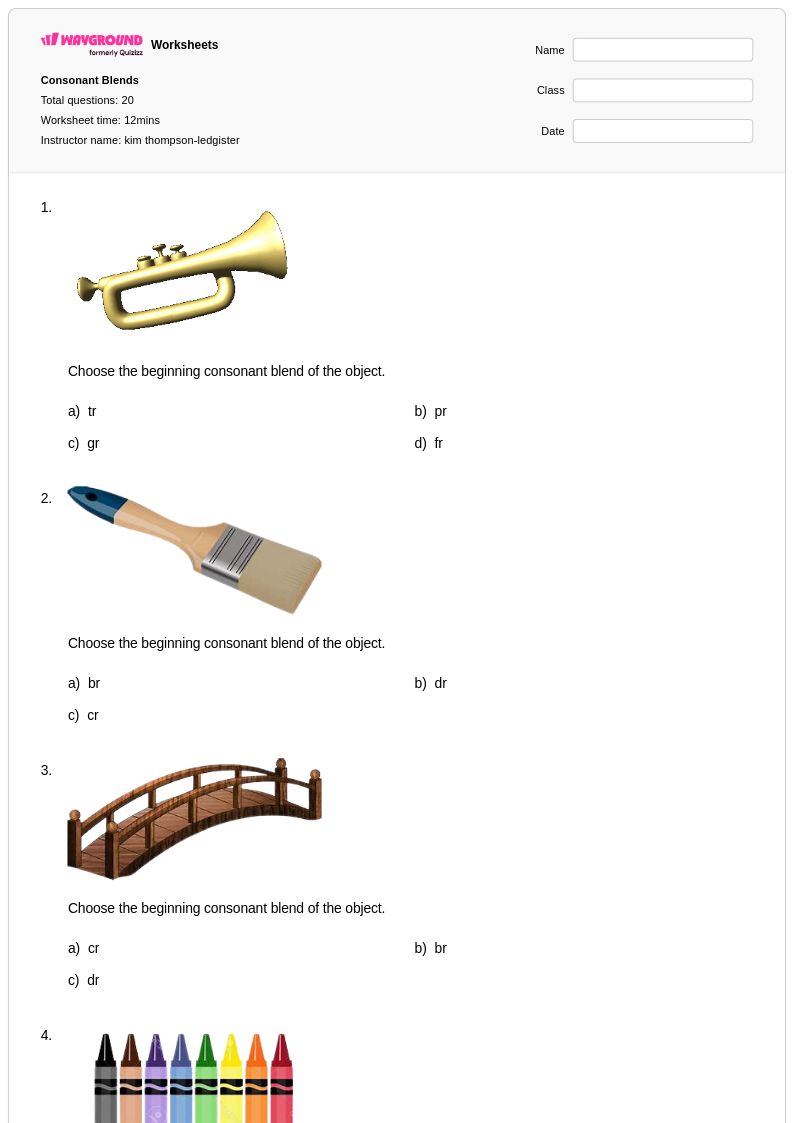
Class 3 final consonant deletion worksheets from Wayground help students master phonics skills through engaging printables and practice problems, complete with answer keys for effective learning support.
Explore printable Final Consonant Deletion worksheets for Class 3
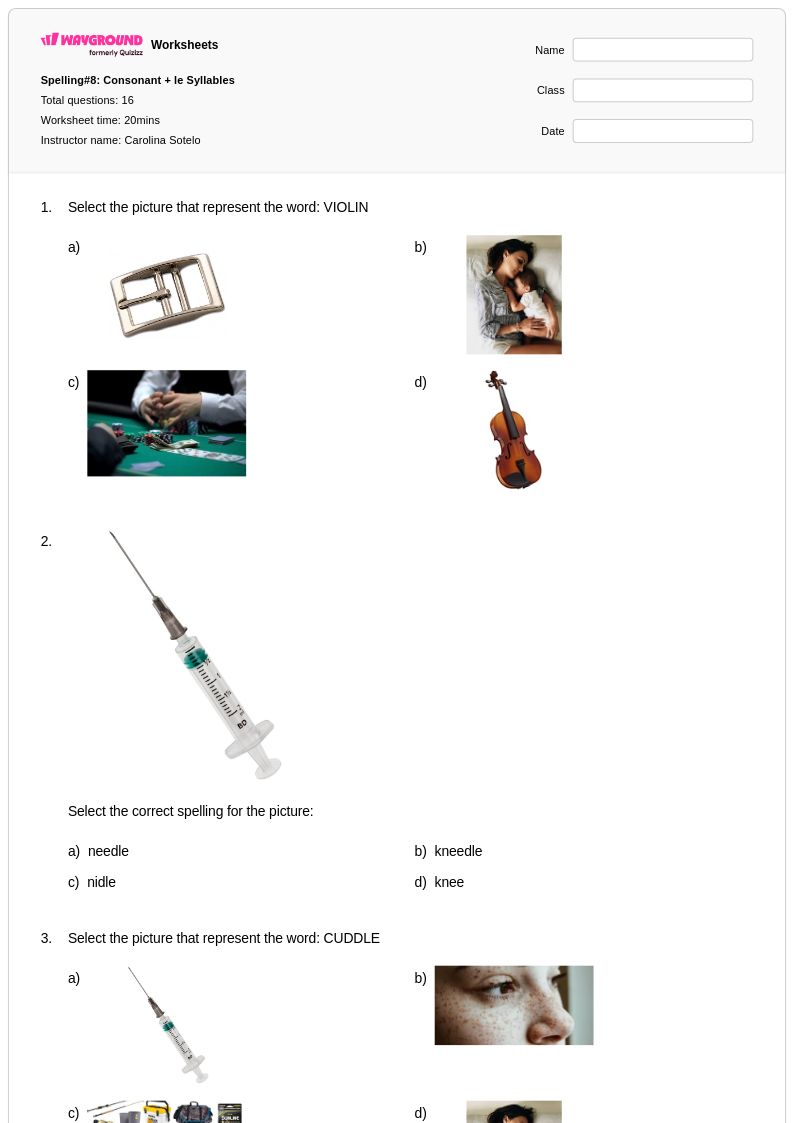
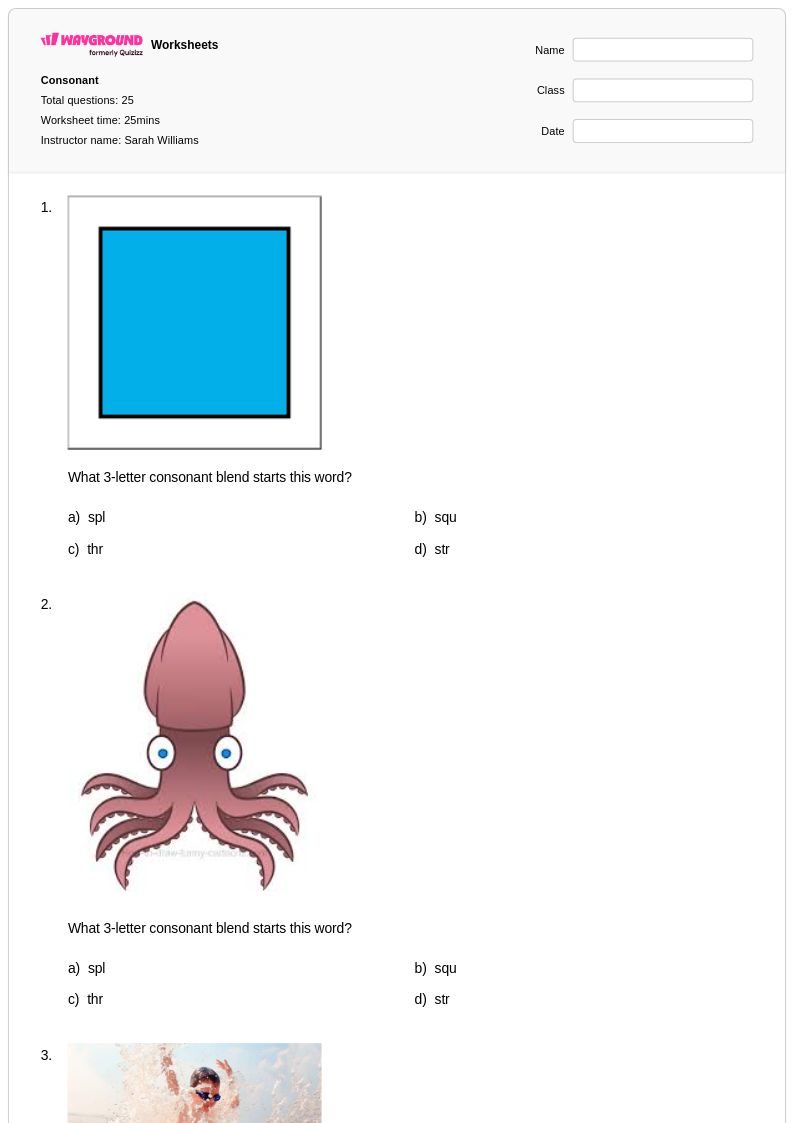
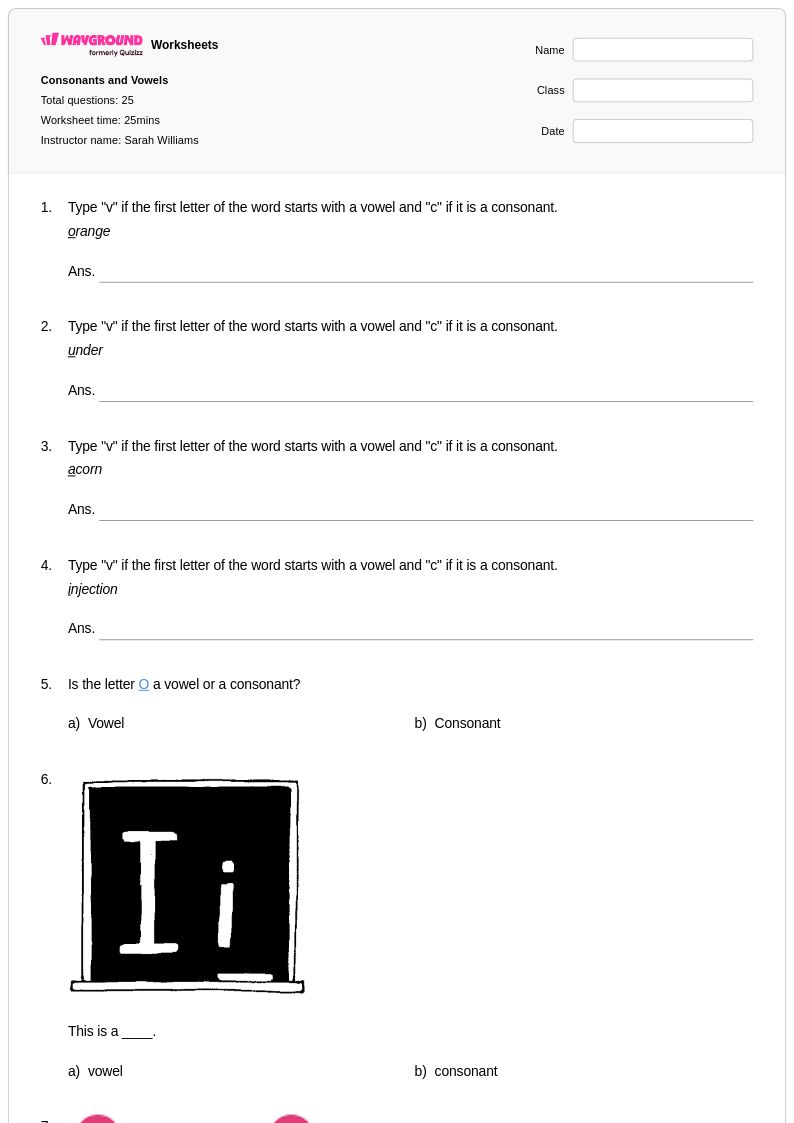
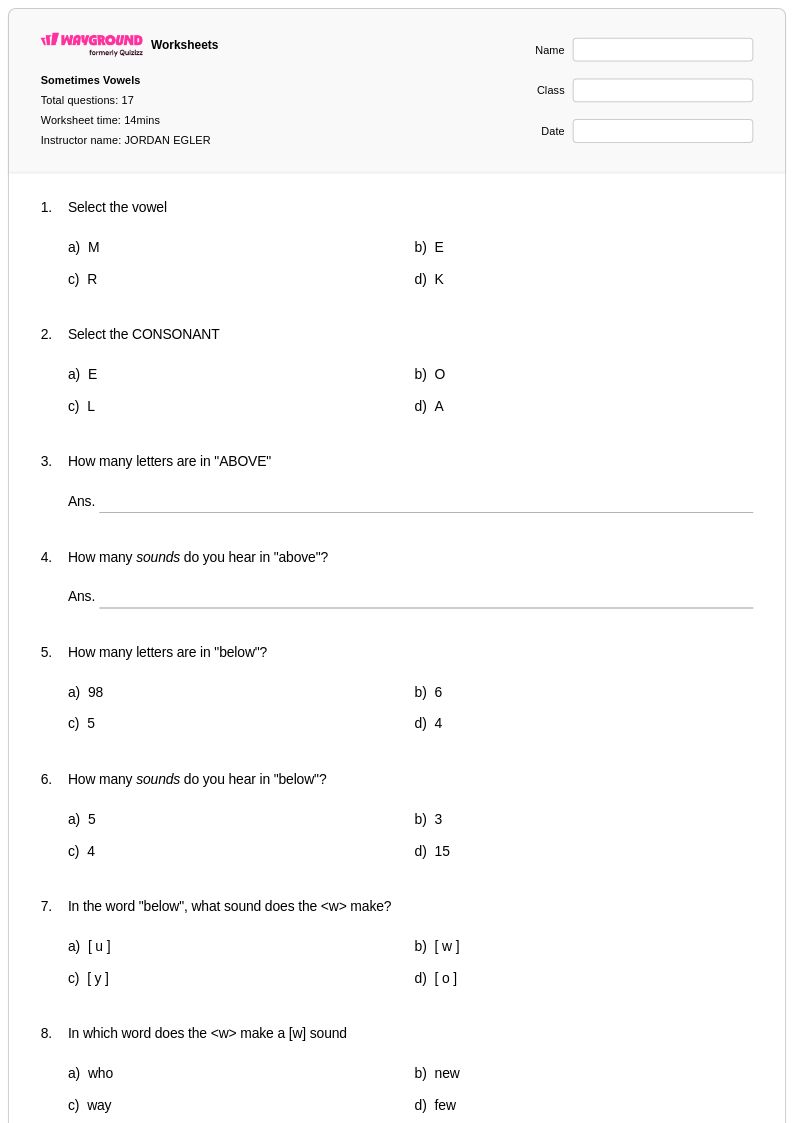
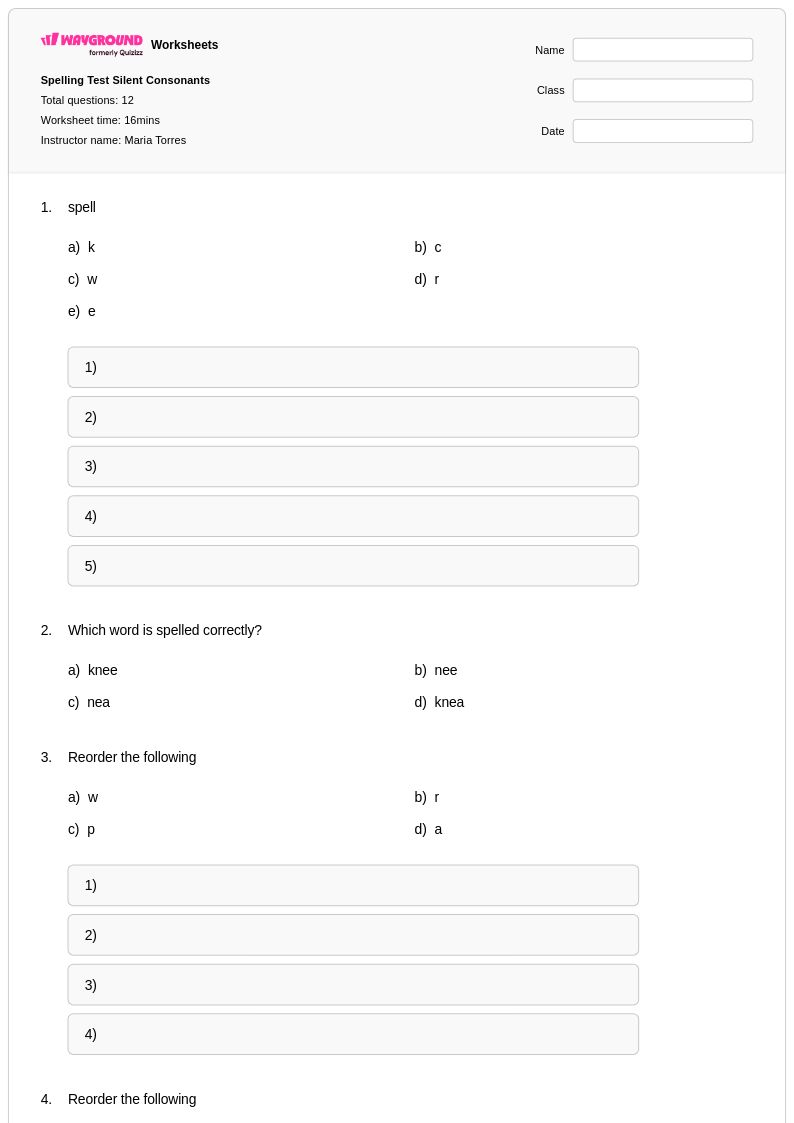
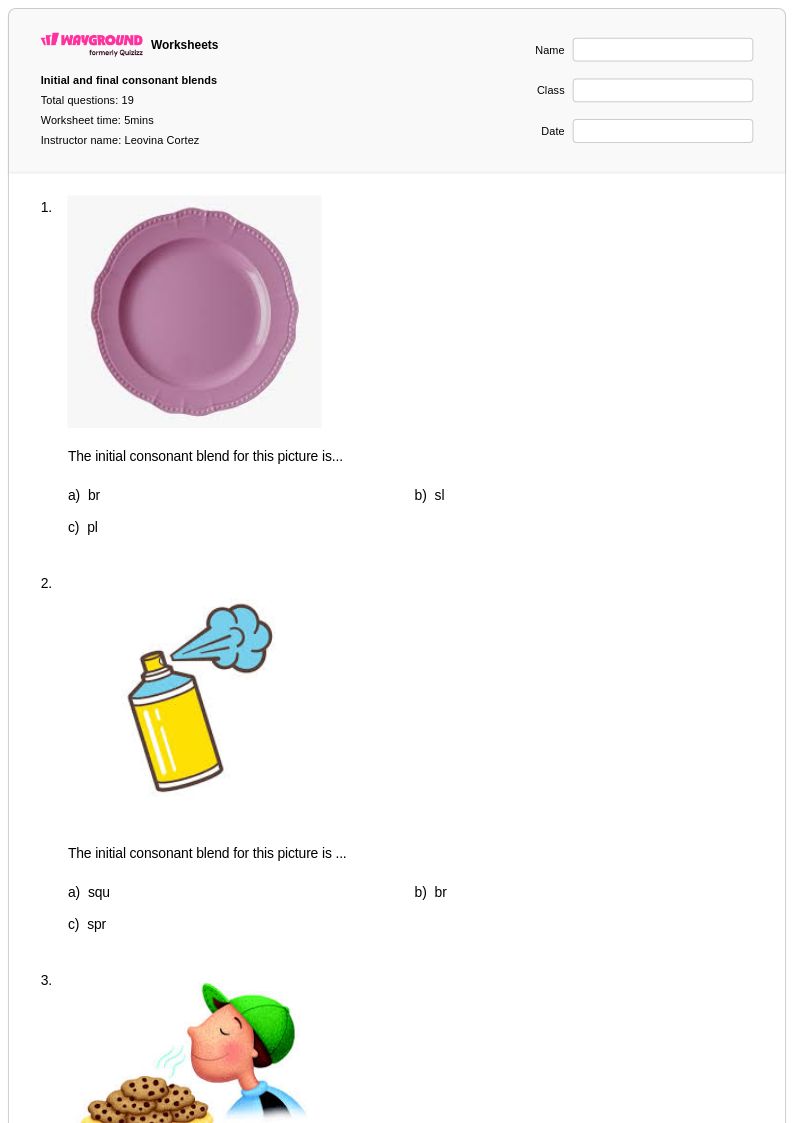
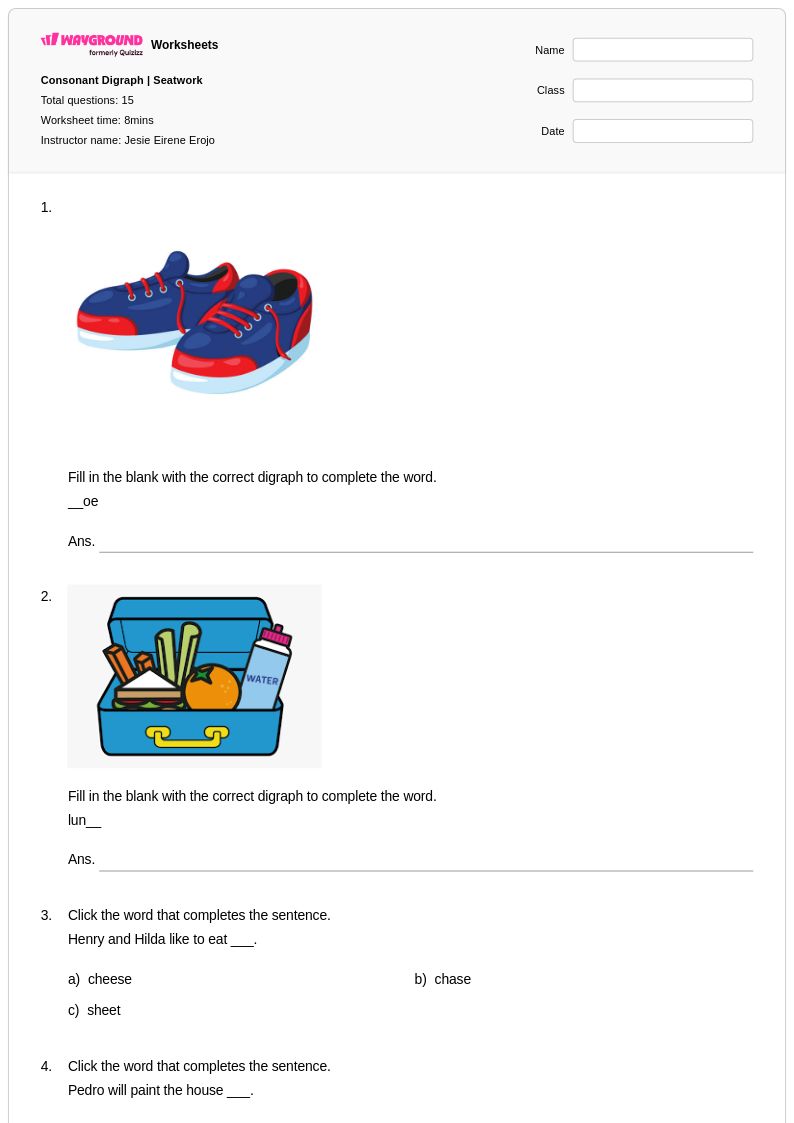
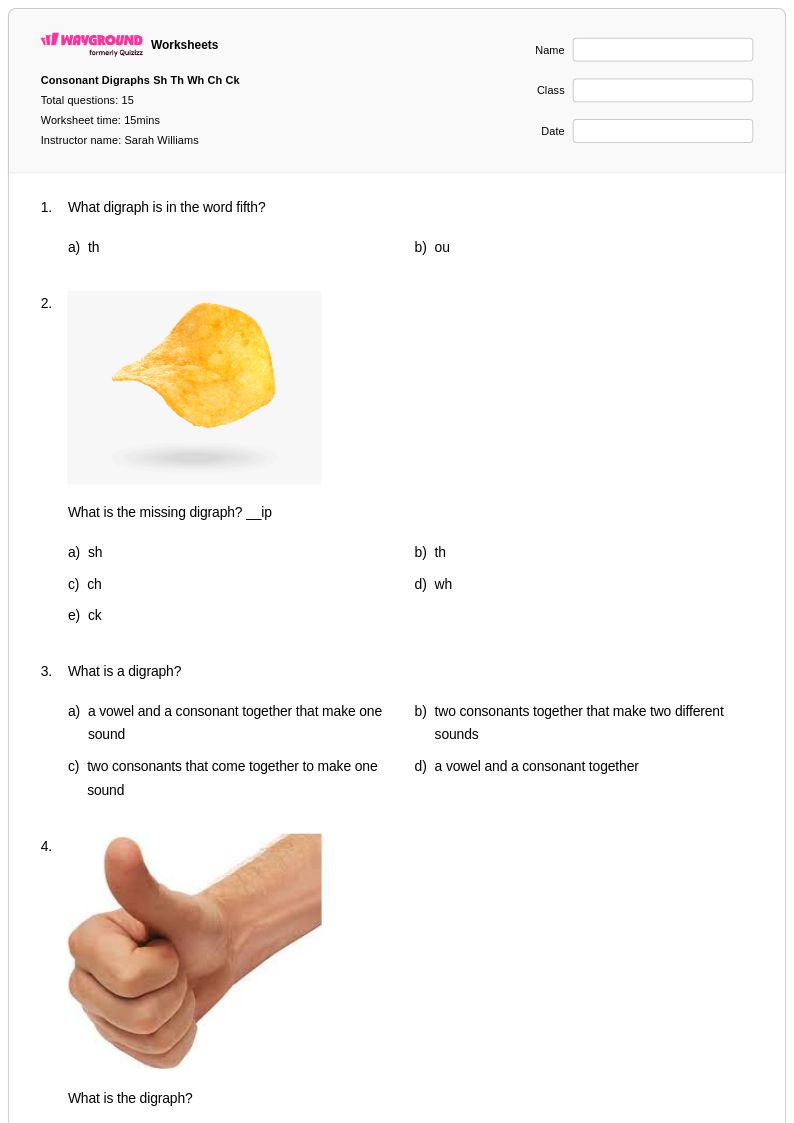
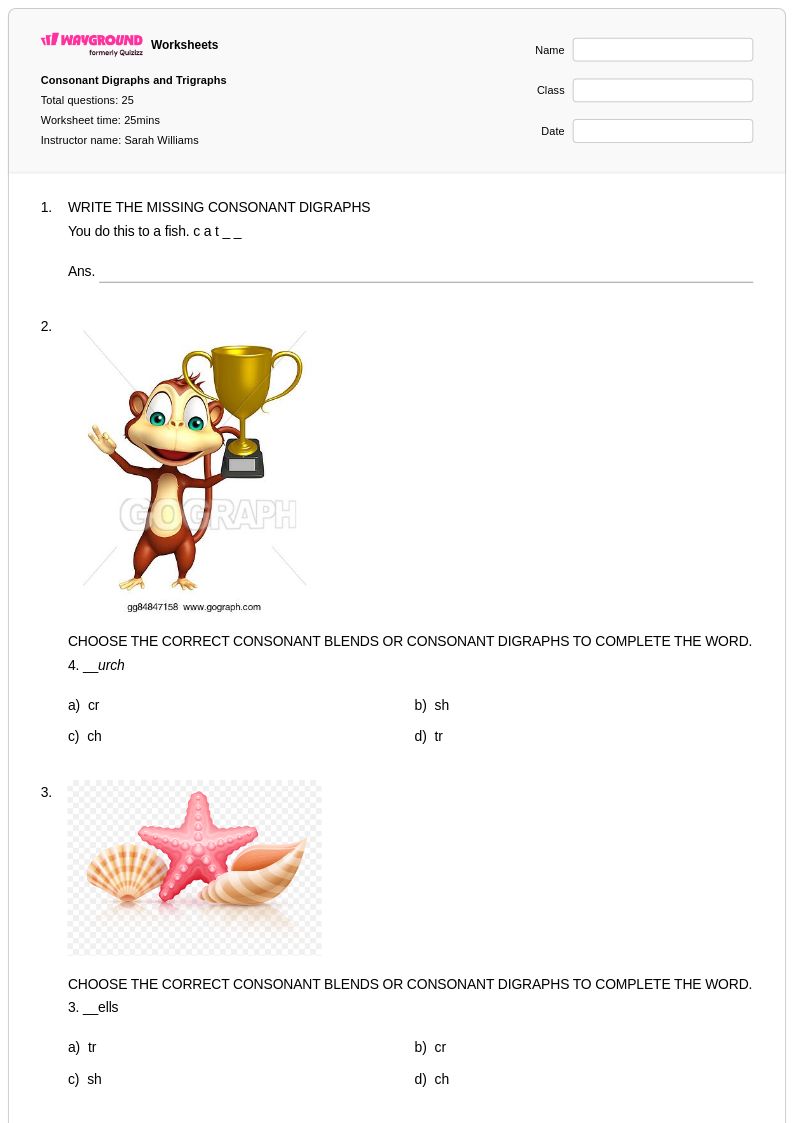
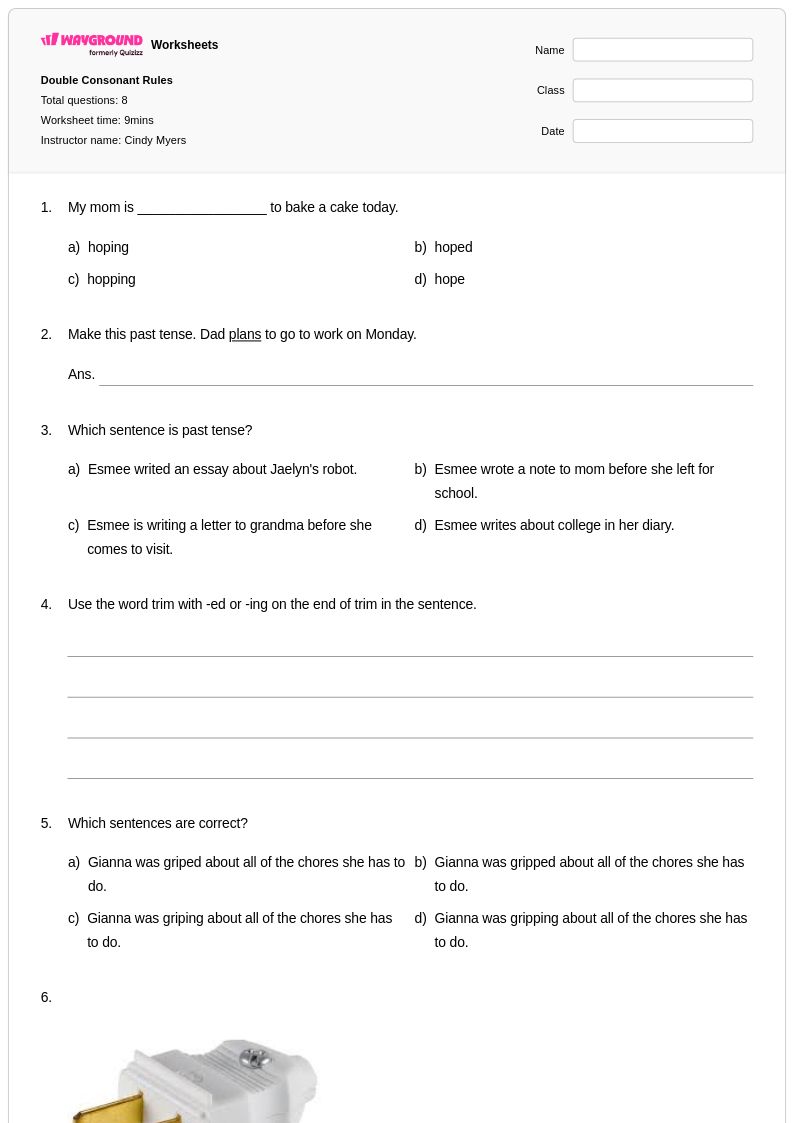
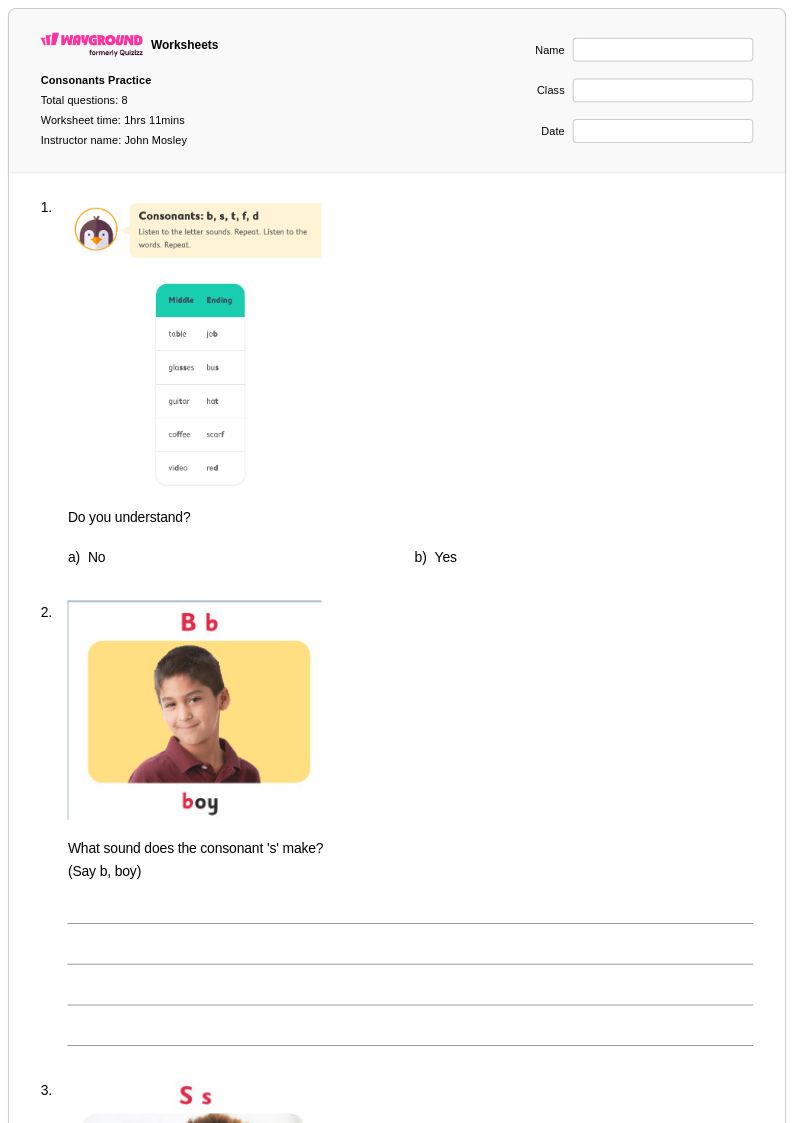
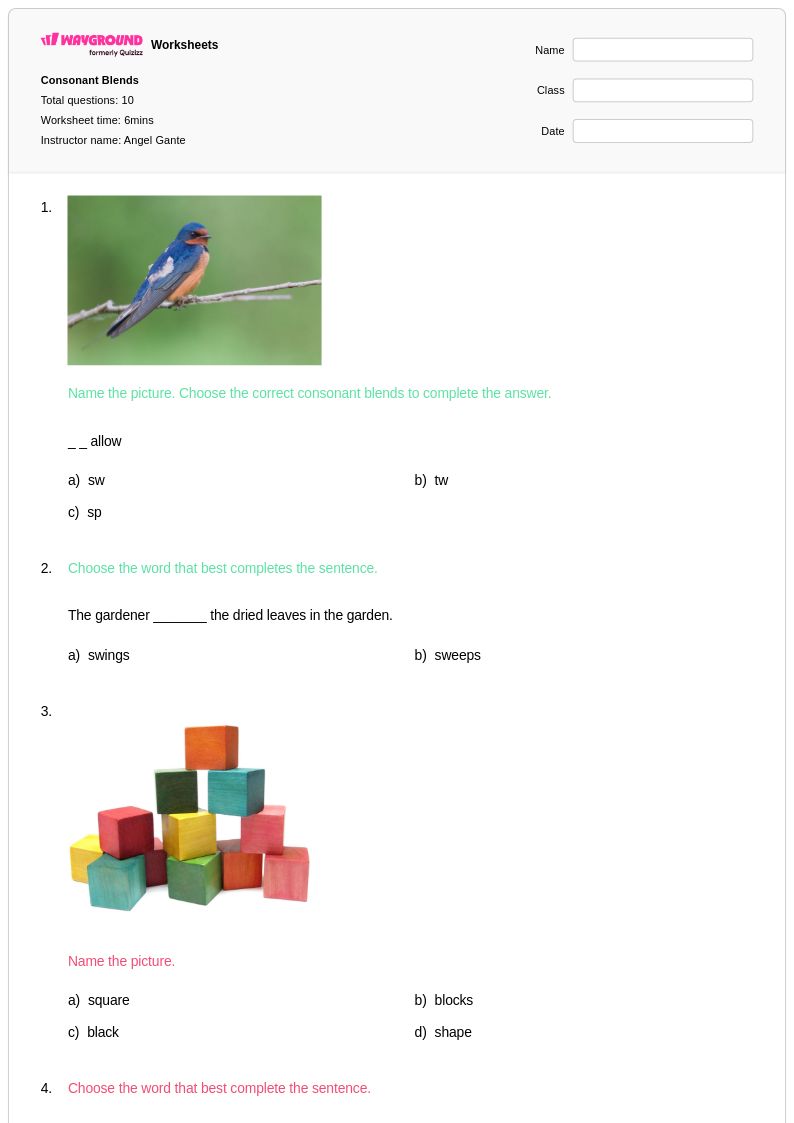
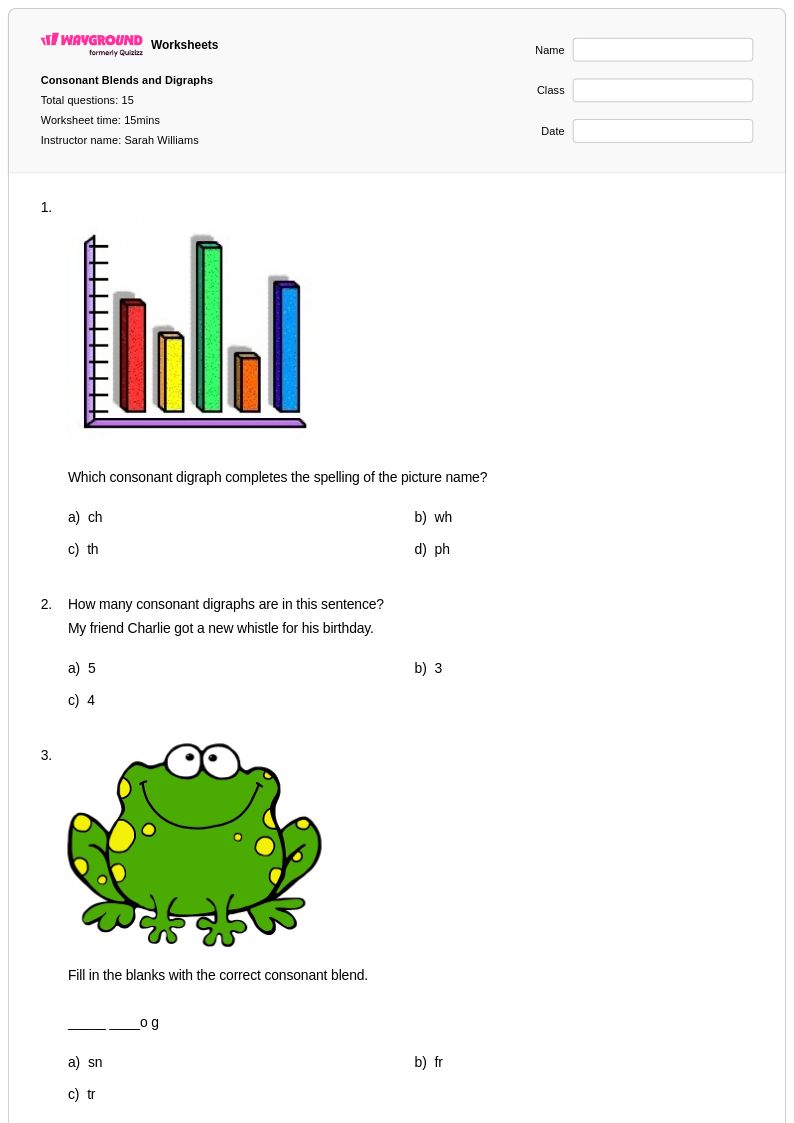
Final consonant deletion worksheets for Class 3 students available through Wayground (formerly Quizizz) provide targeted phonics instruction to help young learners master complete word pronunciation and spelling patterns. These comprehensive worksheets address the common speech and literacy challenge where children omit final consonants when reading, writing, or speaking words like "han" for "hand" or "ca" for "cat." The practice problems systematically guide students through recognizing, hearing, and producing complete word endings across various consonant sounds including stops, fricatives, and nasals. Each worksheet collection includes detailed answer keys and comes in convenient pdf format as free printables, allowing educators to seamlessly integrate this essential phonics skill development into their literacy instruction while supporting students who struggle with phonological processing and word completion.
Wayground (formerly Quizizz) empowers teachers with access to millions of educator-created resources specifically designed to address final consonant deletion and other critical phonics concepts for Class 3 learners. The platform's robust search and filtering capabilities enable teachers to quickly locate worksheets aligned with phonics standards and appropriately leveled for diverse student needs. Teachers can customize these digital and printable pdf resources to differentiate instruction, whether providing additional support for struggling readers or offering enrichment activities for advanced students. The flexible format options support various teaching approaches, from whole-group instruction to individualized remediation sessions, making it easy for educators to plan targeted interventions, track student progress, and ensure comprehensive phonics skill development across their entire classroom while addressing the specific challenges associated with final consonant deletion patterns.
FAQs
How do I teach final consonant deletion to young learners?
Teaching final consonant deletion begins with building phonemic awareness through explicit sound-by-sound word analysis. Have students listen for and identify the final sound in CVC words like 'cat', 'dog', and 'cup' before progressing to production practice. Minimal pair drills — contrasting words like 'bow' and 'boat' — are especially effective because they help students hear the meaningful difference that final consonants create. Consistent, structured repetition across speaking and spelling tasks reinforces retention.
What exercises help students practice final consonant deletion patterns?
Effective practice exercises include word completion tasks where students identify and supply the missing final consonant, picture-naming activities that prompt full articulation of target words, and sorting tasks that group words by their ending sounds. Minimal pair matching exercises — pairing words like 'tea' and 'teach' — are particularly useful because they highlight how omitting a final consonant changes meaning. Repeated exposure through structured phonics worksheets helps students internalize correct articulation patterns across both speech and spelling.
What mistakes do students commonly make with final consonant deletion?
The most common error is the omission itself: students produce 'ca' for 'cat' or 'do' for 'dog', often without awareness that a sound is missing. Many young learners also inconsistently apply final consonants, producing them correctly in isolated practice but dropping them again in connected speech. Some students substitute a vowel lengthening for the final consonant rather than omitting it entirely, which can be harder to detect. Monitoring production in both structured and spontaneous speech contexts is essential for accurate assessment.
How can I assess whether a student has mastered final consonant production?
Assess mastery by having students name pictures, repeat target words, and produce words in short phrases or sentences — not just in isolation. Final consonant production often holds in drilled contexts but breaks down in spontaneous speech, so both conditions must be tested. Error logging across multiple sessions helps distinguish consistent mastery from variable performance. Generalization to connected speech and novel words is the clearest indicator that the pattern has been internalized.
How do I use final consonant deletion worksheets from Wayground in my classroom?
Wayground's final consonant deletion worksheets are available as printable PDFs for traditional classroom use and in digital formats for technology-integrated instruction, giving you flexibility depending on your setting. You can also host them as a quiz directly on Wayground, which is useful for progress monitoring or interactive group practice. Each worksheet includes an answer key, so they work efficiently for independent work, small group intervention, or homework reinforcement. For students who need accommodations, Wayground allows you to enable features such as read aloud, extended time, or reduced answer choices at the individual student level.
How is final consonant deletion different from other phonological processes, and why does it matter?
Final consonant deletion is a specific phonological process in which a child omits the consonant at the end of a word, leaving only the vowel nucleus or onset. Unlike substitution errors — where one sound replaces another — deletion removes the sound entirely, which affects both intelligibility and spelling development. It is developmentally typical in very young children but should resolve by around age 3. When it persists beyond that window, it becomes a target for phonics intervention because it directly undermines decoding and spelling accuracy.