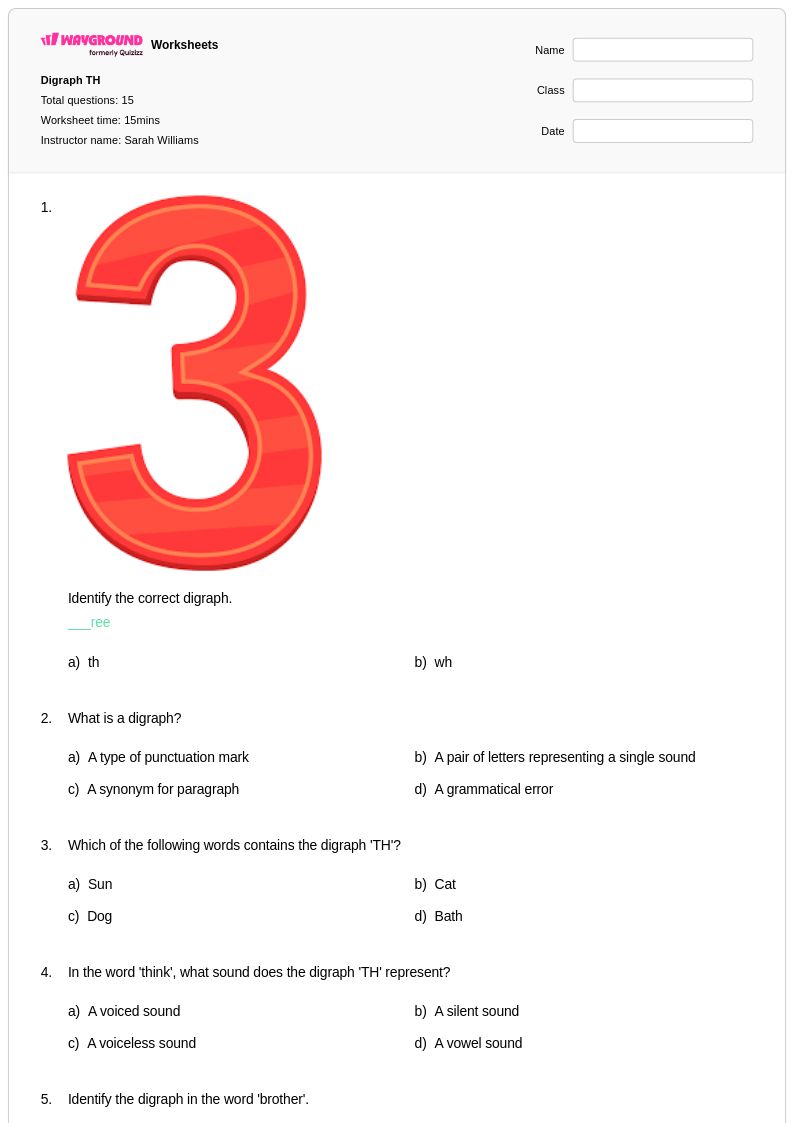
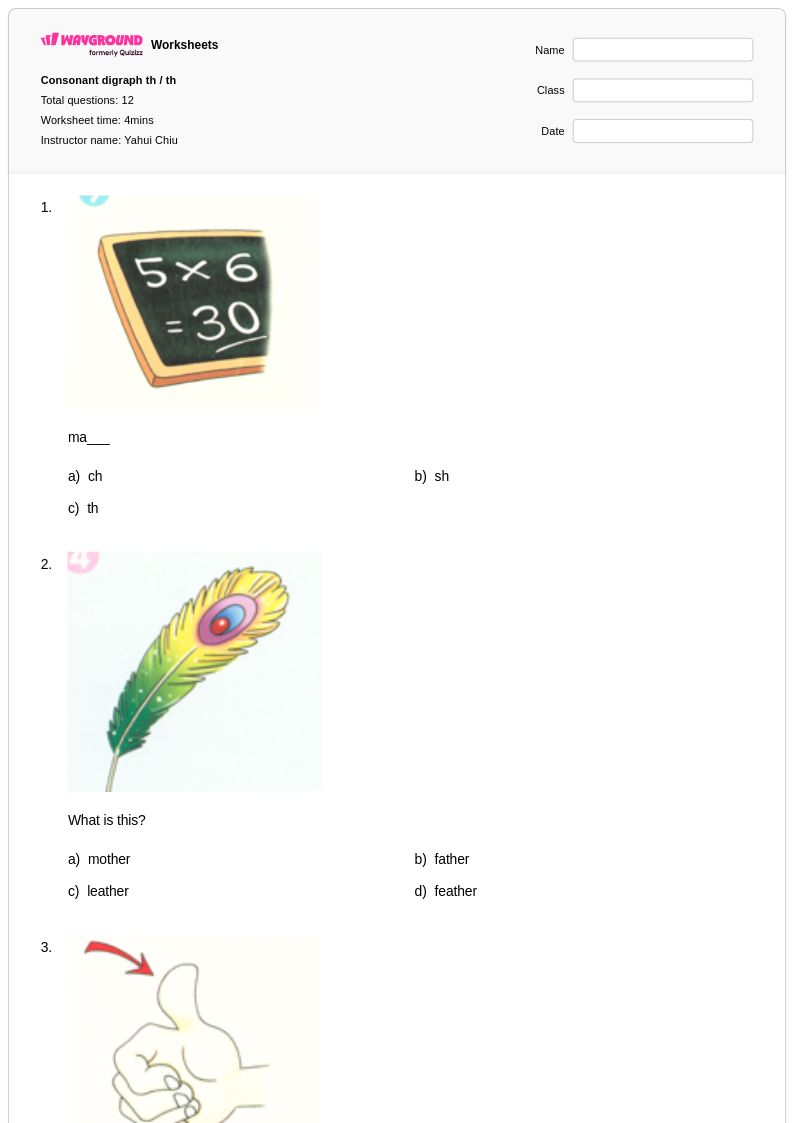
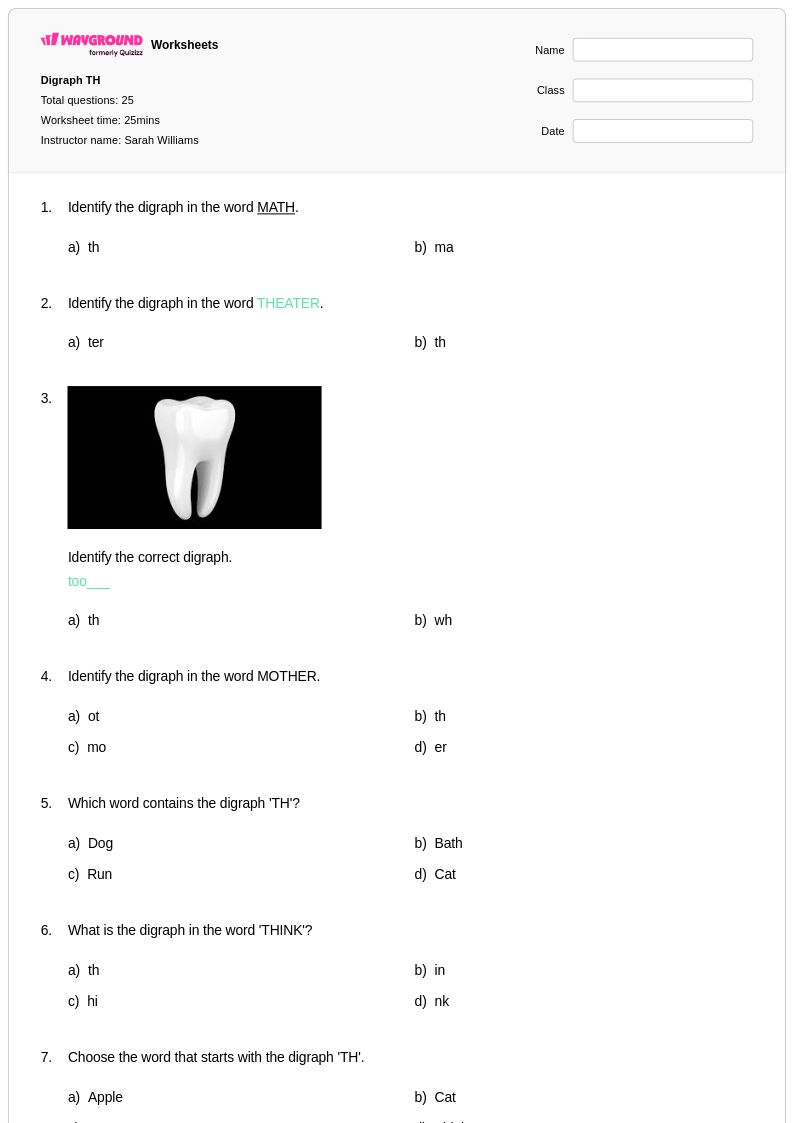
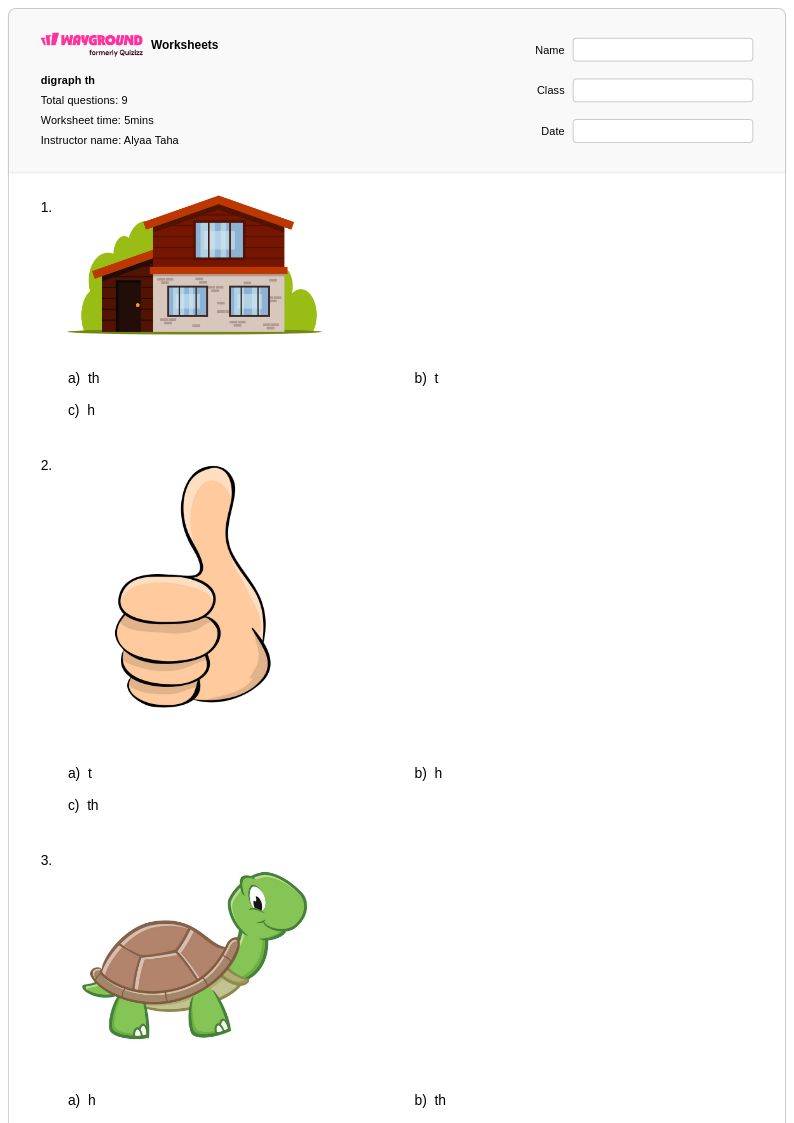
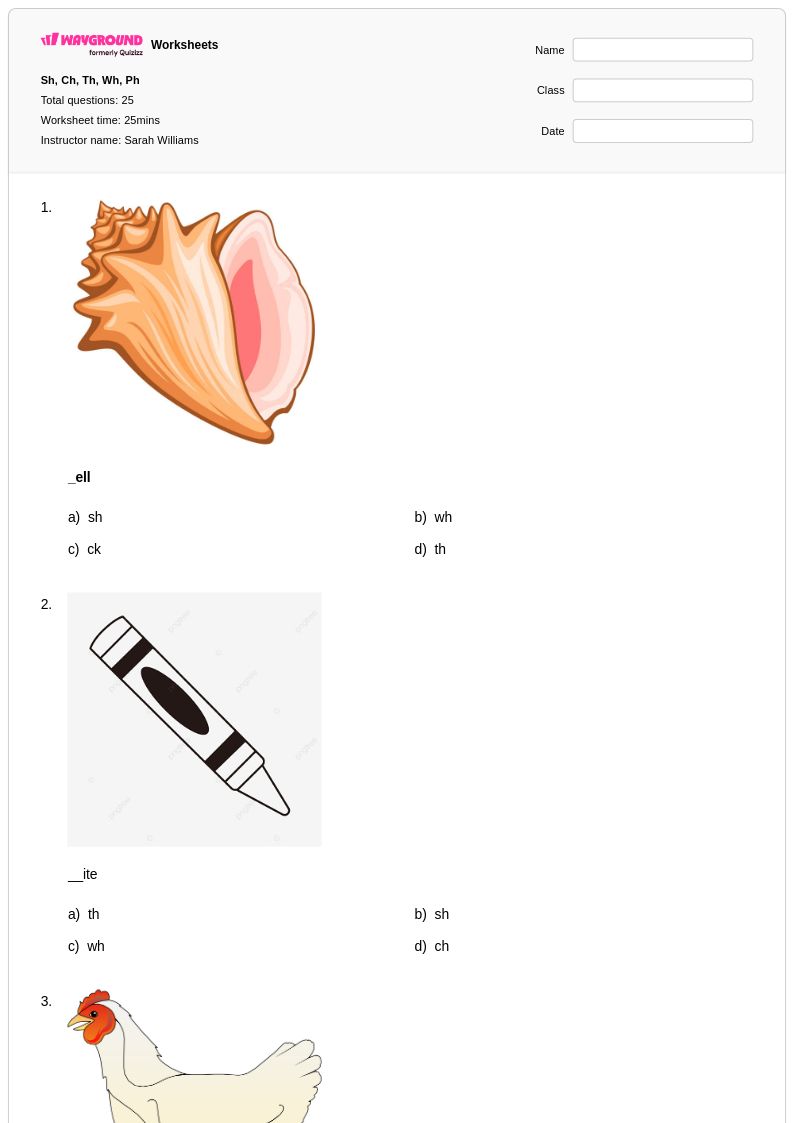
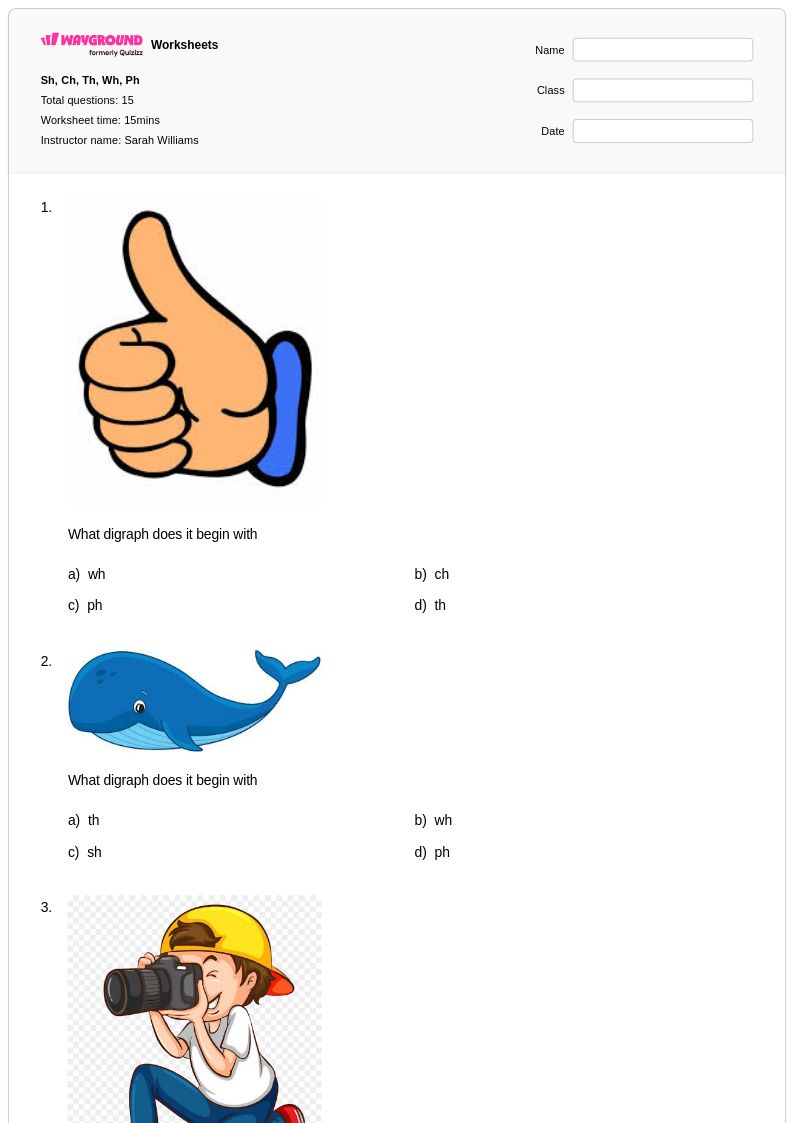
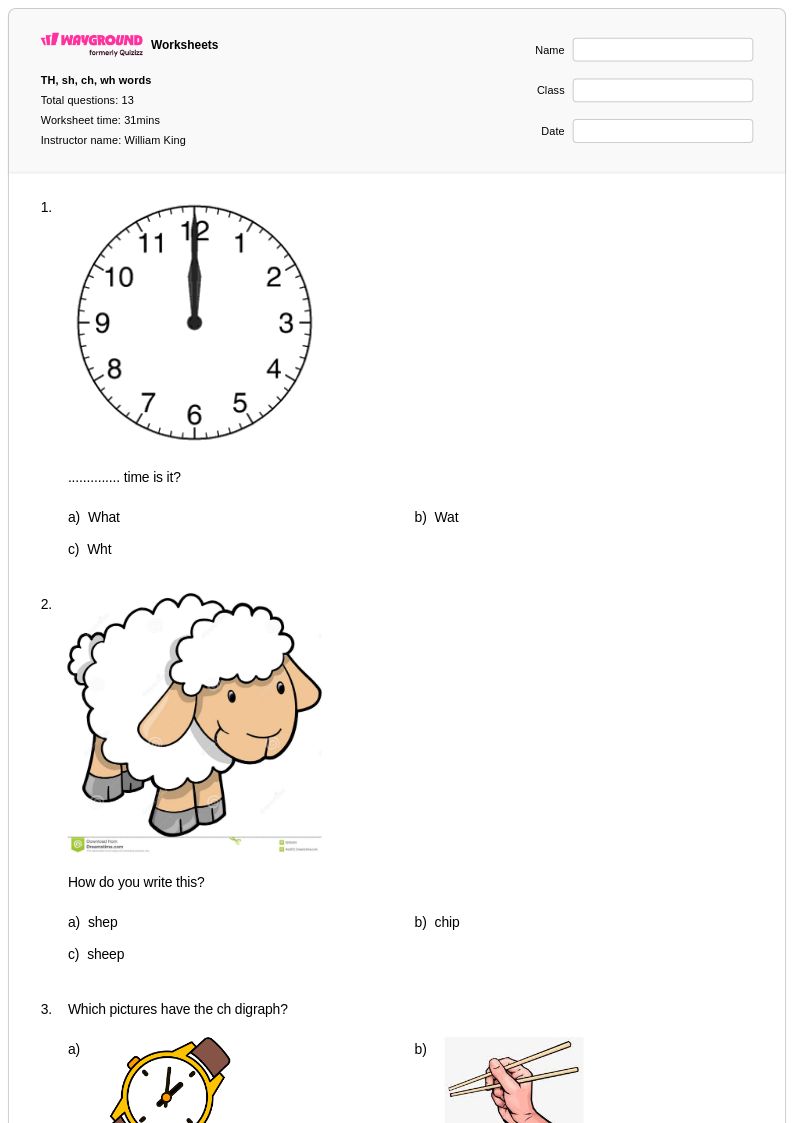
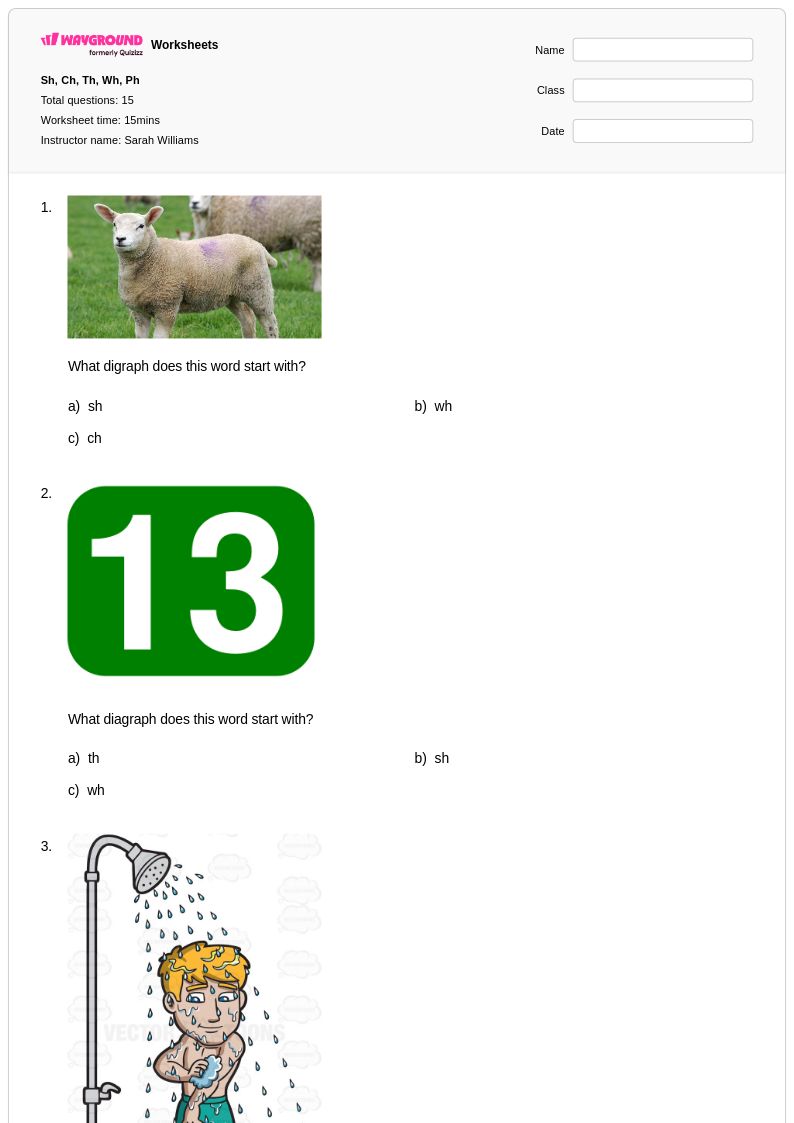
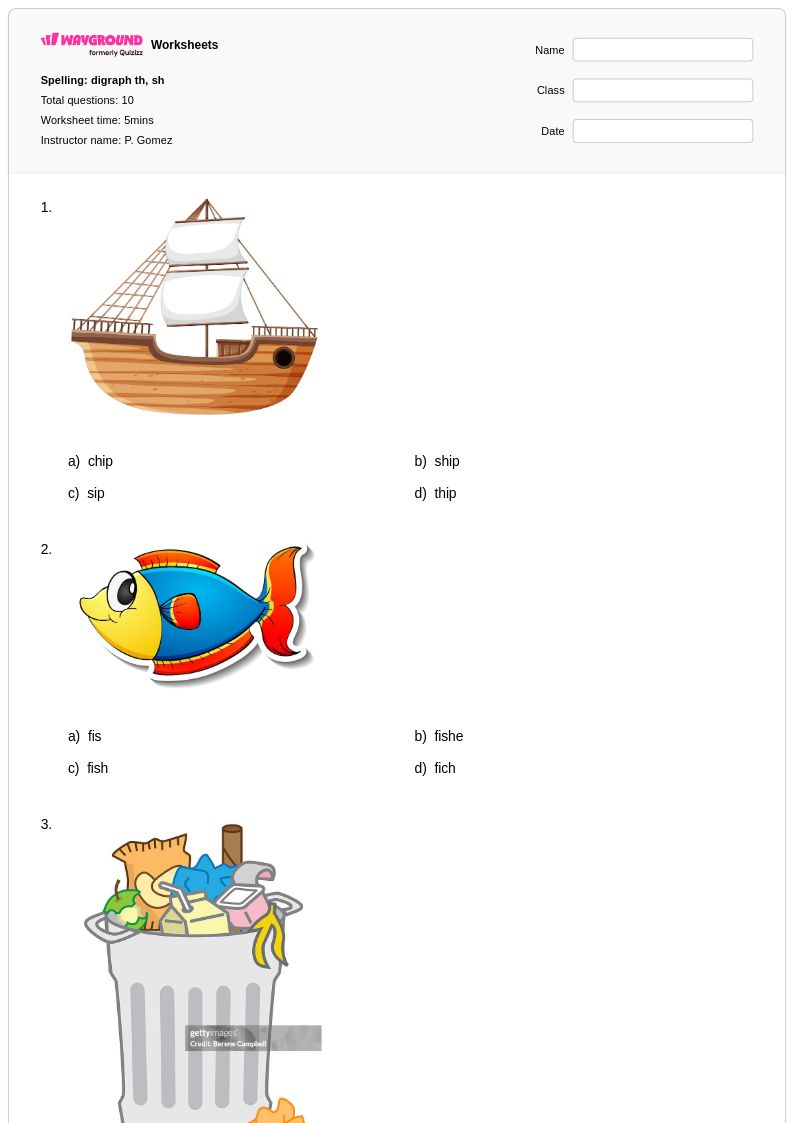
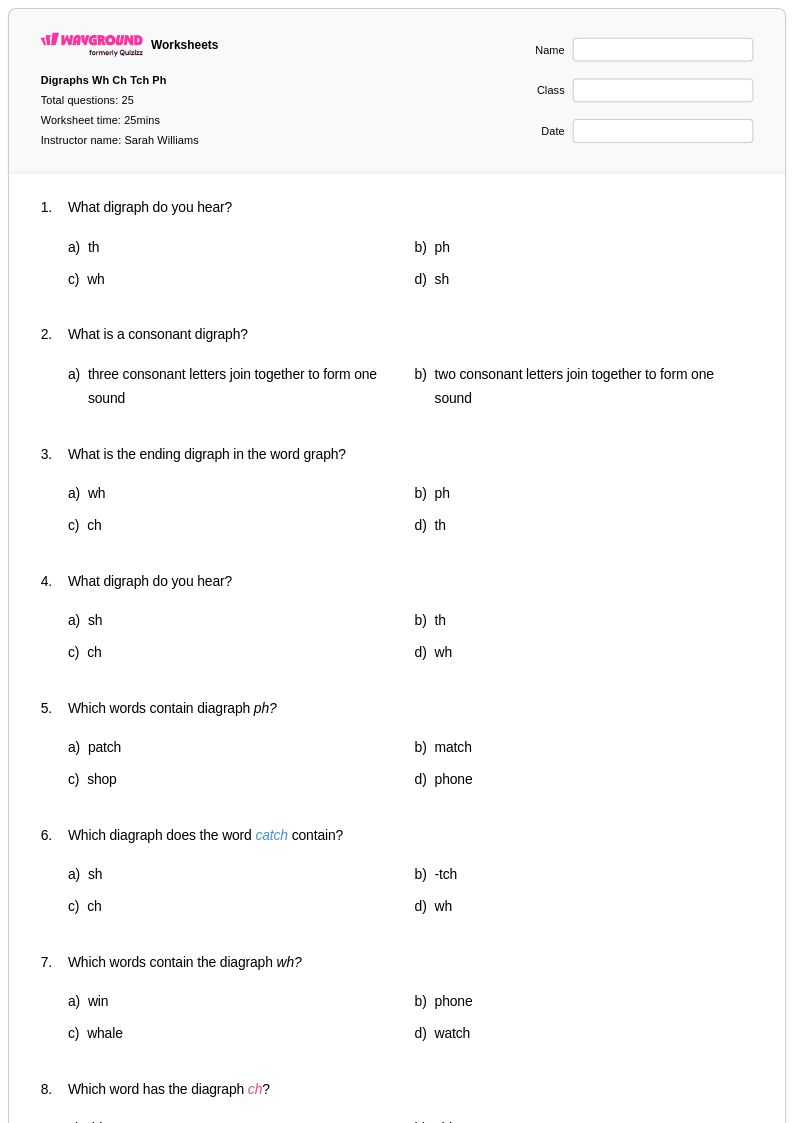
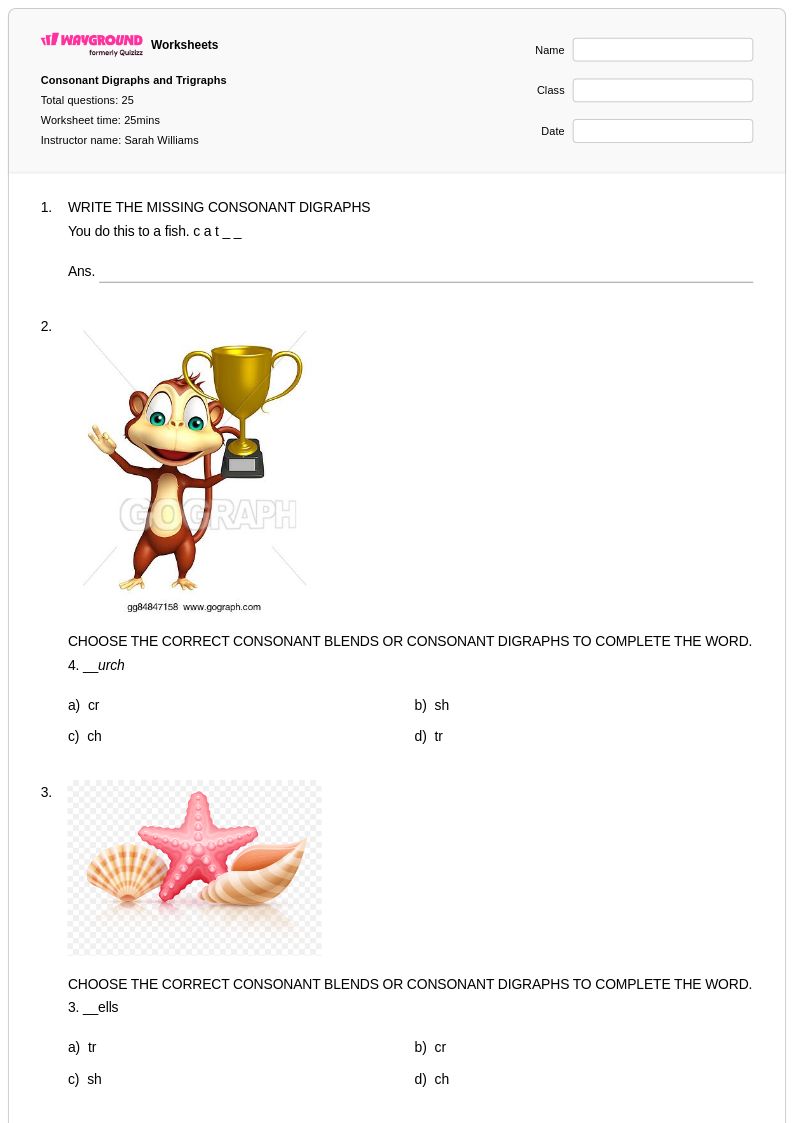
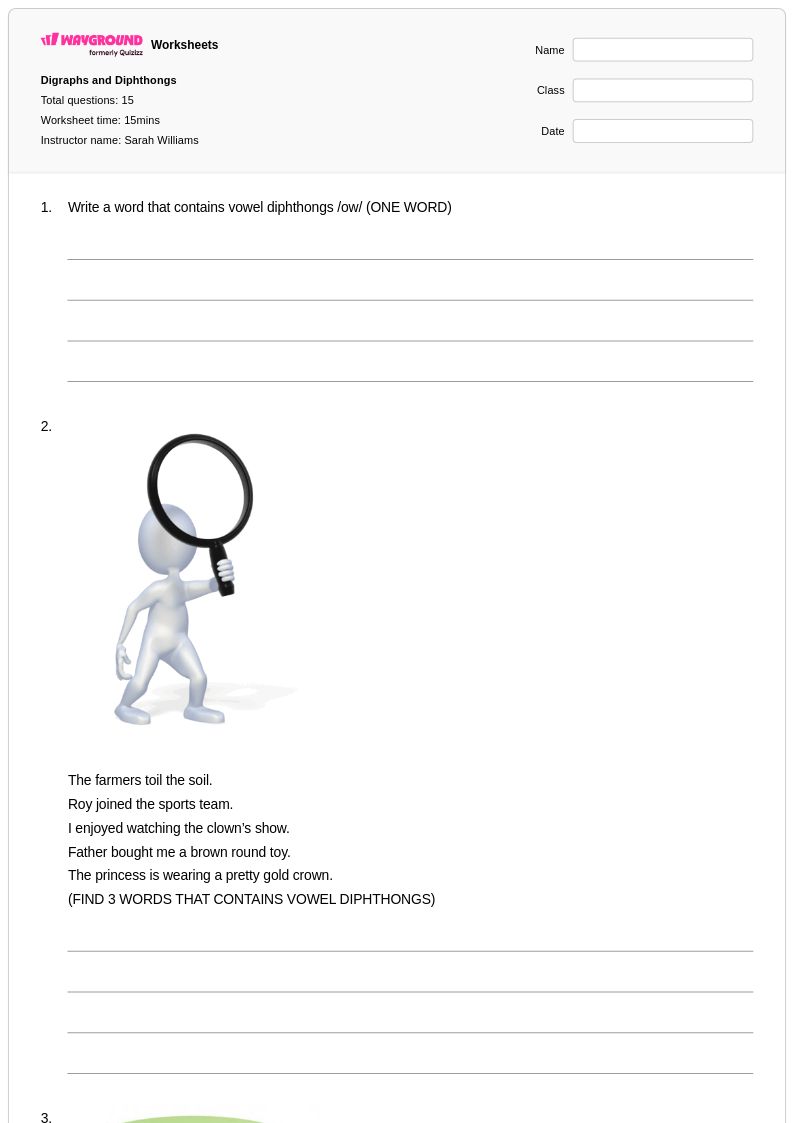
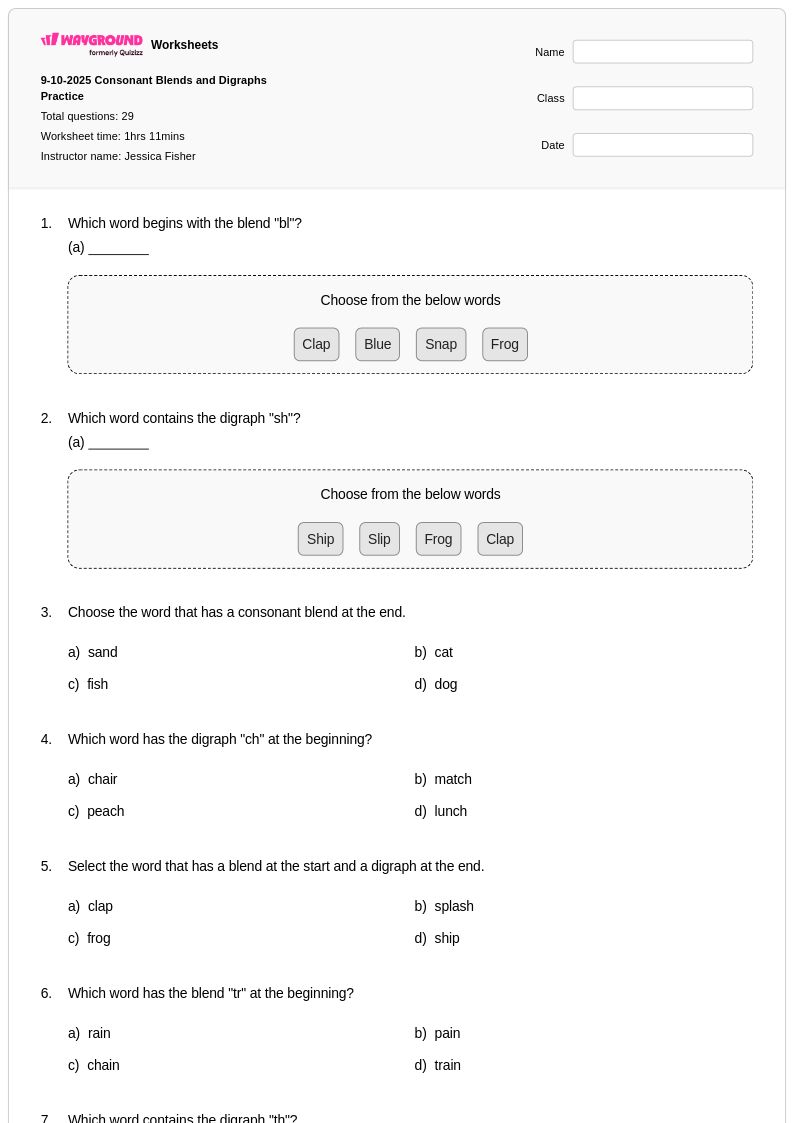
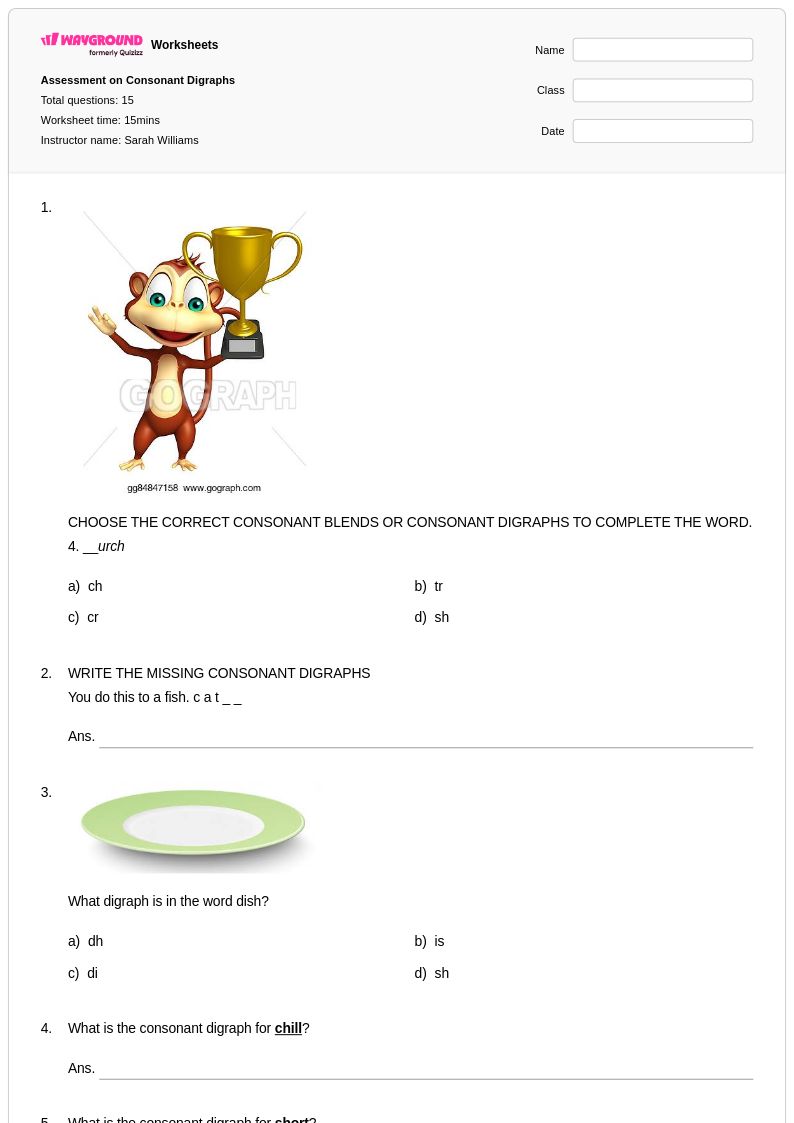
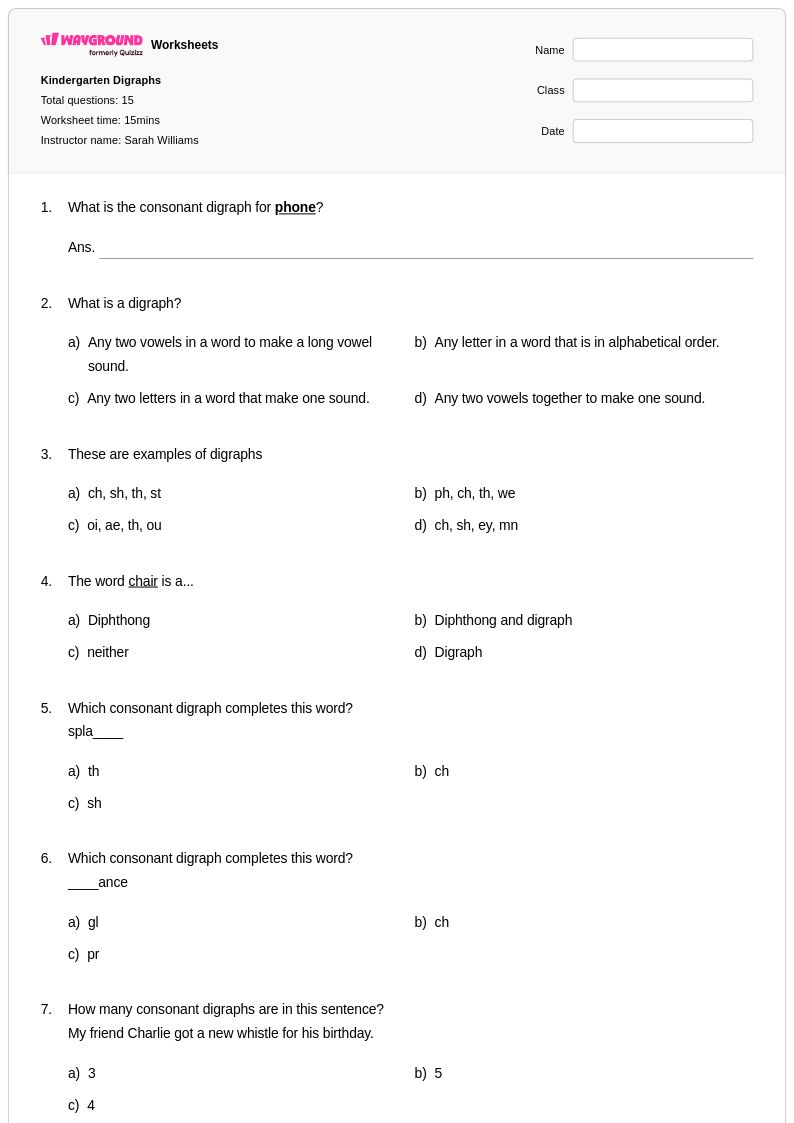
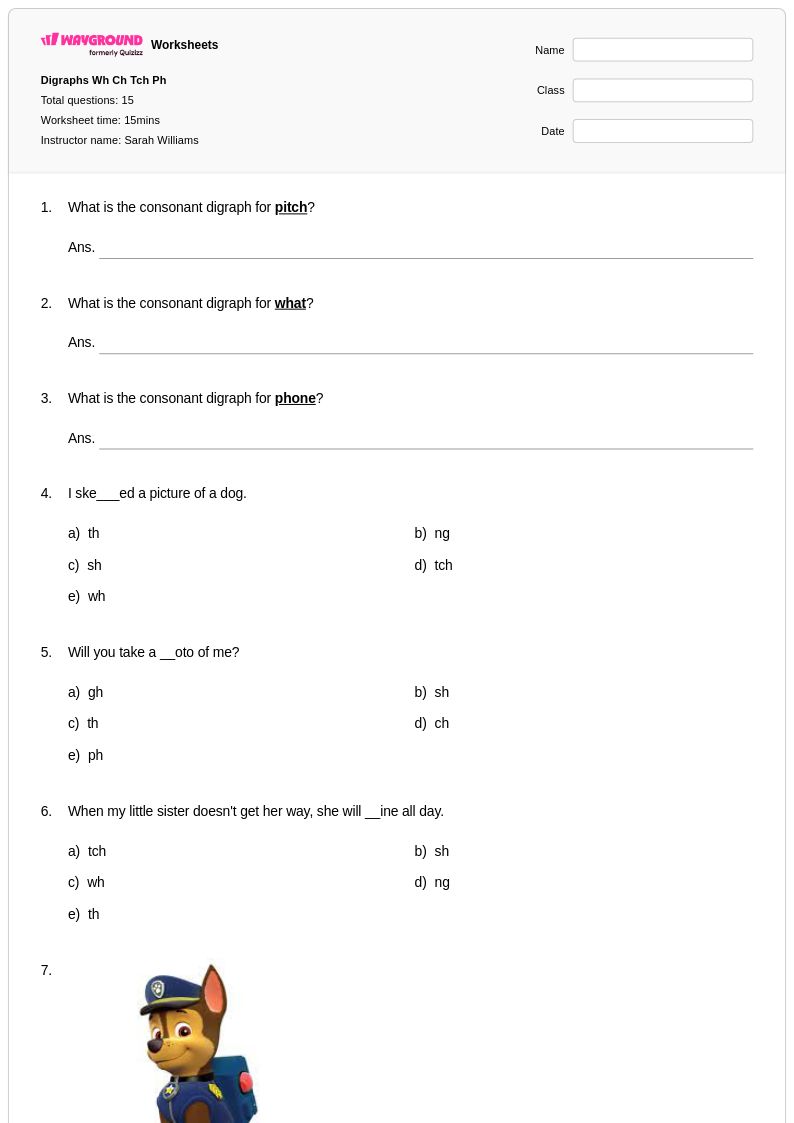
Wayground's free Class 3 digraph th worksheets and printables help students master this essential phonics sound through engaging practice problems, with downloadable PDFs and answer keys included.
Explore printable Digraph Th worksheets for Class 3
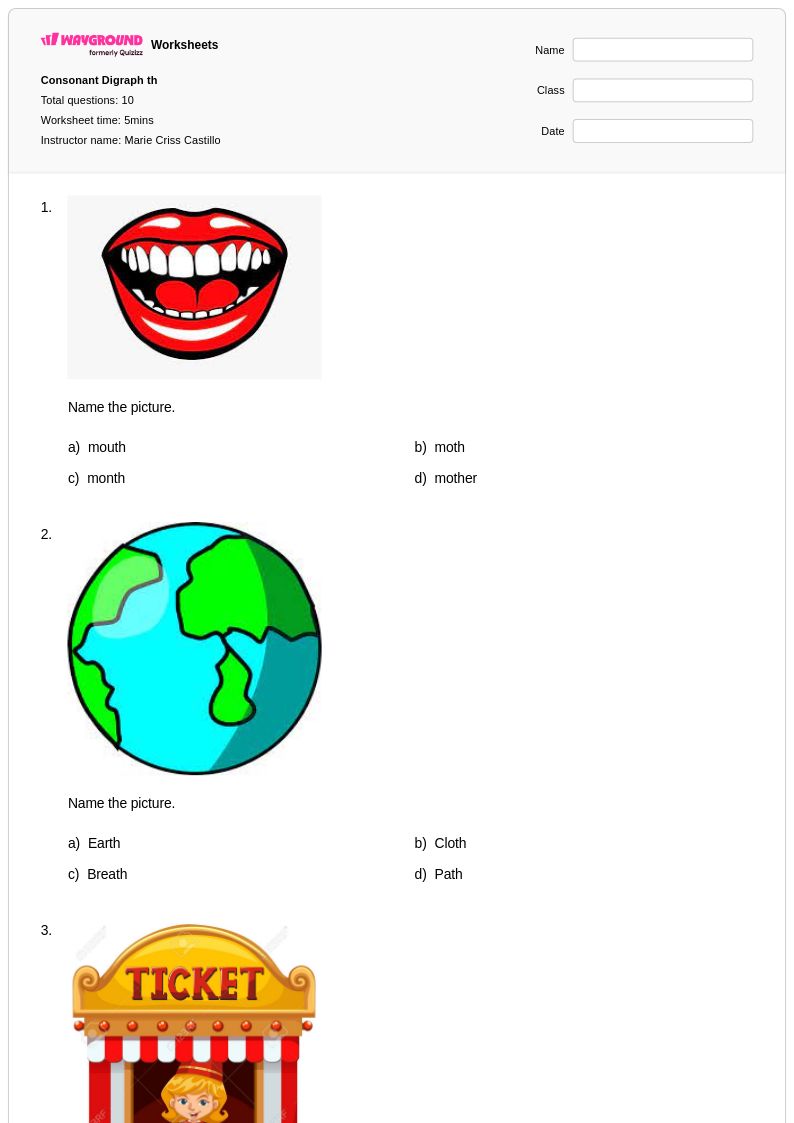
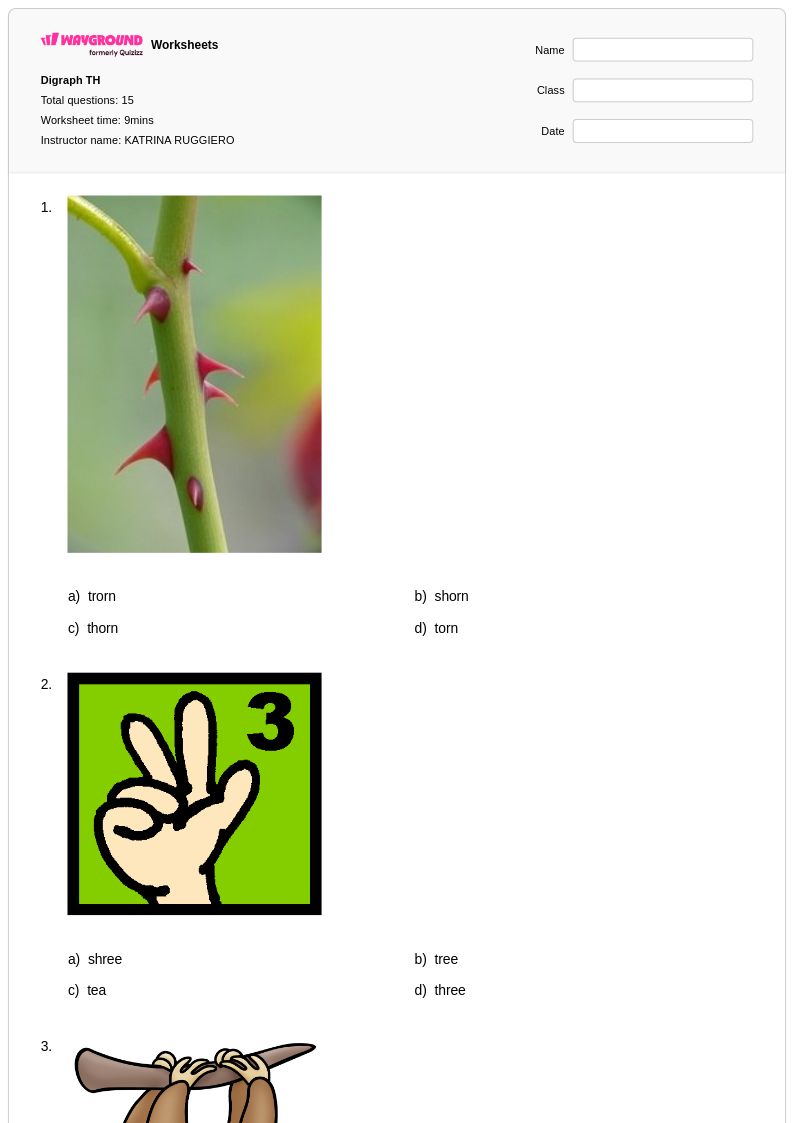
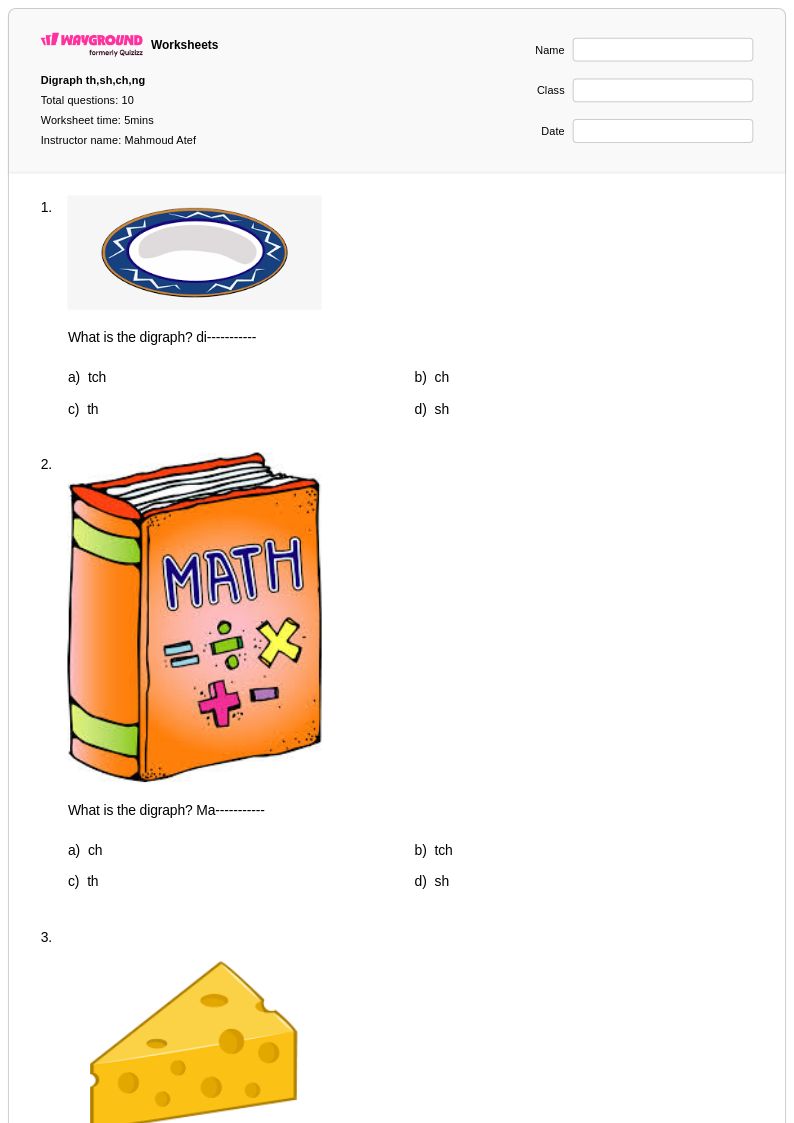
Digraph Th worksheets for Class 3 students available through Wayground (formerly Quizizz) provide comprehensive practice with one of English phonics' most essential letter combinations. These carefully designed resources help third-grade learners master both the voiced and voiceless sounds of the "th" digraph, strengthening their decoding abilities and reading fluency through systematic instruction. The worksheets feature engaging practice problems that guide students through identifying th sounds in words like "think," "that," "three," and "mother," while building phonemic awareness and spelling competency. Each printable resource includes detailed answer keys to support accurate assessment, and the free pdf format ensures convenient access for both classroom instruction and independent practice sessions.
Wayground (formerly Quizizz) empowers educators with millions of teacher-created digraph th resources that streamline phonics instruction planning and delivery. The platform's robust search and filtering capabilities allow teachers to quickly locate worksheets aligned with specific learning standards and differentiate instruction based on individual student needs. These versatile materials are available in both printable pdf and interactive digital formats, enabling flexible implementation across diverse learning environments. Teachers can customize existing worksheets or create targeted practice sets for remediation and enrichment, ensuring that every Class 3 student receives appropriate phonics skill practice to support their reading development and academic success.
FAQs
How do I teach the digraph 'th' to early readers?
Teach the 'th' digraph by first helping students understand that two letters can combine to make a single sound. Introduce the voiced 'th' (as in 'this' and 'that') and the unvoiced 'th' (as in 'think' and 'three') as two distinct sounds, using mouth-placement cues to help students feel the difference. Anchor instruction with high-frequency 'th' words students will encounter immediately in reading, then move to word sorts and sentence-level practice to build fluency and recognition in context.
What exercises help students practice the 'th' digraph?
Effective practice exercises for the 'th' digraph include word identification tasks, fill-in-the-blank sentence completion, and sorting activities that separate voiced and unvoiced 'th' words. Reading comprehension passages that embed 'th' words naturally give students repeated exposure in context, which strengthens both decoding and automaticity. Systematic worksheet practice that progresses from isolated words to sentences helps students internalize the digraph pattern across varied reading demands.
What mistakes do students commonly make with the 'th' digraph?
A common error is substituting 'f' or 'v' for 'th', producing pronunciations like 'fink' for 'think' or 'dis' for 'this', particularly among early readers or English language learners. Students also frequently confuse the voiced and unvoiced 'th' sounds, treating them as identical rather than as two distinct phonemes. Targeted practice that explicitly contrasts minimal pairs and provides repeated oral and written exposure helps correct these patterns before they become habitual.
How can I use 'th' digraph worksheets in my classroom?
Digraph 'th' worksheets on Wayground are available as printable PDFs for traditional classroom use and in digital formats for technology-integrated learning environments, including the option to host them as a quiz directly on Wayground. Printable versions work well for independent seat work, small-group instruction, or take-home practice, while digital formats support interactive engagement in one-to-one device settings. Each worksheet includes a complete answer key, making self-checking and teacher assessment quick and straightforward.
How do I differentiate 'th' digraph instruction for struggling readers?
For struggling readers, focus initial instruction on the more common unvoiced 'th' words they will encounter in decodable texts, and use multisensory cues such as having students place a hand in front of their mouth to feel airflow differences. On Wayground, teachers can apply individual accommodations such as read-aloud support, reduced answer choices, and extended time to specific students without disrupting the experience for the rest of the class. These settings are reusable across sessions, making ongoing differentiated practice easy to manage.
At what grade level should students master the 'th' digraph?
The 'th' digraph is typically introduced in kindergarten or first grade as part of foundational phonics instruction, with mastery expected by the end of first grade in most phonics scope and sequence frameworks. Students who have not yet automatized 'th' recognition by second grade may need targeted remediation to prevent decoding gaps from affecting reading fluency. Early and consistent exposure through structured phonics practice is key to on-time skill acquisition.