
Recommended Topics for you
- Consonant and Vowel Patterns
- Consonants
- Cvc Short I
- Decoding Words
- Double Consonants
- Initial Sounds
- Rhyming Words
- Silent Letters
- Vocalic R
- Vowels
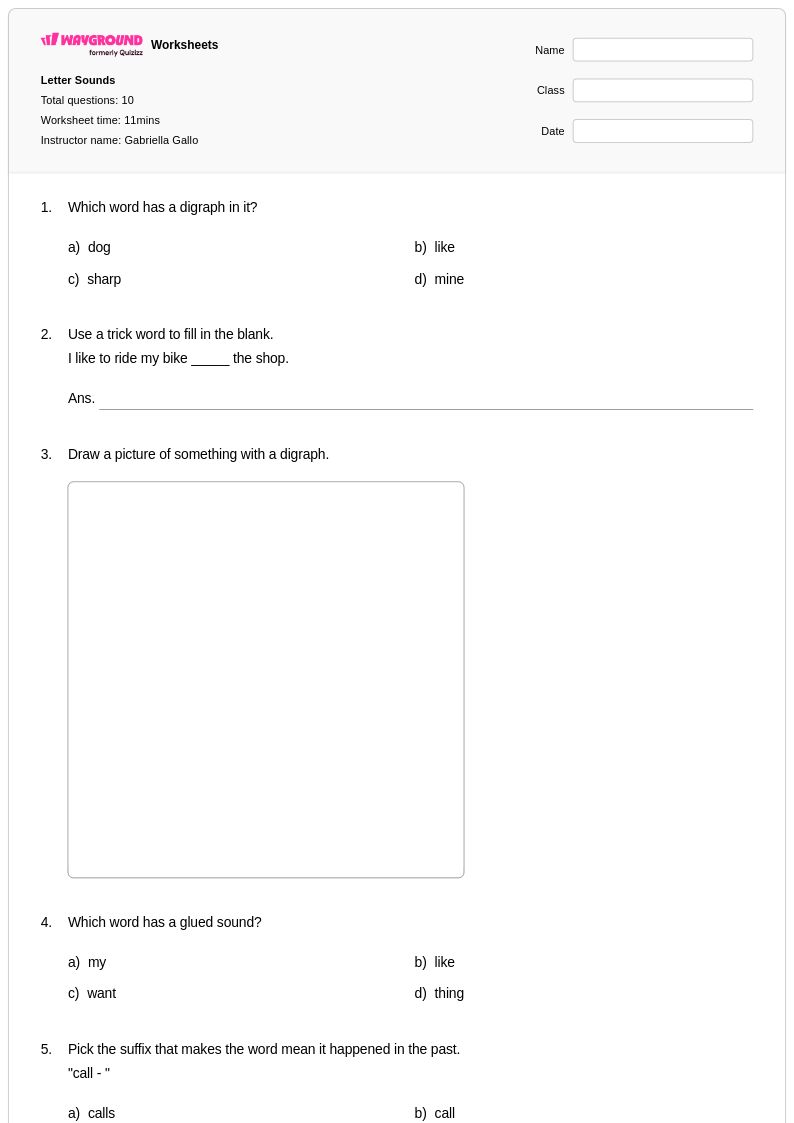
10 Q
1st - 5th
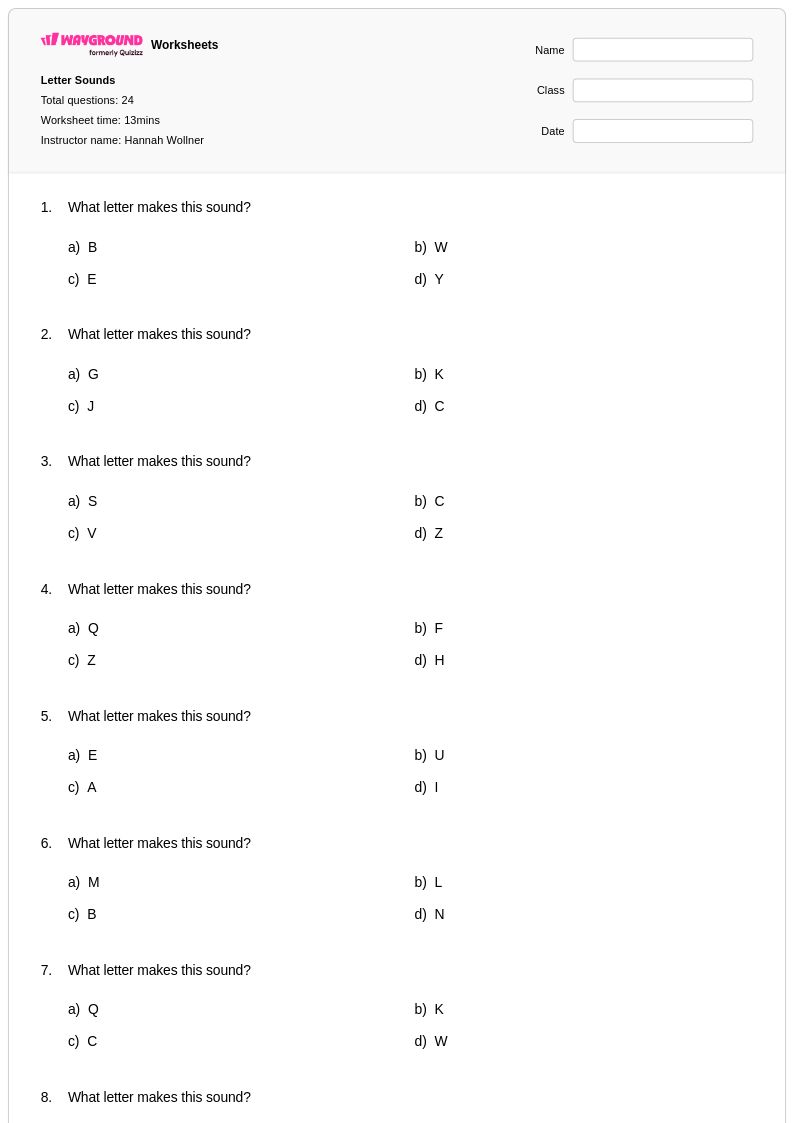
24 Q
KG - 12th
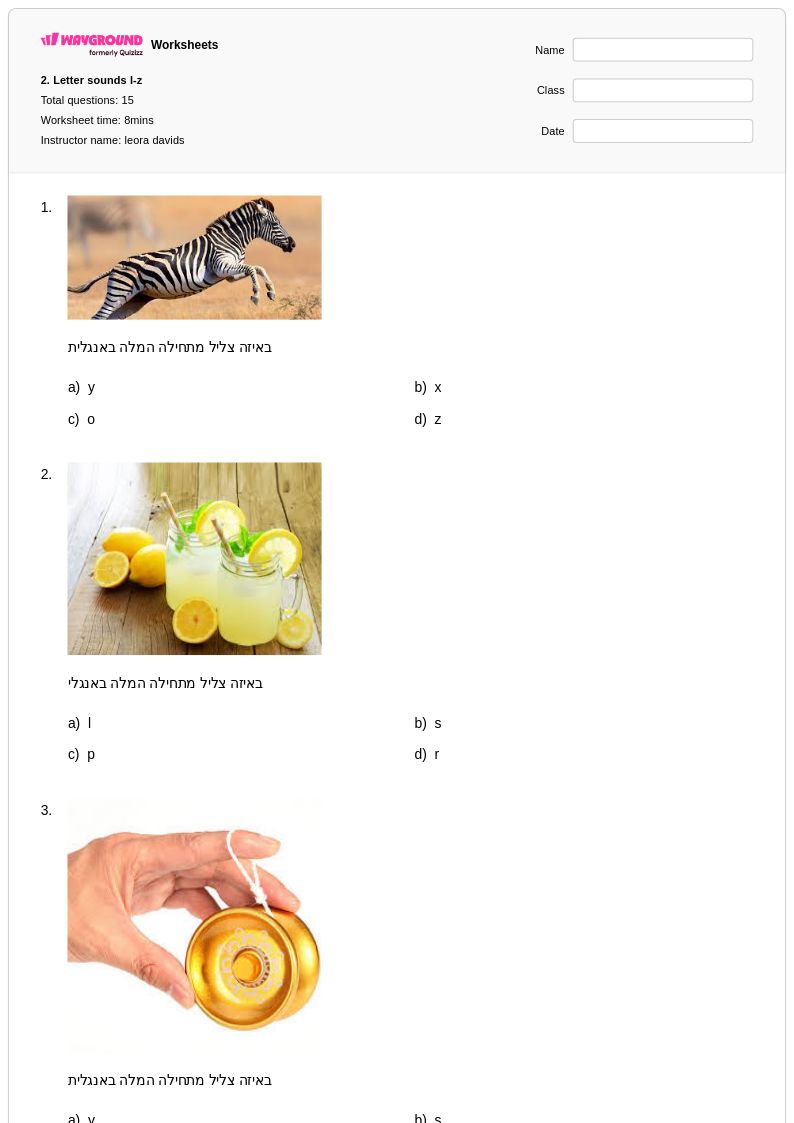
15 Q
KG - 5th
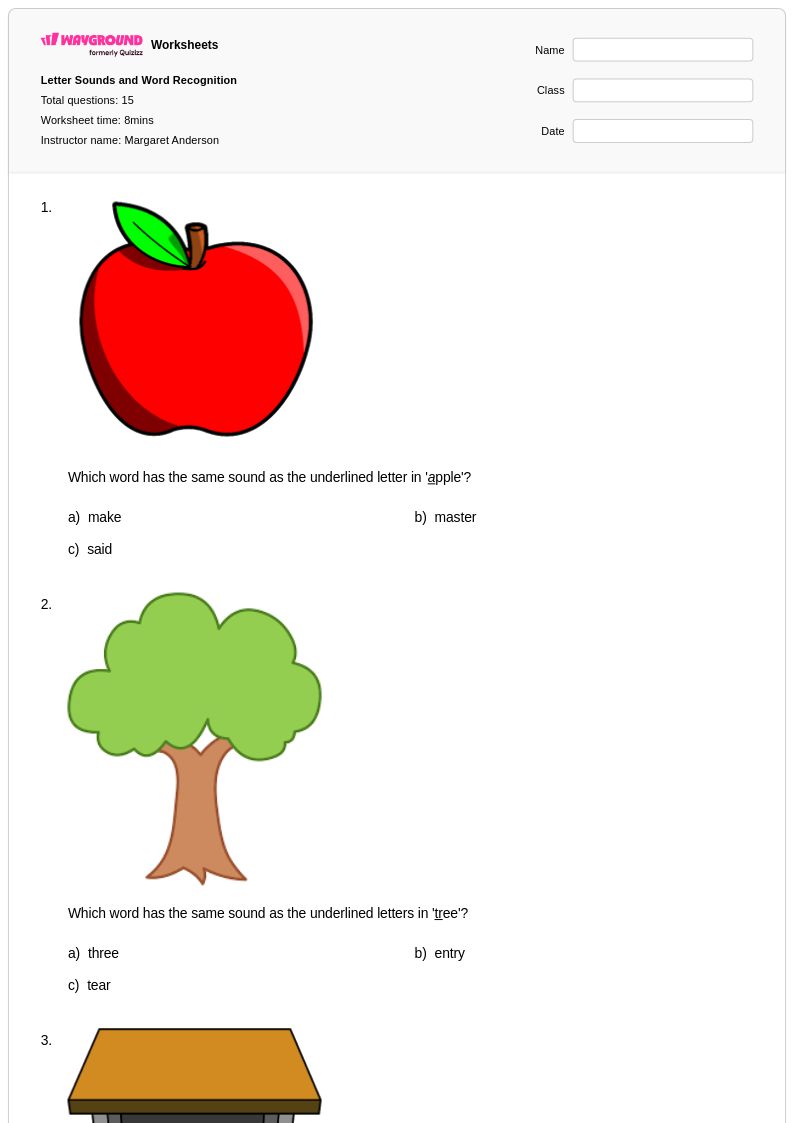
15 Q
3rd
30 Q
KG - 3rd
15 Q
3rd
15 Q
3rd
13 Q
1st - 5th
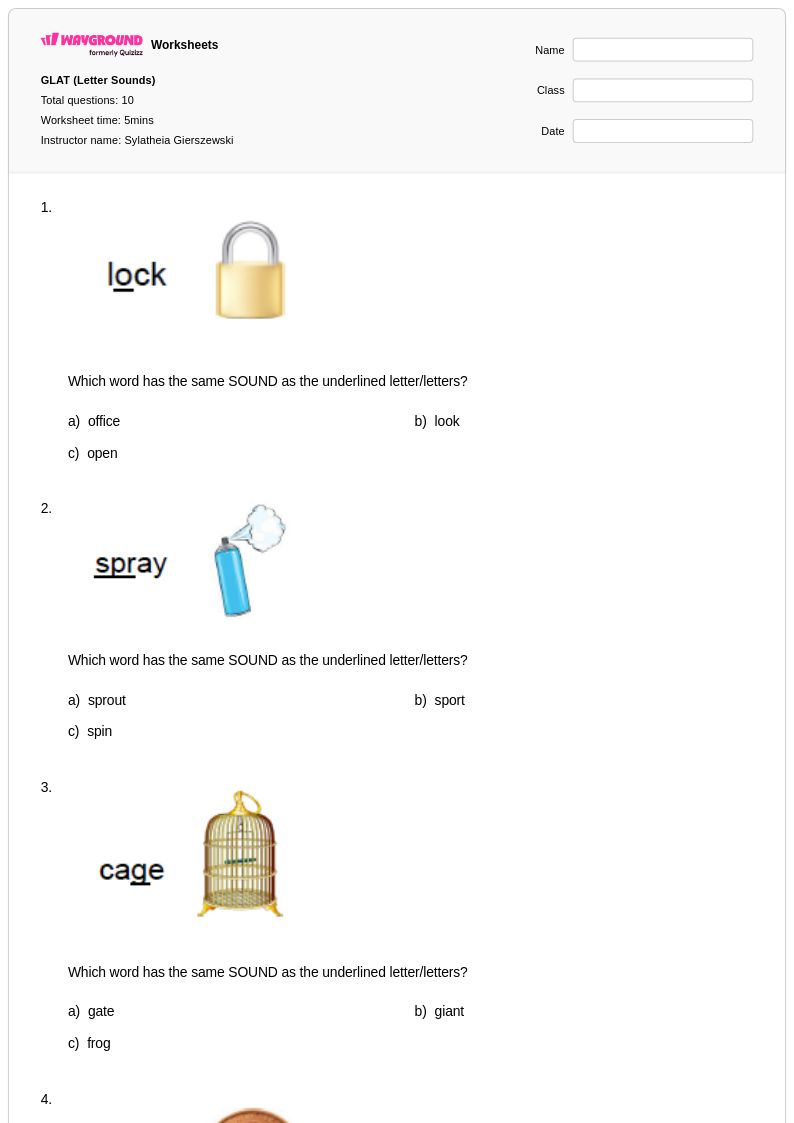
10 Q
3rd
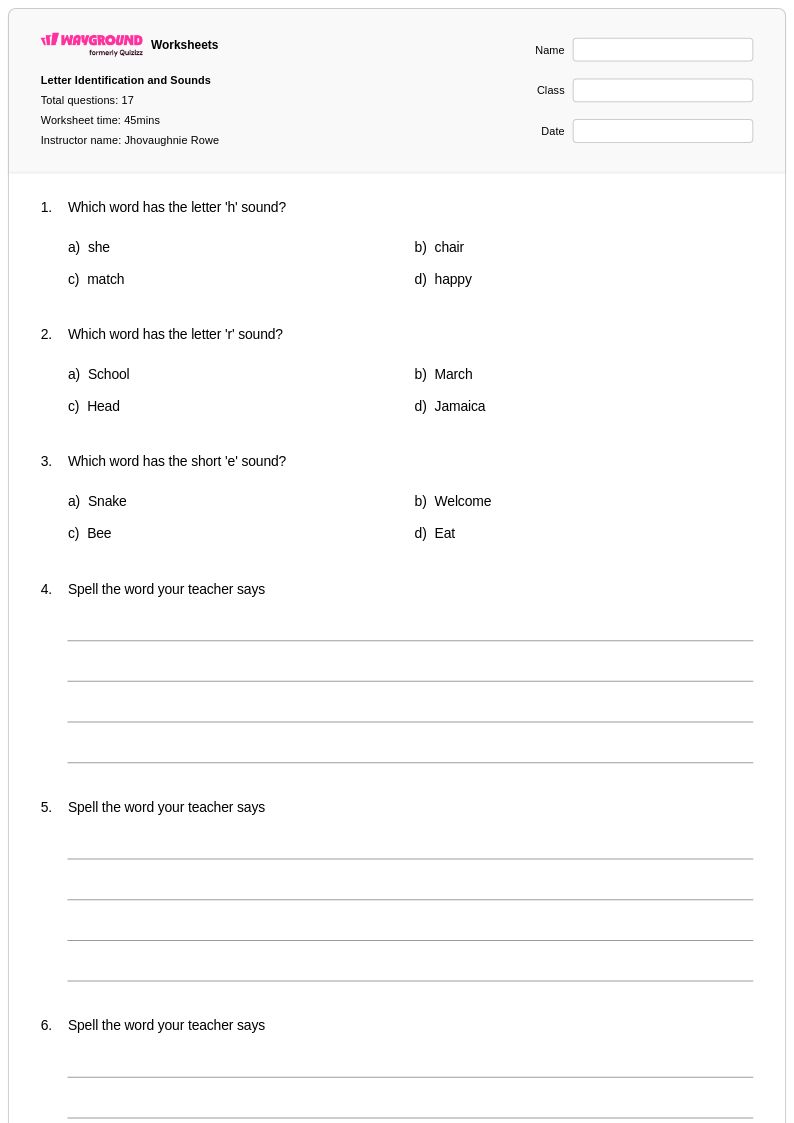
18 Q
1st - 5th
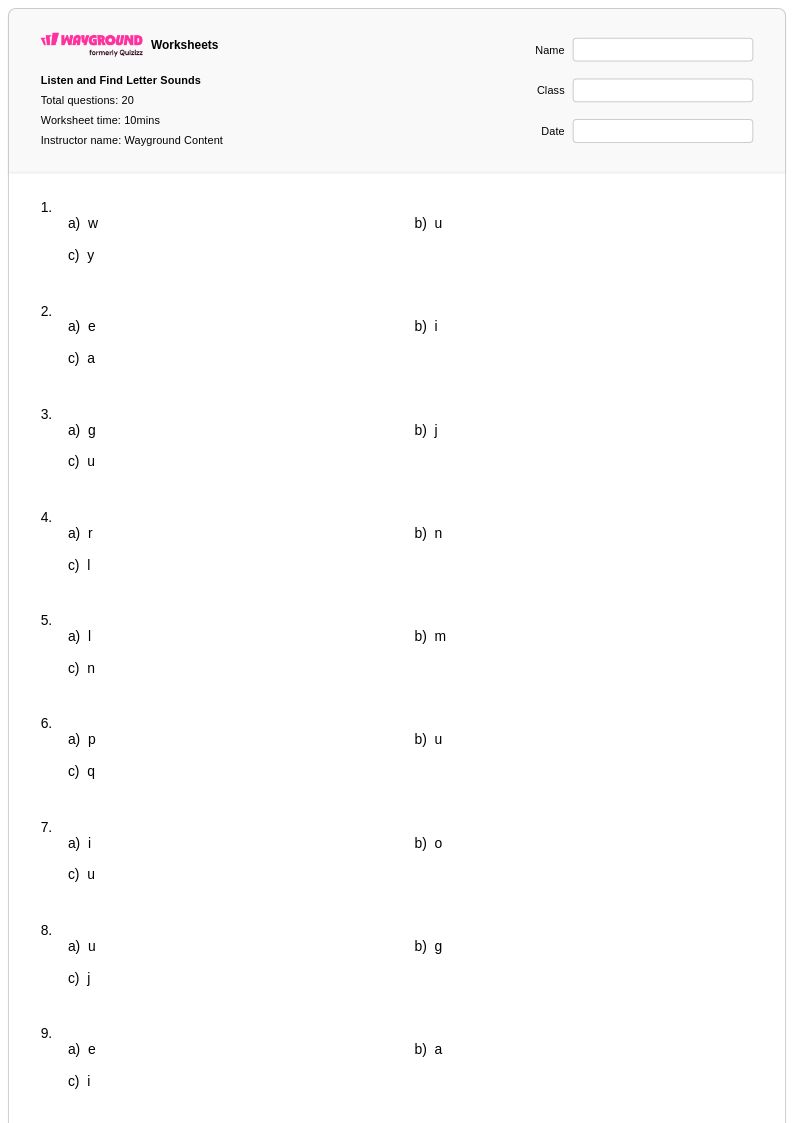
20 Q
1st - 5th
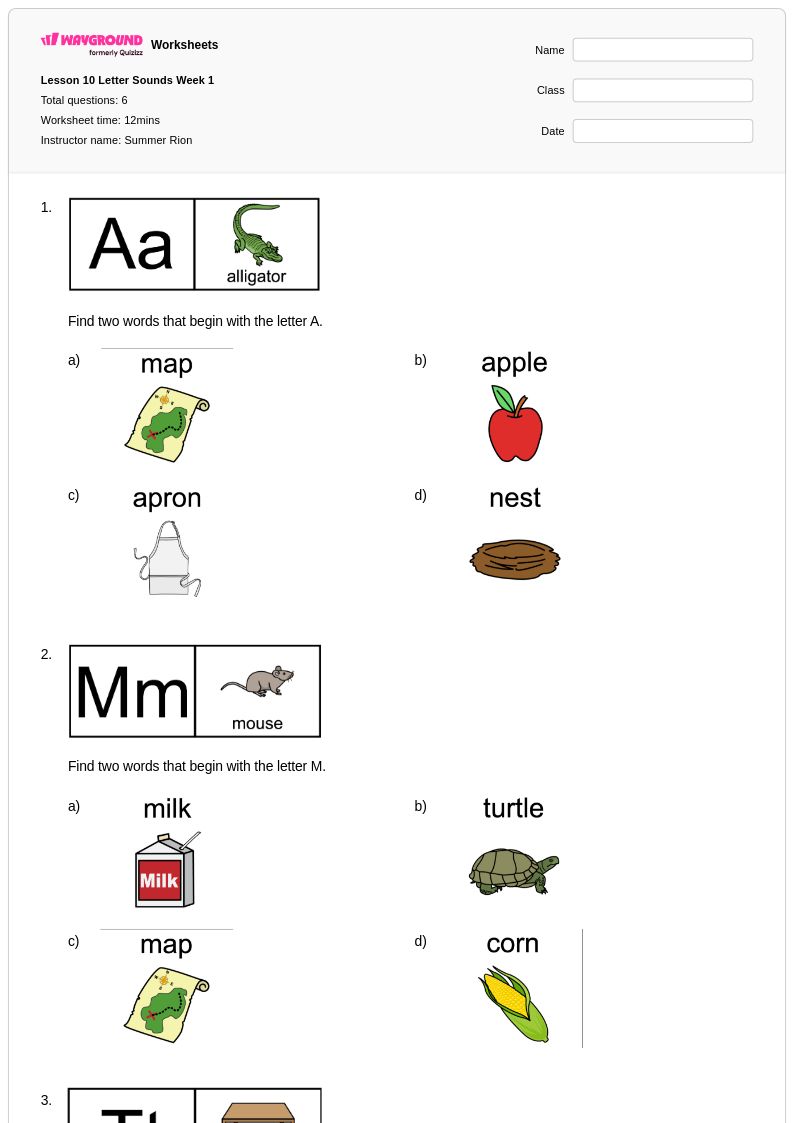
6 Q
3rd - 5th
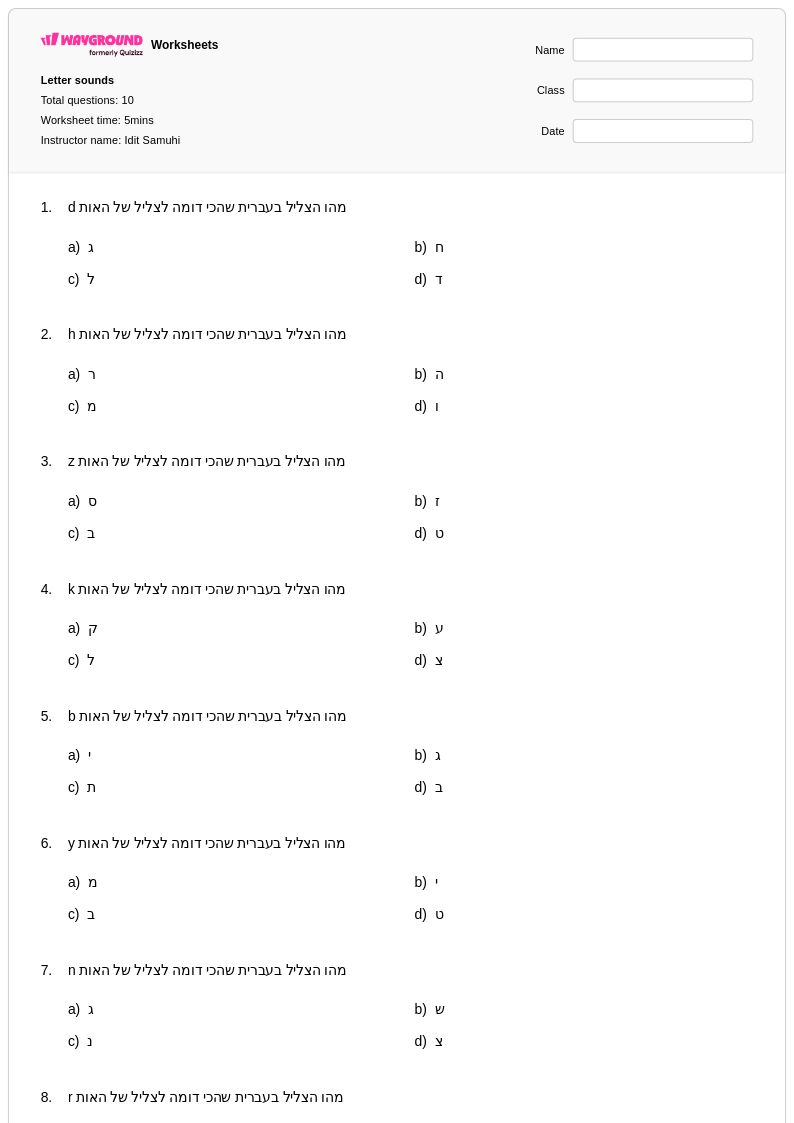
10 Q
3rd
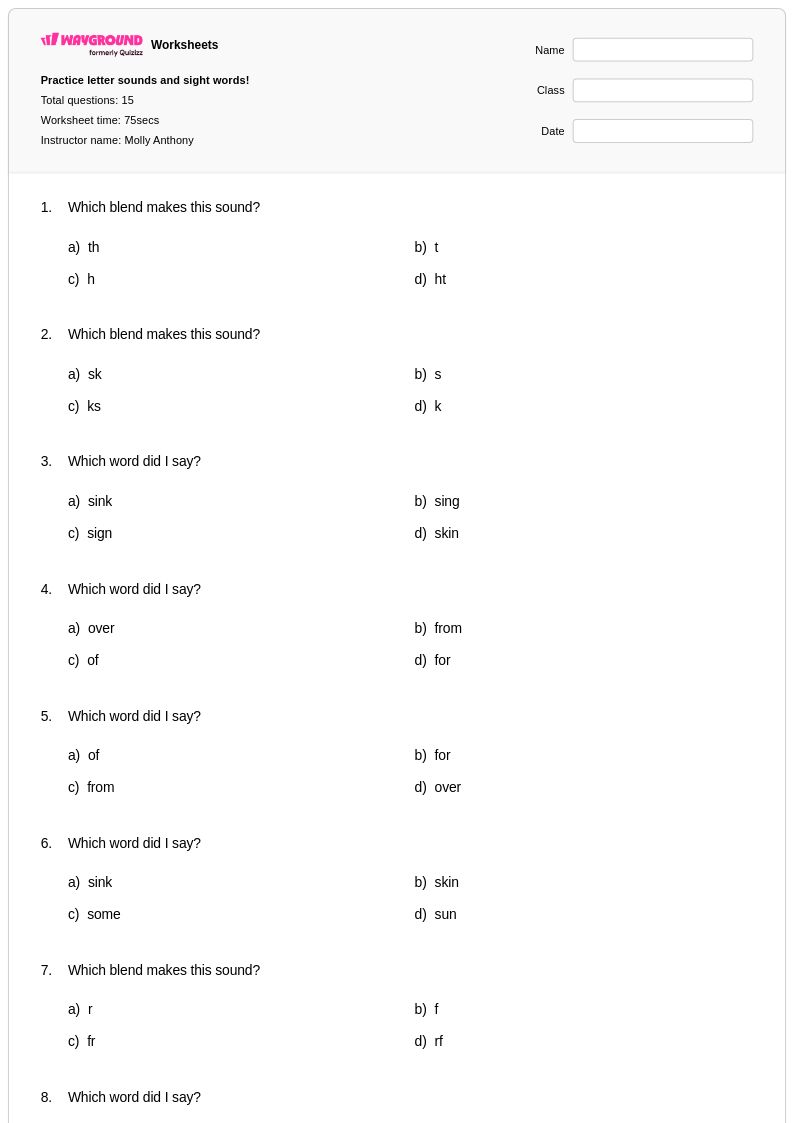
15 Q
KG - 8th
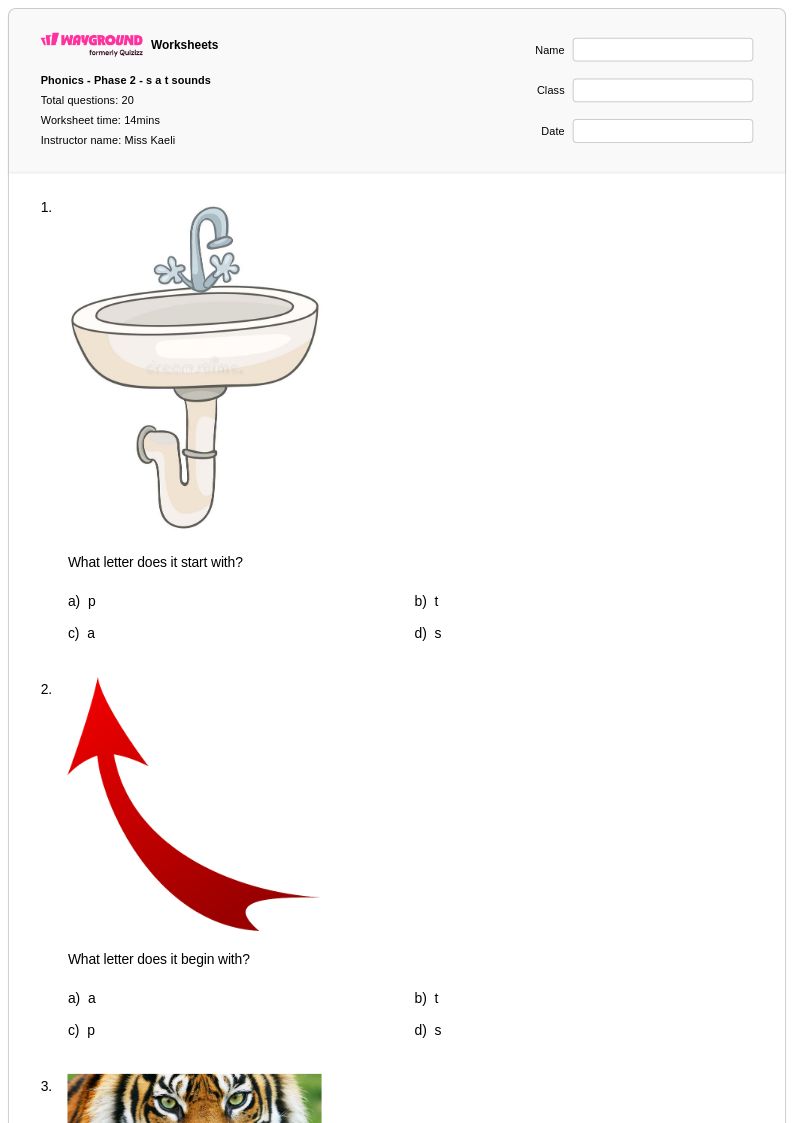
20 Q
1st - 5th
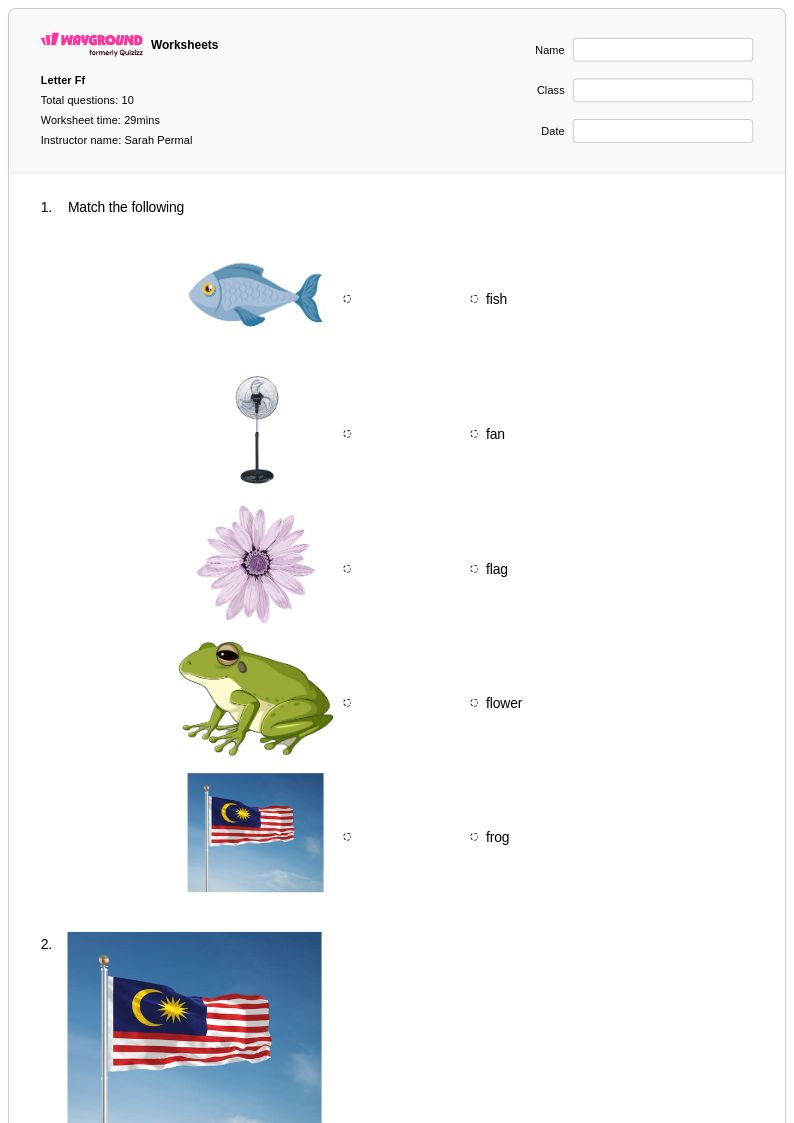
10 Q
1st - 5th
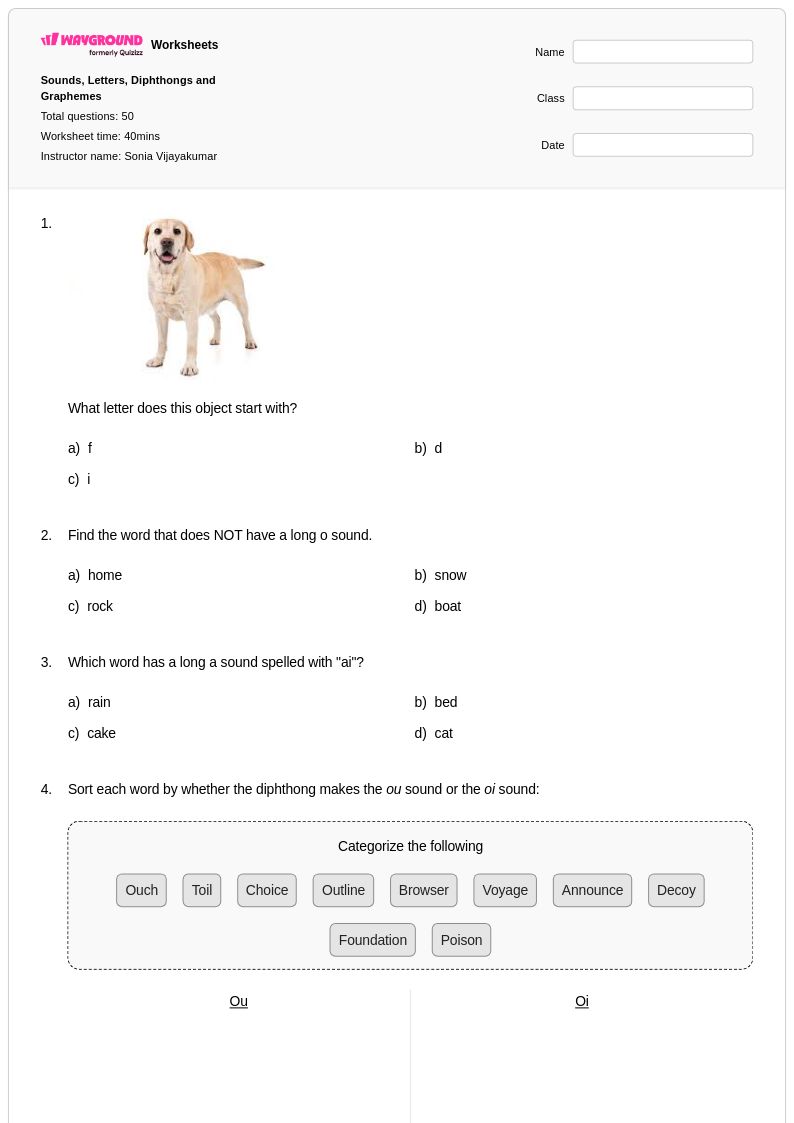
50 Q
1st - 5th
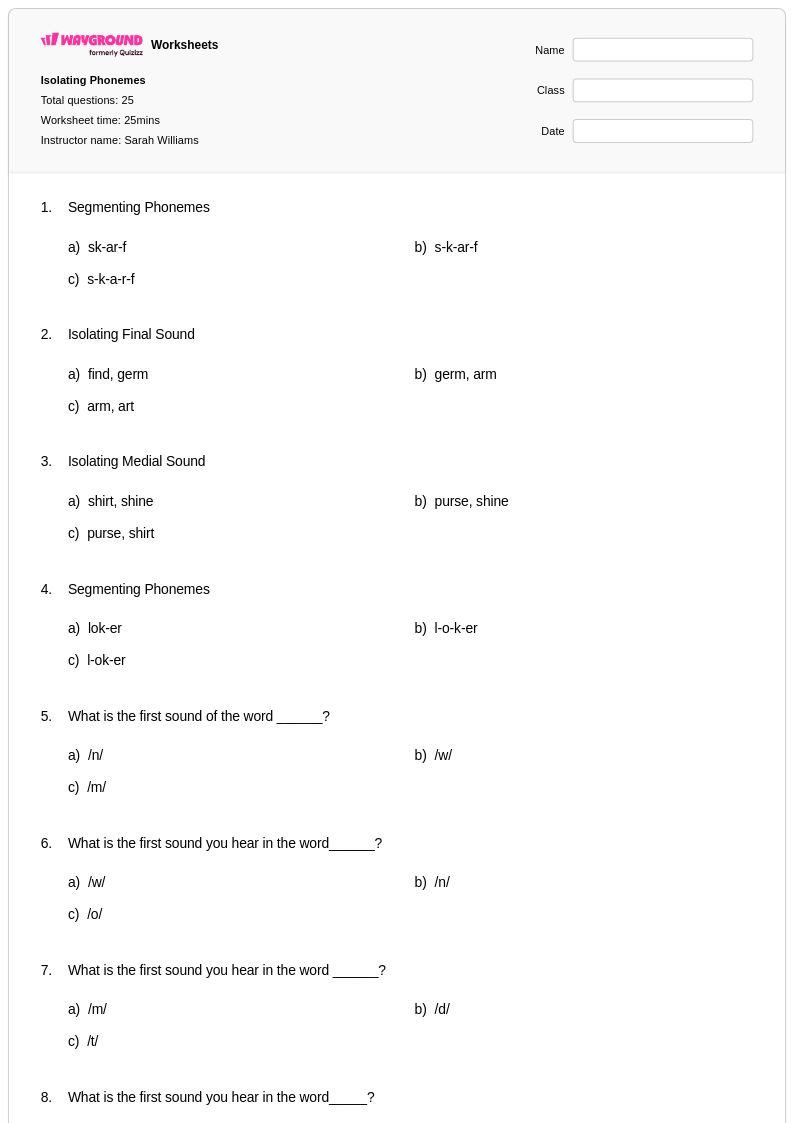
25 Q
1st - Uni
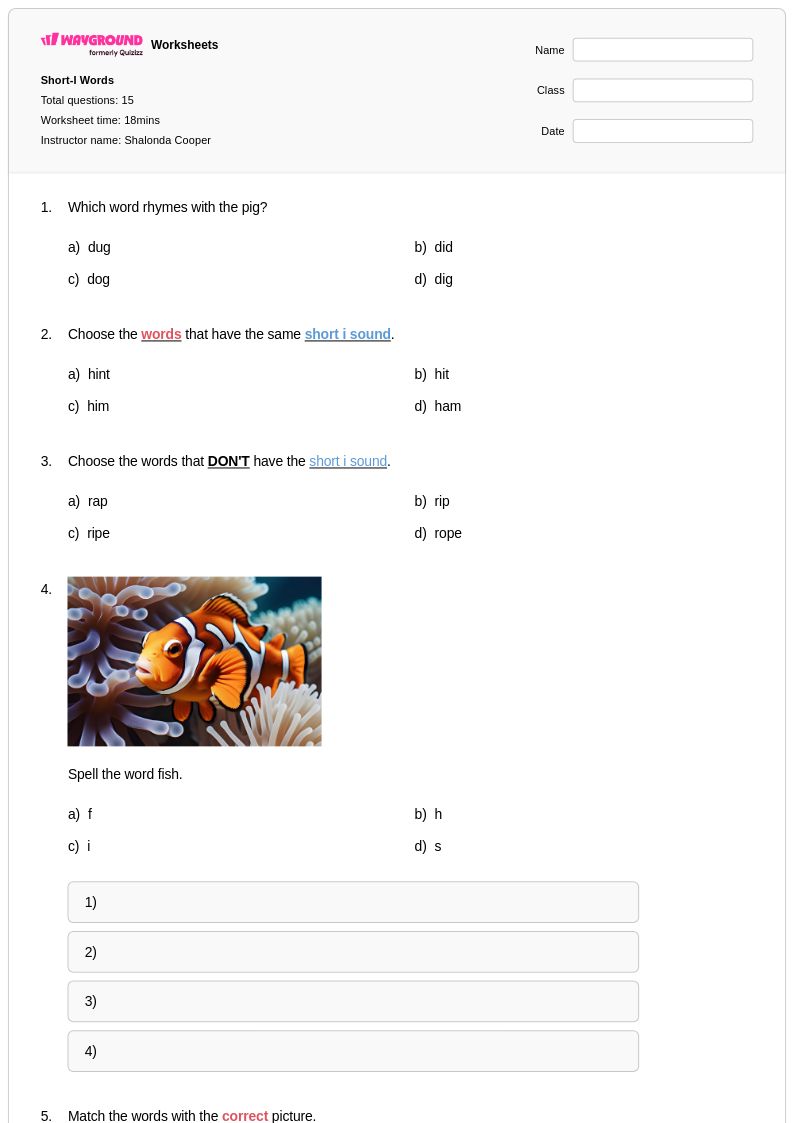
15 Q
2nd - Uni
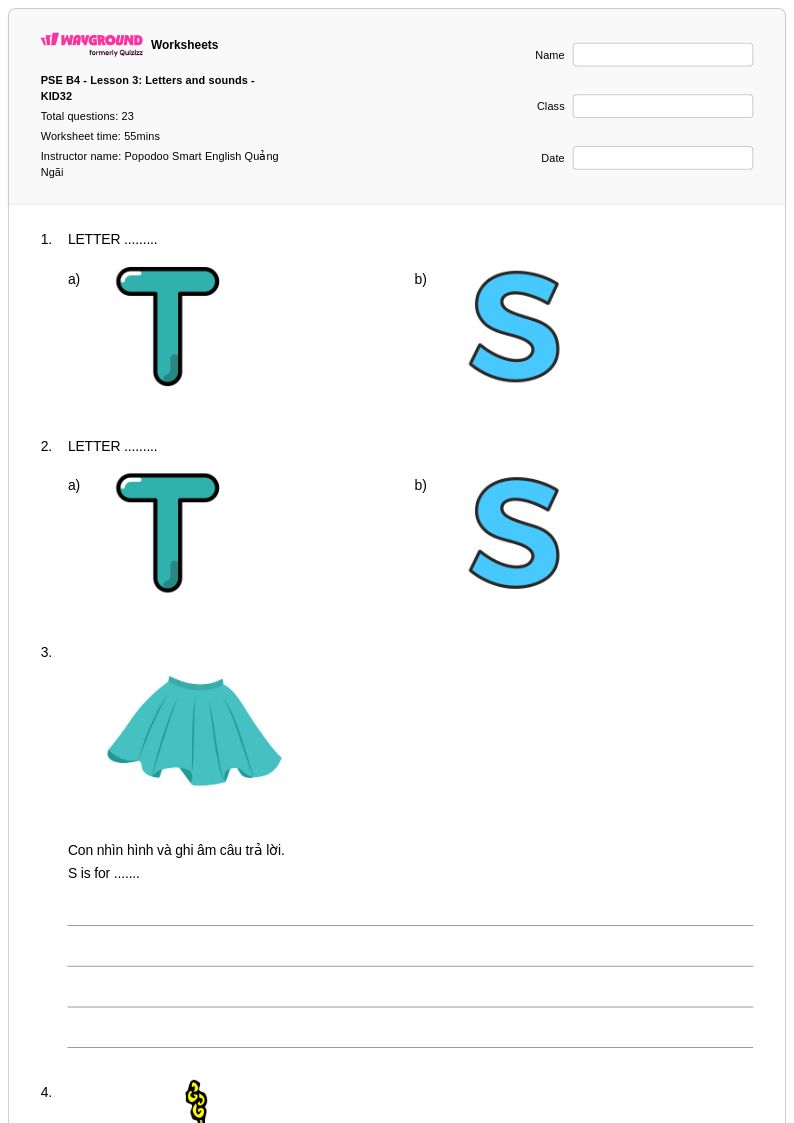
23 Q
1st - 5th
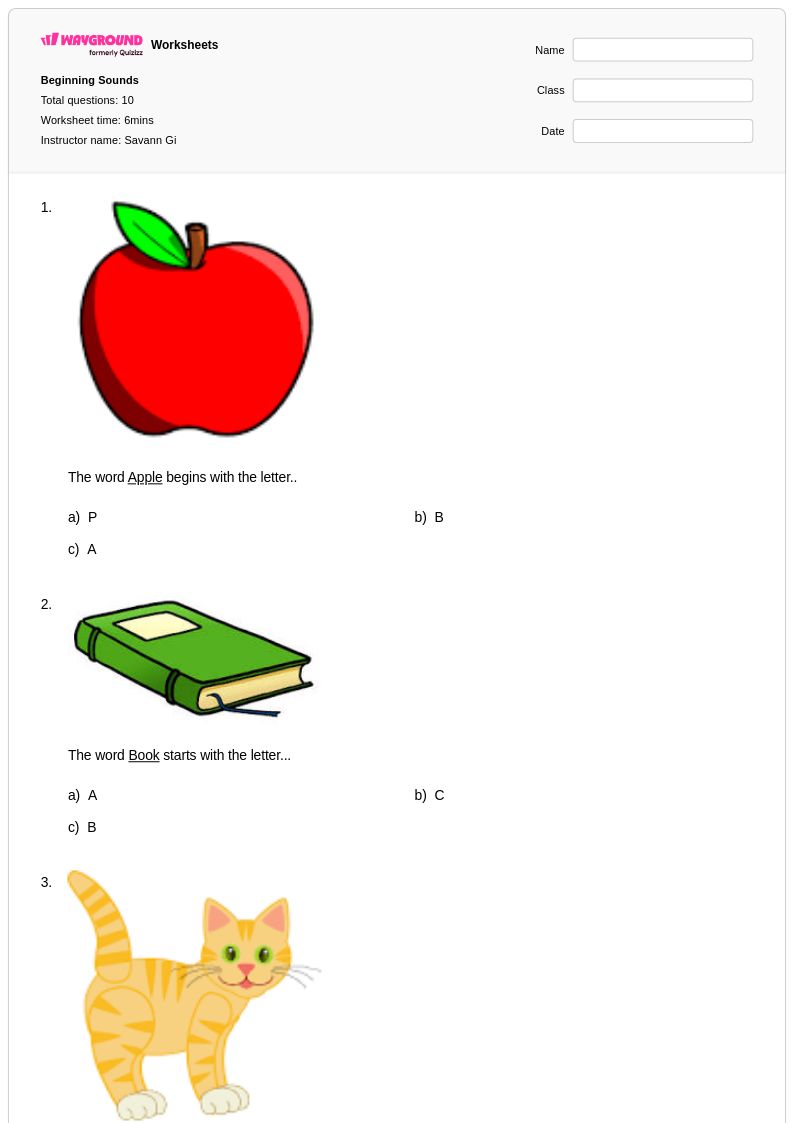
10 Q
KG - 5th
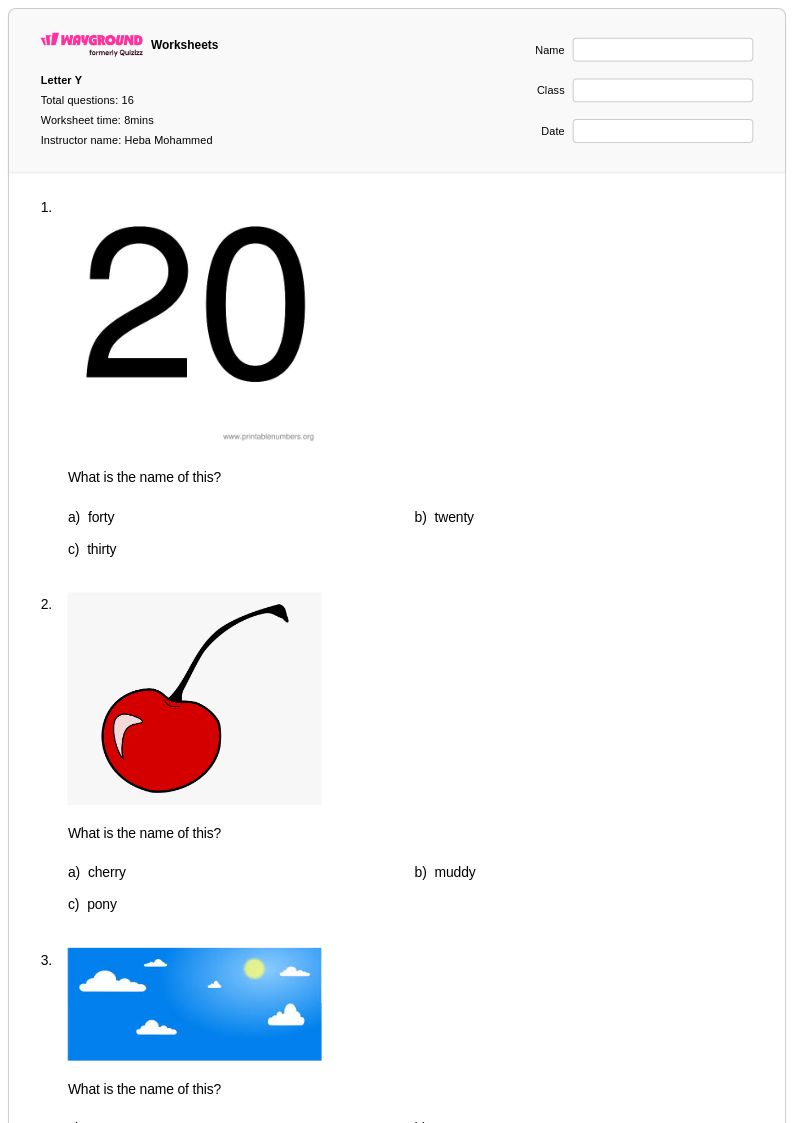
16 Q
2nd - 4th
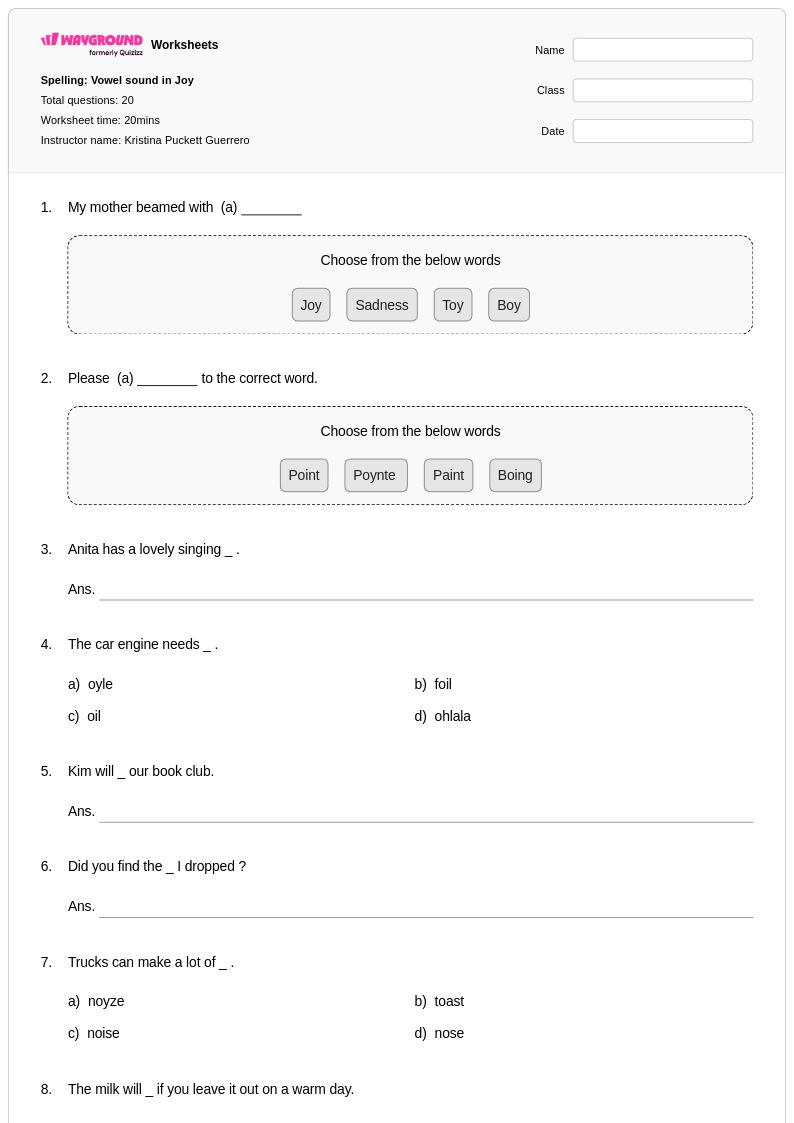
20 Q
3rd
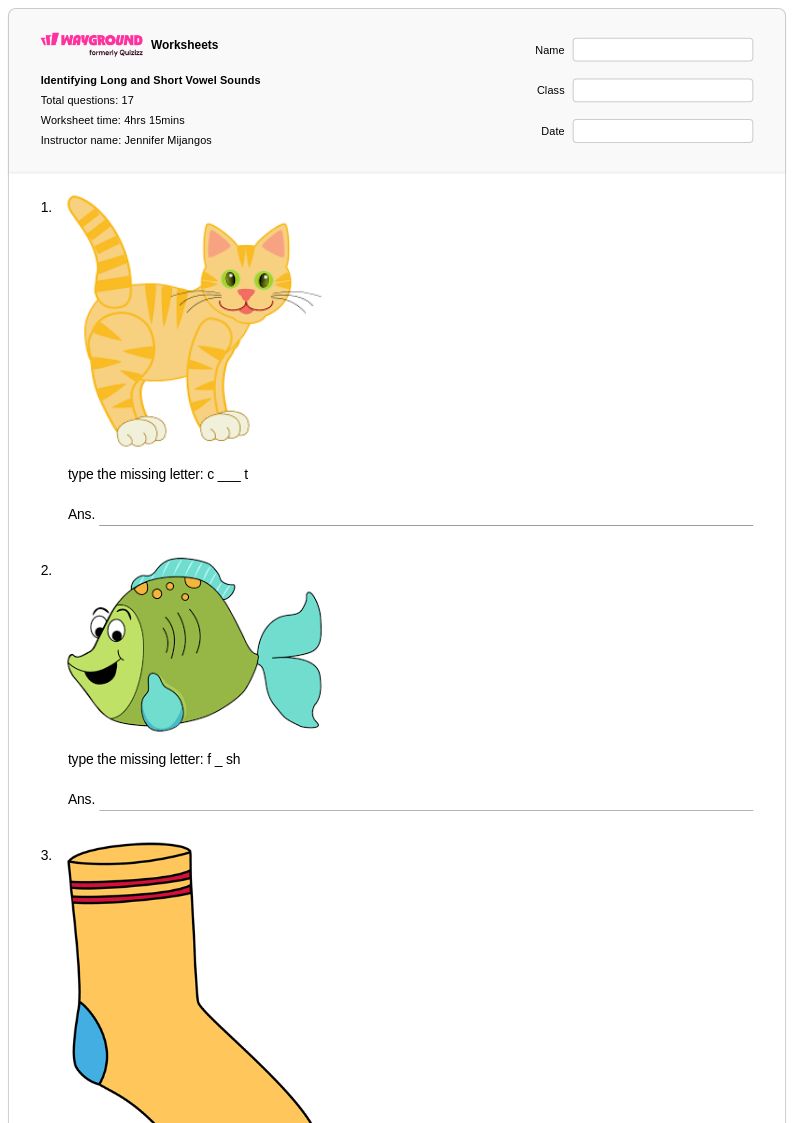
17 Q
1st - 5th
Explore Letter Sounds Worksheets for class 3 by Topic
Explore Other Subject Worksheets for class 3
Explore printable Letter Sounds worksheets for Class 3
Letter sounds worksheets for Class 3 students through Wayground (formerly Quizizz) provide targeted phonics instruction that strengthens foundational reading skills essential for developing fluency and comprehension. These comprehensive worksheets focus on reinforcing letter-sound correspondence, helping third-grade students master the relationship between graphemes and phonemes through systematic practice. Students work with consonant and vowel sounds, consonant blends, digraphs, and more complex phonetic patterns that are crucial at this developmental stage. Each worksheet includes practice problems designed to reinforce auditory discrimination, visual recognition, and application of letter sounds in various contexts, with answer keys provided to support both independent learning and guided instruction. The free printables offer versatile pdf formats that accommodate different learning preferences and classroom management styles.
Wayground (formerly Quizizz) empowers educators with millions of teacher-created letter sounds resources specifically designed for Class 3 phonics instruction, featuring robust search and filtering capabilities that allow teachers to quickly locate materials aligned with their curriculum standards and student needs. The platform's differentiation tools enable teachers to customize worksheets based on individual student proficiency levels, ensuring that struggling learners receive appropriate remediation while advanced students access enrichment activities that challenge their phonetic understanding. These resources are available in both printable and digital formats, including downloadable pdf versions, providing flexibility for various instructional settings from traditional classrooms to remote learning environments. Teachers can efficiently plan phonics lessons, track student progress through systematic skill practice, and implement targeted interventions using these professionally developed materials that support evidence-based reading instruction methodologies.
FAQs
How do I teach letter sounds to early readers?
What exercises help students practice letter sounds?
What mistakes do students commonly make when learning letter sounds?
How can I differentiate letter sound instruction for struggling readers?
How do I use Wayground's letter sounds worksheets in my classroom?
What letter sound topics should I cover in early phonics instruction?